CHAPTER 3: LESSON2
WHOLE CLASS TEACHING
Presented by: Rosel Oligan
Whole class teaching
- a typical and convenient method of teaching in a multigrade
class since the teacher displays to the students as a group.
- This technique of teaching saves the teacher’s time and
effort because he or she just has to compose one lesson
plan with the average category of skills as a criterion.
Whole class teaching
(Konstantinos, 2002)
- The teacher may consider subject integration,
provide, materials, and the mechanics of how
the students will be evaluated while developing
and implementing full class activities.
(Konstantinos, 2002)
- It is easier to prepare materials, it is easier to
monitor student progress and behavior, and it
increases student involvement in working with
the entire class in particularly created activities.
This strategy is effective in a
variety of activies such as;
- Storytelling
- Singing
- Playing
- Dancing
- Doing arts and crafts
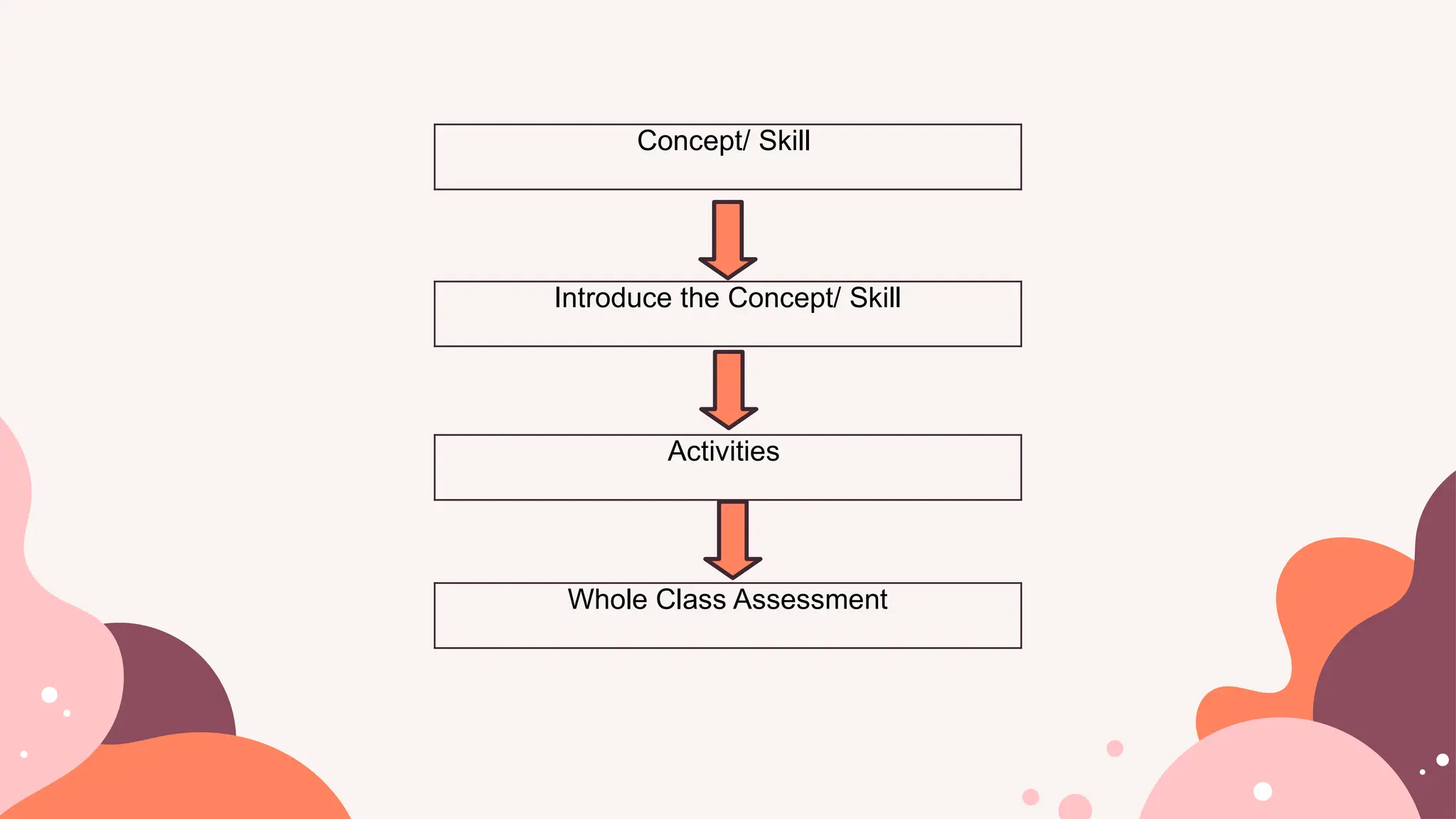
Concept/ Skill
Introduce the Concept/ Skill
Activities
Whole Class Assessment
The concept of the differentiated instruction, on the other
hand, can be used to the whole-class teaching technique.
Similar activities are provided for the entire class, but
evaluation is multi-leveled or differentiated due to the
varying expectations of the learner groups.
A multigrade teacher uses tiered activities to ensure
that all students focus on fundamental understanding
and skills at varying levels of complexity,
abstractness, and open-endedness. In other words,
learners must be evaluated based on their
performance in relation to their level of knowledge
of the subject.
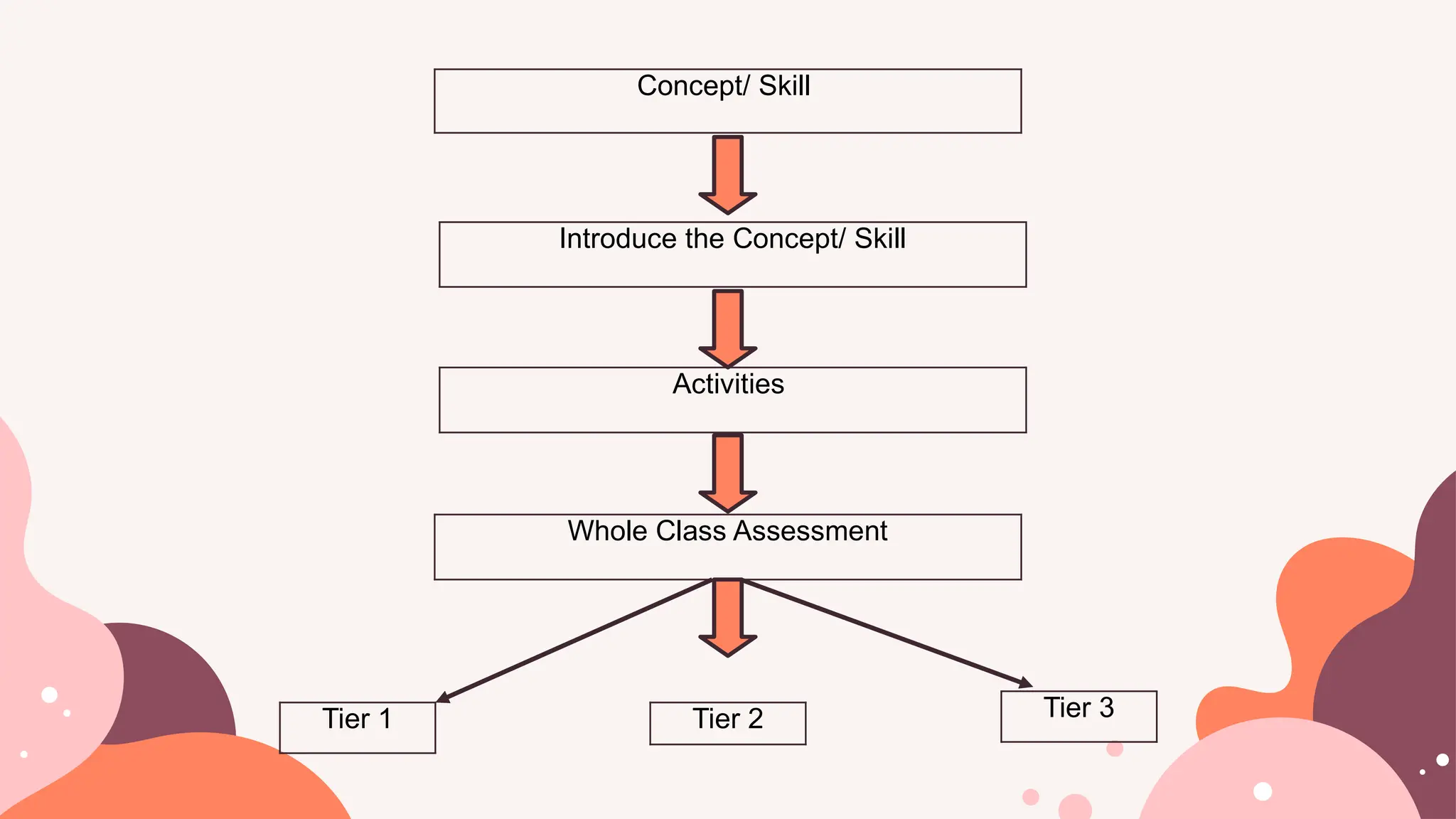
Concept/ Skill
Introduce the Concept/ Skill
Activities
Whole Class Assessment
Tier 1 Tier 2 Tier 3
Thankyou for Listening….

TMC(REPORT).pptx : whole class teaching.

  • 1.
    CHAPTER 3: LESSON2 WHOLECLASS TEACHING Presented by: Rosel Oligan
  • 2.
    Whole class teaching -a typical and convenient method of teaching in a multigrade class since the teacher displays to the students as a group. - This technique of teaching saves the teacher’s time and effort because he or she just has to compose one lesson plan with the average category of skills as a criterion.
  • 3.
    Whole class teaching (Konstantinos,2002) - The teacher may consider subject integration, provide, materials, and the mechanics of how the students will be evaluated while developing and implementing full class activities.
  • 4.
    (Konstantinos, 2002) - Itis easier to prepare materials, it is easier to monitor student progress and behavior, and it increases student involvement in working with the entire class in particularly created activities.
  • 5.
    This strategy iseffective in a variety of activies such as; - Storytelling - Singing - Playing - Dancing - Doing arts and crafts
  • 6.
    Concept/ Skill Introduce theConcept/ Skill Activities Whole Class Assessment
  • 7.
    The concept ofthe differentiated instruction, on the other hand, can be used to the whole-class teaching technique. Similar activities are provided for the entire class, but evaluation is multi-leveled or differentiated due to the varying expectations of the learner groups. A multigrade teacher uses tiered activities to ensure that all students focus on fundamental understanding and skills at varying levels of complexity, abstractness, and open-endedness. In other words, learners must be evaluated based on their performance in relation to their level of knowledge of the subject.
  • 8.
    Concept/ Skill Introduce theConcept/ Skill Activities Whole Class Assessment Tier 1 Tier 2 Tier 3
  • 9.