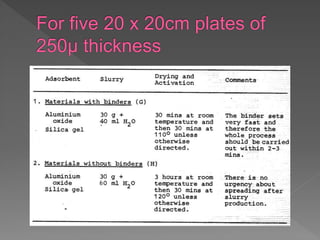
 slurry of adsorbent on glass plate
 spread and dries to make a film over surface
 quantity used to mix slurry depends on:
› number and size of plates
› thickness of layer
› nature of adsorbent
 after activation all plates must be stored in
desiccator until used
 Several types available commercially
› eg Desaga Apparatus
 flat template tray into which glass plates fit
 must be placed on a flat surface
 plates are degreased by wiping clean with acetone
 spreader with rotating chamber and gauge
 ensure clean and chamber is free moving
 set gauge to required thickness
 adsorbent + liquid shaken together in closed flask
 slurry poured into spreader and lever arm turned to invert
rotating chamber
 spreader pulled slowly across plates
 air dried in tray and placed on a TLC rack for activation or
storage
 NB Many solvents are inflammable! Not near naked
flames
 [i] Solvents
 only pure dry solvents used for chromatography
 redistillation or storage over a drying agent may be needed
 solvent mixtures should be freshly prepared for analysis
 these occupy about 1.5cm depth of tank
 great care measuring and pipetting
 if reproducible Rf values are required
 [ii] Lining tanks
 Whatman No.2 chromatography paper of tank height
 solvent is poured down sides of tank to ensure wetting of lining
 [iii] Saturation of atmosphere
 ground glass lid used to seal tank
 solvent gently swirled round inside (while holding lid)
 repeat occasionally for a few seconds during 15 minutes
 only slide lid back small distance to place plate in
 [i] Determination of spot size
 spots of various sizes applied to an “end plate” for TLC
 (or filter paper for paper chromatography)
 spots by spraying and visualised
 suitable size selected
 spots increase in size during chromatogram development
 hence less colour intensity
 mixture may be present in unknown solutions
 overloading leads to streaking
 trace impurities overlooked if insufficient applied
 usually 1% solution of reference materials is used
 10μl (one spot from 0.5cm diameter capillary) is sufficient
 (3-4 spots should be applied for paper chromatography)
 [ii] Application
 remove narrow strip of coating 0.5cm wide from vertical
margins of plate
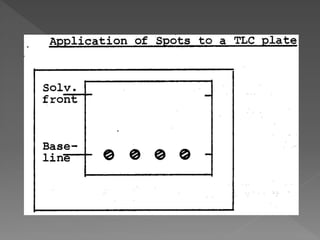
 measure 3cm from bottom of plate
 make a small mark 2mm long on the coating of each
side of the plate = baseline
 measure 15cms and make 2 small marks at new height
= solvent front
 place prepared plate on piece of clean drawing paper
 spot reference solutions each from clean capillary to
baseline 1.5cm apart and 2cm from edge
 spots in centre should be unknown solution
 or mixture of reference solutions and unknown mixture
 on paper at the bottom of plate mark off and label
positions of spots across plate
 also mark baseline and solvent line
 [i] Sprays
 [ii] Spraying
 eg Shandon spray packs + compressed gas cylinders
 great care – many sprays
 toxic (antimony chloride)
 corrosive (strong acids)
 use fume cupboard
 extraction fan working properly
 sliding window below chest level (only room for forearms)
 after spraying close window and leave a few seconds
 hold plate corner/edge with tissue paper
 may be necessary to heat sprayed plate for
visualisation
 [i] Making permanent record
 most sprays produce coloured spots
 check for extra spots under UV light
 mark with needle point
 trace all plates with pencil
 use tracing paper same size as plate
 allow heated plates time to cool
 transfer data to paper record
 each drawing should be labelled with
 coating substance and activation period
 thickness of layer
 solvents used
 spray used
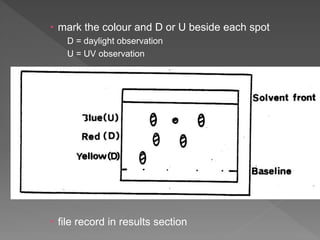
 mark the colour and D or U beside each spot
D = daylight observation
U = UV observation
 file record in results section
 qualitative results of TLC
› expressed as fractions of 1.0
› can be expressed from Rf values (eg Rf x 100)
› no more than two decimal places
 due to inaccuracy of physical measurement
 may not be reproducible
 only give an indication of possible nature of unknown
 complete identification only obtained if spot is eluted and
micro-scale physical measurements done (MS, UV, IR)
 standard references should always be used on
same plate for comparison
 most sprays produce differential colours of fluorescence
 colour test provides extra evidence with distance migration
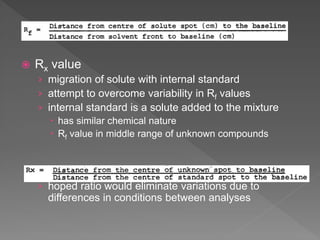
 Rx value
› migration of solute with internal standard
› attempt to overcome variability in Rf values
› internal standard is a solute added to the mixture
 has similar chemical nature
 Rf value in middle range of unknown compounds
› hoped ratio would eliminate variations due to
differences in conditions between analyses
[1] Preparation of paper
› cut to 35cm x 43cm
› pre-treatment may be necessary
[2] Preparation of tanks
› large round tanks used
› 150ml solvent to give 1.5cm depth
› tanks not lined but atmosphere must still be pre-
saturated
 running solvent
 snug fitting lid
[3] Application of spots
› quantity to be applied determined as for TLC
› baseline drawn in lead pencil approx 1” from long
side
› spots
 applied 5cm apart and from edge
 as small as possible (each allowed to dry before next applied)
[4] Running the paper
› shorter sides stapled to make a cylinder (3mm gap)
› stood in tank to elute
› solvent front marked after elution
› stood upside down in fume cupboard to dry
› further treatment may be necessary

TLC and Paper chromatography procedure

  • 2.
     slurry ofadsorbent on glass plate  spread and dries to make a film over surface  quantity used to mix slurry depends on: › number and size of plates › thickness of layer › nature of adsorbent  after activation all plates must be stored in desiccator until used
  • 4.
     Several typesavailable commercially › eg Desaga Apparatus  flat template tray into which glass plates fit  must be placed on a flat surface  plates are degreased by wiping clean with acetone  spreader with rotating chamber and gauge  ensure clean and chamber is free moving  set gauge to required thickness  adsorbent + liquid shaken together in closed flask  slurry poured into spreader and lever arm turned to invert rotating chamber  spreader pulled slowly across plates  air dried in tray and placed on a TLC rack for activation or storage  NB Many solvents are inflammable! Not near naked flames
  • 5.
     [i] Solvents only pure dry solvents used for chromatography  redistillation or storage over a drying agent may be needed  solvent mixtures should be freshly prepared for analysis  these occupy about 1.5cm depth of tank  great care measuring and pipetting  if reproducible Rf values are required  [ii] Lining tanks  Whatman No.2 chromatography paper of tank height  solvent is poured down sides of tank to ensure wetting of lining  [iii] Saturation of atmosphere  ground glass lid used to seal tank  solvent gently swirled round inside (while holding lid)  repeat occasionally for a few seconds during 15 minutes  only slide lid back small distance to place plate in
  • 6.
     [i] Determinationof spot size  spots of various sizes applied to an “end plate” for TLC  (or filter paper for paper chromatography)  spots by spraying and visualised  suitable size selected  spots increase in size during chromatogram development  hence less colour intensity  mixture may be present in unknown solutions  overloading leads to streaking  trace impurities overlooked if insufficient applied  usually 1% solution of reference materials is used  10μl (one spot from 0.5cm diameter capillary) is sufficient  (3-4 spots should be applied for paper chromatography)
  • 7.
     [ii] Application remove narrow strip of coating 0.5cm wide from vertical margins of plate  measure 3cm from bottom of plate  make a small mark 2mm long on the coating of each side of the plate = baseline  measure 15cms and make 2 small marks at new height = solvent front  place prepared plate on piece of clean drawing paper  spot reference solutions each from clean capillary to baseline 1.5cm apart and 2cm from edge  spots in centre should be unknown solution  or mixture of reference solutions and unknown mixture  on paper at the bottom of plate mark off and label positions of spots across plate  also mark baseline and solvent line
  • 9.
  • 10.
     [ii] Spraying eg Shandon spray packs + compressed gas cylinders  great care – many sprays  toxic (antimony chloride)  corrosive (strong acids)  use fume cupboard  extraction fan working properly  sliding window below chest level (only room for forearms)  after spraying close window and leave a few seconds  hold plate corner/edge with tissue paper  may be necessary to heat sprayed plate for visualisation
  • 11.
     [i] Makingpermanent record  most sprays produce coloured spots  check for extra spots under UV light  mark with needle point  trace all plates with pencil  use tracing paper same size as plate  allow heated plates time to cool  transfer data to paper record  each drawing should be labelled with  coating substance and activation period  thickness of layer  solvents used  spray used
  • 12.
     mark thecolour and D or U beside each spot D = daylight observation U = UV observation  file record in results section
  • 13.
     qualitative resultsof TLC › expressed as fractions of 1.0 › can be expressed from Rf values (eg Rf x 100) › no more than two decimal places  due to inaccuracy of physical measurement  may not be reproducible  only give an indication of possible nature of unknown  complete identification only obtained if spot is eluted and micro-scale physical measurements done (MS, UV, IR)  standard references should always be used on same plate for comparison  most sprays produce differential colours of fluorescence  colour test provides extra evidence with distance migration
  • 14.
     Rx value ›migration of solute with internal standard › attempt to overcome variability in Rf values › internal standard is a solute added to the mixture  has similar chemical nature  Rf value in middle range of unknown compounds › hoped ratio would eliminate variations due to differences in conditions between analyses
  • 15.
    [1] Preparation ofpaper › cut to 35cm x 43cm › pre-treatment may be necessary [2] Preparation of tanks › large round tanks used › 150ml solvent to give 1.5cm depth › tanks not lined but atmosphere must still be pre- saturated  running solvent  snug fitting lid
  • 16.
    [3] Application ofspots › quantity to be applied determined as for TLC › baseline drawn in lead pencil approx 1” from long side › spots  applied 5cm apart and from edge  as small as possible (each allowed to dry before next applied) [4] Running the paper › shorter sides stapled to make a cylinder (3mm gap) › stood in tank to elute › solvent front marked after elution › stood upside down in fume cupboard to dry › further treatment may be necessary