TITLE The FactorsInfluencing Self-Development of Matayom 6 Students
Under The Secondary Educational Service Area Office 19
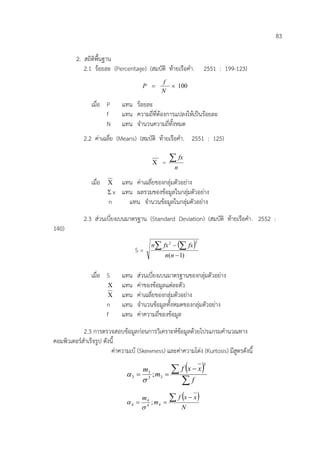
(Loei – Nong Bua Lamphu)
AUTHOR Mr. Suporn Moonsri
ADVISORS Assoc.Prof Dr.Prawit Erawan and Assist.Prof Dr. Prasert Ruannakarn
DEGREE M.Ed. MAJOR Educational Research
UNIVERSITY Mahasarakham University DATE 2012
ABSTRACT
This study aimed to examine relationships among Optimism , Self –
Confidence, Achievement Motivation, Self-Efficacy, Self-Control influencing Self-
Development and to examine Factors influences to the variables on Self -
Development of Matayom 6 Students Under The Secondary Educational Service Area
Office 19 (Loei – Nong Bua Lamphu). The sample used in this study consisted of 807
of Matayom 6 Students Under The Secondary Educational Service Area Office 19 (Loei
– Nong Bua Lamphu) ; obtained using the Stratified Random Sampling technique. The
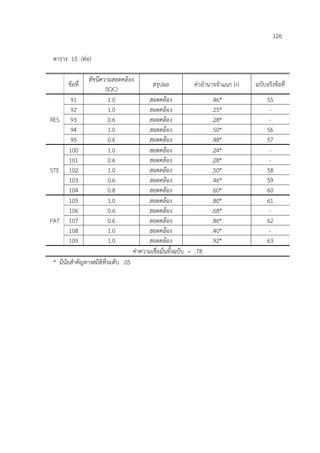
research instruments used for collecting data were 1) a 15-item scale for Self-
Development with discrimination powers ranging from 0.58 to 0.82 and the reliability
of 0.89 2) a 63-item scale for questionnaire on factors affecting Self-Development as
divided into these 5 aspects : Achievement Motivation, Self-Efficacy, Self-Control, Self -
Confidence, Optimism with discrimination powers ranging from 0.40 to 0.94 and the
reliability of 0.78 . Data analyzed by using a descriptive statistics as Pearson’s product
moment correlation and an inferential statistics for testing the structural equation
modeling analysis.
The research findings were as follows :
1. That causal factor that having the most positive relationship with
Self-Development were Self-Efficacy , Achievement Motivation, Optimism , Self-
Control, Self – Confidence on Self-Development with a statistical significance of .01.
Their correlation coefficients were 0.881, 0.874, 0.847, 0.814 and 0.732 respectively.
2. The causal factor with the most influence on Self-Development were
Self - Confidence, Self-Efficacy, Achievement Motivation, Optimism, Self-Control with
the beta weights of .457, .328, .300, .185 and .146 respectively. All revealed with
statistical significance of .01 . The factor with the most direct influence on Self-
Development were Self-Efficacy, Self - Confidence, Achievement Motivation,
Optimism and Self-Control with the beta weights of .300, .255, .201, .185, .146
respectively. The factors with direct and indirect influence ranked by beta weight
9.
values were Self-Efficacywith the beta weight of .300 and a Achievement Motivation
with the beta weight of .201.All causal Factors could together explained the variation
of Self-Development 90.2 % of Matayom 6 Students Under The Secondary
Educational Service Area Office 19 (Loei – Nong Bua Lamphu).
In conclusion, the Self-Efficacy, Achievement Motivation, Optimism,
Self-Control and Self - Confidence affected on Self-Development of learners of
Matayom 6 Students Under The Secondary Educational Service Area Office 19
(Loei – Nong Bua Lamphu). These information can be used for decision or plan in the
learning management to encourage and support self-Development such as club
activity organization, camp activity and seminar. The parents and teachers should
encourage and support those activities.
117
อัญชลี สุดเสนห,. การเปรียบเทียบลักษณะการมุงอนาคตและอัตมโนทัศน,ของนักเรียน
ชั้นมัธยมศึกษาป[ที่ 6 ระหวางนักเรียนที่มีการอบรมเลี้ยงดู แรงจูงใจใฝUสัมฤทธิ์
และบุคลิกภาพตางกัน. วิทยานิพนธ, กศ.ม. มหาสารคาม : มหาวิทยาลัยมหาสารคาม,
2548.
อารี พันธ,มณี. จิตวิทยาการเรียนการสอน. กรุงเทพฯ : เลิฟแอนด,สิฟเพรส, 2542.
Atkinson, John W. Motive in Fantasy Action and Society. New Delhi : Affiliated East
West Press, PVT.Ltd., 1964.
Bandura, A. Self-Efficacy : The Exercise of Control. New York : W.H. Freeman and
Company, 1997.
Comier, William H. & Comier , Sherilyn L. Interviewing Strategies for Helpers :
A Guilde for Assessment , Treatment and Evaluation. California :
Brooks/Cole, 1979.
Grootenboer, Peter. Self-directed Teacher Professinal Development. 2012.
<http://aare.due.au/99pap/gro99601.htm. > 9 April 2012.
James, B. Schrieber. Core Reporting Practices in Structural Equation Modeling.
S.l. : s.n., 2008.
Kelly, A.P. et al. Interchange: A Quarterly Review of Education. 2008.
<http://www.eric.ed.gov/ERICWebPortal/search> 9 April 2012.
Kline, R.B. Principles and Practice of Structural Equation Modeling. 2 rd
ed.
New York : Guilford, 2005.
Louys et al. Educational Technology & Society. 2009.
<http://www.eric.ed.gov/ERICWebPortal/search> 9 April 2012.
Mercer & Jenny. Psychology Teaching Review. 2010.
<http://www.eric.ed.gov/ERICWebPortal/search> 9 April 2012.
Pajares, F. “Current Directions in Self Research,” Self-Efficacy. 1996.
<http://www.emory.edu/EDUCATION/mfp/aeral.html> 2009.
Staples, D.S., J.M. Hylland and C.A. Higgins.(2009). A self-Efficacy Theory Explanation for
the Management of Remote Workers in Virtual Organization. 4 June
1998.< http://orgsci.journal.informs.org/content/10/6/758.short >
Schunk, Dale H. Self-Efficacy Perspective on Achievement Behavior. 1982.
<http://eric.ed.gov/ERICWebPortal> 9 April 2012.
Stevens, James. Applied Multivariate Statistics for the Social Science. 2nd
ed.
New Jersey : Lawrence Erlbaum, 1992.
West, S. G.; Finch, J. F. & Curran, P.J. “Structural equation models with non-
Narmalvariables : Problems and Remedies,” in Structural Equation Modeling :
ConcepteIssues and Applications. Edited by R.Hoyle. p. 56-57. Newbury
Park, CA : Sage, 1995.
158
ตัวอยGางการเขียนคําสั่งการวิเคราะหขอมูล
TITLE: Self_Development_MODEL
DATA:
FILE IS"D:suparAmodel.dat";
VARIABLE:
NAMES ARE goa res ste pat asp ene mrt pla uoc eat vex vpe pst
pde sde lde pem pev pes est cou sre aut ada ;
USEVARIABLES ARE goa res ste pat asp ene mrt pla uoc eat vex vpe pst
pde sde lde pem pev pes est cou sre aut ada ;
ANALYSIS:
TYPE IS GENERAL;
ESTIMATOR IS ML;
ITERATIONS = 1000;
CONVERGENCE = 0.00005;
MODEL:
SCT BY goa res ste pat;
SEF BY eat vex vpe pst;
SDL BY pde sde lde;
OPT BY pem pev pes;
SCF BY est cou sre aut ada;
AMO BY asp ene mrt pla uoc;
SDL ON AMO SEF SCT SCF OPT;
SEF ON AMO;
SCT ON SCF;
PST WITH VPE;
OPT WITH SCT@0.076;
PDE WITH PST@0.069;
LDE WITH PDE@-0.042;
EAT WITH UOC@0.037;
ADA WITH VEX@0.058;
PEM WITH LDE@0.033;
MRT WITH ENE@0.044;
ENE WITH STE@0.053;
LDE WITH PST@-0.029;
ADA WITH COU@-0.043;
ADA WITH SRE@-0.051;
RES WITH GOA@0.030;
PLA WITH ENE@0.043;
173.
159
PES WITH PEV@0.039;
UOC WITH PLA@0.037;
EAT WITH PLA@0.040;
PLA WITH GOA@0.029;
COU WITH PAT@-0.019;
EST WITH LDE@-0.030;
EST WITH VPE@-0.027;
VPE WITH VEX@0.068 ;
UOC WITH ENE@-0.028;
SCT WITH SEF@-0.016;
SCF WITH SEF@0.030;
LDE WITH RES@0.016 ;
COU WITH SDE@-0.016;
ADA WITH ASP@0.023;
PEM WITH PLA@-0.020;
PAT WITH STE@-0.026;
SDE WITH UOC@0.016;
SDE WITH MRT@0.017;
COU WITH LDE@-0.019;
AUT WITH LDE@-0.019;
AUT WITH PDE@ 0.020;
PST WITH VEX@0.060;
SDE WITH PST@0.019;
EAT WITH ASP@-0.015;
ASP WITH RES@0.014;
ASP WITH PAT@ 0.018;
UOC WITH GOA@-0.022;
PLA WITH MRT@0.017;
VEX WITH PLA@0.016;
PEV WITH VPE@-0.019;
AUT WITH VEX@0.015;
COU WITH EST@ 0.017;
COU WITH MRT@-0.011;
ENE WITH PAT@-0.019;
SDE WITH PDE@0.017;
LDE WITH ENE@-0.026;
SDE WITH ENE@-0.020;
VPE WITH ENE@-0.021;
VPE WITH RES@0.013;
UOC WITH RES@-0.014;
ADA WITH PES@0.031;
174.
160
ADA WITH PEV@0.039;
ADAWITH PEM@0.022;
PST WITH STE@-0.014;
ADA WITH PDE@0.015;
UOC WITH ASP@-0.012;
PEV WITH ASP@0.012;
LDE WITH PAT@0.019;
ADA WITH PAT@0.016;
ENE WITH RES@0.014;
PEM WITH PAT@0.012;
PEM WITH ENE@-0.015;
COU WITH ASP@-0.009;
SDE WITH STE@-0.013;
EST WITH STE@-0.014 ;
ENE WITH GOA@0.014;
VEX WITH ASP@-0.010;
VEX WITH MRT@-0.011;
EAT WITH PAT@0.012;
UOC WITH STE@-0.013;
SDE WITH VEX@-0.010;
LDE WITH VEX@-0.011 ;
EST WITH SDE@-0.011;
PEV WITH ENE@0.015;
ADA WITH PLA@0.014 ;
ADA WITH UOC@0.014;
PEM WITH UOC@-0.009;
PES WITH LDE@0.008;
SRE WITH ASP@-0.008;
SRE WITH PEV@-0.011;
VPE WITH ASP@-0.010;
PEV WITH SDE@-0.011;
AUT WITH EAT@-0.011;
AUT WITH PEV@-0.012;
AUT WITH PES@-0.013;
AUT WITH PEM@-0.013;
COU WITH PDE@0.009;
EST WITH RES@-0.009;
ADA WITH EST@-0.012 ;
AUT WITH COU@0.011;
SRE WITH PES@-0.008;
AUT WITH PAT@-0.010;
175.
161
ADA WITH LDE@-0.009;
PEMWITH STE@-0.010;
SRE WITH ENE@-0.010;
EAT WITH MRT@0.008 ;
PLA WITH ASP@-0.009;
PES WITH ENE@0.009;
LDE WITH EAT@0.007;
SCT WITH AMO@0.011;
ADA WITH SCF@0.014;
OPT WITH SEF@0.024;
ADA WITH SCT@0.017;
ASP WITH SCT@0.013;
LDE WITH SCF@-0.021;
PDE WITH SCF@0.039;
PDE WITH SCT@-0.017;
PST WITH SCF@0.016;
UOC WITH SEF@0.009;
AUT WITH SCT@-0.008;
MODEL INDIRECT:
SDL ind SEF;
SDL ind AMO;
SDL ind SCT;
SDL ind OPT;
SDL ind SCF;
SEF ind AMO;
SCT ind SCF;
OUTPUT: SAMPSTAT MODINDICES RESIDUAL STANDARDIZED FSCOEFFICIENT;
SAVEDATA:
RESULTS IS D:mplussuparA;
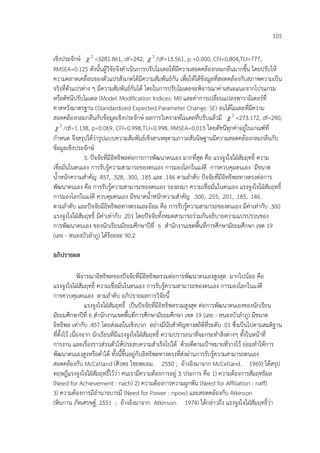
THE MODEL ESTIMATION TERMINATED NORMALLY
MODEL FIT INFORMATION
Number of Free Parameters 84
Loglikelihood
H0 Value -10571.795
H1 Value -10435.209
176.
162
Information Criteria
Akaike (AIC)21311.591
Bayesian (BIC) 21705.830
Sample-Size Adjusted BIC 21439.081
(n* = (n + 2) / 24)
Chi-Square Test of Model Fit
Value 273.172
Degrees of Freedom 240
P-Value 0.0695
RMSEA (Root Mean Square Error Of Approximation)
Estimate 0.013
90 Percent C.I. 0.000 0.020
Probability RMSEA <= .05 1.000
CFI/TLI
CFI 0.998
TLI 0.998
Chi-Square Test of Model Fit for the Baseline Model
Value 15792.285
Degrees of Freedom 276
P-Value 0.0000
SRMR (Standardized Root Mean Square Residual)
Value 0.054
STANDARDIZED MODEL RESULTS
STDYX Standardization
Two-Tailed
Estimate S.E. Est./S.E. P-Value
SDL BY
PED 0.727 0.016 44.294 0.000
SOD 0.801 0.013 60.249 0.000
LED 0.845 0.012 69.411 0.000
SEF BY
ENA 0.723 0.019 38.942 0.000
VIC 0.771 0.017 45.634 0.000
VER 0.395 0.030 13.093 0.000
PHY 0.393 0.030 13.051 0.000
177.
163
AMO BY
ASP 0.7970.013 60.431 0.000
EGT 0.570 0.023 24.705 0.000
MRT 0.770 0.015 52.519 0.000
PLA 0.638 0.020 32.005 0.000
UOC 0.771 0.015 51.905 0.000
SCT BY
GOA 0.756 0.014 55.680 0.000
RES 0.830 0.011 73.761 0.000
TEM 0.791 0.015 52.289 0.000
PAT 0.759 0.016 47.301 0.000
OPT BY
PEM 0.816 0.013 62.064 0.000
PEV 0.753 0.016 47.821 0.000
PES 0.861 0.011 78.574 0.000
SCF BY
EMS 0.846 0.010 87.448 0.000
COU 0.942 0.005 191.832 0.000
SRL 0.919 0.007 136.417 0.000
AUT 0.857 0.009 91.880 0.000
ADP 0.914 0.022 41.314 0.000
SDL ON
AMO 0.201 0.009 22.195 0.000
SEF 0.300 0.055 5.487 0.000
SCT 0.146 0.036 4.069 0.000
SCF 0.255 0.025 10.297 0.000
OPT 0.185 0.049 3.803 0.000
SEF ON
AMO 0.852 0.017 51.235 0.000
SCT ON
SCF 0.503 0.027 18.781 0.000
Residual Variances
GOA 0.429 0.021 20.918 0.000
RES 0.311 0.019 16.664 0.000
TEM 0.374 0.024 15.596 0.000
PAT 0.424 0.024 17.427 0.000
ASP 0.364 0.021 17.302 0.000
EGT 0.675 0.026 25.601 0.000
MRT 0.408 0.023 18.067 0.000
PLA 0.593 0.025 23.336 0.000
UOC 0.405 0.023 17.660 0.000
165
EMS 0.716 0.01643.724 0.000
COU 0.887 0.009 95.916 0.000
SRL 0.845 0.012 68.209 0.000
AUT 0.735 0.016 45.940 0.000
ADP 0.543 0.030 18.220 0.000
Latent Two-Tailed
Variable Estimate S.E. Est./S.E. P-Value
SDL 0.902 0.015 58.777 0.000
SEF 0.725 0.028 25.617 0.000
SCT 0.253 0.027 9.390 0.000
STANDARDIZED TOTAL, TOTAL INDIRECT, SPECIFIC INDIRECT, AND DIRECT EFFECTS
STDYX Standardization
Two-Tailed
Estimate S.E. Est./S.E. P-Value
Effects from SEF to SDL
Total 0.300 0.055 5.487 0.000
Total indirect 0.000 0.000 0.000 1.000
Direct
SDL
SEF 0.300 0.055 5.487 0.000
Effects from AMO to SDL
Total 0.457 0.048 9.538 0.000
Total indirect 0.255 0.048 5.351 0.000
Specific indirect
SDL
SEF
AMO 0.255 0.048 5.351 0.000
Direct
SDL
AMO 0.201 0.009 22.195 0.000
Effects from SCT to SDL
Total 0.146 0.036 4.069 0.000
Total indirect 0.000 0.000 0.000 1.000
Direct
SDL
SCT 0.146 0.036 4.069 0.000
180.
166
Effects from OPTto SDL
Total 0.185 0.049 3.803 0.000
Total indirect 0.000 0.000 0.000 1.000
Direct
SDL
OPT 0.185 0.049 3.803 0.000
Effects from SCF to SDL
Total 0.328 0.032 10.263 0.000
Total indirect 0.073 0.018 4.002 0.000
Specific indirect
SDL
SCT
SCF 0.073 0.018 4.002 0.000
Direct
SDL
SCF 0.255 0.025 10.297 0.000
Effects from AMO to SEF
Total 0.852 0.017 51.235 0.000
Total indirect 0.000 0.000 0.000 1.000
Direct
SEF
AMO 0.852 0.017 51.235 0.000
Effects from SCF to SCT
Total 0.503 0.027 18.781 0.000
Total indirect 0.000 0.000 0.000 1.000
Direct
SCT
SCF 0.503 0.027 18.781 0.000




















![82
IOC =
N
R∑
เมื่อ IOC แทน ดัชนีความสอดคล/องระหวางข/อสอบกับจุดประสงค=
∑R แทน ผลรวมคะแนนความคิดเห็นของผู/เชี่ยวชาญทั้งหมด
N แทน จํานวนผู/เชี่ยวชาญทั้งหมด
1.1.2 วิเคราะห=หาคาอํานาจจําแนก (Discriminating Power) รายข/อโดยใช/คา
สัมประสิทธิ์สหสัมพันธ=อยางงายแบบ Pearson ระหวางคะแนนของแตละข/อกับ
คะแนนรวม (Item-Total Correlation) โดยใช/สูตรดังนี้ (สมบัติ ท/ายเรือคํา. 2553ก : 97)
rxy =
( )( )
[ ( ) ] [ ( ) ]2222
nn
ΣΥΣΧn
ΣΥ−ΣΥΣΧ−ΣΧ
−ΧΥ∑
เมื่อ rxy แทน สัมประสิทธิ์สหสัมพันธ=ระหวาง X กับ Y
Σ X แทน ผลรวมของคะแนนชุด X
Σ Y แทน ผลรวมของคะแนนชุด Y
Σ X 2
แทน ผลรวมของกําลังสองของคะแนนชุด X
Σ Y 2
แทน ผลรวมของกําลังสองของคะแนนชุด Y
Σ XY แทน ผลรวมของผลคูณระหวาง X กับ Y
n แทน จํานวนสมาชิกในกลุม
1.1.3 วิเคราะห=หาความเชื่อมั่น (Reliability) ของแบบวัด โดยวิธีหาคาสัมประสิทธิ์
สหสัมพันธ=แอลฟา (Alpha - Coeficient) ของ Cronbach (สมบัติ ท/ายเรือคํา. 2553ก : 98)
โดยใช/สูตรดังนี้
α =
−
− 2
t
2
i
S
ΣS
1
1k
k
เมื่อ α แทน คาสัมประสิทธิ์ความเชื่อมั่น
k แทน จํานวนข/อของเครื่องมือ
Σ 2
iS แทน ผลรวมของความแปรปรวนแตละข/อ
2
tS แทน ความแปรปรวนของคะแนนรวม](https://image.slidesharecdn.com/titlepage-140716102030-phpapp01/85/TS-96-320.jpg)




![112
จิราภรณ, ธรรมวงษ,. ปAจจัยที่มีอิทธิพลตอการรับรูความสามารถของตนเองในวิชาคอมพิวเตอร,
ของนักเรียนชั้นมัธยมศึกษาป[ที่ 4 สังกัดสํานักงานเขตพื้นที่การศึกษา
ภาคตะวันออกเฉียงเหนือตอนบน. วิทยานิพนธ, กศ.ม. มหาสารคาม : มหาวิทยาลัย
มหาสารคาม, 2553.
เจริญพร ตรีเนตร. ประสบการณ,การพัฒนาตนเองของพยาบาลหองผาตัดไทยที่ไดรับการ
ฝXกอบรมในประเทศฝรั่งเศส. วิทยานิพนธ, วท.ม. กรุงเทพฯ : จุฬาลงกรณ,มหาวิทยาลัย,
2543.
ฉัตรศิริ ป]ยะพิมลสิทธิ์. บทความสถิติ. เมษายน-กุมภาพันธ, 2544. 2554.
<http://www.watpon.com> 10 มีนาคม 2555.
ชัยพัฒน, พันธุ,วัฒนสกุล. การสรางสมการจําแนกกลุมผูเรียนตามแผนการเรียนในชวงชั้นที่ 4ระดับชั้น
มัธยมศึกษาป[ที่ 4-6. ปริญญานิพนธ, กศ.ม. กรุงเทพฯ : มหาวิทยาลัยศรีนครินทรวิโรฒ,
2547.
ณรงค, รอดพันธ,. “ครูกับการพัฒนาตนเอง,” ขาราชการครู. 19(3) : 37-39 ; กุมภาพันธ, –
มีนาคม, 2542.
ทองทิพภา วิริยะพันธุ,. มนุษยสัมพันธ,กับการบริหาร. กรุงเทพฯ : ม.ป.พ., 2549.
ธนัญญา คนอยู. ปAจจัยเชิงสาเหตุที่สงผลตอความเชื่อมั่นในตนเอง ของนักเรียนชั้นมัธยมศึกษา
ป[ที่ 3 ในเขตพื้นที่การศึกษากรุงเทพมหานคร เขต 3. ปริญญานิพนธ, กศ.ม.
กรุงเทพฯ : มหาวิทยาลัยศรีนครินทรวิโรฒ, 2547.
ธีรภาพ วัฒนวิจารณ,. “ความเชื่อมั่น,” นิตยสารผูจัดการ. หนา 127. 19 มกราคม 2545.
นงนุช โรจนเลิศ. การศึกษาตัวแปรที่เกี่ยวของกับการควบคุมตนเองของนักเรียนวัยรุน.
ปริญญานิพนธ, กศ.ม. กรุงเทพฯ : มหาวิทยาลัยศรีนครินทรวิโรฒ, 2533.
นงลักษณ, วิรัชชัย. ความสัมพันธ,โครงสรางเชิงเสน (LISREL) สถิติวิเคราะห,สําหรับการวิจัยทาง
สังคมและพฤติกรรมศาสตร,. กรุงเทพฯ : โรงพิมพ,จุฬาลงกรณ,มหาวิทยาลัย, 2542.
. เป]ดโลกวิจัยการศึกษา รวมการบรรยายและอภิปรายเรื่องการวิจัย : เสนทางสูความสําเร็จ
ของการปฏิรูปการศึกษา. กรุงเทพฯ : คณะครุศาสตร,จุฬาลงกรณ,มหาวิทยาลัย, 2545.
นฤมล สุนสวัสดิ์. การพัฒนาประสิทธิภาพในการทํางาน. กรุงเทพฯ : สํานักพิมพ,วันทิพย,, 2549.
นวรินทร, ตากอนทอง. การศึกษาเปรียบเทียบการอางสาเหตของความสําเร็จและความลมเหลว
ในการเรียนของนักเรียนระดับชั้นมัธยมศึกษา ในสังกัดสํานักงานเขตพื้นที่การศึกษา
นครสวรรค, เขต 1 ที่มีระดับการรับรูความสามารถของตนเองในการเรียนแตกตางกัน.
ปริญญานิพนธ, กศ.ม. กรุงเทพฯ : มหาวิทยาลัยศรีนครินทรวิโรฒ, 2549.
นิตยา กัณณิกาภรณ,. การศึกษาปAจจัยบางประการทีสงผลตอการพัฒนาตนเองตาม
จรรยาบรรณวิชาชีพครูของขาราชการครู สังกัดกรุงเทพมหานคร. ปริญญานิพนธ, กศ.ม.
กรุงเทพฯ : มหาวิทยาลัยศรีนครินทรวิโรฒ, 2553.
นิตยา คชภักดี. “การสงเสริมสุขภาพและอนามัยสิ่งแวดลอม, ไข 10 ขดของใจ,” พัฒนา E.Q.
คู I.Q. 2(22) : 4 ; ตุลาคม-ธันวาคม, 2542.](https://image.slidesharecdn.com/titlepage-140716102030-phpapp01/85/TS-126-320.jpg)
![113
นิตยา วรรณรัตน,. ผลของโปรแกรมการปรับพฤติกรรมทางปAญญาเพื่อพัฒนาการควบคุมตนเอง
ของนักเรียนชั้นมัธยมศึกษาป[ที่ 3 โรงเรียนบานแชฟoา จังหวัดแพร. วิทยานิพนธ, ศษ.ม.
เชียงใหม : มหาวิทยาลัยเชียงใหม, 2546.
นิศากร ลอกไธสง. ปAจจัยที่มีอิทธิพลตอการรับรูความสามารถของตนเองในการวิจัยของขาราชการครู
สังกัดสํานักงานเขตพื้นที่การศึกษาภาคตะวันออกเฉียงเหนือตอนบน. วิทยานิพนธ, กศ.ม.
มหาสารคาม : มหาวิทยาลัยมหาสารคาม, 2553.
เนาวรัตน, ไตรยงค,. ปAจจัยทางจิตสังคมที่เกี่ยวของกับพฤติกรรมการพัฒนาตนใหรอบรูของนักเรียน
ชวง ชั้นที่ 2 สังกัดสํานักงานเขตพื้นที่การศึกษาศรีสะเกษ เขต 3. วิทยานิพนธ, ค.ม
อุบลราชธานี : มหาวิทยาลัยราชภัฏอุบลราชธานี, 2552.
บุญชม ศรีสะอาด. วิธีการทางสถิติสําหรับการวิจัย. กรุงเทพฯ : สุวีริยสาส,น, 2542.
ประภาพร คนซื่อ. การศึกษาความสัมพันธ,ระหวางปAจจัยบางประการกับความสามารถใน
การควบคุมตนเอง ของนักเรียนชั้นมัธยมศึกษาป[ที่ 3 ในเขตพื้นที่การศึกษาลพบุรี
เขต 2. ปริญญานิพนธ, กศ.ม. กรุงเทพฯ : มหาวิทยาลัยศรีนครินทรวิโรฒ, 2552.
ประเวศ วะสี. คุยกันเรื่องความคิด. พิมพ,ครั้งที่ 4. กรุงเทพฯ : มูลนิธิโกมลคีมทอง, 2541.
ประสาท อิศรปรีดา. จิตวิทยาการศึกษา. มหาสารคาม : อภิชาตการพิมพ,, 2523.
. สารัตถะจิตวิทยาการศึกษา. พิมพ,ครั้งที่ 7. มหาสารคาม : โครงการตํารา
คณะศึกษาศาสตร, มหาวิทยาลัยมหาสารคาม, 2552.
ปราณี เพ็ชรศิริ. การศึกษาความสัมพันธ,ระหวางปAจจัยบางประการกับผลสัมฤทธิ์ทางการเรียนของ
นักศึกษาระดับประกาศนียบัตรวิชาชีพชั้นสูง โรงเรียนกรุงเทพการบัญชีวิทยาลัย.
ปริญญานิพนธ, กศ.ม. กรุงเทพฯ : มหาวิทยาลัยศรีนครินทรวิโรฒ, 2549.
ปราณี รามสูต. จิตวิทยาในองค,กร. กรุงเทพฯ : มหาวิทยาลัยราชภัฏธนบุรี, 2548.
ปราณี รามสูตร และจํารัส ดวงสุวรรณ. พฤติกรรมมนุษย,กับการพัฒนาตน. พิมพ,ครั้งที่ 3.
กรุงเทพฯ : โรงพิมพ,ธนะการพิมพ,, 2545.
ปรีชา พรมบุตร. การพัฒนาตนเอง. 2555 <http://promboot2011.
blogspot.com/2011/05/self-development.html> 7 มีนาคม 2555.
ป]ยะวดี ลีฬหบํารุง. การพัฒนาการมองโลกในแงดีดวยโปรแกรมการฝXกทักษะการคิดของนิสิต
มหาวิทยาลัยศรีนครินทรวิโรฒ. ปริญญานิพนธ, กศ.ม. กรุงเทพฯ : มหาวิทยาลัย
ศรีนครินทรวิโรฒ, 2547.
พงษ,พันธ, พงษ,โสภา. จิตวิทยาการศึกษา. กรุงเทพฯ : พัฒนาศึกษา, 2542.
พรรณทิพย, ศิริวรรณบุศย,. ทฤษฎีจิตวิทยาพัฒนาการ. พิมพ,ครั้งที่ 4. กรุงเทพฯ :
สํานักพิมพ,แหงจุฬาลงกรณ,มหาวิทยาลัย, 2551.
“พระราชบัญญัติการศึกษาแหงชาติ,” 2542 <http://kormor.obec.go.th/act/act002.pdf >
วันที่ 12 มีนาคม 2555.
พนม เกตุมาน. ปAญหาการเรียน. 2550. <http://www.psyclin.co.th/
new_page_37.htm > วันที่ 12 มีนาคม 2555.](https://image.slidesharecdn.com/titlepage-140716102030-phpapp01/85/TS-127-320.jpg)
![114
พินกาน ภัทเศรษฐ,. การแสดงหลักฐานความเที่ยงตรงตามโครงสรางและความเชื่อมั่นของมาตรวัด
แรงจูงใจใฝUสัมฤทธิ์ที่มีรูปแบบตางกัน สําหรับนักเรียนระดับชวงชั้นที่ 3 ในโรงเรียนสังกัด
สํานักงานเขตพื้นที่การศึกษากรุงเทพมหานคร เขต 1. ปริญญานิพนธ, กศ.ม. กรุงเทพฯ :
มหาวิทยาลัยศรีนครินทรวิโรฒ, 2551.
ภัทราภรณ, สังข,ทอง. พัฒนาการของการเรียนรูโดยการกํากับตนเองของนักเรียนชวงชั้นที่ 2
ที่มีการรับรูความสามารถของตนเองตางกัน สังกัดสํานักงานเขตพื้นที่การศึกษานนทบุรี
เขต 1. ปริญญานิพนธ, กศ.ม. กรุงเทพฯ : มหาวิทยาลัยศรีนครินทรวิโรฒ, 2550.
เมธาวดี สังขะมาน. ตัวแปรคัดสรรที่สัมพันธ,กับความสามารถในการเผชิญปAญหาและฝUาฟAน
อุปสรรค ของนักเรียนชวงชั้นที่ 4 จังหวัดหนองคาย ป[การศึกษา 2547. วิทยานิพนธ,
กศ.ม. มหาสารคาม : มหาวิทยาลัยมหาสารคาม, 2548.
รังสรรค, โฉมยา. รวมศัพท,ที่สําคัญทางจิตวิทยา. มหาสารคาม : มหาวิทยาลัยมหาสารคาม,
2553.
รุงฤดี กิจควร. “การพัฒนาทรัพยากรมนุษย,คืออะไร: พัฒนาทําไม ทําไมตองพัฒนา,”
วารสารการพัฒนาทรัพยากรมนุษย,. 1(1) : 173-195 ; ต.ค.-ธ.ค., 2548
เรียม ศรีทอง. พฤติกรรมมนุษย,กับการพัฒนาตน. กรุงเทพฯ : เธิร,ดเวฟ เอ็ดดูเคชั่น, 2542.
ลวน สายยศ และอังคณา สายยศ. การวัดดานจิตพิสัย. กรุงเทพฯ : สุวีริยาสาส,น, 2543.
. เทคนิคการการวัดผลการเรียนรู. พิมพ,ครั้งที่ 2. กรุงเทพฯ : สุวีริยาสาสน,, 2543.
วันทนา กิติทรัพย,กาญจนา. ปAจจัยที่มีอิทธิพลตอแรงจูงใจใฝUสัมฤทธิ์ทางการเรียนวิชาฟ]สิกส,
ของนักเรียนชั้นมัธยมศึกษาตอนปลาย กรุงเทพมหานคร. วิทยานิพนธ, วท.ม.
กรุงเทพฯ : สถาบันเทคโนโลยีพระจอมเกลาเจาคุณทหารลาดกระบัง, 2546.
วาสนา จันทร,จาย. การศึกษาปAจจัยบางประการที่สงผลตอการพัฒนาตนเองของนักศึกษา
มหาวิทยาลัยราชภัฏสวนดุสิต. ปริญญานิพนธ, กศ.ม. กรุงเทพฯ : มหาวิทยาลัย
ศรีนครินทรวิโรฒ, 2553.
วินิรณี ทัศนะเทพ. พฤติกรรมมนุษย,กับการพัฒนาตน. บุรีรัมย, : มหาวิทยาลัยราชภัฏบุรีรัมย,,
2549.
วิลาสลักษณ, ชัววัลลี. “การรับรูความสามารถของตนเองในเรื่องอาชีพ,” วารสารจิตวิทยา. 1(1) :
97-109, 2538.
วิทยากร เชียงกูล. ปAญหาการจัดการศึกษาของไทยเปรียบเทียบกับประเทศอื่น. 2555.
<http://webcache.googleusercontent.com/ search?q=cache:5MnedFxnrIEJ:
witayakornclub.wordpress.com/2012/03/14> วันที่ 12 มีนาคม 2555.
วีรฉัตร สุปAญโญ. การรักษาสภาพองค,กรใหมีประสิทธิภาพ. สงขลา : มหาวิทยาลัยทักษิณ,
2548.
ศรีแพร ทวิลาภกุล. การพัฒนาตนเองของขาราชการสํานักขาวกรองแหงชาติ. กรุงเทพฯ :
มหาวิทยาลัยเกษตรศาสตร,, 2549.](https://image.slidesharecdn.com/titlepage-140716102030-phpapp01/85/TS-128-320.jpg)

![116
สมิต อาชวนิจกุล. การพัฒนาตนเอง. พิมพ,ครั้งที่ 12. กรุงเทพฯ : ดอกหญา, 2543.
สํานักงานคณะกรรมการการอุดมศึกษา. เอกสารสาระการเรียนรู ประกอบชุดวิชาการพัฒนาการ
บริหารสถาบันการศึกษา. กรุงเทพฯ : สํานักงานคณะกรรมการการอุดมศึกษา, 2546.
สํานักงานคณะกรรมการพัฒนาการเศรษฐกิจ และสังคมแหงชาติ สํานักนายกรัฐมนตรี
แผนพัฒนา เศรษฐกิจและสังคมแหงชาติ ฉบับที่ 10 พ.ศ.2550-2554. กรุงเทพฯ :
สํานักพิมพ, สูตรไพศาล, 2550.
สํานักงานคณะกรรมการการอุดมศึกษา. เอกสารสาระการเรียนรู ประกอบชุดวิชาการ
พัฒนาการบริหารสถาบันการศึกษา. กรุงเทพฯ : ม.ป.พ., 2546.
สุนทรพจน, ดํารงค,พานิช. โมเดลการจัดลําดับความสัมพันธ,เชิงสาเหตุของอัตมโนทัศน,วิชาการอัตมโน
ทัศน,ไมใชวิชาการ และผลสัมฤทธิ์ทางการเรียน : การวิเคราะห,กลุมพหุ. วิทยานิพนธ, ค.ด.
กรุงเทพฯ : จุฬาลงกรณ,มหาวิทยาลัย, 2550.
สุภมาส จินะราช. การศึกษาความสัมพันธ,ระหวางปAจจัยบางประการกับการพัฒนาตนเองของนิสิต
ภาคพิเศษระดับบัณฑิตศึกษา คณะศึกษาศาสตร, มหาวิทยาลัยศรีนครินทรวิโรฒ.
ปริญญานิพนธ, กศ.ม. กรุงเทพฯ : มหาวิทยาลัยศรีนครินทรวิโรฒ, 2549.
สุภัทททา ป]ณฑะแพทย,. พฤติกรรมกับการพัฒนาตน. กรุงเทพฯ : สถาบันราชภัฏสวนสุนันทา,
2543.
สุภะ อภิญญาภิบาล. ความสัมพันธ,เชิงสาเหตุของปAจจัยบางประการกับความสามารถในการเผชิญ
อุปสรรค ของนิสิตระดับปริญญาตรี มหาวิทยาลัยศรีนครินทรวิโรฒ. ปริญญานิพนธ, กศ.ม.
กรุงเทพฯ : มหาวิทยาลัยศรีนครินทรวิโรฒ, 2550.
สุภา สุขวิบูลย,. การพัฒนาตนเองตามเกณฑ,มาตรฐานวิชาชีพครูของขาราชการโรงเรียนวัดราชคฤห,
สํานักงานเขตธนบุรี กรุงเทพมหานคร. กรุงเทพฯ : มหาวิทยาลัยราชภัฏธนบุรี, 2549.
สุมาลี พั่วชู. การศึกษาพัฒนาการความสามารถในการคิดสังเคราะห,และการมองโลกในแงดีของ
นักเรียนชั้นมัธยมศึกษาชวงชั้นที่ 3 ในเขตพื้นที่การศึกษากรุงเทพมหานคร เขต 3.
ปริญญานิพนธ, กศ.ม. กรุงเทพฯ : มหาวิทยาลัยศรีนครินทรวิโรฒ, 2547.
สุรินทร, บูสาลี. การพัฒนาตนเองตามเกณฑ,มาตรฐานวิชาชีพครูของขาราชการครูโรงเรียนวัดพรหม
สุวรรณสามัคคี. วิทยานิพนธ, กศ.ม กรุงเทพฯ : สถาบันราชภัฏบานสมเด็จเจาพระยา,
2545.
อรพลอย เกษมสันต, ณ อยุธยา. การศึกษาการเปรียบเทียบการควบคุมตนเอง และมโนภาพแหงตน
ของนักศึกษาวัยรุนที่อาศัยอยูในหอพักกับนักศึกษาวัยรุนที่อาศัยอยูตามบาน. ปริญญานิพนธ,
กศ.ม. กรุงเทพฯ : มหาวิทยาลัยศรีนครินทรวิโรฒ, 2546.
อรพินทร, ชูชม. “จากทฤษฎีสูแนวปฏิบัติในการมองโลกในแงดี,” พฤติกรรมศาสตร,. 7(1) :
43-53 ; พฤษภาคม, 2544.
อรอุษา จันทคร. การศึกษาความสัมพันธ,ระหวางปAจจัยบางประการกับการพัฒนาตนเองตาม
เกณฑ,มาตรฐานวิชาชีพครู ของครูในเขตพื้นที่การศึกษานครปฐม เขต 2. ปริญญานิพนธ,
กศ.ม. กรุงเทพฯ : มหาวิทยาลัยศรีนครินทรวิโรฒ, 2551.
อังคณา บุญสีสด. คูมือพัฒนาความรับผิดชอบของนักเรียนชวงชั้นที่ 1. ปริญญานิพนธ, กศ.ม.
กรุงเทพฯ : มหาวิทยาลัยศรีนครินทรวิโรฒ, 2551.](https://image.slidesharecdn.com/titlepage-140716102030-phpapp01/85/TS-130-320.jpg)








![128
แบบวัดการพัฒนาตนเอง ของนักเรียนมัธยมศึกษาป*ที่ 6
สํานักงานเขตพื้นที่การศึกษามัธยมศึกษา เขต 19 (เลย - หนองบัวลําภู)
คําชี้แจง
1. แบบวัดแบบวัดการพัฒนาตนเอง ของนักเรียนมัธยมศึกษาปที่ 6 เป]นเครื่องมือในการทําวิจัย
เพื่อทําวิทยานิพนธ เรื่อง “ป+จจัยที่ส;งผลต;อการพัฒนาตนเอง ของนักเรียนมัธยมศึกษา
ปที่ 6 สํานักงานเขตพื้นที่การศึกษามัธยมศึกษา เขต 19 (เลย - หนองบัวลําภู)”
2. แบบวัดนี้ มี 2 ตอน ได8แก;
ตอนที่ 1 ข8อมูลนักเรียน
ตอนที่ 2 การพัฒนาตนเอง ของนักเรียนมัธยมศึกษาปที่ 6 จํานวน 15 ข8อ
3. แบบวัดนี้ต8องการถามเกี่ยวกับข8อมูลทั่วไปของนักเรียน และการพัฒนาตนเอง ของนักเรียน
มัธยมศึกษาปที่ 6 สํานักงานเขตพื้นที่การศึกษามัธยมศึกษา เขต 19 (เลย - หนองบัวลําภู)
ขอให8นักเรียนตอบแบบวัดนี้ให8ตรงกับสภาพความเป]นจริง คําตอบของนักเรียนจะไม;มี
ผลกระทบต;อนักเรียนแต;อย;างใด คําถามแต;ละข8อไม;มีคําตอบที่ถูกหรือผิด คําตอบที่ดีที่สุดคือคําตอบที่
ตรงกับสภาพความเป]นจริงในป+จจุบันของนักเรียนมากที่สุดเท;าที่จะเป]นไปได8
ขอให8นักเรียนตอบให8ครบทุกข8อและขอขอบคุณนักเรียนที่ให8ความร;วมมือ
นายสุพร มูลศรี
นิสิตปริญญาโท สาขาการวิจัยการศึกษา
มหาวิทยาลัยมหาสารคาม](https://image.slidesharecdn.com/titlepage-140716102030-phpapp01/85/TS-142-320.jpg)
![129
ตอนที่ 1 ขอมูลทั่วไปของผูตอบแบบสอบถาม
คําชี้แจง โปรดทําเครื่องหมายถูก ลงในช;องคําตอบที่นักเรียนเห็นว;าตรงกับข8อเท็จจริง
ของนักเรียน
1. โรงเรียน______________________________จังหวัด เลย หนองบัวลําภู
2. เพศ ชาย หญิง อายุ __________ ป
3. กําลังศึกษาอยู;ในระดับชั้น มัธยมศึกษาปที่ 6 ปการศึกษา 2555
ตอนที่ 2 แบบวัดการพัฒนาตนเอง ของนักเรียนมัธยมศึกษาป*ที่ 6
คําชี้แจง
1. แบบวัดแบบวัดการพัฒนาตนเอง ของนักเรียนมัธยมศึกษาปที่ 6 มีทั้งหมด 15 ข8อ
2. ให8นักเรียนอ;านข8อความแล8วพิจารณาว;าข8อความตรงกับความเป]นจริงของนักเรียนในระดับ
ใด แล8วทําเครื่องหมาย ลงในช;องว;างช;องใดช;องหนึ่งที่ตรงกับความรู8สึกนึกคิดหรือพฤติกรรมของนักเรียน
การพัฒนาตนเอง (Self-development)
ขอ ขอความ
ระดับพฤติกรรม
มากที่สุด มาก
ปาน
กลาง
นอย
นอย
ที่สุด
1. ข8าพเจ8าวางแผน กําหนดเปbาหมายในชีวิต
และพยายามดําเนินไปเพื่อให8บรรลุเปbาหมายที่ตั้งไว8
2. ข8าพเจ8ายอมรับฟ+งคําแนะนําเกี่ยวกับนิสัยของตนเองจากคน
อื่น แล8วนํามาพิจารณาปรับปรุงแก8ไขตนเอง
3. ข8าพเจ8ายอมรับความสามารถและความสําเร็จของเพื่อน
และใช8เป]นแนวทางในการพัฒนาตนเอง
4. ข8าพเจ8าคิดทบทวนการกระทําที่ผ;านมาของตนเอง
เพื่อพิจารณาปรับปรุงนิสัยให8ดีขึ้น
5. ข8าพเจ8ามีบุคคลที่ประสบผลสําเร็จเป]นแบบอย;างใน การ
ดําเนินชีวิตและเป]นแนวทางในการปรับปรุงพัฒนาตนเอง
6. ข8าพเจ8าพยายามพัฒนาตนเองให8มีความสามารถในหลายๆ
ด8าน เพื่อให8ตนเองเป]นที่ยอมรับของกลุ;มเพื่อน
7. ข8าพเจ8าตั้งใจทํางานกลุ;มเพื่อให8เป]นที่ยอมรับของสมาชิกใน
กลุ;ม](https://image.slidesharecdn.com/titlepage-140716102030-phpapp01/85/TS-143-320.jpg)
![130
ขอ ขอความ
ระดับพฤติกรรม
มากที่สุด มาก
ปาน
กลาง
นอย
นอย
ที่สุด
8. ข8าพเจ8าพูดคุยและสังเกตพฤติกรรมของเพื่อนที่มีมนุษย
สัมพันธและการวางตัวที่ดี เพื่อเป]นแนวทางพัฒนาของ
ตนเอง
9. ข8าพเจ8าพยายามเข8าร;วมกิจกรรมบําเพ็ญประโยชนเพื่อ
ฝeกฝนให8ตนเองเป]นคนกล8าแสดงออก
11. ข8าพเจ8าตั้งใจทําแบบฝeกหัด และรายงานด8วยตนเองทุกครั้ง
ที่ได8รับมอบหมาย
12. ข8าพเจ8าอ;านหนังสือและทบทวนความรู8ในวิชาต;างๆ เป]น
ประจํา
13. ข8าพเจ8าหาเทคนิควิธีการเรียนเพื่อให8จดจํา และเข8าใจสิ่งที่
เรียนให8ง;ายขึ้น
14. ข8าพเจ8าฝeกให8ตนเองเป]นคนมีความรับผิดชอบในการเรียน
15. ข8าพเจ8าค8นคว8าข8อมูลอินเตอรเน็ต จากหนังสือ โทรทัศน
หนังสือพิมพ วิทยุ และสื่อมวลชนอื่น ๆ เพื่อหาความรู8ใหม;ๆ
มาใช8ในการเรียน](https://image.slidesharecdn.com/titlepage-140716102030-phpapp01/85/TS-144-320.jpg)
![131
แบบวัดปFจจัยที่สGงผลตGอการพัฒนาตนเอง ของนักเรียนมัธยมศึกษาป*ที่ 6
สํานักงานเขตพื้นที่การศึกษามัธยมศึกษา เขต 19 (เลย - หนองบัวลําภู)
คําชี้แจง
1. แบบวัดแบบวัดป+จจัยที่ส;งผลต;อการพัฒนาตนเอง ของนักเรียนมัธยมศึกษาปที่ 6
เป]นเครื่องมือในการทําวิจัยเพื่อทําวิทยานิพนธ เรื่อง “ป+จจัยที่ส;งผลต;อการพัฒนาตนเอง ของนักเรียน
มัธยมศึกษาปที่ 6 สํานักงานเขตพื้นที่การศึกษามัธยมศึกษา เขต 19 (เลย - หนองบัวลําภู)”
2. แบบวัดนี้ มี 2 ตอน ได8แก;
ตอนที่ 1 ข8อมูลนักเรียน
ตอนที่ 2 ป+จจัยที่ส;งผลต;อการพัฒนาตนเอง ประกอบด8วย
การมองโลกในแง;ดี ความเชื่อมั่นในตนเอง แรงจูงใจใฝWสัมฤทธิ์ การรับรู8ความสามารถของตนเอง
การควบคุมตนเอง จํานวน 63 ข8อ
3. แบบวัดนี้ต8องการถามเกี่ยวกับข8อมูลทั่วไปของนักเรียน และป+จจัยการพัฒนาตนเอง
การพัฒนาตนเอง ของนักเรียนมัธยมศึกษาปที่ 6 สํานักงานเขตพื้นที่การศึกษามัธยมศึกษา เขต 19
(เลย - หนองบัวลําภู)
ขอให8นักเรียนตอบแบบวัดนี้ให8ตรงกับสภาพความเป]นจริง คําตอบของนักเรียนจะไม;มี
ผลกระทบต;อนักเรียนแต;อย;างใด คําถามแต;ละข8อไม;มีคําตอบที่ถูกหรือผิด คําตอบที่ดีที่สุดคือคําตอบ
ที่ตรงกับสภาพความเป]นจริงในป+จจุบันของนักเรียนมากที่สุดเท;าที่จะเป]นไปได8
ขอให8นักเรียนตอบให8ครบทุกข8อและขอขอบคุณนักเรียนที่ให8ความร;วมมือ
นายสุพร มูลศรี
นิสิตปริญญาโท สาขาการวิจัยการศึกษา
มหาวิทยาลัยมหาสารคาม](https://image.slidesharecdn.com/titlepage-140716102030-phpapp01/85/TS-145-320.jpg)
![132
ตอนที่ 1 ขอมูลทั่วไปของผูตอบแบบสอบถาม
คําชี้แจง โปรดทําเครื่องหมายถูก ลงในช;องคําตอบที่นักเรียนเห็นว;าตรงกับข8อเท็จจริง
ของนักเรียน
1. โรงเรียน______________________________จังหวัด เลย หนองบัวลําภู
2. เพศ ชาย หญิง อายุ __________ ป
3. กําลังศึกษาอยู;ในระดับชั้น มัธยมศึกษาปที่ 6 ปการศึกษา 2555
ตอนที่ 2 ปFจจัยที่สGงผลตGอการพัฒนาตนเอง
คําชี้แจง
1. แบบวัดแบบวัดป+จจัยที่ส;งผลต;อการพัฒนา ของนักเรียนมัธยมศึกษาปที่ 6
มีทั้งหมด 63 ข8อ
2. ให8นักเรียนอ;านข8อความแล8วพิจารณาว;าข8อความตรงกับความเป]นจริงของนักเรียนในระดับใด
แล8วทําเครื่องหมาย ลงในช;องว;างช;องใดช;องหนึ่งที่ตรงกับความรู8สึกนึกคิดหรือพฤติกรรมของนักเรียน
การมองโลกในแงGดี (Optimism : OPT)
ขอ ขอความ
ระดับพฤติกรรม
มาก
ที่สุด
มาก
ปาน
กลาง
นอย
นอย
ที่สุด
1. ข8าพเจ8าคิดว;าสัมพันธภาพของข8าพเจ8ากับคนรอบข8าง สามารถ
เปลี่ยนแปลงและปรับปรุงได8
2. ข8าพเจ8าคิดอยู;เสมอว;า ทุกป+ญหาที่เกิดขึ้นมีทางออกเสมอ
3. ข8าพเจ8าคิดว;าอุปสรรคที่ผ;านเข8ามาในชีวิตเปรียบเสมือนโอกาสหรือ
บทเรียนที่จะเสริมสร8างความเข8มแข็งให8ชีวิต
4. การที่ข8าพเจ8าเข8ากับเพื่อนๆและทุกคนได8ดี ทําให8ข8าพเจ8าเข8ากับคน
อื่นได8ดีเช;นกัน ถึงแม8จะไม;เคยรู8จักกับคนๆ นั้นมาก;อน
5. เมื่อทํางานใดงานหนึ่งสําเร็จข8าพเจ8าจะหาวิธีการใหม;ๆ เพื่อจะได8
พัฒนาตนเองในชิ้นงานต;อไปได8ดีขึ้น
6. การที่ข8าพเจ8าได8คะแนนดีในวิชาใดวิชาหนึ่ง ทําให8ข8าพเจ8ามี
กําลังใจในการทําคะแนนวิชาอื่นๆ
7. สาเหตุที่ข8าพเจ8าเข8ากับเพื่อนๆได8ดี เพราะเพื่อนๆ เห็นว;าข8าพเจ8ามี
ความเป]นมิตร
8. สาเหตุที่ข8าพเจ8าได8คะแนนสอบออกมาไม;ดี เป]นเพราะตนเองไม;
ขยันเรียน และเตรียมตัวสอบน8อย
9. สาเหตุที่บุคคลที่มอบของขวัญให8ข8าพเจ8าเป]นเพราะมีความ
ภาคภูมิใจในตัวของข8าพเจ8า](https://image.slidesharecdn.com/titlepage-140716102030-phpapp01/85/TS-146-320.jpg)
![133
ความเชื่อมั่นในตนเอง (Self - Confidence : SCF)
ขอ ขอความ
ระดับพฤติกรรม
มาก
ที่สุด
มาก
ปาน
กลาง
นอย
นอย
ที่สุด
10 ข8าพเจ8ากล8าตัดสินใจในสิ่งต;าง ๆ ที่คิดไว8อย;างรอบคอบ
11 ข8าพเจ8ารู8สึกลังเลเมื่อไปในสถานที่ที่ไม;มีคนรู8จัก
12 ข8าพเจ8ารู8สึกตื่นเต8น มือสั่น ขาสั่น เมื่อออกไปหน8าชั้น
13 ข8าพเจ8ากล8ายกมือถามครูในห8องเรียนเมื่อมีข8อสงสัย
14 ข8าพเจ8าแต;งกายถูกระเบียบแม8ว;าเพื่อนในกลุ;มจะว;าก็ตาม
15 ข8าพเจ8ากล8ายอมรับในผลของการกระทําที่ข8าพเจ8าทํา
16 ข8าพเจ8าจะอ;านหนังสือมากขึ้นเมื่อรู8ว;าสอบได8คะแนนน8อย
17 ข8าพเจ8าทําข8อสอบด8วยตนเอง โดยไม;ปรึกษา หรือลอกเพื่อน
18 ข8าพเจ8าพยามทําสิ่งต;างๆ ด8วยตนเองโดยไม;พึ่งพาผู8อื่น
19 ข8าพเจ8าจะภูมิใจและพอใจในผลการเรียนของตนเองว;าทําดีที่สุด
แล8ว
20 ข8าพเจ8ายอมรับฟ+งเมื่อมีใครชี้ข8อบกพร;องของข8าพเจ8า
21 ข8าพเจ8าชอบทําสิ่งต;างๆ ที่เป]นไปตามความคิดของตนเองมากกว;า
ทําตามผู8อื่น
22 ข8าพเจ8าสามารถทํางานร;วมกับเพื่อนในห8องได8ทุกคน
23 เมื่อถูกมอบหมายงานให8ทําข8าพเจ8าจะหลีกเลี่ยงเสมอ
24 ข8าเจ8าจะหนีเรียนในวิชาที่ไม;ชอบ
แรงจูงใจใฝSสัมฤทธิ์ (Achievement Motivation : AMO)
ขอ ขอความ
ระดับพฤติกรรม
มาก
ที่สุด
มาก
ปาน
กลาง
นอย
นอย
ที่สุด
25 เพื่อให8ถึงจุดมุ;งหมาย แม8จะใช8เวลามากข8าพเจ8าก็จะอดทน
26 ข8าพเจ8าพยายามอ;านหนังสือ เพื่อทําคะแนนให8ได8สูงกว;าเพื่อนใน
ชั้นเรียน
27 เมื่อมีการทํางานกลุ;ม ข8าพเจ8าต8องการเป]นผู8นํากลุ;ม
28 ข8าพเจ8ามักทํางานที่ได8รับมอบหมายเสร็จก;อนกําหนด
29 เมื่อเจอป+ญหาในการเรียนข8าพเจ8ายิ่งต8องการค8นคว8าให8รู8เรื่องนั้นๆ
มากขึ้น
30 เมื่อข8าพเจ8าถูกคนตําหนิว;า ไม;มีความสามารถในด8านใดด8านหนึ่ง
ข8าพเจ8าจะพยายามเรียนรู8ให8มากขึ้นในด8านนั้น
31 ข8าพเจ8าชอบทํางานหรือกิจกรรมที่ท8าทายความสามารถอยู;เสมอ](https://image.slidesharecdn.com/titlepage-140716102030-phpapp01/85/TS-147-320.jpg)
![134
ขอ ขอความ
ระดับพฤติกรรม
มาก
ที่สุด
มาก
ปาน
กลาง
นอย
นอย
ที่สุด
32 ข8าพเจ8าพร8อมที่จะเลือกทําบางสิ่งแม8ไม;สามารถคาดการณได8
แน;นอนในอนาคต
33 แม8มีอุปสรรคในการทํางาน ข8าพเจ8าก็จะไม8ย;อท8อเพราะต8องการ
ให8ผลงานออกมาดี
34 ข8าพเจ8าสามารถจัดลําดับความสําคัญก;อนหลังได8หากมีงานที่ต8อง
ทําหลายอย;างในเวลาเดียวกัน
35 ข8าพเจ8าตั้งเปbาหมายในชีวิต และมีวางแผนการที่จะไปถึงเปbาหมาย
นั้น
36 ถ8าข8าพเจ8าทํางานได8ไม;ดี ครั้งต;อไปข8าพเจ8าจะวางแผนการทํางาน
ให8ดีขึ้น
37 ข8าพเจ8าทํางานด8วยความคิดของตนเองไม;ลอกเลียนแบบใคร
38 ข8าพเจ8าต8องการประสบความสําเร็จจากฝมือของตนเองมากกว;า
โชคช;วย
39 ข8าพเจ8ามีความรู8สึกว;า ตนเองมีความคิด ริเริ่ม ที่จะดัดแปลงสิ่ง
ต;างๆ ให8มีความแปลกใหม;และดีเด;นอยู;ตลอดเวลา
การรับรูความสามารถของตนเอง (Self-Efficacy : SEF)
ขอ ขอความ
ระดับพฤติกรรม
มากที่สุด มาก
ปาน
กลาง
นอย
นอย
ที่สุด
40 แม8ไม;มีพรสวรรคในด8านใดด8านหนึ่ง เช;น ศิลปะ ดนตรี กีฬา
ถ8าข8าพเจ8ามีความพยายาม ก็จะประสบความสําเร็จได8เช;นกัน
41 ข8าพเจ8านําข8อมูลจากประสบการณที่ผ;านมา มาใช8พิจารณาก;อน
ตัดสินใจทําอะไรเสมอ
42 เมื่อข8าพเจ8าทํางานผิดพลาด ข8าพเจ8าสามารถแก8ไขและปรับปรุงให8
ดีขึ้นได8ในครั้งต;อไป
43 ข8าพเจ8ามักเปรียบตัวเองกับเพื่อนที่มีความสามารถและเพื่อนที่
ประสบความสําเร็จ แล8วนํามาพัฒนาตนเองเพิ่มขึ้น
44 ข8าพเจ8ายินดีที่จะปรับปรุงพัฒนาตนเองตามคําแนะนําของผู8ใหญ;
เพราะถือว;าท;านมีประสบการการณมาก;อน
45 ครอบครัวของข8าพเจ8าเป]นแบบอย;างในการเรียน การใช8ชีวิตและ
ส;งเสริมสนับสนุนการศึกษาของข8าพเจ8า
46 ข8าพเจ8าตั้งใจเรียนมากขึ้นเมื่อได8รับคําชมจากคุณครู
47 เพื่อนๆบอกข8าพเจ8าเสมอว;าข8าพเจ8าสามารถเป]นผู8นําเพื่อนได8](https://image.slidesharecdn.com/titlepage-140716102030-phpapp01/85/TS-148-320.jpg)
![135
ขอ ขอความ
ระดับพฤติกรรม
มากที่สุด มาก
ปาน
กลาง
นอย
นอย
ที่สุด
48 ข8าพเจ8าเชื่อมั่นว;าสามารถสอบเข8ามหาวิทยาลัยหรือเลือกประกอบ
อาชีพ ตามคําแนะนําของครูและเพื่อนๆได8
49 ข8าพเจ8าไม;มีสมาธิในการเรียนถ8าวันไหนถูกผู8ปกครองดุว;าหรือ
กล;าวตักเตือน
50 เวลาทําอะไรแล8วมีคนหัวเราะข8าพเจ8ารู8สึกไม;มั่นใจในการกระทํา
ของตนเอง
51 ข8าพเจ8ารู8สึกตื่นเต8น และไม;มีความมั่นใจเมื่อออกไปหน8าชั้นเรียน
การควบคุมตนเอง (Self-Control : SCT)
ขอ ขอความ
ระดับพฤติกรรม
มากที่สุด มาก
ปาน
กลาง
นอย
นอย
ที่สุด
52 ข8าพเจ8าจะเรียนต;อในระดับสูง เพื่อจะได8ทํางานที่มั่นคงในอนาคต
53 ข8าพเจ8าคิดว;าการเรียนต;อในระดับสูงๆ จะช;วยให8มีโอกาสทํางาน
แล8วก8าวหน8าอย;างรวดเร็ว
54 ข8าพเจ8าคิดว;าการตั้งใจเรียน จะทําให8ตนเองประสบความสําเร็จใน
อนาคต
55 เมื่อเกิดป+ญหา ข8าพเจ8าพยายามหาสาเหตุที่เกิดขึ้น โดยไม;คิดเอา
เองตามใจชอบ
56 ข8าพเจ8ายอมรับในสิ่งที่ผู8อื่นคิดต;างจากข8าพเจ8าแม8ข8าพเจ8าจะรู8สึก
ไม;เห็นด8วย
57 ข8าพเจ8าแก8ป+ญหาต;างๆ ด8วยเหตุผลมากกว;าใช8อารมณ
58 ข8าพเจ8าสามารถระงับอารมณโกรธได8ถึงแม8จะมีคนรบกวนขณะ
ทํางานก็ตาม
59 เวลาข8าพเจ8าทะเลาะกับเพื่อน ข8าพเจ8าจะพยายามข;มใจไม;ให8โกรธ
แม8เพื่อนจะเป]นฝWายผิด
60 เวลาโกรธข8าพเจ8าพยายามควบคุมสติให8ได8 ถ8าไม;ได8ผลก็หลีกหนี
ออกมา
61 ข8าพเจ8าจะพยายามทํางานจนสุดความสามารถเพื่อให8แล8วเสร็จไม;
ว;างานนั้นจะยากเพียงใด](https://image.slidesharecdn.com/titlepage-140716102030-phpapp01/85/TS-149-320.jpg)




![145
ที่ ศธ 0530.1 (32)/ว 374 ศูนยพัฒนาการศึกษาอุดรธานี
มหาวิทยาลัยมหาสารคาม
อําเภอเมือง จังหวัดอุดรธานี
4100
7 เมษายน 2555
เรื่อง ขดความอนุเคราะหเป]นผู8เชี่ยวชาญตรวจสอบเครื่องมือที่ใช8ในการทําวิทยานิพนธ
เรียน อาจารย ดร.สุนทรพจน ดํารงพานิช
ด8วยนายสุพร มูลศรี นิสิตระดับปริญญาโท สาขาวิชาการวิจัยการศึกษา รุ;น พ.23 ระบบ
พิเศษ ศูนยพัฒนาการศึกษาอุดรธานี มหาวิทยาลัยมหาสารคาม กําลังศึกษาและทําวิทยานิพนธเรื่อง
“ป+จจัยที่ส;งผลต;อการพัฒนาตนเอง ของนักเรียนมัธยมศึกษาปที่ 6 สํานักงานเขตพื้นที่การศึกษา
มัธยมศึกษา เขต 19 ( เลย - หนองบัวลําภู ) ” ซึ่งเป]นส;วนหนึ่งของการศึกษาหลักสูตรการศึกษา
มหาบัณฑิต (กศ.ม.) โดยมี รศ.ดร.ประวิต เอราวรรณ เป]นประธานกรรมการและ ผศ.ดร.ประเสริฐ
เรือนนะการ เป]นกรรมการควบคุมวิทยานิพนธในครั้งนี้
เพื่อให8การทําวิทยานิพนธเป]นไปด8วยความเรียบร8อยและบรรลุตามวัตถุประสงค ศูนยพัฒนา
การศึกษาอุดรธานี มหาวิทยาลัยมหาสารคาม พิจารณาแล8วเห็นว;าท;านเป]นผู8มีความรู8ความสามารถ
และมีประสบการณในเรื่องนี้เป]นอย;างดี จึงใคร;ขอความอนุเคราะหจากท;าน เป]นผู8เชี่ยวชาญตรวจ
เครื่องมือ ที่จะใช8ในการเก็บรวบรวมข8อมูลสําหรับการทําวิทยานิพนธในครั้งนี้ เพื่อที่นิสิตจะได8
ดําเนินการในขั้นตอนต;อไป
จึงเรียนมาเพื่อโปรดพิจารณา ศูนยพัฒนาการศึกษาอุดรธานี มหาวิทยาลัยมหาสารคาม
หวังเป]นอย;างยิ่งว;าคงได8รับความอนุเคราะหจากท;านด8วยดี และขอขอบพระคุณมา ณ โอกาสนี้
ขอแสดงความนับถือ
(ผู8ช;วยศาสตราจารย ดร.ชวลิต ชูกําแพง)
ผู8อํานวยการศูนยพัฒนาการศึกษาอุดรธานี
มหาวิทยาลัยมหาสารคาม
พิเศษศูนยพัฒนาการศึกษาอุดรธานี
โทรศัพท 0-4224-6363](https://image.slidesharecdn.com/titlepage-140716102030-phpapp01/85/TS-159-320.jpg)
![146
ที่ ศธ 0530.1 (32)/ว 374 ศูนยพัฒนาการศึกษาอุดรธานี
มหาวิทยาลัยมหาสารคาม
อําเภอเมือง จังหวัดอุดรธานี
4100
7 เมษายน 2555
เรื่อง ขดความอนุเคราะหเป]นผู8เชี่ยวชาญตรวจสอบเครื่องมือที่ใช8ในการทําวิทยานิพนธ
เรียน คุณครูกัญจกมล มาลี
ด8วยนายสุพร มูลศรี นิสิตระดับปริญญาโท สาขาวิชาการวิจัยการศึกษา รุ;น พ.23 ระบบ
พิเศษ ศูนยพัฒนาการศึกษาอุดรธานี มหาวิทยาลัยมหาสารคาม กําลังศึกษาและทําวิทยานิพนธเรื่อง
“ป+จจัยที่ส;งผลต;อการพัฒนาตนเอง ของนักเรียนมัธยมศึกษาปที่ 6 สํานักงานเขตพื้นที่การศึกษา
มัธยมศึกษา เขต 19 ( เลย - หนองบัวลําภู ) ” ซึ่งเป]นส;วนหนึ่งของการศึกษาหลักสูตรการศึกษา
มหาบัณฑิต (กศ.ม.) โดยมี รศ.ดร.ประวิต เอราวรรณ เป]นประธานกรรมการและ ผศ.ดร.ประเสริฐ
เรือนนะการ เป]นกรรมการควบคุมวิทยานิพนธในครั้งนี้
เพื่อให8การทําวิทยานิพนธเป]นไปด8วยความเรียบร8อยและบรรลุตามวัตถุประสงค ศูนยพัฒนา
การศึกษาอุดรธานี มหาวิทยาลัยมหาสารคาม พิจารณาแล8วเห็นว;าท;านเป]นผู8มีความรู8ความสามารถ
และมีประสบการณในเรื่องนี้เป]นอย;างดี จึงใคร;ขอความอนุเคราะหจากท;าน เป]นผู8เชี่ยวชาญตรวจ
เครื่องมือ ที่จะใช8ในการเก็บรวบรวมข8อมูลสําหรับการทําวิทยานิพนธในครั้งนี้ เพื่อที่นิสิตจะได8
ดําเนินการในขั้นตอนต;อไป
จึงเรียนมาเพื่อโปรดพิจารณา ศูนยพัฒนาการศึกษาอุดรธานี มหาวิทยาลัยมหาสารคาม
หวังเป]นอย;างยิ่งว;าคงได8รับความอนุเคราะหจากท;านด8วยดี และขอขอบพระคุณมา ณ โอกาสนี้
ขอแสดงความนับถือ
(ผู8ช;วยศาสตราจารย ดร.ชวลิต ชูกําแพง)
ผู8อํานวยการศูนยพัฒนาการศึกษาอุดรธานี
มหาวิทยาลัยมหาสารคาม
พิเศษศูนยพัฒนาการศึกษาอุดรธานี
โทรศัพท 0-4224-6363](https://image.slidesharecdn.com/titlepage-140716102030-phpapp01/85/TS-160-320.jpg)
![147
ที่ ศธ 0530.1 (32)/ว 374 ศูนยพัฒนาการศึกษาอุดรธานี
มหาวิทยาลัยมหาสารคาม
อําเภอเมือง จังหวัดอุดรธานี
4100
7 เมษายน 2555
เรื่อง ขดความอนุเคราะหเป]นผู8เชี่ยวชาญตรวจสอบเครื่องมือที่ใช8ในการทําวิทยานิพนธ
เรียน คุณครูศิริชนก จุลนาง
ด8วยนายสุพร มูลศรี นิสิตระดับปริญญาโท สาขาวิชาการวิจัยการศึกษา รุ;น พ.23 ระบบ
พิเศษ ศูนยพัฒนาการศึกษาอุดรธานี มหาวิทยาลัยมหาสารคาม กําลังศึกษาและทําวิทยานิพนธเรื่อง
“ป+จจัยที่ส;งผลต;อการพัฒนาตนเอง ของนักเรียนมัธยมศึกษาปที่ 6 สํานักงานเขตพื้นที่การศึกษา
มัธยมศึกษา เขต 19 ( เลย - หนองบัวลําภู ) ” ซึ่งเป]นส;วนหนึ่งของการศึกษาหลักสูตรการศึกษา
มหาบัณฑิต (กศ.ม.) โดยมี รศ.ดร.ประวิต เอราวรรณ เป]นประธานกรรมการและ ผศ.ดร.ประเสริฐ
เรือนนะการ เป]นกรรมการควบคุมวิทยานิพนธในครั้งนี้
เพื่อให8การทําวิทยานิพนธเป]นไปด8วยความเรียบร8อยและบรรลุตามวัตถุประสงค ศูนยพัฒนา
การศึกษาอุดรธานี มหาวิทยาลัยมหาสารคาม พิจารณาแล8วเห็นว;าท;านเป]นผู8มีความรู8ความสามารถ
และมีประสบการณในเรื่องนี้เป]นอย;างดี จึงใคร;ขอความอนุเคราะหจากท;าน เป]นผู8เชี่ยวชาญตรวจ
เครื่องมือ ที่จะใช8ในการเก็บรวบรวมข8อมูลสําหรับการทําวิทยานิพนธในครั้งนี้ เพื่อที่นิสิตจะได8
ดําเนินการในขั้นตอนต;อไป
จึงเรียนมาเพื่อโปรดพิจารณา ศูนยพัฒนาการศึกษาอุดรธานี มหาวิทยาลัยมหาสารคาม
หวังเป]นอย;างยิ่งว;าคงได8รับความอนุเคราะหจากท;านด8วยดี และขอขอบพระคุณมา ณ โอกาสนี้
ขอแสดงความนับถือ
(ผู8ช;วยศาสตราจารย ดร.ชวลิต ชูกําแพง)
ผู8อํานวยการศูนยพัฒนาการศึกษาอุดรธานี
มหาวิทยาลัยมหาสารคาม
พิเศษศูนยพัฒนาการศึกษาอุดรธานี
โทรศัพท 0-4224-6363](https://image.slidesharecdn.com/titlepage-140716102030-phpapp01/85/TS-161-320.jpg)
![148
ที่ ศธ 0530.1 (32)/ว 374 ศูนยพัฒนาการศึกษาอุดรธานี
มหาวิทยาลัยมหาสารคาม
อําเภอเมือง จังหวัดอุดรธานี
4100
7 เมษายน 2555
เรื่อง ขดความอนุเคราะหเป]นผู8เชี่ยวชาญตรวจสอบเครื่องมือที่ใช8ในการทําวิทยานิพนธ
เรียน ผู8อํานวยการเล็ก ขมิ้นเขียว
ด8วยนายสุพร มูลศรี นิสิตระดับปริญญาโท สาขาวิชาการวิจัยการศึกษา รุ;น พ.23 ระบบ
พิเศษ ศูนยพัฒนาการศึกษาอุดรธานี มหาวิทยาลัยมหาสารคาม กําลังศึกษาและทําวิทยานิพนธเรื่อง
“ป+จจัยที่ส;งผลต;อการพัฒนาตนเอง ของนักเรียนมัธยมศึกษาปที่ 6 สํานักงานเขตพื้นที่การศึกษา
มัธยมศึกษา เขต 19 ( เลย - หนองบัวลําภู ) ” ซึ่งเป]นส;วนหนึ่งของการศึกษาหลักสูตรการศึกษา
มหาบัณฑิต (กศ.ม.) โดยมี รศ.ดร.ประวิต เอราวรรณ เป]นประธานกรรมการและ ผศ.ดร.ประเสริฐ
เรือนนะการ เป]นกรรมการควบคุมวิทยานิพนธในครั้งนี้
เพื่อให8การทําวิทยานิพนธเป]นไปด8วยความเรียบร8อยและบรรลุตามวัตถุประสงค ศูนยพัฒนา
การศึกษาอุดรธานี มหาวิทยาลัยมหาสารคาม พิจารณาแล8วเห็นว;าท;านเป]นผู8มีความรู8ความสามารถ
และมีประสบการณในเรื่องนี้เป]นอย;างดี จึงใคร;ขอความอนุเคราะหจากท;าน เป]นผู8เชี่ยวชาญตรวจ
เครื่องมือ ที่จะใช8ในการเก็บรวบรวมข8อมูลสําหรับการทําวิทยานิพนธในครั้งนี้ เพื่อที่นิสิตจะได8
ดําเนินการในขั้นตอนต;อไป
จึงเรียนมาเพื่อโปรดพิจารณา ศูนยพัฒนาการศึกษาอุดรธานี มหาวิทยาลัยมหาสารคาม
หวังเป]นอย;างยิ่งว;าคงได8รับความอนุเคราะหจากท;านด8วยดี และขอขอบพระคุณมา ณ โอกาสนี้
ขอแสดงความนับถือ
(ผู8ช;วยศาสตราจารย ดร.ชวลิต ชูกําแพง)
ผู8อํานวยการศูนยพัฒนาการศึกษาอุดรธานี
มหาวิทยาลัยมหาสารคาม
พิเศษศูนยพัฒนาการศึกษาอุดรธานี
โทรศัพท 0-4224-6363](https://image.slidesharecdn.com/titlepage-140716102030-phpapp01/85/TS-162-320.jpg)
![149
ที่ ศธ 0530.1 (32)/ว 374 ศูนยพัฒนาการศึกษาอุดรธานี
มหาวิทยาลัยมหาสารคาม
อําเภอเมือง จังหวัดอุดรธานี
4100
7 เมษายน 2555
เรื่อง ขดความอนุเคราะหเป]นผู8เชี่ยวชาญตรวจสอบเครื่องมือที่ใช8ในการทําวิทยานิพนธ
เรียน คุณกิตติศักดิ์ กล8าแข็ง
ด8วยนายสุพร มูลศรี นิสิตระดับปริญญาโท สาขาวิชาการวิจัยการศึกษา รุ;น พ.23 ระบบ
พิเศษ ศูนยพัฒนาการศึกษาอุดรธานี มหาวิทยาลัยมหาสารคาม กําลังศึกษาและทําวิทยานิพนธเรื่อง
“ป+จจัยที่ส;งผลต;อการพัฒนาตนเอง ของนักเรียนมัธยมศึกษาปที่ 6 สํานักงานเขตพื้นที่การศึกษา
มัธยมศึกษา เขต 19 ( เลย - หนองบัวลําภู ) ” ซึ่งเป]นส;วนหนึ่งของการศึกษาหลักสูตรการศึกษา
มหาบัณฑิต (กศ.ม.) โดยมี รศ.ดร.ประวิต เอราวรรณ เป]นประธานกรรมการและ ผศ.ดร.ประเสริฐ
เรือนนะการ เป]นกรรมการควบคุมวิทยานิพนธในครั้งนี้
เพื่อให8การทําวิทยานิพนธเป]นไปด8วยความเรียบร8อยและบรรลุตามวัตถุประสงค ศูนยพัฒนา
การศึกษาอุดรธานี มหาวิทยาลัยมหาสารคาม พิจารณาแล8วเห็นว;าท;านเป]นผู8มีความรู8ความสามารถ
และมีประสบการณในเรื่องนี้เป]นอย;างดี จึงใคร;ขอความอนุเคราะหจากท;าน เป]นผู8เชี่ยวชาญตรวจ
เครื่องมือ ที่จะใช8ในการเก็บรวบรวมข8อมูลสําหรับการทําวิทยานิพนธในครั้งนี้ เพื่อที่นิสิตจะได8
ดําเนินการในขั้นตอนต;อไป
จึงเรียนมาเพื่อโปรดพิจารณา ศูนยพัฒนาการศึกษาอุดรธานี มหาวิทยาลัยมหาสารคาม
หวังเป]นอย;างยิ่งว;าคงได8รับความอนุเคราะหจากท;านด8วยดี และขอขอบพระคุณมา ณ โอกาสนี้
ขอแสดงความนับถือ
(ผู8ช;วยศาสตราจารย ดร.ชวลิต ชูกําแพง)
ผู8อํานวยการศูนยพัฒนาการศึกษาอุดรธานี
มหาวิทยาลัยมหาสารคาม
พิเศษศูนยพัฒนาการศึกษาอุดรธานี
โทรศัพท 0-4224-6363](https://image.slidesharecdn.com/titlepage-140716102030-phpapp01/85/TS-163-320.jpg)