FORMAL CONVENTIONS
OF A FILM TITLE
SEQUENCE
 A film title sequence is a method by which a film can present
their main credits for the film with information like the names
of characters or the production crew. It usually will show the
most important people in the production process and the
different companies that helped in some way with the
creation of the film. It is usually 2-5 minutes in length.
 Usually the names will be shown in three different styles
which are conceptual, narrative or montage.
 The main aim is to establish some sort of atmosphere, genre,
mood or settings for the audience while still introducing
characters or people from the production crew which could
include producer, cameraman, director, editor as well as some
of the actors.
 There will usually some sort of non-diegetic sound to help
accompany the visuals that appear in the title sequence.
WHAT IS A FILM TITLE SEQUENCE?
 As mentioned there are three different styles which are:
- Montage
- Narrative
- Conceptual
 These three things can all be styles used. The first one
‘montage’ is one which consists of a series of shots or small
parts of the film put together to show us small snippets of the
film without giving too much away.
 The second one is the narrative style which is used to show
what is happening and it gives us a base of knowledge
through information that is given to us.
 The third one is the conceptual style which is one that is used
to show us the overall concept of the film but without giving
away too much to the audience.
THE 3 DIFFERENT STYLES
 Production Companies
 Director
 Producer
 Actors/Actresses
 Name of Film
 Remaining Crew Members
WHAT ORDER DO THE CREDITS APPEAR?
EXAMPLE #1 - JUNO
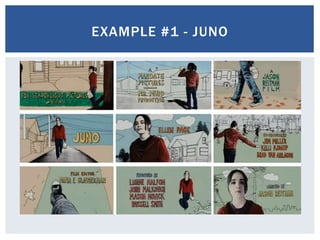
 The film ‘Juno’ does follow the usual conventions of title sequence and
it has the usual layout.
 It begins following it with the credit for the production company ‘Fox
Searchlight Pictures’ which is meant to be first in the title sequence. It
then goes on to say the directors name and then the name of the
producer of the film.
 Following this it then goes on to say the names of the main
actors/actresses in the film. For example in Juno one of the key roles is
played by actress Ellen Page. The only thing that doesn’t make it fit is
that the name of the film is usually after the actors but overall it still
fits the conventions.
 Finally it tells us the names of the remaining crew who helped to
create the film like the editors and co-producers for example. These
aren’t as big as the director and producer so they are mentioned later
on.
 Non-diegetic sound with music playing throughout rather than dialogue
which is used to create an atmosphere for the movie from the get go. It
is used in a conventional way and it backs the visuals that we see
making us view it in a quirky way.
ANALYSIS OF JUNO
EXAMPLE #2 – SE7EN
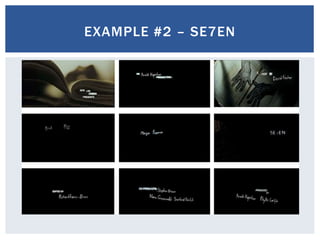
 The film ‘Se7en’ does also follow the conventions of a title
sequence.
 The beginning of it displays to us the production companies name
which in this case is called ‘New Line Cinema’. This is the start
which is where it is usually meant to be.
 We then see the names of the director and the producer which in
this case are David Fincher and Arnold Kopelson. This follows the
conventions and the order is correct.
 Listed next is the name of the top actors and actresses of the
movies like Brad Pitt and Morgan Freeman, such worldwide icons.
This is then followed by the name of the film ‘Se7en’ and then the
names of the other crew members who helped create the film like
the smaller roles.
 Everything is ordered correctly and it Se7en follows the title
sequence conventions.
 Again, non-diegetic sound used throughout to create an atmosphere
and a mood for the audience. Allows them to thing about it.
ANALYSIS OF SE7EN
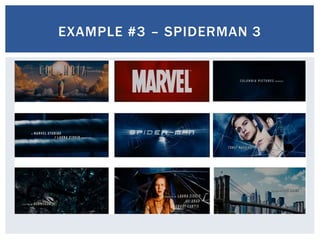
EXAMPLE #3 – SPIDERMAN 3
 Spiderman 3 is an example of a film that does not follow the
title sequence conventions. The order is switched between the
roles compared to what it should be.
 It begins with the name of the production company ‘Marvel
Studios’ and the other companies that helped like ‘Columbia
Pictures’ with the distribution and other stuff.
 However, the name of the director and producer doesn’t come up
next but rather they decide to show the name of the film and
also the different characters with the actors’/actresses’ names
beside. This means that it doesn’t follow the title sequence
conventions fully and they decided to switch it up.
 They also put the rest of the production crews’ names before the
director and the producers. The last things to show up out of all
was the name of the producer followed by the name of the
director of the film. This shows us it is not usual and it doesn’t
follow the typical conventions of the title sequence.
 It does however include non-diegetic sound through the music
rather than dialogue.
ANALYSIS OF SPIDERMAN 3

Title Sequence Conventions

  • 1.
    FORMAL CONVENTIONS OF AFILM TITLE SEQUENCE
  • 2.
     A filmtitle sequence is a method by which a film can present their main credits for the film with information like the names of characters or the production crew. It usually will show the most important people in the production process and the different companies that helped in some way with the creation of the film. It is usually 2-5 minutes in length.  Usually the names will be shown in three different styles which are conceptual, narrative or montage.  The main aim is to establish some sort of atmosphere, genre, mood or settings for the audience while still introducing characters or people from the production crew which could include producer, cameraman, director, editor as well as some of the actors.  There will usually some sort of non-diegetic sound to help accompany the visuals that appear in the title sequence. WHAT IS A FILM TITLE SEQUENCE?
  • 3.
     As mentionedthere are three different styles which are: - Montage - Narrative - Conceptual  These three things can all be styles used. The first one ‘montage’ is one which consists of a series of shots or small parts of the film put together to show us small snippets of the film without giving too much away.  The second one is the narrative style which is used to show what is happening and it gives us a base of knowledge through information that is given to us.  The third one is the conceptual style which is one that is used to show us the overall concept of the film but without giving away too much to the audience. THE 3 DIFFERENT STYLES
  • 4.
     Production Companies Director  Producer  Actors/Actresses  Name of Film  Remaining Crew Members WHAT ORDER DO THE CREDITS APPEAR?
  • 5.
  • 6.
     The film‘Juno’ does follow the usual conventions of title sequence and it has the usual layout.  It begins following it with the credit for the production company ‘Fox Searchlight Pictures’ which is meant to be first in the title sequence. It then goes on to say the directors name and then the name of the producer of the film.  Following this it then goes on to say the names of the main actors/actresses in the film. For example in Juno one of the key roles is played by actress Ellen Page. The only thing that doesn’t make it fit is that the name of the film is usually after the actors but overall it still fits the conventions.  Finally it tells us the names of the remaining crew who helped to create the film like the editors and co-producers for example. These aren’t as big as the director and producer so they are mentioned later on.  Non-diegetic sound with music playing throughout rather than dialogue which is used to create an atmosphere for the movie from the get go. It is used in a conventional way and it backs the visuals that we see making us view it in a quirky way. ANALYSIS OF JUNO
  • 7.
  • 8.
     The film‘Se7en’ does also follow the conventions of a title sequence.  The beginning of it displays to us the production companies name which in this case is called ‘New Line Cinema’. This is the start which is where it is usually meant to be.  We then see the names of the director and the producer which in this case are David Fincher and Arnold Kopelson. This follows the conventions and the order is correct.  Listed next is the name of the top actors and actresses of the movies like Brad Pitt and Morgan Freeman, such worldwide icons. This is then followed by the name of the film ‘Se7en’ and then the names of the other crew members who helped create the film like the smaller roles.  Everything is ordered correctly and it Se7en follows the title sequence conventions.  Again, non-diegetic sound used throughout to create an atmosphere and a mood for the audience. Allows them to thing about it. ANALYSIS OF SE7EN
  • 9.
    EXAMPLE #3 –SPIDERMAN 3
  • 10.
     Spiderman 3is an example of a film that does not follow the title sequence conventions. The order is switched between the roles compared to what it should be.  It begins with the name of the production company ‘Marvel Studios’ and the other companies that helped like ‘Columbia Pictures’ with the distribution and other stuff.  However, the name of the director and producer doesn’t come up next but rather they decide to show the name of the film and also the different characters with the actors’/actresses’ names beside. This means that it doesn’t follow the title sequence conventions fully and they decided to switch it up.  They also put the rest of the production crews’ names before the director and the producers. The last things to show up out of all was the name of the producer followed by the name of the director of the film. This shows us it is not usual and it doesn’t follow the typical conventions of the title sequence.  It does however include non-diegetic sound through the music rather than dialogue. ANALYSIS OF SPIDERMAN 3