
How to Train a Puppy That Bites 
When puppies play with people, they 
often bite, chew and mouth on people’s 
hands, limbs and clothing. 
This kind of behavior may seem cute 
when your puppy is seven weeks old, but 
it’s not nearly so endearing when he’s 
three or four months old-and getting 
bigger by the day!
What to Do About Puppy Mouthing 
The ultimate goal is to train your puppy to 
stop mouthing and biting people altogether. 
However, the first and most important 
objective is to teach him that people have 
very sensitive skin, so he must be very 
gentle when using his mouth.
Teach Your Puppy to Be Gentle 
A puppy or dog who hasn’t learned bite inhibition 
with people doesn’t recognize the sensitivity of 
human skin, and so he bites too hard, even in play. 
Some behaviorists and trainers believe that a dog 
who has learned to use his mouth gently when 
interacting with people will be less likely to bite 
hard and break skin if he ever bites someone in a 
situation apart from play-like when he’s afraid or in 
pain.
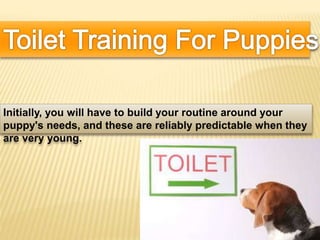
Initially, you will have to build your routine around your 
puppy's needs, and these are reliably predictable when they 
are very young.
Understanding the training 
There are two types of training you need to 
master to have a polite and well behaved 
dog. 
Behavioural training is important, it sets 
the standards your puppy needs to follow in 
their daily life. 
You need to teach your dog not to jump on 
people, beg for food, bark excessively, or 
chew the furniture.
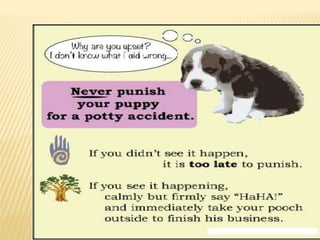
Potty training falls into this category, you need to reinforce 
where it is “ok” to go to the bathroom and where it is not. 
Consistency is key. Decide from day one the behaviours 
you want to reinforce, and stick to it. If you plan never to let 
your fully grown dog on the couch, don’t let them climb all 
over it as a puppy.
A full scope of the behavioural training every 
puppy needs is here, learn what it takes to 
make your dog become a joy to everyone who 
visits your house.
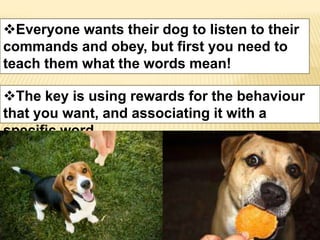
Everyone wants their dog to listen to their 
commands and obey, but first you need to 
teach them what the words mean! 
The key is using rewards for the behaviour 
that you want, and associating it with a 
specific word.
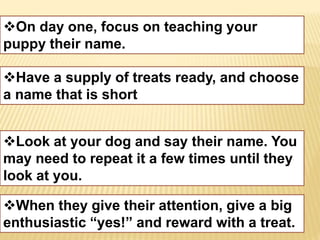
On day one, focus on teaching your 
puppy their name. 
Have a supply of treats ready, and choose 
a name that is short 
Look at your dog and say their name. You 
may need to repeat it a few times until they 
look at you. 
When they give their attention, give a big 
enthusiastic “yes!” and reward with a treat.
If your dog doesn’t look at you at all, 
a slight tug on their leash will turn their 
attention to you. 
After a couple of sessions, your dog 
will learn that when you say their name, 
you want their attention. 
Two things to be very careful of here. 
Never use your dog’s name to scold or 
punish bad behaviour, and don’t say it 
“too” often.
It should always be in this order, their name 
(to get attention) followed by the command. 
A fair warning – as you begin training you 
may get increasingly frustrated at your dog 
for not “understanding.” 
Just remember that English is a foreign 
language to them, and it will take time to 
associate meaning to the “funny sounds” you 
are making.
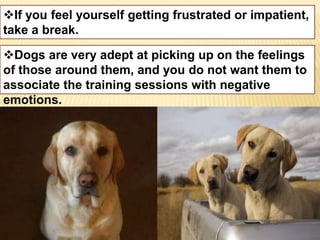
If you feel yourself getting frustrated or impatient, 
take a break. 
Dogs are very adept at picking up on the feelings 
of those around them, and you do not want them to 
associate the training sessions with negative 
emotions.
The most basic command for your dog to 
learn is sit. 
Take a treat in your hand and hold it above 
your dogs head. 
They will be very interested as they can 
smell the treat, and be looking up at the 
reward. With your free hand, gently push 
your dog into a sitting position while saying 
the command “sit”.
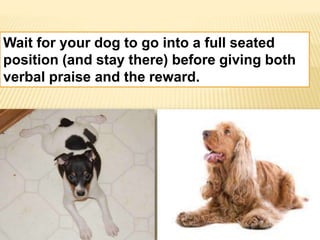
Wait for your dog to go into a full seated 
position (and stay there) before giving both 
verbal praise and the reward.
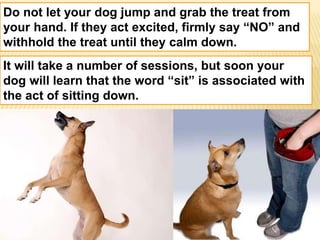
Do not let your dog jump and grab the treat from 
your hand. If they act excited, firmly say “NO” and 
withhold the treat until they calm down. 
It will take a number of sessions, but soon your 
dog will learn that the word “sit” is associated with 
the act of sitting down.
The next two commands for your dog 
to learn are stay & come. 
Once they know how to sit, you will 
find it much easier to get them to remain 
in one place. 
After your dog fully understands the 
sit command, and has been 
demonstrating this for a few days 
without your assistance it is time to 
progress.
After learning sit, stay and come the next 
command to teach is lie down. Once your dog 
has mastered the first three commands, take 
another treat and tell your dog to sit. 
Show that you have a reward in your hand, 
but don’t give it to your dog yet. 
Your dog should lie down to reach the treat. 
If they stand up, do not reward the dog. Say 
“NO”, and start the training over.
Regardless of size, all dogs need to be 
taken on daily walks, for at least 30 minutes of 
exercise. 
Taking your dog for a walk allows them to 
release any mental and physical energy that 
has built up, and gives you also a breath of 
fresh air. 
Dogs are pack animals, needing both 
leadership and exercise. It’s up to you to be 
your dog’s master.
Successfully training your dog will 
give you a well mannered pet that is 
happy, healthy and responds to your 
commands. 
It only takes a couple of short 
training sessions each day to 
reinforce the behaviours you want, 
why not get started today?
Tips to train your puppy

Tips to train your puppy

  • 2.
    How to Traina Puppy That Bites When puppies play with people, they often bite, chew and mouth on people’s hands, limbs and clothing. This kind of behavior may seem cute when your puppy is seven weeks old, but it’s not nearly so endearing when he’s three or four months old-and getting bigger by the day!
  • 4.
    What to DoAbout Puppy Mouthing The ultimate goal is to train your puppy to stop mouthing and biting people altogether. However, the first and most important objective is to teach him that people have very sensitive skin, so he must be very gentle when using his mouth.
  • 5.
    Teach Your Puppyto Be Gentle A puppy or dog who hasn’t learned bite inhibition with people doesn’t recognize the sensitivity of human skin, and so he bites too hard, even in play. Some behaviorists and trainers believe that a dog who has learned to use his mouth gently when interacting with people will be less likely to bite hard and break skin if he ever bites someone in a situation apart from play-like when he’s afraid or in pain.
  • 7.
    Initially, you willhave to build your routine around your puppy's needs, and these are reliably predictable when they are very young.
  • 12.
    Understanding the training There are two types of training you need to master to have a polite and well behaved dog. Behavioural training is important, it sets the standards your puppy needs to follow in their daily life. You need to teach your dog not to jump on people, beg for food, bark excessively, or chew the furniture.
  • 13.
    Potty training fallsinto this category, you need to reinforce where it is “ok” to go to the bathroom and where it is not. Consistency is key. Decide from day one the behaviours you want to reinforce, and stick to it. If you plan never to let your fully grown dog on the couch, don’t let them climb all over it as a puppy.
  • 14.
    A full scopeof the behavioural training every puppy needs is here, learn what it takes to make your dog become a joy to everyone who visits your house.
  • 15.
    Everyone wants theirdog to listen to their commands and obey, but first you need to teach them what the words mean! The key is using rewards for the behaviour that you want, and associating it with a specific word.
  • 16.
    On day one,focus on teaching your puppy their name. Have a supply of treats ready, and choose a name that is short Look at your dog and say their name. You may need to repeat it a few times until they look at you. When they give their attention, give a big enthusiastic “yes!” and reward with a treat.
  • 17.
    If your dogdoesn’t look at you at all, a slight tug on their leash will turn their attention to you. After a couple of sessions, your dog will learn that when you say their name, you want their attention. Two things to be very careful of here. Never use your dog’s name to scold or punish bad behaviour, and don’t say it “too” often.
  • 20.
    It should alwaysbe in this order, their name (to get attention) followed by the command. A fair warning – as you begin training you may get increasingly frustrated at your dog for not “understanding.” Just remember that English is a foreign language to them, and it will take time to associate meaning to the “funny sounds” you are making.
  • 21.
    If you feelyourself getting frustrated or impatient, take a break. Dogs are very adept at picking up on the feelings of those around them, and you do not want them to associate the training sessions with negative emotions.
  • 22.
    The most basiccommand for your dog to learn is sit. Take a treat in your hand and hold it above your dogs head. They will be very interested as they can smell the treat, and be looking up at the reward. With your free hand, gently push your dog into a sitting position while saying the command “sit”.
  • 23.
    Wait for yourdog to go into a full seated position (and stay there) before giving both verbal praise and the reward.
  • 24.
    Do not letyour dog jump and grab the treat from your hand. If they act excited, firmly say “NO” and withhold the treat until they calm down. It will take a number of sessions, but soon your dog will learn that the word “sit” is associated with the act of sitting down.
  • 25.
    The next twocommands for your dog to learn are stay & come. Once they know how to sit, you will find it much easier to get them to remain in one place. After your dog fully understands the sit command, and has been demonstrating this for a few days without your assistance it is time to progress.
  • 26.
    After learning sit,stay and come the next command to teach is lie down. Once your dog has mastered the first three commands, take another treat and tell your dog to sit. Show that you have a reward in your hand, but don’t give it to your dog yet. Your dog should lie down to reach the treat. If they stand up, do not reward the dog. Say “NO”, and start the training over.
  • 28.
    Regardless of size,all dogs need to be taken on daily walks, for at least 30 minutes of exercise. Taking your dog for a walk allows them to release any mental and physical energy that has built up, and gives you also a breath of fresh air. Dogs are pack animals, needing both leadership and exercise. It’s up to you to be your dog’s master.
  • 29.
    Successfully training yourdog will give you a well mannered pet that is happy, healthy and responds to your commands. It only takes a couple of short training sessions each day to reinforce the behaviours you want, why not get started today?