
Tips for Launching a Pop-up
Shop
How to go From Idea to Sales
What is a Pop-up Shop?
(also known as temporary retail, flash retailing, pop-up store, or pop-up shop)
Pop-up shops are temporary retail spaces that sell
merchandise.
Pop-up shops are typically open anywhere from 1
day to 4 months.
What is Sold at a Pop-up Shop?
• Clothing
• Jewelry
• Art
• Crafts
• Tech gadgets
• Food
* Whatever you are selling
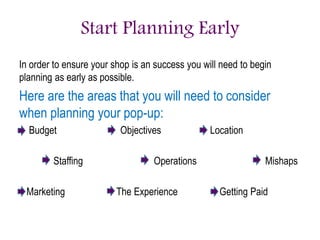
Start Planning Early
In order to ensure your shop is an success you will need to begin
planning as early as possible.
Here are the areas that you will need to consider
when planning your pop-up:
Budget Objectives Location
Staffing Operations Mishaps
Marketing The Experience Getting Paid
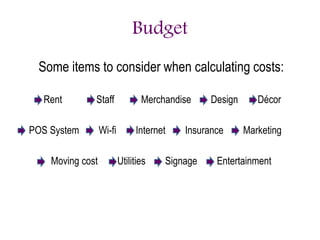
Budget
Some items to consider when calculating costs:
Rent Staff Merchandise Design Décor
POS System Wi-fi Internet Insurance Marketing
Moving cost Utilities Signage Entertainment
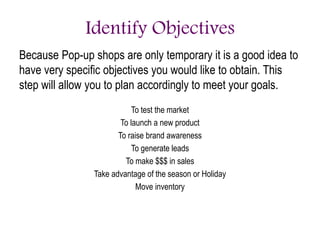
Identify Objectives
Because Pop-up shops are only temporary it is a good idea to
have very specific objectives you would like to obtain. This
step will allow you to plan accordingly to meet your goals.
To test the market
To launch a new product
To raise brand awareness
To generate leads
To make $$$ in sales
Take advantage of the season or Holiday
Move inventory
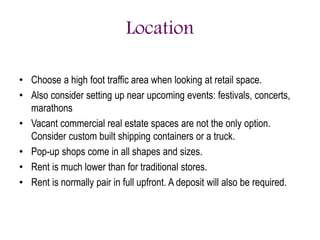
Location
• Choose a high foot traffic area when looking at retail space.
• Also consider setting up near upcoming events: festivals, concerts,
marathons
• Vacant commercial real estate spaces are not the only option.
Consider custom built shipping containers or a truck.
• Pop-up shops come in all shapes and sizes.
• Rent is much lower than for traditional stores.
• Rent is normally pair in full upfront. A deposit will also be required.
Rental Questions
1. What are you allowed to do? (paint walls, nail something
to the walls, build out areas)
2. What is included in the building? (bathrooms, storage,
dressing rooms, electricity, running water)
3. What will you have to do yourself? (provide/ build dressing
rooms, build counter space, pay for labor)
4. What is the cancellation policy. Will your deposit be
refunded?
Staffing
The type of pop-up – a restaurant or a small retail shop – will determine
if staff is needed. If you are unable to run the pop-up alone then you will
have to answer the following questions.
How many employees will you need?
What will you pay?
How will you train them?
Is security needed?
Make sure to comply with all state and federal laws when it comes to
employees. Even temporary ones.
Operations and Mishaps
Have a detailed plan in place:
* Store hours
* Opening and closing procedures
* Dealing with shoplifters
* What to do in case of an emergency
* Securing profits throughout the day
Design
3 areas to consider:
1. Signage and Decals
2. Windows and Outside Displays
3. In-Store Displays, Merchandise, and Inventory
Signage and Decals
Outside signage should have name of shop, hours, website url, and
social media handles.
Include the words “pop-up” on the outside signage to convey to those
passing by that time is of the essence to come in and visit.
A sandwich board is a great way to share daily deals.
Place indoor signage in places that are easy to see and read.
All font on all signage should be clear and easy to read.
Windows and Outside Displays
Your exterior is your first impression.
Use your window(s) to tell a story.
Use your best inventory as the focal point
Do not block the view with signage or decals
Allow space for people to see into the store
If your pop-up shop is for a month or more – consider
window display changes to keep things fresh and interesting.
In-Store Displays, Merchandise, and
Inventory
When designing your space keep the space open and bright.
Décor should not only reflect your brand, but the season.
Do not clutter the space with merchandise.
Put out your best sellers or newest product as the focal point.
*Think outside the box when it comes to in-store displays
Thrift shop finds Crates Barrels Old Dressers
Marketing
Since, a pop-up is only a temporary space it is important to
spread the word as quickly and effectively as possible.
• Start with your existing customers
• Social media is important
• Get in contact with local media
• Build relationships with local influencers
• Partner with other businesses
*Pop-ups are also great way to market your business and/or products.
The Customer Experience
It does not matter if the pop-up shop is 1 day or 4 months you have to
give the customer awesome an awesome experience when they arrive.
Quality merchandise Latest trends Clean Shop
Interactive display Games Refreshments Contests
Easy pay Music Friendly Service Inviting space
Exclusive Deals
Getting Paid
• It is important to decide what type of payments you will accept before
you open.
• Point-of-sale systems can be operated on mobile devices. This
eliminates the need for high cost registers and software. It also
allows you to manage your shop on the go.
• Research POS system companies online to find affordable pricing
that is scaled to the size of the business.
Follow-up
Hopefully, you were able to grow your social media
following online. As well as, gather email addresses of
customers who visited the shop. Don’t forget to thank
everyone for their support.
Also, make sure to stay in-touch with your customers
letting them know what is the latest news and offers
from your business.
Post Pop-up Evaluation
Did you achieve the objectives you set in the
beginning?
What did you learn?
What would you do different?
Will you “pop-up” again? Why? Why not?
Created by
Sharon M Rainey
Owner
Awesomely Shared, LLC
www.awesomelyshared.com

Tips for Launching a Pop-up Shop

  • 1.
    Tips for Launchinga Pop-up Shop How to go From Idea to Sales
  • 2.
    What is aPop-up Shop? (also known as temporary retail, flash retailing, pop-up store, or pop-up shop) Pop-up shops are temporary retail spaces that sell merchandise. Pop-up shops are typically open anywhere from 1 day to 4 months.
  • 3.
    What is Soldat a Pop-up Shop? • Clothing • Jewelry • Art • Crafts • Tech gadgets • Food * Whatever you are selling
  • 4.
    Start Planning Early Inorder to ensure your shop is an success you will need to begin planning as early as possible. Here are the areas that you will need to consider when planning your pop-up: Budget Objectives Location Staffing Operations Mishaps Marketing The Experience Getting Paid
  • 5.
    Budget Some items toconsider when calculating costs: Rent Staff Merchandise Design Décor POS System Wi-fi Internet Insurance Marketing Moving cost Utilities Signage Entertainment
  • 6.
    Identify Objectives Because Pop-upshops are only temporary it is a good idea to have very specific objectives you would like to obtain. This step will allow you to plan accordingly to meet your goals. To test the market To launch a new product To raise brand awareness To generate leads To make $$$ in sales Take advantage of the season or Holiday Move inventory
  • 7.
    Location • Choose ahigh foot traffic area when looking at retail space. • Also consider setting up near upcoming events: festivals, concerts, marathons • Vacant commercial real estate spaces are not the only option. Consider custom built shipping containers or a truck. • Pop-up shops come in all shapes and sizes. • Rent is much lower than for traditional stores. • Rent is normally pair in full upfront. A deposit will also be required.
  • 8.
    Rental Questions 1. Whatare you allowed to do? (paint walls, nail something to the walls, build out areas) 2. What is included in the building? (bathrooms, storage, dressing rooms, electricity, running water) 3. What will you have to do yourself? (provide/ build dressing rooms, build counter space, pay for labor) 4. What is the cancellation policy. Will your deposit be refunded?
  • 9.
    Staffing The type ofpop-up – a restaurant or a small retail shop – will determine if staff is needed. If you are unable to run the pop-up alone then you will have to answer the following questions. How many employees will you need? What will you pay? How will you train them? Is security needed? Make sure to comply with all state and federal laws when it comes to employees. Even temporary ones.
  • 10.
    Operations and Mishaps Havea detailed plan in place: * Store hours * Opening and closing procedures * Dealing with shoplifters * What to do in case of an emergency * Securing profits throughout the day
  • 11.
    Design 3 areas toconsider: 1. Signage and Decals 2. Windows and Outside Displays 3. In-Store Displays, Merchandise, and Inventory
  • 12.
    Signage and Decals Outsidesignage should have name of shop, hours, website url, and social media handles. Include the words “pop-up” on the outside signage to convey to those passing by that time is of the essence to come in and visit. A sandwich board is a great way to share daily deals. Place indoor signage in places that are easy to see and read. All font on all signage should be clear and easy to read.
  • 13.
    Windows and OutsideDisplays Your exterior is your first impression. Use your window(s) to tell a story. Use your best inventory as the focal point Do not block the view with signage or decals Allow space for people to see into the store If your pop-up shop is for a month or more – consider window display changes to keep things fresh and interesting.
  • 14.
    In-Store Displays, Merchandise,and Inventory When designing your space keep the space open and bright. Décor should not only reflect your brand, but the season. Do not clutter the space with merchandise. Put out your best sellers or newest product as the focal point. *Think outside the box when it comes to in-store displays Thrift shop finds Crates Barrels Old Dressers
  • 15.
    Marketing Since, a pop-upis only a temporary space it is important to spread the word as quickly and effectively as possible. • Start with your existing customers • Social media is important • Get in contact with local media • Build relationships with local influencers • Partner with other businesses *Pop-ups are also great way to market your business and/or products.
  • 16.
    The Customer Experience Itdoes not matter if the pop-up shop is 1 day or 4 months you have to give the customer awesome an awesome experience when they arrive. Quality merchandise Latest trends Clean Shop Interactive display Games Refreshments Contests Easy pay Music Friendly Service Inviting space Exclusive Deals
  • 17.
    Getting Paid • Itis important to decide what type of payments you will accept before you open. • Point-of-sale systems can be operated on mobile devices. This eliminates the need for high cost registers and software. It also allows you to manage your shop on the go. • Research POS system companies online to find affordable pricing that is scaled to the size of the business.
  • 18.
    Follow-up Hopefully, you wereable to grow your social media following online. As well as, gather email addresses of customers who visited the shop. Don’t forget to thank everyone for their support. Also, make sure to stay in-touch with your customers letting them know what is the latest news and offers from your business.
  • 19.
    Post Pop-up Evaluation Didyou achieve the objectives you set in the beginning? What did you learn? What would you do different? Will you “pop-up” again? Why? Why not?
  • 20.
    Created by Sharon MRainey Owner Awesomely Shared, LLC www.awesomelyshared.com