Reduce risk of timber pest damage
do not store firewood under or against building
do not store cellulose or timber products in the
subfloor, under the house or against a basement
wall
repair leaks in taps, shower bases, hot water
pressure relief valves
repair leaking gutters, downpipes
maintain paintwork to external timbers especially
sills, joints and ends
remove untreated timbers in ground contact
remove old formwork under suspended concrete,
eg stairs, bathrooms, porchs, fireplaces
Locate colonies in trees, stumps and landscape
timbers
eradicate if the termite species is destructive
Ventilation
clear/clean ventilators. Remove planting
obstructing air flow.
increase ventilation where necessary especially
where ground level is close to flooring, at junction
of slab on ground and timber floors, where missing
at corners, or if existing ventilators are inadequate
fit fan assisted ventilation where natural ventilation
is unsatisfactory
Drainage
inspect and verify that the existing stormwater
system is working
grade (or fill with concrete mix) areas where
ponding of water is occurring in the subfloor
provide drainage pipework where necessary.
Installation of subsoil drainage on the uphill side
of the main building may help stop water entering
under the house
grade paving and external soils away from the
building
Termites
carefully check any timber in ground contact
especially landscape timbers, post/stair bases, soft
masonry without antcaps, ANY untreated structures
above ALL slabs on ground where slab edge is not
visible for inspection.
Wood rot
carefully check joints/ends in all weather or moisture
exposed timbers especially handrails, windows and
doors, roof timbers, bottom of door frames, bottom
of posts/stairs in ground contact, timbers built into
masonry/tiles, ends of stair treads, weatherboards,
under leaking showers/baths, older timbers
Borers
carefully check pine flooring, stair timbers, fireplace
timbers, older lining boards, cupboard shelves, pine
furniture
Bait stations
install bait stations to perimeter of main structures to
provide early warning of termite activity
concentrate in gardens close to building and in line
with main risk areas such as trees or known colonies
Periodic inspection
be especially vigilant about termite entry at vertical
joint between masonry and timber, breakout in
isolated areas inside cupboards, top of skirtings and
at edge of floor under carpet
obtain professional advice if any activity detected
carry out a timber pest inspection in accordance
with AS 4349.3 at no more than 12 monthly intervals
inspect bait stations every 3 months
Where to find help
Pest Pack — a consumers’ guide to do-it-yourself
pest inspections (Tyrrells Property Inspections)
Keeping Pests out of Buildings (Standards Australia)
TIMBERPEST
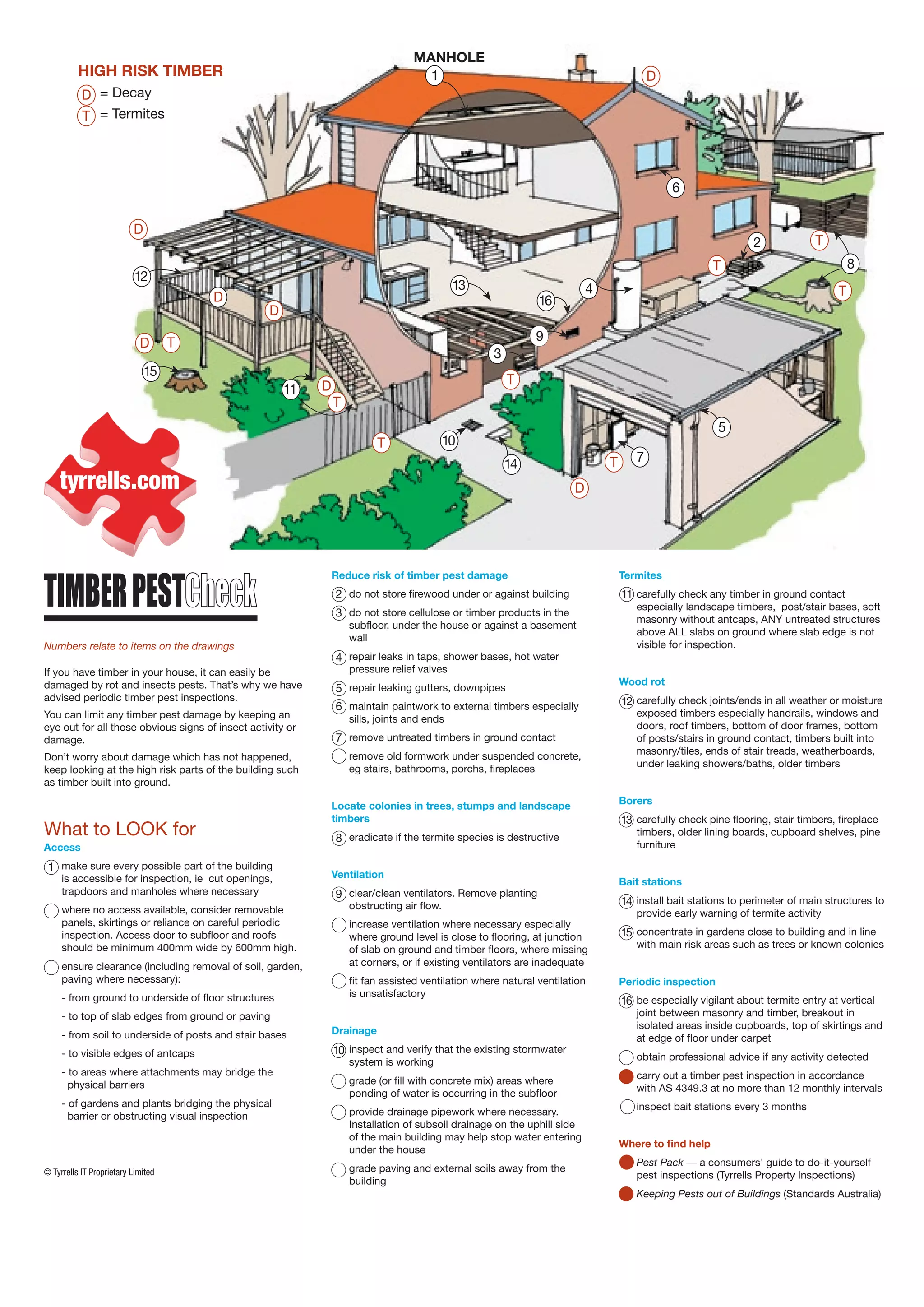
Numbers relate to items on the drawings
If you have timber in your house, it can easily be
damaged by rot and insects pests. That’s why we have
advised periodic timber pest inspections.
You can limit any timber pest damage by keeping an
eye out for all those obvious signs of insect activity or
damage.
Don’t worry about damage which has not happened,
keep looking at the high risk parts of the building such
as timber built into ground.
What to LOOK for
Access
make sure every possible part of the building
is accessible for inspection, ie cut openings,
trapdoors and manholes where necessary
where no access available, consider removable
panels, skirtings or reliance on careful periodic
inspection. Access door to subfloor and roofs
should be minimum 400mm wide by 600mm high.
ensure clearance (including removal of soil, garden,
paving where necessary):
- from ground to underside of floor structures
- to top of slab edges from ground or paving
- from soil to underside of posts and stair bases
- to visible edges of antcaps
- to areas where attachments may bridge the
physical barriers
- of gardens and plants bridging the physical
barrier or obstructing visual inspection
© Tyrrells IT Proprietary Limited
1
10
9
6
3
8
7
5
4
1
2
10
15
13
16
12
11
14
9
2
8
7
4
3
6
5
13
14
15
16
12
11
D
T
D
D
D
D
D
D
T
T
T
T
T
T
T
HIGH RISK TIMBER
= Decay
= Termites
D
T
MANHOLE
tyrrells.com

TImber and pest check infographic

  • 1.
    Reduce risk oftimber pest damage do not store firewood under or against building do not store cellulose or timber products in the subfloor, under the house or against a basement wall repair leaks in taps, shower bases, hot water pressure relief valves repair leaking gutters, downpipes maintain paintwork to external timbers especially sills, joints and ends remove untreated timbers in ground contact remove old formwork under suspended concrete, eg stairs, bathrooms, porchs, fireplaces Locate colonies in trees, stumps and landscape timbers eradicate if the termite species is destructive Ventilation clear/clean ventilators. Remove planting obstructing air flow. increase ventilation where necessary especially where ground level is close to flooring, at junction of slab on ground and timber floors, where missing at corners, or if existing ventilators are inadequate fit fan assisted ventilation where natural ventilation is unsatisfactory Drainage inspect and verify that the existing stormwater system is working grade (or fill with concrete mix) areas where ponding of water is occurring in the subfloor provide drainage pipework where necessary. Installation of subsoil drainage on the uphill side of the main building may help stop water entering under the house grade paving and external soils away from the building Termites carefully check any timber in ground contact especially landscape timbers, post/stair bases, soft masonry without antcaps, ANY untreated structures above ALL slabs on ground where slab edge is not visible for inspection. Wood rot carefully check joints/ends in all weather or moisture exposed timbers especially handrails, windows and doors, roof timbers, bottom of door frames, bottom of posts/stairs in ground contact, timbers built into masonry/tiles, ends of stair treads, weatherboards, under leaking showers/baths, older timbers Borers carefully check pine flooring, stair timbers, fireplace timbers, older lining boards, cupboard shelves, pine furniture Bait stations install bait stations to perimeter of main structures to provide early warning of termite activity concentrate in gardens close to building and in line with main risk areas such as trees or known colonies Periodic inspection be especially vigilant about termite entry at vertical joint between masonry and timber, breakout in isolated areas inside cupboards, top of skirtings and at edge of floor under carpet obtain professional advice if any activity detected carry out a timber pest inspection in accordance with AS 4349.3 at no more than 12 monthly intervals inspect bait stations every 3 months Where to find help Pest Pack — a consumers’ guide to do-it-yourself pest inspections (Tyrrells Property Inspections) Keeping Pests out of Buildings (Standards Australia) TIMBERPEST Numbers relate to items on the drawings If you have timber in your house, it can easily be damaged by rot and insects pests. That’s why we have advised periodic timber pest inspections. You can limit any timber pest damage by keeping an eye out for all those obvious signs of insect activity or damage. Don’t worry about damage which has not happened, keep looking at the high risk parts of the building such as timber built into ground. What to LOOK for Access make sure every possible part of the building is accessible for inspection, ie cut openings, trapdoors and manholes where necessary where no access available, consider removable panels, skirtings or reliance on careful periodic inspection. Access door to subfloor and roofs should be minimum 400mm wide by 600mm high. ensure clearance (including removal of soil, garden, paving where necessary): - from ground to underside of floor structures - to top of slab edges from ground or paving - from soil to underside of posts and stair bases - to visible edges of antcaps - to areas where attachments may bridge the physical barriers - of gardens and plants bridging the physical barrier or obstructing visual inspection © Tyrrells IT Proprietary Limited 1 10 9 6 3 8 7 5 4 1 2 10 15 13 16 12 11 14 9 2 8 7 4 3 6 5 13 14 15 16 12 11 D T D D D D D D T T T T T T T HIGH RISK TIMBER = Decay = Termites D T MANHOLE tyrrells.com