Agenda
1. Integration in Cloud Era
2. TIBCO eco-system
3. Anypoint Platform
4. Conclusion
5. Q&A
Cloud speeds innovation & agility
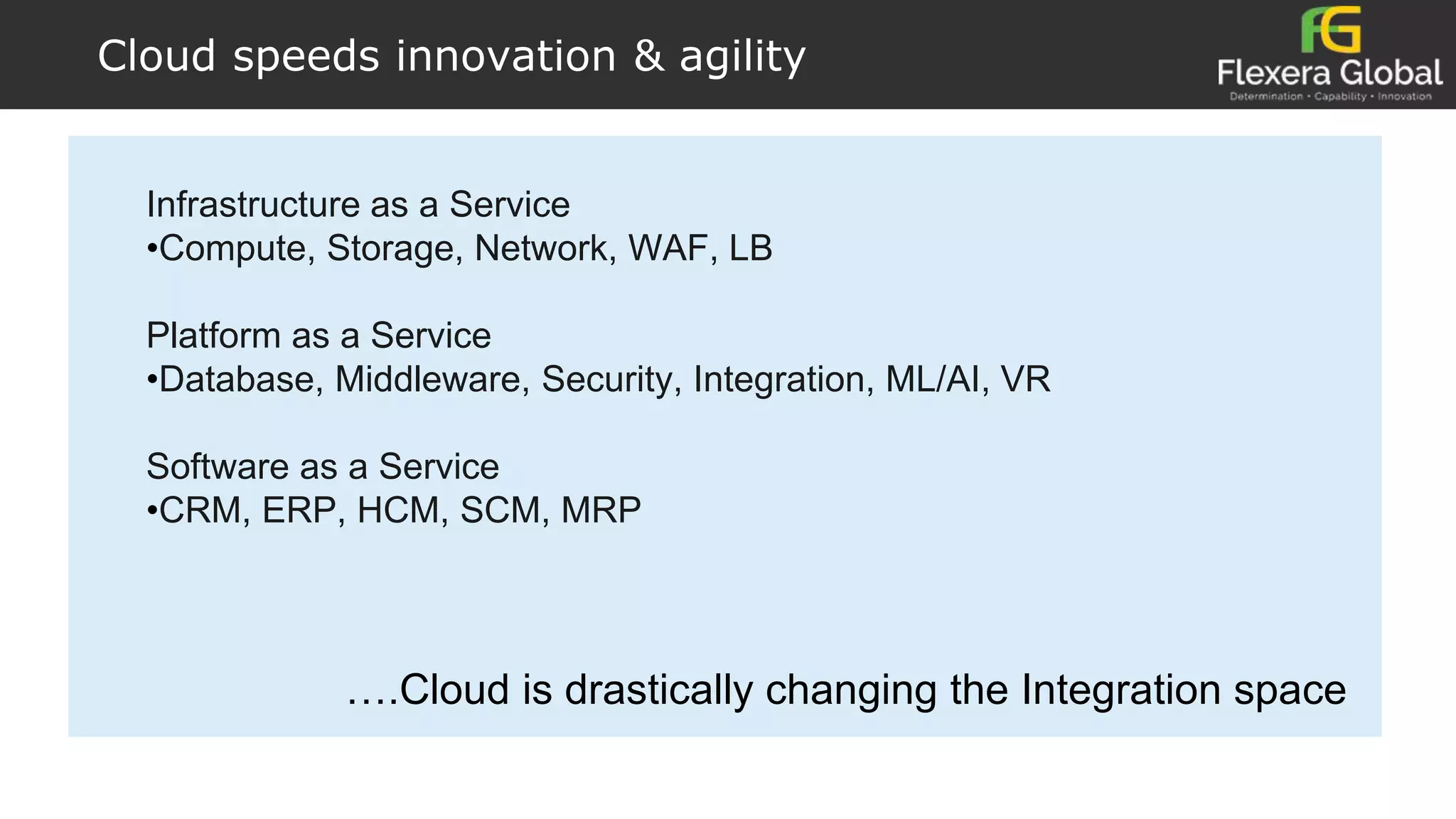
Infrastructure as a Service
•Compute, Storage, Network, WAF, LB
Platform as a Service
•Database, Middleware, Security, Integration, ML/AI, VR
Software as a Service
•CRM, ERP, HCM, SCM, MRP
….Cloud is drastically changing the Integration space
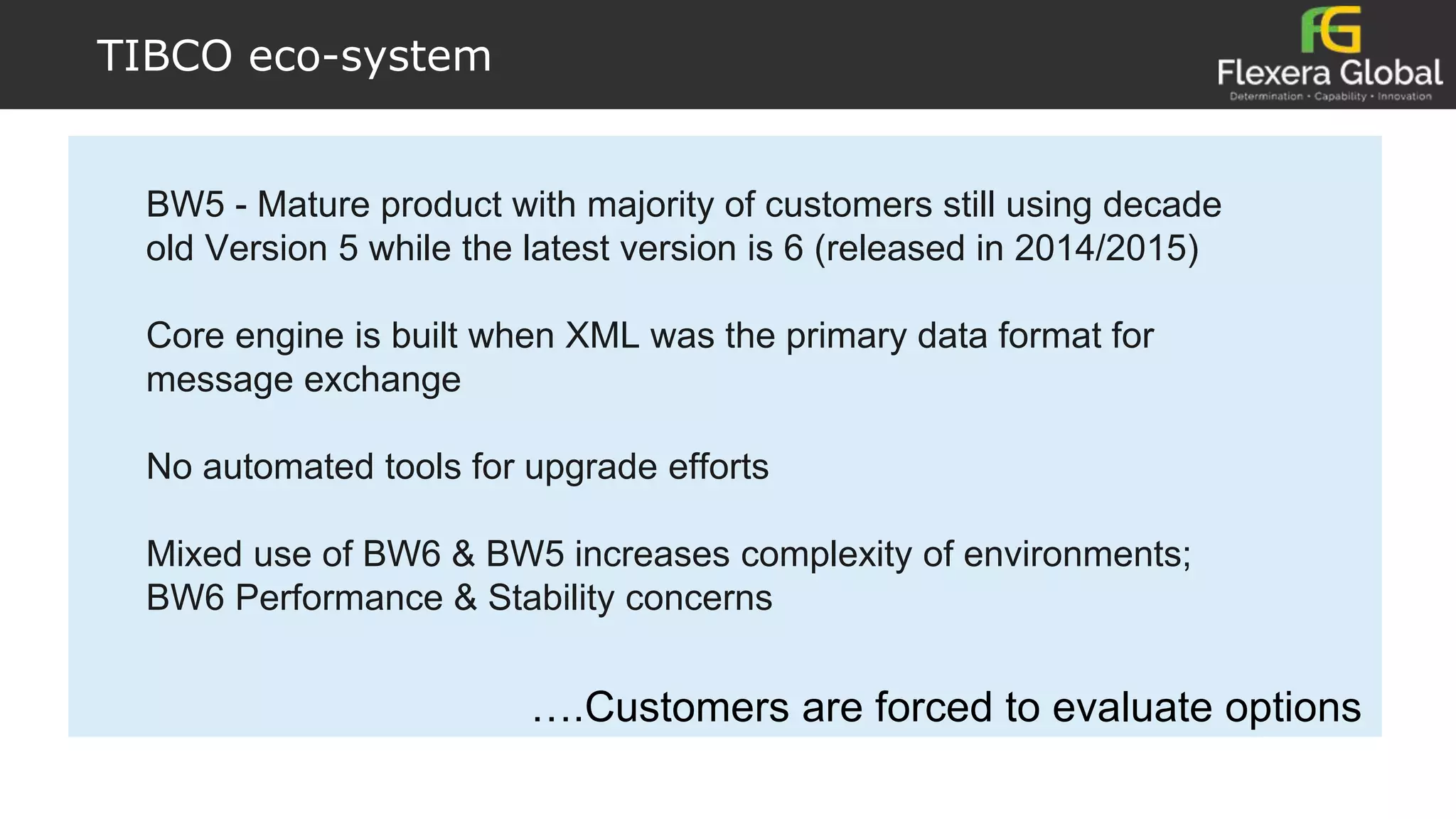
TIBCO eco-system
….Customers are forced to evaluate options
BW5 - Mature product with majority of customers still using decade
old Version 5 while the latest version is 6 (released in 2014/2015)
Core engine is built when XML was the primary data format for
message exchange
No automated tools for upgrade efforts
Mixed use of BW6 & BW5 increases complexity of environments;
BW6 Performance & Stability concerns
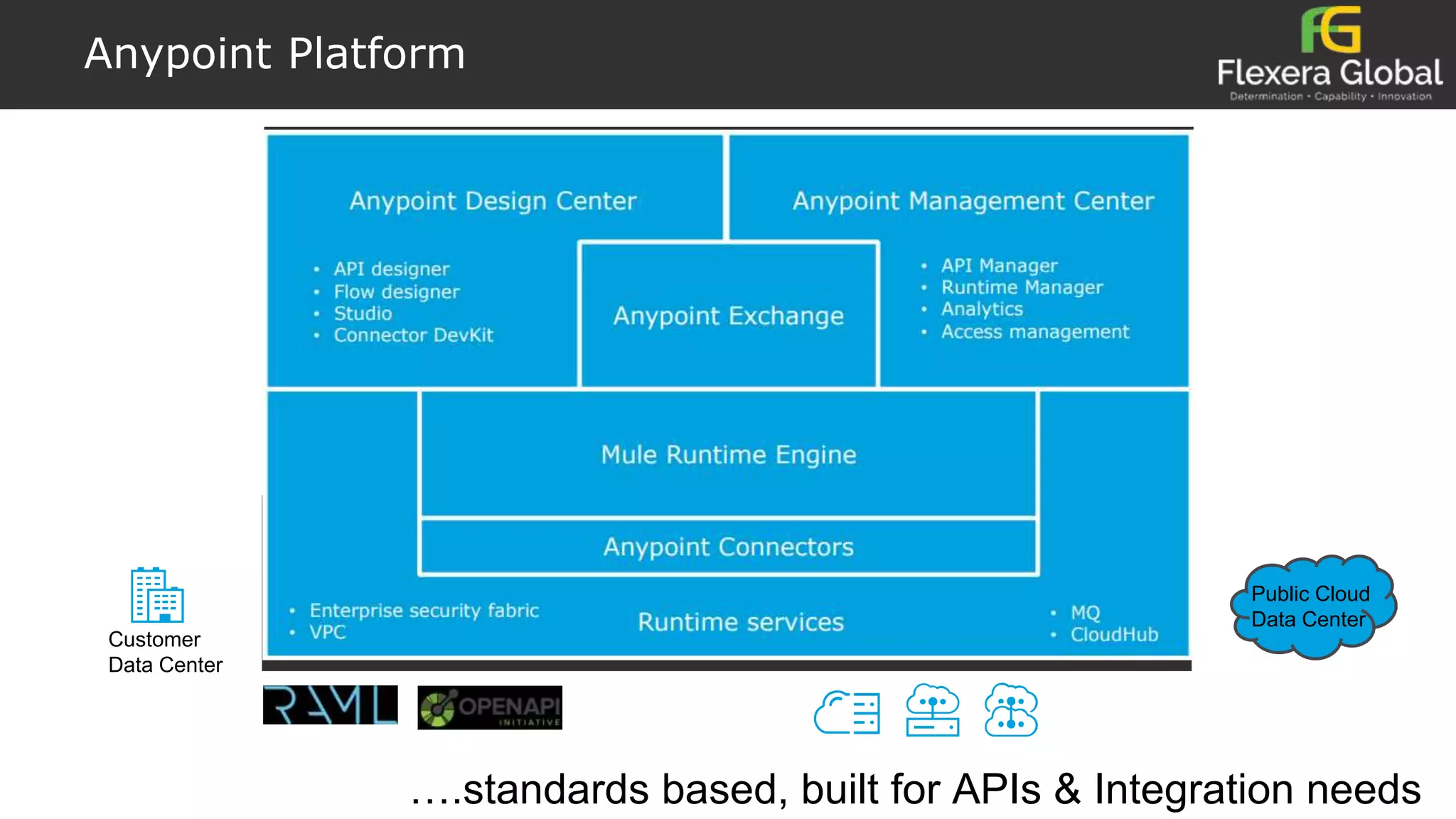
Anypoint Platform
Customer
Data Center
Public Cloud
Data Center
….standards based, built for APIs & Integration needs
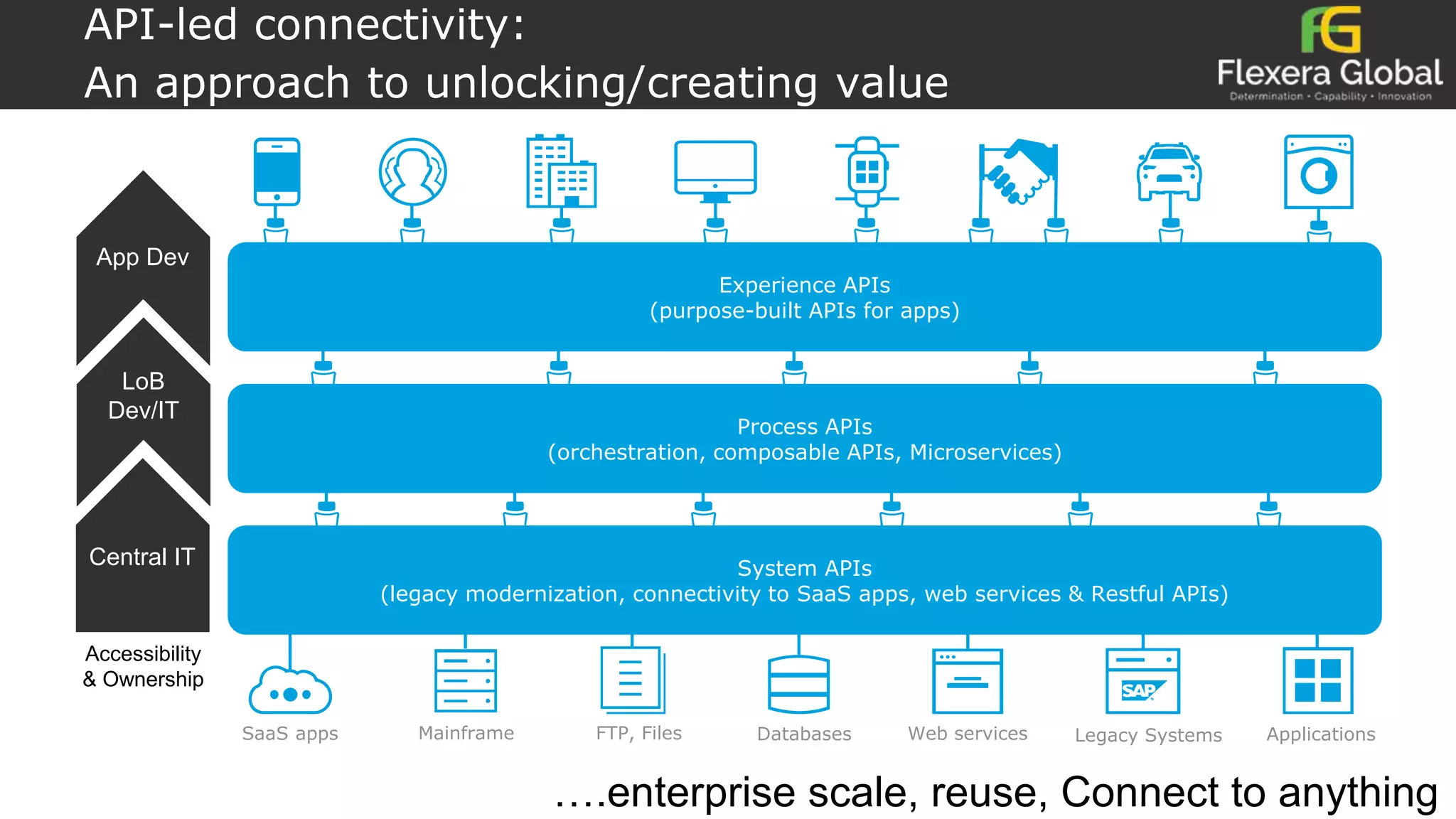
API-led connectivity:
An approach to unlocking/creating value
System APIs
(legacy modernization, connectivity to SaaS apps, web services & Restful APIs)
Process APIs
(orchestration, composable APIs, Microservices)
Experience APIs
(purpose-built APIs for apps)
Mainframe FTP, Files Databases Legacy SystemsSaaS apps ApplicationsWeb services
Central IT
LoB
Dev/IT
App Dev
Accessibility
& Ownership
….enterprise scale, reuse, Connect to anything
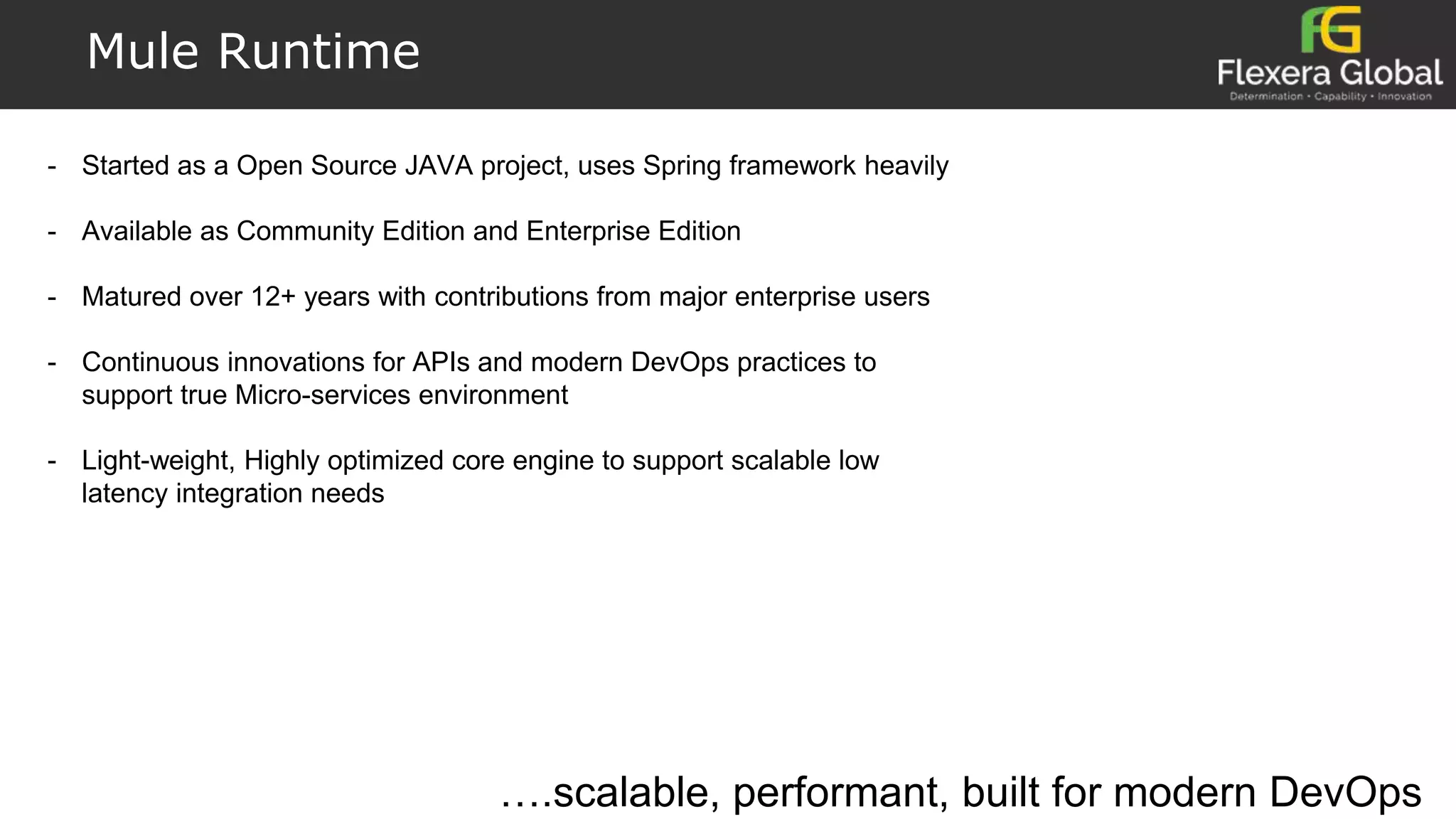
Mule Runtime
- Started as a Open Source JAVA project, uses Spring framework heavily
- Available as Community Edition and Enterprise Edition
- Matured over 12+ years with contributions from major enterprise users
- Continuous innovations for APIs and modern DevOps practices to
support true Micro-services environment
- Light-weight, Highly optimized core engine to support scalable low
latency integration needs
….scalable, performant, built for modern DevOps
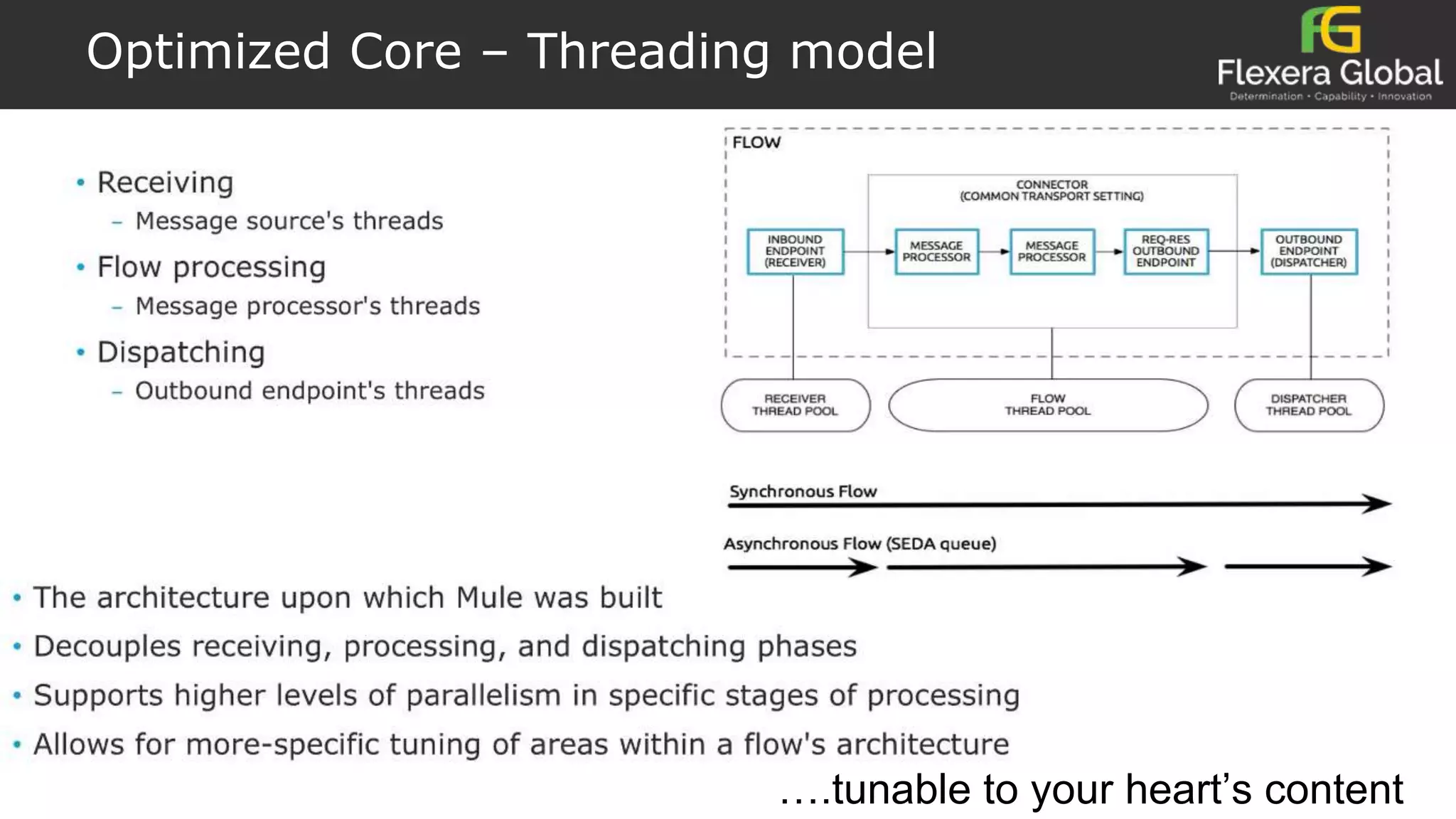
Optimized Core – Threading model
….tunable to your heart’s content
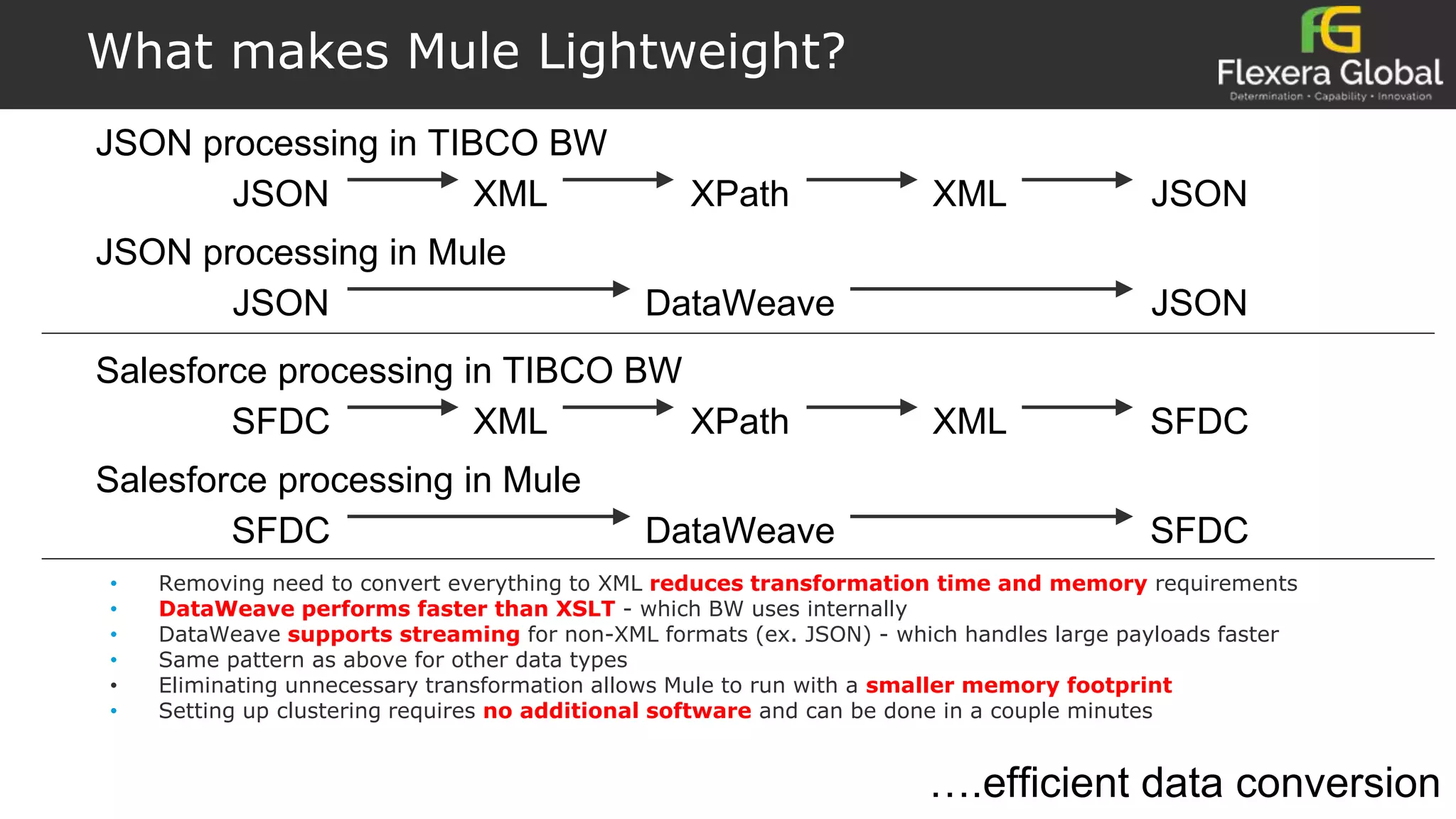
What makes Mule Lightweight?
XMLJSON XPath XML JSON
JSON processing in TIBCO BW
JSON DataWeave JSON
JSON processing in Mule
XMLSFDC XPath XML SFDC
Salesforce processing in TIBCO BW
SFDC DataWeave SFDC
Salesforce processing in Mule
• Removing need to convert everything to XML reduces transformation time and memory requirements
• DataWeave performs faster than XSLT - which BW uses internally
• DataWeave supports streaming for non-XML formats (ex. JSON) - which handles large payloads faster
• Same pattern as above for other data types
• Eliminating unnecessary transformation allows Mule to run with a smaller memory footprint
• Setting up clustering requires no additional software and can be done in a couple minutes
….efficient data conversion
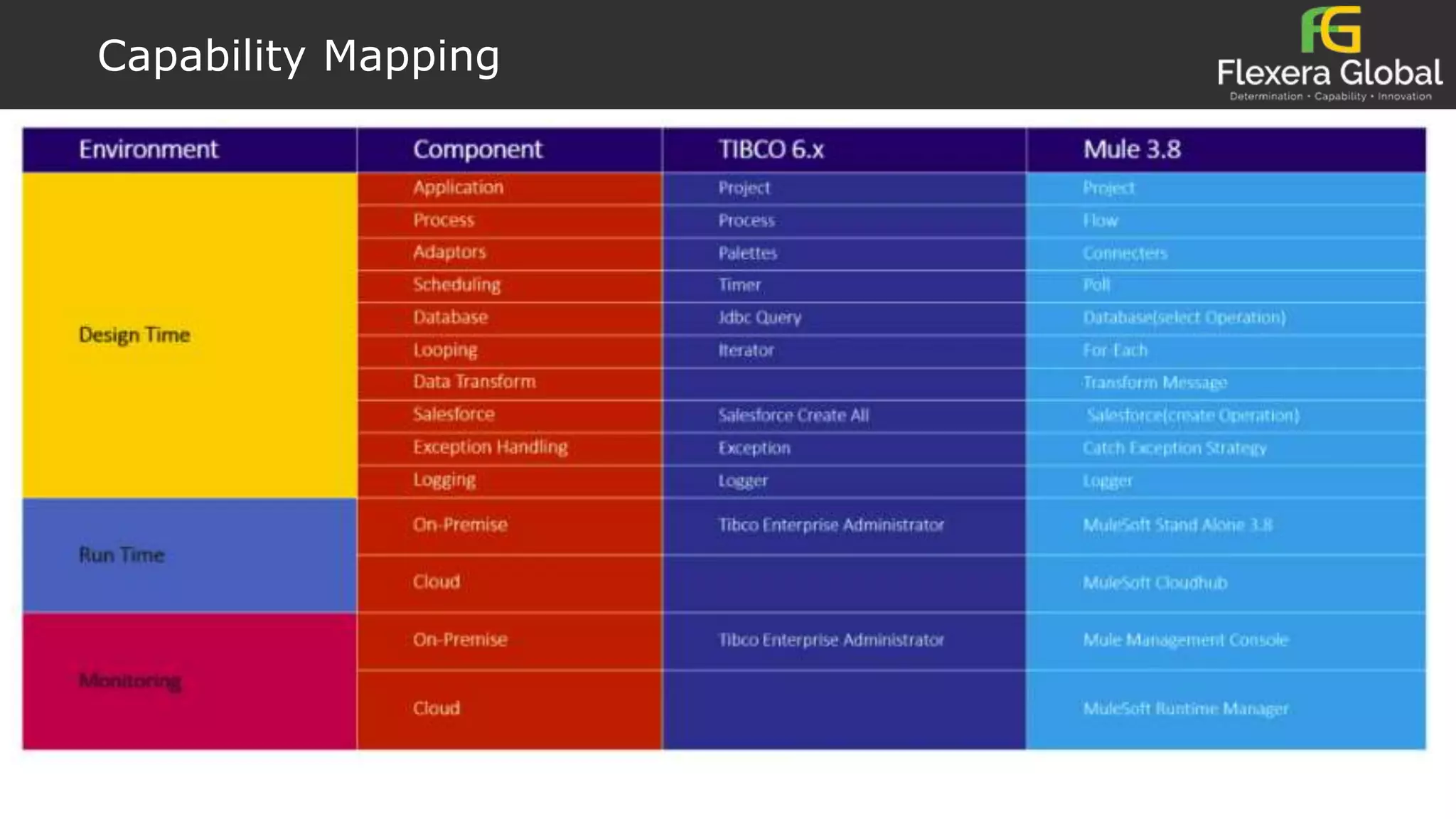
Capability Mapping
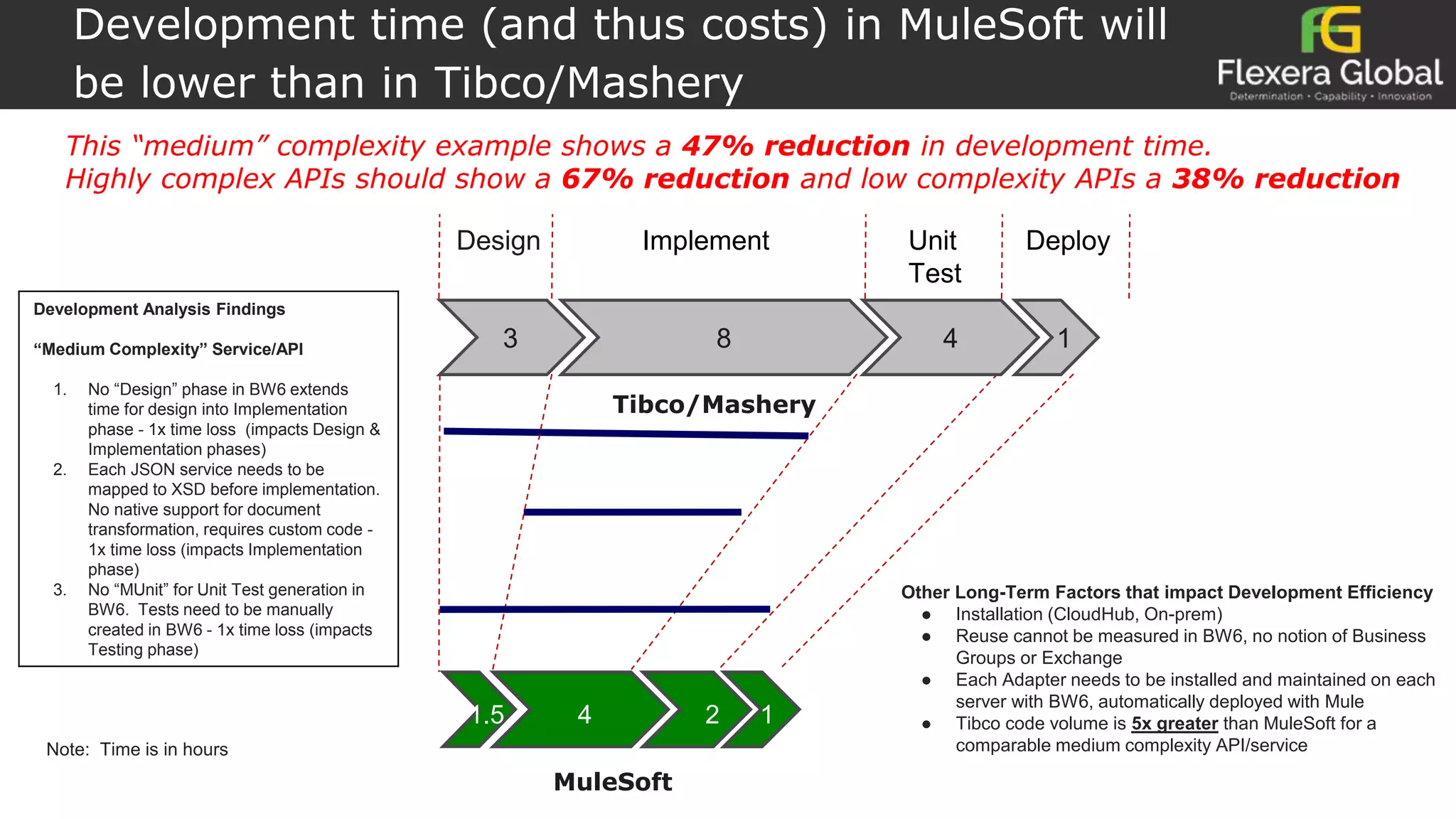
Development time (and thus costs) in MuleSoft will
be lower than in Tibco/Mashery
Development Analysis Findings
“Medium Complexity” Service/API
1. No “Design” phase in BW6 extends
time for design into Implementation
phase - 1x time loss (impacts Design &
Implementation phases)
2. Each JSON service needs to be
mapped to XSD before implementation.
No native support for document
transformation, requires custom code -
1x time loss (impacts Implementation
phase)
3. No “MUnit” for Unit Test generation in
BW6. Tests need to be manually
created in BW6 - 1x time loss (impacts
Testing phase)
MuleSoft
Tibco/Mashery
8
ImplementDesign Unit
Test
Deploy
3 4 1
Other Long-Term Factors that impact Development Efficiency
● Installation (CloudHub, On-prem)
● Reuse cannot be measured in BW6, no notion of Business
Groups or Exchange
● Each Adapter needs to be installed and maintained on each
server with BW6, automatically deployed with Mule
● Tibco code volume is 5x greater than MuleSoft for a
comparable medium complexity API/service
This “medium” complexity example shows a 47% reduction in development time.
Highly complex APIs should show a 67% reduction and low complexity APIs a 38% reduction
Note: Time is in hours
1.5 14 2
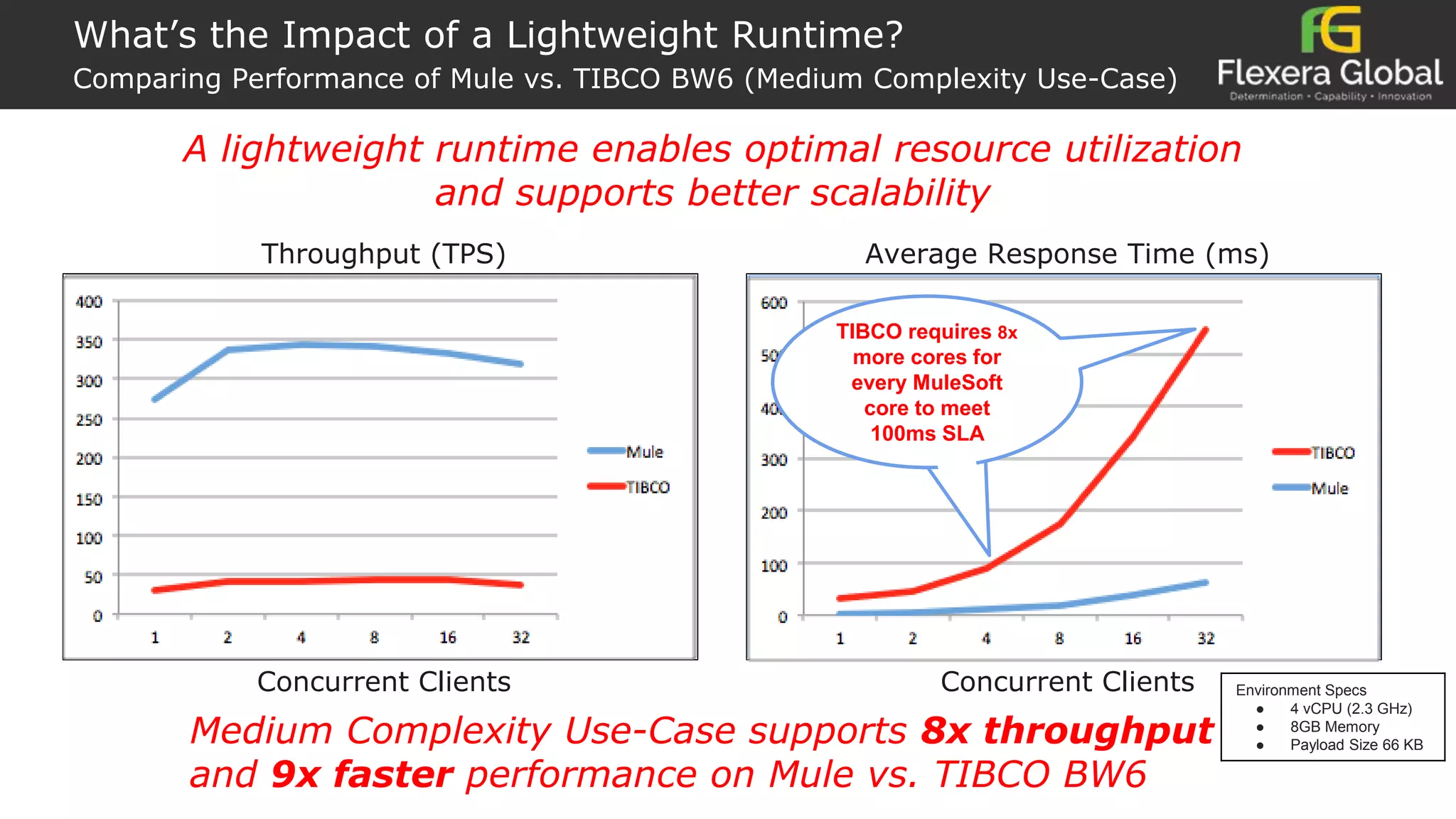
What’s the Impact of a Lightweight Runtime?
Comparing Performance of Mule vs. TIBCO BW6 (Medium Complexity Use-Case)
Concurrent Clients Concurrent Clients
Medium Complexity Use-Case supports 8x throughput
and 9x faster performance on Mule vs. TIBCO BW6
Average Response Time (ms)Throughput (TPS)
Environment Specs
● 4 vCPU (2.3 GHz)
● 8GB Memory
● Payload Size 66 KB
A lightweight runtime enables optimal resource utilization
and supports better scalability
TIBCO requires 8x
more cores for
every MuleSoft
core to meet
100ms SLA
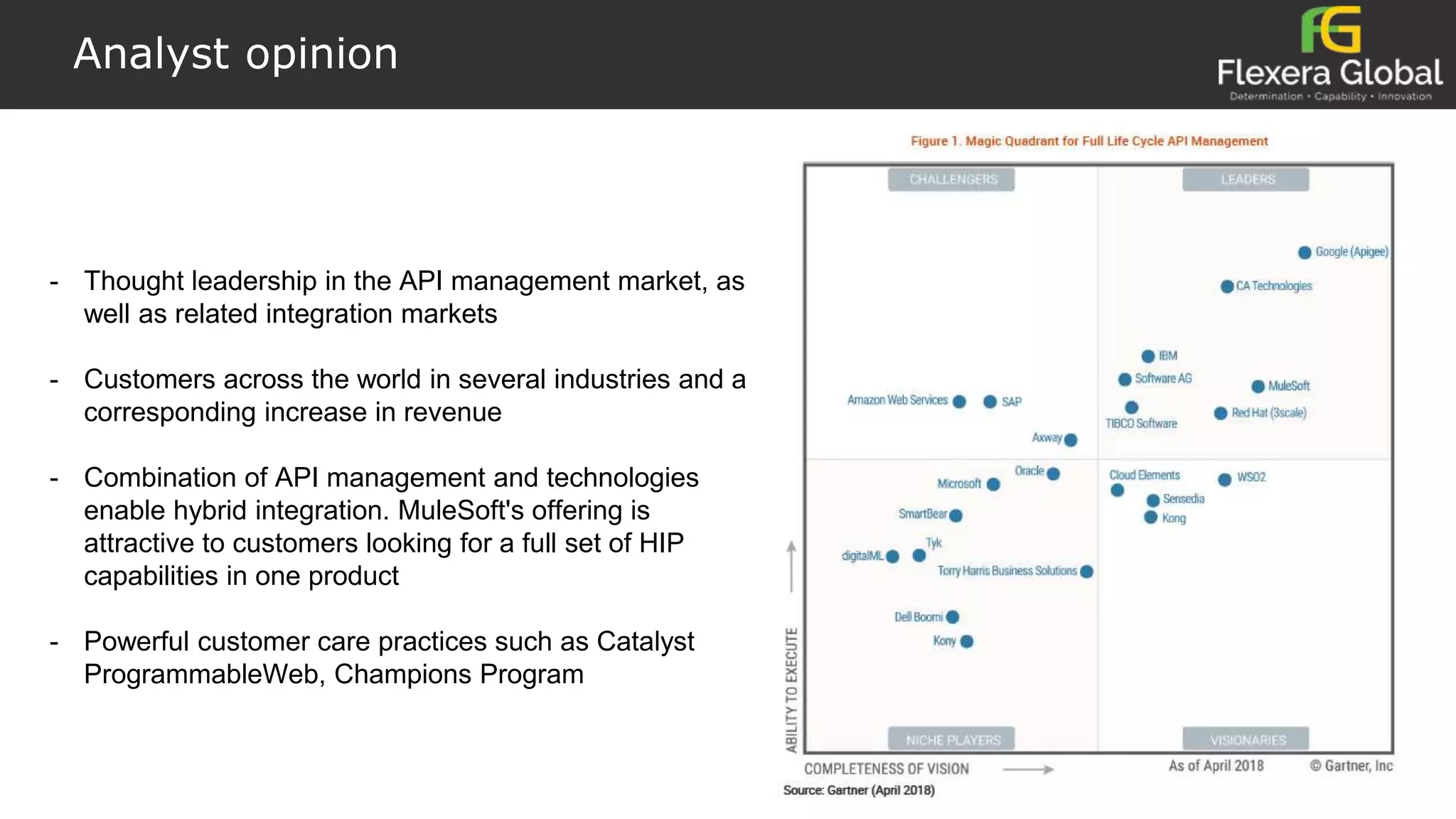
Analyst opinion
- Thought leadership in the API management market, as
well as related integration markets
- Customers across the world in several industries and a
corresponding increase in revenue
- Combination of API management and technologies
enable hybrid integration. MuleSoft's offering is
attractive to customers looking for a full set of HIP
capabilities in one product
- Powerful customer care practices such as Catalyst
ProgrammableWeb, Champions Program
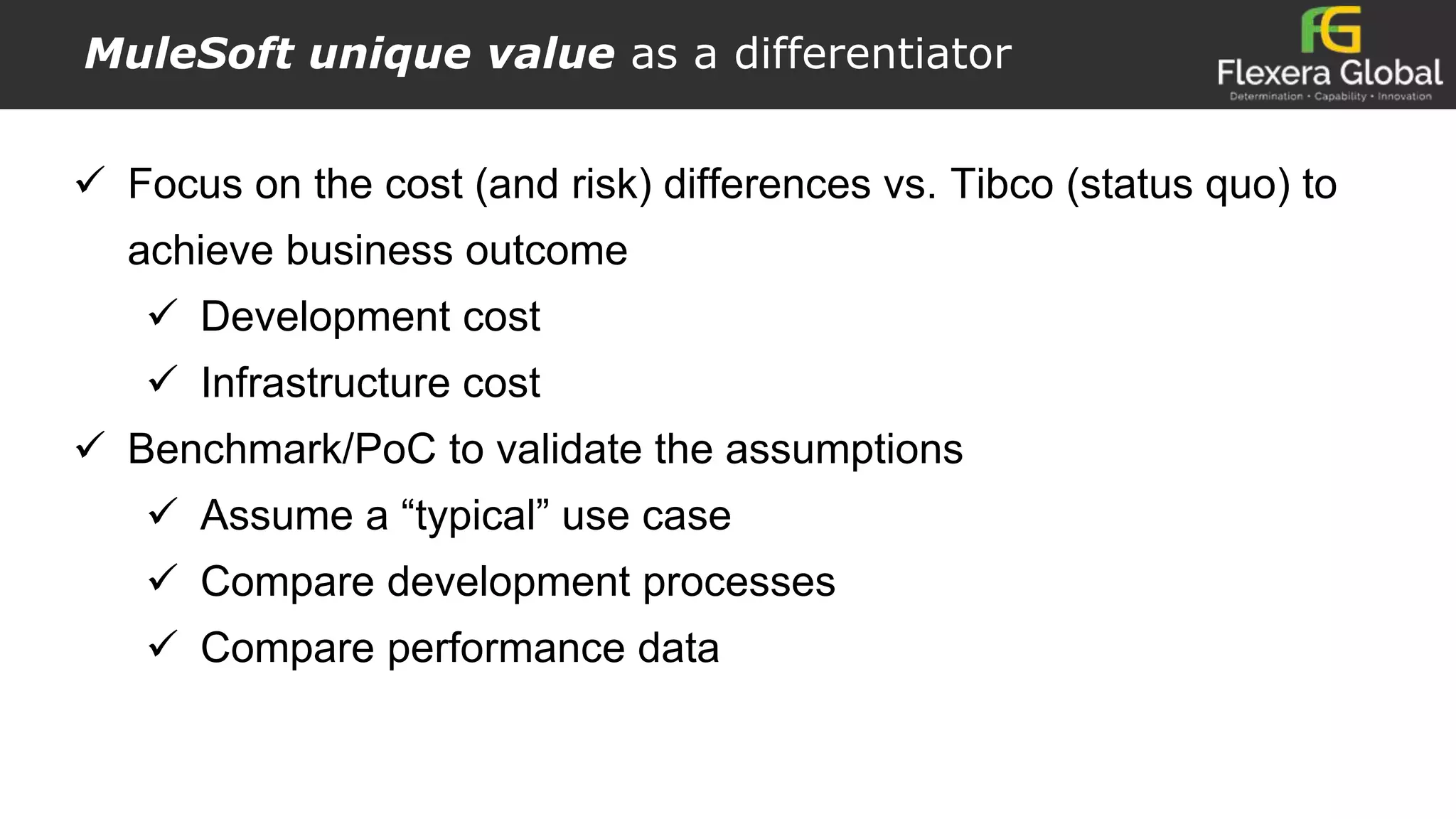
MuleSoft unique value as a differentiator
 Focus on the cost (and risk) differences vs. Tibco (status quo) to
achieve business outcome
 Development cost
 Infrastructure cost
 Benchmark/PoC to validate the assumptions
 Assume a “typical” use case
 Compare development processes
 Compare performance data
Summary
How business outcomes are best delivered by MuleSoft
 API-led
 Large, Vibrant eco-system: Connect to anything
 Development time/ lifecycle advantage
 Performance advantage
 Hybrid/Cloud advantage
 Now part of a dominant CRM SaaS provider with 150K customers
TIBCO vs MuleSoft Differentiators

TIBCO vs MuleSoft Differentiators

  • 1.
    Agenda 1. Integration inCloud Era 2. TIBCO eco-system 3. Anypoint Platform 4. Conclusion 5. Q&A
  • 2.
    Cloud speeds innovation& agility Infrastructure as a Service •Compute, Storage, Network, WAF, LB Platform as a Service •Database, Middleware, Security, Integration, ML/AI, VR Software as a Service •CRM, ERP, HCM, SCM, MRP ….Cloud is drastically changing the Integration space
  • 3.
    TIBCO eco-system ….Customers areforced to evaluate options BW5 - Mature product with majority of customers still using decade old Version 5 while the latest version is 6 (released in 2014/2015) Core engine is built when XML was the primary data format for message exchange No automated tools for upgrade efforts Mixed use of BW6 & BW5 increases complexity of environments; BW6 Performance & Stability concerns
  • 4.
    Anypoint Platform Customer Data Center PublicCloud Data Center ….standards based, built for APIs & Integration needs
  • 5.
    API-led connectivity: An approachto unlocking/creating value System APIs (legacy modernization, connectivity to SaaS apps, web services & Restful APIs) Process APIs (orchestration, composable APIs, Microservices) Experience APIs (purpose-built APIs for apps) Mainframe FTP, Files Databases Legacy SystemsSaaS apps ApplicationsWeb services Central IT LoB Dev/IT App Dev Accessibility & Ownership ….enterprise scale, reuse, Connect to anything
  • 6.
    Mule Runtime - Startedas a Open Source JAVA project, uses Spring framework heavily - Available as Community Edition and Enterprise Edition - Matured over 12+ years with contributions from major enterprise users - Continuous innovations for APIs and modern DevOps practices to support true Micro-services environment - Light-weight, Highly optimized core engine to support scalable low latency integration needs ….scalable, performant, built for modern DevOps
  • 7.
    Optimized Core –Threading model ….tunable to your heart’s content
  • 8.
    What makes MuleLightweight? XMLJSON XPath XML JSON JSON processing in TIBCO BW JSON DataWeave JSON JSON processing in Mule XMLSFDC XPath XML SFDC Salesforce processing in TIBCO BW SFDC DataWeave SFDC Salesforce processing in Mule • Removing need to convert everything to XML reduces transformation time and memory requirements • DataWeave performs faster than XSLT - which BW uses internally • DataWeave supports streaming for non-XML formats (ex. JSON) - which handles large payloads faster • Same pattern as above for other data types • Eliminating unnecessary transformation allows Mule to run with a smaller memory footprint • Setting up clustering requires no additional software and can be done in a couple minutes ….efficient data conversion
  • 9.
  • 10.
    Development time (andthus costs) in MuleSoft will be lower than in Tibco/Mashery Development Analysis Findings “Medium Complexity” Service/API 1. No “Design” phase in BW6 extends time for design into Implementation phase - 1x time loss (impacts Design & Implementation phases) 2. Each JSON service needs to be mapped to XSD before implementation. No native support for document transformation, requires custom code - 1x time loss (impacts Implementation phase) 3. No “MUnit” for Unit Test generation in BW6. Tests need to be manually created in BW6 - 1x time loss (impacts Testing phase) MuleSoft Tibco/Mashery 8 ImplementDesign Unit Test Deploy 3 4 1 Other Long-Term Factors that impact Development Efficiency ● Installation (CloudHub, On-prem) ● Reuse cannot be measured in BW6, no notion of Business Groups or Exchange ● Each Adapter needs to be installed and maintained on each server with BW6, automatically deployed with Mule ● Tibco code volume is 5x greater than MuleSoft for a comparable medium complexity API/service This “medium” complexity example shows a 47% reduction in development time. Highly complex APIs should show a 67% reduction and low complexity APIs a 38% reduction Note: Time is in hours 1.5 14 2
  • 11.
    What’s the Impactof a Lightweight Runtime? Comparing Performance of Mule vs. TIBCO BW6 (Medium Complexity Use-Case) Concurrent Clients Concurrent Clients Medium Complexity Use-Case supports 8x throughput and 9x faster performance on Mule vs. TIBCO BW6 Average Response Time (ms)Throughput (TPS) Environment Specs ● 4 vCPU (2.3 GHz) ● 8GB Memory ● Payload Size 66 KB A lightweight runtime enables optimal resource utilization and supports better scalability TIBCO requires 8x more cores for every MuleSoft core to meet 100ms SLA
  • 12.
    Analyst opinion - Thoughtleadership in the API management market, as well as related integration markets - Customers across the world in several industries and a corresponding increase in revenue - Combination of API management and technologies enable hybrid integration. MuleSoft's offering is attractive to customers looking for a full set of HIP capabilities in one product - Powerful customer care practices such as Catalyst ProgrammableWeb, Champions Program
  • 13.
    MuleSoft unique valueas a differentiator  Focus on the cost (and risk) differences vs. Tibco (status quo) to achieve business outcome  Development cost  Infrastructure cost  Benchmark/PoC to validate the assumptions  Assume a “typical” use case  Compare development processes  Compare performance data
  • 14.
    Summary How business outcomesare best delivered by MuleSoft  API-led  Large, Vibrant eco-system: Connect to anything  Development time/ lifecycle advantage  Performance advantage  Hybrid/Cloud advantage  Now part of a dominant CRM SaaS provider with 150K customers