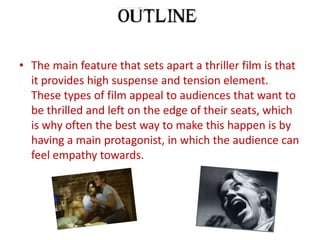
• The main feature that sets apart a thriller film is that
  it provides high suspense and tension element.
  These types of film appeal to audiences that want to
  be thrilled and left on the edge of their seats, which
  is why often the best way to make this happen is by
  having a main protagonist, in which the audience can
  feel empathy towards.
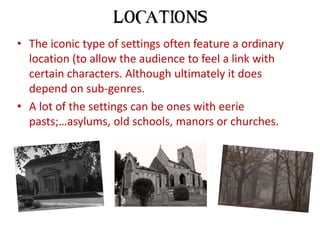
• The iconic type of settings often feature a ordinary
  location (to allow the audience to feel a link with
  certain characters. Although ultimately it does
  depend on sub-genres.
• A lot of the settings can be ones with eerie
  pasts;…asylums, old schools, manors or churches.
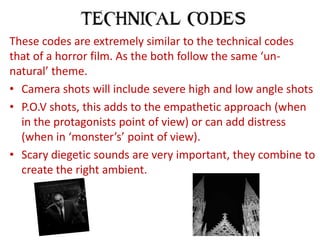
These codes are extremely similar to the technical codes
that of a horror film. As the both follow the same ‘un-
natural’ theme.
• Camera shots will include severe high and low angle shots
• P.O.V shots, this adds to the empathetic approach (when
  in the protagonists point of view) or can add distress
  (when in ‘monster’s’ point of view).
• Scary diegetic sounds are very important, they combine to
  create the right ambient.
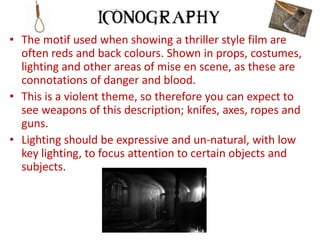
• The motif used when showing a thriller style film are
  often reds and back colours. Shown in props, costumes,
  lighting and other areas of mise en scene, as these are
  connotations of danger and blood.
• This is a violent theme, so therefore you can expect to
  see weapons of this description; knifes, axes, ropes and
  guns.
• Lighting should be expressive and un-natural, with low
  key lighting, to focus attention to certain objects and
  subjects.
• There should ideally always be a protagonist,
  in which the audience can relate to (this can
  be someone of ‘ordinary’ social background
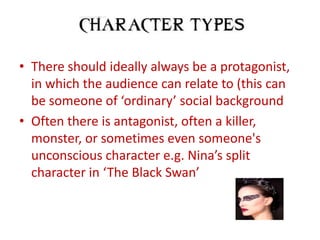
• Often there is antagonist, often a killer,
  monster, or sometimes even someone's
  unconscious character e.g. Nina’s split
  character in ‘The Black Swan’

Thriller

  • 2.
    • The mainfeature that sets apart a thriller film is that it provides high suspense and tension element. These types of film appeal to audiences that want to be thrilled and left on the edge of their seats, which is why often the best way to make this happen is by having a main protagonist, in which the audience can feel empathy towards.
  • 3.
    • The iconictype of settings often feature a ordinary location (to allow the audience to feel a link with certain characters. Although ultimately it does depend on sub-genres. • A lot of the settings can be ones with eerie pasts;…asylums, old schools, manors or churches.
  • 4.
    These codes areextremely similar to the technical codes that of a horror film. As the both follow the same ‘un- natural’ theme. • Camera shots will include severe high and low angle shots • P.O.V shots, this adds to the empathetic approach (when in the protagonists point of view) or can add distress (when in ‘monster’s’ point of view). • Scary diegetic sounds are very important, they combine to create the right ambient.
  • 5.
    • The motifused when showing a thriller style film are often reds and back colours. Shown in props, costumes, lighting and other areas of mise en scene, as these are connotations of danger and blood. • This is a violent theme, so therefore you can expect to see weapons of this description; knifes, axes, ropes and guns. • Lighting should be expressive and un-natural, with low key lighting, to focus attention to certain objects and subjects.
  • 6.
    • There shouldideally always be a protagonist, in which the audience can relate to (this can be someone of ‘ordinary’ social background • Often there is antagonist, often a killer, monster, or sometimes even someone's unconscious character e.g. Nina’s split character in ‘The Black Swan’