Introduction to Threat Intelligence and
Analysis
Threat intelligence and analysis involve proactive measures to identify, assess, and mitigate potential
security threats. It encompasses the collection, analysis, and dissemination of information to protect
organizations from potential cyber-attacks.
This essential process helps organizations stay ahead of malicious actors in the ever-evolving cyber
landscape, fostering a proactive cybersecurity posture.
Importance of Threat Intelligence in
Proactive Cybersecurity
Early Threat Detection
Threat intelligence enables organizations to
identify and mitigate potential risks at an
early stage.
Risk Mitigation
It allows for the proactive development of
strategies to minimize the impact of security
threats.
Decision-Making Support
Provides crucial insights for informed
decision-making in cybersecurity
operations.
Enhanced Security Posture
Contributes to building a robust security
posture by staying ahead of emerging
threats.
Methods of Gathering Threat Intelligence
Open-Source
Intelligence (OSINT)
Collecting data from publicly
available sources such as
social media, news platforms,
and forums to identify
potential threats and
vulnerabilities.
Utilizing advanced search
techniques and data mining
tools to extract valuable
information from the web.
Cyber Threat Feeds
Subscribing to specialized
threat intelligence services
that provide real-time
information on cybersecurity
threats and malicious
activities.
Accessing curated lists of
indicators of compromise,
malware signatures, and
other actionable threat data.
Dark Web Monitoring
Monitoring underground
forums, marketplaces, and
encrypted networks to
uncover potential cyber
threats, leaked data, and
hacker discussions.
Utilizing specialized tools and
services to access and
analyze the dark web
securely and ethically.
Types of Threat Intelligence
Sources
• Open Source Intelligence (OSINT): Gathering information from
publicly available sources such as social media, forums, and
websites.
• Human Intelligence (HUMINT): Obtaining intelligence through
contact with individuals, insiders, or informants within cybercriminal
groups.
• Technical Intelligence (TECHINT): Collecting data from technical
sources like network traffic, logs, and malware analysis.
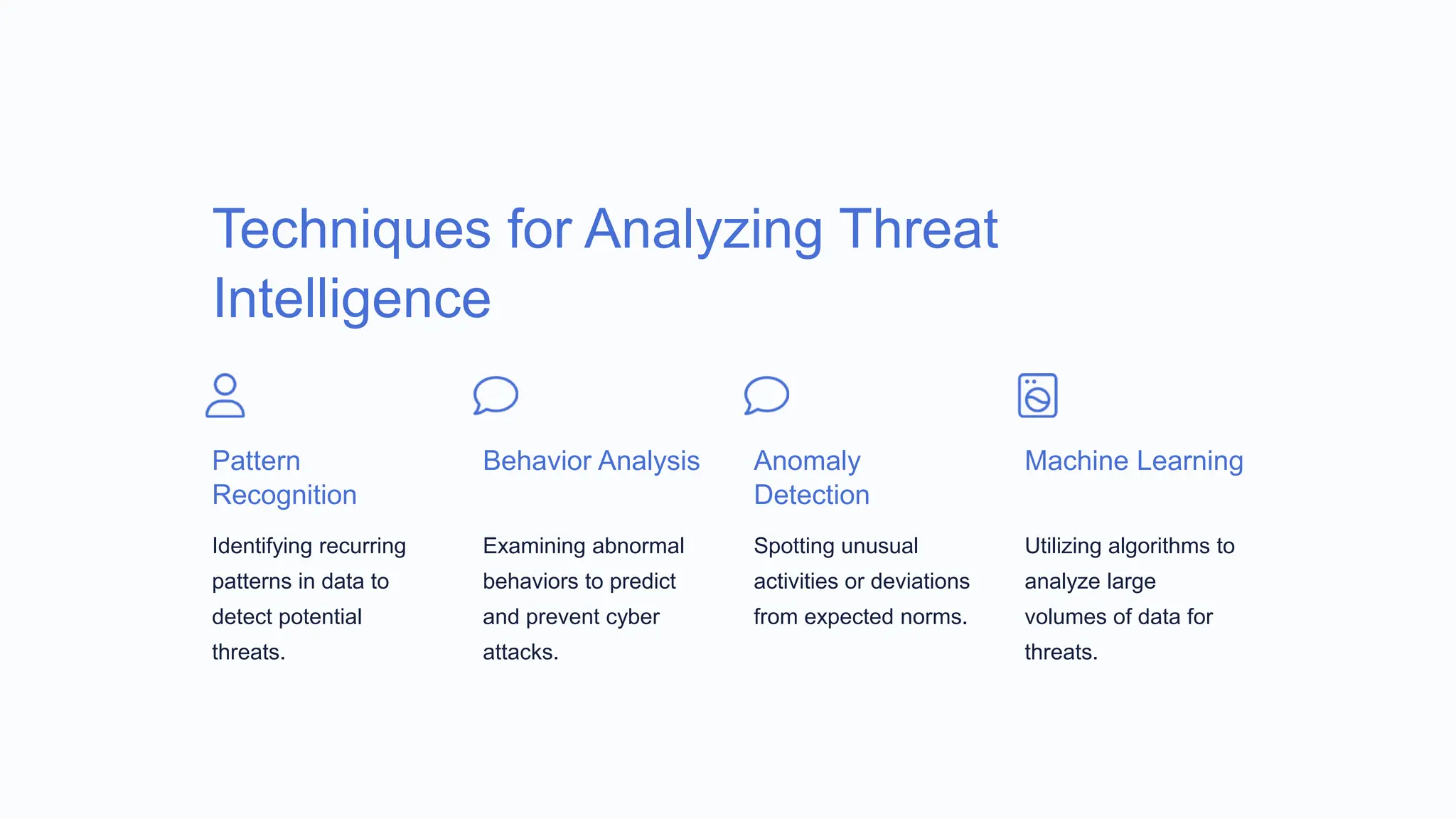
Techniques for Analyzing Threat
Intelligence
Pattern
Recognition
Identifying recurring
patterns in data to
detect potential
threats.
Behavior Analysis
Examining abnormal
behaviors to predict
and prevent cyber
attacks.
Anomaly
Detection
Spotting unusual
activities or deviations
from expected norms.
Machine Learning
Utilizing algorithms to
analyze large
volumes of data for
threats.
Benefits of Threat Intelligence and
Analysis
Proactive Protection
Threat intelligence enables organizations to
anticipate and prevent cyber attacks before
they occur.
Improved Incident Response
Analysis of threat intelligence empowers
faster and more effective response to security
incidents.
Risk Mitigation
Identifying and analyzing threats allows for
proactive risk mitigation and enhanced
security posture.
Strategic Decision Making
Insights from threat intelligence inform
strategic decisions to protect critical assets
and infrastructure.
Challenges in Implementing Threat
Intelligence Programs
1 Lack of Data Standardization
Threat intelligence data comes in diverse formats and lacks standardization,
making integration and analysis complex.
2 Skill Shortage
Specialized expertise is required to effectively manage and analyze threat
intelligence data, which may be scarce.
3 Cost and Resource Constraints
Implementing robust threat intelligence programs requires significant financial
investment and allocation of resources.
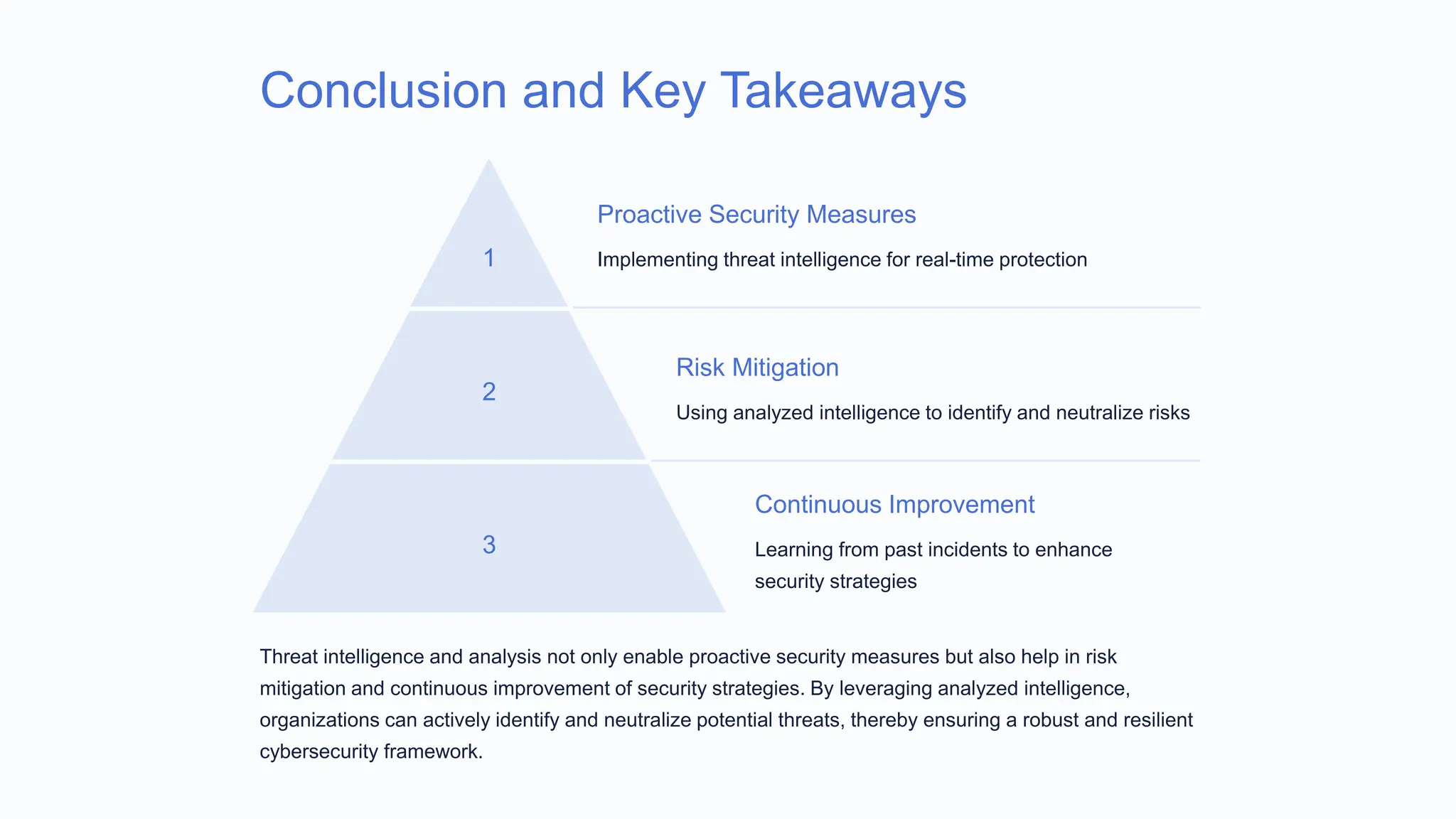
Conclusion and Key Takeaways
1
Proactive Security Measures
Implementing threat intelligence for real-time protection
2
Risk Mitigation
Using analyzed intelligence to identify and neutralize risks
3
Continuous Improvement
Learning from past incidents to enhance
security strategies
Threat intelligence and analysis not only enable proactive security measures but also help in risk
mitigation and continuous improvement of security strategies. By leveraging analyzed intelligence,
organizations can actively identify and neutralize potential threats, thereby ensuring a robust and resilient
cybersecurity framework.
Thank You
It's been a pleasure sharing insights on Threat Intelligence and Analysis
with you. We hope this presentation has expanded your understanding
and equipped you to take proactive steps in cybersecurity. Thank you for
your time and attention!

Threats Intelligence and analysis . pptx

  • 2.
    Introduction to ThreatIntelligence and Analysis Threat intelligence and analysis involve proactive measures to identify, assess, and mitigate potential security threats. It encompasses the collection, analysis, and dissemination of information to protect organizations from potential cyber-attacks. This essential process helps organizations stay ahead of malicious actors in the ever-evolving cyber landscape, fostering a proactive cybersecurity posture.
  • 3.
    Importance of ThreatIntelligence in Proactive Cybersecurity Early Threat Detection Threat intelligence enables organizations to identify and mitigate potential risks at an early stage. Risk Mitigation It allows for the proactive development of strategies to minimize the impact of security threats. Decision-Making Support Provides crucial insights for informed decision-making in cybersecurity operations. Enhanced Security Posture Contributes to building a robust security posture by staying ahead of emerging threats.
  • 4.
    Methods of GatheringThreat Intelligence Open-Source Intelligence (OSINT) Collecting data from publicly available sources such as social media, news platforms, and forums to identify potential threats and vulnerabilities. Utilizing advanced search techniques and data mining tools to extract valuable information from the web. Cyber Threat Feeds Subscribing to specialized threat intelligence services that provide real-time information on cybersecurity threats and malicious activities. Accessing curated lists of indicators of compromise, malware signatures, and other actionable threat data. Dark Web Monitoring Monitoring underground forums, marketplaces, and encrypted networks to uncover potential cyber threats, leaked data, and hacker discussions. Utilizing specialized tools and services to access and analyze the dark web securely and ethically.
  • 5.
    Types of ThreatIntelligence Sources • Open Source Intelligence (OSINT): Gathering information from publicly available sources such as social media, forums, and websites. • Human Intelligence (HUMINT): Obtaining intelligence through contact with individuals, insiders, or informants within cybercriminal groups. • Technical Intelligence (TECHINT): Collecting data from technical sources like network traffic, logs, and malware analysis.
  • 6.
    Techniques for AnalyzingThreat Intelligence Pattern Recognition Identifying recurring patterns in data to detect potential threats. Behavior Analysis Examining abnormal behaviors to predict and prevent cyber attacks. Anomaly Detection Spotting unusual activities or deviations from expected norms. Machine Learning Utilizing algorithms to analyze large volumes of data for threats.
  • 7.
    Benefits of ThreatIntelligence and Analysis Proactive Protection Threat intelligence enables organizations to anticipate and prevent cyber attacks before they occur. Improved Incident Response Analysis of threat intelligence empowers faster and more effective response to security incidents. Risk Mitigation Identifying and analyzing threats allows for proactive risk mitigation and enhanced security posture. Strategic Decision Making Insights from threat intelligence inform strategic decisions to protect critical assets and infrastructure.
  • 8.
    Challenges in ImplementingThreat Intelligence Programs 1 Lack of Data Standardization Threat intelligence data comes in diverse formats and lacks standardization, making integration and analysis complex. 2 Skill Shortage Specialized expertise is required to effectively manage and analyze threat intelligence data, which may be scarce. 3 Cost and Resource Constraints Implementing robust threat intelligence programs requires significant financial investment and allocation of resources.
  • 9.
    Conclusion and KeyTakeaways 1 Proactive Security Measures Implementing threat intelligence for real-time protection 2 Risk Mitigation Using analyzed intelligence to identify and neutralize risks 3 Continuous Improvement Learning from past incidents to enhance security strategies Threat intelligence and analysis not only enable proactive security measures but also help in risk mitigation and continuous improvement of security strategies. By leveraging analyzed intelligence, organizations can actively identify and neutralize potential threats, thereby ensuring a robust and resilient cybersecurity framework.
  • 10.
    Thank You It's beena pleasure sharing insights on Threat Intelligence and Analysis with you. We hope this presentation has expanded your understanding and equipped you to take proactive steps in cybersecurity. Thank you for your time and attention!