This is a clear and comprehensive approach to crime prevention.
The focus of the book is applied and practical, which makes it
ideal for the
classroom. The new edition provides an excellent in-depth
coverage of what works in crime prevention, and how
prevention programs are
evaluated to assess their impact on crime and fear of
victimization. It is an essential resource for both students and
practitioners.
Jonathan Kremser, Kutztown University
This book, in comparison to others I have seen, offers the
widest coverage regarding the different possible approaches to
crime prevention—it
addresses strategies as diverse as environmental design, block-
watch initiatives, media-driven public service announcements,
community-
oriented policing, correctional rehabilitation, and many, many
more. As such, it provides students with the foundation for an
impressive
breadth of knowledge regarding crime prevention.
Pamela Wilcox, University of Cincinnati
I have used Professor Lab’s text on crime prevention and found
that his crime prevention typology is great for the classroom.
Grouping
tactics by primary, secondary, and tertiary prevention allows
students to really think about some of the underlying factors
driving these
crimes and gives them some basis for critiquing the initial
efficacy of a program. This text is great for students and
professionals alike.
Eric Martin, George Washington University
2
Crime Prevention
Crime Prevention: Approaches, Practices, and Evaluations,
Ninth Edition, meets the needs of students and
instructors for engaging, evidence-based, impartial coverage of
the origins of crime, as well as of public policy
that can reduce or prevent deviance. The book examines a range
of approaches to preventing crime and
elucidates their respective goals. Strategies include primary
prevention measures designed to prevent
conditions that foster deviance; secondary prevention measures
directed toward persons or conditions with a
high potential for deviance; and tertiary prevention measures to
deal with persons who have already
committed crimes.
This edition provides research and information on all aspects of
crime prevention, including the physical
environment and crime, neighborhood crime prevention
programs, community policing, crime in schools, and
electronic monitoring and home confinement. Lab offers a
thorough and well-rounded discussion of the many
sides of the crime prevention debate, in clear and accessible
language.
Steven P. Lab is Professor of Criminal Justice and Chair of the
Department of Human Services. He holds a
Ph.D. in Criminology from the Florida State University School
of Criminology and Criminal Justice. Dr. Lab is
the author or coauthor of five books, the editor/coeditor of two
readers, and coeditor of one encyclopedia. He is
the author of more than 50 articles or book chapters and has
presented more than 70 papers to academic or
professional societies. He is a past editor of the Journal of
Crime and Justice and has been an assistant editor or
on the editorial boards of several additional journals. Dr. Lab
has been a Visiting Professor at the Jill Dando
Institute of Crime Science of University College London and at
Keele University in Staffordshire, England, as
well as a Visiting Fellow at Loughborough University (England)
and a Research Consultant with the Perpetuity
Research Group at Leicester University (England). Dr. Lab has
received grant funding for several large research
projects from the National Institute of Justice, and has served as
a consultant to the Ohio Attorney General’s
Office, the Arizona Governor’s Office, and various offices of
the U.S. Department of Justice. Dr. Lab is also a
past-president of the Academy of Criminal Justice Sciences.
A range of further resources for this book are available on the
Companion Website:
www.routledge.com/cw/lab
3
http://www.routledge.com/cw/lab
Crime Prevention
Approaches, Practices, and Evaluations
NINTH EDITION
STEVEN P. LAB
4
First published 2016
by Routledge
711 Third Avenue, New York, NY 10017
and by Routledge
2 Park Square, Milton Park, Abingdon, Oxon, OX14 4RN
Routledge is an imprint of the Taylor & Francis Group, an
informa business
© 2016 Taylor & Francis
The right of Steven P. Lab to be identified as author of this
work has been asserted by him in accordance with sections 77
and 78 of the
Copyright, Designs and Patents Act 1988.
All rights reserved. No part of this book may be reprinted or
reproduced or utilised in any form or by any electronic,
mechanical, or other means,
now known or hereafter invented, including photocopying and
recording, or in any information storage or retrieval system,
without permission
in writing from the publishers.
Trademark notice: Product or corporate names may be
trademarks or registered trademarks, and are used only for
identification and explanation
without intent to infringe.
Library of Congress Cataloging in Publication Data
Lab, Steven P.
Crime prevention : approaches, practices, and evaluations/
Steven P. Lab. -- Ninth Edition.
pages cm
Revised edition of the author’s Crime prevention, 2014.
Includes bibliographical references and index.
ISBN 978-1-138-94693-4 (hardback : alk. paper) --
ISBN 978-0-323-35772-2 (pbk. : alk. paper) 1. Crime
prevention--
United States. 2. Crime prevention--United States--Evaluation.
I. Title.
HV7431.L33 2016
364.40973--dc23
2015030160
ISBN: 978-1-138-94693-4 (hbk)
ISBN: 978-0-323-35772-2 (pbk)
ISBN: 978-1-315-71276-5 (ebk)
Typeset in Adobe Garamond Pro
by Servis Filmsetting Ltd, Stockport, Cheshire
5
To Danielle
6
Contents
Preface
Acknowledgments
CHAPTER 1—Crime and the Fear of Crime
The Problem of Crime in Society
The Costs of Crime/Victimization
The Fear of Crime
Summary
CHAPTER 2—Crime Prevention
Crime Prevention Through the Ages
Defining Crime Prevention
Crime Prevention Classifications
CHAPTER 3—Evaluation and Crime Prevention
Types of Evaluation
Theory and Measurement in Evaluation
The Method for Evaluation
An Overview of the Book
PART I Primary Prevention
CHAPTER 4—The Physical Environment and Crime Prevention
Crime Prevention Through Environmental Design
Implementation of Environmental Design
Impact of Physical Design
Incivility, Disorder, and Crime
Summary
CHAPTER 5—Neighborhood Crime Prevention
Types of Neighborhood Crime Prevention Approaches
Building Guardianship
Evaluation of Neighborhood Crime Prevention
Citizen Participation and Support
Chapter Summary
CHAPTER 6—Displacement and Diffusion
Crime Displacement
7
Diffusion
Offender Choice and Mobility
Evidence of Displacement and Diffusion
Implications of Displacement and Diffusion
CHAPTER 7—The Mass Media and Crime Prevention
The Media and Crime
Mass Media Crime Prevention Activities
The Media’s Responsibility for Crime Prevention
Summary
CHAPTER 8—Developmental Crime Prevention
Background
Risk Factors and Developmental Prevention
Programs
Developmental Concerns
Summary
CHAPTER 9—General Deterrence
Deterrence
The Deterrent Effect of Legal Sanctions
Perceptions and Deterrence
Summary
PART II Secondary Prevention
CHAPTER 10—Prediction for Secondary Prevention
Predicting Future Offending
Risk Factors and Prediction
Predicting Places and Events
Repeat Victimization
Implications for Crime Prevention
CHAPTER 11—Situational Crime Prevention
The Growth of Situational Prevention
The Theoretical Basis
Situational Typologies
Issues and Concerns with Situational Prevention
Implementing Situational Prevention
Situational Prevention Studies
Summary
CHAPTER 12—Partnerships for Crime Prevention
8
Community Policing
Problem Identification
Partnership Efforts and Assessment
Successful Partnerships
Summary
CHAPTER 13—Drugs, Crime, and Crime Prevention
The Scope of Drug Use
The Drugs–Crime Connection
Interventions and Prevention
Drugs and Crime Prevention
CHAPTER 14—The School and Crime Prevention
Theoretical Views
Educational Factors and Delinquency
School Programs for Delinquency Prevention
The Future of School/Educational Programs in Crime
Prevention
PART III Tertiary Prevention
CHAPTER 15—Specific Deterrence and Incapacitation
The Specific Deterrent Effect of Criminal Sanctions
Incapacitation
Future Implications
CHAPTER 16—Rehabilitation
The “What Works?” Argument
Evaluations of Rehabilitation Programs
Assessing Rehabilitation and Crime Prevention
CHAPTER 17—Some Closing Thoughts on Crime Prevention
and the Future
The State of the Evidence
Improving Our Knowledge
Recognizing the Diversity in Crime Prevention
Summary
Glossary
References
Name index
Subject index
9
Preface to the Ninth Edition
This ninth edition of Crime Prevention: Approaches, Practices,
and Evaluations carries forth the successful
format developed over the previous eight editions. While there
are many different ways to approach the field
of crime prevention, the feedback I have received over the years
from a wide range of individuals has
consistently pointed out that the format of the text lays a nice
pedagogical outline for the academic study of
crime prevention. Consequently, I have endeavored to stay true
to the approach in the book while
simultaneously adding emerging new ideas and prevention
initiatives to the discussion. The general
organization of the book remains the same following the public
health prevention model of primary,
secondary, and tertiary prevention. Adding more recent
materials does not always result in a clean, clear
division of prevention into the basic public health model. Many
of the topics bridge across the three
components. Two easy examples are in discussion of physical
design and prevention aimed at high-risk
individuals/situations. Physical design is a cornerstone of
primary prevention, particularly Crime Prevention
Through Environmental Design, and also appears in many
situational prevention activities, most notably
product design for high-emerging items. Prevention that seeks
to target high-risk individuals/situations fits
both in secondary prevention activities (that by definition target
risk) and tertiary prevention where
deterrence, incapacitation, and rehabilitation may target high-
risk offenders. These facts do not detract from
the presentation in the book; rather they point out the growing
interest in and focus on emerging prevention
techniques.
The field of academic crime prevention continues to see major
advances. These changes cover the entire
gamut of prevention, from physical design to developmental
prevention to identifying high-risk individuals to
situational initiatives to partnerships and beyond. Across almost
all topics it has become necessary over the
years to expand the discussions to cover the many emerging
programs and approaches in crime prevention,
while preserving the more classic bases of crime prevention.
This current edition has been modified in the
following ways:
Data on crime and crime prevention have been updated
throughout the book.
Chapter 1 has updated crime/victimization data and expanded
discussion of identity theft and forms of
victimization not found in official measures.
Chapter 4 offers a new discussion of CPTED that places
territoriality at the apex of initiatives for
prevention activities, with surveillance, activity support, image,
and other elements as components in
the building of territoriality; expanded discussions of the use of
CCTV; a new Third-Generation
CPTED for consideration; and shifts the topic of product design
to another point in the book.
Chapter 5 offers a new logic model for neighborhood crime
prevention, adds a more in-depth
discussion on guardianship, and enhances the material on
leveraging guardianship.
In Chapter 6 the presentation on crime pattern theory has been
reworked for clarity, and more
research on displacement has been added.
The material on mass media and prevention (Chapter 7) now
includes a discussion of the use of social
media both in terms of crime and crime prevention.
Chapter 8 has added more examples of effective developmental
prevention programs, including a new
section on Mentoring Programs.
The discussion on risk factors (Chapter 10) now includes
materials on risk assessment instruments
used at various points in criminal justice system processing.
The Situational Prevention chapter (11) has added material on
how to make prevention techniques
more useful for practitioners (the 11Ds), has added a revised
discussion of product design, and
eliminated sections on Organized Crime and Crowd Violence
(these topics can be found on the book
web site).
10
Chapter 12 has a new section on Hot Spot Policing, has added
Civil Injunctions to the discussion of
abatement, eliminated sections on Weed and Seed and Business
Improvement Districts, and expanded
on the discussions of PSN and gang suppression.
Chapter 13 has a reworked discussion on drug use by offenders,
including a new section on ADAM II,
and presents information on the most recent incarnation of
D.A.R.E.
The schools chapter (14) has updated information on the
G.R.E.A.T. program and police in schools.
The final chapters on specific deterrence/incapacitation and
rehabilitation have been updated but are
largely unchanged.
11
Acknowledgments
Over the various iterations of this book, there are many people
who deserve mention and thanks for helping
me along the way. First and foremost I need to thank my friends
and colleagues who have supported me in
numerous ways and prompted me to look at things in different
ways. This group includes Bob Langworthy and
John Whitehead, who have remained good friends and
colleagues. Since entering the crime prevention arena, I
have had the great pleasure and honor to get to know many
people who have provided insight, material, and
friendship—Paul and Pat Brantingham, Ron Clarke, Ralph
Taylor, George Rengert, Paul Cromwell, Tim Hope,
Graham Farrell, Shane Johnson, Kate Bowers, Marcus Felson,
Gloria Laycock, Martin Gil, Nick Tilley, Jim
LeBeau, David Farrington, Brandon Welsh, Dennis Rosenbaum,
and Wes Skogan. Finally, I have to thank my
editor, Ellen Boyne, who has endured the changes in publisher
and continues to watch my back and make sure
I don’t look foolish in print. I am certain that I have missed
some people who deserve to be mentioned. The fact
that they know me means that they are probably aware of my
penchant for forgetting names and will forgive
me for the oversight. I thank you all for helping make this book
a success. The errors and omissions, of course,
are mine alone.
Hopefully you will find this edition helpful in your individual
pursuits. Please do not hesitate to let me know
what you think. It has been the feedback of many people over
the years that has helped make this book a
success.
S.P.L.
12
Chapter 1
Crime and the Fear of Crime
Chapter Outline
The Problem of Crime in Society
Official Measures of Crime
Measuring Victimization
Summary
The Costs of Crime/Victimization
The Fear of Crime
Defining Fear
Measuring Fear
The Level of Fear
Fear and Crime
Fear and Demographics
Explaining the Divergent Findings
Fear Summary
Summary
Learning Objectives
After reading this chapter you should be able to:
Identify and discuss two different measures of crime and
victimization.
Discuss the changing crime rates in the United States.
Identify shortcomings with the UCR.
Explain how a panel survey works.
Discuss the NCVS and what it shows about victimization.
Provide information on the costs of crime/victimization.
Give a definition of fear and discuss how it manifests itself.
Explain the differences between fear, worry, and assessments of
crime.
Discuss the levels of fear in society and how fear relates to
crime and victimization.
Define vicarious victimization.
Provide reasons for the reported levels of fear.
Define incivility and show how it relates to fear.
Crime remains an indisputable fact of life for many, if not most,
members of modern society. This is true
despite the frequent declarations that crime continues to fall and
is reaching levels not seen in years. While the
overall level of crime has fallen in recent years, large numbers
of citizens are still victimized every year and the
impact of crime on everyone in society is substantial. Beyond
those who are actually victimized, many
individuals are fearful of crime and victimization. That fear has
consequences of its own for both individuals
13
and our communities. Crime and fear lead most individuals to
turn to the criminal justice system for help. The
ability of the criminal justice system to single-handedly
alleviate crime and fear in society has been seriously
questioned by both proponents and opponents. Despite the
claims by some that the reductions in crime since
the early 1990s are due to concerted police actions, there is
little reason to believe that actions of the criminal
justice system are the primary (or sole) cause of the reductions.
At the same time, crime and fear still impact
the lives of many individuals. Society clearly needs to continue
to pursue means of preventing crime and fear.
This first chapter attempts to show how crime and fear have
changed over time and remain problems that
need to be addressed. It is this information that forms the basis
for continued calls for crime prevention actions.
After examining the level and change in actual crime in society,
this chapter will examine the impact of crime
on victims and society. It will also examine the companion issue
of fear of crime. Indeed, the “fear of crime”
poses a greater, more far reaching problem for society and its
members. Demonstrating a need for crime
prevention is not difficult to accomplish when you consider the
levels of crime and fear in society.
14
The Problem of Crime in Society
The magnitude of the crime problem can be evaluated using
both official and victimization measures of
crime. The use of official crime statistics, such as the Federal
Bureau of Investigation’s Uniform Crime Reports,
provides a view of crime from the standpoint of what the formal
criminal justice system must handle. Many
critics argue that this provides an inaccurate and incomplete
analysis of the true levels of crime in society.
These individuals point to the results of victimization surveys
as a basis for their argument. While each
presents a different absolute level of crime, both tend to reveal
similar patterns in criminal activity over time.
Official Measures of Crime
The FBI Uniform Crime Reports (UCR) are the most widely
used and cited official measures of crime in the
United States. The UCR represents the number of criminal
offenses known to the police. The reported crime
rate reflects only those offenses known as Part I crimes (violent
crimes: murder, rape, robbery, and assault;
property crimes: burglary, larceny, auto theft, and arson). A
host of other offenses (i.e., fraud, kidnapping, and
drug offenses), known as Part II crimes, are not included in the
computations and reported crime rates. The
resulting crime rates, therefore, reflect only a portion of the
offenses with which the formal criminal justice
system comes into contact.
According to the UCR, there were more than 9.75 million index
crimes committed in 2013. Of that number,
almost 1.2 million were personal crimes (murder, rape, robbery,
and aggravated assault) and 8.6 million were
property offenses (Federal Bureau of Investigation, 2014) . This
translates into 3,099 index crimes for every
100,000 people in the United States (also known as the “crime
rate”). The corresponding crime rates for
personal and property crime are 367.9 and 2,730.7, respectively.
Conklin (2003) notes that many individuals
compare these figures to those from the mid-1980s and early
1990s and trumpet the great decreases in crime.
Even further, these figures are used by various groups to take
credit for the decreases: police leaders claim that
aggressive police tactics caused the decline, mayors have
pointed to wider ranging community policies as the
cause, and politicians claim that mandatory sentencing laws
caused the changes (Conklin, 2003). While
determining the cause of the reductions is important, it is
beyond the scope of this book to attempt that task.
What is more important is to place the “great reductions” in
crime into context.
On the Web
Detailed information on official crime numbers and rates from
the UCR can be found at the FBI
UCR site at http://www.fbi.gov/about-us/cjis/ucr/crime-in-the-
u.s/2013/crime-in-the-u.s.-2013
The trend in violent and property crime since 1962 is shown in
Figures 1.1 and 1.2. Figure 1.1 illustrates that
the 2013 violent crime rate has fallen almost to the levels in
1970. Thus, it is a true claim that violent crime is
lower today than any time in almost 45 years. Similar claims
can be made about property crime, although the
reference point would be roughly 1968 (see Figure 1.2).
Interestingly, all of the levels in these two figures are
significantly higher than they were in the 1960s when the
President’s Commission on Law Enforcement and
the Administration of Justice lamented the great growth in
crime and the need to do something about it.
The crime rates today are significantly higher than throughout
the 1960s. This is especially problematic if
you consider the data for violent crimes, which are those crimes
that most concern people. Figure 1.1 shows
that the violent crime rate in 1962 was 162 offenses for every
100,000 persons. This was less than one-third of
the rate in 1977 and roughly one-third of the rate in 1992.
Similarly, the property crime rate in 1962 (1,858) was
less than half of the 1971 rate and only about one-third of the
1980 property crime rate (Figure 1.2). In both
cases, the recent figures are still significantly higher than those
of 40 years ago when society was lamenting the
15
http://www.fbi.gov/about-us/cjis/ucr/crime-in-the-
u.s/2013/crime-in-the-u.s.-2013
high crime it was facing. The property crime rate in 2013 is 126
percent higher than the rate in 1962, while the
personal crime rate is roughly 46 percent higher. This suggests
that those who point to the great strides made
combating crime should be careful not to congratulate
themselves too much.
Figure 1.1 Change in Violent Crime Rate (per 100,000
population)
Source: Constructed by author from UCR data.
Figure 1.2 Change in Property Crime Rate (per 100,000
population)
Source: Constructed by author from UCR data.
While the UCR shows a large number of crimes are committed
in the United States, it still comes under fire
from a variety of sources for underreporting the actual level of
crime in the country. O’Brien (1985) points out
that concerns over the way the data is collected and how the
police learn about crime lead many to question
the validity of the results. Foremost among the concerns is the
question of whether the police records and
reports provide an unbiased, complete view of crime in society.
Popular wisdom would answer this question
with a resounding “No!” Examination of the UCR reveals three
major points at which the UCR can be
inaccurately adjusted.
First, the UCR is a voluntary system of data collection. It is
possible for police departments to adjust their
figures in order to enhance the image of their operation and/or
their jurisdiction. Police funding is based on
service delivery and productivity is often measured by the crime
figures they report (O’Brien, 1985). As a
result, it may be in the best interests of the department to alter
its collection and reporting practices in order to
make itself look better. Interestingly, this may be accomplished
through both increasing and decreasing the
level of crime. For example, an increase in the reported crime
rate may be touted as an indication of better
16
police work and improved police effectiveness. This would be
especially true if the police had previously
announced a “crackdown” on a selected crime and then wished
to demonstrate their success. Similarly, a
decrease in the level of crime may be pointed to as deterrence
brought on by improved police performance.
A second major problem with the UCR involves the ability of
individual police officers to adjust the crime
rate. Any officer can refrain from making an arrest or a formal
report on an incident. Such activity may allow
the officer to deflect minor or unimportant events away from an
already overburdened criminal justice system.
More importantly, however, such discretion factors into a
distorted and underrepresented crime rate.
Departmental policies may also contribute to this shift in
reported crimes. Administrative procedures
concerning the handling of crimes may alter the level of
reported offenses. McCleary et al. (1982) found that,
by requiring all reported cases of burglary to be investigated by
detectives, the number of officially recorded
burglaries showed an immediate drop. This was attributable to
the detectives reclassifying offenses that were
not burglaries (i.e., thefts) to their correct UCR categories. Less
experienced officers who used to handle these
offenses elevated many instances to the burglary category. It is
clear that the UCR crime rates are subject to
unintentional, as well as intentional, manipulation.
The third criticism of the UCR revolves around the claim that
many offenses are not brought to the attention
of the police. The police are a reactive force. This means that
they primarily respond to calls for service.
Despite their patrol function, little crime is encountered directly
by the police. They must rely on victims and
witnesses to call them for help. The absence of such calls when
offenses do occur translates into crimes that are
not known to the police and that do not become part of official
crime figures. The fact that there is much
unreported crime, along with the potential problems of data
collection, has prompted many individuals to rely
on victimization surveys in order to assess the extent of the
crime problem.
A fourth concern is that most UCR data is restricted to Part I
offenses and ignores the Part II crimes. While
the UCR does collect some information on Part II offenses, it is
related almost exclusively to data on the
number of persons arrested for various categories of crimes.
Included here are other assaults (besides
aggravated assault), forgery and counterfeiting, fraud,
vandalism, sex offenses (besides forcible rape and
prostitution), drunkenness, and disorderly conduct. Assuming
that greater attention is paid to the Part I
offenses and the clearance (arrest rate) for those crimes is
roughly 20 percent, it can be assumed that the arrest
data for Part II offenses are serious underreports of the number
of such offenses. Nevertheless, the arrest rate
for other assaults is 360.5 (per 100,000 population), fraud is
46.2, vandalism is 66.0, drunkenness is 145.7, and
disorderly conduct is 152.7 (FBI, 2014). Looking solely at the
known Part I offenses, therefore, presents a limited
picture of crime, even given limitations with UCR figures.
Limitations of the UCR suggest that other means of measuring
crime are needed. Perhaps the main
alternative source of data involves surveys of the public.
Measuring Victimization
Victimization surveys are surveys of the population carried out
to measure the level of criminal
victimization in society. This form of crime measurement was
prompted by the 1967 President’s Commission
on Law Enforcement and the Administration of Justice, which
commissioned surveys to assess the accuracy (or
lack thereof) of the UCR. The results of those early surveys
suggested that the police data reflected only half of
the crime in society (see, for example, Ennis, 1967). Based on
those early investigations, victim surveys became
a common method for measuring crime by the late 1970s, with
the federal government institutionalizing the
National Crime Victimization Survey (originally the National
Crime Survey) in 1972. These surveys typically
inquire about the victimization experiences of a subject and/or
his household over a specified period of time
(usually the preceding six months or year). Such surveys have
been lauded as a more accurate reading of crime
in society because they circumvent the problems of official
records and they uncover crimes that are not
reported to the police.
On the Web
17
In-depth discussion of the NCVS can be found at
http://bjs.ojp.usdoj.gov/index.cfm?
ty=dcdetail&iid=245 and
http://bjs.ojp.usdoj.gov/index.cfm?ty=pbdetail&iid=2173
The National Crime Victimization Survey (NCVS) is the best
known of the victimization surveys. It is a
panel survey of households drawn from across the United
States, in which a panel of subjects (in this case
addresses) are surveyed repeatedly over a specified period. The
NCVS contacts the same households every six
months for a period of three years, with one sixth of the sample
dropping out and being replaced every six
months. Interviewers attempt to talk with every household
member aged 12 and older. While the NCVS has
undergone considerable change in data collection methods in
recent years, including the use of computer-aided
interviewing and changes in preliminary screen questions, the
findings relative to official statistics have
remained fairly stable. The success of the NCVS has prompted
similar victim surveys in other countries, most
notably the British Crime Survey (BCS).
According to the 2013 NCVS, there were almost 23 million
victimizations in the United States against
persons aged 12 or older (Truman and Langton, 2014). Of that
number, 6.1 million were violent crimes and
almost 17 million were property crimes. These raw figures
translate into victimization rates of 2,380 violent
crimes (per 100,000 population) and 13,140 property crimes
(per 100,000 households). These figures, both the
raw numbers and the crime rates, are significantly higher than
the UCR data. Indeed, the NCVS violent crime
rate is almost 6.5 times as high as the UCR violent crime rate.
While the NCVS property crime rate is
considered for households instead of individuals as in the UCR,
the fact that the rate is almost five times as
high as the UCR rate is indicative of the fact that property
crime is larger than reported in police data. The
claim that the UCR underreports crime, therefore, is supported
in these figures.
On the Web
Detailed information on the 2010 NCVS can be viewed in
Truman and Langton’s (2014) report
that can be found on the textbook’s web site.
Consistent with UCR figures, the NCVS reveals decreasing
victimization levels, with great reductions in
violent crime over the past decade. The NCVS estimates that
there were 35,646,755 offenses in 1973. This
number rose to 41,267,496 in 1981. Since 1981 there has been a
relatively steady decline in property
victimizations (Rand et al., 1997; Rand, 2009). Conversely, the
violent crime rate held fairly steady throughout
the 1970s, decreased in the early 1980s, increased from about
1986 until 1994, and has steadily declined since
that time (Rand, 2009; Rennison and Rand, 2003). This trend
varies somewhat for individual crimes (motor
vehicle theft, for example, increased steadily between 1985 and
1991) but the overall trend is consistent with
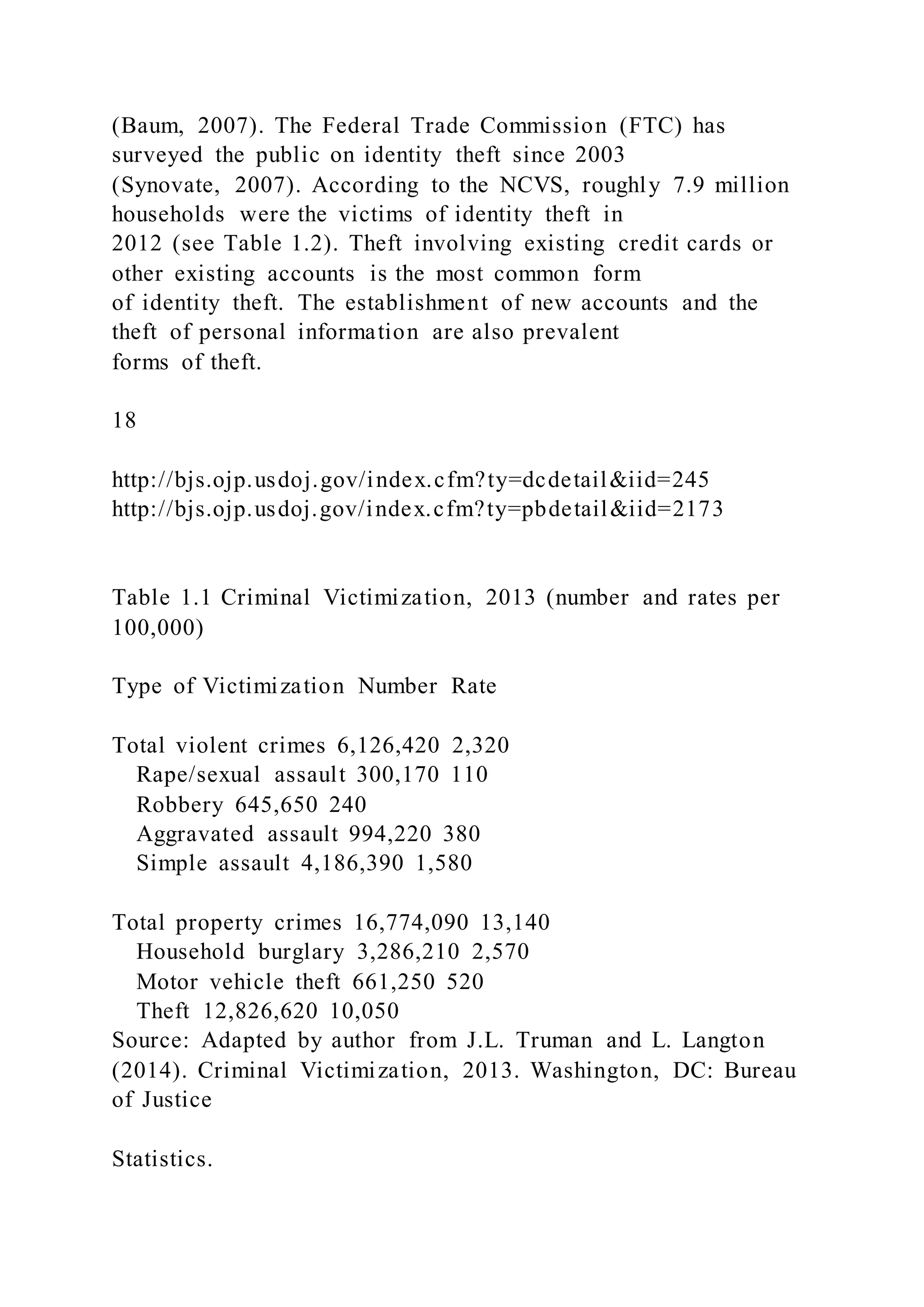
the findings from the UCR. See Table 1.1.
Victimization surveys have the ability to uncover crime and
victimization not typically seen in official
measures or the traditional NCVS data. Identity theft is one
growing area of concern, particularly due to the
growth of the Internet and electronic records. As society has
moved toward paperless records and the storage
of information on computers, offenders no longer have to have
physical access to the records. Instead, they can
access the information over the Internet by either having lawful
access to the files, or illegally gaining entry to
the records by hacking into a computer system. Electronic
methods can be used for theft from next door or
from around the world. Based on findings from a national
survey of almost 5,000 adults conducted in 2006,
most victims did not even know they were victimized or how it
was done (56 percent) (Synovate, 2007).
Identity theft can take a variety of forms. The NCVS has
included questions on identity theft since 2004
(Baum, 2007). The Federal Trade Commission (FTC) has
surveyed the public on identity theft since 2003
(Synovate, 2007). According to the NCVS, roughly 7.9 million
households were the victims of identity theft in
2012 (see Table 1.2). Theft involving existing credit cards or
other existing accounts is the most common form
of identity theft. The establishment of new accounts and the
theft of personal information are also prevalent
forms of theft.
18
http://bjs.ojp.usdoj.gov/index.cfm?ty=dcdetail&iid=245
http://bjs.ojp.usdoj.gov/index.cfm?ty=pbdetail&iid=2173
Table 1.1 Criminal Victimization, 2013 (number and rates per
100,000)
Type of Victimization Number Rate
Total violent crimes 6,126,420 2,320
Rape/sexual assault 300,170 110
Robbery 645,650 240
Aggravated assault 994,220 380
Simple assault 4,186,390 1,580
Total property crimes 16,774,090 13,140
Household burglary 3,286,210 2,570
Motor vehicle theft 661,250 520
Theft 12,826,620 10,050
Source: Adapted by author from J.L. Truman and L. Langton
(2014). Criminal Victimization, 2013. Washington, DC: Bureau
of Justice
Statistics.
Table 1.2 Types and Extent of Identity Theft
Type Number
Existing Credit Cards 7,698,500
Existing Bank Accounts 7,470,700
Other Accounts 1,696,400
New Account 1,125,100
Personal Information 883,600
Total 7,928,500
Source: Constructed by author from E. Harrell and L. Langton
(2013). Victims of Identity Theft, 2012. Washington, DC:
Bureau of Justice
Statistics.
Information on identity theft offers a wealth of additional
information. The NCVS data show that most
victims of identity theft are from households with incomes of
$75,000 and more (Harrell and Langton, 2013).
Information from the NCVS suggests that this form of crime has
been on the increase since the first survey was
completed in 2003. Many victims fail to realize that a theft has
occurred until long after the event. The most
common means by which victims discovered the theft was being
contacted by a financial institution about
account activity (Harrell and Langton, 2013).
Another form of theft not typically found in data involves mass -
marketing fraud. This can occur through
schemes that seek to obtain relatively small amounts of money
from a large number of victims or through
maximizing the return on a smaller number of wealthier victims.
Again, this type of fraud can target victims
virtually anywhere in the world. The use of mail, telephones,
the Internet, and the mass media makes borders,
whether physical or symbolic, almost meaningless. While there
are a number of different mass-marketing
fraud schemes, there are several commonalities in the
approaches. First is the use of some form of mass
19
communication to reach a wide range of potential victims
spread over a large geographic area (often
internationally). A second common feature is the attempt to
convince victims to provide funds or access to
funds in return for a promised service or benefit. Some of these
schemes can appear very similar to those seen
earlier under identity theft.
On the Web
Read more about mass-marketing fraud and responses for
victims and society at
http://www.justice.gov/criminal/fraud/internet/
Gauging the extent of mass-market fraud schemes is not an easy
task. Three main reasons can be offered for
the lack of definitive data on these offenses. First, many of
these offenses are relatively new crime forms, and
both the public and the criminal justice system are playing
catch-up in identifying and addressing them.
Second, there is no systematic method for collecting and
disseminating information on mass-market crimes.
While the FBI and other agencies are working to gather such
data, the work is still in its infancy. Third, many
individuals either do not know they have been victimized or do
not report the event to the authorities due to
embarrassment and shame. Despite these facts, we can glean
some information on the extent and impact of
mass-marketing fraud.
Most of the information that is available is from victim surveys
or complaints filed by victims. The U.K.
Office of Fair Trading (2006) reports that almost half of its
survey respondents had been approached by a
scammer in some way over their lifetimes. Of those individuals,
8 percent had been the victim of some form of
scam, with most of the events taking place in the past year. The
survey report estimates that more than 3.2
million people (6.5 percent of the U.K. adult population) are
victimized every year. In the United States, a
Federal Trade Commission survey on consumer fraud claims
that 10.8 percent of the U.S. adult population was
victimized in 2011, with a total of almost 38 million fraud
incidents (Anderson, 2013). An alternative source of
data comes from the Internet Crime Complaint Center. In 2012,
the Center received 289,874 complaints
(Internet Crime Complaint Center, 2013). It is important to note
that these data reflect only those incidents
reported to that office and not victimizations reported to any
other agency.
Victimization studies are not without their critics and
shortcomings. Among the many problems inherent in
the surveys are the lack of knowledge of what constitutes
various crimes on the part of respondents, problems
of respondent recall, and issues of question wording. These
issues are well documented elsewhere (see O’Brien,
1985) and will not be considered here. The magnitude of the
difference between official and victimization
figures, however, is too large to be offset solely by the
problems of victim surveys. There is little question that
victim surveys uncover more crime than official measures.
Summary
Clearly, no single measure of crime/victimization is perfect.
Each measure taps something different. The
exact nature and level of crime in society is unknown. Official
UCR figures reveal a staggering amount of
crime. More than doubling those numbers to account for
unreported offenses, as victimization figures would
suggest, compounds the problem. Measures of new and
emerging forms of crime further exacerbate the crime
problem. Even with the recent reductions in crime, the number
of offenses is staggering.
The level of crime, whether at its peak or more moderate
numbers, exceeds the limits of what the criminal
justice system can hope to handle. The system is already
overburdened and often simply processes people
through the maze of legal requirements while having a
questionable impact on the level of crime (Conklin,
2003). Even if the criminal justice system could claim credit for
the recent reductions, there is still a lot of work
to do. Compounding the situation is the fact that the bulk of
criminal justice system activity (e.g., arrests,
convictions, incarceration, and corrections) reflects an after -
the-fact approach to crime. The system deals
primarily with crimes which have already been committed.
There is little, if any, evidence to show that the
20
http://www.justice.gov/criminal/fraud/internet/
criminal justice system actually stops crime before it occurs.
21
The Costs of Crime/Victimization
The problem of crime and victimization goes beyond simple
counts of the number of offenses. Crime has a
number of different impacts on both the victims and society,
and in many ways these impacts surpass the size
and scope of the UCR and NVCS figures. Economic loss,
injuries, the need for medical care, and lost time from
work are additional measures of crime’s impact.
Information on the impact of crime is routinely collected each
year by both the UCR and victimization
surveys. Data on direct economic loss from various crimes
according to both the UCR and NCVS appear in
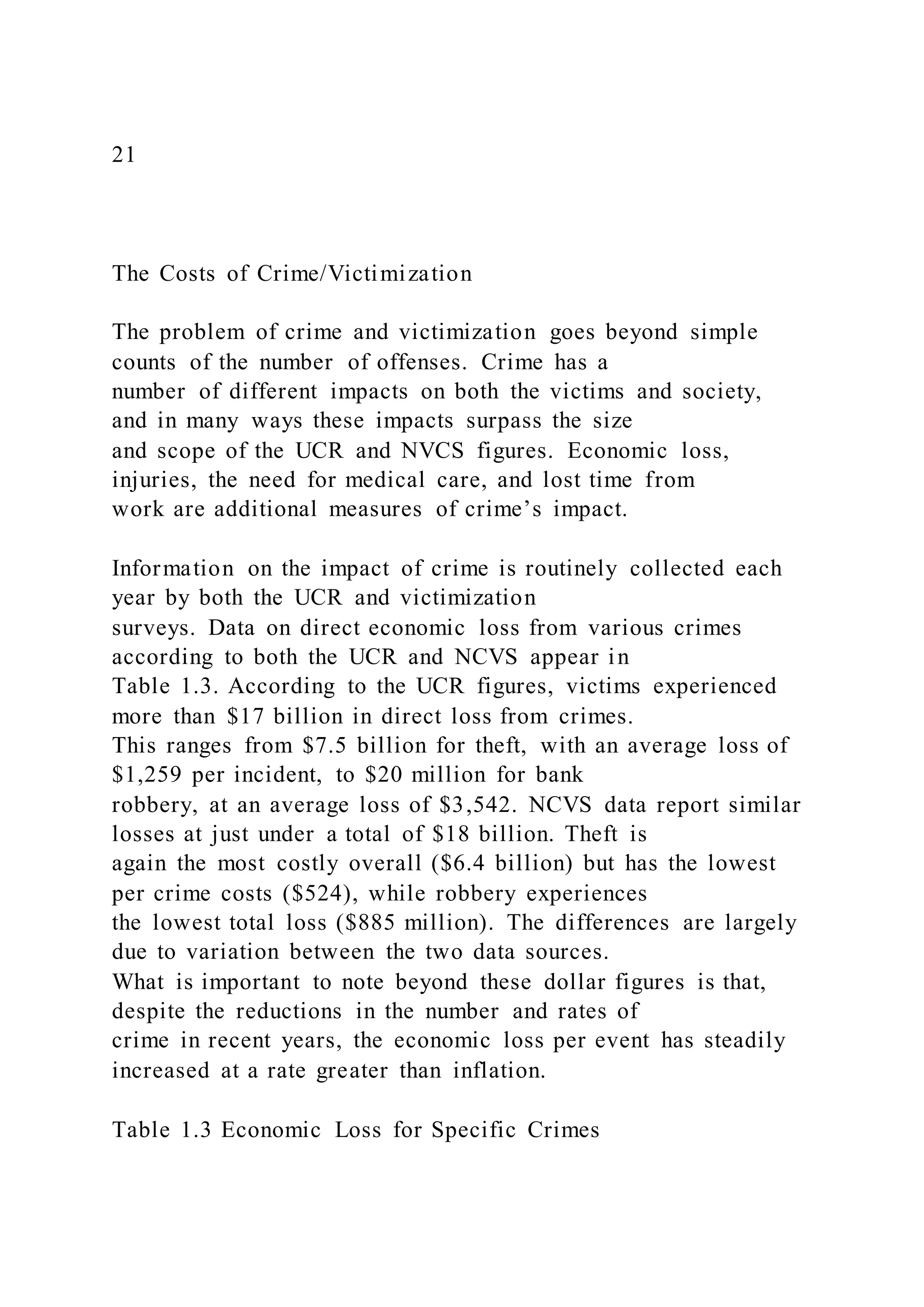
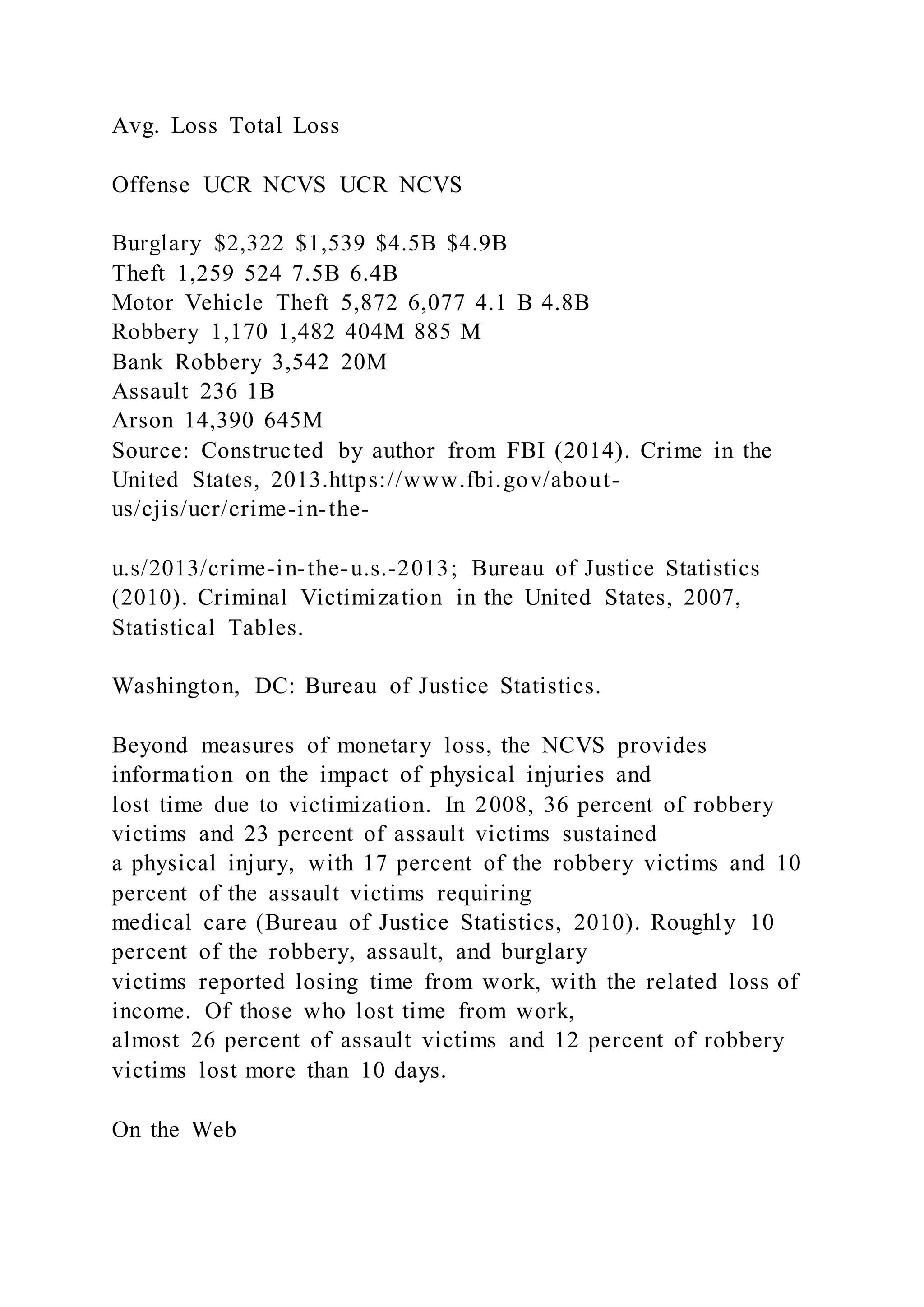
Table 1.3. According to the UCR figures, victims experienced
more than $17 billion in direct loss from crimes.
This ranges from $7.5 billion for theft, with an average loss of
$1,259 per incident, to $20 million for bank
robbery, at an average loss of $3,542. NCVS data report similar
losses at just under a total of $18 billion. Theft is
again the most costly overall ($6.4 billion) but has the lowest
per crime costs ($524), while robbery experiences
the lowest total loss ($885 million). The differences are largely
due to variation between the two data sources.
What is important to note beyond these dollar figures is that,
despite the reductions in the number and rates of
crime in recent years, the economic loss per event has steadily
increased at a rate greater than inflation.
Table 1.3 Economic Loss for Specific Crimes
Avg. Loss Total Loss
Offense UCR NCVS UCR NCVS
Burglary $2,322 $1,539 $4.5B $4.9B
Theft 1,259 524 7.5B 6.4B
Motor Vehicle Theft 5,872 6,077 4.1 B 4.8B
Robbery 1,170 1,482 404M 885 M
Bank Robbery 3,542 20M
Assault 236 1B
Arson 14,390 645M
Source: Constructed by author from FBI (2014). Crime in the
United States, 2013.https://www.fbi.gov/about-
us/cjis/ucr/crime-in-the-
u.s/2013/crime-in-the-u.s.-2013; Bureau of Justice Statistics
(2010). Criminal Victimization in the United States, 2007,
Statistical Tables.
Washington, DC: Bureau of Justice Statistics.
Beyond measures of monetary loss, the NCVS provides
information on the impact of physical injuries and
lost time due to victimization. In 2008, 36 percent of robbery
victims and 23 percent of assault victims sustained
a physical injury, with 17 percent of the robbery victims and 10
percent of the assault victims requiring
medical care (Bureau of Justice Statistics, 2010). Roughly 10
percent of the robbery, assault, and burglary
victims reported losing time from work, with the related loss of
income. Of those who lost time from work,
almost 26 percent of assault victims and 12 percent of robbery
victims lost more than 10 days.
On the Web
NCVS and UCR cost figures and the Miller et al. (1996) report
can be found on the textbook web
22
https://www.fbi.gov/about-us/cjis/ucr/crime-in-the-
u.s/2013/crime-in-the-u.s.-2013
site.
While the above information paints a serious picture of the
impact of crime, the actual impact extends
beyond the direct financial loss due to the crime or the time lost
by victims as reflected in the UCR or the
NCVS. Indeed, crime exacts a wide range of additional costs on
the individual and society. Among these are
the criminal justice system costs of investigating, arresting,
prosecuting, adjudicating, and
incarcerating/punishing the offender. Besides the direct crime
losses suffered by the victims, there are the
medical costs related to injuries and lost income, as wel l as
intangible costs which include pain and suffering,
psychological impacts, and reduced quality of life.
In a recent analysis, McCollister et al. (2010) provide a detailed
discussion of the data and computations on
the costs of crime to society. The authors draw data from the
UCR, National Incident-based Reporting System
(NIBRS), the NCVS, the Federal Emergency Management
Agency, the U.S. Fire Administration (for arsons), the
Bureau of Justice Assistance (for jail and prison data, criminal
justice system employment data, and
expenditures), and the Bureau of Labor Statistics (income and
earnings). They also rely on data and input from
other analyses, including the work of Miller et al. (1996) and
Aos (2003b). Table 1.4 presents the tangible and
intangible costs for 13 crime types in 2008 dollars. The total
costs range from a high of almost $9 million for
each murder to a low of $3,532 for each larceny/theft. While
these per-crime figures are themselves staggering,
multiplying the costs of homicides by the number of homicides
in 2010 reveals a total cost of more than $132
billion just for this one offense category. Carrying out this same
computation for all 13 crime categories reveals
a total costs of more than $295 trillion in 2010!
Table 1.4 Tangible and Intangible Costs of Crime
The economic impact of crime on the individual and society is
huge. Simply looking at the immediate loss
due to the victimization itself is short-sighted. To these losses
you need to add the costs of the criminal justice
system, other costs to the victim and his family, pain and
suffering, and lost productivity by the offender.
23
While the actual level of crime has fallen in recent years, the
staggering economic costs to the individual
victims and to society cannot be ignored.
24
The Fear of Crime
To further compound the problem of the levels of “actual crime”
and the economic and physical impact of
crime in society, one needs only to examine the perceived levels
of crime and the resultant fear held by many
members of society. The “fear of crime” presents a view of
criminal victimization that, although not necessarily
real, forms the basis for daily “inactivity” and anxiety. Because
fear reduction is an important component of
many crime prevention programs, it is important to understand
the extent of fear and issues related to
measuring and understanding fear.
Fear of crime emerged as a social issue in the mid-1960s and
soon became a permanent part of
criminological research. Lee (2007) argues that fear was
“invented” in the 1960s through a convergence of
various factors. Among these were the development of
victimization surveys as a part of the 1967 President’s
Commission on Law Enforcement and the Administration of
Justice (and subsequently in other countries), the
growth of professional/academic interest in crime and its
causes, the use of crime and fear as political capital,
and the feminist movement (Lee, 2007). The newly discovered
“fear of crime” became an integral part of
national and local government policymaking.
Defining Fear
What exactly is fear? Despite the growth of interest in “fear of
crime,” there remains a lack of consensus on
exactly what the term means. Perhaps the most recognized work
on this issue is that of Kenneth Ferraro and
his associates. Ferraro defines fear as:
an emotional response of dread or anxiety to crime or symbols
that a person associates with crime. This definition of fear
implies that some
recognition of potential danger, what we may call perceived
risk, is necessary to evoke fear.
(1995, p. 8)
While this definition requires an emotional response, the fear
may manifest itself in various ways depending
on the person involved and the basis for his anxiety. Some
individuals fear walking on the streets in their
neighborhood while others fear physical attack within their own
home. As a result, there may be a shift in
physical functioning such as high blood pressure and rapid
heartbeat. Alternatively, the individual may
similarly alter his attitudes about walking alone in certain
places or avoiding various activities. To a great
extent, the source of the fear for the individual will determine
the response to the fear. Regardless of the source
of this fear, it is real for the individual.
Measuring Fear
Ferraro (1995) points out that researchers have attempted to
measure fear in a variety of ways. Some surveys
question respondents about how much they worry about being a
victim. Others ask about perceptions of the
crime problem in their community. Still other surveys have
respondents rate their chances of becoming a
victim. These various approaches do not provide the same
information.
25
Figure 1.3 Classification and Examples of Crime Perceptions
Source: K.F. Ferraro and R.L. LaGrange (1988). “Are older
people afraid of crime?” Journal of Aging Studies 2:277–287.
Reprinted with permission
from Elsevier Science.
In an attempt to show the differences between various fear
measures, Ferraro and LaGrange (1988) provide a
classification scheme that considers the perceptions of the
respondent being tapped and the degree to which
the method addresses the individual or others (see Figure 1.3).
This classification taps judgments of risk—how
safe the respondent or others are, values—how concerned the
person is about crime or victimization, and
emotions—how much the individual is afraid or worried about
becoming a victim. Personal fear of crime
appears in the lower right hand cell (F). This measure would ask
respondents directly about how afraid they
are of being the victim of specific crimes, often wi thout
reference to any specific place or time. These questions
directly tap the “emotions of dread or anxiety” of the
individual. At the other extreme (cell A), respondents
assess the general safety of other people, quite possibly without
even mentioning crime.
Table 1.5 Common “Fear” Questions
National Crime Victimization Survey:
How safe do you feel or would you feel being out alone in your
neighborhood at night?
General Social Survey:
Is there any area right around here-that is, within a mile-where
you would be afraid to walk alone at
night?
Taking a Bite out of Crime Campaign Evaluation:
How likely do you think it is that your home will be broken into
or burglarized during the next year?
Is having your home burglarized or broken into something that
you worry about?
National Opinion Survey on Criminal Justice:
Do you worry very frequently, somewhat frequently, seldom or
never about:
– Yourself or someone in your family getting sexually assaulted
– Being attacked while driving your car
– Getting mugged
– Getting beaten up, knifed or shot
– Getting murdered
– Your home being burglarized while someone is at home
– Your home being burglarized while no one is at home
Gallup Poll:
– Is there more crime in your area than there was a year ago, or
less?
– Is there more crime in the U.S. than there was a year ago, or
less?
– Overall, how would you describe the problem of crime in the
U.S.? Is it extremely serious, very
26
serious, moderately serious, not too serious, or not serious at
all?
Fear of Crime in America Survey:
Rate your fear of: (1 = not afraid at all; 10 = very afraid)
– being approached on the street by a beggar or panhandler
– being raped or sexually assaulted
– being murdered
– being attacked by someone with a weapon
– having your car stolen
– having your property damaged by vandals
Interestingly, while discussions of “fear of crime” are common,
many researchers utilize measures that
reflect risk or assessments of crime levels, rather than the
emotional response of the individual (Ferraro, 1995).
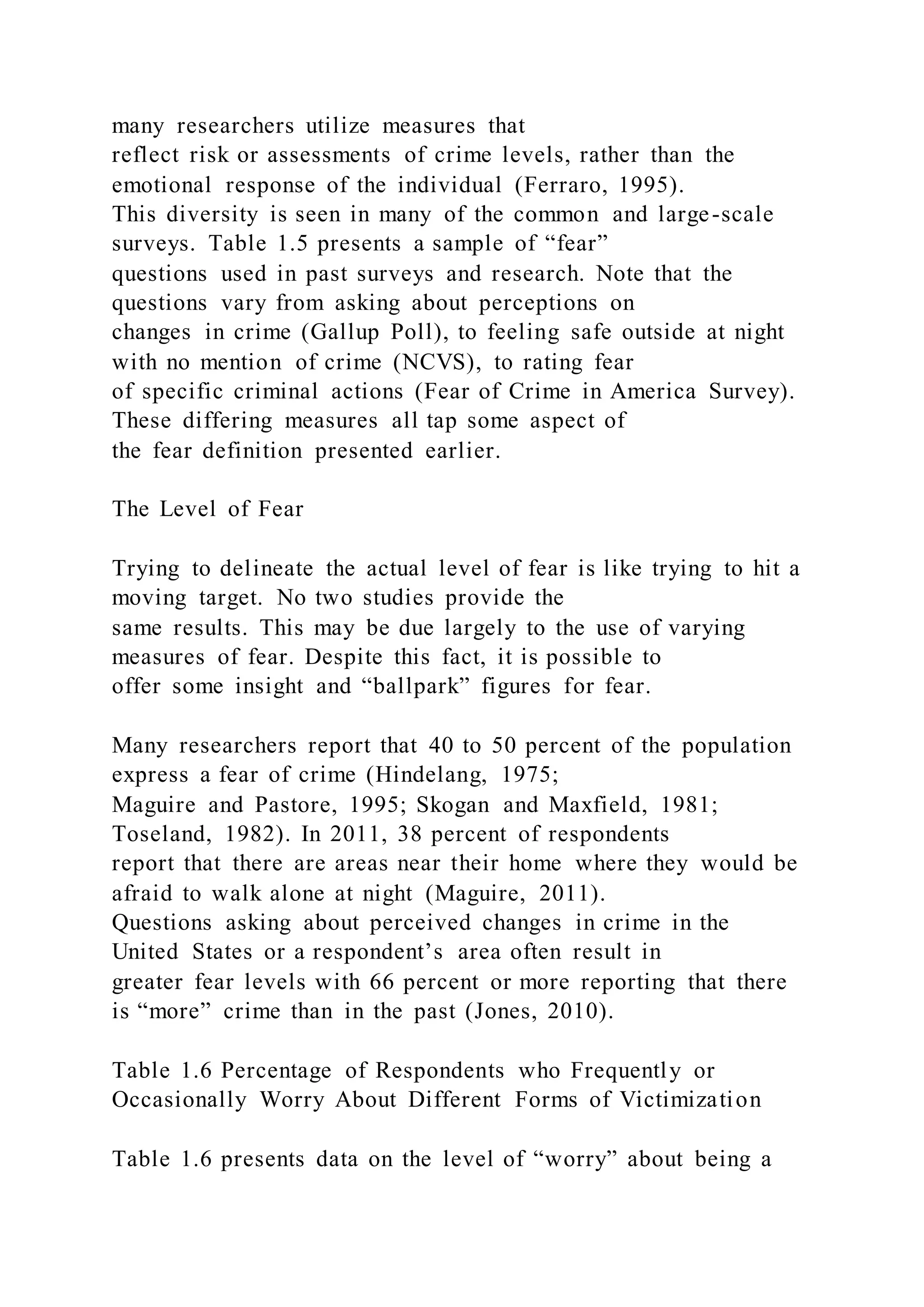
This diversity is seen in many of the common and large-scale
surveys. Table 1.5 presents a sample of “fear”
questions used in past surveys and research. Note that the
questions vary from asking about perceptions on
changes in crime (Gallup Poll), to feeling safe outside at night
with no mention of crime (NCVS), to rating fear
of specific criminal actions (Fear of Crime in America Survey).
These differing measures all tap some aspect of
the fear definition presented earlier.
The Level of Fear
Trying to delineate the actual level of fear is like trying to hit a
moving target. No two studies provide the
same results. This may be due largely to the use of varying
measures of fear. Despite this fact, it is possible to
offer some insight and “ballpark” figures for fear.
Many researchers report that 40 to 50 percent of the population
express a fear of crime (Hindelang, 1975;
Maguire and Pastore, 1995; Skogan and Maxfield, 1981;
Toseland, 1982). In 2011, 38 percent of respondents
report that there are areas near their home where they would be
afraid to walk alone at night (Maguire, 2011).
Questions asking about perceived changes in crime in the
United States or a respondent’s area often result in
greater fear levels with 66 percent or more reporting that there
is “more” crime than in the past (Jones, 2010).
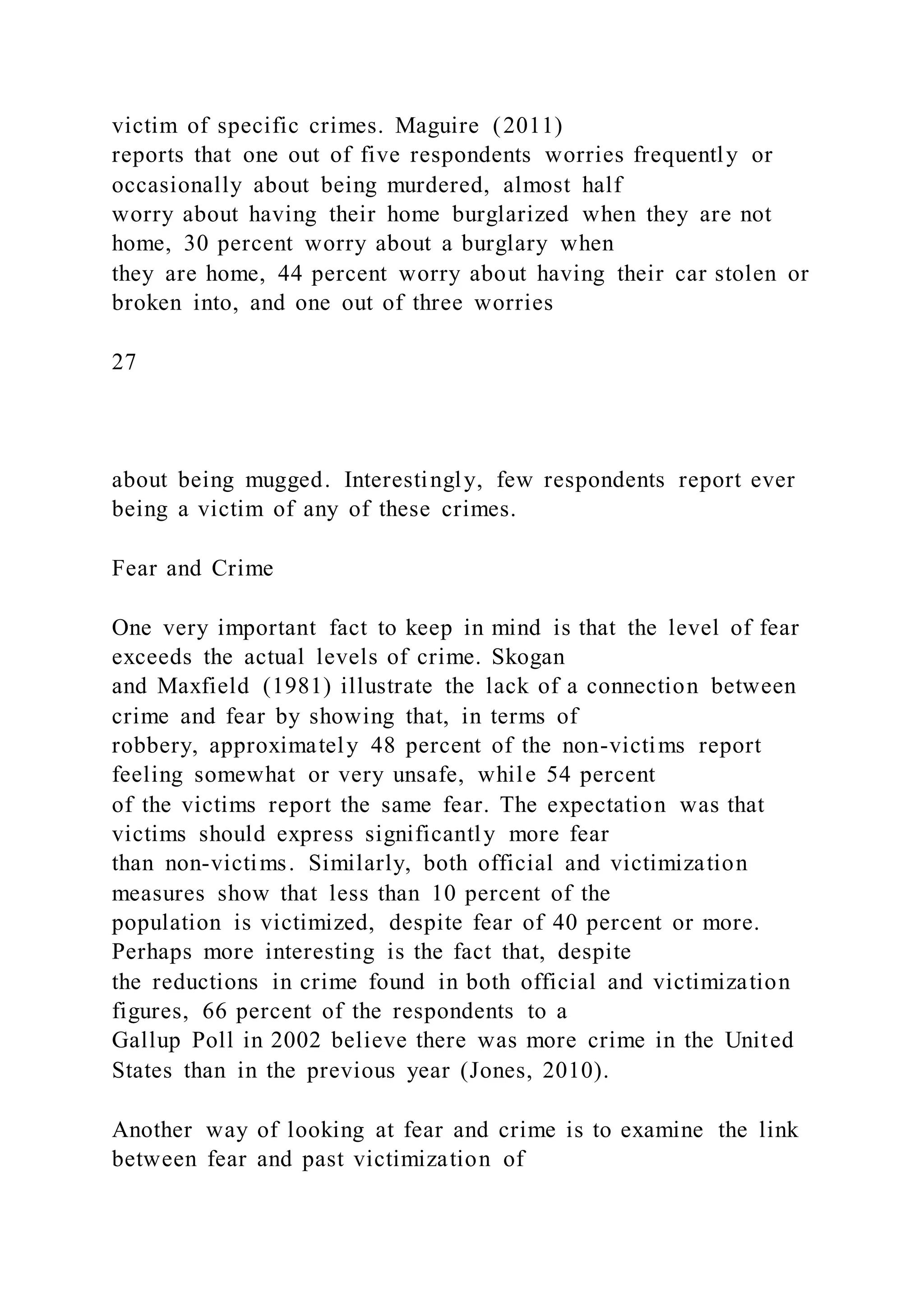
Table 1.6 Percentage of Respondents who Frequently or
Occasionally Worry About Different Forms of Victimization
Table 1.6 presents data on the level of “worry” about being a
victim of specific crimes. Maguire (2011)
reports that one out of five respondents worries frequently or
occasionally about being murdered, almost half
worry about having their home burglarized when they are not
home, 30 percent worry about a burglary when
they are home, 44 percent worry about having their car stolen or
broken into, and one out of three worries
27
about being mugged. Interestingly, few respondents report ever
being a victim of any of these crimes.
Fear and Crime
One very important fact to keep in mind is that the level of fear
exceeds the actual levels of crime. Skogan
and Maxfield (1981) illustrate the lack of a connection between
crime and fear by showing that, in terms of
robbery, approximately 48 percent of the non-victims report
feeling somewhat or very unsafe, while 54 percent
of the victims report the same fear. The expectation was that
victims should express significantly more fear
than non-victims. Similarly, both official and victimization
measures show that less than 10 percent of the
population is victimized, despite fear of 40 percent or more.
Perhaps more interesting is the fact that, despite
the reductions in crime found in both official and victimization
figures, 66 percent of the respondents to a
Gallup Poll in 2002 believe there was more crime in the United
States than in the previous year (Jones, 2010).
Another way of looking at fear and crime is to examine the link
between fear and past victimization of
respondents. Some studies offer empirical support of a positive
relationship between victimization and fear of
crime (Bachman et al., 2011; Ferguson and Mindel, 2007;
Keane, 1995; Lumb et al., 1993; McCoy et al., 1996;
Roundtree, 1998; Skogan, 1987; Will and McGrath, 1995; Zhao
et al., 2015). Other studies, however, fail to find
any relationship between victimization and fear (Ferraro, 1995;
Garofalo, 1979; Gates and Rohe, 1987; Liska et
al., 1982; McGarrell et al., 1997; Perkins and Taylor, 1996;
Rifai, 1982). Yet another group of researchers argue
that the relationship depends on the definitions and measures of
fear and/or victimization (Baumer, 1985;
Bennett and Flavin, 1994; Ferraro and LaGrange, 1987;
Garofalo, 1981; Gomme, 1988).
Fear and Demographics
Besides the diversity in the fear–victimization relationship, the
level of fear is not consistent across all
demographic groups in the population. It is principally an urban
problem and affects the elderly and women to
a greater extent than other groups. Greater than 60 percent of
those persons living in urban areas express fear
of crime. Conversely, only 30 percent of rural residents voice
the same fears. A wide range of studies reveal
that the elderly and women are the most fearful groups in
society (Baumer, 1985; Bennett and Flavin, 1994;
Ferraro, 1995; Hindelang et al., 1978; McGarrell et al., 1997;
Perkins and Taylor, 1996; Riger et al., 1978; Skogan
and Maxfield, 1981; Will and McGrath, 1995). This persists
despite the fact that the elderly and women are the
least victimized groups. Some researchers argue these fear
results are an artifact of how fear is measured and
that the young are actually the most fearful (Chiricos et al.,
1997; Ferraro, 1995; Lumb et al., 1993).
Fear also varies along other demographic lines. Numerous
studies report that fearful people tend to be black
(Biderman et al., 1967; Chiricos et al., 1997; Lab, 1990; Smith
and Lab, 1991; Parker, 1988; Parker and Ray, 1990;
Skogan and Maxfield, 1981), lower socioeconomic status
(Bennett and Flavin, 1994; Biderman et al., 1967;
Gomme, 1986; Greenberg et al., 1985; Riger et al., 1978; Wi ll
and McGrath, 1995), and live in large communities
(Baumer, 1985; Biderman et al., 1967; Boggs, 1971; Kennedy
and Silverman, 1985; Liska et al., 1982; Will and
McGrath, 1995). Other studies, however, note the lack of a
relationship or a reverse relationship between some
of these demographic factors and fear (Gomme, 1986; Gomme,
1988; Kennedy and Krahn, 1984; Kennedy and
Silverman, 1985; Lab, 1990; Smith and Lab, 1991; Menard and
Covey, 1987; Ortega and Myles, 1987; Toseland,
1982).
Explaining the Divergent Findings
Two basic questions arise from an inspection of past research
on fear of crime. First, how do you justify the
levels of fear in light of the actual levels and chances of
victimization? Second, why do different studies find
divergent sets of characteristics among fearful individuals?
There is no clear answer to these questions. Instead,
there may be many contributing factors.
Vicarious Victimization
28
Hough (1995) argues that fear is related to measures of
vicarious victimization. Vicarious victimization
refers to knowing someone or hearing about others who have
been the victim of a crime. This information may
elicit a sympathetic reaction and empathetic fear of crime.
Grohe et al. (2012), using a phone survey of
residents in one southeastern U.S. city, report that fear of
burglary is significantly related to actual burglary in
the city. Analyzing fear among Houston residents, Zhao et al.
(2015) note that local crime is related to fear of
violent, property, and disorder offenses independent of actual
victimization. Vicarious fear can also come from
real or dramatic depictions of crime in the media, particularly
television. Both fictional police dramas and the
reporting of crime and violence in the news inundate the
populace with a view that crime is a constant threat
to every individual. It is also noteworthy that most depictions
are not of everyday “street crimes.” Instead, they
focus on more heinous and frightening offenses such as murder,
rape, and home burglary. Several studies
(Chiricos et al., 1996; Lane and Meeker, 2003a; Weitzer and
Kubrin, 2004) report that exposure to crime in the
media is related to higher reported fear.
Perceived Risk and Harm
A second possible explanation for inordinate levels of fear
centers on the potential harm one encounters
when victimized (Riger et al., 1978; Skogan and Maxfield,
1981; Warr, 1984). That is, victimization has a greater
impact on some individuals than others. The elderly, for
example, are largely on fixed incomes and any loss
due to theft, property damage, or medical expenses cannot
always be accommodated within their budgets. A
minor dollar loss can translate into a major hardship. Similarly,
physical injuries to elderly victims can result in
lengthy, painful recuperation beyond that needed by younger
individuals. The elderly and females also have a
great physical disadvantage when faced with young male
offenders who hold an edge in strength and physical
prowess. The perceived potential for physical harm is greatly
enhanced when the victim and offender represent
opposite positions in physical and social power. McCoy et al.
(1996) and Smith and Torstensson (1997) find that
perceived vulnerability is a strong predictor of fear among
women and the elderly.
Vulnerability also appears in the form of social isolation (Akers
et al., 1987; Bursik and Grasmick, 1993;
Kennedy and Silverman, 1985; Riger et al., 1978). Many elderly
live alone and have few family members or
close friends living nearby. These individuals may feel they
have no one to call on for assistance in the
aftermath of a crime. They are socially isolated from support
networks that are more common among younger
members of the population.
Incivility
A third possible explanation for the lack of a direct
victimization–fear connection involves area incivility.
Incivility refers to physical and social factors involved in
disorder and community decline. Physical signs of
incivility include the deterioration of buildings, litter, graffiti,
vandalism, and abandoned buildings and cars.
Among the social signs of incivility are public drunkenness,
vagrancy, loitering youths, harassment (such as
begging or panhandling), and visible drug sales and use. Both
residents and potential offenders may see signs
of incivility as indicative of a lack of social cohesion, high
transiency, a lack of resources, and/or an uncaring
attitude (Lewis and Salem, 1986; Skogan, 1990). Residents may
feel a lack of control in the neighborhood that in
turn may generate a greater fear of crime. Conversely, areas that
display collective efficacy and strong social
integration should have lower levels of fear (Doran and
Burgess, 2012; Jackson and Gray, 2010; Zhao et al.,
2015).
Several studies have analyzed the contribution of incivilities to
the level of fear. McGarrell et al. (1997)
report that neighborhood disorder/incivility contributes
significantly to variation in respondents’ fear of crime.
Roundtree (1998) finds similar results when analyzing survey
data from 5,302 Seattle residents. Residents’
perceptions of disorder significantly increased fear of both
violent and burglary victimizations. Lane and
colleagues (Lane, 2002; Lane and Fox, 2012; Lane and Meeker,
2000, 2005, 2011) have demonstrated that
neighborhood conditions and signs of disorder are related to
levels of fear. Finally, McCoy et al. (1996) note
that dissatisfaction with one’s neighborhood (a possible
indicator of incivilities) is a key to residents’ fear.
29
Methodological Factors
Differing methodologies in the studies may also influence the
results. As noted earlier, varying “fear”
measures can contribute to divergent findings. It is not
improbable that the same respondents could provide
two different views of fear when asked different questions. For
example, survey respondents may give “fearful”
responses when asked about walking alone after dark anywhere
“within a mile,” but few “fear” responses to
the likelihood of being raped. Similarly, respondents may feel
that crime is a greater problem today than a year
ago, but still not worry much about being mugged. The extent of
fear also may vary depending on who is
answering which questions. Females, for example, worry more
about sexual assault than do males. Ferraro
(1995) notes that general fear among women is better
understood as an extension of the fear of rape.
Operationalizing fear in different ways, therefore, produces
greatly different results. Variation in fear also may
reflect the locale of the study. For example, Chiricos et al.
(1997) point out that their results on fear differ from
those of Covington and Taylor (1991), despite the similar
concerns addressed in the two studies. They speculate
that the variation is due to differences between Tallahassee,
Florida and Baltimore, Maryland. The setting of
the analysis, therefore, can influence the results.
Crime and Fear
Yet another factor influencing the levels of fear involves the
actual level of crime. While the fear of crime
varies independently from actual victimization and crime, it
would be naive to claim that changes in the crime
rate have no influence on reported fear. Media reports of
increasing crime and spectacular offenses
undoubtedly hold some sway over perceptions of safety in the
community. Unfortunately, lower crime rates
probably do not bring about lower fear as easily. The media
does not promote good news to the same extent as
bad news. Feelings of fear and worry, once formed, would be
difficult to reverse.
Benefits of Fear
Throughout this discussion, fear has been presented primarily as
a negative concept. That is, fear is a bad
thing that has negative consequences for the individual. Among
these negatives are changes in behavior,
retreating behind closed doors, not trusting other people,
anxiety, and/or depression, to name a few. The
logical conclusion to draw is that we need to reduce, and
hopefully eliminate, fear. It is possible, however, to
view fear as a positive thing.
Jackson and Gray (2009) note that there is such a thing as
functional fear. In essence, fear can be a good
thing, provided the individual uses it as motivation to take
precautions. These precautions may range from
avoiding certain risky places or times, to utilizing safety
devices at home, to pairing up with others for safety
when outdoors. A similar proposition is offered by Lee (2007)
when he discusses the fearing subject. This
person is someone who becomes responsible for the safety of
himself and his property. Jackson and Gray
(2010), using the Safer Neighborhoods Survey in London, report
that fear actually promotes precautions, which
reduce subsequent fear for a significant number of respondents.
Based on these arguments, it would be ill-advised to try to
completely eliminate fear. Rather, fear can be
healthy for people. The key would be to determine what that
“healthy level” is and how to limit a person’s fear
at that optimal level. Under this approach, eliminating fear
would result in people taking unnecessary chances
and ignoring risky situations.
Fear Summary
Despite the issues and concerns inherent in measuring fear of
crime, one fact remains unchanged. That is,
people report being fearful to a much greater extent than they
report (either officially or unofficially) being a
victim of crime. Because of fear, people respond in a variety of
ways. Some individuals will avoid certain
places at certain times, or stop going somewhere altogether.
Others may install locks and security devices and
30
stay inside their fortress. The public may demand greater police
presence. Funds may be expended on self-
defense classes, dogs, guns, or other items in an attempt to
protect one’s self and reduce the feelings of fear.
Whatever the response, it is indicative of fear’s impact on the
individual and society.
31
Summary
The extent of the crime problem is hard to accurately gauge and
is multifaceted. Attempts to measure the
level of crime present a variety of findings and anomalies.
While these various counting procedures may not
agree on the numerical magnitude of crime and victimization,
there is consensus that crime remains a major
social problem. Crime may be on the decrease, but it remains
far higher today than in the 1960s when the
President’s Commission proclaimed that major changes were
needed to stem the problem of crime and
victimization. Beyond the enumeration of criminal acts, the
economic, impact of crime on the individual and
society is substantial. Psychological and time losses due to
crime are also significant. Also problematic are the
inordinate levels of fear of crime. Fear far exceeds the actual
amount of crime and affects many individuals
who never have been, and may never be, crime victims. Crime
prevention must be cognizant of both the real
and perceived levels of crime and must be prepared to attack
crime in all its aspects.
Key Terms
fear
fearing subject
functional fear
incivility
National Crime Victimization Survey (NCVS)
panel survey
Part I crimes
Part II crimes
Uniform Crime Reports (UCR)
vicarious victimization
victimization surveys
32
Chapter 2
Crime Prevention
Chapter Outline
Crime Prevention Through the Ages
Modern Crime Prevention
Summary
Defining Crime Prevention
Crime Prevention Classifications
Crime Prevention/Public Health Model
Alternate Classifications of Crime Prevention
Model of Choice
Learning Objectives
After reading this chapter you should be able to:
Discuss the historic methods used by individuals and
communities to respond to and prevent
crime.
Provide a definition of crime prevention.
Contrast crime prevention and crime control.
Outline the crime prevention model based on the public health
model.
Define primary, secondary, and tertiary crime prevention.
Provide examples of prevention activities for each part of the
crime prevention model.
Offer examples of other crime prevention models.
Identify the difference between micro-, meso-, and macro-level
prevention.
Define and discuss crime science.
Crime prevention is not a new idea. Indeed, for as long as
people have been victimized there have been
attempts to protect oneself and one’s family. The term “crime
prevention,” however, has only recently come to
signify a set of ideas for combating crime. Many people suggest
that crime prevention today is new and
unique, particularly in terms of citizen participation. In reality,
many recent activities classified as crime
prevention can be seen throughout history. “New” crime
prevention ideas and techniques are often little more
than reincarnations of past practices or extensions of basic
approaches in the (distant) past. It is only in the
relatively recent past that the general citizenry has not been the
primary line of defense against crime and
victimization. This chapter will accomplish several things.
First, it presents a brief discussion of crime
prevention throughout history. Second, a definition for crime
prevention will be presented. Third, the chapter
presents the general crime prevention model that serves to
organize the remainder of the text.
33
34
Crime Prevention Through the Ages
In any discussion it is important to set forth the context from
which our ideas and thoughts emerge. Perhaps
the best place to start is with an understanding of what has
happened in the past. The study of crime
prevention is no exception.
The earliest responses to crime were left to the individual and
his family. Retribution, revenge, and
vengeance were the driving forces throughout early history.
While such actions would serve to make the
victim whole again, it also would eliminate the benefit gained
by the offender. It was assumed that potential
offenders would see little gain in an offense, thereby deterring
the individual from taking action. The Code of
Hammurabi (approximately 1900 B.C.) outlined retribution by
the victim and/or his family as the accepted
response to injurious behavior. Lex talionis, the principle of “an
eye for an eye,” was specifically set forth as a
driving principle in the Hammurabic law. Such laws and
practices provided legitimacy to individual citizen
action.
The existence of formal systems of social control is relatively
new. Early “policing,” such as in the Roman
Empire and in France, was concentrated in the cities, conducted
by the military, and dealt with issues of the
central state and the nobility (i.e., king) (Holden, 1992;
Langworthy and Travis, 1994). The general public was
left to continue self-help methods.
The Norman conquest of England in 1066 gave rise to a form of
citizen policing referred to as obligatory
policing (Klockars, 1985). Male citizens were required to band
together into groups for the purpose of policing
each other. If one individual in the group caused harm (to a
group or non-group member), the other members
were responsible for apprehending and sanctioning the offender.
Beyond this obligatory action, a variety of
cooperative practices emerged that relied on citizen
participation to protect the community and one another.
Watch and ward rotated the responsibility for keeping watch
over the town or area, particularly at night,
among the male citizens. Identified threats would cause the
watcher to raise the alarm and call for help (hue
and cry). It was then up to the general citizenry to apprehend
and (possibly) punish the offender. Those
responding to the call for help were not employees of the state.
Rather, they were other common citizens. The
“watch and ward” and “hue and cry” ideas were codified in
1285 in the Statutes of Winchester (Klockars, 1985),
which also required men to have weapons available for use
when called (assize of arms), and outlined the role
of a constable, which was an unpaid position responsible for
coordinating the watch and ward system, and
overseeing other aspects of the law. It is apparent throughout
these actions that crime prevention was a major
responsibility of the citizenry.
Similar citizen responsibility was commonplace in the new
world colonies and the early United States. The
vigilante movement, which mirrored early ideas of “hue and
cry,” was a major component of enforcing law
and order in the growing frontier of the young country
(Klockars, 1985). Posses of citizens were formed when
an offender needed to be apprehended and punished.
The individual, often voluntary, responsibility for crime
prevention in England generally persisted until the
1800s. The exceptions to this trend can be seen in the
development of paid, private security police for
specialized industries or groups (Klockars, 1985; Langworthy
and Travis, 1994). The Merchant Police of
England, which was established in the sixteenth century to
protect the wool industry, is a prime example of an
early private police force. The parochial police, hired by the
wealthy to protect their homes and businesses, is
another example.
Entrepreneurial policing appeared with the passage of the
Highwayman Act in England in 1692. This law
outlined the payment of bounty for the capture of thieves and
the recovery of property. The voluntary bounty
hunters came to be known as thief takers (Klockars, 1985;
LaGrange, 1993) who, by the mid-1700s, were
organized under the leadership of English magistrates. The thief
takers, who were often reformed criminals
themselves, were “paid” to protect the public by being able to
keep a portion of all recovered property. The
evolution of the thief takers from a wholly voluntary activity to
a legitimized, organized group under
government control was the beginning of a process that ended
with the establishment of the Metropolitan
Police in London in 1829.
A key to the Metropolitan Police organization was the idea of
crime prevention. Sir Robert Peel, who was
35
the driving force behind the Metropolitan Police Act, and
Charles Roman, the commissioner of the new
organization, both saw crime prevention as the basic principle
underlying police work (LaGrange, 1993). Even
earlier attempts at formal policing, such as that in seventeenth
century Paris, emphasized crime prevention
through methods such as preventive patrol, increased lighting,
and street cleaning (Stead, 1983). Formal police
forces in the United States, mirroring the movement in England,
emerged in the mid-1800s and were restricted
primarily to the largest cities in the northeast, leaving citizens
to continue their efforts at self-protection.
While much of this discussion has emphasized individual action
and self-help, it should not be construed as
indicative that protective actions were solely a matter of
retribution and revenge. There are numerous
examples of alternative approaches that would be considered
preventive in nature. Easy examples were the use
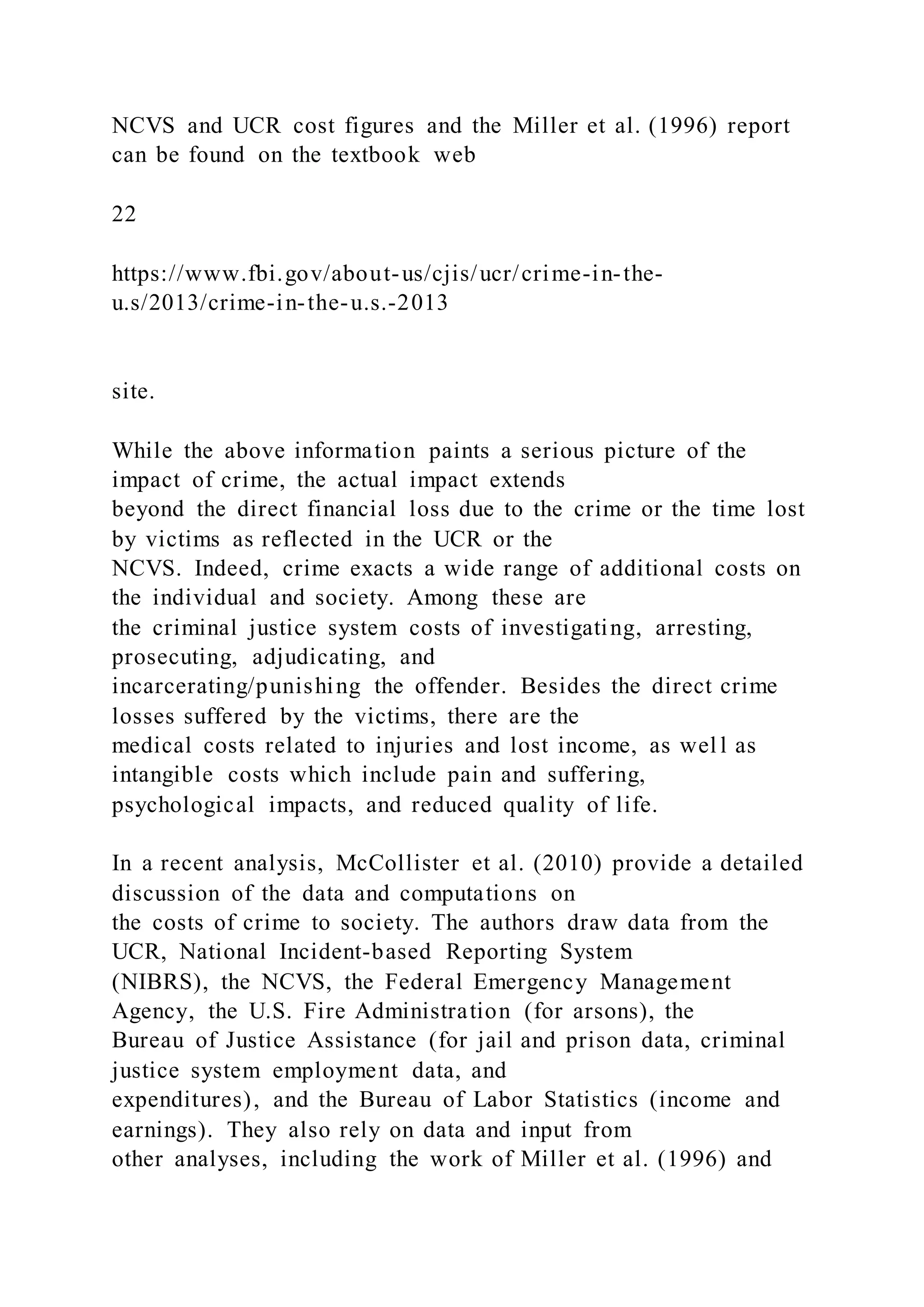
of walls, moats, drawbridges and other physical design features
around cities that protected the community
from external invasion. Surveillance, as provided by “watch and
ward,” allowed the identification of problems
before they got out of hand. Yet another early prevention
approach was the restriction of weapon ownership as
a means of eliminating violent behavior (Holden, 1992).
The advent of the twentieth century witnessed a great deal of
change in societal response to deviant
behavior. Not only was a formal police force becoming the
norm, but other forces were emerging to address
crime and deviance. The growth of the scientific study of crime
and criminal behavior offered new responses
to deviant behavior. The emerging fields of psychology and
sociology in the late 1800s and early 1900s were
beginning to question the causes of deviant behavior. Rather
than carry on the dominant tradition of
attributing deviance to the battle between good and evil (God
and the devil), researchers were starting to note
patterns in where and when offenses occurred and who was
involved in the offenses, and to relate these facts
to changing social structure and personal relationships. The
logical result of this growing study was a
movement away from simple responses involving repression,
vengeance, retribution, and the like to actions
that would attack the assumed causes of deviant behavior. The
emerging criminal and juvenile justice systems,
therefore, responded by incorporating more prevention-oriented
functions into their activity.
One prime example of an early “crime prevention” approach
was the development of the juvenile court and
its efforts to combat the problems of poverty, lack of education,
and poor parenting among the lower classes.
The preventive nature of the juvenile system can be seen in the
parens patriae philosophy, which argued that
youths needed help and that processing in adult court was
geared toward punishment rather than prevention.
The expansion of the juvenile court’s jurisdiction to cover
status offenses reflected the belief that curfew
violation, smoking, playing in the street, incorrigibility, and
other such actions (none of which were proscribed
by the criminal code) were indicative of later criminal behavior.
Thus, intervening in these status offenses was
a means of preventing later crime. The juvenile system,
therefore, was clearly an attempt at crime prevention.
Yet another example of early crime preventive action was the
Chicago Area Project. Shaw and McKay (1931,
1942) found crime and delinquency concentrating in the central
areas of Chicago, where residential transience
and an apparent lack of social ties predominated. Shaw and
McKay (1942) argued that this constant turnover of
residents resulted in an inability of the people to exert any
informal social control over the individuals in the
area. People were more interested in improving themselves and
moving out of these neighborhoods than in
improving the area and staying there. Consequently, offenders
could act with some degree of impunity in these
neighborhoods. The Chicago Area Project, founded in 1931,
sought to work with the residents to build a sense
of pride and community, thereby prompting people to stay and
exert control over the actions of people in the
area. Recreation for youths, vigilance and community self-
renewal, and mediation were the major components
of the project (Schlossman and Sedlak, 1983). In essence, the
project sought to build ongoing, thriving
communities that could control the behavior of both its
residents and those who visited the area.
Modern Crime Prevention
The modern era of crime prevention can be traced to the
changes in crime in the 1960s. That decade saw the
advent of major increases in crime and delinquency,
accompanied by large-scale social unrest in the United
States over the Vietnam War and perceived social inequality.
The public demanded that something be done to
address crime and social unrest. The work of the 1967
President’s Commission on Law Enforcement and the
Administration of Justice (hereafter the Commission)
highlighted the plight of crime victims and the failure of
existing criminal justice system actions to curtail problems. The
Commission called for new approaches,
36
including educational programs, local crime initiatives, better
funding of criminal justice initiatives, and
research on the causes of and solution for crime.
Academic interest in the burgeoning crime problem led the way
to modern crime prevention activities. One
of the first focal areas was on the contribution of the physical
design of communities to crime. Jacobs’ (1961)
The Death and Life of Great American Cities focused on urban
decay and the natural and social environments,
and their impact on crime and deviance. The modern urban
environment, as well as many programs to change
urban life, were anathema to a vibrant community that protects
itself and residents who look out for one
another. Jacobs suggested that the physical environment needs
to enhance natural surveillance by those in the
neighborhood as a means of making streets safe for legitimate
users. Similarly, Wood’s (1961) evaluation of
public housing in Chicago noted that safety is enhanced through
resident surveillance and activity in the area.
The 1971 publication of Jeffery’s Crime Prevention Through
Environmental Design took the ideas of Jacobs
and Wood further and argued that crime prevention requires
environmental engineering. His emphasis was on
future offending rather than past behavior (the target of existing
systems of social control). Jeffery (1971)
argued that criminal behavior, particularly potential future
activity, is strongly influenced by the potential
future consequences of the individual’s actions. It is possible to
curtail offending by removing environmental
cues that reinforce the offending behavior. The physical and
social environments have great potential to
determine the levels of pleasure and pain faced by the
individual. Jeffery argued that it is possible to make
alterations to the environment that will enhance conforming
behavior and mitigate offending. Those changes
are not limited to physical changes. Rather, Jeffery claimed that
increasing citizen involvement in community
activities and surveillance, and increased proactive programs by
the police and other agents of social control,
can hold great potential for the prevention of crime.
While Jacobs, Jeffery, and others were laying out an academic
basis for an emerging crime prevention,
architects and community planners, along with federal agencies
and private corporations, were implementing
and testing new initiatives. Newman (1972), in his book
Defensible Space: People and Design in the Violent
City, called on architects to change the physical environment in
such a way as to maximize territoriality and
natural surveillance by residents and create an image of an area
as cared for and protected. He demonstrated
the impact of appropriate construction on reduced crime and
disorder. Newman’s work prompted the U.S.
Department of Justice, other government agencies, and private
corporations (such as Westinghouse Electric) to
fund demonstration projects. The results of these projects led to
the development of many different crime
prevention efforts, including neighborhood watch, “Take a Bite
Out of Crime,” citizen patrols, lighting projects,
and others.
A final major development in modern crime prevention was the
introduction of situational crime
prevention in 1983. Developed by the British Home Office,
situational crime prevention refocused attention
from broad social/community change to target-, time- and place-
specific efforts that would remove the
opportunities for crime. This move took crime prevention from
the macro to the micro level of interest.
Summary
This short presentation demonstrates that crime prevention is an
idea that has been around for as long as
there has been crime. While the form has changed and the term
“crime prevention” is relatively new, the
concern over safety is age old. Throughout most of histor y, it
was the individual’s responsibility, either
voluntarily or through obligation, to deal with crime and
offenders. In the nineteenth and twentieth centuries,
society moved to a system of police, courts, and corrections,
which assumed the primary responsibility for
crime.
Since the 1960s there has been a growing movement toward
bringing the citizenry back as active
participants in crime prevention. While many see this type of
community action as “new,” in reality it is more
a movement back to age-old traditions of individual
responsibility than it is a revolutionary step forward in
crime control. Crime prevention must utilize the wide range of
ideas and abilities found throughout society.
Community planning, architecture, neighborhood action,
juvenile advocacy, security planning, education, and
technical training, among many other system and non-system
activities, all have a potential impact on the
levels of crime and fear of crime. The realm of crime prevention
is vast and open for expansion.
37
38
Defining Crime Prevention
The definition of crime prevention varies from study to study
and program to program. Ekblom (2005, p. 28)
states “Crime prevention is intervention in the causes of
criminal and disorderly events to reduce the risks of
their occurrence and/or the potential seriousness of their
consequences.” This definition addresses both crime
and its impact on individuals and society. As outlined in the last
chapter, the consequences of crime are not
inconsequential. While most definitions of crime prevention
incorporate the ideas of lessening the actual levels
of crime or limiting further increases in crime, few deal with
the problem of fear of crime and perceived crime
and victimization. This book uses a very simple yet
encompassing definition:
crime prevention entails any action designed to reduce the
actual level of crime and/or the perceived fear of crime.
These actions are not restricted to the efforts of the criminal
justice system and include activities by
individuals and groups, both public and private. Just as there
are many causes of crime, there are many
potentially valuable approaches to crime prevention.
This definition differs from Ekblom’s in that it does not directly
address the consequences of crime. The
reason for this is twofold. First, if crime and fear are
successfully addressed, the consequences are also affected.
Second, it is possible to address the consequences of
victimization without ever attacking the underlying crime.
This can occur in many ways, including payments to victims
through victim compensation, the provision of
mental health counselors, actions taken to reduce the time lost
from participating with the criminal justice
process, and any number of other interventions. While these
actions are laudable, they do nothing to address
the cause of the problems. Therefore, throughout the discussion
in this book, the emphasis is on crime and the
fear of crime, with the consequences receiving little direct
attention.
Crime prevention and crime control are not synonymous. Crime
prevention clearly denotes an attempt to
eliminate crime either prior to the initial occurrence or before
further activity. On the other hand, crime
control alludes to maintenance of a given or existing level and
the management of that amount of behavior.
Control also fails to adequately address the problem of fear of
crime. Critics of this distinction will fault the
author’s implicit assumption that society and criminal justice
can do something about crime and the fear of
crime beyond simple management of an inevitable, inescapable
minimal amount of crime. These functionalists
would view crime as a social necessity that, regardless of the
effort, will always exist. While functionalists may
be correct, taking the stance that crime is necessary and all we
can do is “control” it leads to a mind-set
doomed not to achieve crime “prevention.”
39
Crime Prevention Classifications
Crime prevention can be classified in a number of different
ways. Perhaps the earliest attempt to group
crime prevention efforts simply borrowed the well-established
public health model of disease prevention
initiatives (see Brantingham and Faust, 1976; Caplan, 1964;
Leavell and Clark, 1965; Shah and Roth, 1974).
Crime Prevention/Public Health Model
The tripartite public health model classifies prevention as either
primary, secondary or tertiary. Each area
attacks the problem at different stages of development. From
the public health viewpoint, primary prevention
refers to actions taken to avoid the initial development of the
disease or problem. This would include
vaccinations and sanitary cleanups by public health officials.
Secondary prevention moves beyond the point of
general societal concerns and focuses on individuals and
situations that exhibit early signs of disease. Included
at this stage are screening tests such as those for tuberculosis or
systematically providing examinations to
workers who handle toxic materials. Tertiary prevention rests at
the point where the disease or problem has
already manifested itself. Activities at this stage involve the
elimination of the immediate problem and taking
steps designed to inhibit a recurrence in the future. Crime

prevention activities are directly analogous to this
public health model.
Primary Crime Prevention
Primary prevention within the realm of criminal justice
“identifies conditions of the physical and social
environment that provide opportunities for or precipitate
criminal acts” (Brantingham and Faust, 1976). The
types of prevention approaches subsumed here take a variety of
forms and are located within a wide range of
social organizations (see Table 2.1). Included here are
environmental design, neighborhood watch, general
deterrence, private security, developmental prevention
approaches, and education about crime and crime
prevention. Environmental design includes a wide range of
crime prevention techniques aimed at making
crime more difficult for the offender, surveillance easier for
residents, and feelings of safety more widespread.
The use of building plans conducive to visibility, the addition
of lights and locks, and the marking of property
for ease of identification fall within the realm of environmental
design. Neighborhood watches and citizen
patrols increase the ability of residents to exert control over
their neighborhood and add risk of observation for
potential offenders.
Activities of varied groups/organizations can also play a major
role within the realm of primary prevention.
The presence of the police may affect the attractiveness of an
area for crime as well as lower the fear of crime.
The courts and corrections may influence primary prevention by
increasing perceived risk of crime for
offenders. Actions of the criminal justice system may also bring
about general deterrence. Public education
concerning the actual levels of crime and the interaction of the
criminal justice system and the public may also
affect perceptions of crime and individual choices to violate the
law.
Table 2.1 Crime Prevention Approaches
Primary prevention: Secondary prevention:
Environmental design Identification and prediction
Architectural design Early ID of problem individuals
Lighting Crime area analysis
40
Access control Situational crime prevention
Property identification Problem identification
Neighborhood watch Situation-specific intervention
Surveillance Community policing
Citizen patrols Substance abuse
General deterrence Prevention and treatment
Arrest and conviction Schools and crime prevention
Sentencing methods Tertiary prevention:
Public education Specific deterrence
Levels of crime Incapacitation
Fear
Self-help Rehabilitation and treatment
Developmental crime prevention
Early intervention programs
Social crime prevention
Unemployment
Poverty
Employment/Job training
Developmental crime prevention approaches focus on risk
factors that may lead individuals to deviant
behavior. Programs working with parents and children to build
parental and social skills, preparation for
school, cognitive abilities and more are prime examples of
developmental approaches. Social prevention
activities are those typically aimed at alleviating
unemployment, poor education, poverty, and similar social ills
that may reduce crime and fear by attending to the root causes
underlying deviant behavior. These and many
other primary prevention behaviors are implemented with the
intent of avoiding initial, as well as continued,
crime and victimization and may be instrumental at lowering the
fear of crime.
Secondary Crime Prevention
Secondary prevention “engages in early identification of
potential offenders and seeks to intervene”
(Brantingham and Faust, 1976) prior to commission of illegal
activity. Implicit in secondary prevention is the
ability to correctly identify and predict problem people and
situations. Perhaps the most recognizable form of
secondary prevention is the idea of situational crime prevention.
Situational crime prevention seeks to identify
existing problems at the micro level and institute interventions
that are developed specifically for the given
problem. These solutions may involve physical design changes,
altering social behaviors, improving
surveillance, or any number of other activities. Closely allied to
situational prevention is the emergence of
community policing. The community policing approach relies
heavily on citizen involvement in a problem-
solving approach to neighborhood concerns.
Many secondary prevention efforts resemble activities listed
under primary prevention. The distinction rests
on whether the programs are aimed more at keeping problems
that lead to criminal activity from arising
(primary prevention) or if the efforts are focused on factors that
already exist and are fostering deviant
behavior (secondary prevention). Secondary prevention may
deal with predelinquents or deviant behavior
which leads to injurious criminal activity. For example, alcohol
and other drug use are highly related to other
forms of deviance. Targeting drug use as an indicator of
criminal propensity is a secondary prevention
approach. Schools can play an important role in secondary
prevention both in terms of identifying problem
youths and in providing a forum for interventions. Clearly,
much secondary prevention may rest in the hands
of parents, educators, and neighborhood leaders who have daily
contact with the individuals and conditions
leading to deviance and fear.
41
Tertiary Crime Prevention
According to Brantingham and Faust (1976), tertiary prevention
“deals with actual offenders and involves
intervention … in such a fashion that they will not commit
further offenses.” The majority of tertiary
prevention rests within the workings of the criminal justice
system. The activities of arrest, prosecution,
incarceration, treatment, and rehabilitation all fall within the
realm of tertiary prevention. Non-justice system
input to this process includes private enterprise correctional
programs, diversionary justice within the
community, and some community corrections. Tertiary
prevention is often ignored in discussions of crime
prevention due to its traditional place in other texts and the
great volume of writing on these topics that
already exists.
The types of approaches and interventions within each level of
crime prevention are certainly not limited to
those mentioned. Within each of the three types of prevention
there are many variations and novel ways to
approach a given crime problem. Indeed, crime prevention
techniques are only limited by the imagination of
individuals interested in decreasing the levels of crime and fear
of crime.
Alternate Classifications of Crime Prevention
As noted earlier, crime prevention can be classified in other
ways than that of a public health model. One is
a variation on the tripartite public health model offered by van
Dijk and de Waard (1991). Their model adds a
second dimension resulting in a 3 × 3 configuration with
primary/secondary/tertiary on one axis and victim-
oriented/community-neighborhood-oriented/offender-oriented
on the other axis. For example, primary
prevention techniques can be divided into actions that target
victims, the community, or potential offenders.
This simply refines the public health-based classification
system. Crawford (1998) offers another two-
dimensional typology that again uses the
primary/secondary/tertiary view as a starting point, and adds a
distinction between social and situational approaches within
each category. Both of these models offer
alternative views of crime prevention and ways of
conceptualizing crime prevention interventions.
Hunter (2010) sees crime prevention divided into micro, meso,
and macro levels, while maintaining the
primary, secondary, and tertiary distinctions. Micro-level crime
prevention targets individuals, small groups,
small areas, or small businesses for intervention. These
interventions may be very site-specific and target
individual vulnerabilities. Meso-level crime prevention looks at
larger communities or neighborhoods, or
larger groups of individuals or businesses. Examples of this
could be entire villages or towns, or possibly a
chain of specialty stores. The interventions here will involve
larger groups and seek to engender cooperative
responses to crime. Finally, macro-level crime prevention looks
at large communities, society as a whole, or
other very large collectives. At this level, responses would
involve large-scale social changes, major shifts in
educational practices, major new employment opportunities, or
legislative changes to address crime and
disorder (Hunter, 2010).
Tonry and Farrington (1995) divide crime prevention into four
categories: (1) developmental, (2) community,
(3) situational, and (4) criminal justice. Each of these categories
simply parcels out some aspect of the public
health model. The criminal justice category, for example, is
substantially tertiary prevention, while community
is largely primary prevention. Bjørgo (2013) offers a general
crime prevention model with nine categories: (1)
establishing and monitoring normative barriers, (2) reducing
recruitment to criminal activity, (3) deterrence, (4)
disrupting acts before they occur, (5) protecting targets, (6)
reducing the level of harm from crime, (7) reducing
the rewards of crime, (8) incapacitation, and (9) desistence and
rehabilitation. Each of these fall somewhere
within the public health model.
An emerging area within the realm of crime prevention is that
of crime science. Laycock (2005) suggests
that crime science is a new discipline, or at the very least a new
paradigm, for addressing crime by coupling
efforts to prevent crime with the detection of and intervention
with offenders. This is in contrast to the existing
paradigm within criminal justice where “Crime is seen as
fundamentally about offenders rather than
situations” (Laycock, 2005, p. 21). The emphasis on offenders
involves the criminal justice system in the
apprehension, adjudication and punishment/treatment of
offenders. Little or no concern is paid to prevention
of crime. Conversely, “[c]rime science is the application of the
methods of science to crime and disorder”
(Laycock, 2005, p. 4).
42
In essence, crime science attacks crime from a wide range of
disciplines using a broad array of tools. Among
the disciplines included are those traditionally found in
discussions of crime and criminality—sociology,
psychology, criminology, and criminal justice. Also included,
however, are the fields of engineering, biology,
physics, architecture, genetics, communications, computer
science, education, and many others. Each of these
disciplines offers insight to the behavior of individuals, how to
control or manipulate the physical and social
environment, the development of safety and security devices, or
a myriad of other factors that play a role in
crime and crime control. A primary goal of crime science is to
bring these divergent disciplines together into a
functional, coordinated response to crime (Laycock, 2005).
In many ways, crime science fits nicely in the public health
prevention model. An examination of the
approaches listed in Table 2.1 shows a wide array of actions and
interventions that require the knowledge and
expertise from disciplines beyond those typically involved in
the criminal justice system. At the same time, the
criminal justice system is intimately involved in the detection,
apprehension and intervention with offenders,
as well as the implementation of new prevention initiatives.
Many of the prevention approaches and
interventions outlined in this book rely on methods and
information drawn from disciplines not traditionally
involved in crime or its prevention.
Model of Choice
While all of the classifications presented here have merit, this
book utilizes the public health framework.
Virtually all of the other classifications fit within this model.
Primary, secondary, and tertiary crime prevention
encompass diverse prevention methods ranging from physical
design of homes and communities, to
neighborhood watch, to educating the public, to developmental
approaches, to situationally unique
interventions, to drug prevention, to deterrence, incapacitation,
and rehabilitation. Crime prevention is not
limited to the work of the criminal justice system. Instead, it
relies on the knowledge and abilities of a very
diverse set of individuals and groups who work to apply
scientific principles to the understanding and
prevention of crime. Beyond just presenting a discussion of
different prevention approaches, this book attempts
to provide insight to the effectiveness of each approach.
Evaluating prevention initiatives, however, is not
without its problems. It is to the topic of evaluating crime
prevention that we now turn.
Key Terms
assize of arms
Chicago Area Project
constable
crime control
crime prevention
crime science
developmental prevention
hue and cry
lex talionis
micro-, meso-, and macro-level crime prevention
obligatory policing
parens patriae
parochial police
primary prevention
public health model
secondary prevention
situational crime prevention
social prevention
status offenses
tertiary prevention
43
thief takers
vigilante movement
watch and ward
44
Chapter 3
Evaluation and Crime Prevention
Chapter Outline
Types of Evaluation
Impact Evaluation
Process Evaluation
Cost–Benefit Evaluations
Theory and Measurement in Evaluation
Theoretical Concerns
Measurement Issues
Follow-Up Periods
Summary
The Method for Evaluation
Experimental Design
Realistic Evaluation
Summary
An Overview of the Book
Learning Objectives
After reading this chapter you should be able to:
Distinguish between impact and process evaluation.
Discuss obstacles to undertaking impact evaluations.
Provide an argument for the value of process evaluations.
Define cost–benefit evaluation and discuss problems with doing
it in crime prevention.
Give reasons for why programs and evaluation should be based
on sound theory.
Identify measurement problems in evaluating crime prevention
programs.
Explain why the appropriate follow-up period is important.
Explain what is meant by the “gold standard” in evaluation.
Discuss the concerns with relying on a single methodological
standard for evaluations.
Discuss both threats to internal and external validity,
particularly as they impact crime
prevention evaluations.
Outline the Maryland Scale of Scientific Methods.
Explain realistic evaluation.
The goal of this book is not just to provide information on
crime prevention programs and initiatives. Instead,
the intent is to offer insight into what works in crime
prevention. To accomplish that task, it is necessary to
evaluate prevention programs and efforts. Because this text is a
survey of the prevention field, it relies on
evaluations conducted by other researchers. At first glance it
may seem that reporting on evaluations that have
45
already been conducted would be easy and straightforward.
Unfortunately, a good deal of debate has occurred
over what constitutes “good” evaluation (see Holcomb and Lab,
2003).
The purpose of this chapter is to discuss the topic of evaluation
and lay the groundwork for the evaluation of
prevention that appears throughout the chapters. A number of
topics will be addressed. First, the different
types of evaluations, or as some would argue the different parts
of an effective evaluation, are discussed. The
second issue to be discussed involves theoretical and
measurement problems. The debate about the appropriate
methodology for evaluations forms a core topic in the chapter
and helps tie together the different threads
raised in the earlier sections. The ultimate goal is to lay a
foundation for understanding the importance of
evaluation in crime prevention.
46
Types of Evaluation
In general, evaluation refers to investigating the usefulness of
some exercise or phenomenon. Evaluation of
crime prevention, therefore, refers to investigating the impact of
a prevention technique or intervention on the
level of subsequent crime, fear, or other intended outcome.
Making such a determination may require the use
of various methodologies. Ekblom and Pease (1995) argue that
evaluation research is often viewed as
addressing two research goals using diverse methodologies.
These goals are generally understanding the
implementation of the intervention and the impact of the
initiative and are evaluated using two forms of
evaluation—process and impact evaluation—respectively. A
third form of evaluation—cost–benefit evaluation—
is becoming more common.
Impact Evaluation
Impact (outcome) evaluations focus on what changes (e.g., to
the crime rate) occur after the introduction
of the policy, intervention, or program. There are many
examples of impact evaluations in criminal justice. For
example, treatment programs used in correctional settings are
evaluated on their effectiveness to reduce
recidivism or drug use among offenders. Changes in police
patrol practices aimed at reducing the level of drug
sales in an area are evaluated in terms of subsequent numbers of
sales. In-school interventions that teach
students how to respond to problems in a non-aggressive
fashion are assessed in terms of the type or amount
of future physical confrontations in school. Neighborhood watch
programs have been evaluated in terms of
their impact on crime levels in the neighborhoo d and the fear of
crime reported by residents. Changes in traffic
patterns, walkways, building designs, and the layout of
residential complexes have been assessed in terms of
changes in crime. Evaluations of newsletters and media efforts
to promote preventive activity have looked at
the ability of such efforts to change not only citizen behavior
but also their victimization levels. These are a
few of the many evaluations that can be found throughout the
crime prevention literature and discussed in
later chapters.
Undertaking impact evaluations in crime prevention poses some
interesting problems. One major obstacle is
the fact that crime prevention initiatives rarely rely on a single
intervention or approach. Rather, crime
prevention programs often incorporate a menu of different
activities at the same time. For example,
neighborhood crime prevention typically includes a watch
scheme, property identification, neighborhood
cleanup, periodic meetings, and some form of prevention
newsletter. The problem for evaluators is identifying
which of the many prevention activities is responsible for the
observed changes (if any). It is possible that the
entire package is necessary to bring about the change, it is
possible that only one of the elements is responsible
for the change, or it is equally plausible that the mix of
interventions mitigates any positive impact on crime
and fear. It is rare to find that a single prevention activity is
undertaken in total isolation from other anti-crime
initiatives.
A second set of obstacles for evaluating crime prevention
revolves around the fact that the target of the
initiatives (and thus the unit of analysis for the evaluation) is a
neighborhood or other geographic area. This is
not to suggest that implementing a crime prevention program
across a neighborhood or community is ill-
conceived. Rather, the issue is solely a methodological one, and
it is multifaceted. First, neighborhoods cannot
be isolated. This means that there are a multitude of other
influences on the neighborhood—many of them
from the surrounding community or adjacent neighborhoods —
that may have an influence on the levels of
crime. Second, many interventions are not uniformly applied
across an area or adopted by all residents. As a
result, it is possible that an intervention appears to have no
impact across the area, when in fact those who
participate experience a reduction in crime and/or fear. Impact
evaluations need to pay special attention to the
effectiveness of prevention techniques in cases in which there is
not total cooperation or adoption of the
intervention.
A third concern with impact evaluations of crime prevention
programs involves the competing issues of
crime displacement and diffusion of benefits. While both of
these will be discussed at length later in the book,
47
they refer to the issue of whether the prevention activity
influences the level of crime and fear in areas not
involved in the initiative. These obstacles to impact evaluations
will receive further consideration later in this
chapter.
Process Evaluation
Process evaluations consider the implementation of a program
or initiative and involve determining the
procedures used to implement a specific program. These
evaluations also examine the social context within
which the program or initiative operates (Ekblom and Pease,
1995). In general, process evaluations offer a
detailed descriptive account of the program and its
implementation. Process evaluations look at a wide range of
variables and topics starting with the initial goals of the
initiative and continuing all the way through the
current operations (or closing) of the program. Typical factors
considered are the mission/goals of the program,
the level and quality of program staff, the funding and other
resources of the program, obstacles faced in
implementing and sustaining the initiative, the degree to which
the project was carried out as planned, the
level of support for the program, the degree to which the clients
complied with the intervention, the quality of
the data gathered, and any changes made in the program over
time. All of this information is used in assessing
the degree to which the intervention was successfully
implemented as planned. Advocates of process
evaluations point out that the resulting information is pivotal in
answering questions about the context of an
intervention and what actually took place in the initiative.
Unfortunately, many evaluations only look only at the process.
There is often no attempt to undertake an
impact evaluation. Thus, it is possible to know what was
attempted and how well it was done, but it is
impossible to know whether it had any impact on crime and/or
fear of crime. Among the more extensive
process evaluations in the United States and the United
Kingdom are those examining partnership initiatives,
including the Comprehensive Communities Programs, the
Strategic Approaches to Community Safety
Initiative, the Burglary Reduction Initiative, and the Crime and
Disorder Act projects. Almost without
exception, the U.S. evaluations have been exclusively process
oriented (e.g., Bureau of Justice Assistance, 1997;
Kelling, 1998; Rosenbaum and Kaminska-Costello, 1998). Even
where impact evaluations were planned, they
were often abandoned before they were funded or completed.
Process evaluations of prevention programs or other initiatives
often view success in terms other than
reaching the outcome goals of the program. Instead, success is
often measured in terms of the number of
meetings held, participation by different agencies at the
meetings, how long the program has been operating,
the number of clients handled, the amount of funds expended, or
the development of operational plans. What
is missing is the assessment of the program’s impact on crime,
fear, quality of life, or other intended outcome.
From the standpoint of having an impact on crime, process
evaluations alone offer no insight.
Given the fact that process evaluations do not answer the key
question for many programs (i.e., does it
reduce crime), why are they so prevalent? Several reasons ar e
apparent. First, doing a process evaluation can
set the stage for an outcome study by indicating whether the
intervention or initiative has been implemented
correctly and whether the target receives the amount of
intervention necessary to bring about the intended
change. Second, process evaluations can provide insight into the
context within which the intervention
operates. Knowing the background of the problem, the
operations of the program, what took place, problems
that arose, and other factors can provide information on whether
the intervention can be used in another place
at another time. That is, process evaluations provide insight into
the potential generalizability of the
intervention. In this sense, therefore, a process evaluation
becomes an important part of the overall assessment
of the program. Finally, process evaluations have the distinct
advantage that they cannot fail. Every process
evaluation can tell about what happened, how much took place,
how many participated, and other factors.
Such information can form the basis of a formidable report
showing that an initiative is busy doing a lot of
things. Thus, a program can point to numerous
accomplishments.
In conjunction with an impact evaluation, process evaluations
provide information on the different settings,
the implementation of the intervention, and other factors that
may have an impact on the results (Tilley, 2002).
Process evaluations should accompany an impact evaluation.
Process evaluations look at how well the
intervention was implemented, whether it was maintained at the
level needed for success, if the experimental
group accepted the intervention, whether there were factors that
may have kept the program from succeeding,
48
and similar issues. Clearly, there are unique social, physical,
and situational factors that will affect the ability
of a prevention program to have an impact (Ekblom, 2002;
Tilley, 2002).
Cost–Benefit Evaluations
The third type of evaluation that deserves mentioning here is
that of a cost–benefit evaluation. A cost–
benefit evaluation (or cost–benefit analysis) seeks to assess
whether the costs of an intervention are justified
by the benefits or outcomes that accrue from it. Aos (2003a)
demonstrates that assessing the costs and benefits
of a prevention program is an important component of a full
evaluation of any program. With limited
resources available to it, the criminal justice system (as well as
any government or private enterprise) needs to
implement programs that can bring about the desired changes
for the least cost. Cost–benefit analysis is a form
of process evaluation that requires an impact evaluation be
completed at the same time. The reason for this is
relatively simple: you cannot determine if the costs are justified
if you do not measure the ability of the
program to bring about the expected change. Thus, a cost–
benefit analysis requires both a process and impact
evaluation.
Undertaking a cost–benefit analysis in crime prevention and
criminal justice poses some problems not
always found in other disciplines. The largest problem involves
setting monetary values on factors that are not
easily enumerated (Tilley, 2009). For example, placing a value
on burglaries that do not occur may be
accomplished by taking the average dollar lost from past
burglaries and assuming that each prevented burglary
is a savings at that dollar figure. How do you place a monetary
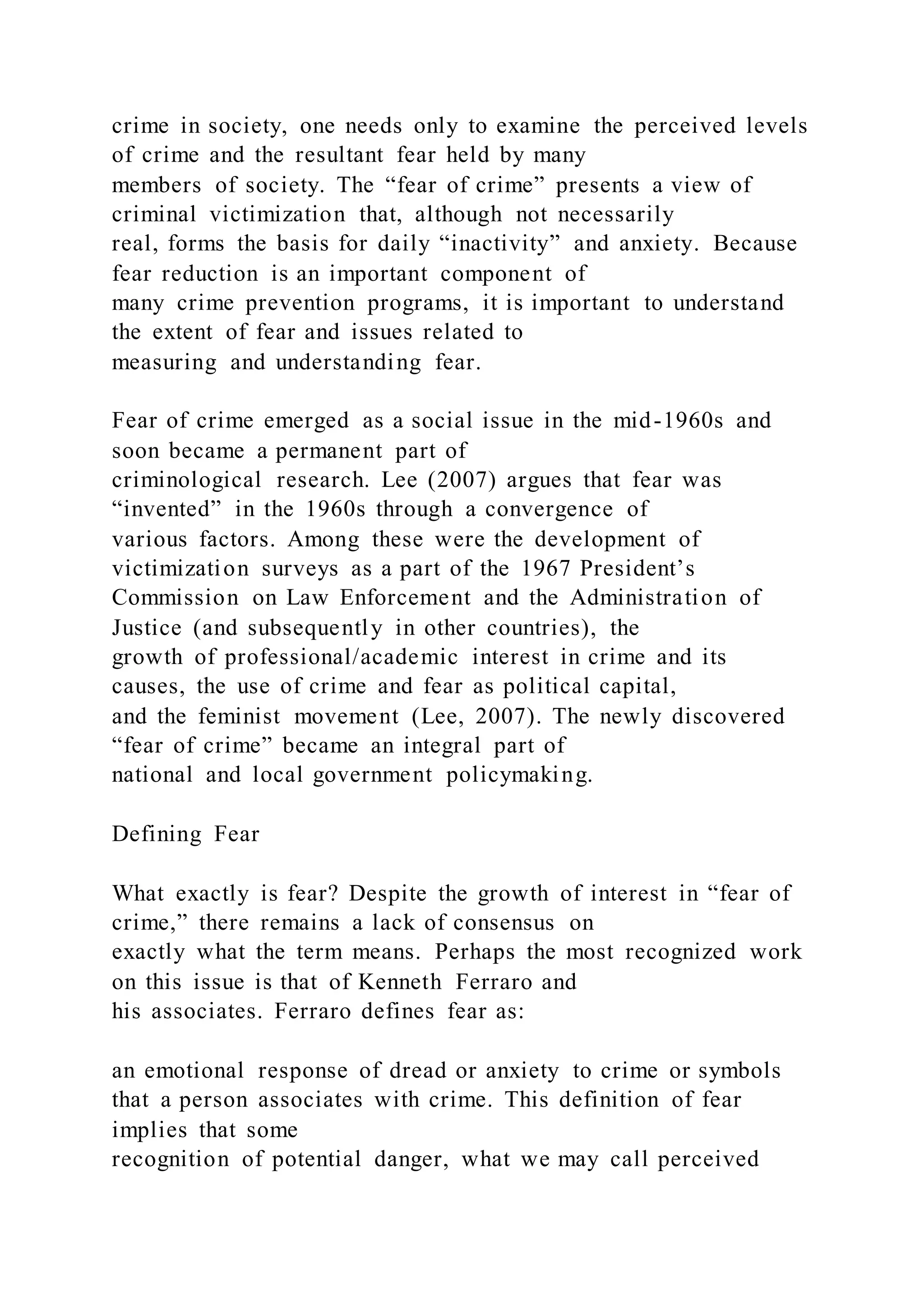
value, however, on things like reduced fear of
crime, trauma from victimization, or psychological/emotional
loss due to an assault or homicide? How do you
account for time loss that may not be related to days off work?
The problem of setting values for many factors
is pervasive in social science evaluations. A second problem is
making certain that all of the costs involved in
the program (and related to the program operations) are
counted. While counting the number of copies made
and office hours spent can be completed, it is harder to
enumerate the value of lost time spent on other
activities, the level of effort expended, and other factors. These
problems do not make it impossible to conduct
a cost–benefit analysis, although they do make it more
challenging.
49
Theory and Measurement in Evaluation
The value of any evaluation, as well as the ability to conduct an
evaluation, is largely determined by basic
factors related to the underlying theory and the measurement of
key concepts. It is not uncommon for
evaluations to pay little attention to theory and to uncritically
use variables that are not appropriate for
answering relevant questions. An additional common evaluation
shortfall involves the failure to follow up on
the project. Each of these issues is addressed in turn.
Theoretical Concerns
Crime prevention programs are often implemented, and
evaluations are often undertaken, in a theoretical
vacuum (Holcomb and Lab, 2003). This means that those
implementing and evaluating the intervention pay no
attention to the theoretical assumptions underlying the
prevention program. Basic questions, such as why
should the redesign of the parking deck have an impact on theft
from autos, why should a partnership reduce
drug use in the community, and why would an educational
program reduce aggressive behavior, are often
ignored. This is surprising given their centrality to the
evaluation of initiatives. It is not necessary to identify a
formal theory for every intervention, but it is necessary to be
able to adequately explain why and how the
intervention will bring about the desired change.
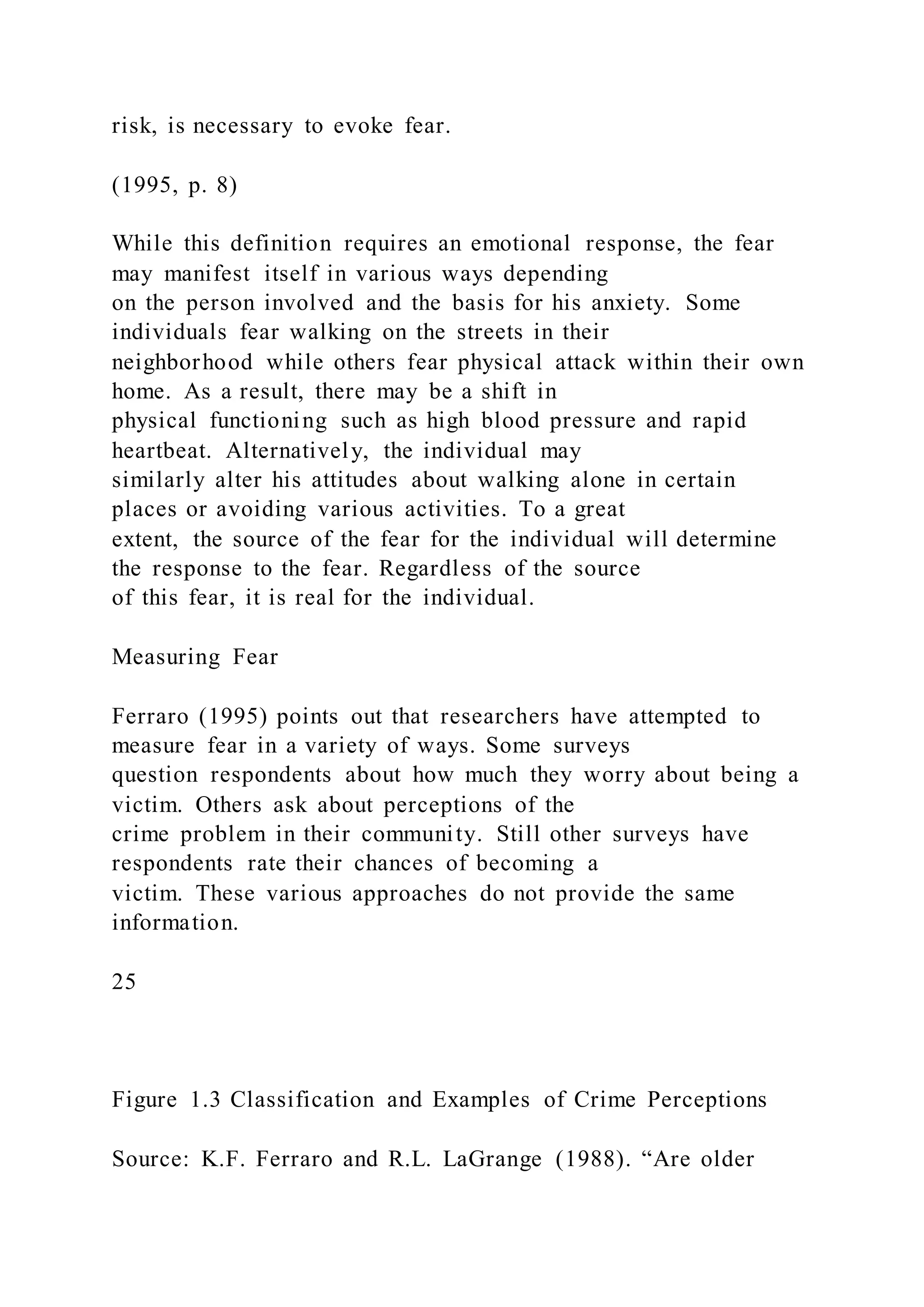
Despite the argument that evaluations should be guided by the
theory underlying the intervention, a great
number of successful evaluations are undertaken in a theoretical
vacuum. These evaluations may still provide
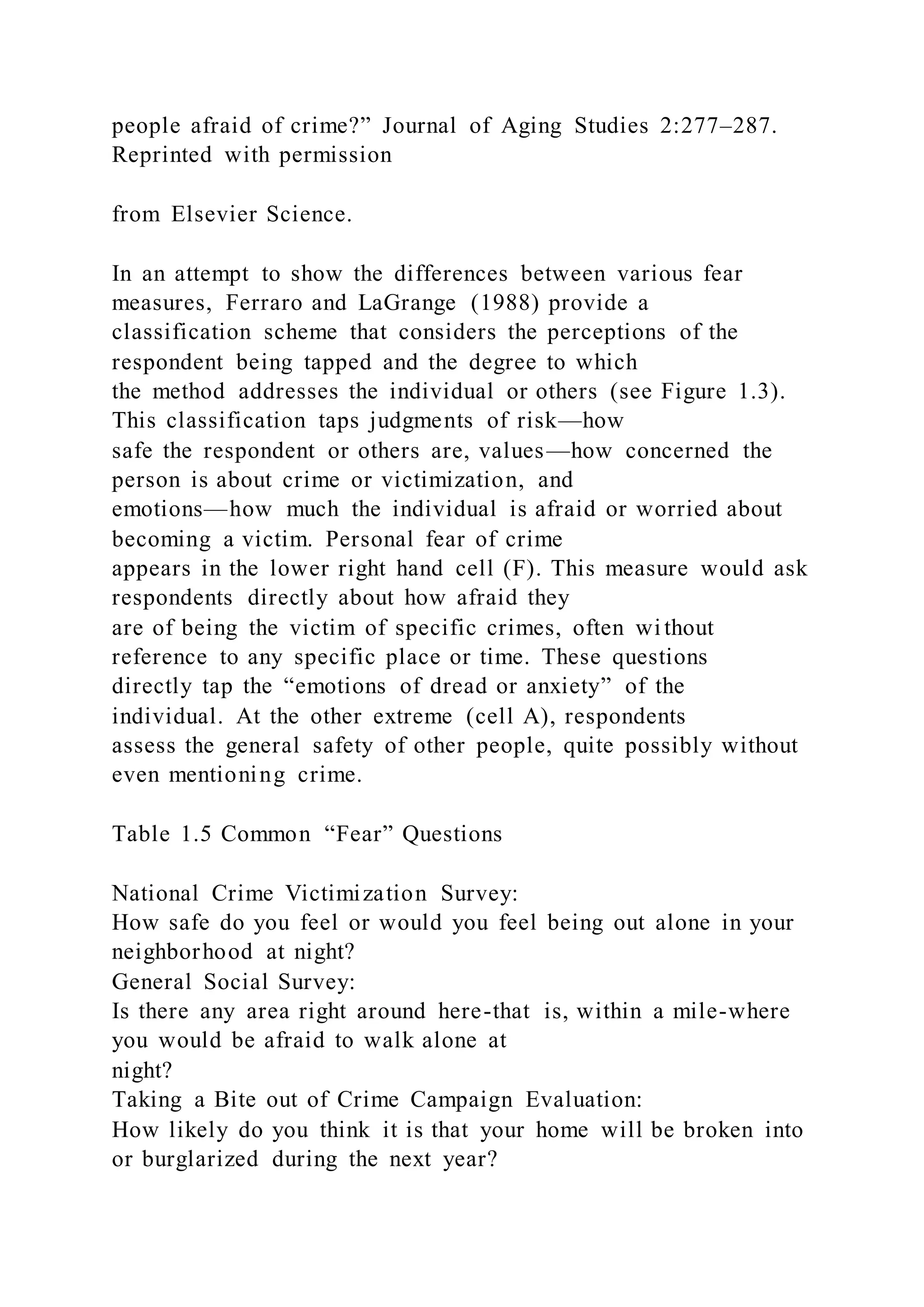
answers to whether or not the program had the intended impact.
Why then is the lack of theory a concern for
evaluation? One reason is that while these evaluations can tell
us if prevention initiatives are successful, they
fail to tell us why a program is or is not successful. They also
can provide only limited insight to whether the
program can be implemented in other places or at other times
(Holcomb and Lab, 2003). A second reason for
having a solid theoretical basis for the evaluation is that many
investigations might not be necessary if the
underlying theory for the intervention was examined. There are
numerous examples where examination of the
underlying theory would have raised questions about the
efficacy of the intervention at the outset (Holcomb
and Lab, 2003). For example, studies of curfews often fail to
recognize that, as they are typically conceived,
there is no reason to expect them to have any impact. This is
because the underlying argument is that getting
youths off the street would make it hard for them to commit
offenses. Unfortunately, curfews imposed from
late night to early morning (as is typical) will have no impact
on the number of crimes during the after school
hours when most youths commit their offenses. Clearly, the
knowledge of the theory underlying curfews
would not only eliminate the need for the evaluation, but also
suggest termination of the curfew (Holcomb and
Lab, 2003). Basically, evaluations of programs without a
theoretical base can be considered as “research in a
vacuum.” There is no context within which to understand the
program, frame the evaluation questions, design
the methodological approach, or carry out the evaluation.
If evaluations undertaken with an eye toward theory are
preferred, why are so many atheoretical
evaluations undertaken? Several reasons are apparent (see
Holcomb and Lab, 2003). First, there is an “outcome
myopia” that permeates many evaluations. This means that the
programs and the evaluators are only
interested in whether the program works and not how or why it
works. The resulting evaluation simply
assumes that a positive outcome is enough to prove the
intervention works. While this is a plausible
conclusion, it is also possible that other factors are at work and
it does not tell anything about why a program
does not work when the findings are negative. A second reason
for the lack of theory in evaluation is the fact
that many program administrators simply “know” that it works.
For them, “it is only common sense that it
works!” Thus, they are not interested in spending the time,
money, and/or effort to prove what they already
know. There is no reason to explain exactly how a program
works or to undertake an evaluation—it simply
does. This blind belief in programs is evident in many
initiatives that have the ear of politicians who can
provide legislative and funding support. A final explanation for
the appearance of atheoretical evaluations of
crime prevention initiatives is the fact that many programs are
the result of grassroots efforts by small groups.
50
These groups are not always interested in evaluations or how
the program works, as long as they are happy
with it. Evaluations of these programs, therefore, are undertaken
by outside researchers who come to the
program long after it was initiated. They have few resources to
devote to an evaluation and probably have not
been collecting data on the project. The result is evaluations
that look only at the outcome and ignore the
question of why the program should or does work. The
evaluator gets in, completes the evaluation, and gets
out in relatively short order.
Truly effective evaluations need to be informed by the
underlying theoretical rationale for the program
under inspection. Just knowing that a program does or does not
work is not enough. It is important to
understand why an intervention works or does not work. Of
equal value is gaining insight to whether a
program can be implemented in another place at another time.
The underlying theory provides a great deal of
information that is lost in evaluations where theory is missing.
Measurement Issues
Measurement of key concepts is a concern in all forms of
research, but nowhere is it more evident than in
evaluation research. The types of interventions found in crime
prevention present some interesting
measurement problems. One problem involves measuring the
key outcome variables when the intervention is
geographically based. While some studies looking at city-wide
crime levels can use police data, many crime
prevention programs are based on neighborhoods or other small
geographic areas that do not coincide with
specific police reporting areas. Thus, a great deal of data
manipulation is needed if official crime records are to
be used. The advent of geographic information systems that
allow for the mapping of crime locations has
helped to minimize this problem, but only in those locations
where this technology is in use.
One possible solution to the problems with using official data is
to rely on victim survey data. Indeed, many
prevention evaluations incorporate victim surveys along with
official crime data. Victim survey data offer a
number of advantages, including the ability to collect data for
the exact area under consideration, the ability to
capture crimes not reported to the police, and the fact that the
survey can collect information on fear and
personal perceptions that is not found in official records.
Unfortunately, victim data are not always available
and the collection of that data can be both time consuming and
costly. This lack of data is compounded when
an evaluation also needs data from a comparison group or area.
The ability of victim surveys to gather data on key concepts
such as fear is not without its own problems. As
was seen in Chapter 1, operationalizing fear is not
straightforward. Fear has been measured in a number of
different ways, making it difficult to compare results across
studies. It is also problematic if the measure of fear
is inappropriate for the type of intervention. For example,
asking questions about perceptions of changing
crime may not be germane if the intervention involves lighting
the neighborhood so residents go out at night.
Instead, asking about whether respondents would walk outside
at night on their street would fit the prevention
technique. The choice of operationalization is greatly
contingent on the prevention initiative and the
underlying theory. Thus, the need to use theory to inform the
prevention program extends naturally to the
choice of variables and how they are measured.
Yet another measurement issue involves finding ways to
uncover the competing influences in the project
that mask the outcomes. An interesting conundrum in crime
prevention initiatives is the fact that the programs
often try to simultaneously reduce the level of crime while
increasing the reporting of crime to the police.
Neighborhood watch programs are a prime example. These
programs typically include a number of initiatives
such as property identification, surveillance of neighbors’
property, and encouraging the reporting of crime to
the police. While the intent is to reduce the level of crime in the
neighborhood, it is easy to see how an
effective program can appear to have no impact. This would
occur if, while the program reduces the actual
level of offending in the area, the residents report a larger
percentage of the crimes that do occur. The official
data, therefore, would appear unchanged even though crime is
down. Prevention evaluations need to consider
this type of problem and utilize methods (such as pre- and post-
project victim surveys) that would uncover this
complication.
Follow-Up Periods
51
An issue closely related to how something is measured is the
issue of the appropriate length of time to
follow up the project. The question of the follow -up period is
actually two-sided. First, how long after the
implementation of the program or intervention will changes in
crime (or other outcome) appear? Second, is
there a possibility that over time any initial changes will
diminish or disappear? The most common situation is
one in which the evaluation considers a relatively short follow -
up period, often six months. This occurs
because of the immediate desire to know whether the program
works and the fact that the costs of an
evaluation increase with the follow-up time. A relatively short
follow-up time means that any program that
requires a lengthy time to have an impact will be seen as
ineffective. Alternatively, an initiative with an
immediate impact will be declared a success, despite the
(unknown) fact that the impact may diminish over
time. While there is no rule on the appropriate follow -up time,
the evaluation should look to the underlying
theory for guidance. The ideal situation would be one where
follow-up data are gathered at different intervals,
such as three months, six months, 12 months, and 18 months.
The use of multiple points in time will illuminate
both the speed of an intervention’s impact (if any) and any
evidence that the impact diminishes over time.
Summary
Evaluations that ignore theory (or evaluations of atheoretical
programs) and problems with measurement
and follow-up are common in studies of crime prevention
programs. Much of this is due to the fact that
evaluations are often undertaken late in the life of programs
when data is more difficult to gather and the
program has undergone several changes since its inception. The
evaluation also may be undertaken by
individuals or groups connected with the intervention and who
“know it works,” thus adding a potential
source of bias. While solutions to these issues are not always
easy or cheap, evaluations need to take whatever
steps are possible to avoid these problems.
52
The Method for Evaluation
An inspection of the crime prevention literature reveals great
diversity in the methodologies applied in the
search for what works in prevention. A great deal of debate
about the appropriate methods to use has ensued
over the past 10 years. Where one view argues that true
experimental design is the preferred approach, the
opposite view suggests that the method should be dictated by
the questions being asked and the situation
within which the intervention exists.
Experimental Design
A great deal of discussion has centered on the claim that only
evaluations using (or approximating) a true
experimental design are worthy of consideration. Also known as
a randomized control trial (Tilley, 2009),
experimental design has become the gold standard in evaluation.
Why is experimental design the preferred
approach by many evaluators? From a purely methodological
perspective it offers a number of strengths. First,
a randomized control trial, which relies on the random
assignment of cases into experimental and control
groups, increases the likelihood that the two groups being
compared are equivalent. Second, there is enough
control over the evaluation to make certain that the
experimental group receives the treatment or intervention
while the control group does not. There is also the expectation
that all other possible factors that could
influence the outcome are controlled to the extent that they
cannot affect either of the two groups. In essence,
the experimental design addresses the various threats to internal
validity—that is, factors that could cause the
results to occur besides the measures that were implemented
(see Table 3.1). If the project is able to accomplish
these things, any changes observed in the experimental group
that do not appear in the control group should be
attributable to the intervention. The researcher thus feels
confident that he “knows” the cause of any observed
change.
This “gold standard” has a long history in the hard sciences
(e.g. biology and chemistry) and is accepted
practice. A great deal of attention has been focused on relying
on this approach in criminal justice and crime
prevention due to the work of Sherman et al. (1997) which was
prepared for the U.S. Congress. In that report,
the authors opted to rate the existing literature on prevention
initiatives according to how closely a study
adhered to the standards of a true experimental design (see Berk
and Rossi, 1999; Cook and Campbell, 1979).
Using the resulting Maryland Scale of Scientific Methods (see
Table 3.2), Sherman et al. (1997) conclude that
the bulk of the evidence on prevention activities shows there are
relatively few effective
programs/interventions. Subsequent work using this approach
has gone so far as to suggest that policy makers
should only consider research that meets the gold standard and
that research funds should only be expended
when an experimental design (or close to it) is possible
(Sherman et al., 2002). Unfortunately, applying this
standard in crime prevention research (and, more generally,
social sciences) is difficult and often not possible.
Table 3.1 Selected Threats to Internal Validity
History
Something taking place independently of the experiment causes
the change to take
place
Maturation
The aging of the study subjects brings about a change
independent of the program or
stimulus
Testing
The taking of measurements in the study (such as through
surveys, observations, or
data collection) causes change to occur in place of or beyond
the impact of the stimulus
53
Instrumentation
Changes in the study measures or study procedure that take
place during the project
bring about changes
Statistical
Regression
Implementing a project that focuses on subjects that are at an
extreme end of a
measurement (such as low or high crime rate) will naturally
regress to a statistical
average score over time
Selection
Experimental subjects who are not truly representative of the
population of interest will
influence the results
Mortality
The incidence of study subjects dropping out during the course
of the experiment can
bias the results if they are different from those who remain in
the project
Source: Adapted by author from W. Shadish et al. (2002).
Experimental and Quasi-experimental Designs for Generalized
Causal Inference.
Boston: Houghton Mifflin.
There are various problems with relying exclusively on
experimental designs in crime prevention. Foremost
among these is the question of whether the results would be
applicable in other places, settings, and times—
that is, the generalizability of the results. This problem involves
what are called threats to external validity.
Table 3.3 lists a variety of threats to external validity. An
inspection of this list reveals the wide range of
potential problems inherent in trying to replicate the findings of
any program evaluation. One major problem
is that many interventions target communities and larger
collectives, rather than individuals. It is very difficult,
if not impossible, to randomly assign communities to
experimental and control groups (Ekblom, 2002; Ekblom
and Pease, 1995; Laycock, 2002). In the absence of
randomization, the best that can be done is to try and
identify neighborhoods or communities for the control group
which are matched to the experimental areas on
as many characteristics as possible. Matching, however, cannot
guarantee that the areas are comparable. Even
if random assignment is possible or good matching is
accomplished, there is no way to isolate the experimental
and control communities from all other influences. Most
importantly, interventions and initiatives
implemented in a community cannot be hidden from sight.
People in both the experimental community and
the control areas will be able to see what is taking place. This
can lead individuals and groups in the control
areas to adopt the intervention, or to act in such a way as to
impede the intervention in the experimental area.
There is simply no way to isolate the experimental community
from all outside influences as can be done in a
laboratory.
Table 3.2 Maryland Scale of Scientific Methods
Level
1:
Correlation between a crime prevention program and a measure
of crime or crime risk factors at a
single point in time.
Level
2:
Temporal sequence between the program and the crime or risk
outcome clearly observed, or the
presence of a comparison group without demonstrated
comparability to the treatment group.
Level
3:
A comparison between two or more comparable units of
analysis, one with and one without the
program.
Level Comparison between multiple units with and without the
program, controlling for other factors,
54
4: or using comparison units that evidence only minor
differences.
Level
5:
Random assignment and analysis of comparable units to
program and comparison groups.
Source: Sherman et al. (1998). “Preventing crime: What works,
what doesn’t, what’s promising.” Research in Brief.
Washington, DC:
National Institute of Justice.
On the Web
The Campbell Collaboration is a leading advocate and supporter
of evaluations that rely on the
experimental design and the promotion of evidence-based
practice in criminal justice. You can
learn more about their approach and publications at their web
site:
http://www.campbellcollaboration.org/
A number of threats to external validity involve issues related
to the implementation of an intervention
(Tilley, 2009). The individuals/groups involved in an
intervention can vary greatly from place to place. This can
affect the quality of the intervention or the degree to which a
program is fully implemented/delivered as
planned (i.e., the dosage).
The locations, crime, victims, and offenders are rarely (if ever)
exactly the same in different places or times,
which may affect the outcome of the intervention. The bottom
line is, even if an evaluation shows that a crime
prevention intervention is effective in one place, there is no
guarantee that it will be just as effective in other
places.
Table 3.3 Threats to External Validity
Threat to External
Validity
Explanation
Place attributes Places are never exactly the same, and the
details may be important to the effects
brought about
Victim attributes Patterns of victim attributes will vary from
one site to another, and the details may
be important to the effects brought about
Offender/likely
offender attributes
Patterns of offender/likely offender attributes will vary from
one site to another,
and the details may be important to the effects brought about
Intervenor
attributes
Who is involved in delivering the intervention, in terms of
leader, frontline worker,
or agency will vary from site to site, and the details may be
important to the effects
brought about
Community/family/
peer group
The patterns of social relationships in which offenders and
victims are embedded
will vary from site to site, and the details may be important to
the effects brought
55
http://www.campbellcollaboration.org/
attributes about
Intervention
attributes
What is done can never be duplicated exactly, and the details
may be important to
the effects brought about
Non-crime options Other non-crime behaviors available to those
who would otherwise commit an
offense will vary from site to site, and the details may be
important to the effects
brought about
Crime options Different crime possibilities available to those
who would otherwise commit some
particular type of offense will vary from site to site, and the
details may be
important to the effects brought about
Dosage Intensity of intervention in relation to target people,
places of crime problems
varies from site to site, and the level may be important to the
effects brought about
Source: N. Tilley (2009). Crime Prevention. Cullompton,
Devon, U.K.: Willan. Reprinted with permission.
The underlying problem for external validity is that, too often,
experimental designs fail to consider the
context within which a program or intervention operates. What
this means is that the program may be
successful in one location at one time while it is a dismal
failure at another location or time. There may be
something different about the neighborhoods that is not readily
apparent from simple demographic, crime, or
social information available about the areas. Simple random
assignment or matching cannot eliminate these
factors. Instead, there is a need for a thorough process
evaluation to accompany the impact analysis.
Another flaw in relying too heavily on experimental design is
the fact that it is all too easy to jump to a
conclusion that something does or does not work. This may
occur when no impact emerges in an analysis—the
researcher claims it was a failure and suggests abandoning
further use of the intervention. The negative
findings, however, may be the result of factors such as poor
program implementation, misspecification of the
appropriate target or causal mechanism underlying the problem,
or resistance by the target (Eck, 2002). In these
cases, a well constructed experimental design may find no
programmatic impact and declare the intervention a
failure, when in fact the intervention can and would work in
other settings or if it was properly implemented.
Unfortunately, in many evaluations using rigorous experimental
designs, the methodology ends up driving
the project rather than allowing the underlying theory to dictate
the development of the project or its analysis.
You can have a good experimental design and find no impact of
a project due to the fact that there was no
theoretical reason to expect the intervention to work in the first
place. One good example of this appears in
evaluations of juvenile curfew laws (discussed earlier in this
chapter) where the evaluation design meets the
level of scientific rigor outlined by Sherman et al. (1997) but
ignores the theoretical flaw underlying the
approach. There was really no reason to undertake evaluations
just because it met some methodological
standard when attention to the theory would have suggested that
the intervention would not work.
Realistic Evaluation
Overemphasis on the “correct” methodology (i.e., the gold
standard) marginalizes the value of other
approaches to building knowledge of crime prevention. Basic
knowledge essential to crime prevention has
come out of a variety of research endeavors, such as
ethnographic and qualitative methodologies. A prime
example of this is the knowledge we have on burglars and their
choice of targets. Extensive ethnographic
research has been completed with different groups of burglars,
in different settings, across different countries,
and using different approaches, such as riding around with them
in cars to identify prime targets or having
56
them rate pictures of homes on suitability for burglary. These
studies (e.g., Bennett, 1986; Bennett and Wright,
1984; Cromwell et al., 1991; Reppetto, 1974; Wright and
Decker, 1994) have provided a great deal of insight on
the behaviors of burglars that is consistent across the studies
(see Chapter 6 for more information). This
information is very helpful for understanding what works to
prevent residential burglary. Similar research has
been completed targeting robbery and other property crimes and
offenders (e.g., Feeney, 1986; Gill and
Matthews, 1994; Shover, 1991; Tunnell, 1992). While these
projects do not even approximate the experimental
design standards, should we simply ignore the information and
abandon this line of inquiry? The answer to
this question is “No.” Indeed, it is important to recognize that
the “gold standard” is not appropriate for all
investigations.
Pawson and Tilley (1997) call for a more “realistic” approach to
evaluation research. In realistic evaluation,
rather than relying exclusively on experimental approaches,
evaluation needs to observe the phenomenon in its
entirety. Two key ideas are central to realistic evaluation—
mechanism and context. Mechanism refers to
understanding “what it is about a program which makes it work”
(Pawson and Tilley, 1997, p. 66). In other
words, by what process does an intervention impact an outcome
measure such as crime or fear of crime? While
the most rigorous experimental design can indicate whether a
program is responsible for any observed
changes, it does not tell why the program had an impact on the
dependent variable. It is vital to understand the
mechanism bringing about the change in order to build basic
knowledge and to increase the potential success
at transplanting a program from one setting to another (Ekblom
2002).
Beyond just examining the mechanism by which something
works, Pawson and Tilley (1997, p. 69) note that
“the relationship between causal mechanisms and their effects is
not fixed, but contingent.” By this, they argue
that the context in which any intervention is implemented has
an impact on its effectiveness. Consequently,
the impact of a prevention effort is contingent on the context in
which it operates, and subsequently will affect
whether the program has a similar impact in different settings
(Tilley, 2002). Ekblom and Pease (1995) note that
efforts to find a single, best methodological approach to
evaluation are short-sighted when they ignore the
context of the program being studied. Circumstances unique to
one setting and context may directly affect the
ability of an intervention to achieve its goals. This requires
more than a superficial impact evaluation which
meets the “gold standard.” It is important to combine knowledge
of the mechanism by which change is thought
to occur with an understanding of the wider context in which
specific crime prevention efforts are
implemented.
What is needed is recognition that the problem, the theory, and
the context should determine the
appropriate methodology for understanding what works. A
single standard is not appropriate for all problems
or questions. As Laycock (2002, p. 234) has so aptly pointed
out, “‘the gold standard’ should not be any
particular methodology, but a process of informed decision-
making through which the appropriate
methodology is chosen.”
Summary
Based on the above, this book considers the evidence on crime
prevention regardless of the methodology
used. What is more important is whether the methodology is
sound for the problem and the situation in which
it is used. While experimental design informed by good theory
and attention to the context of the project is
preferred, it is not often available. In those cases, the best
knowledge available is discussed and used to inform
about what appears to work and not work. Even while
recognizing that context is important, there is a clear
bias in this book toward emphasizing outcome or impact
evaluations. Underlying process evaluation materials
and information have been considered throughout the chapters
but receive little direct presentation due to
space concerns.
57
An Overview of the Book
The balance of this text attempts to expose the reader to some
of the predominant crime prevention issues
and techniques of the past 40 years. The discussion is, by
necessity, limited and does not deal with all of the
prevention programs that have been attempted or evaluated. The
goal of the book is to present a sampling of
prevention approaches, outline the selected programs and
issues, present the research and (primary impact)
evaluations which have been carried out on the programs (if any
have been done), and critically examine the
prevention effort and the potential of the approach to affect
crime and the fear of crime.
Throughout the text, the key criterion for assessing the
effectiveness of various crime prevention methods is
lower subsequent offending and/or fear of crime. Subsequent
offending could be either initial criminal activity
(primary prevention) or recidivism (tertiary prevention).
Lowered fear of crime could come from any
intervention mechanism, especially primary preventive
techniques. Although a variety of other outcome
measures have been used in assessing crime prevention
programs (e.g., program operation, costs, number of
clients served), reductions in crime and fear are the ultimate
goals. These other outcomes will receive little
attention in the following chapters. This does not mean that they
are unimportant considerations. Indeed, from
a fiscal standpoint it is important to know the costs of
programs. However, this does not indicate the ability of
the intervention to alter crime or fear of crime.
Key Terms
context
cost–benefit evaluation
evaluation
generalizability
gold standard
impact (outcome) evaluations
Maryland Scale of Scientific Methods
mechanism
process evaluations
realistic evaluation
threats to external validity
threats to internal validity
58
Part I
Primary Prevention
The words “crime prevention” typically bring to mind programs
that are divorced from the formal criminal
justice system and are greatly reliant upon the efforts of the
citizenry. Such crime prevention efforts typically
fall under the rubric of primary prevention. Primary prevention
deals with eliminating influences in the
physical and social environment that engender deviant behavior.
Such programs do not target individuals who
are already criminal or prone to criminal behavior, except in a
most indirect sense. Instead, primary prevention
programs work with general physical and societal factors that
provide the opportunity for deviance to occur.
The following chapters reflect varying methods aimed at
removing or mitigating the criminogenic aspects of
society.
Chapter 4 focuses directly on physical design components of
crime prevention. Crime Prevention Through
Environmental Design (CPTED) has been one of the most
widely discussed crime prevention approaches of the
past 40 years. The idea behind CPTED is making crime harder
to commit and making residents feel more
secure in their surroundings. This is accomplished by altering
the physical environment. Increased lighting,
improved locks, stronger doors, use of surveillance equipment,
and other physical changes are intended to
bring about greater social cohesion, citizen concern and
involvement and, ultimately, reduced crime and fear of
crime. Chapter 5 moves to a direct analysis of neighborhood
crime prevention. The basic focus is on the
mechanisms involved in building neighborhood cohesion and
concern through crime prevention activities.
Block watch and citizen patrols are key elements of many
neighborhood efforts. Chapter 6 investigates
competing ideas of displacement and diffusion as a result of
crime prevention programming. Typically,
reduced levels of crime in crime prevention areas serve as an
indicator that crime has been eliminated. There is
the potential, however, that the crime is simply displaced along
some dimension. In displacement, the overall
crime rate remains the same while modifications in the type,
timing, or placement of crime occur.
One key element in the discussion of crime prevention is the
impact of programs on the fear of crime. Mass
media crime prevention techniques, outlined in Chapter 7,
represent an attempt to deal directly with the fear of
crime, as well as actual crime, across a wide range of societal
members. Developmental prevention forms the
basis of Chapter 8. This chapter discusses the issue of
identifying at-risk individuals and situations that can be
addressed through early social intervention. Finally, Chapter 9
focuses on the formal criminal justice system.
Deterrence is a cornerstone of formal system processing.
General deterrence (as opposed to specific deterrence,
which is discussed in Chapter 15) seeks to provide disincentives
to persons not yet involved in deviant
behavior. This is clearly in the realm of primary prevention.
While the earlier chapters examine the impact of
crime prevention activities on both crime and fear of crime, the
chapter on general deterrence looks only at its
effect on actual deviant behavior.
59
Chapter 4
The Physical Environment and Crime Prevention
Chapter Outline
Crime Prevention Through Environmental Design
Territoriality
Surveillance
Image and Milieu
Access Control and Target Hardening
Activity Support and Motivation Reinforcement
Conflicts in CPTED Elements
Summary
Implementation of Environmental Design
The Impact of Physical Design
Effects of Individual Factors
Physical Design of Neighborhoods
A Challenge to Defensible Space
Second-Generation CPTED
A Third-Generation CPTED
Incivility, Disorder, and Crime
Summary
Learning Objectives
After reading this chapter you should be able to:
Define CPTED.
Define defensible space.
List and define Newman’s elements of defensible space.
Explain OTREP and its relation to crime.
Discuss four intermediate goals of physical design changes.
List and discuss the core principles of Secure By Design.
Provide insight on the effectiveness of lighting to prevent
crime.
Define and discuss the ideas of prospect, refuge, and escape as
they relate to prevention.
Discuss the evidence on the effectiveness of CCTV.
Explain Operation Identification and its impact.
Demonstrate your knowledge about the impact of street layout
on crime prevention.
Discuss neighborhood-wide environmental design programs and
their impact on crime and fear.
Discuss Merry’s analysis of and conclusions on defensible
space.
Explain incivility and its relation to crime and crime
prevention.
Discuss the idea of product design and provide examples for
crime prevention.
60
The advent of modern crime prevention has its roots in
architectural design in the 1950s–1970s. At that time,
architects and urban designers questioned the impact of the
physical layout of cities and urban housing on
behavior, particularly criminal actions. Changing the physical
design of a community, home, or business could
affect crime in a variety of ways.
Physical changes may make it more difficult to carry out a
crime. This difficulty can result in lower payoff
in relationship to the effort. Another potential impact is that the
risk of being seen and caught while
committing an offense may be enhanced. Finally, the physical
design changes may prompt residents to alter
their behavior in ways that make crime more difficult to
commit. This chapter introduces and explains various
physical design approaches for combating and preventing crime,
examines the impact these actions have on
crime, and assesses the potential of these approaches.
61
Crime Prevention Through Environmental Design
Efforts to alter the physical design of an area or location to
impact crime are generally referred to as Crime
Prevention Through Environmental Design (CPTED). Included
in this approach are architectural designs
that enhance territoriality and surveillance, target hardening,
and the recognition of legitimate users of an area.
The basic ideas of CPTED grew out of Newman’s (1972)
concept of “defensible space.”
On the Web
Kushmuk and Whittemore (1981) argue that the effect of
physical design changes on crime is
indirect and operates through four intermediate goals. The
intermediate goals they outline are
access control, surveillance, activity support, and motivation
reinforcement. Whether they are
intermediate goals or parts of CPTED could be debated. The
authors illustrate the possible
causal sequence in a diagram that can be found on the
textbook’s web site.
Defensible space proposes “a model which inhibits crime by
creating a physical expression of a social fabric
which defends itself” (Newman, 1972). The idea is that the
physical characteristics of an area can influence the
behavior of both residents and potential offenders. For
residents, the appearance and design of the area can
engender a more caring attitude, draw the residents into contact
with one another, lead to further
improvements and use of the area, and build a stake in the
control and elimination of crime. For potential
offenders, an area’s appearance can suggest that residents use
and care for their surroundings, pay attention to
what occurs, and intervene if an offense is seen.
Table 4.1 CPTED Elements
Newman’s defensible space elements:
Territoriality
A sense of ownership over an area which prompts people to take
action when something
seems amiss
Natural The ability to observe activity, whether inside or
outside, without the aid of
surveillance special devices (such as closed-circuit television)
Image
A neighborhood having the appearance that it is not isolated and
is cared for, and that
residents will take action
Milieu
The placement of a home, building, or community in a larger
area characterized by low
crime
Other
elements:
Access
control
The ability to regulate who comes and goes from an area or
building, with the intent of
limiting access to legitimate users
Activity
support
Functions that assist and enhance interaction between citizens
and other legitimate users
in the community
Target
hardening
Actions that increase the effort by offenders in committing a
crime
Source: Compiled by author from 0. Newman (1972).
Defensible Space: People and Design in the Violent City. New
York: Macmillan; J.
62
Kushmuk and S.L. Whittemore (1981). A Reevaluation of the
Crime Prevention Through Environmental Design Program in
Portland,
Oregon. Washington, DC: National Institute of Justice; Cozens
et al. (2005). “Crime prevention through environmental design
(CPTED): A
review and modern bibliography.” Property Management
23:328-356.
Newman (1972) identifies four elements of defensible space—
territoriality, natural surveillance, image, and
milieu (see Table 4.1). To these, proponents of CPTED have
added several elements—access control, target
hardening, and activity support. In some respects there is a
great deal of commonality between these elements.
At the same time, the elements may conflict with one another.
Each of the CPTED factors influences the
criminogenic nature of the area.
Territoriality
Territoriality refers to the ability and desire of legitimate users
of an area to lay claim to the area. Areal
control is based on the establishment of real or perceived
boundaries, the recognition of strangers and
legitimate users of the area, and a general communal
atmosphere among the inhabitants. Territoriality means
that an area, building, or property is owned by someone and
others have no claim to it. Most important is that
the residents/owners/legitimate users (non-offenders), as well as
the potential offenders, recognize the
“ownership” of the territory and make decisions about actions
with that knowledge. Cozens et al. (2005) point
out that territoriality takes two distinct forms. These are
symbolic and real. Symbolic territoriality refers to
things such as signs, landscaping, or other items that signal a
change in ownership or area. Real territoriality
is engendered by walls, fences, gates, or other items that place a
physical barrier in front of people.
Surveillance
Surveillance involves any action that increases the chance that
offenders will be observed. Newman (1972)
specifically addresses the idea of natural surveillance where
residents and legitimate users have the ability to
see and observe what is taking place around them without taking
special measures (this is what Cozens et al.
(2005) would also call informal surveillance). Newman suggests
placing windows in such a fashion to allow
residents to see activity on all sides of their homes. Doors
should face the street to allow passersby to view
activity taking place inside the entranceways and few families
should use the same common entrance so that
legitimate users can identify one another. Additionally,
pathways in and around the community should leave
clear, unobstructed views for residents to see what is awaiting
them as they enter and exit their homes
(Newman, 1972). Outdoor activity and pedestrian traffic
increase the number of “eyes on the street.”
Surveillance can be enhanced in a variety of other ways. Formal
or organized surveillance refers to the use
of guards or employees specifically tasked with watching for
offending (Cozens et al., 2005). Such formal
surveillance may also be done by normal citizens involving
themselves in citizen patrols or other organized
surveillance activities. Yet another type—mechanical
surveillance—utilizes cameras or other devices to
observe activities, or lights to simply increase the ability of
people to see what is taking place (Cozens et al.,
2005).
On the Web
Diagrams illustrating the surveillance rationale (natural, formal,
and mechanical) can be found
on the textbook web site.
Any increase of surveillance activity should have a direct effect
on opportunities for crime. The chances of
committing a crime and getting away unobserved are diminished
as the number of people who are able to see
63
what is taking place increases. Underlying these suggestions is
the assumption that, if a crime or suspicious
individual is seen, the observer will inform the police or take
some other action designed to eliminate crime.
Image and Milieu
Newman’s (1972) concept of image is in some ways an
extension of territoriality. Image is basically the
outward appearance of an area or property as cared for by those
who belong in the area. This communicates to
potential offenders that there are concerned citizens watching
over the area who will take actions to protect it.
If the residents claim ownership (territoriality) and show that to
others, the chances that offenders will take
action will be minimized. Milieu extends these ideas further by
arguing that prevention is enhanced if the
surrounding area is also well cared for and maintained, and that
there is little crime in those neighboring areas.
Thus, building homes, businesses, or new communities within
an already low-crime area will protect the new
location. Maintaining the image of the area is essential to
sending the right message out to both legitimate
users and potential offenders (Cozens et al., 2005).
On the Web
A holistic model illustrating the impact of most CPTED
elements on building a community for
crime prevention can be seen on the textbook web site.
Access Control and Target Hardening
Access control seeks to allow only those persons who have
legitimate business in an area to enter. This
reduces the opportunity for crime by increasing the effort
needed to enter and exit a building or area for the
purpose of committing crime. Access control is also considered
on a larger scale in terms of access to a
neighborhood or community. This can be accomplished through
gating communities, closing roads, or other
means. Neighborhood designs that could make offending more
difficult include limiting the flow of traffic
through an area by strangers, changes that limit the number of
through-streets, establishing cul-de-sacs and
dead-end streets, and enhancing the ability of residents to
recognize legitimate users. In essence, controlling
access and egress to an area limits its permeability to those who
wish to commit crime.
Target hardening is a closely related element to access control.
Target hardening efforts are those that make
potential criminal targets more difficult to victimize. The use
and/or installation of locks, bars on windows,
unbreakable glass, intruder alarms, fences, safes, and other
devices makes crime more difficult to carry out.
Target hardening can also take an indirect approach to crime
control through the placement of identifying
marks on personal property that makes stolen goods more
difficult to fence and easier to identify and return to
victims.
Beyond the design of buildings and places, it is possible to
design products in ways that make them more
difficult targets. While not considered in the early discussions
of CPTED, product design to prevent crime has
become a major movement. A prime example of this approach in
target hardening is the incorporation of
steering column locks in automobiles. This has been done for
the sole purpose of reducing the incidence of
motor vehicle theft. Product design will be discussed again later
in this chapter.
It is important to note that access control/target-hardening
measures will not eliminate crime. Any form of
access control or target hardening can be overcome by a clever
and persistent criminal. The hope is that the
measures will reduce the absolute level of crime in the
community. The actual impact of these approaches on
crime is discussed later in this chapter.
Activity Support and Motivation Reinforcement
64
The ideas of activity support and motivation reinforcement
offered by Kushmuk and Whittemore (1981)
relate to the building of a community atmosphere. They are
roughly the same thing and involve encouraging
law-abiding use of the community and area (Cozens et al.,
2005). The ability to recognize neighbors and
identify needs of the community should enhance social cohesion
among residents and contribute to a
communal atmosphere that works to eliminate crime and other
common problems. Activity support and
motivation reinforcement may occur indirectly through
activities such as street fairs, community days, and
other social events. It can also be generated by directly
recruiting residents for anti-crime activities or other
societal/community issues.
The community atmosphere and caring attitude can be built, in
part, through the physical appearance and
design of an area (Newman, 1972). In a complementary fashion,
the impact of access control/target hardening
and surveillance relies on the behavior of legitimate users.
Windows, better lighting, and clear viewing are
important only if someone opts to use these features. In
addition, residents need the ability to distinguish
legitimate users from strangers in order to assess whether action
is needed. This recognition comes from
interaction between legitimate users.
Conflicts in CPTED Elements
While the elements of CPTED appear straightforward and have
been used and promoted for roughly 40
years, there are potential contradictions between some elements.
Cozens et al. (2005), Reynald (2011), and
others have pointed out that territoriality, access control, and
surveillance have the potential of cancelling out
one another. For example, erecting walls, fences, or other
structures may demarcate an area but can impede
natural surveillance (Reynald, 2011). In a similar fashion,
access control and target hardening efforts can lead to
the building of fortresses around individuals and areas. These
fortresses can keep people from participating in
community and neighborhood activities, thus reducing activity
support (Cozens et al., 2005). It is important,
therefore, to seek a balance between the elements when
instituting CPTED.
An important problem for CPTED may be the fact that the key
concepts are poorly defined (Ekblom, 2011b).
Territoriality has a wide variety of definitions, which makes it
hard to apply and evaluate. Surveillance runs
the gamut from active measures, such as the use of police and
security guards, to passive actions that
encourage or enhance citizen action. Implementing activity
support through environmental design with a goal
of increasing citizen usage of an area is equally difficult to
achieve when the terms are not clear (Ekblom,
2011b). Consequently, the implementation and effectiveness of
CPTED is compromised.
Johnson et al. (2014) propose a framework for CPTED that
places potential interventions/activities in a
meaningful configuration for implementation and prevention.
Analyzing existing CPTED programs and
projects, the authors argue that territoriality should be
considered the key concept/mechanism. They base this
claim on the fact that all of the other CPTED elements are
“preparatory tasks” for enhancing territoriality, as
well as “operational tasks” when territoriality is being exercised
by residents. Basically, physical design
prompts, prepares for, and precedes behavior. Table 4.2
illustrates the relationships in CPTED, with
territoriality at the head and other CPTED elements as
component parts of territoriality. The framework
provides researchers and practitioners guidance for
implementing changes. Each of the major concepts
(components) have subconcepts. In addition, the implementation
of the actions involves both preparatory tasks
and operational tasks.
Table 4.2 Deconstructed Territoriality
Concept Components Example of Tasks (Both Preparatory and
Operational)
Surveillance Formal surveillance CCTV
Lighting
Guards
65
Monitoring/Observing
Patrols
Challenging offenders
Informal surveillance Clear sightlines
Open streets
Use of space
Challenging offenders/
strangers
Physical design
Positive
reinforcement Image management/
maintenance
Maintaining space
Signs of ownership
Tackling incivilities
Avoiding social stigma
Care of public space
Activity support Use of public space
Design for use
Safe areas for activities
Legitimate use of space
Discouraging offending
Access control Target hardening Locks
Gates
Strong windows
Building standards
Organized security
Entry guards
Boundary definition Varied land use
Space delineation
Physical barriers
Users assert area control
Identify intruders
Source: Compiled by author from D. Johnson et al. (2014).
“Designing in crime prevention, designing out ambiguity:
Practice issues with
the CPTED knowledge framework available to professionals in
the field and its potentially ambiguous nature.” Crime
Prevention and
Community Safety 16:147-168.
Summary
The basis for CPTED rests on the assumption that the physical
design influences the behavior of both
residents/legitimate users of an areas, as well as potential
offenders. For the residents, the expectation is that
they will be observant of what is taking place around them and
take action if they observe criminal activity.
66
On the other hand, potential offenders should be influenced by
the costs and benefits inherent in an action.
Kaplan et al. (1978) illustrate the potential impact on offenders
through an idea they refer to as OTREP. That
is, crime Opportunity is the result of Target, Risk, Effort, and
Payoff. The assumption is that offenses can be
avoided when there is a high risk of apprehension with little
potential payoff. Crime should be reduced as the
potential costs (effort) outweigh the potential benefits (payoff).
Manipulating physical design features
(reducing the number of targets while increasing the risks of
getting caught) may be one way to bring about
higher costs relative to benefits.
67
Implementation of Environmental Design
The implementation of environmental design strategies has not
always gone smoothly or followed a clear
plan. Much of the reason for this is the fact that most efforts
have taken place with little or no long-range
planning and only intermittent government organization and
support. Many of the initial projects, such as in
Hartford, Connecticut, and Portland, Oregon, were
demonstration projects backed by the government or a
private foundation (such as Westinghouse Electric). This does
not mean that environmental design has been
ignored or has no organizational support.
It is only since the mid-1990s that we have seen major
organized movement toward incorporating
environmental design into communities in an ongoing fashion,
and most of that movement has taken place
outside the United States. In 1989, the Association of Chief
Police Officers (ACPO) in England established the
Secured By Design (SBD) program. This ongoing initiative
emphasizes and promotes the inclusion of safety
and security measures in new and existing buildings (ACPO,
2009). The SBD project provides architectural and
security assistance to any agency requesting its input. At the
present time, there are 18 Design Guides available
to assist in building safe and secure homes, facilities, and
locations (ACPO, 2015). Among these guides are
those for new homes, commercial sites, hospitals, and schools.
The SBD program includes six Core Principles,
which closely align with the ideas of defensible space. These
include: (1) an integrated approach, (2)
environmental quality and a sense of ownership, (3) natural
surveillance, (4) access and footpaths, (5) open
space and management, and (6) lighting.
Table 4.3 provides seven attributes of sustainable communities
set forth by the British Home Office in 2004
that correspond to the basic SBD principles. These attributes are
particularly well suited for crime prevention.
Included here are access control, surveillance, ownership
(territoriality), and activity (support), all key CPTED
concepts.
On the Web
The Secured By Design web site offers a great deal of
additional information on the
implementation and evaluation of physical design for preventive
purposes. You can explore the
site at: http://www.securedbydesign.com/index.aspx
The passage of the 1998 Crime and Disorder Act (CDA) in the
United Kingdom is another good example of
governmental adoption of environmental design. The CDA
mandated the cooperation of many agencies in
addressing crime problems. Included in that mandate were plans
to rely on architects and planners in efforts to
design out crime (Everson and Woodhouse, 2007).
Table 4.3 Attributes of Sustainable Communities
• Access and movement: places with well-defined routes, spaces
and entrances that provide for
convenient movement without compromising security
• Structure: places that are structured so that different uses do
not cause conflict
• Surveillance: places where all publicly accessible spaces are
overlooked
• Ownership: places that promote a sense of ownership, respect,
territorial responsibility and community
• Physical protection: places that include necessary, well -
designed security features
• Activity: places where the level of human activity is
appropriate to the location and creates a reduced
risk of crime and a sense of safety at all times
• Management and maintenance: places that are designed with
management and maintenance in mind,
to discourage crime in the present and the future
68
http://www.securedbydesi gn.com/index.aspx
Source: Home Office (2004) Safer Places: The Planning System
and Crime Prevention. London: Home Office.
New Zealand has implemented national guidelines for
construction and design that inhibits crime. Table 4.4
lists the elements of the guidelines. The intent of the guidelines
is to promote the incorporation of CPTED
principles in new developments. Similar guidelines have been
adopted throughout Australia. In some instances,
such as in Victoria (see Table 4.5) and New South Wales (see
Table 4.6), the guidelines have some force of law
in as much as the authorities can halt the construction of
developments that do not meet the guidelines. An
examination of both the Victoria and New South Wales
guidelines shows that the elements are direct from
CPTED and correspond to the SBD principles in Britain.
On the Web
Download the guidelines and rules for the Victoria
(www.dtpli.vic.gov.au/__data/assets/pdf_file/0004/231619/Safer
_Design_Guidelines.pdf), New
South Wales
(http://www.planning.nsw.gov.au/rdaguidelines/documents/duap
guide_s79c.pdf),
and the State of Virginia
(www.dcjs.virginia.gov/cple/documents/cpted.pdf)
governments.
Note the adherence to CPTED principles. What new ideas do
you see in these that may extend
the basic CPTED ideas?
In the U.S. the drive for CPTED is primarily a function of
private or professional organizations. Both
national and international groups promote environmental
design. Among these are the International CPTED
Association, CPTED Security, the National Crime Prevention
Council, the National Institute of Crime
Prevention’s CPTED Training web site, the Designing Out
Crime Association (U.K.), and many others. At the
state level, Virginia’s Department of Criminal Justice Services
has promulgated Safer By Design principles for
use in designing communities, housing, and businesses. There
has also been a wide range of projects and
evaluations that have been attempted to assess the effectiveness
of environmental design changes.
Table 4.4 New Zealand National CPTED Guidelines
1. Access Safe movement and connections
2. Surveillance and sightlines See and be seen
3. Layout Clear and logical orientation
4. Activity mix Eyes on the street
5. Sense of ownership Showing a space is cared for
6. Quality environments Well-designed, managed and
maintained environments
7. Physical protection Using active security measures
Source: Adapted by author from Ministry of Justice (2005).
Crime Prevention Through Environmental Design Principles.
New Zealand
Ministry of Justice, http://www.justice.govt.nz/policy/crime-
prevention/environmental-design
Table 4.5 Victoria Principles for Safer Design
Surveillance Maximize visibility and surveillance of the public
environment
Access, movement, and sightlines Provide safe movement, good
connections and access
69
http://www.dtpli.vic.gov.au/__data/assets/pdf_file/0004/231619/
Safer_Design_Guidelines.pdf
http://www.dcjs.virginia.gov/cple/documents/cpted.pdf
http://www.justice.govt.nz/policy/crime-
prevention/environmental-design
Activity Maximize activity in public places
Ownership Clearly define private and public space
responsibilities
Management and maintenance Manage public space to ensure
that it is attractive and well used
Source: Adapted by author from State of Victoria Department of
Sustainability and Environment (2005). Safe Design Guidelines
for
Victoria. East Melbourne: Department of Sustainability and
Environment.
70
The Impact of Physical Design
The impact of CPTED and physical design features on crime
and fear has long been a topic for research and
evaluation. When Newman (1972) introduced the idea of
defensible space, he illustrated the impact of CPTED
features by comparing two public housing projects. The first, a
high-rise, high-crime project, allowed strangers
easy access through unmonitored, multi-user entrances. In
addition, the buildings lacked windows and
opportunities to observe indoor common areas and outdoor
pathways. The size of the project mitigated
attempts to recognize legitimate users from strangers due to the
great numbers of people in the project.
Conversely, the second public housing area consisted of low -
rise buildings that experienced lower crime levels.
The project limited the number of families using the same
entrances. This enhanced the ability of residents to
identify strangers. Surveillance was enhanced by entrances that
faced public thoroughfares. Additionally, the
low-lying structures made casual observation of outdoor
activities through windows more feasible and
effective.
Table 4.6 Safer By Design Elements: New South Wales
Territorial re-enforcement
Actual and symbolic boundary markers to encourage communal
responsibility for public areas and
facilities and to communicate to people where they should/not
be and what activities are appropriate.
Surveillance
Natural surveillance is achieved when normal space users can
see and be seen by others.
Technical/mechanical surveillance is achieved through
mechanical/electronic measures such as CCTV,
help points and mirrored building panels.
Formal (or organised) surveillance is achieved through the
tactical positioning of guardians.
Access control
Access control treatments restrict, channel and encourage
people and vehicles into, out of and around
the development.
Natural access control includes the tactical use of landforms and
waterways features, design measures
including building configuration, formal and informal pathways,
landscaping, fencing and gardens.
Technical/Mechanical access control includes the employment
of security hardware.
Formal (or organised) access control includes on-site guardians
such as employed security officers.
Space/Activity management
Formal supervision, control and care of the development.
Source: Adapted by author from New South Wales (2015). Safer
By Design.
http://www.police.nsw.gov.au/community_issues/crime_prevent
ion/safer_by_design
Newman (1972) argued that defensible space can be
accomplished through a variety of physical design
actions, including the placement of windows conducive to easy
visibility of surrounding areas, the location of
entrances that are observable by others, the installation of lights
to enhance visibility, and the establishment of
common areas that are controllable by residents. All of these
features are evident in low-rise housing projects
and are either absent or limited in high-rise, high-density
projects. Most importantly, these features impact the
71
http://www.police.nsw.gov.au/community_issues/crime_prevent
ion/safer_by_design
behavior of both legitimate users and potential offenders
(Newman, 1972).
In assessing the impact of physical design, it is important to
consider that the impact can be either direct or
indirect. Rubenstein et al. (1980) outline three types of changes
or effects that appear in analyses of crime
prevention (see Figure 4.1). Type 1 effects are those that
measure the direct impact of physical design features
(such as locks, lights, or fences) on crime. Type 2 effects
consider the impact of the physical design on a variety
of intervening factors. Possible intervening factors include the
attitudes of legitimate users about their
community, feelings of territoriality, efforts of community
members to combat crime, and an improved
community atmosphere. (While territoriality, activity support
and motivation reinforcement are considered
elements of CPTED by some, the models found on the textbook
web site and many discussions view them as
intervening or mediating factors.)The physical design features
bring about changes in these intervening factors
prior to effecting crime. Finally, Type 3 measures deal with the
direct effect of the intervening factors on crime
and the indirect influence of physical design on crime through
the intervening factors.
On the Web
The U.S. Office of Justice Programs has initiated a valuable
source of information on
interventions to attack crime, including prevention activities.
You can explore the Crime
Solution
s site at http://crimesolutions.gov/default.aspx
Figure 4.1 Model of Crime Prevention Effects
The following discussion of physical design and its influence on
crime is divided into several sections. First,
the effect of access control/target hardening and surveillance
techniques are considered as individual factors.
Second, the evaluation moves to studies that examine broad-
based uses of defensible space concepts in
residential and commercial areas. Finally, altering the physical
environment by designing products with
prevention in mind is considered.
The Effects of Individual Factors
The ideas of access control/target hardening and surveillance
include a wide range of potential interventions
for combating crime. Increased street lighting, reduced
concealment, installation of locks, use of unbreakable
glass, alarms and cameras, marking of property for
identification, and security guards are only a few of the
available means of prevention. Despite this proliferation of
methods, few of these have been subjected to
individual evaluation. Most crime prevention programs rely on a
range of activities and not just a single
approach. Almost without exception, most evaluations look at
the direct impact of physical design on crime
and/or fear of crime.
Lighting
72
http://crimesolutions.gov/default.aspx
Efforts to prevent crime by improving the lighting in areas was
a major undertaking in the 1970s and
remains a common approach in both the United States and the
United Kingdom. Pease (1999) suggests that
lighting may impact crime through various mechanisms. For
example, lighting may lead to increased outdoor
activity and, in turn, greater surveillance. Lighting may also
enhance the ability to detect a crime in progress or
identify an offender. Advocates often point to the deterrent
potential of lights, which may make potential
offenders choose less well-lit areas for their crimes. Lighting
should allow potential victims to see their
surroundings and may lead them to avoid less well-lit locations.
Typical research on the impact of lights contrasts criminal
activity in an area that has received new lights
with areas that do not receive new or improved lighting. In
general, studies find a positive impact of lighting.
The strongest support for lighting has been offered by Painter
and Farrington (1997, 1999a, 1999b) based on a
series of analyses conducted in England. Painter and Farrington
(1997) report positive effects of lighting in an
analysis of experimental and control areas of Dudley (West
Midlands). Using victimization survey data, the
authors report a 41 percent reduction in crime incidents in the
experimental area and only a 15 percent
reduction in the control area. In addition, respondents report
being more satisfied in the relit areas. A similar
analysis of relighting in Stoke-on-Trent (Staffordshire), also
revealed significant reductions in crime in the
experimental area as compared to the control area (Painter and
Farrington, 1999b). They also report some
evidence of reduced fear of crime. The crime and fear results,
however, are not as dramatic as those found in
Dudley. In both studies, the authors report reduced crime in
non-relit areas adjacent to the target experimental
neighborhoods. They claim that the impact of lighting is
diffused into these other areas.
Welsh and Farrington (2009) reviewed the state of the evidence
on a number of crime prevention efforts,
including lighting. A total of 13 studies from both the United
States and the United Kingdom were included in
the review. Overall, the studies show a positive impact of
lighting, particularly on property crime, with a 21
percent reduction in crime in experimental areas. Studies
conducted in the United Kingdom showed the
strongest results, possibly due to the fact that they have been
completed in more recent years with more
rigorous evaluations (Welsh and Farrington, 2009). Overall,
lighting has a positive impact on area crime.
On the Web
The work of Welsh and Farrington is an example of the
systematic reviews championed by the
Campbell Collaboration. You can find many more reviews of
prevention actions at the
Collaboration web site: http://www.campbellcollaboration.org/
Improved lighting schemes remain popular. The reason for this
involves the issue of fear. Even if relighting
does not always reduce crime, the ability to see better makes
people feel safer. Various studies show reductions
in fear following improved lighting. In perhaps the earl iest
review of lighting studies, Tien et al. (1977) found
overwhelming reductions in fear of crime. Atkins et al. (1991)
report that women and elderly respondents who
recognize changes in lighting worry less about crime and feel
safer. Finally, Painter and Farrington (1997,
1999b) reveal similar findings on improved area satisfaction
and reduced fear of crime. Research on lighting
reveals positive impacts on crime, victimization, and fear of
crime among citizens.
CCTV
Surveillance is also accomplished by means of mechanical
devices, particularly closed-circuit television
(CCTV). Research on CCTV has grown tremendously in recent
years. While there are no estimates of the
number of public CCTV cameras in use in the United States,
Norris and McCahill (2006) estimate there are 4.2
million public CCTV cameras in the United Kingdom. The large
investment in CCTV has prompted numerous
evaluations of its impact on crime and fear.
Brown (1995) and Ditton and Short (1999) report on evaluations
of CCTV in five U.K. cities. Each evaluation
included experimental and control areas as well as outcome
measures both pre- and post-installation of CCTV
73
http://www.campbellcollaboration.org/
equipment. Brown (1995) notes that the experimental areas
experienced reduced levels of burglary, but thefts,
vandalism, and other offenses only declined in some locations.
Results in Airdrie, Scotland, show reductions in
overall recorded crime, although there are some increases in
recorded drug and motor vehicle offenses (Ditton
and Short, 1999). The authors note that the increases may be
due to increased detection of offenses through the
use of CCTV. Results in Glasgow also show that CCTV impacts
crime in the target area (Ditton and Short,
1999). Fear also was reduced in areas covered by CCTV
(Brown, 1995). Unfortunately, there was also evidence
of displacement of crime from areas with CCTV to
nearby/surrounding areas (Brown, 1995).
An evaluation of CCTV use in Philadelphia considered its
impact on different street crimes. Ratcliffe et al.
(2009) examined the effectiveness of two types of cameras
(those that could tilt, zoom, and pan and those that
were more static but could be relocated) in eight locations.
Based on 32 months of police data for the target and
surrounding areas, the authors report crime reduction in only
four of the eight locations, with greater impact
on disorder crimes than serious offenses (Ratcliffe et al., 2009).
There was an overall 13 percent reduction in
crime. The results also show some evidence of both diffusi on
and displacement of crime, although this was not
uniform and they largely cancelled each other out (Ratcliffe et
al., 2009).
CCTV has also been used in businesses and car parks. Tilley
(1993) reports that motor vehicle theft, theft
from autos, and vandalism were all reduced in areas monitored
with CCTV equipment. Reid and Andresen
(2012) examined the impact of CCTV at a commuter car park in
Surrey, British Columbia. Using victimization
survey data, the authors report a significant drop in
victimization and improvement in feelings of safety. Theft
of motor vehicles fell by 80 percent, and theft from motor
vehicles dropped more than 50 percent (Reid and
Andresen, 2012). Beck and Willis (1999), examining CCTV in
fashion clothing stores, report that stores with
extensive CCTV systems experience significant reductions in
loss after the installation, compared to other
stores. They note that the results, however, diminish over time
(Beck and Willis, 1999). Hayes and Downs
(2011) compared three different CCTV configurations in retail
stores, finding reduced loss after CCTV
installation. Winge and Knutsson (2003), studying the use of
CCTV in the Oslo (Norway) central railroad
station, report increased detection of crime, increased recorded
violent crime, reduced theft from autos, and no
change in perceptions about crime in the area.
Not all evaluations show positive results. Farrington et al.
(2007), looking at both police and victimization
data, fail to find any significant positive change in crime in the
area covered by CCTV. Waples and Gill (2006)
consider the impact of redeployable CCTV, which allows the
cameras to be moved from one fixed location to
another. Evaluation results show no change in crime or fear for
one area, and increased crime in another after
deployment of the CCTV initiative (Waples and Gill, 2006).
The authors argue that these negative results could
be due to various technological problems with the redeployable
cameras. McLean et al. (2013), studying CCTV
in Schenectady, New York, report reduced crime in the
immediate vicinity of the cameras, but the impact
varies from location to location in town. Finally, LaVigne et al.
(2011) report that CCTV is effective at reducing
crime in Baltimore, has varied impact in Chicago, and no impact
in Washington, DC. A key finding in the
study is that active monitoring of CCTV is essential to bring
about an impact (LaVigne et al., 2011).
CCTV has been the subject of several major reviews of
evaluation research. Welsh and Farrington (2009)
examined 44 CCTV evaluations from 1978 to 2007. Studies fell
into categories of city centers, public housing,
public transportation, and car parks. The examination of studies
in city centers revealed small but insignificant
reductions in crime, although the results were better in the U.K.
studies (Welsh and Farrington, 2009). Public
housing evaluations revealed small, non-significant reductions
in crime. Studies of CCTV in public
transportation settings found sizable reductions in crime,
although they were still statistically insignificant.
Finally, CCTV in car parks had the only significant reductions
in crime (Welsh and Farrington, 2009). The
greatest impact was found in studies from the U.K., prompting
the authors to speculate that this is due to the
use of longer follow-up times and greater public support for
CCTV in the U.K.
Another major review (Gill and Spriggs, 2005) found that crime
was reduced in six target areas while it
increased in seven areas. However, in the four locations where
there was a statistically significant change in
crime in the experimental areas relative to the control areas, two
changes favored the experimental area and
two favored the control areas. At the same time, fear of crime
was reducing in CCTV areas. There was also
some evidence of displacement of crime from CCTV areas to
other locations (Gill and Spriggs, 2005).
The evidence from the studies clearly shows that CCTV can
impact crime, although it is not universal and
the conditions when it succeeds are not clear. CCTV holds some
promise as evidenced by the success of the
74
technique with some crimes in some locations. It is not a
universal cure all for crime problems. Future
evaluations need to use appropriate methodologies, including
control areas and significant follow-up periods. It
is also important to try to disentangle the impact of CCTV from
other crime prevention techniques that are in
simultaneous use (Farrington and Painter, 2003; Welsh and
Farrington, 2009).
Surveillability
Lighting is only one factor that can influence the abili ty to
observe an area. Surveillability also is determined
by a wide range of other factors. Fisher and Nasar (1992; Nasar
and Fisher, 1993) note the physical design
impact on prospect, refuge, and escape. Prospect refers to the
ability of individuals to see an area. Locations
that offer greater prospect should engender less fear and
victimization than those locations that limit sight
lines. Refuge deals with the presence or absence of
concealment, in which offenders could hide from potential
victims. Refuge provides both hiding places and protection for
potential offenders. Finally, escape addresses
the ability of both offenders and victims to escape from an area
before and/or after an offense. In essence,
physical design features which impact on surveillability should
alter both fear and victimization levels.
Fisher and Nasar (1992; Nasar and Fisher, 1993) tested these
assumptions using a university site which
offered greatly varying degrees of prospect, refuge, and escape.
Using both surveys and observations, the
authors report strong support for their argument. Areas of
increased concealment (refuge), blocked prospect,
and limited escape elicit greater fear. Crime figures also show
greater victimization accompanying blocked
prospect and greater concealment (Nasar and Fisher, 1993). The
findings are site specific and suggest that
analysis needs to focus on the micro-level. That is, while
macro-level analyses may suggest that individuals are
fearful in a certain area, that fear is actually more targeted at
specific places in the area, not the entire area.
Interestingly, lighting has no impact on reported fear once the
issues of prospect, refuge and escape are
considered (Fisher and Nasar, 1992). While limited to a single
site on a university campus, these results suggest
that a more general view of surveillability is needed than just an
analysis of lighting. The research on prospect,
refuge, and escape provides support for the assumption that
people make assessments of their surroundings
and respond to the potential danger and fear they interpret in
different situations.
Surveillance also can be provided through the use of guards or
other individuals hired specifically for that
function. Hesseling (1995) demonstrates various forms of
“functional surveillance” used in The Netherlands. In
one instance surveillance was provided by hiring individuals to
ride public transportation in order to reduce
violence and fare dodging. Similarly, the employment of
caretakers in public housing contributed to reductions
in vandalism, graffiti, and theft. The use of security guards on
city streets to assist the police impacted feelings
of safety (Hesseling, 1995). Sorenson (1998) provides similar
positive results in an assessment of public housing
in three U.S. cities. An evaluation of security guards in car
parks finds significant declines in auto thefts
(Barclay et al., 1996). In general, assigning surveillance
responsibilities and providing the means to contact the
authorities impacts the level of calls for police service and the
level of arrests. Clearly, surveillability has an
impact on both crime and fear of crime.
Property Identification Programs
Property identification programs have a long history in crime
prevention, often under the title Operation
Identification. The basic idea behind property identification is
to increase the difficulty for offenders to
dispose of marked items. Despite the great proliferation of
property identification programs, there is little
empirical research on most projects. One early review of 99
projects from across the United States reported
that, despite public awareness of the programs, few programs
are able to entice more than 10 percent of the
population to participate (Heller et al., 1975). Likewise, few
programs report significant changes in reported
burglary and none find an impact on arrests or convictions for
burglary (Heller et al., 1975).
One exemplary evaluation of property marking was undertaken
in South Wales (Laycock, 1985; 1990). Three
physically proximate villages were targeted for the property
marking campaign due to their relative isolation
from other residential areas. The choice of isolated villages was
made in order to reduce the chance that the
program would simply displace crime. The program relied on a
high degree of publicity, door-to-door contact,
75
the provision of free equipment to mark property, and window
stickers. Project efforts were successful at
engendering participation by 72 percent of the homes. More
importantly, the evaluation showed a 40 percent
drop in burglary for participating homes with little or no
displacement to non-participating residences
(Laycock, 1985). A follow-up evaluation (Laycock, 1990)
revealed greater reductions in burglary in the second
year after program implementation. Importantly, both the initial
and year two reductions in crime followed
heavy publicity of the program. Increases in burglary occurred
during times of low publicity (Laycock, 1990).
This suggests that the results are more related to the media
attention and not the property marking.
A recent trend in property identification has been to tag
vehicles with ID numbers to combat motor vehicle
theft. Rhodes et al. (1997) report that the marking of vehicle
parts has a small impact on theft of cars by
professional thieves. Various programs seek to make vehicles
that are typically not driven at certain times of
the day (particularly early mornings) or in certain areas (such as
near borders) more recognizable to law
enforcement officers through the use of decals and special
license plates (Bureau of Justice Assistance, 1998).
These identifying marks alert police that the vehicle is out of
place and should be stopped. While the programs
have not yet been adequately evaluated, these programs are an
interesting extension of property marking at
home.
Alarms
Alarms represent another possible deterrent to offending. Silent
alarms in various Cedar Rapids, Iowa,
schools and businesses increased both the numbers of arrests
and the clearance rate in buildings with alarms
(Cedar Rapids Police Department, 1975). Break-ins at buildings
with alarms revealed entry through places not
hooked up to the alarms (Cedar Rapids Police Department,
1975). Buck et al. (1993) examined the impact of
alarms and other factors on burglary in three Philadelphia
suburbs. Alarms proved to be a strong deterrent to
household burglary.
Interviews with offenders also reveal the impact of alarms.
Reppetto (1974) found that one-third of the
offenders checked on the presence or absence of alarms during
the planning stages of the offense. Bennett and
Wright (1984) asked burglars to evaluate videotape and photos
of potential targets. They found that the
presence or absence of alarms was a prime consideration in the
choice of their targets. Similarly, Hearnden and
Magill (2004) find that 84 percent of active and incarcerated
burglars claim that outside alarms are key factors
in their decision-making process. Blevins et al. (2012) report
that 60 percent of 422 burglars were deterred by
alarms. Interviews with burglars in New Zealand reveals that
the main deterrent to offending is alarms and
security systems (Baker and Gray, 2005).
Locks, Doors, and Related Access Factors
Access control can be improved through the installation of
various devices that make entry more difficult.
These will not eliminate crime. Rather, a motivated offender
will need to work harder and find more effective
ways of gaining entrance. The Seattle Law and Justice Planning
Office (1975) evaluated the effect of solid case
doors, dead bolt locks, pins in sliding glass doors, and
construction of short walls aimed at making entry
through windows more difficult at four public housing projects.
The evaluation found a significant decline in
the level of burglary in three of the four target areas. The mode
of entry after the improvements were made
shifted to the use of open and unlocked windows and doors.
This shift was expected due to the increased
difficulty posed by the changes (Seattle Law and Justice
Planning Office, 1975).
A recent evaluation in Glasgow, Scotland, examined the impact
of Secured By Design doors and windows in
public housing. Dwellings fitted with both doors and windows
in four areas comprised the experimental group
and matched control areas were identified for comparison
(Teedon et al., 2009). A pre-post-analysis revealed
significant drops in housebreaking, attempted housebreaking
and theft in experimental dwellings. At the same
time, offending increased in the comparison areas (Teedon et
al., 2009). The introduction of access control
devices, therefore, had a significant positive impact.
Bennett and Wright’s (1984) study of burglars also shows
support for the use of target-hardening devices.
Their subjects list the type of windows and locks as one
influence on their decision making. Offenders tend to
76
prefer smaller windows because they are easier to force open.
Similarly, the presence of a lock becomes more
effective as the difficulty in picking or breaking the lock
increases (Bennett and Wright, 1984).
Area Permeability
Efforts to limit access to neighborhoods include the
establishment of dead-end streets, cul-de-sacs, one-way
streets, alley gating, and closing streets. Such action can project
a private atmosphere, cut down on the level of
use by strangers, and increase the presence of legitimate users.
Often this approach is coupled with broader
community planning activities.
In an early study, Newman and Wayne (1974) compared public
and private streets in adjacent areas of St.
Louis. A private street is one that is owned and maintained by
the residents living on the street, is often a cul-
de-sac, and is set apart from the connecting streets by means of
landscaping, gates, entranceways, or other
similar features. The authors found less crime on private streets
and the fear of crime was lower among
subjects living on those streets (Newman and Wayne, 1974).
They also found more interaction between the
residents living on these private streets, which should lead to
reduced crime. Unfortunately, the lack of
comparability between the experimental and control groups,
however, suggests that these results should be
viewed with some caution.
Different street layouts have been compared for their effect on
crime. Bevis and Nutter (1977) look at the
relative effect of dead-end, cul-de-sac, “L” type, “T” type, and
through-traffic streets. These are arranged in
order of accessibility with the dead-end street being the least
accessible. The authors find a clear relationship
existing between the type of street layout and burglary. More
accessible streets experience higher rates of
burglary (Bevis and Nutter, 1977). Johnson and Bowers (2010)
note that burglary increases where there is a
greater number of roads that intersect with one another.
Newman (1996) reported on the effects of creating mini
neighborhoods in Dayton, Ohio, by limiting access
to neighborhoods. Each mini-neighborhood was accessible by
means of a single entrance. All other streets and
alleys were closed to both access and egress. The results of the
project were significant reductions in traffic,
traffic accidents, overall crime, and violent crime in the mini
neighborhoods. Residents also reported fewer
victimizations and less fear of crime (Newman, 1996).
Operation Cul-de-Sac in Los Angeles set out to curb
gang homicides and assaults in a 10-block area by blocking road
access in the area. Relying on Part I offense
data, Lasley (1998) reports that both homicides and assaults fell
significantly during the period of the program
and increased after the roadblocks were removed. Donnelly and
Kimble (1997) investigate street closures in a
10-square-block area of Dayton characterized by street crime,
drugs, and prostitution. After a one-year follow-
up, overall crime dropped 25 percent and violent crime fell 40
percent, while there is no evidence of
displacement to other areas (Donnelly and Kimble, 1997). These
projects clearly show the impact of altering
traffic flow in high crime areas. Similar results appear in
studies in both the U.S. and U.K. (Armitage et al.,
2010, 2011; Johnson and Bowers, 2010; Nubani and Wineman,
2009).
In the United Kingdom, a relatively common attempt to control
access is to erect alley gates. Alley gating
refers to erecting gates on alleys that run behind home and
businesses, thereby restricting access to residents or
other legitimate users. A key target of this approach is burglary,
particularly in areas where the criminals gain
access through the rear of the buildings. An evaluation of alley
gating in Liverpool reports that roughly 4,000
alley gates had been erected (Home Office, 2001), with a
subsequent reduction of 875 burglaries (Bowers et al.,
2003). The gates had an impact independent of other crime
prevention activities taking place in the target areas.
Similarly, an analysis of alley gating in Cadoxton, South Wales,
reveals clear decreases in burglary after the
installation of the gates (Rogers, 2013). Residents in the gated
areas also report reduced perceptions of both
crime and disorder in the area. Haywood et al. (2009),
examining the impact of alley gating in Oldham
(northwest England), find significant reductions in burglary.
The available evidence illustrates the potential of traffic control
as a means of combating crime. Streets and
areas that are easily accessible to pedestrian and auto traffic
tend to experience higher levels of actual crime
and fear of crime. The construction of cul-de-sacs, dead-end
streets, alley gates, and streets that promote a
feeling of ownership will have positive effects for crime
prevention.
77
Summary
As noted earlier, the amount of research aimed at single crime
prevention approaches is minimal. Few crime
prevention programs are unidimensional in approach. Rather,
most plans introduce a variety of techniques to
be implemented as parts of a larger prevention package. This
makes evaluation of the individual factors
problematic and necessitates research focused on entire
programs. We now turn to an evaluation of crime
prevention efforts that include a range of ideas, including some
of those already discussed.
Physical Design of Neighborhoods
Studies of public housing are among the early examinations of
area-wide physical design on crime. As noted
earlier, Newman (1972) reports that crime varies among public
housing with different design features. Various
design problems negate attempts to build a sense of community,
lay claim to an area (territoriality), present a
sense of safety (image), or allow surveillance. Newman and
Franck (1980), studying public housing in Newark,
St. Louis, and San Francisco, find that accessibility and
building size have direct effects on burglary and fear of
crime. Building size also affects the use of space and feelings of
control over space and indirectly, through
control and use of space, on crime and fear. Poyner (1994),
reporting on physical design in an English public
housing estate, demonstrates that limiting access reduces
robbery, but not burglary. The removal of enclosed
walkways between buildings effectively limits access, escape
and concealment for potential offenders (Poyner,
1994).
On the Web
You can access and read about the North Asylum Hill project
and many others at:
https://www.ncjrs.gov/pdffiles1/Digitization/79544-
79593NCJRS.pdf
Environmental design received one of its biggest tests in the
North Asylum Hill area of Hartford,
Connecticut. This area implemented a number of crime
prevention activities including changes in street
patterns, landscaping, neighborhood police patrols, and
increased citizen organization. The design elements
were primarily the creation of cul-de-sacs, the elimination of
through streets, creating one-way streets, and the
narrowing of street openings—all geared to making the area
appear more private and controlled by residents of
the area. An initial evaluation revealed great decreases in both
burglary and robbery as compared to
neighboring South Asylum Hill and the remainder of Hartford
(Fowler et al., 1979). Fear of burglary and
potential victimization also declined in the area. In addition,
there was a corresponding increase in the use of
the streets and parks by residents. A follow-up evaluation three
years later (Fowler and Mangione, 1982)
supported the findings of reduced vehicular traffic, increased
pedestrian usage, and lower levels of fear, but
both burglary and robbery had returned to city-wide levels
(Fowler and Mangione, 1982). The effect on crime,
therefore, was short-lived.
General characteristics of urban neighborhoods provide further
insight into the physical design–crime
relationship. Greenberg et al. (1982) compare contiguous low
and high crime neighborhoods in Atlanta. Low
crime areas are characterized by single-family dwellings, few
major through streets, and few vacant lots; are
predominantly residential; are bounded by other residential
areas; and have characteristics that prohibit easy
access. Uniform building setbacks and private parking, which
diminish concealment for offenders, are also part
of low crime neighborhoods (Greenberg et al., 1982). These
results tend to support the argument that physical
features can affect criminal behavior.
The use of physical design changes to combat crime in a
commercial area was undertaken in the Union
Avenue Corridor (UAC) of Portland, Oregon. The UAC was a
commercial strip approximately 3.5 miles long
and four blocks wide accommodating businesses ranging from
light industry to banks to grocery stores and car
dealerships. The surrounding area was middle to low income
and predominately black, with a crime rate
78
https://www.ncjrs.gov/pdffiles1/Digitization/79544-
79593NCJRS.pdf
roughly three times that of the remainder of Portland (Kushmuk
and Whittemore, 1981). The crime prevention
program included improving street lighting, improving street
appearance, changing traffic patterns, providing
off-street parking, establishing business and neighborhood
groups, and using various promotional events, all
with the intent of reducing crime and fear and increasing social
cohesion and improving the quality of life.
Kushmuk and Whittemore (1981) note that official measures of
crime (specifically robbery and commercial
burglary) declined as a result of the prevention activities.
Victimization surveys, however, revealed no changes
in either the number of offenses or perceptions of victimization.
In addition, while the overall fear of crime did
not change over the study period, customers were more fearful
at night and the elderly were more fearful, in
general, after the crime prevention program. Changes in other
outcomes also failed to appear. Neither
businessmen nor residents reported any increases in social
cohesion or cooperation with the police (Kushmuk
and Whittemore, 1981). Residents also did not display any
changes in communal activity or support of
neighbors. While businessmen reported that their sales had
increased since the program’s implementation, they
felt that the UAC was not in as good a condition as before the
program (Kushmuk and Whittemore, 1981). In
general, the evaluation showed some changes in crime and other
social factors but these movements were not
much different from those found in the remainder of Portland.
In 1999, the British government began the Reducing Burglary
Initiative (RBI) by funding 63 projects across
the United Kingdom (Kodz and Pease, 2003). The RBI relies on
local communities to identify the causes of the
burglary problems in their area and to develop appropriate
interventions, many of which are physical design
changes, such as target hardening, the installation of alley
gates, lighting improvements, fencing, and property
marking (Kodz and Pease, 2003). Interventions also include
neighborhood watch, intensive police crackdowns,
and other methods (discussed in later chapters). In 40 out of 55
RBI evaluations, the burglary rates fell relative
to the control areas (evaluations using comparison areas were
not conducted in eight locations). An evaluation
of the Fordbridge (West Midlands) RBI project, which
implemented target hardening, alley gates, electronic
entry controls for buildings, and improved street lighting,
reports a reduction in burglary of 43 percent for the
experimental area (Home Office, 2003a). Similarly, the RBI
project in Stirchley (West Midlands), relying on
alley gates, fences and property marking (along with a crime
prevention newsletter), claims a 53 percent drop
in burglary, which is twice the reduction seen in the control
area (Home Office, 2003b). These results on the
effectiveness of the RBI suggest that physical design elements
are effective at reducing the burglary problem.
On the Web
More detail and information on the RBI project is available at:
http://webarchive.nationalarchives.gov.uk/20110218135832/rds.
homeoffice.gov.uk/rds/pdfs05/hors287.pdf
Secure By Design has also received attention for its impact on
crime. As noted earlier, SBD seeks to
influence the building of new structures or the redesign of
existing sites in ways that will mitigate crime and
disorder. In one evaluation of SBD in West Yorkshire, Armitage
(2000) notes a significant reduction in crime at
the sites that were refurbished following the SBD principles.
There was a 26 percent drop in the number of
dwelling crimes and roughly half as many residents reported
being fearful around their homes. An assessment
of environmental design features comparing 25 SBD estates
with 25 non-SBD estates also shows the
effectiveness of physical design for reducing burglary and
general crime (Armitage, 2007). Estates conforming
to proper design guidelines are at lower risk for crime than
estates not using the design features.
In a study of SBD in West Yorkshire, Armitage and Monchuk
(2011) report similar positive results. Both
burglary and overall crime is significantly lower in SBD
developments compared to non-SBD developments
and the entire city. They further note that as the concentration
of SBD homes increases, the level of overall
crime decreases (Armitage and Monchuk, 2011). These results
have been maintained over a 10-year period of
time. Teedon et al. (2009, 2010) report similar positive results
from an analysis of SBD in Glasgow. Compared
to non-SBD properties, roughly 60 percent fewer SBD homes
experienced burglaries and theft from burglary,
and 80 percent fewer attempted burglaries. There was also a
drop in crime in a comparison of pre-SBD and
post-SBD data (Teedon et al., 2010).
79
http://webarchive.nationalarchives.gov.uk/20110218135832/rds.
homeoffice.gov.uk/rds/pdfs05/hors287.pdf
A Challenge to Defensible Space
While it appears that physical design features can impact crime
and fear, there is no guarantee that proper
design will produce the desired results. Merry (1981) conducted
an 18-month participant observation study of a
single public housing project that seemed to conform to good
defensible space design. The project was
composed of low buildings, separate courtyards, few families
per entranceway, wide pathways, public space in
front of the buildings, and private (fenced) space at the rear of
the buildings. Additionally, many of the
residents had installed target-hardening devices such as locks
and window bars. Using a combination of
interviews, observation, and official crime figures, Merry
(1981) found that the physical design features failed
to have any effect on crime or the residents’ feelings of safety.
Despite the seeming defensibility of the project,
Merry (1981) questioned the design features. First, the
stairwells and hallways near doors were not easily
observable by residents or passersby. Second, many of the
outdoor features, such as fences and enclosed trash
collectors, actually provided cover for potential offenders.
Finally, the layout of the buildings and outdoor
areas, although seemingly conducive to territoriality, confused
residents and visitors and produced discomfort
and disorientation. Clearly, the physical design did not increase
interaction between residents and residents
rarely intervened in questionable behavior (Merry, 1981).
Residents were unable to distinguish strangers from
legitimate users, feared future retaliation, and held an uncaring
attitude toward those not identified as friends
or relatives. Merry attributed these problems to a lack of social
cohesion and community identity among the
project’s residents.
The general failure of the defensible space concept to bring
about clear reductions in crime was placed
squarely on the inability of the physical environment to
effectively create feelings of territoriality and a sense
of community concern and action. Merry (1981) noted that
“good defensible space design neither guarantees
that a space will appear safe nor that it will become a part of a
territory which residents defend effectively.” An
area may be defensible but undefended.
Second-Generation CPTED
These various discussions should not be interpreted as
indicating that there is no positive effect of defensible
space features on crime and fear of crime. An array of studies
have found various design features and crime
prevention techniques that affect crime and fear. There are,
however, a substantial number of studies that
produce negative or equivocal results.
These contradictory findings may stem from the inability to
bring about, or lack of attention paid to,
changes in intervening factors (see Figure 4.1), such as social
cohesion and feelings of territoriality. The basic
premise of Newman’s argument is that the physical environment
engenders feelings of territoriality and citizen
control, which then affect crime. Any failure of physical design,
therefore, may be due to an inability of the
individual implementation program to bring about these
intervening factors.
Discussions of CPTED over the past decade have increasingly
pointed to the development of a second-
generation CPTED. Saville and Cleveland (2003), Cozens et al.
(2005), and Reynald (2011) all argue that
CPTED needs to explicitly look beyond simple physical design
and overtly incorporate social factors and
activities in prevention. Cozens et al. (2005) note that CPTED
needs to consider the social makeup of
areas/neighborhoods. Reynald (2011) argues for
formal/organized surveillance which is enhanced by focusing
on social capital and social cohesion. Saville and Cleveland
(2003) outline four components to second-
generation CPTED:
1. Social cohesion between residents, businesses, and others.
2. Connectivity of the local area to government agencies,
businesses, and others that can contribute to
area improvement.
3. Community cultural initiatives that can bring people together.
4. Threshold capacity that builds cohesion among residents and
serves to enhance the community and
support the needs and efforts of the residents.
In essence, second-generation CPTED seeks to directly enhance
the intervening factors needed to prevent
80
crime.
A Third-Generation CPTED
In 2011, the United Nations Interregional Crime and Justice
Research Institute (UNICRI) published
“Improving Urban Security through Green Environmental
Design.” This document proposes a third-
generation CPTED that uses green sustainable design to
improve communities and reduce crime (and other
social) problems. The key to this is making residents, visitors,
and anyone else feel safe in the community
(UNICRI, 2011). This is essentially territoriality. Third-
generation CPTED “insists on practical measures,
physically or cybernetically enhanced, that foster the perception
of urban space as safe” (UNICRI, 2011, p. 11).
This is done using technologies that transform public space to
interactive communal space, which fosters a
sense of belonging, ownership, and surveillability.
Third-generation CPTED included four major components: (1)
places, (2) people, (3) technology, and (4)
networks. This version of CPTED seeks to reprogram urban
space to achieve a safer community. Each of the
core components promotes efforts that build interaction between
users and a sense of ownership that should
lead to increased safety (see Table 4.7). A cornerstone to all
this is the use of technology and green design for a
sustainable community. While the presentation of this approach
often reads as very futuristic and utopian
(especially when talking about embedded sensors and actuators
in buildings throughout the city), it is a very
forward-looking, “outside the box” approach that may impact
behavior in the future.
Table 4.7 Third-Generation CPTED: Core Concepts
Place
Safe homes; secure employment; activity centers; green space;
new developments; healthy
environment; natural surveillance; public transportation; public
education
People Ability for people to be heard; communication; sense of
belonging; community gatherings
Technology
Energy efficiency; transparency; green energy; surveillance
networks; informatics; real time
information; interaction; cybernetics
Networks
Physical networks for community; energy; communication; etc.;
wireless networks for
information transfer; social networking
Source: Adapted by author from UNICRI (2011). Improving
Urban Security Through Green Environmental Design.
Retrieved from
http://www.unicri.it/news/files/2011-04-
01_110414_CRA_Urban_Security_sm.pdf
81
http://www.unicri.it/news/files/2011-04-
01_110414_CRA_Urban_Security_sm.pdf
Incivility, Disorder, and Crime
A final topic to address is the issue of disorder and incivility.
While “crime and disorder” have been
addressed throughout this chapter, it is always in terms of
action to eliminate these problems. Much of the
discussion about physical features deals with the correct design
to allow surveillance and feelings of goodwill
among legitimate users. It is also important to question the
degree to which signs of disorder may actively
promote criminal activity. This may occur when both signs of
physical and social disorder signal that an area
or location is not protected and is open to criminal behavior.
Various authors (Hunter, 1978; Skogan, 1990; Taylor and
Gottfredson, 1986; Wilson and Kelling, 1982) have
presented indicators of physical disorder, including broken
windows, abandoned buildings, vacant lots,
deteriorating buildings, litter, vandalism, and graffiti. Similarly,
they offer social indicators, such as loitering
juveniles, public drunkenness, gangs, drug sales and use,
harassment (such as begging and panhandling),
prostitution, and a lack of interaction among people on the
street. Perkins and Taylor (1996), Taylor et al.
(1995), and Spelman (1993) suggest that physical disorder can
contribute to the growth of social disorder.
Examples of such instances would be non-residential property
or abandoned structures interrupting a housing
block (Taylor, 1988). The physical layout may inhibit social
interaction among residents and allow for social
incivilities to arise.
These physical and social indicators are typically referred to as
signs of disorder or incivility. Incivility in a
neighborhood has been proposed as evidence that the residents
are not concerned, or at least are less
concerned, about what is happening around them than people in
areas not characterized by incivility (Lewis
and Salem, 1986). Signs of disorder may lead residents to
withdraw into their homes and abandon cooperative
efforts at improving the neighborhood (Skogan, 1990; Taylor,
1988). This would leave the neighborhood open to
potential offenders. The idea of incivilities can be viewed as
another part of Newman’s “image.” For the
offender, signs of incivility are indicative of lower risk (Taylor
and Gottfredson, 1986). Efforts to minimize
disorder and incivility through improvement of the physical and
social environment, therefore, should increase
perceived risk and decrease crime and fear of crime.
Interestingly, incivility has been accepted almost without
question as a cause of crime and fear in society,
despite the relative lack of research on the subject. This is
somewhat easy to understand when one considers
the location of crime and fear in communities. Areas exhibiting
physical and social signs of incivility are often
the same ones experiencing higher levels of crime and fear.
Indeed, a number of studies find that crime and
fear are higher in areas displaying signs of disorder (Lynch and
Cantor, 1992; Perkins and Taylor, 1996; Skogan,
1990; Spelman, 1993).
The logical assumption to draw from the research on incivility
is that efforts to reduce physical and social
disorder will effectively reduce crime and fear. Taylor (1997),
however, questions the extent to which
eliminating signs of disorder, particularly physical signs, will
have an impact. He points out that the
relationship between disorder and fear is highly contingent on
how disorder is measured. Specifically, area
disorder measured objectively by independent raters is only
marginally related to fear and resident behavior. A
strong relationship between disorder and fear (and possibly
behavior) appears only when perceived incivilities
are considered, as subjectively reflected in surveys of residents.
Consequently, efforts to reduce physical
disorder would have only minimal impact on fear (Taylor,
1997). The challenge is to identify methods of
altering the perceptions of disorder.
While there may be some disagreement about the actual
influence of disorder and incivilities on crime, fear,
and citizen behavior, many reasons remain for working to
reduce signs of incivility. Perhaps the best reason is
that no one should have to live in areas with such problems.
Additionally, even minimal effects on crime and
fear should be considered a success. Unless research finds that
efforts to remove disorder increase crime and
fear, there is only an upside to their elimination.
82
83
Summary
Examination of the existing evidence on physical design shows
some promising results along with a number
of instances in which the impact of the techniques is
inconsistent. Table 4.8 attempts to provide a general
summary of the impact of different physical design techniques
across different target areas. A great deal of the
support for the results in Table 4.8 does not appear in the
earlier discussion. Instead, the table rests on evidence
presented here and in other analyses.
Table 4.8 Summary of the Evidence on Physical Design Impact
on Crimes
Technique Positive Impact Unclear Impact No Impact
Lighting Burglary Burglary (business)
Theft Theft (business)
Fear Robbery (business)
Violence
CCTV Fear Burglary
Auto theft Theft
Robbery
Violence
Traffic patterns/ street layout Burglary Theft
Fear Robbery
Violence
Alarms Burglary
Property ID Burglary
Theft
Informal surveillance Burglary
Theft
Robbery
Fear
Building design Burglary
Robbery
Theft
Fear
84
Area improvement Fear Burglary
Robbery
Theft
The left-hand column of the table lists the crime prevention
action or technique. The second column lists
those instances where the technique has a positive impact, that
is, where the crime or fear has gone down as a
result of the crime prevention action. The next column lists
those crimes where there is no clear impact of the
technique. In these cases, there is conflicting evidence on the
technique’s impact and a great deal of divergence
across studies/contexts. The final column lists those instances
where evaluations show the crime prevention
techniques have no impact.
An inspection of the table reveals that there are a number of
instances in which physical design techniques
have been found to be effective. Interestingly, there are also
many examples in which the evidence is still
uncertain and there are several examples in which the
techniques have been found to have no impact (e.g.,
permeability has no apparent impact on theft or robbery). With
so many cases of uncertainty in the findings,
how is it possible to have such discrepancies and where does
this leave CPTED?
Part of the reason for the discrepancies stems from the nature of
social research. First, many of the studies
are attempting to investigate the effect of one set of factors on
crime. In so doing, the evaluators often fail to
consider the vast array of alternative variables that may be
contributing to the levels of crime and fear. Second,
many studies fail to specify an adequate control group or have
no control group. The results of the evaluations,
therefore, have no baseline upon which to judge any change or
lack of change. The simple use of measures
taken prior to and after a change within a single locale or group
cannot solve the problem of possible
competing influences and factors occurring simultaneously with
the intervention of interest. Third, the vast
array of study sites makes comparison across studies difficult. It
is difficult to compare the various study
results in the absence of detailed information on each
experimental and control group from each study. The
context within which each study is being conducted may greatly
influence the results. Evaluations that exhibit
positive effects may be taking place in locations that are
fundamentally different from those showing negative
or no effects. This possibility cannot be assessed from many
reports.
The lack of consistent positive results also may be due to the
fact that many physical design features
contribute to the building of fortresses for protection. Physical
design changes, target hardening, and access
control serve to isolate people from one another rather than
build territoriality. While these efforts may reduce
the level of fear of crime, there is a concomitant loss of
community. Counter to Newman’s assumption that
physical design will engender a sense of community, social
support, and territoriality, there is little or no
evidence that this happens. Crime can be expected to increase
where traditional, fortress mentality techniques
are employed. As the individual withdraws from the rest of the
neighborhood in an attempt to protect himself,
the community enters an upward spiral of increased crime, fear,
and loss of community.
An alternative is to emphasize second-generation CPTED. Such
crime prevention techniques overtly prompt
the retention, retrieval, and/or enhancement of the community.
Neighborhood/block watch, citizen patrols,
community-oriented policing, and similar reactions reflect
community-oriented responses to crime and fear.
These efforts should reduce crime and fear over time as the
community reasserts itself and takes control of the
behavior and actions of persons within the community. Rather
than assume that alterations in a sense of
community, neighborhood cohesion, and similar factors follow
physical design changes, a community-oriented
model suggests that interventions specifically directed at
increasing social interaction, social cohesion, feelings
of ownership, territoriality, and reducing fear will be more
effective at combating crime and victimization. The
next chapter looks at community-oriented crime prevention
programs which actively seek to involve the
citizens in actions that should engender
community/neighborhood cohesion, a sense of control,
territoriality,
and other factors that will affect both fear and crime. The next
chapter focuses on attempts to increase citizen
involvement in crime prevention and fill the gap left by simple
environmental design approaches.
Key Terms
85
access control
activity support
alley gating
closed-circuit television (CCTV)
Crime and Disorder Act (CDA)
Crime Prevention Through Environmental Design (CPTED)
defensible space
escape
formal or organized surveillance
image
incivility
mechanical surveillance
milieu
motivation reinforcement
natural surveillance
Operation Identification
OTREP
permeability
prospect
real territoriality
Reducing Burglary Initiative (RBI)
refuge
second-generation CPTED
Secured By Design (SBD)
symbolic territoriality
target hardening
territoriality
third-generation CPTED
86
Chapter 5
Neighborhood Crime Prevention
Chapter Outline
Types of Neighborhood Crime Prevention Approaches
Neighborhood/Block Watch
Community Anti-Drug Programs
Citizen Patrols
Building Guardianship
Evaluation of Neighborhood Crime Prevention
Effects on Community Cohesion
Effects on Crime
Two Examples—Kirkholt and Safer Cities
Community Anti-Drug Programs
Citizen Patrols
Neighborhood Crime Prevention and Fear of Crime
Evaluation Issues
Citizen Participation and Support
Who Participates?
Problematic Assumptions in Organizing for Crime Prevention
Leveraging Participation/Guardianship
Chapter Summary
Learning Objectives
After reading this chapter you should be able to:
Demonstrate your knowledge of neighborhood watch and the
types of activities found in
neighborhood watch programs.
Define community anti-drug programs and discuss their impact.
Discuss citizen patrols and their crime prevention capabilities.
Outline routine activities theory.
Discuss Eck’s triplets of guardianship.
Talk about the impact of neighborhood crime prevention on
community cohesion.
Provide an overview of the impact of neighborhood crime
prevention on crime and fear.
Discuss the Kirkholt Burglary Prevention Project and its impact.
Explain the Safer Cities program and its impact.
List problems and issues that hamper the evaluation of
neighborhood crime prevention programs.
Talk about who participates in neighborhood crime prevention.
Provide reasons for the divergent findings on who participates
in crime prevention.
Discuss research findings on domains of crime prevention.
Outline the five problematic assumptions underlying
neighborhood watch.
87
The failure of physical, environmental design changes to always
impact crime and fear may be directly
attributable to the ability of such activities to live up to the
assumptions of the basic theory. Few authors claim
that changes in physical design alone will have a major impact
on crime. By themselves, locks, lights,
windows, and the other physical characteristics can only make
offending more difficult and lead to alternative
means of committing the crimes. The key element that will
reduce and prevent crime is the ability of the
physical features to enhance active surveillance, engender
community cohesion, and promote citizen action
against crime.
Crime Prevention Through Environmental Design has faltered
because of the inability to motivate residents
and legitimate users to become active guardians against crime.
As seen in Chapter 4, the evidence in support of
a link between physical design features and intervening factors
such as increased social cohesion and use of an
area is rarely found in the evaluations. This may be due to the
lack of attention paid to these factors. Studies
that include intervening elements find little support for the
connection between physical design and changes in
social cohesion, support, and other intervening constructs. In
addition, the conflicting evidence concerning the
influence of physical features on crime may be due to
conflicting levels of social cohesion, community
atmosphere, surveillance, and other intervening variables that
are unaccounted for in the studies.
Second-generation CPTED seeks to directly build social
cohesion, citizen participation, and resident action.
The most recognized manifestation of the second-generation
goals is neighborhood crime prevention. While
predating second-generation CPTED, neighborhood crime
prevention seeks to directly influence intervening
constructs in the CPTED model and, in turn, build active
guardianship and impact levels of crime and fear.
Neighborhood crime prevention can take a variety of forms that
are broader in scope than just those discussed
in connection with physical design. Possible techniques include
neighborhood watch, neighborhood advocacy,
citizen patrols, physical design, and any actions to engender
guardianship. Figure 5.1 illustrates the conceptual
framework of neighborhood crime prevention.
The wide array of activities demonstrates the fact that crime
prevention relies on a number of approaches
and cannot be left to one basic set of ideas, such as physi cal
design. The model in Figure 5.1 proposes that
intervening changes must occur before the long-term problems
are affected. The model shows that some of the
CPTED design characteristics introduced in the last chapter as
initial points of intervention
Figure 5.1 Neighborhood-Based Crime Prevention Conceptual
Framework
Source: R.F. Cook and J.A. Roehl (1983). Preventing Crime and
Arson: A Review of Community-based Strategies. Reston, VA:
Institute for Social
Analysis.
(i.e., property marking and home security) are viewed here as
intermediate outcomes of the more general
strategies. The most important of these general strategies is
citizen involvement. Citizen activity and interest,
88
as we will see, often precede the other factors, including
physical design.
89
Types of Neighborhood Crime Prevention Approaches
A wide variety of neighborhood crime prevention strategies
have been proposed and implemented over the
years. Since the 1970s, there has been a great proliferation of
programs in the United States, United Kingdom,
and other countries. While many programs have been instigated
and aided by various government agencies or
policies, other programs have emerged from the simple
realization by citizens that the formal criminal justice
system is incapable of solving the crime problem on its own.
Regardless of the source of stimulation,
neighborhood crime prevention has become a major aspect of
crime prevention.
Neighborhood/Block Watch
Neighborhood watch directly seeks to bring neighbors and
residents of an area together as a means of
enhancing knowledge of one another and their ability to
recognize who belongs and who does not in the area.
Key activities of neighborhood watch groups include
discussions of mutual problems in the neighborhood,
actions to increase feelings of community, and the promotion of
interventions to address common problems.
Neighborhood watch, ideally, is proactive in design. That is, it
sets out to identify problems before they occur
or, at the very least, as they occur. This requires interaction
between citizens and law enforcement, education
about crime and prevention efforts, and the implementation of
various preventive actions. Figure 5.2 is a logic
model by the Bureau of Justice Assistance that outlines
activities and expectations for a typical neighborhood
watch group. Neighborhood involvement is meant to recognize
and circumvent the problems that lead to an
area’s decline and accompanying increased crime.
In its most effective form, neighborhood watch should provide
informal (and possibly formal) social control
in the community. Bursik and Grasmick (1993) note that many
neighborhoods are socially disorganized and,
consequently, are unable to exert any control over residents or
visitors to the area. Building on the early work
of Shaw and McKay (1931, 1942), the authors argue that
neighborhoods need to draw on resources from a
variety of sources in an effort to build social control.
Friendships, families, local businesses, churches, schools,
and interpersonal networks are examples of local resources upon
which neighborhoods can draw and build
(Bursik and Grasmick, 1993). Neighborhood watch is one
incarnation of social control in a neighborhood.
90
Figure 5.2 BJA Center for Program Evaluation and Performance
Measurement: Neighborhood Watch Logic Model
Source: Bureau of Justice Assistance (2015). Neighborhood
Watch Logic Model. https://www.bja.gov/evaluation/program-
crime-
prevention/cbcp6.htm
One way that neighborhood watch contributes to social control
is through the heavy use of surveillance.
Successful surveillance requires the ability to distinguish
legitimate from illegitimate users of an area. The
absence of such recognition leaves residents unable to identify
someone or something that is out of place.
Members of neighborhood organizations become eyes and ears
for the police. It is impossible for the legal
authorities to be everywhere at the same time. It is the
responsibility of ordinary citizens, therefore, to assist in
the surveillance function of law enforcement.
On the Web
The National Sheriff’s Association, supported by the U.S.
Department of Justice, maintains a
web site for neighborhood watch that contains a great deal of
information. This can be accessed
at http://www.nnw.org/ The textbook web site also has a
“Neighborhood Watch Manual” from
the Bureau of Justice Assistance that you may find helpful.
Table 5.1 Cooperative Neighborhood Crime Prevention
Participation
Area Neighborhood Watch Informal Surveillance
New World 36% 67%
91
https://www.bja.gov/evaluation/program-crime-
prevention/cbcp6.htm
http://www.nnw.org/
Asia 23 77
Western Europe 18 59
Africa 10 48
Latin America 12 60
Countries in transition 8 49
Source: del Frate (1998). Preventing Crime: Citizens’
Experiences Across the World. UNICRI Issues and Reports No.
9. New York: United
Nations.
The exact number of neighborhood or block watches is not
known. Many neighborhood watch groups are
true grassroots organizations and do not belong to any larger
national organization that keeps records on such
groups. In the United States, the National Sheriffs’ Association
sponsors the National Neighborhood Watch
(NNW) organization. According to NNW (2015), there were
more than 25,000 neighborhood watch groups in
the United States in 2012, with more than one million
volunteers. It is unknown how many other non-affiliated
neighborhood watch groups or participants exist. The National
Association of Town Watch (2015) claims more
than 16,000 communities with 38 million neighbors involved.
O’Keefe et al. (1996) note that 31 percent of
national survey respondents claimed membership in a
neighborhood crime prevention organization. In
England and Wales, the Neighborhood and Home Watch
Network (2015) claims there are 170,000
neighborhood watch schemes with 3.8 million participating
households. According to the 2009–2010 British
Crime Survey, roughly 13 percent of the households in England
and Wales participate in neighborhood watch
schemes. Internationally, neighborhood watch is more common
in New World countries (the United States, the
United Kingdom, Canada, Australia, and New Zealand) and
Asian countries than other areas (see Table 5.1).
Beyond a formal neighborhood watch group, greater numbers of
people simply call on neighbors to keep an
eye on their home when they are gone (del Frate, 1998). It is
important to remember that any numbers on
neighborhood watch participation are only approximations.
There is no centralized measure of participation in
neighborhood watch, so determining involvement is difficult.
The surveillance goal of neighborhood watch is greatly
enhanced by instituting various activities. Garofalo
and McLeod (1988), based on a national survey of neighborhood
watch programs, reported that the most
common activities among groups are Operation Identification
(appearing in 81 percent of the programs),
followed by security surveys (68 percent), crime hotlines (38
percent), and block parenting (27 percent).
Improving street lighting (35 percent) and physical
environmental concerns (38 percent) are also common
activities adopted by neighborhood watch groups. Among the
other activities reported by the neighborhood
watch groups are escort services, Whistle Stop, phone chains,
court watch, hiring guards, organized
surveillance, and victim/witness assistance (Garofalo and
McLeod, 1988). One institutionalized neighborhood
project is the National Night Out program. Started in 1981 and
sponsored by the National Association of
Town Watch, the program occurs every August and consists of
educational programs, neighborhood
organizing, social events, and anti-drug and anti-crime activities
(natw.org). National Night Out receives a
great deal of support from law enforcement and encourages
citizens to leave their lights on, come out of their
homes, and join together to combat crime and community
problems.
Community Anti-Drug Programs
One notable movement in the area of neighborhood anti-crime
programs in the 1990s involved the
proliferation of community anti-drug (CAD) programs. In
response to the surge in drug use, particularly
cocaine and crack in inner cities during the early 1990s,
residents banded together with each other, the police,
and various agencies and organizations to attack drug use, drug
sales, and related problems (Davis et al., 1993).
Many of the neighborhood efforts mirrored neighborhood watch
programs in their use of surveillance tactics,
reporting to the police, working with agencies to clean up the
area, providing information to residents,
instituting anti-drug programs, and participating in citizen
patrols.
92
http://natw.org
On the Web
More information on the Drug Free Communities Support
Program is available at
http://www.whitehouse.gov/ondcp/Drug-Free-Communities-
Support-Program
While no count of CAD programs is available, it is reasonable
to assume that they are prevalent, particularly
in larger cities and areas with serious, visible drug problems.
The Center for Substance Abuse Prevention’s
Community Partnership Demonstration Program targeted 252
communities for anti-drug activity (Davis and
Lurigio, 1996). The White House Office of National Drug
Control Policy oversees the Drug Free Communities
Support Program. This program offers funding in support of
some 2,000 community coalitions with 9,000
volunteers in their efforts to combat drug problems on a variety
of levels (White House Office of National Drug
Control Policy, 2015). Included in the community activities is
encouraging citizen participation in prevention
activity.
Citizen Patrols
Citizen patrols are often a key element of neighborhood watch
and represent an active role in surveillance
efforts. The sole purpose of patrols is to put more eyes on the
street in order to increase the chances of
detecting strangers in the area and discovering crimes in
progress. Residents are discouraged from physically
intervening in any suspicious activity they may find. While
most citizen patrols are on foot, mobile patrols can
be found in some communities. Participants can be either
volunteers or paid individuals.
As with block watches, no clear number of citizen patrols is
available. The Guardian Angels is perhaps the
most well-known citizen patrol group. Started in 1971, the
group is made up primarily of teenagers and young
adults, and boasts having over 130 chapters in the United States
and 17 other countries. It also provides
educational materials on safety, an online, Internet safety
component, and works with at-risk youths
(www.guardianangels.org). In the United Kingdom, local
churches are active in promoting citizen patrols. One
group, Street Pastors, operates in 250 locations and claims more
than 9,000 volunteers. A second group, Street
Angels, boasts 120 patrols (Bullock, 2014).
Variations on the citizen patrol theme include Whistle Stop,
Radio Watch, and similar projects. These
surveillance methods use the simple presence of people on the
street. Participants in these programs generally
do not serve in any formal capacity or follow any set schedules.
Instead, they watch for suspicious persons and
activity while partaking in normal daily activity. For example,
people in Whistle Stop blow a whistle if they
see something happening out of the ordinary as they are
shopping, working, or simply walking out of doors.
Radio Watch relies on individuals with two-way radios (such as
cab drivers and truckers) or cell phones to
report questionable behavior when they see it occurring. Once
again, the key is to observe, call the authorities,
and not take any further action.
On the Web
The Guardian Angels support a number of chapters and
initiatives. You can explore what they
offer at http://www.guardianangels.org/
93
http://www.whitehouse.gov/ondcp/Drug-Free-Communities-
Support-Program
http://www.guardianangels.org
http://www.guardianangels.org/
94
Building Guardianship
Throughout all of the different forms of neighborhood crime
prevention, the key component is building
guardianship. The primary guardians are typically meant to be
residents and legitimate users of the areas.
Indeed, as discussed in the last chapter, physical design is
expected to engender citizen action (guardianship) to
stop crime. The failure of CPTED to bring this about led to
overt efforts to engender citizen action (as in
second-generation CPTED) and neighborhood crime prevention.
The importance of guardianship is demonstrated most
effectively in routine activities theory. Cohen and
Felson (1979) argue that three things must coincide for crime to
occur. These are (1) a suitable target, (2) a
motivated offender, and (3) an absence of guardians. When
these three factors converge in time and place, the
opportunity for crime is enhanced. It is important to note that
routine activities theory does not posit that
crime will occur. That is, it is not a cause of criminal activity.
Rather, it presents the opportunity for crime and
greatly enhances the chances that crime will take place.
Addressing crime, therefore, is accomplished by
reducing the opportunity.
Neighborhood watch, in particular, and community crime
prevention, in general, primarily address the
guardianship component of routine activities. Guardianship can
take a variety of forms. Eck (1994) proposes
triplets of guardianship—guardians of targets, handlers of
offenders, and managers of places—which
correspond to the elements of routine activities theory. The
inner triangle of Figure 5.3 represents the basic
components of routine activities—the point at which targets,
offenders, and places coincide. The outer triangle
indicates the potential guardians or protectors for each of the
dimensions. Each type of guardian may be
instrumental in determining the level and type of crime that
occurs. Guardians, handlers, and managers have
the ability to reduce the opportunity for crime by limiting at
least one dimension necessary for the commission
of an offense. The guardians are typically the owner of the
property, a family member or friend, the police or
security, or others who provide surveillance and protection to
the target.
Figure 5.3 Routine Activities Triangle
Source: R.V. Clarke and J.E. Eck (2005). Crime Analysis for
Problem Solvers in 60 Small Steps. Washington, DC: Office of
Community Oriented
Policing Services.
Guardianship requires more than just the existence of a possible
guardian. Hollis-Peel et al. (2011) note that
guardianship can be either a physical presence to address cri me
or it can be a symbolic presence that signals
higher risk to potential offenders. The guardians themselves do
not have to be those tasked with guarding a
person or place. Instead, the guardians can be individuals who
just happen to be present when a motivated
offender is contemplating action. There is also the assumption
that the guardian has the physical ability to
95
intervene and the willingness to do so. Reynald (2011) argues
that there are three dimensions to actual
guardianship. These are (1) the simple availability to observe
what is happening around one’s self, (2) actually
undertaking the task of watching, and (3) acting on what the
individual sees. Hollis-Peel et al. (2011) add to this
discussion by proposing a hierarchy of guardianship:
4. Intervening guardians who are visible, monitoring the area,
and take action when something occurs.
3. Capable guardians who are visible and actively
observing/monitoring.
2. Available guardians who are present but are not actively
paying attention to what is happening in the
area.
1. Invisible guardians who are not evident or visible in the area.
This hierarchy suggests that the simple presence of an
individual does not guarantee observation or action.
Reynald (2011) suggests that, in many instances, guardianship
is interrupted at different points, which inhibits
successful surveillance and action. These may be an inability to
recognize strangers in an area, the absence of
personal attachment to the area, a high level of resident
turnover that prompts alienation between the
residents, or more targets than potential guardians (Reynald,
2011). As a result, Reynald argues that
guardianship needs to be conceptualized as Guardianship in
Action, which refers to taking steps to ensure that
residents and individuals carry out active guardianship. That is,
they have the ability to observe, they watch
what is happening, and they take action when they see
something taking place (Reynald, 2011).
96
Evaluation of Neighborhood Crime Prevention
Evaluation of neighborhood crime prevention efforts typically
involves two distinct measures of
effectiveness. The most logical measure is the impact these
activities have on crime and the fear of crime. A
second measure of effectiveness is the impact of neighborhood
organizing on intervening factors such as social
cohesion, a sense of territoriality, and neighborliness. Crime
rates and fear of crime change to the extent that
these intervening factors are enhanced. The following
evaluation of neighborhood crime prevention looks at
changes in both the intermediate factors as well as crime and
fear of crime.
On the Web
Crime

This is a clear and comprehensive approach to crime preven

  • 1.
    This is aclear and comprehensive approach to crime prevention. The focus of the book is applied and practical, which makes it ideal for the classroom. The new edition provides an excellent in-depth coverage of what works in crime prevention, and how prevention programs are evaluated to assess their impact on crime and fear of victimization. It is an essential resource for both students and practitioners. Jonathan Kremser, Kutztown University This book, in comparison to others I have seen, offers the widest coverage regarding the different possible approaches to crime prevention—it addresses strategies as diverse as environmental design, block- watch initiatives, media-driven public service announcements, community- oriented policing, correctional rehabilitation, and many, many more. As such, it provides students with the foundation for an impressive breadth of knowledge regarding crime prevention. Pamela Wilcox, University of Cincinnati I have used Professor Lab’s text on crime prevention and found that his crime prevention typology is great for the classroom. Grouping tactics by primary, secondary, and tertiary prevention allows students to really think about some of the underlying factors
  • 2.
    driving these crimes andgives them some basis for critiquing the initial efficacy of a program. This text is great for students and professionals alike. Eric Martin, George Washington University 2 Crime Prevention Crime Prevention: Approaches, Practices, and Evaluations, Ninth Edition, meets the needs of students and instructors for engaging, evidence-based, impartial coverage of the origins of crime, as well as of public policy that can reduce or prevent deviance. The book examines a range of approaches to preventing crime and elucidates their respective goals. Strategies include primary prevention measures designed to prevent conditions that foster deviance; secondary prevention measures directed toward persons or conditions with a high potential for deviance; and tertiary prevention measures to deal with persons who have already committed crimes. This edition provides research and information on all aspects of crime prevention, including the physical environment and crime, neighborhood crime prevention programs, community policing, crime in schools, and electronic monitoring and home confinement. Lab offers a thorough and well-rounded discussion of the many sides of the crime prevention debate, in clear and accessible language.
  • 3.
    Steven P. Labis Professor of Criminal Justice and Chair of the Department of Human Services. He holds a Ph.D. in Criminology from the Florida State University School of Criminology and Criminal Justice. Dr. Lab is the author or coauthor of five books, the editor/coeditor of two readers, and coeditor of one encyclopedia. He is the author of more than 50 articles or book chapters and has presented more than 70 papers to academic or professional societies. He is a past editor of the Journal of Crime and Justice and has been an assistant editor or on the editorial boards of several additional journals. Dr. Lab has been a Visiting Professor at the Jill Dando Institute of Crime Science of University College London and at Keele University in Staffordshire, England, as well as a Visiting Fellow at Loughborough University (England) and a Research Consultant with the Perpetuity Research Group at Leicester University (England). Dr. Lab has received grant funding for several large research projects from the National Institute of Justice, and has served as a consultant to the Ohio Attorney General’s Office, the Arizona Governor’s Office, and various offices of the U.S. Department of Justice. Dr. Lab is also a past-president of the Academy of Criminal Justice Sciences. A range of further resources for this book are available on the Companion Website: www.routledge.com/cw/lab 3 http://www.routledge.com/cw/lab Crime Prevention Approaches, Practices, and Evaluations
  • 4.
    NINTH EDITION STEVEN P.LAB 4 First published 2016 by Routledge 711 Third Avenue, New York, NY 10017 and by Routledge 2 Park Square, Milton Park, Abingdon, Oxon, OX14 4RN Routledge is an imprint of the Taylor & Francis Group, an informa business © 2016 Taylor & Francis The right of Steven P. Lab to be identified as author of this work has been asserted by him in accordance with sections 77 and 78 of the Copyright, Designs and Patents Act 1988. All rights reserved. No part of this book may be reprinted or reproduced or utilised in any form or by any electronic, mechanical, or other means, now known or hereafter invented, including photocopying and recording, or in any information storage or retrieval system,
  • 5.
    without permission in writingfrom the publishers. Trademark notice: Product or corporate names may be trademarks or registered trademarks, and are used only for identification and explanation without intent to infringe. Library of Congress Cataloging in Publication Data Lab, Steven P. Crime prevention : approaches, practices, and evaluations/ Steven P. Lab. -- Ninth Edition. pages cm Revised edition of the author’s Crime prevention, 2014. Includes bibliographical references and index. ISBN 978-1-138-94693-4 (hardback : alk. paper) -- ISBN 978-0-323-35772-2 (pbk. : alk. paper) 1. Crime prevention-- United States. 2. Crime prevention--United States--Evaluation. I. Title. HV7431.L33 2016 364.40973--dc23
  • 6.
    2015030160 ISBN: 978-1-138-94693-4 (hbk) ISBN:978-0-323-35772-2 (pbk) ISBN: 978-1-315-71276-5 (ebk) Typeset in Adobe Garamond Pro by Servis Filmsetting Ltd, Stockport, Cheshire 5 To Danielle 6 Contents Preface Acknowledgments CHAPTER 1—Crime and the Fear of Crime The Problem of Crime in Society The Costs of Crime/Victimization The Fear of Crime Summary
  • 7.
    CHAPTER 2—Crime Prevention CrimePrevention Through the Ages Defining Crime Prevention Crime Prevention Classifications CHAPTER 3—Evaluation and Crime Prevention Types of Evaluation Theory and Measurement in Evaluation The Method for Evaluation An Overview of the Book PART I Primary Prevention CHAPTER 4—The Physical Environment and Crime Prevention Crime Prevention Through Environmental Design Implementation of Environmental Design Impact of Physical Design Incivility, Disorder, and Crime Summary CHAPTER 5—Neighborhood Crime Prevention Types of Neighborhood Crime Prevention Approaches
  • 8.
    Building Guardianship Evaluation ofNeighborhood Crime Prevention Citizen Participation and Support Chapter Summary CHAPTER 6—Displacement and Diffusion Crime Displacement 7 Diffusion Offender Choice and Mobility Evidence of Displacement and Diffusion Implications of Displacement and Diffusion CHAPTER 7—The Mass Media and Crime Prevention The Media and Crime Mass Media Crime Prevention Activities The Media’s Responsibility for Crime Prevention Summary CHAPTER 8—Developmental Crime Prevention
  • 9.
    Background Risk Factors andDevelopmental Prevention Programs Developmental Concerns Summary CHAPTER 9—General Deterrence Deterrence The Deterrent Effect of Legal Sanctions Perceptions and Deterrence Summary PART II Secondary Prevention CHAPTER 10—Prediction for Secondary Prevention Predicting Future Offending Risk Factors and Prediction Predicting Places and Events Repeat Victimization Implications for Crime Prevention CHAPTER 11—Situational Crime Prevention
  • 10.
    The Growth ofSituational Prevention The Theoretical Basis Situational Typologies Issues and Concerns with Situational Prevention Implementing Situational Prevention Situational Prevention Studies Summary CHAPTER 12—Partnerships for Crime Prevention 8 Community Policing Problem Identification Partnership Efforts and Assessment Successful Partnerships Summary CHAPTER 13—Drugs, Crime, and Crime Prevention The Scope of Drug Use The Drugs–Crime Connection
  • 11.
    Interventions and Prevention Drugsand Crime Prevention CHAPTER 14—The School and Crime Prevention Theoretical Views Educational Factors and Delinquency School Programs for Delinquency Prevention The Future of School/Educational Programs in Crime Prevention PART III Tertiary Prevention CHAPTER 15—Specific Deterrence and Incapacitation The Specific Deterrent Effect of Criminal Sanctions Incapacitation Future Implications CHAPTER 16—Rehabilitation The “What Works?” Argument Evaluations of Rehabilitation Programs Assessing Rehabilitation and Crime Prevention CHAPTER 17—Some Closing Thoughts on Crime Prevention and the Future
  • 12.
    The State ofthe Evidence Improving Our Knowledge Recognizing the Diversity in Crime Prevention Summary Glossary References Name index Subject index 9 Preface to the Ninth Edition This ninth edition of Crime Prevention: Approaches, Practices, and Evaluations carries forth the successful format developed over the previous eight editions. While there are many different ways to approach the field of crime prevention, the feedback I have received over the years from a wide range of individuals has consistently pointed out that the format of the text lays a nice pedagogical outline for the academic study of crime prevention. Consequently, I have endeavored to stay true to the approach in the book while simultaneously adding emerging new ideas and prevention initiatives to the discussion. The general organization of the book remains the same following the public health prevention model of primary, secondary, and tertiary prevention. Adding more recent materials does not always result in a clean, clear
  • 13.
    division of preventioninto the basic public health model. Many of the topics bridge across the three components. Two easy examples are in discussion of physical design and prevention aimed at high-risk individuals/situations. Physical design is a cornerstone of primary prevention, particularly Crime Prevention Through Environmental Design, and also appears in many situational prevention activities, most notably product design for high-emerging items. Prevention that seeks to target high-risk individuals/situations fits both in secondary prevention activities (that by definition target risk) and tertiary prevention where deterrence, incapacitation, and rehabilitation may target high- risk offenders. These facts do not detract from the presentation in the book; rather they point out the growing interest in and focus on emerging prevention techniques. The field of academic crime prevention continues to see major advances. These changes cover the entire gamut of prevention, from physical design to developmental prevention to identifying high-risk individuals to situational initiatives to partnerships and beyond. Across almost all topics it has become necessary over the years to expand the discussions to cover the many emerging programs and approaches in crime prevention, while preserving the more classic bases of crime prevention. This current edition has been modified in the following ways: Data on crime and crime prevention have been updated throughout the book. Chapter 1 has updated crime/victimization data and expanded discussion of identity theft and forms of victimization not found in official measures. Chapter 4 offers a new discussion of CPTED that places
  • 14.
    territoriality at theapex of initiatives for prevention activities, with surveillance, activity support, image, and other elements as components in the building of territoriality; expanded discussions of the use of CCTV; a new Third-Generation CPTED for consideration; and shifts the topic of product design to another point in the book. Chapter 5 offers a new logic model for neighborhood crime prevention, adds a more in-depth discussion on guardianship, and enhances the material on leveraging guardianship. In Chapter 6 the presentation on crime pattern theory has been reworked for clarity, and more research on displacement has been added. The material on mass media and prevention (Chapter 7) now includes a discussion of the use of social media both in terms of crime and crime prevention. Chapter 8 has added more examples of effective developmental prevention programs, including a new section on Mentoring Programs. The discussion on risk factors (Chapter 10) now includes materials on risk assessment instruments used at various points in criminal justice system processing. The Situational Prevention chapter (11) has added material on how to make prevention techniques more useful for practitioners (the 11Ds), has added a revised discussion of product design, and eliminated sections on Organized Crime and Crowd Violence (these topics can be found on the book web site). 10 Chapter 12 has a new section on Hot Spot Policing, has added
  • 15.
    Civil Injunctions tothe discussion of abatement, eliminated sections on Weed and Seed and Business Improvement Districts, and expanded on the discussions of PSN and gang suppression. Chapter 13 has a reworked discussion on drug use by offenders, including a new section on ADAM II, and presents information on the most recent incarnation of D.A.R.E. The schools chapter (14) has updated information on the G.R.E.A.T. program and police in schools. The final chapters on specific deterrence/incapacitation and rehabilitation have been updated but are largely unchanged. 11 Acknowledgments Over the various iterations of this book, there are many people who deserve mention and thanks for helping me along the way. First and foremost I need to thank my friends and colleagues who have supported me in numerous ways and prompted me to look at things in different ways. This group includes Bob Langworthy and John Whitehead, who have remained good friends and colleagues. Since entering the crime prevention arena, I have had the great pleasure and honor to get to know many people who have provided insight, material, and friendship—Paul and Pat Brantingham, Ron Clarke, Ralph Taylor, George Rengert, Paul Cromwell, Tim Hope, Graham Farrell, Shane Johnson, Kate Bowers, Marcus Felson, Gloria Laycock, Martin Gil, Nick Tilley, Jim LeBeau, David Farrington, Brandon Welsh, Dennis Rosenbaum, and Wes Skogan. Finally, I have to thank my
  • 16.
    editor, Ellen Boyne,who has endured the changes in publisher and continues to watch my back and make sure I don’t look foolish in print. I am certain that I have missed some people who deserve to be mentioned. The fact that they know me means that they are probably aware of my penchant for forgetting names and will forgive me for the oversight. I thank you all for helping make this book a success. The errors and omissions, of course, are mine alone. Hopefully you will find this edition helpful in your individual pursuits. Please do not hesitate to let me know what you think. It has been the feedback of many people over the years that has helped make this book a success. S.P.L. 12 Chapter 1 Crime and the Fear of Crime Chapter Outline The Problem of Crime in Society Official Measures of Crime Measuring Victimization Summary The Costs of Crime/Victimization The Fear of Crime Defining Fear
  • 17.
    Measuring Fear The Levelof Fear Fear and Crime Fear and Demographics Explaining the Divergent Findings Fear Summary Summary Learning Objectives After reading this chapter you should be able to: Identify and discuss two different measures of crime and victimization. Discuss the changing crime rates in the United States. Identify shortcomings with the UCR. Explain how a panel survey works. Discuss the NCVS and what it shows about victimization. Provide information on the costs of crime/victimization. Give a definition of fear and discuss how it manifests itself. Explain the differences between fear, worry, and assessments of crime. Discuss the levels of fear in society and how fear relates to crime and victimization. Define vicarious victimization. Provide reasons for the reported levels of fear. Define incivility and show how it relates to fear. Crime remains an indisputable fact of life for many, if not most, members of modern society. This is true despite the frequent declarations that crime continues to fall and is reaching levels not seen in years. While the overall level of crime has fallen in recent years, large numbers of citizens are still victimized every year and the impact of crime on everyone in society is substantial. Beyond
  • 18.
    those who areactually victimized, many individuals are fearful of crime and victimization. That fear has consequences of its own for both individuals 13 and our communities. Crime and fear lead most individuals to turn to the criminal justice system for help. The ability of the criminal justice system to single-handedly alleviate crime and fear in society has been seriously questioned by both proponents and opponents. Despite the claims by some that the reductions in crime since the early 1990s are due to concerted police actions, there is little reason to believe that actions of the criminal justice system are the primary (or sole) cause of the reductions. At the same time, crime and fear still impact the lives of many individuals. Society clearly needs to continue to pursue means of preventing crime and fear. This first chapter attempts to show how crime and fear have changed over time and remain problems that need to be addressed. It is this information that forms the basis for continued calls for crime prevention actions. After examining the level and change in actual crime in society, this chapter will examine the impact of crime on victims and society. It will also examine the companion issue of fear of crime. Indeed, the “fear of crime” poses a greater, more far reaching problem for society and its members. Demonstrating a need for crime prevention is not difficult to accomplish when you consider the levels of crime and fear in society. 14
  • 19.
    The Problem ofCrime in Society The magnitude of the crime problem can be evaluated using both official and victimization measures of crime. The use of official crime statistics, such as the Federal Bureau of Investigation’s Uniform Crime Reports, provides a view of crime from the standpoint of what the formal criminal justice system must handle. Many critics argue that this provides an inaccurate and incomplete analysis of the true levels of crime in society. These individuals point to the results of victimization surveys as a basis for their argument. While each presents a different absolute level of crime, both tend to reveal similar patterns in criminal activity over time. Official Measures of Crime The FBI Uniform Crime Reports (UCR) are the most widely used and cited official measures of crime in the United States. The UCR represents the number of criminal offenses known to the police. The reported crime rate reflects only those offenses known as Part I crimes (violent crimes: murder, rape, robbery, and assault; property crimes: burglary, larceny, auto theft, and arson). A host of other offenses (i.e., fraud, kidnapping, and drug offenses), known as Part II crimes, are not included in the computations and reported crime rates. The resulting crime rates, therefore, reflect only a portion of the offenses with which the formal criminal justice system comes into contact. According to the UCR, there were more than 9.75 million index crimes committed in 2013. Of that number, almost 1.2 million were personal crimes (murder, rape, robbery,
  • 20.
    and aggravated assault)and 8.6 million were property offenses (Federal Bureau of Investigation, 2014) . This translates into 3,099 index crimes for every 100,000 people in the United States (also known as the “crime rate”). The corresponding crime rates for personal and property crime are 367.9 and 2,730.7, respectively. Conklin (2003) notes that many individuals compare these figures to those from the mid-1980s and early 1990s and trumpet the great decreases in crime. Even further, these figures are used by various groups to take credit for the decreases: police leaders claim that aggressive police tactics caused the decline, mayors have pointed to wider ranging community policies as the cause, and politicians claim that mandatory sentencing laws caused the changes (Conklin, 2003). While determining the cause of the reductions is important, it is beyond the scope of this book to attempt that task. What is more important is to place the “great reductions” in crime into context. On the Web Detailed information on official crime numbers and rates from the UCR can be found at the FBI UCR site at http://www.fbi.gov/about-us/cjis/ucr/crime-in-the- u.s/2013/crime-in-the-u.s.-2013 The trend in violent and property crime since 1962 is shown in Figures 1.1 and 1.2. Figure 1.1 illustrates that the 2013 violent crime rate has fallen almost to the levels in 1970. Thus, it is a true claim that violent crime is lower today than any time in almost 45 years. Similar claims can be made about property crime, although the reference point would be roughly 1968 (see Figure 1.2). Interestingly, all of the levels in these two figures are significantly higher than they were in the 1960s when the
  • 21.
    President’s Commission onLaw Enforcement and the Administration of Justice lamented the great growth in crime and the need to do something about it. The crime rates today are significantly higher than throughout the 1960s. This is especially problematic if you consider the data for violent crimes, which are those crimes that most concern people. Figure 1.1 shows that the violent crime rate in 1962 was 162 offenses for every 100,000 persons. This was less than one-third of the rate in 1977 and roughly one-third of the rate in 1992. Similarly, the property crime rate in 1962 (1,858) was less than half of the 1971 rate and only about one-third of the 1980 property crime rate (Figure 1.2). In both cases, the recent figures are still significantly higher than those of 40 years ago when society was lamenting the 15 http://www.fbi.gov/about-us/cjis/ucr/crime-in-the- u.s/2013/crime-in-the-u.s.-2013 high crime it was facing. The property crime rate in 2013 is 126 percent higher than the rate in 1962, while the personal crime rate is roughly 46 percent higher. This suggests that those who point to the great strides made combating crime should be careful not to congratulate themselves too much. Figure 1.1 Change in Violent Crime Rate (per 100,000 population) Source: Constructed by author from UCR data. Figure 1.2 Change in Property Crime Rate (per 100,000
  • 22.
    population) Source: Constructed byauthor from UCR data. While the UCR shows a large number of crimes are committed in the United States, it still comes under fire from a variety of sources for underreporting the actual level of crime in the country. O’Brien (1985) points out that concerns over the way the data is collected and how the police learn about crime lead many to question the validity of the results. Foremost among the concerns is the question of whether the police records and reports provide an unbiased, complete view of crime in society. Popular wisdom would answer this question with a resounding “No!” Examination of the UCR reveals three major points at which the UCR can be inaccurately adjusted. First, the UCR is a voluntary system of data collection. It is possible for police departments to adjust their figures in order to enhance the image of their operation and/or their jurisdiction. Police funding is based on service delivery and productivity is often measured by the crime figures they report (O’Brien, 1985). As a result, it may be in the best interests of the department to alter its collection and reporting practices in order to make itself look better. Interestingly, this may be accomplished through both increasing and decreasing the level of crime. For example, an increase in the reported crime rate may be touted as an indication of better 16 police work and improved police effectiveness. This would be
  • 23.
    especially true ifthe police had previously announced a “crackdown” on a selected crime and then wished to demonstrate their success. Similarly, a decrease in the level of crime may be pointed to as deterrence brought on by improved police performance. A second major problem with the UCR involves the ability of individual police officers to adjust the crime rate. Any officer can refrain from making an arrest or a formal report on an incident. Such activity may allow the officer to deflect minor or unimportant events away from an already overburdened criminal justice system. More importantly, however, such discretion factors into a distorted and underrepresented crime rate. Departmental policies may also contribute to this shift in reported crimes. Administrative procedures concerning the handling of crimes may alter the level of reported offenses. McCleary et al. (1982) found that, by requiring all reported cases of burglary to be investigated by detectives, the number of officially recorded burglaries showed an immediate drop. This was attributable to the detectives reclassifying offenses that were not burglaries (i.e., thefts) to their correct UCR categories. Less experienced officers who used to handle these offenses elevated many instances to the burglary category. It is clear that the UCR crime rates are subject to unintentional, as well as intentional, manipulation. The third criticism of the UCR revolves around the claim that many offenses are not brought to the attention of the police. The police are a reactive force. This means that they primarily respond to calls for service. Despite their patrol function, little crime is encountered directly by the police. They must rely on victims and witnesses to call them for help. The absence of such calls when offenses do occur translates into crimes that are
  • 24.
    not known tothe police and that do not become part of official crime figures. The fact that there is much unreported crime, along with the potential problems of data collection, has prompted many individuals to rely on victimization surveys in order to assess the extent of the crime problem. A fourth concern is that most UCR data is restricted to Part I offenses and ignores the Part II crimes. While the UCR does collect some information on Part II offenses, it is related almost exclusively to data on the number of persons arrested for various categories of crimes. Included here are other assaults (besides aggravated assault), forgery and counterfeiting, fraud, vandalism, sex offenses (besides forcible rape and prostitution), drunkenness, and disorderly conduct. Assuming that greater attention is paid to the Part I offenses and the clearance (arrest rate) for those crimes is roughly 20 percent, it can be assumed that the arrest data for Part II offenses are serious underreports of the number of such offenses. Nevertheless, the arrest rate for other assaults is 360.5 (per 100,000 population), fraud is 46.2, vandalism is 66.0, drunkenness is 145.7, and disorderly conduct is 152.7 (FBI, 2014). Looking solely at the known Part I offenses, therefore, presents a limited picture of crime, even given limitations with UCR figures. Limitations of the UCR suggest that other means of measuring crime are needed. Perhaps the main alternative source of data involves surveys of the public. Measuring Victimization Victimization surveys are surveys of the population carried out to measure the level of criminal victimization in society. This form of crime measurement was
  • 25.
    prompted by the1967 President’s Commission on Law Enforcement and the Administration of Justice, which commissioned surveys to assess the accuracy (or lack thereof) of the UCR. The results of those early surveys suggested that the police data reflected only half of the crime in society (see, for example, Ennis, 1967). Based on those early investigations, victim surveys became a common method for measuring crime by the late 1970s, with the federal government institutionalizing the National Crime Victimization Survey (originally the National Crime Survey) in 1972. These surveys typically inquire about the victimization experiences of a subject and/or his household over a specified period of time (usually the preceding six months or year). Such surveys have been lauded as a more accurate reading of crime in society because they circumvent the problems of official records and they uncover crimes that are not reported to the police. On the Web 17 In-depth discussion of the NCVS can be found at http://bjs.ojp.usdoj.gov/index.cfm? ty=dcdetail&iid=245 and http://bjs.ojp.usdoj.gov/index.cfm?ty=pbdetail&iid=2173 The National Crime Victimization Survey (NCVS) is the best known of the victimization surveys. It is a panel survey of households drawn from across the United States, in which a panel of subjects (in this case addresses) are surveyed repeatedly over a specified period. The NCVS contacts the same households every six
  • 26.
    months for aperiod of three years, with one sixth of the sample dropping out and being replaced every six months. Interviewers attempt to talk with every household member aged 12 and older. While the NCVS has undergone considerable change in data collection methods in recent years, including the use of computer-aided interviewing and changes in preliminary screen questions, the findings relative to official statistics have remained fairly stable. The success of the NCVS has prompted similar victim surveys in other countries, most notably the British Crime Survey (BCS). According to the 2013 NCVS, there were almost 23 million victimizations in the United States against persons aged 12 or older (Truman and Langton, 2014). Of that number, 6.1 million were violent crimes and almost 17 million were property crimes. These raw figures translate into victimization rates of 2,380 violent crimes (per 100,000 population) and 13,140 property crimes (per 100,000 households). These figures, both the raw numbers and the crime rates, are significantly higher than the UCR data. Indeed, the NCVS violent crime rate is almost 6.5 times as high as the UCR violent crime rate. While the NCVS property crime rate is considered for households instead of individuals as in the UCR, the fact that the rate is almost five times as high as the UCR rate is indicative of the fact that property crime is larger than reported in police data. The claim that the UCR underreports crime, therefore, is supported in these figures. On the Web Detailed information on the 2010 NCVS can be viewed in Truman and Langton’s (2014) report that can be found on the textbook’s web site.
  • 27.
    Consistent with UCRfigures, the NCVS reveals decreasing victimization levels, with great reductions in violent crime over the past decade. The NCVS estimates that there were 35,646,755 offenses in 1973. This number rose to 41,267,496 in 1981. Since 1981 there has been a relatively steady decline in property victimizations (Rand et al., 1997; Rand, 2009). Conversely, the violent crime rate held fairly steady throughout the 1970s, decreased in the early 1980s, increased from about 1986 until 1994, and has steadily declined since that time (Rand, 2009; Rennison and Rand, 2003). This trend varies somewhat for individual crimes (motor vehicle theft, for example, increased steadily between 1985 and 1991) but the overall trend is consistent with the findings from the UCR. See Table 1.1. Victimization surveys have the ability to uncover crime and victimization not typically seen in official measures or the traditional NCVS data. Identity theft is one growing area of concern, particularly due to the growth of the Internet and electronic records. As society has moved toward paperless records and the storage of information on computers, offenders no longer have to have physical access to the records. Instead, they can access the information over the Internet by either having lawful access to the files, or illegally gaining entry to the records by hacking into a computer system. Electronic methods can be used for theft from next door or from around the world. Based on findings from a national survey of almost 5,000 adults conducted in 2006, most victims did not even know they were victimized or how it was done (56 percent) (Synovate, 2007). Identity theft can take a variety of forms. The NCVS has included questions on identity theft since 2004
  • 28.
    (Baum, 2007). TheFederal Trade Commission (FTC) has surveyed the public on identity theft since 2003 (Synovate, 2007). According to the NCVS, roughly 7.9 million households were the victims of identity theft in 2012 (see Table 1.2). Theft involving existing credit cards or other existing accounts is the most common form of identity theft. The establishment of new accounts and the theft of personal information are also prevalent forms of theft. 18 http://bjs.ojp.usdoj.gov/index.cfm?ty=dcdetail&iid=245 http://bjs.ojp.usdoj.gov/index.cfm?ty=pbdetail&iid=2173 Table 1.1 Criminal Victimization, 2013 (number and rates per 100,000) Type of Victimization Number Rate Total violent crimes 6,126,420 2,320 Rape/sexual assault 300,170 110 Robbery 645,650 240 Aggravated assault 994,220 380 Simple assault 4,186,390 1,580 Total property crimes 16,774,090 13,140 Household burglary 3,286,210 2,570 Motor vehicle theft 661,250 520 Theft 12,826,620 10,050 Source: Adapted by author from J.L. Truman and L. Langton (2014). Criminal Victimization, 2013. Washington, DC: Bureau of Justice Statistics.
  • 29.
    Table 1.2 Typesand Extent of Identity Theft Type Number Existing Credit Cards 7,698,500 Existing Bank Accounts 7,470,700 Other Accounts 1,696,400 New Account 1,125,100 Personal Information 883,600 Total 7,928,500 Source: Constructed by author from E. Harrell and L. Langton (2013). Victims of Identity Theft, 2012. Washington, DC: Bureau of Justice Statistics. Information on identity theft offers a wealth of additional information. The NCVS data show that most victims of identity theft are from households with incomes of $75,000 and more (Harrell and Langton, 2013). Information from the NCVS suggests that this form of crime has been on the increase since the first survey was completed in 2003. Many victims fail to realize that a theft has occurred until long after the event. The most common means by which victims discovered the theft was being contacted by a financial institution about account activity (Harrell and Langton, 2013). Another form of theft not typically found in data involves mass - marketing fraud. This can occur through schemes that seek to obtain relatively small amounts of money from a large number of victims or through maximizing the return on a smaller number of wealthier victims. Again, this type of fraud can target victims
  • 30.
    virtually anywhere inthe world. The use of mail, telephones, the Internet, and the mass media makes borders, whether physical or symbolic, almost meaningless. While there are a number of different mass-marketing fraud schemes, there are several commonalities in the approaches. First is the use of some form of mass 19 communication to reach a wide range of potential victims spread over a large geographic area (often internationally). A second common feature is the attempt to convince victims to provide funds or access to funds in return for a promised service or benefit. Some of these schemes can appear very similar to those seen earlier under identity theft. On the Web Read more about mass-marketing fraud and responses for victims and society at http://www.justice.gov/criminal/fraud/internet/ Gauging the extent of mass-market fraud schemes is not an easy task. Three main reasons can be offered for the lack of definitive data on these offenses. First, many of these offenses are relatively new crime forms, and both the public and the criminal justice system are playing catch-up in identifying and addressing them. Second, there is no systematic method for collecting and disseminating information on mass-market crimes. While the FBI and other agencies are working to gather such data, the work is still in its infancy. Third, many individuals either do not know they have been victimized or do
  • 31.
    not report theevent to the authorities due to embarrassment and shame. Despite these facts, we can glean some information on the extent and impact of mass-marketing fraud. Most of the information that is available is from victim surveys or complaints filed by victims. The U.K. Office of Fair Trading (2006) reports that almost half of its survey respondents had been approached by a scammer in some way over their lifetimes. Of those individuals, 8 percent had been the victim of some form of scam, with most of the events taking place in the past year. The survey report estimates that more than 3.2 million people (6.5 percent of the U.K. adult population) are victimized every year. In the United States, a Federal Trade Commission survey on consumer fraud claims that 10.8 percent of the U.S. adult population was victimized in 2011, with a total of almost 38 million fraud incidents (Anderson, 2013). An alternative source of data comes from the Internet Crime Complaint Center. In 2012, the Center received 289,874 complaints (Internet Crime Complaint Center, 2013). It is important to note that these data reflect only those incidents reported to that office and not victimizations reported to any other agency. Victimization studies are not without their critics and shortcomings. Among the many problems inherent in the surveys are the lack of knowledge of what constitutes various crimes on the part of respondents, problems of respondent recall, and issues of question wording. These issues are well documented elsewhere (see O’Brien, 1985) and will not be considered here. The magnitude of the difference between official and victimization figures, however, is too large to be offset solely by the problems of victim surveys. There is little question that
  • 32.
    victim surveys uncovermore crime than official measures. Summary Clearly, no single measure of crime/victimization is perfect. Each measure taps something different. The exact nature and level of crime in society is unknown. Official UCR figures reveal a staggering amount of crime. More than doubling those numbers to account for unreported offenses, as victimization figures would suggest, compounds the problem. Measures of new and emerging forms of crime further exacerbate the crime problem. Even with the recent reductions in crime, the number of offenses is staggering. The level of crime, whether at its peak or more moderate numbers, exceeds the limits of what the criminal justice system can hope to handle. The system is already overburdened and often simply processes people through the maze of legal requirements while having a questionable impact on the level of crime (Conklin, 2003). Even if the criminal justice system could claim credit for the recent reductions, there is still a lot of work to do. Compounding the situation is the fact that the bulk of criminal justice system activity (e.g., arrests, convictions, incarceration, and corrections) reflects an after - the-fact approach to crime. The system deals primarily with crimes which have already been committed. There is little, if any, evidence to show that the 20 http://www.justice.gov/criminal/fraud/internet/ criminal justice system actually stops crime before it occurs.
  • 33.
    21 The Costs ofCrime/Victimization The problem of crime and victimization goes beyond simple counts of the number of offenses. Crime has a number of different impacts on both the victims and society, and in many ways these impacts surpass the size and scope of the UCR and NVCS figures. Economic loss, injuries, the need for medical care, and lost time from work are additional measures of crime’s impact. Information on the impact of crime is routinely collected each year by both the UCR and victimization surveys. Data on direct economic loss from various crimes according to both the UCR and NCVS appear in Table 1.3. According to the UCR figures, victims experienced more than $17 billion in direct loss from crimes. This ranges from $7.5 billion for theft, with an average loss of $1,259 per incident, to $20 million for bank robbery, at an average loss of $3,542. NCVS data report similar losses at just under a total of $18 billion. Theft is again the most costly overall ($6.4 billion) but has the lowest per crime costs ($524), while robbery experiences the lowest total loss ($885 million). The differences are largely due to variation between the two data sources. What is important to note beyond these dollar figures is that, despite the reductions in the number and rates of crime in recent years, the economic loss per event has steadily increased at a rate greater than inflation. Table 1.3 Economic Loss for Specific Crimes
  • 34.
    Avg. Loss TotalLoss Offense UCR NCVS UCR NCVS Burglary $2,322 $1,539 $4.5B $4.9B Theft 1,259 524 7.5B 6.4B Motor Vehicle Theft 5,872 6,077 4.1 B 4.8B Robbery 1,170 1,482 404M 885 M Bank Robbery 3,542 20M Assault 236 1B Arson 14,390 645M Source: Constructed by author from FBI (2014). Crime in the United States, 2013.https://www.fbi.gov/about- us/cjis/ucr/crime-in-the- u.s/2013/crime-in-the-u.s.-2013; Bureau of Justice Statistics (2010). Criminal Victimization in the United States, 2007, Statistical Tables. Washington, DC: Bureau of Justice Statistics. Beyond measures of monetary loss, the NCVS provides information on the impact of physical injuries and lost time due to victimization. In 2008, 36 percent of robbery victims and 23 percent of assault victims sustained a physical injury, with 17 percent of the robbery victims and 10 percent of the assault victims requiring medical care (Bureau of Justice Statistics, 2010). Roughly 10 percent of the robbery, assault, and burglary victims reported losing time from work, with the related loss of income. Of those who lost time from work, almost 26 percent of assault victims and 12 percent of robbery victims lost more than 10 days. On the Web
  • 35.
    NCVS and UCRcost figures and the Miller et al. (1996) report can be found on the textbook web 22 https://www.fbi.gov/about-us/cjis/ucr/crime-in-the- u.s/2013/crime-in-the-u.s.-2013 site. While the above information paints a serious picture of the impact of crime, the actual impact extends beyond the direct financial loss due to the crime or the time lost by victims as reflected in the UCR or the NCVS. Indeed, crime exacts a wide range of additional costs on the individual and society. Among these are the criminal justice system costs of investigating, arresting, prosecuting, adjudicating, and incarcerating/punishing the offender. Besides the direct crime losses suffered by the victims, there are the medical costs related to injuries and lost income, as wel l as intangible costs which include pain and suffering, psychological impacts, and reduced quality of life. In a recent analysis, McCollister et al. (2010) provide a detailed discussion of the data and computations on the costs of crime to society. The authors draw data from the UCR, National Incident-based Reporting System (NIBRS), the NCVS, the Federal Emergency Management Agency, the U.S. Fire Administration (for arsons), the Bureau of Justice Assistance (for jail and prison data, criminal justice system employment data, and expenditures), and the Bureau of Labor Statistics (income and earnings). They also rely on data and input from other analyses, including the work of Miller et al. (1996) and
  • 36.
    Aos (2003b). Table1.4 presents the tangible and intangible costs for 13 crime types in 2008 dollars. The total costs range from a high of almost $9 million for each murder to a low of $3,532 for each larceny/theft. While these per-crime figures are themselves staggering, multiplying the costs of homicides by the number of homicides in 2010 reveals a total cost of more than $132 billion just for this one offense category. Carrying out this same computation for all 13 crime categories reveals a total costs of more than $295 trillion in 2010! Table 1.4 Tangible and Intangible Costs of Crime The economic impact of crime on the individual and society is huge. Simply looking at the immediate loss due to the victimization itself is short-sighted. To these losses you need to add the costs of the criminal justice system, other costs to the victim and his family, pain and suffering, and lost productivity by the offender. 23 While the actual level of crime has fallen in recent years, the staggering economic costs to the individual victims and to society cannot be ignored. 24 The Fear of Crime To further compound the problem of the levels of “actual crime” and the economic and physical impact of
  • 37.
    crime in society,one needs only to examine the perceived levels of crime and the resultant fear held by many members of society. The “fear of crime” presents a view of criminal victimization that, although not necessarily real, forms the basis for daily “inactivity” and anxiety. Because fear reduction is an important component of many crime prevention programs, it is important to understand the extent of fear and issues related to measuring and understanding fear. Fear of crime emerged as a social issue in the mid-1960s and soon became a permanent part of criminological research. Lee (2007) argues that fear was “invented” in the 1960s through a convergence of various factors. Among these were the development of victimization surveys as a part of the 1967 President’s Commission on Law Enforcement and the Administration of Justice (and subsequently in other countries), the growth of professional/academic interest in crime and its causes, the use of crime and fear as political capital, and the feminist movement (Lee, 2007). The newly discovered “fear of crime” became an integral part of national and local government policymaking. Defining Fear What exactly is fear? Despite the growth of interest in “fear of crime,” there remains a lack of consensus on exactly what the term means. Perhaps the most recognized work on this issue is that of Kenneth Ferraro and his associates. Ferraro defines fear as: an emotional response of dread or anxiety to crime or symbols that a person associates with crime. This definition of fear implies that some recognition of potential danger, what we may call perceived
  • 38.
    risk, is necessaryto evoke fear. (1995, p. 8) While this definition requires an emotional response, the fear may manifest itself in various ways depending on the person involved and the basis for his anxiety. Some individuals fear walking on the streets in their neighborhood while others fear physical attack within their own home. As a result, there may be a shift in physical functioning such as high blood pressure and rapid heartbeat. Alternatively, the individual may similarly alter his attitudes about walking alone in certain places or avoiding various activities. To a great extent, the source of the fear for the individual will determine the response to the fear. Regardless of the source of this fear, it is real for the individual. Measuring Fear Ferraro (1995) points out that researchers have attempted to measure fear in a variety of ways. Some surveys question respondents about how much they worry about being a victim. Others ask about perceptions of the crime problem in their community. Still other surveys have respondents rate their chances of becoming a victim. These various approaches do not provide the same information. 25 Figure 1.3 Classification and Examples of Crime Perceptions Source: K.F. Ferraro and R.L. LaGrange (1988). “Are older
  • 39.
    people afraid ofcrime?” Journal of Aging Studies 2:277–287. Reprinted with permission from Elsevier Science. In an attempt to show the differences between various fear measures, Ferraro and LaGrange (1988) provide a classification scheme that considers the perceptions of the respondent being tapped and the degree to which the method addresses the individual or others (see Figure 1.3). This classification taps judgments of risk—how safe the respondent or others are, values—how concerned the person is about crime or victimization, and emotions—how much the individual is afraid or worried about becoming a victim. Personal fear of crime appears in the lower right hand cell (F). This measure would ask respondents directly about how afraid they are of being the victim of specific crimes, often wi thout reference to any specific place or time. These questions directly tap the “emotions of dread or anxiety” of the individual. At the other extreme (cell A), respondents assess the general safety of other people, quite possibly without even mentioning crime. Table 1.5 Common “Fear” Questions National Crime Victimization Survey: How safe do you feel or would you feel being out alone in your neighborhood at night? General Social Survey: Is there any area right around here-that is, within a mile-where you would be afraid to walk alone at night? Taking a Bite out of Crime Campaign Evaluation: How likely do you think it is that your home will be broken into or burglarized during the next year?
  • 40.
    Is having yourhome burglarized or broken into something that you worry about? National Opinion Survey on Criminal Justice: Do you worry very frequently, somewhat frequently, seldom or never about: – Yourself or someone in your family getting sexually assaulted – Being attacked while driving your car – Getting mugged – Getting beaten up, knifed or shot – Getting murdered – Your home being burglarized while someone is at home – Your home being burglarized while no one is at home Gallup Poll: – Is there more crime in your area than there was a year ago, or less? – Is there more crime in the U.S. than there was a year ago, or less? – Overall, how would you describe the problem of crime in the U.S.? Is it extremely serious, very 26 serious, moderately serious, not too serious, or not serious at all? Fear of Crime in America Survey: Rate your fear of: (1 = not afraid at all; 10 = very afraid) – being approached on the street by a beggar or panhandler – being raped or sexually assaulted – being murdered – being attacked by someone with a weapon – having your car stolen – having your property damaged by vandals Interestingly, while discussions of “fear of crime” are common,
  • 41.
    many researchers utilizemeasures that reflect risk or assessments of crime levels, rather than the emotional response of the individual (Ferraro, 1995). This diversity is seen in many of the common and large-scale surveys. Table 1.5 presents a sample of “fear” questions used in past surveys and research. Note that the questions vary from asking about perceptions on changes in crime (Gallup Poll), to feeling safe outside at night with no mention of crime (NCVS), to rating fear of specific criminal actions (Fear of Crime in America Survey). These differing measures all tap some aspect of the fear definition presented earlier. The Level of Fear Trying to delineate the actual level of fear is like trying to hit a moving target. No two studies provide the same results. This may be due largely to the use of varying measures of fear. Despite this fact, it is possible to offer some insight and “ballpark” figures for fear. Many researchers report that 40 to 50 percent of the population express a fear of crime (Hindelang, 1975; Maguire and Pastore, 1995; Skogan and Maxfield, 1981; Toseland, 1982). In 2011, 38 percent of respondents report that there are areas near their home where they would be afraid to walk alone at night (Maguire, 2011). Questions asking about perceived changes in crime in the United States or a respondent’s area often result in greater fear levels with 66 percent or more reporting that there is “more” crime than in the past (Jones, 2010). Table 1.6 Percentage of Respondents who Frequently or Occasionally Worry About Different Forms of Victimization Table 1.6 presents data on the level of “worry” about being a
  • 42.
    victim of specificcrimes. Maguire (2011) reports that one out of five respondents worries frequently or occasionally about being murdered, almost half worry about having their home burglarized when they are not home, 30 percent worry about a burglary when they are home, 44 percent worry about having their car stolen or broken into, and one out of three worries 27 about being mugged. Interestingly, few respondents report ever being a victim of any of these crimes. Fear and Crime One very important fact to keep in mind is that the level of fear exceeds the actual levels of crime. Skogan and Maxfield (1981) illustrate the lack of a connection between crime and fear by showing that, in terms of robbery, approximately 48 percent of the non-victims report feeling somewhat or very unsafe, while 54 percent of the victims report the same fear. The expectation was that victims should express significantly more fear than non-victims. Similarly, both official and victimization measures show that less than 10 percent of the population is victimized, despite fear of 40 percent or more. Perhaps more interesting is the fact that, despite the reductions in crime found in both official and victimization figures, 66 percent of the respondents to a Gallup Poll in 2002 believe there was more crime in the United States than in the previous year (Jones, 2010). Another way of looking at fear and crime is to examine the link between fear and past victimization of
  • 43.
    respondents. Some studiesoffer empirical support of a positive relationship between victimization and fear of crime (Bachman et al., 2011; Ferguson and Mindel, 2007; Keane, 1995; Lumb et al., 1993; McCoy et al., 1996; Roundtree, 1998; Skogan, 1987; Will and McGrath, 1995; Zhao et al., 2015). Other studies, however, fail to find any relationship between victimization and fear (Ferraro, 1995; Garofalo, 1979; Gates and Rohe, 1987; Liska et al., 1982; McGarrell et al., 1997; Perkins and Taylor, 1996; Rifai, 1982). Yet another group of researchers argue that the relationship depends on the definitions and measures of fear and/or victimization (Baumer, 1985; Bennett and Flavin, 1994; Ferraro and LaGrange, 1987; Garofalo, 1981; Gomme, 1988). Fear and Demographics Besides the diversity in the fear–victimization relationship, the level of fear is not consistent across all demographic groups in the population. It is principally an urban problem and affects the elderly and women to a greater extent than other groups. Greater than 60 percent of those persons living in urban areas express fear of crime. Conversely, only 30 percent of rural residents voice the same fears. A wide range of studies reveal that the elderly and women are the most fearful groups in society (Baumer, 1985; Bennett and Flavin, 1994; Ferraro, 1995; Hindelang et al., 1978; McGarrell et al., 1997; Perkins and Taylor, 1996; Riger et al., 1978; Skogan and Maxfield, 1981; Will and McGrath, 1995). This persists despite the fact that the elderly and women are the least victimized groups. Some researchers argue these fear results are an artifact of how fear is measured and that the young are actually the most fearful (Chiricos et al., 1997; Ferraro, 1995; Lumb et al., 1993).
  • 44.
    Fear also variesalong other demographic lines. Numerous studies report that fearful people tend to be black (Biderman et al., 1967; Chiricos et al., 1997; Lab, 1990; Smith and Lab, 1991; Parker, 1988; Parker and Ray, 1990; Skogan and Maxfield, 1981), lower socioeconomic status (Bennett and Flavin, 1994; Biderman et al., 1967; Gomme, 1986; Greenberg et al., 1985; Riger et al., 1978; Wi ll and McGrath, 1995), and live in large communities (Baumer, 1985; Biderman et al., 1967; Boggs, 1971; Kennedy and Silverman, 1985; Liska et al., 1982; Will and McGrath, 1995). Other studies, however, note the lack of a relationship or a reverse relationship between some of these demographic factors and fear (Gomme, 1986; Gomme, 1988; Kennedy and Krahn, 1984; Kennedy and Silverman, 1985; Lab, 1990; Smith and Lab, 1991; Menard and Covey, 1987; Ortega and Myles, 1987; Toseland, 1982). Explaining the Divergent Findings Two basic questions arise from an inspection of past research on fear of crime. First, how do you justify the levels of fear in light of the actual levels and chances of victimization? Second, why do different studies find divergent sets of characteristics among fearful individuals? There is no clear answer to these questions. Instead, there may be many contributing factors. Vicarious Victimization 28 Hough (1995) argues that fear is related to measures of vicarious victimization. Vicarious victimization
  • 45.
    refers to knowingsomeone or hearing about others who have been the victim of a crime. This information may elicit a sympathetic reaction and empathetic fear of crime. Grohe et al. (2012), using a phone survey of residents in one southeastern U.S. city, report that fear of burglary is significantly related to actual burglary in the city. Analyzing fear among Houston residents, Zhao et al. (2015) note that local crime is related to fear of violent, property, and disorder offenses independent of actual victimization. Vicarious fear can also come from real or dramatic depictions of crime in the media, particularly television. Both fictional police dramas and the reporting of crime and violence in the news inundate the populace with a view that crime is a constant threat to every individual. It is also noteworthy that most depictions are not of everyday “street crimes.” Instead, they focus on more heinous and frightening offenses such as murder, rape, and home burglary. Several studies (Chiricos et al., 1996; Lane and Meeker, 2003a; Weitzer and Kubrin, 2004) report that exposure to crime in the media is related to higher reported fear. Perceived Risk and Harm A second possible explanation for inordinate levels of fear centers on the potential harm one encounters when victimized (Riger et al., 1978; Skogan and Maxfield, 1981; Warr, 1984). That is, victimization has a greater impact on some individuals than others. The elderly, for example, are largely on fixed incomes and any loss due to theft, property damage, or medical expenses cannot always be accommodated within their budgets. A minor dollar loss can translate into a major hardship. Similarly, physical injuries to elderly victims can result in lengthy, painful recuperation beyond that needed by younger individuals. The elderly and females also have a
  • 46.
    great physical disadvantagewhen faced with young male offenders who hold an edge in strength and physical prowess. The perceived potential for physical harm is greatly enhanced when the victim and offender represent opposite positions in physical and social power. McCoy et al. (1996) and Smith and Torstensson (1997) find that perceived vulnerability is a strong predictor of fear among women and the elderly. Vulnerability also appears in the form of social isolation (Akers et al., 1987; Bursik and Grasmick, 1993; Kennedy and Silverman, 1985; Riger et al., 1978). Many elderly live alone and have few family members or close friends living nearby. These individuals may feel they have no one to call on for assistance in the aftermath of a crime. They are socially isolated from support networks that are more common among younger members of the population. Incivility A third possible explanation for the lack of a direct victimization–fear connection involves area incivility. Incivility refers to physical and social factors involved in disorder and community decline. Physical signs of incivility include the deterioration of buildings, litter, graffiti, vandalism, and abandoned buildings and cars. Among the social signs of incivility are public drunkenness, vagrancy, loitering youths, harassment (such as begging or panhandling), and visible drug sales and use. Both residents and potential offenders may see signs of incivility as indicative of a lack of social cohesion, high transiency, a lack of resources, and/or an uncaring attitude (Lewis and Salem, 1986; Skogan, 1990). Residents may feel a lack of control in the neighborhood that in turn may generate a greater fear of crime. Conversely, areas that
  • 47.
    display collective efficacyand strong social integration should have lower levels of fear (Doran and Burgess, 2012; Jackson and Gray, 2010; Zhao et al., 2015). Several studies have analyzed the contribution of incivilities to the level of fear. McGarrell et al. (1997) report that neighborhood disorder/incivility contributes significantly to variation in respondents’ fear of crime. Roundtree (1998) finds similar results when analyzing survey data from 5,302 Seattle residents. Residents’ perceptions of disorder significantly increased fear of both violent and burglary victimizations. Lane and colleagues (Lane, 2002; Lane and Fox, 2012; Lane and Meeker, 2000, 2005, 2011) have demonstrated that neighborhood conditions and signs of disorder are related to levels of fear. Finally, McCoy et al. (1996) note that dissatisfaction with one’s neighborhood (a possible indicator of incivilities) is a key to residents’ fear. 29 Methodological Factors Differing methodologies in the studies may also influence the results. As noted earlier, varying “fear” measures can contribute to divergent findings. It is not improbable that the same respondents could provide two different views of fear when asked different questions. For example, survey respondents may give “fearful” responses when asked about walking alone after dark anywhere “within a mile,” but few “fear” responses to the likelihood of being raped. Similarly, respondents may feel that crime is a greater problem today than a year
  • 48.
    ago, but stillnot worry much about being mugged. The extent of fear also may vary depending on who is answering which questions. Females, for example, worry more about sexual assault than do males. Ferraro (1995) notes that general fear among women is better understood as an extension of the fear of rape. Operationalizing fear in different ways, therefore, produces greatly different results. Variation in fear also may reflect the locale of the study. For example, Chiricos et al. (1997) point out that their results on fear differ from those of Covington and Taylor (1991), despite the similar concerns addressed in the two studies. They speculate that the variation is due to differences between Tallahassee, Florida and Baltimore, Maryland. The setting of the analysis, therefore, can influence the results. Crime and Fear Yet another factor influencing the levels of fear involves the actual level of crime. While the fear of crime varies independently from actual victimization and crime, it would be naive to claim that changes in the crime rate have no influence on reported fear. Media reports of increasing crime and spectacular offenses undoubtedly hold some sway over perceptions of safety in the community. Unfortunately, lower crime rates probably do not bring about lower fear as easily. The media does not promote good news to the same extent as bad news. Feelings of fear and worry, once formed, would be difficult to reverse. Benefits of Fear Throughout this discussion, fear has been presented primarily as a negative concept. That is, fear is a bad thing that has negative consequences for the individual. Among
  • 49.
    these negatives arechanges in behavior, retreating behind closed doors, not trusting other people, anxiety, and/or depression, to name a few. The logical conclusion to draw is that we need to reduce, and hopefully eliminate, fear. It is possible, however, to view fear as a positive thing. Jackson and Gray (2009) note that there is such a thing as functional fear. In essence, fear can be a good thing, provided the individual uses it as motivation to take precautions. These precautions may range from avoiding certain risky places or times, to utilizing safety devices at home, to pairing up with others for safety when outdoors. A similar proposition is offered by Lee (2007) when he discusses the fearing subject. This person is someone who becomes responsible for the safety of himself and his property. Jackson and Gray (2010), using the Safer Neighborhoods Survey in London, report that fear actually promotes precautions, which reduce subsequent fear for a significant number of respondents. Based on these arguments, it would be ill-advised to try to completely eliminate fear. Rather, fear can be healthy for people. The key would be to determine what that “healthy level” is and how to limit a person’s fear at that optimal level. Under this approach, eliminating fear would result in people taking unnecessary chances and ignoring risky situations. Fear Summary Despite the issues and concerns inherent in measuring fear of crime, one fact remains unchanged. That is, people report being fearful to a much greater extent than they report (either officially or unofficially) being a victim of crime. Because of fear, people respond in a variety of
  • 50.
    ways. Some individualswill avoid certain places at certain times, or stop going somewhere altogether. Others may install locks and security devices and 30 stay inside their fortress. The public may demand greater police presence. Funds may be expended on self- defense classes, dogs, guns, or other items in an attempt to protect one’s self and reduce the feelings of fear. Whatever the response, it is indicative of fear’s impact on the individual and society. 31 Summary The extent of the crime problem is hard to accurately gauge and is multifaceted. Attempts to measure the level of crime present a variety of findings and anomalies. While these various counting procedures may not agree on the numerical magnitude of crime and victimization, there is consensus that crime remains a major social problem. Crime may be on the decrease, but it remains far higher today than in the 1960s when the President’s Commission proclaimed that major changes were needed to stem the problem of crime and victimization. Beyond the enumeration of criminal acts, the economic, impact of crime on the individual and society is substantial. Psychological and time losses due to crime are also significant. Also problematic are the inordinate levels of fear of crime. Fear far exceeds the actual
  • 51.
    amount of crimeand affects many individuals who never have been, and may never be, crime victims. Crime prevention must be cognizant of both the real and perceived levels of crime and must be prepared to attack crime in all its aspects. Key Terms fear fearing subject functional fear incivility National Crime Victimization Survey (NCVS) panel survey Part I crimes Part II crimes Uniform Crime Reports (UCR) vicarious victimization victimization surveys 32 Chapter 2 Crime Prevention Chapter Outline Crime Prevention Through the Ages Modern Crime Prevention Summary Defining Crime Prevention Crime Prevention Classifications
  • 52.
    Crime Prevention/Public HealthModel Alternate Classifications of Crime Prevention Model of Choice Learning Objectives After reading this chapter you should be able to: Discuss the historic methods used by individuals and communities to respond to and prevent crime. Provide a definition of crime prevention. Contrast crime prevention and crime control. Outline the crime prevention model based on the public health model. Define primary, secondary, and tertiary crime prevention. Provide examples of prevention activities for each part of the crime prevention model. Offer examples of other crime prevention models. Identify the difference between micro-, meso-, and macro-level prevention. Define and discuss crime science. Crime prevention is not a new idea. Indeed, for as long as people have been victimized there have been attempts to protect oneself and one’s family. The term “crime prevention,” however, has only recently come to signify a set of ideas for combating crime. Many people suggest that crime prevention today is new and unique, particularly in terms of citizen participation. In reality, many recent activities classified as crime prevention can be seen throughout history. “New” crime prevention ideas and techniques are often little more than reincarnations of past practices or extensions of basic approaches in the (distant) past. It is only in the relatively recent past that the general citizenry has not been the
  • 53.
    primary line ofdefense against crime and victimization. This chapter will accomplish several things. First, it presents a brief discussion of crime prevention throughout history. Second, a definition for crime prevention will be presented. Third, the chapter presents the general crime prevention model that serves to organize the remainder of the text. 33 34 Crime Prevention Through the Ages In any discussion it is important to set forth the context from which our ideas and thoughts emerge. Perhaps the best place to start is with an understanding of what has happened in the past. The study of crime prevention is no exception. The earliest responses to crime were left to the individual and his family. Retribution, revenge, and vengeance were the driving forces throughout early history. While such actions would serve to make the victim whole again, it also would eliminate the benefit gained by the offender. It was assumed that potential offenders would see little gain in an offense, thereby deterring the individual from taking action. The Code of Hammurabi (approximately 1900 B.C.) outlined retribution by the victim and/or his family as the accepted response to injurious behavior. Lex talionis, the principle of “an eye for an eye,” was specifically set forth as a
  • 54.
    driving principle inthe Hammurabic law. Such laws and practices provided legitimacy to individual citizen action. The existence of formal systems of social control is relatively new. Early “policing,” such as in the Roman Empire and in France, was concentrated in the cities, conducted by the military, and dealt with issues of the central state and the nobility (i.e., king) (Holden, 1992; Langworthy and Travis, 1994). The general public was left to continue self-help methods. The Norman conquest of England in 1066 gave rise to a form of citizen policing referred to as obligatory policing (Klockars, 1985). Male citizens were required to band together into groups for the purpose of policing each other. If one individual in the group caused harm (to a group or non-group member), the other members were responsible for apprehending and sanctioning the offender. Beyond this obligatory action, a variety of cooperative practices emerged that relied on citizen participation to protect the community and one another. Watch and ward rotated the responsibility for keeping watch over the town or area, particularly at night, among the male citizens. Identified threats would cause the watcher to raise the alarm and call for help (hue and cry). It was then up to the general citizenry to apprehend and (possibly) punish the offender. Those responding to the call for help were not employees of the state. Rather, they were other common citizens. The “watch and ward” and “hue and cry” ideas were codified in 1285 in the Statutes of Winchester (Klockars, 1985), which also required men to have weapons available for use when called (assize of arms), and outlined the role of a constable, which was an unpaid position responsible for coordinating the watch and ward system, and
  • 55.
    overseeing other aspectsof the law. It is apparent throughout these actions that crime prevention was a major responsibility of the citizenry. Similar citizen responsibility was commonplace in the new world colonies and the early United States. The vigilante movement, which mirrored early ideas of “hue and cry,” was a major component of enforcing law and order in the growing frontier of the young country (Klockars, 1985). Posses of citizens were formed when an offender needed to be apprehended and punished. The individual, often voluntary, responsibility for crime prevention in England generally persisted until the 1800s. The exceptions to this trend can be seen in the development of paid, private security police for specialized industries or groups (Klockars, 1985; Langworthy and Travis, 1994). The Merchant Police of England, which was established in the sixteenth century to protect the wool industry, is a prime example of an early private police force. The parochial police, hired by the wealthy to protect their homes and businesses, is another example. Entrepreneurial policing appeared with the passage of the Highwayman Act in England in 1692. This law outlined the payment of bounty for the capture of thieves and the recovery of property. The voluntary bounty hunters came to be known as thief takers (Klockars, 1985; LaGrange, 1993) who, by the mid-1700s, were organized under the leadership of English magistrates. The thief takers, who were often reformed criminals themselves, were “paid” to protect the public by being able to keep a portion of all recovered property. The evolution of the thief takers from a wholly voluntary activity to a legitimized, organized group under
  • 56.
    government control wasthe beginning of a process that ended with the establishment of the Metropolitan Police in London in 1829. A key to the Metropolitan Police organization was the idea of crime prevention. Sir Robert Peel, who was 35 the driving force behind the Metropolitan Police Act, and Charles Roman, the commissioner of the new organization, both saw crime prevention as the basic principle underlying police work (LaGrange, 1993). Even earlier attempts at formal policing, such as that in seventeenth century Paris, emphasized crime prevention through methods such as preventive patrol, increased lighting, and street cleaning (Stead, 1983). Formal police forces in the United States, mirroring the movement in England, emerged in the mid-1800s and were restricted primarily to the largest cities in the northeast, leaving citizens to continue their efforts at self-protection. While much of this discussion has emphasized individual action and self-help, it should not be construed as indicative that protective actions were solely a matter of retribution and revenge. There are numerous examples of alternative approaches that would be considered preventive in nature. Easy examples were the use of walls, moats, drawbridges and other physical design features around cities that protected the community from external invasion. Surveillance, as provided by “watch and ward,” allowed the identification of problems before they got out of hand. Yet another early prevention approach was the restriction of weapon ownership as
  • 57.
    a means ofeliminating violent behavior (Holden, 1992). The advent of the twentieth century witnessed a great deal of change in societal response to deviant behavior. Not only was a formal police force becoming the norm, but other forces were emerging to address crime and deviance. The growth of the scientific study of crime and criminal behavior offered new responses to deviant behavior. The emerging fields of psychology and sociology in the late 1800s and early 1900s were beginning to question the causes of deviant behavior. Rather than carry on the dominant tradition of attributing deviance to the battle between good and evil (God and the devil), researchers were starting to note patterns in where and when offenses occurred and who was involved in the offenses, and to relate these facts to changing social structure and personal relationships. The logical result of this growing study was a movement away from simple responses involving repression, vengeance, retribution, and the like to actions that would attack the assumed causes of deviant behavior. The emerging criminal and juvenile justice systems, therefore, responded by incorporating more prevention-oriented functions into their activity. One prime example of an early “crime prevention” approach was the development of the juvenile court and its efforts to combat the problems of poverty, lack of education, and poor parenting among the lower classes. The preventive nature of the juvenile system can be seen in the parens patriae philosophy, which argued that youths needed help and that processing in adult court was geared toward punishment rather than prevention. The expansion of the juvenile court’s jurisdiction to cover status offenses reflected the belief that curfew violation, smoking, playing in the street, incorrigibility, and
  • 58.
    other such actions(none of which were proscribed by the criminal code) were indicative of later criminal behavior. Thus, intervening in these status offenses was a means of preventing later crime. The juvenile system, therefore, was clearly an attempt at crime prevention. Yet another example of early crime preventive action was the Chicago Area Project. Shaw and McKay (1931, 1942) found crime and delinquency concentrating in the central areas of Chicago, where residential transience and an apparent lack of social ties predominated. Shaw and McKay (1942) argued that this constant turnover of residents resulted in an inability of the people to exert any informal social control over the individuals in the area. People were more interested in improving themselves and moving out of these neighborhoods than in improving the area and staying there. Consequently, offenders could act with some degree of impunity in these neighborhoods. The Chicago Area Project, founded in 1931, sought to work with the residents to build a sense of pride and community, thereby prompting people to stay and exert control over the actions of people in the area. Recreation for youths, vigilance and community self- renewal, and mediation were the major components of the project (Schlossman and Sedlak, 1983). In essence, the project sought to build ongoing, thriving communities that could control the behavior of both its residents and those who visited the area. Modern Crime Prevention The modern era of crime prevention can be traced to the changes in crime in the 1960s. That decade saw the advent of major increases in crime and delinquency, accompanied by large-scale social unrest in the United States over the Vietnam War and perceived social inequality.
  • 59.
    The public demandedthat something be done to address crime and social unrest. The work of the 1967 President’s Commission on Law Enforcement and the Administration of Justice (hereafter the Commission) highlighted the plight of crime victims and the failure of existing criminal justice system actions to curtail problems. The Commission called for new approaches, 36 including educational programs, local crime initiatives, better funding of criminal justice initiatives, and research on the causes of and solution for crime. Academic interest in the burgeoning crime problem led the way to modern crime prevention activities. One of the first focal areas was on the contribution of the physical design of communities to crime. Jacobs’ (1961) The Death and Life of Great American Cities focused on urban decay and the natural and social environments, and their impact on crime and deviance. The modern urban environment, as well as many programs to change urban life, were anathema to a vibrant community that protects itself and residents who look out for one another. Jacobs suggested that the physical environment needs to enhance natural surveillance by those in the neighborhood as a means of making streets safe for legitimate users. Similarly, Wood’s (1961) evaluation of public housing in Chicago noted that safety is enhanced through resident surveillance and activity in the area. The 1971 publication of Jeffery’s Crime Prevention Through Environmental Design took the ideas of Jacobs and Wood further and argued that crime prevention requires
  • 60.
    environmental engineering. Hisemphasis was on future offending rather than past behavior (the target of existing systems of social control). Jeffery (1971) argued that criminal behavior, particularly potential future activity, is strongly influenced by the potential future consequences of the individual’s actions. It is possible to curtail offending by removing environmental cues that reinforce the offending behavior. The physical and social environments have great potential to determine the levels of pleasure and pain faced by the individual. Jeffery argued that it is possible to make alterations to the environment that will enhance conforming behavior and mitigate offending. Those changes are not limited to physical changes. Rather, Jeffery claimed that increasing citizen involvement in community activities and surveillance, and increased proactive programs by the police and other agents of social control, can hold great potential for the prevention of crime. While Jacobs, Jeffery, and others were laying out an academic basis for an emerging crime prevention, architects and community planners, along with federal agencies and private corporations, were implementing and testing new initiatives. Newman (1972), in his book Defensible Space: People and Design in the Violent City, called on architects to change the physical environment in such a way as to maximize territoriality and natural surveillance by residents and create an image of an area as cared for and protected. He demonstrated the impact of appropriate construction on reduced crime and disorder. Newman’s work prompted the U.S. Department of Justice, other government agencies, and private corporations (such as Westinghouse Electric) to fund demonstration projects. The results of these projects led to the development of many different crime prevention efforts, including neighborhood watch, “Take a Bite
  • 61.
    Out of Crime,”citizen patrols, lighting projects, and others. A final major development in modern crime prevention was the introduction of situational crime prevention in 1983. Developed by the British Home Office, situational crime prevention refocused attention from broad social/community change to target-, time- and place- specific efforts that would remove the opportunities for crime. This move took crime prevention from the macro to the micro level of interest. Summary This short presentation demonstrates that crime prevention is an idea that has been around for as long as there has been crime. While the form has changed and the term “crime prevention” is relatively new, the concern over safety is age old. Throughout most of histor y, it was the individual’s responsibility, either voluntarily or through obligation, to deal with crime and offenders. In the nineteenth and twentieth centuries, society moved to a system of police, courts, and corrections, which assumed the primary responsibility for crime. Since the 1960s there has been a growing movement toward bringing the citizenry back as active participants in crime prevention. While many see this type of community action as “new,” in reality it is more a movement back to age-old traditions of individual responsibility than it is a revolutionary step forward in crime control. Crime prevention must utilize the wide range of ideas and abilities found throughout society. Community planning, architecture, neighborhood action, juvenile advocacy, security planning, education, and
  • 62.
    technical training, amongmany other system and non-system activities, all have a potential impact on the levels of crime and fear of crime. The realm of crime prevention is vast and open for expansion. 37 38 Defining Crime Prevention The definition of crime prevention varies from study to study and program to program. Ekblom (2005, p. 28) states “Crime prevention is intervention in the causes of criminal and disorderly events to reduce the risks of their occurrence and/or the potential seriousness of their consequences.” This definition addresses both crime and its impact on individuals and society. As outlined in the last chapter, the consequences of crime are not inconsequential. While most definitions of crime prevention incorporate the ideas of lessening the actual levels of crime or limiting further increases in crime, few deal with the problem of fear of crime and perceived crime and victimization. This book uses a very simple yet encompassing definition: crime prevention entails any action designed to reduce the actual level of crime and/or the perceived fear of crime. These actions are not restricted to the efforts of the criminal justice system and include activities by individuals and groups, both public and private. Just as there
  • 63.
    are many causesof crime, there are many potentially valuable approaches to crime prevention. This definition differs from Ekblom’s in that it does not directly address the consequences of crime. The reason for this is twofold. First, if crime and fear are successfully addressed, the consequences are also affected. Second, it is possible to address the consequences of victimization without ever attacking the underlying crime. This can occur in many ways, including payments to victims through victim compensation, the provision of mental health counselors, actions taken to reduce the time lost from participating with the criminal justice process, and any number of other interventions. While these actions are laudable, they do nothing to address the cause of the problems. Therefore, throughout the discussion in this book, the emphasis is on crime and the fear of crime, with the consequences receiving little direct attention. Crime prevention and crime control are not synonymous. Crime prevention clearly denotes an attempt to eliminate crime either prior to the initial occurrence or before further activity. On the other hand, crime control alludes to maintenance of a given or existing level and the management of that amount of behavior. Control also fails to adequately address the problem of fear of crime. Critics of this distinction will fault the author’s implicit assumption that society and criminal justice can do something about crime and the fear of crime beyond simple management of an inevitable, inescapable minimal amount of crime. These functionalists would view crime as a social necessity that, regardless of the effort, will always exist. While functionalists may be correct, taking the stance that crime is necessary and all we can do is “control” it leads to a mind-set
  • 64.
    doomed not toachieve crime “prevention.” 39 Crime Prevention Classifications Crime prevention can be classified in a number of different ways. Perhaps the earliest attempt to group crime prevention efforts simply borrowed the well-established public health model of disease prevention initiatives (see Brantingham and Faust, 1976; Caplan, 1964; Leavell and Clark, 1965; Shah and Roth, 1974). Crime Prevention/Public Health Model The tripartite public health model classifies prevention as either primary, secondary or tertiary. Each area attacks the problem at different stages of development. From the public health viewpoint, primary prevention refers to actions taken to avoid the initial development of the disease or problem. This would include vaccinations and sanitary cleanups by public health officials. Secondary prevention moves beyond the point of general societal concerns and focuses on individuals and situations that exhibit early signs of disease. Included at this stage are screening tests such as those for tuberculosis or systematically providing examinations to workers who handle toxic materials. Tertiary prevention rests at the point where the disease or problem has already manifested itself. Activities at this stage involve the elimination of the immediate problem and taking steps designed to inhibit a recurrence in the future. Crime prevention activities are directly analogous to this public health model.
  • 65.
    Primary Crime Prevention Primaryprevention within the realm of criminal justice “identifies conditions of the physical and social environment that provide opportunities for or precipitate criminal acts” (Brantingham and Faust, 1976). The types of prevention approaches subsumed here take a variety of forms and are located within a wide range of social organizations (see Table 2.1). Included here are environmental design, neighborhood watch, general deterrence, private security, developmental prevention approaches, and education about crime and crime prevention. Environmental design includes a wide range of crime prevention techniques aimed at making crime more difficult for the offender, surveillance easier for residents, and feelings of safety more widespread. The use of building plans conducive to visibility, the addition of lights and locks, and the marking of property for ease of identification fall within the realm of environmental design. Neighborhood watches and citizen patrols increase the ability of residents to exert control over their neighborhood and add risk of observation for potential offenders. Activities of varied groups/organizations can also play a major role within the realm of primary prevention. The presence of the police may affect the attractiveness of an area for crime as well as lower the fear of crime. The courts and corrections may influence primary prevention by increasing perceived risk of crime for offenders. Actions of the criminal justice system may also bring about general deterrence. Public education concerning the actual levels of crime and the interaction of the criminal justice system and the public may also affect perceptions of crime and individual choices to violate the
  • 66.
    law. Table 2.1 CrimePrevention Approaches Primary prevention: Secondary prevention: Environmental design Identification and prediction Architectural design Early ID of problem individuals Lighting Crime area analysis 40 Access control Situational crime prevention Property identification Problem identification Neighborhood watch Situation-specific intervention Surveillance Community policing Citizen patrols Substance abuse General deterrence Prevention and treatment Arrest and conviction Schools and crime prevention Sentencing methods Tertiary prevention: Public education Specific deterrence Levels of crime Incapacitation Fear Self-help Rehabilitation and treatment Developmental crime prevention Early intervention programs Social crime prevention Unemployment Poverty Employment/Job training Developmental crime prevention approaches focus on risk factors that may lead individuals to deviant behavior. Programs working with parents and children to build
  • 67.
    parental and socialskills, preparation for school, cognitive abilities and more are prime examples of developmental approaches. Social prevention activities are those typically aimed at alleviating unemployment, poor education, poverty, and similar social ills that may reduce crime and fear by attending to the root causes underlying deviant behavior. These and many other primary prevention behaviors are implemented with the intent of avoiding initial, as well as continued, crime and victimization and may be instrumental at lowering the fear of crime. Secondary Crime Prevention Secondary prevention “engages in early identification of potential offenders and seeks to intervene” (Brantingham and Faust, 1976) prior to commission of illegal activity. Implicit in secondary prevention is the ability to correctly identify and predict problem people and situations. Perhaps the most recognizable form of secondary prevention is the idea of situational crime prevention. Situational crime prevention seeks to identify existing problems at the micro level and institute interventions that are developed specifically for the given problem. These solutions may involve physical design changes, altering social behaviors, improving surveillance, or any number of other activities. Closely allied to situational prevention is the emergence of community policing. The community policing approach relies heavily on citizen involvement in a problem- solving approach to neighborhood concerns. Many secondary prevention efforts resemble activities listed under primary prevention. The distinction rests on whether the programs are aimed more at keeping problems that lead to criminal activity from arising
  • 68.
    (primary prevention) orif the efforts are focused on factors that already exist and are fostering deviant behavior (secondary prevention). Secondary prevention may deal with predelinquents or deviant behavior which leads to injurious criminal activity. For example, alcohol and other drug use are highly related to other forms of deviance. Targeting drug use as an indicator of criminal propensity is a secondary prevention approach. Schools can play an important role in secondary prevention both in terms of identifying problem youths and in providing a forum for interventions. Clearly, much secondary prevention may rest in the hands of parents, educators, and neighborhood leaders who have daily contact with the individuals and conditions leading to deviance and fear. 41 Tertiary Crime Prevention According to Brantingham and Faust (1976), tertiary prevention “deals with actual offenders and involves intervention … in such a fashion that they will not commit further offenses.” The majority of tertiary prevention rests within the workings of the criminal justice system. The activities of arrest, prosecution, incarceration, treatment, and rehabilitation all fall within the realm of tertiary prevention. Non-justice system input to this process includes private enterprise correctional programs, diversionary justice within the community, and some community corrections. Tertiary prevention is often ignored in discussions of crime prevention due to its traditional place in other texts and the great volume of writing on these topics that
  • 69.
    already exists. The typesof approaches and interventions within each level of crime prevention are certainly not limited to those mentioned. Within each of the three types of prevention there are many variations and novel ways to approach a given crime problem. Indeed, crime prevention techniques are only limited by the imagination of individuals interested in decreasing the levels of crime and fear of crime. Alternate Classifications of Crime Prevention As noted earlier, crime prevention can be classified in other ways than that of a public health model. One is a variation on the tripartite public health model offered by van Dijk and de Waard (1991). Their model adds a second dimension resulting in a 3 × 3 configuration with primary/secondary/tertiary on one axis and victim- oriented/community-neighborhood-oriented/offender-oriented on the other axis. For example, primary prevention techniques can be divided into actions that target victims, the community, or potential offenders. This simply refines the public health-based classification system. Crawford (1998) offers another two- dimensional typology that again uses the primary/secondary/tertiary view as a starting point, and adds a distinction between social and situational approaches within each category. Both of these models offer alternative views of crime prevention and ways of conceptualizing crime prevention interventions. Hunter (2010) sees crime prevention divided into micro, meso, and macro levels, while maintaining the primary, secondary, and tertiary distinctions. Micro-level crime prevention targets individuals, small groups,
  • 70.
    small areas, orsmall businesses for intervention. These interventions may be very site-specific and target individual vulnerabilities. Meso-level crime prevention looks at larger communities or neighborhoods, or larger groups of individuals or businesses. Examples of this could be entire villages or towns, or possibly a chain of specialty stores. The interventions here will involve larger groups and seek to engender cooperative responses to crime. Finally, macro-level crime prevention looks at large communities, society as a whole, or other very large collectives. At this level, responses would involve large-scale social changes, major shifts in educational practices, major new employment opportunities, or legislative changes to address crime and disorder (Hunter, 2010). Tonry and Farrington (1995) divide crime prevention into four categories: (1) developmental, (2) community, (3) situational, and (4) criminal justice. Each of these categories simply parcels out some aspect of the public health model. The criminal justice category, for example, is substantially tertiary prevention, while community is largely primary prevention. Bjørgo (2013) offers a general crime prevention model with nine categories: (1) establishing and monitoring normative barriers, (2) reducing recruitment to criminal activity, (3) deterrence, (4) disrupting acts before they occur, (5) protecting targets, (6) reducing the level of harm from crime, (7) reducing the rewards of crime, (8) incapacitation, and (9) desistence and rehabilitation. Each of these fall somewhere within the public health model. An emerging area within the realm of crime prevention is that of crime science. Laycock (2005) suggests that crime science is a new discipline, or at the very least a new paradigm, for addressing crime by coupling
  • 71.
    efforts to preventcrime with the detection of and intervention with offenders. This is in contrast to the existing paradigm within criminal justice where “Crime is seen as fundamentally about offenders rather than situations” (Laycock, 2005, p. 21). The emphasis on offenders involves the criminal justice system in the apprehension, adjudication and punishment/treatment of offenders. Little or no concern is paid to prevention of crime. Conversely, “[c]rime science is the application of the methods of science to crime and disorder” (Laycock, 2005, p. 4). 42 In essence, crime science attacks crime from a wide range of disciplines using a broad array of tools. Among the disciplines included are those traditionally found in discussions of crime and criminality—sociology, psychology, criminology, and criminal justice. Also included, however, are the fields of engineering, biology, physics, architecture, genetics, communications, computer science, education, and many others. Each of these disciplines offers insight to the behavior of individuals, how to control or manipulate the physical and social environment, the development of safety and security devices, or a myriad of other factors that play a role in crime and crime control. A primary goal of crime science is to bring these divergent disciplines together into a functional, coordinated response to crime (Laycock, 2005). In many ways, crime science fits nicely in the public health prevention model. An examination of the approaches listed in Table 2.1 shows a wide array of actions and interventions that require the knowledge and
  • 72.
    expertise from disciplinesbeyond those typically involved in the criminal justice system. At the same time, the criminal justice system is intimately involved in the detection, apprehension and intervention with offenders, as well as the implementation of new prevention initiatives. Many of the prevention approaches and interventions outlined in this book rely on methods and information drawn from disciplines not traditionally involved in crime or its prevention. Model of Choice While all of the classifications presented here have merit, this book utilizes the public health framework. Virtually all of the other classifications fit within this model. Primary, secondary, and tertiary crime prevention encompass diverse prevention methods ranging from physical design of homes and communities, to neighborhood watch, to educating the public, to developmental approaches, to situationally unique interventions, to drug prevention, to deterrence, incapacitation, and rehabilitation. Crime prevention is not limited to the work of the criminal justice system. Instead, it relies on the knowledge and abilities of a very diverse set of individuals and groups who work to apply scientific principles to the understanding and prevention of crime. Beyond just presenting a discussion of different prevention approaches, this book attempts to provide insight to the effectiveness of each approach. Evaluating prevention initiatives, however, is not without its problems. It is to the topic of evaluating crime prevention that we now turn. Key Terms assize of arms
  • 73.
    Chicago Area Project constable crimecontrol crime prevention crime science developmental prevention hue and cry lex talionis micro-, meso-, and macro-level crime prevention obligatory policing parens patriae parochial police primary prevention public health model secondary prevention situational crime prevention social prevention status offenses tertiary prevention 43 thief takers vigilante movement watch and ward 44 Chapter 3 Evaluation and Crime Prevention Chapter Outline
  • 74.
    Types of Evaluation ImpactEvaluation Process Evaluation Cost–Benefit Evaluations Theory and Measurement in Evaluation Theoretical Concerns Measurement Issues Follow-Up Periods Summary The Method for Evaluation Experimental Design Realistic Evaluation Summary An Overview of the Book Learning Objectives After reading this chapter you should be able to: Distinguish between impact and process evaluation. Discuss obstacles to undertaking impact evaluations. Provide an argument for the value of process evaluations. Define cost–benefit evaluation and discuss problems with doing it in crime prevention. Give reasons for why programs and evaluation should be based on sound theory. Identify measurement problems in evaluating crime prevention programs. Explain why the appropriate follow-up period is important. Explain what is meant by the “gold standard” in evaluation. Discuss the concerns with relying on a single methodological standard for evaluations.
  • 75.
    Discuss both threatsto internal and external validity, particularly as they impact crime prevention evaluations. Outline the Maryland Scale of Scientific Methods. Explain realistic evaluation. The goal of this book is not just to provide information on crime prevention programs and initiatives. Instead, the intent is to offer insight into what works in crime prevention. To accomplish that task, it is necessary to evaluate prevention programs and efforts. Because this text is a survey of the prevention field, it relies on evaluations conducted by other researchers. At first glance it may seem that reporting on evaluations that have 45 already been conducted would be easy and straightforward. Unfortunately, a good deal of debate has occurred over what constitutes “good” evaluation (see Holcomb and Lab, 2003). The purpose of this chapter is to discuss the topic of evaluation and lay the groundwork for the evaluation of prevention that appears throughout the chapters. A number of topics will be addressed. First, the different types of evaluations, or as some would argue the different parts of an effective evaluation, are discussed. The second issue to be discussed involves theoretical and measurement problems. The debate about the appropriate methodology for evaluations forms a core topic in the chapter and helps tie together the different threads raised in the earlier sections. The ultimate goal is to lay a foundation for understanding the importance of
  • 76.
    evaluation in crimeprevention. 46 Types of Evaluation In general, evaluation refers to investigating the usefulness of some exercise or phenomenon. Evaluation of crime prevention, therefore, refers to investigating the impact of a prevention technique or intervention on the level of subsequent crime, fear, or other intended outcome. Making such a determination may require the use of various methodologies. Ekblom and Pease (1995) argue that evaluation research is often viewed as addressing two research goals using diverse methodologies. These goals are generally understanding the implementation of the intervention and the impact of the initiative and are evaluated using two forms of evaluation—process and impact evaluation—respectively. A third form of evaluation—cost–benefit evaluation— is becoming more common. Impact Evaluation Impact (outcome) evaluations focus on what changes (e.g., to the crime rate) occur after the introduction of the policy, intervention, or program. There are many examples of impact evaluations in criminal justice. For example, treatment programs used in correctional settings are evaluated on their effectiveness to reduce recidivism or drug use among offenders. Changes in police patrol practices aimed at reducing the level of drug sales in an area are evaluated in terms of subsequent numbers of sales. In-school interventions that teach
  • 77.
    students how torespond to problems in a non-aggressive fashion are assessed in terms of the type or amount of future physical confrontations in school. Neighborhood watch programs have been evaluated in terms of their impact on crime levels in the neighborhoo d and the fear of crime reported by residents. Changes in traffic patterns, walkways, building designs, and the layout of residential complexes have been assessed in terms of changes in crime. Evaluations of newsletters and media efforts to promote preventive activity have looked at the ability of such efforts to change not only citizen behavior but also their victimization levels. These are a few of the many evaluations that can be found throughout the crime prevention literature and discussed in later chapters. Undertaking impact evaluations in crime prevention poses some interesting problems. One major obstacle is the fact that crime prevention initiatives rarely rely on a single intervention or approach. Rather, crime prevention programs often incorporate a menu of different activities at the same time. For example, neighborhood crime prevention typically includes a watch scheme, property identification, neighborhood cleanup, periodic meetings, and some form of prevention newsletter. The problem for evaluators is identifying which of the many prevention activities is responsible for the observed changes (if any). It is possible that the entire package is necessary to bring about the change, it is possible that only one of the elements is responsible for the change, or it is equally plausible that the mix of interventions mitigates any positive impact on crime and fear. It is rare to find that a single prevention activity is undertaken in total isolation from other anti-crime initiatives.
  • 78.
    A second setof obstacles for evaluating crime prevention revolves around the fact that the target of the initiatives (and thus the unit of analysis for the evaluation) is a neighborhood or other geographic area. This is not to suggest that implementing a crime prevention program across a neighborhood or community is ill- conceived. Rather, the issue is solely a methodological one, and it is multifaceted. First, neighborhoods cannot be isolated. This means that there are a multitude of other influences on the neighborhood—many of them from the surrounding community or adjacent neighborhoods — that may have an influence on the levels of crime. Second, many interventions are not uniformly applied across an area or adopted by all residents. As a result, it is possible that an intervention appears to have no impact across the area, when in fact those who participate experience a reduction in crime and/or fear. Impact evaluations need to pay special attention to the effectiveness of prevention techniques in cases in which there is not total cooperation or adoption of the intervention. A third concern with impact evaluations of crime prevention programs involves the competing issues of crime displacement and diffusion of benefits. While both of these will be discussed at length later in the book, 47 they refer to the issue of whether the prevention activity influences the level of crime and fear in areas not involved in the initiative. These obstacles to impact evaluations will receive further consideration later in this chapter.
  • 79.
    Process Evaluation Process evaluationsconsider the implementation of a program or initiative and involve determining the procedures used to implement a specific program. These evaluations also examine the social context within which the program or initiative operates (Ekblom and Pease, 1995). In general, process evaluations offer a detailed descriptive account of the program and its implementation. Process evaluations look at a wide range of variables and topics starting with the initial goals of the initiative and continuing all the way through the current operations (or closing) of the program. Typical factors considered are the mission/goals of the program, the level and quality of program staff, the funding and other resources of the program, obstacles faced in implementing and sustaining the initiative, the degree to which the project was carried out as planned, the level of support for the program, the degree to which the clients complied with the intervention, the quality of the data gathered, and any changes made in the program over time. All of this information is used in assessing the degree to which the intervention was successfully implemented as planned. Advocates of process evaluations point out that the resulting information is pivotal in answering questions about the context of an intervention and what actually took place in the initiative. Unfortunately, many evaluations only look only at the process. There is often no attempt to undertake an impact evaluation. Thus, it is possible to know what was attempted and how well it was done, but it is impossible to know whether it had any impact on crime and/or fear of crime. Among the more extensive process evaluations in the United States and the United
  • 80.
    Kingdom are thoseexamining partnership initiatives, including the Comprehensive Communities Programs, the Strategic Approaches to Community Safety Initiative, the Burglary Reduction Initiative, and the Crime and Disorder Act projects. Almost without exception, the U.S. evaluations have been exclusively process oriented (e.g., Bureau of Justice Assistance, 1997; Kelling, 1998; Rosenbaum and Kaminska-Costello, 1998). Even where impact evaluations were planned, they were often abandoned before they were funded or completed. Process evaluations of prevention programs or other initiatives often view success in terms other than reaching the outcome goals of the program. Instead, success is often measured in terms of the number of meetings held, participation by different agencies at the meetings, how long the program has been operating, the number of clients handled, the amount of funds expended, or the development of operational plans. What is missing is the assessment of the program’s impact on crime, fear, quality of life, or other intended outcome. From the standpoint of having an impact on crime, process evaluations alone offer no insight. Given the fact that process evaluations do not answer the key question for many programs (i.e., does it reduce crime), why are they so prevalent? Several reasons ar e apparent. First, doing a process evaluation can set the stage for an outcome study by indicating whether the intervention or initiative has been implemented correctly and whether the target receives the amount of intervention necessary to bring about the intended change. Second, process evaluations can provide insight into the context within which the intervention operates. Knowing the background of the problem, the operations of the program, what took place, problems
  • 81.
    that arose, andother factors can provide information on whether the intervention can be used in another place at another time. That is, process evaluations provide insight into the potential generalizability of the intervention. In this sense, therefore, a process evaluation becomes an important part of the overall assessment of the program. Finally, process evaluations have the distinct advantage that they cannot fail. Every process evaluation can tell about what happened, how much took place, how many participated, and other factors. Such information can form the basis of a formidable report showing that an initiative is busy doing a lot of things. Thus, a program can point to numerous accomplishments. In conjunction with an impact evaluation, process evaluations provide information on the different settings, the implementation of the intervention, and other factors that may have an impact on the results (Tilley, 2002). Process evaluations should accompany an impact evaluation. Process evaluations look at how well the intervention was implemented, whether it was maintained at the level needed for success, if the experimental group accepted the intervention, whether there were factors that may have kept the program from succeeding, 48 and similar issues. Clearly, there are unique social, physical, and situational factors that will affect the ability of a prevention program to have an impact (Ekblom, 2002; Tilley, 2002). Cost–Benefit Evaluations
  • 82.
    The third typeof evaluation that deserves mentioning here is that of a cost–benefit evaluation. A cost– benefit evaluation (or cost–benefit analysis) seeks to assess whether the costs of an intervention are justified by the benefits or outcomes that accrue from it. Aos (2003a) demonstrates that assessing the costs and benefits of a prevention program is an important component of a full evaluation of any program. With limited resources available to it, the criminal justice system (as well as any government or private enterprise) needs to implement programs that can bring about the desired changes for the least cost. Cost–benefit analysis is a form of process evaluation that requires an impact evaluation be completed at the same time. The reason for this is relatively simple: you cannot determine if the costs are justified if you do not measure the ability of the program to bring about the expected change. Thus, a cost– benefit analysis requires both a process and impact evaluation. Undertaking a cost–benefit analysis in crime prevention and criminal justice poses some problems not always found in other disciplines. The largest problem involves setting monetary values on factors that are not easily enumerated (Tilley, 2009). For example, placing a value on burglaries that do not occur may be accomplished by taking the average dollar lost from past burglaries and assuming that each prevented burglary is a savings at that dollar figure. How do you place a monetary value, however, on things like reduced fear of crime, trauma from victimization, or psychological/emotional loss due to an assault or homicide? How do you account for time loss that may not be related to days off work? The problem of setting values for many factors is pervasive in social science evaluations. A second problem is
  • 83.
    making certain thatall of the costs involved in the program (and related to the program operations) are counted. While counting the number of copies made and office hours spent can be completed, it is harder to enumerate the value of lost time spent on other activities, the level of effort expended, and other factors. These problems do not make it impossible to conduct a cost–benefit analysis, although they do make it more challenging. 49 Theory and Measurement in Evaluation The value of any evaluation, as well as the ability to conduct an evaluation, is largely determined by basic factors related to the underlying theory and the measurement of key concepts. It is not uncommon for evaluations to pay little attention to theory and to uncritically use variables that are not appropriate for answering relevant questions. An additional common evaluation shortfall involves the failure to follow up on the project. Each of these issues is addressed in turn. Theoretical Concerns Crime prevention programs are often implemented, and evaluations are often undertaken, in a theoretical vacuum (Holcomb and Lab, 2003). This means that those implementing and evaluating the intervention pay no attention to the theoretical assumptions underlying the prevention program. Basic questions, such as why should the redesign of the parking deck have an impact on theft from autos, why should a partnership reduce
  • 84.
    drug use inthe community, and why would an educational program reduce aggressive behavior, are often ignored. This is surprising given their centrality to the evaluation of initiatives. It is not necessary to identify a formal theory for every intervention, but it is necessary to be able to adequately explain why and how the intervention will bring about the desired change. Despite the argument that evaluations should be guided by the theory underlying the intervention, a great number of successful evaluations are undertaken in a theoretical vacuum. These evaluations may still provide answers to whether or not the program had the intended impact. Why then is the lack of theory a concern for evaluation? One reason is that while these evaluations can tell us if prevention initiatives are successful, they fail to tell us why a program is or is not successful. They also can provide only limited insight to whether the program can be implemented in other places or at other times (Holcomb and Lab, 2003). A second reason for having a solid theoretical basis for the evaluation is that many investigations might not be necessary if the underlying theory for the intervention was examined. There are numerous examples where examination of the underlying theory would have raised questions about the efficacy of the intervention at the outset (Holcomb and Lab, 2003). For example, studies of curfews often fail to recognize that, as they are typically conceived, there is no reason to expect them to have any impact. This is because the underlying argument is that getting youths off the street would make it hard for them to commit offenses. Unfortunately, curfews imposed from late night to early morning (as is typical) will have no impact on the number of crimes during the after school hours when most youths commit their offenses. Clearly, the knowledge of the theory underlying curfews
  • 85.
    would not onlyeliminate the need for the evaluation, but also suggest termination of the curfew (Holcomb and Lab, 2003). Basically, evaluations of programs without a theoretical base can be considered as “research in a vacuum.” There is no context within which to understand the program, frame the evaluation questions, design the methodological approach, or carry out the evaluation. If evaluations undertaken with an eye toward theory are preferred, why are so many atheoretical evaluations undertaken? Several reasons are apparent (see Holcomb and Lab, 2003). First, there is an “outcome myopia” that permeates many evaluations. This means that the programs and the evaluators are only interested in whether the program works and not how or why it works. The resulting evaluation simply assumes that a positive outcome is enough to prove the intervention works. While this is a plausible conclusion, it is also possible that other factors are at work and it does not tell anything about why a program does not work when the findings are negative. A second reason for the lack of theory in evaluation is the fact that many program administrators simply “know” that it works. For them, “it is only common sense that it works!” Thus, they are not interested in spending the time, money, and/or effort to prove what they already know. There is no reason to explain exactly how a program works or to undertake an evaluation—it simply does. This blind belief in programs is evident in many initiatives that have the ear of politicians who can provide legislative and funding support. A final explanation for the appearance of atheoretical evaluations of crime prevention initiatives is the fact that many programs are the result of grassroots efforts by small groups. 50
  • 86.
    These groups arenot always interested in evaluations or how the program works, as long as they are happy with it. Evaluations of these programs, therefore, are undertaken by outside researchers who come to the program long after it was initiated. They have few resources to devote to an evaluation and probably have not been collecting data on the project. The result is evaluations that look only at the outcome and ignore the question of why the program should or does work. The evaluator gets in, completes the evaluation, and gets out in relatively short order. Truly effective evaluations need to be informed by the underlying theoretical rationale for the program under inspection. Just knowing that a program does or does not work is not enough. It is important to understand why an intervention works or does not work. Of equal value is gaining insight to whether a program can be implemented in another place at another time. The underlying theory provides a great deal of information that is lost in evaluations where theory is missing. Measurement Issues Measurement of key concepts is a concern in all forms of research, but nowhere is it more evident than in evaluation research. The types of interventions found in crime prevention present some interesting measurement problems. One problem involves measuring the key outcome variables when the intervention is geographically based. While some studies looking at city-wide crime levels can use police data, many crime prevention programs are based on neighborhoods or other small
  • 87.
    geographic areas thatdo not coincide with specific police reporting areas. Thus, a great deal of data manipulation is needed if official crime records are to be used. The advent of geographic information systems that allow for the mapping of crime locations has helped to minimize this problem, but only in those locations where this technology is in use. One possible solution to the problems with using official data is to rely on victim survey data. Indeed, many prevention evaluations incorporate victim surveys along with official crime data. Victim survey data offer a number of advantages, including the ability to collect data for the exact area under consideration, the ability to capture crimes not reported to the police, and the fact that the survey can collect information on fear and personal perceptions that is not found in official records. Unfortunately, victim data are not always available and the collection of that data can be both time consuming and costly. This lack of data is compounded when an evaluation also needs data from a comparison group or area. The ability of victim surveys to gather data on key concepts such as fear is not without its own problems. As was seen in Chapter 1, operationalizing fear is not straightforward. Fear has been measured in a number of different ways, making it difficult to compare results across studies. It is also problematic if the measure of fear is inappropriate for the type of intervention. For example, asking questions about perceptions of changing crime may not be germane if the intervention involves lighting the neighborhood so residents go out at night. Instead, asking about whether respondents would walk outside at night on their street would fit the prevention technique. The choice of operationalization is greatly contingent on the prevention initiative and the
  • 88.
    underlying theory. Thus,the need to use theory to inform the prevention program extends naturally to the choice of variables and how they are measured. Yet another measurement issue involves finding ways to uncover the competing influences in the project that mask the outcomes. An interesting conundrum in crime prevention initiatives is the fact that the programs often try to simultaneously reduce the level of crime while increasing the reporting of crime to the police. Neighborhood watch programs are a prime example. These programs typically include a number of initiatives such as property identification, surveillance of neighbors’ property, and encouraging the reporting of crime to the police. While the intent is to reduce the level of crime in the neighborhood, it is easy to see how an effective program can appear to have no impact. This would occur if, while the program reduces the actual level of offending in the area, the residents report a larger percentage of the crimes that do occur. The official data, therefore, would appear unchanged even though crime is down. Prevention evaluations need to consider this type of problem and utilize methods (such as pre- and post- project victim surveys) that would uncover this complication. Follow-Up Periods 51 An issue closely related to how something is measured is the issue of the appropriate length of time to follow up the project. The question of the follow -up period is actually two-sided. First, how long after the
  • 89.
    implementation of theprogram or intervention will changes in crime (or other outcome) appear? Second, is there a possibility that over time any initial changes will diminish or disappear? The most common situation is one in which the evaluation considers a relatively short follow - up period, often six months. This occurs because of the immediate desire to know whether the program works and the fact that the costs of an evaluation increase with the follow-up time. A relatively short follow-up time means that any program that requires a lengthy time to have an impact will be seen as ineffective. Alternatively, an initiative with an immediate impact will be declared a success, despite the (unknown) fact that the impact may diminish over time. While there is no rule on the appropriate follow -up time, the evaluation should look to the underlying theory for guidance. The ideal situation would be one where follow-up data are gathered at different intervals, such as three months, six months, 12 months, and 18 months. The use of multiple points in time will illuminate both the speed of an intervention’s impact (if any) and any evidence that the impact diminishes over time. Summary Evaluations that ignore theory (or evaluations of atheoretical programs) and problems with measurement and follow-up are common in studies of crime prevention programs. Much of this is due to the fact that evaluations are often undertaken late in the life of programs when data is more difficult to gather and the program has undergone several changes since its inception. The evaluation also may be undertaken by individuals or groups connected with the intervention and who “know it works,” thus adding a potential source of bias. While solutions to these issues are not always
  • 90.
    easy or cheap,evaluations need to take whatever steps are possible to avoid these problems. 52 The Method for Evaluation An inspection of the crime prevention literature reveals great diversity in the methodologies applied in the search for what works in prevention. A great deal of debate about the appropriate methods to use has ensued over the past 10 years. Where one view argues that true experimental design is the preferred approach, the opposite view suggests that the method should be dictated by the questions being asked and the situation within which the intervention exists. Experimental Design A great deal of discussion has centered on the claim that only evaluations using (or approximating) a true experimental design are worthy of consideration. Also known as a randomized control trial (Tilley, 2009), experimental design has become the gold standard in evaluation. Why is experimental design the preferred approach by many evaluators? From a purely methodological perspective it offers a number of strengths. First, a randomized control trial, which relies on the random assignment of cases into experimental and control groups, increases the likelihood that the two groups being compared are equivalent. Second, there is enough control over the evaluation to make certain that the experimental group receives the treatment or intervention while the control group does not. There is also the expectation
  • 91.
    that all otherpossible factors that could influence the outcome are controlled to the extent that they cannot affect either of the two groups. In essence, the experimental design addresses the various threats to internal validity—that is, factors that could cause the results to occur besides the measures that were implemented (see Table 3.1). If the project is able to accomplish these things, any changes observed in the experimental group that do not appear in the control group should be attributable to the intervention. The researcher thus feels confident that he “knows” the cause of any observed change. This “gold standard” has a long history in the hard sciences (e.g. biology and chemistry) and is accepted practice. A great deal of attention has been focused on relying on this approach in criminal justice and crime prevention due to the work of Sherman et al. (1997) which was prepared for the U.S. Congress. In that report, the authors opted to rate the existing literature on prevention initiatives according to how closely a study adhered to the standards of a true experimental design (see Berk and Rossi, 1999; Cook and Campbell, 1979). Using the resulting Maryland Scale of Scientific Methods (see Table 3.2), Sherman et al. (1997) conclude that the bulk of the evidence on prevention activities shows there are relatively few effective programs/interventions. Subsequent work using this approach has gone so far as to suggest that policy makers should only consider research that meets the gold standard and that research funds should only be expended when an experimental design (or close to it) is possible (Sherman et al., 2002). Unfortunately, applying this standard in crime prevention research (and, more generally, social sciences) is difficult and often not possible.
  • 92.
    Table 3.1 SelectedThreats to Internal Validity History Something taking place independently of the experiment causes the change to take place Maturation The aging of the study subjects brings about a change independent of the program or stimulus Testing The taking of measurements in the study (such as through surveys, observations, or data collection) causes change to occur in place of or beyond the impact of the stimulus 53 Instrumentation Changes in the study measures or study procedure that take place during the project bring about changes Statistical Regression Implementing a project that focuses on subjects that are at an extreme end of a measurement (such as low or high crime rate) will naturally regress to a statistical average score over time
  • 93.
    Selection Experimental subjects whoare not truly representative of the population of interest will influence the results Mortality The incidence of study subjects dropping out during the course of the experiment can bias the results if they are different from those who remain in the project Source: Adapted by author from W. Shadish et al. (2002). Experimental and Quasi-experimental Designs for Generalized Causal Inference. Boston: Houghton Mifflin. There are various problems with relying exclusively on experimental designs in crime prevention. Foremost among these is the question of whether the results would be applicable in other places, settings, and times— that is, the generalizability of the results. This problem involves what are called threats to external validity. Table 3.3 lists a variety of threats to external validity. An inspection of this list reveals the wide range of potential problems inherent in trying to replicate the findings of any program evaluation. One major problem is that many interventions target communities and larger collectives, rather than individuals. It is very difficult, if not impossible, to randomly assign communities to experimental and control groups (Ekblom, 2002; Ekblom and Pease, 1995; Laycock, 2002). In the absence of randomization, the best that can be done is to try and identify neighborhoods or communities for the control group which are matched to the experimental areas on as many characteristics as possible. Matching, however, cannot
  • 94.
    guarantee that theareas are comparable. Even if random assignment is possible or good matching is accomplished, there is no way to isolate the experimental and control communities from all other influences. Most importantly, interventions and initiatives implemented in a community cannot be hidden from sight. People in both the experimental community and the control areas will be able to see what is taking place. This can lead individuals and groups in the control areas to adopt the intervention, or to act in such a way as to impede the intervention in the experimental area. There is simply no way to isolate the experimental community from all outside influences as can be done in a laboratory. Table 3.2 Maryland Scale of Scientific Methods Level 1: Correlation between a crime prevention program and a measure of crime or crime risk factors at a single point in time. Level 2: Temporal sequence between the program and the crime or risk outcome clearly observed, or the presence of a comparison group without demonstrated comparability to the treatment group. Level 3: A comparison between two or more comparable units of
  • 95.
    analysis, one withand one without the program. Level Comparison between multiple units with and without the program, controlling for other factors, 54 4: or using comparison units that evidence only minor differences. Level 5: Random assignment and analysis of comparable units to program and comparison groups. Source: Sherman et al. (1998). “Preventing crime: What works, what doesn’t, what’s promising.” Research in Brief. Washington, DC: National Institute of Justice. On the Web The Campbell Collaboration is a leading advocate and supporter of evaluations that rely on the experimental design and the promotion of evidence-based practice in criminal justice. You can learn more about their approach and publications at their web site: http://www.campbellcollaboration.org/ A number of threats to external validity involve issues related
  • 96.
    to the implementationof an intervention (Tilley, 2009). The individuals/groups involved in an intervention can vary greatly from place to place. This can affect the quality of the intervention or the degree to which a program is fully implemented/delivered as planned (i.e., the dosage). The locations, crime, victims, and offenders are rarely (if ever) exactly the same in different places or times, which may affect the outcome of the intervention. The bottom line is, even if an evaluation shows that a crime prevention intervention is effective in one place, there is no guarantee that it will be just as effective in other places. Table 3.3 Threats to External Validity Threat to External Validity Explanation Place attributes Places are never exactly the same, and the details may be important to the effects brought about Victim attributes Patterns of victim attributes will vary from one site to another, and the details may be important to the effects brought about Offender/likely offender attributes Patterns of offender/likely offender attributes will vary from one site to another, and the details may be important to the effects brought about
  • 97.
    Intervenor attributes Who is involvedin delivering the intervention, in terms of leader, frontline worker, or agency will vary from site to site, and the details may be important to the effects brought about Community/family/ peer group The patterns of social relationships in which offenders and victims are embedded will vary from site to site, and the details may be important to the effects brought 55 http://www.campbellcollaboration.org/ attributes about Intervention attributes What is done can never be duplicated exactly, and the details may be important to the effects brought about Non-crime options Other non-crime behaviors available to those who would otherwise commit an offense will vary from site to site, and the details may be important to the effects
  • 98.
    brought about Crime optionsDifferent crime possibilities available to those who would otherwise commit some particular type of offense will vary from site to site, and the details may be important to the effects brought about Dosage Intensity of intervention in relation to target people, places of crime problems varies from site to site, and the level may be important to the effects brought about Source: N. Tilley (2009). Crime Prevention. Cullompton, Devon, U.K.: Willan. Reprinted with permission. The underlying problem for external validity is that, too often, experimental designs fail to consider the context within which a program or intervention operates. What this means is that the program may be successful in one location at one time while it is a dismal failure at another location or time. There may be something different about the neighborhoods that is not readily apparent from simple demographic, crime, or social information available about the areas. Simple random assignment or matching cannot eliminate these factors. Instead, there is a need for a thorough process evaluation to accompany the impact analysis. Another flaw in relying too heavily on experimental design is the fact that it is all too easy to jump to a conclusion that something does or does not work. This may occur when no impact emerges in an analysis—the researcher claims it was a failure and suggests abandoning further use of the intervention. The negative findings, however, may be the result of factors such as poor
  • 99.
    program implementation, misspecificationof the appropriate target or causal mechanism underlying the problem, or resistance by the target (Eck, 2002). In these cases, a well constructed experimental design may find no programmatic impact and declare the intervention a failure, when in fact the intervention can and would work in other settings or if it was properly implemented. Unfortunately, in many evaluations using rigorous experimental designs, the methodology ends up driving the project rather than allowing the underlying theory to dictate the development of the project or its analysis. You can have a good experimental design and find no impact of a project due to the fact that there was no theoretical reason to expect the intervention to work in the first place. One good example of this appears in evaluations of juvenile curfew laws (discussed earlier in this chapter) where the evaluation design meets the level of scientific rigor outlined by Sherman et al. (1997) but ignores the theoretical flaw underlying the approach. There was really no reason to undertake evaluations just because it met some methodological standard when attention to the theory would have suggested that the intervention would not work. Realistic Evaluation Overemphasis on the “correct” methodology (i.e., the gold standard) marginalizes the value of other approaches to building knowledge of crime prevention. Basic knowledge essential to crime prevention has come out of a variety of research endeavors, such as ethnographic and qualitative methodologies. A prime example of this is the knowledge we have on burglars and their choice of targets. Extensive ethnographic research has been completed with different groups of burglars,
  • 100.
    in different settings,across different countries, and using different approaches, such as riding around with them in cars to identify prime targets or having 56 them rate pictures of homes on suitability for burglary. These studies (e.g., Bennett, 1986; Bennett and Wright, 1984; Cromwell et al., 1991; Reppetto, 1974; Wright and Decker, 1994) have provided a great deal of insight on the behaviors of burglars that is consistent across the studies (see Chapter 6 for more information). This information is very helpful for understanding what works to prevent residential burglary. Similar research has been completed targeting robbery and other property crimes and offenders (e.g., Feeney, 1986; Gill and Matthews, 1994; Shover, 1991; Tunnell, 1992). While these projects do not even approximate the experimental design standards, should we simply ignore the information and abandon this line of inquiry? The answer to this question is “No.” Indeed, it is important to recognize that the “gold standard” is not appropriate for all investigations. Pawson and Tilley (1997) call for a more “realistic” approach to evaluation research. In realistic evaluation, rather than relying exclusively on experimental approaches, evaluation needs to observe the phenomenon in its entirety. Two key ideas are central to realistic evaluation— mechanism and context. Mechanism refers to understanding “what it is about a program which makes it work” (Pawson and Tilley, 1997, p. 66). In other words, by what process does an intervention impact an outcome measure such as crime or fear of crime? While
  • 101.
    the most rigorousexperimental design can indicate whether a program is responsible for any observed changes, it does not tell why the program had an impact on the dependent variable. It is vital to understand the mechanism bringing about the change in order to build basic knowledge and to increase the potential success at transplanting a program from one setting to another (Ekblom 2002). Beyond just examining the mechanism by which something works, Pawson and Tilley (1997, p. 69) note that “the relationship between causal mechanisms and their effects is not fixed, but contingent.” By this, they argue that the context in which any intervention is implemented has an impact on its effectiveness. Consequently, the impact of a prevention effort is contingent on the context in which it operates, and subsequently will affect whether the program has a similar impact in different settings (Tilley, 2002). Ekblom and Pease (1995) note that efforts to find a single, best methodological approach to evaluation are short-sighted when they ignore the context of the program being studied. Circumstances unique to one setting and context may directly affect the ability of an intervention to achieve its goals. This requires more than a superficial impact evaluation which meets the “gold standard.” It is important to combine knowledge of the mechanism by which change is thought to occur with an understanding of the wider context in which specific crime prevention efforts are implemented. What is needed is recognition that the problem, the theory, and the context should determine the appropriate methodology for understanding what works. A single standard is not appropriate for all problems or questions. As Laycock (2002, p. 234) has so aptly pointed
  • 102.
    out, “‘the goldstandard’ should not be any particular methodology, but a process of informed decision- making through which the appropriate methodology is chosen.” Summary Based on the above, this book considers the evidence on crime prevention regardless of the methodology used. What is more important is whether the methodology is sound for the problem and the situation in which it is used. While experimental design informed by good theory and attention to the context of the project is preferred, it is not often available. In those cases, the best knowledge available is discussed and used to inform about what appears to work and not work. Even while recognizing that context is important, there is a clear bias in this book toward emphasizing outcome or impact evaluations. Underlying process evaluation materials and information have been considered throughout the chapters but receive little direct presentation due to space concerns. 57 An Overview of the Book The balance of this text attempts to expose the reader to some of the predominant crime prevention issues and techniques of the past 40 years. The discussion is, by necessity, limited and does not deal with all of the prevention programs that have been attempted or evaluated. The goal of the book is to present a sampling of prevention approaches, outline the selected programs and
  • 103.
    issues, present theresearch and (primary impact) evaluations which have been carried out on the programs (if any have been done), and critically examine the prevention effort and the potential of the approach to affect crime and the fear of crime. Throughout the text, the key criterion for assessing the effectiveness of various crime prevention methods is lower subsequent offending and/or fear of crime. Subsequent offending could be either initial criminal activity (primary prevention) or recidivism (tertiary prevention). Lowered fear of crime could come from any intervention mechanism, especially primary preventive techniques. Although a variety of other outcome measures have been used in assessing crime prevention programs (e.g., program operation, costs, number of clients served), reductions in crime and fear are the ultimate goals. These other outcomes will receive little attention in the following chapters. This does not mean that they are unimportant considerations. Indeed, from a fiscal standpoint it is important to know the costs of programs. However, this does not indicate the ability of the intervention to alter crime or fear of crime. Key Terms context cost–benefit evaluation evaluation generalizability gold standard impact (outcome) evaluations Maryland Scale of Scientific Methods mechanism process evaluations realistic evaluation
  • 104.
    threats to externalvalidity threats to internal validity 58 Part I Primary Prevention The words “crime prevention” typically bring to mind programs that are divorced from the formal criminal justice system and are greatly reliant upon the efforts of the citizenry. Such crime prevention efforts typically fall under the rubric of primary prevention. Primary prevention deals with eliminating influences in the physical and social environment that engender deviant behavior. Such programs do not target individuals who are already criminal or prone to criminal behavior, except in a most indirect sense. Instead, primary prevention programs work with general physical and societal factors that provide the opportunity for deviance to occur. The following chapters reflect varying methods aimed at removing or mitigating the criminogenic aspects of society. Chapter 4 focuses directly on physical design components of crime prevention. Crime Prevention Through Environmental Design (CPTED) has been one of the most widely discussed crime prevention approaches of the past 40 years. The idea behind CPTED is making crime harder to commit and making residents feel more secure in their surroundings. This is accomplished by altering the physical environment. Increased lighting, improved locks, stronger doors, use of surveillance equipment, and other physical changes are intended to
  • 105.
    bring about greatersocial cohesion, citizen concern and involvement and, ultimately, reduced crime and fear of crime. Chapter 5 moves to a direct analysis of neighborhood crime prevention. The basic focus is on the mechanisms involved in building neighborhood cohesion and concern through crime prevention activities. Block watch and citizen patrols are key elements of many neighborhood efforts. Chapter 6 investigates competing ideas of displacement and diffusion as a result of crime prevention programming. Typically, reduced levels of crime in crime prevention areas serve as an indicator that crime has been eliminated. There is the potential, however, that the crime is simply displaced along some dimension. In displacement, the overall crime rate remains the same while modifications in the type, timing, or placement of crime occur. One key element in the discussion of crime prevention is the impact of programs on the fear of crime. Mass media crime prevention techniques, outlined in Chapter 7, represent an attempt to deal directly with the fear of crime, as well as actual crime, across a wide range of societal members. Developmental prevention forms the basis of Chapter 8. This chapter discusses the issue of identifying at-risk individuals and situations that can be addressed through early social intervention. Finally, Chapter 9 focuses on the formal criminal justice system. Deterrence is a cornerstone of formal system processing. General deterrence (as opposed to specific deterrence, which is discussed in Chapter 15) seeks to provide disincentives to persons not yet involved in deviant behavior. This is clearly in the realm of primary prevention. While the earlier chapters examine the impact of crime prevention activities on both crime and fear of crime, the chapter on general deterrence looks only at its effect on actual deviant behavior.
  • 106.
    59 Chapter 4 The PhysicalEnvironment and Crime Prevention Chapter Outline Crime Prevention Through Environmental Design Territoriality Surveillance Image and Milieu Access Control and Target Hardening Activity Support and Motivation Reinforcement Conflicts in CPTED Elements Summary Implementation of Environmental Design The Impact of Physical Design Effects of Individual Factors Physical Design of Neighborhoods A Challenge to Defensible Space Second-Generation CPTED A Third-Generation CPTED Incivility, Disorder, and Crime Summary Learning Objectives After reading this chapter you should be able to: Define CPTED.
  • 107.
    Define defensible space. Listand define Newman’s elements of defensible space. Explain OTREP and its relation to crime. Discuss four intermediate goals of physical design changes. List and discuss the core principles of Secure By Design. Provide insight on the effectiveness of lighting to prevent crime. Define and discuss the ideas of prospect, refuge, and escape as they relate to prevention. Discuss the evidence on the effectiveness of CCTV. Explain Operation Identification and its impact. Demonstrate your knowledge about the impact of street layout on crime prevention. Discuss neighborhood-wide environmental design programs and their impact on crime and fear. Discuss Merry’s analysis of and conclusions on defensible space. Explain incivility and its relation to crime and crime prevention. Discuss the idea of product design and provide examples for crime prevention. 60 The advent of modern crime prevention has its roots in architectural design in the 1950s–1970s. At that time, architects and urban designers questioned the impact of the physical layout of cities and urban housing on behavior, particularly criminal actions. Changing the physical design of a community, home, or business could affect crime in a variety of ways. Physical changes may make it more difficult to carry out a crime. This difficulty can result in lower payoff
  • 108.
    in relationship tothe effort. Another potential impact is that the risk of being seen and caught while committing an offense may be enhanced. Finally, the physical design changes may prompt residents to alter their behavior in ways that make crime more difficult to commit. This chapter introduces and explains various physical design approaches for combating and preventing crime, examines the impact these actions have on crime, and assesses the potential of these approaches. 61 Crime Prevention Through Environmental Design Efforts to alter the physical design of an area or location to impact crime are generally referred to as Crime Prevention Through Environmental Design (CPTED). Included in this approach are architectural designs that enhance territoriality and surveillance, target hardening, and the recognition of legitimate users of an area. The basic ideas of CPTED grew out of Newman’s (1972) concept of “defensible space.” On the Web Kushmuk and Whittemore (1981) argue that the effect of physical design changes on crime is indirect and operates through four intermediate goals. The intermediate goals they outline are access control, surveillance, activity support, and motivation reinforcement. Whether they are intermediate goals or parts of CPTED could be debated. The authors illustrate the possible causal sequence in a diagram that can be found on the
  • 109.
    textbook’s web site. Defensiblespace proposes “a model which inhibits crime by creating a physical expression of a social fabric which defends itself” (Newman, 1972). The idea is that the physical characteristics of an area can influence the behavior of both residents and potential offenders. For residents, the appearance and design of the area can engender a more caring attitude, draw the residents into contact with one another, lead to further improvements and use of the area, and build a stake in the control and elimination of crime. For potential offenders, an area’s appearance can suggest that residents use and care for their surroundings, pay attention to what occurs, and intervene if an offense is seen. Table 4.1 CPTED Elements Newman’s defensible space elements: Territoriality A sense of ownership over an area which prompts people to take action when something seems amiss Natural The ability to observe activity, whether inside or outside, without the aid of surveillance special devices (such as closed-circuit television) Image A neighborhood having the appearance that it is not isolated and is cared for, and that residents will take action Milieu The placement of a home, building, or community in a larger
  • 110.
    area characterized bylow crime Other elements: Access control The ability to regulate who comes and goes from an area or building, with the intent of limiting access to legitimate users Activity support Functions that assist and enhance interaction between citizens and other legitimate users in the community Target hardening Actions that increase the effort by offenders in committing a crime Source: Compiled by author from 0. Newman (1972). Defensible Space: People and Design in the Violent City. New York: Macmillan; J. 62 Kushmuk and S.L. Whittemore (1981). A Reevaluation of the Crime Prevention Through Environmental Design Program in Portland,
  • 111.
    Oregon. Washington, DC:National Institute of Justice; Cozens et al. (2005). “Crime prevention through environmental design (CPTED): A review and modern bibliography.” Property Management 23:328-356. Newman (1972) identifies four elements of defensible space— territoriality, natural surveillance, image, and milieu (see Table 4.1). To these, proponents of CPTED have added several elements—access control, target hardening, and activity support. In some respects there is a great deal of commonality between these elements. At the same time, the elements may conflict with one another. Each of the CPTED factors influences the criminogenic nature of the area. Territoriality Territoriality refers to the ability and desire of legitimate users of an area to lay claim to the area. Areal control is based on the establishment of real or perceived boundaries, the recognition of strangers and legitimate users of the area, and a general communal atmosphere among the inhabitants. Territoriality means that an area, building, or property is owned by someone and others have no claim to it. Most important is that the residents/owners/legitimate users (non-offenders), as well as the potential offenders, recognize the “ownership” of the territory and make decisions about actions with that knowledge. Cozens et al. (2005) point out that territoriality takes two distinct forms. These are symbolic and real. Symbolic territoriality refers to things such as signs, landscaping, or other items that signal a change in ownership or area. Real territoriality
  • 112.
    is engendered bywalls, fences, gates, or other items that place a physical barrier in front of people. Surveillance Surveillance involves any action that increases the chance that offenders will be observed. Newman (1972) specifically addresses the idea of natural surveillance where residents and legitimate users have the ability to see and observe what is taking place around them without taking special measures (this is what Cozens et al. (2005) would also call informal surveillance). Newman suggests placing windows in such a fashion to allow residents to see activity on all sides of their homes. Doors should face the street to allow passersby to view activity taking place inside the entranceways and few families should use the same common entrance so that legitimate users can identify one another. Additionally, pathways in and around the community should leave clear, unobstructed views for residents to see what is awaiting them as they enter and exit their homes (Newman, 1972). Outdoor activity and pedestrian traffic increase the number of “eyes on the street.” Surveillance can be enhanced in a variety of other ways. Formal or organized surveillance refers to the use of guards or employees specifically tasked with watching for offending (Cozens et al., 2005). Such formal surveillance may also be done by normal citizens involving themselves in citizen patrols or other organized surveillance activities. Yet another type—mechanical surveillance—utilizes cameras or other devices to observe activities, or lights to simply increase the ability of people to see what is taking place (Cozens et al., 2005).
  • 113.
    On the Web Diagramsillustrating the surveillance rationale (natural, formal, and mechanical) can be found on the textbook web site. Any increase of surveillance activity should have a direct effect on opportunities for crime. The chances of committing a crime and getting away unobserved are diminished as the number of people who are able to see 63 what is taking place increases. Underlying these suggestions is the assumption that, if a crime or suspicious individual is seen, the observer will inform the police or take some other action designed to eliminate crime. Image and Milieu Newman’s (1972) concept of image is in some ways an extension of territoriality. Image is basically the outward appearance of an area or property as cared for by those who belong in the area. This communicates to potential offenders that there are concerned citizens watching over the area who will take actions to protect it. If the residents claim ownership (territoriality) and show that to others, the chances that offenders will take action will be minimized. Milieu extends these ideas further by arguing that prevention is enhanced if the surrounding area is also well cared for and maintained, and that there is little crime in those neighboring areas. Thus, building homes, businesses, or new communities within an already low-crime area will protect the new
  • 114.
    location. Maintaining theimage of the area is essential to sending the right message out to both legitimate users and potential offenders (Cozens et al., 2005). On the Web A holistic model illustrating the impact of most CPTED elements on building a community for crime prevention can be seen on the textbook web site. Access Control and Target Hardening Access control seeks to allow only those persons who have legitimate business in an area to enter. This reduces the opportunity for crime by increasing the effort needed to enter and exit a building or area for the purpose of committing crime. Access control is also considered on a larger scale in terms of access to a neighborhood or community. This can be accomplished through gating communities, closing roads, or other means. Neighborhood designs that could make offending more difficult include limiting the flow of traffic through an area by strangers, changes that limit the number of through-streets, establishing cul-de-sacs and dead-end streets, and enhancing the ability of residents to recognize legitimate users. In essence, controlling access and egress to an area limits its permeability to those who wish to commit crime. Target hardening is a closely related element to access control. Target hardening efforts are those that make potential criminal targets more difficult to victimize. The use and/or installation of locks, bars on windows, unbreakable glass, intruder alarms, fences, safes, and other devices makes crime more difficult to carry out. Target hardening can also take an indirect approach to crime
  • 115.
    control through theplacement of identifying marks on personal property that makes stolen goods more difficult to fence and easier to identify and return to victims. Beyond the design of buildings and places, it is possible to design products in ways that make them more difficult targets. While not considered in the early discussions of CPTED, product design to prevent crime has become a major movement. A prime example of this approach in target hardening is the incorporation of steering column locks in automobiles. This has been done for the sole purpose of reducing the incidence of motor vehicle theft. Product design will be discussed again later in this chapter. It is important to note that access control/target-hardening measures will not eliminate crime. Any form of access control or target hardening can be overcome by a clever and persistent criminal. The hope is that the measures will reduce the absolute level of crime in the community. The actual impact of these approaches on crime is discussed later in this chapter. Activity Support and Motivation Reinforcement 64 The ideas of activity support and motivation reinforcement offered by Kushmuk and Whittemore (1981) relate to the building of a community atmosphere. They are roughly the same thing and involve encouraging law-abiding use of the community and area (Cozens et al., 2005). The ability to recognize neighbors and
  • 116.
    identify needs ofthe community should enhance social cohesion among residents and contribute to a communal atmosphere that works to eliminate crime and other common problems. Activity support and motivation reinforcement may occur indirectly through activities such as street fairs, community days, and other social events. It can also be generated by directly recruiting residents for anti-crime activities or other societal/community issues. The community atmosphere and caring attitude can be built, in part, through the physical appearance and design of an area (Newman, 1972). In a complementary fashion, the impact of access control/target hardening and surveillance relies on the behavior of legitimate users. Windows, better lighting, and clear viewing are important only if someone opts to use these features. In addition, residents need the ability to distinguish legitimate users from strangers in order to assess whether action is needed. This recognition comes from interaction between legitimate users. Conflicts in CPTED Elements While the elements of CPTED appear straightforward and have been used and promoted for roughly 40 years, there are potential contradictions between some elements. Cozens et al. (2005), Reynald (2011), and others have pointed out that territoriality, access control, and surveillance have the potential of cancelling out one another. For example, erecting walls, fences, or other structures may demarcate an area but can impede natural surveillance (Reynald, 2011). In a similar fashion, access control and target hardening efforts can lead to the building of fortresses around individuals and areas. These fortresses can keep people from participating in
  • 117.
    community and neighborhoodactivities, thus reducing activity support (Cozens et al., 2005). It is important, therefore, to seek a balance between the elements when instituting CPTED. An important problem for CPTED may be the fact that the key concepts are poorly defined (Ekblom, 2011b). Territoriality has a wide variety of definitions, which makes it hard to apply and evaluate. Surveillance runs the gamut from active measures, such as the use of police and security guards, to passive actions that encourage or enhance citizen action. Implementing activity support through environmental design with a goal of increasing citizen usage of an area is equally difficult to achieve when the terms are not clear (Ekblom, 2011b). Consequently, the implementation and effectiveness of CPTED is compromised. Johnson et al. (2014) propose a framework for CPTED that places potential interventions/activities in a meaningful configuration for implementation and prevention. Analyzing existing CPTED programs and projects, the authors argue that territoriality should be considered the key concept/mechanism. They base this claim on the fact that all of the other CPTED elements are “preparatory tasks” for enhancing territoriality, as well as “operational tasks” when territoriality is being exercised by residents. Basically, physical design prompts, prepares for, and precedes behavior. Table 4.2 illustrates the relationships in CPTED, with territoriality at the head and other CPTED elements as component parts of territoriality. The framework provides researchers and practitioners guidance for implementing changes. Each of the major concepts (components) have subconcepts. In addition, the implementation of the actions involves both preparatory tasks
  • 118.
    and operational tasks. Table4.2 Deconstructed Territoriality Concept Components Example of Tasks (Both Preparatory and Operational) Surveillance Formal surveillance CCTV Lighting Guards 65 Monitoring/Observing Patrols Challenging offenders Informal surveillance Clear sightlines Open streets Use of space Challenging offenders/ strangers Physical design Positive reinforcement Image management/ maintenance Maintaining space Signs of ownership Tackling incivilities Avoiding social stigma Care of public space
  • 119.
    Activity support Useof public space Design for use Safe areas for activities Legitimate use of space Discouraging offending Access control Target hardening Locks Gates Strong windows Building standards Organized security Entry guards Boundary definition Varied land use Space delineation Physical barriers Users assert area control Identify intruders Source: Compiled by author from D. Johnson et al. (2014). “Designing in crime prevention, designing out ambiguity: Practice issues with the CPTED knowledge framework available to professionals in the field and its potentially ambiguous nature.” Crime Prevention and Community Safety 16:147-168. Summary The basis for CPTED rests on the assumption that the physical design influences the behavior of both residents/legitimate users of an areas, as well as potential offenders. For the residents, the expectation is that
  • 120.
    they will beobservant of what is taking place around them and take action if they observe criminal activity. 66 On the other hand, potential offenders should be influenced by the costs and benefits inherent in an action. Kaplan et al. (1978) illustrate the potential impact on offenders through an idea they refer to as OTREP. That is, crime Opportunity is the result of Target, Risk, Effort, and Payoff. The assumption is that offenses can be avoided when there is a high risk of apprehension with little potential payoff. Crime should be reduced as the potential costs (effort) outweigh the potential benefits (payoff). Manipulating physical design features (reducing the number of targets while increasing the risks of getting caught) may be one way to bring about higher costs relative to benefits. 67 Implementation of Environmental Design The implementation of environmental design strategies has not always gone smoothly or followed a clear plan. Much of the reason for this is the fact that most efforts have taken place with little or no long-range planning and only intermittent government organization and support. Many of the initial projects, such as in Hartford, Connecticut, and Portland, Oregon, were demonstration projects backed by the government or a
  • 121.
    private foundation (suchas Westinghouse Electric). This does not mean that environmental design has been ignored or has no organizational support. It is only since the mid-1990s that we have seen major organized movement toward incorporating environmental design into communities in an ongoing fashion, and most of that movement has taken place outside the United States. In 1989, the Association of Chief Police Officers (ACPO) in England established the Secured By Design (SBD) program. This ongoing initiative emphasizes and promotes the inclusion of safety and security measures in new and existing buildings (ACPO, 2009). The SBD project provides architectural and security assistance to any agency requesting its input. At the present time, there are 18 Design Guides available to assist in building safe and secure homes, facilities, and locations (ACPO, 2015). Among these guides are those for new homes, commercial sites, hospitals, and schools. The SBD program includes six Core Principles, which closely align with the ideas of defensible space. These include: (1) an integrated approach, (2) environmental quality and a sense of ownership, (3) natural surveillance, (4) access and footpaths, (5) open space and management, and (6) lighting. Table 4.3 provides seven attributes of sustainable communities set forth by the British Home Office in 2004 that correspond to the basic SBD principles. These attributes are particularly well suited for crime prevention. Included here are access control, surveillance, ownership (territoriality), and activity (support), all key CPTED concepts. On the Web
  • 122.
    The Secured ByDesign web site offers a great deal of additional information on the implementation and evaluation of physical design for preventive purposes. You can explore the site at: http://www.securedbydesign.com/index.aspx The passage of the 1998 Crime and Disorder Act (CDA) in the United Kingdom is another good example of governmental adoption of environmental design. The CDA mandated the cooperation of many agencies in addressing crime problems. Included in that mandate were plans to rely on architects and planners in efforts to design out crime (Everson and Woodhouse, 2007). Table 4.3 Attributes of Sustainable Communities • Access and movement: places with well-defined routes, spaces and entrances that provide for convenient movement without compromising security • Structure: places that are structured so that different uses do not cause conflict • Surveillance: places where all publicly accessible spaces are overlooked • Ownership: places that promote a sense of ownership, respect, territorial responsibility and community • Physical protection: places that include necessary, well - designed security features • Activity: places where the level of human activity is appropriate to the location and creates a reduced risk of crime and a sense of safety at all times • Management and maintenance: places that are designed with management and maintenance in mind, to discourage crime in the present and the future 68
  • 123.
    http://www.securedbydesi gn.com/index.aspx Source: HomeOffice (2004) Safer Places: The Planning System and Crime Prevention. London: Home Office. New Zealand has implemented national guidelines for construction and design that inhibits crime. Table 4.4 lists the elements of the guidelines. The intent of the guidelines is to promote the incorporation of CPTED principles in new developments. Similar guidelines have been adopted throughout Australia. In some instances, such as in Victoria (see Table 4.5) and New South Wales (see Table 4.6), the guidelines have some force of law in as much as the authorities can halt the construction of developments that do not meet the guidelines. An examination of both the Victoria and New South Wales guidelines shows that the elements are direct from CPTED and correspond to the SBD principles in Britain. On the Web Download the guidelines and rules for the Victoria (www.dtpli.vic.gov.au/__data/assets/pdf_file/0004/231619/Safer _Design_Guidelines.pdf), New South Wales (http://www.planning.nsw.gov.au/rdaguidelines/documents/duap guide_s79c.pdf), and the State of Virginia (www.dcjs.virginia.gov/cple/documents/cpted.pdf) governments. Note the adherence to CPTED principles. What new ideas do you see in these that may extend the basic CPTED ideas?
  • 124.
    In the U.S.the drive for CPTED is primarily a function of private or professional organizations. Both national and international groups promote environmental design. Among these are the International CPTED Association, CPTED Security, the National Crime Prevention Council, the National Institute of Crime Prevention’s CPTED Training web site, the Designing Out Crime Association (U.K.), and many others. At the state level, Virginia’s Department of Criminal Justice Services has promulgated Safer By Design principles for use in designing communities, housing, and businesses. There has also been a wide range of projects and evaluations that have been attempted to assess the effectiveness of environmental design changes. Table 4.4 New Zealand National CPTED Guidelines 1. Access Safe movement and connections 2. Surveillance and sightlines See and be seen 3. Layout Clear and logical orientation 4. Activity mix Eyes on the street 5. Sense of ownership Showing a space is cared for 6. Quality environments Well-designed, managed and maintained environments 7. Physical protection Using active security measures Source: Adapted by author from Ministry of Justice (2005). Crime Prevention Through Environmental Design Principles. New Zealand Ministry of Justice, http://www.justice.govt.nz/policy/crime- prevention/environmental-design Table 4.5 Victoria Principles for Safer Design Surveillance Maximize visibility and surveillance of the public environment
  • 125.
    Access, movement, andsightlines Provide safe movement, good connections and access 69 http://www.dtpli.vic.gov.au/__data/assets/pdf_file/0004/231619/ Safer_Design_Guidelines.pdf http://www.dcjs.virginia.gov/cple/documents/cpted.pdf http://www.justice.govt.nz/policy/crime- prevention/environmental-design Activity Maximize activity in public places Ownership Clearly define private and public space responsibilities Management and maintenance Manage public space to ensure that it is attractive and well used Source: Adapted by author from State of Victoria Department of Sustainability and Environment (2005). Safe Design Guidelines for Victoria. East Melbourne: Department of Sustainability and Environment. 70 The Impact of Physical Design The impact of CPTED and physical design features on crime and fear has long been a topic for research and evaluation. When Newman (1972) introduced the idea of
  • 126.
    defensible space, heillustrated the impact of CPTED features by comparing two public housing projects. The first, a high-rise, high-crime project, allowed strangers easy access through unmonitored, multi-user entrances. In addition, the buildings lacked windows and opportunities to observe indoor common areas and outdoor pathways. The size of the project mitigated attempts to recognize legitimate users from strangers due to the great numbers of people in the project. Conversely, the second public housing area consisted of low - rise buildings that experienced lower crime levels. The project limited the number of families using the same entrances. This enhanced the ability of residents to identify strangers. Surveillance was enhanced by entrances that faced public thoroughfares. Additionally, the low-lying structures made casual observation of outdoor activities through windows more feasible and effective. Table 4.6 Safer By Design Elements: New South Wales Territorial re-enforcement Actual and symbolic boundary markers to encourage communal responsibility for public areas and facilities and to communicate to people where they should/not be and what activities are appropriate. Surveillance Natural surveillance is achieved when normal space users can see and be seen by others. Technical/mechanical surveillance is achieved through mechanical/electronic measures such as CCTV, help points and mirrored building panels. Formal (or organised) surveillance is achieved through the tactical positioning of guardians.
  • 127.
    Access control Access controltreatments restrict, channel and encourage people and vehicles into, out of and around the development. Natural access control includes the tactical use of landforms and waterways features, design measures including building configuration, formal and informal pathways, landscaping, fencing and gardens. Technical/Mechanical access control includes the employment of security hardware. Formal (or organised) access control includes on-site guardians such as employed security officers. Space/Activity management Formal supervision, control and care of the development. Source: Adapted by author from New South Wales (2015). Safer By Design. http://www.police.nsw.gov.au/community_issues/crime_prevent ion/safer_by_design Newman (1972) argued that defensible space can be accomplished through a variety of physical design actions, including the placement of windows conducive to easy visibility of surrounding areas, the location of entrances that are observable by others, the installation of lights to enhance visibility, and the establishment of common areas that are controllable by residents. All of these features are evident in low-rise housing projects and are either absent or limited in high-rise, high-density projects. Most importantly, these features impact the 71
  • 128.
    http://www.police.nsw.gov.au/community_issues/crime_prevent ion/safer_by_design behavior of bothlegitimate users and potential offenders (Newman, 1972). In assessing the impact of physical design, it is important to consider that the impact can be either direct or indirect. Rubenstein et al. (1980) outline three types of changes or effects that appear in analyses of crime prevention (see Figure 4.1). Type 1 effects are those that measure the direct impact of physical design features (such as locks, lights, or fences) on crime. Type 2 effects consider the impact of the physical design on a variety of intervening factors. Possible intervening factors include the attitudes of legitimate users about their community, feelings of territoriality, efforts of community members to combat crime, and an improved community atmosphere. (While territoriality, activity support and motivation reinforcement are considered elements of CPTED by some, the models found on the textbook web site and many discussions view them as intervening or mediating factors.)The physical design features bring about changes in these intervening factors prior to effecting crime. Finally, Type 3 measures deal with the direct effect of the intervening factors on crime and the indirect influence of physical design on crime through the intervening factors. On the Web The U.S. Office of Justice Programs has initiated a valuable source of information on interventions to attack crime, including prevention activities. You can explore the Crime
  • 129.
    Solution s site athttp://crimesolutions.gov/default.aspx Figure 4.1 Model of Crime Prevention Effects The following discussion of physical design and its influence on crime is divided into several sections. First, the effect of access control/target hardening and surveillance techniques are considered as individual factors. Second, the evaluation moves to studies that examine broad- based uses of defensible space concepts in residential and commercial areas. Finally, altering the physical environment by designing products with prevention in mind is considered. The Effects of Individual Factors The ideas of access control/target hardening and surveillance include a wide range of potential interventions for combating crime. Increased street lighting, reduced concealment, installation of locks, use of unbreakable glass, alarms and cameras, marking of property for
  • 130.
    identification, and securityguards are only a few of the available means of prevention. Despite this proliferation of methods, few of these have been subjected to individual evaluation. Most crime prevention programs rely on a range of activities and not just a single approach. Almost without exception, most evaluations look at the direct impact of physical design on crime and/or fear of crime. Lighting 72 http://crimesolutions.gov/default.aspx Efforts to prevent crime by improving the lighting in areas was a major undertaking in the 1970s and remains a common approach in both the United States and the United Kingdom. Pease (1999) suggests that lighting may impact crime through various mechanisms. For example, lighting may lead to increased outdoor activity and, in turn, greater surveillance. Lighting may also enhance the ability to detect a crime in progress or identify an offender. Advocates often point to the deterrent
  • 131.
    potential of lights,which may make potential offenders choose less well-lit areas for their crimes. Lighting should allow potential victims to see their surroundings and may lead them to avoid less well-lit locations. Typical research on the impact of lights contrasts criminal activity in an area that has received new lights with areas that do not receive new or improved lighting. In general, studies find a positive impact of lighting. The strongest support for lighting has been offered by Painter and Farrington (1997, 1999a, 1999b) based on a series of analyses conducted in England. Painter and Farrington (1997) report positive effects of lighting in an analysis of experimental and control areas of Dudley (West Midlands). Using victimization survey data, the authors report a 41 percent reduction in crime incidents in the experimental area and only a 15 percent reduction in the control area. In addition, respondents report being more satisfied in the relit areas. A similar analysis of relighting in Stoke-on-Trent (Staffordshire), also revealed significant reductions in crime in the experimental area as compared to the control area (Painter and Farrington, 1999b). They also report some evidence of reduced fear of crime. The crime and fear results, however, are not as dramatic as those found in
  • 132.
    Dudley. In bothstudies, the authors report reduced crime in non-relit areas adjacent to the target experimental neighborhoods. They claim that the impact of lighting is diffused into these other areas. Welsh and Farrington (2009) reviewed the state of the evidence on a number of crime prevention efforts, including lighting. A total of 13 studies from both the United States and the United Kingdom were included in the review. Overall, the studies show a positive impact of lighting, particularly on property crime, with a 21 percent reduction in crime in experimental areas. Studies conducted in the United Kingdom showed the strongest results, possibly due to the fact that they have been completed in more recent years with more rigorous evaluations (Welsh and Farrington, 2009). Overall, lighting has a positive impact on area crime. On the Web The work of Welsh and Farrington is an example of the systematic reviews championed by the Campbell Collaboration. You can find many more reviews of prevention actions at the Collaboration web site: http://www.campbellcollaboration.org/
  • 133.
    Improved lighting schemesremain popular. The reason for this involves the issue of fear. Even if relighting does not always reduce crime, the ability to see better makes people feel safer. Various studies show reductions in fear following improved lighting. In perhaps the earl iest review of lighting studies, Tien et al. (1977) found overwhelming reductions in fear of crime. Atkins et al. (1991) report that women and elderly respondents who recognize changes in lighting worry less about crime and feel safer. Finally, Painter and Farrington (1997, 1999b) reveal similar findings on improved area satisfaction and reduced fear of crime. Research on lighting reveals positive impacts on crime, victimization, and fear of crime among citizens. CCTV Surveillance is also accomplished by means of mechanical devices, particularly closed-circuit television (CCTV). Research on CCTV has grown tremendously in recent years. While there are no estimates of the number of public CCTV cameras in use in the United States, Norris and McCahill (2006) estimate there are 4.2 million public CCTV cameras in the United Kingdom. The large
  • 134.
    investment in CCTVhas prompted numerous evaluations of its impact on crime and fear. Brown (1995) and Ditton and Short (1999) report on evaluations of CCTV in five U.K. cities. Each evaluation included experimental and control areas as well as outcome measures both pre- and post-installation of CCTV 73 http://www.campbellcollaboration.org/ equipment. Brown (1995) notes that the experimental areas experienced reduced levels of burglary, but thefts, vandalism, and other offenses only declined in some locations. Results in Airdrie, Scotland, show reductions in overall recorded crime, although there are some increases in recorded drug and motor vehicle offenses (Ditton and Short, 1999). The authors note that the increases may be due to increased detection of offenses through the use of CCTV. Results in Glasgow also show that CCTV impacts crime in the target area (Ditton and Short, 1999). Fear also was reduced in areas covered by CCTV (Brown, 1995). Unfortunately, there was also evidence
  • 135.
    of displacement ofcrime from areas with CCTV to nearby/surrounding areas (Brown, 1995). An evaluation of CCTV use in Philadelphia considered its impact on different street crimes. Ratcliffe et al. (2009) examined the effectiveness of two types of cameras (those that could tilt, zoom, and pan and those that were more static but could be relocated) in eight locations. Based on 32 months of police data for the target and surrounding areas, the authors report crime reduction in only four of the eight locations, with greater impact on disorder crimes than serious offenses (Ratcliffe et al., 2009). There was an overall 13 percent reduction in crime. The results also show some evidence of both diffusi on and displacement of crime, although this was not uniform and they largely cancelled each other out (Ratcliffe et al., 2009). CCTV has also been used in businesses and car parks. Tilley (1993) reports that motor vehicle theft, theft from autos, and vandalism were all reduced in areas monitored with CCTV equipment. Reid and Andresen (2012) examined the impact of CCTV at a commuter car park in Surrey, British Columbia. Using victimization survey data, the authors report a significant drop in
  • 136.
    victimization and improvementin feelings of safety. Theft of motor vehicles fell by 80 percent, and theft from motor vehicles dropped more than 50 percent (Reid and Andresen, 2012). Beck and Willis (1999), examining CCTV in fashion clothing stores, report that stores with extensive CCTV systems experience significant reductions in loss after the installation, compared to other stores. They note that the results, however, diminish over time (Beck and Willis, 1999). Hayes and Downs (2011) compared three different CCTV configurations in retail stores, finding reduced loss after CCTV installation. Winge and Knutsson (2003), studying the use of CCTV in the Oslo (Norway) central railroad station, report increased detection of crime, increased recorded violent crime, reduced theft from autos, and no change in perceptions about crime in the area. Not all evaluations show positive results. Farrington et al. (2007), looking at both police and victimization data, fail to find any significant positive change in crime in the area covered by CCTV. Waples and Gill (2006) consider the impact of redeployable CCTV, which allows the cameras to be moved from one fixed location to another. Evaluation results show no change in crime or fear for one area, and increased crime in another after
  • 137.
    deployment of theCCTV initiative (Waples and Gill, 2006). The authors argue that these negative results could be due to various technological problems with the redeployable cameras. McLean et al. (2013), studying CCTV in Schenectady, New York, report reduced crime in the immediate vicinity of the cameras, but the impact varies from location to location in town. Finally, LaVigne et al. (2011) report that CCTV is effective at reducing crime in Baltimore, has varied impact in Chicago, and no impact in Washington, DC. A key finding in the study is that active monitoring of CCTV is essential to bring about an impact (LaVigne et al., 2011). CCTV has been the subject of several major reviews of evaluation research. Welsh and Farrington (2009) examined 44 CCTV evaluations from 1978 to 2007. Studies fell into categories of city centers, public housing, public transportation, and car parks. The examination of studies in city centers revealed small but insignificant reductions in crime, although the results were better in the U.K. studies (Welsh and Farrington, 2009). Public housing evaluations revealed small, non-significant reductions in crime. Studies of CCTV in public transportation settings found sizable reductions in crime, although they were still statistically insignificant.
  • 138.
    Finally, CCTV incar parks had the only significant reductions in crime (Welsh and Farrington, 2009). The greatest impact was found in studies from the U.K., prompting the authors to speculate that this is due to the use of longer follow-up times and greater public support for CCTV in the U.K. Another major review (Gill and Spriggs, 2005) found that crime was reduced in six target areas while it increased in seven areas. However, in the four locations where there was a statistically significant change in crime in the experimental areas relative to the control areas, two changes favored the experimental area and two favored the control areas. At the same time, fear of crime was reducing in CCTV areas. There was also some evidence of displacement of crime from CCTV areas to other locations (Gill and Spriggs, 2005). The evidence from the studies clearly shows that CCTV can impact crime, although it is not universal and the conditions when it succeeds are not clear. CCTV holds some promise as evidenced by the success of the 74
  • 139.
    technique with somecrimes in some locations. It is not a universal cure all for crime problems. Future evaluations need to use appropriate methodologies, including control areas and significant follow-up periods. It is also important to try to disentangle the impact of CCTV from other crime prevention techniques that are in simultaneous use (Farrington and Painter, 2003; Welsh and Farrington, 2009). Surveillability Lighting is only one factor that can influence the abili ty to observe an area. Surveillability also is determined by a wide range of other factors. Fisher and Nasar (1992; Nasar and Fisher, 1993) note the physical design impact on prospect, refuge, and escape. Prospect refers to the ability of individuals to see an area. Locations that offer greater prospect should engender less fear and victimization than those locations that limit sight lines. Refuge deals with the presence or absence of concealment, in which offenders could hide from potential victims. Refuge provides both hiding places and protection for potential offenders. Finally, escape addresses
  • 140.
    the ability ofboth offenders and victims to escape from an area before and/or after an offense. In essence, physical design features which impact on surveillability should alter both fear and victimization levels. Fisher and Nasar (1992; Nasar and Fisher, 1993) tested these assumptions using a university site which offered greatly varying degrees of prospect, refuge, and escape. Using both surveys and observations, the authors report strong support for their argument. Areas of increased concealment (refuge), blocked prospect, and limited escape elicit greater fear. Crime figures also show greater victimization accompanying blocked prospect and greater concealment (Nasar and Fisher, 1993). The findings are site specific and suggest that analysis needs to focus on the micro-level. That is, while macro-level analyses may suggest that individuals are fearful in a certain area, that fear is actually more targeted at specific places in the area, not the entire area. Interestingly, lighting has no impact on reported fear once the issues of prospect, refuge and escape are considered (Fisher and Nasar, 1992). While limited to a single site on a university campus, these results suggest that a more general view of surveillability is needed than just an analysis of lighting. The research on prospect,
  • 141.
    refuge, and escapeprovides support for the assumption that people make assessments of their surroundings and respond to the potential danger and fear they interpret in different situations. Surveillance also can be provided through the use of guards or other individuals hired specifically for that function. Hesseling (1995) demonstrates various forms of “functional surveillance” used in The Netherlands. In one instance surveillance was provided by hiring individuals to ride public transportation in order to reduce violence and fare dodging. Similarly, the employment of caretakers in public housing contributed to reductions in vandalism, graffiti, and theft. The use of security guards on city streets to assist the police impacted feelings of safety (Hesseling, 1995). Sorenson (1998) provides similar positive results in an assessment of public housing in three U.S. cities. An evaluation of security guards in car parks finds significant declines in auto thefts (Barclay et al., 1996). In general, assigning surveillance responsibilities and providing the means to contact the authorities impacts the level of calls for police service and the level of arrests. Clearly, surveillability has an impact on both crime and fear of crime.
  • 142.
    Property Identification Programs Propertyidentification programs have a long history in crime prevention, often under the title Operation Identification. The basic idea behind property identification is to increase the difficulty for offenders to dispose of marked items. Despite the great proliferation of property identification programs, there is little empirical research on most projects. One early review of 99 projects from across the United States reported that, despite public awareness of the programs, few programs are able to entice more than 10 percent of the population to participate (Heller et al., 1975). Likewise, few programs report significant changes in reported burglary and none find an impact on arrests or convictions for burglary (Heller et al., 1975). One exemplary evaluation of property marking was undertaken in South Wales (Laycock, 1985; 1990). Three physically proximate villages were targeted for the property marking campaign due to their relative isolation from other residential areas. The choice of isolated villages was made in order to reduce the chance that the program would simply displace crime. The program relied on a high degree of publicity, door-to-door contact,
  • 143.
    75 the provision offree equipment to mark property, and window stickers. Project efforts were successful at engendering participation by 72 percent of the homes. More importantly, the evaluation showed a 40 percent drop in burglary for participating homes with little or no displacement to non-participating residences (Laycock, 1985). A follow-up evaluation (Laycock, 1990) revealed greater reductions in burglary in the second year after program implementation. Importantly, both the initial and year two reductions in crime followed heavy publicity of the program. Increases in burglary occurred during times of low publicity (Laycock, 1990). This suggests that the results are more related to the media attention and not the property marking. A recent trend in property identification has been to tag vehicles with ID numbers to combat motor vehicle theft. Rhodes et al. (1997) report that the marking of vehicle parts has a small impact on theft of cars by professional thieves. Various programs seek to make vehicles
  • 144.
    that are typicallynot driven at certain times of the day (particularly early mornings) or in certain areas (such as near borders) more recognizable to law enforcement officers through the use of decals and special license plates (Bureau of Justice Assistance, 1998). These identifying marks alert police that the vehicle is out of place and should be stopped. While the programs have not yet been adequately evaluated, these programs are an interesting extension of property marking at home. Alarms Alarms represent another possible deterrent to offending. Silent alarms in various Cedar Rapids, Iowa, schools and businesses increased both the numbers of arrests and the clearance rate in buildings with alarms (Cedar Rapids Police Department, 1975). Break-ins at buildings with alarms revealed entry through places not hooked up to the alarms (Cedar Rapids Police Department, 1975). Buck et al. (1993) examined the impact of alarms and other factors on burglary in three Philadelphia suburbs. Alarms proved to be a strong deterrent to household burglary.
  • 145.
    Interviews with offendersalso reveal the impact of alarms. Reppetto (1974) found that one-third of the offenders checked on the presence or absence of alarms during the planning stages of the offense. Bennett and Wright (1984) asked burglars to evaluate videotape and photos of potential targets. They found that the presence or absence of alarms was a prime consideration in the choice of their targets. Similarly, Hearnden and Magill (2004) find that 84 percent of active and incarcerated burglars claim that outside alarms are key factors in their decision-making process. Blevins et al. (2012) report that 60 percent of 422 burglars were deterred by alarms. Interviews with burglars in New Zealand reveals that the main deterrent to offending is alarms and security systems (Baker and Gray, 2005). Locks, Doors, and Related Access Factors Access control can be improved through the installation of various devices that make entry more difficult. These will not eliminate crime. Rather, a motivated offender will need to work harder and find more effective ways of gaining entrance. The Seattle Law and Justice Planning Office (1975) evaluated the effect of solid case doors, dead bolt locks, pins in sliding glass doors, and
  • 146.
    construction of shortwalls aimed at making entry through windows more difficult at four public housing projects. The evaluation found a significant decline in the level of burglary in three of the four target areas. The mode of entry after the improvements were made shifted to the use of open and unlocked windows and doors. This shift was expected due to the increased difficulty posed by the changes (Seattle Law and Justice Planning Office, 1975). A recent evaluation in Glasgow, Scotland, examined the impact of Secured By Design doors and windows in public housing. Dwellings fitted with both doors and windows in four areas comprised the experimental group and matched control areas were identified for comparison (Teedon et al., 2009). A pre-post-analysis revealed significant drops in housebreaking, attempted housebreaking and theft in experimental dwellings. At the same time, offending increased in the comparison areas (Teedon et al., 2009). The introduction of access control devices, therefore, had a significant positive impact. Bennett and Wright’s (1984) study of burglars also shows support for the use of target-hardening devices. Their subjects list the type of windows and locks as one
  • 147.
    influence on theirdecision making. Offenders tend to 76 prefer smaller windows because they are easier to force open. Similarly, the presence of a lock becomes more effective as the difficulty in picking or breaking the lock increases (Bennett and Wright, 1984). Area Permeability Efforts to limit access to neighborhoods include the establishment of dead-end streets, cul-de-sacs, one-way streets, alley gating, and closing streets. Such action can project a private atmosphere, cut down on the level of use by strangers, and increase the presence of legitimate users. Often this approach is coupled with broader community planning activities. In an early study, Newman and Wayne (1974) compared public and private streets in adjacent areas of St. Louis. A private street is one that is owned and maintained by the residents living on the street, is often a cul-
  • 148.
    de-sac, and isset apart from the connecting streets by means of landscaping, gates, entranceways, or other similar features. The authors found less crime on private streets and the fear of crime was lower among subjects living on those streets (Newman and Wayne, 1974). They also found more interaction between the residents living on these private streets, which should lead to reduced crime. Unfortunately, the lack of comparability between the experimental and control groups, however, suggests that these results should be viewed with some caution. Different street layouts have been compared for their effect on crime. Bevis and Nutter (1977) look at the relative effect of dead-end, cul-de-sac, “L” type, “T” type, and through-traffic streets. These are arranged in order of accessibility with the dead-end street being the least accessible. The authors find a clear relationship existing between the type of street layout and burglary. More accessible streets experience higher rates of burglary (Bevis and Nutter, 1977). Johnson and Bowers (2010) note that burglary increases where there is a greater number of roads that intersect with one another. Newman (1996) reported on the effects of creating mini
  • 149.
    neighborhoods in Dayton,Ohio, by limiting access to neighborhoods. Each mini-neighborhood was accessible by means of a single entrance. All other streets and alleys were closed to both access and egress. The results of the project were significant reductions in traffic, traffic accidents, overall crime, and violent crime in the mini neighborhoods. Residents also reported fewer victimizations and less fear of crime (Newman, 1996). Operation Cul-de-Sac in Los Angeles set out to curb gang homicides and assaults in a 10-block area by blocking road access in the area. Relying on Part I offense data, Lasley (1998) reports that both homicides and assaults fell significantly during the period of the program and increased after the roadblocks were removed. Donnelly and Kimble (1997) investigate street closures in a 10-square-block area of Dayton characterized by street crime, drugs, and prostitution. After a one-year follow- up, overall crime dropped 25 percent and violent crime fell 40 percent, while there is no evidence of displacement to other areas (Donnelly and Kimble, 1997). These projects clearly show the impact of altering traffic flow in high crime areas. Similar results appear in studies in both the U.S. and U.K. (Armitage et al., 2010, 2011; Johnson and Bowers, 2010; Nubani and Wineman, 2009).
  • 150.
    In the UnitedKingdom, a relatively common attempt to control access is to erect alley gates. Alley gating refers to erecting gates on alleys that run behind home and businesses, thereby restricting access to residents or other legitimate users. A key target of this approach is burglary, particularly in areas where the criminals gain access through the rear of the buildings. An evaluation of alley gating in Liverpool reports that roughly 4,000 alley gates had been erected (Home Office, 2001), with a subsequent reduction of 875 burglaries (Bowers et al., 2003). The gates had an impact independent of other crime prevention activities taking place in the target areas. Similarly, an analysis of alley gating in Cadoxton, South Wales, reveals clear decreases in burglary after the installation of the gates (Rogers, 2013). Residents in the gated areas also report reduced perceptions of both crime and disorder in the area. Haywood et al. (2009), examining the impact of alley gating in Oldham (northwest England), find significant reductions in burglary. The available evidence illustrates the potential of traffic control as a means of combating crime. Streets and areas that are easily accessible to pedestrian and auto traffic tend to experience higher levels of actual crime
  • 151.
    and fear ofcrime. The construction of cul-de-sacs, dead-end streets, alley gates, and streets that promote a feeling of ownership will have positive effects for crime prevention. 77 Summary As noted earlier, the amount of research aimed at single crime prevention approaches is minimal. Few crime prevention programs are unidimensional in approach. Rather, most plans introduce a variety of techniques to be implemented as parts of a larger prevention package. This makes evaluation of the individual factors problematic and necessitates research focused on entire programs. We now turn to an evaluation of crime prevention efforts that include a range of ideas, including some of those already discussed. Physical Design of Neighborhoods Studies of public housing are among the early examinations of
  • 152.
    area-wide physical designon crime. As noted earlier, Newman (1972) reports that crime varies among public housing with different design features. Various design problems negate attempts to build a sense of community, lay claim to an area (territoriality), present a sense of safety (image), or allow surveillance. Newman and Franck (1980), studying public housing in Newark, St. Louis, and San Francisco, find that accessibility and building size have direct effects on burglary and fear of crime. Building size also affects the use of space and feelings of control over space and indirectly, through control and use of space, on crime and fear. Poyner (1994), reporting on physical design in an English public housing estate, demonstrates that limiting access reduces robbery, but not burglary. The removal of enclosed walkways between buildings effectively limits access, escape and concealment for potential offenders (Poyner, 1994). On the Web You can access and read about the North Asylum Hill project and many others at: https://www.ncjrs.gov/pdffiles1/Digitization/79544- 79593NCJRS.pdf
  • 153.
    Environmental design receivedone of its biggest tests in the North Asylum Hill area of Hartford, Connecticut. This area implemented a number of crime prevention activities including changes in street patterns, landscaping, neighborhood police patrols, and increased citizen organization. The design elements were primarily the creation of cul-de-sacs, the elimination of through streets, creating one-way streets, and the narrowing of street openings—all geared to making the area appear more private and controlled by residents of the area. An initial evaluation revealed great decreases in both burglary and robbery as compared to neighboring South Asylum Hill and the remainder of Hartford (Fowler et al., 1979). Fear of burglary and potential victimization also declined in the area. In addition, there was a corresponding increase in the use of the streets and parks by residents. A follow-up evaluation three years later (Fowler and Mangione, 1982) supported the findings of reduced vehicular traffic, increased pedestrian usage, and lower levels of fear, but both burglary and robbery had returned to city-wide levels (Fowler and Mangione, 1982). The effect on crime, therefore, was short-lived.
  • 154.
    General characteristics ofurban neighborhoods provide further insight into the physical design–crime relationship. Greenberg et al. (1982) compare contiguous low and high crime neighborhoods in Atlanta. Low crime areas are characterized by single-family dwellings, few major through streets, and few vacant lots; are predominantly residential; are bounded by other residential areas; and have characteristics that prohibit easy access. Uniform building setbacks and private parking, which diminish concealment for offenders, are also part of low crime neighborhoods (Greenberg et al., 1982). These results tend to support the argument that physical features can affect criminal behavior. The use of physical design changes to combat crime in a commercial area was undertaken in the Union Avenue Corridor (UAC) of Portland, Oregon. The UAC was a commercial strip approximately 3.5 miles long and four blocks wide accommodating businesses ranging from light industry to banks to grocery stores and car dealerships. The surrounding area was middle to low income and predominately black, with a crime rate 78
  • 155.
    https://www.ncjrs.gov/pdffiles1/Digitization/79544- 79593NCJRS.pdf roughly three timesthat of the remainder of Portland (Kushmuk and Whittemore, 1981). The crime prevention program included improving street lighting, improving street appearance, changing traffic patterns, providing off-street parking, establishing business and neighborhood groups, and using various promotional events, all with the intent of reducing crime and fear and increasing social cohesion and improving the quality of life. Kushmuk and Whittemore (1981) note that official measures of crime (specifically robbery and commercial burglary) declined as a result of the prevention activities. Victimization surveys, however, revealed no changes in either the number of offenses or perceptions of victimization. In addition, while the overall fear of crime did not change over the study period, customers were more fearful at night and the elderly were more fearful, in general, after the crime prevention program. Changes in other outcomes also failed to appear. Neither businessmen nor residents reported any increases in social cohesion or cooperation with the police (Kushmuk
  • 156.
    and Whittemore, 1981).Residents also did not display any changes in communal activity or support of neighbors. While businessmen reported that their sales had increased since the program’s implementation, they felt that the UAC was not in as good a condition as before the program (Kushmuk and Whittemore, 1981). In general, the evaluation showed some changes in crime and other social factors but these movements were not much different from those found in the remainder of Portland. In 1999, the British government began the Reducing Burglary Initiative (RBI) by funding 63 projects across the United Kingdom (Kodz and Pease, 2003). The RBI relies on local communities to identify the causes of the burglary problems in their area and to develop appropriate interventions, many of which are physical design changes, such as target hardening, the installation of alley gates, lighting improvements, fencing, and property marking (Kodz and Pease, 2003). Interventions also include neighborhood watch, intensive police crackdowns, and other methods (discussed in later chapters). In 40 out of 55 RBI evaluations, the burglary rates fell relative to the control areas (evaluations using comparison areas were not conducted in eight locations). An evaluation of the Fordbridge (West Midlands) RBI project, which
  • 157.
    implemented target hardening,alley gates, electronic entry controls for buildings, and improved street lighting, reports a reduction in burglary of 43 percent for the experimental area (Home Office, 2003a). Similarly, the RBI project in Stirchley (West Midlands), relying on alley gates, fences and property marking (along with a crime prevention newsletter), claims a 53 percent drop in burglary, which is twice the reduction seen in the control area (Home Office, 2003b). These results on the effectiveness of the RBI suggest that physical design elements are effective at reducing the burglary problem. On the Web More detail and information on the RBI project is available at: http://webarchive.nationalarchives.gov.uk/20110218135832/rds. homeoffice.gov.uk/rds/pdfs05/hors287.pdf Secure By Design has also received attention for its impact on crime. As noted earlier, SBD seeks to influence the building of new structures or the redesign of existing sites in ways that will mitigate crime and disorder. In one evaluation of SBD in West Yorkshire, Armitage (2000) notes a significant reduction in crime at the sites that were refurbished following the SBD principles.
  • 158.
    There was a26 percent drop in the number of dwelling crimes and roughly half as many residents reported being fearful around their homes. An assessment of environmental design features comparing 25 SBD estates with 25 non-SBD estates also shows the effectiveness of physical design for reducing burglary and general crime (Armitage, 2007). Estates conforming to proper design guidelines are at lower risk for crime than estates not using the design features. In a study of SBD in West Yorkshire, Armitage and Monchuk (2011) report similar positive results. Both burglary and overall crime is significantly lower in SBD developments compared to non-SBD developments and the entire city. They further note that as the concentration of SBD homes increases, the level of overall crime decreases (Armitage and Monchuk, 2011). These results have been maintained over a 10-year period of time. Teedon et al. (2009, 2010) report similar positive results from an analysis of SBD in Glasgow. Compared to non-SBD properties, roughly 60 percent fewer SBD homes experienced burglaries and theft from burglary, and 80 percent fewer attempted burglaries. There was also a drop in crime in a comparison of pre-SBD and post-SBD data (Teedon et al., 2010).
  • 159.
    79 http://webarchive.nationalarchives.gov.uk/20110218135832/rds. homeoffice.gov.uk/rds/pdfs05/hors287.pdf A Challenge toDefensible Space While it appears that physical design features can impact crime and fear, there is no guarantee that proper design will produce the desired results. Merry (1981) conducted an 18-month participant observation study of a single public housing project that seemed to conform to good defensible space design. The project was composed of low buildings, separate courtyards, few families per entranceway, wide pathways, public space in front of the buildings, and private (fenced) space at the rear of the buildings. Additionally, many of the residents had installed target-hardening devices such as locks and window bars. Using a combination of interviews, observation, and official crime figures, Merry (1981) found that the physical design features failed to have any effect on crime or the residents’ feelings of safety. Despite the seeming defensibility of the project,
  • 160.
    Merry (1981) questionedthe design features. First, the stairwells and hallways near doors were not easily observable by residents or passersby. Second, many of the outdoor features, such as fences and enclosed trash collectors, actually provided cover for potential offenders. Finally, the layout of the buildings and outdoor areas, although seemingly conducive to territoriality, confused residents and visitors and produced discomfort and disorientation. Clearly, the physical design did not increase interaction between residents and residents rarely intervened in questionable behavior (Merry, 1981). Residents were unable to distinguish strangers from legitimate users, feared future retaliation, and held an uncaring attitude toward those not identified as friends or relatives. Merry attributed these problems to a lack of social cohesion and community identity among the project’s residents. The general failure of the defensible space concept to bring about clear reductions in crime was placed squarely on the inability of the physical environment to effectively create feelings of territoriality and a sense of community concern and action. Merry (1981) noted that “good defensible space design neither guarantees that a space will appear safe nor that it will become a part of a
  • 161.
    territory which residentsdefend effectively.” An area may be defensible but undefended. Second-Generation CPTED These various discussions should not be interpreted as indicating that there is no positive effect of defensible space features on crime and fear of crime. An array of studies have found various design features and crime prevention techniques that affect crime and fear. There are, however, a substantial number of studies that produce negative or equivocal results. These contradictory findings may stem from the inability to bring about, or lack of attention paid to, changes in intervening factors (see Figure 4.1), such as social cohesion and feelings of territoriality. The basic premise of Newman’s argument is that the physical environment engenders feelings of territoriality and citizen control, which then affect crime. Any failure of physical design, therefore, may be due to an inability of the individual implementation program to bring about these intervening factors. Discussions of CPTED over the past decade have increasingly
  • 162.
    pointed to thedevelopment of a second- generation CPTED. Saville and Cleveland (2003), Cozens et al. (2005), and Reynald (2011) all argue that CPTED needs to explicitly look beyond simple physical design and overtly incorporate social factors and activities in prevention. Cozens et al. (2005) note that CPTED needs to consider the social makeup of areas/neighborhoods. Reynald (2011) argues for formal/organized surveillance which is enhanced by focusing on social capital and social cohesion. Saville and Cleveland (2003) outline four components to second- generation CPTED: 1. Social cohesion between residents, businesses, and others. 2. Connectivity of the local area to government agencies, businesses, and others that can contribute to area improvement. 3. Community cultural initiatives that can bring people together. 4. Threshold capacity that builds cohesion among residents and serves to enhance the community and support the needs and efforts of the residents. In essence, second-generation CPTED seeks to directly enhance
  • 163.
    the intervening factorsneeded to prevent 80 crime. A Third-Generation CPTED In 2011, the United Nations Interregional Crime and Justice Research Institute (UNICRI) published “Improving Urban Security through Green Environmental Design.” This document proposes a third- generation CPTED that uses green sustainable design to improve communities and reduce crime (and other social) problems. The key to this is making residents, visitors, and anyone else feel safe in the community (UNICRI, 2011). This is essentially territoriality. Third- generation CPTED “insists on practical measures, physically or cybernetically enhanced, that foster the perception of urban space as safe” (UNICRI, 2011, p. 11). This is done using technologies that transform public space to interactive communal space, which fosters a sense of belonging, ownership, and surveillability.
  • 164.
    Third-generation CPTED includedfour major components: (1) places, (2) people, (3) technology, and (4) networks. This version of CPTED seeks to reprogram urban space to achieve a safer community. Each of the core components promotes efforts that build interaction between users and a sense of ownership that should lead to increased safety (see Table 4.7). A cornerstone to all this is the use of technology and green design for a sustainable community. While the presentation of this approach often reads as very futuristic and utopian (especially when talking about embedded sensors and actuators in buildings throughout the city), it is a very forward-looking, “outside the box” approach that may impact behavior in the future. Table 4.7 Third-Generation CPTED: Core Concepts Place Safe homes; secure employment; activity centers; green space; new developments; healthy environment; natural surveillance; public transportation; public education People Ability for people to be heard; communication; sense of
  • 165.
    belonging; community gatherings Technology Energyefficiency; transparency; green energy; surveillance networks; informatics; real time information; interaction; cybernetics Networks Physical networks for community; energy; communication; etc.; wireless networks for information transfer; social networking Source: Adapted by author from UNICRI (2011). Improving Urban Security Through Green Environmental Design. Retrieved from http://www.unicri.it/news/files/2011-04- 01_110414_CRA_Urban_Security_sm.pdf 81 http://www.unicri.it/news/files/2011-04- 01_110414_CRA_Urban_Security_sm.pdf
  • 166.
    Incivility, Disorder, andCrime A final topic to address is the issue of disorder and incivility. While “crime and disorder” have been addressed throughout this chapter, it is always in terms of action to eliminate these problems. Much of the discussion about physical features deals with the correct design to allow surveillance and feelings of goodwill among legitimate users. It is also important to question the degree to which signs of disorder may actively promote criminal activity. This may occur when both signs of physical and social disorder signal that an area or location is not protected and is open to criminal behavior. Various authors (Hunter, 1978; Skogan, 1990; Taylor and Gottfredson, 1986; Wilson and Kelling, 1982) have presented indicators of physical disorder, including broken windows, abandoned buildings, vacant lots, deteriorating buildings, litter, vandalism, and graffiti. Similarly, they offer social indicators, such as loitering juveniles, public drunkenness, gangs, drug sales and use, harassment (such as begging and panhandling), prostitution, and a lack of interaction among people on the street. Perkins and Taylor (1996), Taylor et al. (1995), and Spelman (1993) suggest that physical disorder can
  • 167.
    contribute to thegrowth of social disorder. Examples of such instances would be non-residential property or abandoned structures interrupting a housing block (Taylor, 1988). The physical layout may inhibit social interaction among residents and allow for social incivilities to arise. These physical and social indicators are typically referred to as signs of disorder or incivility. Incivility in a neighborhood has been proposed as evidence that the residents are not concerned, or at least are less concerned, about what is happening around them than people in areas not characterized by incivility (Lewis and Salem, 1986). Signs of disorder may lead residents to withdraw into their homes and abandon cooperative efforts at improving the neighborhood (Skogan, 1990; Taylor, 1988). This would leave the neighborhood open to potential offenders. The idea of incivilities can be viewed as another part of Newman’s “image.” For the offender, signs of incivility are indicative of lower risk (Taylor and Gottfredson, 1986). Efforts to minimize disorder and incivility through improvement of the physical and social environment, therefore, should increase perceived risk and decrease crime and fear of crime.
  • 168.
    Interestingly, incivility hasbeen accepted almost without question as a cause of crime and fear in society, despite the relative lack of research on the subject. This is somewhat easy to understand when one considers the location of crime and fear in communities. Areas exhibiting physical and social signs of incivility are often the same ones experiencing higher levels of crime and fear. Indeed, a number of studies find that crime and fear are higher in areas displaying signs of disorder (Lynch and Cantor, 1992; Perkins and Taylor, 1996; Skogan, 1990; Spelman, 1993). The logical assumption to draw from the research on incivility is that efforts to reduce physical and social disorder will effectively reduce crime and fear. Taylor (1997), however, questions the extent to which eliminating signs of disorder, particularly physical signs, will have an impact. He points out that the relationship between disorder and fear is highly contingent on how disorder is measured. Specifically, area disorder measured objectively by independent raters is only marginally related to fear and resident behavior. A strong relationship between disorder and fear (and possibly behavior) appears only when perceived incivilities are considered, as subjectively reflected in surveys of residents.
  • 169.
    Consequently, efforts toreduce physical disorder would have only minimal impact on fear (Taylor, 1997). The challenge is to identify methods of altering the perceptions of disorder. While there may be some disagreement about the actual influence of disorder and incivilities on crime, fear, and citizen behavior, many reasons remain for working to reduce signs of incivility. Perhaps the best reason is that no one should have to live in areas with such problems. Additionally, even minimal effects on crime and fear should be considered a success. Unless research finds that efforts to remove disorder increase crime and fear, there is only an upside to their elimination. 82 83 Summary
  • 170.
    Examination of theexisting evidence on physical design shows some promising results along with a number of instances in which the impact of the techniques is inconsistent. Table 4.8 attempts to provide a general summary of the impact of different physical design techniques across different target areas. A great deal of the support for the results in Table 4.8 does not appear in the earlier discussion. Instead, the table rests on evidence presented here and in other analyses. Table 4.8 Summary of the Evidence on Physical Design Impact on Crimes Technique Positive Impact Unclear Impact No Impact Lighting Burglary Burglary (business) Theft Theft (business) Fear Robbery (business) Violence CCTV Fear Burglary Auto theft Theft
  • 171.
    Robbery Violence Traffic patterns/ streetlayout Burglary Theft Fear Robbery Violence Alarms Burglary Property ID Burglary Theft Informal surveillance Burglary Theft Robbery Fear Building design Burglary Robbery Theft Fear 84
  • 172.
    Area improvement FearBurglary Robbery Theft The left-hand column of the table lists the crime prevention action or technique. The second column lists those instances where the technique has a positive impact, that is, where the crime or fear has gone down as a result of the crime prevention action. The next column lists those crimes where there is no clear impact of the technique. In these cases, there is conflicting evidence on the technique’s impact and a great deal of divergence across studies/contexts. The final column lists those instances where evaluations show the crime prevention techniques have no impact. An inspection of the table reveals that there are a number of instances in which physical design techniques have been found to be effective. Interestingly, there are also many examples in which the evidence is still uncertain and there are several examples in which the techniques have been found to have no impact (e.g., permeability has no apparent impact on theft or robbery). With so many cases of uncertainty in the findings,
  • 173.
    how is itpossible to have such discrepancies and where does this leave CPTED? Part of the reason for the discrepancies stems from the nature of social research. First, many of the studies are attempting to investigate the effect of one set of factors on crime. In so doing, the evaluators often fail to consider the vast array of alternative variables that may be contributing to the levels of crime and fear. Second, many studies fail to specify an adequate control group or have no control group. The results of the evaluations, therefore, have no baseline upon which to judge any change or lack of change. The simple use of measures taken prior to and after a change within a single locale or group cannot solve the problem of possible competing influences and factors occurring simultaneously with the intervention of interest. Third, the vast array of study sites makes comparison across studies difficult. It is difficult to compare the various study results in the absence of detailed information on each experimental and control group from each study. The context within which each study is being conducted may greatly influence the results. Evaluations that exhibit positive effects may be taking place in locations that are fundamentally different from those showing negative
  • 174.
    or no effects.This possibility cannot be assessed from many reports. The lack of consistent positive results also may be due to the fact that many physical design features contribute to the building of fortresses for protection. Physical design changes, target hardening, and access control serve to isolate people from one another rather than build territoriality. While these efforts may reduce the level of fear of crime, there is a concomitant loss of community. Counter to Newman’s assumption that physical design will engender a sense of community, social support, and territoriality, there is little or no evidence that this happens. Crime can be expected to increase where traditional, fortress mentality techniques are employed. As the individual withdraws from the rest of the neighborhood in an attempt to protect himself, the community enters an upward spiral of increased crime, fear, and loss of community. An alternative is to emphasize second-generation CPTED. Such crime prevention techniques overtly prompt the retention, retrieval, and/or enhancement of the community. Neighborhood/block watch, citizen patrols, community-oriented policing, and similar reactions reflect
  • 175.
    community-oriented responses tocrime and fear. These efforts should reduce crime and fear over time as the community reasserts itself and takes control of the behavior and actions of persons within the community. Rather than assume that alterations in a sense of community, neighborhood cohesion, and similar factors follow physical design changes, a community-oriented model suggests that interventions specifically directed at increasing social interaction, social cohesion, feelings of ownership, territoriality, and reducing fear will be more effective at combating crime and victimization. The next chapter looks at community-oriented crime prevention programs which actively seek to involve the citizens in actions that should engender community/neighborhood cohesion, a sense of control, territoriality, and other factors that will affect both fear and crime. The next chapter focuses on attempts to increase citizen involvement in crime prevention and fill the gap left by simple environmental design approaches. Key Terms 85
  • 176.
    access control activity support alleygating closed-circuit television (CCTV) Crime and Disorder Act (CDA) Crime Prevention Through Environmental Design (CPTED) defensible space escape formal or organized surveillance image incivility mechanical surveillance milieu motivation reinforcement natural surveillance Operation Identification OTREP permeability prospect real territoriality Reducing Burglary Initiative (RBI) refuge second-generation CPTED
  • 177.
    Secured By Design(SBD) symbolic territoriality target hardening territoriality third-generation CPTED 86 Chapter 5 Neighborhood Crime Prevention Chapter Outline Types of Neighborhood Crime Prevention Approaches Neighborhood/Block Watch Community Anti-Drug Programs Citizen Patrols Building Guardianship Evaluation of Neighborhood Crime Prevention Effects on Community Cohesion Effects on Crime
  • 178.
    Two Examples—Kirkholt andSafer Cities Community Anti-Drug Programs Citizen Patrols Neighborhood Crime Prevention and Fear of Crime Evaluation Issues Citizen Participation and Support Who Participates? Problematic Assumptions in Organizing for Crime Prevention Leveraging Participation/Guardianship Chapter Summary Learning Objectives After reading this chapter you should be able to: Demonstrate your knowledge of neighborhood watch and the types of activities found in neighborhood watch programs. Define community anti-drug programs and discuss their impact. Discuss citizen patrols and their crime prevention capabilities. Outline routine activities theory. Discuss Eck’s triplets of guardianship. Talk about the impact of neighborhood crime prevention on
  • 179.
    community cohesion. Provide anoverview of the impact of neighborhood crime prevention on crime and fear. Discuss the Kirkholt Burglary Prevention Project and its impact. Explain the Safer Cities program and its impact. List problems and issues that hamper the evaluation of neighborhood crime prevention programs. Talk about who participates in neighborhood crime prevention. Provide reasons for the divergent findings on who participates in crime prevention. Discuss research findings on domains of crime prevention. Outline the five problematic assumptions underlying neighborhood watch. 87 The failure of physical, environmental design changes to always impact crime and fear may be directly attributable to the ability of such activities to live up to the assumptions of the basic theory. Few authors claim that changes in physical design alone will have a major impact on crime. By themselves, locks, lights, windows, and the other physical characteristics can only make
  • 180.
    offending more difficultand lead to alternative means of committing the crimes. The key element that will reduce and prevent crime is the ability of the physical features to enhance active surveillance, engender community cohesion, and promote citizen action against crime. Crime Prevention Through Environmental Design has faltered because of the inability to motivate residents and legitimate users to become active guardians against crime. As seen in Chapter 4, the evidence in support of a link between physical design features and intervening factors such as increased social cohesion and use of an area is rarely found in the evaluations. This may be due to the lack of attention paid to these factors. Studies that include intervening elements find little support for the connection between physical design and changes in social cohesion, support, and other intervening constructs. In addition, the conflicting evidence concerning the influence of physical features on crime may be due to conflicting levels of social cohesion, community atmosphere, surveillance, and other intervening variables that are unaccounted for in the studies. Second-generation CPTED seeks to directly build social
  • 181.
    cohesion, citizen participation,and resident action. The most recognized manifestation of the second-generation goals is neighborhood crime prevention. While predating second-generation CPTED, neighborhood crime prevention seeks to directly influence intervening constructs in the CPTED model and, in turn, build active guardianship and impact levels of crime and fear. Neighborhood crime prevention can take a variety of forms that are broader in scope than just those discussed in connection with physical design. Possible techniques include neighborhood watch, neighborhood advocacy, citizen patrols, physical design, and any actions to engender guardianship. Figure 5.1 illustrates the conceptual framework of neighborhood crime prevention. The wide array of activities demonstrates the fact that crime prevention relies on a number of approaches and cannot be left to one basic set of ideas, such as physi cal design. The model in Figure 5.1 proposes that intervening changes must occur before the long-term problems are affected. The model shows that some of the CPTED design characteristics introduced in the last chapter as initial points of intervention Figure 5.1 Neighborhood-Based Crime Prevention Conceptual
  • 182.
    Framework Source: R.F. Cookand J.A. Roehl (1983). Preventing Crime and Arson: A Review of Community-based Strategies. Reston, VA: Institute for Social Analysis. (i.e., property marking and home security) are viewed here as intermediate outcomes of the more general strategies. The most important of these general strategies is citizen involvement. Citizen activity and interest, 88 as we will see, often precede the other factors, including physical design. 89 Types of Neighborhood Crime Prevention Approaches
  • 183.
    A wide varietyof neighborhood crime prevention strategies have been proposed and implemented over the years. Since the 1970s, there has been a great proliferation of programs in the United States, United Kingdom, and other countries. While many programs have been instigated and aided by various government agencies or policies, other programs have emerged from the simple realization by citizens that the formal criminal justice system is incapable of solving the crime problem on its own. Regardless of the source of stimulation, neighborhood crime prevention has become a major aspect of crime prevention. Neighborhood/Block Watch Neighborhood watch directly seeks to bring neighbors and residents of an area together as a means of enhancing knowledge of one another and their ability to recognize who belongs and who does not in the area. Key activities of neighborhood watch groups include discussions of mutual problems in the neighborhood, actions to increase feelings of community, and the promotion of interventions to address common problems. Neighborhood watch, ideally, is proactive in design. That is, it
  • 184.
    sets out toidentify problems before they occur or, at the very least, as they occur. This requires interaction between citizens and law enforcement, education about crime and prevention efforts, and the implementation of various preventive actions. Figure 5.2 is a logic model by the Bureau of Justice Assistance that outlines activities and expectations for a typical neighborhood watch group. Neighborhood involvement is meant to recognize and circumvent the problems that lead to an area’s decline and accompanying increased crime. In its most effective form, neighborhood watch should provide informal (and possibly formal) social control in the community. Bursik and Grasmick (1993) note that many neighborhoods are socially disorganized and, consequently, are unable to exert any control over residents or visitors to the area. Building on the early work of Shaw and McKay (1931, 1942), the authors argue that neighborhoods need to draw on resources from a variety of sources in an effort to build social control. Friendships, families, local businesses, churches, schools, and interpersonal networks are examples of local resources upon which neighborhoods can draw and build (Bursik and Grasmick, 1993). Neighborhood watch is one incarnation of social control in a neighborhood.
  • 185.
    90 Figure 5.2 BJACenter for Program Evaluation and Performance Measurement: Neighborhood Watch Logic Model Source: Bureau of Justice Assistance (2015). Neighborhood Watch Logic Model. https://www.bja.gov/evaluation/program- crime- prevention/cbcp6.htm One way that neighborhood watch contributes to social control is through the heavy use of surveillance. Successful surveillance requires the ability to distinguish legitimate from illegitimate users of an area. The absence of such recognition leaves residents unable to identify someone or something that is out of place. Members of neighborhood organizations become eyes and ears for the police. It is impossible for the legal authorities to be everywhere at the same time. It is the responsibility of ordinary citizens, therefore, to assist in the surveillance function of law enforcement.
  • 186.
    On the Web TheNational Sheriff’s Association, supported by the U.S. Department of Justice, maintains a web site for neighborhood watch that contains a great deal of information. This can be accessed at http://www.nnw.org/ The textbook web site also has a “Neighborhood Watch Manual” from the Bureau of Justice Assistance that you may find helpful. Table 5.1 Cooperative Neighborhood Crime Prevention Participation Area Neighborhood Watch Informal Surveillance New World 36% 67% 91 https://www.bja.gov/evaluation/program-crime- prevention/cbcp6.htm http://www.nnw.org/
  • 187.
    Asia 23 77 WesternEurope 18 59 Africa 10 48 Latin America 12 60 Countries in transition 8 49 Source: del Frate (1998). Preventing Crime: Citizens’ Experiences Across the World. UNICRI Issues and Reports No. 9. New York: United Nations. The exact number of neighborhood or block watches is not known. Many neighborhood watch groups are true grassroots organizations and do not belong to any larger national organization that keeps records on such groups. In the United States, the National Sheriffs’ Association sponsors the National Neighborhood Watch (NNW) organization. According to NNW (2015), there were more than 25,000 neighborhood watch groups in the United States in 2012, with more than one million volunteers. It is unknown how many other non-affiliated neighborhood watch groups or participants exist. The National Association of Town Watch (2015) claims more than 16,000 communities with 38 million neighbors involved. O’Keefe et al. (1996) note that 31 percent of
  • 188.
    national survey respondentsclaimed membership in a neighborhood crime prevention organization. In England and Wales, the Neighborhood and Home Watch Network (2015) claims there are 170,000 neighborhood watch schemes with 3.8 million participating households. According to the 2009–2010 British Crime Survey, roughly 13 percent of the households in England and Wales participate in neighborhood watch schemes. Internationally, neighborhood watch is more common in New World countries (the United States, the United Kingdom, Canada, Australia, and New Zealand) and Asian countries than other areas (see Table 5.1). Beyond a formal neighborhood watch group, greater numbers of people simply call on neighbors to keep an eye on their home when they are gone (del Frate, 1998). It is important to remember that any numbers on neighborhood watch participation are only approximations. There is no centralized measure of participation in neighborhood watch, so determining involvement is difficult. The surveillance goal of neighborhood watch is greatly enhanced by instituting various activities. Garofalo and McLeod (1988), based on a national survey of neighborhood watch programs, reported that the most common activities among groups are Operation Identification
  • 189.
    (appearing in 81percent of the programs), followed by security surveys (68 percent), crime hotlines (38 percent), and block parenting (27 percent). Improving street lighting (35 percent) and physical environmental concerns (38 percent) are also common activities adopted by neighborhood watch groups. Among the other activities reported by the neighborhood watch groups are escort services, Whistle Stop, phone chains, court watch, hiring guards, organized surveillance, and victim/witness assistance (Garofalo and McLeod, 1988). One institutionalized neighborhood project is the National Night Out program. Started in 1981 and sponsored by the National Association of Town Watch, the program occurs every August and consists of educational programs, neighborhood organizing, social events, and anti-drug and anti-crime activities (natw.org). National Night Out receives a great deal of support from law enforcement and encourages citizens to leave their lights on, come out of their homes, and join together to combat crime and community problems. Community Anti-Drug Programs One notable movement in the area of neighborhood anti-crime
  • 190.
    programs in the1990s involved the proliferation of community anti-drug (CAD) programs. In response to the surge in drug use, particularly cocaine and crack in inner cities during the early 1990s, residents banded together with each other, the police, and various agencies and organizations to attack drug use, drug sales, and related problems (Davis et al., 1993). Many of the neighborhood efforts mirrored neighborhood watch programs in their use of surveillance tactics, reporting to the police, working with agencies to clean up the area, providing information to residents, instituting anti-drug programs, and participating in citizen patrols. 92 http://natw.org On the Web More information on the Drug Free Communities Support Program is available at http://www.whitehouse.gov/ondcp/Drug-Free-Communities- Support-Program
  • 191.
    While no countof CAD programs is available, it is reasonable to assume that they are prevalent, particularly in larger cities and areas with serious, visible drug problems. The Center for Substance Abuse Prevention’s Community Partnership Demonstration Program targeted 252 communities for anti-drug activity (Davis and Lurigio, 1996). The White House Office of National Drug Control Policy oversees the Drug Free Communities Support Program. This program offers funding in support of some 2,000 community coalitions with 9,000 volunteers in their efforts to combat drug problems on a variety of levels (White House Office of National Drug Control Policy, 2015). Included in the community activities is encouraging citizen participation in prevention activity. Citizen Patrols Citizen patrols are often a key element of neighborhood watch and represent an active role in surveillance efforts. The sole purpose of patrols is to put more eyes on the street in order to increase the chances of detecting strangers in the area and discovering crimes in progress. Residents are discouraged from physically
  • 192.
    intervening in anysuspicious activity they may find. While most citizen patrols are on foot, mobile patrols can be found in some communities. Participants can be either volunteers or paid individuals. As with block watches, no clear number of citizen patrols is available. The Guardian Angels is perhaps the most well-known citizen patrol group. Started in 1971, the group is made up primarily of teenagers and young adults, and boasts having over 130 chapters in the United States and 17 other countries. It also provides educational materials on safety, an online, Internet safety component, and works with at-risk youths (www.guardianangels.org). In the United Kingdom, local churches are active in promoting citizen patrols. One group, Street Pastors, operates in 250 locations and claims more than 9,000 volunteers. A second group, Street Angels, boasts 120 patrols (Bullock, 2014). Variations on the citizen patrol theme include Whistle Stop, Radio Watch, and similar projects. These surveillance methods use the simple presence of people on the street. Participants in these programs generally do not serve in any formal capacity or follow any set schedules. Instead, they watch for suspicious persons and
  • 193.
    activity while partakingin normal daily activity. For example, people in Whistle Stop blow a whistle if they see something happening out of the ordinary as they are shopping, working, or simply walking out of doors. Radio Watch relies on individuals with two-way radios (such as cab drivers and truckers) or cell phones to report questionable behavior when they see it occurring. Once again, the key is to observe, call the authorities, and not take any further action. On the Web The Guardian Angels support a number of chapters and initiatives. You can explore what they offer at http://www.guardianangels.org/ 93 http://www.whitehouse.gov/ondcp/Drug-Free-Communities- Support-Program http://www.guardianangels.org http://www.guardianangels.org/ 94
  • 194.
    Building Guardianship Throughout allof the different forms of neighborhood crime prevention, the key component is building guardianship. The primary guardians are typically meant to be residents and legitimate users of the areas. Indeed, as discussed in the last chapter, physical design is expected to engender citizen action (guardianship) to stop crime. The failure of CPTED to bring this about led to overt efforts to engender citizen action (as in second-generation CPTED) and neighborhood crime prevention. The importance of guardianship is demonstrated most effectively in routine activities theory. Cohen and Felson (1979) argue that three things must coincide for crime to occur. These are (1) a suitable target, (2) a motivated offender, and (3) an absence of guardians. When these three factors converge in time and place, the opportunity for crime is enhanced. It is important to note that routine activities theory does not posit that crime will occur. That is, it is not a cause of criminal activity. Rather, it presents the opportunity for crime and
  • 195.
    greatly enhances thechances that crime will take place. Addressing crime, therefore, is accomplished by reducing the opportunity. Neighborhood watch, in particular, and community crime prevention, in general, primarily address the guardianship component of routine activities. Guardianship can take a variety of forms. Eck (1994) proposes triplets of guardianship—guardians of targets, handlers of offenders, and managers of places—which correspond to the elements of routine activities theory. The inner triangle of Figure 5.3 represents the basic components of routine activities—the point at which targets, offenders, and places coincide. The outer triangle indicates the potential guardians or protectors for each of the dimensions. Each type of guardian may be instrumental in determining the level and type of crime that occurs. Guardians, handlers, and managers have the ability to reduce the opportunity for crime by limiting at least one dimension necessary for the commission of an offense. The guardians are typically the owner of the property, a family member or friend, the police or security, or others who provide surveillance and protection to the target.
  • 196.
    Figure 5.3 RoutineActivities Triangle Source: R.V. Clarke and J.E. Eck (2005). Crime Analysis for Problem Solvers in 60 Small Steps. Washington, DC: Office of Community Oriented Policing Services. Guardianship requires more than just the existence of a possible guardian. Hollis-Peel et al. (2011) note that guardianship can be either a physical presence to address cri me or it can be a symbolic presence that signals higher risk to potential offenders. The guardians themselves do not have to be those tasked with guarding a person or place. Instead, the guardians can be individuals who just happen to be present when a motivated offender is contemplating action. There is also the assumption that the guardian has the physical ability to 95 intervene and the willingness to do so. Reynald (2011) argues that there are three dimensions to actual
  • 197.
    guardianship. These are(1) the simple availability to observe what is happening around one’s self, (2) actually undertaking the task of watching, and (3) acting on what the individual sees. Hollis-Peel et al. (2011) add to this discussion by proposing a hierarchy of guardianship: 4. Intervening guardians who are visible, monitoring the area, and take action when something occurs. 3. Capable guardians who are visible and actively observing/monitoring. 2. Available guardians who are present but are not actively paying attention to what is happening in the area. 1. Invisible guardians who are not evident or visible in the area. This hierarchy suggests that the simple presence of an individual does not guarantee observation or action. Reynald (2011) suggests that, in many instances, guardianship is interrupted at different points, which inhibits successful surveillance and action. These may be an inability to recognize strangers in an area, the absence of personal attachment to the area, a high level of resident turnover that prompts alienation between the residents, or more targets than potential guardians (Reynald,
  • 198.
    2011). As aresult, Reynald argues that guardianship needs to be conceptualized as Guardianship in Action, which refers to taking steps to ensure that residents and individuals carry out active guardianship. That is, they have the ability to observe, they watch what is happening, and they take action when they see something taking place (Reynald, 2011). 96 Evaluation of Neighborhood Crime Prevention Evaluation of neighborhood crime prevention efforts typically involves two distinct measures of effectiveness. The most logical measure is the impact these activities have on crime and the fear of crime. A second measure of effectiveness is the impact of neighborhood organizing on intervening factors such as social cohesion, a sense of territoriality, and neighborliness. Crime rates and fear of crime change to the extent that these intervening factors are enhanced. The following evaluation of neighborhood crime prevention looks at changes in both the intermediate factors as well as crime and
  • 199.
    fear of crime. Onthe Web Crime