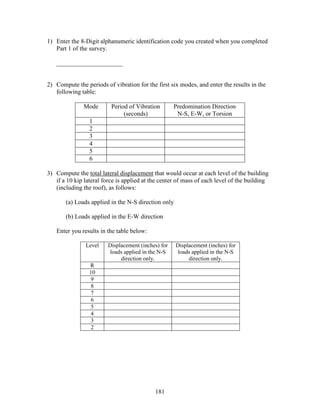
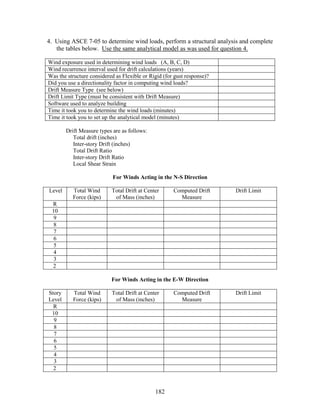
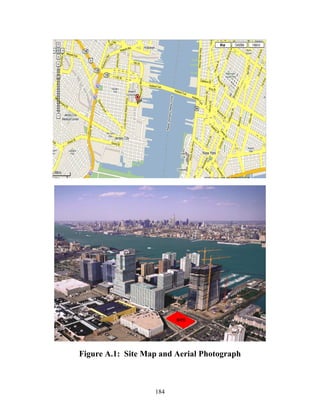
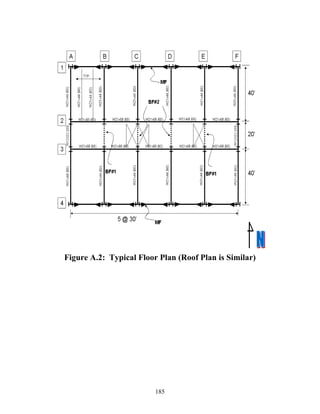
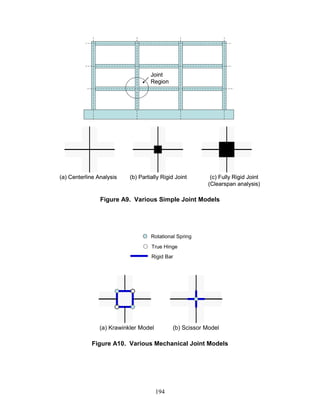
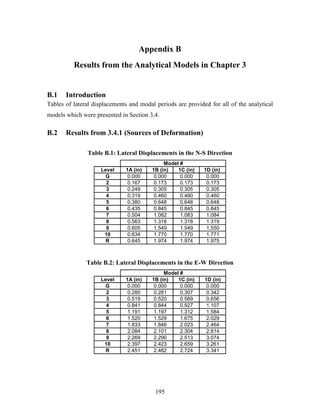
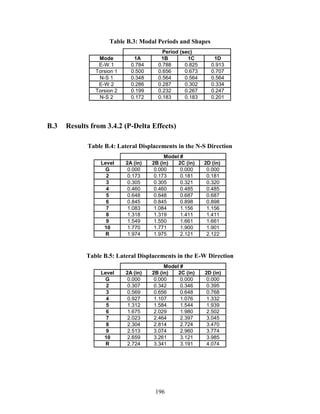
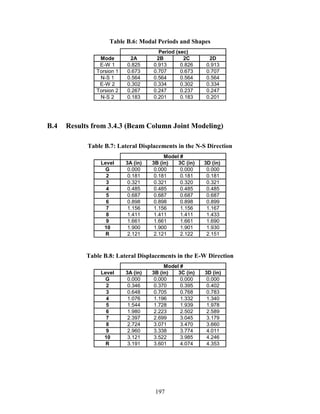
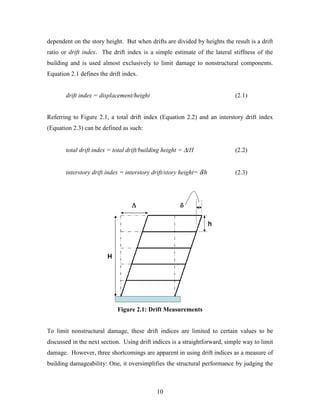
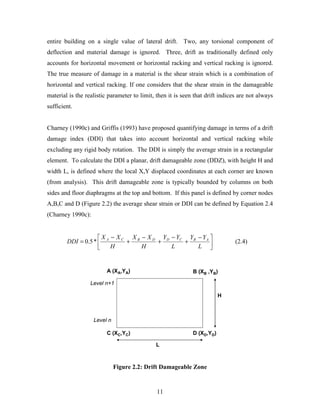
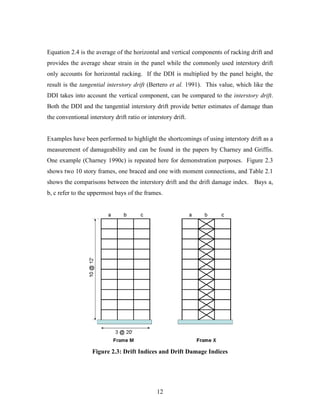
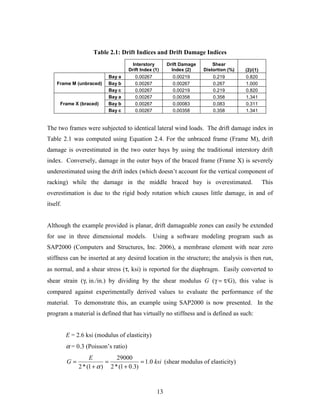
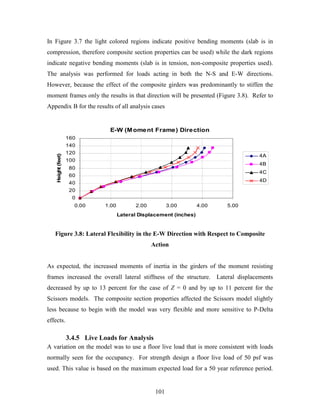
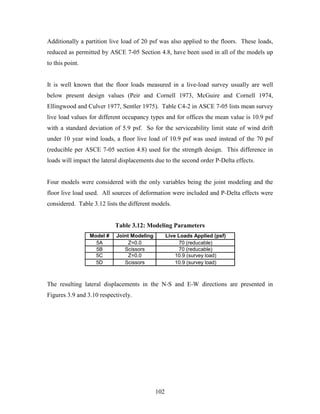
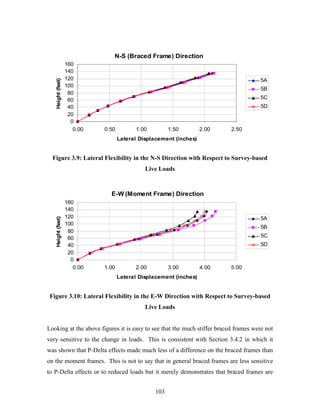
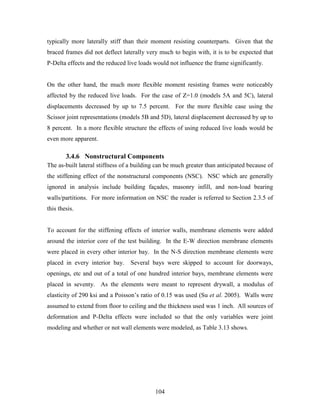
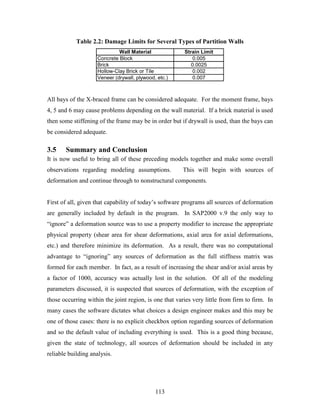
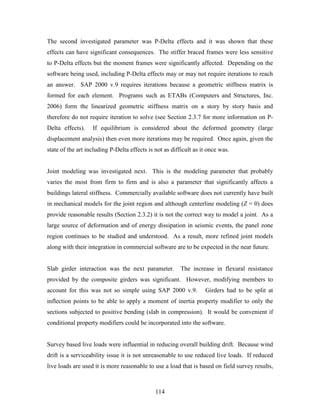
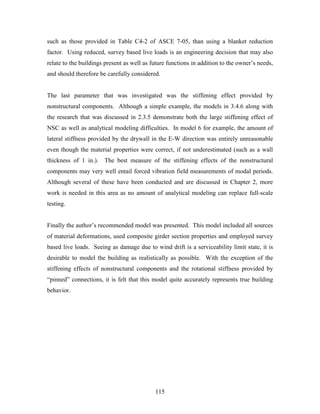
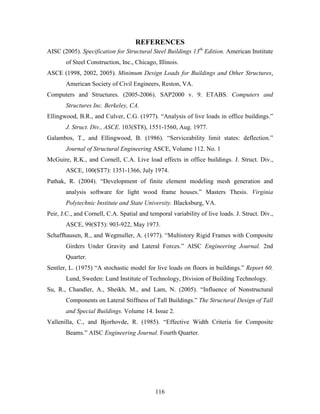
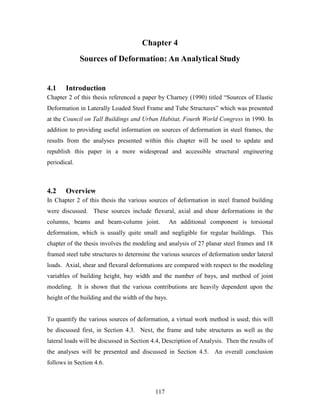
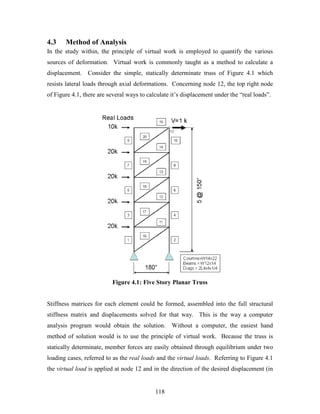
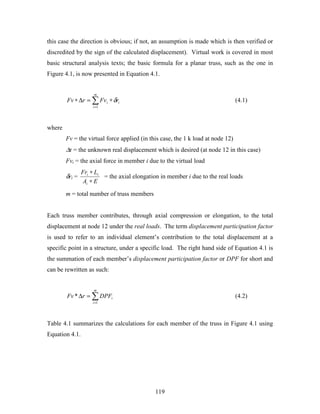
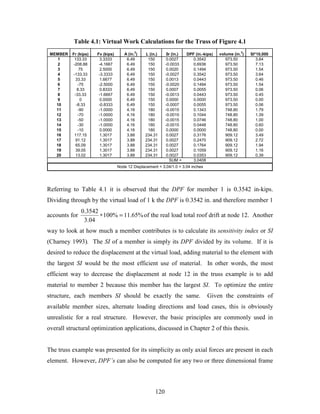
This thesis examines wind drift in steel framed buildings through analytical modeling and a survey of industry practice. It begins with a literature review covering drift limits, modeling techniques, wind loads, and building response. An analytical study then demonstrates how modeling parameters like joint flexibility, composite action, and nonstructural components affect building stiffness and drift. A survey of structural engineering firms investigates how serviceability issues are addressed in design practice. The thesis aims to establish a comprehensive, performance-based approach to wind drift design of steel structures.

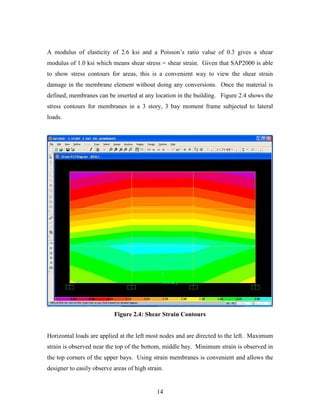
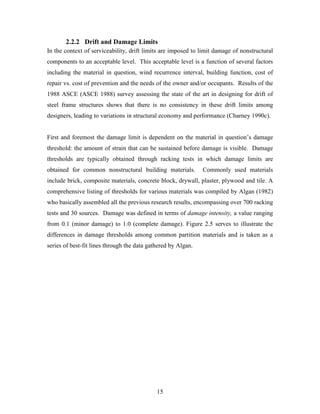
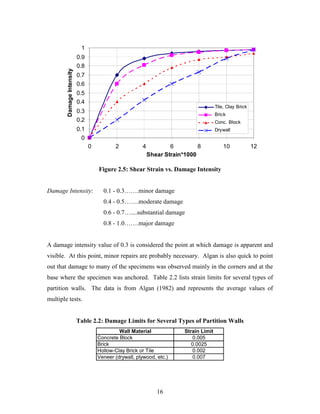
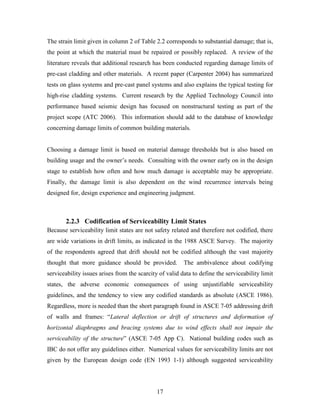
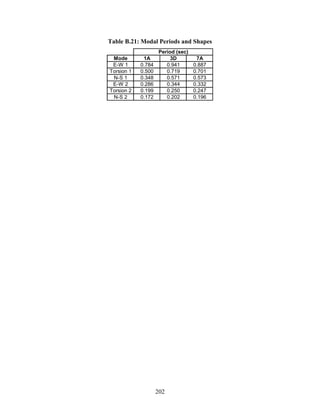
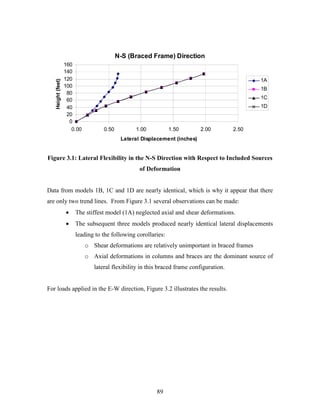
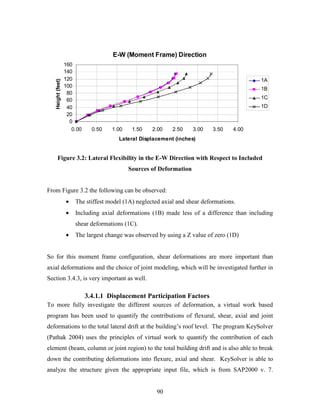
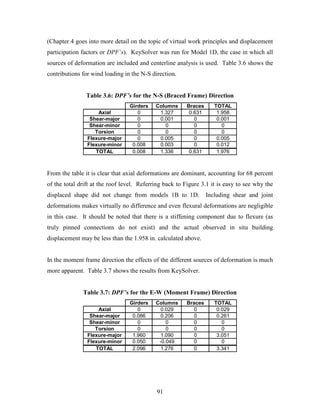
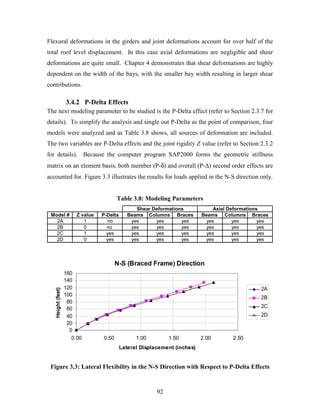
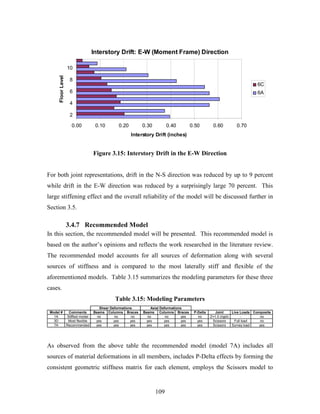
![23
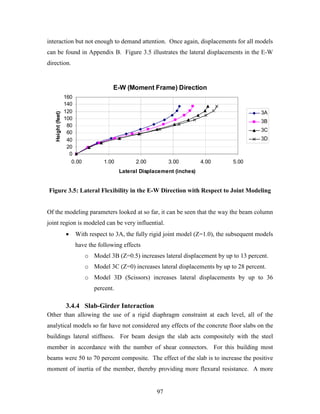
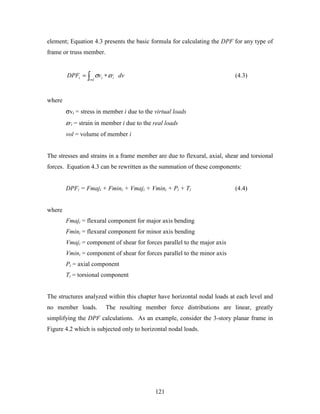
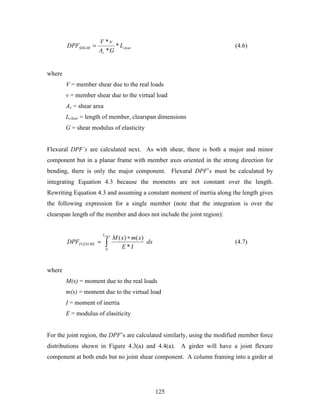
al. 2005) and the following recommendations were made for calculating major axis shear
deformations of wide flange sections:
• A form factor based on an effective shear area of (d – tf)tw is reasonably accurate
for all but the stockiest sections, such as heavy W14’s. Note that for all wide
flange sections SAP2000 (Computers and Structures, Inc. 2006) uses an effective
shear area equal to the total depth times the web thickness.
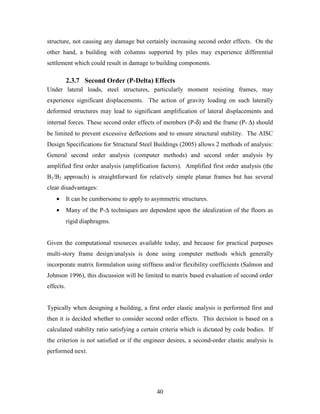
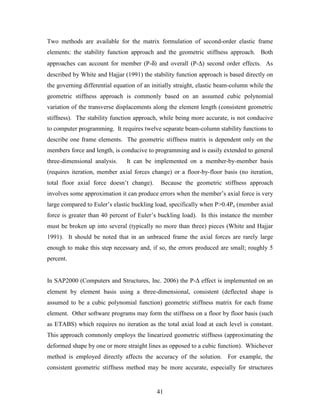
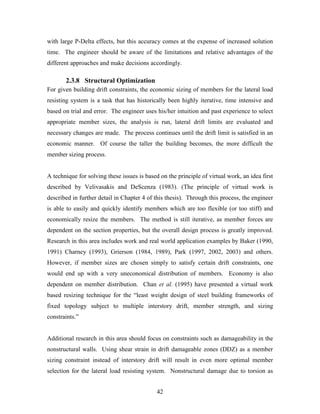
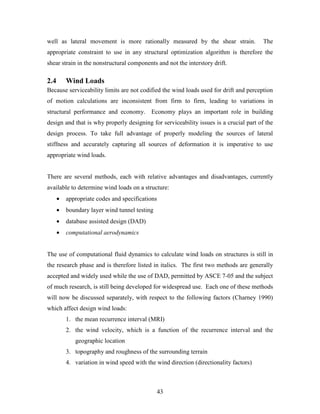
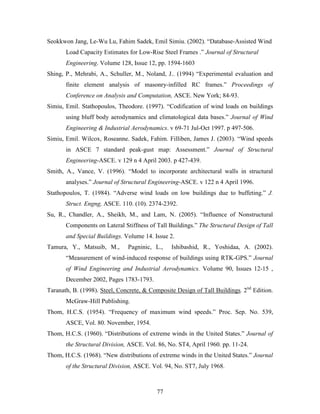
• For stocky sections, the simplified Cowper expression (Cowper 1966) is
recommended for calculating the section form factor and is given by Equation 2.5
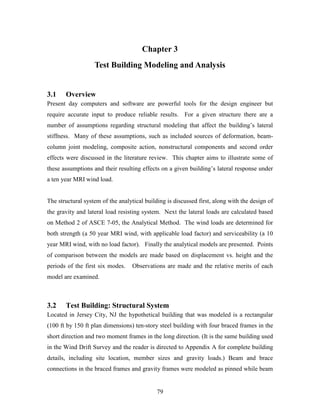
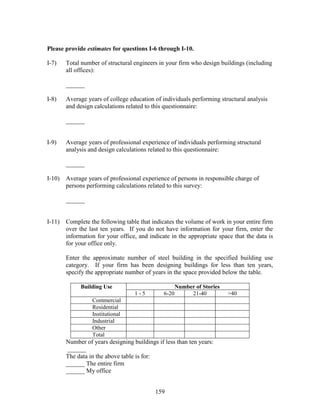
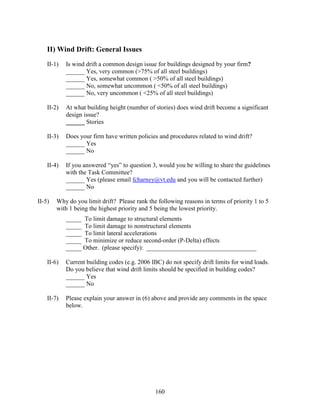
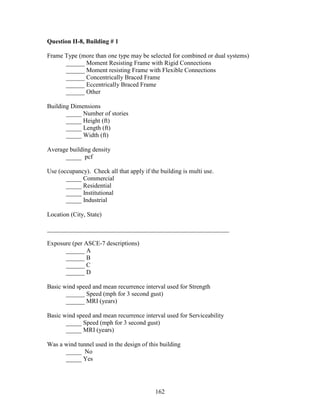
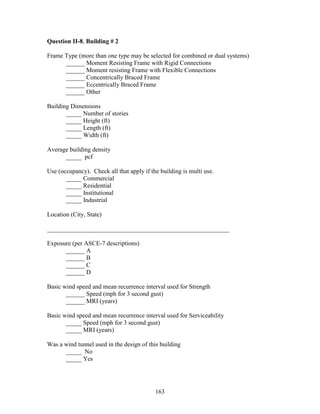
( ) ( )[ ]
( )2
2232
3110
30901507212
m
mmnmmm
+
+++++
=κ (2.5)
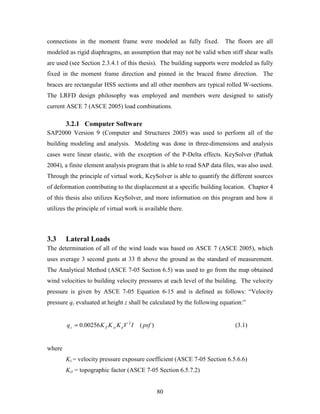
where:
w
ff
dt
tb
m
2
=
d
b
n
f
=
d = distance between center of flanges
For minor axis shear the wide-flange member behaves like two rectangular sections
separated by a thin web and a form factor of close to 1.2 is adequate. With that being
said, detailed finite element analysis has refined this idea and has shown that there is
some shear resistance provided by the web. Consequently, the following empirical
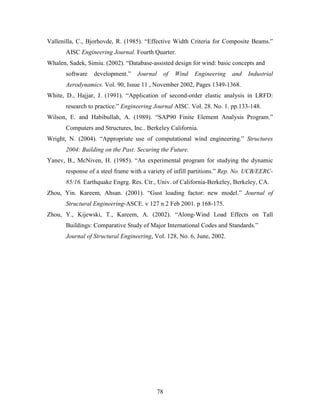
expression is recommended for the form factor (Iyer 2005):
flanges
gross
A
A
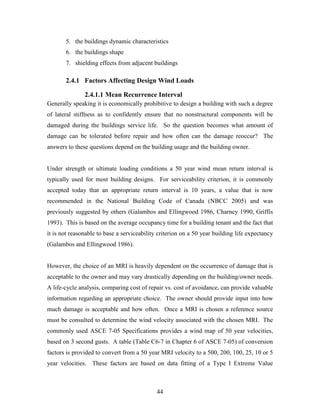
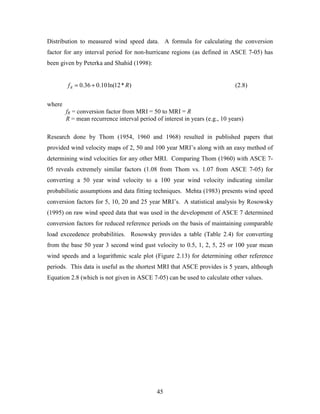
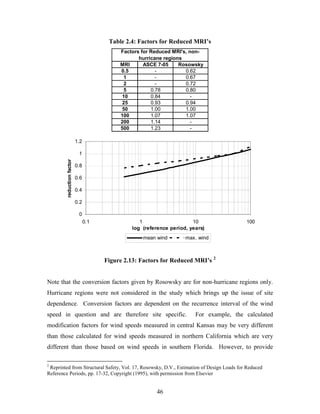
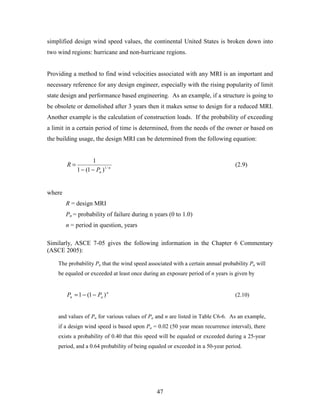
2.1=κ (2.6)
Using the correct shear area is important in predicting shear deformations and
consequently affects the computed lateral drift.](https://image.slidesharecdn.com/thesisfullfinalsept7-150512222448-lva1-app6892/85/Thesis-full-final_sept7-33-320.jpg)
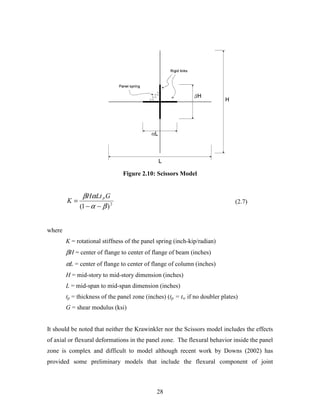
![29
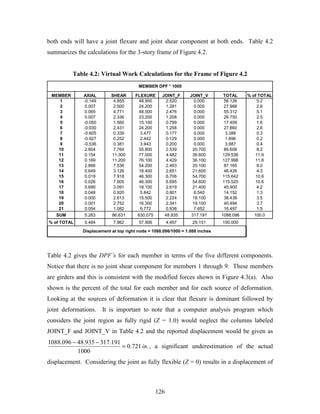
deformation. These flexural and axial components of deformation are relatively small
and the current model, which includes only shear deformations, gives accurate results.
2.3.3 Connection Flexibility
The lateral stiffness of a steel-framed building is composed of the lateral load resisting
system (braced and unbraced frames), the non-lateral load resisting system (gravity
frames, load bearing walls), nonstructural elements (walls, infill, cladding, etc.) and the
interaction, intentional or otherwise, between these components. From the previously
mentioned study by Bouwkamp et al. (1983) it is apparent that the bare frame alone does
not provide all of the lateral stiffness in a structure. Modeling all contributing
components is therefore essential to produce accurate and reliable results.
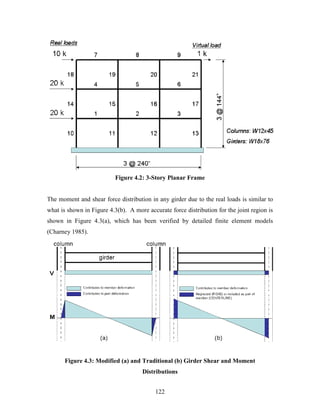
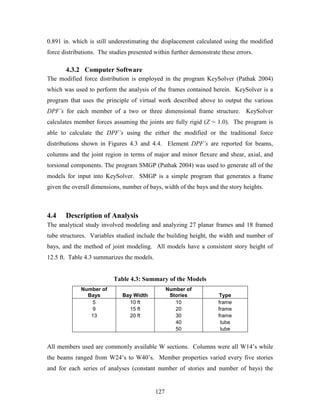
Modeling connections as either simple (pinned) or fully restrained (fixed) greatly
simplifies the design and analysis process but is not entirely correct. In reality all pinned
connections offer some degree of moment and rotational resistance and fall somewhere in
between fixed and pinned. When it comes to performance based engineering there are
many benefits of including PR (partially restrained) connections in design. For example,
beams can be optimized for moments and economy can be realized through construction
savings. However, the main focus here is on how the serviceability of frames is affected
by connection flexibility.
Simple connections are assumed to rotate unrestrained and to transmit a negligible
moment. Fully restrained connections transfer moments with a negligible amount of
rotation. Partially restrained (commonly called semi-rigid) connections fall in between,
allowing a rotation that is not negligible while transmitting some moment. Several
national codes allow the consideration of partially restrained connections (AISC 2005,
British Standards Institute, EN Eurocode 3 2003). The 2005 AISC Specification permits
the use of PR connections “upon evidence that the connections to be used are capable of
furnishing, as a minimum, a predictable percentage of full end restraint” (AISC 2005;
[B3.6b]).](https://image.slidesharecdn.com/thesisfullfinalsept7-150512222448-lva1-app6892/85/Thesis-full-final_sept7-39-320.jpg)





![175
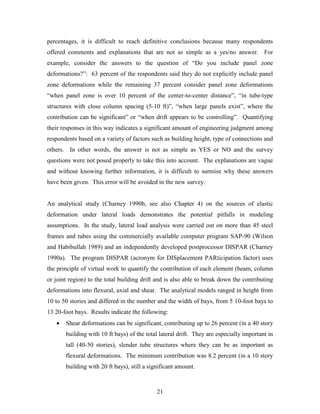
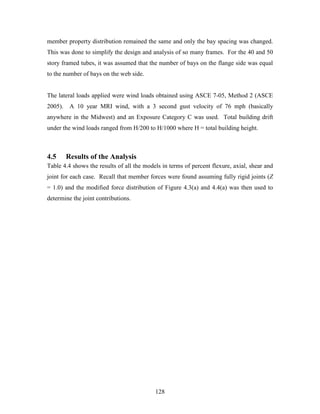
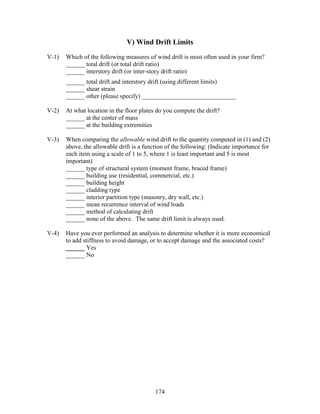
V-5) Four hypothetical building are to be designed by your firm. On the basis of your
current design procedures, fill in the last three columns of the table below. Please
enter the drift limits as a ratio (e.g. H/500 would be entered as 0.0020). If you
use strain as a drift measure, enter the strain directly.
Type Use Height
(stories)
Cladding Interior
Partitions
Wind
MRI
(years)
Drift
Measure
[a]
Drift
Limit
Moment
Frame
Warehouse 1 Metal
Cladding
None
Braced
Frame
Hospital 10 Brick Drywall
Moment
Frame
Office
Building
30 Glass and
granite
curtain
wall
Drywall
(service
core only)
Framed
Tube
Hotel 80 Glass
Curtain
wall
Drywall
(service
core only)
All buildings are rectangular with a plan dimension of 100 ft by 180 ft.
[a] See question V-1.](https://image.slidesharecdn.com/thesisfullfinalsept7-150512222448-lva1-app6892/85/Thesis-full-final_sept7-185-320.jpg)