+
Developing knowledge of digital
literacies
Theory to practice (Point 3)
+ Why we need knowledge on digital
literacies?
 One of that main reasons is because, 90% of new jobs will require
excellent digital skills, so improving digital literacy skills is an
essential component of developing employable graduates.
 Core digital skills, as well as subject specific use of
technology, enables students to gain the skills and confidence they
need to use digital technology in order to be able to support their
learning.
 Knowledge on digital literacies, gives students skills to use digital
tools to undertake academic research, writing and critical thinking; as
part of personal development planning; and as a way of showcasing
achievements.
 Students in this modern world need to utilize all of the higher order
thinking skills taught to students in previous times and digital
literacies can enable this to happen.
 Digital literacies allows students to use the internet to research and
find text sources, videos, pod casts and presentations related to
anything they would like to learn about.
+ Programs to help develop digital
literacy knowledge
 The Victorian Government plays an active role in ensuring all
Victorians can access the opportunities being generated by digital
media technologies. One program they run is Connecting
Communities: the second wave (2005 — on-going) which is a
program that focuses on providing continuing support for existing
public Internet access, ensuring basic skills can be acquired by
groups facing particular barriers; and encouraging the development
of more relevant and useful content for these groups.
 Vital is a program that aims to inspire and support teachers to
understand the potential of digital technologies for learning with a
mission to develop the use of ICT across all subjects of the
curriculum. The program offers face-to-face and online courses and
has been designed with an online community at its heart which will
enable practitioners to share information and good practice.
 The internet and Web 2.0 technologies not only provide great
opportunities for the classroom, they are also great sources of tips
and support for teachers and can just give teachers a feel for what
digital technologies are ‘out there’, being used by other practitioners
+ Strategies to help develop digital
literacy knowledge
 Recent years have seen the development of a number of social
communities of teachers keen to share their interest in developing
the use of digital technologies. For example, there are a number
of teachers from a range of subjects and Key Stages who share
their experiences of digital technology in the classroom via blogs.
 Practicing new digital literacy skills is a a key strategy as this will
help further develop your skills/knowledge as well as increase
your confidence to use technology for literacy teaching/learning.
 Most schools that use a high level of technology have an IT
support person that actually works at the school and can help out
teachers/students when they have any questions or need any
help.
+
+
References
 Jisc. (2010). Developing Digital Literacies. Retrieved fromhttp://
www.jisc.ac.uk/whatwedo/programmes/elearning/
developingdigitalliteracies.aspx
 Purposeful Technology-Constructing Meaning in 21st Century
Schools. (2013). Why is Digital Literacy Important? Retrieved
fromhttp://purposefultechnology.weebly.com/why-is-
digital-literacy-important.html
 Hague, C., & Payton, S. (2010).Digital Literacies Across the
Curriculum. [Future Lab]. Retrieved from 0http://
www2.futurelab.org.uk/resources/documents/handbooks/
digital_literacy.pdf
 Audit of Australian digital media literacy programs. (2009).
Melbourne, VIC: Australian Communication and Media
Authority
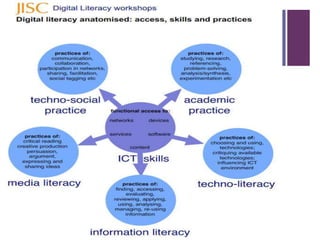
 JISC (2010). Digital literacies anatomised: access, skills and
practices [Image]. Retrieved from http://
www.digitalfutures.org/section/2-3-current-digital-literacy-
frameworks/

Theory to pracitce point 3

  • 1.
    + Developing knowledge ofdigital literacies Theory to practice (Point 3)
  • 2.
    + Why weneed knowledge on digital literacies?  One of that main reasons is because, 90% of new jobs will require excellent digital skills, so improving digital literacy skills is an essential component of developing employable graduates.  Core digital skills, as well as subject specific use of technology, enables students to gain the skills and confidence they need to use digital technology in order to be able to support their learning.  Knowledge on digital literacies, gives students skills to use digital tools to undertake academic research, writing and critical thinking; as part of personal development planning; and as a way of showcasing achievements.  Students in this modern world need to utilize all of the higher order thinking skills taught to students in previous times and digital literacies can enable this to happen.  Digital literacies allows students to use the internet to research and find text sources, videos, pod casts and presentations related to anything they would like to learn about.
  • 3.
    + Programs tohelp develop digital literacy knowledge  The Victorian Government plays an active role in ensuring all Victorians can access the opportunities being generated by digital media technologies. One program they run is Connecting Communities: the second wave (2005 — on-going) which is a program that focuses on providing continuing support for existing public Internet access, ensuring basic skills can be acquired by groups facing particular barriers; and encouraging the development of more relevant and useful content for these groups.  Vital is a program that aims to inspire and support teachers to understand the potential of digital technologies for learning with a mission to develop the use of ICT across all subjects of the curriculum. The program offers face-to-face and online courses and has been designed with an online community at its heart which will enable practitioners to share information and good practice.  The internet and Web 2.0 technologies not only provide great opportunities for the classroom, they are also great sources of tips and support for teachers and can just give teachers a feel for what digital technologies are ‘out there’, being used by other practitioners
  • 4.
    + Strategies tohelp develop digital literacy knowledge  Recent years have seen the development of a number of social communities of teachers keen to share their interest in developing the use of digital technologies. For example, there are a number of teachers from a range of subjects and Key Stages who share their experiences of digital technology in the classroom via blogs.  Practicing new digital literacy skills is a a key strategy as this will help further develop your skills/knowledge as well as increase your confidence to use technology for literacy teaching/learning.  Most schools that use a high level of technology have an IT support person that actually works at the school and can help out teachers/students when they have any questions or need any help.
  • 5.
  • 6.
    + References  Jisc. (2010).Developing Digital Literacies. Retrieved fromhttp:// www.jisc.ac.uk/whatwedo/programmes/elearning/ developingdigitalliteracies.aspx  Purposeful Technology-Constructing Meaning in 21st Century Schools. (2013). Why is Digital Literacy Important? Retrieved fromhttp://purposefultechnology.weebly.com/why-is- digital-literacy-important.html  Hague, C., & Payton, S. (2010).Digital Literacies Across the Curriculum. [Future Lab]. Retrieved from 0http:// www2.futurelab.org.uk/resources/documents/handbooks/ digital_literacy.pdf  Audit of Australian digital media literacy programs. (2009). Melbourne, VIC: Australian Communication and Media Authority  JISC (2010). Digital literacies anatomised: access, skills and practices [Image]. Retrieved from http:// www.digitalfutures.org/section/2-3-current-digital-literacy- frameworks/