The
Winners
Losers
in the move to
Real-Time Cloud
Communications
Structure
•
•
•
•
•
•
•

2

The Facts

Why do we need APIs?
Why all the big numbers?
Mapping the Cloud Communications API landscape
Where to Focus?
Where is the Telecom Application Developer Ecosystems going?

Who are the winners and losers?

© 2010 Alan Quayle Business and Service Development
No developed market telco
has successfully engaged
mobile application
developers with Telecom
APIs
BUT Telecom API
successes have come from
using APIs internally
AND Telecom API
successes have come from
using APIs with existing
partners
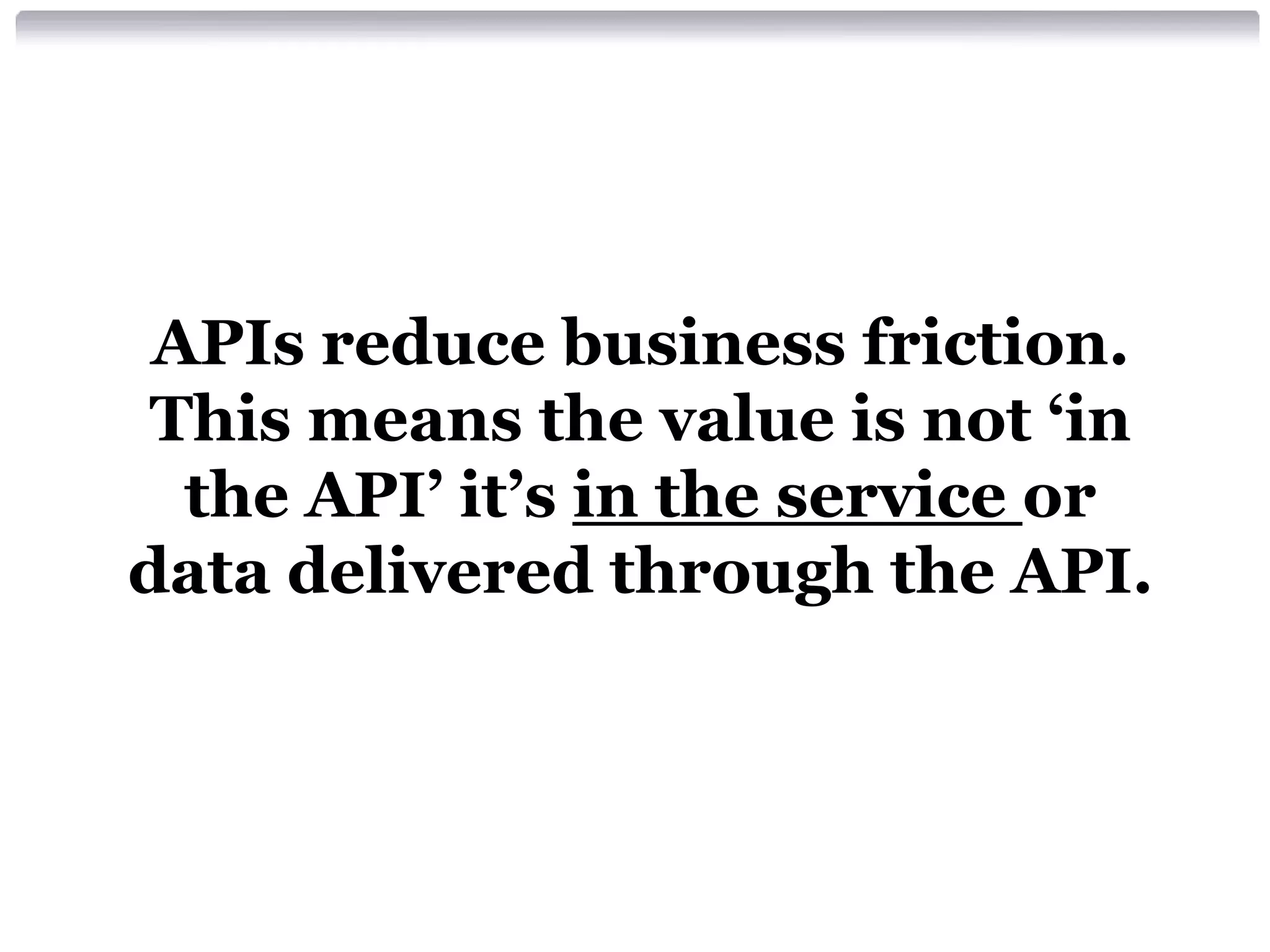
APIs reduce business friction.
This means the value is not ‘in
the API’ it’s in the service or
data delivered through the API.
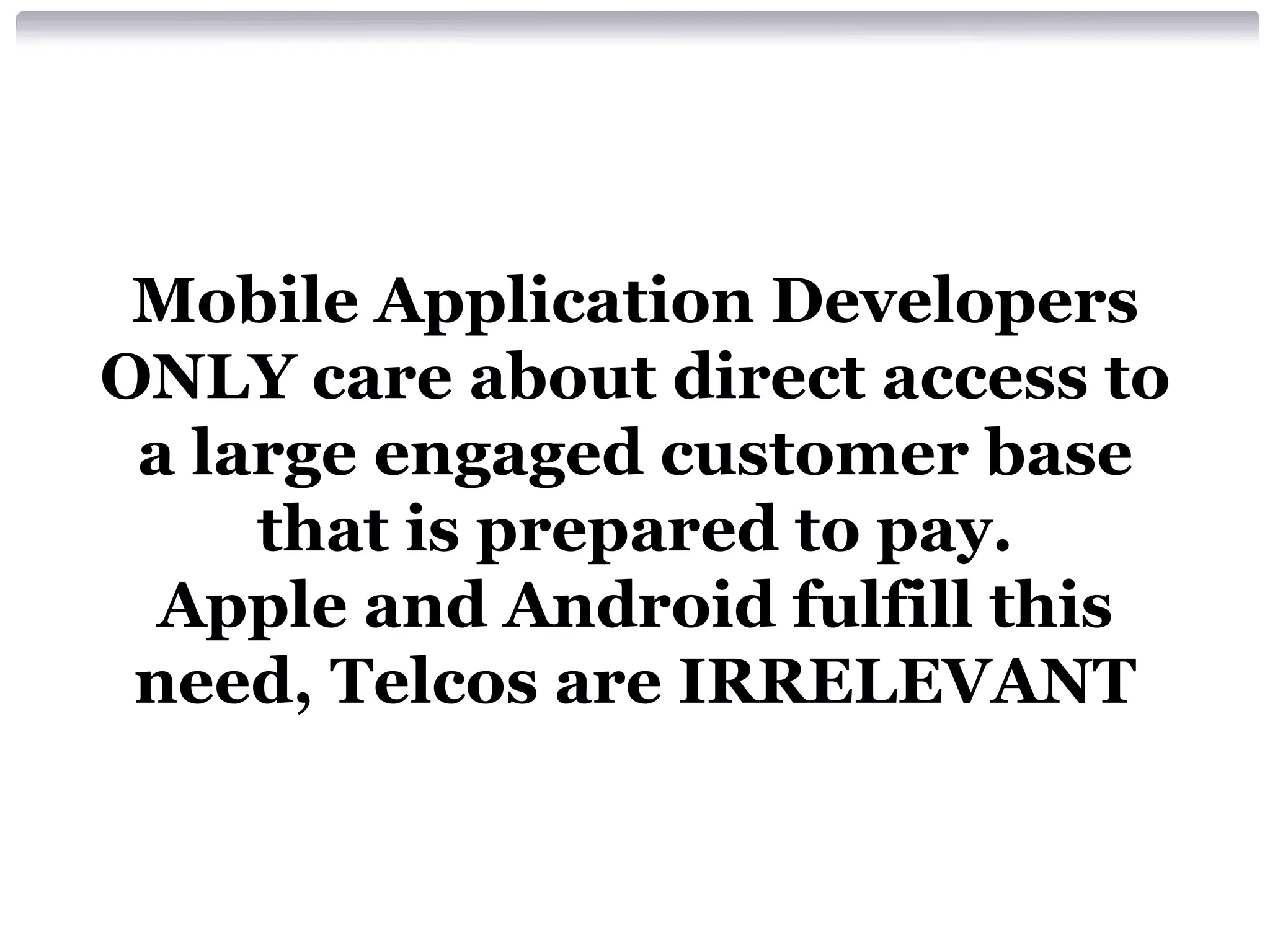
Mobile Application Developers
ONLY care about direct access to
a large engaged customer base
that is prepared to pay.
Apple and Android fulfill this
need, Telcos are IRRELEVANT
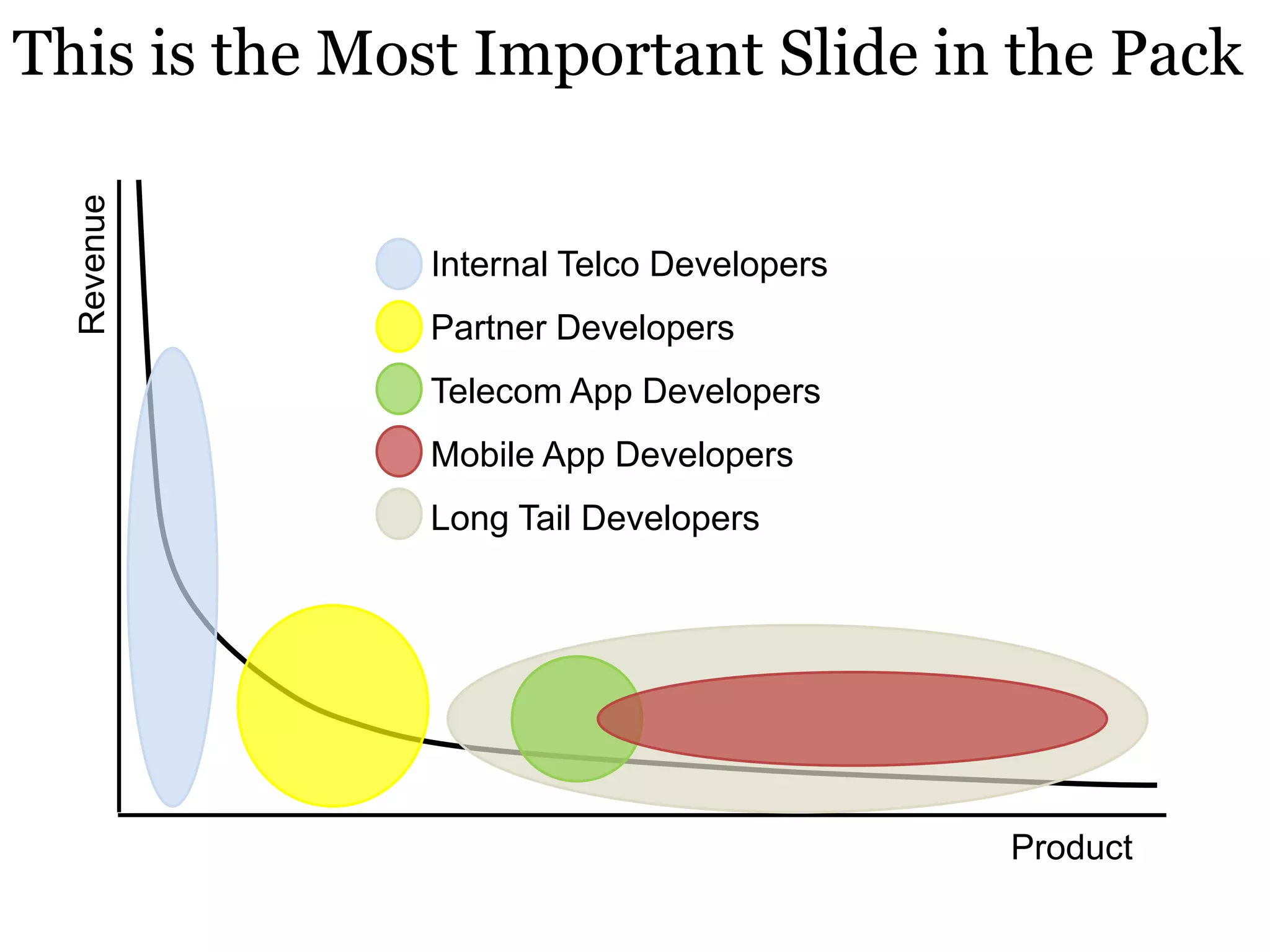
Revenue

This is the Most Important Slide in the Pack

Internal Telco Developers
Partner Developers
Telecom App Developers
Mobile App Developers

Long Tail Developers

Product
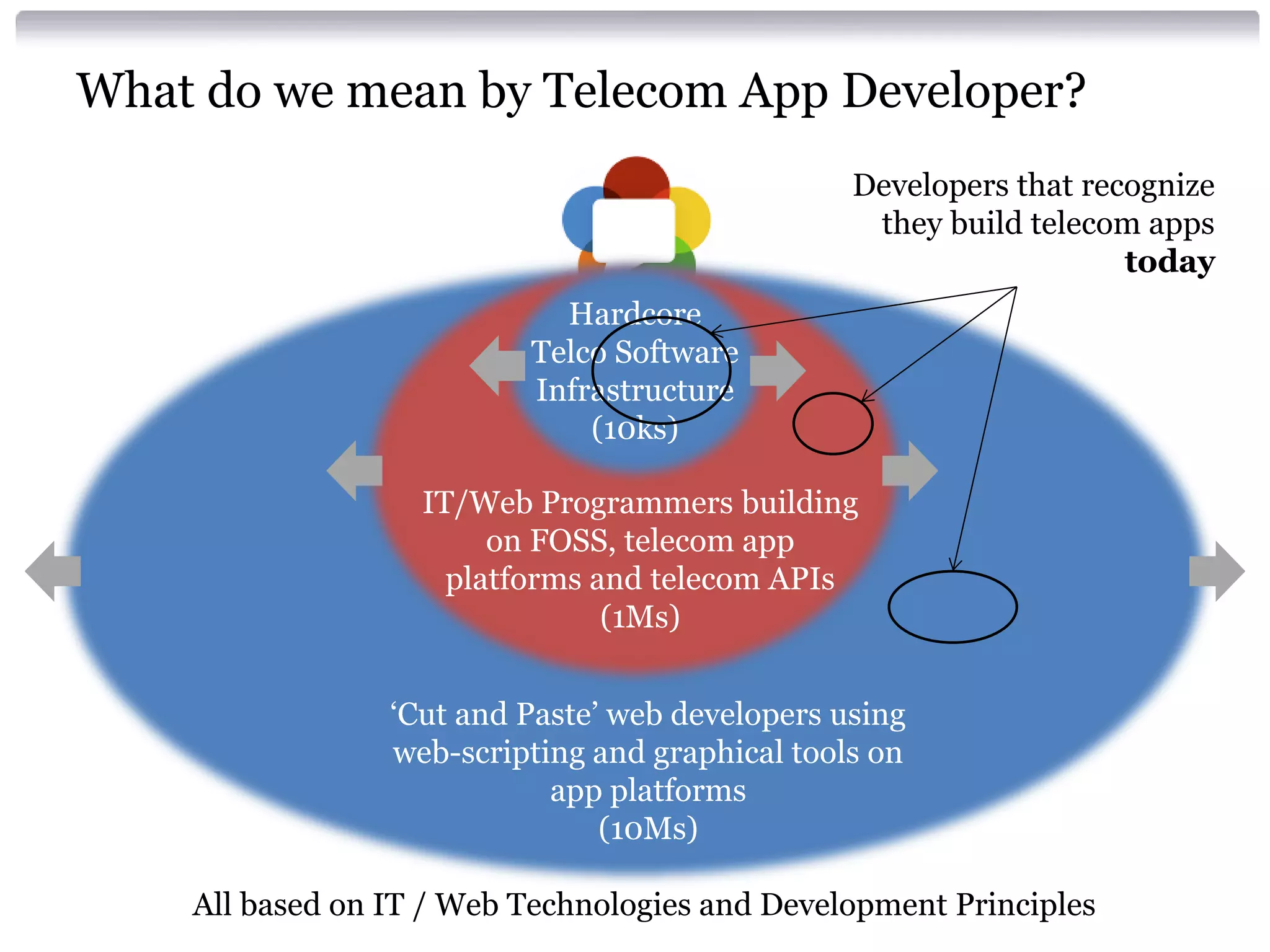
What do we mean by Telecom App Developer?
Developers that recognize
they build telecom apps
today
Hardcore
Telco Software
Infrastructure
(10ks)
IT/Web Programmers building
on FOSS, telecom app
platforms and telecom APIs
(1Ms)
‘Cut and Paste’ web developers using
web-scripting and graphical tools on
app platforms
(10Ms)
All based on IT / Web Technologies and Development Principles
What do we mean by Telecom App Developer?

Hardcore
Telco Software
Infrastructure
(10ks)

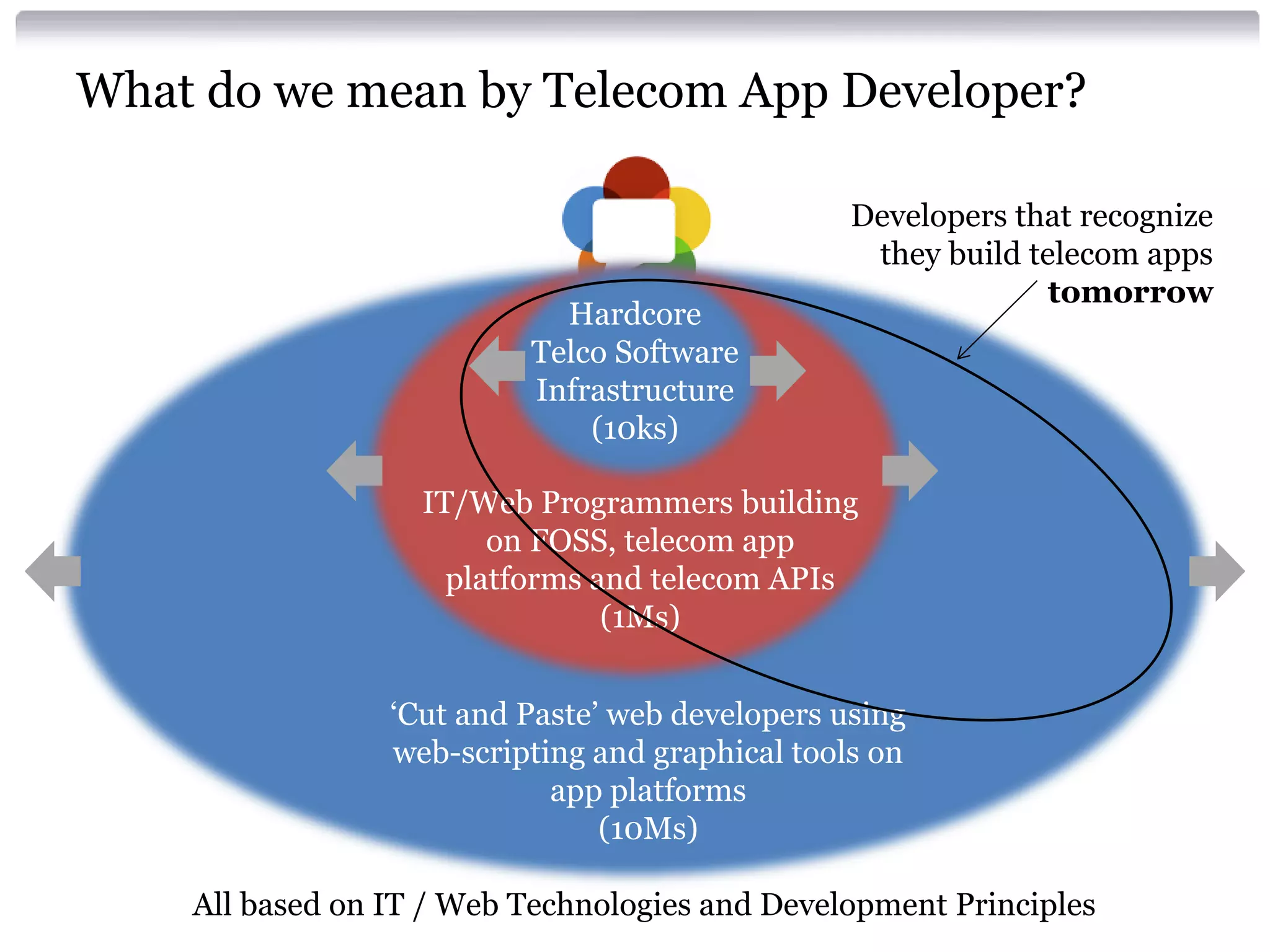
Developers that recognize
they build telecom apps
tomorrow

IT/Web Programmers building
on FOSS, telecom app
platforms and telecom APIs
(1Ms)
‘Cut and Paste’ web developers using
web-scripting and graphical tools on
app platforms
(10Ms)
All based on IT / Web Technologies and Development Principles
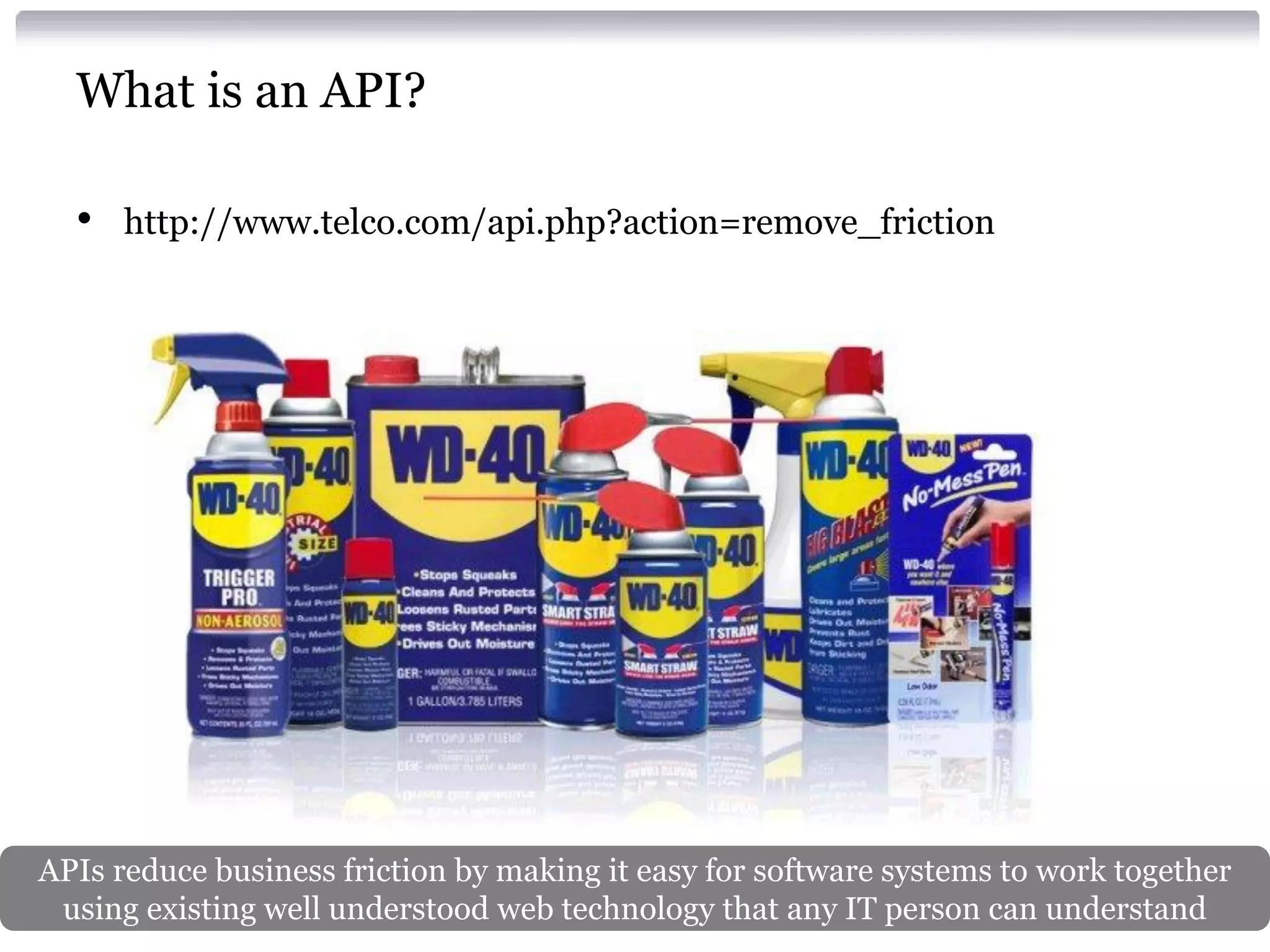
What is an API?
•

http://www.telco.com/api.php?action=remove_friction

APIs reduce business friction by making it easy for software systems to work together
using existing well understood web technology that any IT person can understand
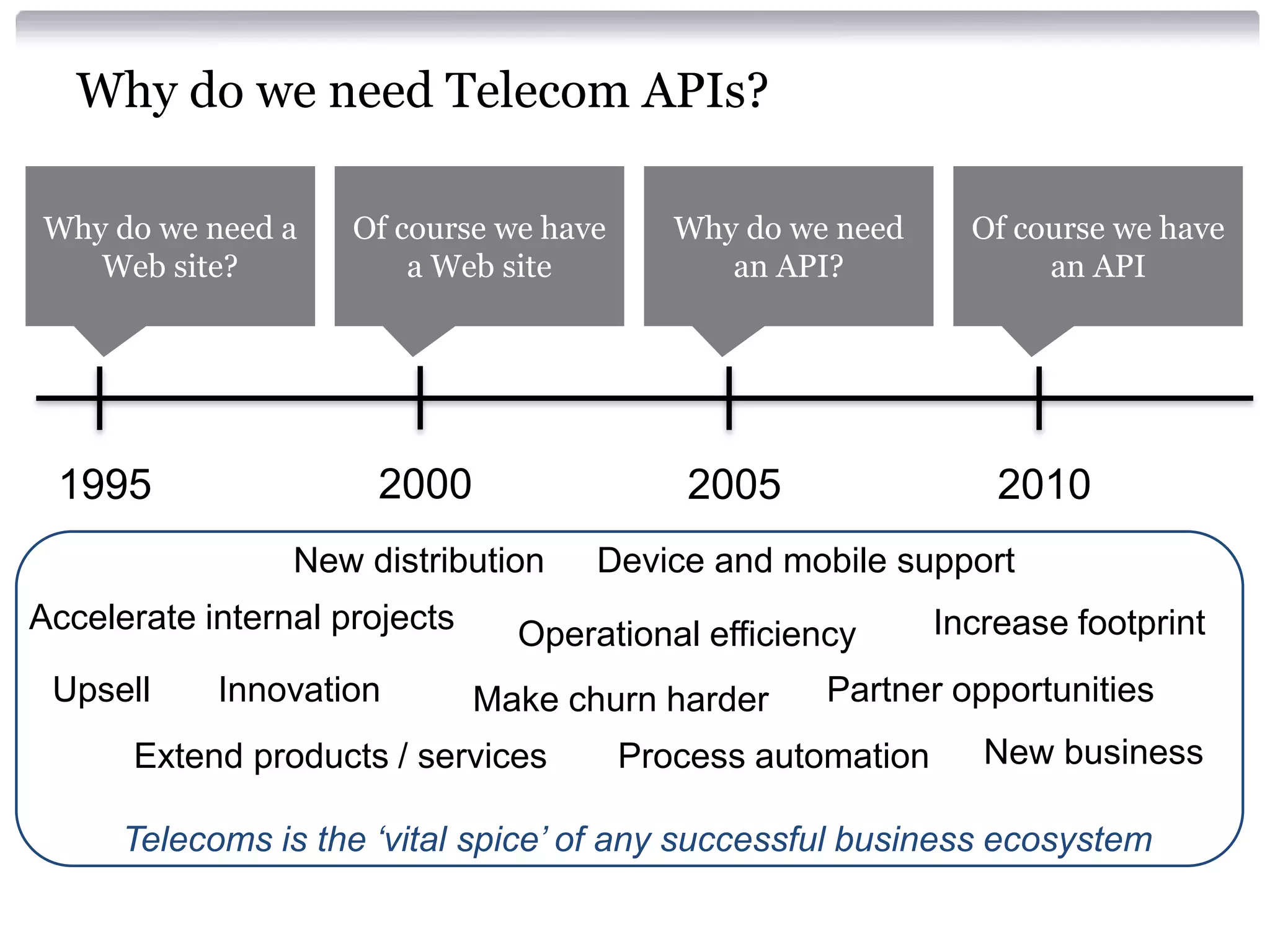
Why do we need Telecom APIs?
Why do we need a
Web site?

1995

Of course we have
a Web site

2000

2005

New distribution
Accelerate internal projects

Upsell

Innovation

Why do we need
an API?

2010

Device and mobile support

Operational efficiency
Make churn harder

Extend products / services

Of course we have
an API

Increase footprint

Partner opportunities

Process automation

New business

Telecoms is the ‘vital spice’ of any successful business ecosystem
Show me the money? graphic
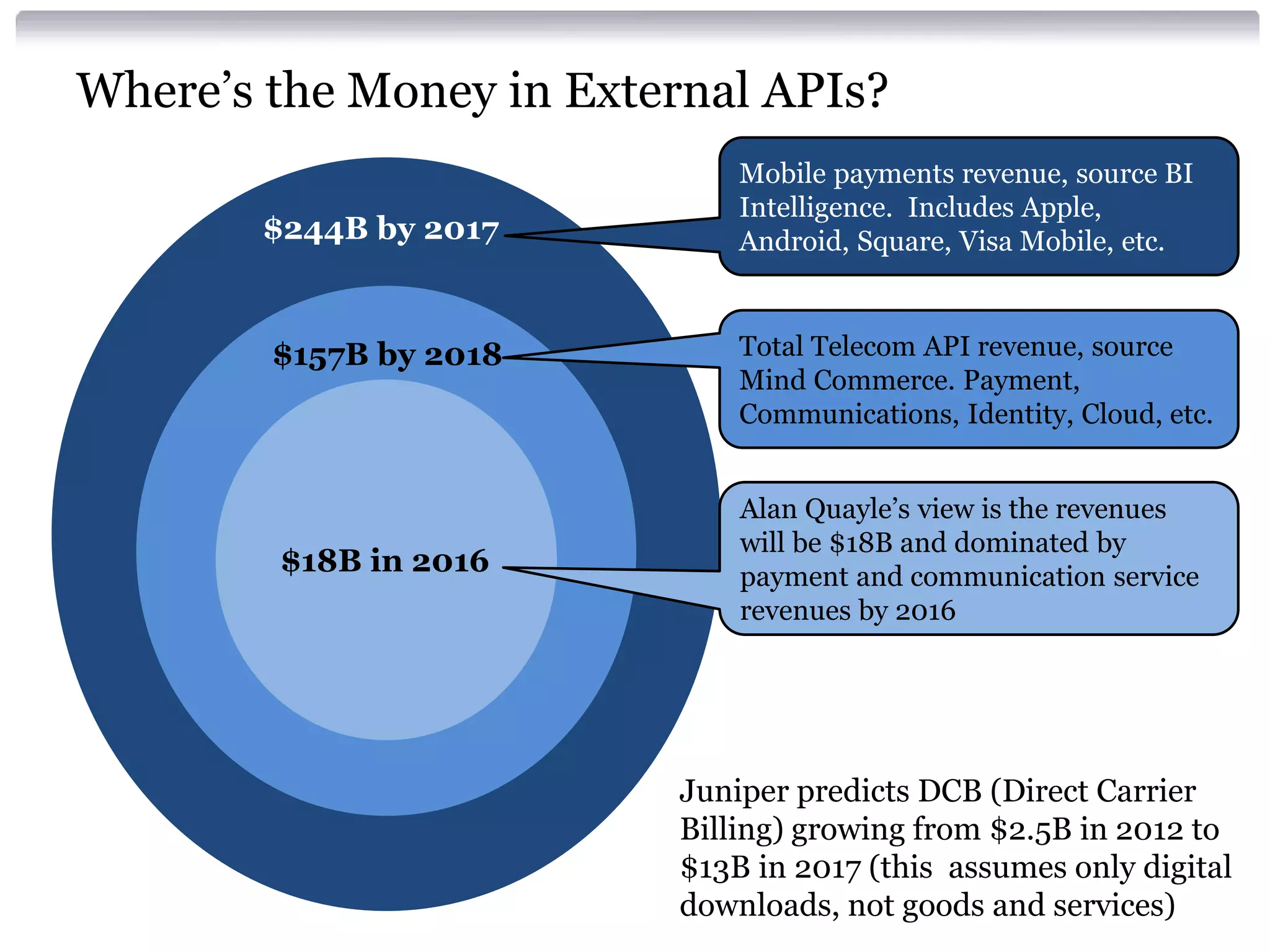
Where’s the Money in External APIs?
$244B by 2017

$157B by 2018

$18B in 2016

Mobile payments revenue, source BI
Intelligence. Includes Apple,
Android, Square, Visa Mobile, etc.

Total Telecom API revenue, source
Mind Commerce. Payment,
Communications, Identity, Cloud, etc.
Alan Quayle’s view is the revenues
will be $18B and dominated by
payment and communication service
revenues by 2016

Juniper predicts DCB (Direct Carrier
Billing) growing from $2.5B in 2012 to
$13B in 2017 (this assumes only digital
downloads, not goods and services)
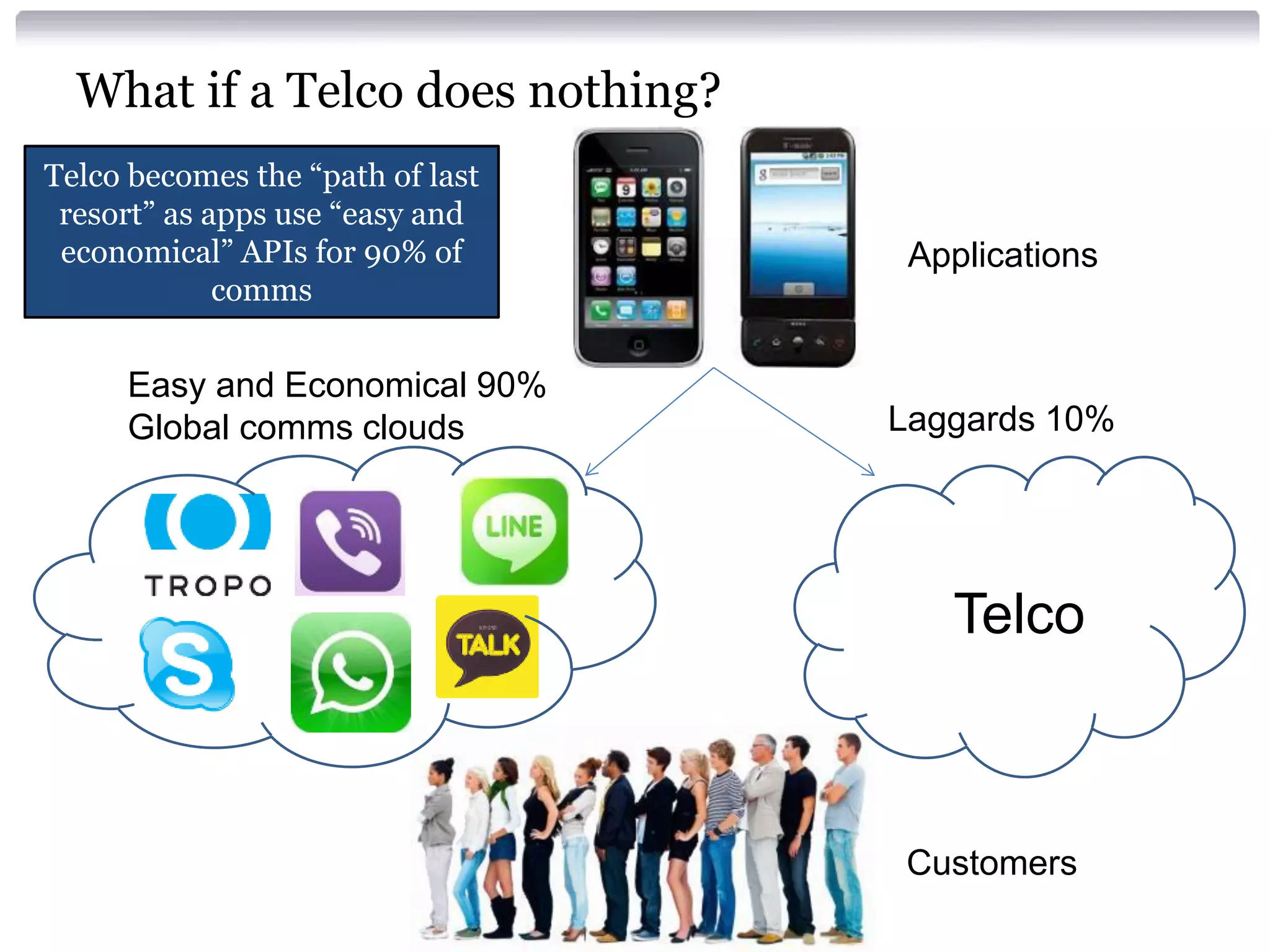
What if a Telco does nothing?
Telco becomes the “path of last
resort” as apps use “easy and
economical” APIs for 90% of
comms

Easy and Economical 90%
Global comms clouds

Applications

Laggards 10%

Telco

Customers
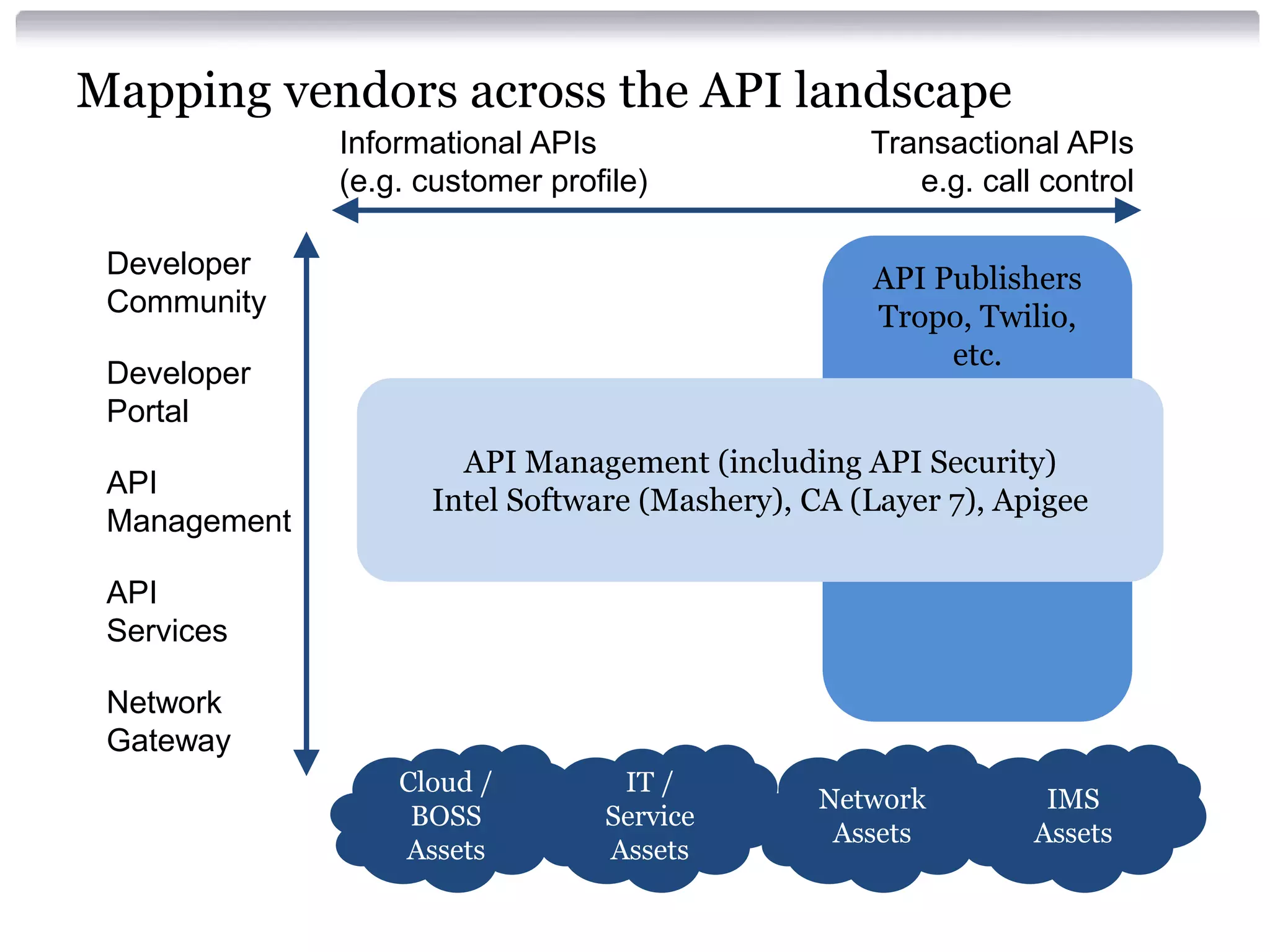
Mapping vendors across the API landscape
Informational APIs
(e.g. customer profile)

Developer
Community

API Publishers
Tropo, Twilio,
etc.

Developer
Portal
API
Management

Transactional APIs
e.g. call control

API Management (including API Security)
Intel Software (Mashery), CA (Layer 7), Apigee

API
Services
Network
Gateway
Cloud /
BOSS
Assets

IT /
Service
Assets

Network
Assets

IMS
Assets
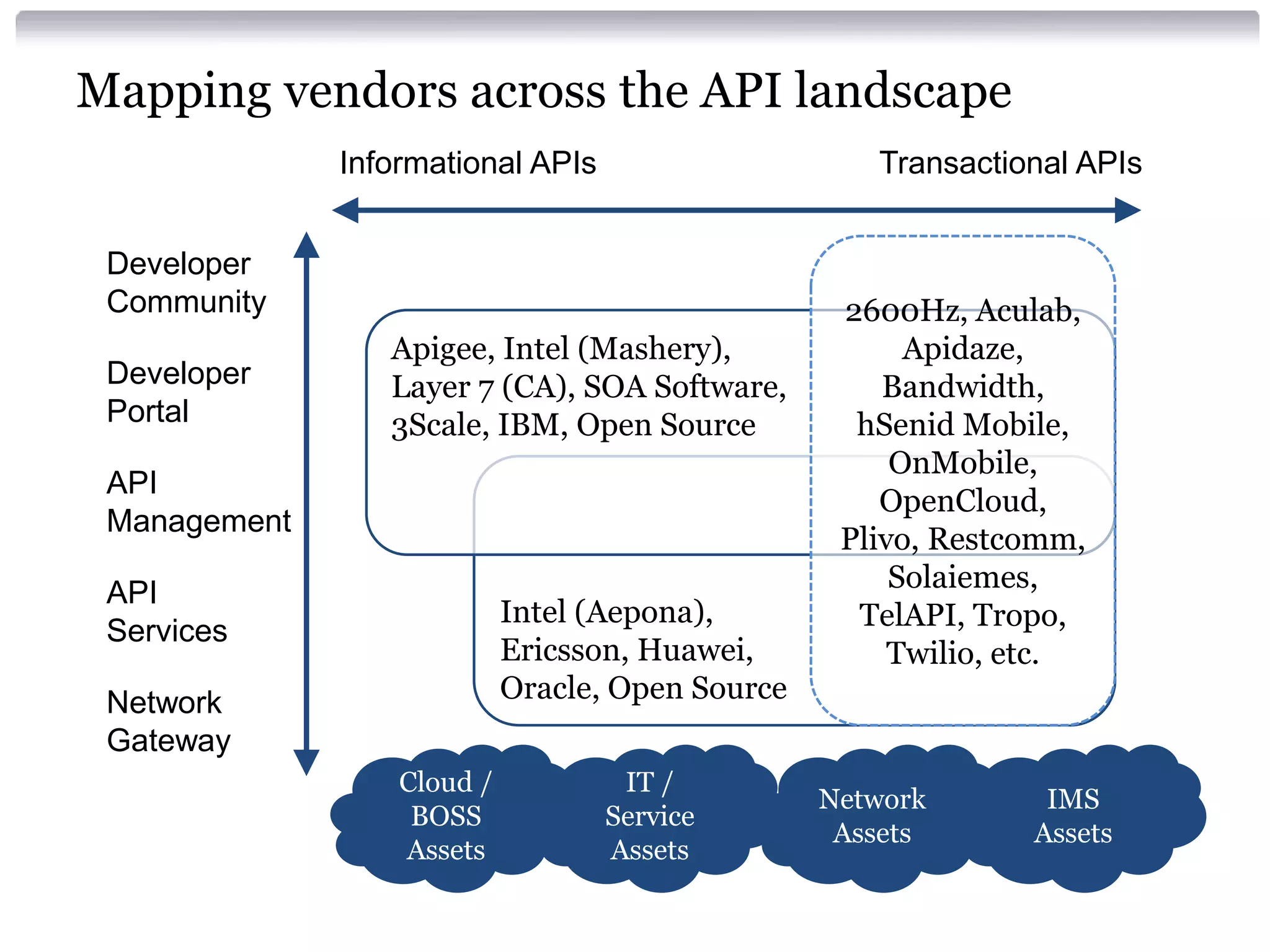
Mapping vendors across the API landscape
Informational APIs

Transactional APIs

Developer
Community
Developer
Portal

Apigee, Intel (Mashery),
Layer 7 (CA), SOA Software,
3Scale, IBM, Open Source

API
Management
API
Services

Intel (Aepona),
Ericsson, Huawei,
Oracle, Open Source

Network
Gateway
Cloud /
BOSS
Assets

IT /
Service
Assets

2600Hz, Aculab,
Apidaze,
Bandwidth,
hSenid Mobile,
OnMobile,
OpenCloud,
Plivo, Restcomm,
Solaiemes,
TelAPI, Tropo,
Twilio, etc.

Network
Assets

IMS
Assets
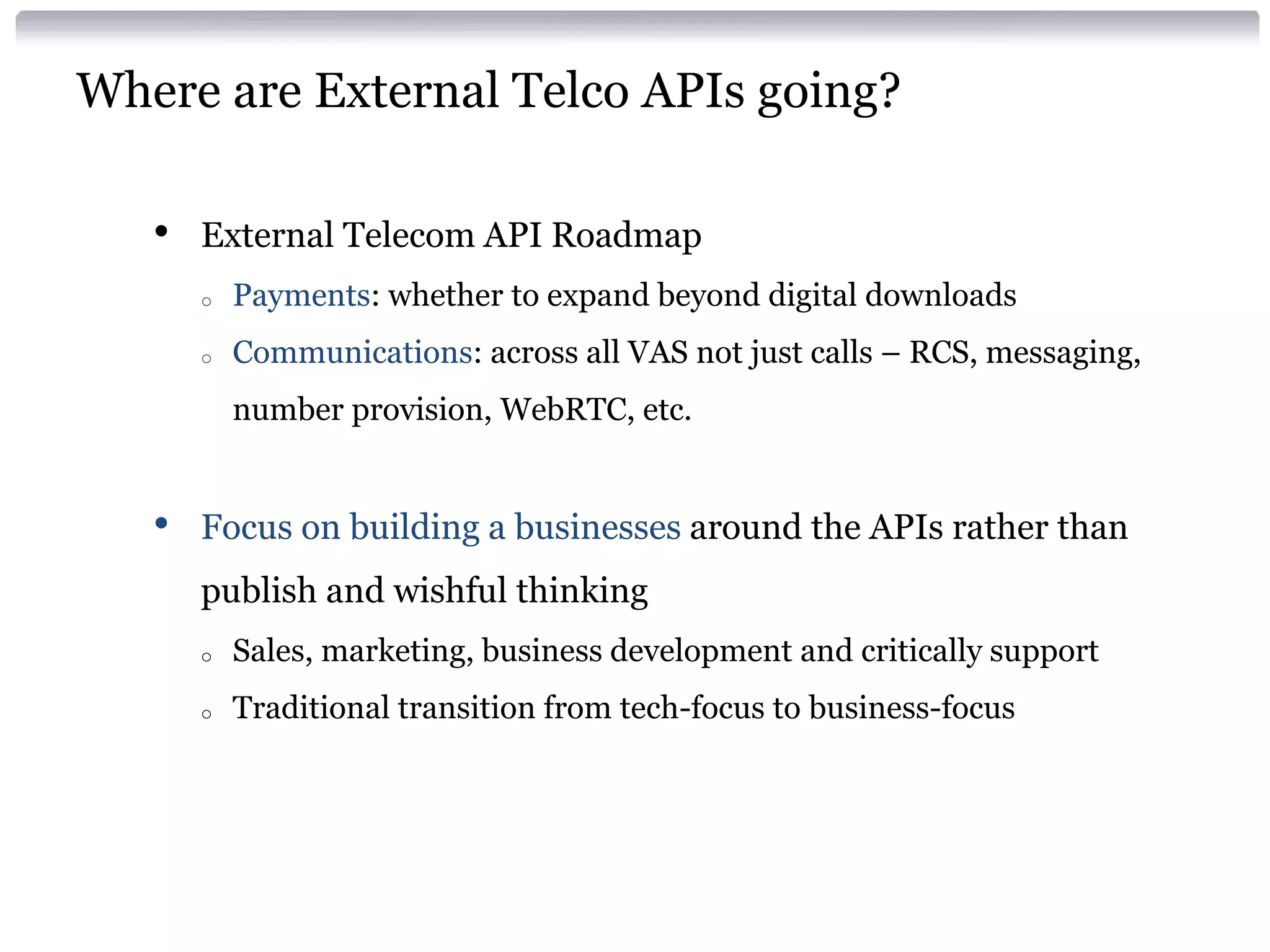
Where are External Telco APIs going?
•

External Telecom API Roadmap
o

Payments: whether to expand beyond digital downloads

o

Communications: across all VAS not just calls – RCS, messaging,
number provision, WebRTC, etc.

•

Focus on building a businesses around the APIs rather than
publish and wishful thinking
o

Sales, marketing, business development and critically support

o

Traditional transition from tech-focus to business-focus
Customers

Services
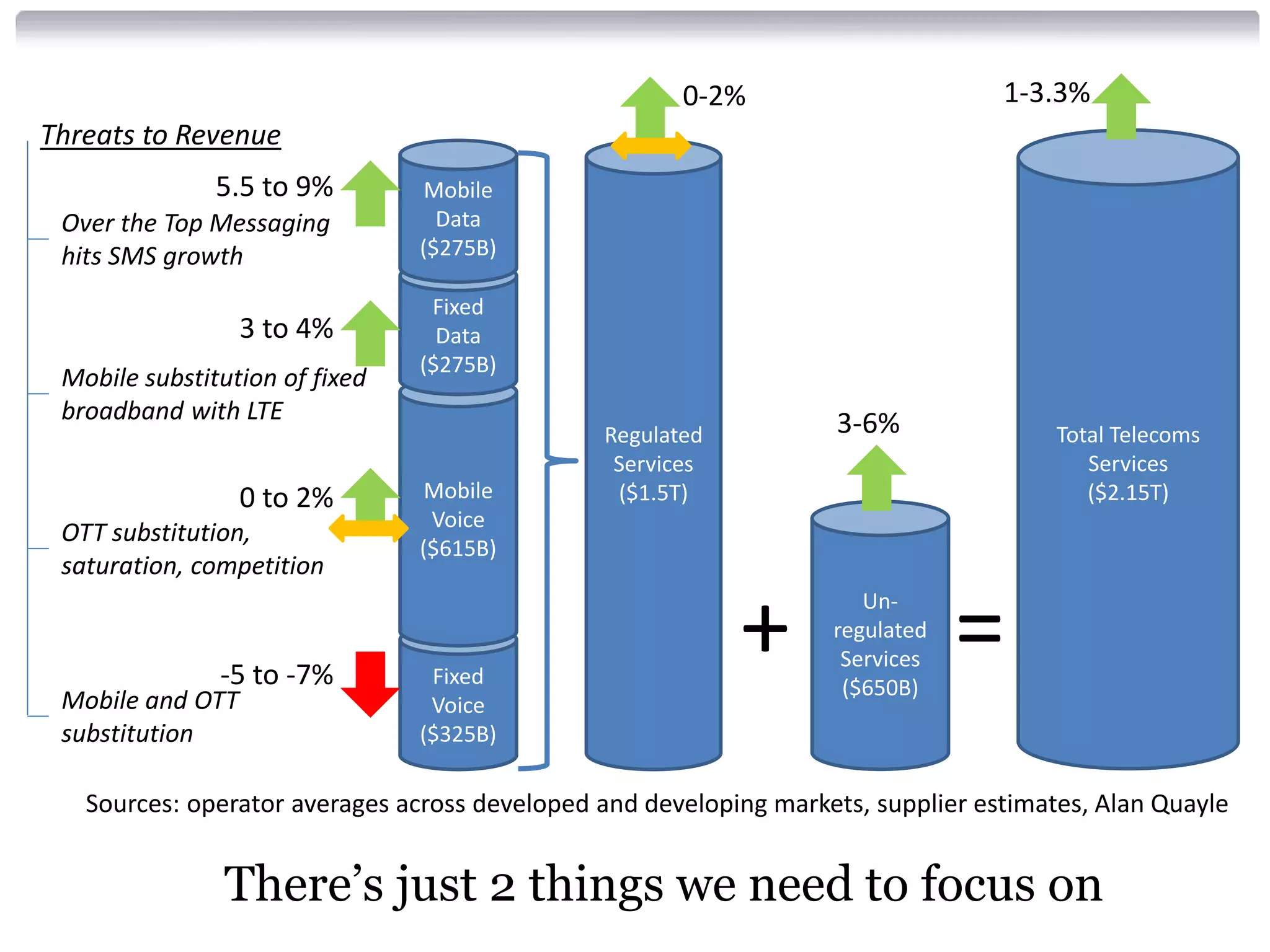
1-3.3%

0-2%
Threats to Revenue
5.5 to 9%
Over the Top Messaging
hits SMS growth

3 to 4%
Mobile substitution of fixed
broadband with LTE

0 to 2%
OTT substitution,
saturation, competition

-5 to -7%

Mobile and OTT
substitution

Mobile
Data
($275B)
Fixed
Data
($275B)

Mobile
Voice
($615B)

Fixed
Voice
($325B)

3-6%

Regulated
Services
($1.5T)

+

Unregulated
Services
($650B)

Total Telecoms
Services
($2.15T)

=

Sources: operator averages across developed and developing markets, supplier estimates, Alan Quayle

There’s just 2 things we need to focus on
Make Telecoms an Essential Spice for every Business Recipe
Do more VAS!
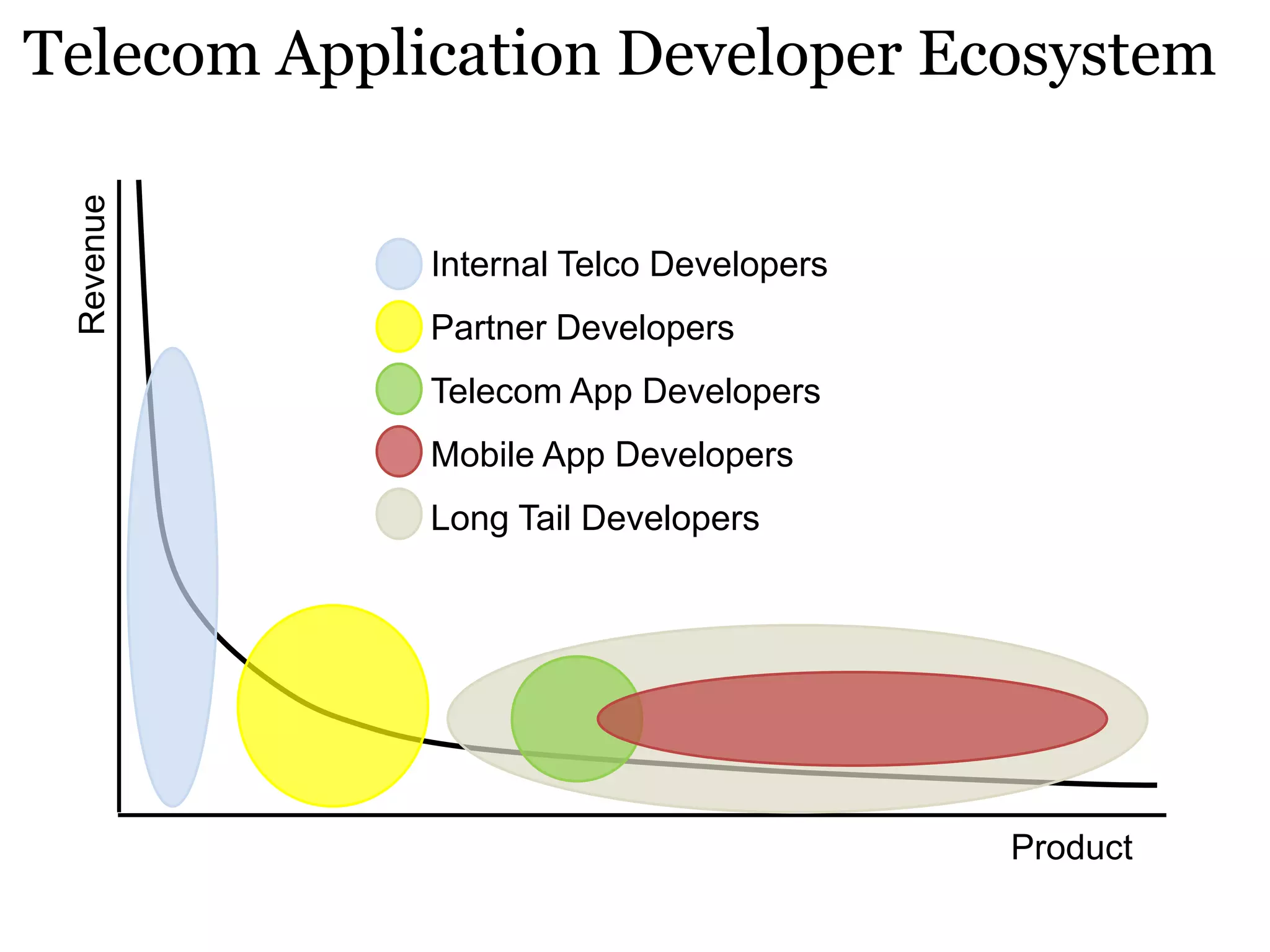
Revenue

Telecom Application Developer Ecosystem

Internal Telco Developers
Partner Developers
Telecom App Developers
Mobile App Developers

Long Tail Developers

Product
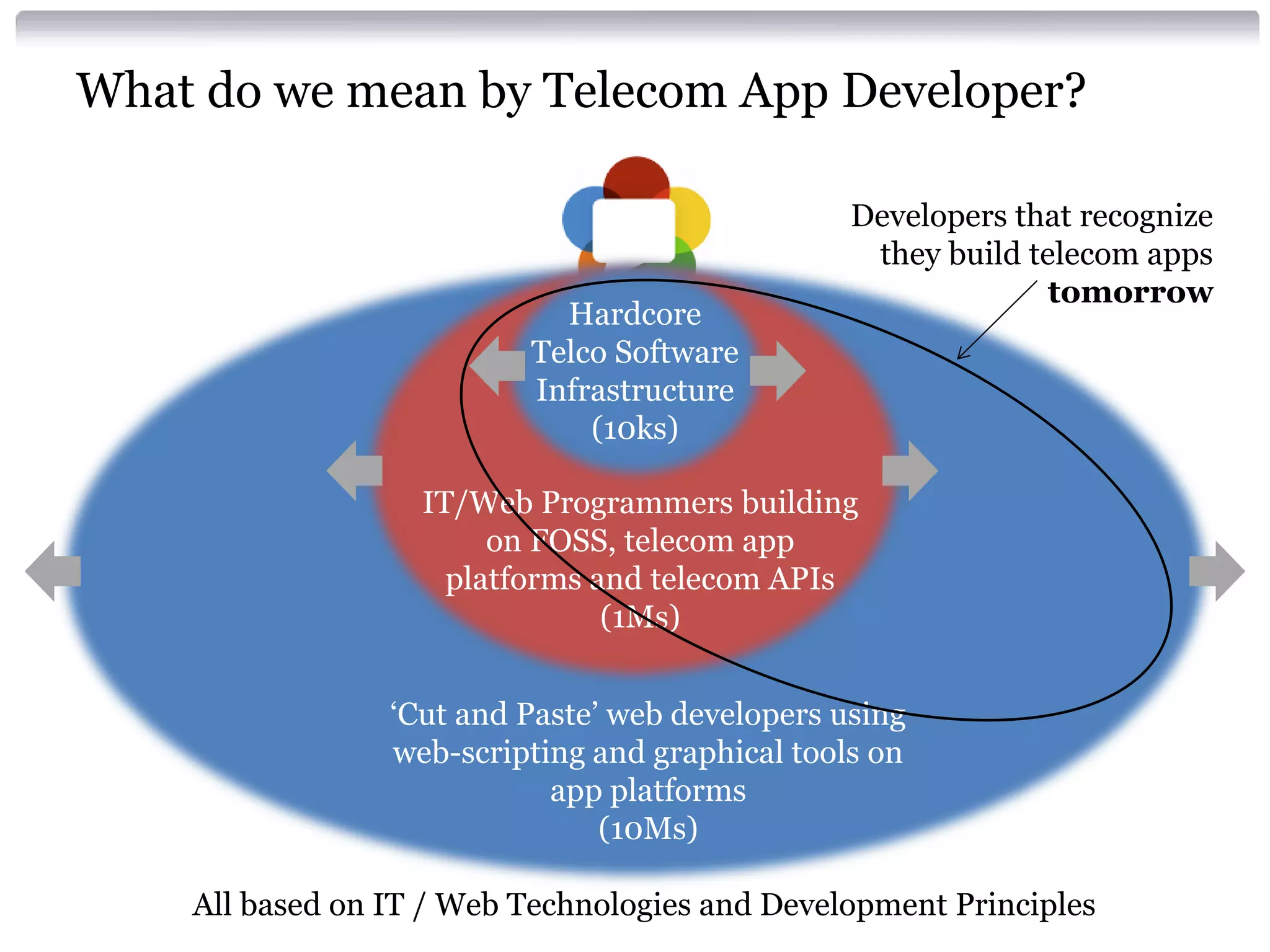
What do we mean by Telecom App Developer?

Hardcore
Telco Software
Infrastructure
(10ks)

Developers that recognize
they build telecom apps
tomorrow

IT/Web Programmers building
on FOSS, telecom app
platforms and telecom APIs
(1Ms)
‘Cut and Paste’ web developers using
web-scripting and graphical tools on
app platforms
(10Ms)
All based on IT / Web Technologies and Development Principles
No Gatekeeper
Focus
Motivation
www.tadsummit.com

The winners and losers in the move to the Real-Time Cloud Communications

  • 1.
    The Winners Losers in the moveto Real-Time Cloud Communications
  • 2.
    Structure • • • • • • • 2 The Facts Why dowe need APIs? Why all the big numbers? Mapping the Cloud Communications API landscape Where to Focus? Where is the Telecom Application Developer Ecosystems going? Who are the winners and losers? © 2010 Alan Quayle Business and Service Development
  • 3.
    No developed markettelco has successfully engaged mobile application developers with Telecom APIs
  • 4.
    BUT Telecom API successeshave come from using APIs internally
  • 5.
    AND Telecom API successeshave come from using APIs with existing partners
  • 6.
    APIs reduce businessfriction. This means the value is not ‘in the API’ it’s in the service or data delivered through the API.
  • 7.
    Mobile Application Developers ONLYcare about direct access to a large engaged customer base that is prepared to pay. Apple and Android fulfill this need, Telcos are IRRELEVANT
  • 8.
    Revenue This is theMost Important Slide in the Pack Internal Telco Developers Partner Developers Telecom App Developers Mobile App Developers Long Tail Developers Product
  • 9.
    What do wemean by Telecom App Developer? Developers that recognize they build telecom apps today Hardcore Telco Software Infrastructure (10ks) IT/Web Programmers building on FOSS, telecom app platforms and telecom APIs (1Ms) ‘Cut and Paste’ web developers using web-scripting and graphical tools on app platforms (10Ms) All based on IT / Web Technologies and Development Principles
  • 10.
    What do wemean by Telecom App Developer? Hardcore Telco Software Infrastructure (10ks) Developers that recognize they build telecom apps tomorrow IT/Web Programmers building on FOSS, telecom app platforms and telecom APIs (1Ms) ‘Cut and Paste’ web developers using web-scripting and graphical tools on app platforms (10Ms) All based on IT / Web Technologies and Development Principles
  • 11.
    What is anAPI? • http://www.telco.com/api.php?action=remove_friction APIs reduce business friction by making it easy for software systems to work together using existing well understood web technology that any IT person can understand
  • 12.
    Why do weneed Telecom APIs? Why do we need a Web site? 1995 Of course we have a Web site 2000 2005 New distribution Accelerate internal projects Upsell Innovation Why do we need an API? 2010 Device and mobile support Operational efficiency Make churn harder Extend products / services Of course we have an API Increase footprint Partner opportunities Process automation New business Telecoms is the ‘vital spice’ of any successful business ecosystem
  • 13.
    Show me themoney? graphic
  • 14.
    Where’s the Moneyin External APIs? $244B by 2017 $157B by 2018 $18B in 2016 Mobile payments revenue, source BI Intelligence. Includes Apple, Android, Square, Visa Mobile, etc. Total Telecom API revenue, source Mind Commerce. Payment, Communications, Identity, Cloud, etc. Alan Quayle’s view is the revenues will be $18B and dominated by payment and communication service revenues by 2016 Juniper predicts DCB (Direct Carrier Billing) growing from $2.5B in 2012 to $13B in 2017 (this assumes only digital downloads, not goods and services)
  • 15.
    What if aTelco does nothing? Telco becomes the “path of last resort” as apps use “easy and economical” APIs for 90% of comms Easy and Economical 90% Global comms clouds Applications Laggards 10% Telco Customers
  • 16.
    Mapping vendors acrossthe API landscape Informational APIs (e.g. customer profile) Developer Community API Publishers Tropo, Twilio, etc. Developer Portal API Management Transactional APIs e.g. call control API Management (including API Security) Intel Software (Mashery), CA (Layer 7), Apigee API Services Network Gateway Cloud / BOSS Assets IT / Service Assets Network Assets IMS Assets
  • 17.
    Mapping vendors acrossthe API landscape Informational APIs Transactional APIs Developer Community Developer Portal Apigee, Intel (Mashery), Layer 7 (CA), SOA Software, 3Scale, IBM, Open Source API Management API Services Intel (Aepona), Ericsson, Huawei, Oracle, Open Source Network Gateway Cloud / BOSS Assets IT / Service Assets 2600Hz, Aculab, Apidaze, Bandwidth, hSenid Mobile, OnMobile, OpenCloud, Plivo, Restcomm, Solaiemes, TelAPI, Tropo, Twilio, etc. Network Assets IMS Assets
  • 18.
    Where are ExternalTelco APIs going? • External Telecom API Roadmap o Payments: whether to expand beyond digital downloads o Communications: across all VAS not just calls – RCS, messaging, number provision, WebRTC, etc. • Focus on building a businesses around the APIs rather than publish and wishful thinking o Sales, marketing, business development and critically support o Traditional transition from tech-focus to business-focus
  • 19.
  • 20.
    1-3.3% 0-2% Threats to Revenue 5.5to 9% Over the Top Messaging hits SMS growth 3 to 4% Mobile substitution of fixed broadband with LTE 0 to 2% OTT substitution, saturation, competition -5 to -7% Mobile and OTT substitution Mobile Data ($275B) Fixed Data ($275B) Mobile Voice ($615B) Fixed Voice ($325B) 3-6% Regulated Services ($1.5T) + Unregulated Services ($650B) Total Telecoms Services ($2.15T) = Sources: operator averages across developed and developing markets, supplier estimates, Alan Quayle There’s just 2 things we need to focus on
  • 21.
    Make Telecoms anEssential Spice for every Business Recipe
  • 22.
  • 23.
    Revenue Telecom Application DeveloperEcosystem Internal Telco Developers Partner Developers Telecom App Developers Mobile App Developers Long Tail Developers Product
  • 24.
    What do wemean by Telecom App Developer? Hardcore Telco Software Infrastructure (10ks) Developers that recognize they build telecom apps tomorrow IT/Web Programmers building on FOSS, telecom app platforms and telecom APIs (1Ms) ‘Cut and Paste’ web developers using web-scripting and graphical tools on app platforms (10Ms) All based on IT / Web Technologies and Development Principles
  • 25.
  • 26.