The Truth About Comfort
Eating
Comfort eating is cited as being an
issue lying behind somebody’s
weight problem.
However, it’s important to be aware
as to exactly what comfort eating
is and what it isn’t. If comfort eating
is a problem for you, then being
aware of what’s going on will help
you have power over it and feel
more in control.
From the dawn of history, food and
good times have been linked.
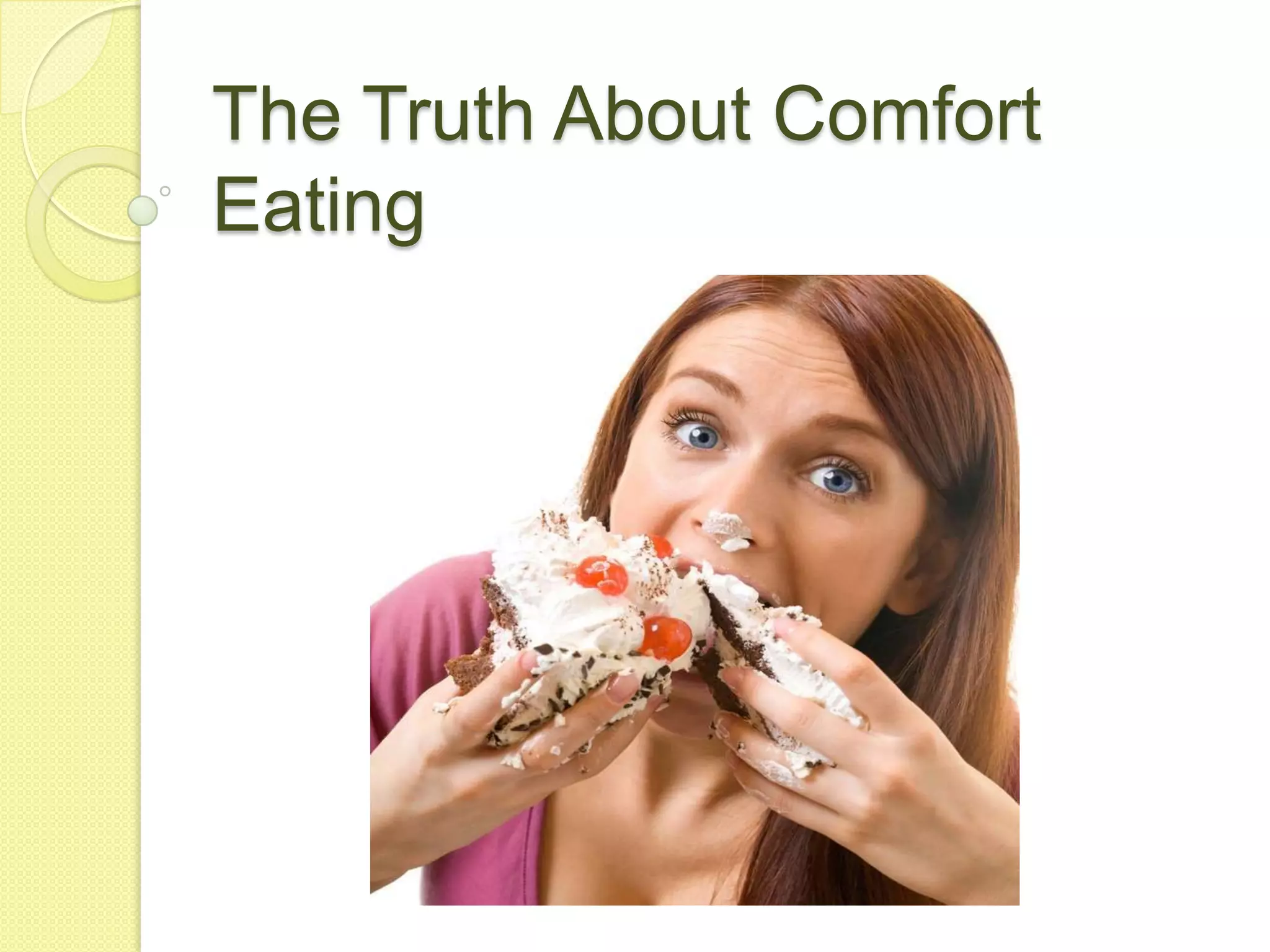
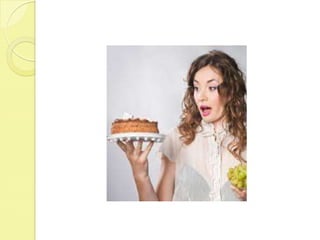
It’s not comfort eating to enjoy
eating a bit of birthday cake at your
friend’s party, even though eating
the cake will be associated with
feeling happy and will be part of the
general fun of the celebration.
The problem here comes when you
try to capture the feeling associated
with a party by eating party food
even when you’re not celebrating
anything – that is comfort eating.
There is also a physical side to
the link between food and
emotions.
When we are low on blood sugar
and hungry, we tend to feel pretty
terrible. It varies from person to
person..
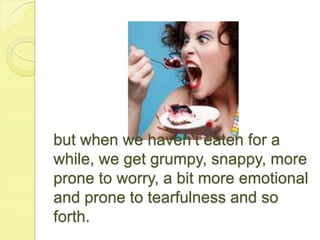
but when we haven’t eaten for a
while, we get grumpy, snappy, more
prone to worry, a bit more emotional
and prone to tearfulness and so
forth.
Where comfort eating comes in is
when we use food as a way to help
us feel better when we feel
tired, irritable, stressed or upset for
some other reason, i.e. when
hunger isn’t the cause of our bad
temper and anxiety.
Our childhood experiences
and things that happened in the
past can also have an effect on
the way we view food and the way
it makes us feel.
Often, this is one of the things that
will be explored in a hypnotherapy
session for weight loss.
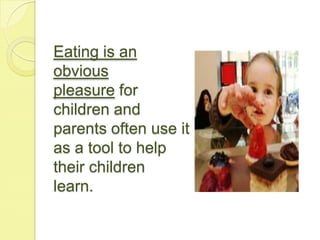
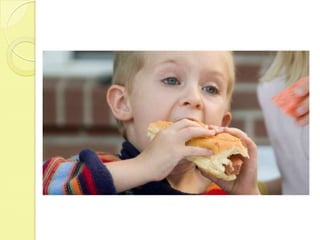
Eating is an
obvious
pleasure for
children and
parents often use it
as a tool to help
their children
learn.
Food can also be used by parents
as a comforting tool and as a way of
showing love.
This combination of giving food as
well as comfort can continue long
past infancy, and a parent can give
a hurt or sad child food (which
usually tends to be sweet – I’ve
never heard of a parent giving a
crying child cheese) along with the
cuddle to “cheer you up and make
you feel better”.
This behaviour may linger when we
are adults, and we may seek out
sweets as a comfort if we can’t get
the cuddles.
If you think you are suffering from
this bad behaviour, ask help now…
Learn more about the downside of
comfort eating at
http://positivetranceformations.com.
au

The truth about comfort eating

  • 1.
    The Truth AboutComfort Eating
  • 2.
    Comfort eating iscited as being an issue lying behind somebody’s weight problem.
  • 3.
    However, it’s importantto be aware as to exactly what comfort eating is and what it isn’t. If comfort eating is a problem for you, then being aware of what’s going on will help you have power over it and feel more in control.
  • 5.
    From the dawnof history, food and good times have been linked.
  • 6.
    It’s not comforteating to enjoy eating a bit of birthday cake at your friend’s party, even though eating the cake will be associated with feeling happy and will be part of the general fun of the celebration.
  • 8.
    The problem herecomes when you try to capture the feeling associated with a party by eating party food even when you’re not celebrating anything – that is comfort eating.
  • 9.
    There is alsoa physical side to the link between food and emotions.
  • 11.
    When we arelow on blood sugar and hungry, we tend to feel pretty terrible. It varies from person to person..
  • 12.
    but when wehaven’t eaten for a while, we get grumpy, snappy, more prone to worry, a bit more emotional and prone to tearfulness and so forth.
  • 13.
    Where comfort eatingcomes in is when we use food as a way to help us feel better when we feel tired, irritable, stressed or upset for some other reason, i.e. when hunger isn’t the cause of our bad temper and anxiety.
  • 14.
    Our childhood experiences andthings that happened in the past can also have an effect on the way we view food and the way it makes us feel.
  • 15.
    Often, this isone of the things that will be explored in a hypnotherapy session for weight loss.
  • 16.
    Eating is an obvious pleasurefor children and parents often use it as a tool to help their children learn.
  • 17.
    Food can alsobe used by parents as a comforting tool and as a way of showing love.
  • 18.
    This combination ofgiving food as well as comfort can continue long past infancy, and a parent can give a hurt or sad child food (which usually tends to be sweet – I’ve never heard of a parent giving a crying child cheese) along with the cuddle to “cheer you up and make you feel better”.
  • 19.
    This behaviour maylinger when we are adults, and we may seek out sweets as a comfort if we can’t get the cuddles.
  • 21.
    If you thinkyou are suffering from this bad behaviour, ask help now…
  • 22.
    Learn more aboutthe downside of comfort eating at http://positivetranceformations.com. au