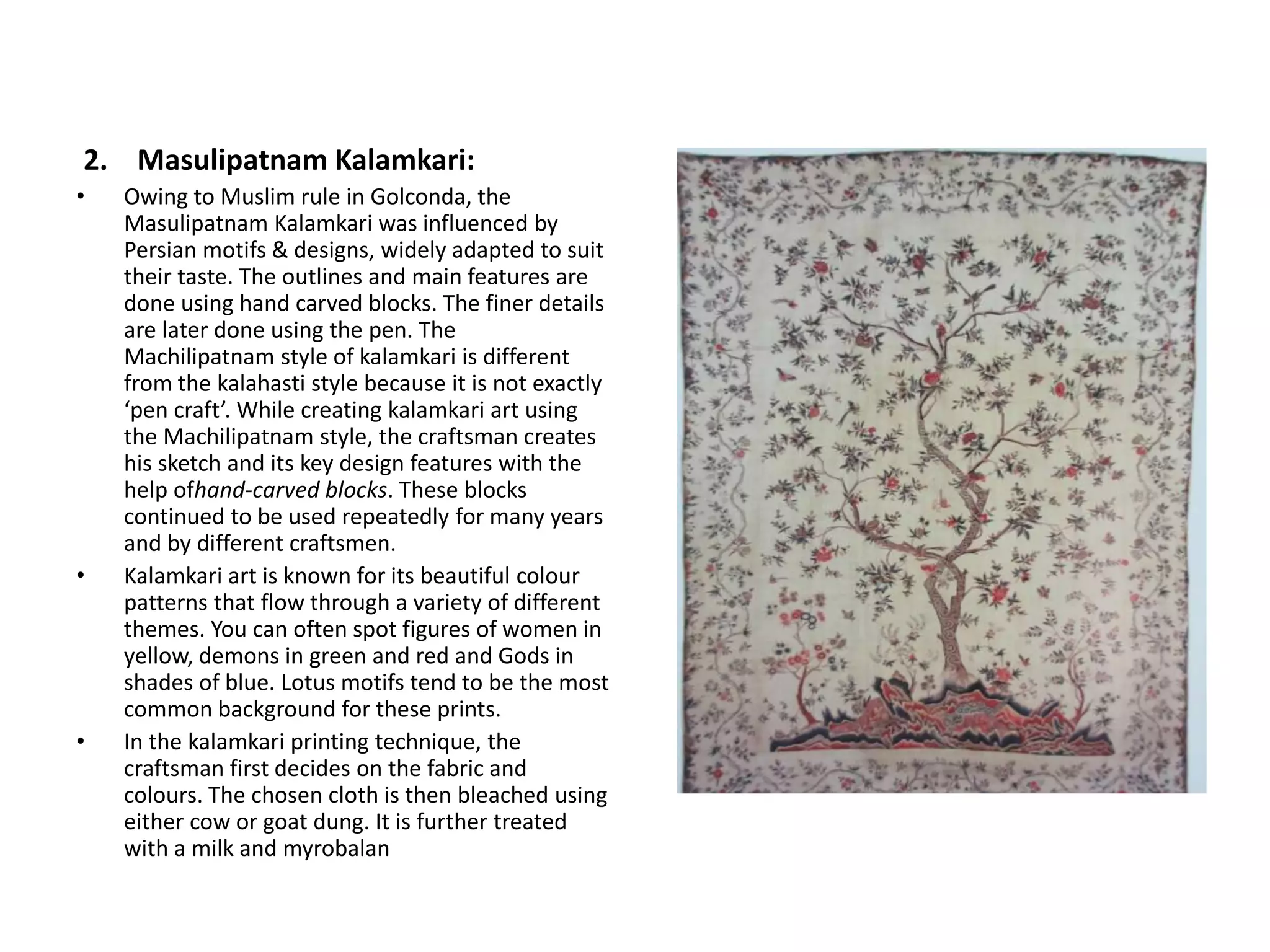
The traditional Kalamkari art form involves hand painting or block printing cotton fabrics with natural dyes. It originated in India as early as the 10th century through Persian and Indian trade relationships. Two main styles developed - the Srikalahasti style from Andhra Pradesh focuses on Hindu mythology themes using freehand drawing, while the Machilipatnam style from Golconda was influenced by Persian motifs using carved blocks for outlines followed by freehand details. The traditional multi-stage process involves preparing, bleaching, and repeatedly dyeing and washing the fabric with plant-based dyes to create designs in different colors.