“ The Singularity:  Toward a Post-Human Reality" Talk to UCSD’s Sixth College Honor’s Course on Kurzweil’s  The Singularity is Near   La Jolla, CA February 13, 2006 Dr. Larry Smarr Director, California Institute for Telecommunications and Information Technology Harry E. Gruber Professor,  Dept. of Computer Science and Engineering Jacobs School of Engineering, UCSD
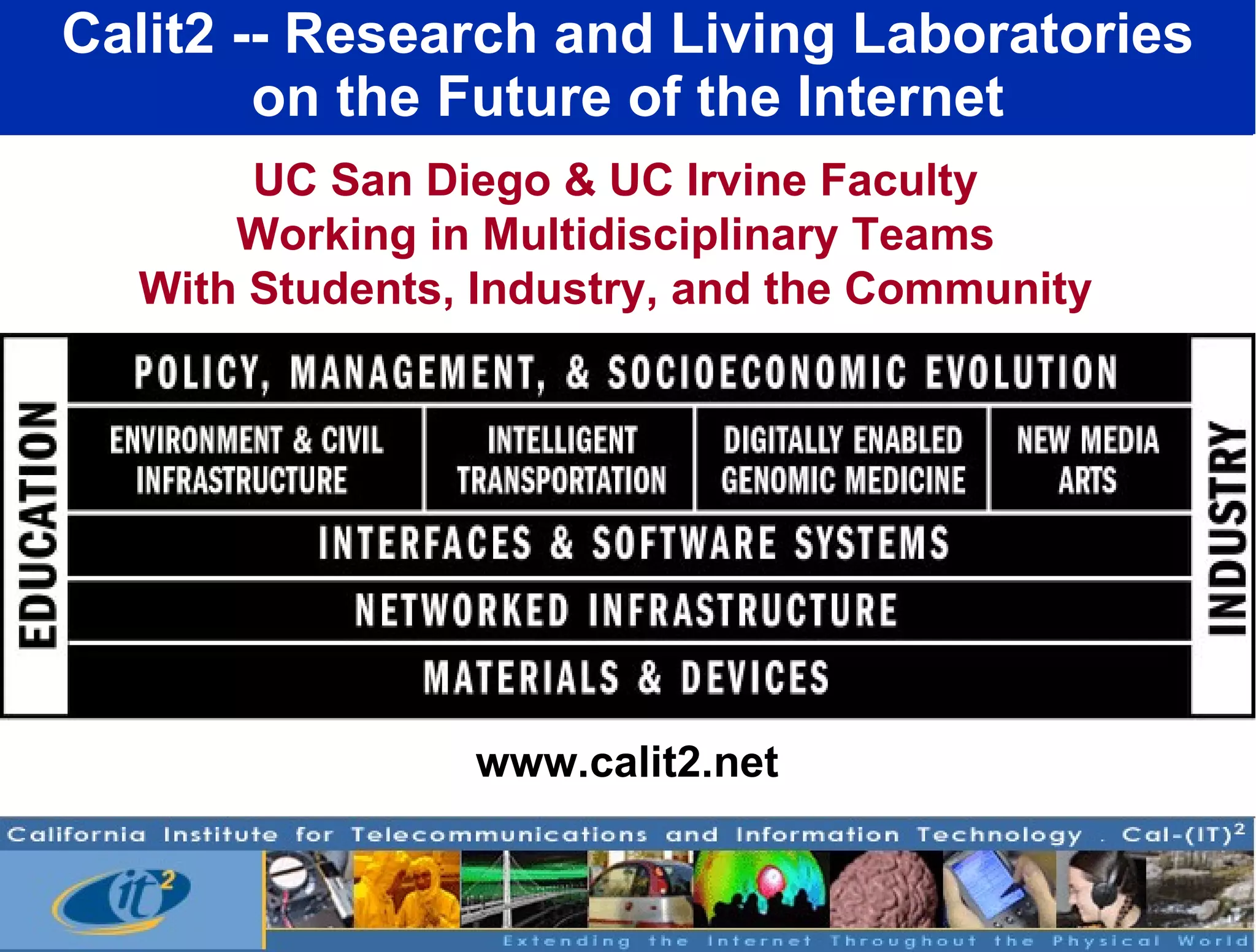
Calit2 -- Research and Living Laboratories on the Future of the Internet www.calit2.net UC San Diego & UC Irvine Faculty Working in Multidisciplinary Teams With Students, Industry, and the Community
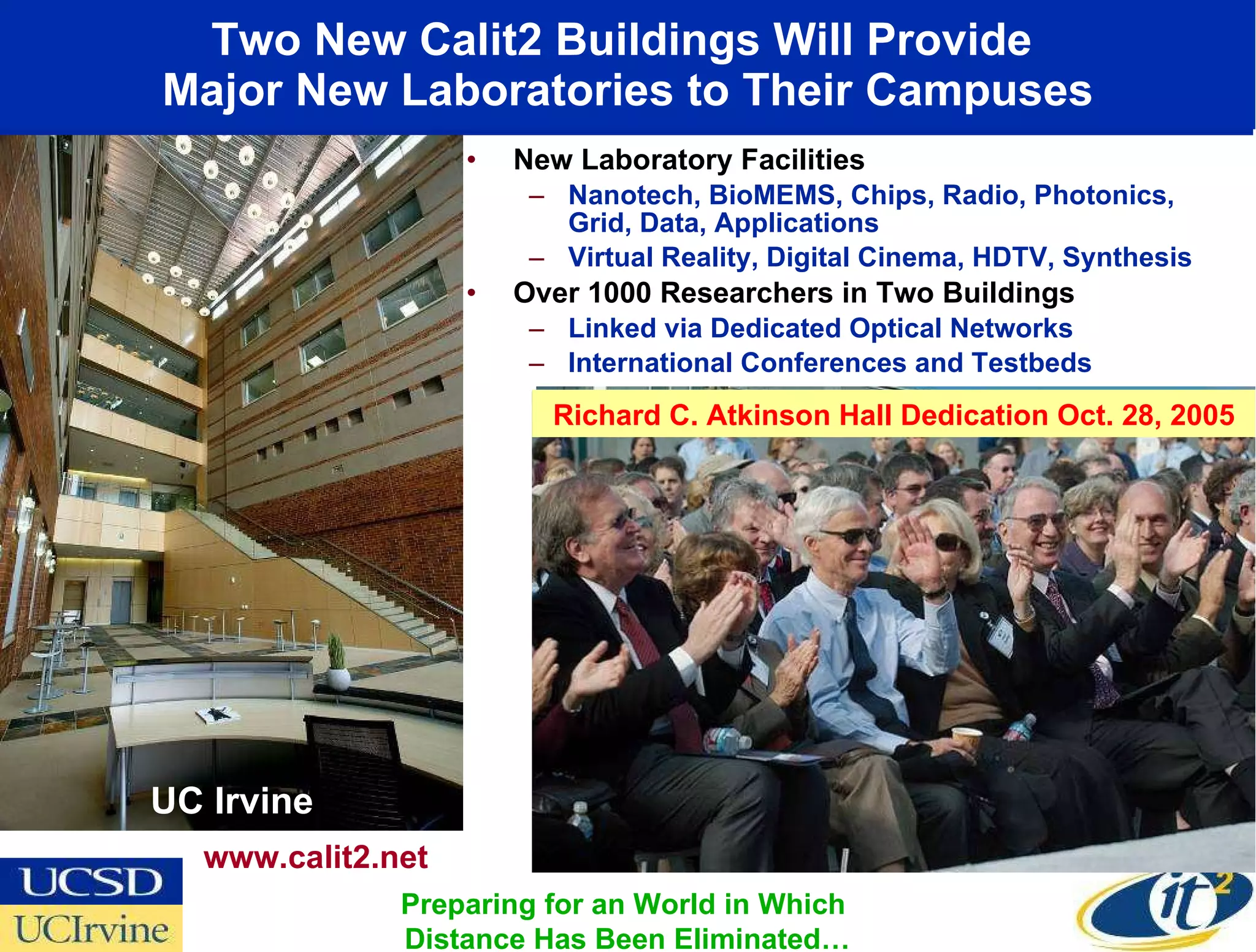
Two New Calit2 Buildings Will Provide  Major New Laboratories to Their Campuses New Laboratory Facilities Nanotech, BioMEMS, Chips, Radio, Photonics, Grid, Data, Applications Virtual Reality, Digital Cinema, HDTV, Synthesis Over 1000 Researchers in Two Buildings Linked via Dedicated Optical Networks International Conferences and Testbeds UC Irvine www.calit2.net Preparing for an World in Which  Distance Has Been Eliminated… UC San Diego Richard C. Atkinson Hall Dedication Oct. 28, 2005
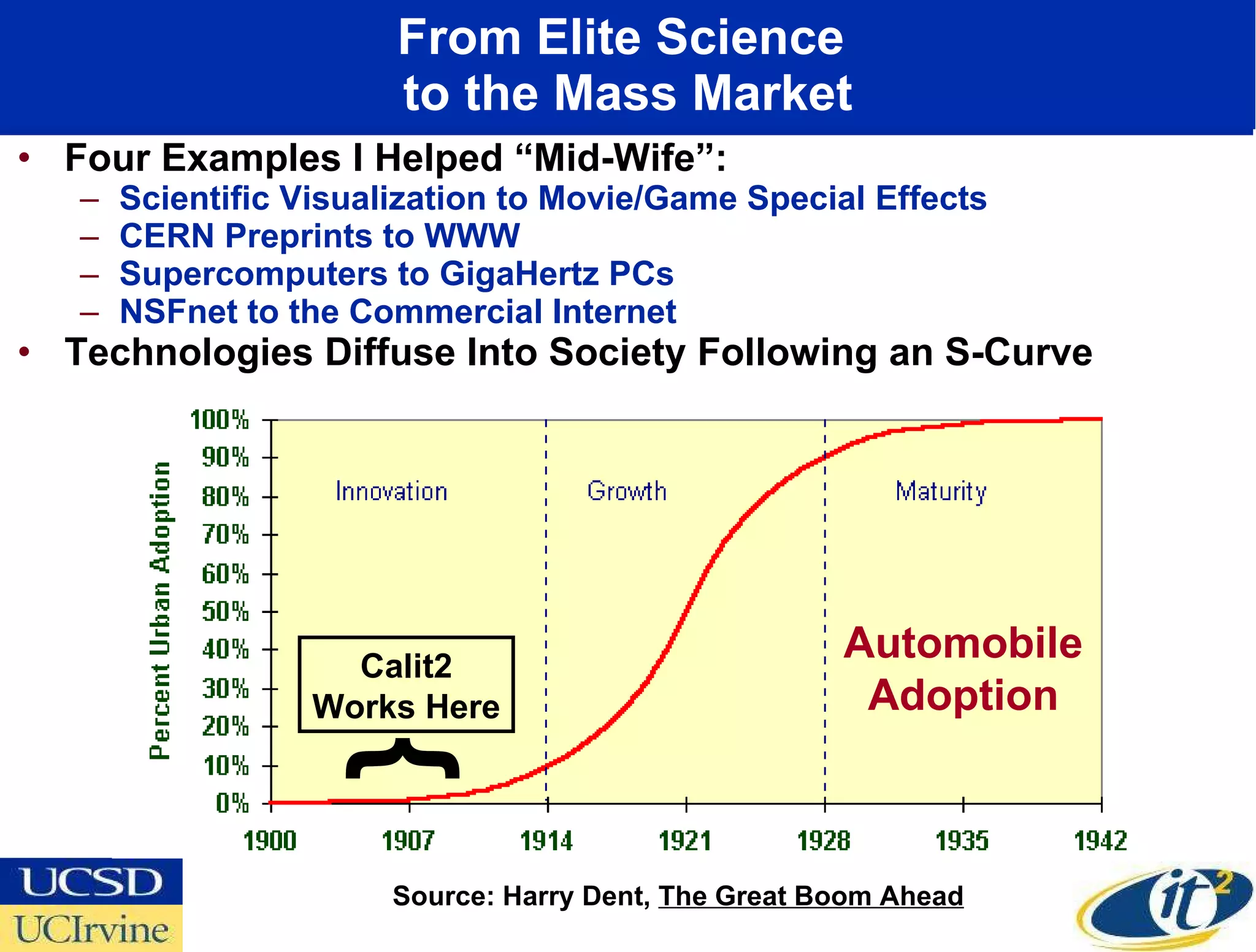
From Elite Science  to the Mass Market Four Examples I Helped “Mid-Wife”: Scientific Visualization to Movie/Game Special Effects CERN Preprints to WWW Supercomputers to GigaHertz PCs NSFnet to the Commercial Internet Technologies Diffuse Into Society Following an S-Curve Automobile  Adoption  Source: Harry Dent,  The Great Boom Ahead Calit2 Works Here {
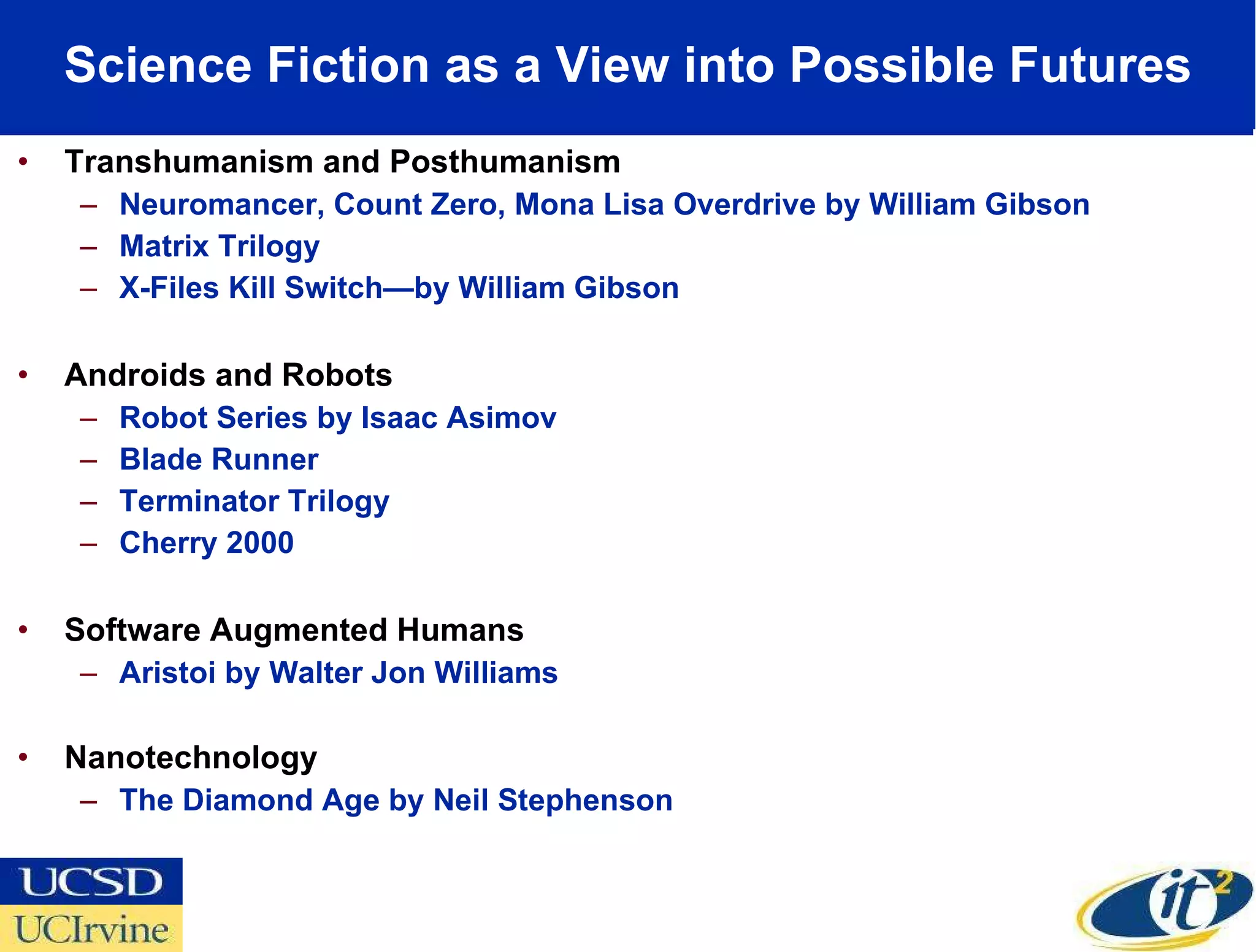
Science Fiction as a View into Possible Futures Transhumanism and Posthumanism Neuromancer, Count Zero, Mona Lisa Overdrive by William Gibson Matrix Trilogy X-Files Kill Switch—by William Gibson Androids and Robots Robot Series by Isaac Asimov Blade Runner  Terminator Trilogy Cherry 2000 Software Augmented Humans Aristoi by Walter Jon Williams  Nanotechnology The Diamond Age by Neil Stephenson
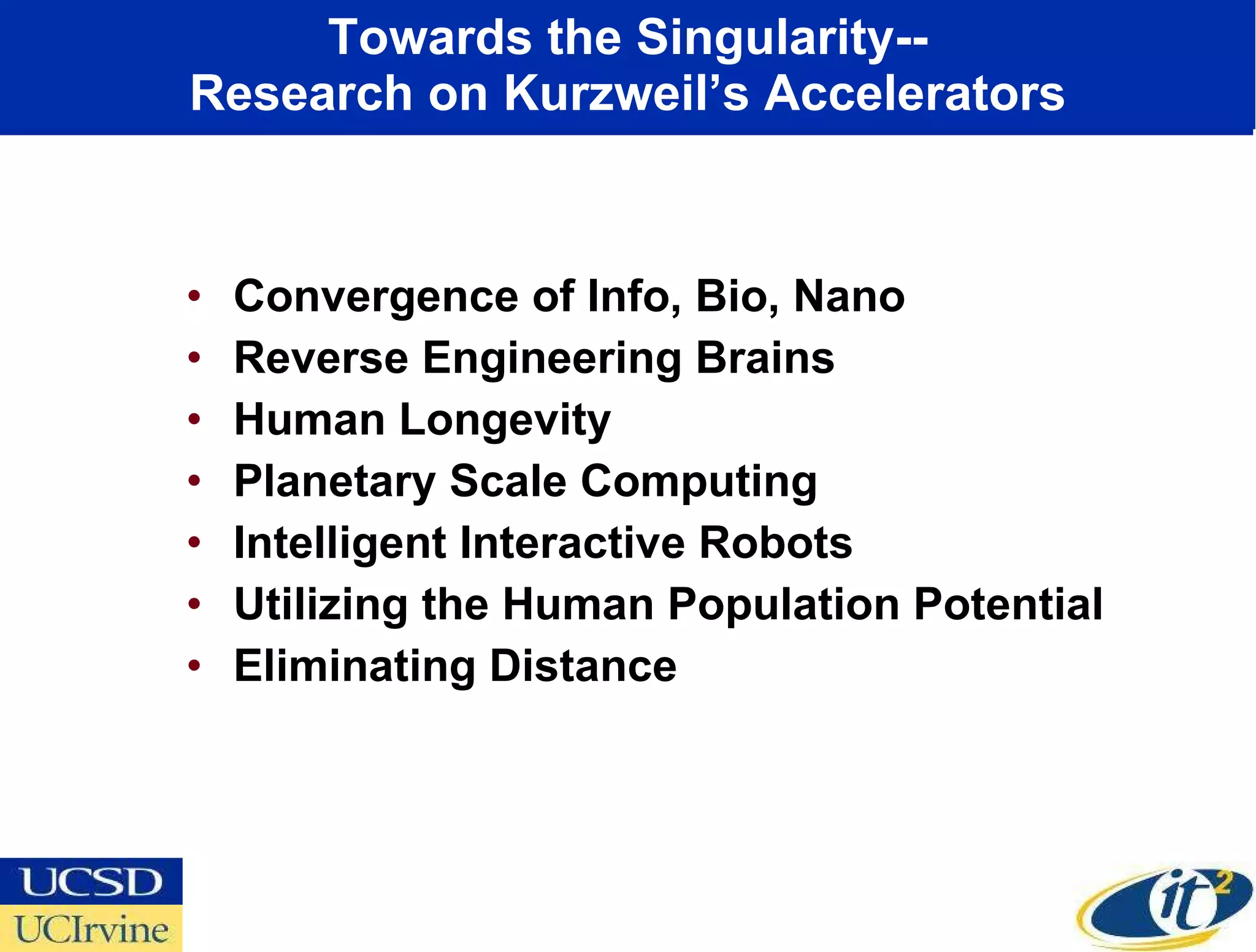
Towards the Singularity-- Research on Kurzweil’s Accelerators Convergence of Info, Bio, Nano Reverse Engineering Brains Human Longevity Planetary Scale Computing Intelligent Interactive Robots Utilizing the Human Population Potential Eliminating Distance
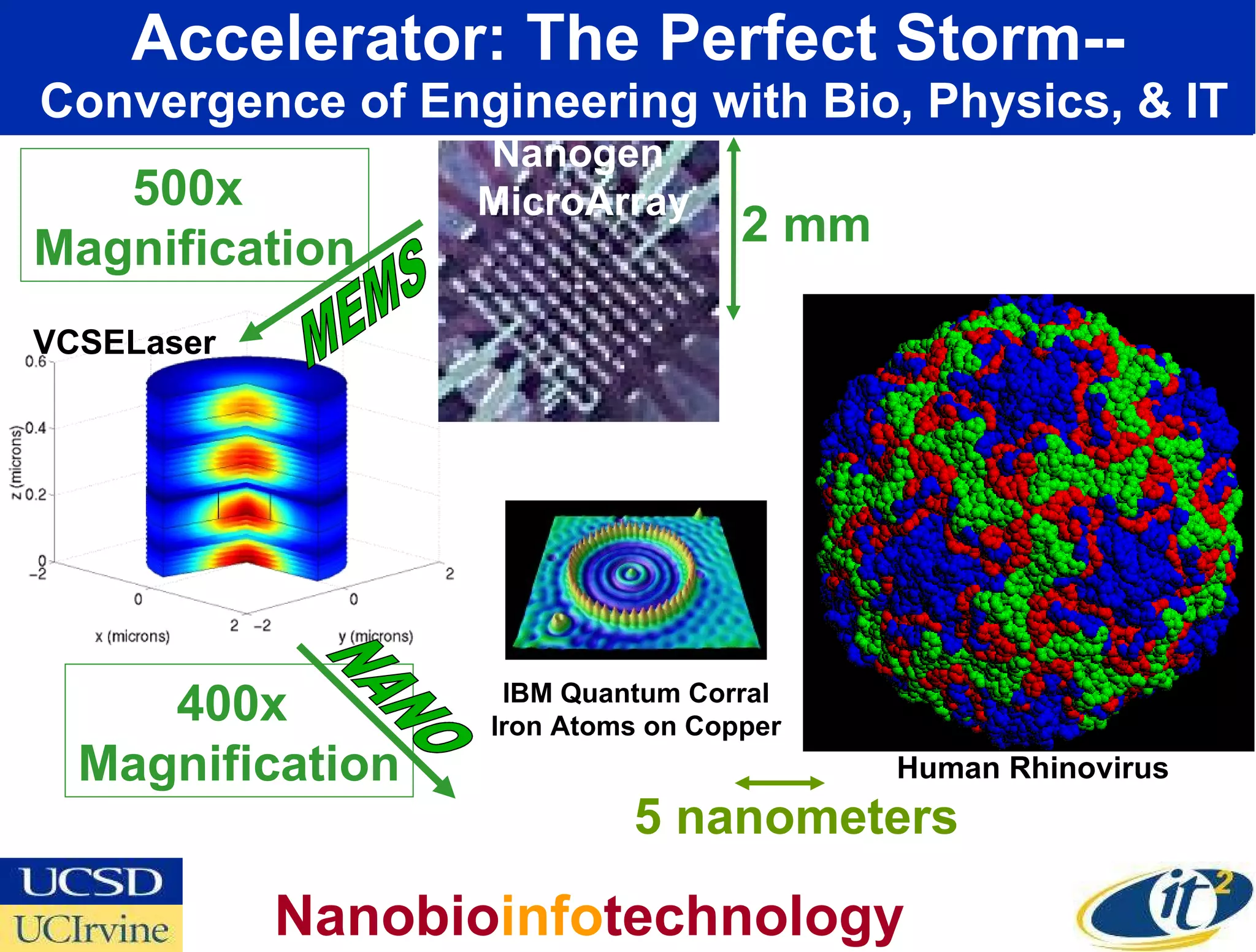
Accelerator: The Perfect Storm--   Convergence of Engineering with Bio, Physics, & IT Nanobio info technology 5 nanometers Human Rhinovirus IBM Quantum Corral Iron Atoms on Copper VCSELaser 2 mm Nanogen  MicroArray 500x  Magnification MEMS 400x  Magnification NANO
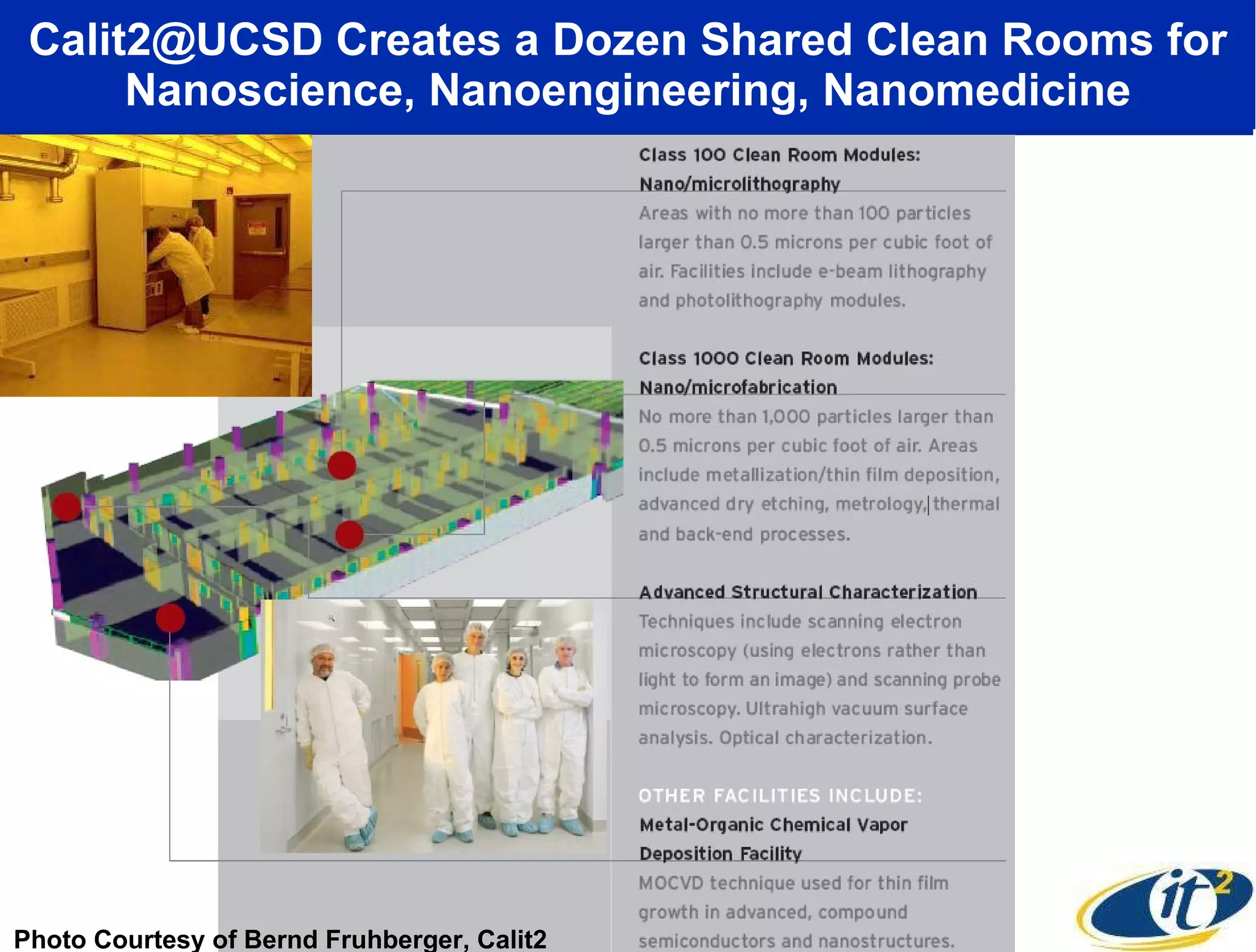
Calit2@UCSD Creates a Dozen Shared Clean Rooms for Nanoscience, Nanoengineering, Nanomedicine Photo Courtesy of Bernd Fruhberger, Calit2
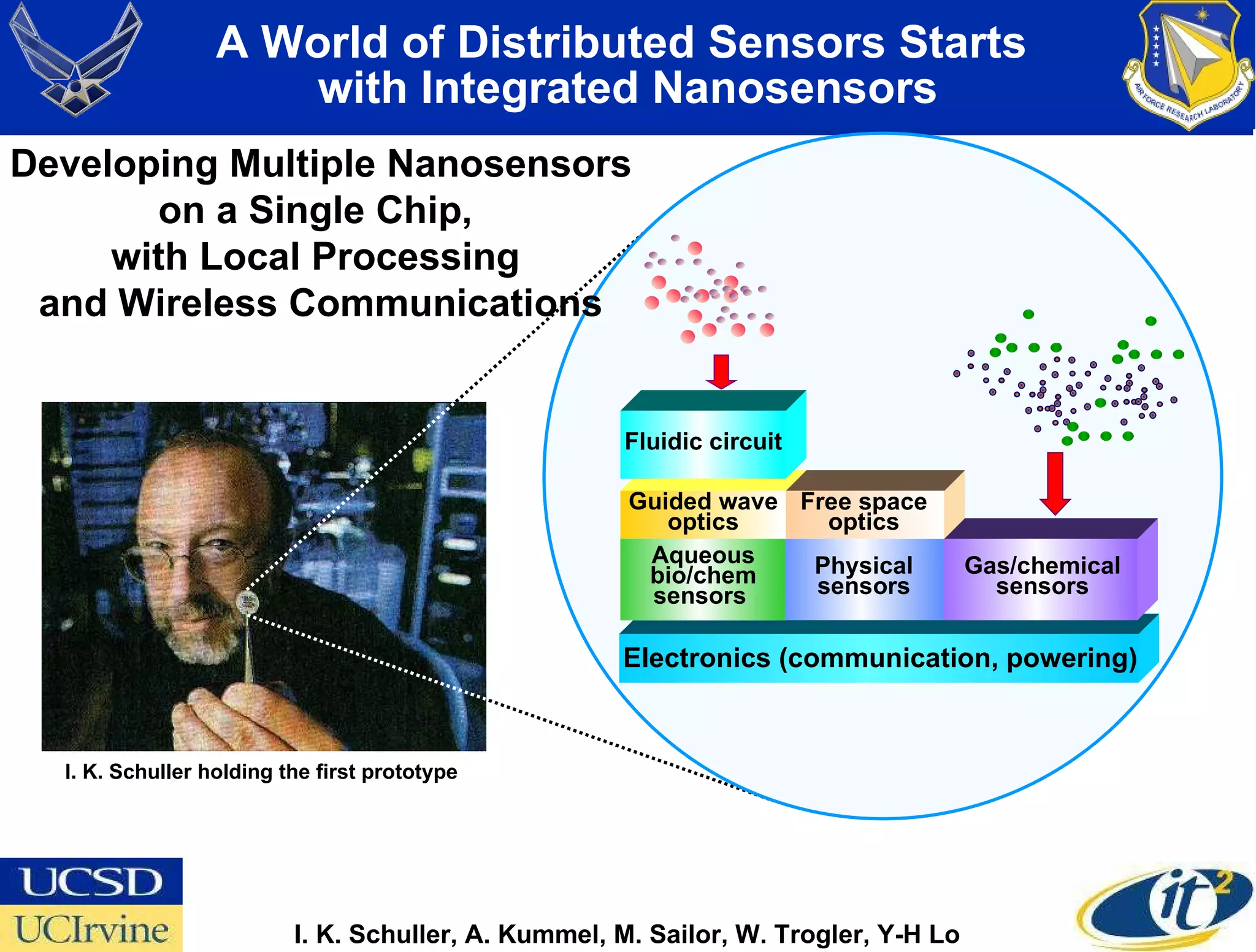
A World of Distributed Sensors Starts  with Integrated Nanosensors I. K. Schuller holding the first prototype  I. K. Schuller, A. Kummel, M. Sailor, W. Trogler, Y-H Lo Developing Multiple Nanosensors on a Single Chip,  with Local Processing  and Wireless Communications Guided wave optics Aqueous bio/chem sensors   Fluidic circuit Free space optics Physical sensors Gas/chemical sensors Electronics (communication, powering)
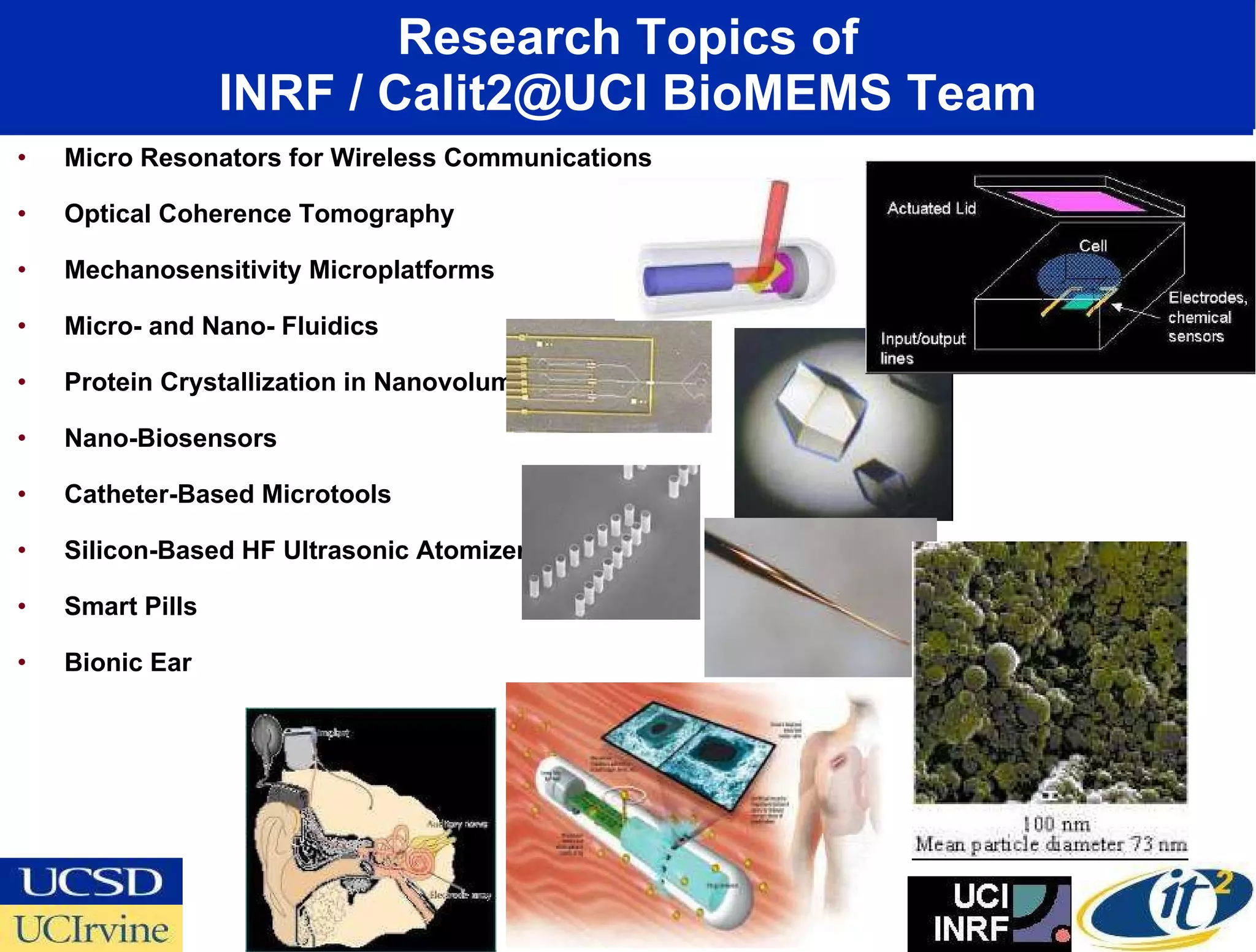
Research Topics of INRF / Calit2@UCI BioMEMS Team Micro Resonators for Wireless Communications Optical Coherence Tomography  Mechanosensitivity Microplatforms Micro- and Nano- Fluidics Protein Crystallization in Nanovolumes Nano-Biosensors Catheter-Based Microtools Silicon-Based HF Ultrasonic Atomizers  Smart Pills Bionic Ear
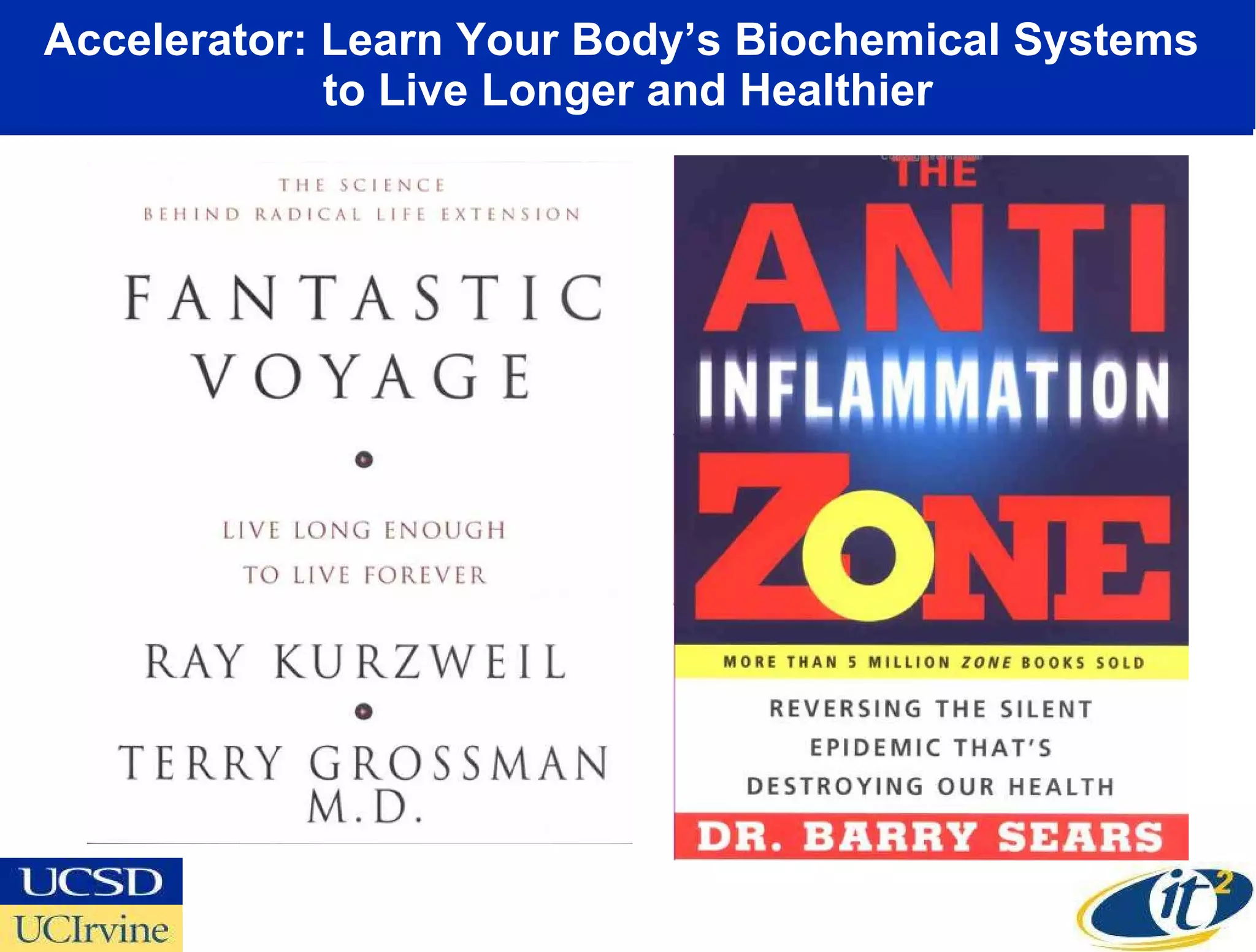
Accelerator: Learn Your Body’s Biochemical Systems  to Live Longer and Healthier
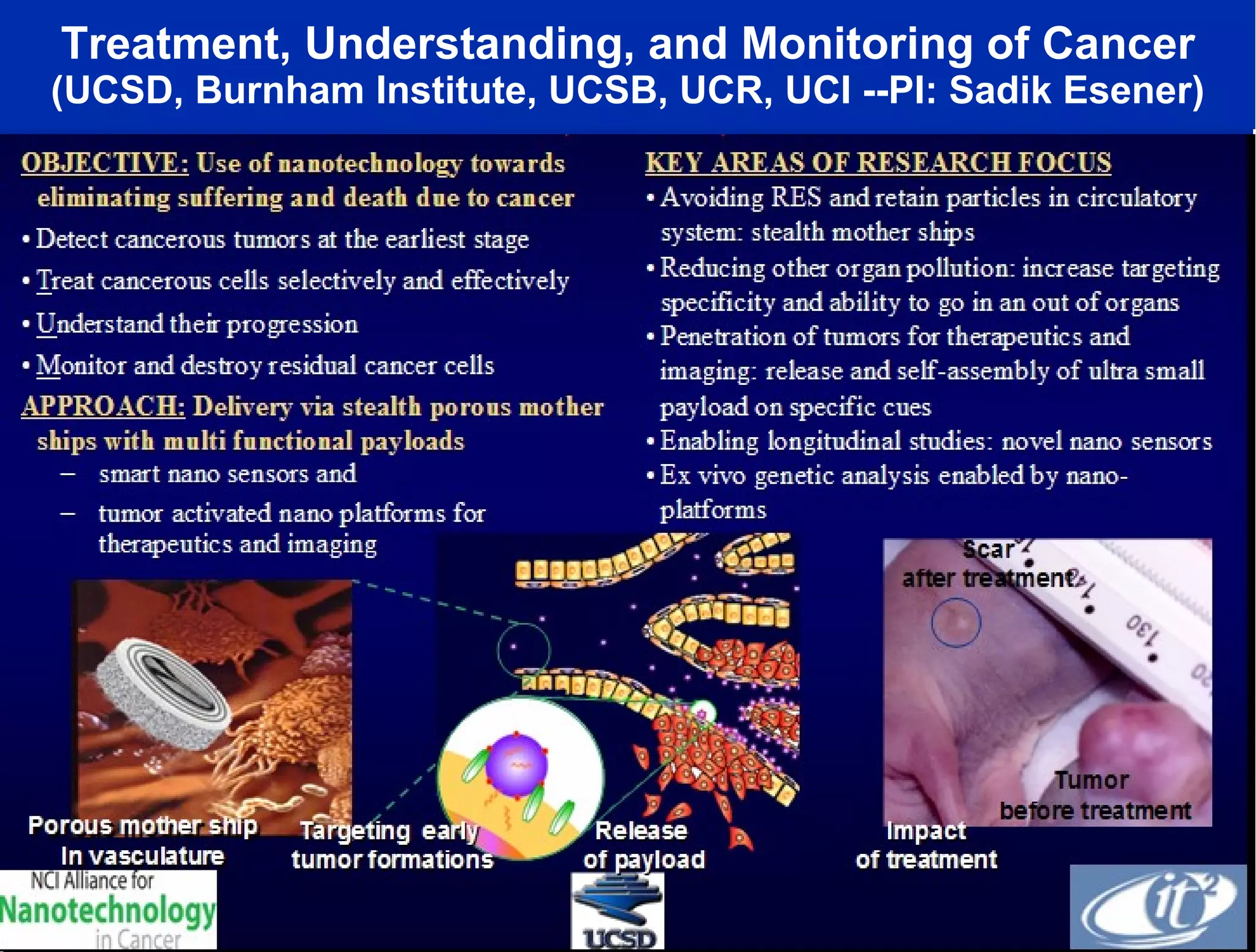
Treatment, Understanding, and Monitoring of Cancer  (UCSD, Burnham Institute, UCSB, UCR, UCI --PI: Sadik Esener)
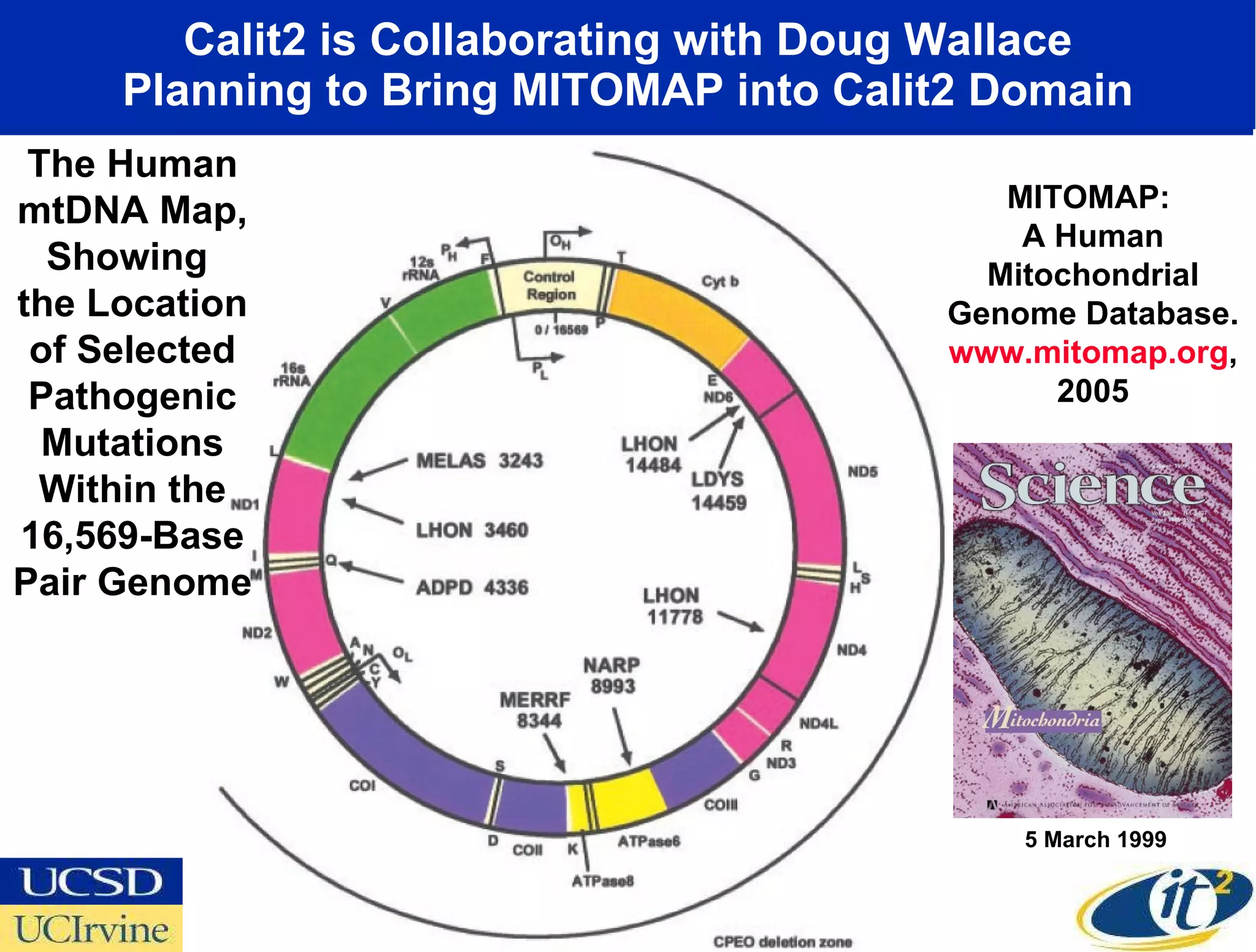
Calit2 is Collaborating with Doug Wallace Planning to Bring MITOMAP into Calit2 Domain The Human mtDNA Map, Showing  the Location of Selected Pathogenic Mutations Within the 16,569-Base Pair Genome MITOMAP:  A Human Mitochondrial Genome Database.  www.mitomap.org , 2005 5 March 1999
For Mitochondrial Diseases It Has Been More Productive   to Classify Patients by Genetic Defect Rather than by Clinical Manifestation Over the past 10 years, mitochondrial defects have been implicated in a wide variety of degenerative diseases, aging, and cancer… The same mtDNA mutation can produce quite different phenotypes,  and different mutations can produce similar phenotypes. … The essential role of mitochondrial oxidative phosphorylation in cellular energy production,  the generation of reactive oxygen species,  and the initiation of apoptosis  has suggested a number of novel mechanisms for mitochondrial pathology. -- Douglas Wallace, Science, Vol. 283, 1482-1488,  5 March 1999
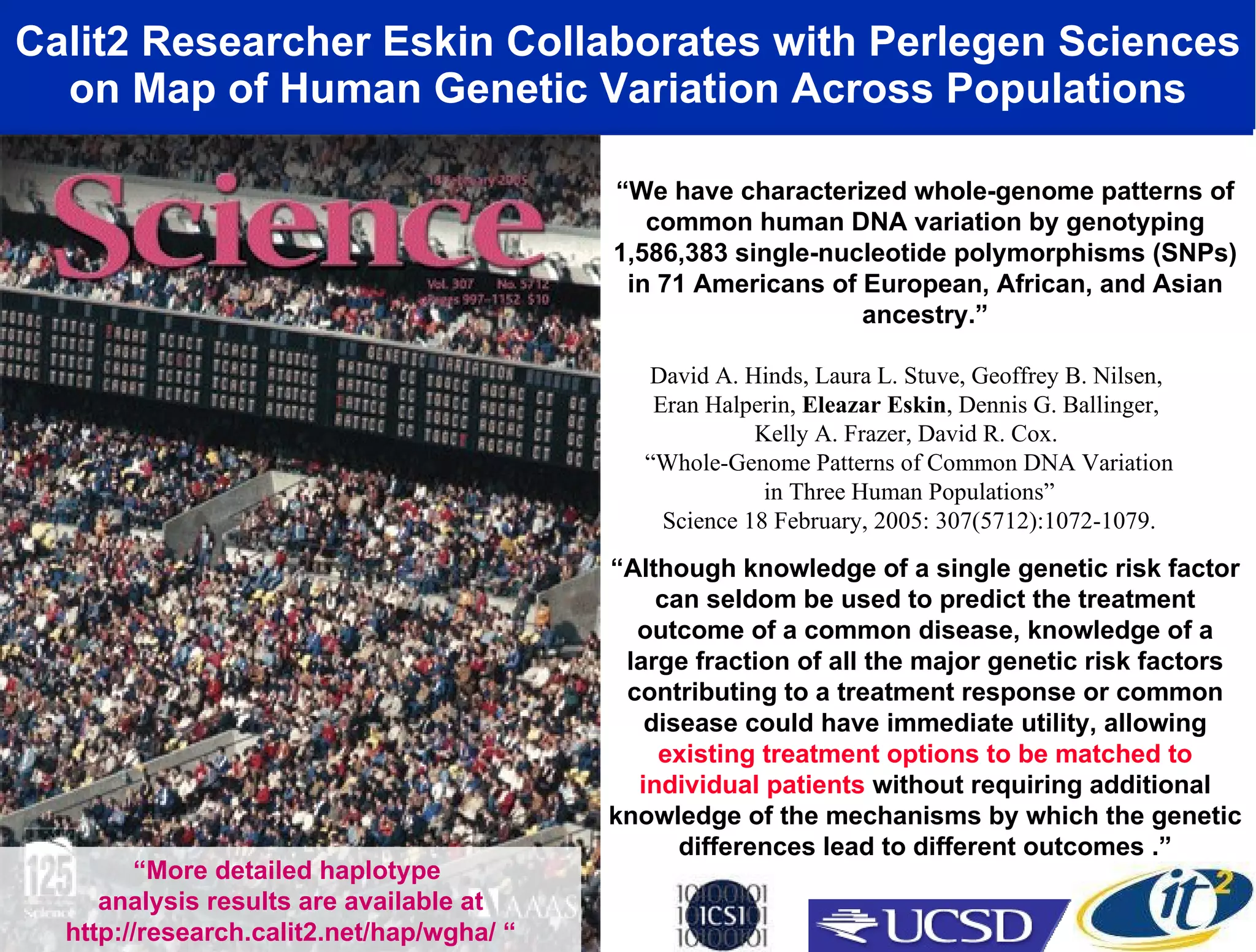
Calit2 Researcher Eskin Collaborates with Perlegen Sciences on Map of Human Genetic Variation Across Populations David A. Hinds, Laura L. Stuve, Geoffrey B. Nilsen,  Eran Halperin,  Eleazar Eskin , Dennis G. Ballinger,  Kelly A. Frazer, David R. Cox.  “ Whole-Genome Patterns of Common DNA Variation in Three Human Populations”  Science 18 February, 2005: 307(5712):1072-1079. “ We have characterized whole-genome patterns of common human DNA variation by genotyping 1,586,383 single-nucleotide polymorphisms (SNPs) in 71 Americans of European, African, and Asian ancestry.” “ Although knowledge of a single genetic risk factor can seldom be used to predict the treatment outcome of a common disease, knowledge of a large fraction of all the major genetic risk factors contributing to a treatment response or common disease could have immediate utility, allowing  existing treatment options to be matched to individual patients  without requiring additional knowledge of the mechanisms by which the genetic differences lead to different outcomes .” “ More detailed haplotype  analysis results are available at http://research.calit2.net/hap/wgha/ “
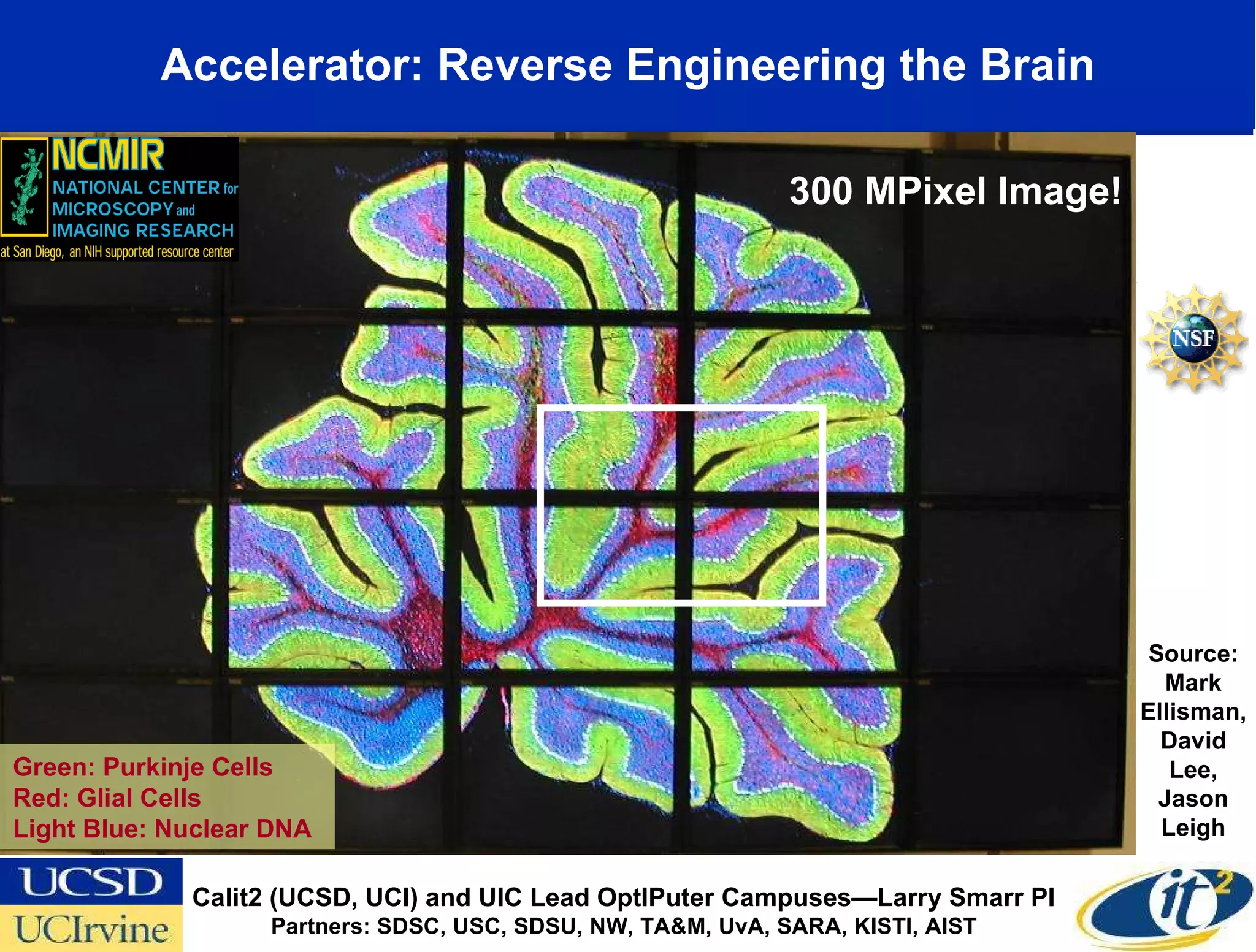
Accelerator: Reverse Engineering the Brain Green: Purkinje Cells Red: Glial Cells Light Blue: Nuclear DNA Source: Mark Ellisman, David Lee, Jason Leigh 300 MPixel Image! Calit2 (UCSD, UCI) and UIC Lead OptIPuter Campuses—Larry Smarr PI Partners: SDSC, USC, SDSU, NW, TA&M, UvA, SARA, KISTI, AIST
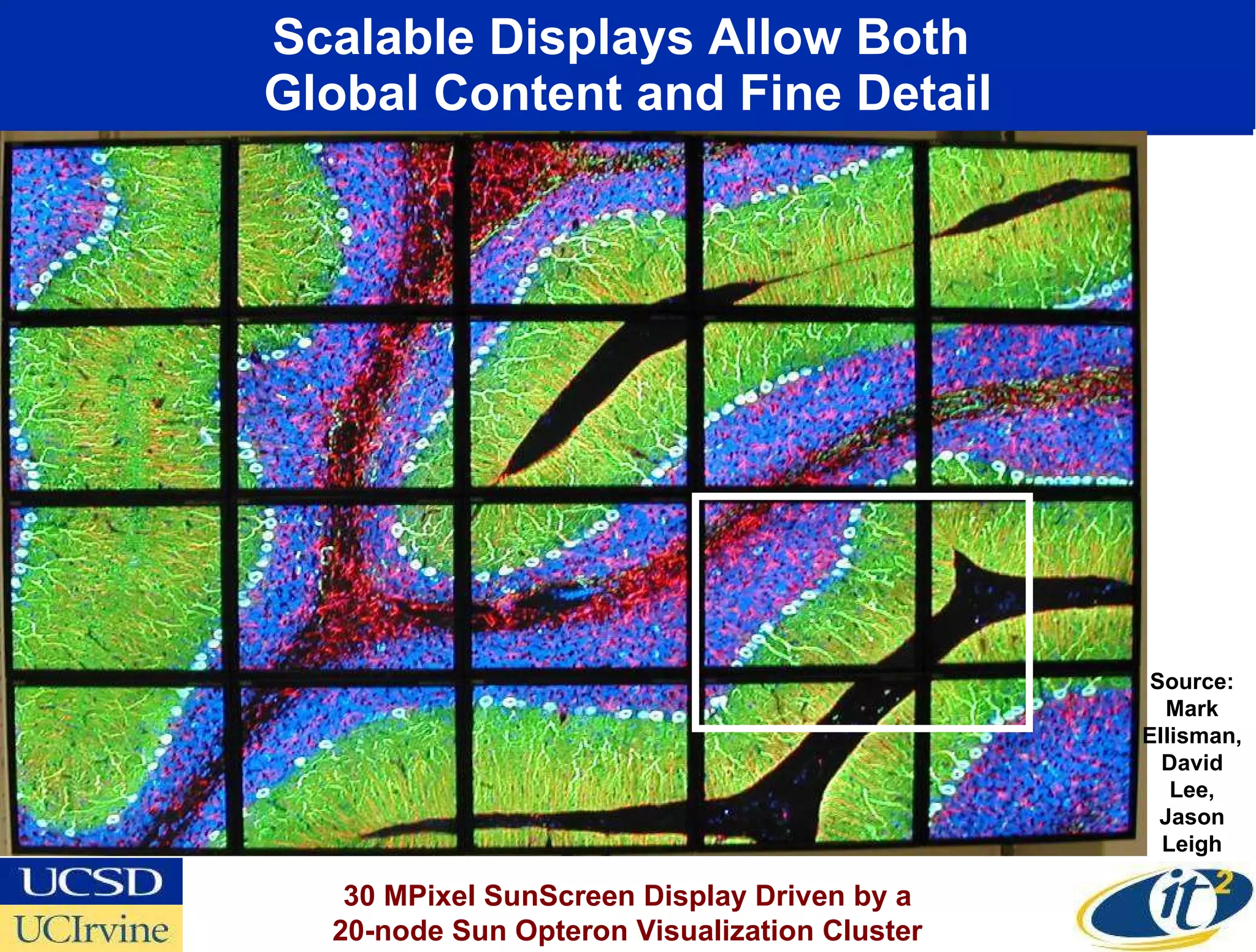
Scalable Displays Allow Both  Global Content and Fine Detail Source: Mark Ellisman, David Lee, Jason Leigh 30 MPixel SunScreen Display Driven by a 20-node Sun Opteron Visualization Cluster
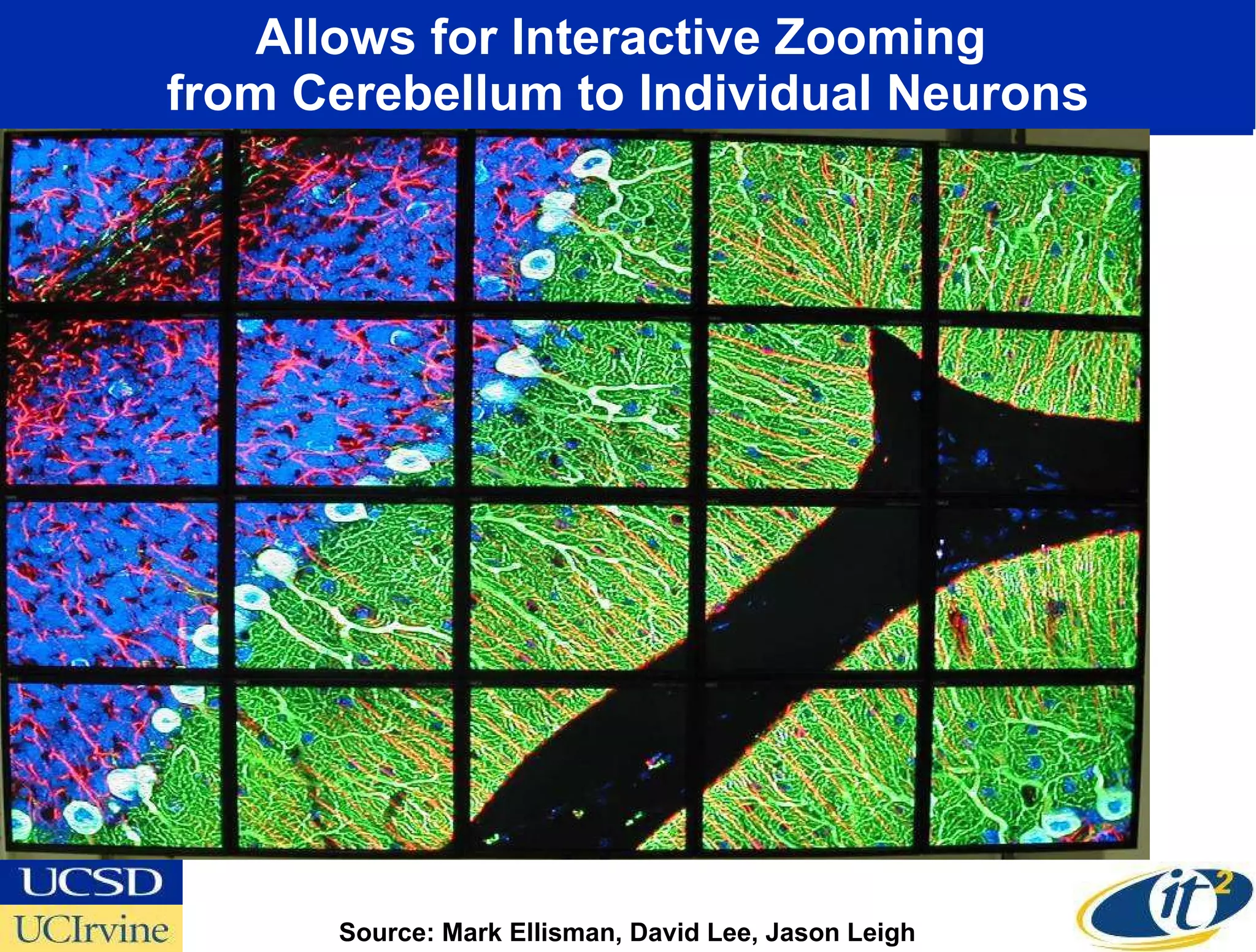
Allows for Interactive Zooming  from Cerebellum to Individual Neurons Source: Mark Ellisman, David Lee, Jason Leigh
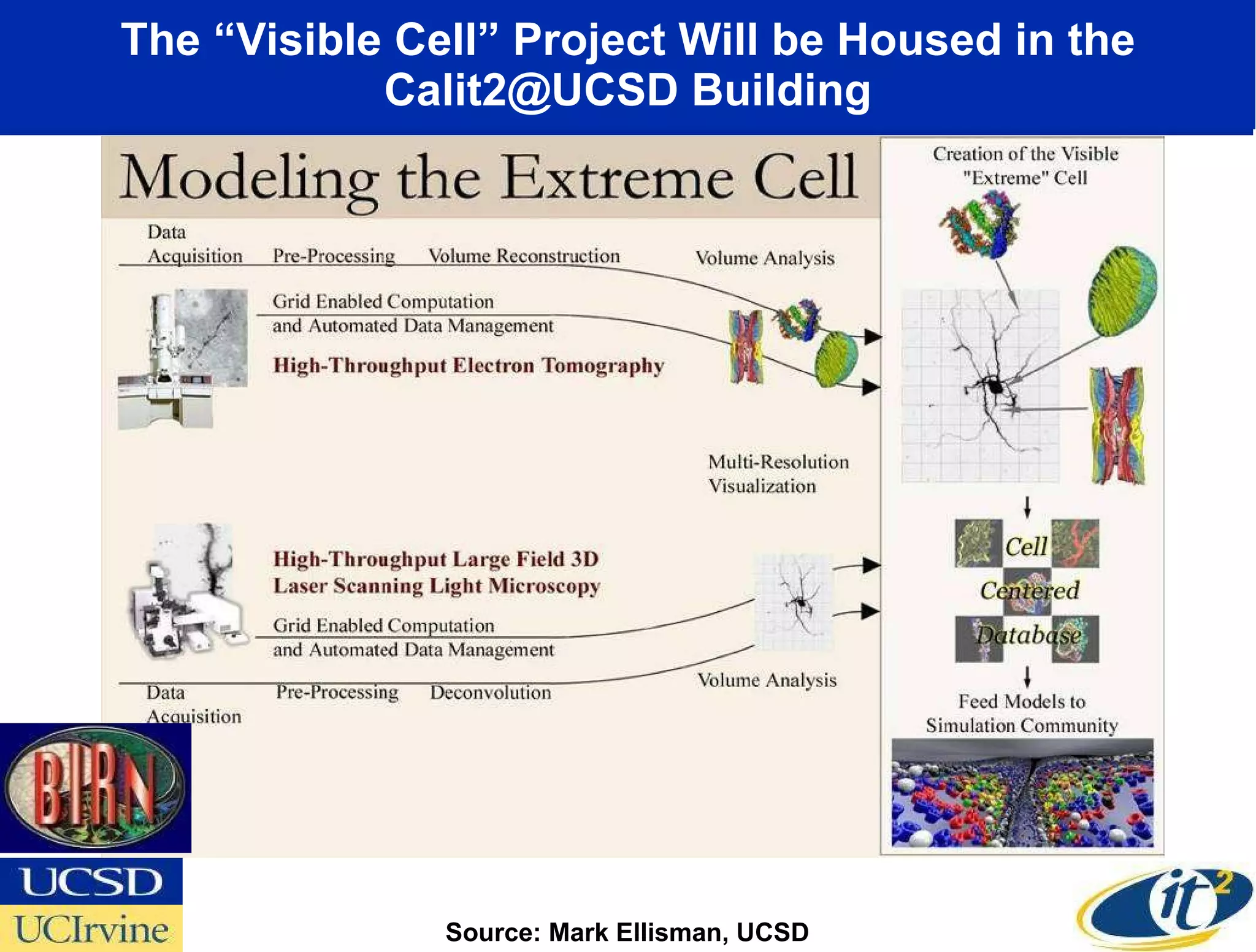
The “Visible Cell” Project Will be Housed in the Calit2@UCSD Building Source: Mark Ellisman, UCSD
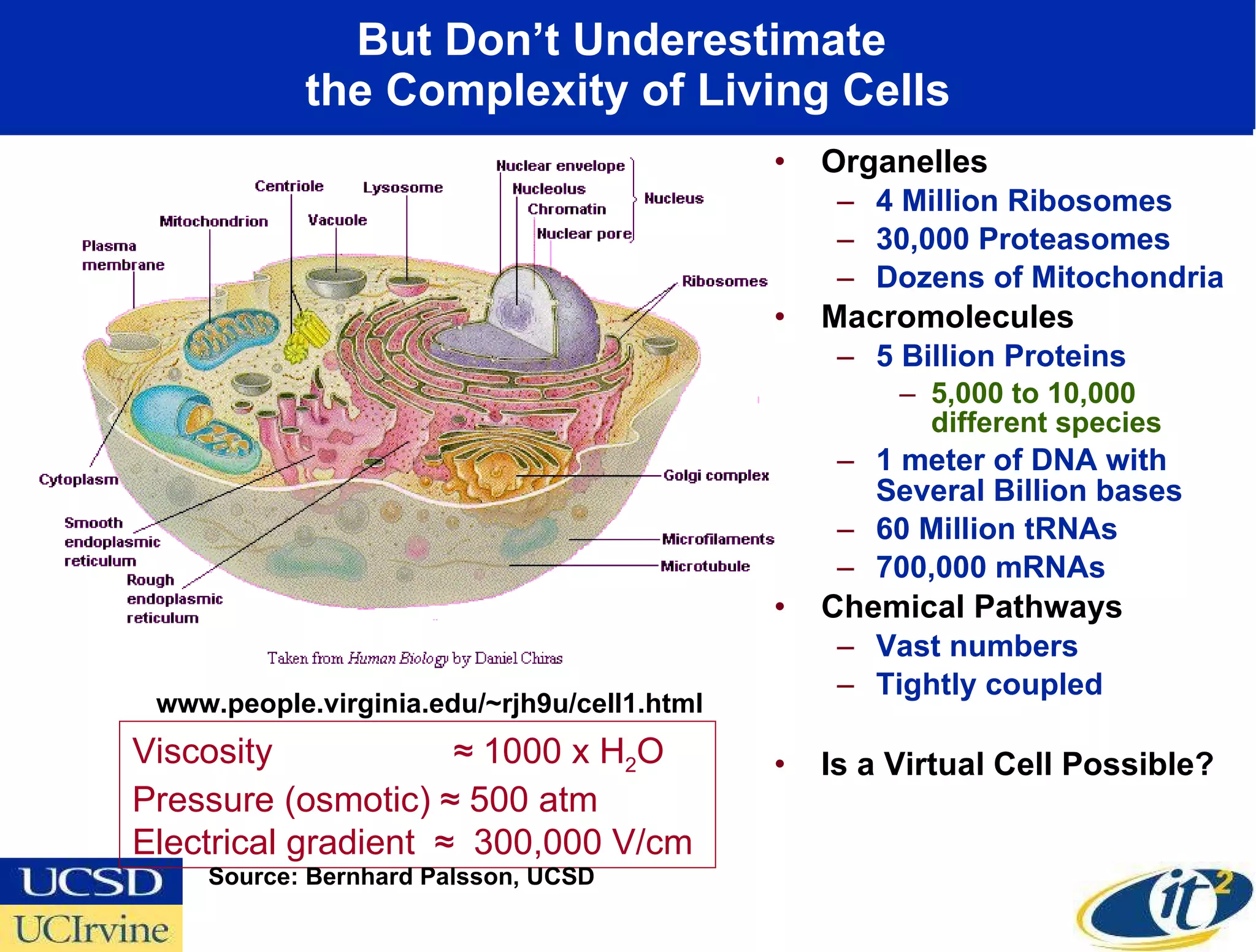
But Don’t Underestimate  the Complexity of Living Cells Organelles 4 Million Ribosomes 30,000 Proteasomes Dozens of Mitochondria Macromolecules 5 Billion Proteins 5,000 to 10,000 different species 1 meter of DNA with Several Billion bases 60 Million tRNAs 700,000 mRNAs Chemical Pathways Vast numbers Tightly coupled Is a Virtual Cell Possible? www.people.virginia.edu/~rjh9u/cell1.html Viscosity    ≈ 1000 x H 2 O Pressure (osmotic) ≈ 500 atm Electrical gradient  ≈  300,000 V/cm  Source: Bernhard Palsson, UCSD
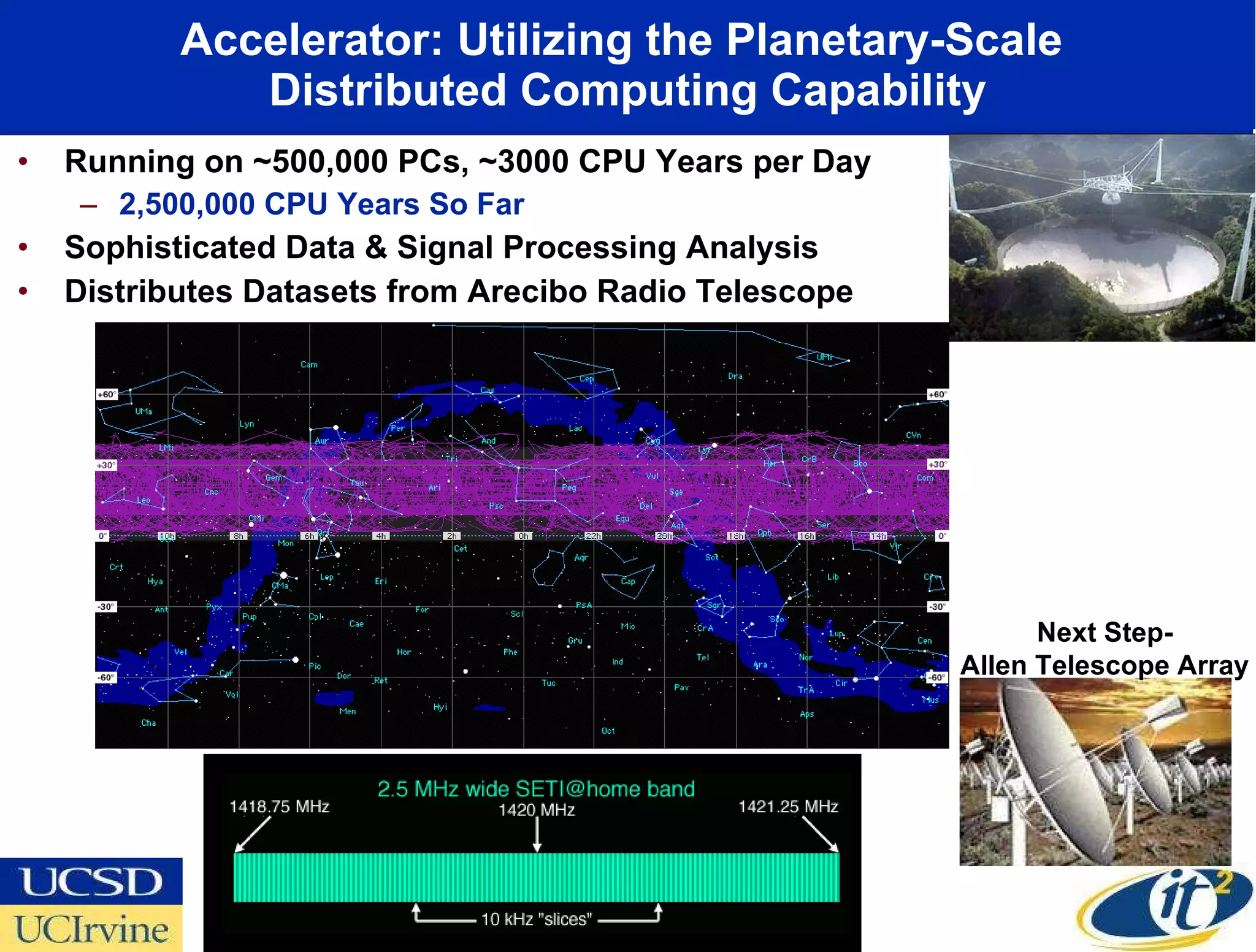
Accelerator: Utilizing the Planetary-Scale  Distributed Computing Capability Running on ~500,000 PCs, ~3000 CPU Years per Day 2,500,000 CPU Years So Far Sophisticated Data & Signal Processing Analysis Distributes Datasets from Arecibo Radio Telescope Next Step- Allen Telescope Array
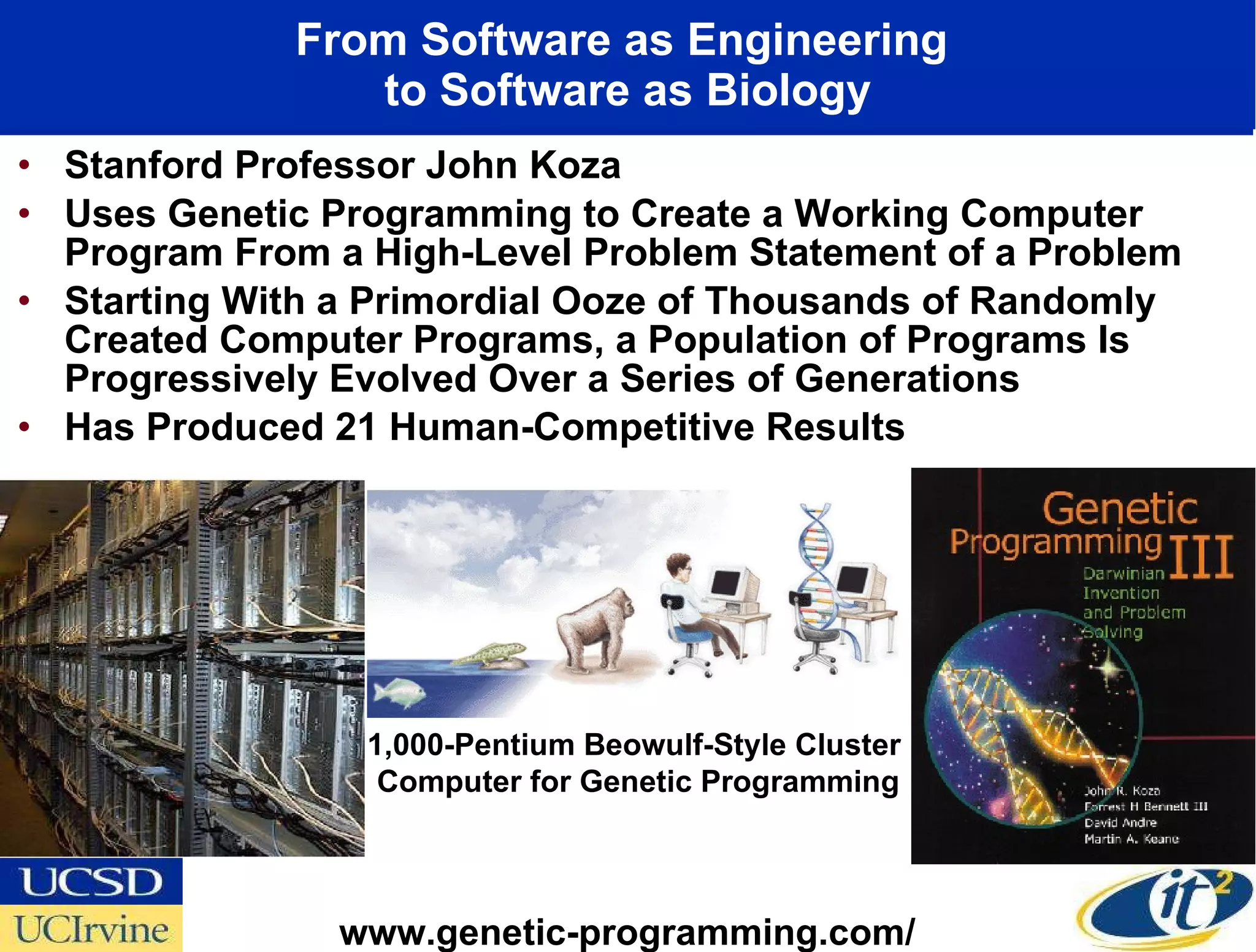
From Software as Engineering  to Software as Biology Stanford Professor John Koza Uses Genetic Programming to Create a Working Computer Program From a High-Level Problem Statement of a Problem Starting With a Primordial Ooze of Thousands of Randomly Created Computer Programs, a Population of Programs Is Progressively Evolved Over a Series of Generations  Has Produced 21 Human-Competitive Results 1,000-Pentium Beowulf-Style Cluster  Computer for Genetic Programming www.genetic-programming.com/
Human Brains Compute at ~ PetaFLOP  with an I/O of a Gigabit/s  Napster Meets Entropia Distributed Computing and Storage Combined Assume Ten Million PCs in Five Years Average Speed Ten Gigaflop Average Free Storage 100 GB Planetary Computer Capacity 100,000 TeraFLOP Speed 1 Million TeraByte Storage 1000 TeraFLOPs is Roughly a Human Brain-Second Morovec-Intelligent Robots and Mind Transferral Kurzweil-The Age of Spiritual Machines Joy-Humans an Endangered Species? Vinge-Singularity  Source: Larry Smarr Megacomputer Panel  SC2000 Conference
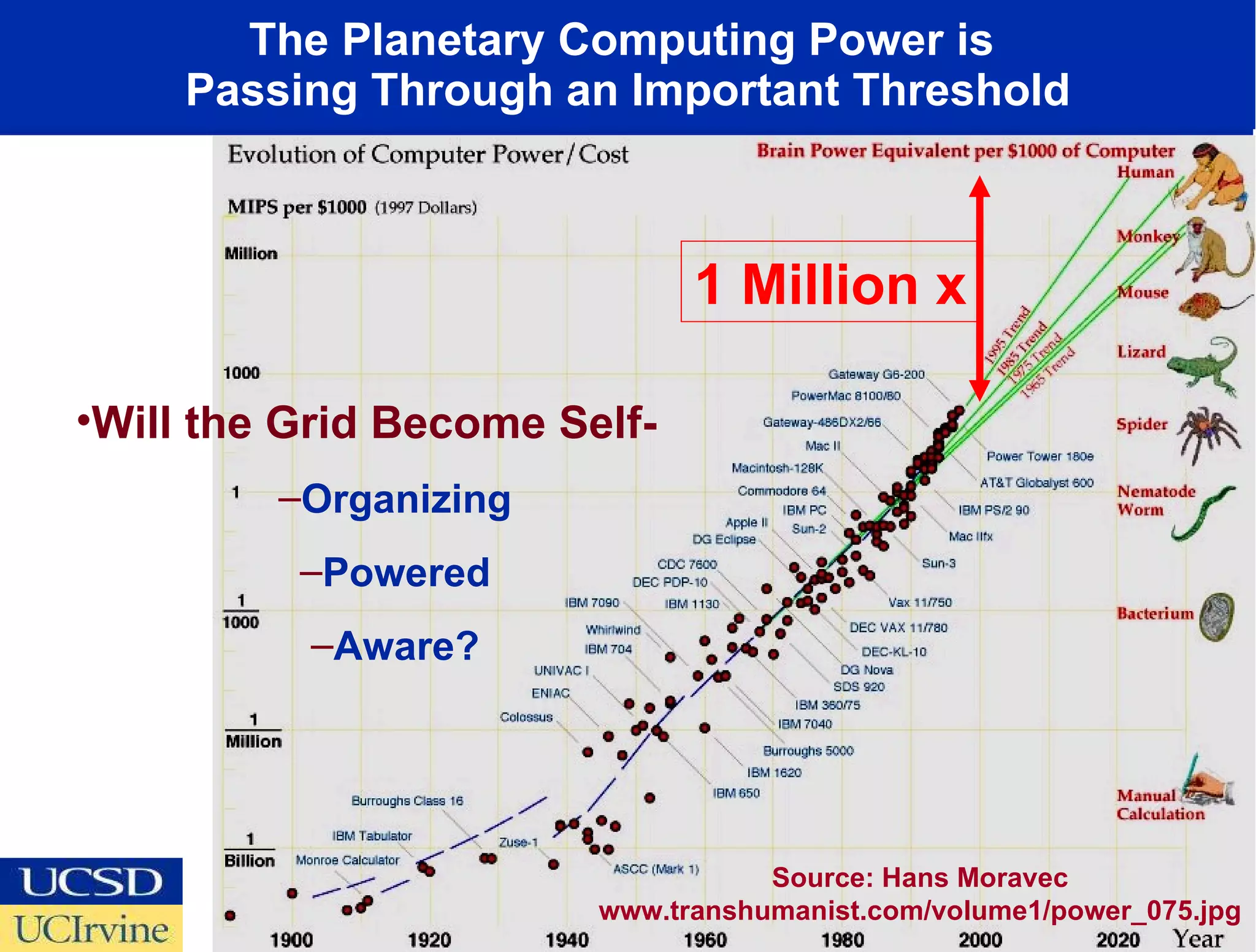
The Planetary Computing Power is  Passing Through an Important Threshold Source: Hans Moravec www.transhumanist.com/volume1/power_075.jpg Will the Grid Become Self- Organizing Powered Aware? 1 Million x
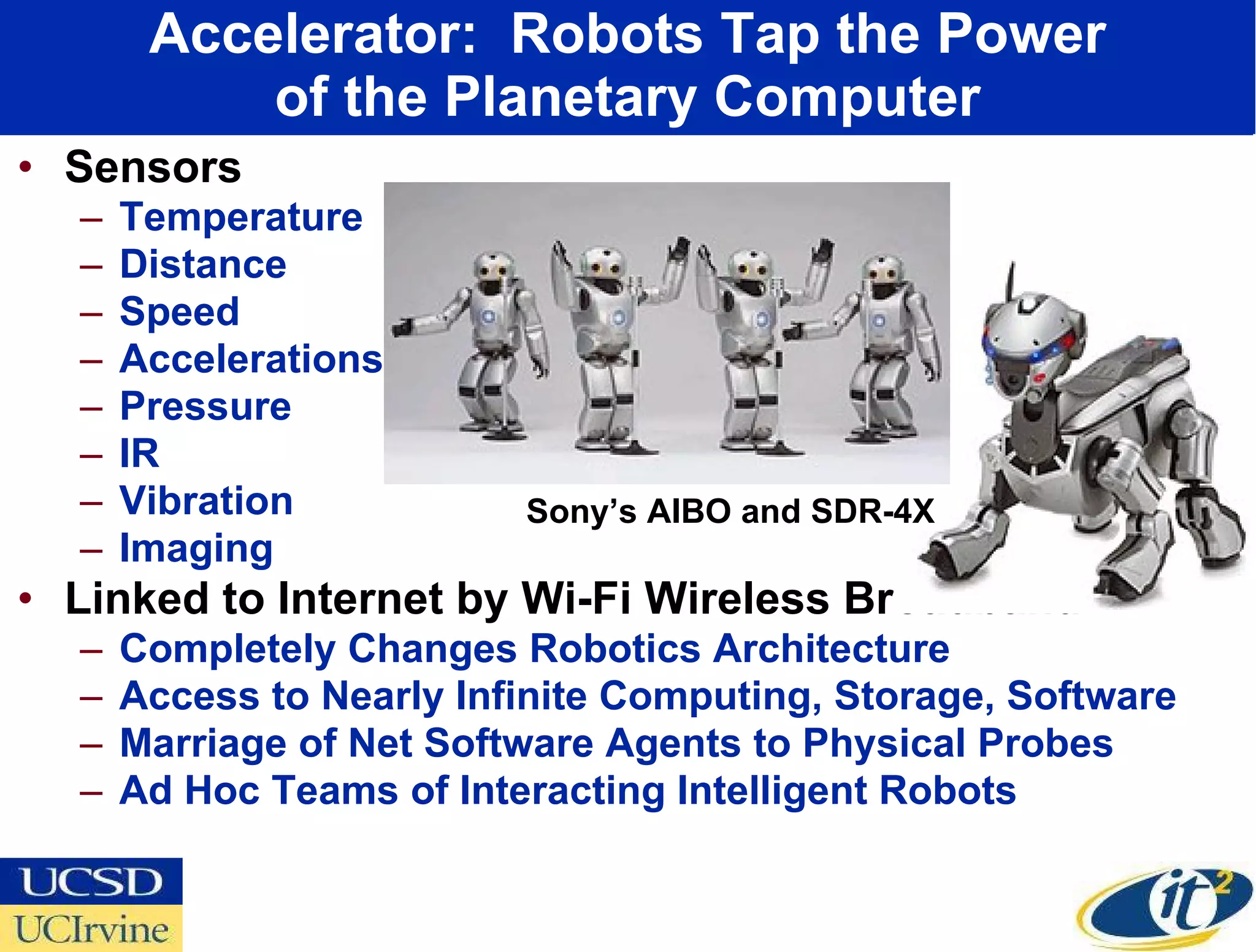
Accelerator:  Robots Tap the Power of the Planetary Computer Sensors Temperature  Distance  Speed Accelerations  Pressure  IR  Vibration  Imaging  Linked to Internet by Wi-Fi Wireless Broadband Completely Changes Robotics Architecture Access to Nearly Infinite Computing, Storage, Software  Marriage of Net Software Agents to Physical Probes Ad Hoc Teams of Interacting Intelligent Robots Sony’s AIBO and SDR-4X
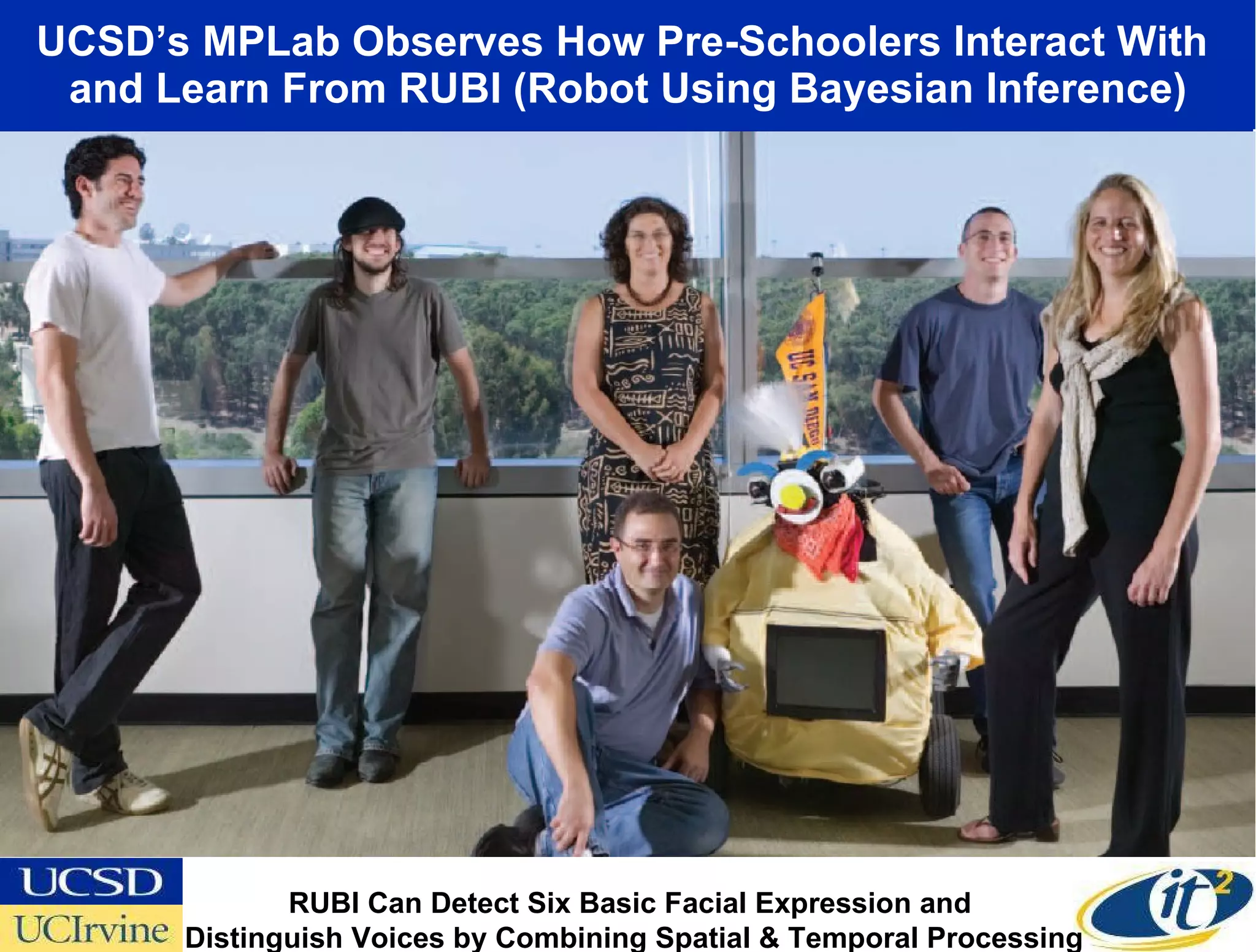
UCSD’s MPLab Observes How Pre-Schoolers Interact With  and Learn From RUBI (Robot Using Bayesian Inference) RUBI Can Detect Six Basic Facial Expression and  Distinguish Voices by Combining Spatial & Temporal Processing
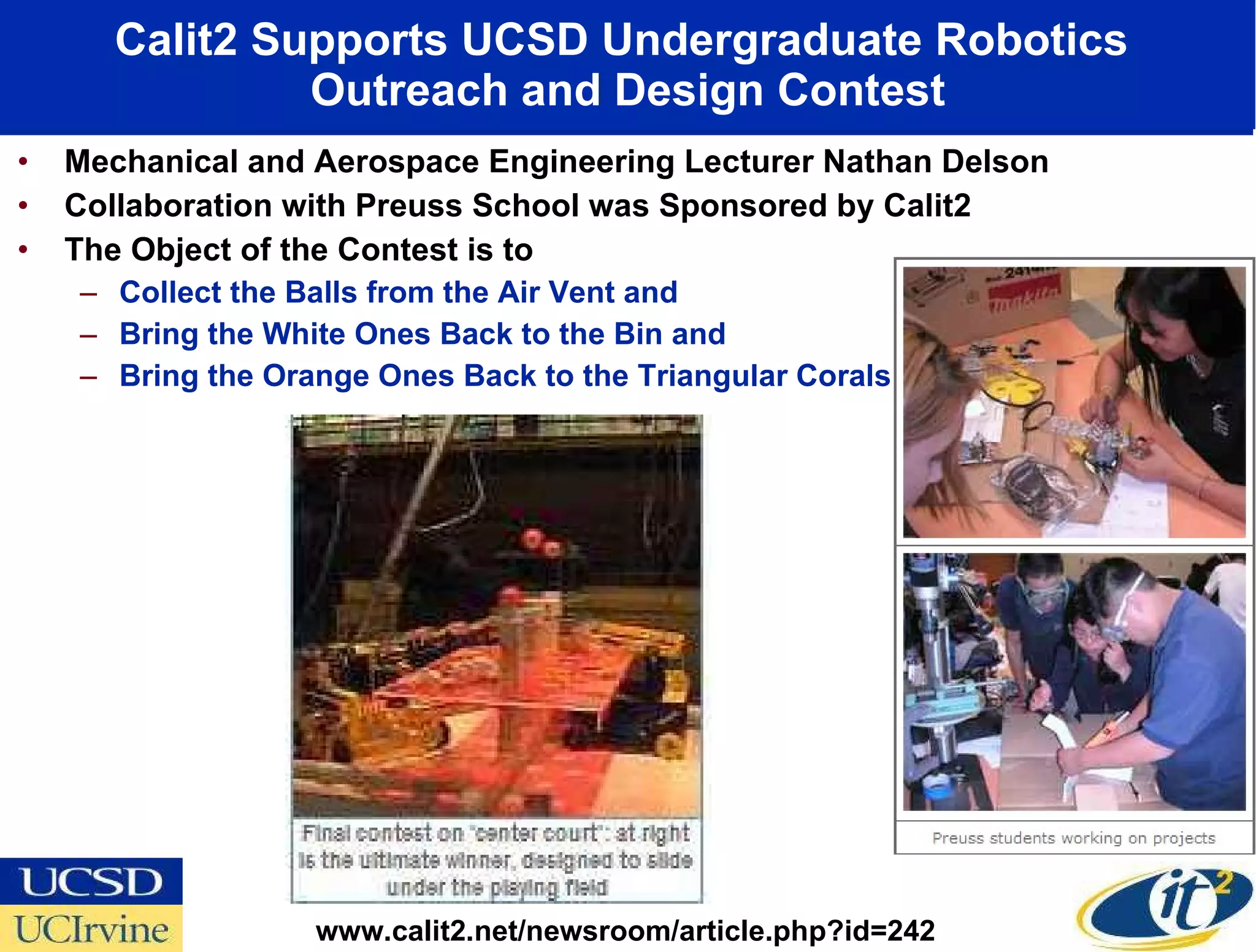
Calit2 Supports UCSD Undergraduate Robotics  Outreach and Design Contest Mechanical and Aerospace Engineering Lecturer Nathan Delson Collaboration with Preuss School was Sponsored by Calit2 The Object of the Contest is to Collect the Balls from the Air Vent and  Bring the White Ones Back to the Bin and  Bring the Orange Ones Back to the Triangular Corals  www.calit2.net/newsroom/article.php?id=242
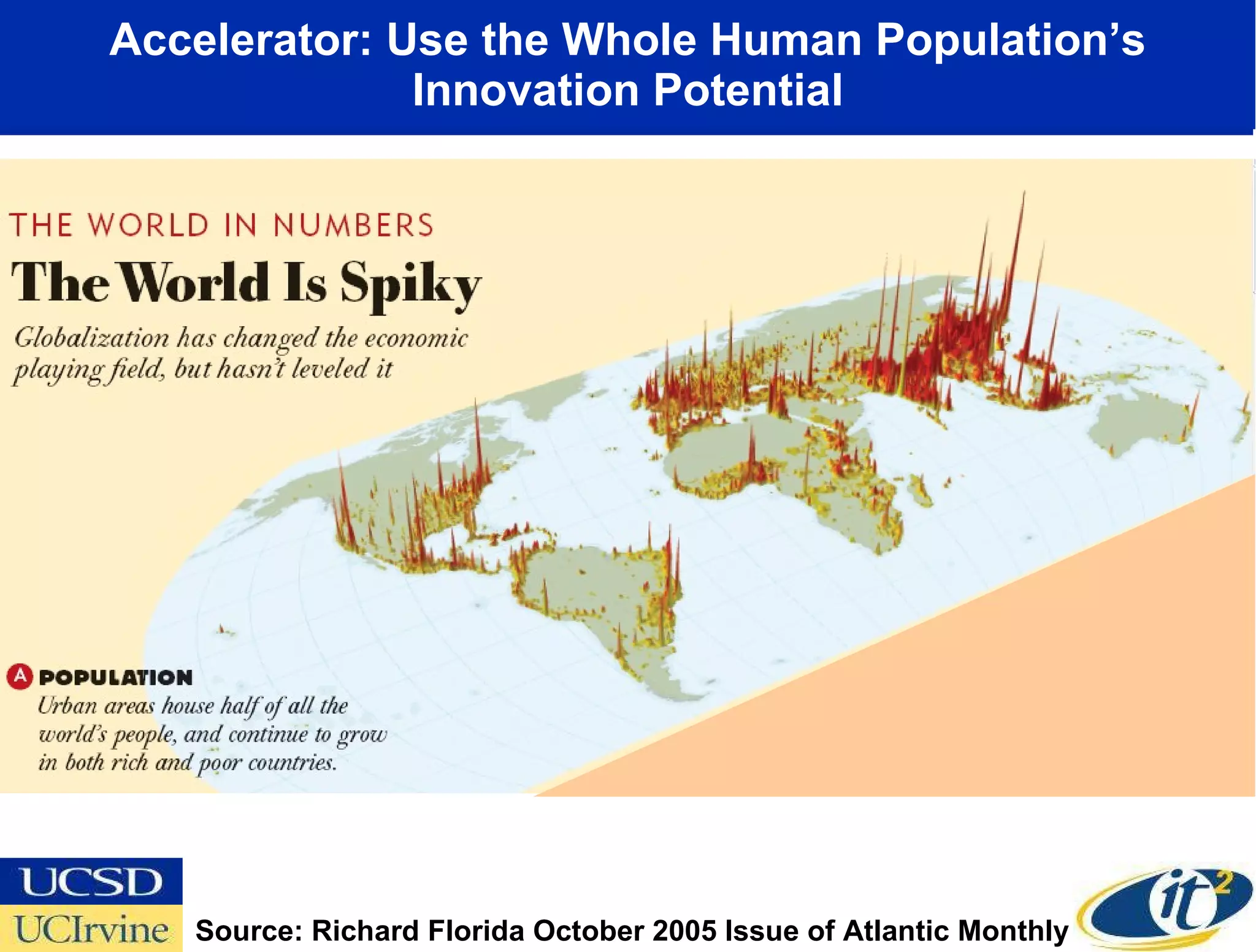
Accelerator: Use the Whole Human Population’s Innovation Potential Source: Richard Florida October 2005 Issue of Atlantic Monthly
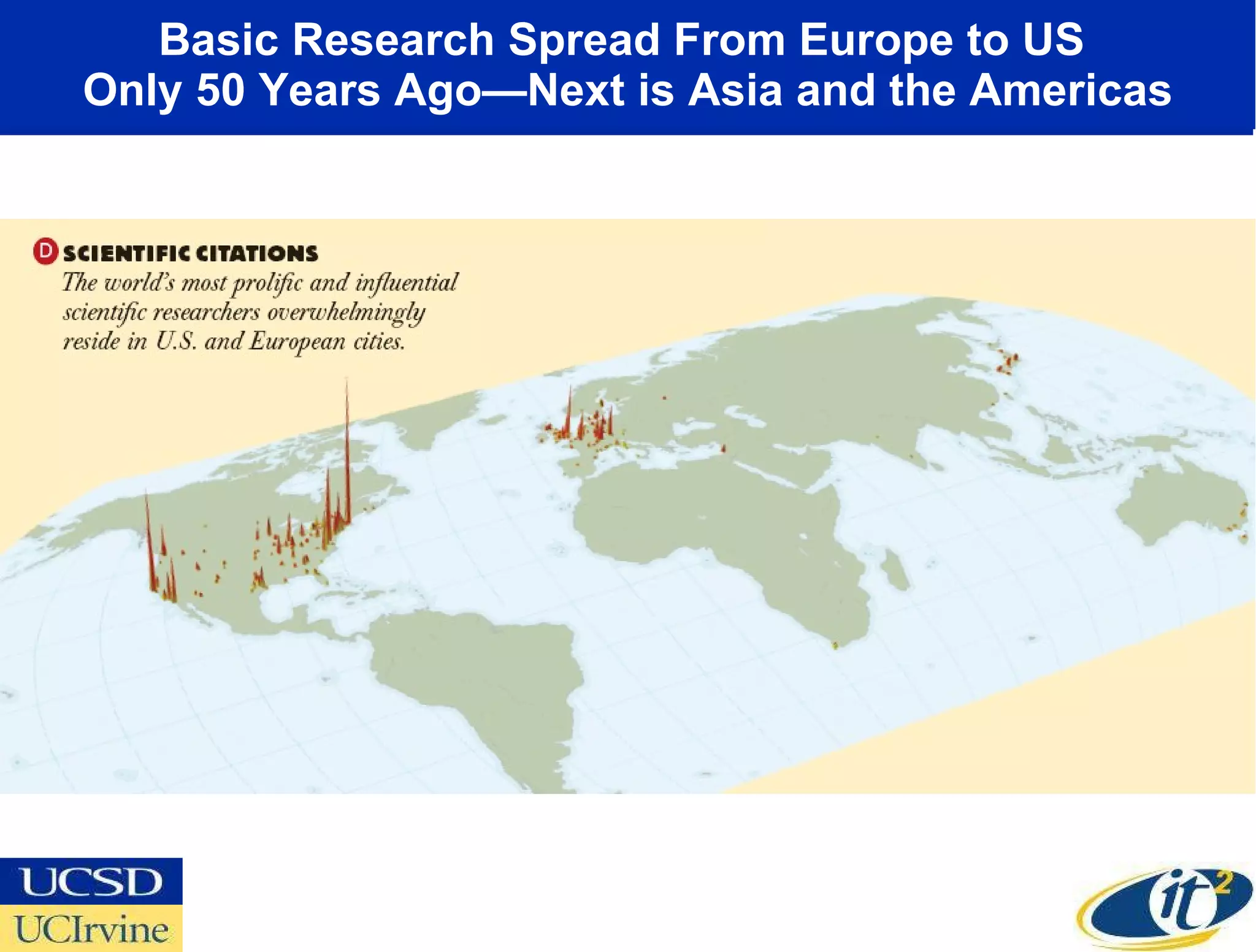
Basic Research Spread From Europe to US  Only 50 Years Ago—Next is Asia and the Americas
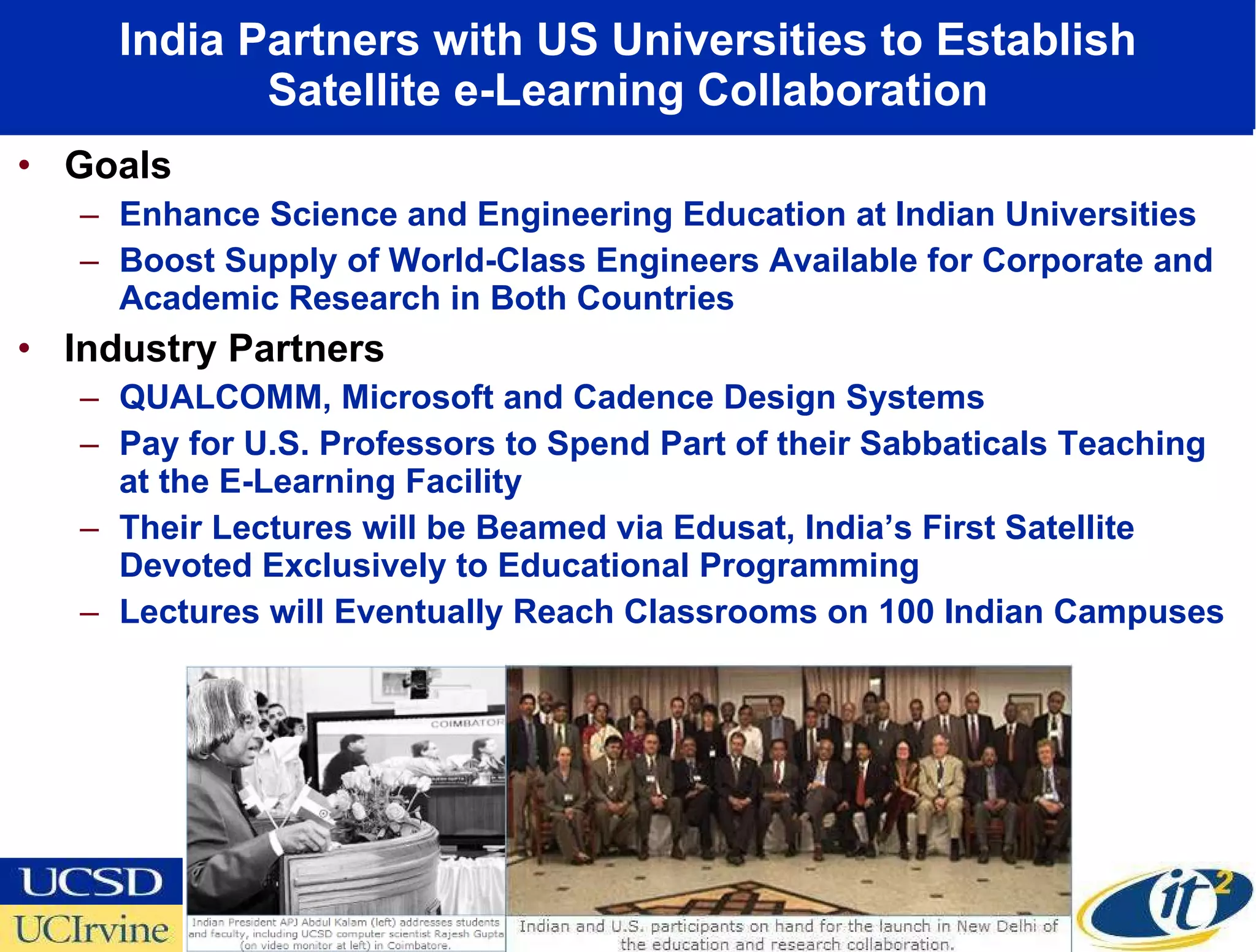
India Partners with US Universities to Establish Satellite e-Learning Collaboration Goals Enhance Science and Engineering Education at Indian Universities Boost Supply of World-Class Engineers Available for Corporate and Academic Research in Both Countries Industry Partners QUALCOMM, Microsoft and Cadence Design Systems  Pay for U.S. Professors to Spend Part of their Sabbaticals Teaching at the E-Learning Facility Their Lectures will be Beamed via Edusat, India’s First Satellite Devoted Exclusively to Educational Programming Lectures will Eventually Reach Classrooms on 100 Indian Campuses
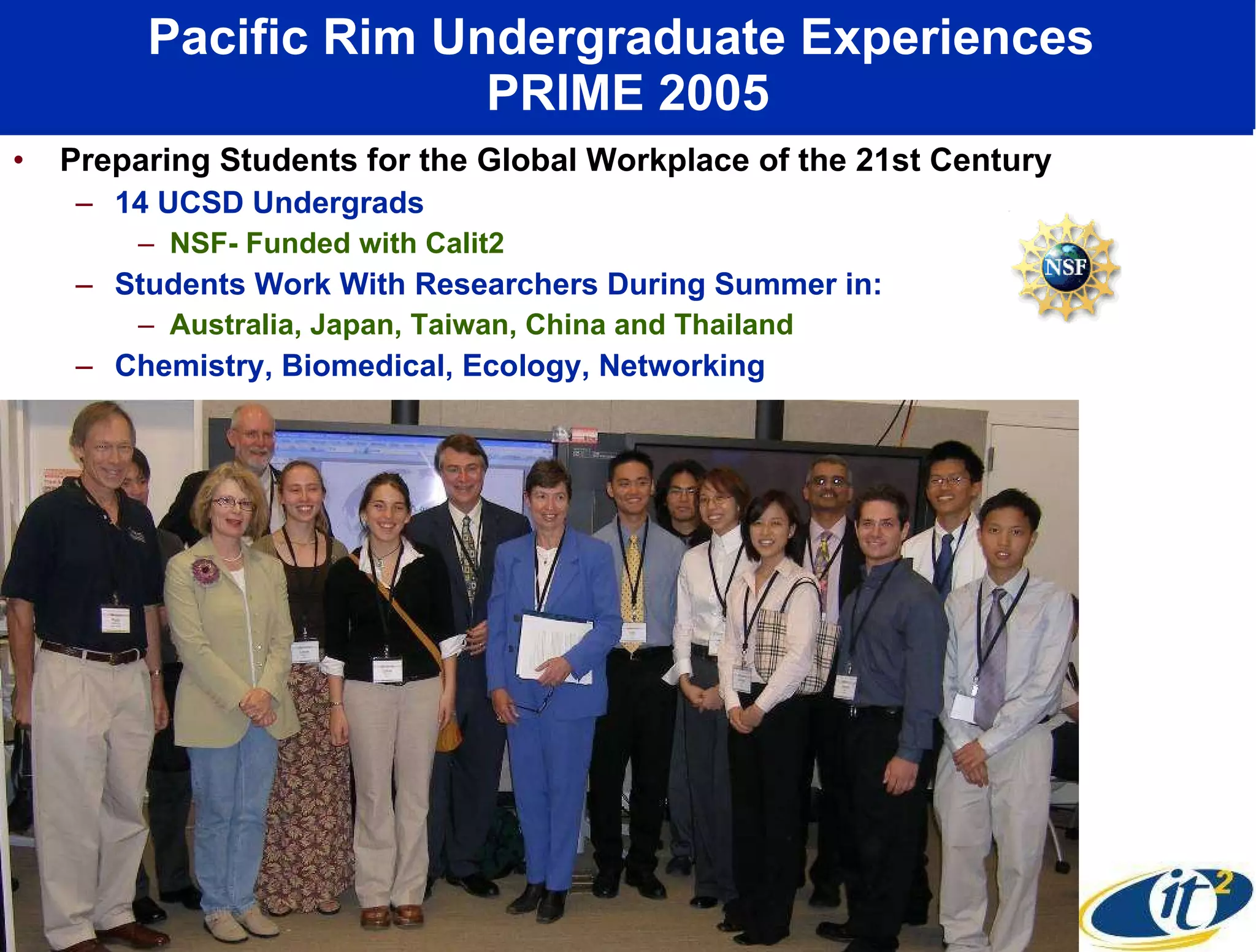
Pacific Rim Undergraduate Experiences  PRIME 2005 Preparing Students for the Global Workplace of the 21st Century 14 UCSD Undergrads NSF- Funded with Calit2 Students Work With Researchers During Summer in:  Australia, Japan, Taiwan, China and Thailand Chemistry, Biomedical, Ecology, Networking
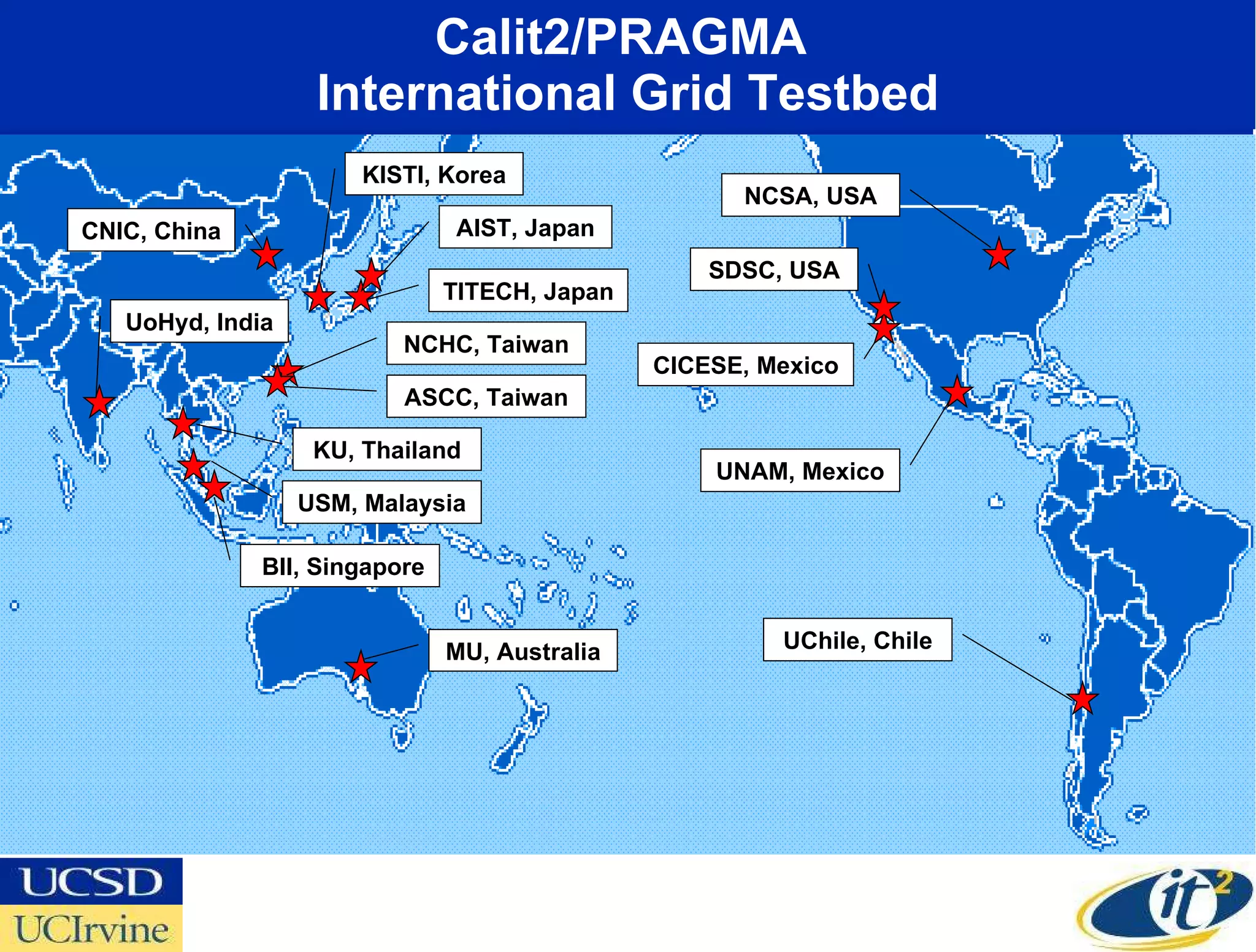
Calit2/PRAGMA  International Grid Testbed AIST, Japan CNIC, China KISTI, Korea ASCC, Taiwan NCHC, Taiwan UoHyd, India MU, Australia BII, Singapore KU, Thailand USM, Malaysia NCSA, USA SDSC, USA CICESE, Mexico UNAM, Mexico UChile, Chile TITECH, Japan
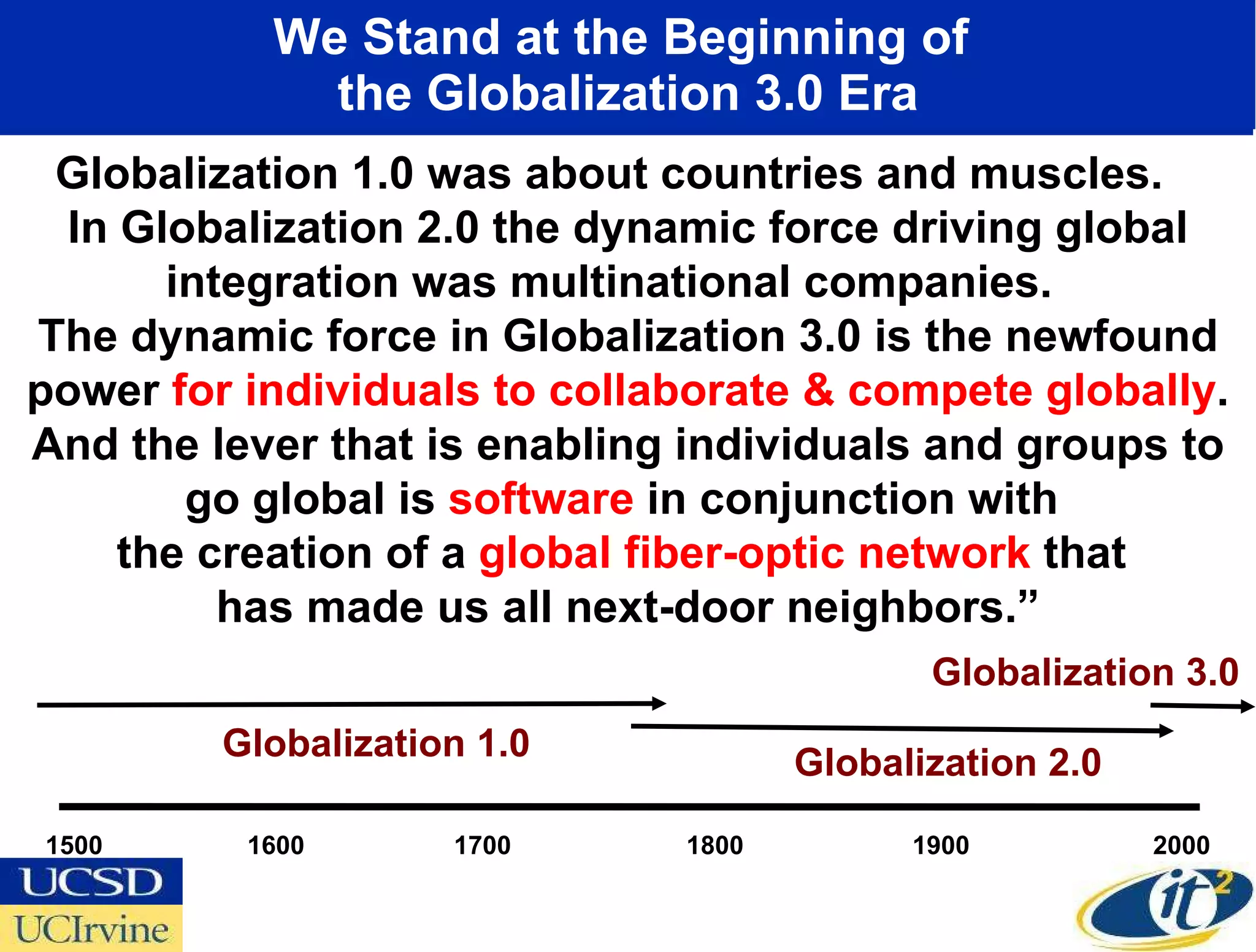
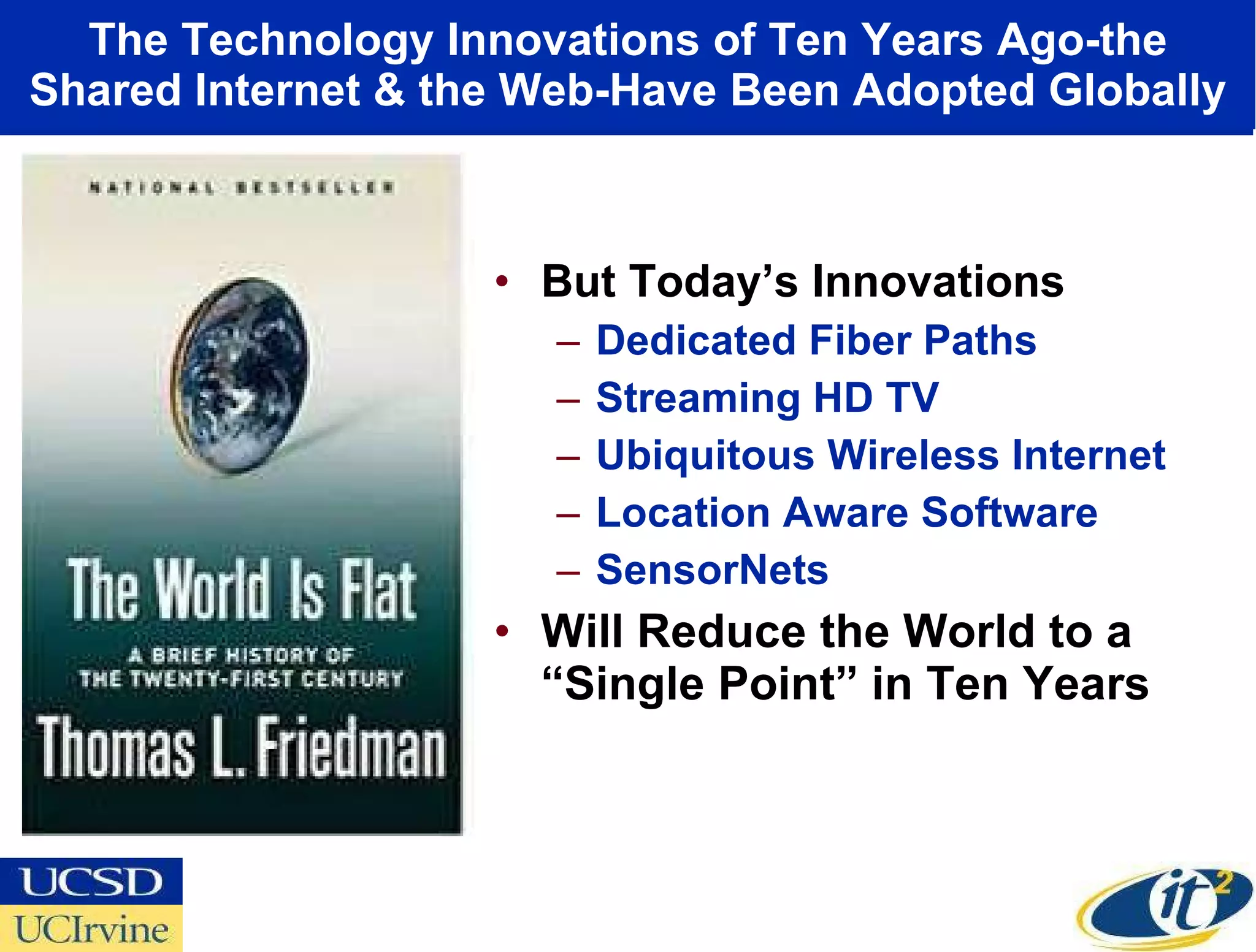
We Stand at the Beginning of  the Globalization 3.0 Era Globalization 1.0 was about countries and muscles.  In Globalization 2.0 the dynamic force driving global integration was multinational companies.  The dynamic force in Globalization 3.0 is the newfound power  for individuals to collaborate & compete   globally . And the lever that is enabling individuals and groups to go global is  software  in conjunction with  the creation of a  global fiber-optic network  that  has made us all next-door neighbors.” 1500 1600 1700 1800 1900 2000 Globalization 1.0 Globalization 2.0 Globalization 3.0
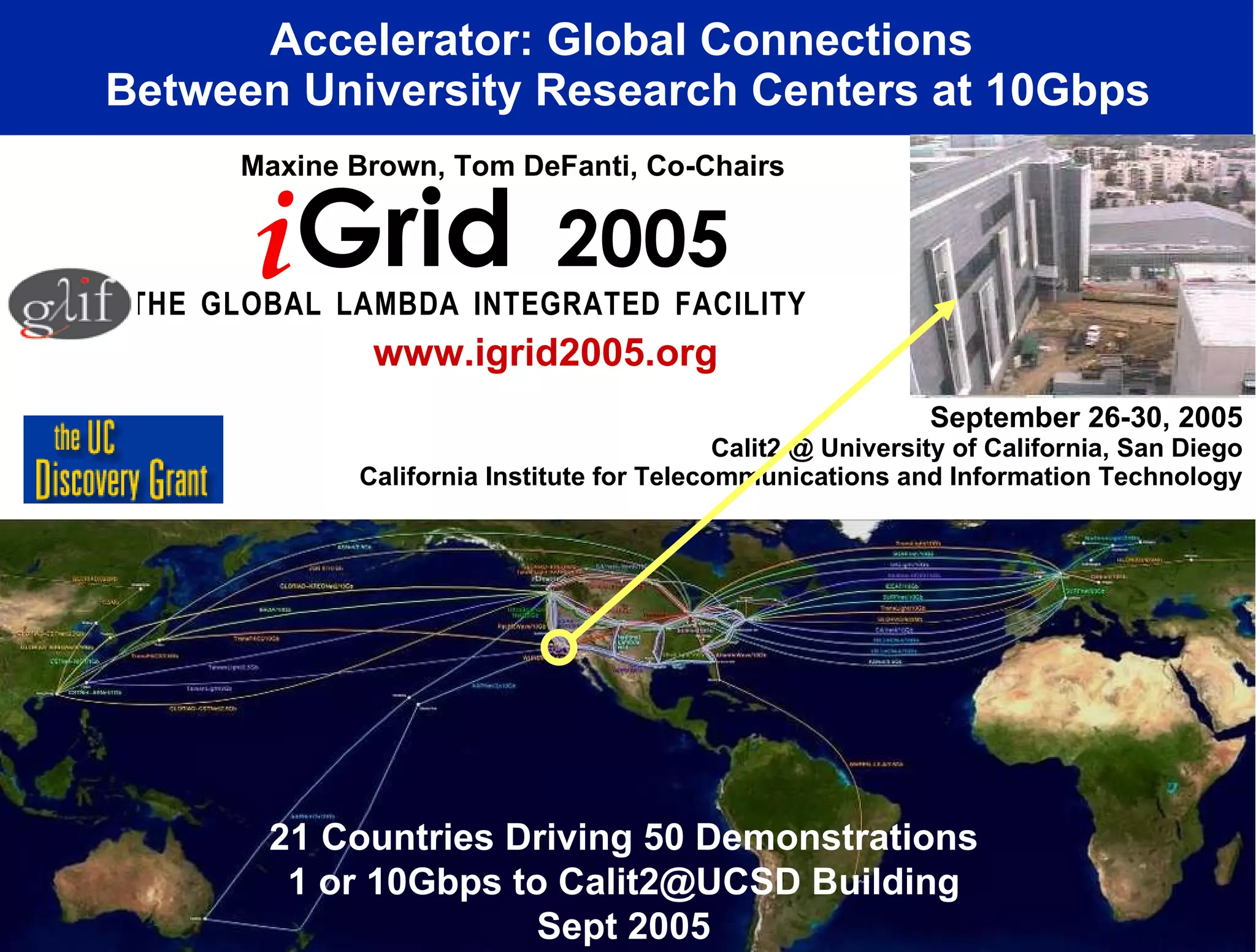
September 26-30, 2005 Calit2 @ University of California, San Diego California Institute for Telecommunications and Information Technology Accelerator: Global Connections  Between University Research Centers at 10Gbps T   H   E  G   L   O   B   A   L  L   A   M   B   D   A  I   N   T   E   G   R   A   T   E   D  F   A   C   I   L   I   T   Y   Maxine Brown, Tom DeFanti, Co-Chairs www.igrid2005.org 21 Countries Driving 50 Demonstrations 1 or 10Gbps to Calit2@UCSD Building Sept 2005 i Grid  2005
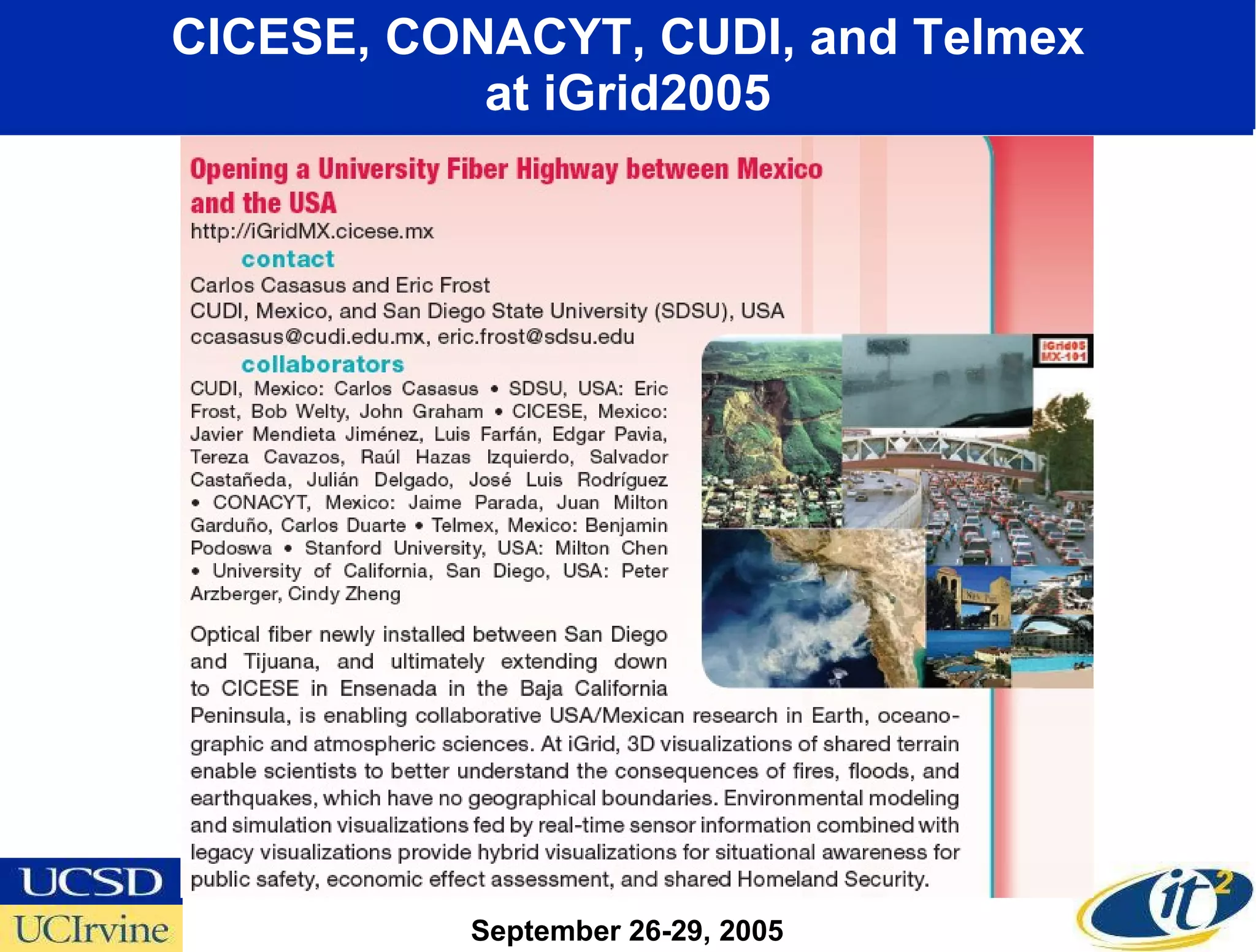
CICESE, CONACYT, CUDI, and Telmex at iGrid2005 September 26-29, 2005
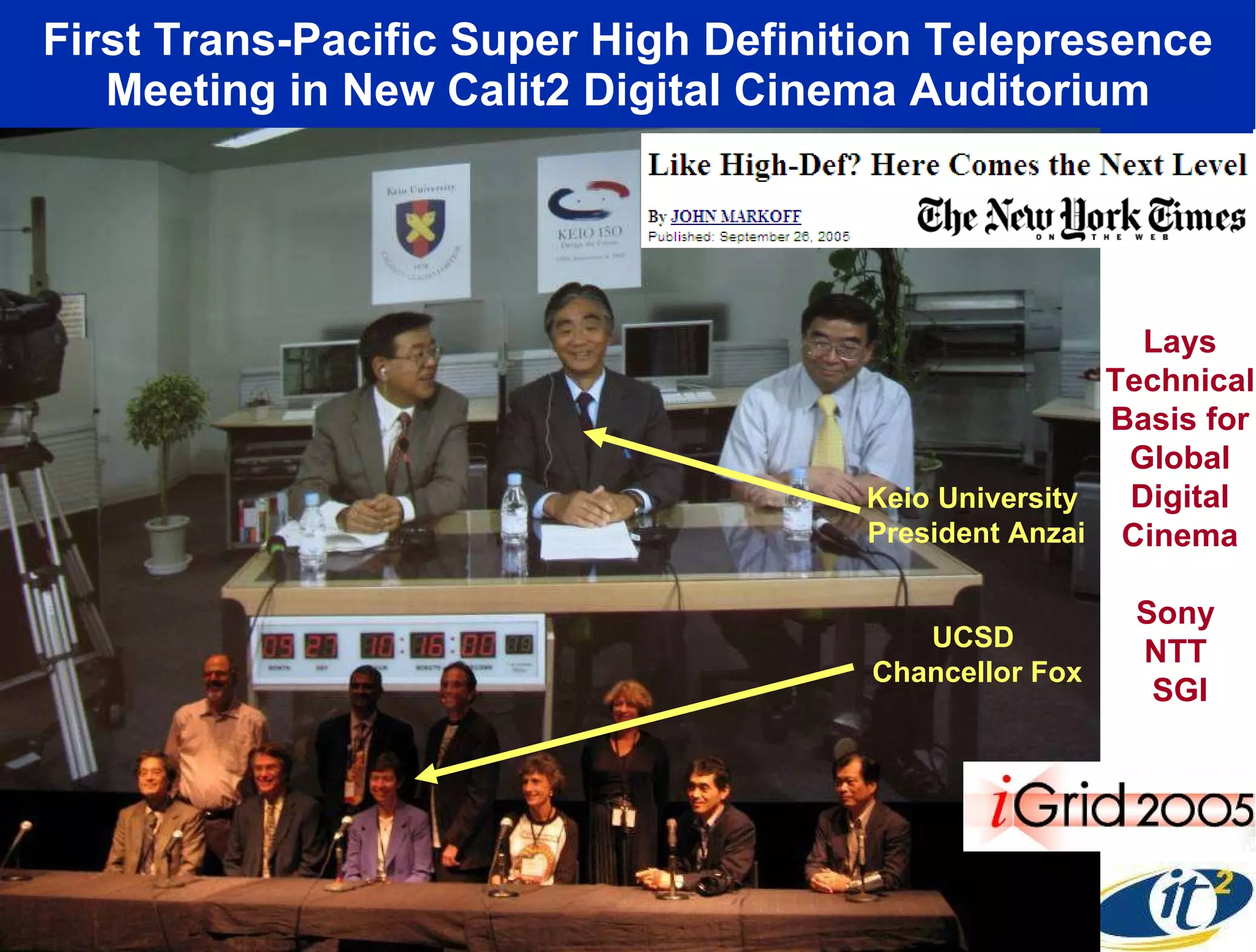
First Trans-Pacific Super High Definition Telepresence Meeting in New Calit2 Digital Cinema Auditorium Lays Technical Basis for Global Digital Cinema Sony  NTT  SGI Keio University  President Anzai UCSD  Chancellor Fox
The Technology Innovations of Ten Years Ago-the Shared Internet & the Web-Have Been Adopted Globally But Today’s Innovations Dedicated Fiber Paths Streaming HD TV Ubiquitous Wireless Internet Location Aware Software SensorNets Will Reduce the World to a “Single Point” in Ten Years

The Singularity: Toward a Post-Human Reality

  • 1.
    “ The Singularity: Toward a Post-Human Reality" Talk to UCSD’s Sixth College Honor’s Course on Kurzweil’s The Singularity is Near La Jolla, CA February 13, 2006 Dr. Larry Smarr Director, California Institute for Telecommunications and Information Technology Harry E. Gruber Professor, Dept. of Computer Science and Engineering Jacobs School of Engineering, UCSD
  • 2.
    Calit2 -- Researchand Living Laboratories on the Future of the Internet www.calit2.net UC San Diego & UC Irvine Faculty Working in Multidisciplinary Teams With Students, Industry, and the Community
  • 3.
    Two New Calit2Buildings Will Provide Major New Laboratories to Their Campuses New Laboratory Facilities Nanotech, BioMEMS, Chips, Radio, Photonics, Grid, Data, Applications Virtual Reality, Digital Cinema, HDTV, Synthesis Over 1000 Researchers in Two Buildings Linked via Dedicated Optical Networks International Conferences and Testbeds UC Irvine www.calit2.net Preparing for an World in Which Distance Has Been Eliminated… UC San Diego Richard C. Atkinson Hall Dedication Oct. 28, 2005
  • 4.
    From Elite Science to the Mass Market Four Examples I Helped “Mid-Wife”: Scientific Visualization to Movie/Game Special Effects CERN Preprints to WWW Supercomputers to GigaHertz PCs NSFnet to the Commercial Internet Technologies Diffuse Into Society Following an S-Curve Automobile Adoption Source: Harry Dent, The Great Boom Ahead Calit2 Works Here {
  • 5.
    Science Fiction asa View into Possible Futures Transhumanism and Posthumanism Neuromancer, Count Zero, Mona Lisa Overdrive by William Gibson Matrix Trilogy X-Files Kill Switch—by William Gibson Androids and Robots Robot Series by Isaac Asimov Blade Runner Terminator Trilogy Cherry 2000 Software Augmented Humans Aristoi by Walter Jon Williams Nanotechnology The Diamond Age by Neil Stephenson
  • 6.
    Towards the Singularity--Research on Kurzweil’s Accelerators Convergence of Info, Bio, Nano Reverse Engineering Brains Human Longevity Planetary Scale Computing Intelligent Interactive Robots Utilizing the Human Population Potential Eliminating Distance
  • 7.
    Accelerator: The PerfectStorm-- Convergence of Engineering with Bio, Physics, & IT Nanobio info technology 5 nanometers Human Rhinovirus IBM Quantum Corral Iron Atoms on Copper VCSELaser 2 mm Nanogen MicroArray 500x Magnification MEMS 400x Magnification NANO
  • 8.
    Calit2@UCSD Creates aDozen Shared Clean Rooms for Nanoscience, Nanoengineering, Nanomedicine Photo Courtesy of Bernd Fruhberger, Calit2
  • 9.
    A World ofDistributed Sensors Starts with Integrated Nanosensors I. K. Schuller holding the first prototype I. K. Schuller, A. Kummel, M. Sailor, W. Trogler, Y-H Lo Developing Multiple Nanosensors on a Single Chip, with Local Processing and Wireless Communications Guided wave optics Aqueous bio/chem sensors Fluidic circuit Free space optics Physical sensors Gas/chemical sensors Electronics (communication, powering)
  • 10.
    Research Topics ofINRF / Calit2@UCI BioMEMS Team Micro Resonators for Wireless Communications Optical Coherence Tomography Mechanosensitivity Microplatforms Micro- and Nano- Fluidics Protein Crystallization in Nanovolumes Nano-Biosensors Catheter-Based Microtools Silicon-Based HF Ultrasonic Atomizers Smart Pills Bionic Ear
  • 11.
    Accelerator: Learn YourBody’s Biochemical Systems to Live Longer and Healthier
  • 12.
    Treatment, Understanding, andMonitoring of Cancer (UCSD, Burnham Institute, UCSB, UCR, UCI --PI: Sadik Esener)
  • 13.
    Calit2 is Collaboratingwith Doug Wallace Planning to Bring MITOMAP into Calit2 Domain The Human mtDNA Map, Showing the Location of Selected Pathogenic Mutations Within the 16,569-Base Pair Genome MITOMAP: A Human Mitochondrial Genome Database. www.mitomap.org , 2005 5 March 1999
  • 14.
    For Mitochondrial DiseasesIt Has Been More Productive to Classify Patients by Genetic Defect Rather than by Clinical Manifestation Over the past 10 years, mitochondrial defects have been implicated in a wide variety of degenerative diseases, aging, and cancer… The same mtDNA mutation can produce quite different phenotypes, and different mutations can produce similar phenotypes. … The essential role of mitochondrial oxidative phosphorylation in cellular energy production, the generation of reactive oxygen species, and the initiation of apoptosis has suggested a number of novel mechanisms for mitochondrial pathology. -- Douglas Wallace, Science, Vol. 283, 1482-1488, 5 March 1999
  • 15.
    Calit2 Researcher EskinCollaborates with Perlegen Sciences on Map of Human Genetic Variation Across Populations David A. Hinds, Laura L. Stuve, Geoffrey B. Nilsen, Eran Halperin, Eleazar Eskin , Dennis G. Ballinger, Kelly A. Frazer, David R. Cox. “ Whole-Genome Patterns of Common DNA Variation in Three Human Populations” Science 18 February, 2005: 307(5712):1072-1079. “ We have characterized whole-genome patterns of common human DNA variation by genotyping 1,586,383 single-nucleotide polymorphisms (SNPs) in 71 Americans of European, African, and Asian ancestry.” “ Although knowledge of a single genetic risk factor can seldom be used to predict the treatment outcome of a common disease, knowledge of a large fraction of all the major genetic risk factors contributing to a treatment response or common disease could have immediate utility, allowing existing treatment options to be matched to individual patients without requiring additional knowledge of the mechanisms by which the genetic differences lead to different outcomes .” “ More detailed haplotype analysis results are available at http://research.calit2.net/hap/wgha/ “
  • 16.
    Accelerator: Reverse Engineeringthe Brain Green: Purkinje Cells Red: Glial Cells Light Blue: Nuclear DNA Source: Mark Ellisman, David Lee, Jason Leigh 300 MPixel Image! Calit2 (UCSD, UCI) and UIC Lead OptIPuter Campuses—Larry Smarr PI Partners: SDSC, USC, SDSU, NW, TA&M, UvA, SARA, KISTI, AIST
  • 17.
    Scalable Displays AllowBoth Global Content and Fine Detail Source: Mark Ellisman, David Lee, Jason Leigh 30 MPixel SunScreen Display Driven by a 20-node Sun Opteron Visualization Cluster
  • 18.
    Allows for InteractiveZooming from Cerebellum to Individual Neurons Source: Mark Ellisman, David Lee, Jason Leigh
  • 19.
    The “Visible Cell”Project Will be Housed in the Calit2@UCSD Building Source: Mark Ellisman, UCSD
  • 20.
    But Don’t Underestimate the Complexity of Living Cells Organelles 4 Million Ribosomes 30,000 Proteasomes Dozens of Mitochondria Macromolecules 5 Billion Proteins 5,000 to 10,000 different species 1 meter of DNA with Several Billion bases 60 Million tRNAs 700,000 mRNAs Chemical Pathways Vast numbers Tightly coupled Is a Virtual Cell Possible? www.people.virginia.edu/~rjh9u/cell1.html Viscosity ≈ 1000 x H 2 O Pressure (osmotic) ≈ 500 atm Electrical gradient ≈ 300,000 V/cm Source: Bernhard Palsson, UCSD
  • 21.
    Accelerator: Utilizing thePlanetary-Scale Distributed Computing Capability Running on ~500,000 PCs, ~3000 CPU Years per Day 2,500,000 CPU Years So Far Sophisticated Data & Signal Processing Analysis Distributes Datasets from Arecibo Radio Telescope Next Step- Allen Telescope Array
  • 22.
    From Software asEngineering to Software as Biology Stanford Professor John Koza Uses Genetic Programming to Create a Working Computer Program From a High-Level Problem Statement of a Problem Starting With a Primordial Ooze of Thousands of Randomly Created Computer Programs, a Population of Programs Is Progressively Evolved Over a Series of Generations Has Produced 21 Human-Competitive Results 1,000-Pentium Beowulf-Style Cluster Computer for Genetic Programming www.genetic-programming.com/
  • 23.
    Human Brains Computeat ~ PetaFLOP with an I/O of a Gigabit/s Napster Meets Entropia Distributed Computing and Storage Combined Assume Ten Million PCs in Five Years Average Speed Ten Gigaflop Average Free Storage 100 GB Planetary Computer Capacity 100,000 TeraFLOP Speed 1 Million TeraByte Storage 1000 TeraFLOPs is Roughly a Human Brain-Second Morovec-Intelligent Robots and Mind Transferral Kurzweil-The Age of Spiritual Machines Joy-Humans an Endangered Species? Vinge-Singularity Source: Larry Smarr Megacomputer Panel SC2000 Conference
  • 24.
    The Planetary ComputingPower is Passing Through an Important Threshold Source: Hans Moravec www.transhumanist.com/volume1/power_075.jpg Will the Grid Become Self- Organizing Powered Aware? 1 Million x
  • 25.
    Accelerator: RobotsTap the Power of the Planetary Computer Sensors Temperature Distance Speed Accelerations Pressure IR Vibration Imaging Linked to Internet by Wi-Fi Wireless Broadband Completely Changes Robotics Architecture Access to Nearly Infinite Computing, Storage, Software Marriage of Net Software Agents to Physical Probes Ad Hoc Teams of Interacting Intelligent Robots Sony’s AIBO and SDR-4X
  • 26.
    UCSD’s MPLab ObservesHow Pre-Schoolers Interact With and Learn From RUBI (Robot Using Bayesian Inference) RUBI Can Detect Six Basic Facial Expression and Distinguish Voices by Combining Spatial & Temporal Processing
  • 27.
    Calit2 Supports UCSDUndergraduate Robotics Outreach and Design Contest Mechanical and Aerospace Engineering Lecturer Nathan Delson Collaboration with Preuss School was Sponsored by Calit2 The Object of the Contest is to Collect the Balls from the Air Vent and Bring the White Ones Back to the Bin and Bring the Orange Ones Back to the Triangular Corals www.calit2.net/newsroom/article.php?id=242
  • 28.
    Accelerator: Use theWhole Human Population’s Innovation Potential Source: Richard Florida October 2005 Issue of Atlantic Monthly
  • 29.
    Basic Research SpreadFrom Europe to US Only 50 Years Ago—Next is Asia and the Americas
  • 30.
    India Partners withUS Universities to Establish Satellite e-Learning Collaboration Goals Enhance Science and Engineering Education at Indian Universities Boost Supply of World-Class Engineers Available for Corporate and Academic Research in Both Countries Industry Partners QUALCOMM, Microsoft and Cadence Design Systems Pay for U.S. Professors to Spend Part of their Sabbaticals Teaching at the E-Learning Facility Their Lectures will be Beamed via Edusat, India’s First Satellite Devoted Exclusively to Educational Programming Lectures will Eventually Reach Classrooms on 100 Indian Campuses
  • 31.
    Pacific Rim UndergraduateExperiences PRIME 2005 Preparing Students for the Global Workplace of the 21st Century 14 UCSD Undergrads NSF- Funded with Calit2 Students Work With Researchers During Summer in: Australia, Japan, Taiwan, China and Thailand Chemistry, Biomedical, Ecology, Networking
  • 32.
    Calit2/PRAGMA InternationalGrid Testbed AIST, Japan CNIC, China KISTI, Korea ASCC, Taiwan NCHC, Taiwan UoHyd, India MU, Australia BII, Singapore KU, Thailand USM, Malaysia NCSA, USA SDSC, USA CICESE, Mexico UNAM, Mexico UChile, Chile TITECH, Japan
  • 33.
    We Stand atthe Beginning of the Globalization 3.0 Era Globalization 1.0 was about countries and muscles. In Globalization 2.0 the dynamic force driving global integration was multinational companies. The dynamic force in Globalization 3.0 is the newfound power for individuals to collaborate & compete globally . And the lever that is enabling individuals and groups to go global is software in conjunction with the creation of a global fiber-optic network that has made us all next-door neighbors.” 1500 1600 1700 1800 1900 2000 Globalization 1.0 Globalization 2.0 Globalization 3.0
  • 34.
    September 26-30, 2005Calit2 @ University of California, San Diego California Institute for Telecommunications and Information Technology Accelerator: Global Connections Between University Research Centers at 10Gbps T H E G L O B A L L A M B D A I N T E G R A T E D F A C I L I T Y Maxine Brown, Tom DeFanti, Co-Chairs www.igrid2005.org 21 Countries Driving 50 Demonstrations 1 or 10Gbps to Calit2@UCSD Building Sept 2005 i Grid 2005
  • 35.
    CICESE, CONACYT, CUDI,and Telmex at iGrid2005 September 26-29, 2005
  • 36.
    First Trans-Pacific SuperHigh Definition Telepresence Meeting in New Calit2 Digital Cinema Auditorium Lays Technical Basis for Global Digital Cinema Sony NTT SGI Keio University President Anzai UCSD Chancellor Fox
  • 37.
    The Technology Innovationsof Ten Years Ago-the Shared Internet & the Web-Have Been Adopted Globally But Today’s Innovations Dedicated Fiber Paths Streaming HD TV Ubiquitous Wireless Internet Location Aware Software SensorNets Will Reduce the World to a “Single Point” in Ten Years

Editor's Notes

  • #20 Intro side: Make the point that we are extreme Extreme data Extreme instruments Extreme network and computational needs Tech integration for high throughput tomography: What we are integrating: Instruments Two-photon laser microscope, used for light microscopy 3100 IV Electron Microscope, used for electron microscopy Processes Data collection and instrument automation Computational Resources clusters Visualization Tiled displays High resolution displays Databases
  • #32 Pictures from Teri