










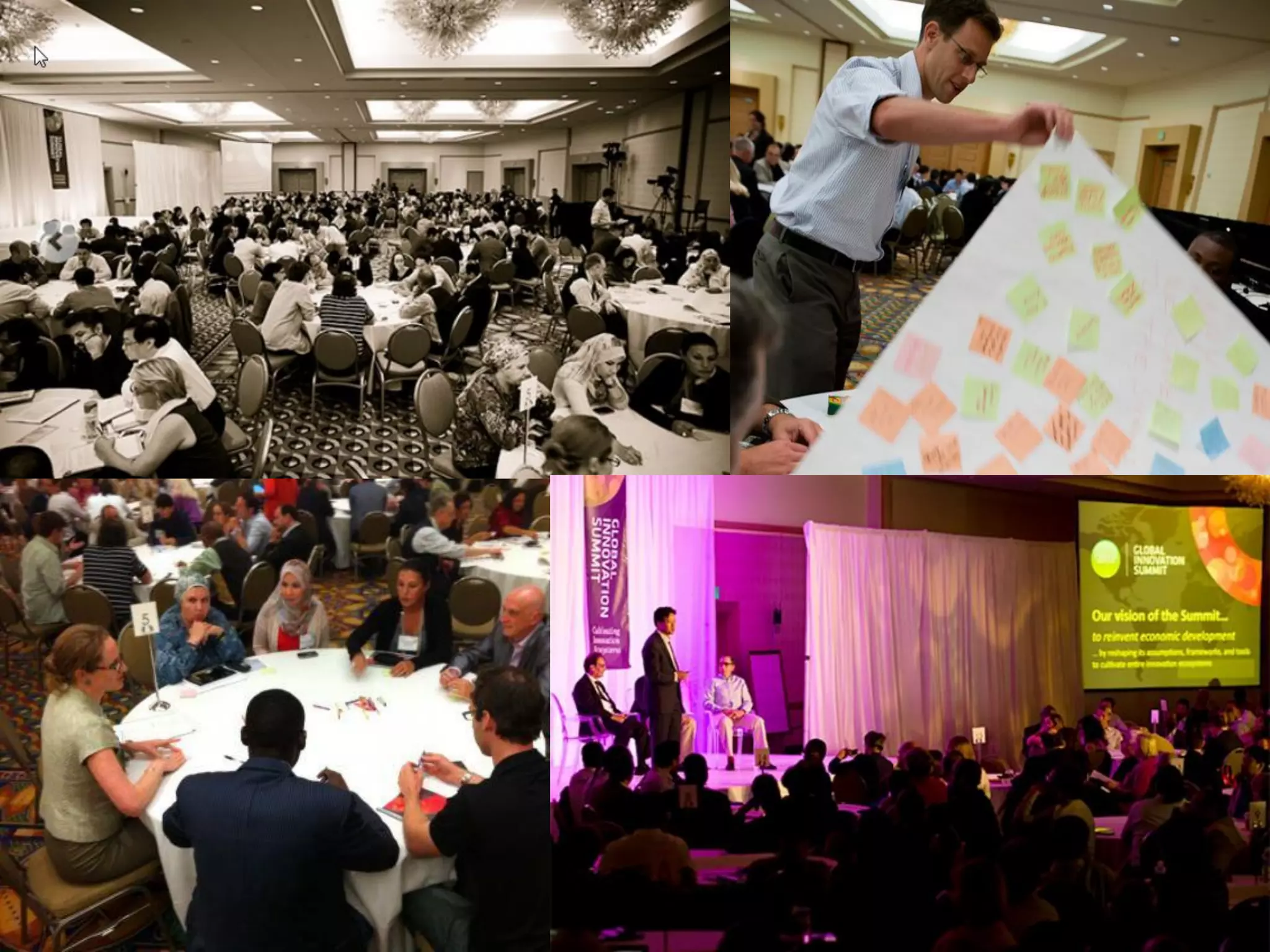
A new book by Victor W. Hwang and Greg Horowitt


   Greg Horowitt, Co-Founder & Managing Director, T2 Venture Capital
   Co-Founder, UCSD Global CONNECT
   www.therainforestbook.com
   www.innosummit.com
ONCE UPON A TIME…
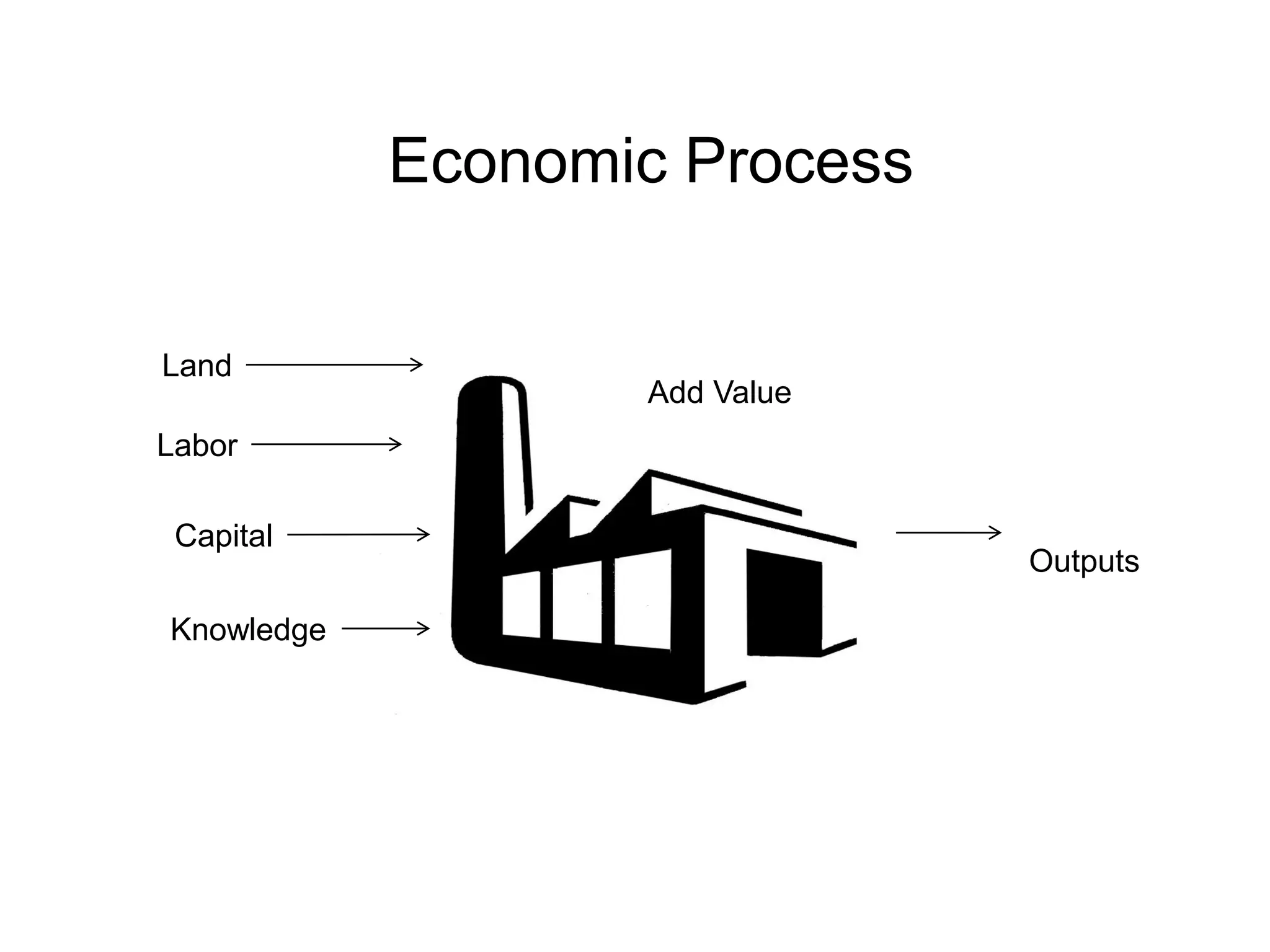
Economic Process


Land
                   Add Value
Labor

 Capital
                               Outputs

Knowledge
THE RISE OF
INDUSTRIAL
ECONOMIES
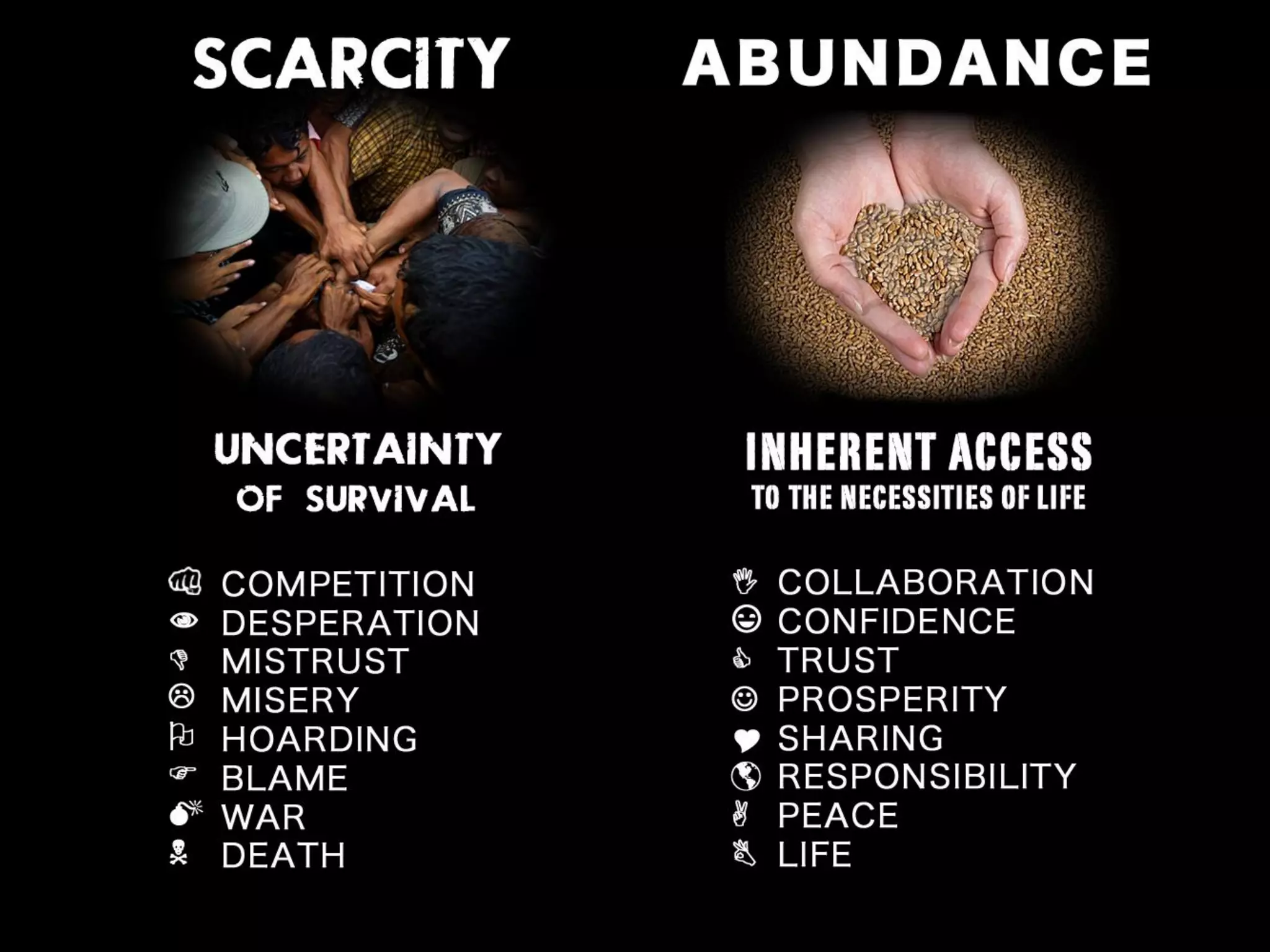
The Image of Limited Good
 George M. Foster , 1965 Peasant Society and the Image of Limited Good,
                       "American Anthropologist."
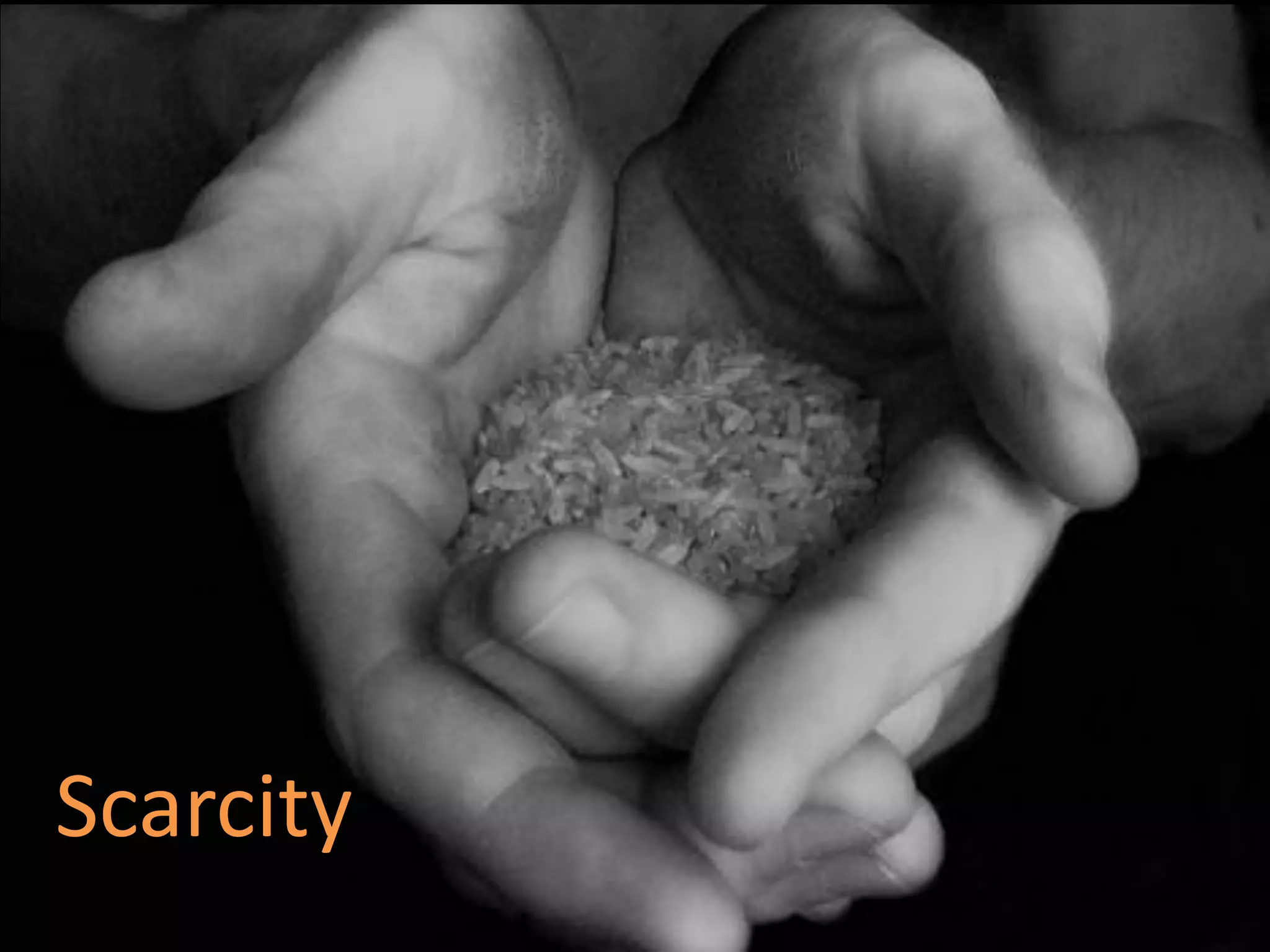
Scarcity
THE EMERGENCE OF
   KNOWLEDGE &
CREATIVE ECONOMIES
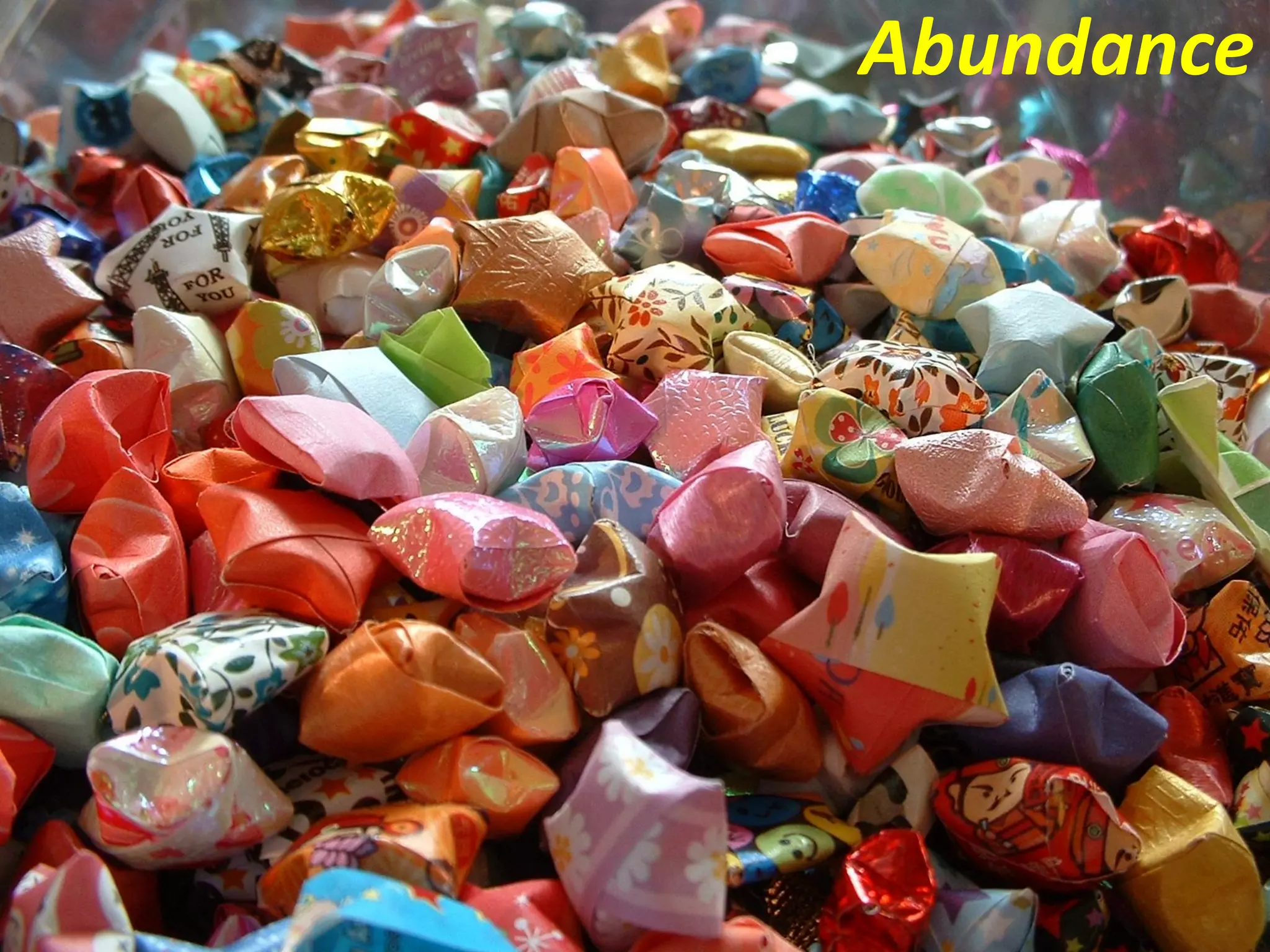
Abundance
So the big question is
Can we engineer serendipity
     through design?
YES!
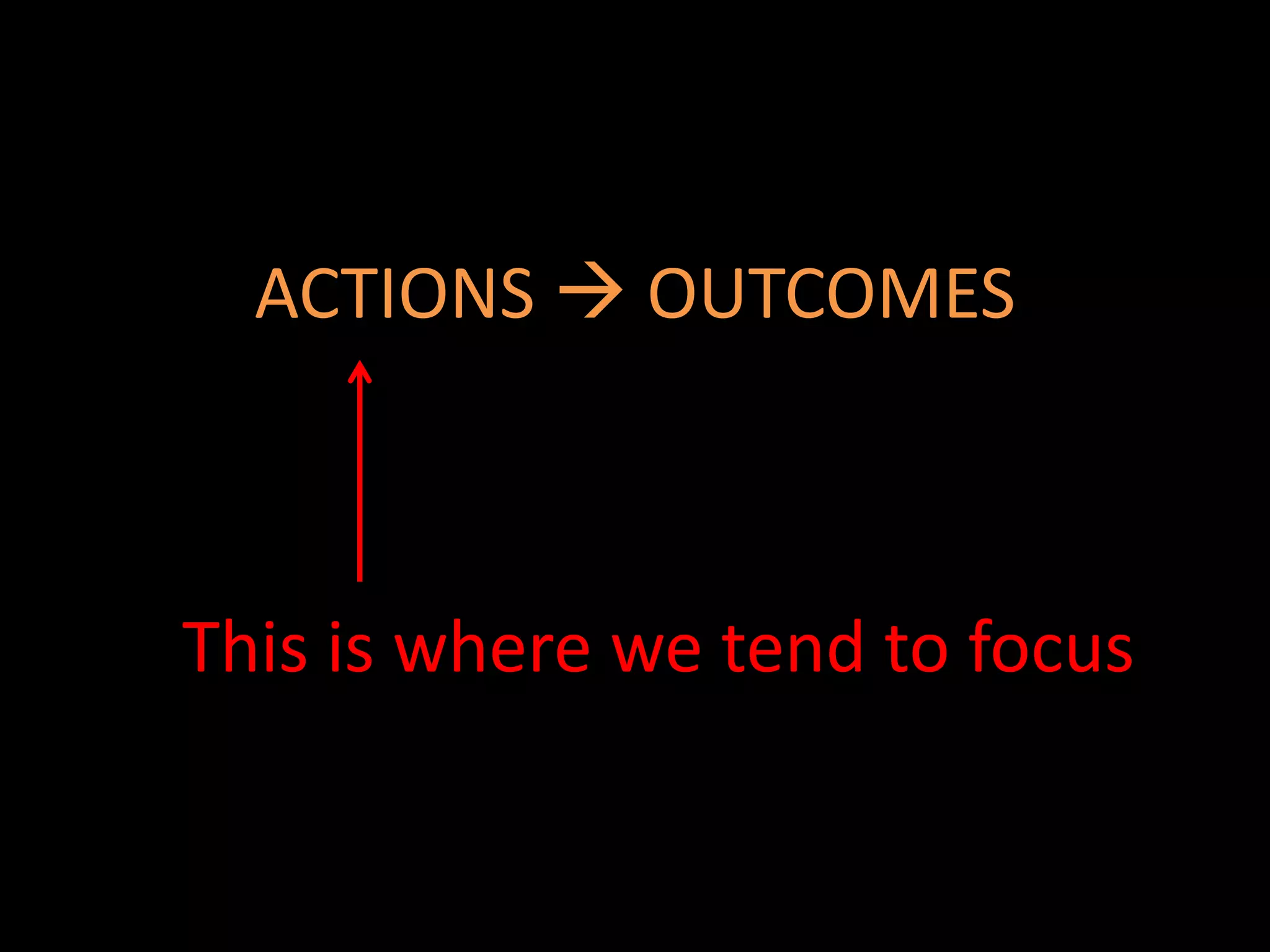
ACTIONS  OUTCOMES


This is where we tend to focus
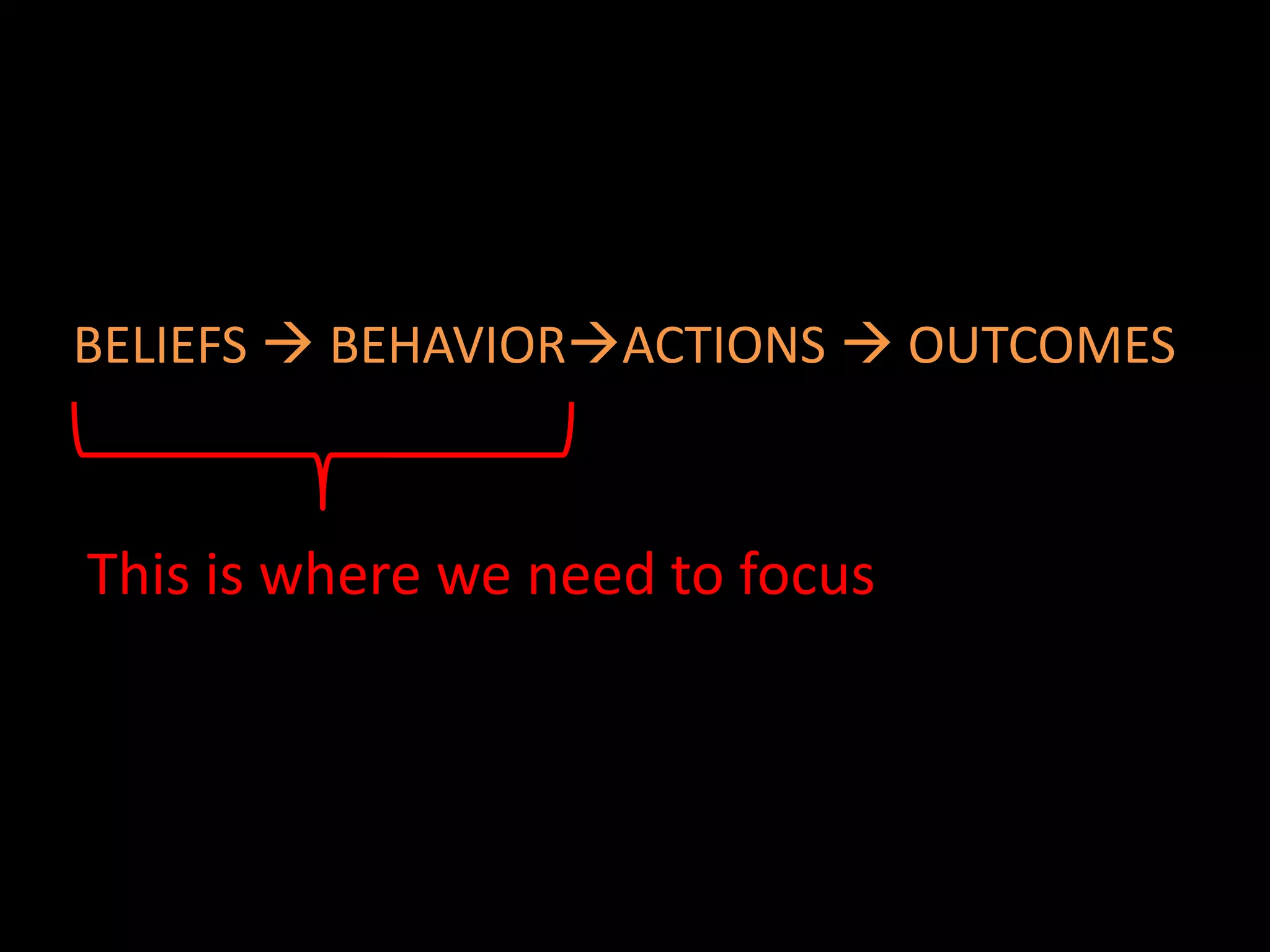
BELIEFS  BEHAVIORACTIONS  OUTCOMES


This is where we need to focus
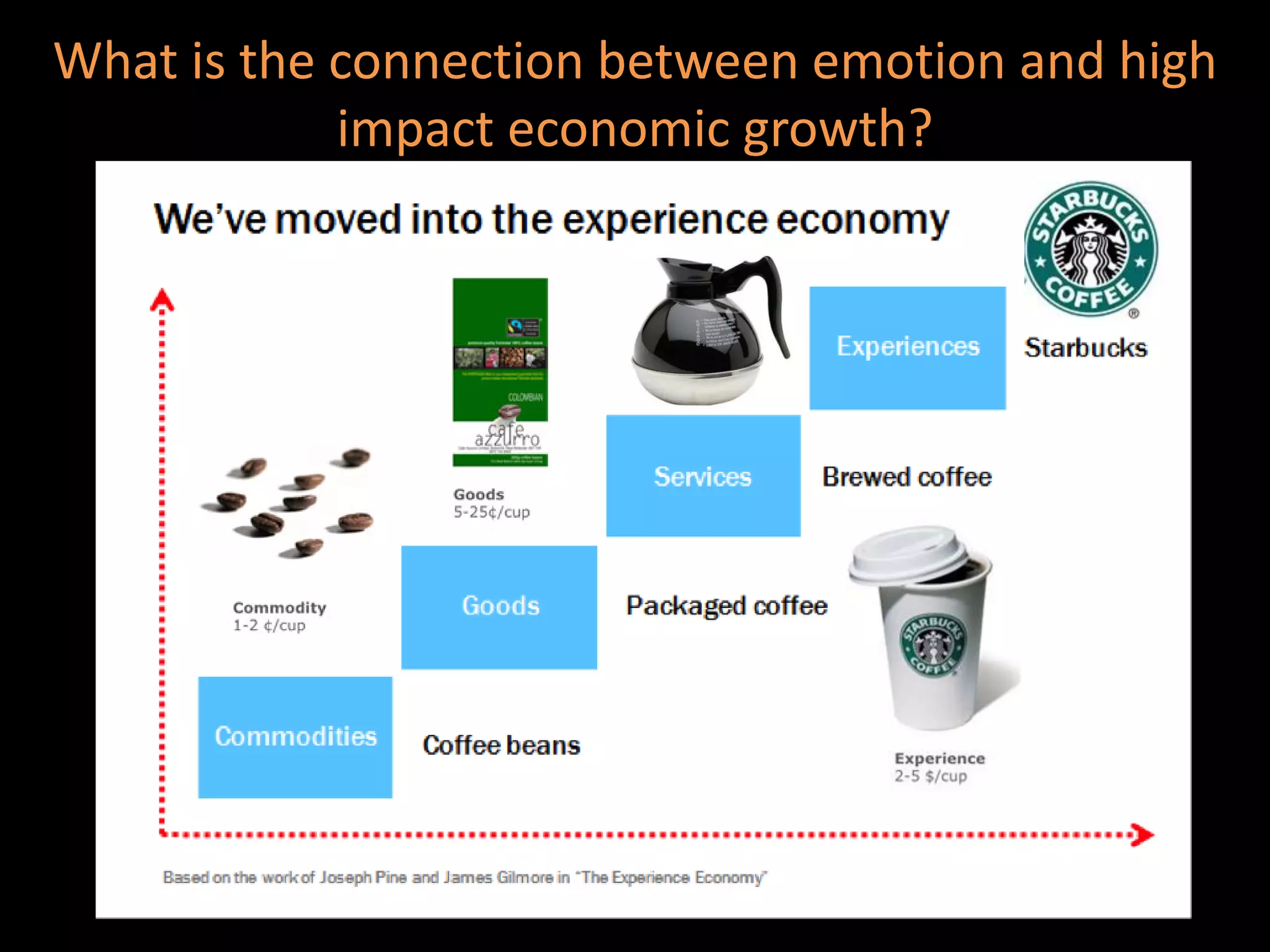
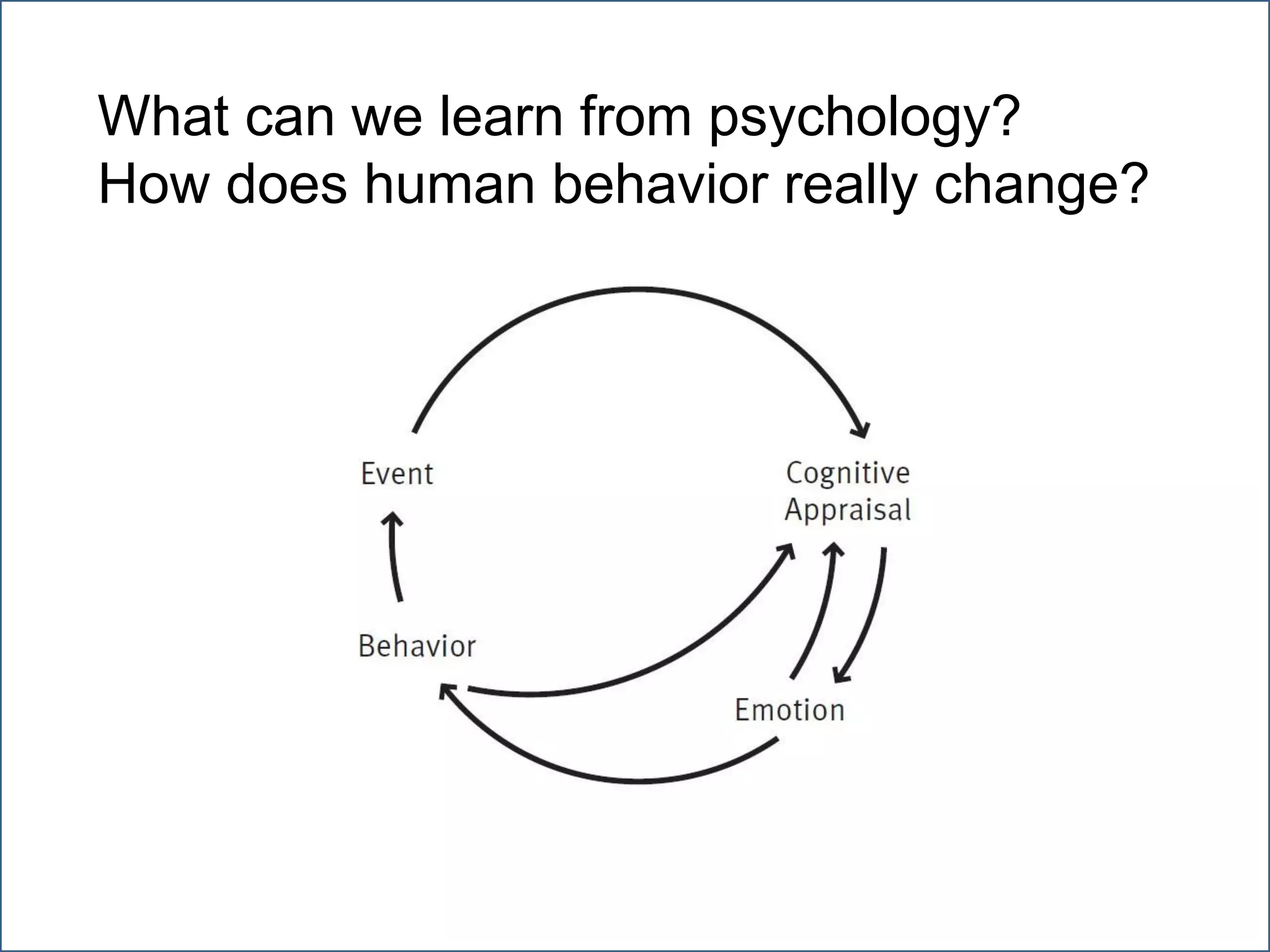
What is the connection between emotion and high
            impact economic growth?
What can we learn from psychology?
How does human behavior really change?


             Across an entire system
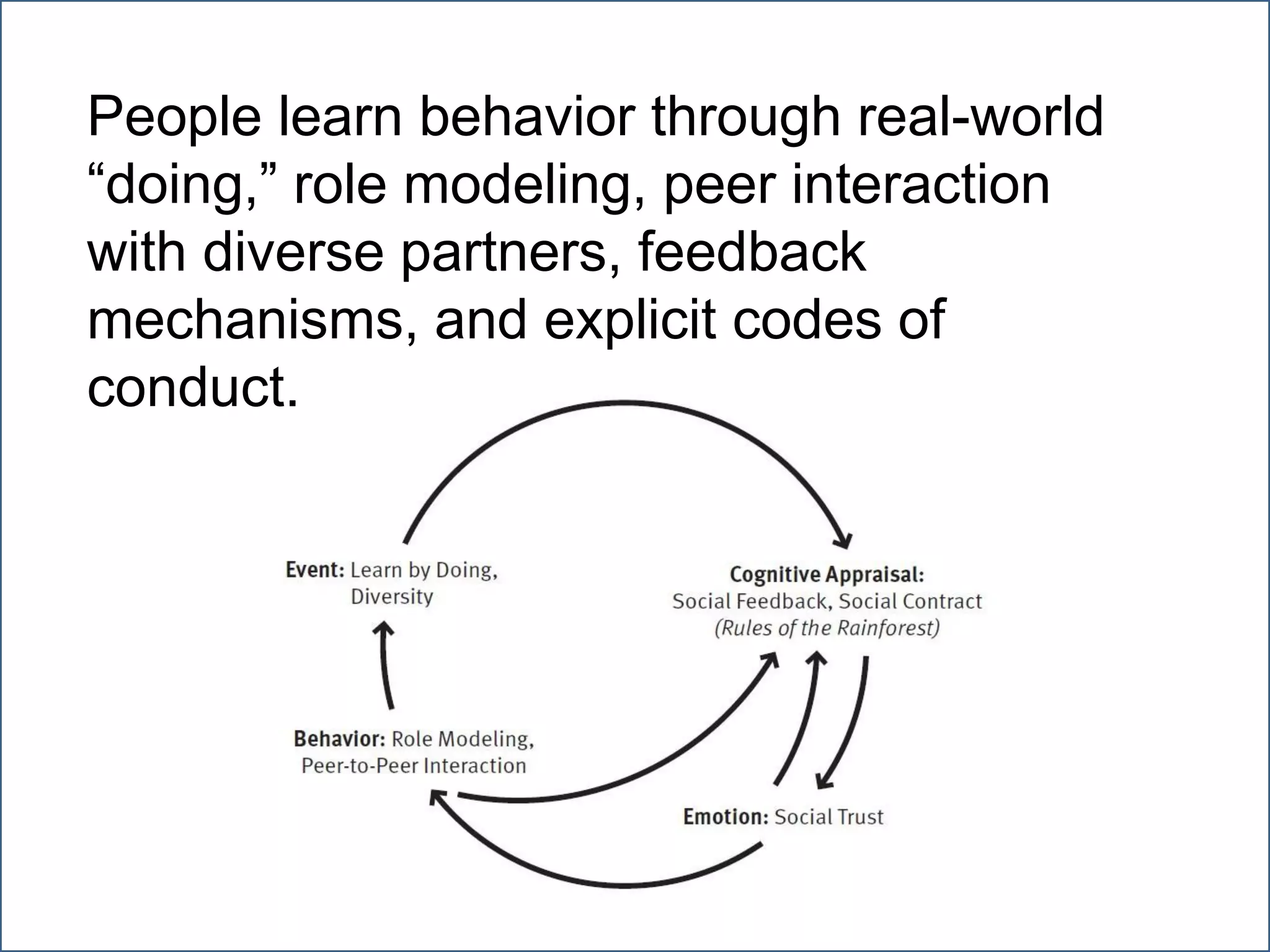
People learn behavior through real-world
“doing,” role modeling, peer interaction
with diverse partners, feedback
mechanisms, and explicit codes of
conduct.
               Across an entire system
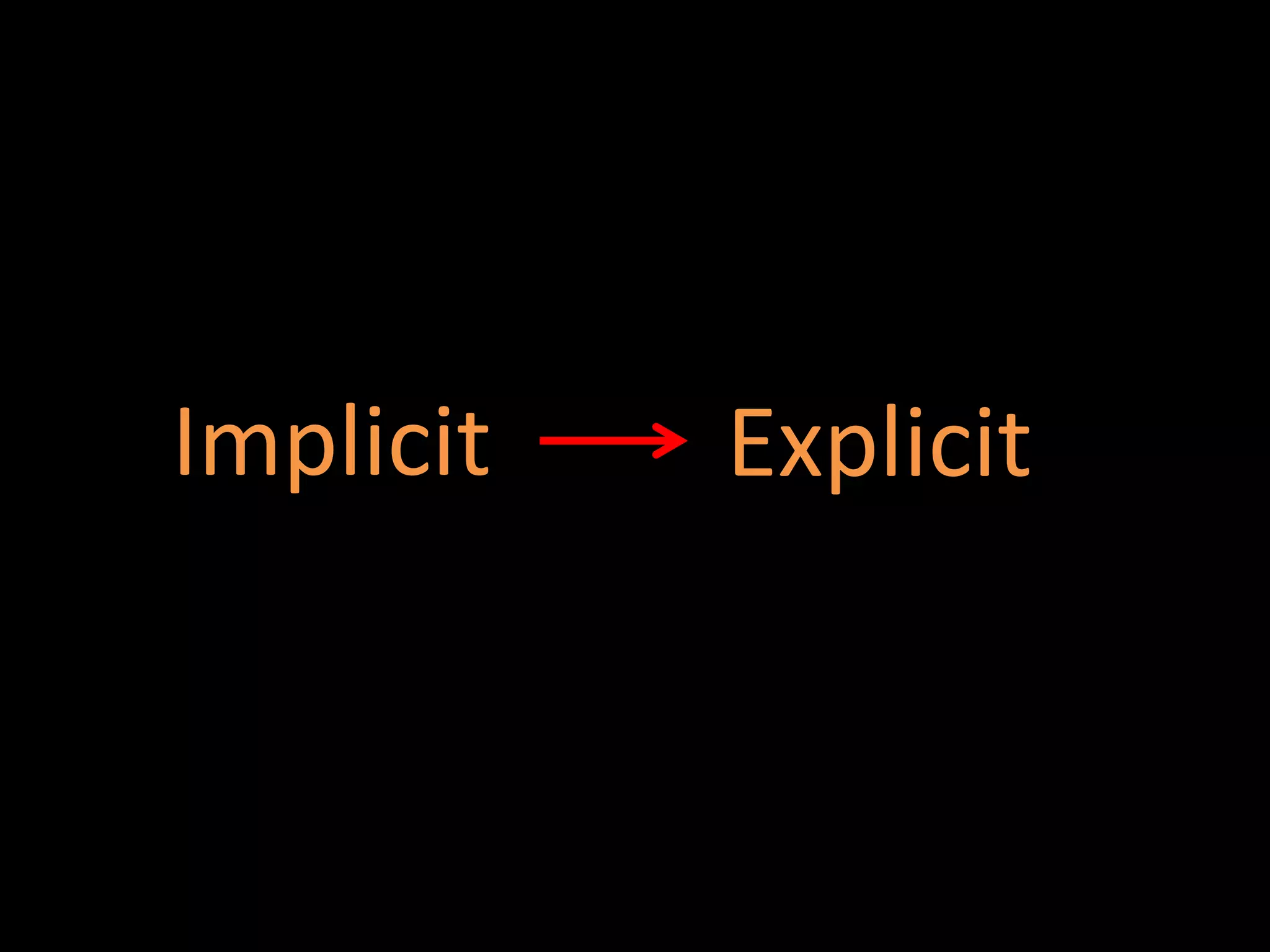
Implicit   Explicit
EXPLICIT vs TACIT
      The Science of Motivation
MIT, Carnegie Mellon, Univ. of Chicago
Rules of the Rainforest
Rule #1: Break rules and dream.
Rule #2: Open doors and listen.
Rule #3: Trust and be trustworthy.
Rule #4: Experiment and iterate together.
Rule #5: Seek fairness, not advantage.
Rule #6: Err, fail, and persist.
Rule #7: Pay it forward.
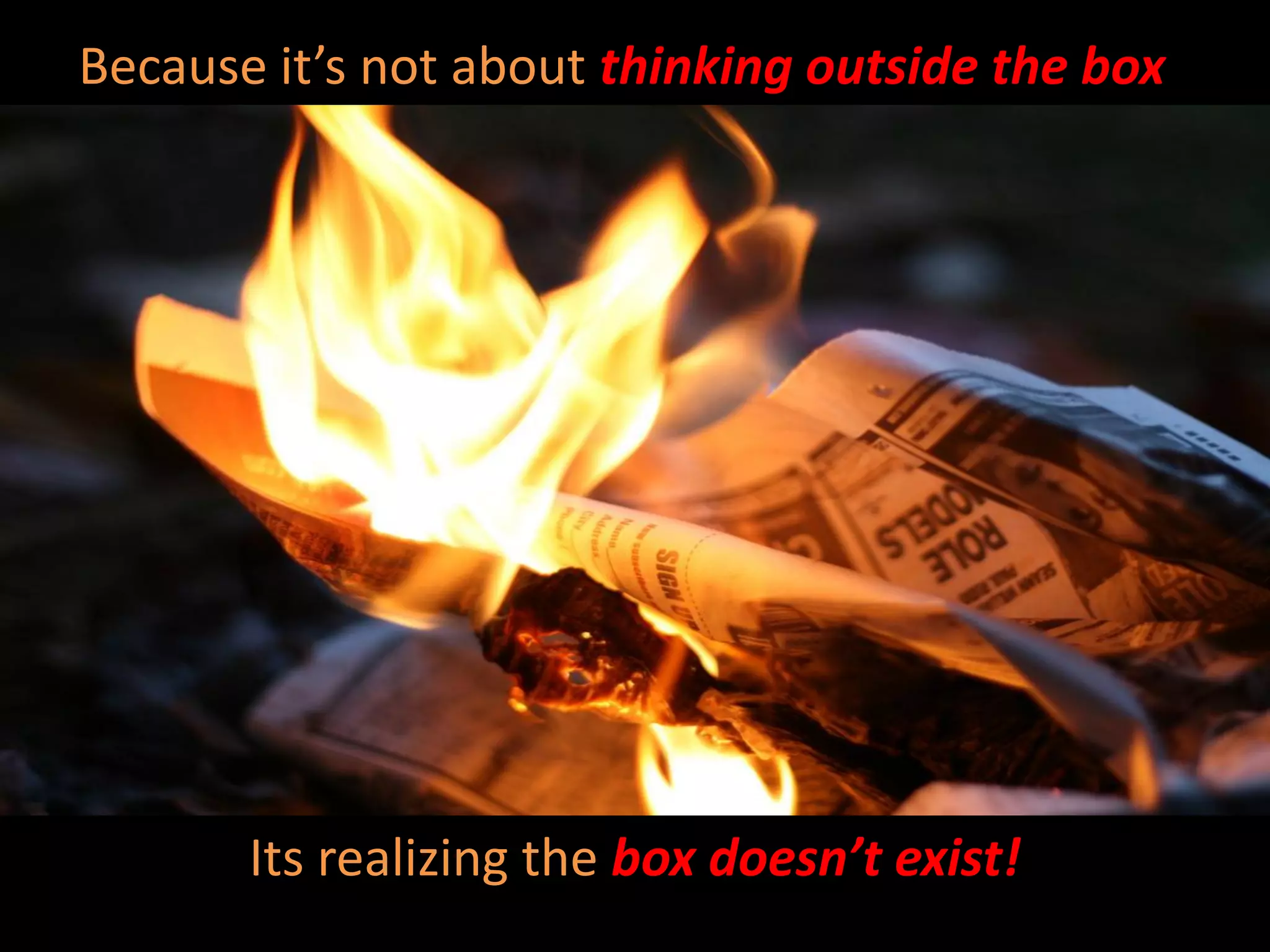
Because it’s not about thinking outside the box


       Its realizing the box doesn’t exist!
ʩ (I)= (√$+ √Ƙ) x ∆<μ ͣ+μ ͩ> + ʀ
20 years from now…what will be the next
‘According to Darwin’s Origin of Species, it is not
 the most intellectual of the species that survives;
    it is not the strongest that survives; but the
species that survives is the one that is able best to
 adapt and adjust to the changing environment in
                  which it finds itself.’
(Megginson, ‘Lessons from Europe for American Business’, Southwestern Social Science
                        Quarterly (1963) 44(1): 3-13, at p. 4.)
Try fast, learn quickly, fail small…
        and evolve rapidly
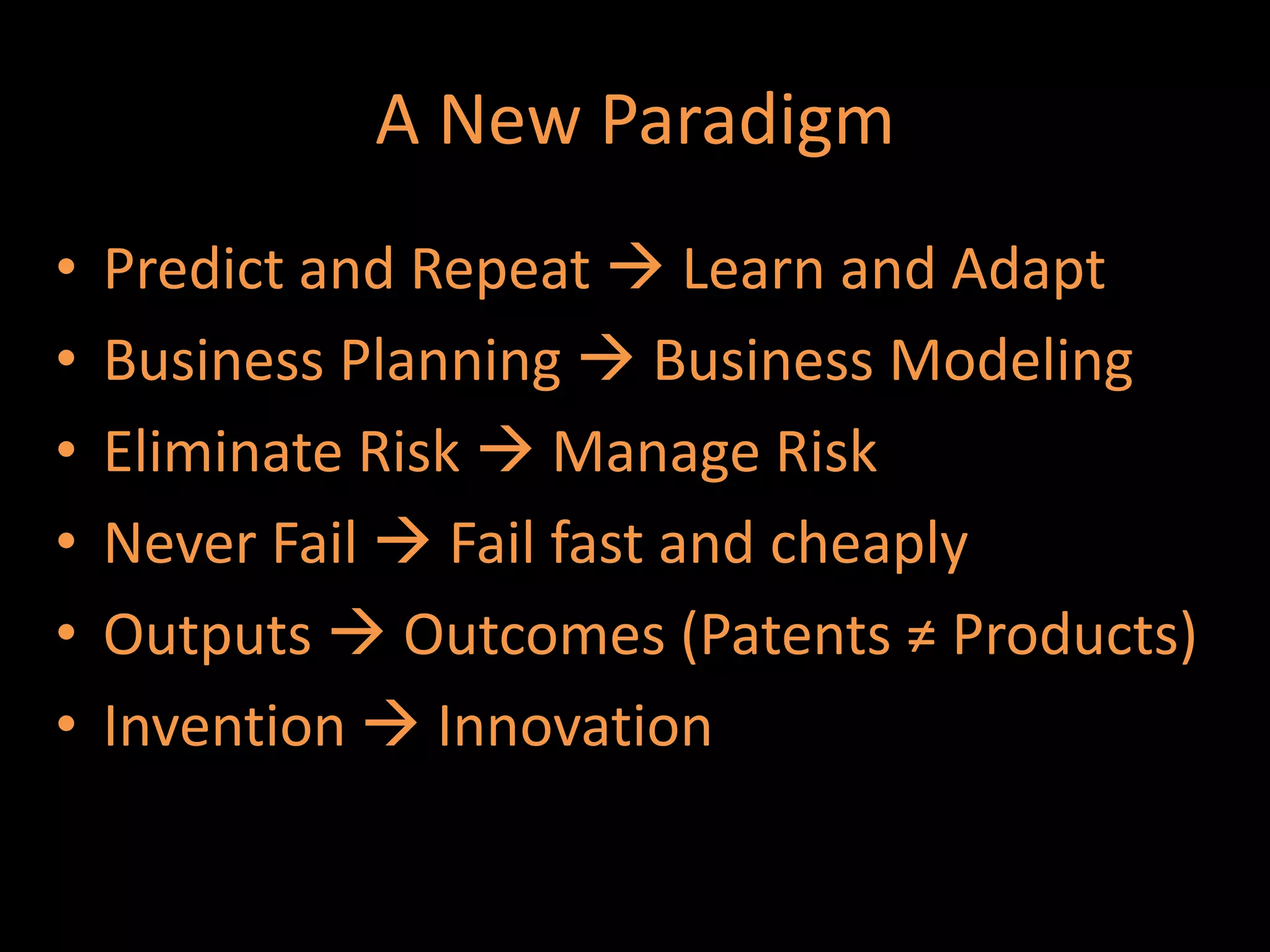
A New Paradigm
•   Predict and Repeat  Learn and Adapt
•   Business Planning  Business Modeling
•   Eliminate Risk  Manage Risk
•   Never Fail  Fail fast and cheaply
•   Outputs  Outcomes (Patents ≠ Products)
•   Invention  Innovation
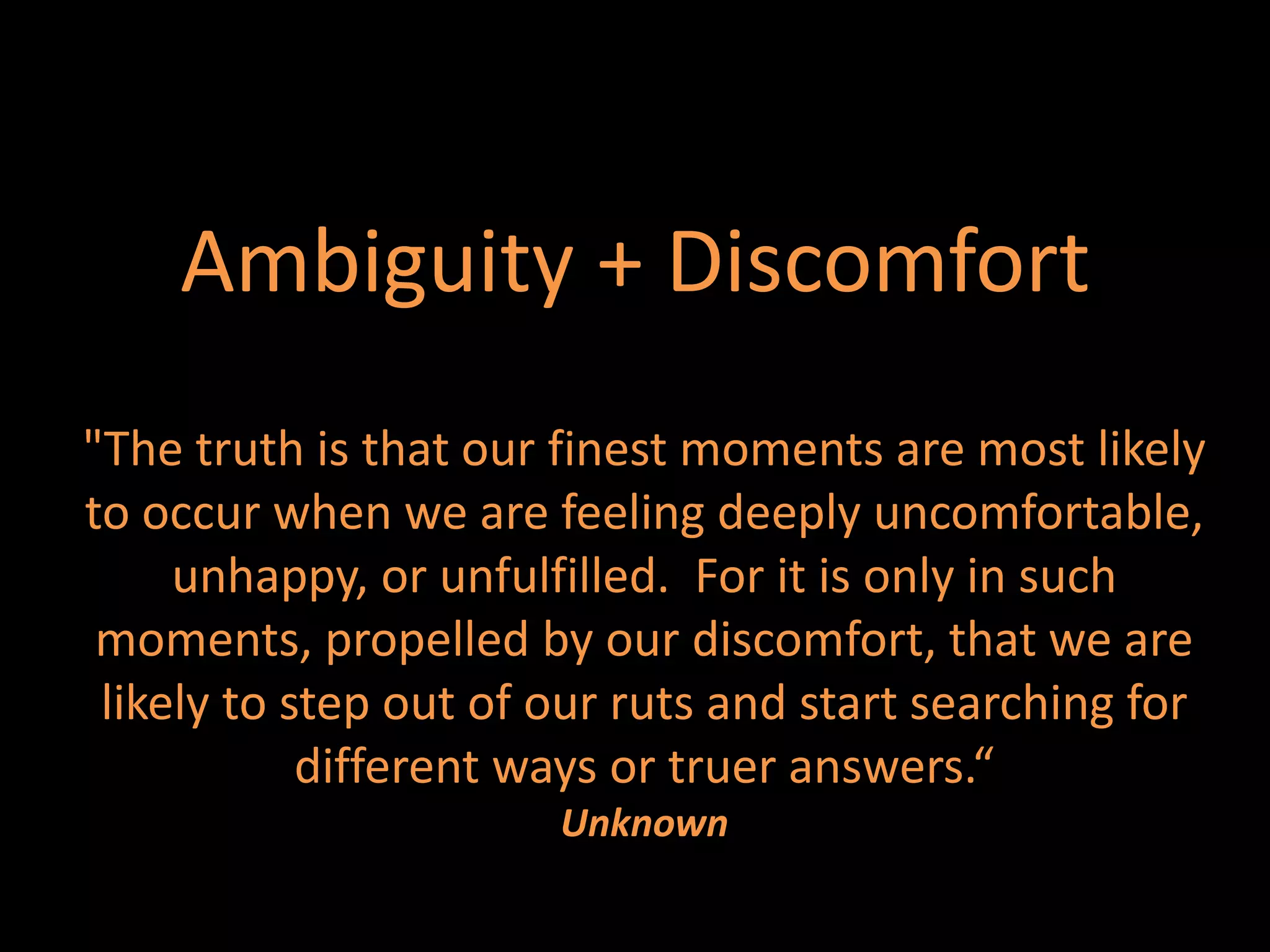
Ambiguity + Discomfort
"The truth is that our finest moments are most likely
to occur when we are feeling deeply uncomfortable,
     unhappy, or unfulfilled. For it is only in such
 moments, propelled by our discomfort, that we are
 likely to step out of our ruts and start searching for
            different ways or truer answers.“
                       Unknown
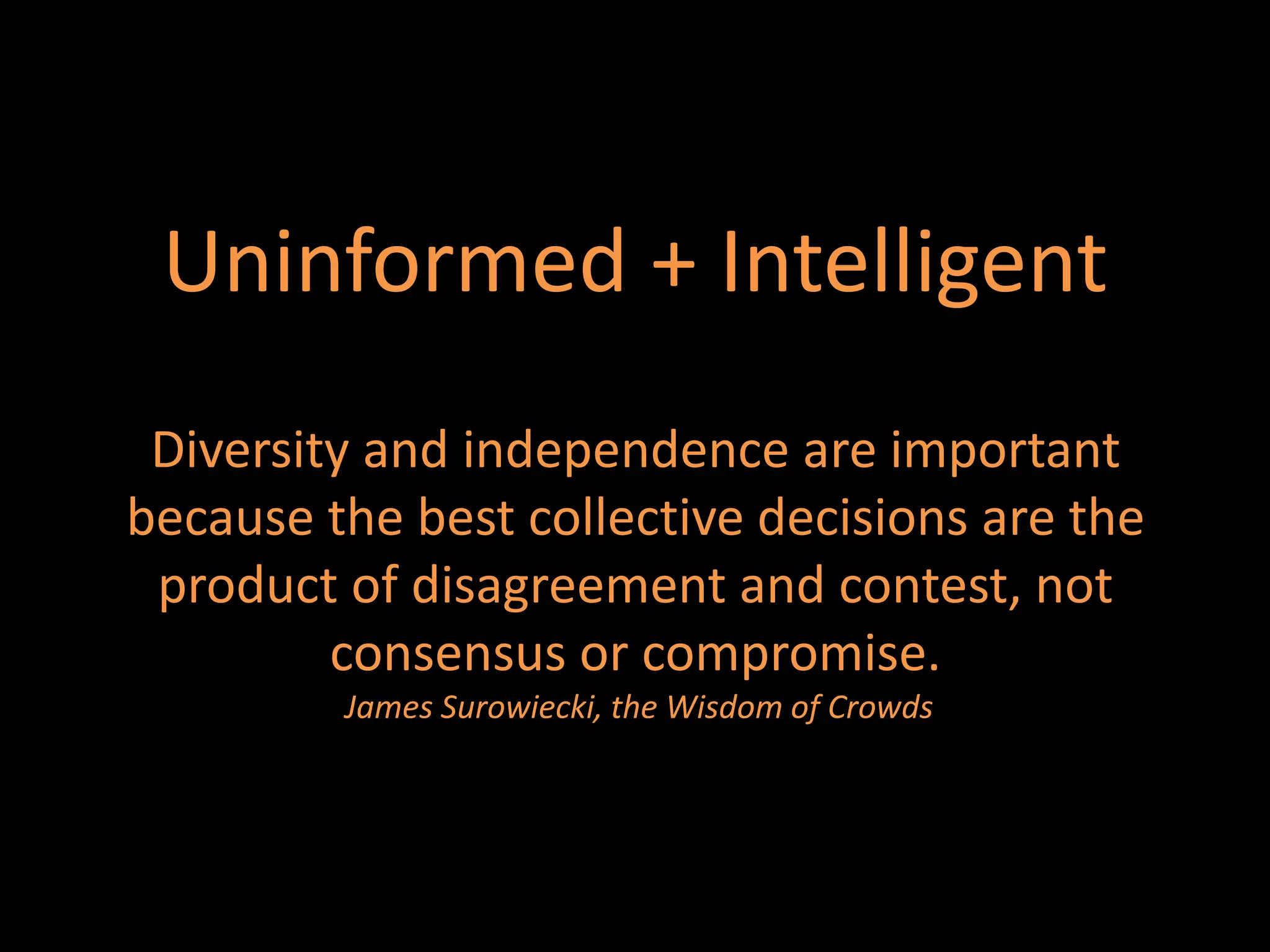
Uninformed + Intelligent
 Diversity and independence are important
because the best collective decisions are the
 product of disagreement and contest, not
         consensus or compromise.
         James Surowiecki, the Wisdom of Crowds
Roots before Branches
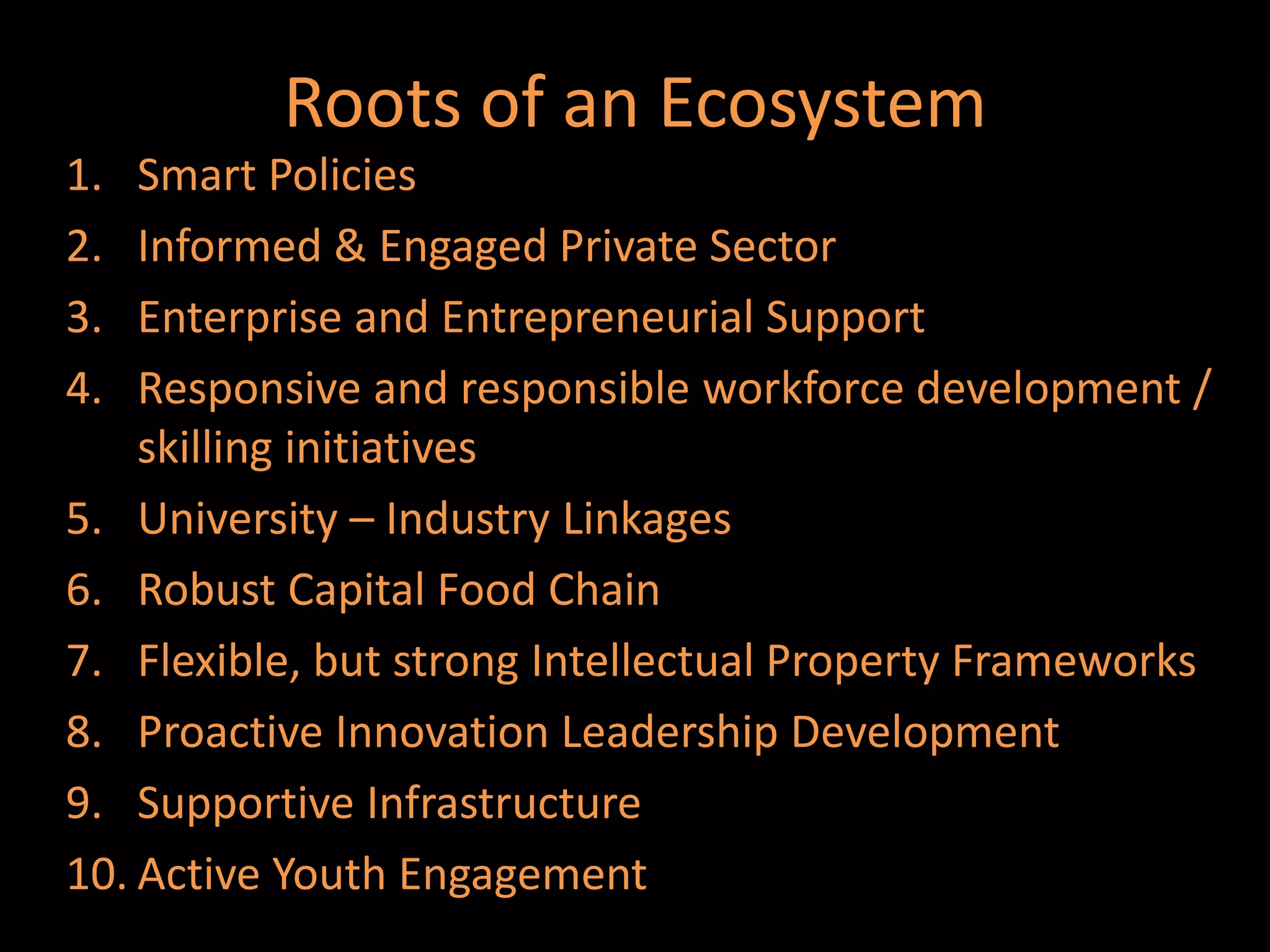
Roots of an Ecosystem
1.  Smart Policies
2.  Informed & Engaged Private Sector
3.  Enterprise and Entrepreneurial Support
4.  Responsive and responsible workforce development /
    skilling initiatives
5. University – Industry Linkages
6. Robust Capital Food Chain
7. Flexible, but strong Intellectual Property Frameworks
8. Proactive Innovation Leadership Development
9. Supportive Infrastructure
10. Active Youth Engagement
Innovation is about ideas having sex
         Matt Ridley, “the Rational Optimist “
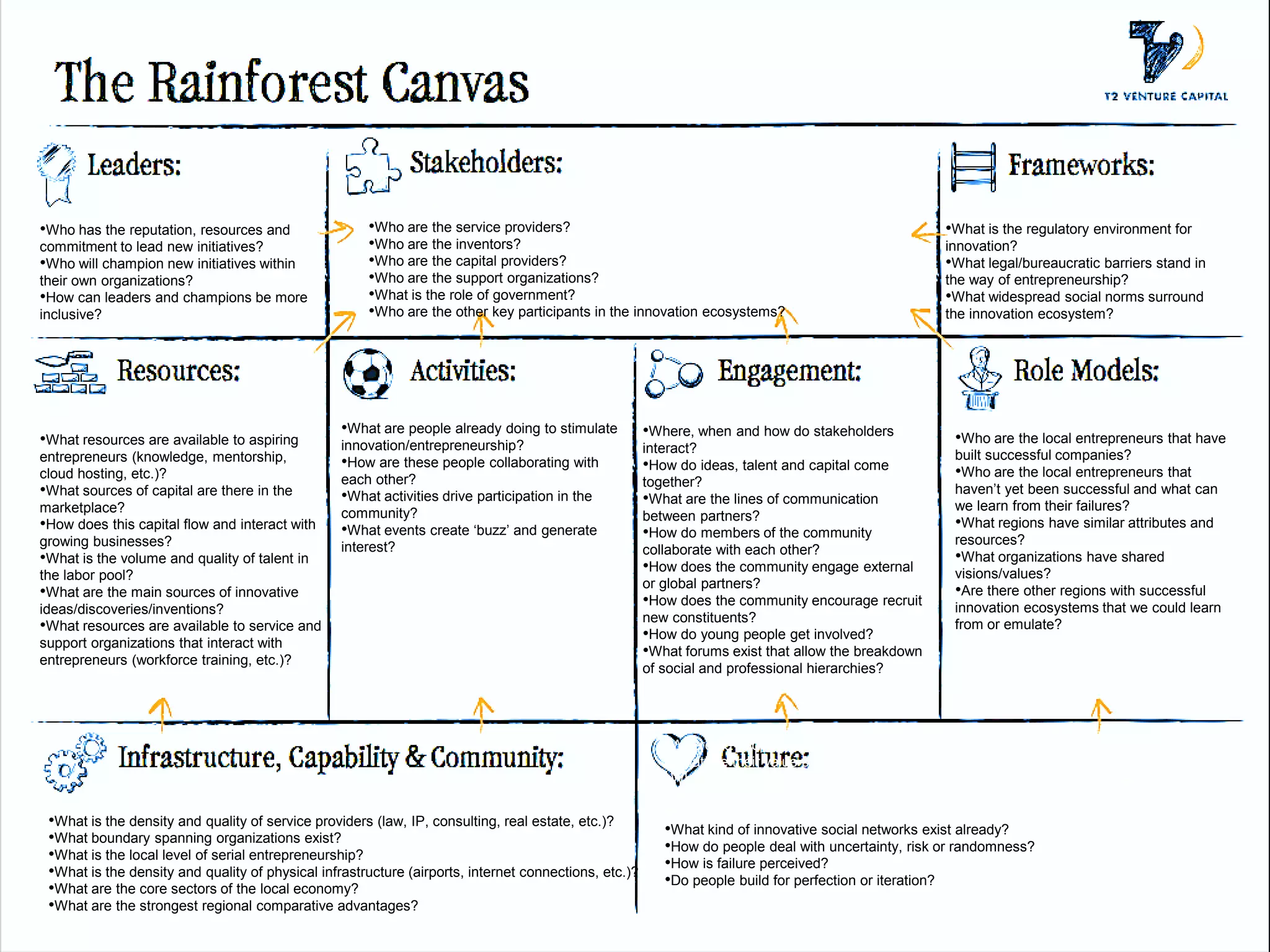
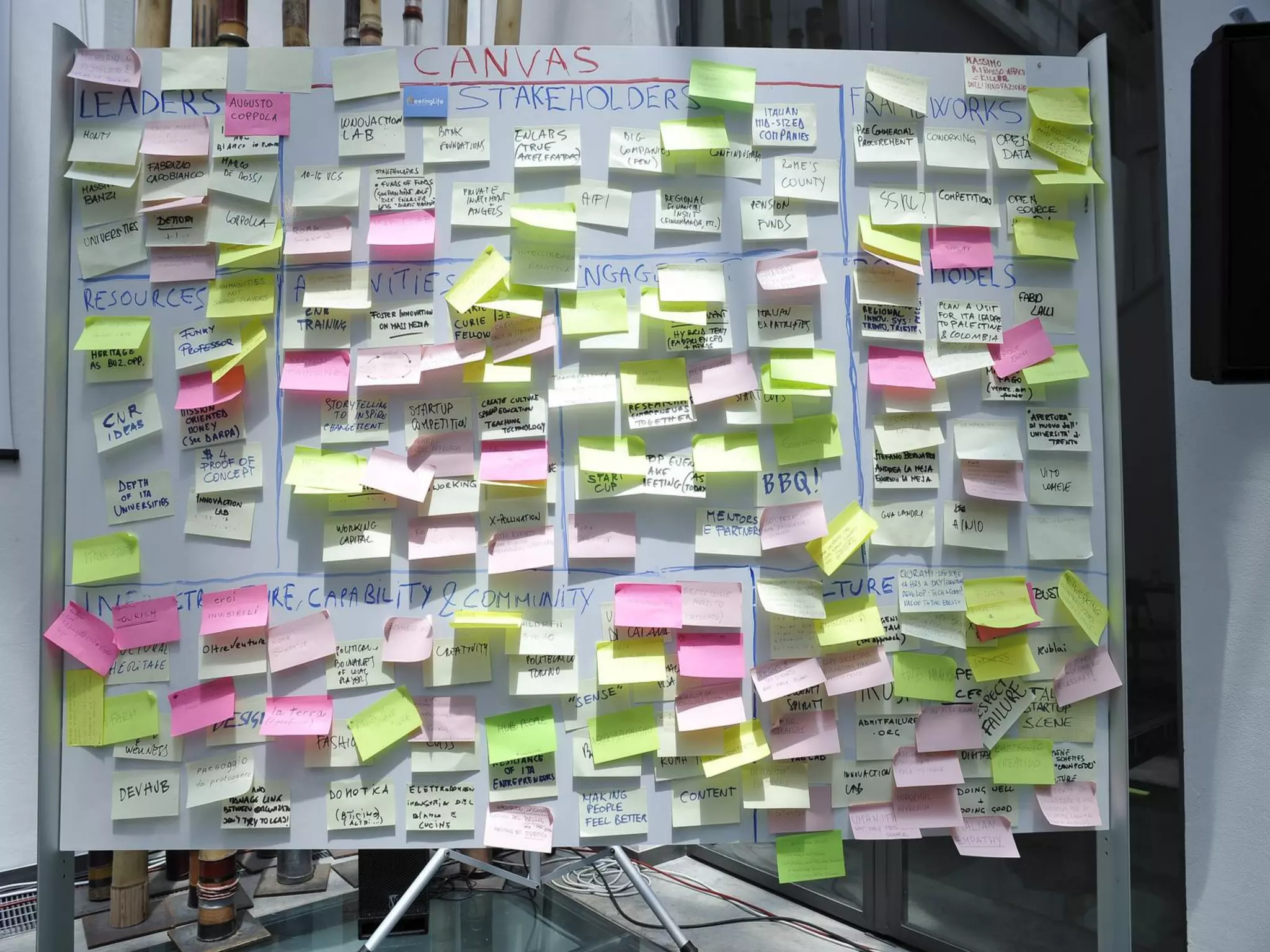
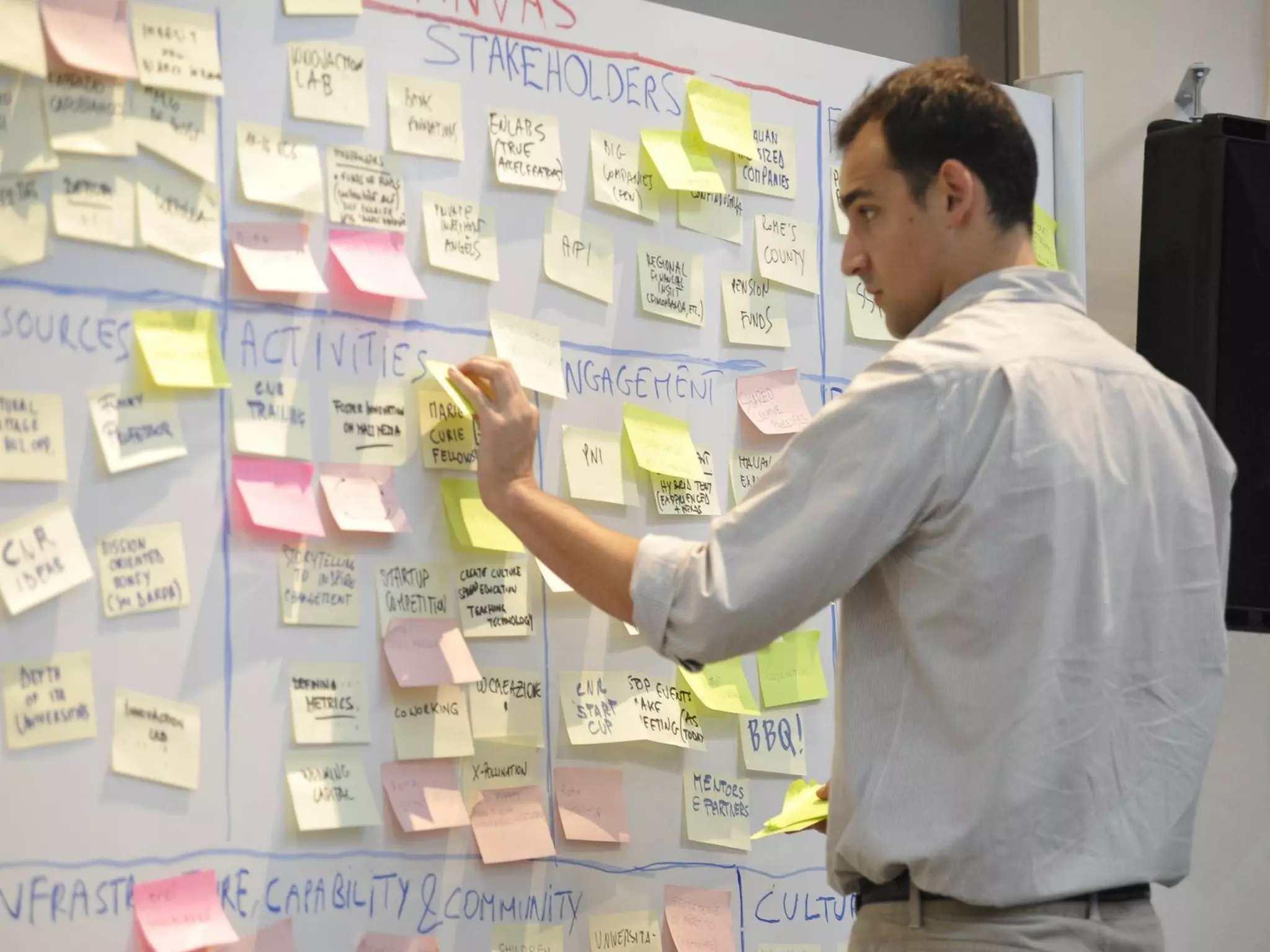
The Rainforest Canvas™
SEQUENCING THE REGIONAL
GENOME
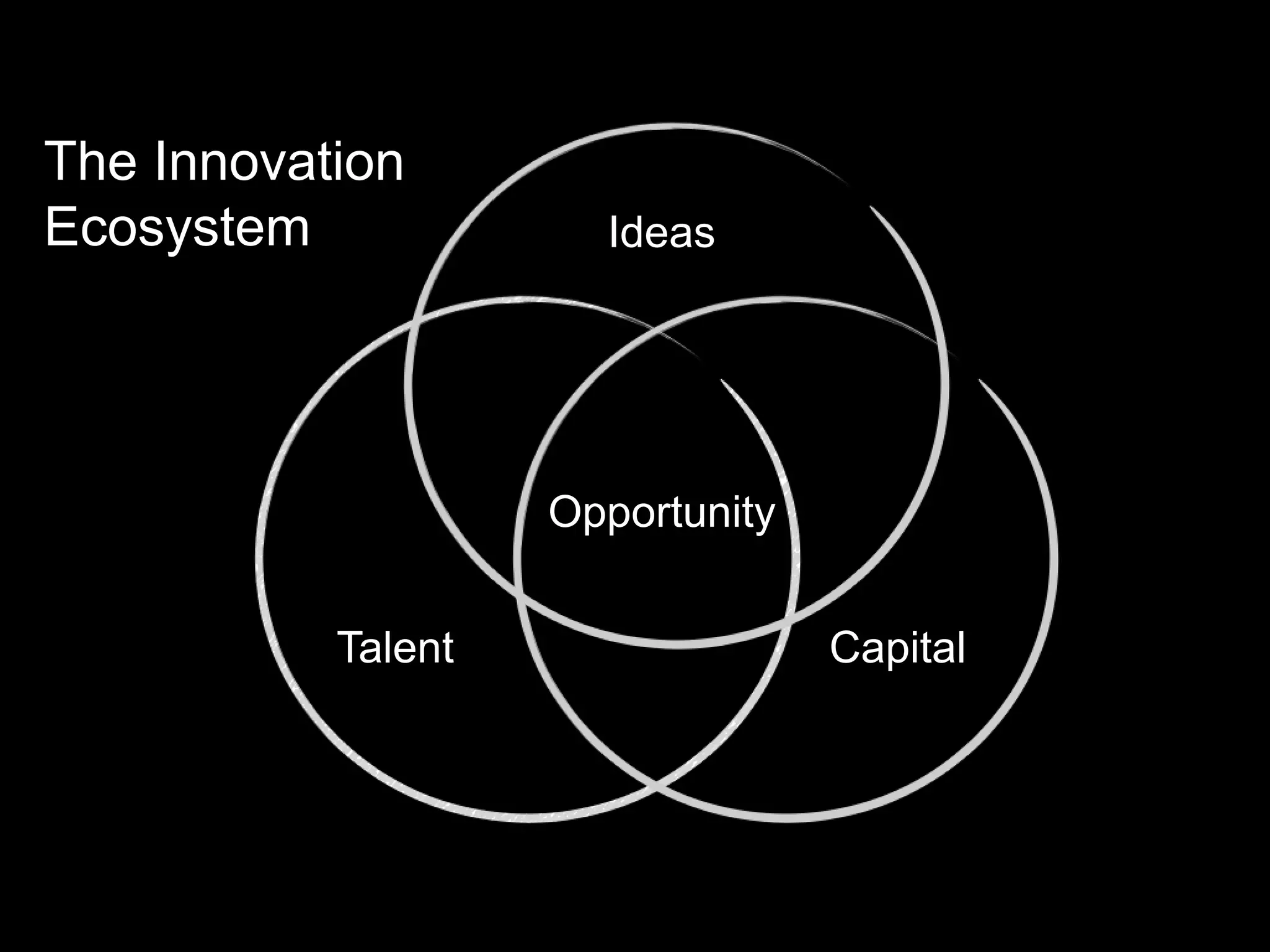
The Innovation
Ecosystem             Ideas


                    Opportunity


           Talent                 Capital
•Who are the entrepreneurs?
•Who has the reputation, resources and                •Who are the service providers?                                                                   •What is the regulatory environment for
commitment to lead new initiatives?                   •Who are the inventors?                                                                           innovation?
•Who will champion new initiatives within             •Who are the capital providers?                                                                   •What legal/bureaucratic barriers stand in
their own organizations?                              •Who are the support organizations?                                                               the way of entrepreneurship?
•How can leaders and champions be more                •What is the role of government?                                                                  •What widespread social norms surround
inclusive?                                            •Who are the other key participants in the innovation ecosystems?                                 the innovation ecosystem?


                                                  •What are people already doing to stimulate          •Where, when and how do stakeholders
•What resources are available to aspiring         innovation/entrepreneurship?
                                                                                                                                                          •Who are the local entrepreneurs that have
                                                                                                       interact?                                          built successful companies?
entrepreneurs (knowledge, mentorship,             •How are these people collaborating with             •How do ideas, talent and capital come
cloud hosting, etc.)?                             each other?
                                                                                                                                                          •Who are the local entrepreneurs that
                                                                                                       together?
•What sources of capital are there in the         •What activities drive participation in the          •What are the lines of communication
                                                                                                                                                          haven’t yet been successful and what can
marketplace?                                                                                                                                              we learn from their failures?
                                                  community?                                           between partners?
•How does this capital flow and interact with     •What events create ‘buzz’ and generate                                                                 •What regions have similar attributes and
growing businesses?
                                                                                                       •How do members of the community                   resources?
                                                  interest?                                            collaborate with each other?
•What is the volume and quality of talent in                                                                                                              •What organizations have shared
the labor pool?
                                                                                                       •How does the community engage external            visions/values?
                                                                                                       or global partners?                                •Are there other regions with successful
•What are the main sources of innovative                                                               •How does the community encourage recruit
ideas/discoveries/inventions?                                                                                                                             innovation ecosystems that we could learn
                                                                                                       new constituents?
•What resources are available to service and                                                           •How do young people get involved?
                                                                                                                                                          from or emulate?
support organizations that interact with
entrepreneurs (workforce training, etc.)?
                                                                                                       •What forums exist that allow the breakdown
                                                                                                       of social and professional hierarchies?


                                                                                                          •Where do people come from?
                                                                                                          •What are their value systems?
                                                                                                          •What are their motivations (money, reputation, lifestyle, self expression, etc.)?
                                                                                                          •What are the ‘amenities of place’?
 •What is the density and quality of service providers (law, IP, consulting, real estate, etc.)?          •How do we create and maintain a sense of urgency?
 •What boundary spanning organizations exist?                                                             •What kind of innovative social networks exist already?
 •What is the local level of serial entrepreneurship?                                                     •How do people deal with uncertainty, risk or randomness?
 •What is the density and quality of physical infrastructure (airports, internet connections, etc.)?      •How is failure perceived?
 •What are the core sectors of the local economy?                                                         •Do people build for perfection or iteration?
 •What are the strongest regional comparative advantages?
“While we associate economic growth
   with technological development,
organizational innovation has played an
 equal, if not more important role since
    the beginning of the industrial
               revolution.”
 Economic historians Douglass North and Robert Thomas (P47 of “Trust”)
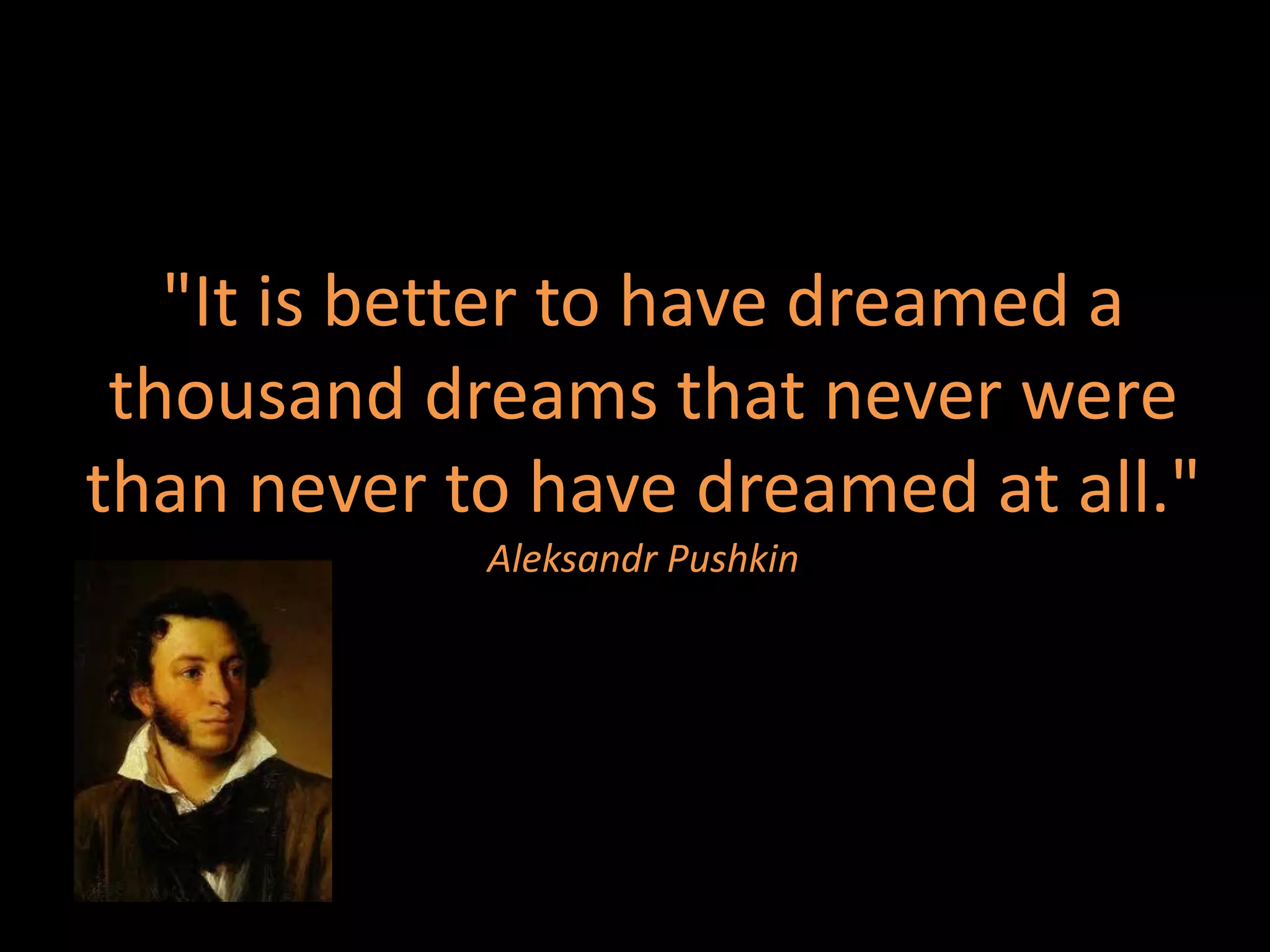
"It is better to have dreamed a
 thousand dreams that never were
than never to have dreamed at all."
            Aleksandr Pushkin
A new book by Victor W. Hwang and Greg Horowitt


Greg Horowitt
Managing Director, T2 Venture Capital
Co-Founder, Global CONNECT, UC San Diego          www.therainforestbook.com
Kauffman Fellow                                   www.innosummit.com

the Rainforest: the Secret to Building the Next Silicon Valley

  • 1.
    A new bookby Victor W. Hwang and Greg Horowitt Greg Horowitt, Co-Founder & Managing Director, T2 Venture Capital Co-Founder, UCSD Global CONNECT www.therainforestbook.com www.innosummit.com
  • 2.
    ONCE UPON ATIME…
  • 6.
    Economic Process Land Add Value Labor Capital Outputs Knowledge
  • 7.
  • 8.
    The Image ofLimited Good George M. Foster , 1965 Peasant Society and the Image of Limited Good, "American Anthropologist."
  • 9.
  • 11.
    THE EMERGENCE OF KNOWLEDGE & CREATIVE ECONOMIES
  • 12.
  • 16.
    So the bigquestion is Can we engineer serendipity through design?
  • 17.
  • 18.
    ACTIONS  OUTCOMES Thisis where we tend to focus
  • 19.
    BELIEFS  BEHAVIORACTIONS OUTCOMES This is where we need to focus
  • 20.
    What is theconnection between emotion and high impact economic growth?
  • 22.
    What can welearn from psychology? How does human behavior really change? Across an entire system
  • 23.
    People learn behaviorthrough real-world “doing,” role modeling, peer interaction with diverse partners, feedback mechanisms, and explicit codes of conduct. Across an entire system
  • 25.
    Implicit Explicit
  • 26.
    EXPLICIT vs TACIT The Science of Motivation MIT, Carnegie Mellon, Univ. of Chicago
  • 27.
    Rules of theRainforest Rule #1: Break rules and dream. Rule #2: Open doors and listen. Rule #3: Trust and be trustworthy. Rule #4: Experiment and iterate together. Rule #5: Seek fairness, not advantage. Rule #6: Err, fail, and persist. Rule #7: Pay it forward.
  • 28.
    Because it’s notabout thinking outside the box Its realizing the box doesn’t exist!
  • 29.
    ʩ (I)= (√$+√Ƙ) x ∆<μ ͣ+μ ͩ> + ʀ
  • 30.
    20 years fromnow…what will be the next
  • 31.
    ‘According to Darwin’sOrigin of Species, it is not the most intellectual of the species that survives; it is not the strongest that survives; but the species that survives is the one that is able best to adapt and adjust to the changing environment in which it finds itself.’ (Megginson, ‘Lessons from Europe for American Business’, Southwestern Social Science Quarterly (1963) 44(1): 3-13, at p. 4.)
  • 32.
    Try fast, learnquickly, fail small… and evolve rapidly
  • 33.
    A New Paradigm • Predict and Repeat  Learn and Adapt • Business Planning  Business Modeling • Eliminate Risk  Manage Risk • Never Fail  Fail fast and cheaply • Outputs  Outcomes (Patents ≠ Products) • Invention  Innovation
  • 34.
    Ambiguity + Discomfort "Thetruth is that our finest moments are most likely to occur when we are feeling deeply uncomfortable, unhappy, or unfulfilled. For it is only in such moments, propelled by our discomfort, that we are likely to step out of our ruts and start searching for different ways or truer answers.“ Unknown
  • 35.
    Uninformed + Intelligent Diversity and independence are important because the best collective decisions are the product of disagreement and contest, not consensus or compromise. James Surowiecki, the Wisdom of Crowds
  • 36.
  • 37.
    Roots of anEcosystem 1. Smart Policies 2. Informed & Engaged Private Sector 3. Enterprise and Entrepreneurial Support 4. Responsive and responsible workforce development / skilling initiatives 5. University – Industry Linkages 6. Robust Capital Food Chain 7. Flexible, but strong Intellectual Property Frameworks 8. Proactive Innovation Leadership Development 9. Supportive Infrastructure 10. Active Youth Engagement
  • 38.
    Innovation is aboutideas having sex Matt Ridley, “the Rational Optimist “
  • 39.
  • 40.
    The Innovation Ecosystem Ideas Opportunity Talent Capital
  • 42.
    •Who are theentrepreneurs? •Who has the reputation, resources and •Who are the service providers? •What is the regulatory environment for commitment to lead new initiatives? •Who are the inventors? innovation? •Who will champion new initiatives within •Who are the capital providers? •What legal/bureaucratic barriers stand in their own organizations? •Who are the support organizations? the way of entrepreneurship? •How can leaders and champions be more •What is the role of government? •What widespread social norms surround inclusive? •Who are the other key participants in the innovation ecosystems? the innovation ecosystem? •What are people already doing to stimulate •Where, when and how do stakeholders •What resources are available to aspiring innovation/entrepreneurship? •Who are the local entrepreneurs that have interact? built successful companies? entrepreneurs (knowledge, mentorship, •How are these people collaborating with •How do ideas, talent and capital come cloud hosting, etc.)? each other? •Who are the local entrepreneurs that together? •What sources of capital are there in the •What activities drive participation in the •What are the lines of communication haven’t yet been successful and what can marketplace? we learn from their failures? community? between partners? •How does this capital flow and interact with •What events create ‘buzz’ and generate •What regions have similar attributes and growing businesses? •How do members of the community resources? interest? collaborate with each other? •What is the volume and quality of talent in •What organizations have shared the labor pool? •How does the community engage external visions/values? or global partners? •Are there other regions with successful •What are the main sources of innovative •How does the community encourage recruit ideas/discoveries/inventions? innovation ecosystems that we could learn new constituents? •What resources are available to service and •How do young people get involved? from or emulate? support organizations that interact with entrepreneurs (workforce training, etc.)? •What forums exist that allow the breakdown of social and professional hierarchies? •Where do people come from? •What are their value systems? •What are their motivations (money, reputation, lifestyle, self expression, etc.)? •What are the ‘amenities of place’? •What is the density and quality of service providers (law, IP, consulting, real estate, etc.)? •How do we create and maintain a sense of urgency? •What boundary spanning organizations exist? •What kind of innovative social networks exist already? •What is the local level of serial entrepreneurship? •How do people deal with uncertainty, risk or randomness? •What is the density and quality of physical infrastructure (airports, internet connections, etc.)? •How is failure perceived? •What are the core sectors of the local economy? •Do people build for perfection or iteration? •What are the strongest regional comparative advantages?
  • 49.
    “While we associateeconomic growth with technological development, organizational innovation has played an equal, if not more important role since the beginning of the industrial revolution.” Economic historians Douglass North and Robert Thomas (P47 of “Trust”)
  • 50.
    "It is betterto have dreamed a thousand dreams that never were than never to have dreamed at all." Aleksandr Pushkin
  • 51.
    A new bookby Victor W. Hwang and Greg Horowitt Greg Horowitt Managing Director, T2 Venture Capital Co-Founder, Global CONNECT, UC San Diego www.therainforestbook.com Kauffman Fellow www.innosummit.com