

The
Power of Stickers
by
Regina
Holliday
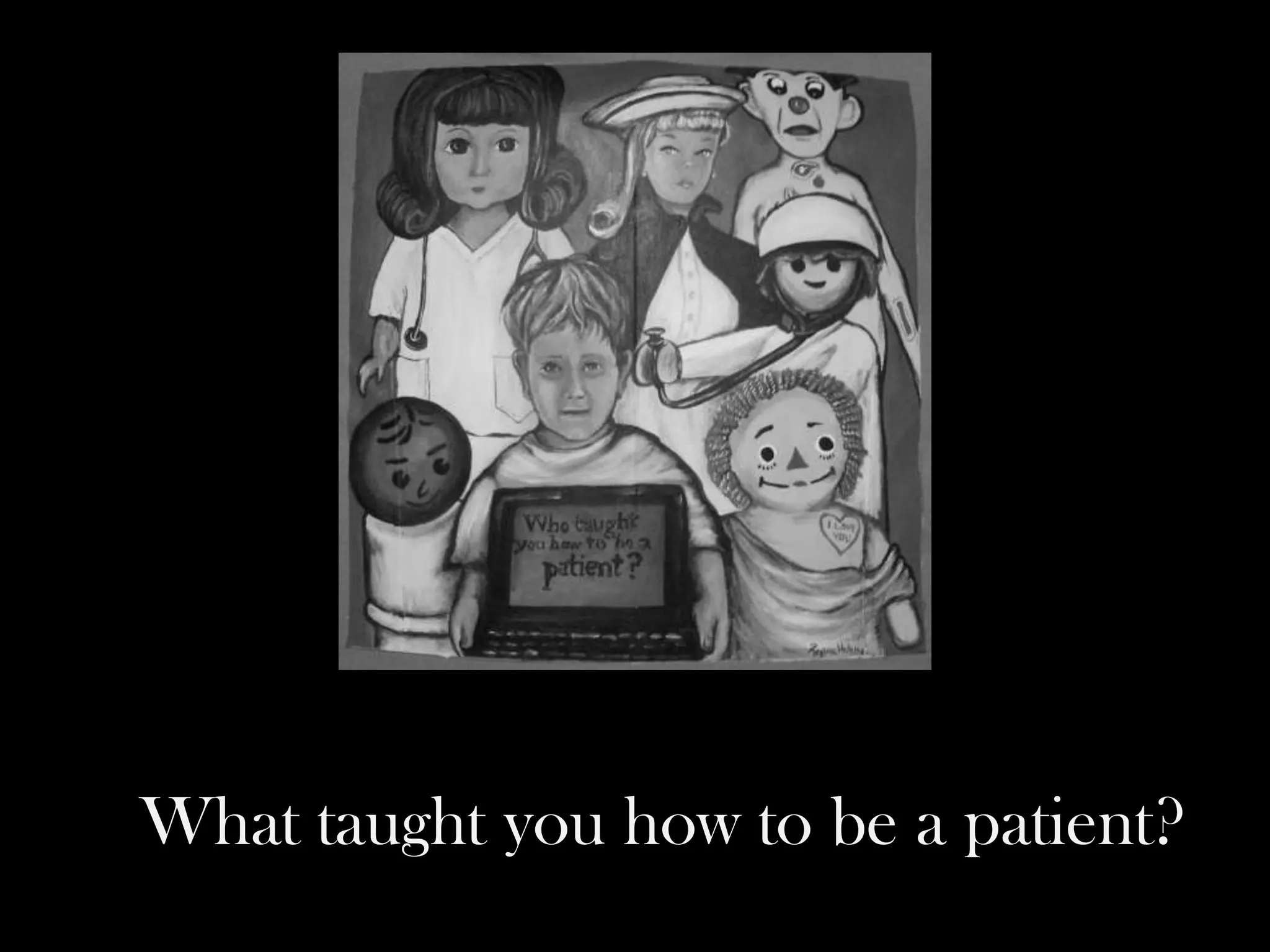
What taught you how to be a patient?
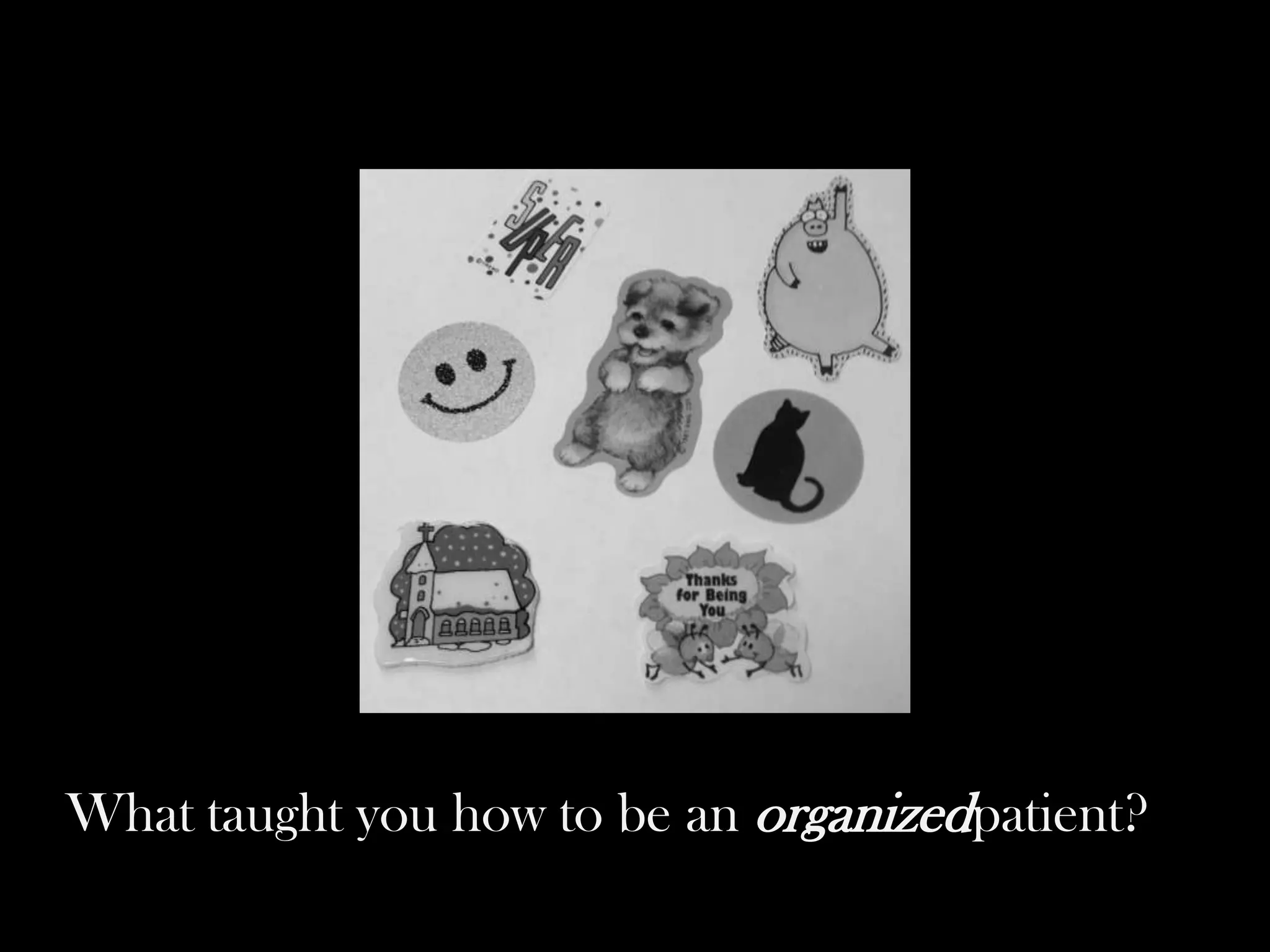
What taught you how to be an organizedpatient?
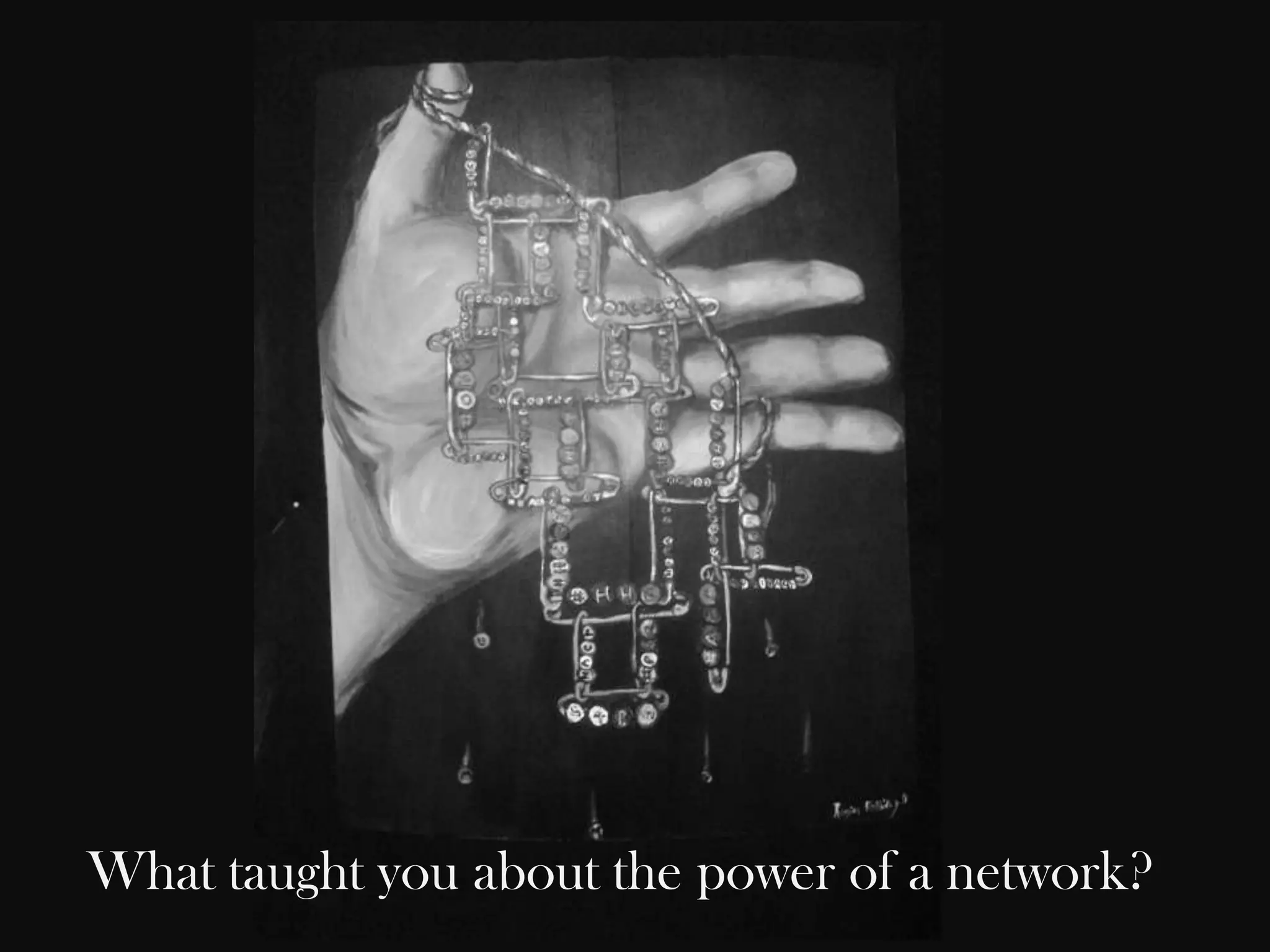
What taught you about the power of a network?
Who taught you to be an educated patient?
What taught you to be an empowered Patient?
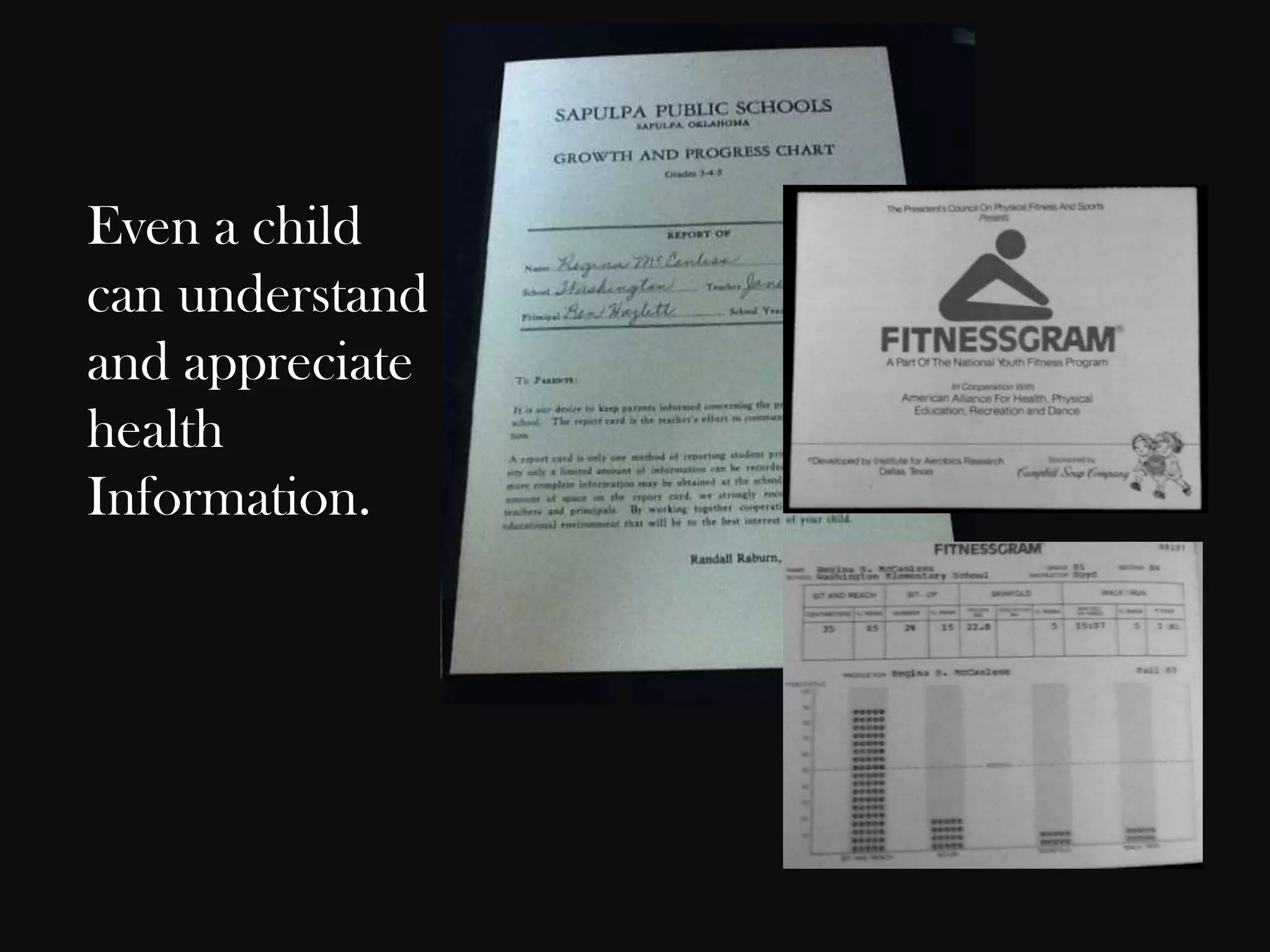
Even a child
can understand
and appreciate
health
Information.
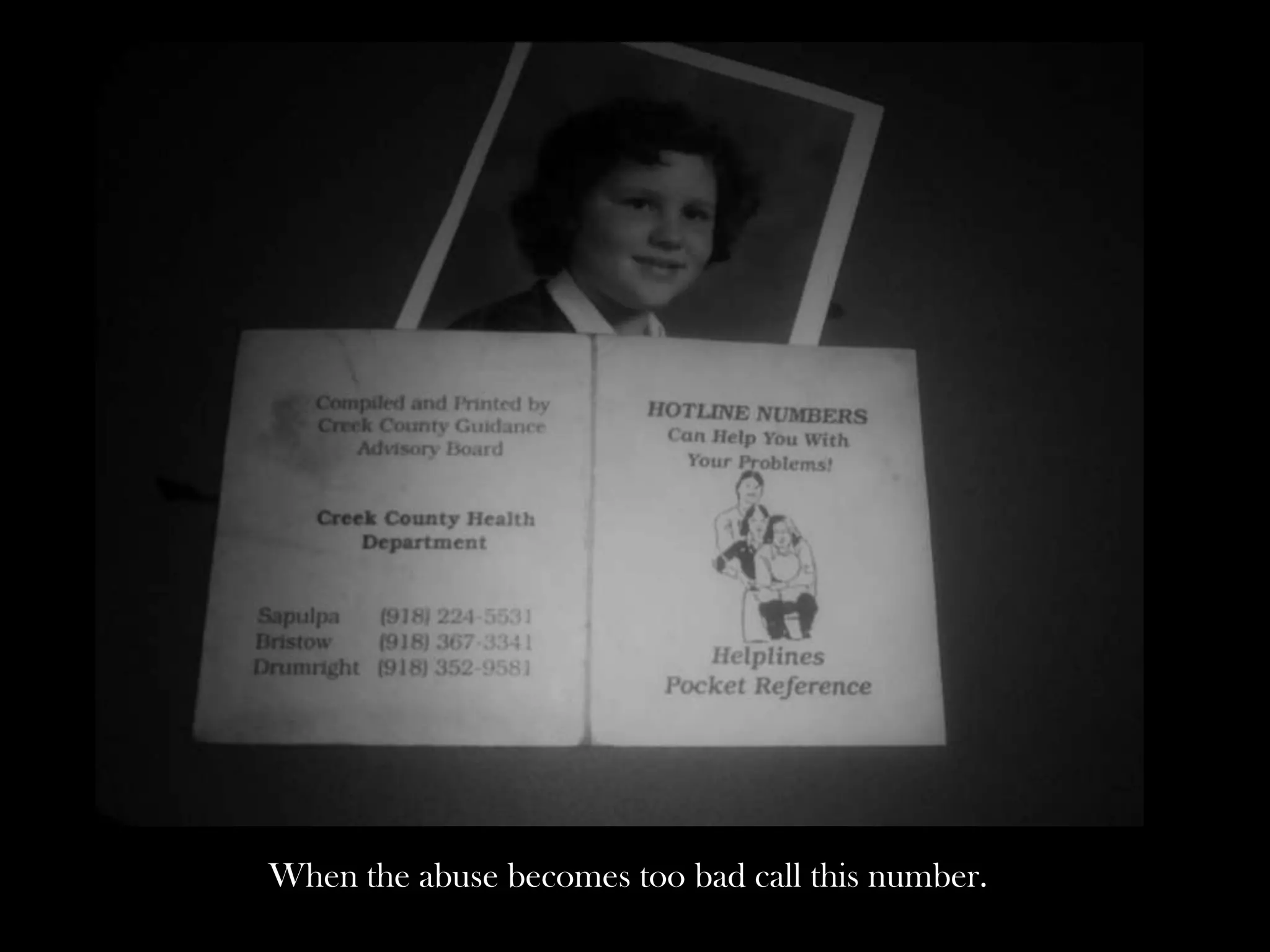
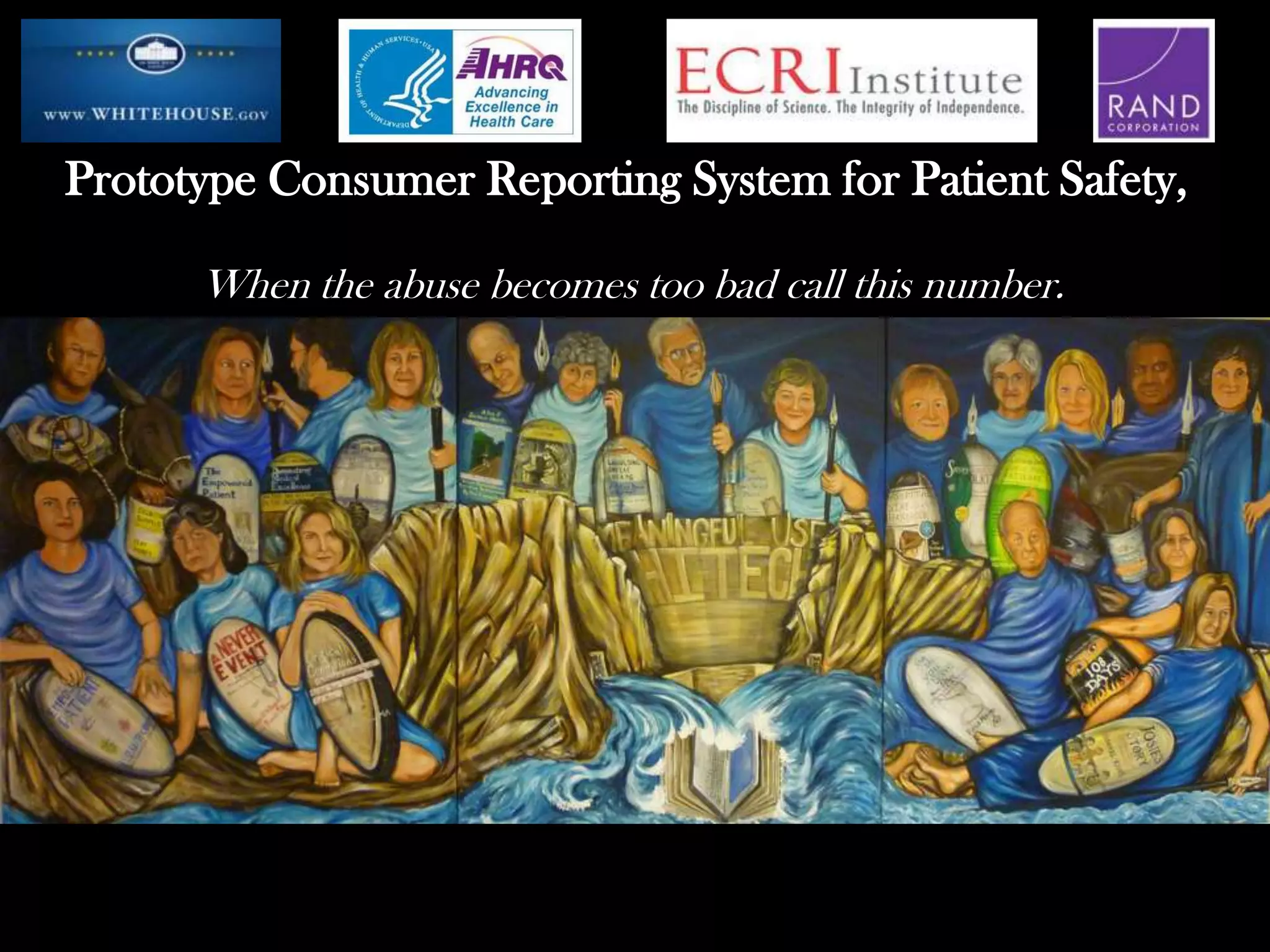
When the abuse becomes too bad call this number.
I met Fred Holliday in a scenic painting class atOklahoma State University.

We would talk of Stephen King’s Dark Tower.

We would fall in love.
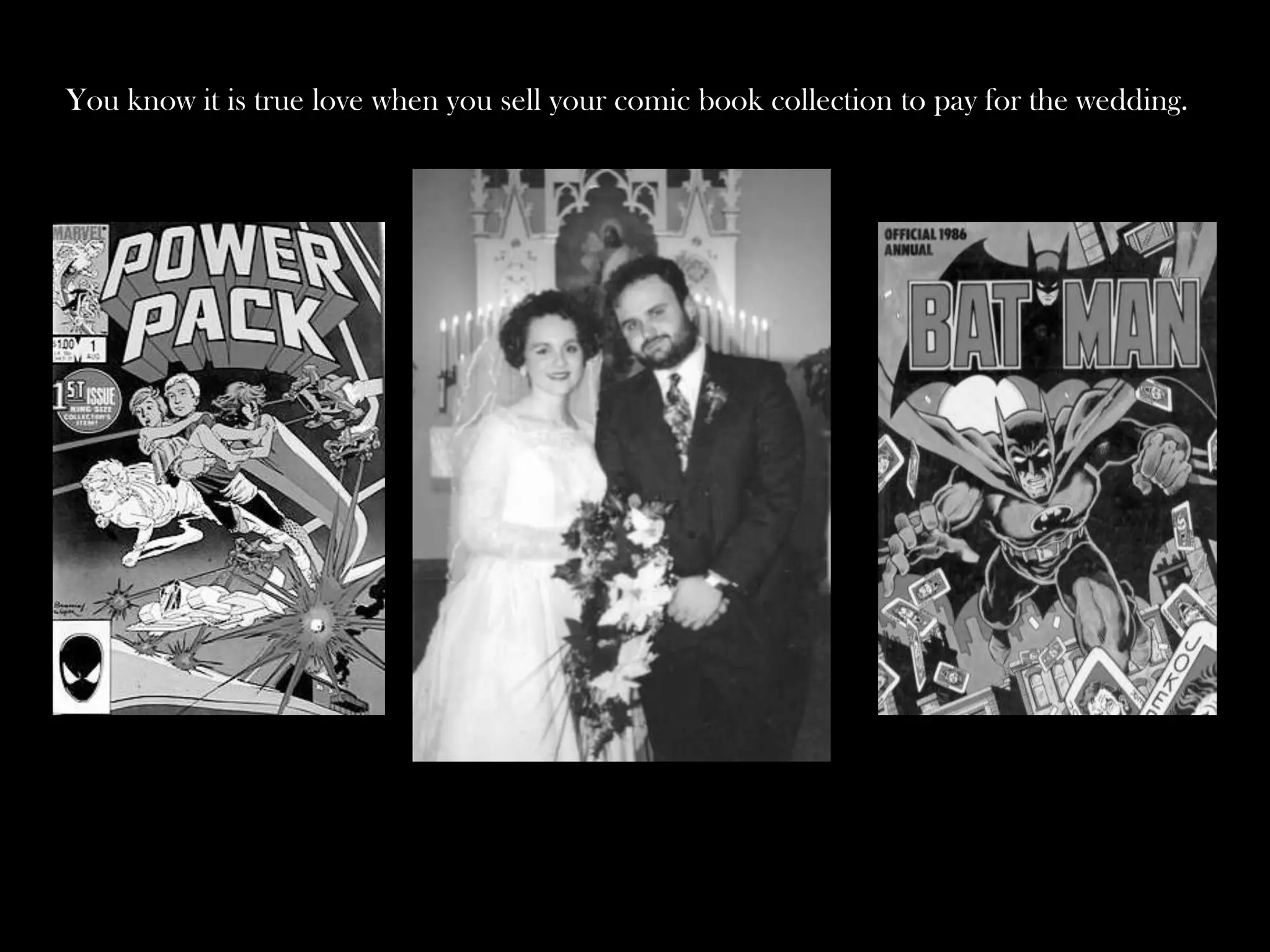
You know it is true love when you sell your comic book collection to pay for the wedding.
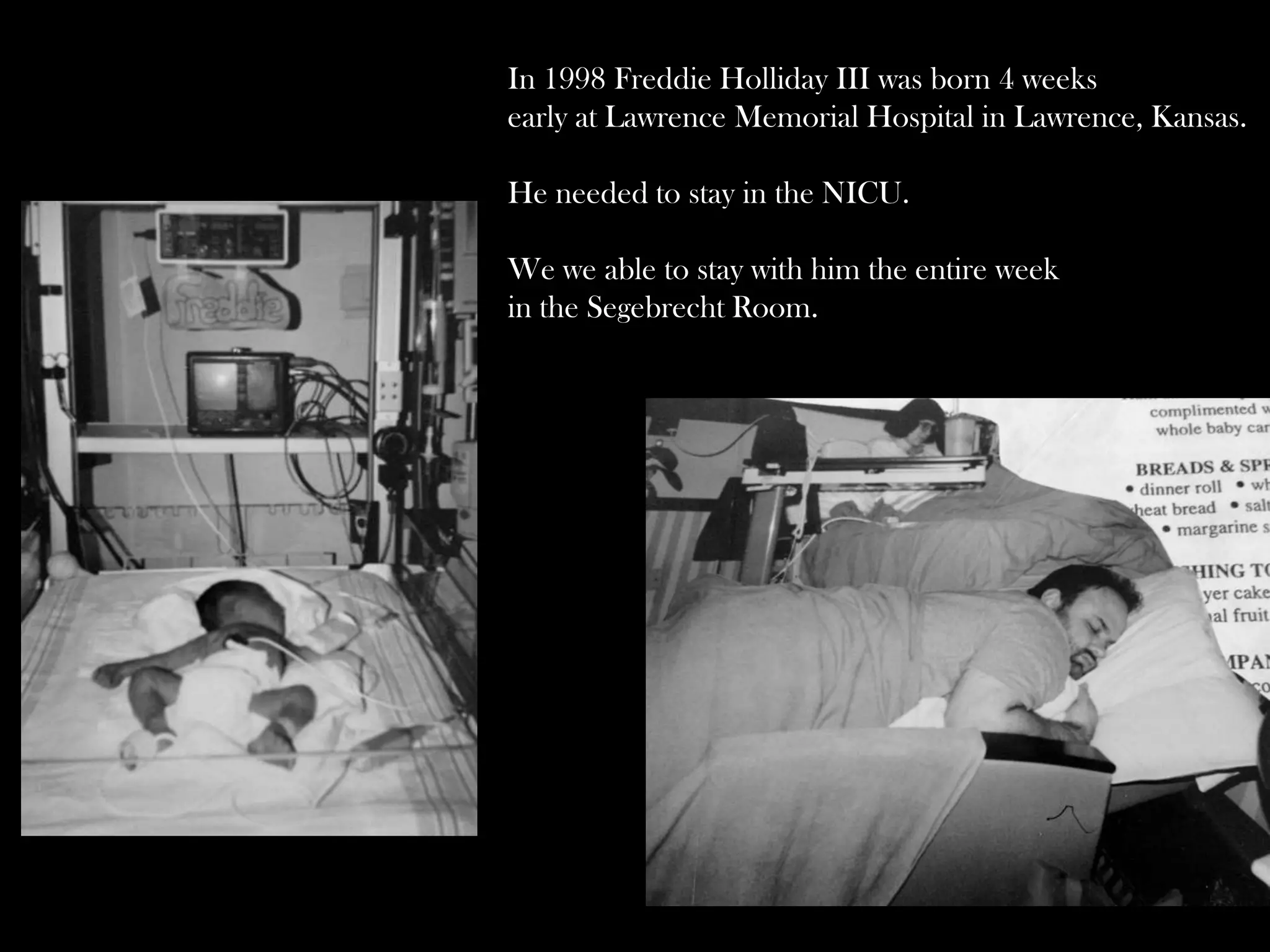
In 1998 Freddie Holliday III was born 4 weeks
early at Lawrence Memorial Hospital in Lawrence, Kansas.
He needed to stay in the NICU.
We we able to stay with him the entire week
in the Segebrecht Room.
In Kansas I would paint one painting.
I would paint it for one patient on a hot summer day.
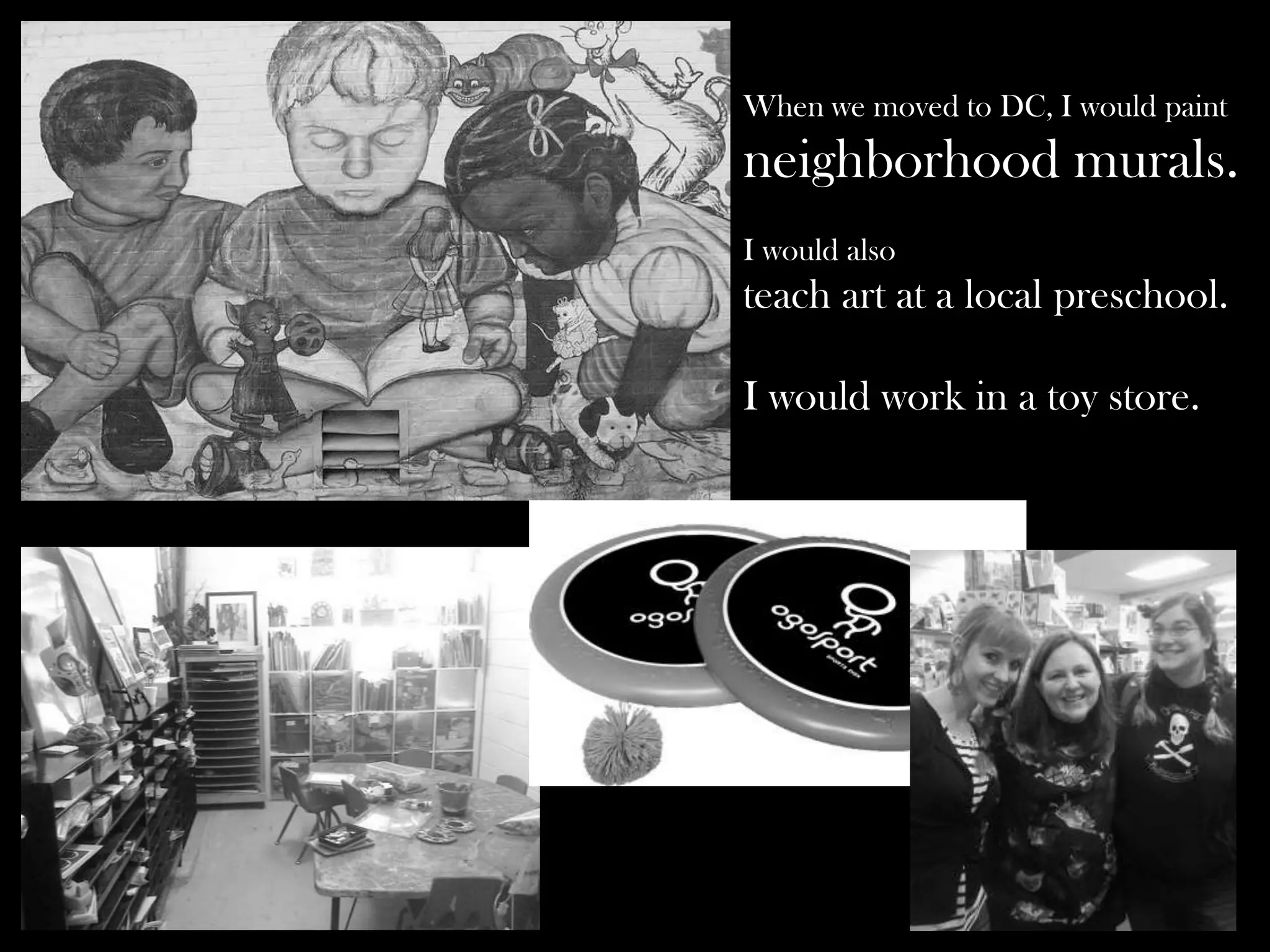
When we moved to DC, I would paint

neighborhood murals.
I would also

teach art at a local preschool.
I would work in a toy store.
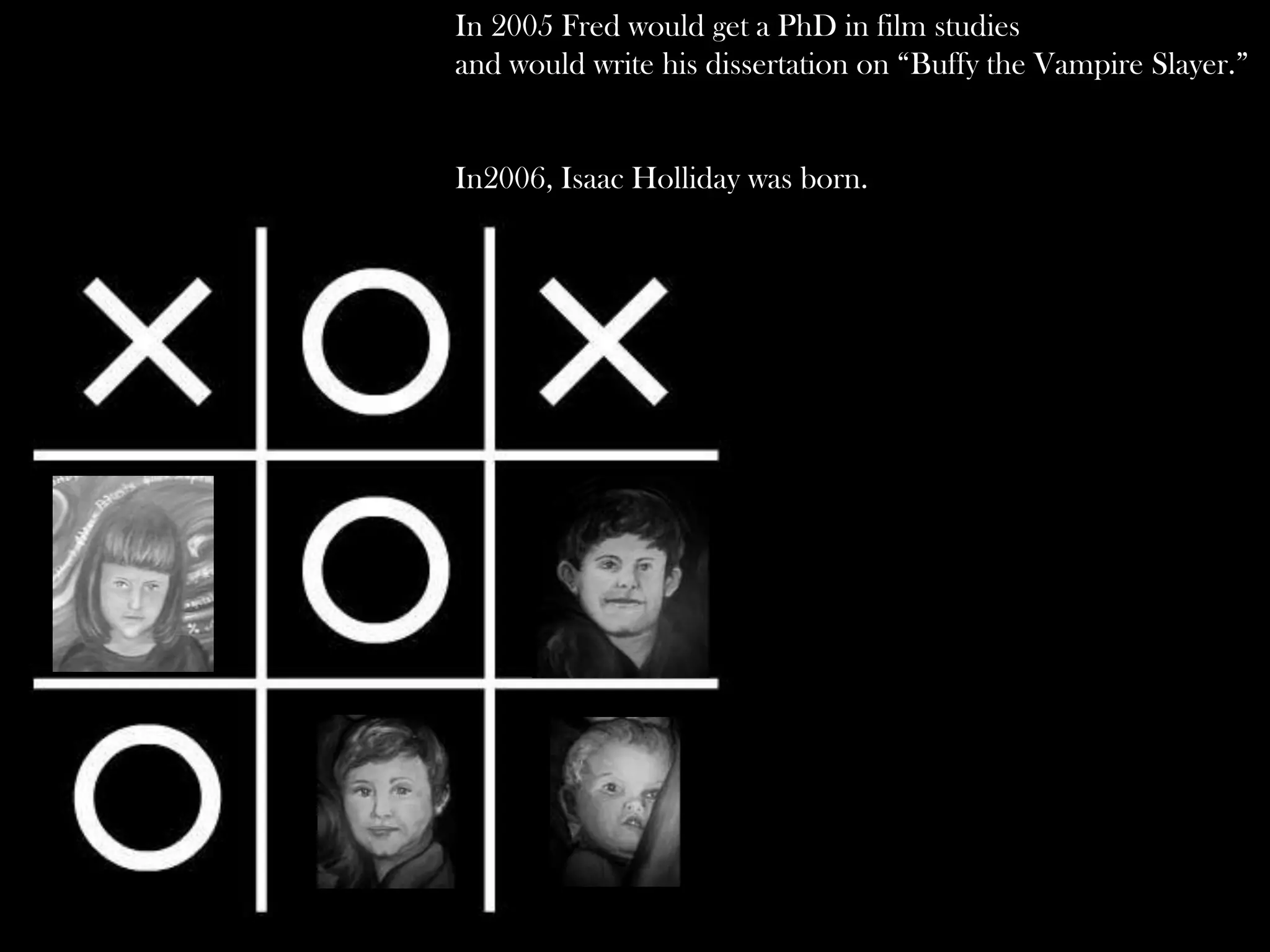
In 2005 Fred would get a PhD in film studies
and would write his dissertation on “Buffy the Vampire Slayer.”

In2006, Isaac Holliday was born.
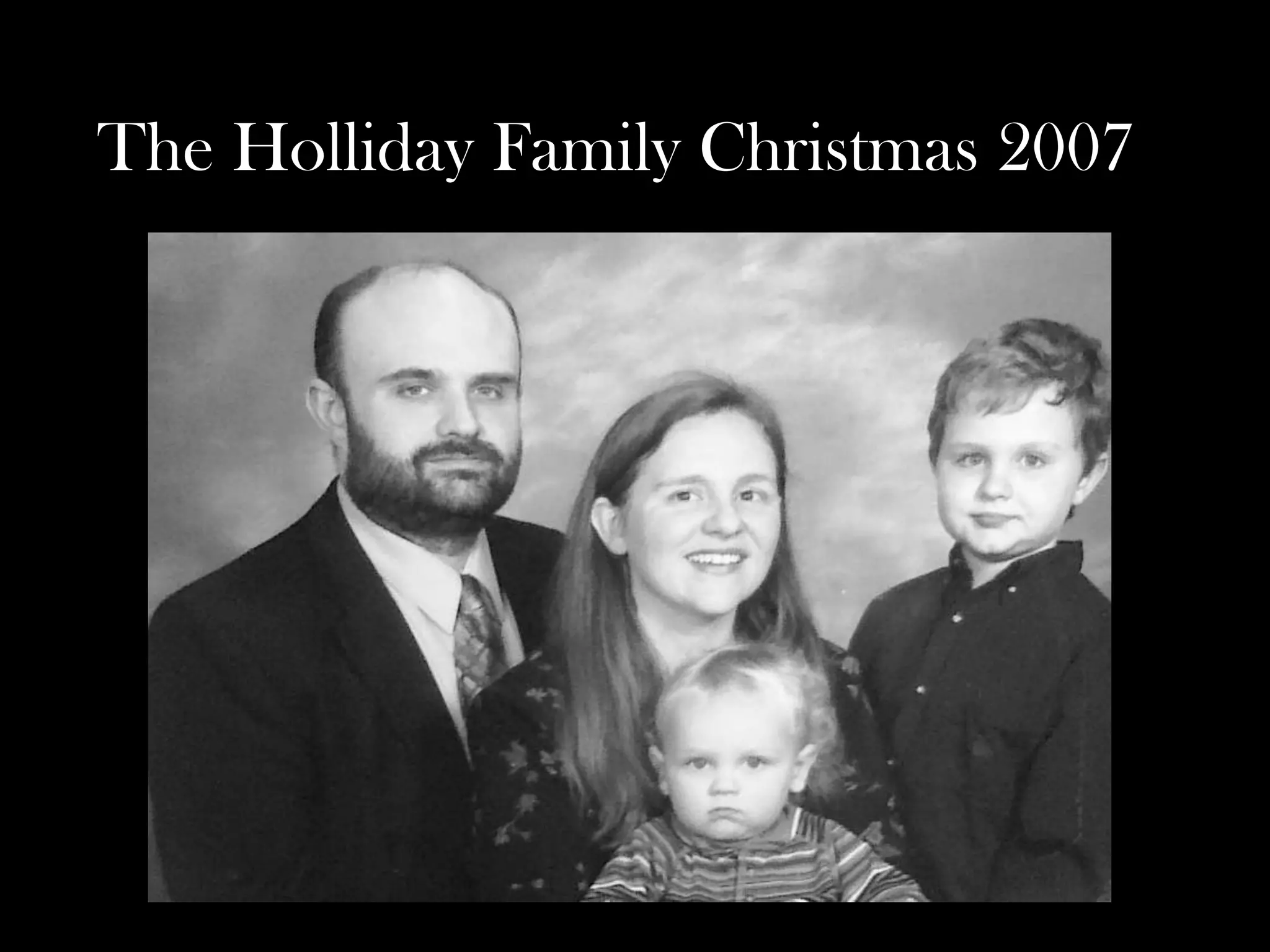
The Holliday Family Christmas 2007
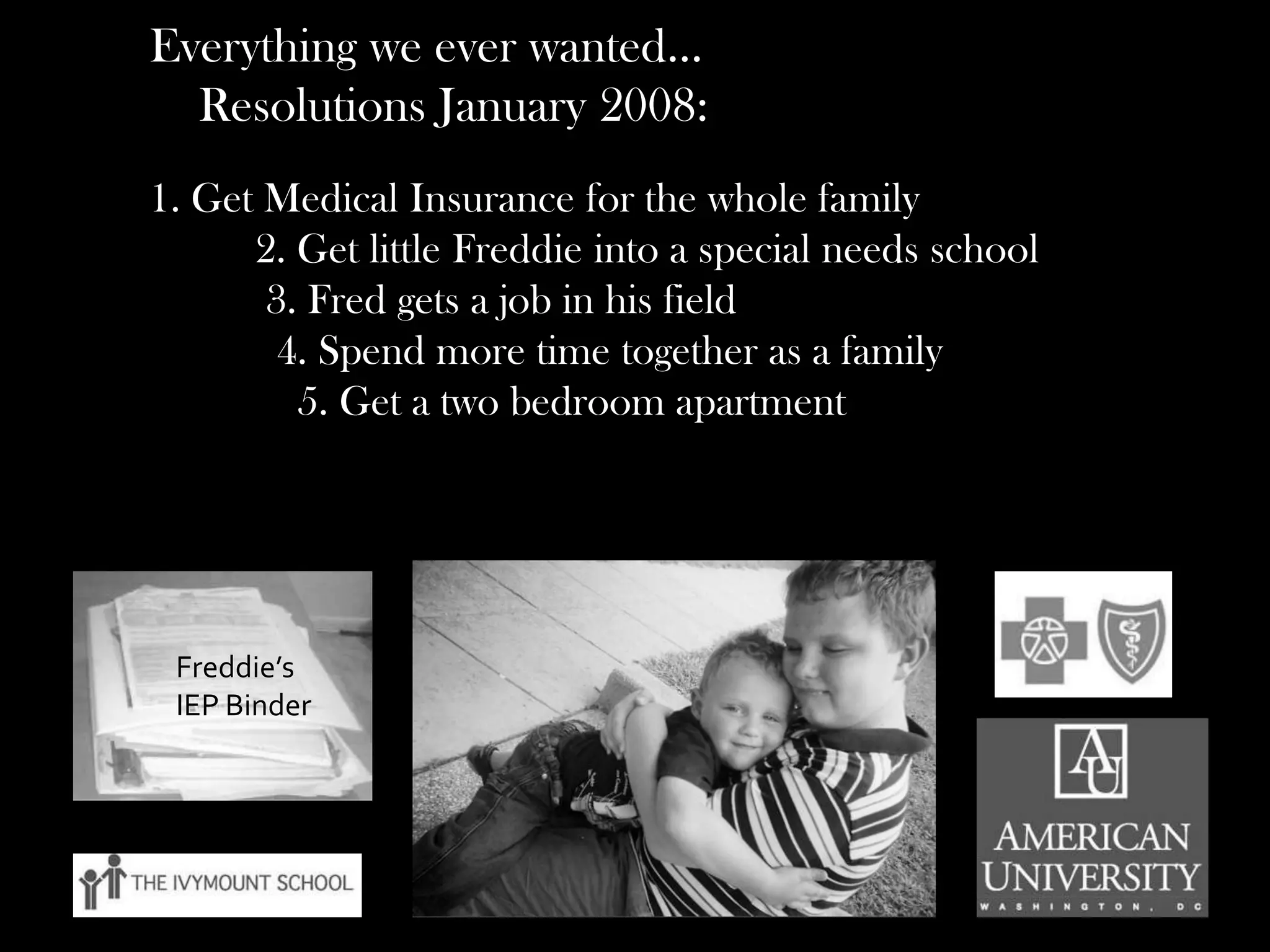
Everything we ever wanted…
Resolutions January 2008:
1. Get Medical Insurance for the whole family
2. Get little Freddie into a special needs school
3. Fred gets a job in his field
4. Spend more time together as a family
5. Get a two bedroom apartment

Freddie’s
IEP Binder
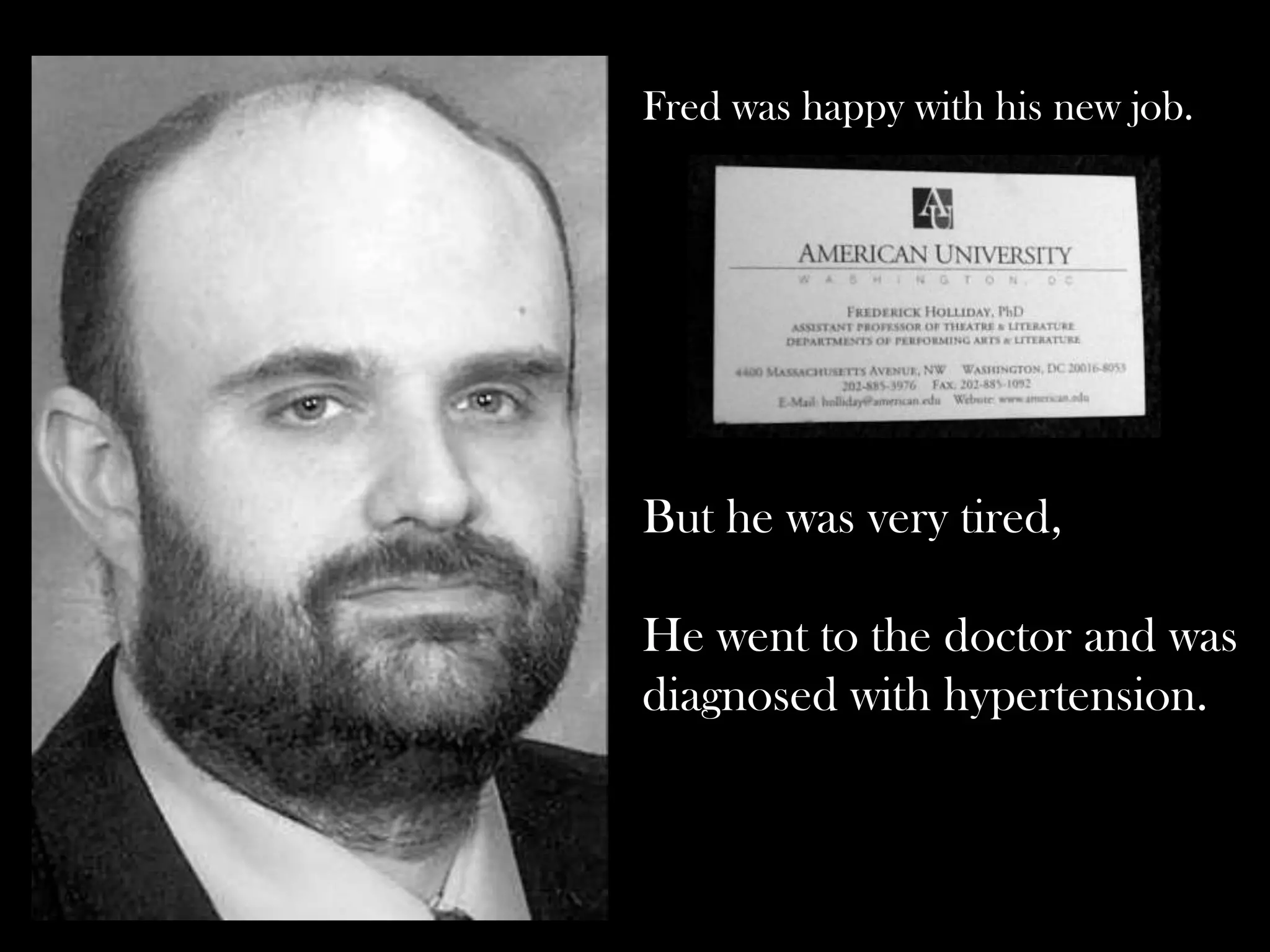
Fred was happy with his new job.

But he was very tired,
He went to the doctor and was
diagnosed with hypertension.
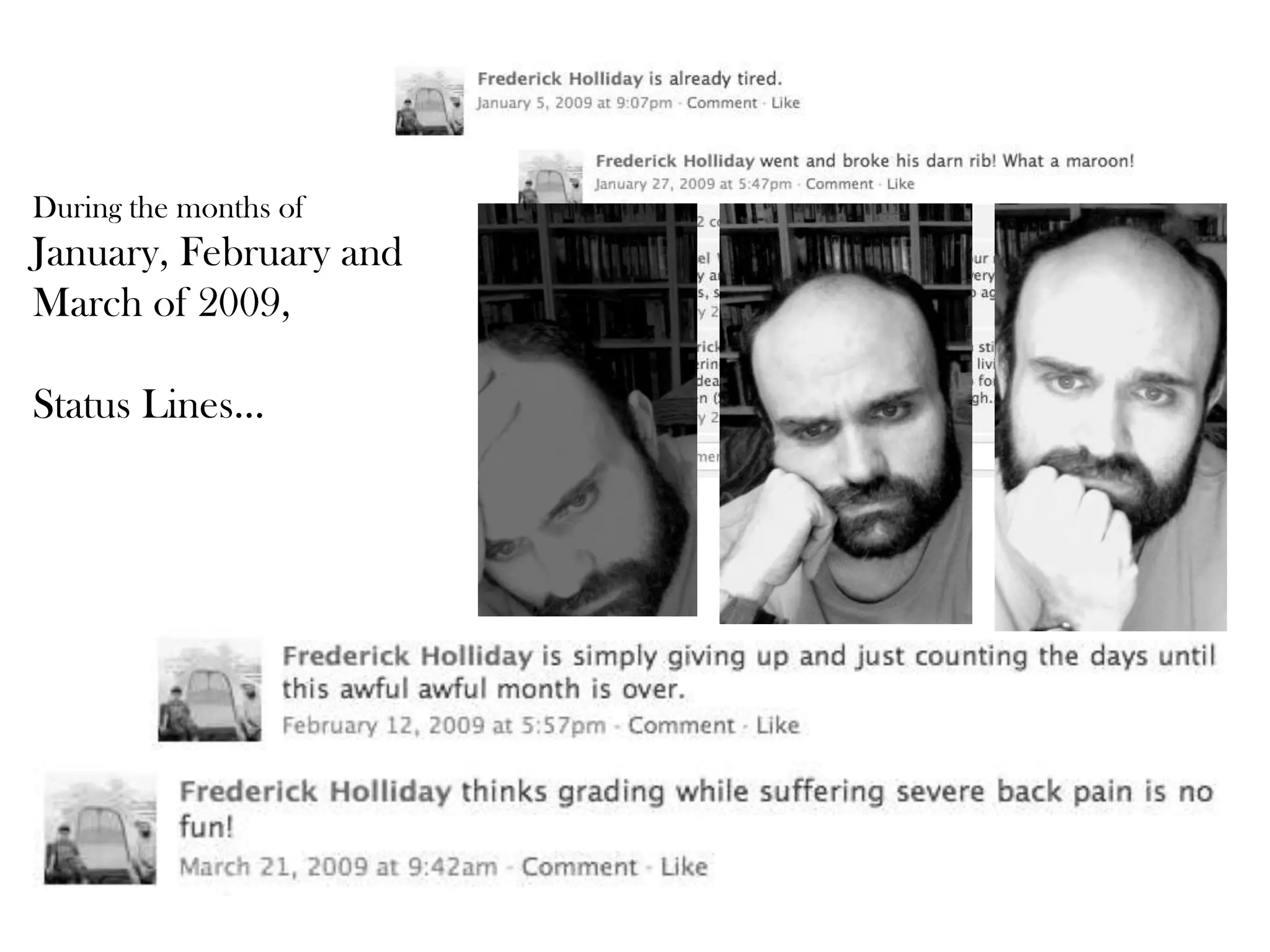
During the months of

January, February and
March of 2009,

Status Lines…
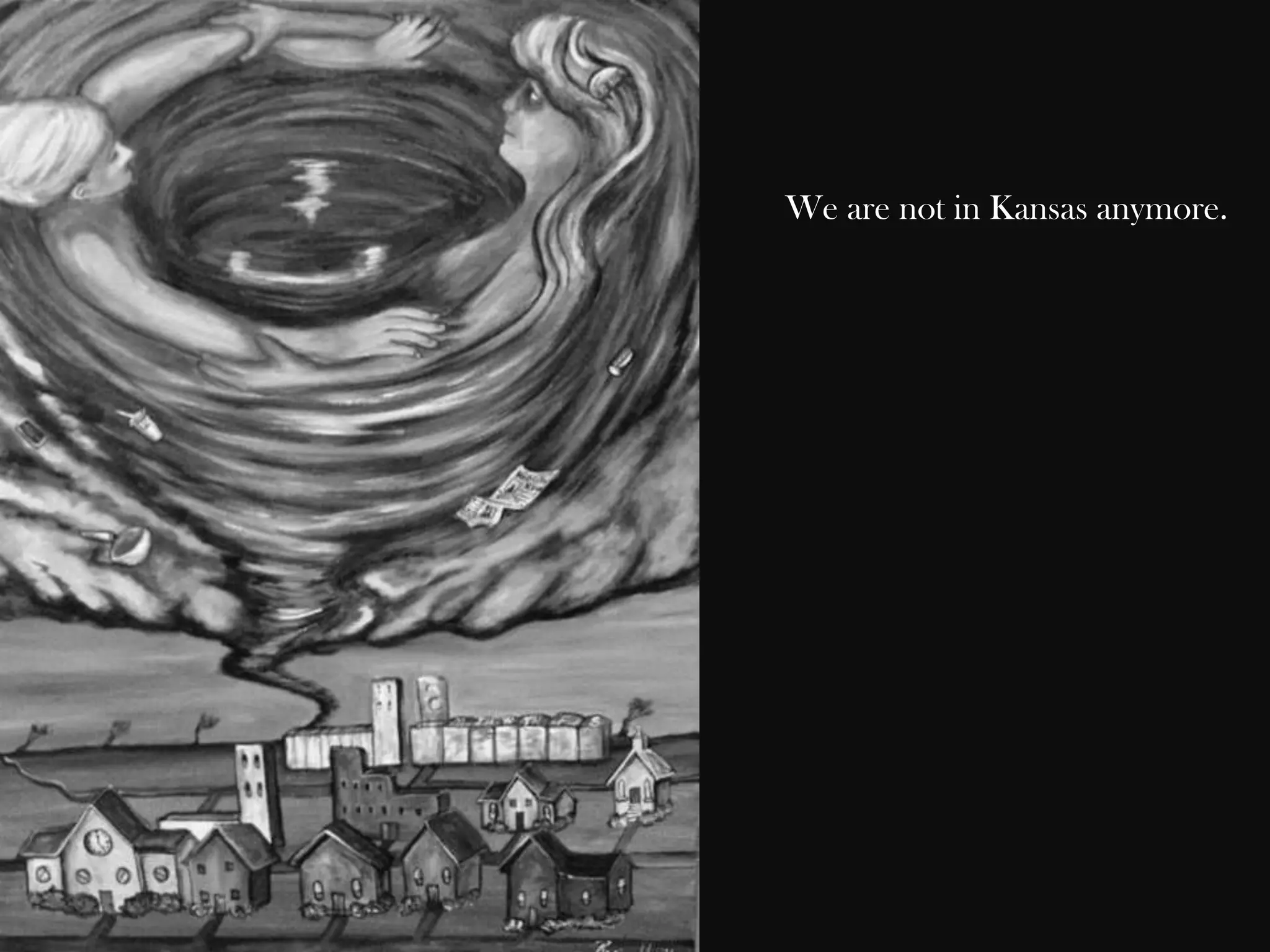
We are not in Kansas anymore.
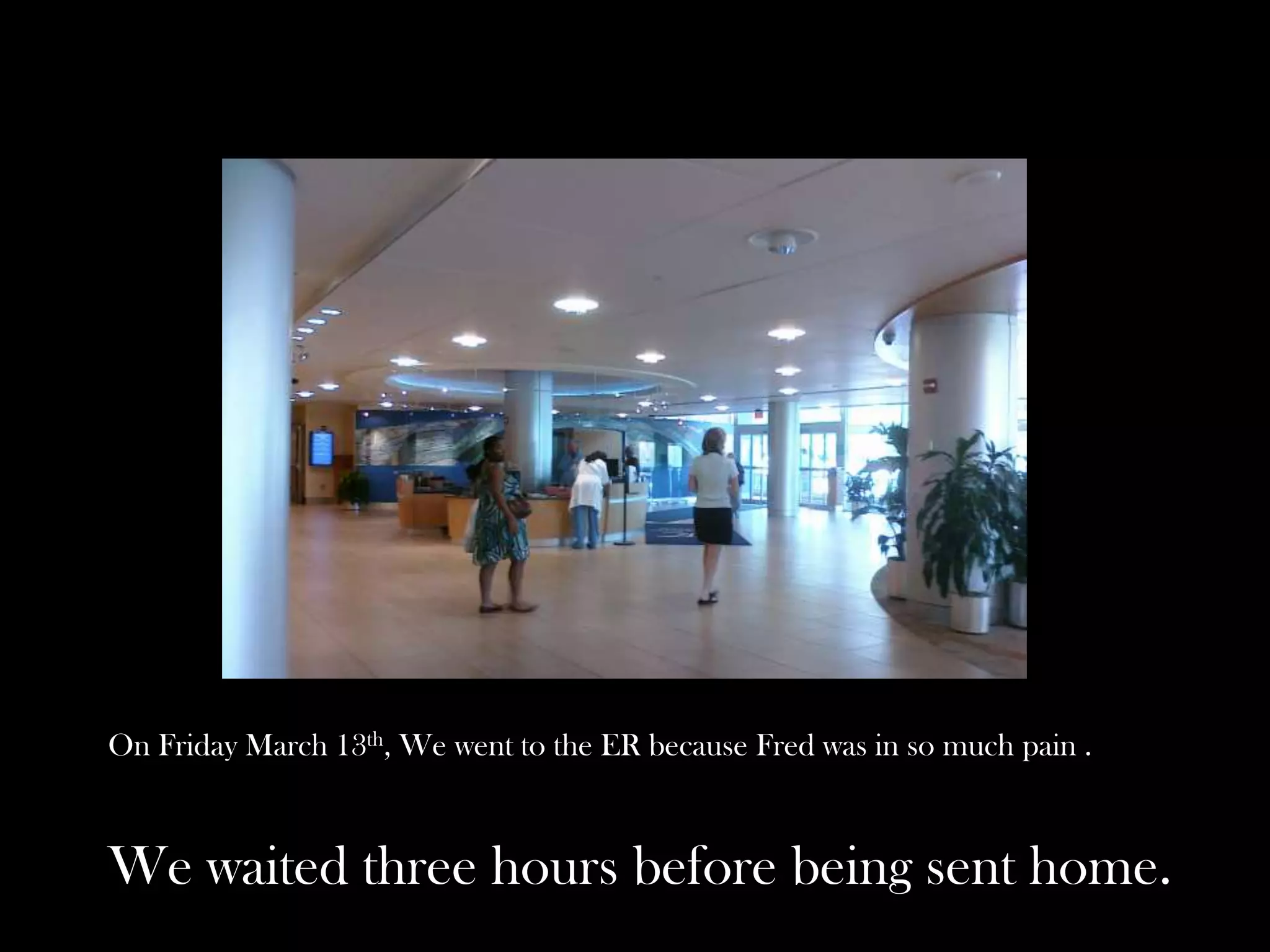
On Friday March 13th, We went to the ER because Fred was in so much pain .

We waited three hours before being sent home.
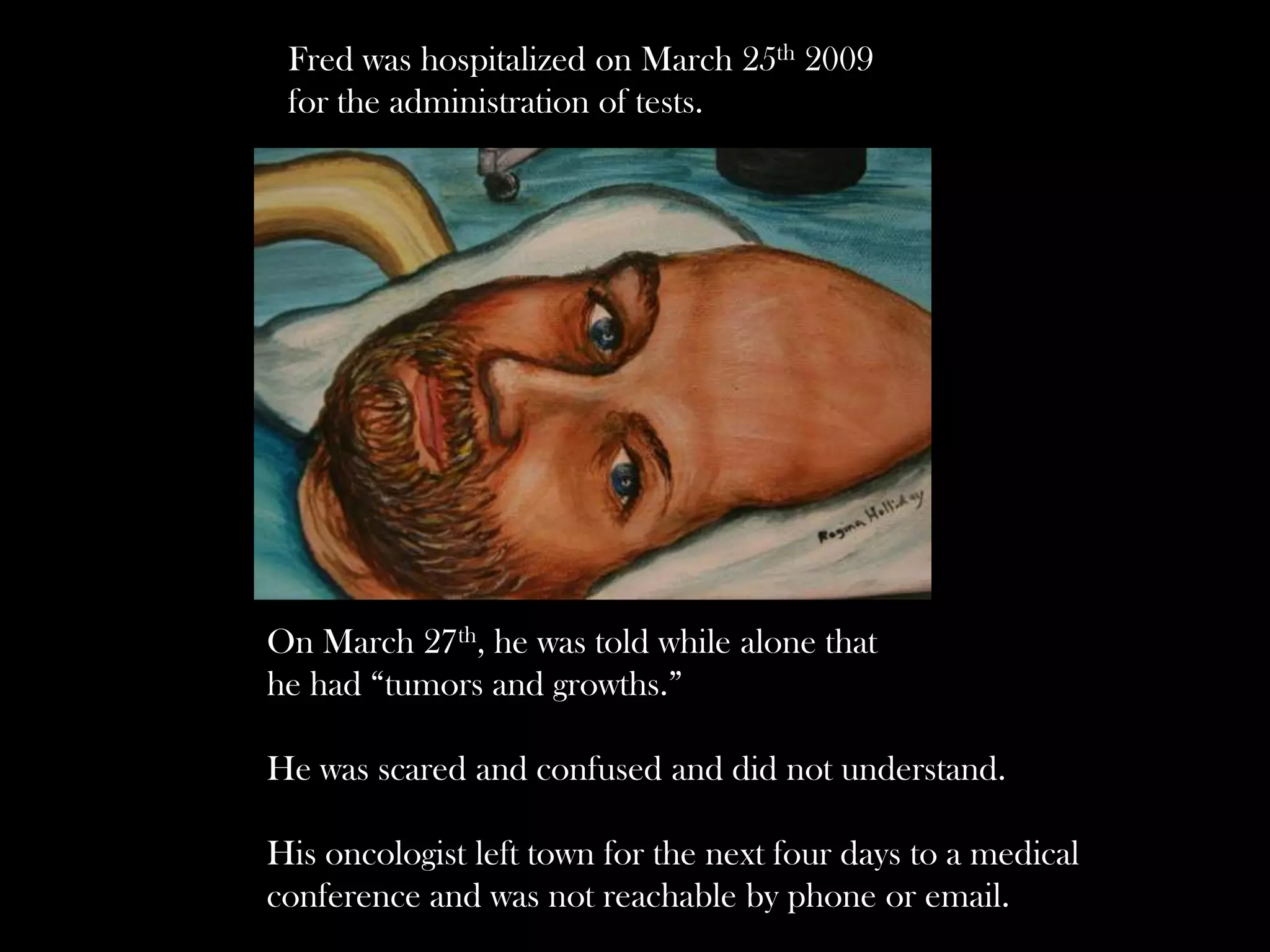
Fred was hospitalized on March 25th 2009
for the administration of tests.

On March 27th, he was told while alone that
he had “tumors and growths.”

He was scared and confused and did not understand.
His oncologist left town for the next four days to a medical
conference and was not reachable by phone or email.
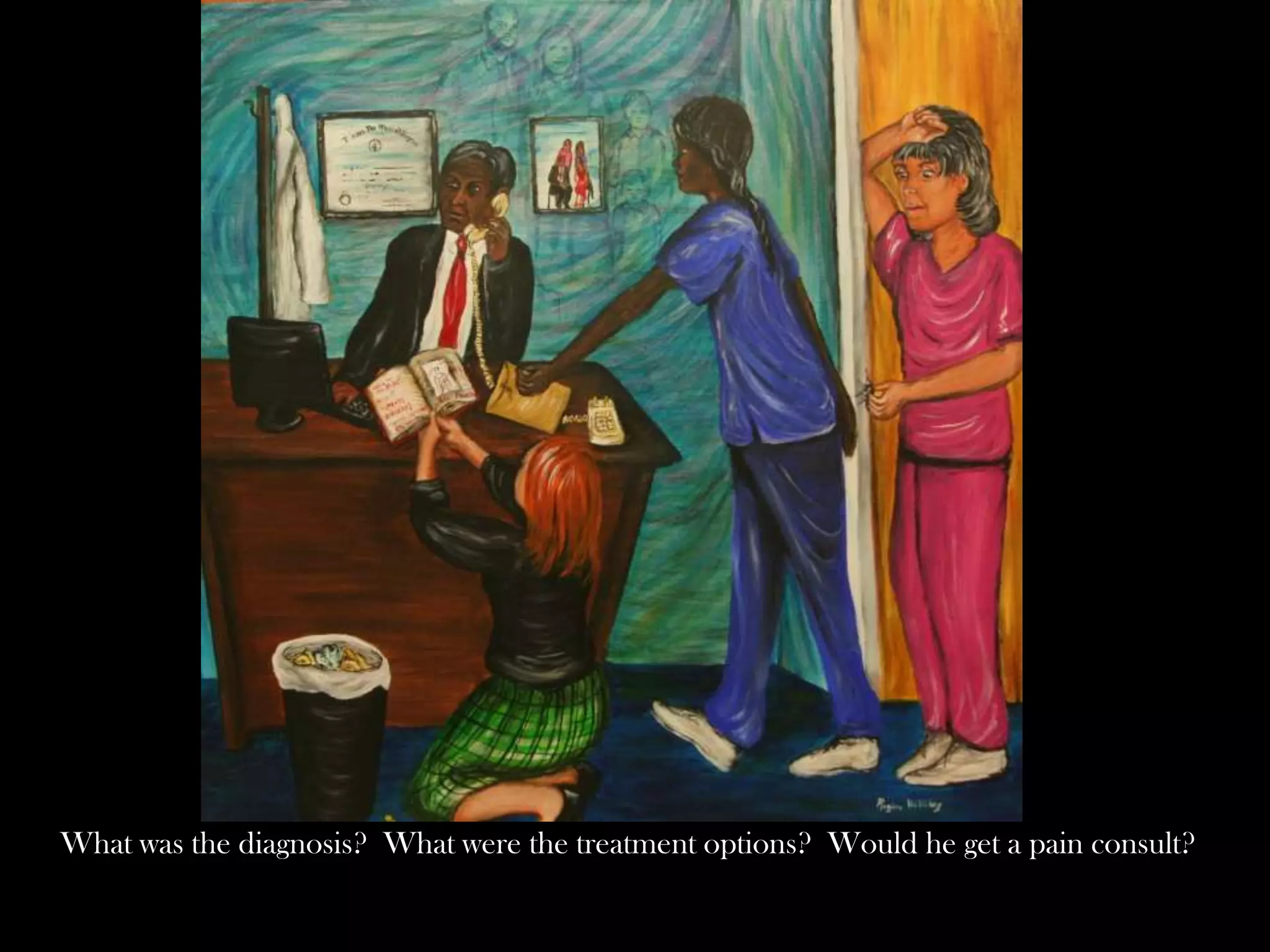
What was the diagnosis? What were the treatment options? Would he get a pain consult?
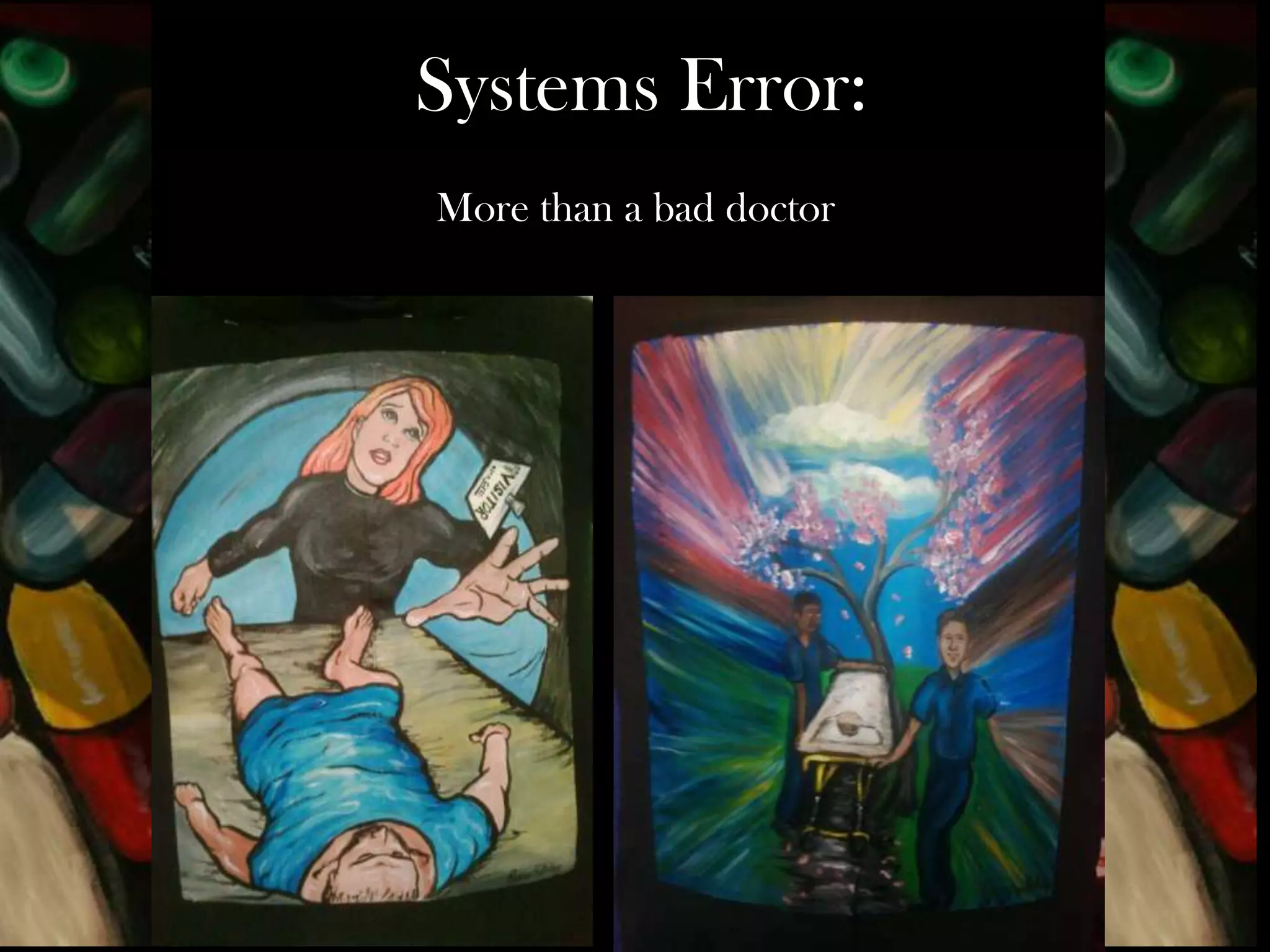
Systems Error:
More than a bad doctor
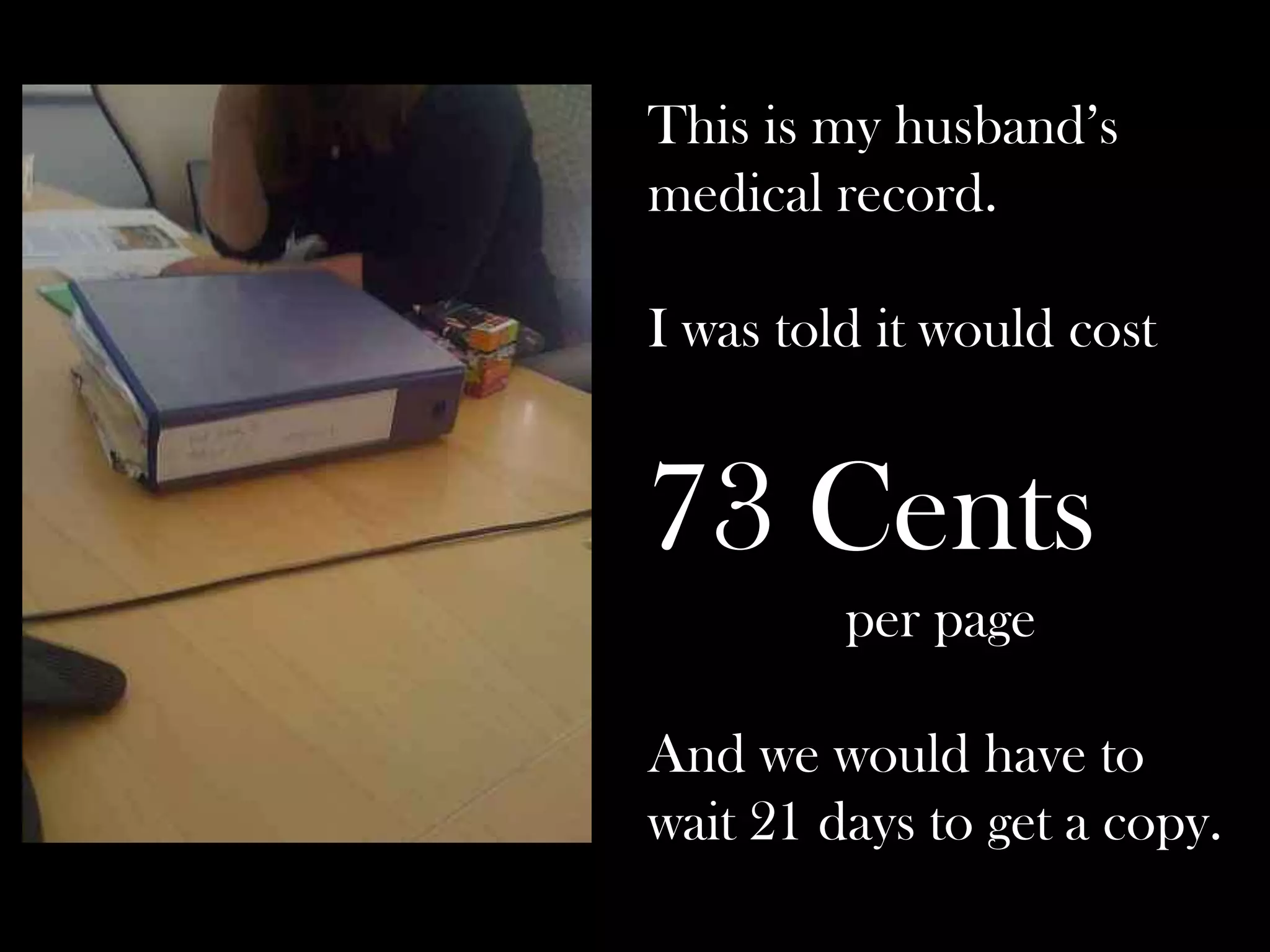
This is my husband’s
medical record.
I was told it would cost

73 Cents
per page

And we would have to
wait 21 days to get a copy.
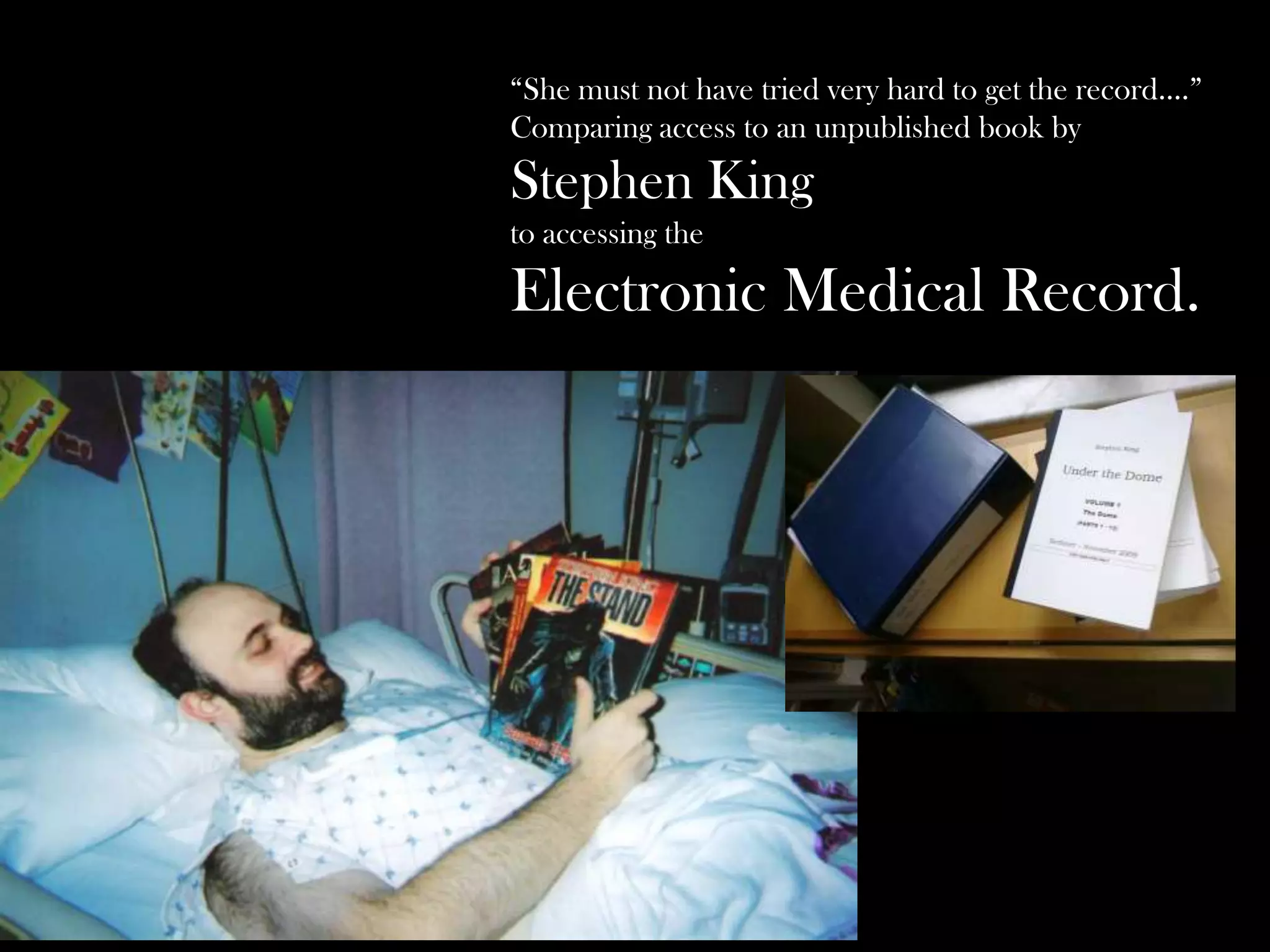
“She must not have tried very hard to get the record….”
Comparing access to an unpublished book by

Stephen King
to accessing the

Electronic Medical Record.
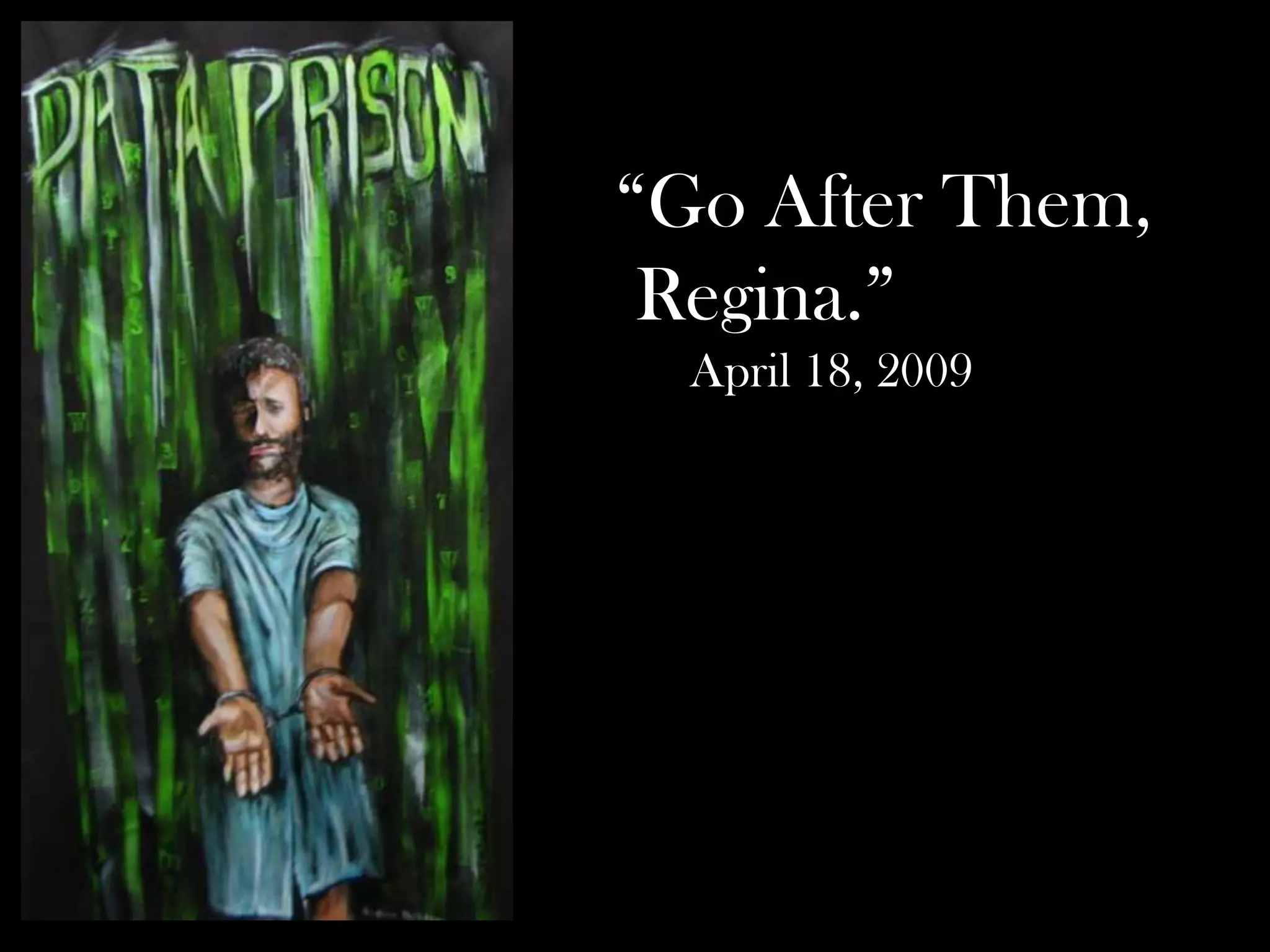
“Go After Them,
Regina.”
April 18, 2009
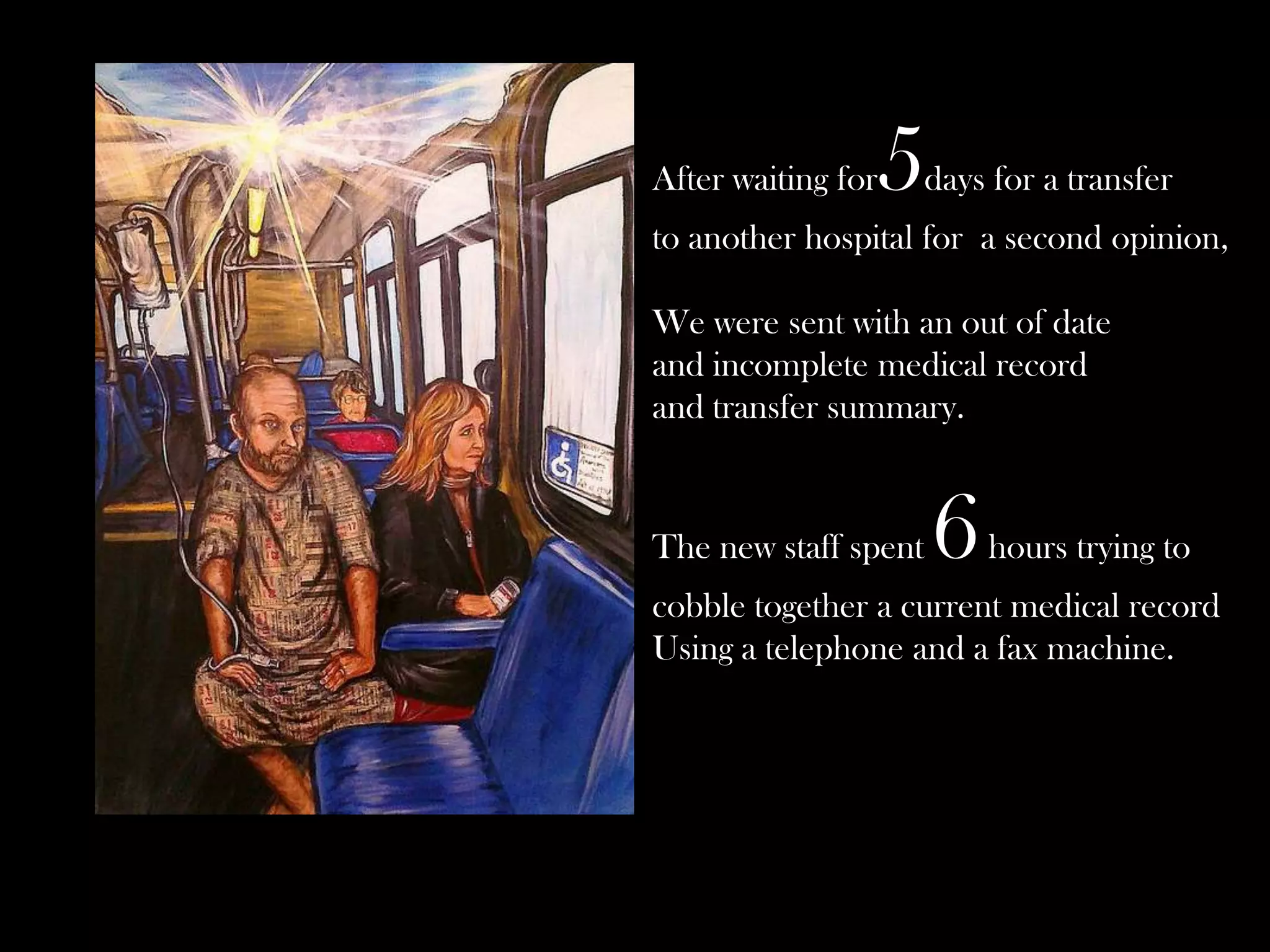
After waiting for

5

days for a transfer

to another hospital for a second opinion,

We were sent with an out of date
and incomplete medical record
and transfer summary.

The new staff spent

6

hours trying to

cobble together a current medical record
Using a telephone and a fax machine.
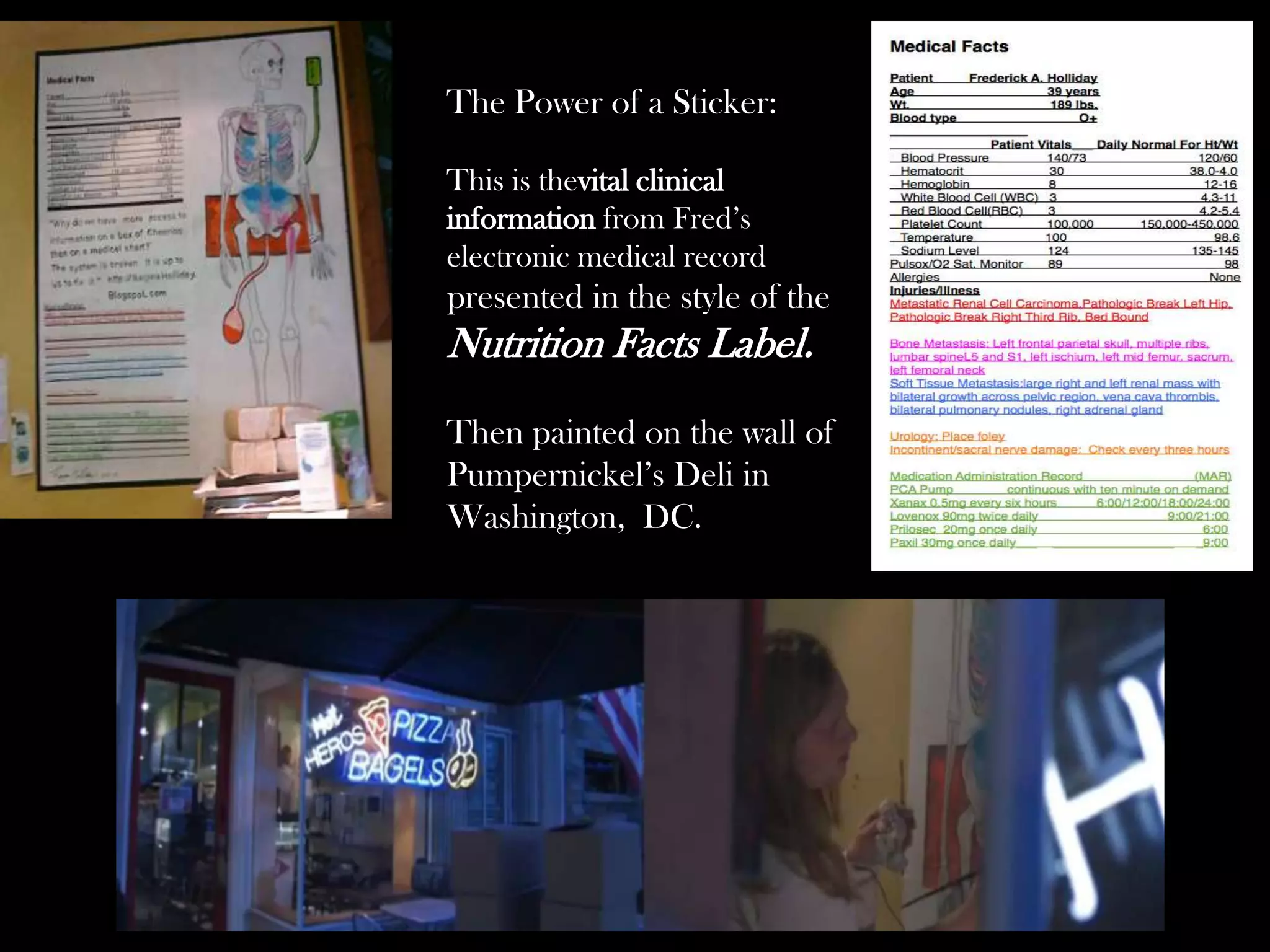
The Power of a Sticker:
This is thevital clinical
information from Fred’s
electronic medical record

presented in the style of the

Nutrition Facts Label.
Then painted on the wall of
Pumpernickel’s Deli in
Washington, DC.
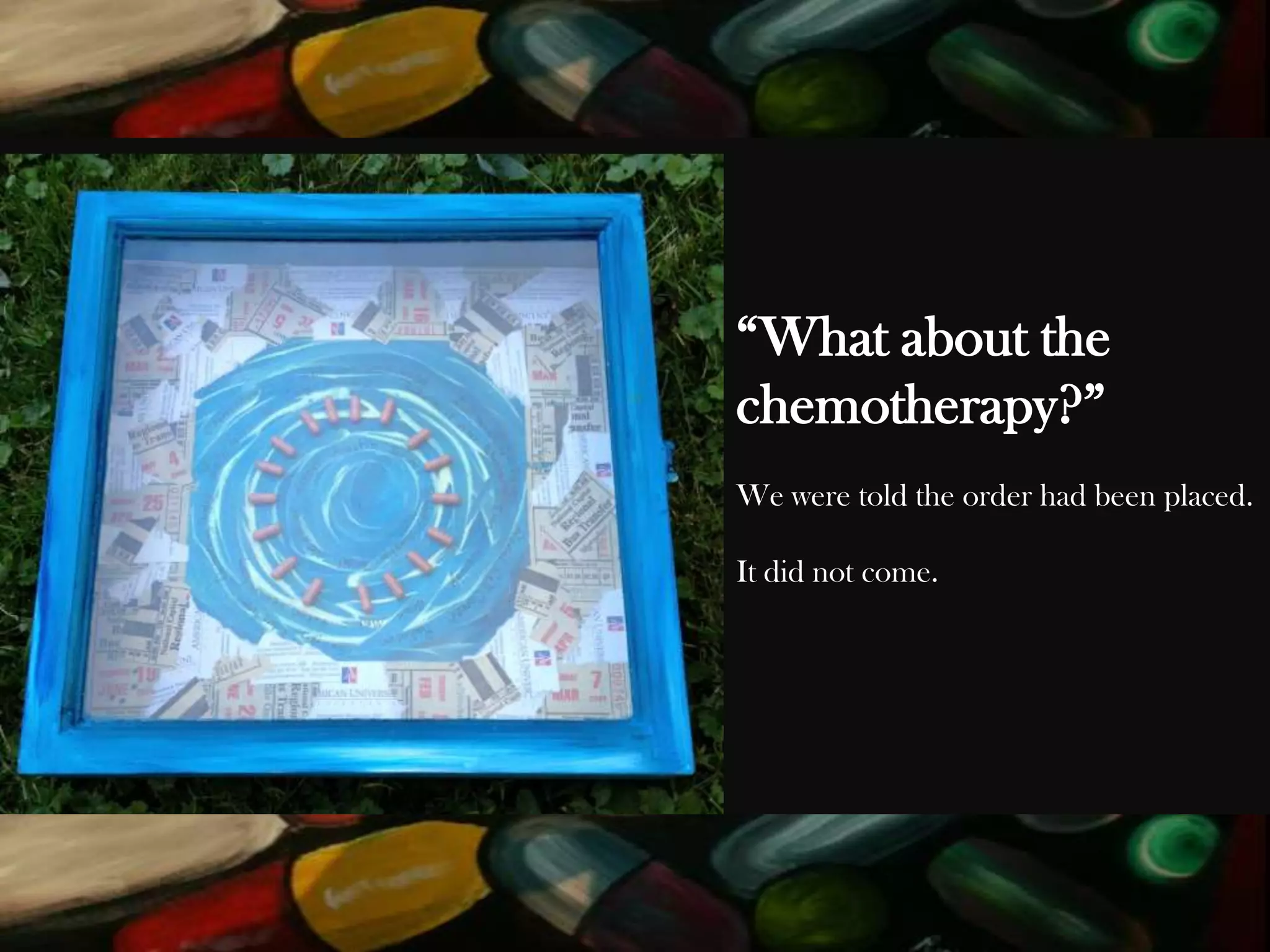
“What about the
chemotherapy?”
We were told the order had been placed.
It did not come.
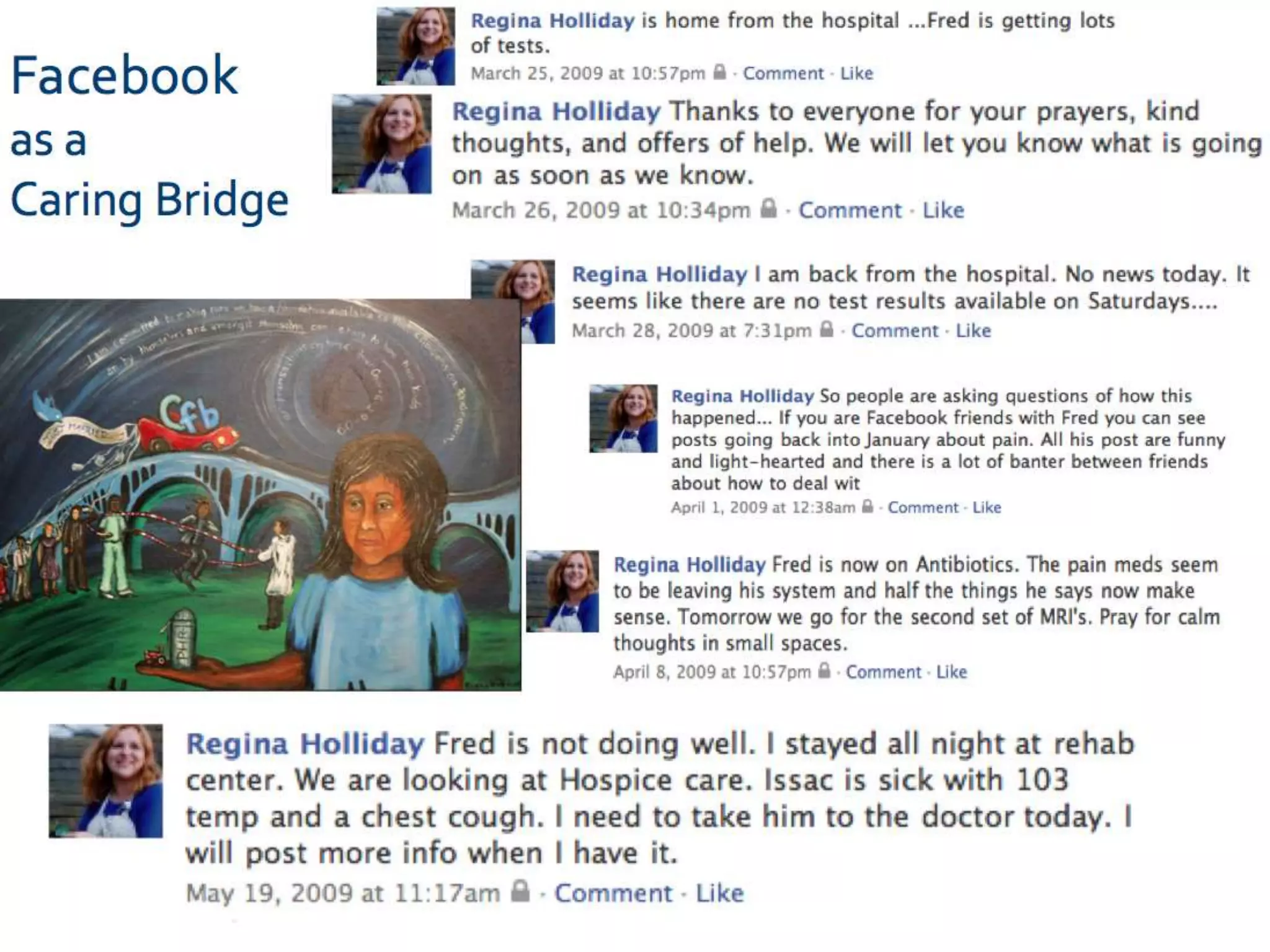
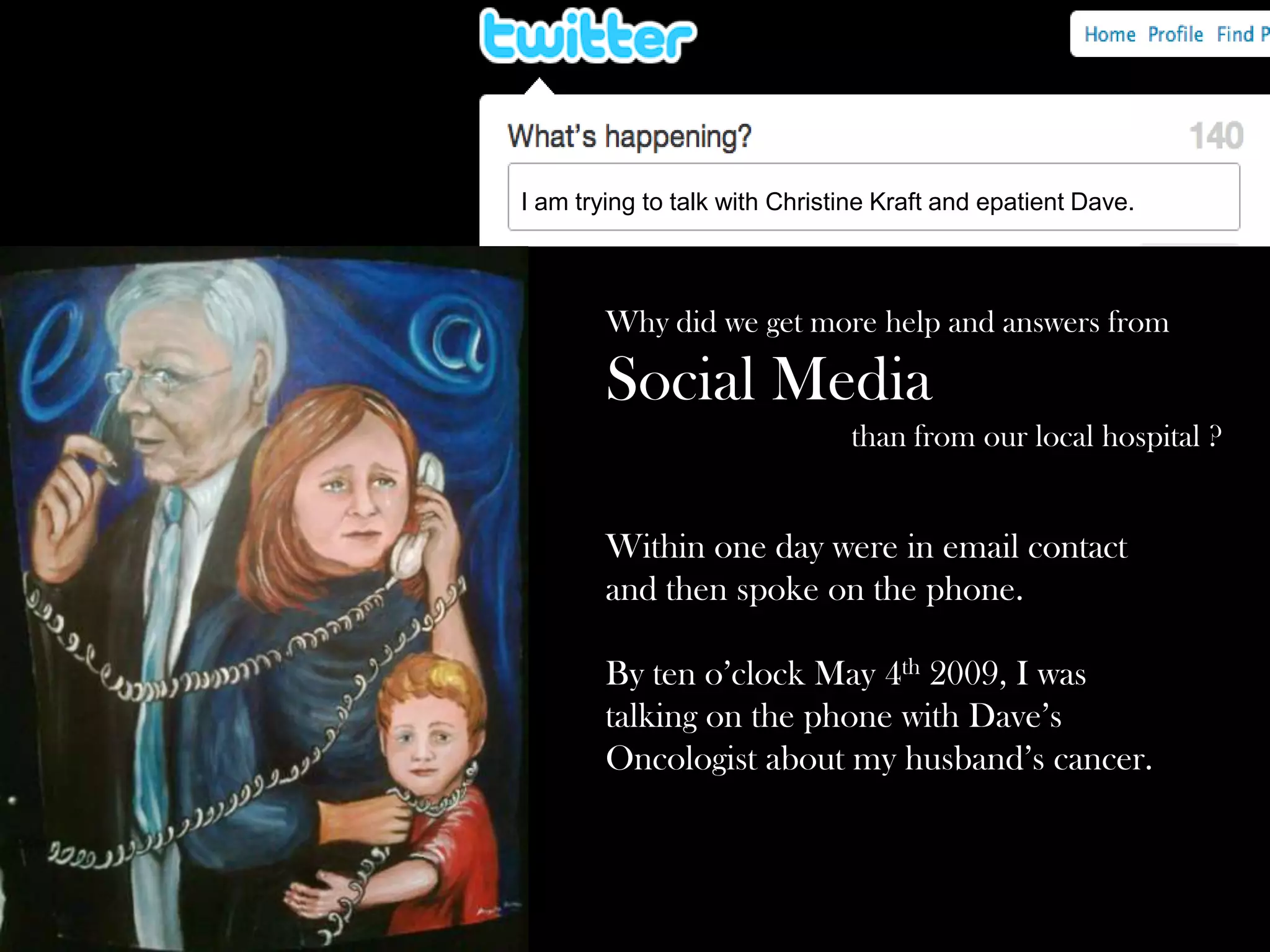
I am trying to talk with Christine Kraft and epatient Dave.

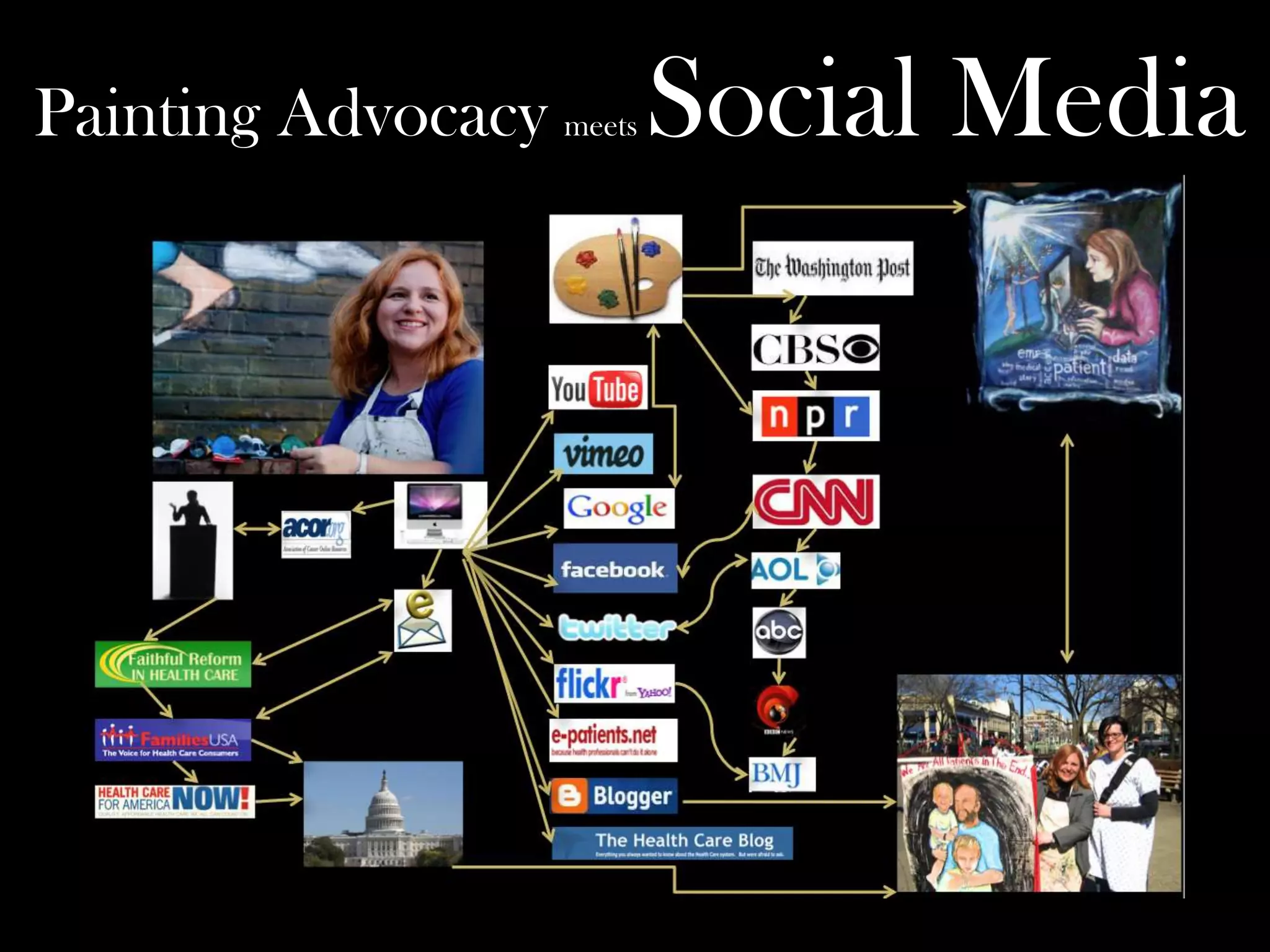
Why did we get more help and answers from

Social Media
than from our local hospital ?

Within one day were in email contact
and then spoke on the phone.
By ten o’clock May 4th 2009, I was
talking on the phone with Dave’s
Oncologist about my husband’s cancer.
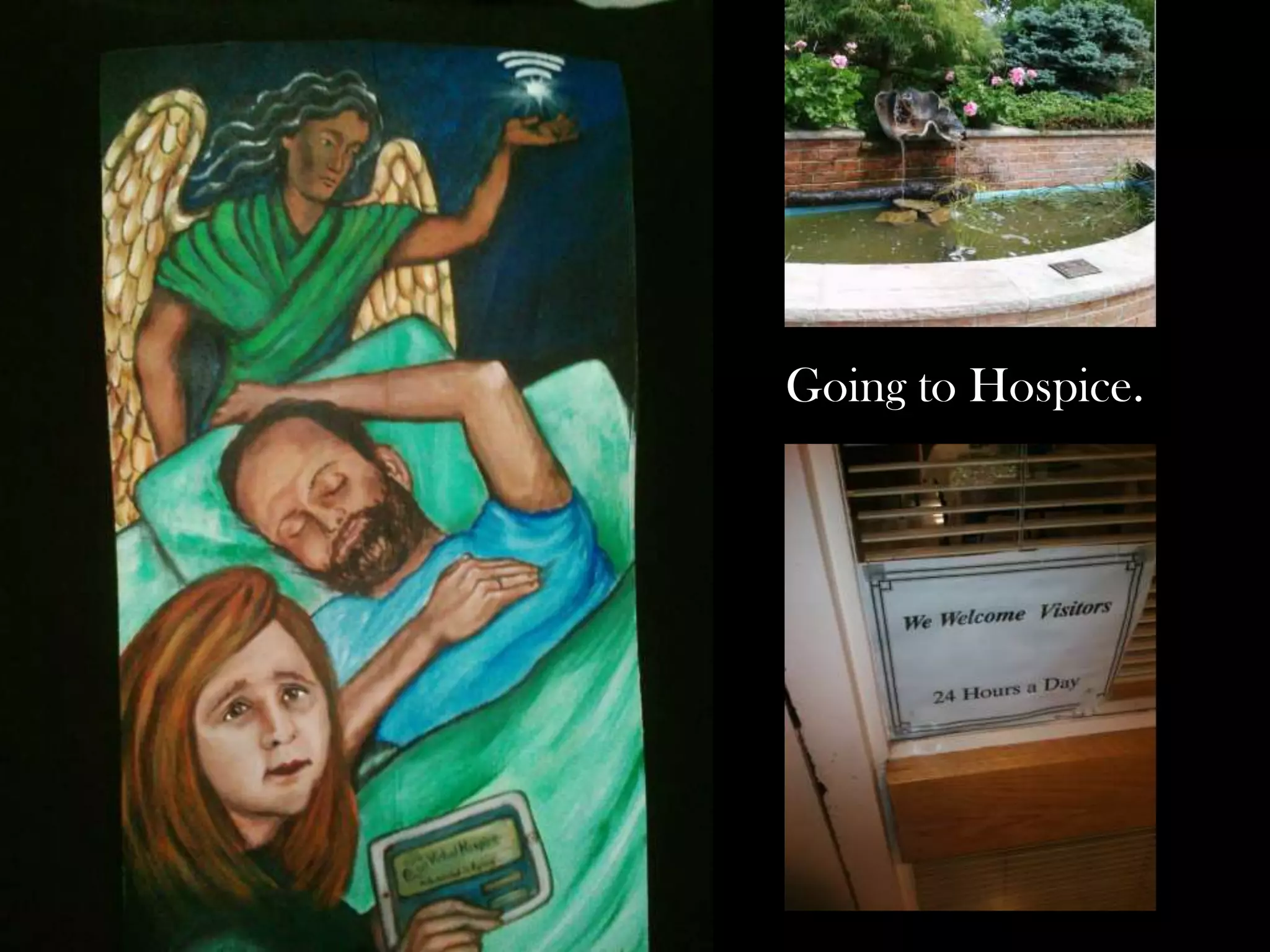
Going to Hospice.
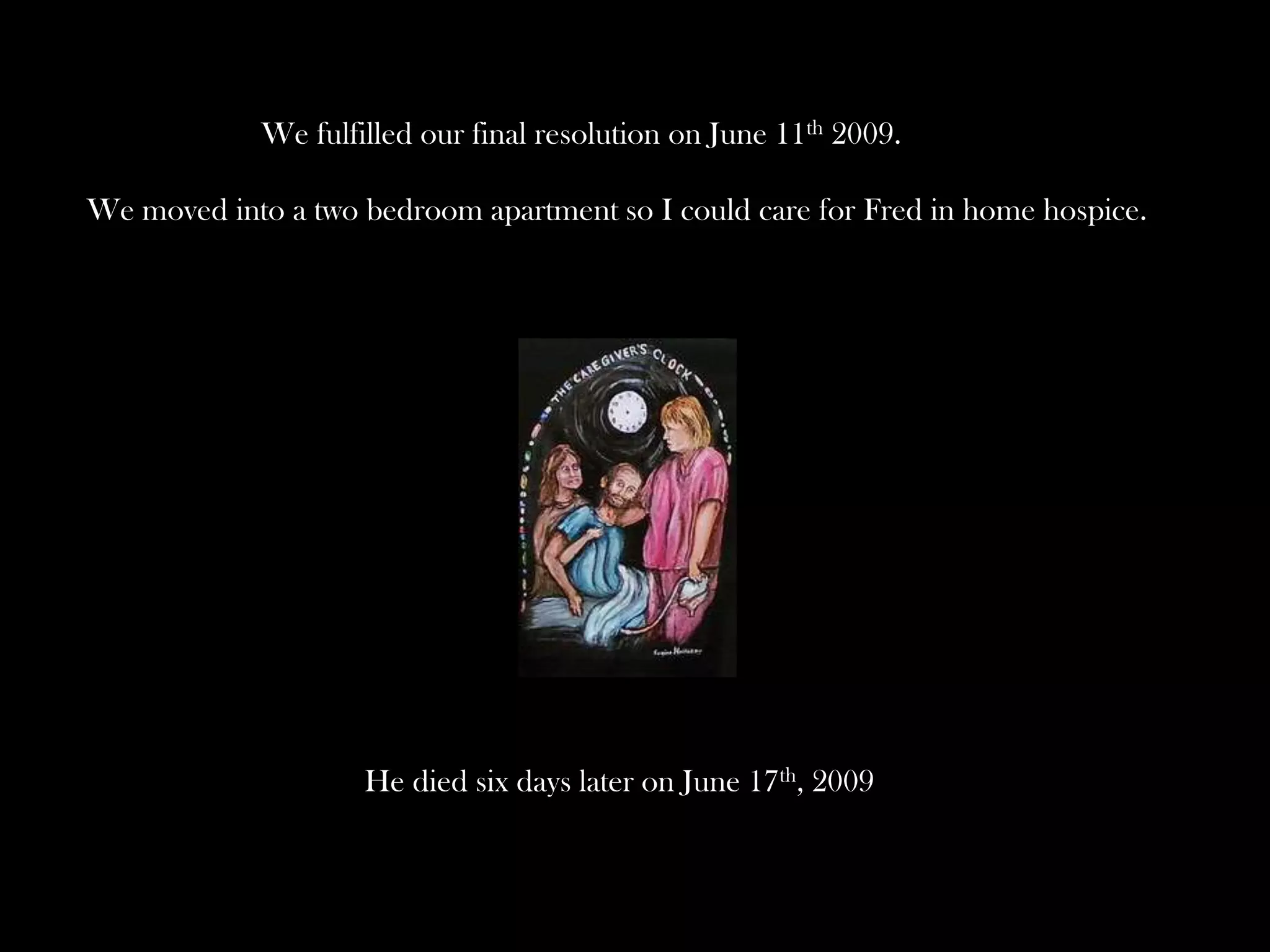
We fulfilled our final resolution on June 11th 2009.
We moved into a two bedroom apartment so I could care for Fred in home hospice.

He died six days later on June 17th, 2009
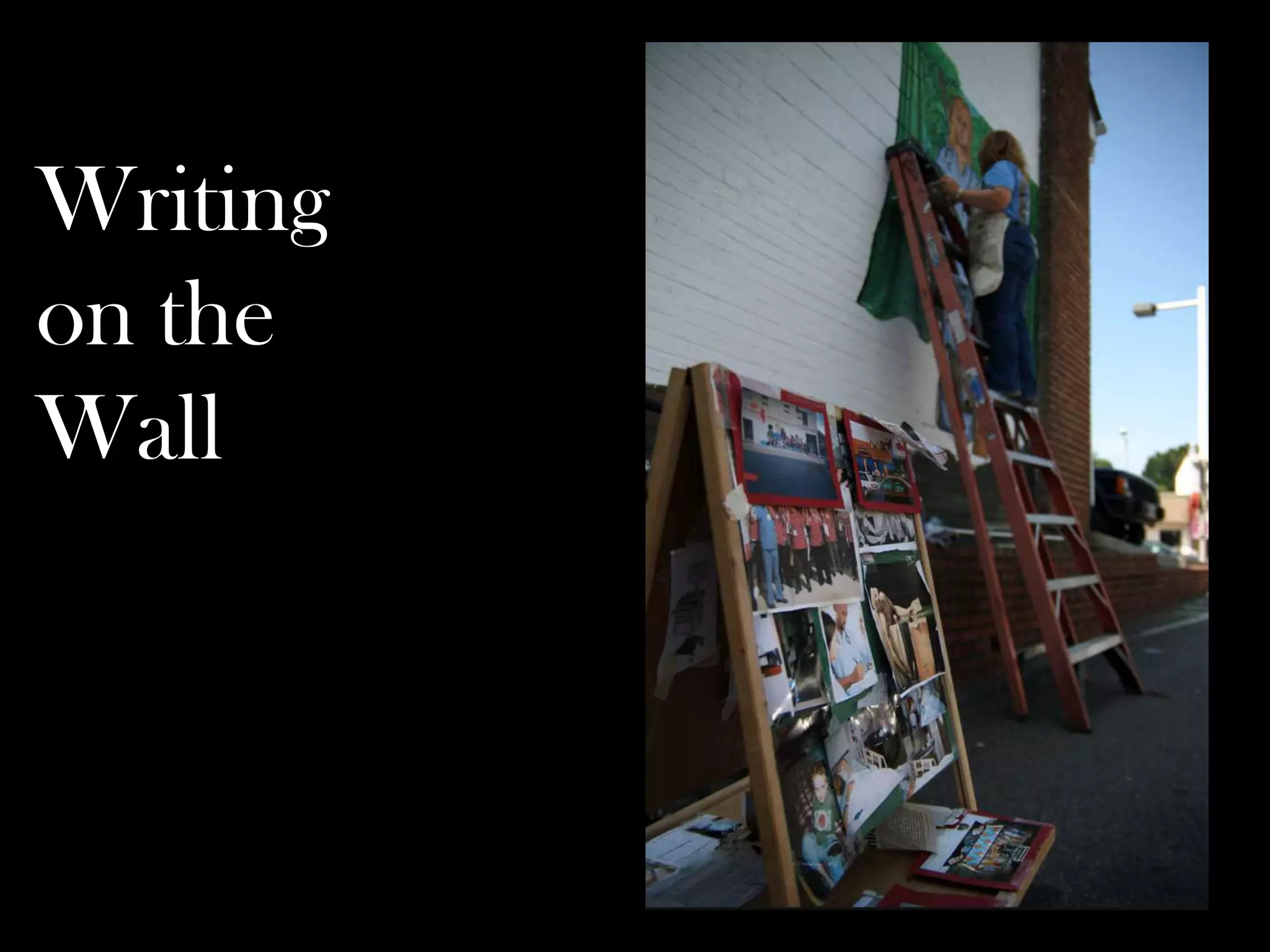
Writing
on the
Wall
Painting Advocacy meets

Social Media
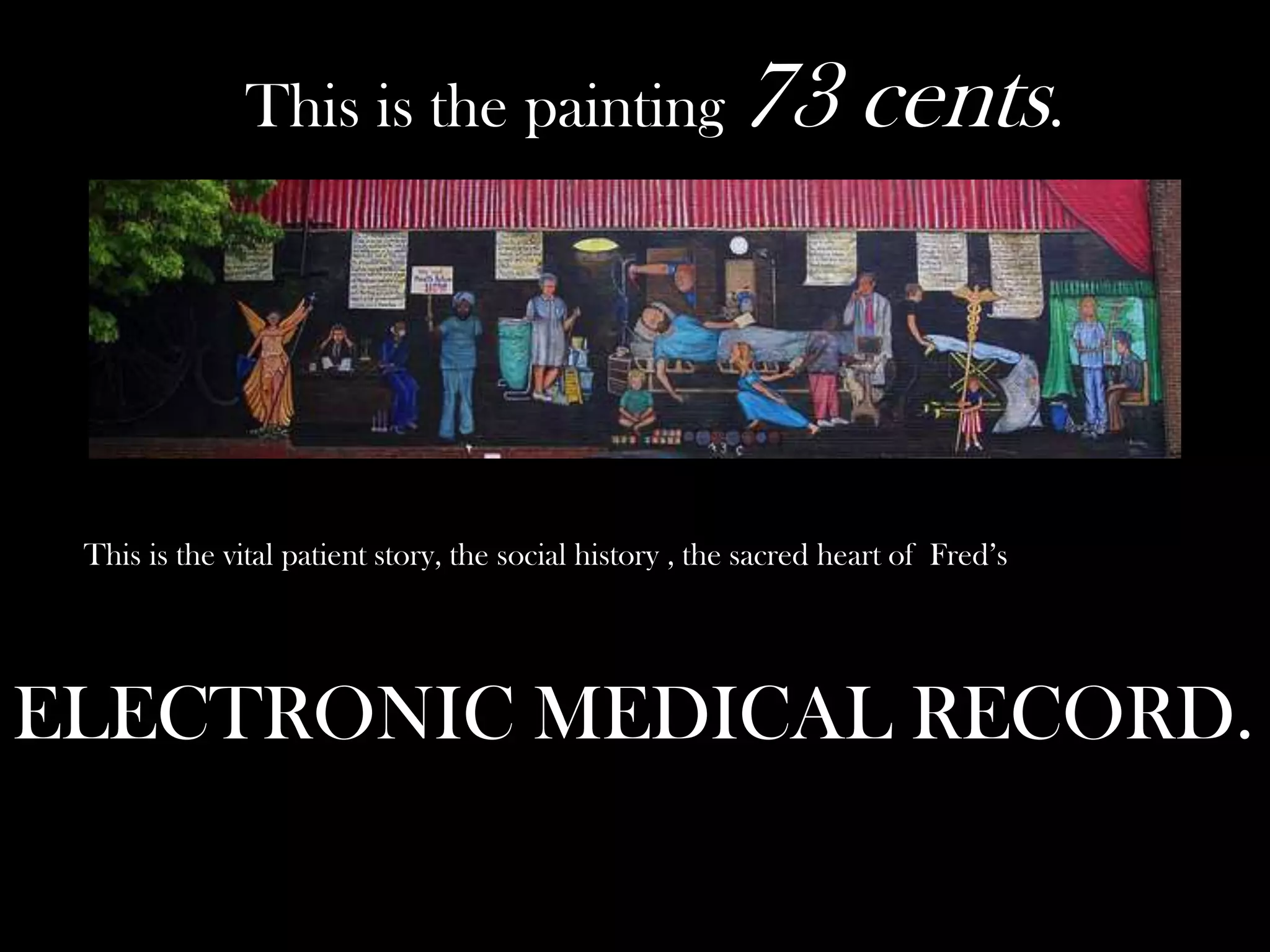
This is the painting 73

cents.

This is the vital patient story, the social history , the sacred heart of Fred’s

ELECTRONIC MEDICAL RECORD.
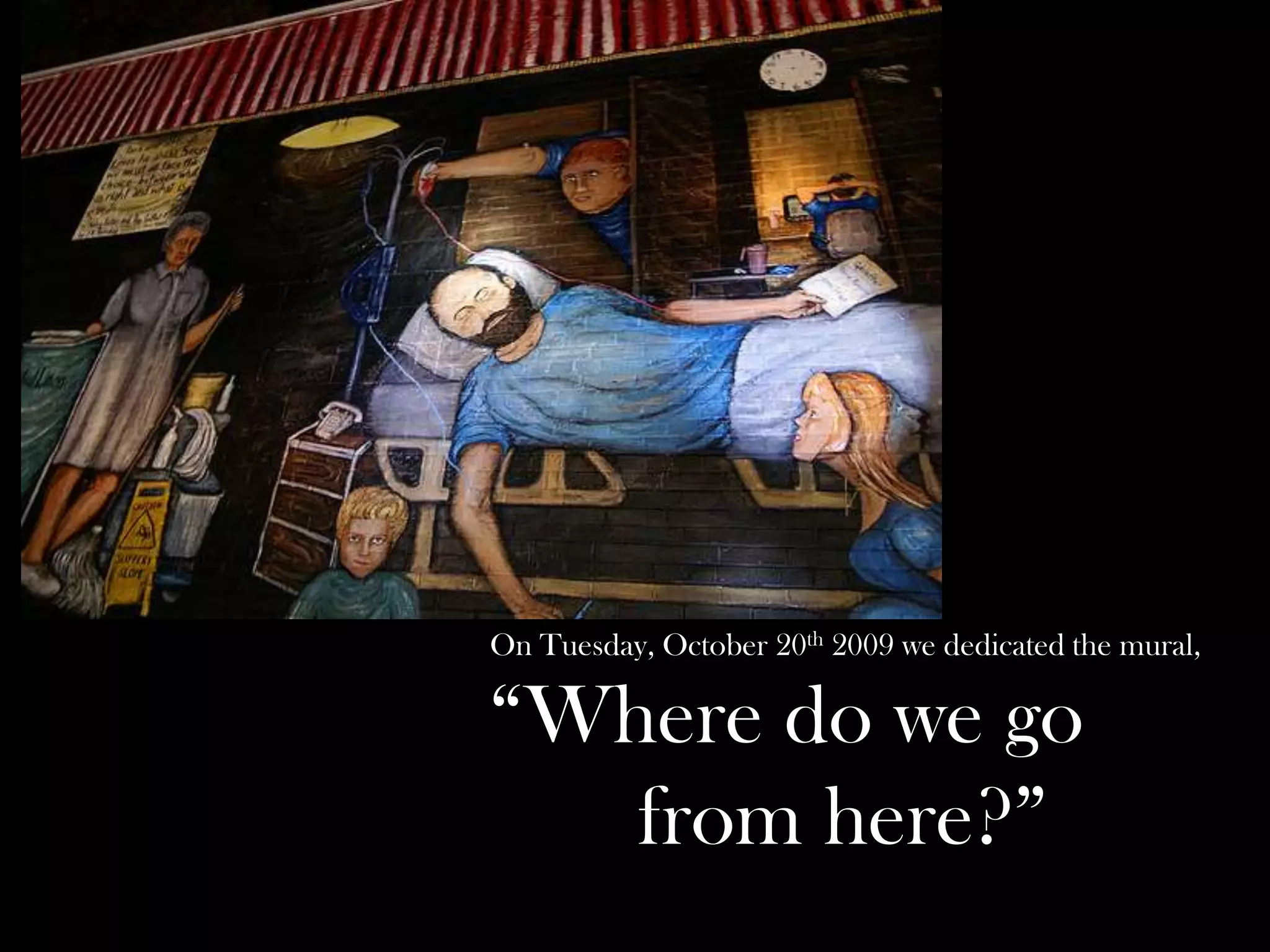
On Tuesday, October 20th 2009 we dedicated the mural,

“Where do we go
from here?”
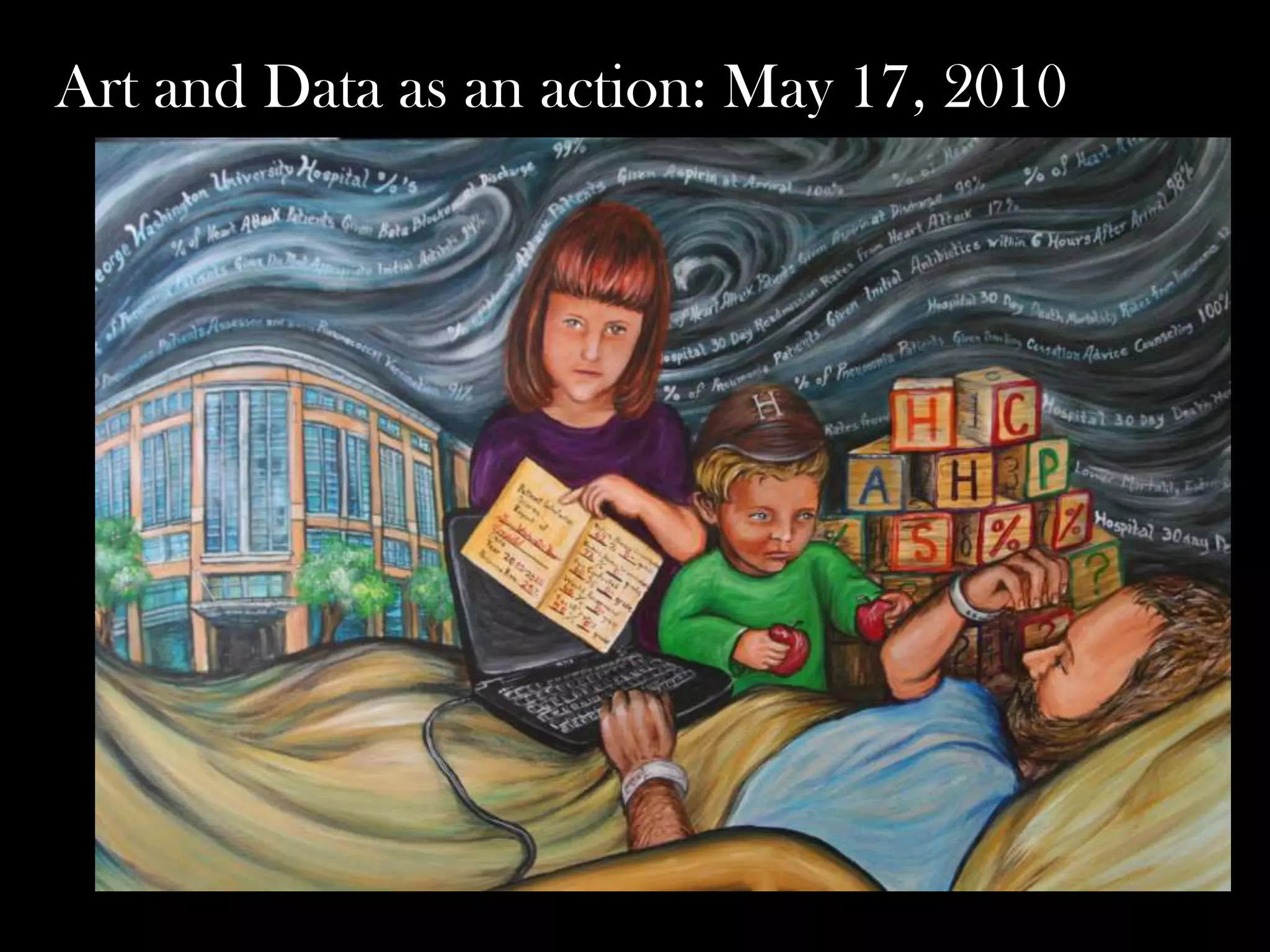
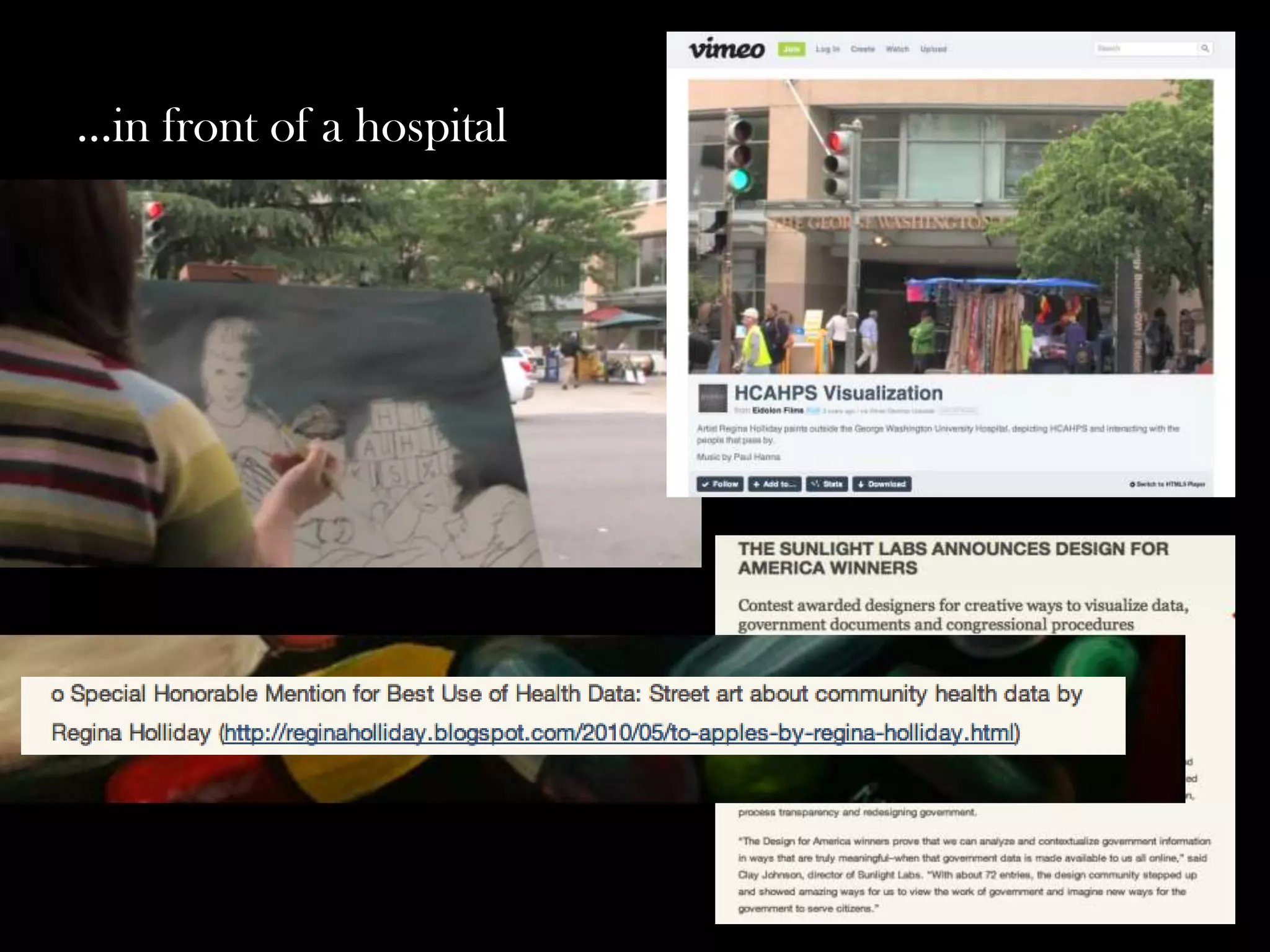
Art and Data as an action: May 17, 2010
…in front of a hospital
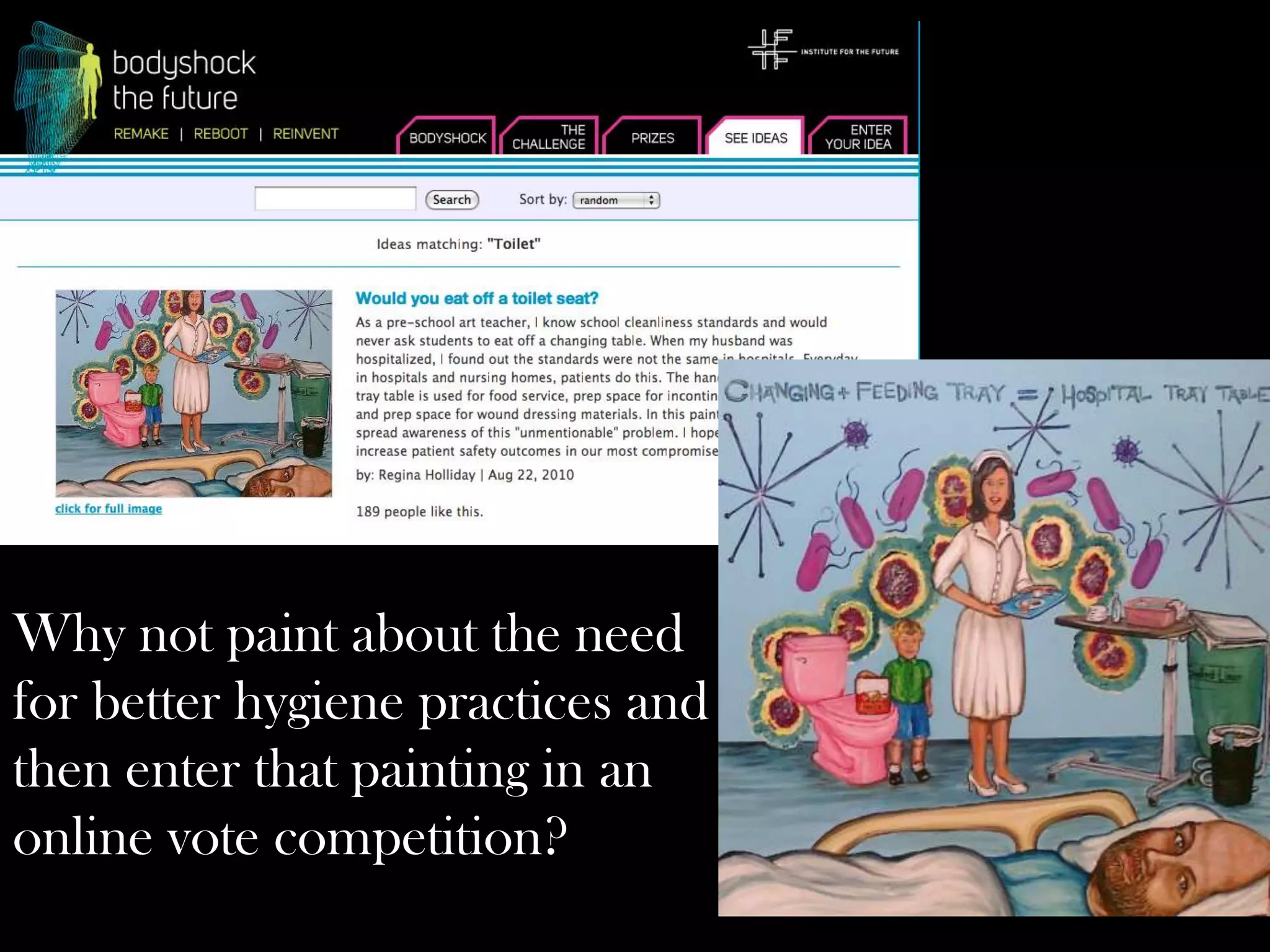
Why not paint about the need
for better hygiene practices and
then enter that painting in an
online vote competition?
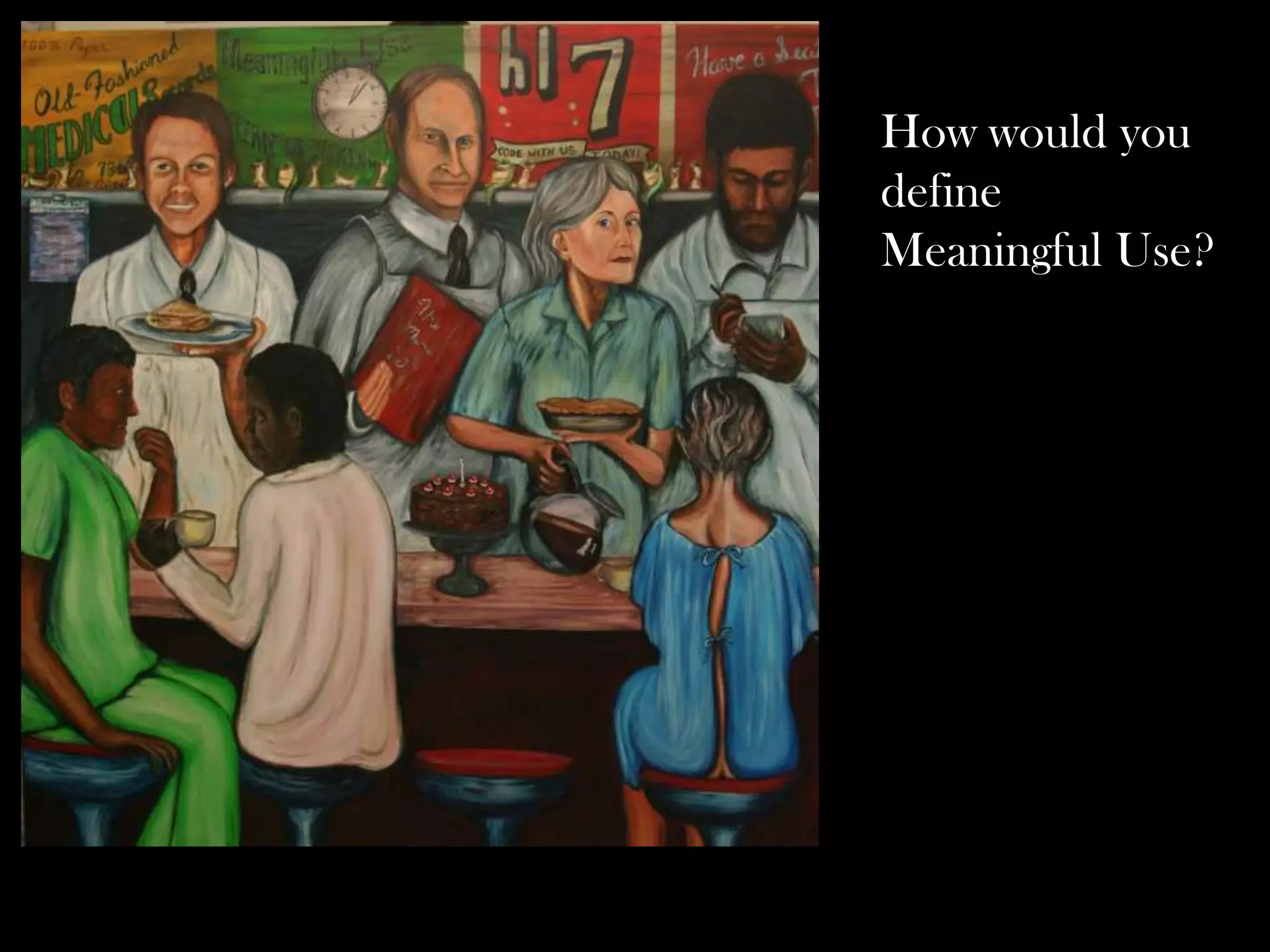
How would you
define
Meaningful Use?
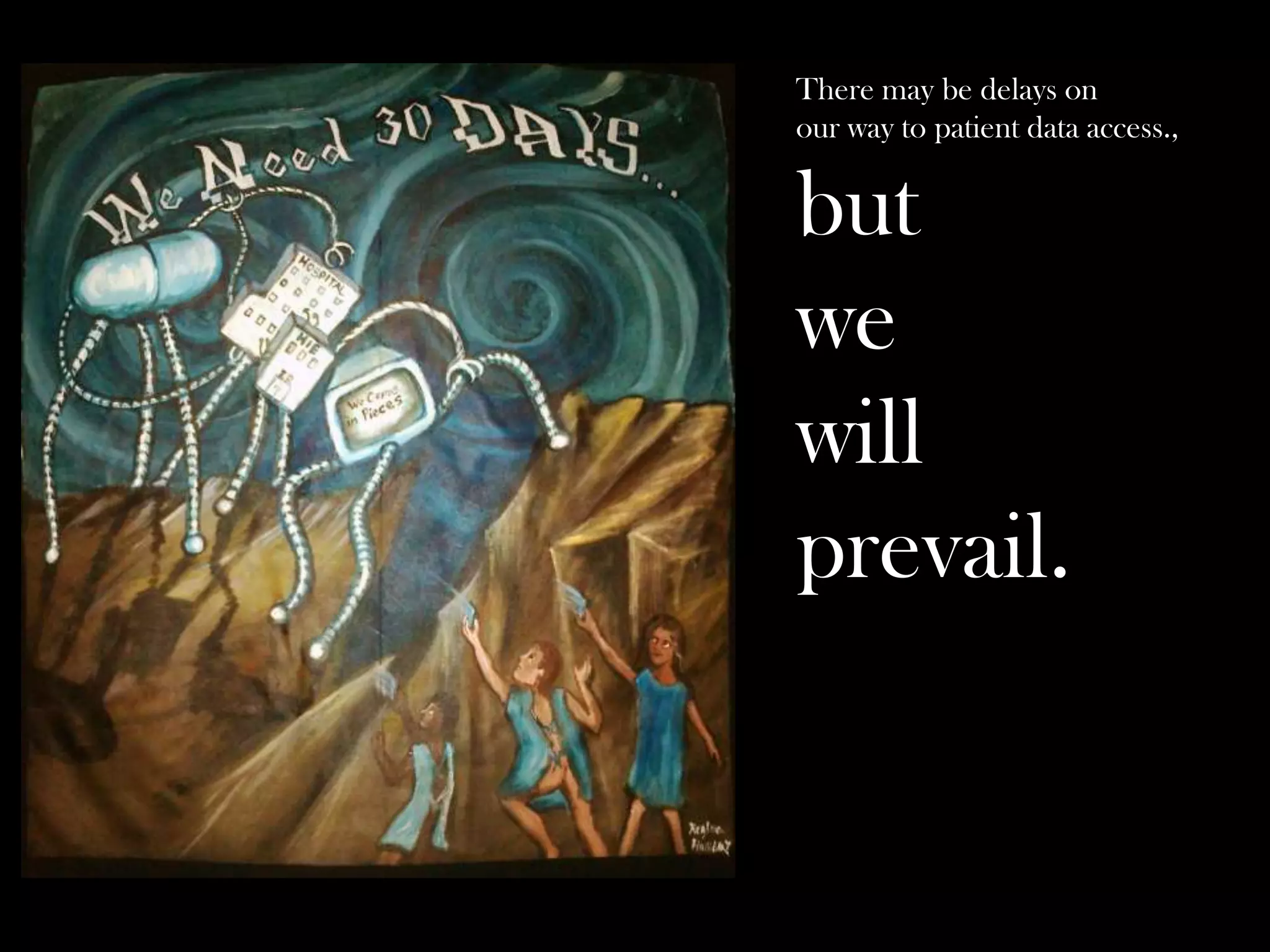
There may be delays on
our way to patient data access.,

but
we
will
prevail.
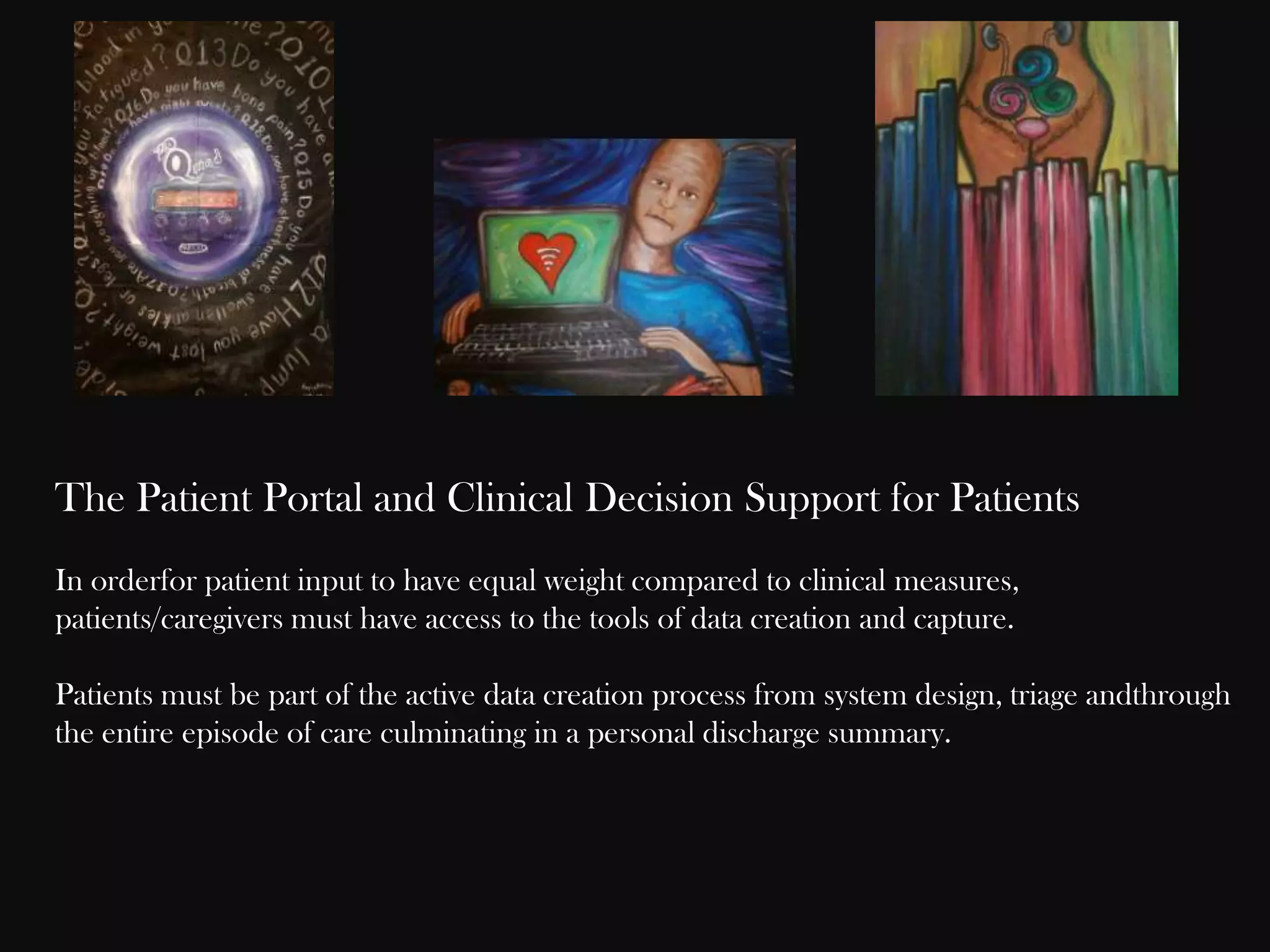
The Patient Portal and Clinical Decision Support for Patients
In orderfor patient input to have equal weight compared to clinical measures,
patients/caregivers must have access to the tools of data creation and capture.
Patients must be part of the active data creation process from system design, triage andthrough
the entire episode of care culminating in a personal discharge summary.
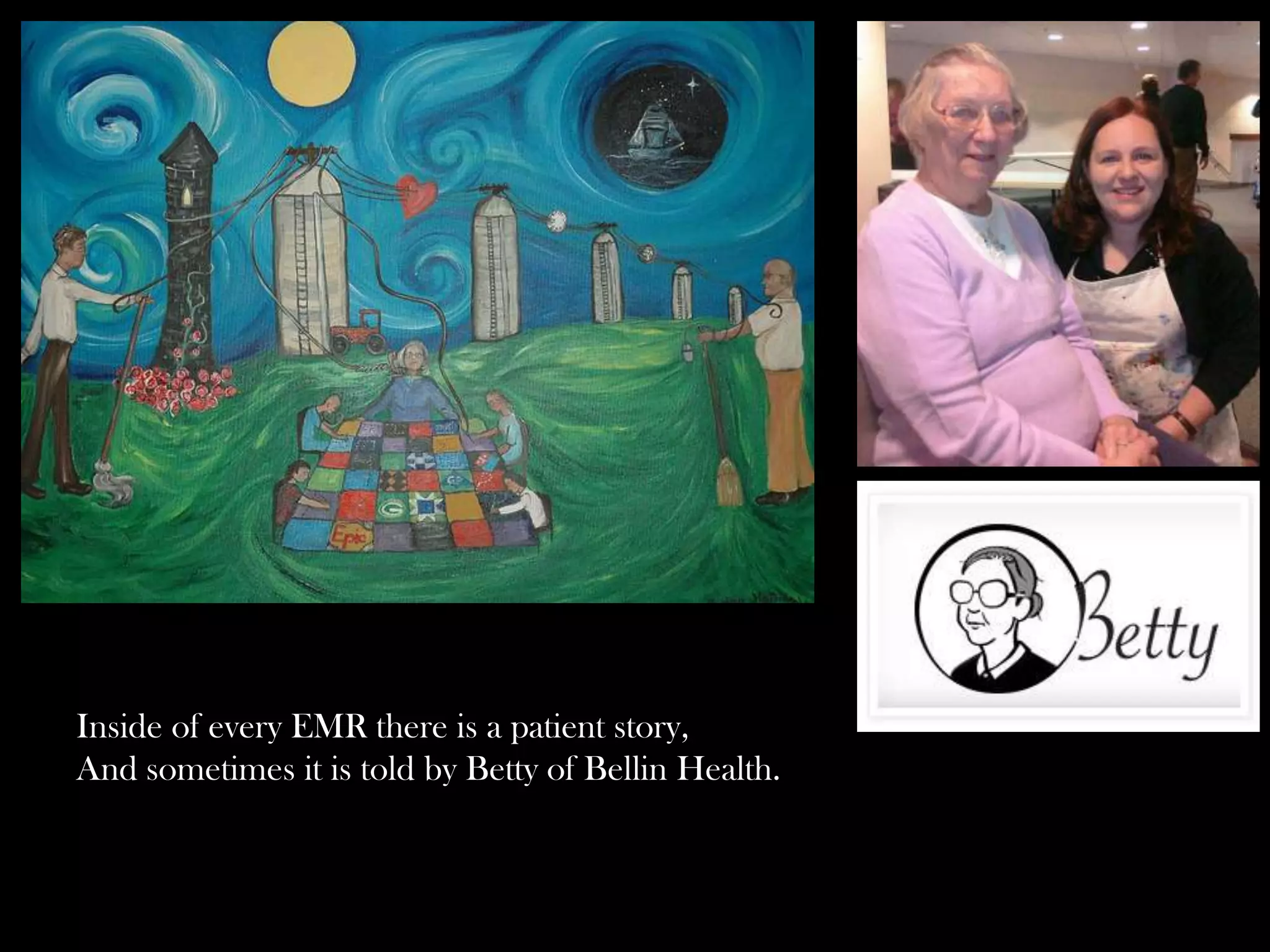
Inside of every EMR there is a patient story,
And sometimes it is told by Betty of Bellin Health.
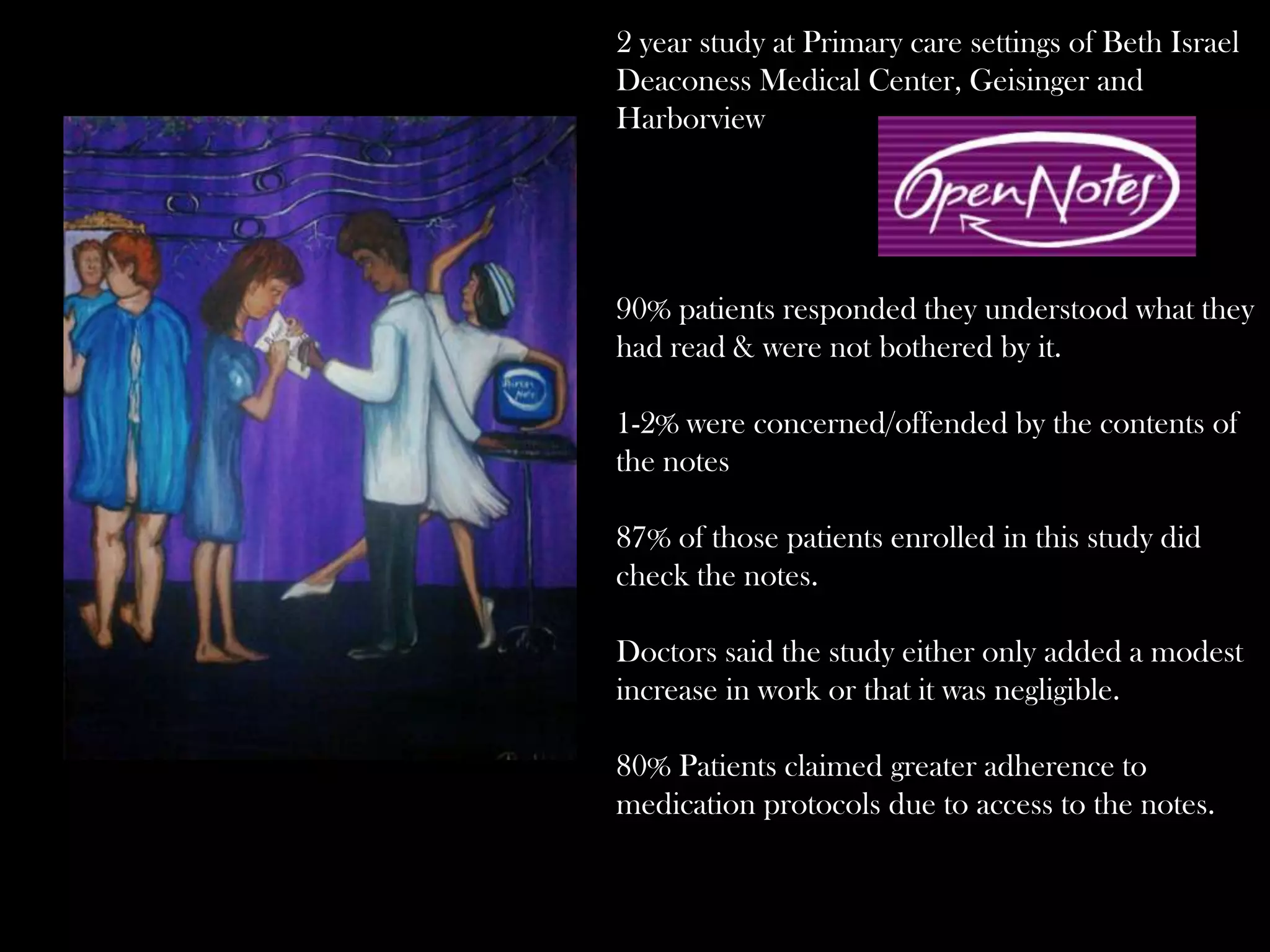
2 year study at Primary care settings of Beth Israel
Deaconess Medical Center, Geisinger and
Harborview

90% patients responded they understood what they
had read & were not bothered by it.
1-2% were concerned/offended by the contents of
the notes
87% of those patients enrolled in this study did
check the notes.
Doctors said the study either only added a modest
increase in work or that it was negligible.
80% Patients claimed greater adherence to
medication protocols due to access to the notes.
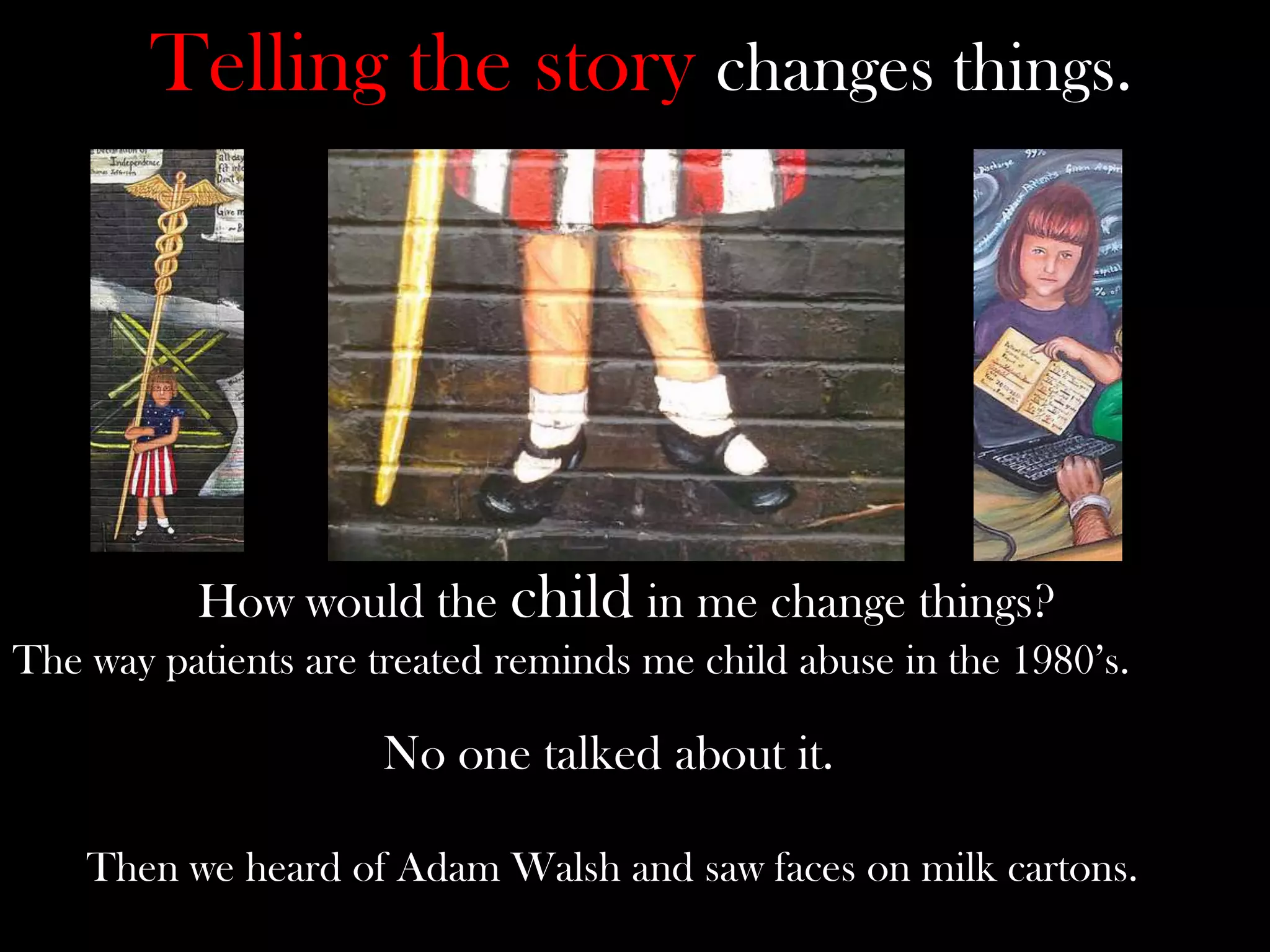
Telling the story changes things.

How would the child in me change things?
The way patients are treated reminds me child abuse in the 1980’s.

No one talked about it.
Then we heard of Adam Walsh and saw faces on milk cartons.
Prototype Consumer Reporting System for Patient Safety,
When the abuse becomes too bad call this number.
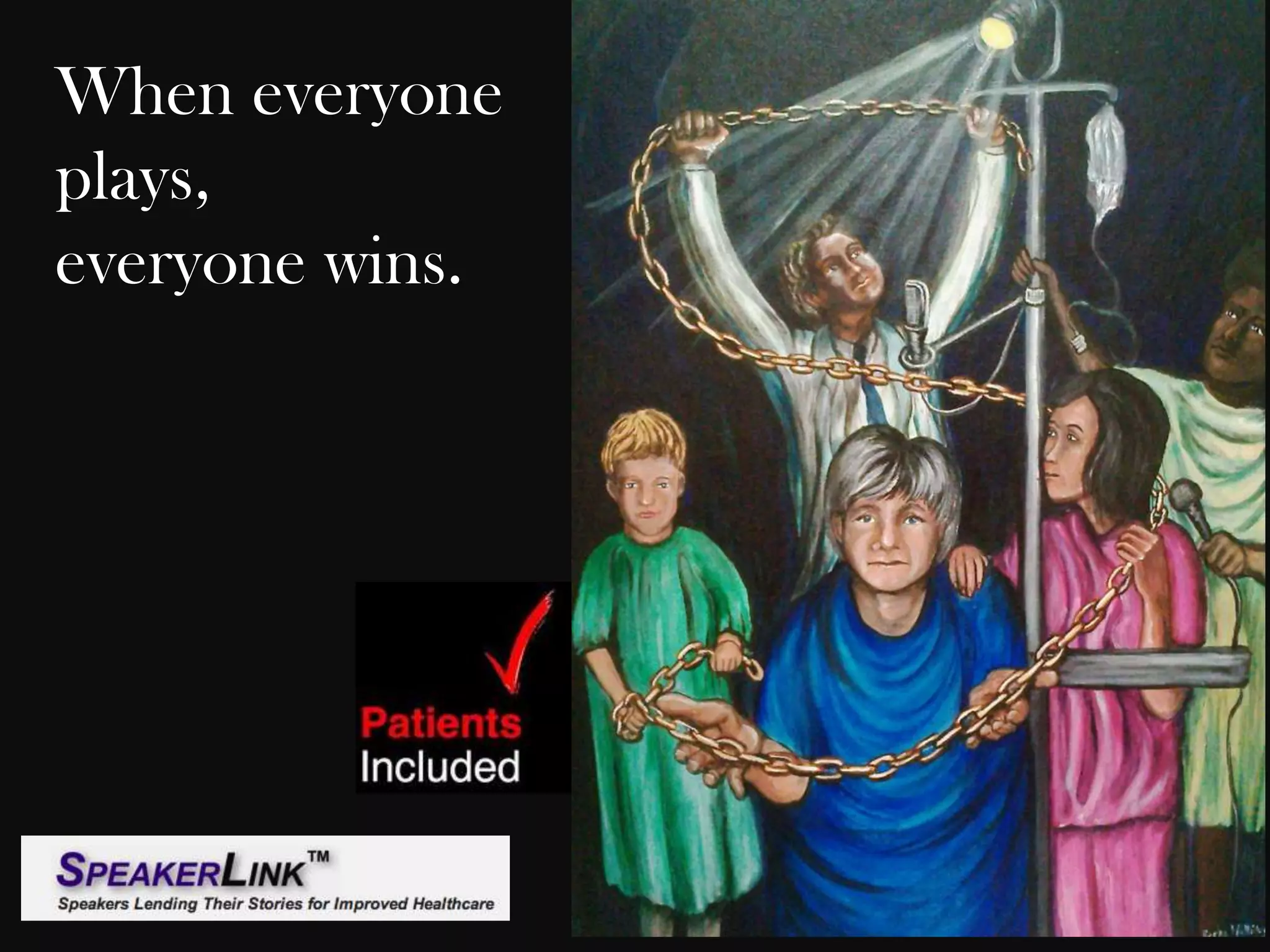
When everyone
plays,
everyone wins.
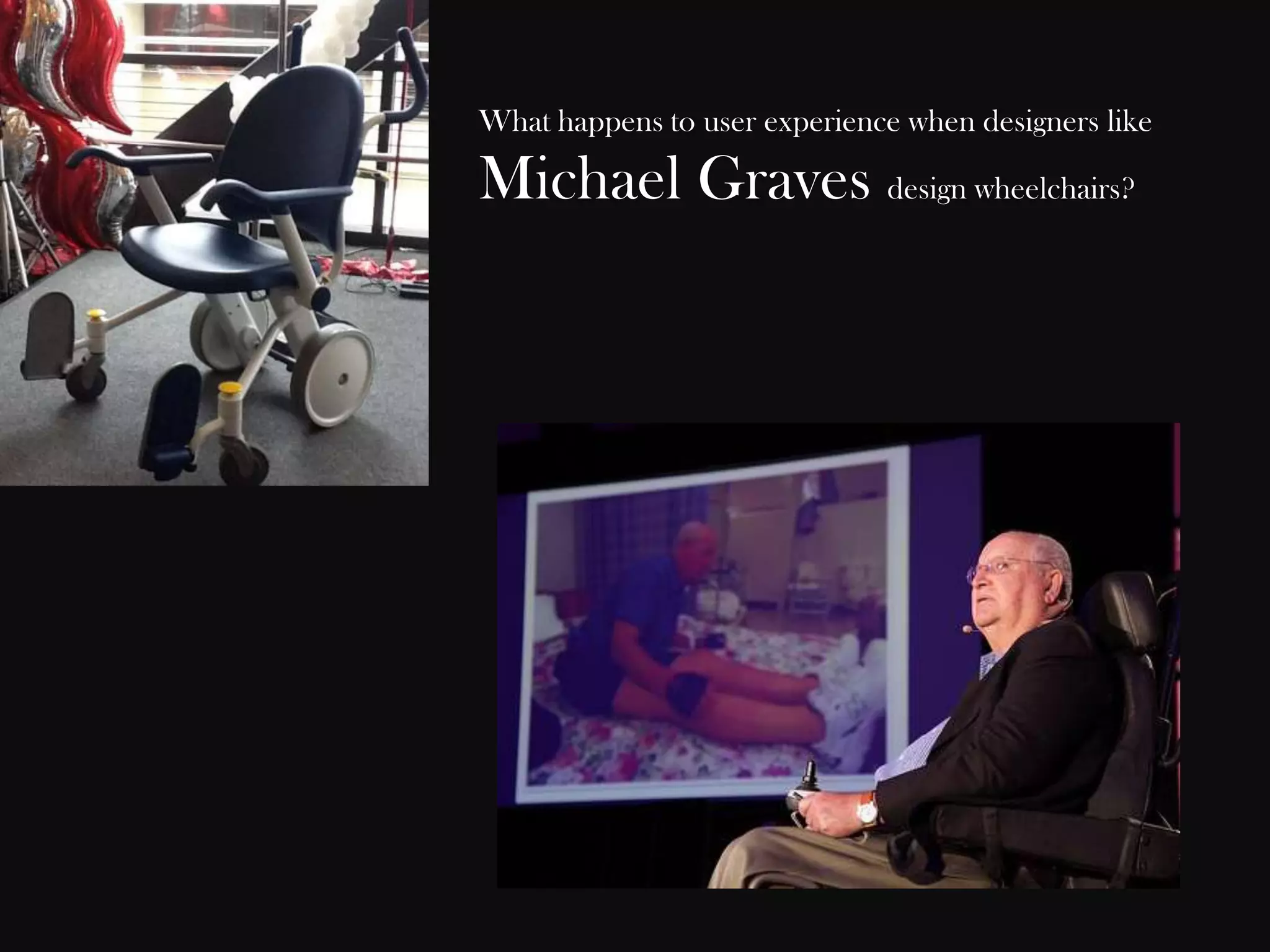
What happens to user experience when designers like

Michael Graves design wheelchairs?
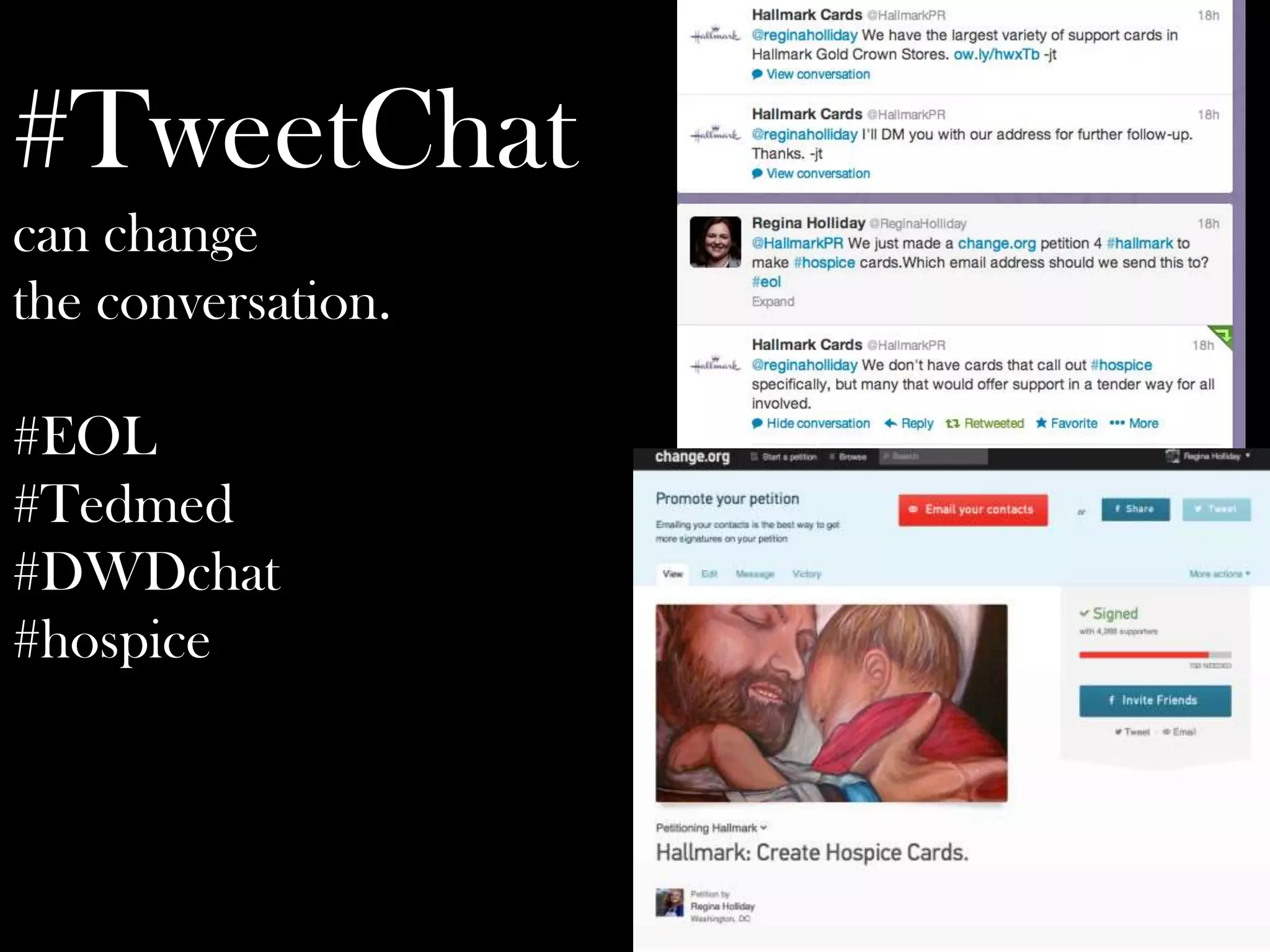
#TweetChat
can change
the conversation.
#EOL
#Tedmed
#DWDchat
#hospice
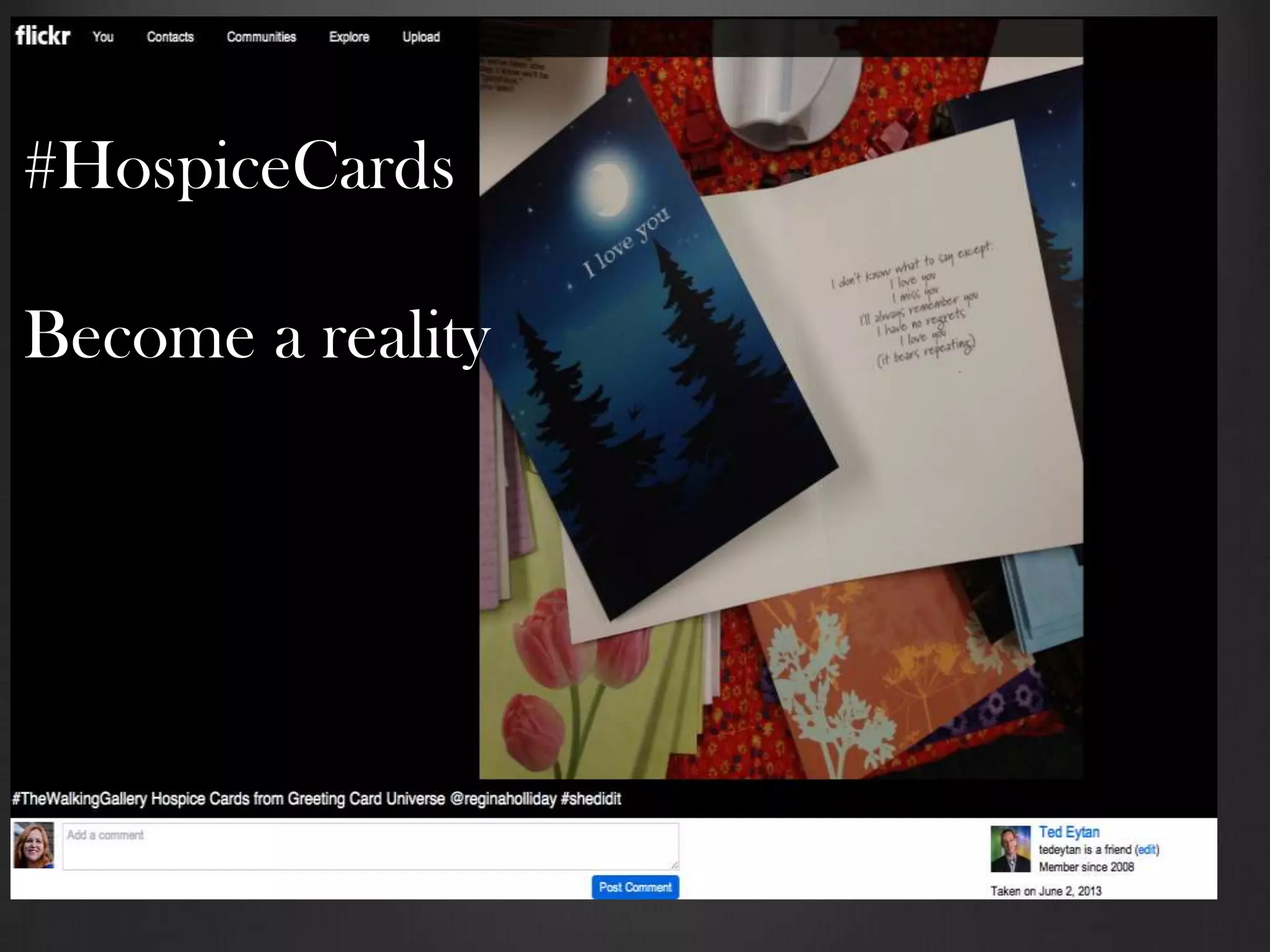
#HospiceCards

Become a reality
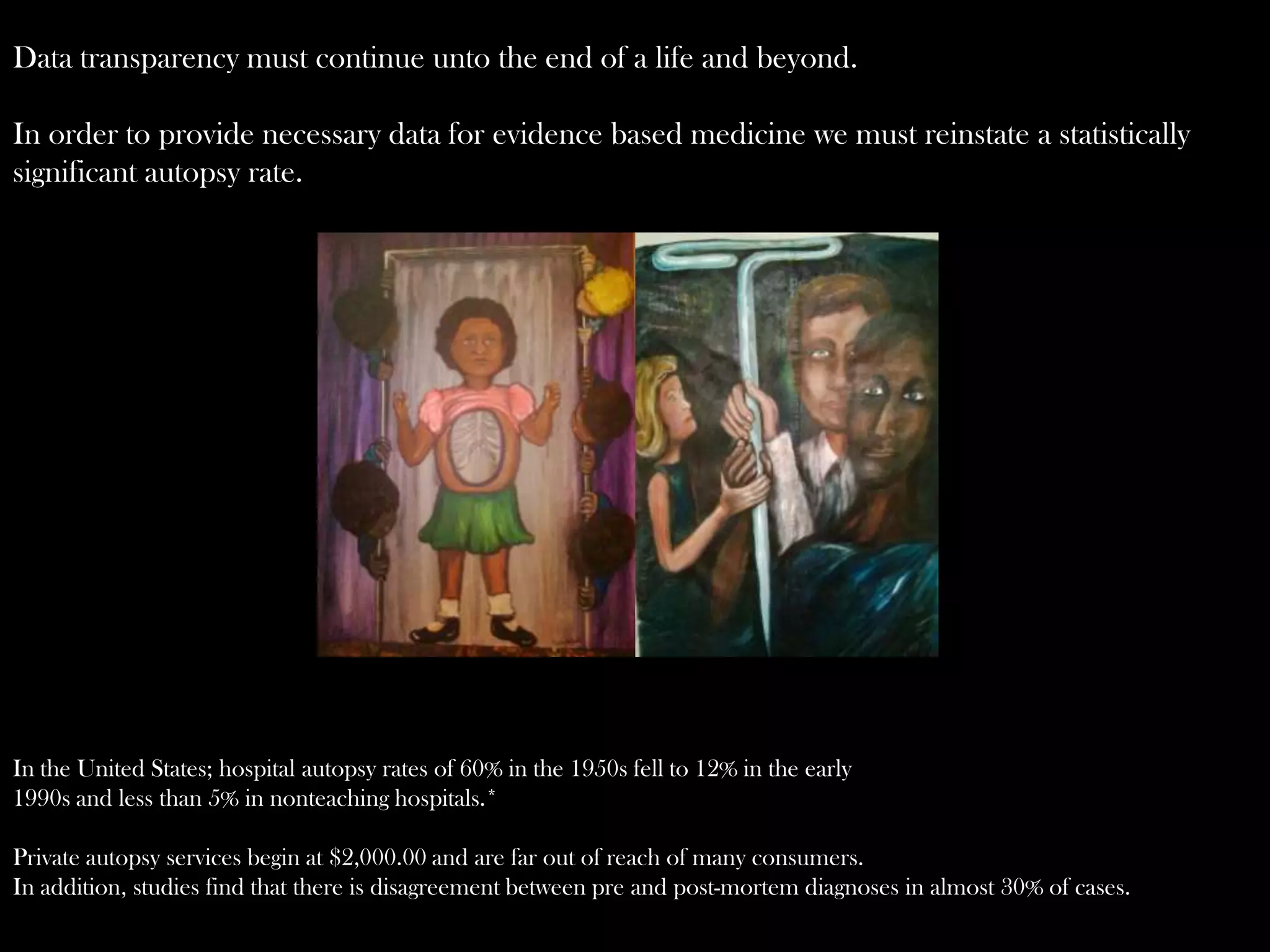
Data transparency must continue unto the end of a life and beyond.
In order to provide necessary data for evidence based medicine we must reinstate a statistically
significant autopsy rate.

In the United States; hospital autopsy rates of 60% in the 1950s fell to 12% in the early
1990s and less than 5% in nonteaching hospitals.*
Private autopsy services begin at $2,000.00 and are far out of reach of many consumers.
In addition, studies find that there is disagreement between pre and post-mortem diagnoses in almost 30% of cases.
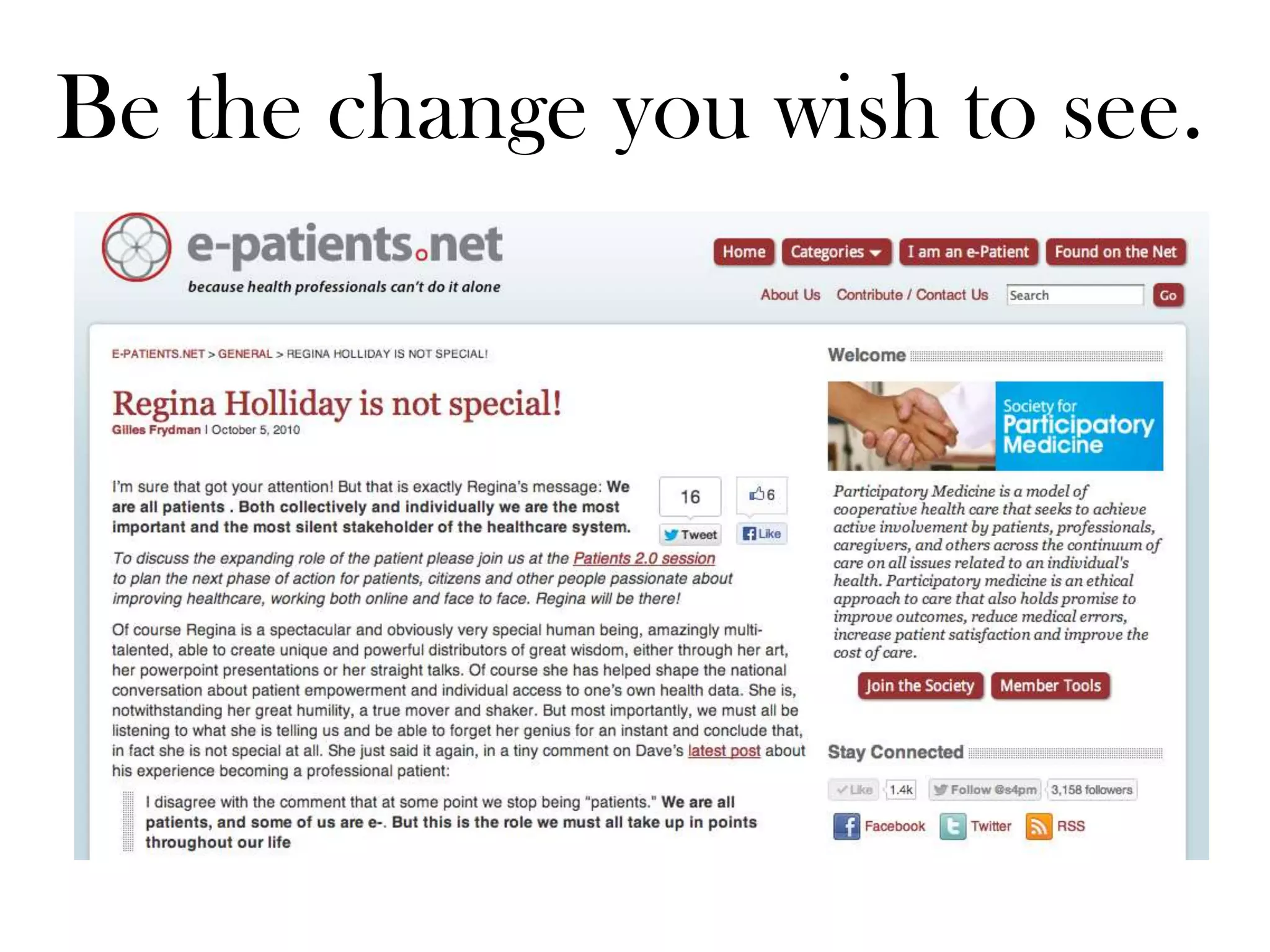
Be the change you wish to see.
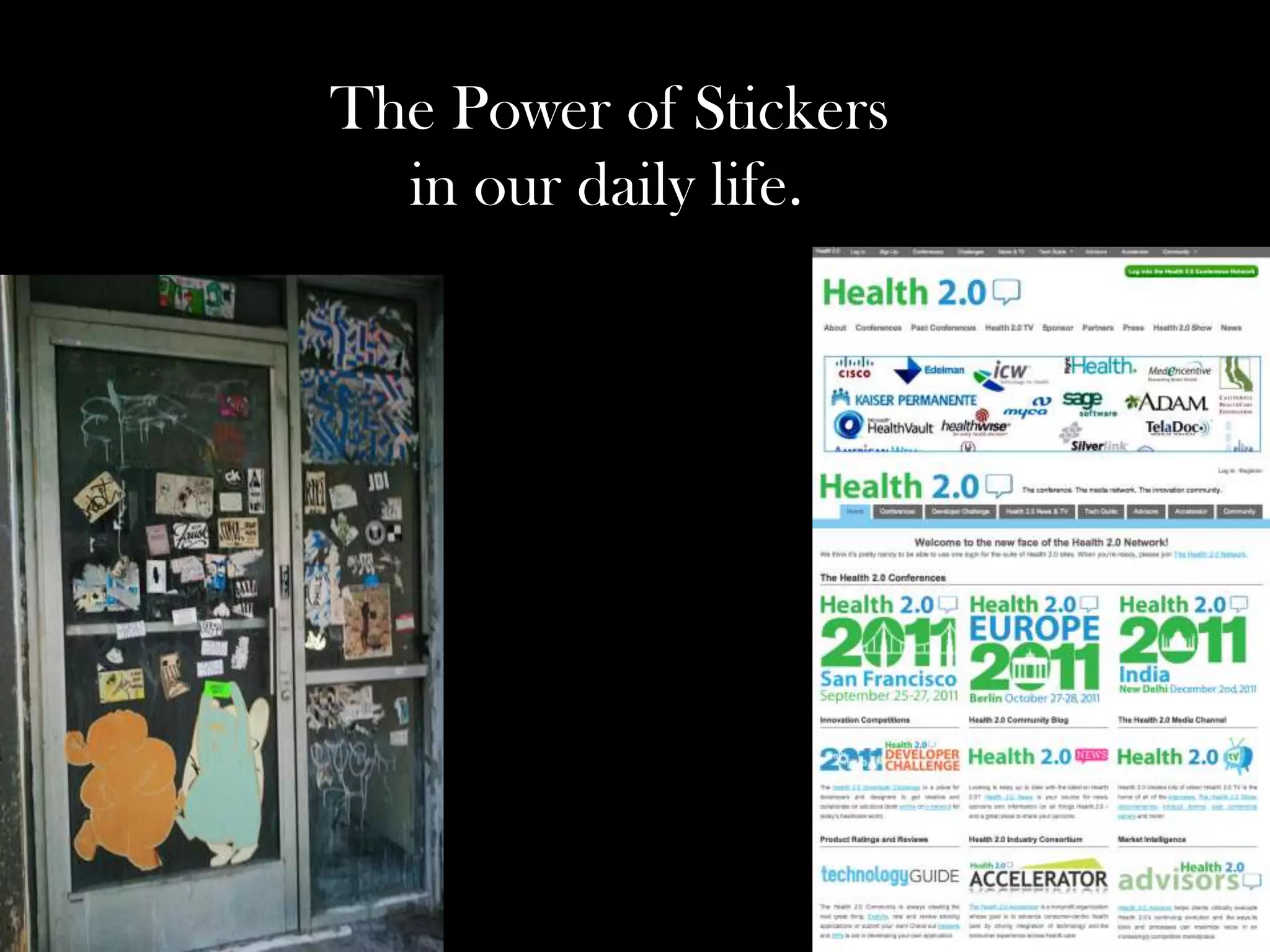
The Power of Stickers
in our daily life.
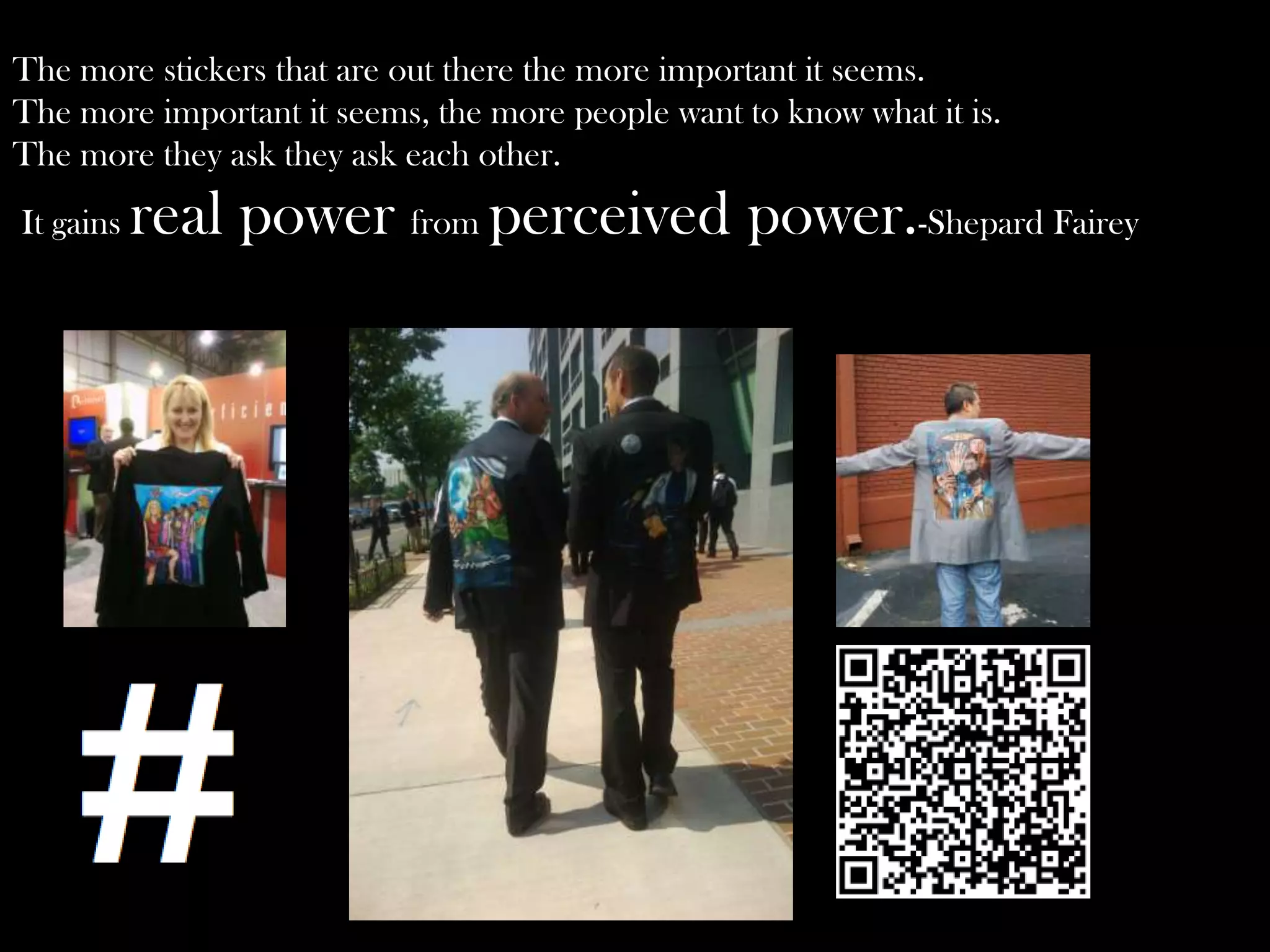
The more stickers that are out there the more important it seems.
The more important it seems, the more people want to know what it is.
The more they ask they ask each other.
It gains

real power from perceived power.-Shepard Fairey
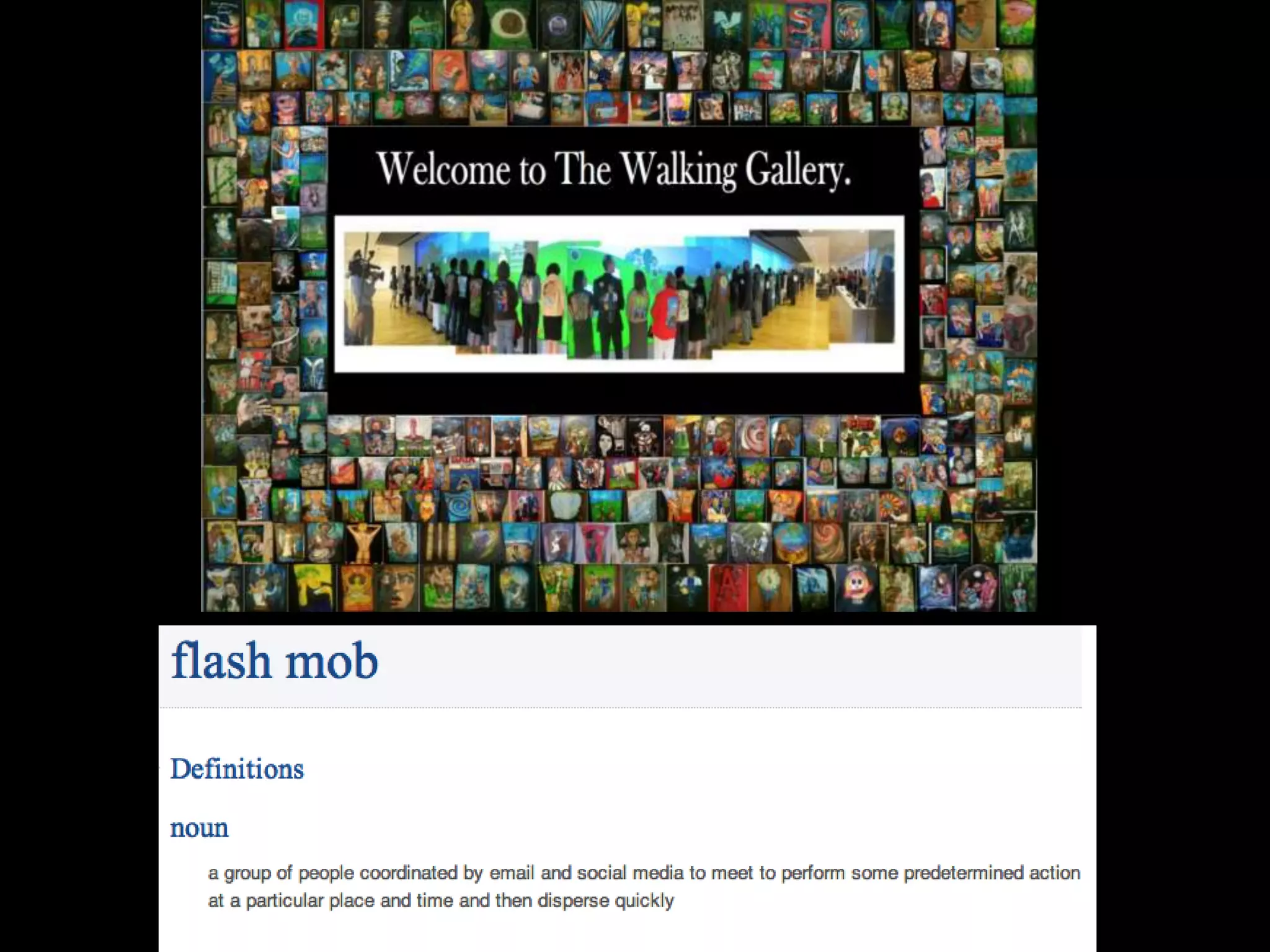
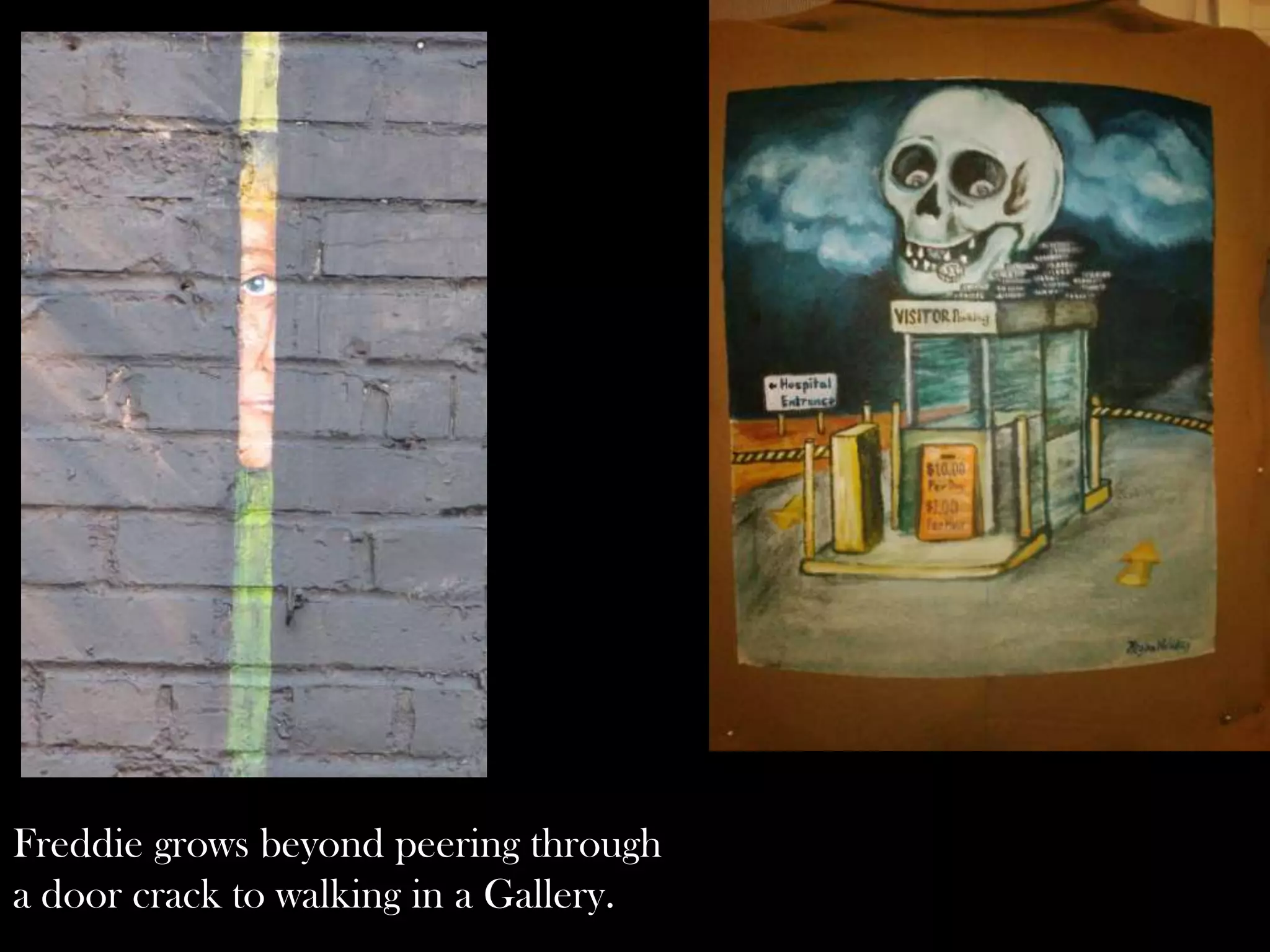
Freddie grows beyond peering through
a door crack to walking in a Gallery.
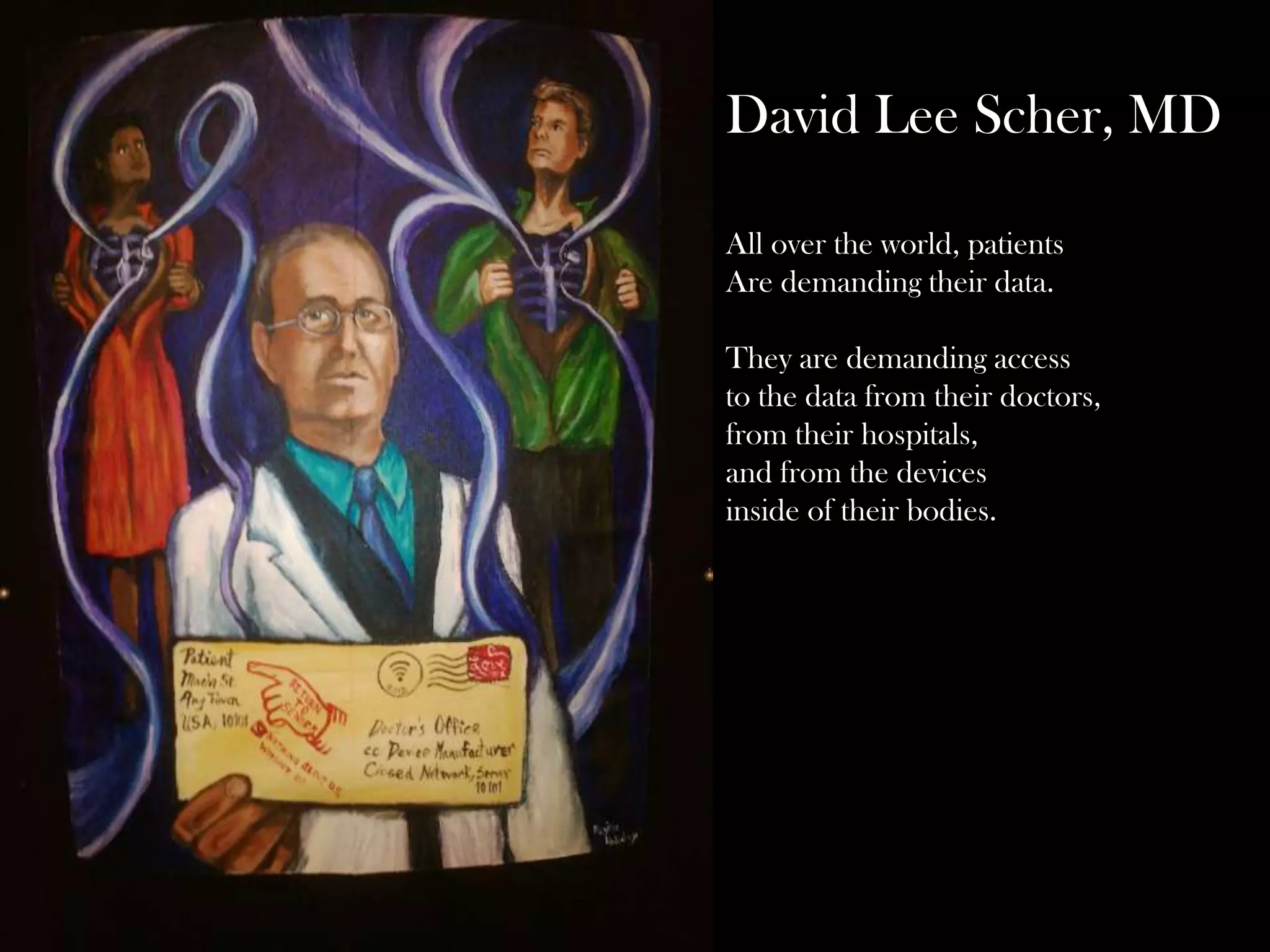
David Lee Scher, MD
All over the world, patients
Are demanding their data.
They are demanding access
to the data from their doctors,
from their hospitals,
and from the devices
inside of their bodies.
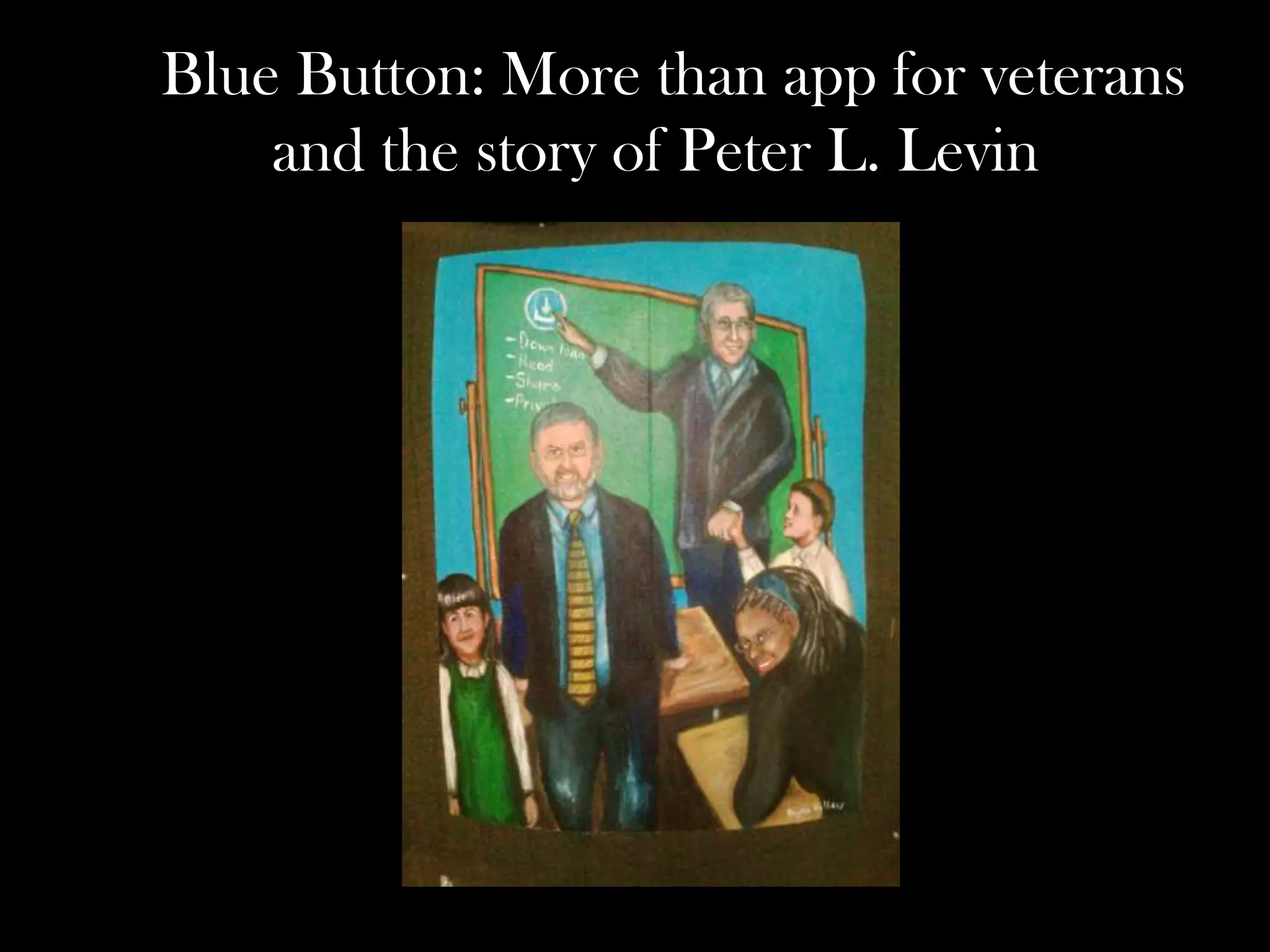
Blue Button: More than app for veterans
and the story of Peter L. Levin
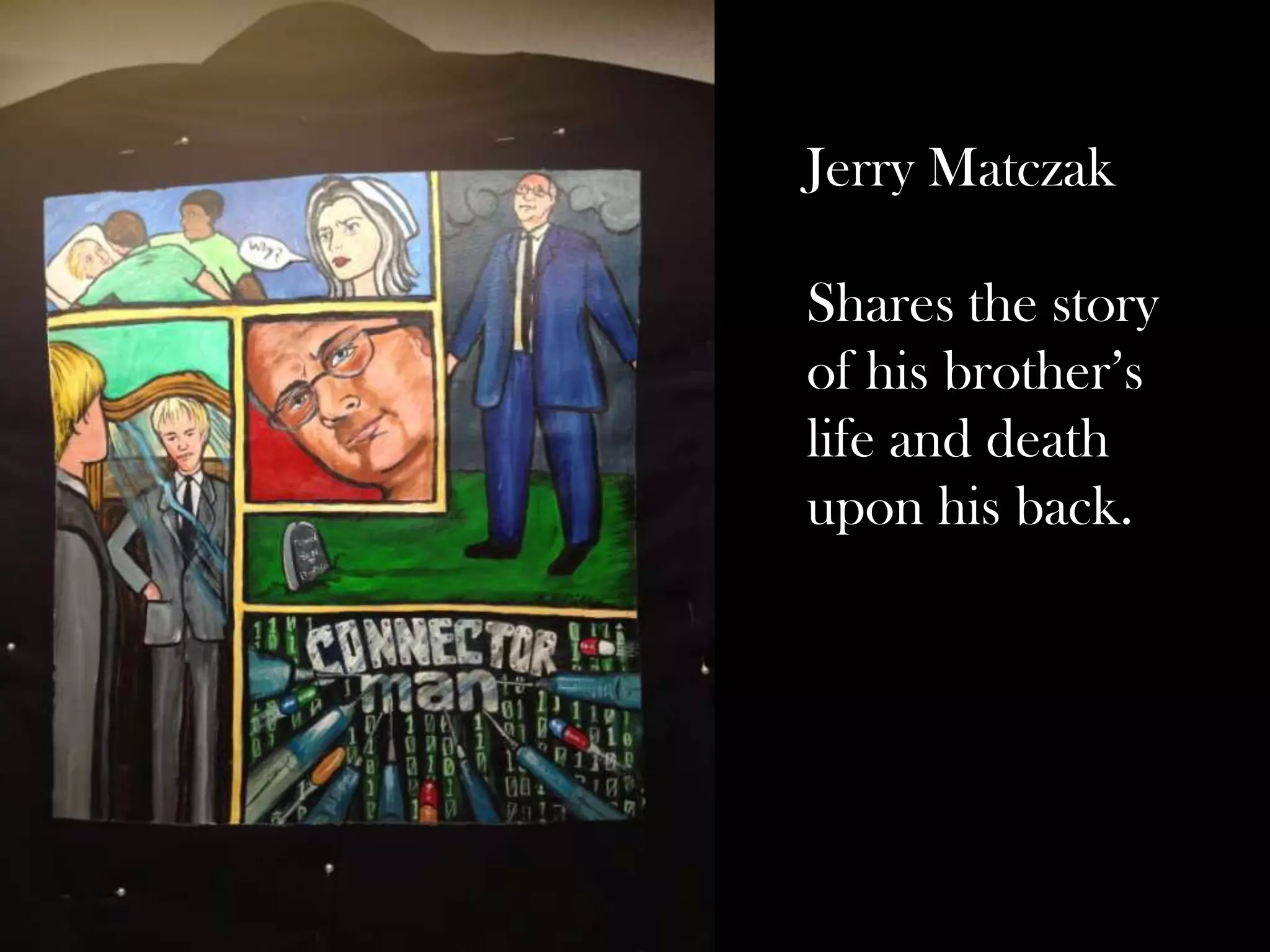
Jerry Matczak

Shares the story
of his brother’s
life and death
upon his back.
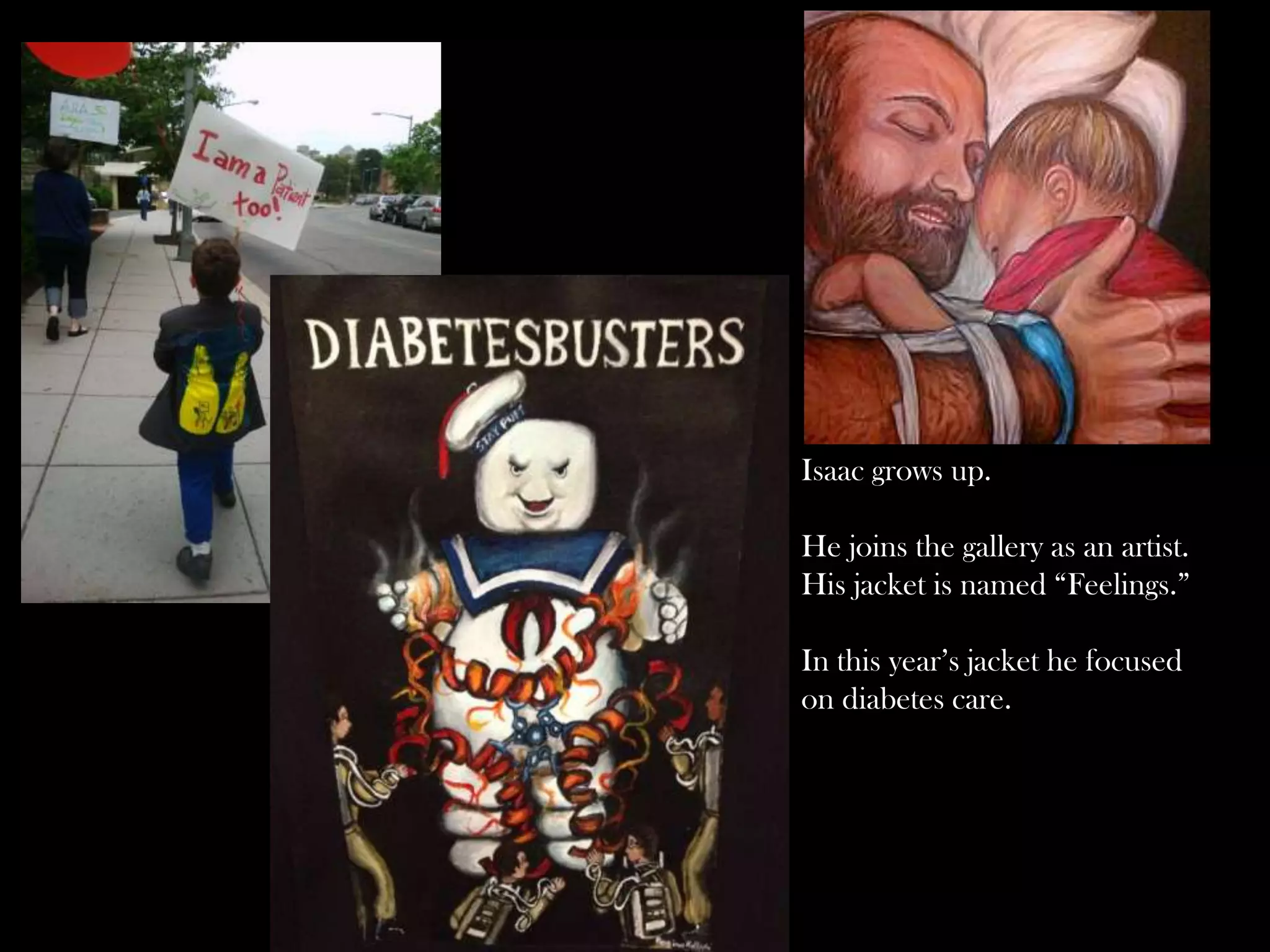
Isaac grows up.

He joins the gallery as an artist.
His jacket is named “Feelings.”
In this year’s jacket he focused
on diabetes care.
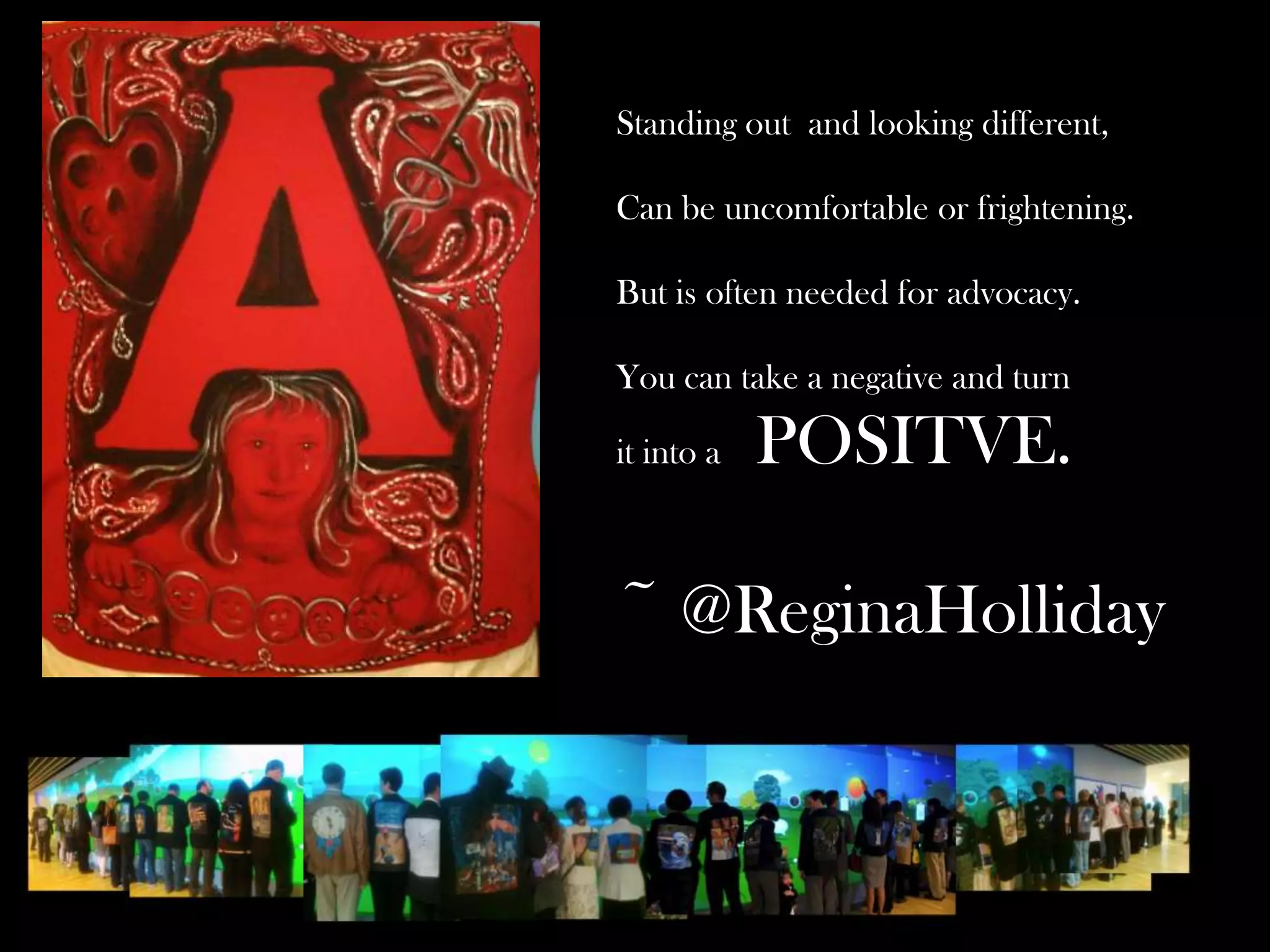
Standing out and looking different,
Can be uncomfortable or frightening.
But is often needed for advocacy.
You can take a negative and turn
it into a

POSITVE.

~ @ReginaHolliday

The Power of Stickers

  • 1.
  • 2.
    What taught youhow to be a patient?
  • 3.
    What taught youhow to be an organizedpatient?
  • 4.
    What taught youabout the power of a network?
  • 5.
    Who taught youto be an educated patient?
  • 6.
    What taught youto be an empowered Patient?
  • 7.
    Even a child canunderstand and appreciate health Information.
  • 8.
    When the abusebecomes too bad call this number.
  • 9.
    I met FredHolliday in a scenic painting class atOklahoma State University. We would talk of Stephen King’s Dark Tower. We would fall in love.
  • 10.
    You know itis true love when you sell your comic book collection to pay for the wedding.
  • 11.
    In 1998 FreddieHolliday III was born 4 weeks early at Lawrence Memorial Hospital in Lawrence, Kansas. He needed to stay in the NICU. We we able to stay with him the entire week in the Segebrecht Room.
  • 12.
    In Kansas Iwould paint one painting. I would paint it for one patient on a hot summer day.
  • 13.
    When we movedto DC, I would paint neighborhood murals. I would also teach art at a local preschool. I would work in a toy store.
  • 14.
    In 2005 Fredwould get a PhD in film studies and would write his dissertation on “Buffy the Vampire Slayer.” In2006, Isaac Holliday was born.
  • 15.
    The Holliday FamilyChristmas 2007
  • 16.
    Everything we everwanted… Resolutions January 2008: 1. Get Medical Insurance for the whole family 2. Get little Freddie into a special needs school 3. Fred gets a job in his field 4. Spend more time together as a family 5. Get a two bedroom apartment Freddie’s IEP Binder
  • 17.
    Fred was happywith his new job. But he was very tired, He went to the doctor and was diagnosed with hypertension.
  • 18.
    During the monthsof January, February and March of 2009, Status Lines…
  • 19.
    We are notin Kansas anymore.
  • 20.
    On Friday March13th, We went to the ER because Fred was in so much pain . We waited three hours before being sent home.
  • 21.
    Fred was hospitalizedon March 25th 2009 for the administration of tests. On March 27th, he was told while alone that he had “tumors and growths.” He was scared and confused and did not understand. His oncologist left town for the next four days to a medical conference and was not reachable by phone or email.
  • 22.
    What was thediagnosis? What were the treatment options? Would he get a pain consult?
  • 23.
  • 24.
    This is myhusband’s medical record. I was told it would cost 73 Cents per page And we would have to wait 21 days to get a copy.
  • 25.
    “She must nothave tried very hard to get the record….” Comparing access to an unpublished book by Stephen King to accessing the Electronic Medical Record.
  • 26.
  • 27.
    After waiting for 5 daysfor a transfer to another hospital for a second opinion, We were sent with an out of date and incomplete medical record and transfer summary. The new staff spent 6 hours trying to cobble together a current medical record Using a telephone and a fax machine.
  • 28.
    The Power ofa Sticker: This is thevital clinical information from Fred’s electronic medical record presented in the style of the Nutrition Facts Label. Then painted on the wall of Pumpernickel’s Deli in Washington, DC.
  • 29.
    “What about the chemotherapy?” Wewere told the order had been placed. It did not come.
  • 31.
    I am tryingto talk with Christine Kraft and epatient Dave. Why did we get more help and answers from Social Media than from our local hospital ? Within one day were in email contact and then spoke on the phone. By ten o’clock May 4th 2009, I was talking on the phone with Dave’s Oncologist about my husband’s cancer.
  • 32.
  • 33.
    We fulfilled ourfinal resolution on June 11th 2009. We moved into a two bedroom apartment so I could care for Fred in home hospice. He died six days later on June 17th, 2009
  • 34.
  • 35.
  • 36.
    This is thepainting 73 cents. This is the vital patient story, the social history , the sacred heart of Fred’s ELECTRONIC MEDICAL RECORD.
  • 37.
    On Tuesday, October20th 2009 we dedicated the mural, “Where do we go from here?”
  • 38.
    Art and Dataas an action: May 17, 2010
  • 39.
    …in front ofa hospital
  • 40.
    Why not paintabout the need for better hygiene practices and then enter that painting in an online vote competition?
  • 41.
  • 42.
    There may bedelays on our way to patient data access., but we will prevail.
  • 43.
    The Patient Portaland Clinical Decision Support for Patients In orderfor patient input to have equal weight compared to clinical measures, patients/caregivers must have access to the tools of data creation and capture. Patients must be part of the active data creation process from system design, triage andthrough the entire episode of care culminating in a personal discharge summary.
  • 44.
    Inside of everyEMR there is a patient story, And sometimes it is told by Betty of Bellin Health.
  • 45.
    2 year studyat Primary care settings of Beth Israel Deaconess Medical Center, Geisinger and Harborview 90% patients responded they understood what they had read & were not bothered by it. 1-2% were concerned/offended by the contents of the notes 87% of those patients enrolled in this study did check the notes. Doctors said the study either only added a modest increase in work or that it was negligible. 80% Patients claimed greater adherence to medication protocols due to access to the notes.
  • 46.
    Telling the storychanges things. How would the child in me change things? The way patients are treated reminds me child abuse in the 1980’s. No one talked about it. Then we heard of Adam Walsh and saw faces on milk cartons.
  • 47.
    Prototype Consumer ReportingSystem for Patient Safety, When the abuse becomes too bad call this number.
  • 48.
  • 49.
    What happens touser experience when designers like Michael Graves design wheelchairs?
  • 50.
  • 52.
  • 53.
    Data transparency mustcontinue unto the end of a life and beyond. In order to provide necessary data for evidence based medicine we must reinstate a statistically significant autopsy rate. In the United States; hospital autopsy rates of 60% in the 1950s fell to 12% in the early 1990s and less than 5% in nonteaching hospitals.* Private autopsy services begin at $2,000.00 and are far out of reach of many consumers. In addition, studies find that there is disagreement between pre and post-mortem diagnoses in almost 30% of cases.
  • 54.
    Be the changeyou wish to see.
  • 55.
    The Power ofStickers in our daily life.
  • 57.
    The more stickersthat are out there the more important it seems. The more important it seems, the more people want to know what it is. The more they ask they ask each other. It gains real power from perceived power.-Shepard Fairey
  • 58.
    Freddie grows beyondpeering through a door crack to walking in a Gallery.
  • 59.
    David Lee Scher,MD All over the world, patients Are demanding their data. They are demanding access to the data from their doctors, from their hospitals, and from the devices inside of their bodies.
  • 60.
    Blue Button: Morethan app for veterans and the story of Peter L. Levin
  • 61.
    Jerry Matczak Shares thestory of his brother’s life and death upon his back.
  • 62.
    Isaac grows up. Hejoins the gallery as an artist. His jacket is named “Feelings.” In this year’s jacket he focused on diabetes care.
  • 63.
    Standing out andlooking different, Can be uncomfortable or frightening. But is often needed for advocacy. You can take a negative and turn it into a POSITVE. ~ @ReginaHolliday

Editor's Notes

  • #54 *Paying Our Last Respects: The Neonatal Autopsy as Continuing Care and Ethical ObligationJane Donohue Battaglia, MD, MA*+Author Affiliations*Associate Clinical Professor, Anesthesiology, Pediatrics and Preventive Medicine, Center for Bioethics and Humanities, University of Colorado School of Medicine, Denver, COOBJECTIVESAfter completing this article, readers should be able to:List the benefits of a postmortem examination.List possible reasons for the decline in autopsy rates.DECREASING RATES OF AUTOPSYEthical discussions of autopsies usually center around consent: how it must be requested, who may give it, or limitations on the procedure. All of these issues should concern us, but the real ethical issue about autopsies is that the procedure itself is not being done. The worldwide trend of falling autopsy rates (1) involves the United States; hospital rates of 60% in the 1950s fell to 12% in the early 1990s and less than 5% in nonteaching hospitals. (2) The average United States hospital rate of autopsies was 50% in the 1940s and 38% in 1973. (3) A review in 1983 at an adult teaching hospital documented a 75% rate in 1960, 71% rate in 1970, and 38% rate in 1980. (4) Although neonatal autopsy rates have maintained a higher level than those of adults, (5) they too are falling. In Scotland, rates began to decline in 1994. (6) In Wales, some rates fell below 50%, with neonatal perioperative autopsy rates at 45%. (7) The rate in one Australian center was 43% (8) and 39.7% in another. (9) In the United States, one study documented a decline in neonatal autopsies from a range of 63% to 81% down to 52% (10), and a 10-year series from 1984 through 1993 demonstrated a decrease from 71.2% to 47.7%. (11)http://www.npr.org/2012/02/05/146355717/fewer-autopsies-mean-crucial-info-goes-to-the-grave