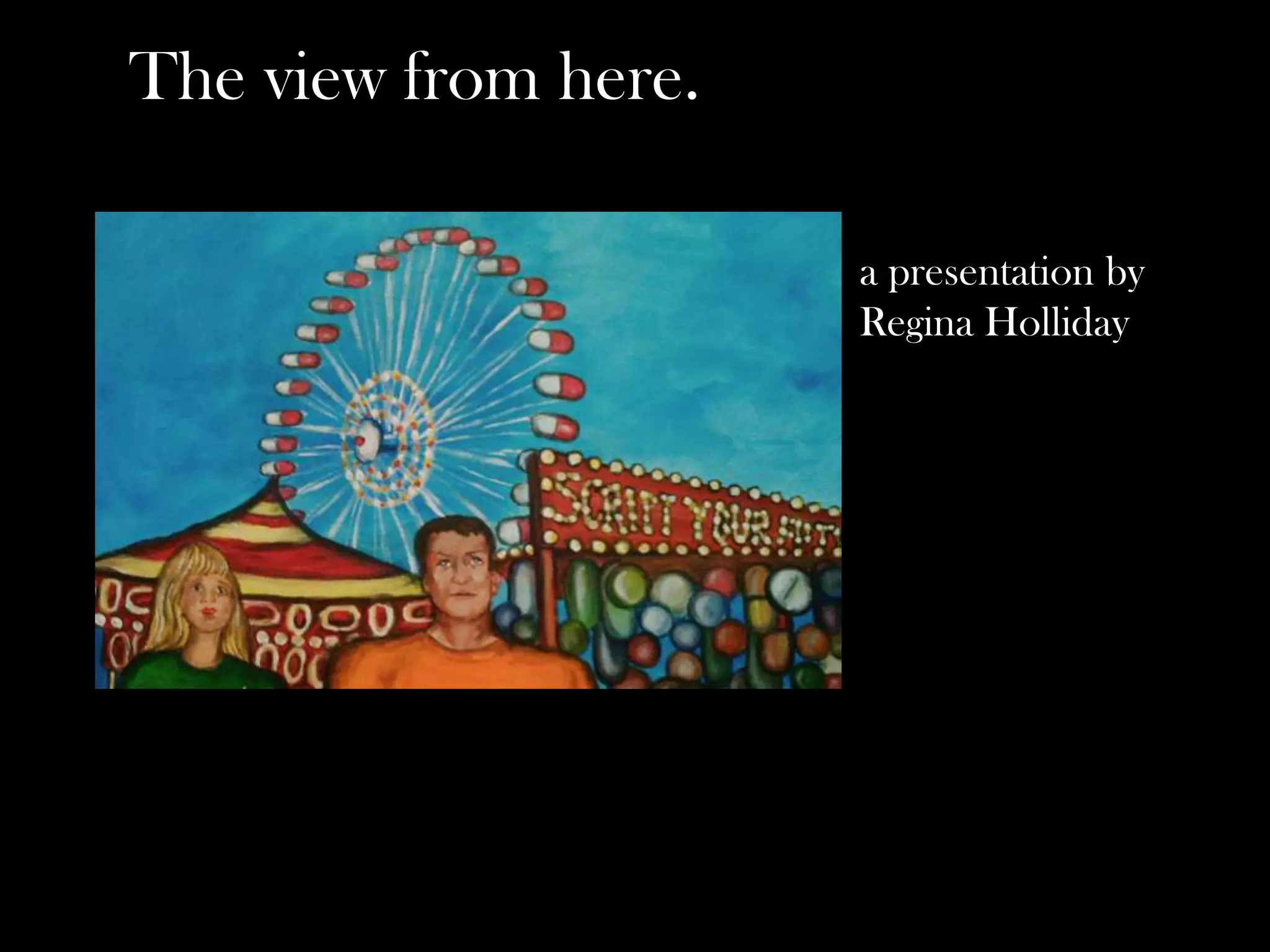
The view from here.

                      a presentation by
                      Regina Holliday
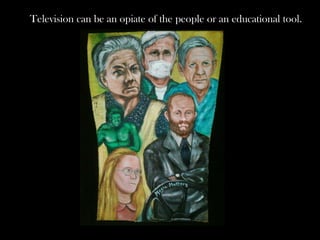
Television can be an opiate of the people or an educational tool.
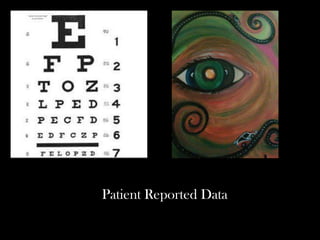
Patient Reported Data
Fred would meet Regina on stage in a scenic painting class atOklahoma State University.


                             We would talk of Stephen King’s Dark Tower.


                             We would fall in love.
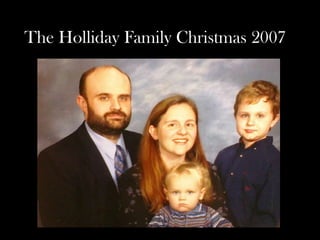
The Holliday Family Christmas 2007
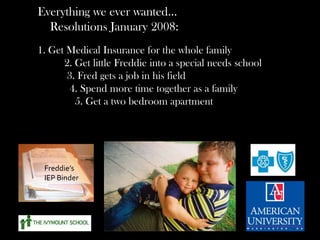
Everything we ever wanted…
  Resolutions January 2008:
1. Get Medical Insurance for the whole family
      2. Get little Freddie into a special needs school
       3. Fred gets a job in his field
        4. Spend more time together as a family
         5. Get a two bedroom apartment


 Freddie’s
 IEP Binder
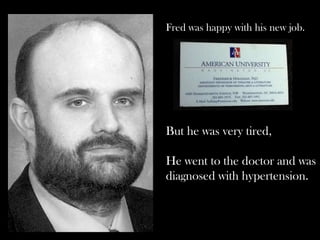
Fred was happy with his new job.


But he was very tired,

He went to the doctor and was
diagnosed with hypertension.
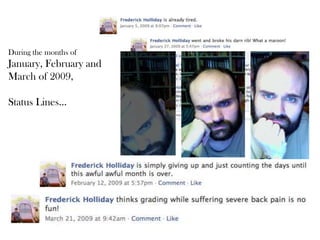
During the months of
January, February and
March of 2009,

Status Lines…
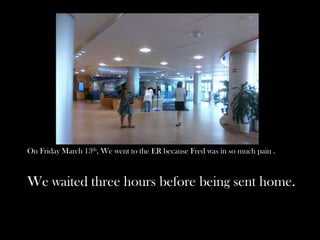
On Friday March 13th, We went to the ER because Fred was in so much pain .


We waited three hours before being sent home.
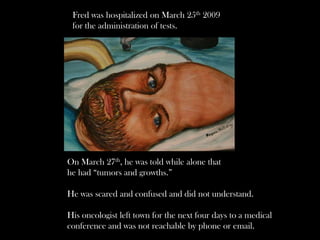
Fred was hospitalized on March 25th 2009
 for the administration of tests.


On March 27th, he was told while alone that
he had “tumors and growths.”

He was scared and confused and did not understand.

His oncologist left town for the next four days to a medical
conference and was not reachable by phone or email.
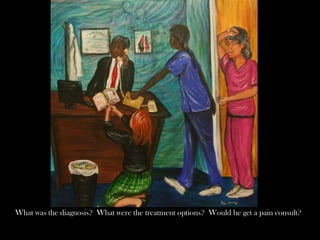
What was the diagnosis? What were the treatment options? Would he get a pain consult?
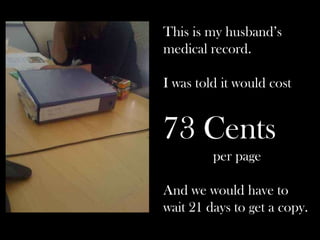
This is my husband’s
medical record.

I was told it would cost


73 Cents
         per page

And we would have to
wait 21 days to get a copy.
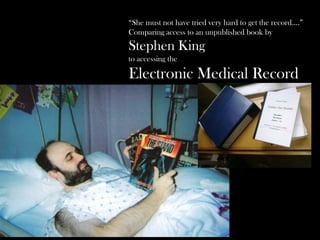
“She must not have tried very hard to get the record….”
Comparing access to an unpublished book by
Stephen King
to accessing the

Electronic Medical Record
while hospitalized.
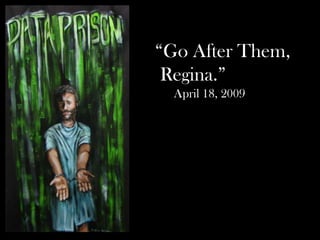
“Go After Them,
 Regina.”
  April 18, 2009
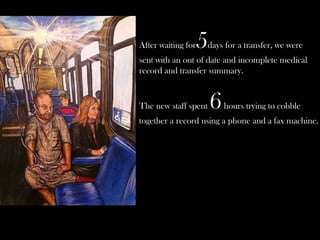
5
After waiting for     days for a transfer, we were
sent with an out of date and incomplete medical
record and transfer summary.


The new staff spent   6   hours trying to cobble
together a record using a phone and a fax machine.
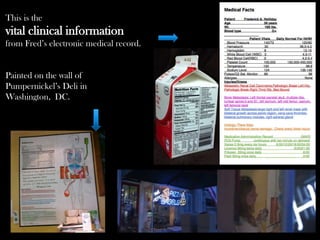
This is the
vital clinical information
from Fred’s electronic medical record.


Painted on the wall of
Pumpernickel’s Deli in
Washington, DC.
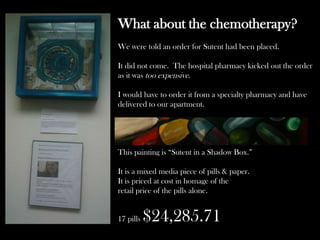
What about the chemotherapy?
We were told an order for Sutent had been placed.

It did not come. The hospital pharmacy kicked out the order
as it was too expensive.

I would have to order it from a specialty pharmacy and have
delivered to our apartment.


This painting is “Sutent in a Shadow Box.”

It is a mixed media piece of pills & paper.
It is priced at cost in homage of the
retail price of the pills alone.


17 pills   $24,285.71
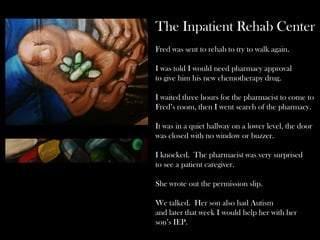
The Inpatient Rehab Center
Fred was sent to rehab to try to walk again.

I was told I would need pharmacy approval
to give him his new chemotherapy drug.

I waited three hours for the pharmacist to come to
Fred’s room, then I went search of the pharmacy.

It was in a quiet hallway on a lower level, the door
was closed with no window or buzzer.

I knocked. The pharmacist was very surprised
to see a patient caregiver.

She wrote out the permission slip.

We talked. Her son also had Autism
and later that week I would help her with her
son’s IEP.
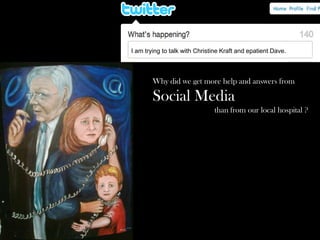
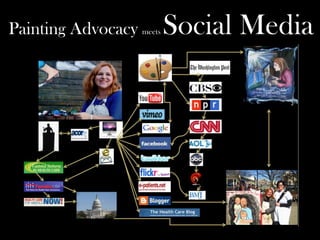
I am trying to talk with Christine Kraft and epatient Dave.


        Why did we get more help and answers from

        Social Media
                               than from our local hospital ?
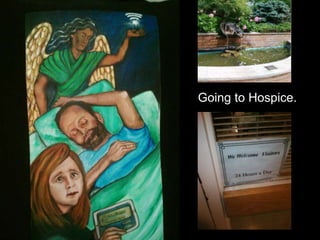
Going to Hospice.
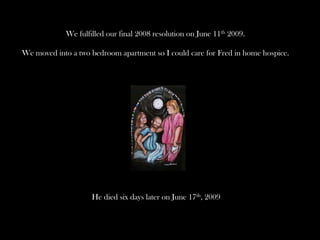
We fulfilled our final 2008 resolution on June 11th 2009.

We moved into a two bedroom apartment so I could care for Fred in home hospice.


                    He died six days later on June 17th, 2009
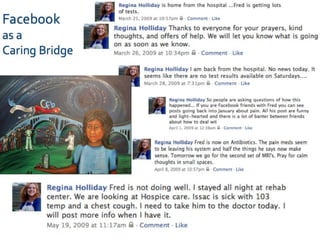
Painting Advocacy meets   Social Media
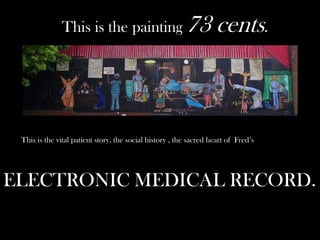
This is the painting 73                              cents.


 This is the vital patient story, the social history , the sacred heart of Fred’s


ELECTRONIC MEDICAL RECORD.
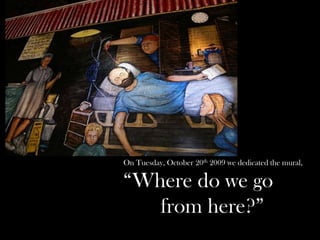
On Tuesday, October 20th 2009 we dedicated the mural,

“Where do we go
   from here?”
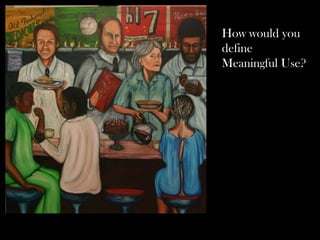
How would you
define
Meaningful Use?
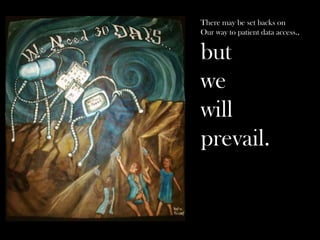
There may be set backs on
Our way to patient data access.,


but
we
will
prevail.
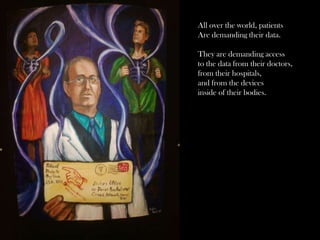
All over the world, patients
Are demanding their data.

They are demanding access
to the data from their doctors,
from their hospitals,
and from the devices
inside of their bodies.
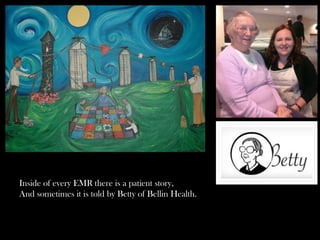
Inside of every EMR there is a patient story,
And sometimes it is told by Betty of Bellin Health.
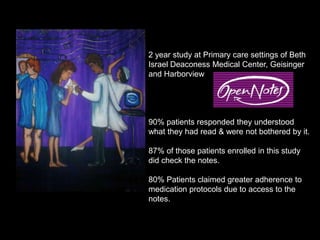
2 year study at Primary care settings of Beth
Israel Deaconess Medical Center, Geisinger
and Harborview


90% patients responded they understood
what they had read & were not bothered by it.

87% of those patients enrolled in this study
did check the notes.

80% Patients claimed greater adherence to
medication protocols due to access to the
notes.
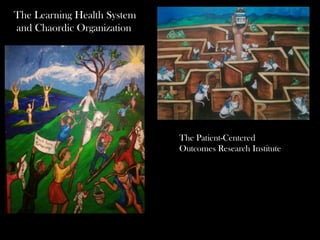
The Learning Health System
and Chaordic Organization


                             The Patient-Centered
                             Outcomes Research Institute
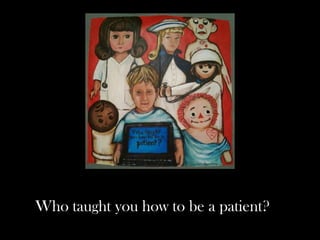
Who taught you how to be a patient?
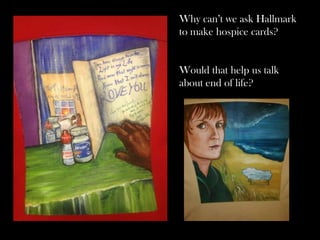
Why can’t we ask Hallmark
to make hospice cards?


Would that help us talk
about end of life?
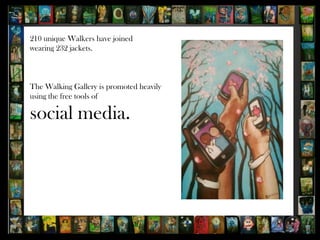
210 unique Walkers have joined
wearing 232 jackets.


The Walking Gallery is promoted heavily
using the free tools of

social media.
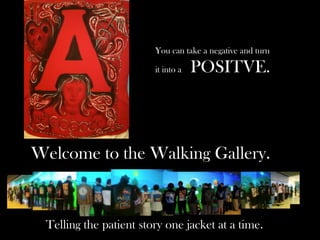
You can take a negative and turn

                        it into a   POSITVE.


Welcome to the Walking Gallery.


 Telling the patient story one jacket at a time.

The view from here

  • 1.
    The view fromhere. a presentation by Regina Holliday
  • 2.
    Television can bean opiate of the people or an educational tool.
  • 3.
  • 4.
    Fred would meetRegina on stage in a scenic painting class atOklahoma State University. We would talk of Stephen King’s Dark Tower. We would fall in love.
  • 5.
    The Holliday FamilyChristmas 2007
  • 6.
    Everything we everwanted… Resolutions January 2008: 1. Get Medical Insurance for the whole family 2. Get little Freddie into a special needs school 3. Fred gets a job in his field 4. Spend more time together as a family 5. Get a two bedroom apartment Freddie’s IEP Binder
  • 7.
    Fred was happywith his new job. But he was very tired, He went to the doctor and was diagnosed with hypertension.
  • 8.
    During the monthsof January, February and March of 2009, Status Lines…
  • 9.
    On Friday March13th, We went to the ER because Fred was in so much pain . We waited three hours before being sent home.
  • 10.
    Fred was hospitalizedon March 25th 2009 for the administration of tests. On March 27th, he was told while alone that he had “tumors and growths.” He was scared and confused and did not understand. His oncologist left town for the next four days to a medical conference and was not reachable by phone or email.
  • 11.
    What was thediagnosis? What were the treatment options? Would he get a pain consult?
  • 12.
    This is myhusband’s medical record. I was told it would cost 73 Cents per page And we would have to wait 21 days to get a copy.
  • 13.
    “She must nothave tried very hard to get the record….” Comparing access to an unpublished book by Stephen King to accessing the Electronic Medical Record while hospitalized.
  • 14.
    “Go After Them, Regina.” April 18, 2009
  • 15.
    5 After waiting for days for a transfer, we were sent with an out of date and incomplete medical record and transfer summary. The new staff spent 6 hours trying to cobble together a record using a phone and a fax machine.
  • 16.
    This is the vitalclinical information from Fred’s electronic medical record. Painted on the wall of Pumpernickel’s Deli in Washington, DC.
  • 17.
    What about thechemotherapy? We were told an order for Sutent had been placed. It did not come. The hospital pharmacy kicked out the order as it was too expensive. I would have to order it from a specialty pharmacy and have delivered to our apartment. This painting is “Sutent in a Shadow Box.” It is a mixed media piece of pills & paper. It is priced at cost in homage of the retail price of the pills alone. 17 pills $24,285.71
  • 18.
    The Inpatient RehabCenter Fred was sent to rehab to try to walk again. I was told I would need pharmacy approval to give him his new chemotherapy drug. I waited three hours for the pharmacist to come to Fred’s room, then I went search of the pharmacy. It was in a quiet hallway on a lower level, the door was closed with no window or buzzer. I knocked. The pharmacist was very surprised to see a patient caregiver. She wrote out the permission slip. We talked. Her son also had Autism and later that week I would help her with her son’s IEP.
  • 20.
    I am tryingto talk with Christine Kraft and epatient Dave. Why did we get more help and answers from Social Media than from our local hospital ?
  • 21.
  • 22.
    We fulfilled ourfinal 2008 resolution on June 11th 2009. We moved into a two bedroom apartment so I could care for Fred in home hospice. He died six days later on June 17th, 2009
  • 23.
  • 24.
    This is thepainting 73 cents. This is the vital patient story, the social history , the sacred heart of Fred’s ELECTRONIC MEDICAL RECORD.
  • 25.
    On Tuesday, October20th 2009 we dedicated the mural, “Where do we go from here?”
  • 26.
  • 27.
    There may beset backs on Our way to patient data access., but we will prevail.
  • 28.
    All over theworld, patients Are demanding their data. They are demanding access to the data from their doctors, from their hospitals, and from the devices inside of their bodies.
  • 29.
    Inside of everyEMR there is a patient story, And sometimes it is told by Betty of Bellin Health.
  • 30.
    2 year studyat Primary care settings of Beth Israel Deaconess Medical Center, Geisinger and Harborview 90% patients responded they understood what they had read & were not bothered by it. 87% of those patients enrolled in this study did check the notes. 80% Patients claimed greater adherence to medication protocols due to access to the notes.
  • 31.
    The Learning HealthSystem and Chaordic Organization The Patient-Centered Outcomes Research Institute
  • 32.
    Who taught youhow to be a patient?
  • 33.
    Why can’t weask Hallmark to make hospice cards? Would that help us talk about end of life?
  • 34.
    210 unique Walkershave joined wearing 232 jackets. The Walking Gallery is promoted heavily using the free tools of social media.
  • 35.
    You can takea negative and turn it into a POSITVE. Welcome to the Walking Gallery. Telling the patient story one jacket at a time.