



















































































The Power of Open Data

Editor's Notes

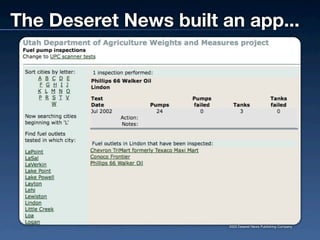
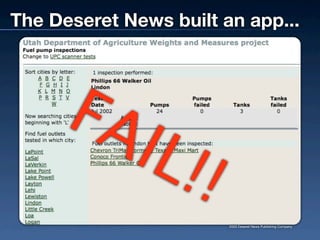
  • #5 Because the data was garnered by GRAMMA instead of being online, the application quickly became hopelessly out of date.
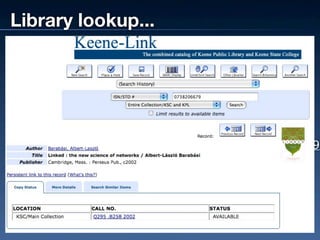
  • #18 Both systems used meaningful URLs and a common format to refer to records about books
  • #19 Jon’s application was unexpected by either Amazon or the creators of the library software. But he was able to take advantage of their openness to create a useful tool.
  • #30 The second trend I want to talk about is deperimeterization...
  • #31 Does this sounds scary? It’s not the first time that it’s happened and it is a good thing...
  • #32 Cities used to be surrounded by walls to keep the bad guys out.
  • #33 Commerce happened at fairs that were held weekly, monthly, or seasonally
  • #34 The trebuchet and other technological advances changed that by knocking down the walls. The cities were deperimeterized.
  • #35 The consequence was that commerce now happened in markets that were open everyday. Now 24/7.
  • #38 The World Wide Web is the most successful information system ever invented. Why did the Web win?
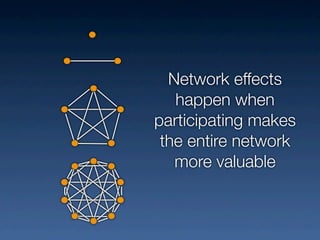
  • #40 2 devices, 1 connection 5 devices, 10 connections 10 devices, 45 connections
  • #41 2 devices, 1 connection 5 devices, 10 connections 10 devices, 45 connections
  • #42 2 devices, 1 connection 5 devices, 10 connections 10 devices, 45 connections
  • #43 2 devices, 1 connection 5 devices, 10 connections 10 devices, 45 connections
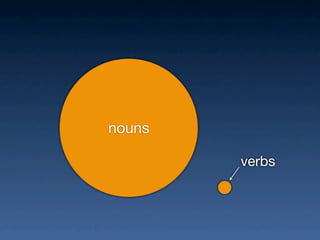
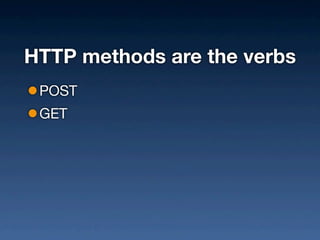
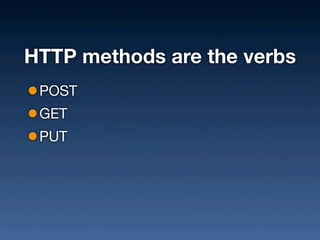
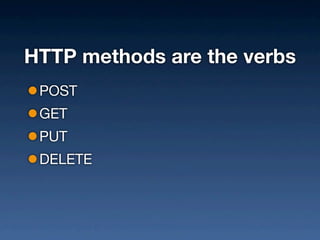
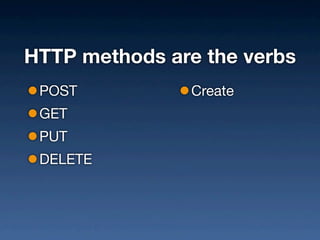
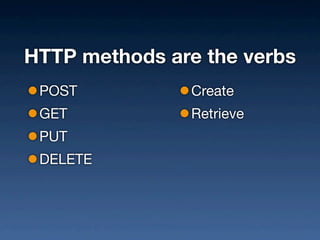
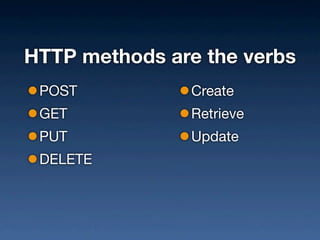
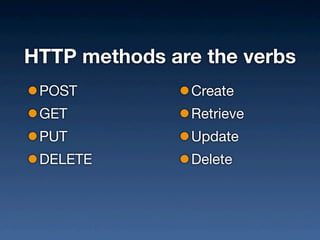
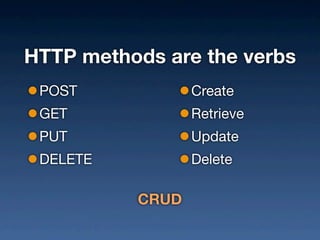
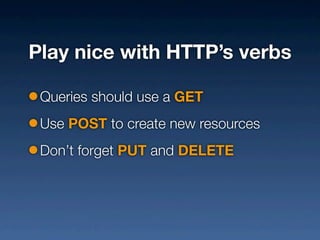
  • #49 A large, unlimited really, set of nouns and a small, fixed set of universal verbs
  • #51 Affectionately known as “CRUD” Who says computer scientists can make up cute acronyms?
  • #52 Affectionately known as “CRUD” Who says computer scientists can make up cute acronyms?
  • #53 Affectionately known as “CRUD” Who says computer scientists can make up cute acronyms?
  • #54 Affectionately known as “CRUD” Who says computer scientists can make up cute acronyms?
  • #55 Affectionately known as “CRUD” Who says computer scientists can make up cute acronyms?
  • #56 Affectionately known as “CRUD” Who says computer scientists can make up cute acronyms?
  • #57 Affectionately known as “CRUD” Who says computer scientists can make up cute acronyms?
  • #58 Affectionately known as “CRUD” Who says computer scientists can make up cute acronyms?
  • #59 Affectionately known as “CRUD” Who says computer scientists can make up cute acronyms?
  • #60 Affectionately known as “CRUD” Who says computer scientists can make up cute acronyms?
  • #62 Some verbs are more universal than others...
  • #63 That is, the body of the POST or PUT. And thus, the state of the system is affected...
  • #72 URLs are the nouns of this system. A lingua franca
  • #74 Is more than one answer appropriate? Then support more than one.
  • #75 Is more than one answer appropriate? Then support more than one.
  • #76 Is more than one answer appropriate? Then support more than one.
  • #77 Is more than one answer appropriate? Then support more than one.
  • #78 Is more than one answer appropriate? Then support more than one.
  • #79 Is more than one answer appropriate? Then support more than one.
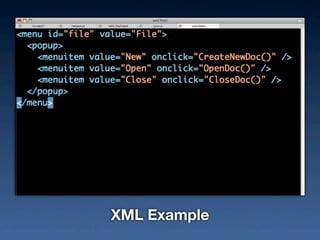
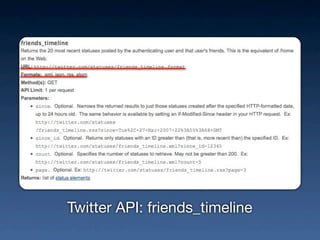
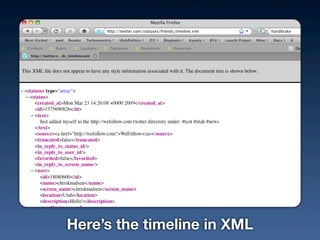
  • #80 Lots of tools, automatic formating (with XSL stylesheet) heavyweight, hard to parse
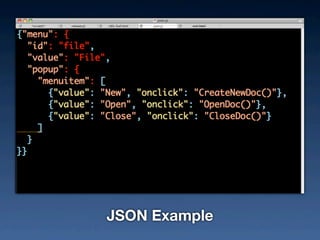
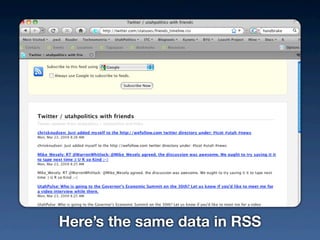
  • #81 Supported by lots of languages Easy to parse No schema checking
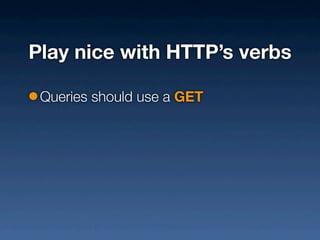
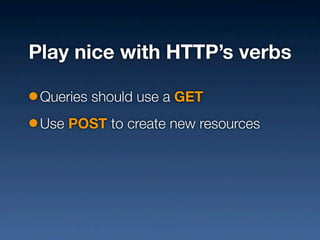
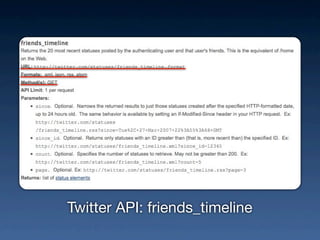
  • #96 using HTTP verbs correctly is good for performance and ensures that caches will work properly. Universal verbs should be created whenever possible.
  • #97 using HTTP verbs correctly is good for performance and ensures that caches will work properly. Universal verbs should be created whenever possible.
  • #98 using HTTP verbs correctly is good for performance and ensures that caches will work properly. Universal verbs should be created whenever possible.
  • #99 using HTTP verbs correctly is good for performance and ensures that caches will work properly. Universal verbs should be created whenever possible.
  • #100 Existing standards means that tools exist to use them.
  • #101 Existing standards means that tools exist to use them.
  • #102 Existing standards means that tools exist to use them.
  • #103 Existing standards means that tools exist to use them.
  • #104 Existing standards means that tools exist to use them.
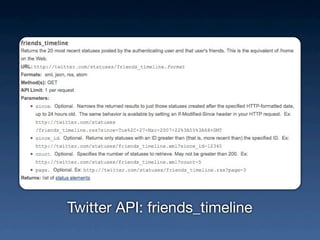
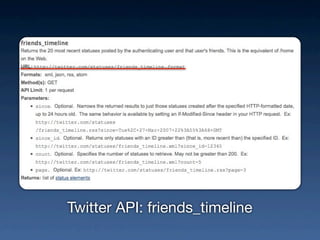
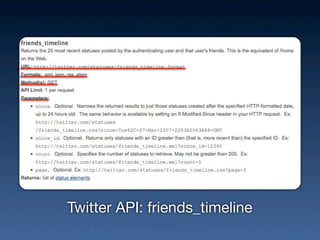
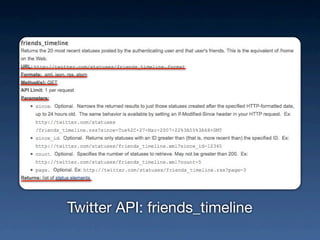
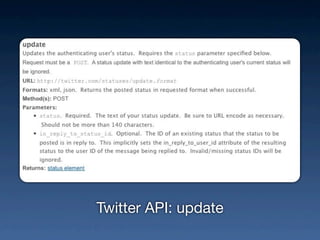
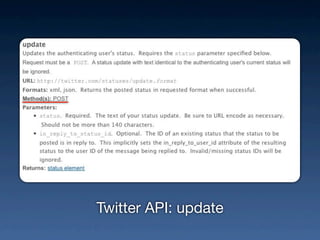
  • #108 Not just arguments, but input, output, and error codes. See Flickr and Twitter APIs for a good examples.
  • #109 Not just arguments, but input, output, and error codes. See Flickr and Twitter APIs for a good examples.
  • #110 Not just arguments, but input, output, and error codes. See Flickr and Twitter APIs for a good examples.
  • #111 Not just arguments, but input, output, and error codes. See Flickr and Twitter APIs for a good examples.
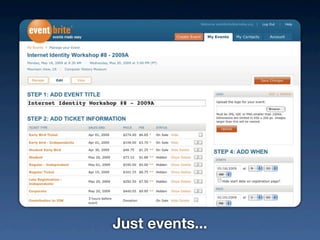
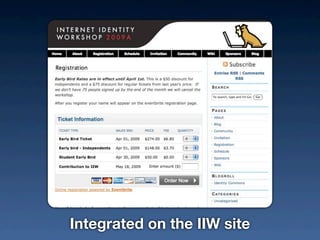
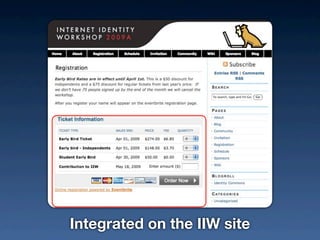
  • #137 but they didn’t have to because they created an open API to access the data.
  • #138 but they didn’t have to because they created an open API to access the data.
  • #139 but they didn’t have to because they created an open API to access the data.
  • #140 but they didn’t have to because they created an open API to access the data.
  • #141 but they didn’t have to because they created an open API to access the data.
  • #142 This isn’t unusual. The creators of data often fail to recognize the true value it contains.
  • #143 if they lock it up, their data will never be used for anything more than what their limited imaginations can envision.
  • #144 The answer is to design systems so that they can participate in serendipitous mashups.
  • #145 But to do that, the data has to be out in the open...