Ex.
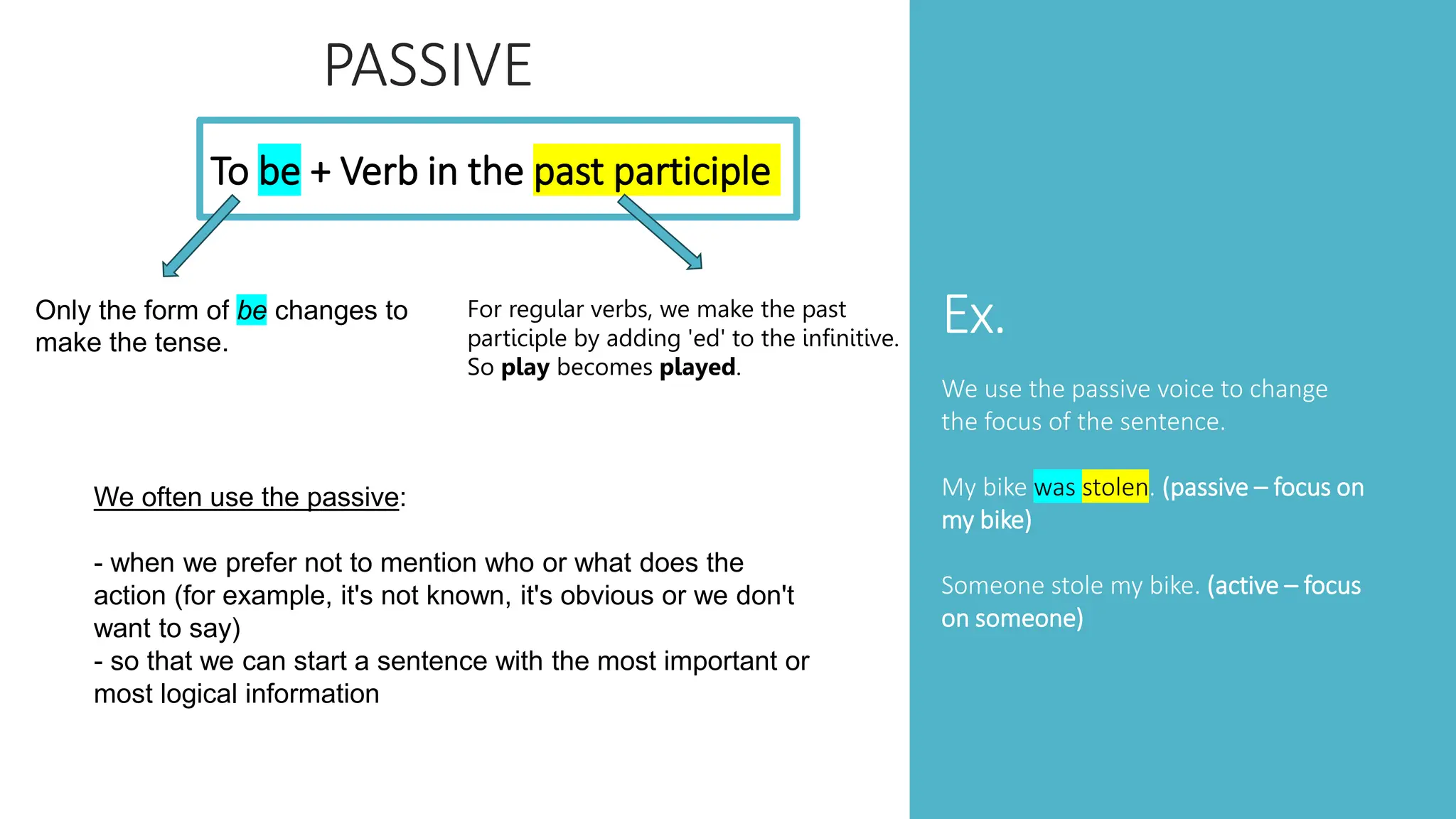
PASSIVE
For regular verbs, we make the past
participle by adding 'ed' to the infinitive.
So play becomes played.
We use the passive voice to change
the focus of the sentence.
My bike was stolen. (passive – focus on
my bike)
Someone stole my bike. (active – focus
on someone)
We often use the passive:
- when we prefer not to mention who or what does the
action (for example, it's not known, it's obvious or we don't
want to say)
- so that we can start a sentence with the most important or
most logical information
To be + Verb in the past participle
Only the form of be changes to
make the tense.
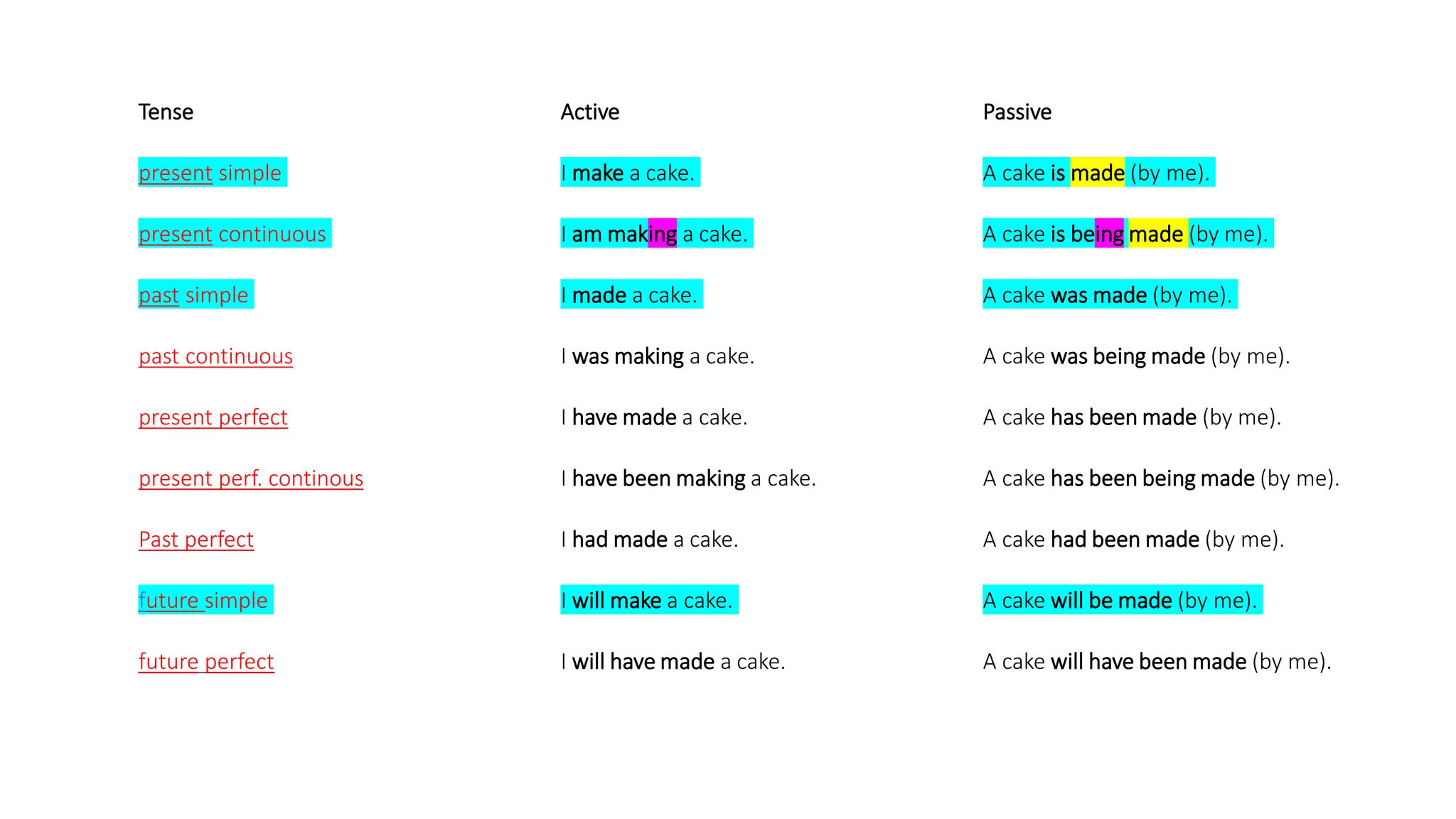
Tense Active Passive
present simple I make a cake. A cake is made (by me).
present continuous I am making a cake. A cake is being made (by me).
past simple I made a cake. A cake was made (by me).
past continuous I was making a cake. A cake was being made (by me).
present perfect I have made a cake. A cake has been made (by me).
present perf. continous I have been making a cake. A cake has been being made (by me).
Past perfect I had made a cake. A cake had been made (by me).
future simple I will make a cake. A cake will be made (by me).
future perfect I will have made a cake. A cake will have been made (by me).
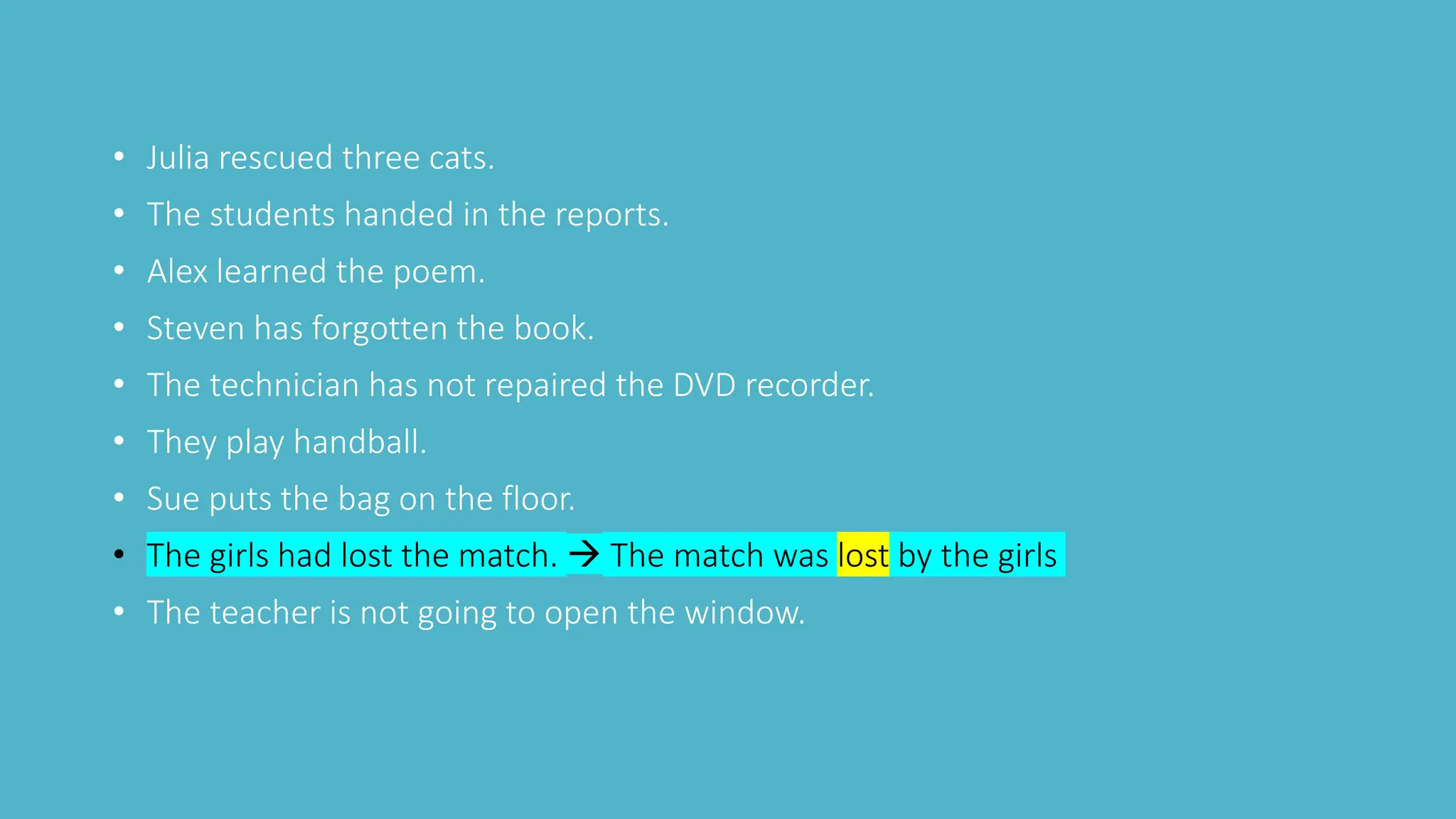
• Julia rescued three cats.
• The students handed in the reports.
• Alex learned the poem.
• Steven has forgotten the book.
• The technician has not repaired the DVD recorder.
• They play handball.
• Sue puts the bag on the floor.
• The girls had lost the match.  The match was lost by the girls
• The teacher is not going to open the window.
Sweet dreams - Eurythmics
Some of them want to use you
Some of them want to get used by you
Some of them want to abuse you
Some of them want to be abused
[Chorus]
Sweet dreams are made of this
Who am I to disagree?
All You Need Is Love –
Beatles (homework)
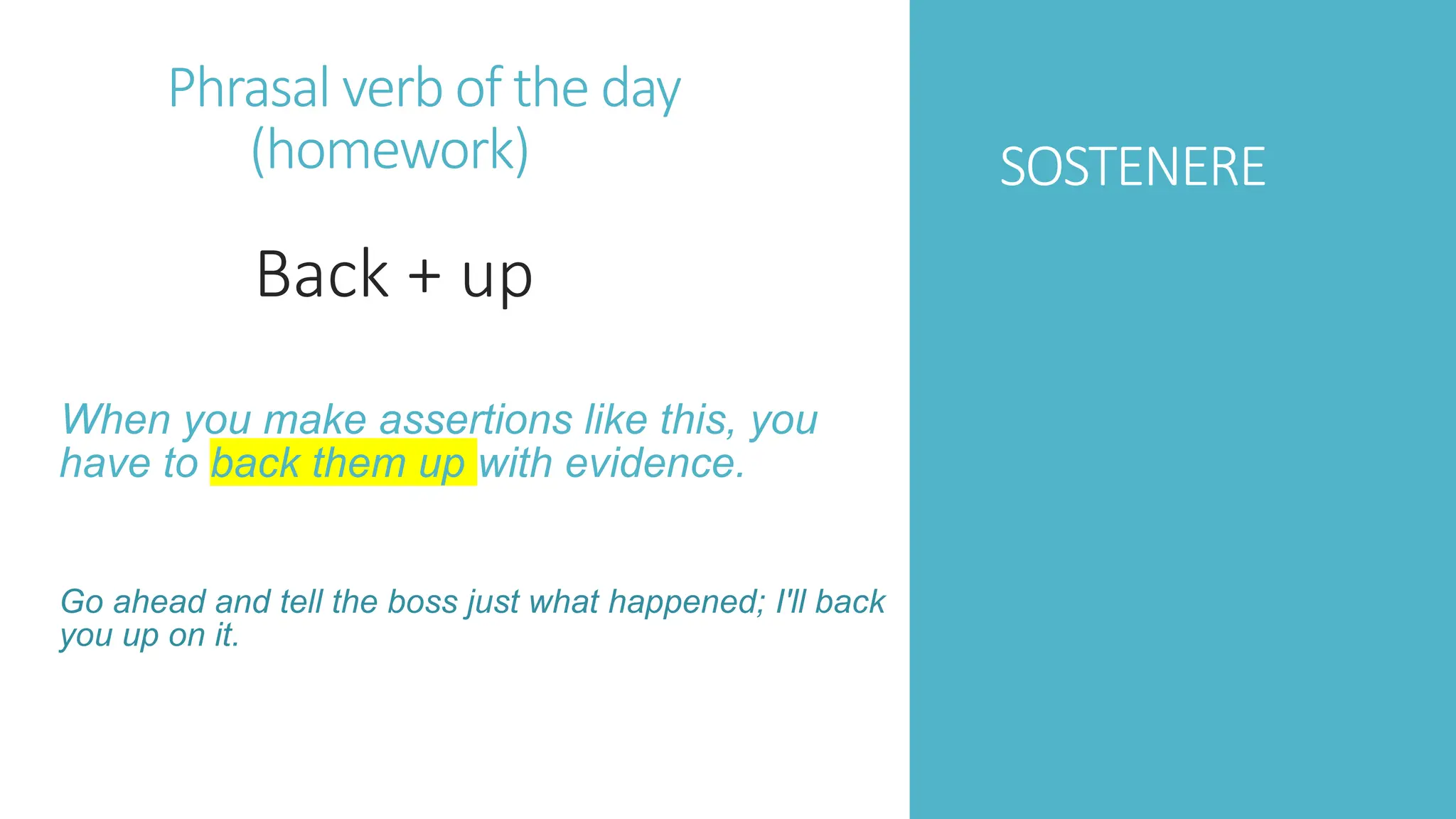
SOSTENERE
When you make assertions like this, you
have to back them up with evidence.
Go ahead and tell the boss just what happened; I'll back
you up on it.
Phrasal verb of the day
(homework)
Back + up
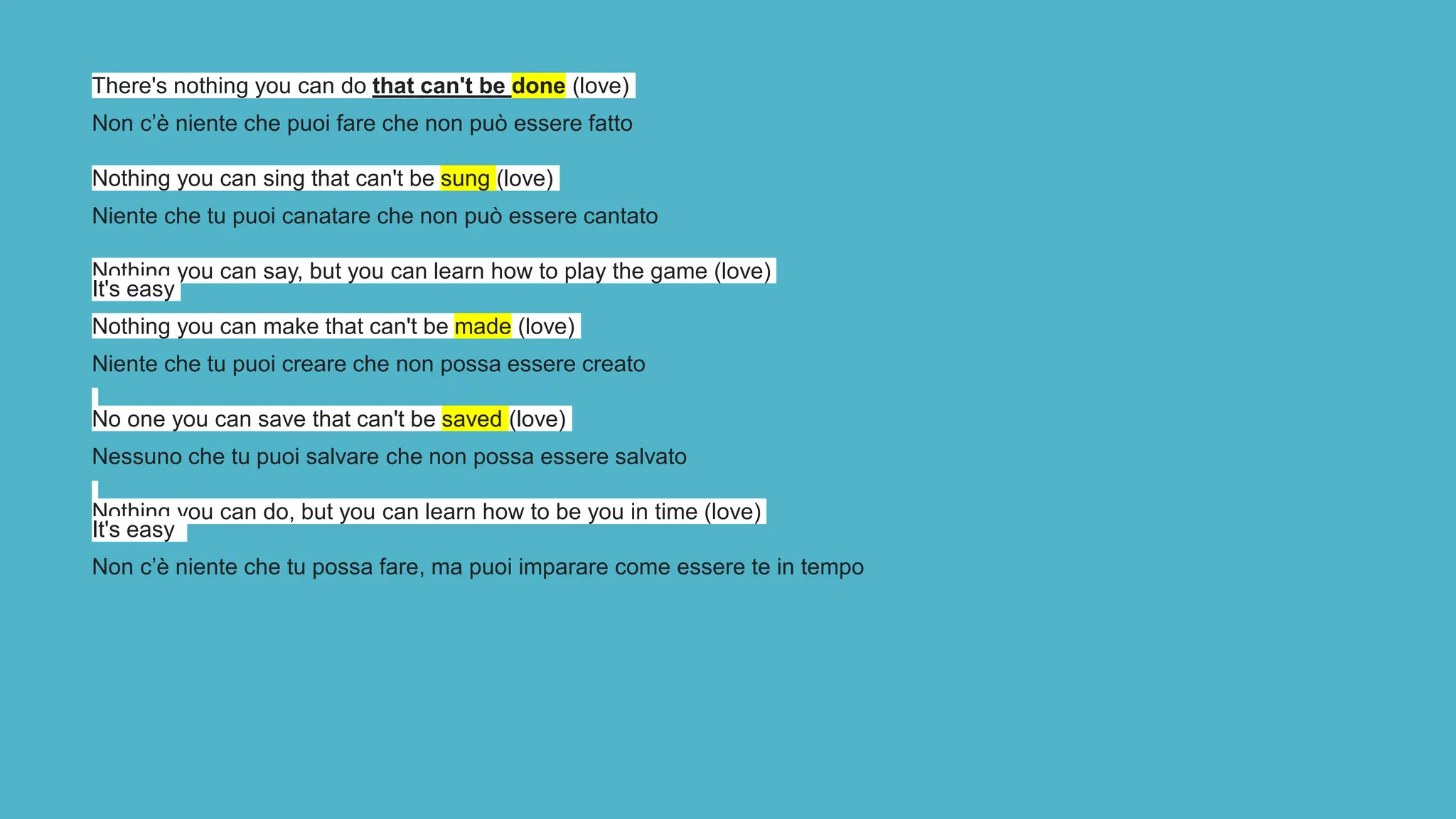
There's nothing you can do that can't be done (love)
Non c’è niente che puoi fare che non può essere fatto
Nothing you can sing that can't be sung (love)
Niente che tu puoi canatare che non può essere cantato
Nothing you can say, but you can learn how to play the game (love)
It's easy
Nothing you can make that can't be made (love)
Niente che tu puoi creare che non possa essere creato
No one you can save that can't be saved (love)
Nessuno che tu puoi salvare che non possa essere salvato
Nothing you can do, but you can learn how to be you in time (love)
It's easy
Non c’è niente che tu possa fare, ma puoi imparare come essere te in tempo
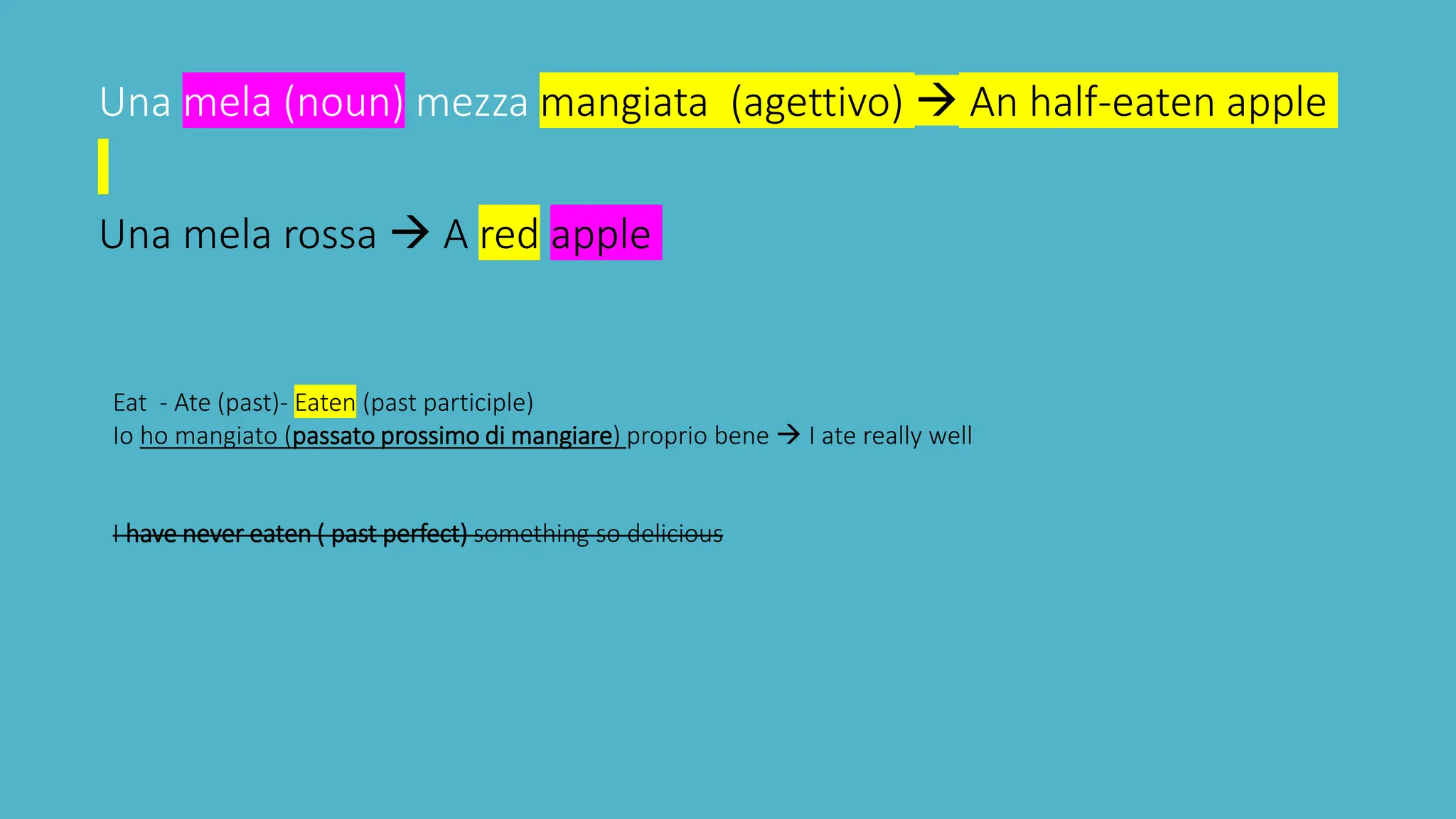
Una mela (noun) mezza mangiata (agettivo)  An half-eaten apple
Una mela rossa  A red apple
Eat - Ate (past)- Eaten (past participle)
Io ho mangiato (passato prossimo di mangiare) proprio bene  I ate really well
I have never eaten ( past perfect) something so delicious

The passive in English - grammar and examples

  • 1.
    Ex. PASSIVE For regular verbs,we make the past participle by adding 'ed' to the infinitive. So play becomes played. We use the passive voice to change the focus of the sentence. My bike was stolen. (passive – focus on my bike) Someone stole my bike. (active – focus on someone) We often use the passive: - when we prefer not to mention who or what does the action (for example, it's not known, it's obvious or we don't want to say) - so that we can start a sentence with the most important or most logical information To be + Verb in the past participle Only the form of be changes to make the tense.
  • 2.
    Tense Active Passive presentsimple I make a cake. A cake is made (by me). present continuous I am making a cake. A cake is being made (by me). past simple I made a cake. A cake was made (by me). past continuous I was making a cake. A cake was being made (by me). present perfect I have made a cake. A cake has been made (by me). present perf. continous I have been making a cake. A cake has been being made (by me). Past perfect I had made a cake. A cake had been made (by me). future simple I will make a cake. A cake will be made (by me). future perfect I will have made a cake. A cake will have been made (by me).
  • 3.
    • Julia rescuedthree cats. • The students handed in the reports. • Alex learned the poem. • Steven has forgotten the book. • The technician has not repaired the DVD recorder. • They play handball. • Sue puts the bag on the floor. • The girls had lost the match.  The match was lost by the girls • The teacher is not going to open the window.
  • 4.
    Sweet dreams -Eurythmics Some of them want to use you Some of them want to get used by you Some of them want to abuse you Some of them want to be abused [Chorus] Sweet dreams are made of this Who am I to disagree? All You Need Is Love – Beatles (homework)
  • 5.
    SOSTENERE When you makeassertions like this, you have to back them up with evidence. Go ahead and tell the boss just what happened; I'll back you up on it. Phrasal verb of the day (homework) Back + up
  • 6.
    There's nothing youcan do that can't be done (love) Non c’è niente che puoi fare che non può essere fatto Nothing you can sing that can't be sung (love) Niente che tu puoi canatare che non può essere cantato Nothing you can say, but you can learn how to play the game (love) It's easy Nothing you can make that can't be made (love) Niente che tu puoi creare che non possa essere creato No one you can save that can't be saved (love) Nessuno che tu puoi salvare che non possa essere salvato Nothing you can do, but you can learn how to be you in time (love) It's easy Non c’è niente che tu possa fare, ma puoi imparare come essere te in tempo
  • 7.
    Una mela (noun)mezza mangiata (agettivo)  An half-eaten apple Una mela rossa  A red apple Eat - Ate (past)- Eaten (past participle) Io ho mangiato (passato prossimo di mangiare) proprio bene  I ate really well I have never eaten ( past perfect) something so delicious