An c ie n t G a m e s a n d
  Mo d e r n Ga m e s
The Ancient
    lym p ics
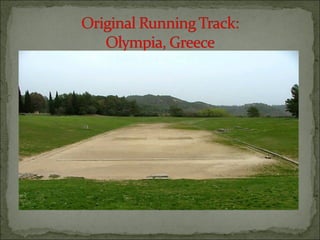
The Olympic Games began
                               over 2,700 years ago (in 776
                               b.c.) in Olympia, in
                               southwest Greece.


 The Games were part of a religious festival, were held in
  honour of Zeus, king of the gods, and were staged every
  four years at Olympia.
 People from all over the Greek world came to watch
  and take part.
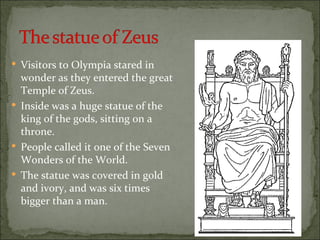
 Visitors to Olympia stared in
  wonder as they entered the great
  Temple of Zeus.
 Inside was a huge statue of the
  king of the gods, sitting on a
  throne.
 People called it one of the Seven
  Wonders of the World.
 The statue was covered in gold
  and ivory, and was six times
  bigger than a man.
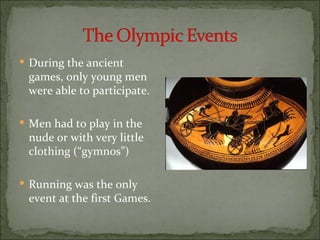
 During the ancient
 games, only young men
 were able to participate.

 Men had to play in the
 nude or with very little
 clothing (“gymnos”)

 Running was the only
 event at the first Games.
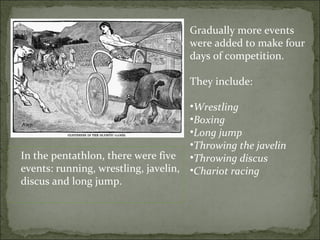
Gradually more events
                                    were added to make four
                                    days of competition.

                                    They include:

                                     •Wrestling
                                     •Boxing
                                     •Long jump
                                     •Throwing the javelin
In the pentathlon, there were five •Throwing discus
events: running, wrestling, javelin, •Chariot racing
discus and long jump.
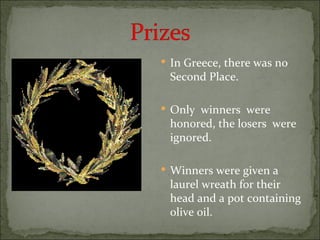
 In Greece, there was no
 Second Place.

 Only winners were
 honored, the losers were
 ignored.

 Winners were given a
 laurel wreath for their
 head and a pot containing
 olive oil.
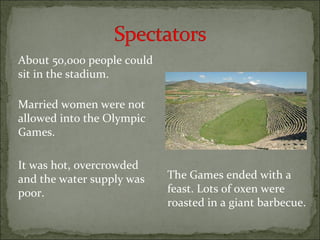
About 50,000 people could
sit in the stadium.

Married women were not
allowed into the Olympic
Games.

It was hot, overcrowded
and the water supply was    The Games ended with a
poor.                       feast. Lots of oxen were
                            roasted in a giant barbecue.
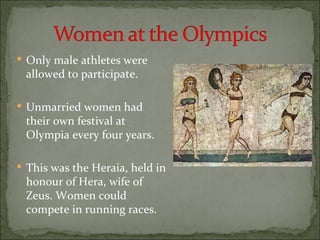
 Only male athletes were
 allowed to participate.

 Unmarried women had
 their own festival at
 Olympia every four years.

 This was the Heraia, held in
 honour of Hera, wife of
 Zeus. Women could
 compete in running races.
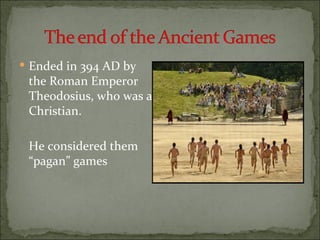
 Ended in 394 AD by
 the Roman Emperor
 Theodosius, who was a
 Christian.

 He considered them
 “pagan” games
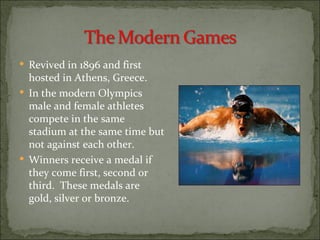
 Revived in 1896 and first
  hosted in Athens, Greece.
 In the modern Olympics
  male and female athletes
  compete in the same
  stadium at the same time but
  not against each other.
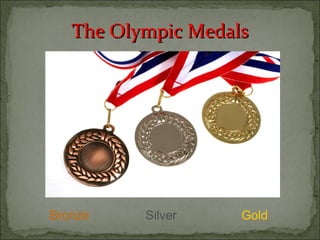
 Winners receive a medal if
  they come first, second or
  third. These medals are
  gold, silver or bronze.
The Olympic Medals


Bronze    Silver    Gold
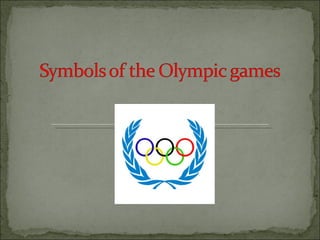
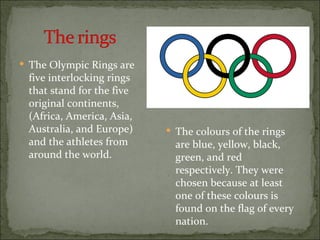
 The Olympic Rings are
 five interlocking rings
 that stand for the five
 original continents,
 (Africa, America, Asia,
 Australia, and Europe)     The colours of the rings
 and the athletes from       are blue, yellow, black,
 around the world.           green, and red
                             respectively. They were
                             chosen because at least
                             one of these colours is
                             found on the flag of every
                             nation.
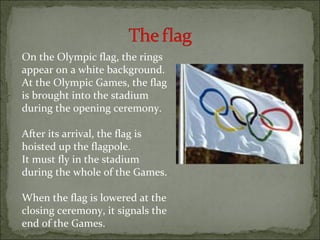
On the Olympic flag, the rings
appear on a white background.
At the Olympic Games, the flag
is brought into the stadium
during the opening ceremony.

After its arrival, the flag is
hoisted up the flagpole.
It must fly in the stadium
during the whole of the Games.

When the flag is lowered at the
closing ceremony, it signals the
end of the Games.
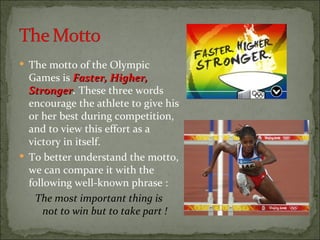
 The motto of the Olympic
  Games is Faster, Higher,
  Stronger. These three words
  Stronger
  encourage the athlete to give his
  or her best during competition,
  and to view this effort as a
  victory in itself.
 To better understand the motto,
  we can compare it with the
  following well-known phrase :
    The most important thing is
      not to win but to take part !
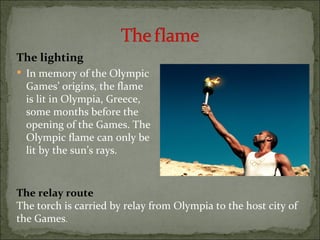
The lighting
 In memory of the Olympic
  Games’ origins, the flame
  is lit in Olympia, Greece,
  some months before the
  opening of the Games. The
  Olympic flame can only be
  lit by the sun’s rays.


The relay route
The torch is carried by relay from Olympia to the host city of
the Games.
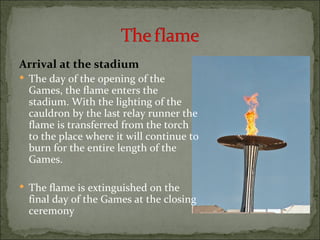
Arrival at the stadium
 The day of the opening of the
  Games, the flame enters the
  stadium. With the lighting of the
  cauldron by the last relay runner the
  flame is transferred from the torch
  to the place where it will continue to
  burn for the entire length of the
  Games.

 The flame is extinguished on the
  final day of the Games at the closing
  ceremony
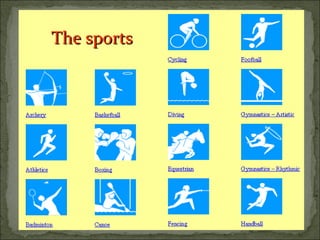
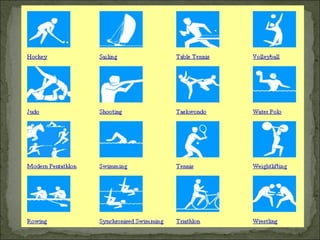
The sports
 The 2012 Summer
  Olympic Games will be
  held in London from 27
  July to 12 August 2012.

 We expect 205 nations to
  take part in 300 events at
  the Olympic Games in
  2012.
 London has hosted the
  Olympic games in 1908
  and 1948.
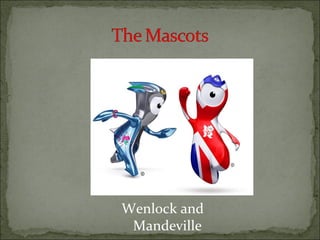
Wenlock and
 Mandeville

The Olympic Games

  • 1.
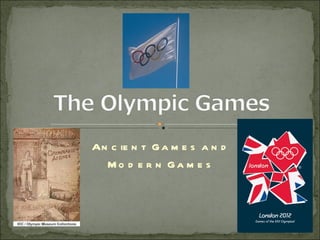
    An c ien t G a m e s a n d Mo d e r n Ga m e s
  • 2.
    The Ancient lym p ics
  • 3.
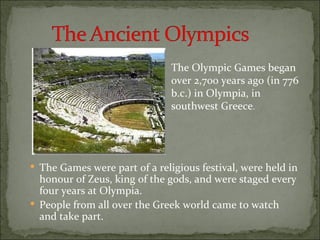
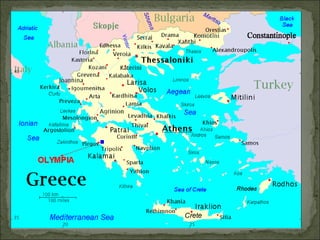
    The Olympic Gamesbegan over 2,700 years ago (in 776 b.c.) in Olympia, in southwest Greece.  The Games were part of a religious festival, were held in honour of Zeus, king of the gods, and were staged every four years at Olympia.  People from all over the Greek world came to watch and take part.
  • 6.
     Visitors toOlympia stared in wonder as they entered the great Temple of Zeus.  Inside was a huge statue of the king of the gods, sitting on a throne.  People called it one of the Seven Wonders of the World.  The statue was covered in gold and ivory, and was six times bigger than a man.
  • 7.
     During theancient games, only young men were able to participate.  Men had to play in the nude or with very little clothing (“gymnos”)  Running was the only event at the first Games.
  • 8.
    Gradually more events were added to make four days of competition. They include: •Wrestling •Boxing •Long jump •Throwing the javelin In the pentathlon, there were five •Throwing discus events: running, wrestling, javelin, •Chariot racing discus and long jump.
  • 9.
     In Greece,there was no Second Place.  Only winners were honored, the losers were ignored.  Winners were given a laurel wreath for their head and a pot containing olive oil.
  • 10.
    About 50,000 peoplecould sit in the stadium. Married women were not allowed into the Olympic Games. It was hot, overcrowded and the water supply was The Games ended with a poor. feast. Lots of oxen were roasted in a giant barbecue.
  • 11.
     Only maleathletes were allowed to participate.  Unmarried women had their own festival at Olympia every four years.  This was the Heraia, held in honour of Hera, wife of Zeus. Women could compete in running races.
  • 12.
     Ended in394 AD by the Roman Emperor Theodosius, who was a Christian. He considered them “pagan” games
  • 13.
     Revived in1896 and first hosted in Athens, Greece.  In the modern Olympics male and female athletes compete in the same stadium at the same time but not against each other.  Winners receive a medal if they come first, second or third. These medals are gold, silver or bronze.
  • 15.
  • 16.
     The OlympicRings are five interlocking rings that stand for the five original continents, (Africa, America, Asia, Australia, and Europe)  The colours of the rings and the athletes from are blue, yellow, black, around the world. green, and red respectively. They were chosen because at least one of these colours is found on the flag of every nation.
  • 17.
    On the Olympicflag, the rings appear on a white background. At the Olympic Games, the flag is brought into the stadium during the opening ceremony. After its arrival, the flag is hoisted up the flagpole. It must fly in the stadium during the whole of the Games. When the flag is lowered at the closing ceremony, it signals the end of the Games.
  • 18.
     The mottoof the Olympic Games is Faster, Higher, Stronger. These three words Stronger encourage the athlete to give his or her best during competition, and to view this effort as a victory in itself.  To better understand the motto, we can compare it with the following well-known phrase : The most important thing is not to win but to take part !
  • 19.
    The lighting  Inmemory of the Olympic Games’ origins, the flame is lit in Olympia, Greece, some months before the opening of the Games. The Olympic flame can only be lit by the sun’s rays. The relay route The torch is carried by relay from Olympia to the host city of the Games.
  • 20.
    Arrival at thestadium  The day of the opening of the Games, the flame enters the stadium. With the lighting of the cauldron by the last relay runner the flame is transferred from the torch to the place where it will continue to burn for the entire length of the Games.  The flame is extinguished on the final day of the Games at the closing ceremony
  • 21.
  • 23.
     The 2012Summer Olympic Games will be held in London from 27 July to 12 August 2012.  We expect 205 nations to take part in 300 events at the Olympic Games in 2012.  London has hosted the Olympic games in 1908 and 1948.
  • 24.