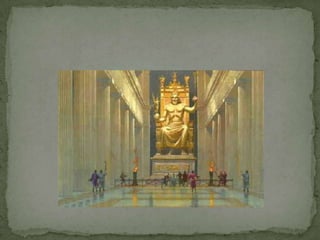
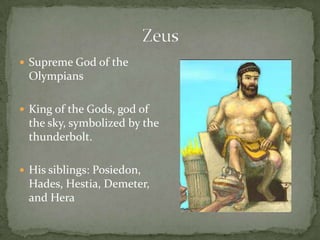
 Supreme God of the
Olympians
 King of the Gods, god of
the sky, symbolized by the
thunderbolt.
 His siblings: Posiedon,
Hades, Hestia, Demeter,
and Hera
 He and his siblings fought to gain control of the
universe from the Titans and Cronus (his father)
 He and his brothers (Poseidon and Hades) divided up
creation with Zeus receiving the sky as his domain. He
was also accorded supreme authority on earth and on
Mount Olympus.
 As the ruler of the Olympian gods, Zeus held
enormous power and almost absolute authority. His
role was primarily to watch over the activities of the
other gods, and make sure they weren't exceeding their
powers.
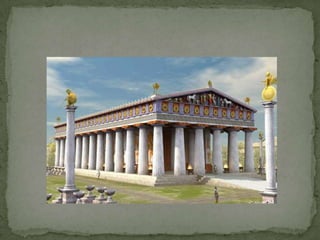
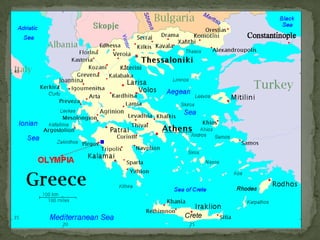
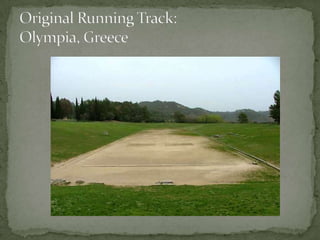
 Began in 776 BC at Olympia, Greece
 Originally a religious ceremony in honor of the Greek
gods.
 100 oxen were sacrificed at the beginning of the Games
 “Olympic Truce:” All wars and battles were halted so
that everyone could come and watch the Games.
 Based on 4-year periods called Olympiads
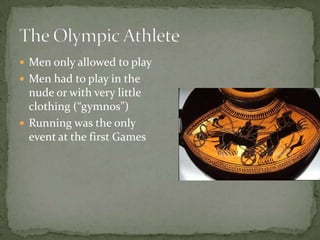
 Men only allowed to play
 Men had to play in the
nude or with very little
clothing (“gymnos”)
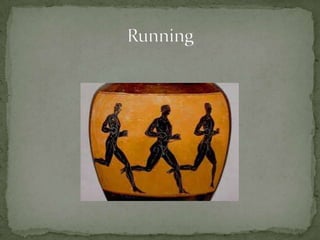
 Running was the only
event at the first Games
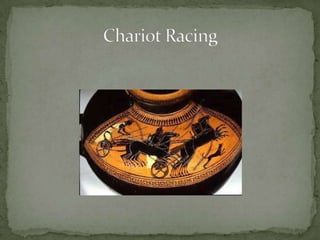
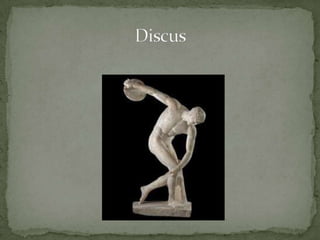
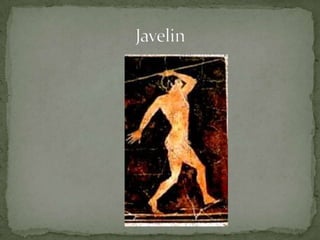
 Gradually more events were added to make four days
of competitions. They included wrestling, boxing, long
jump, throwing the javelin and discus, and chariot
racing.
 In the pentathlon, there were five events: running,
wrestling, javelin, discus and long jump. One of the
toughest events was the race for hoplites, men wearing
armour and carrying shields.
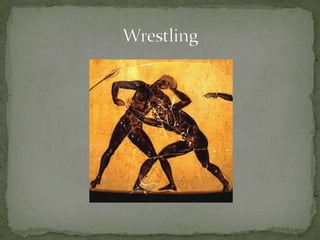
 In Wrestling…
-No biting,
-No eye gouging,
-Breaking opponent’s
limbs was legal,
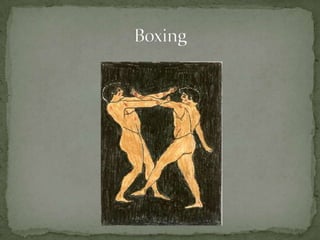
 In Boxing…
-Both men played until one
gave up or died
 In Greece, there was no
Second Place
 Only winners were
honored, the losers were
ignored
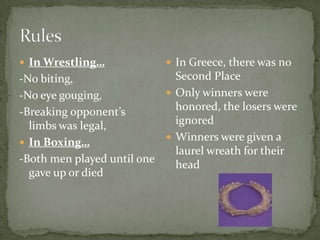
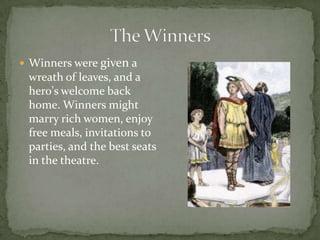
 Winners were given a
laurel wreath for their
head
 Winners were given a
wreath of leaves, and a
hero's welcome back
home. Winners might
marry rich women, enjoy
free meals, invitations to
parties, and the best seats
in the theatre.
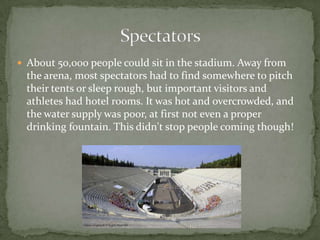
 About 50,000 people could sit in the stadium. Away from
the arena, most spectators had to find somewhere to pitch
their tents or sleep rough, but important visitors and
athletes had hotel rooms. It was hot and overcrowded, and
the water supply was poor, at first not even a proper
drinking fountain. This didn't stop people coming though!
 Only men, boys and unmarried girls were allowed to
attend the Olympic Games. Married women were not
allowed into the Olympic Games. Any women caught
sneaking in were punished! Women could own horses
in the chariot race though.
 The Games ended with a feast. Lots of oxen were
roasted in a giant barbecue. Traders came to do
business, entertainers such as jugglers and acrobats
performed, and politicians made speeches to the
crowds
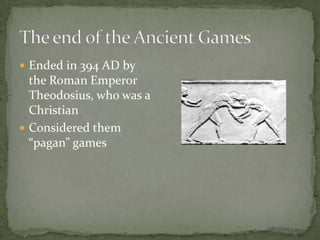
 Ended in 394 AD by
the Roman Emperor
Theodosius, who was a
Christian
 Considered them
“pagan” games

The ancient greek olympics

  • 3.
     Supreme Godof the Olympians  King of the Gods, god of the sky, symbolized by the thunderbolt.  His siblings: Posiedon, Hades, Hestia, Demeter, and Hera
  • 4.
     He andhis siblings fought to gain control of the universe from the Titans and Cronus (his father)  He and his brothers (Poseidon and Hades) divided up creation with Zeus receiving the sky as his domain. He was also accorded supreme authority on earth and on Mount Olympus.  As the ruler of the Olympian gods, Zeus held enormous power and almost absolute authority. His role was primarily to watch over the activities of the other gods, and make sure they weren't exceeding their powers.
  • 6.
     Began in776 BC at Olympia, Greece  Originally a religious ceremony in honor of the Greek gods.  100 oxen were sacrificed at the beginning of the Games  “Olympic Truce:” All wars and battles were halted so that everyone could come and watch the Games.  Based on 4-year periods called Olympiads
  • 8.
     Men onlyallowed to play  Men had to play in the nude or with very little clothing (“gymnos”)  Running was the only event at the first Games
  • 10.
     Gradually moreevents were added to make four days of competitions. They included wrestling, boxing, long jump, throwing the javelin and discus, and chariot racing.  In the pentathlon, there were five events: running, wrestling, javelin, discus and long jump. One of the toughest events was the race for hoplites, men wearing armour and carrying shields.
  • 11.
     In Wrestling… -Nobiting, -No eye gouging, -Breaking opponent’s limbs was legal,  In Boxing… -Both men played until one gave up or died  In Greece, there was no Second Place  Only winners were honored, the losers were ignored  Winners were given a laurel wreath for their head
  • 18.
     Winners weregiven a wreath of leaves, and a hero's welcome back home. Winners might marry rich women, enjoy free meals, invitations to parties, and the best seats in the theatre.
  • 19.
     About 50,000people could sit in the stadium. Away from the arena, most spectators had to find somewhere to pitch their tents or sleep rough, but important visitors and athletes had hotel rooms. It was hot and overcrowded, and the water supply was poor, at first not even a proper drinking fountain. This didn't stop people coming though!
  • 20.
     Only men,boys and unmarried girls were allowed to attend the Olympic Games. Married women were not allowed into the Olympic Games. Any women caught sneaking in were punished! Women could own horses in the chariot race though.
  • 21.
     The Gamesended with a feast. Lots of oxen were roasted in a giant barbecue. Traders came to do business, entertainers such as jugglers and acrobats performed, and politicians made speeches to the crowds
  • 22.
     Ended in394 AD by the Roman Emperor Theodosius, who was a Christian  Considered them “pagan” games