MODALS
Modals are helping verbs (meaning they precede other verbs) used to indicate
verbs) used to indicate permission, possibility, obligation, advice, ability,
prohibition, requests, and preference.
Ex.
Common Modal Verbs
Can Ought to
Could Shall
May Should
Might Will
Must Would
Ex.
Permission: Can I take your sister to the dance?
Possibility: We might go to a movie tonight if you’re interested in coming
interested in coming along.
Obligation: Researchers must further review the study.
Use of Modals
It is used along with a main verb to express
permission, or necessity.
Ex.
In the statement “you must leave,” “must” is a
that it’s necessary for the subject “you” to perform
verb “leave”.
Take Note:
The modal verb “will” is used to form the future
action that has not yet occurred
Ex.
I will clean the garage
Other uses of modal verbs
Modal verbs have various other functions in English. They can also be
In indirect speech
In negative statements
For emphasis
Indirect speech
Modal verbs are used in indirect speech to indicate what someone
modal verbs stay the same when used in indirect speech, the past
is used instead.
Ex. “can” becomes “could”.
Ex.
Jhon Carlo said “I will visit on Saturday.”
Jhon Carlo said “he would visit on Saturday.”
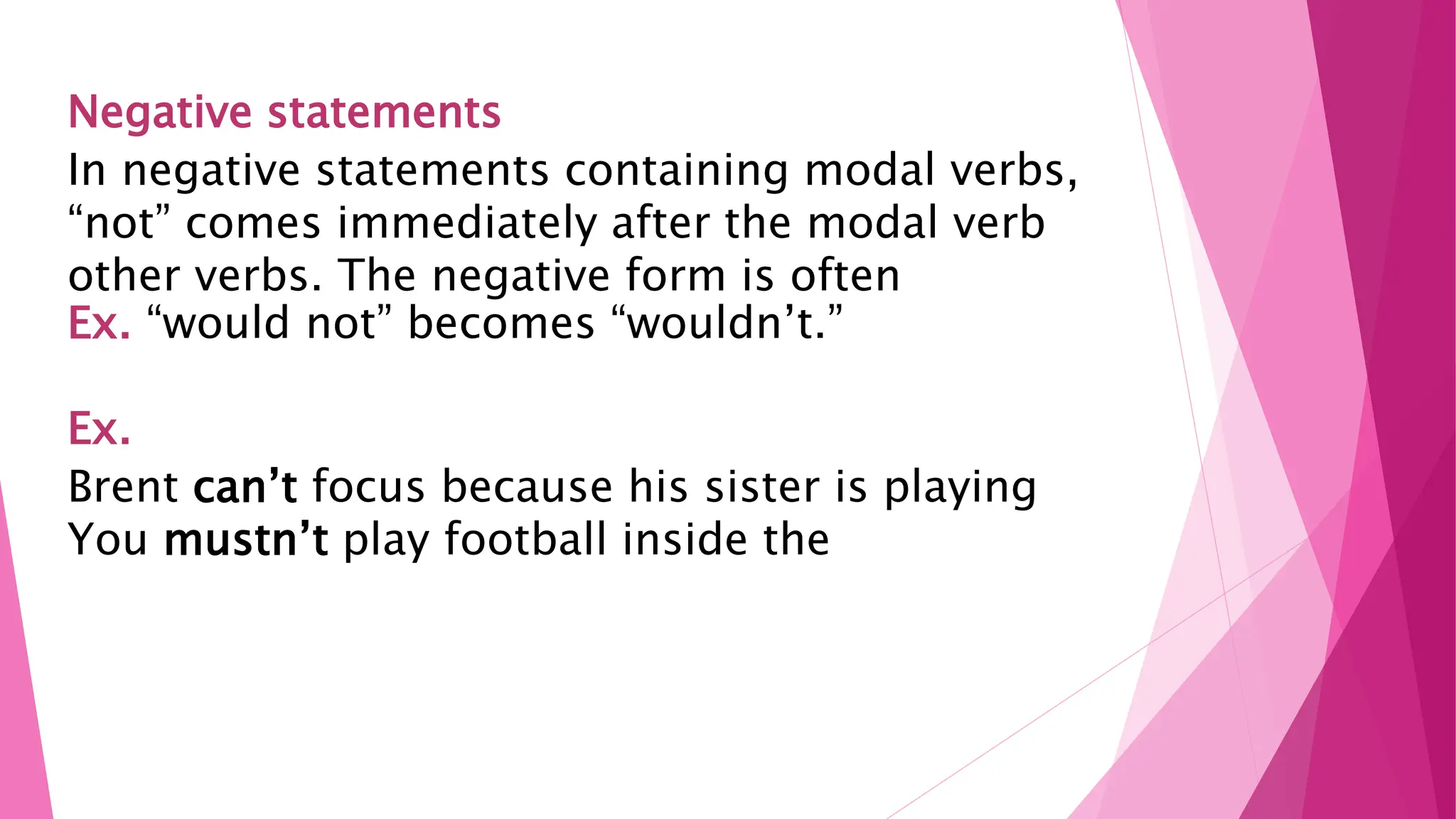
Negative statements
In negative statements containing modal verbs,
“not” comes immediately after the modal verb
other verbs. The negative form is often
Ex. “would not” becomes “wouldn’t.”
Ex.
Brent can’t focus because his sister is playing
You mustn’t play football inside the
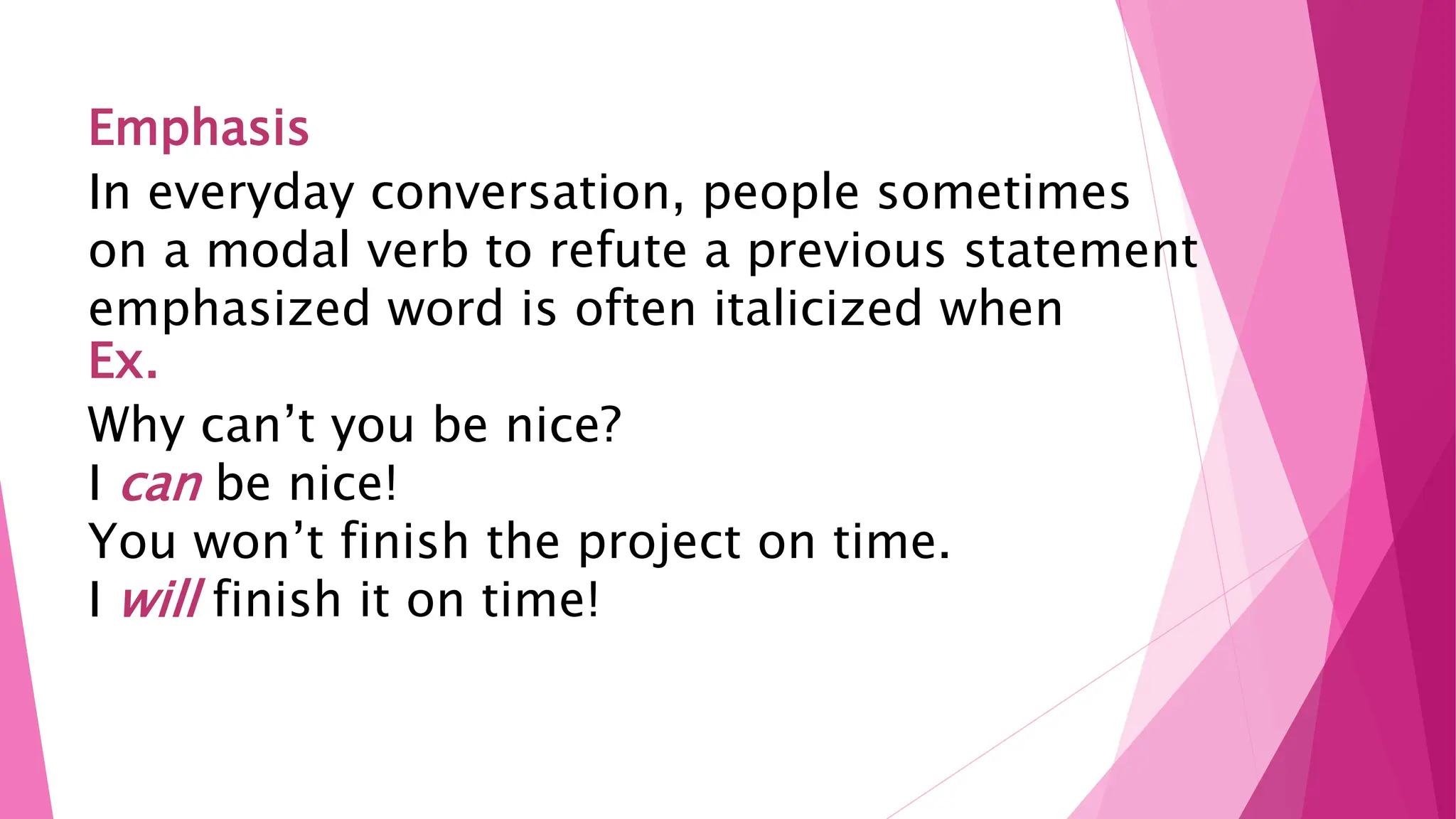
Emphasis
In everyday conversation, people sometimes
on a modal verb to refute a previous statement
emphasized word is often italicized when
Ex.
Why can’t you be nice?
I can be nice!
You won’t finish the project on time.
I will finish it on time!

The Modals in English, The use of the modals,

  • 1.
  • 2.
    Modals are helpingverbs (meaning they precede other verbs) used to indicate verbs) used to indicate permission, possibility, obligation, advice, ability, prohibition, requests, and preference. Ex. Common Modal Verbs Can Ought to Could Shall May Should Might Will Must Would Ex. Permission: Can I take your sister to the dance? Possibility: We might go to a movie tonight if you’re interested in coming interested in coming along. Obligation: Researchers must further review the study.
  • 3.
    Use of Modals Itis used along with a main verb to express permission, or necessity. Ex. In the statement “you must leave,” “must” is a that it’s necessary for the subject “you” to perform verb “leave”. Take Note: The modal verb “will” is used to form the future action that has not yet occurred Ex. I will clean the garage
  • 4.
    Other uses ofmodal verbs Modal verbs have various other functions in English. They can also be In indirect speech In negative statements For emphasis Indirect speech Modal verbs are used in indirect speech to indicate what someone modal verbs stay the same when used in indirect speech, the past is used instead. Ex. “can” becomes “could”. Ex. Jhon Carlo said “I will visit on Saturday.” Jhon Carlo said “he would visit on Saturday.”
  • 5.
    Negative statements In negativestatements containing modal verbs, “not” comes immediately after the modal verb other verbs. The negative form is often Ex. “would not” becomes “wouldn’t.” Ex. Brent can’t focus because his sister is playing You mustn’t play football inside the
  • 6.
    Emphasis In everyday conversation,people sometimes on a modal verb to refute a previous statement emphasized word is often italicized when Ex. Why can’t you be nice? I can be nice! You won’t finish the project on time. I will finish it on time!

Editor's Notes

  • #3 CAN MIGHT MUST
  • #5 Subject-verb agreement means that the subject of the sentence matches the verb describing its action. This helps your reader understand who or what is doing something and makes your writing easier to read.