“Miss Tabitha, I’m afraid I come bearing ill news.”
“So. The estate has been settled, then, Mr. Anderson?”
“Yes.”
“And not in my favor, I presume.”
“Unfortunately not, miss. Please know that I am deeply sorry for my failure.”
“Never mind, Mr. Anderson, you argued your best. It was a long shot anyway.”
“Thank you, miss.”
“I suppose I should like to hear my fate now.”
“Well, the land in its entirety will be turned over to your half-brother, Christopher. The
cottage and its outbuildings will become part of Corsey Hall once again.”
            “I suppose that was to be expected. Christopher inherited everything else when my father
died. I suppose mother and I were fortunate to stay here for so long.”
            “Regrettably your father left the property specifically to his second wife, your late mother,
in his will. You were too young when he died, I suppose, for him to think about providing for you.
There is, of course, a bit of money held in trust until you are of age, but, alas, that is still a few years
off.”
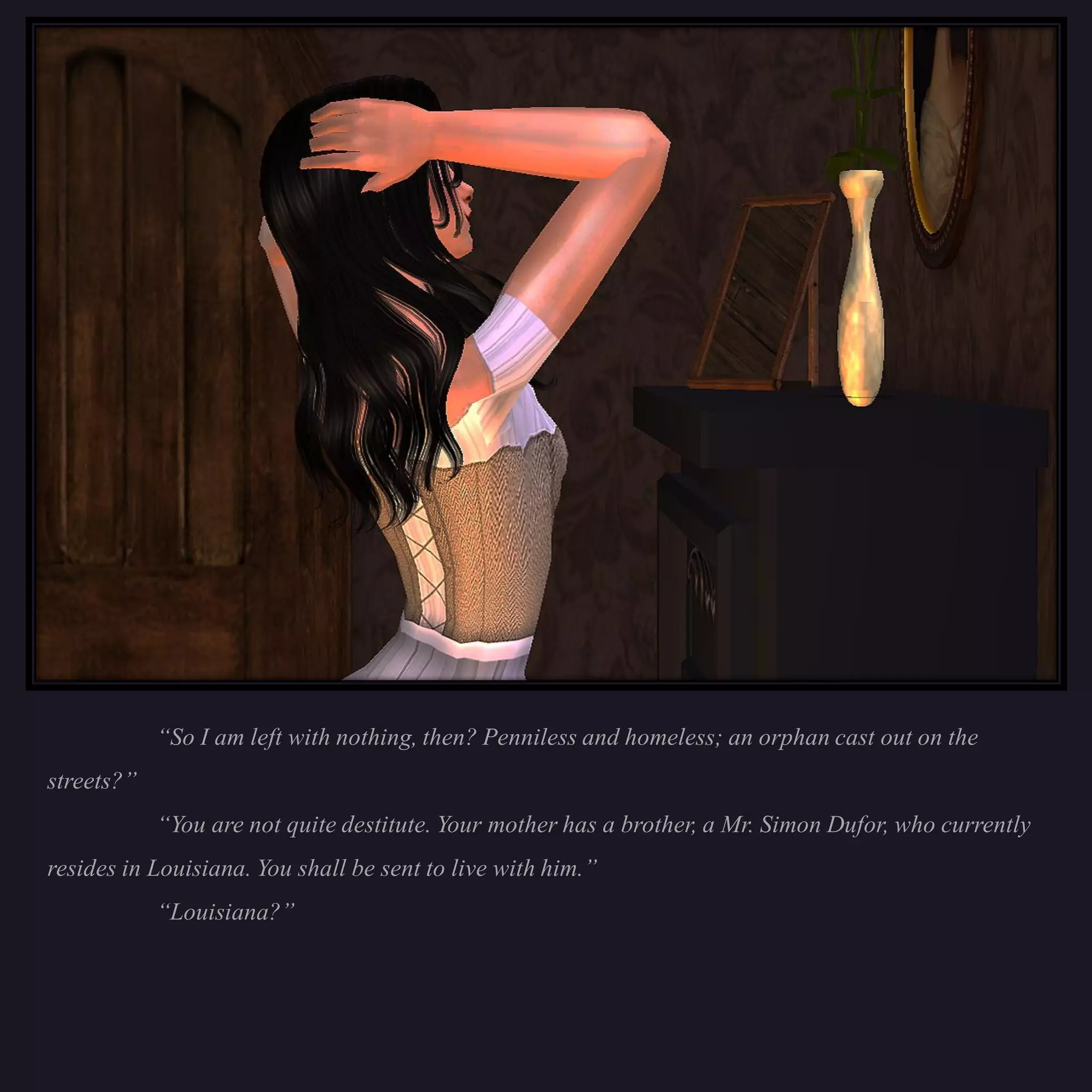
“So I am left with nothing, then? Penniless and homeless; an orphan cast out on the
streets?”
            “You are not quite destitute. Your mother has a brother, a Mr. Simon Dufor, who currently
resides in Louisiana. You shall be sent to live with him.”
            “Louisiana?”
“To be more specific: New Orleans, your mother’s birthplace. You learned French at her
knee so I do not anticipate any difficulties adapting.”
           “When must I go?”
           “The deed to the cottage will be transferred to the young Mr. Corsey in three days.
Naturally, it will have to be vacated before then.”
           “Naturally.”
           “The furniture and household goods must remain, but you may take along any personal
effects. Dresses and shoes and the like; things purchased with your own money.”
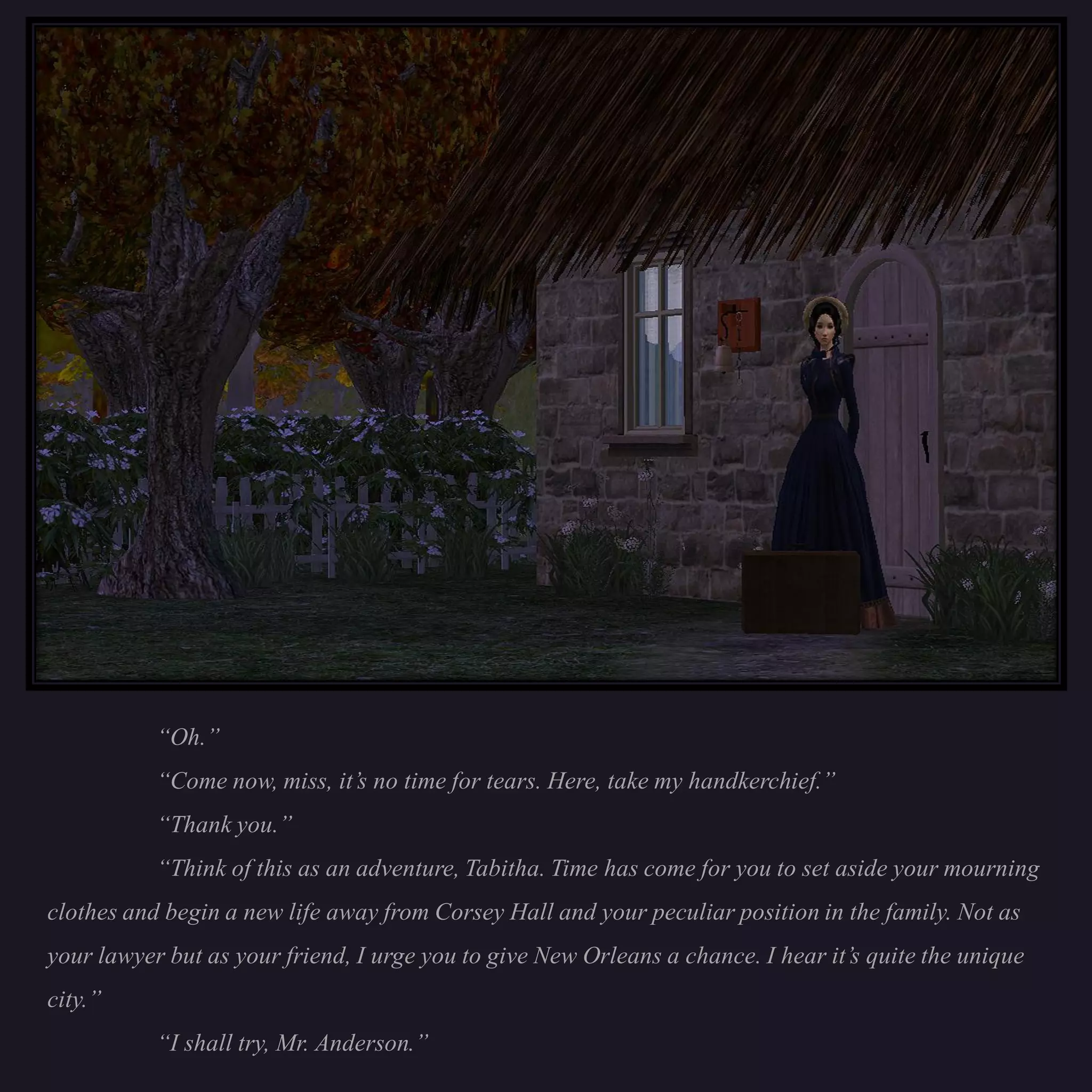
“Oh.”
           “Come now, miss, it’s no time for tears. Here, take my handkerchief.”
           “Thank you.”
           “Think of this as an adventure, Tabitha. Time has come for you to set aside your mourning
clothes and begin a new life away from Corsey Hall and your peculiar position in the family. Not as
your lawyer but as your friend, I urge you to give New Orleans a chance. I hear it’s quite the unique
city.”
           “I shall try, Mr. Anderson.”
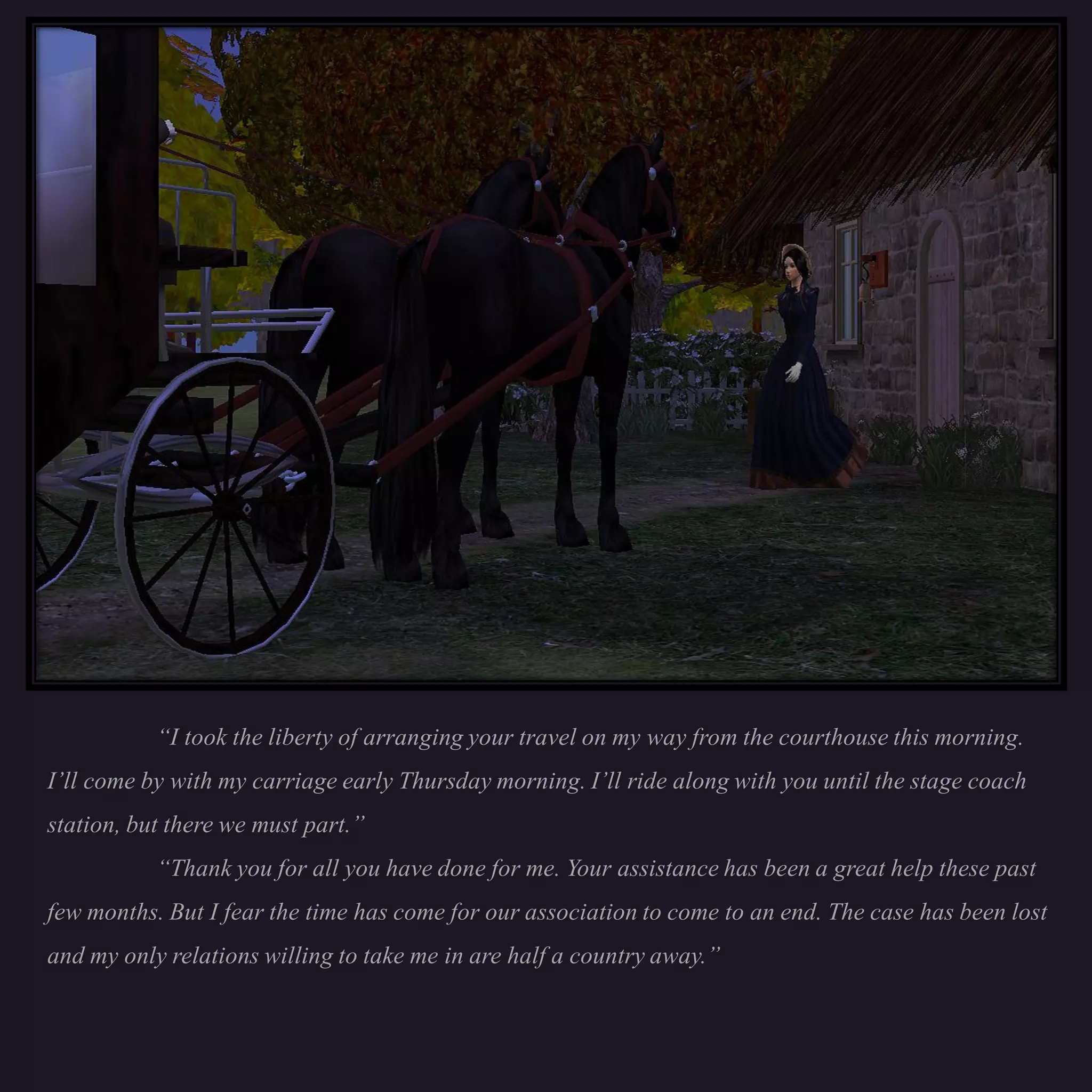
“I took the liberty of arranging your travel on my way from the courthouse this morning.
I’ll come by with my carriage early Thursday morning. I’ll ride along with you until the stage coach
station, but there we must part.”
           “Thank you for all you have done for me. Your assistance has been a great help these past
few months. But I fear the time has come for our association to come to an end. The case has been lost
and my only relations willing to take me in are half a country away.”
“Now, now. Just because we shall not see one another any longer does not mean that other
methods of correspondence need be overlooked.”
           “You would not mind, then, if I were to write to you?”
           “I await your first letter with eager anticipation. I expect to be informed of every detail of
your new life in Louisiana.”
“Every word.”
“Then I suppose I shall bid you farewell until we meet again?”
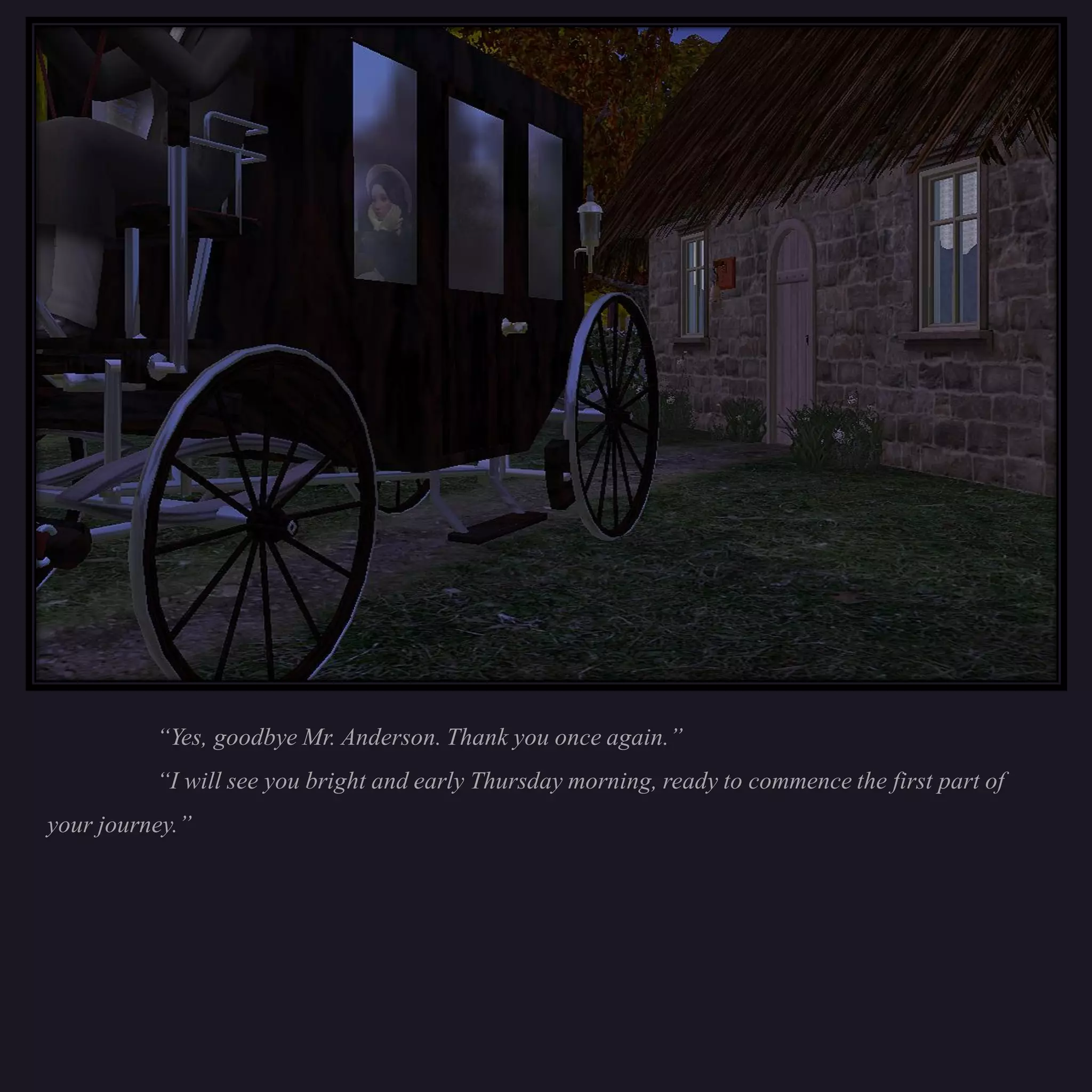
“Yes, goodbye Mr. Anderson. Thank you once again.”
          “I will see you bright and early Thursday morning, ready to commence the first part of
your journey.”
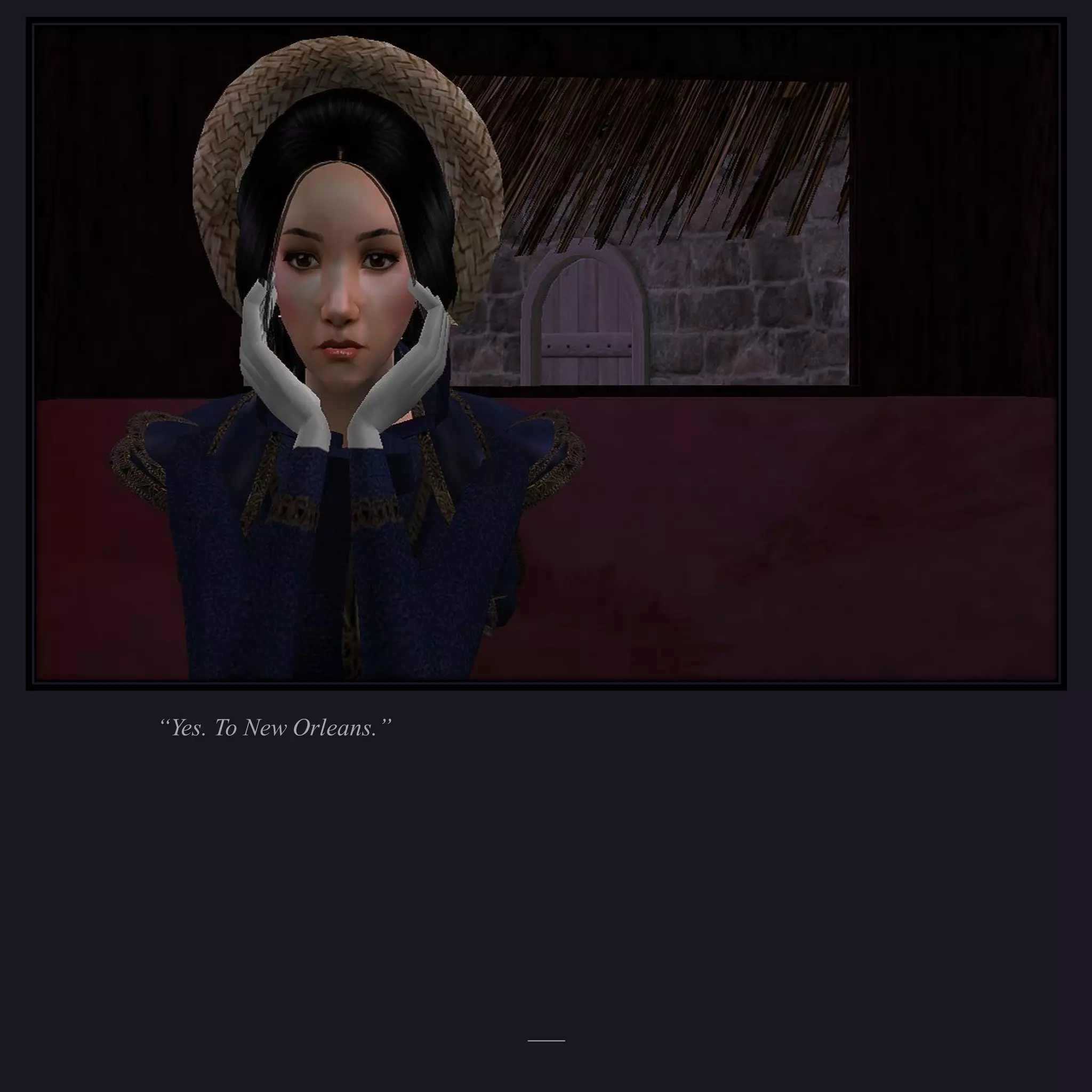
“Yes. To New Orleans.”


                         ___
The frosty, autumn air raced through the open carriage door, sweeping along with it a
handful of pumpkin colored leaves as they broke from the trees.
“Watch your step now, miss,” the footman warned, his tired instruction all but
overshadowed by the far-off grumble of thunder sweeping down the mountainside.
          With a shiver, Tabitha leaned forward in her seat and peeked out at the cold.
          “Sounds like a bit of a storm coming in,” she mentioned and with a sigh got to her feet.
“Best not linger too long.”
          “Yes, miss,” the footman ceded complacently and offered her his hand.
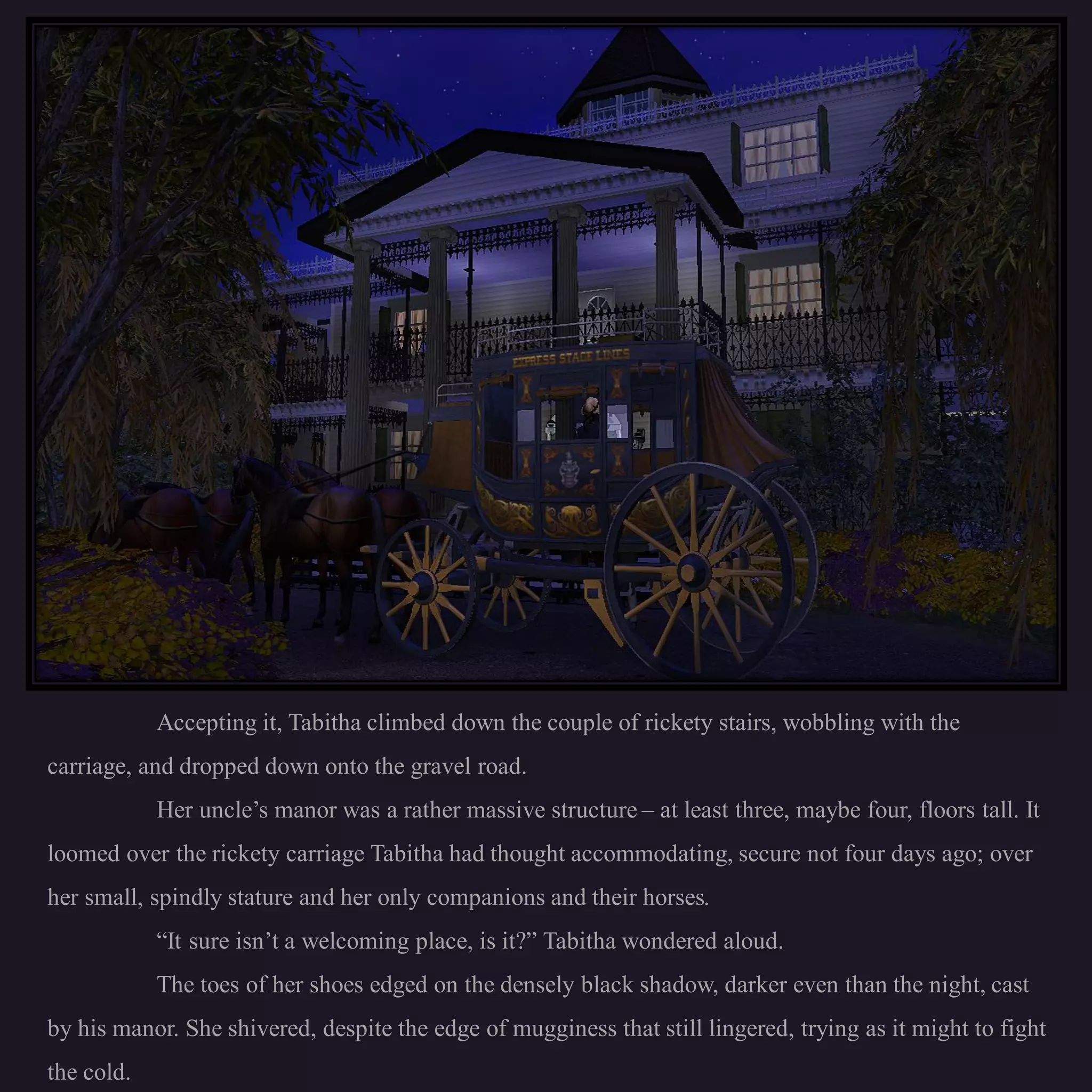
Accepting it, Tabitha climbed down the couple of rickety stairs, wobbling with the
carriage, and dropped down onto the gravel road.
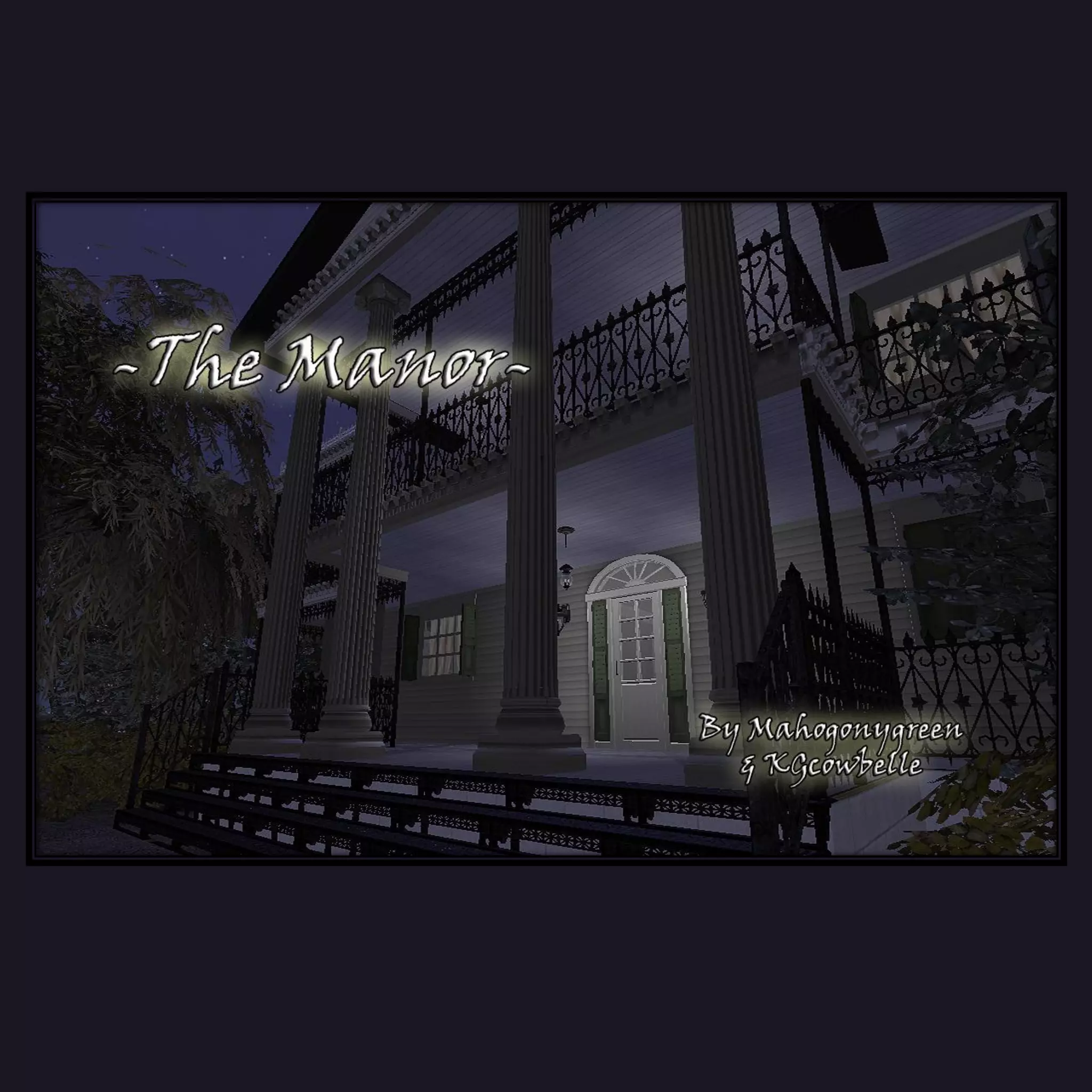
            Her uncle’s manor was a rather massive structure – at least three, maybe four, floors tall. It
loomed over the rickety carriage Tabitha had thought accommodating, secure not four days ago; over
her small, spindly stature and her only companions and their horses.
            “It sure isn’t a welcoming place, is it?” Tabitha wondered aloud.
            The toes of her shoes edged on the densely black shadow, darker even than the night, cast
by his manor. She shivered, despite the edge of mugginess that still lingered, trying as it might to fight
the cold.
“Well? Don’t you have something to say?” she prompted.
           Tabitha shuddered once again, more violently than the last time; then puerilely turned her
back on the rows of vacant windows with wide-stretching shutters, for an impractical fear that
something may pop up at her from inside.
           “Some sort of reassurance, perhaps, that my uncle’s place is all bark but no bite? That
things often look less haunting in the daylight?”
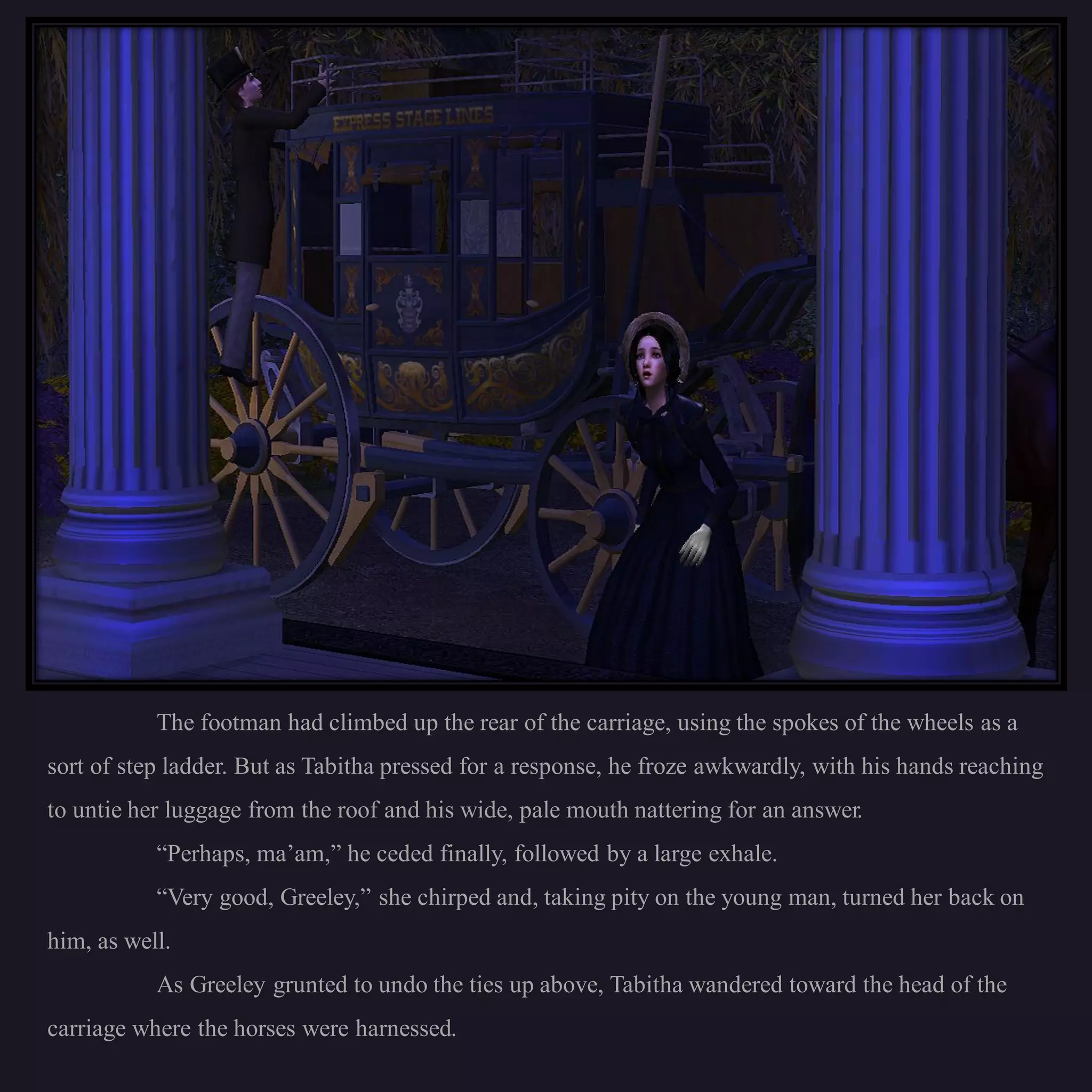
The footman had climbed up the rear of the carriage, using the spokes of the wheels as a
sort of step ladder. But as Tabitha pressed for a response, he froze awkwardly, with his hands reaching
to untie her luggage from the roof and his wide, pale mouth nattering for an answer.
           “Perhaps, ma’am,” he ceded finally, followed by a large exhale.
           “Very good, Greeley,” she chirped and, taking pity on the young man, turned her back on
him, as well.
           As Greeley grunted to undo the ties up above, Tabitha wandered toward the head of the
carriage where the horses were harnessed.
“I don’t suppose you suspect my uncle’s manor is haunted, do you?” she murmured aloud.
           Behind her the mare in the lead, whom Tabitha had heard called by the name Ramona,
startled. She snorted a large breath of warm air into the cold, tossing her raven-black mane and
stomping her hooves into the soft ground.
           “Oh, hush,” Tabitha scolded. “Before you excite the others. Things often look more
haunting in the night.” Shakily, she turned back to face the manor.
           “Miss Corsey?”
           Tabitha startled. “Ah, thank you.”
           She hurried to take her suitcase from Greeley.
“If that will be all, miss?”
            “It will. Thank you for the ride. And thank you, Mendel,” Tabitha added, craning her neck
back toward the front of the carriage to address the driver.
            Gathering everything up into her arms, she stepped back from her transport. Greeley tipped
the top of his head at her in an acknowledging way; then hoisted himself back up to his place at the
rear of the carriage. “Carriage ready, Mendel,” he hollered toward the front.
            Over the crack of a whip, Tabitha hollered last-minute wishes for a safe and quick trip, at
the head of the impending storm. It was unclear whether her send-off was heard, however, as Ramona
led the others in a startling dash for the iron gate.
Tabitha looked back at the only thing to turn toward: the front door.
She pulled her luggage up the front steps, abandoning them against the cast iron rail, and
pulled the bell cord. A deep, melodic chime rang throughout the air and faded back to silence as a
narrow, dark face of a woman appeared in the door’s window.
           The door swung open.
           “Miss Tabitha? Welcome to New Orleans. Come in, come in; you’ll let out all the spirits.”
           Tabitha swallowed and retrieved her things; then shuffled hurriedly inside at the rapid
promptings.
           “‘Let out all the spirits?’”
“It’s better than letting in any new ones,” the woman reassured her in a low voice. “I’m
Henriette – the maid.”
           “Nice to meet you,” Tabitha stuttered out of formalities.
           She glanced around the interior of the entryway. As Henriette had closed the front door
behind them, Tabitha noted the feeling of the fresh air being shut out. All that remained was the
musty, closed-up air that was so chilling to the touch it felt almost as if a layer of water settled on her
skin.
“What a late arrival, you poor girl. The bedroom you are to have is this way,” Henriette
explained, turning her back on Tabitha.
           She pushed through the nearest set of heavy doors effortlessly and continued down the ill-
lit hall, gliding gracefully without bothering a glance to confirm Tabitha’s presence behind her.
           “I am sorry that your uncle wasn’t here to greet you,” she chattered. “He’s been called
away on business.”
           “Is that so?” Tabitha wondered, ducking to avoid stumbling into a low-hanging cobweb.
From the corner of her eye, she caught a spider, just as startled by her as she had been by it, turn on its
heels and scramble into the corner of its web.
“Indeed,” Henriette confirmed pointedly. “With him gone, it’s only me in the house. Gets
rather lonely, as I am sure you’re capable of understanding. In fact, I was beginning to doubt you were
really coming.”
           Blushing slightly at the well veiled accusation, Tabitha edged around a table spotted with
various fractured, dirtied vases full of wilted, crackling flowers.
“Yes, I’m sorry for the delay. There was a bit of a heavy rain at the start; left several of the
roads in Virginia just flooded enough to prevent journey for the better part of a week.”
           “So long as you came, miss. We’ve been counting on your arrival,” Henriette admitted.
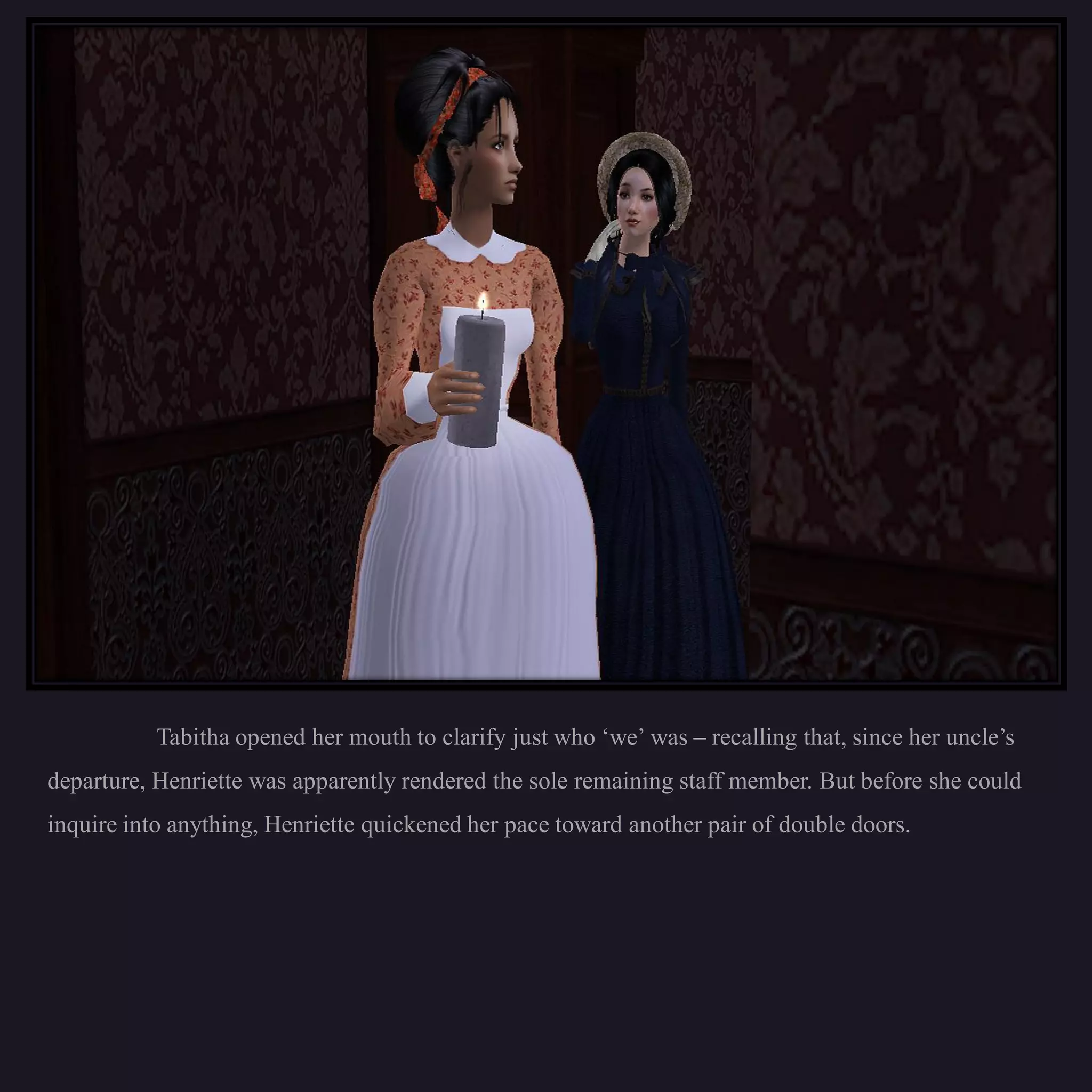
Tabitha opened her mouth to clarify just who ‘we’ was – recalling that, since her uncle’s
departure, Henriette was apparently rendered the sole remaining staff member. But before she could
inquire into anything, Henriette quickened her pace toward another pair of double doors.
“Here you are: your room,” she announced. “I’ve made the bed up myself and started a
fire. I’m sure the accommodations will do.”
            “Oh, yes,” Tabitha reassured her and stepped in after the maid.
            Was it possible that this room was even colder and darker than the last?
            “There will be supper on the table after you unpack. The dining room is just off the
entryway. Should I retrieve you?”
            “No, no,” Tabitha decided, dropping her luggage just inside the doorway. “I’m sure I can
find it.”
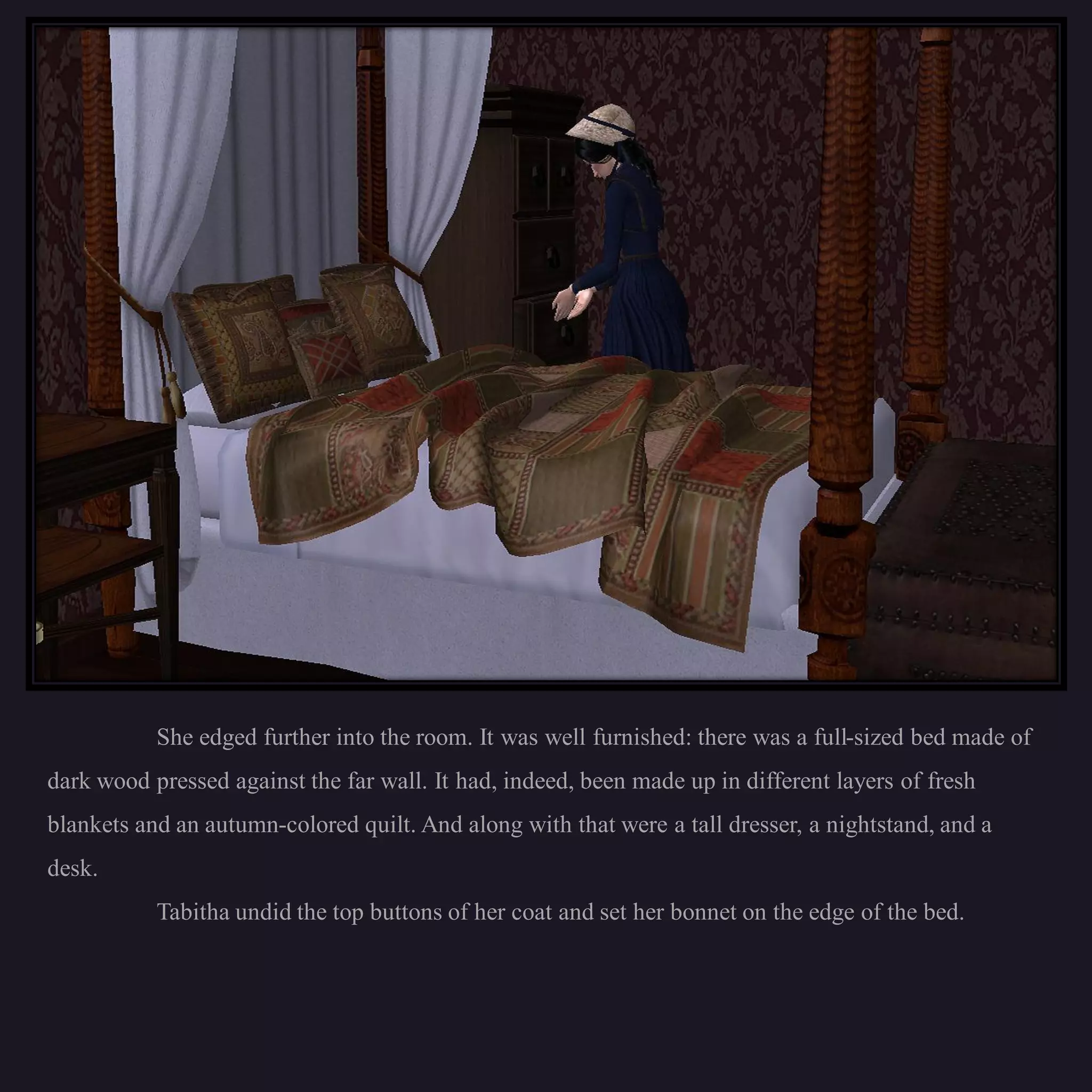
She edged further into the room. It was well furnished: there was a full-sized bed made of
dark wood pressed against the far wall. It had, indeed, been made up in different layers of fresh
blankets and an autumn-colored quilt. And along with that were a tall dresser, a nightstand, and a
desk.
           Tabitha undid the top buttons of her coat and set her bonnet on the edge of the bed.
“One more thing, Henriette,” she called over her shoulder. “This manor… it’s not really
haunted… is it? I only ask because, who hasn’t heard a rumor or two here and there? But they are
only rumors, aren’t they? Henriette?”
Tabitha turned back toward the doorway.
But it was already empty.


                                    ___
This room was dim at well, brightened only faintly by the smallest flames she’d ever seen
burning in a hearth that size.
           Nevertheless, Tabitha stepped into the dining room.
Just as Henriette had promised, a crimson china bowl sat at the far end of the table, along
with two goblets and a set of silver wear. It was clear from the tendrils of steam that rose and
dissipated into the air several inches above the bowl that whatever dinner was, it was warm – and
fresh.
             Enticed, she unstuck her feet from where they’d planted themselves to the hardwood floor.
The swish-swishing of her toffee satin skirt and the light tapping of her shoes the only audible noises
as she walked, Tabitha pulled the stout chair at the end of the table back a foot or two and slipped into
her place.
Another grimy vase housing an arrangement of dead, brittle roses was pushed to the
middle of the table. A little dot of a spider dropped swung from one of the leaves. Tabitha just did her
best to look past it and to the far more intriguing portrait hung beyond.
           Swallowing her first spoonful, Tabitha was surprised to find that dinner, which turned out
to be a thick sort of stew or soup, was full of plenty spices. She grabbed quickly for the goblet full of
water and swallowed until her mouth cooled.
Despite the spiciness, Tabitha smiled at the full bowl. Inhaling its decadent, diverse scent,
she drew her water goblet up in one hand, and her silver spoon in the other.
           And within a matter of minutes, she’d tucked in the remaining stew – along with her goblet
of water, and then her goblet of sweet wine, too.


                                                    ___
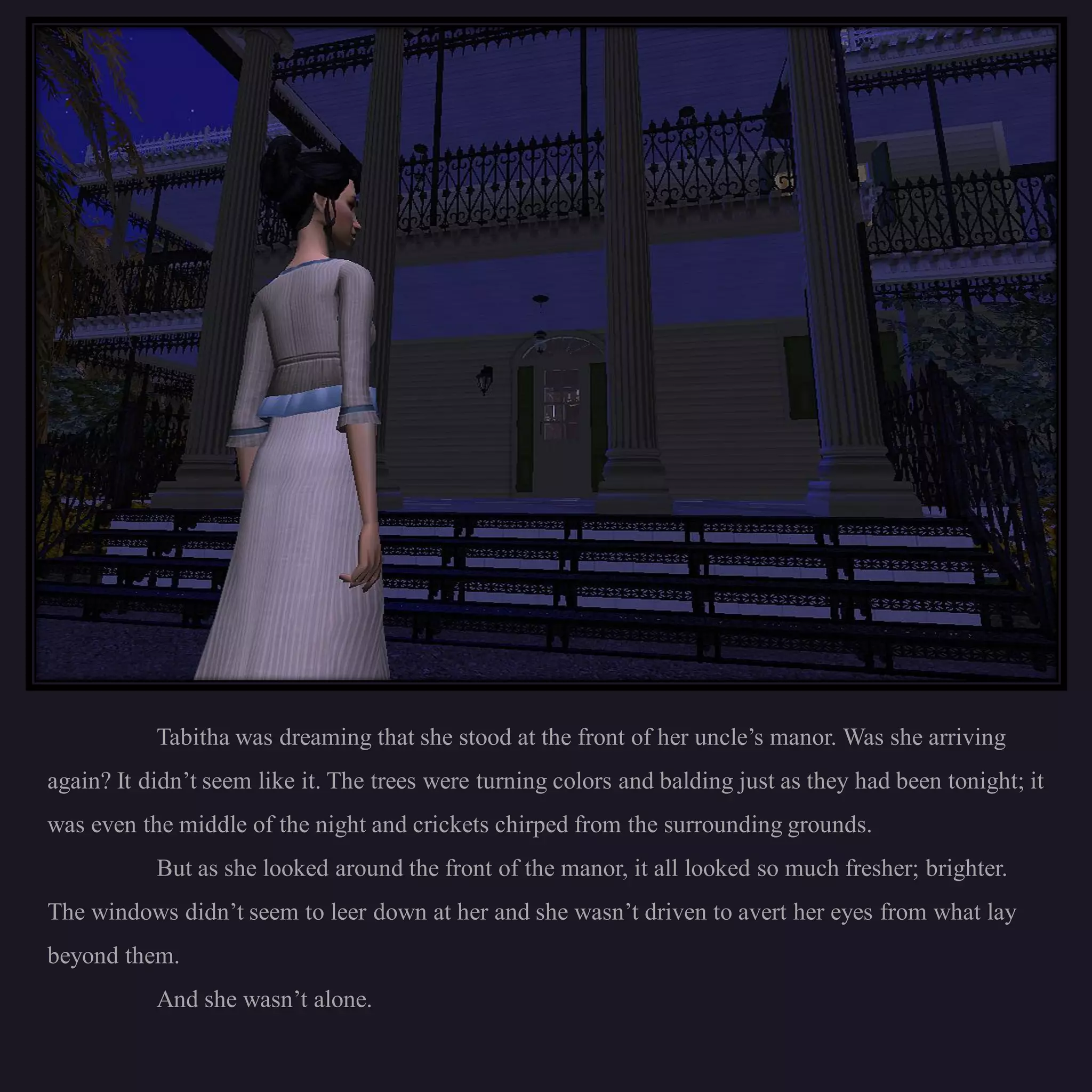
Tabitha was dreaming that she stood at the front of her uncle’s manor. Was she arriving
again? It didn’t seem like it. The trees were turning colors and balding just as they had been tonight; it
was even the middle of the night and crickets chirped from the surrounding grounds.
           But as she looked around the front of the manor, it all looked so much fresher; brighter.
The windows didn’t seem to leer down at her and she wasn’t driven to avert her eyes from what lay
beyond them.
           And she wasn’t alone.
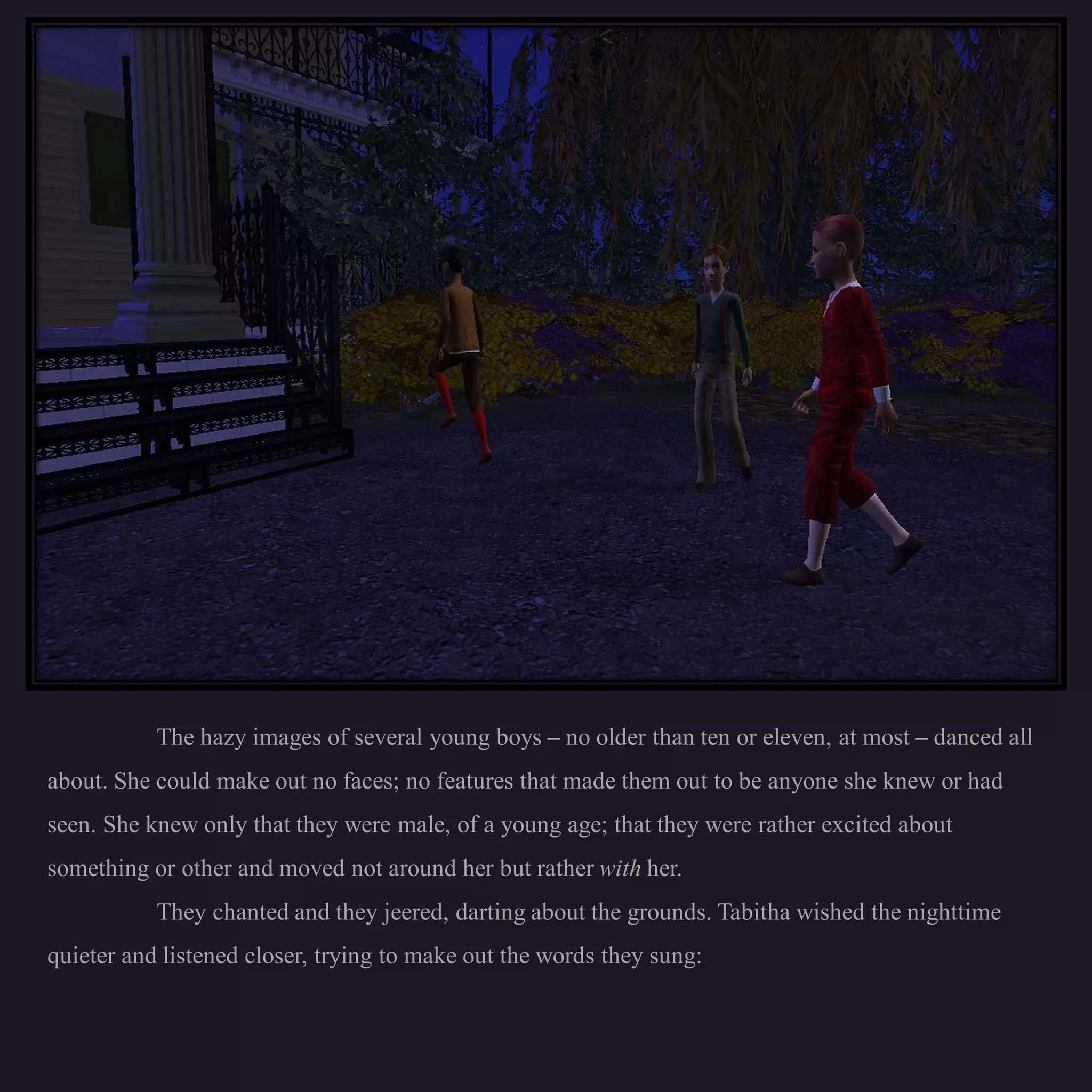
The hazy images of several young boys – no older than ten or eleven, at most – danced all
about. She could make out no faces; no features that made them out to be anyone she knew or had
seen. She knew only that they were male, of a young age; that they were rather excited about
something or other and moved not around her but rather with her.
           They chanted and they jeered, darting about the grounds. Tabitha wished the nighttime
quieter and listened closer, trying to make out the words they sung:
Solomon Grundy,
        Born on a Monday,
        Christened on Tuesday,
        Married on Wednesday,
        Took ill on a Thursday,
        Worse on a Friday,
        Died on Saturday,
        Buried on Sunday.
        This is the end
        Of Solomon Grundy.
             The one skipping nearest her reached out and pressed something small and hard into her
hand.
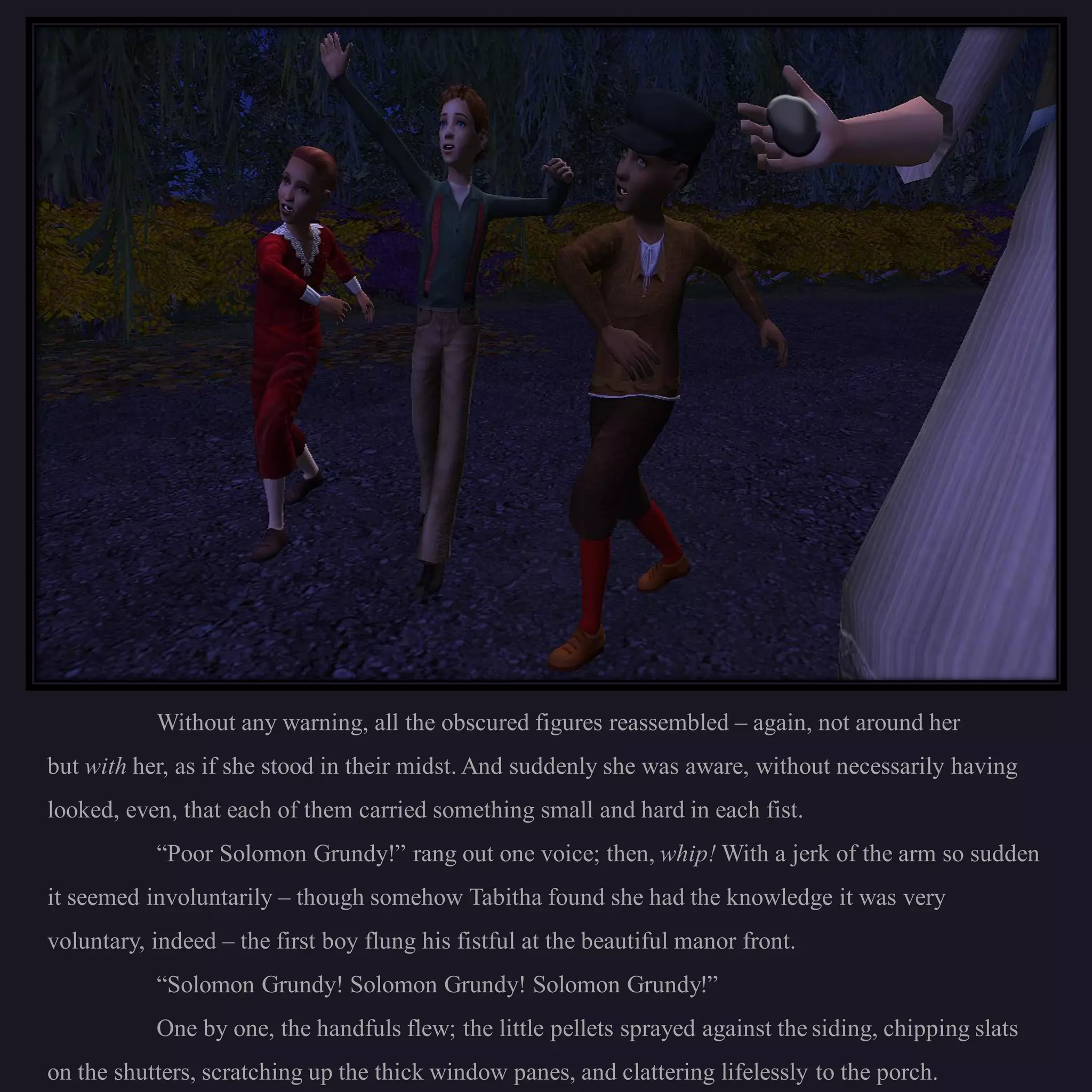
Without any warning, all the obscured figures reassembled – again, not around her
but with her, as if she stood in their midst. And suddenly she was aware, without necessarily having
looked, even, that each of them carried something small and hard in each fist.
           “Poor Solomon Grundy!” rang out one voice; then, whip! With a jerk of the arm so sudden
it seemed involuntarily – though somehow Tabitha found she had the knowledge it was very
voluntary, indeed – the first boy flung his fistful at the beautiful manor front.
           “Solomon Grundy! Solomon Grundy! Solomon Grundy!”
           One by one, the handfuls flew; the little pellets sprayed against the siding, chipping slats
on the shutters, scratching up the thick window panes, and clattering lifelessly to the porch.
But, no, the boys were not finished.
           Whip! Tabitha felt her arm jerk; spasm, almost. Her rock hit the house. Then all together,
her included, the little assemblage took off to recollect their weapons, tearing up the front steps.
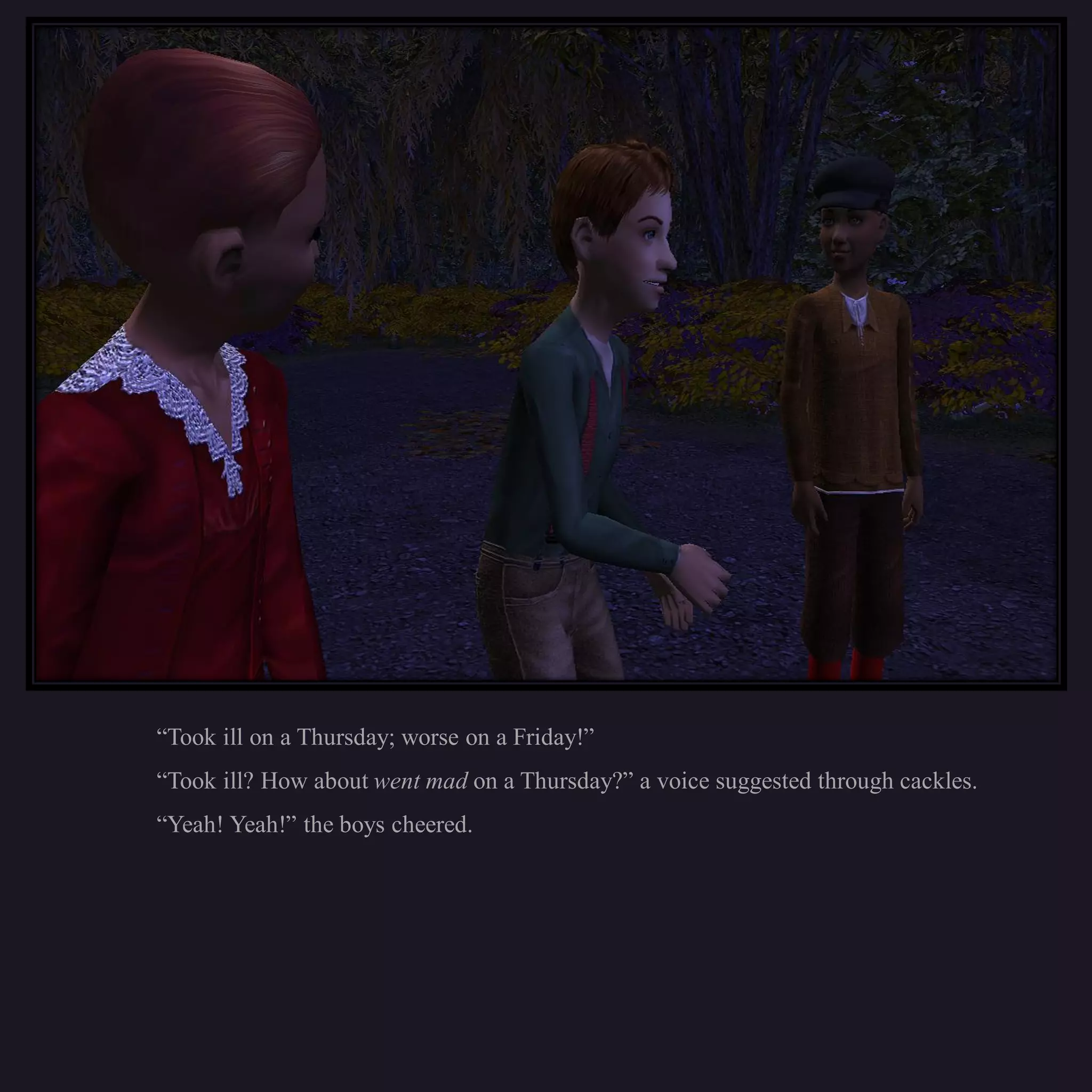
           “Took ill on a Thursday; worse on a Friday!”
           “Took ill? How about went mad on a Thursday?” a voice suggested through cackles.
           “Yeah! Yeah!” the boys cheered.
     Solomon Grundy,
     Born on a Monday,
     Christened on Tuesday,
     Married on Wednesday,
     Went mad on a Thursday
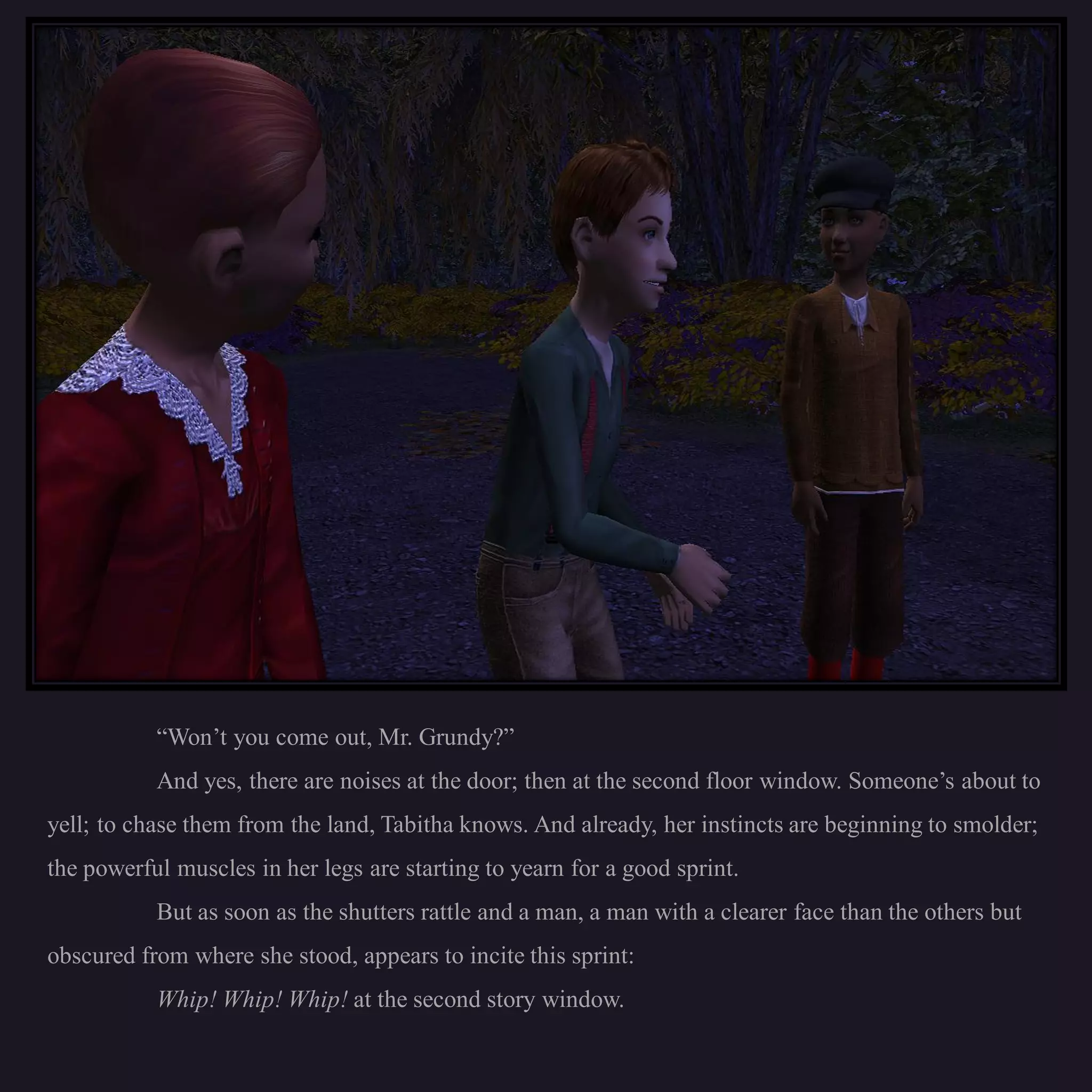
“Won’t you come out, Mr. Grundy?”
           And yes, there are noises at the door; then at the second floor window. Someone’s about to
yell; to chase them from the land, Tabitha knows. And already, her instincts are beginning to smolder;
the powerful muscles in her legs are starting to yearn for a good sprint.
           But as soon as the shutters rattle and a man, a man with a clearer face than the others but
obscured from where she stood, appears to incite this sprint:
           Whip! Whip! Whip! at the second story window.
With a depressed feeling, Tabitha recalled the tendrils of the dream – or perhaps the
nightmare – before they faded completely from her consciousness.
          Only moments ago, hadn’t she been abusing the man at the window with a fistful of
stones?
          How dreadful.
Tabitha opened her eyes just enough to ensure that she was, indeed, lying in the bedroom
at her uncle’s estate. When she first did so, she thought she spotted Henriette standing at her back,
near the edge of the mattress.
Tabitha startled; rolling onto her back and scrambling into a sitting position. She opened
her mouth to ask if something was wrong. But there was no need: when she looked upon the spot at
the side of her bed again, it was empty.
            “Henriette?” Tabitha called softly, tentatively.
            The eeriness that had encroached upon her confidence when she first arrived returned. And
fearing what she may see, she turned slowly to take in all of the room and find where the maid had
scurried off to.
            But she found the room to be empty.
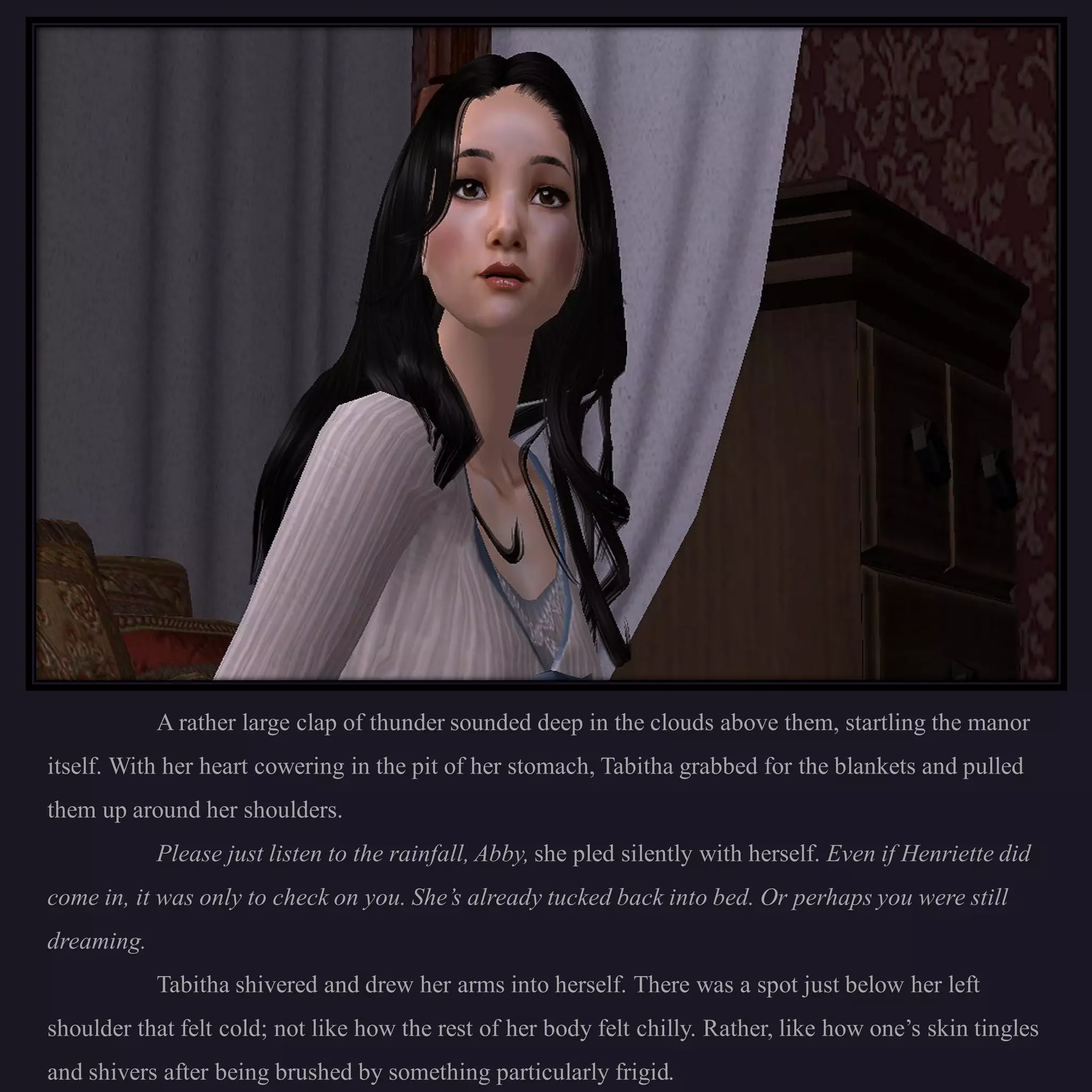
A rather large clap of thunder sounded deep in the clouds above them, startling the manor
itself. With her heart cowering in the pit of her stomach, Tabitha grabbed for the blankets and pulled
them up around her shoulders.
            Please just listen to the rainfall, Abby, she pled silently with herself. Even if Henriette did
come in, it was only to check on you. She’s already tucked back into bed. Or perhaps you were still
dreaming.
            Tabitha shivered and drew her arms into herself. There was a spot just below her left
shoulder that felt cold; not like how the rest of her body felt chilly. Rather, like how one’s skin tingles
and shivers after being brushed by something particularly frigid.
It felt as if a snowball had been left resting on her arm all night.
           Tabitha tucked that arm further under the other and banished further scrutiny from her
mind. Listening to the forlorn howl of the wind as it wooshed down the chimney and dispersed its
breathy chill throughout her bedroom, she cuddled deeper beneath the quilt.
           But what had it been that woke her up?
           Perhaps she’d woken herself up; it was a rather barbaric dream.


                                                   ___
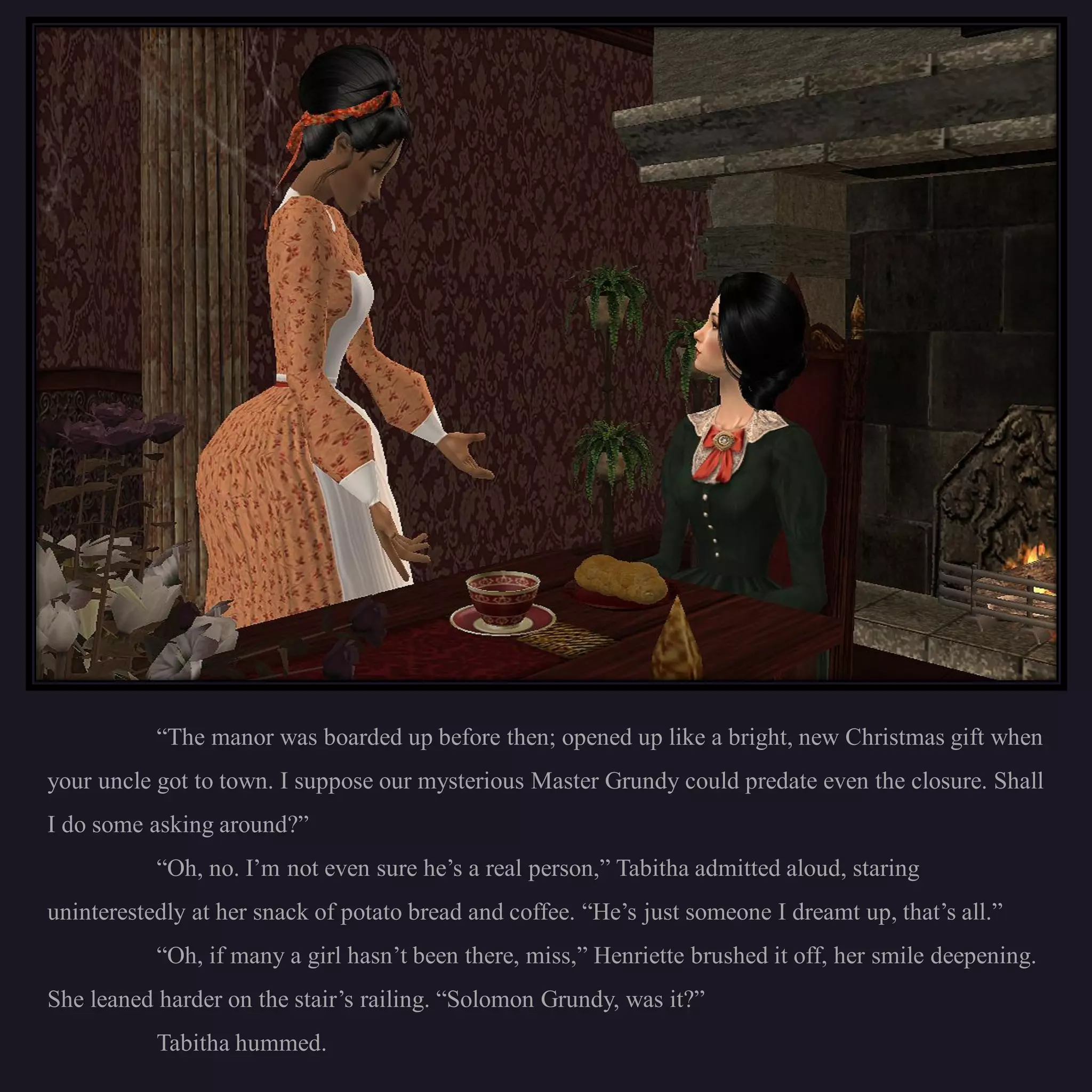
“Who is Solomon Grundy?”
           Henriette paused on her way out of the dining room and glanced over her shoulder with a
slight, almost glad smile.
“No one I have ever met, I am sure,” she replied softly. “Why? Should I have?”
           “Not in particular,” Tabitha said. “He’s not someone who lived here in the past? Perhaps
one of the staff?”
           “I have always been well acquainted with all of the staff.”
           “And before you were brought on?”
“The manor was boarded up before then; opened up like a bright, new Christmas gift when
your uncle got to town. I suppose our mysterious Master Grundy could predate even the closure. Shall
I do some asking around?”
           “Oh, no. I’m not even sure he’s a real person,” Tabitha admitted aloud, staring
uninterestedly at her snack of potato bread and coffee. “He’s just someone I dreamt up, that’s all.”
           “Oh, if many a girl hasn’t been there, miss,” Henriette brushed it off, her smile deepening.
She leaned harder on the stair’s railing. “Solomon Grundy, was it?”
           Tabitha hummed.
“It would seem so. That’s what they called him, at least… couldn’t really tell if that was
his name, though.”
            “Aside from him, I trust your first night here wasn’t too unpleasant?”
            Tabitha snapped to attention, straightening her back and brushing the loose hairs back from
her eyes.
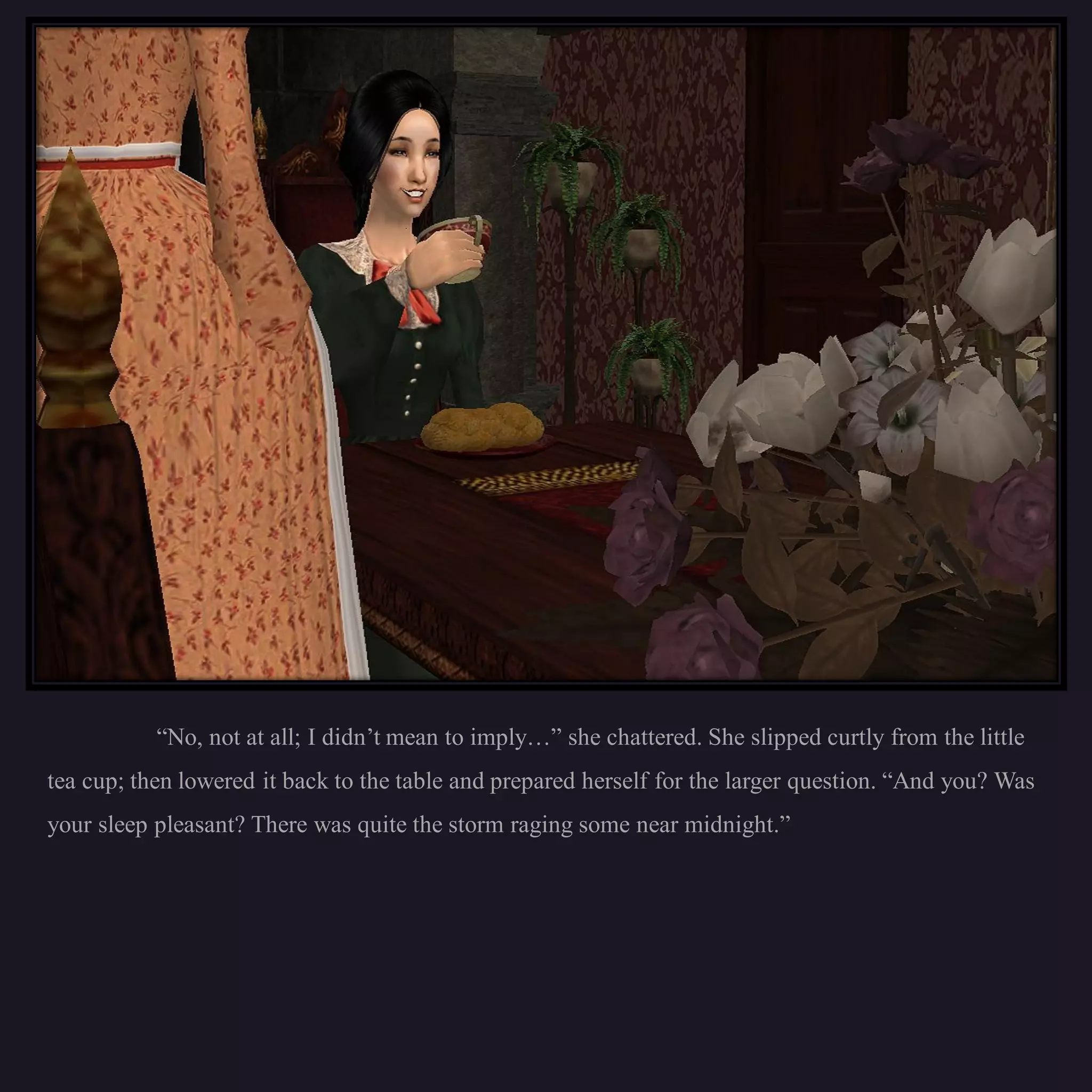
“No, not at all; I didn’t mean to imply…” she chattered. She slipped curtly from the little
tea cup; then lowered it back to the table and prepared herself for the larger question. “And you? Was
your sleep pleasant? There was quite the storm raging some near midnight.”
Henriette’s smile regained its mysteriousness.
“My night was most satisfying.”


                                      ___
“Hello? Henriette? Is that you?”
           Tabitha dropped the fistful of cloth and sewing needle to one hand, swinging it at her side
as she traipsed down the hall.
           The storm had mostly let up this afternoon. Finally some sunshine – watered down by all
the rain, but sunshine nonetheless – had appeared at Tabitha’s window sill. And spotting it, she had
eagerly abandoned the project of stitching her initials into her new handkerchief and went wandering
around, opening windows, instead.
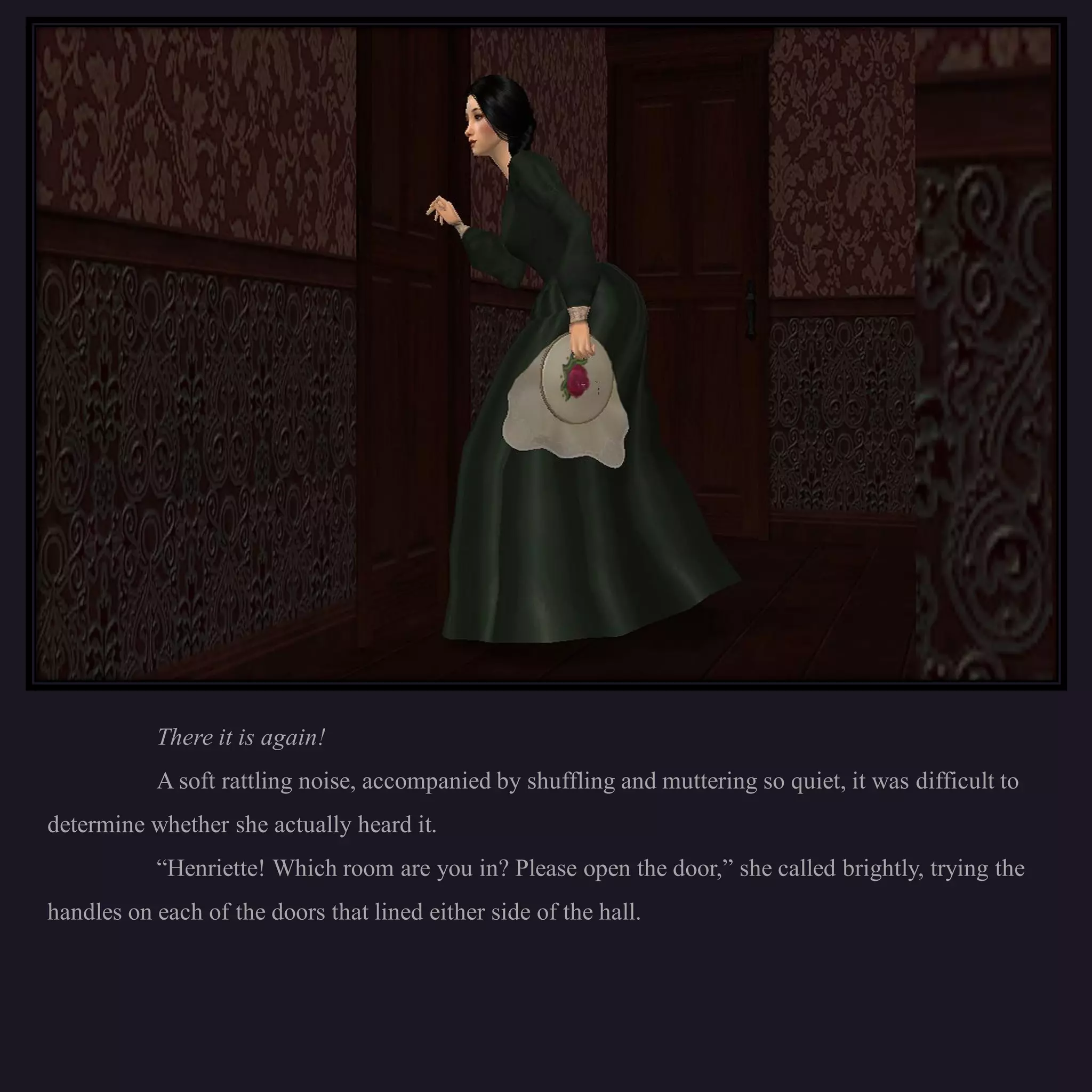
There it is again!
           A soft rattling noise, accompanied by shuffling and muttering so quiet, it was difficult to
determine whether she actually heard it.
           “Henriette! Which room are you in? Please open the door,” she called brightly, trying the
handles on each of the doors that lined either side of the hall.
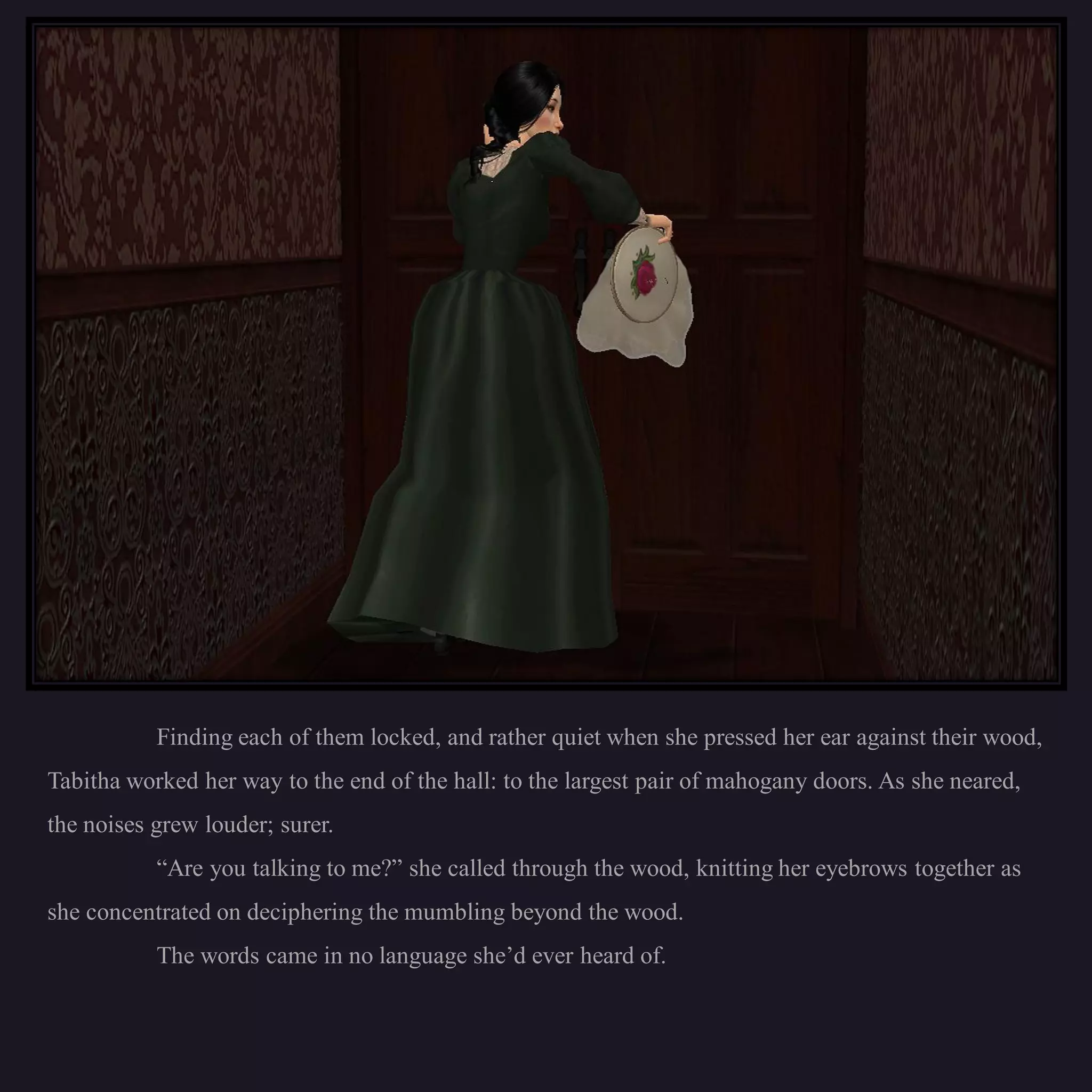
Finding each of them locked, and rather quiet when she pressed her ear against their wood,
Tabitha worked her way to the end of the hall: to the largest pair of mahogany doors. As she neared,
the noises grew louder; surer.
           “Are you talking to me?” she called through the wood, knitting her eyebrows together as
she concentrated on deciphering the mumbling beyond the wood.
           The words came in no language she’d ever heard of.
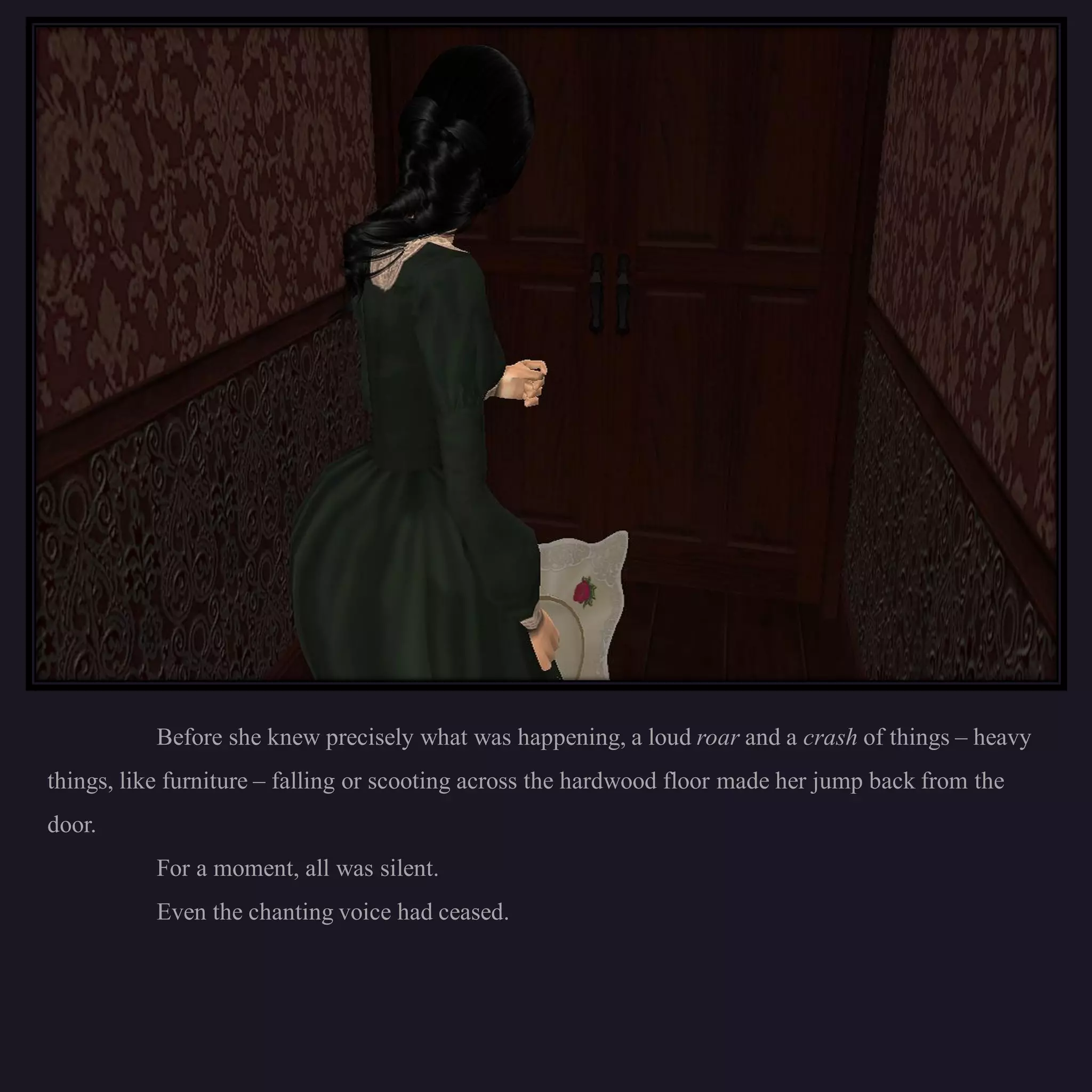
Before she knew precisely what was happening, a loud roar and a crash of things – heavy
things, like furniture – falling or scooting across the hardwood floor made her jump back from the
door.
           For a moment, all was silent.
           Even the chanting voice had ceased.
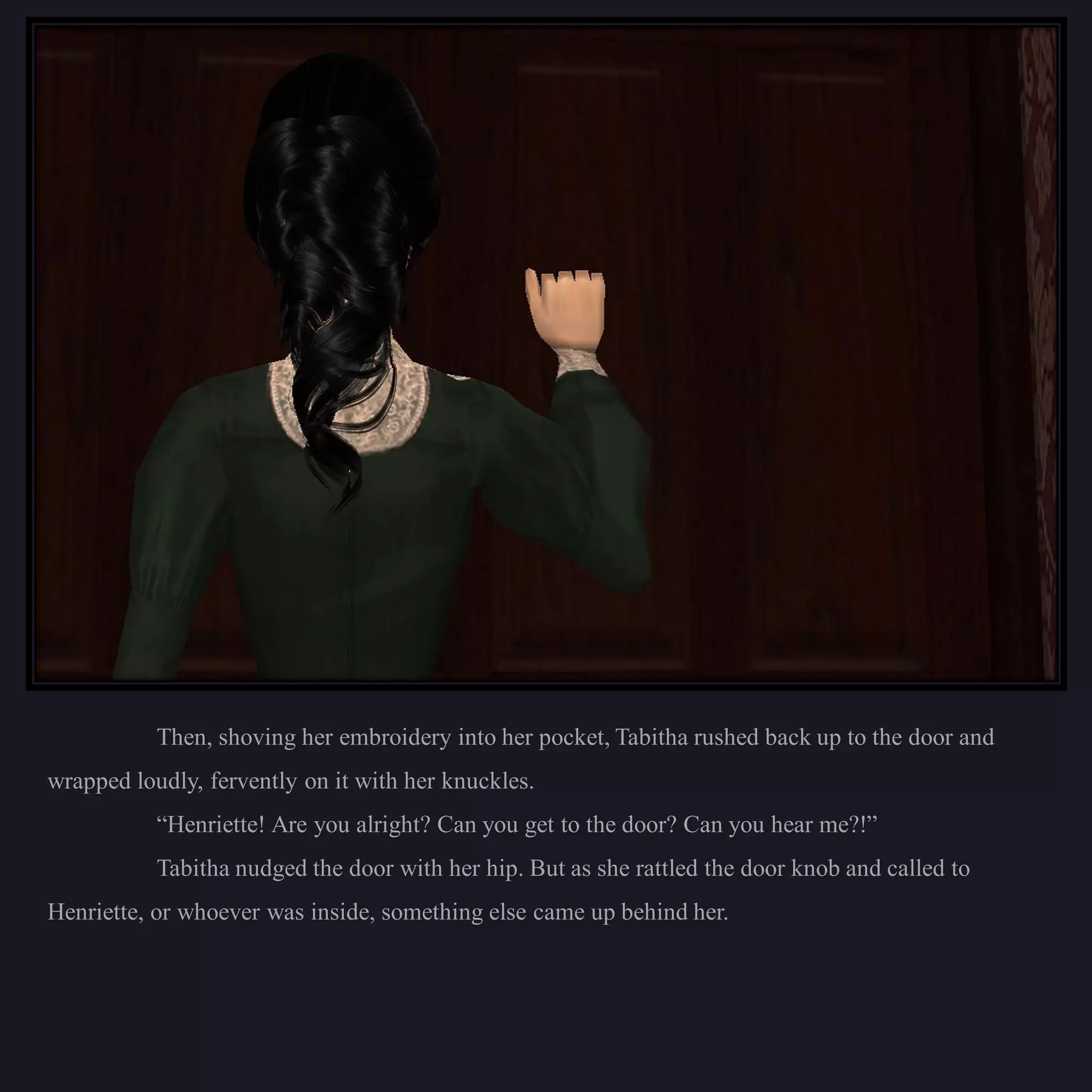
Then, shoving her embroidery into her pocket, Tabitha rushed back up to the door and
wrapped loudly, fervently on it with her knuckles.
           “Henriette! Are you alright? Can you get to the door? Can you hear me?!”
           Tabitha nudged the door with her hip. But as she rattled the door knob and called to
Henriette, or whoever was inside, something else came up behind her.
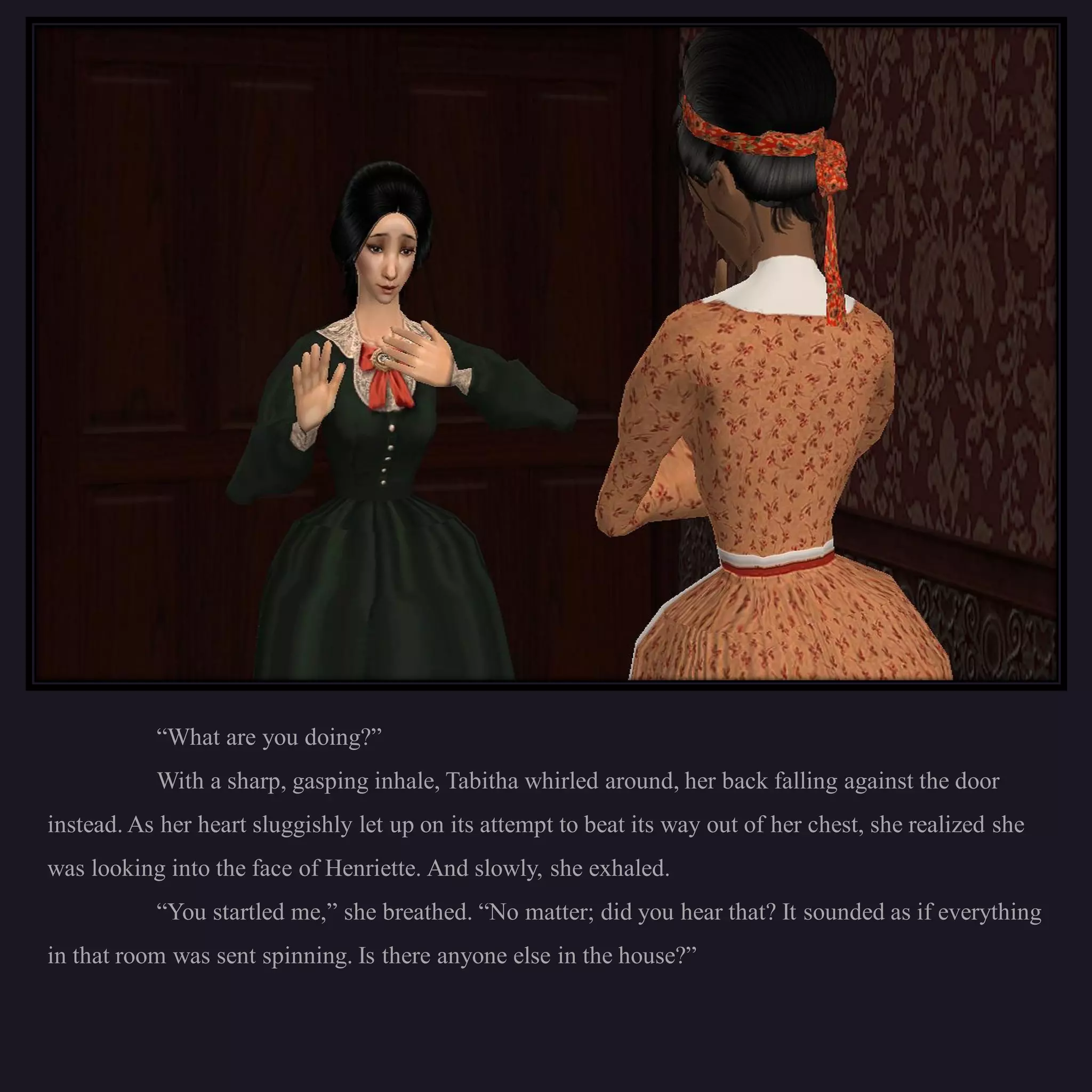
“What are you doing?”
           With a sharp, gasping inhale, Tabitha whirled around, her back falling against the door
instead. As her heart sluggishly let up on its attempt to beat its way out of her chest, she realized she
was looking into the face of Henriette. And slowly, she exhaled.
           “You startled me,” she breathed. “No matter; did you hear that? It sounded as if everything
in that room was sent spinning. Is there anyone else in the house?”
“There are no more people, I assure you,” Henriette promised brightly.
           “What of hobos? Runaways? I am sure I heard a voice coming from that room. Do you
think he’s terribly injured?”
           Tabitha peeled herself off the door and tried the handle, unsuccessfully, again.
“Like I said: no people,” Henriette repeated evenly. “That is your uncle’s study. It’s been
locked up since he’s been there. And rest assured, there are no other entrances. Not so much as a
window pane in there.”
           “But you did hear something? Someone, perhaps? Talking?”
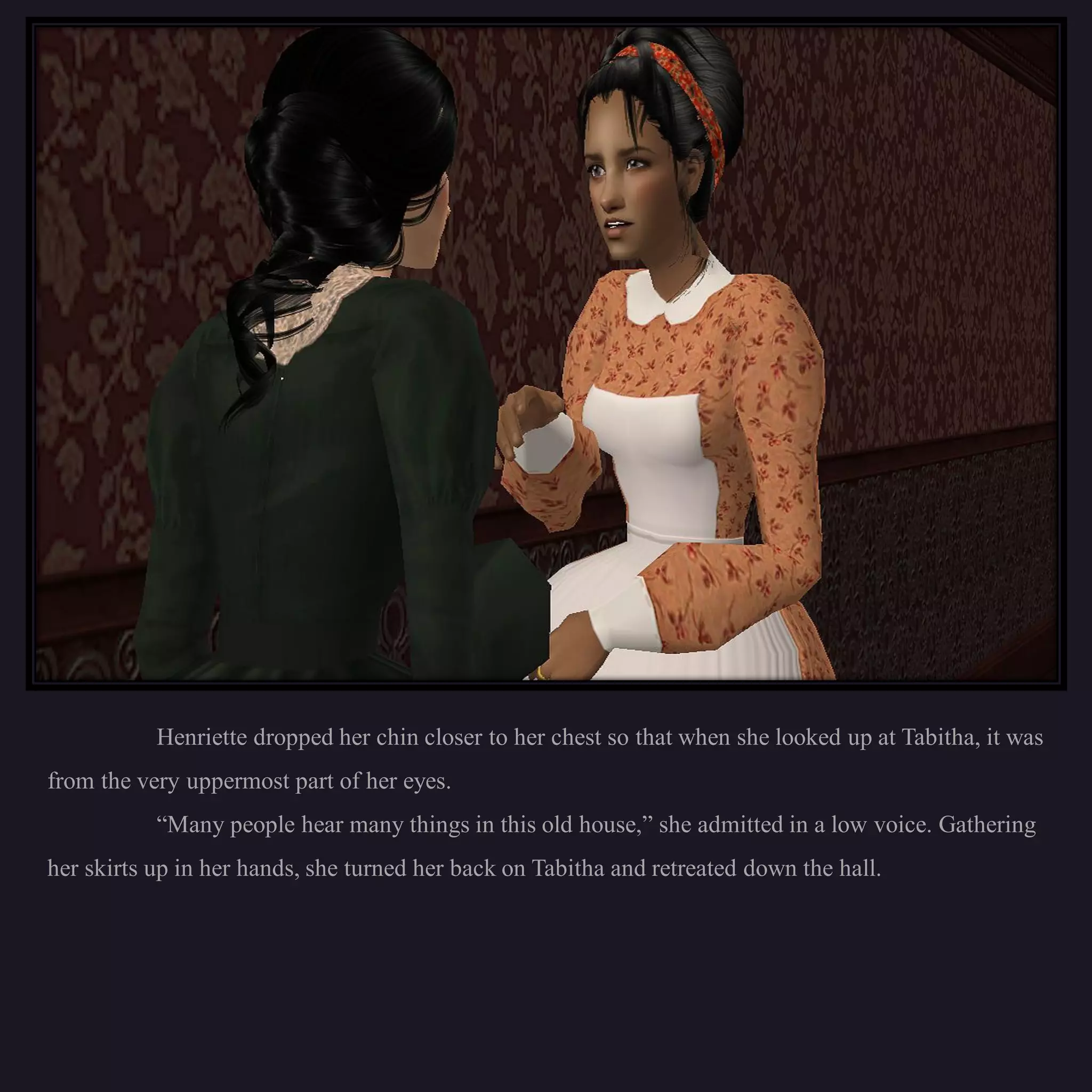
Henriette dropped her chin closer to her chest so that when she looked up at Tabitha, it was
from the very uppermost part of her eyes.
           “Many people hear many things in this old house,” she admitted in a low voice. Gathering
her skirts up in her hands, she turned her back on Tabitha and retreated down the hall.
Tabitha watched her go in silence.
           But just as she reached the doorway at the end of the hall, Henriette glanced back at the
small, frightened girl through strings of her dark, raven hair.
           “What do you think it means?”
           “I-I don’t know; I just got here yesterday… Henriette? Henriette!”
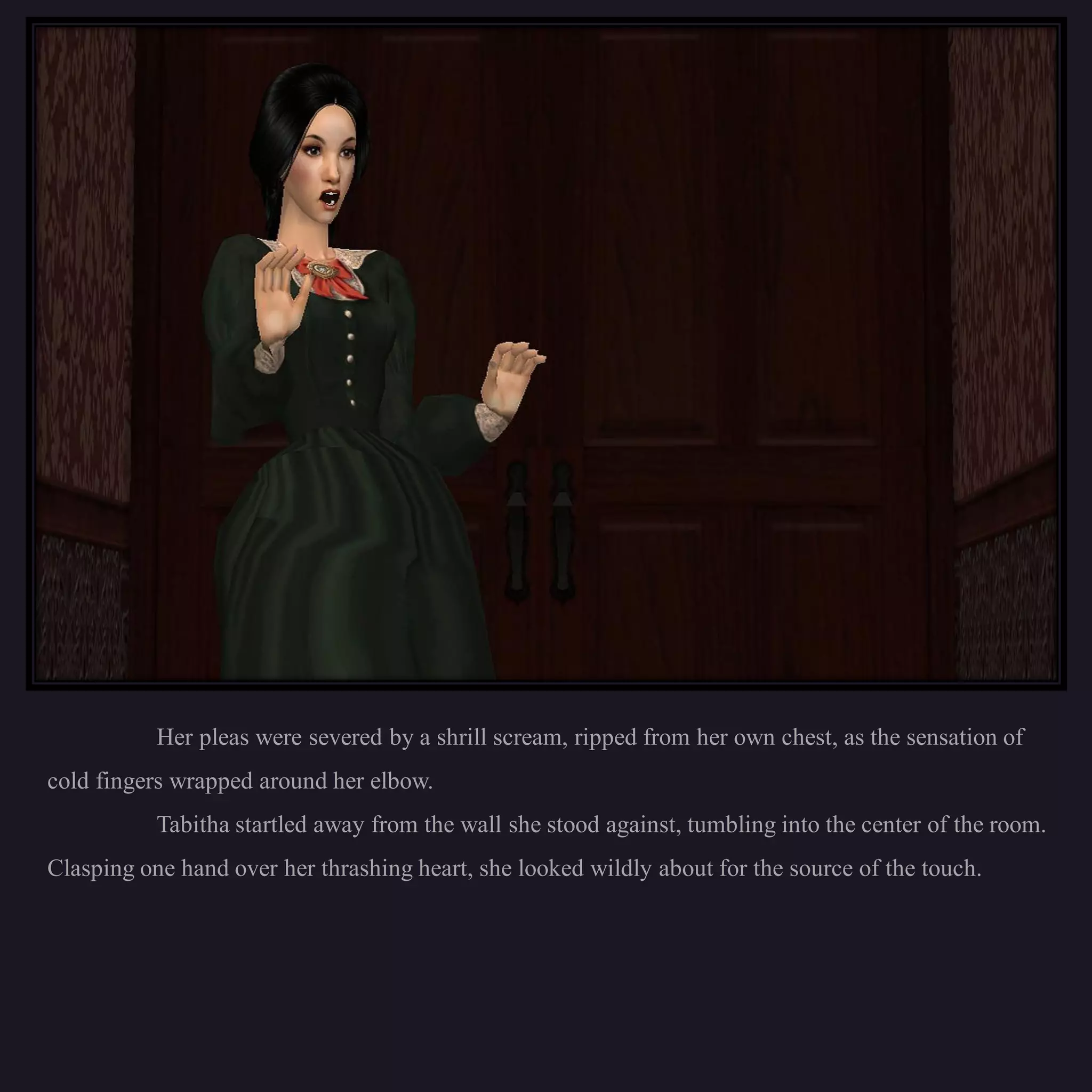
Her pleas were severed by a shrill scream, ripped from her own chest, as the sensation of
cold fingers wrapped around her elbow.
           Tabitha startled away from the wall she stood against, tumbling into the center of the room.
Clasping one hand over her thrashing heart, she looked wildly about for the source of the touch.
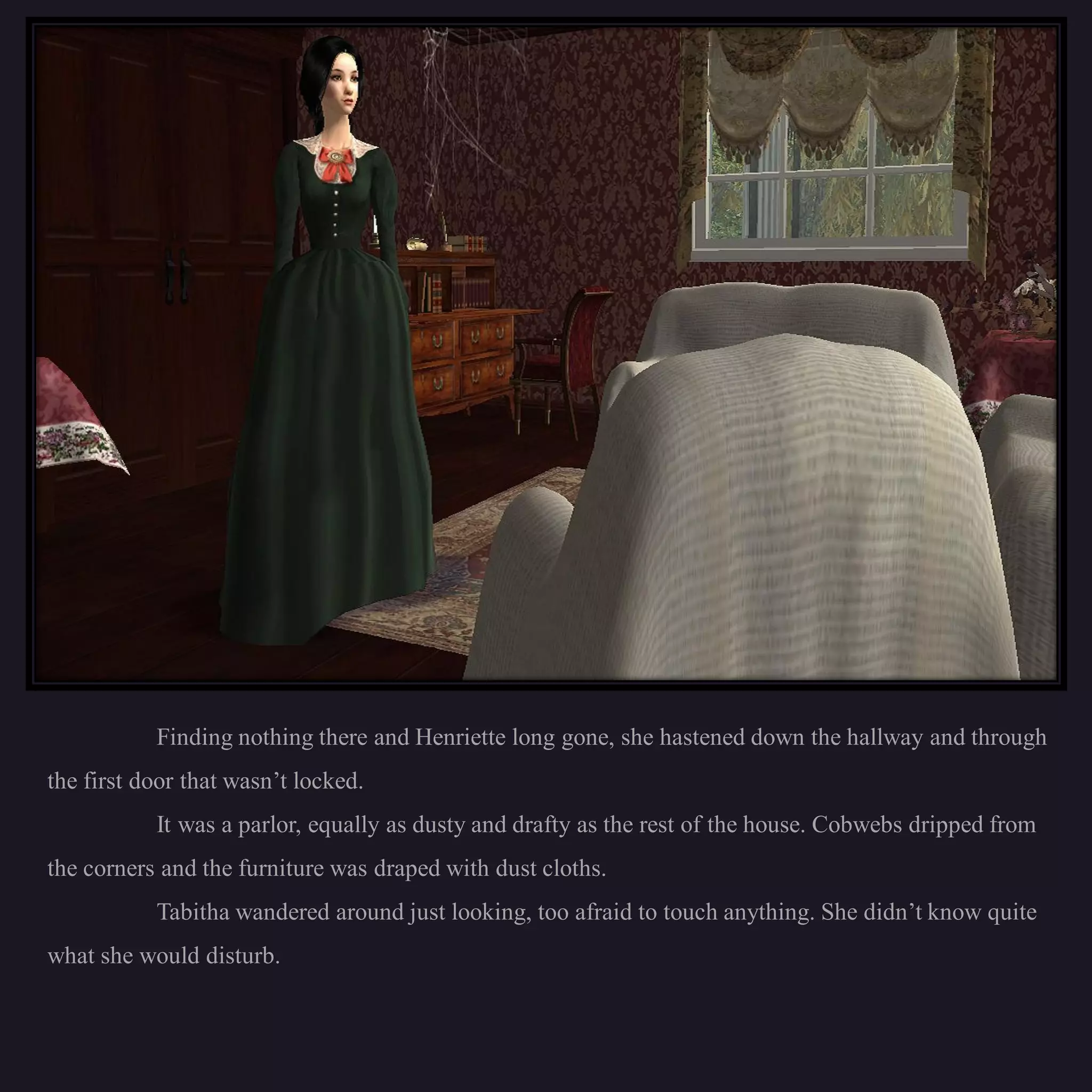
Finding nothing there and Henriette long gone, she hastened down the hallway and through
the first door that wasn’t locked.
           It was a parlor, equally as dusty and drafty as the rest of the house. Cobwebs dripped from
the corners and the furniture was draped with dust cloths.
           Tabitha wandered around just looking, too afraid to touch anything. She didn’t know quite
what she would disturb.
Suddenly, the image of a young man had appeared in the bottom corner of the window. It
observed her silently with dark, hollow looking eyes; they didn’t look about the room; nor did they
sweep over her. Rather, they focused intensely on her own eyes and narrowed as she spoke.
“Are… are you a ghost?” Tabitha whispered.
           Its lips remained settled in a straight, grim line.
           “Well?”
           A lopsided grin broke out on the young man’s face. He knocked back the brim of his hat,
revealing much lighter eyes – navy, actually. And with a chuckle that still sounded rather high-pitched
and boyish, he retracted his arm from inside the hall, braced both hands against the sill instead, and
leapt in through the window.
“Well!” Tabitha repeated, huffing the word this time. “You may excuse yourself from these
premises, at once, boy. Go on, then. Back out the window with you – before I call for my maid.”
           “Please,” the boy dismissed her commands. “That old soul wouldn’t chase me out if she
could.”
           “Are you–”
“A ghost? Afraid not. Not that I blame you for suspecting so,” he chattered, producing an
apple from the pocket of his dusty working pants.
           He polished the fruit against the chest of his shirt; then took a rather large, rather rude
chomp out of the side of it.
           “I was going to say a family friend,” Tabitha snorted, feeling the color rise to her cheeks.
           The boy shrugged thoughtlessly.
“Then who are you to be popping up at ladies from behind windows? You’re going to
startle a poor girl to death one of these days! And do you mind?!” she scolded, motioning with a tilt of
the head to the fruit he gnawed at, open-mouthed.
           “Not at all; apples are my favorite fruit,” he chirped. Then, wiping his right hand free of
juice against his shirt, he held it out for her. “And to answer your first question, I am Julien Alpheus
Bannett, to be popping up at ladies from behind windows. Nice to finally be meeting you.”
“‘Finally?’” she repeated warily, turning down the handshake by quickly dipping her head
in an uninterested, rather bored acknowledgement.
          “Word of you coming’s been floating around here for quite a while now.”
          “I thought Henriette was the only staff member here. How should you know who I am and
when I am to be coming and going?”
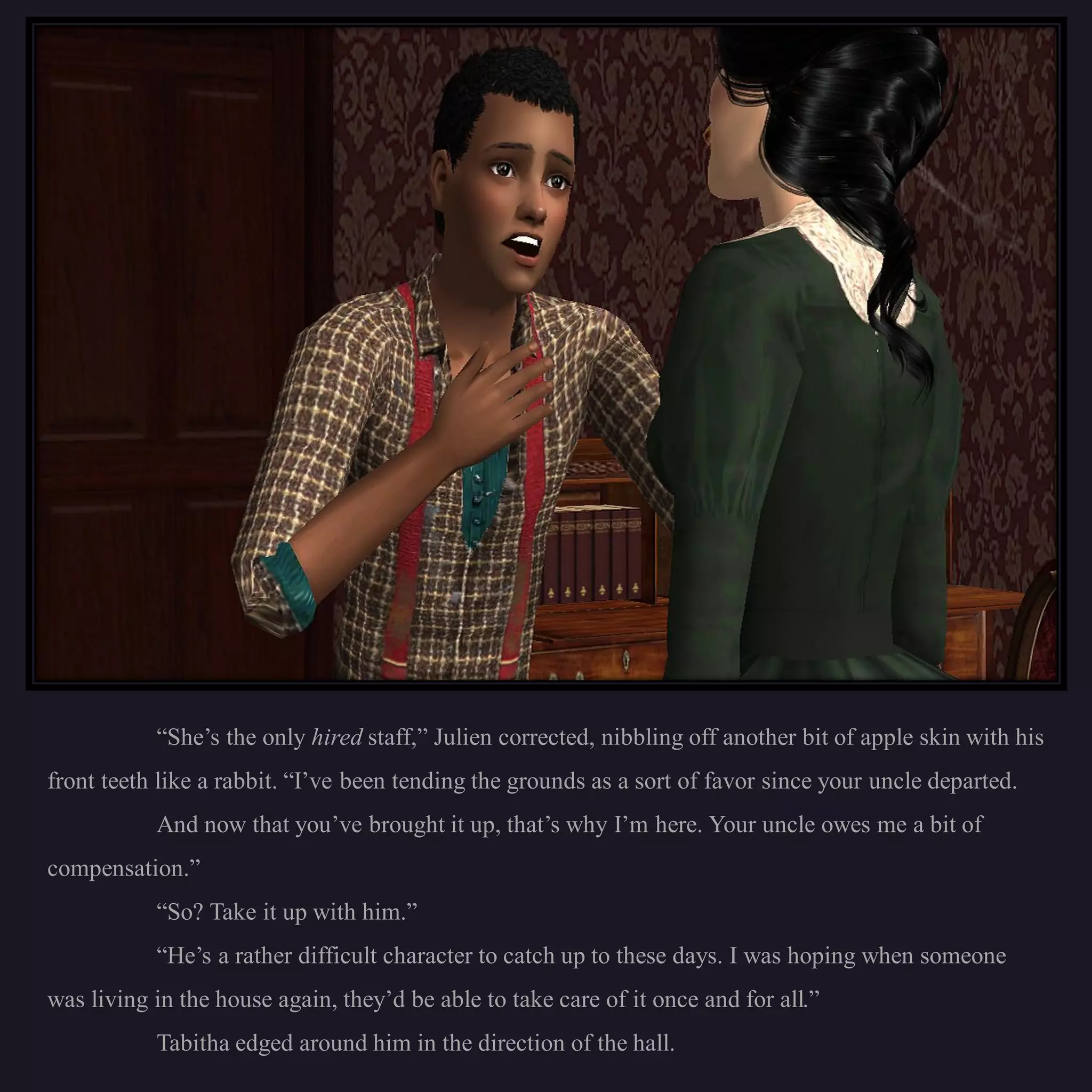
“She’s the only hired staff,” Julien corrected, nibbling off another bit of apple skin with his
front teeth like a rabbit. “I’ve been tending the grounds as a sort of favor since your uncle departed.
           And now that you’ve brought it up, that’s why I’m here. Your uncle owes me a bit of
compensation.”
           “So? Take it up with him.”
           “He’s a rather difficult character to catch up to these days. I was hoping when someone
was living in the house again, they’d be able to take care of it once and for all.”
           Tabitha edged around him in the direction of the hall.
“Well, I’m afraid I have to disappoint. I wouldn’t even know how to send word to my
uncle; let alone dapple in his finances. You’ll just have to wait until he returns. You can get your
money then. But until that time, you have to get out.”
           She waved her handkerchief at him, corralling him back against the wall and the window
he had come through.
           “Won’t you let me out through the front? I am a human being, Miss Corsey.”
           “Absolutely not,” she decided promptly. “You came in through the window like an uncouth
little crow and you will exit the same way. Now, go; shoo!”
                                                   ___
She stood at the front of the manor once again.
Solomon Grundy,
     Born on a Monday,
     Christened on Tuesday,
     Married on Wednesday…
           Already knowing what she would find there, Tabitha lifted her hand and peered at what she
held between her fingers.
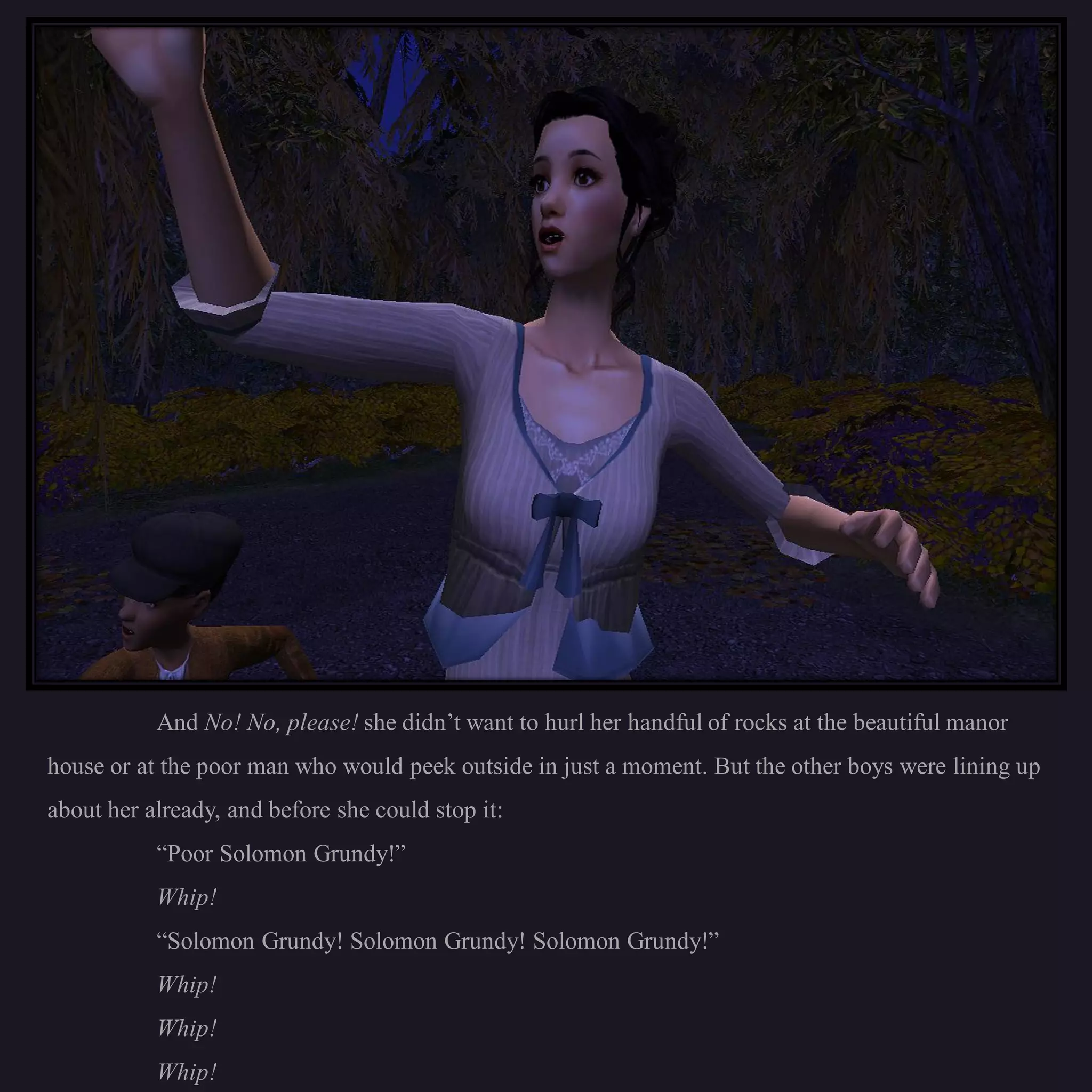
And No! No, please! she didn’t want to hurl her handful of rocks at the beautiful manor
house or at the poor man who would peek outside in just a moment. But the other boys were lining up
about her already, and before she could stop it:
           “Poor Solomon Grundy!”
           Whip!
           “Solomon Grundy! Solomon Grundy! Solomon Grundy!”
           Whip!
           Whip!
           Whip!
“Took ill on a Thursday; worse on a Friday!”
“Took ill? How about went mad on a Thursday?” a voice suggested through cackles.
“Yeah! Yeah!” the boys cheered.
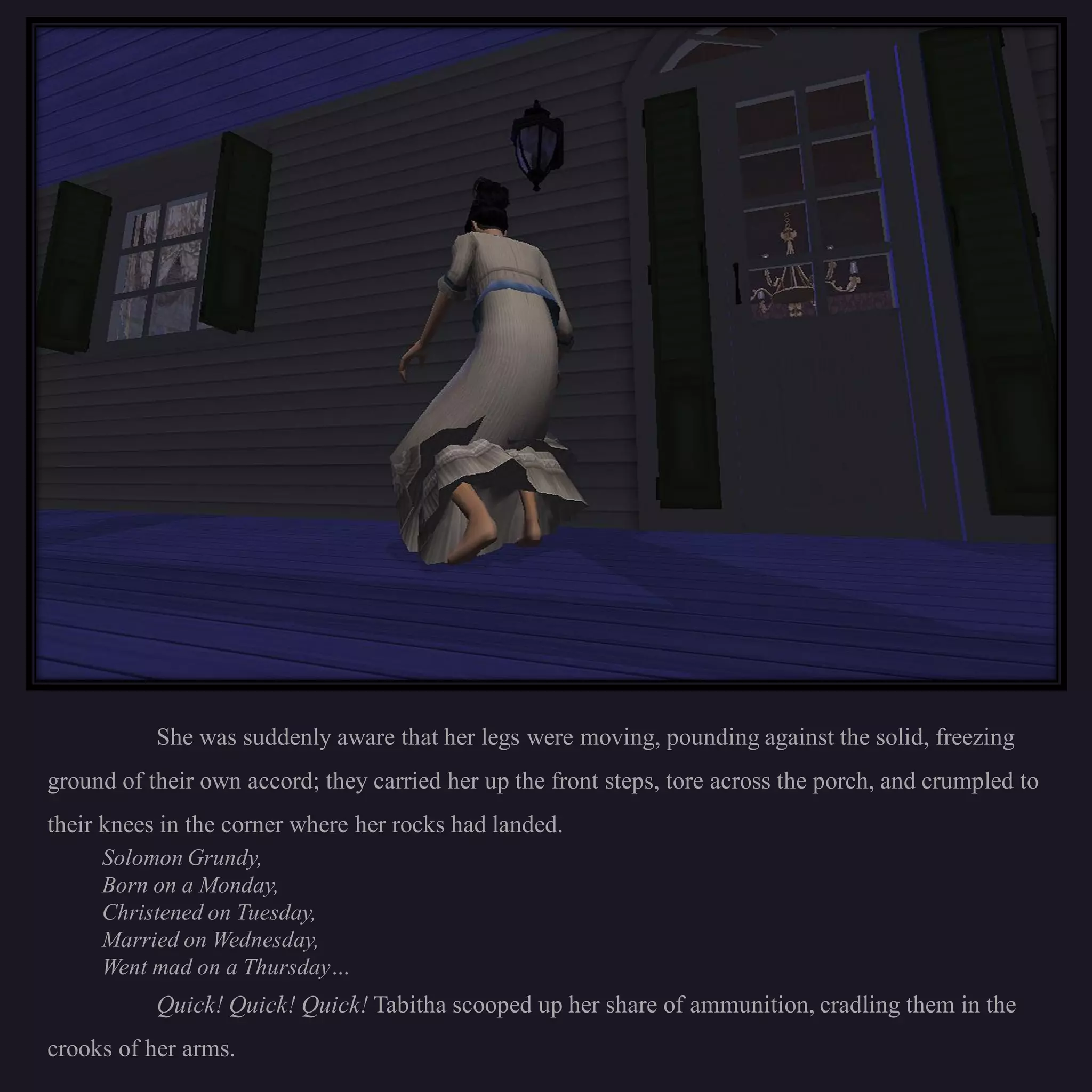
She was suddenly aware that her legs were moving, pounding against the solid, freezing
ground of their own accord; they carried her up the front steps, tore across the porch, and crumpled to
their knees in the corner where her rocks had landed.
     Solomon Grundy,
     Born on a Monday,
     Christened on Tuesday,
     Married on Wednesday,
     Went mad on a Thursday…
           Quick! Quick! Quick! Tabitha scooped up her share of ammunition, cradling them in the
crooks of her arms.
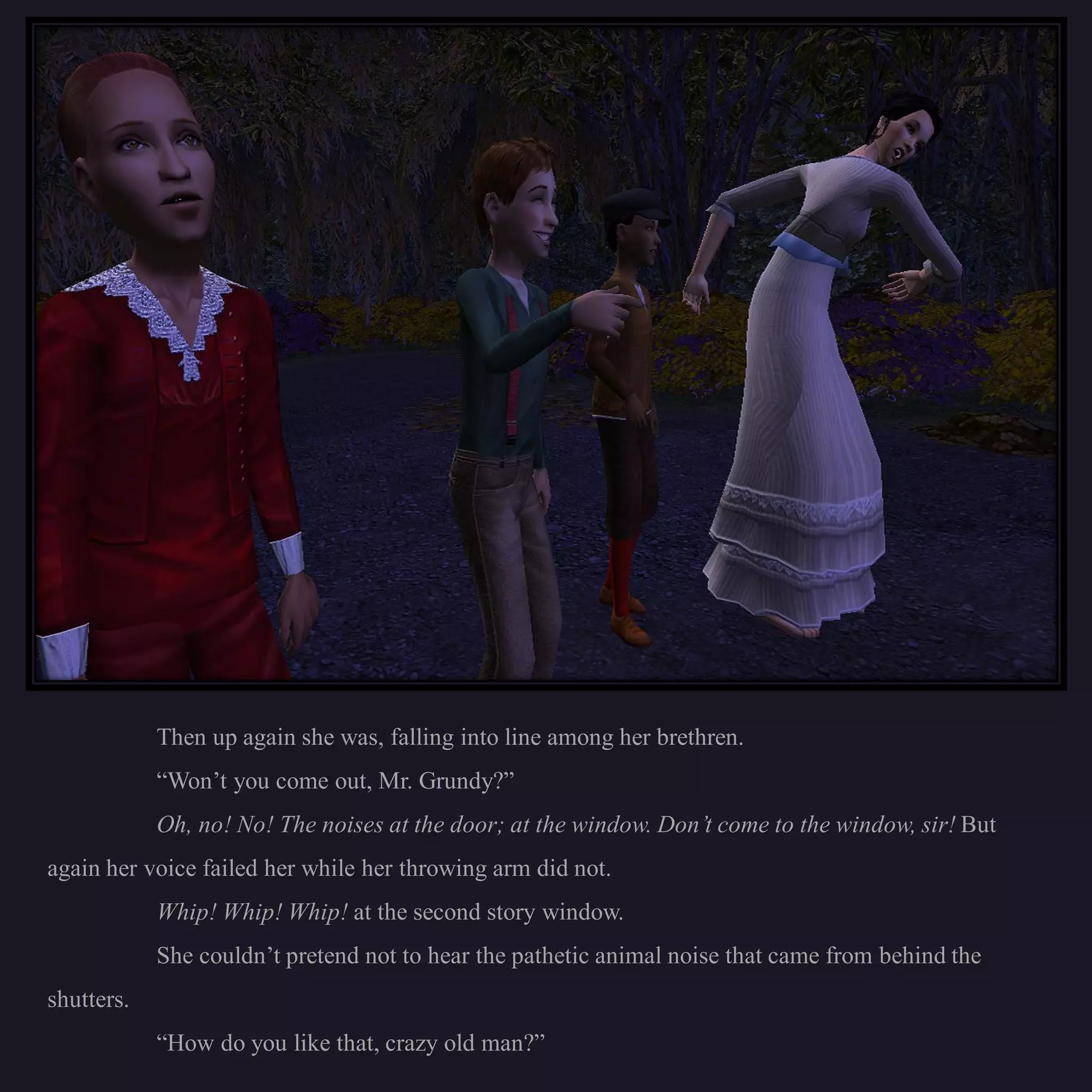
Then up again she was, falling into line among her brethren.
            “Won’t you come out, Mr. Grundy?”
            Oh, no! No! The noises at the door; at the window. Don’t come to the window, sir! But
again her voice failed her while her throwing arm did not.
            Whip! Whip! Whip! at the second story window.
            She couldn’t pretend not to hear the pathetic animal noise that came from behind the
shutters.
            “How do you like that, crazy old man?”
“Crazy old man! Crazy old man!”
           Whip!
           “You won’t cast your spell tonight, warlock,” hissed a voice, accompanied by the
loudest Whip! “Your evil won’t be done. The whole town’s on its way to make sure of it! Just try and
hide in your study. Your evil won’t be done!”
           “Do you hear us?”
           “It won’t be done! It won’t be done!”
     Warlock Grundy,
     Born on a Monday,
Cursed on Tuesday,
     Married on Wednesday…
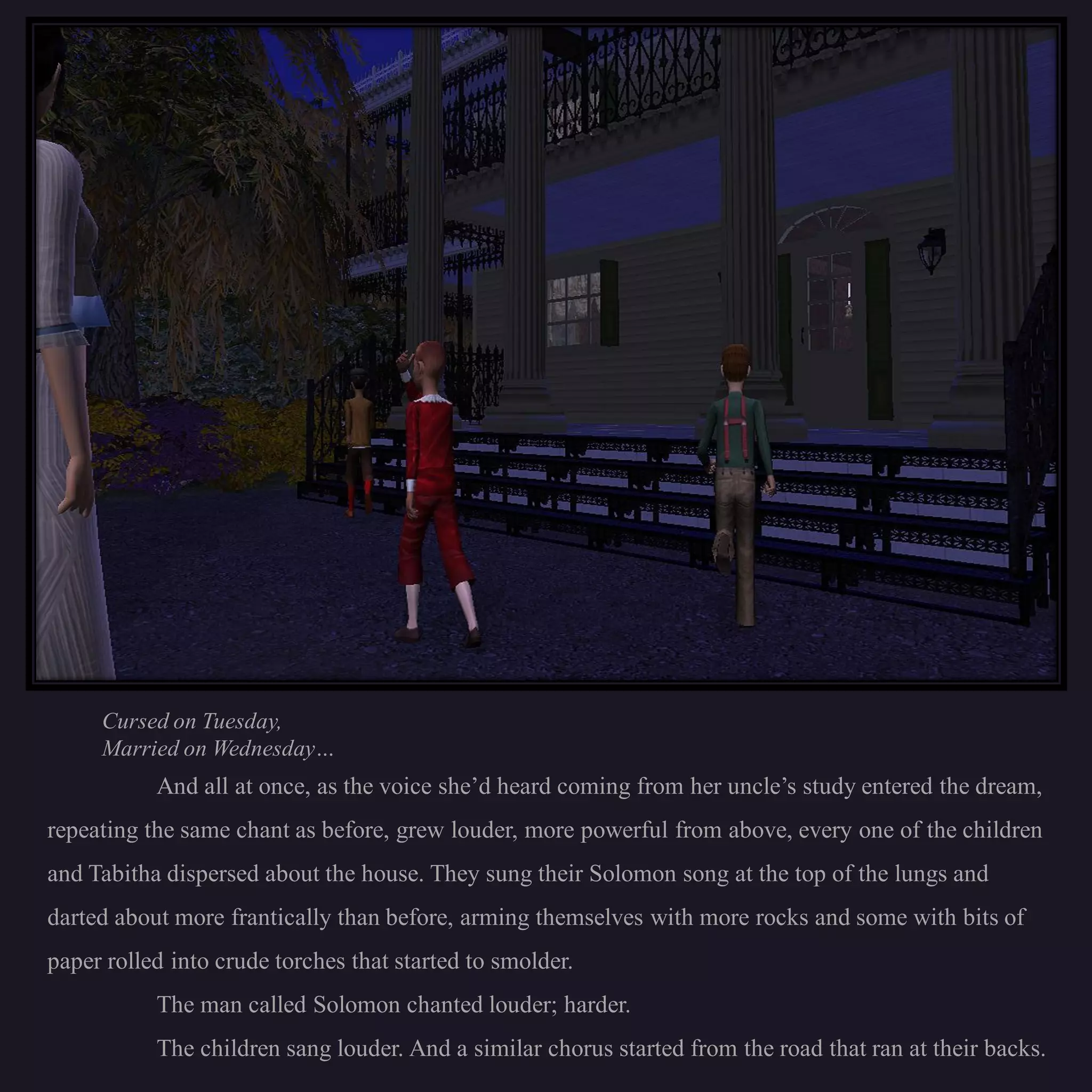
           And all at once, as the voice she’d heard coming from her uncle’s study entered the dream,
repeating the same chant as before, grew louder, more powerful from above, every one of the children
and Tabitha dispersed about the house. They sung their Solomon song at the top of the lungs and
darted about more frantically than before, arming themselves with more rocks and some with bits of
paper rolled into crude torches that started to smolder.
           The man called Solomon chanted louder; harder.
           The children sang louder. And a similar chorus started from the road that ran at their backs.
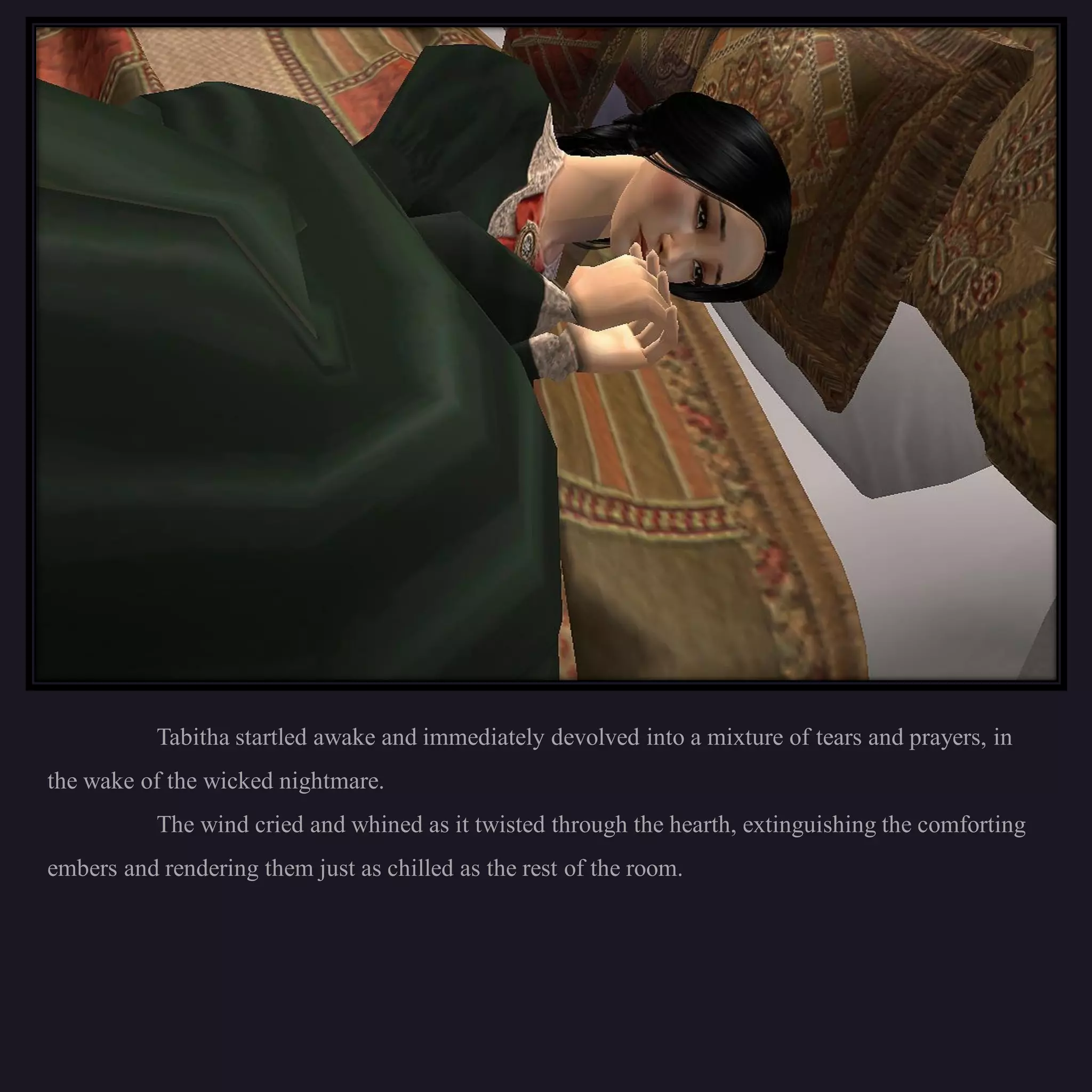
Tabitha startled awake and immediately devolved into a mixture of tears and prayers, in
the wake of the wicked nightmare.
           The wind cried and whined as it twisted through the hearth, extinguishing the comforting
embers and rendering them just as chilled as the rest of the room.
She cowered in the corner of her mattress, holding the warmth tighter to her body than
ever before, and tried to shake the cold spot from the spot below her left shoulder. She rolled farther
on one side, tucking her nose into the soft, cotton pillow, and listened to October rage.
           And she didn’t dare look behind her.


                                                   ___
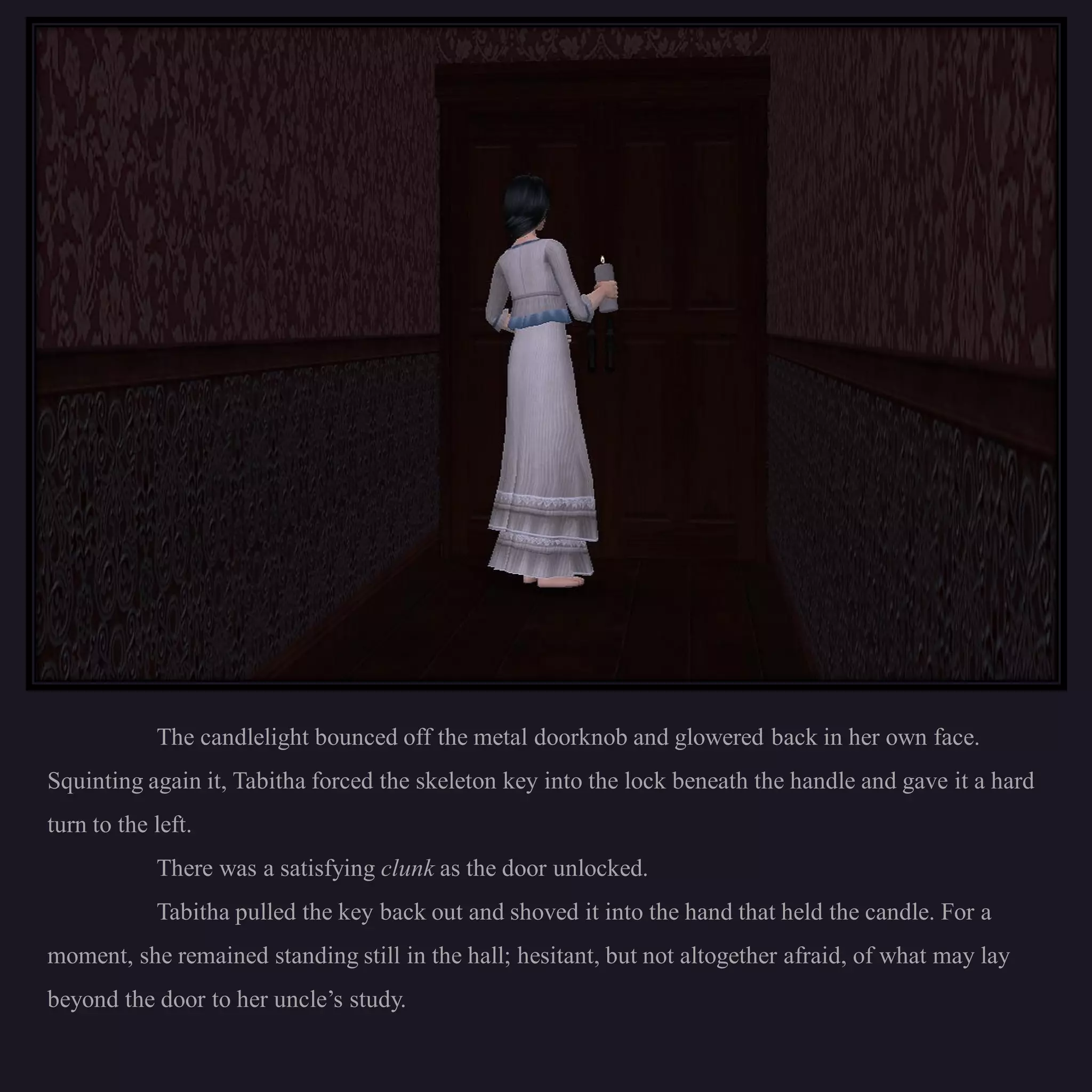
The candlelight bounced off the metal doorknob and glowered back in her own face.
Squinting again it, Tabitha forced the skeleton key into the lock beneath the handle and gave it a hard
turn to the left.
            There was a satisfying clunk as the door unlocked.
            Tabitha pulled the key back out and shoved it into the hand that held the candle. For a
moment, she remained standing still in the hall; hesitant, but not altogether afraid, of what may lay
beyond the door to her uncle’s study.
Something rustled at the end of the hall.
          Fearing it was Henriette coming to check up on her – or that perhaps Julien had already
chomped his way through the apple pie Tabitha had spent all morning and afternoon making in
exchange for him swiping the study key – Tabitha inhaled deeply and slipped into the room.
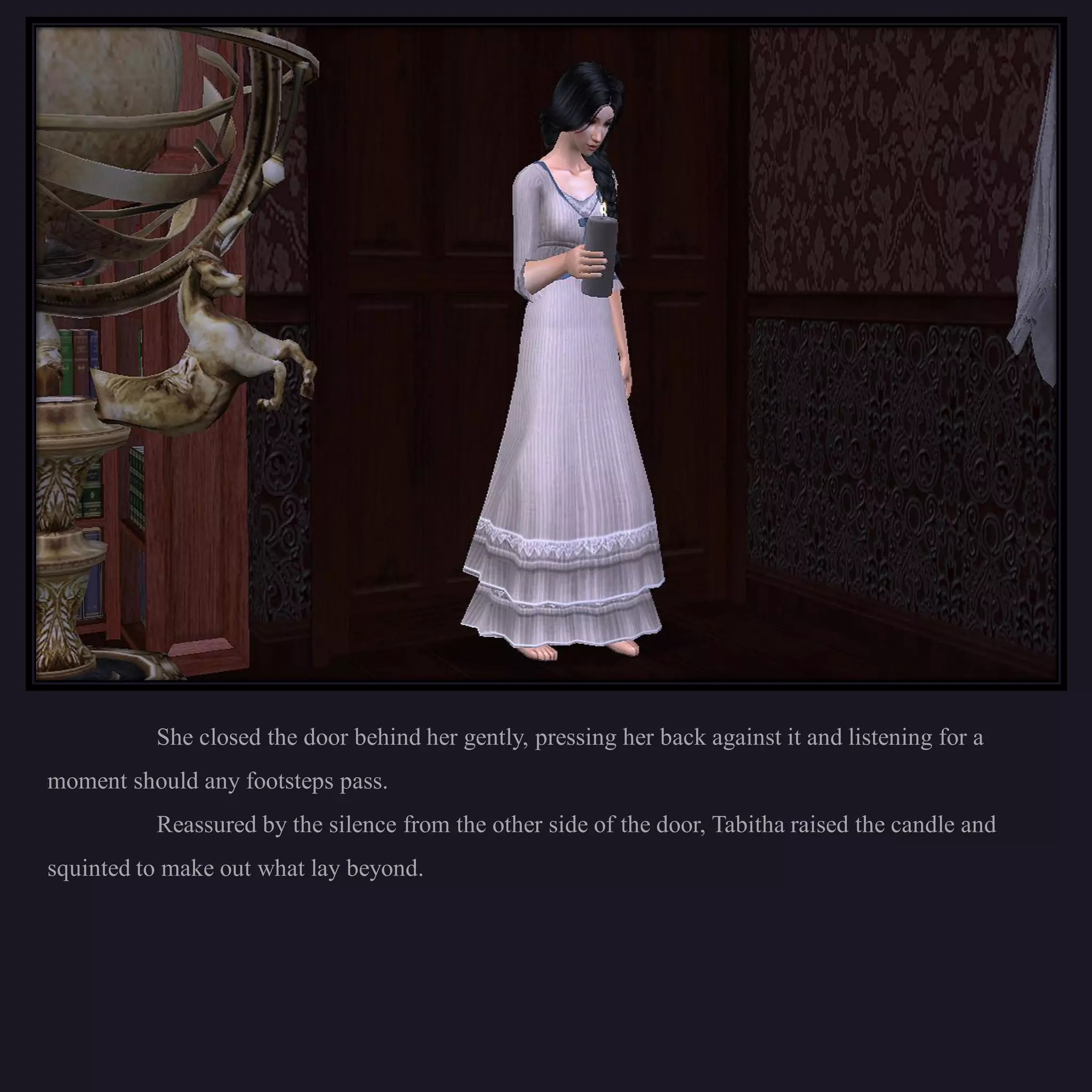
She closed the door behind her gently, pressing her back against it and listening for a
moment should any footsteps pass.
          Reassured by the silence from the other side of the door, Tabitha raised the candle and
squinted to make out what lay beyond.
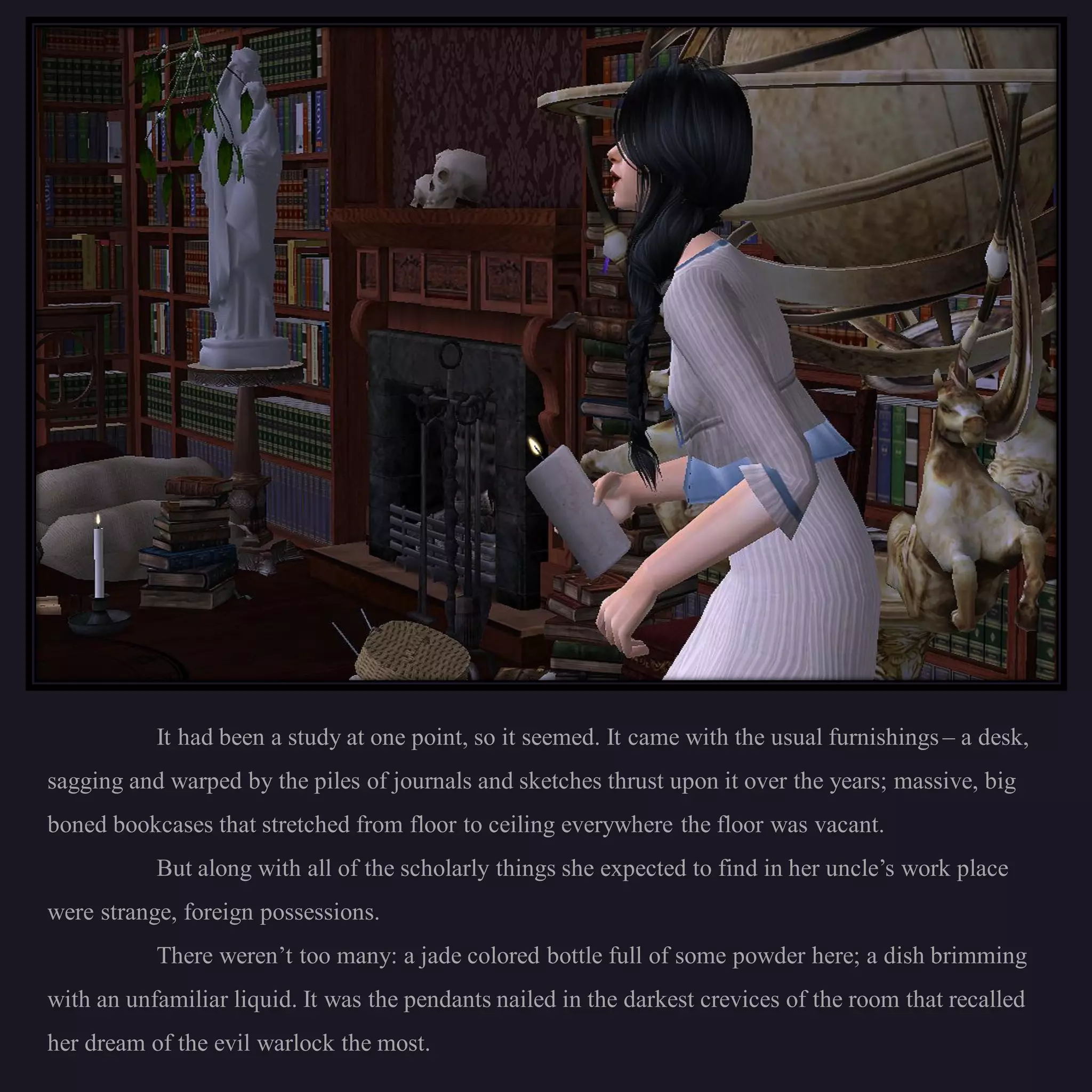
It had been a study at one point, so it seemed. It came with the usual furnishings – a desk,
sagging and warped by the piles of journals and sketches thrust upon it over the years; massive, big
boned bookcases that stretched from floor to ceiling everywhere the floor was vacant.
           But along with all of the scholarly things she expected to find in her uncle’s work place
were strange, foreign possessions.
           There weren’t too many: a jade colored bottle full of some powder here; a dish brimming
with an unfamiliar liquid. It was the pendants nailed in the darkest crevices of the room that recalled
her dream of the evil warlock the most.
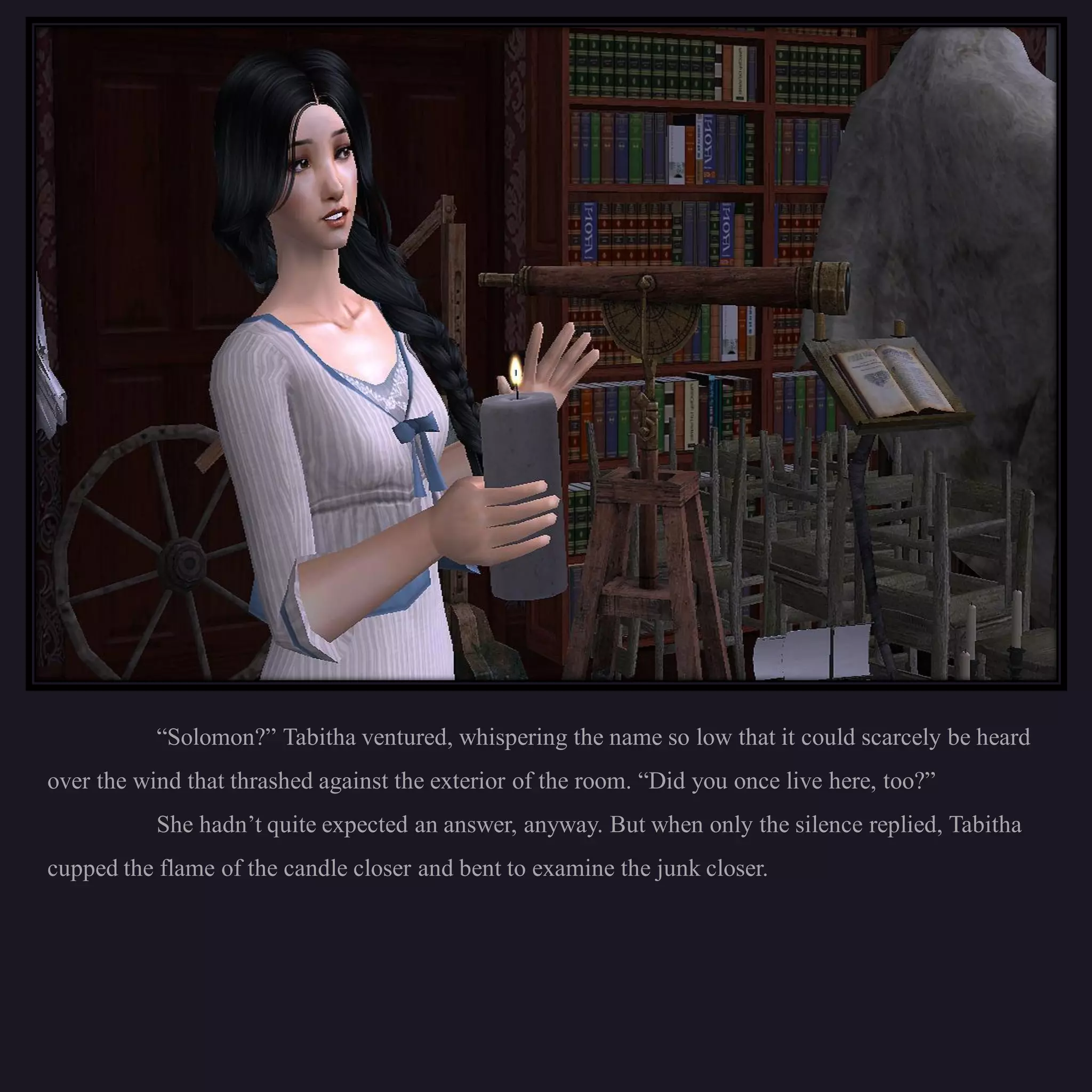
“Solomon?” Tabitha ventured, whispering the name so low that it could scarcely be heard
over the wind that thrashed against the exterior of the room. “Did you once live here, too?”
           She hadn’t quite expected an answer, anyway. But when only the silence replied, Tabitha
cupped the flame of the candle closer and bent to examine the junk closer.
Piles upon piles of books, cloths, bits of pieces of toys, and other cluttered trinkets
crowded the tiny room. Her uncle had simply piled everything he possibly could against the walls,
balancing candelabra on night stand on cradle on trunk until all of his things spilled out into the center
of the room as if stretching its fingers desperately toward anyone passing through.
           Surely the place looked messy. But it didn’t look like anyone had fallen; or any furniture
had crushed a squatter.
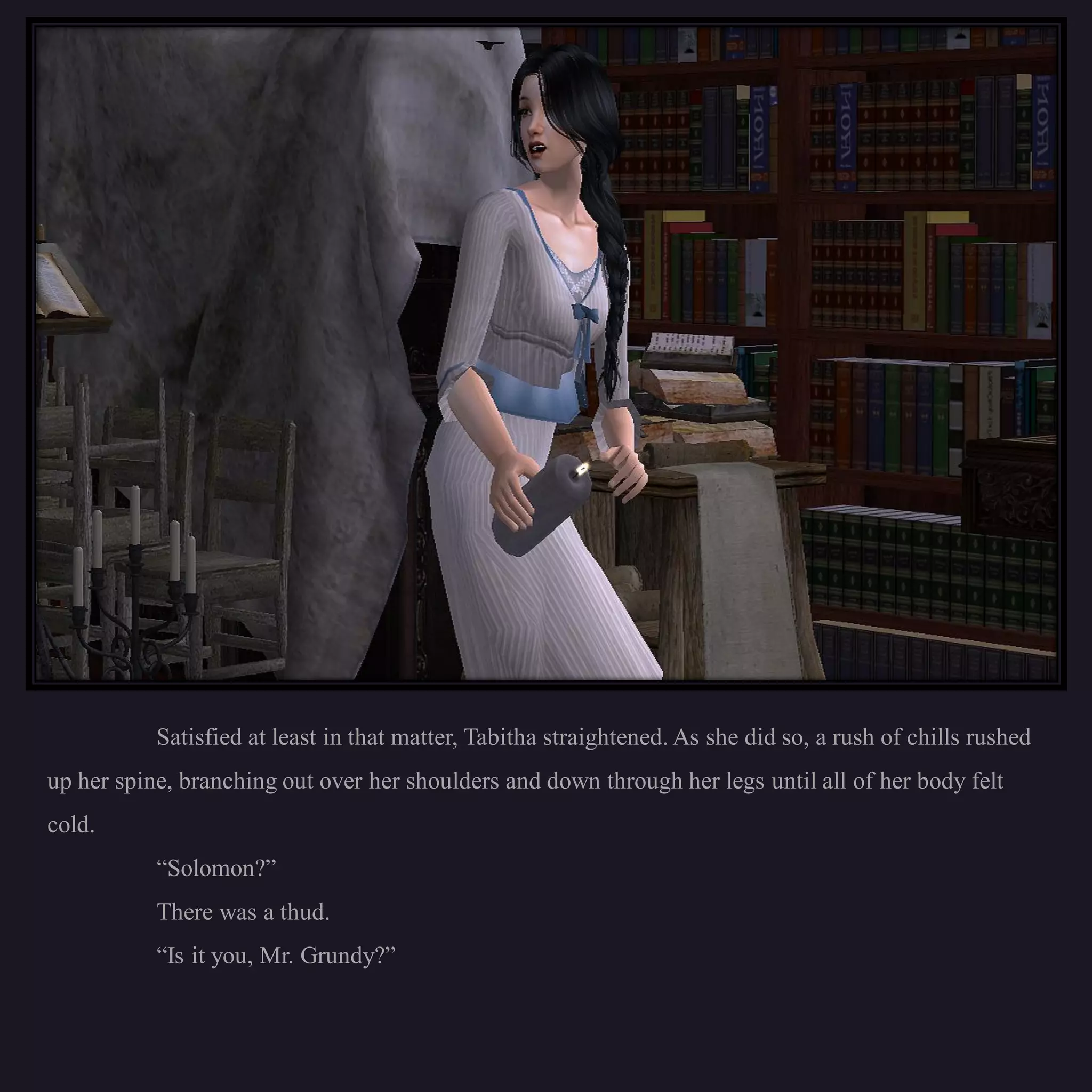
Satisfied at least in that matter, Tabitha straightened. As she did so, a rush of chills rushed
up her spine, branching out over her shoulders and down through her legs until all of her body felt
cold.
           “Solomon?”
           There was a thud.
           “Is it you, Mr. Grundy?”
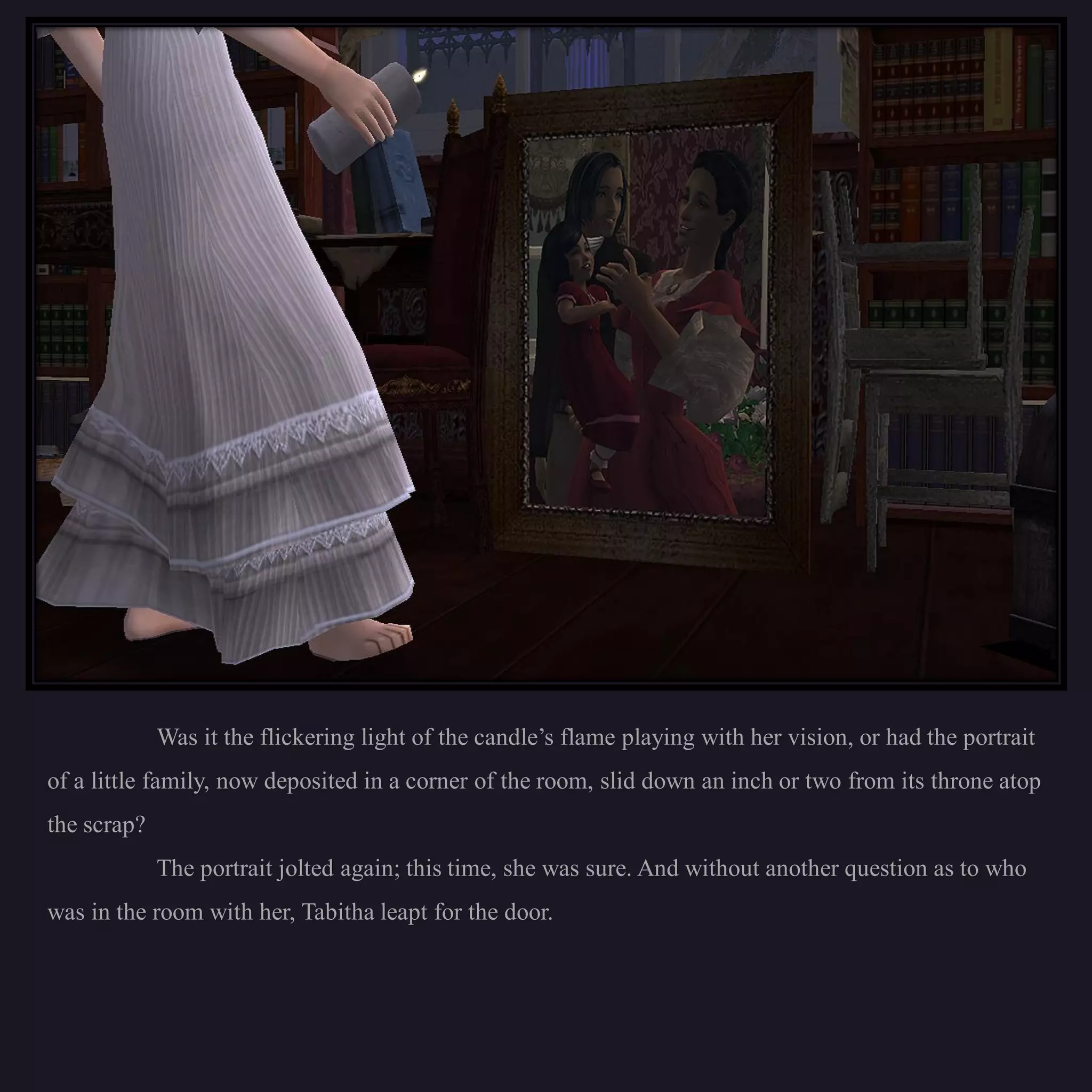
Was it the flickering light of the candle’s flame playing with her vision, or had the portrait
of a little family, now deposited in a corner of the room, slid down an inch or two from its throne atop
the scrap?
             The portrait jolted again; this time, she was sure. And without another question as to who
was in the room with her, Tabitha leapt for the door.
But before she reached it, her candle was snuffed out by some unseen breath or finger.
“Leave me be,” she whispered, frightened.
She dropped her darkened candle to the floor, clinging only to the skeleton key, and leapt
for the door. Feeling the rough wood under her bare hands, she found its edge and traced it to the
handle.
           Paranoid she’d find it locked, Tabitha gave it a good hard turn and spilled out into the
doorway.


                                                  ___
Not again! She wanted to cry out in prayer as her eyes focused on the peculiarly accurate
image of the manor’s grounds. But as she tried, she realized she was looking down upon the grounds,
rather than out over them. Furthermore, she did so through the thick glass labs of a window pane.
      Solomon Grundy,
      Born on a Monday,
      Christened on Tuesday,
      Married on Wednesday…
            That song; that song! How she hated those wretched lyrics and how the loathing of their
sound started in her chest, a little ember, and festered until it burnt like a regular fire!
            “Poor Solomon Grundy!”
            Whip!
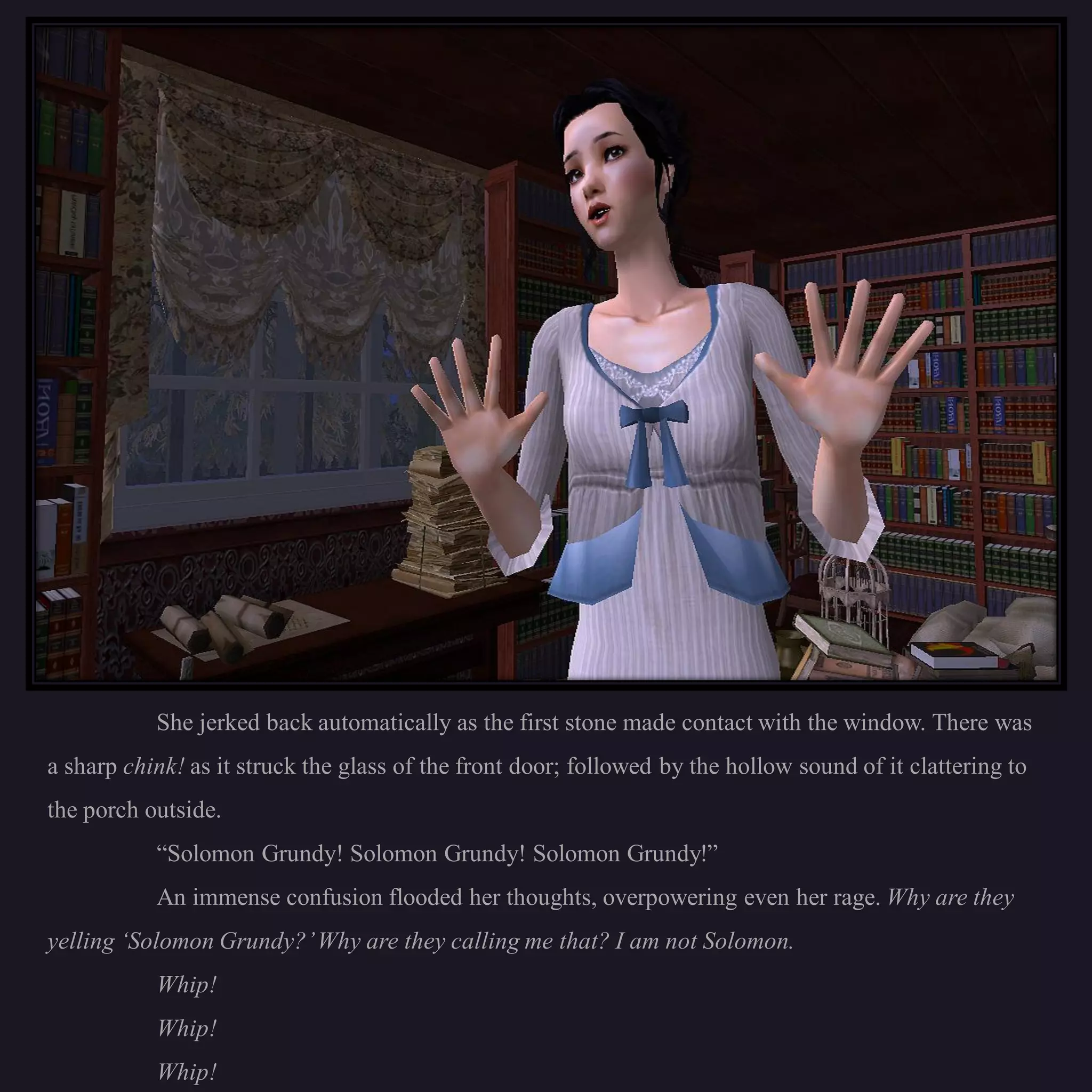
She jerked back automatically as the first stone made contact with the window. There was
a sharp chink! as it struck the glass of the front door; followed by the hollow sound of it clattering to
the porch outside.
           “Solomon Grundy! Solomon Grundy! Solomon Grundy!”
           An immense confusion flooded her thoughts, overpowering even her rage. Why are they
yelling ‘Solomon Grundy?’ Why are they calling me that? I am not Solomon.
           Whip!
           Whip!
           Whip!
Across the frozen grounds and up the stairs came the little devils, their faces twisted into
ugly sneers and glares as they descended upon the manor to retrieve their weapons.
      Solomon Grundy,
      Born on a Monday,
      Christened on Tuesday,
      Married on Wednesday,
      Went mad on a Thursday… they sang incessantly, prompting one another to hurry, quick!
            They’ve spotted me!
            “Won’t you come out, Mr. Grundy?”
            There came another flying pebble. It struck the glass with its own chink! and drop! It had
hit her – or at least, it would have.
The anger; the hatred.
           All at once, Tabitha was storming up the grand staircase, taking two steps in stride at a
time and embracing the tight burning that filled her chest, encouraging it to fuel her wrath. Before
long, it had accomplished exactly that.
           She exited onto the balcony, leaning out over the rail. Leave my land! She wanted to
scream; to order. Leave me to my business and may no one else be touched by this so-called devil’s
work. Don’t you understand? She wanted to know.
Whip! Whip! Whip! Came the pebbles, finding the side of her face without trouble this
time, as if to say No; no one understands your madness. Why don’t you crawl into the recesses of that
study of yours and leave the rest of us be?
           “How do you like that, crazy old man?”
           “Crazy old man! Crazy old man!”
           Whip!
           “You won’t cast your spell tonight, warlock,” hissed a voice, accompanied by the
loudest Whip! “Your evil won’t be done. The whole town’s on its way to make sure of it! Just try and
hide in your study. Your evil won’t be done!”
“Do you hear us?”
          “It won’t be done! It won’t be done!”
     Warlock Grundy,
     Born on a Monday,
     Cursed on Tuesday,
     Married on Wednesday…
          “Oh, no?” she snarled, the intense, all-consuming violence returning stronger than she
remembered it.
          Before she realized it was her own lips that were moving, strange and foreign words were
spilling down onto the boys. Some sort of incantation? A chant?
The real Tabitha, lying in the hand-carved bed inside one of her uncle’s rooms, twisted and
turned beneath her blankets, trying to call out for the malevolent dream to free her from speaking such
unknown commands.
           But the singing…!
           The children dispersed about the house and Tabitha was drawn right back to the dream.
The song rang up from the grounds below louder and more mocking than before.
           And is that a second chorus starting from the main road?
           Without knowing herself where she was going, she was moving: out of the most forefront
of rooms; through the hall; down the stairs.
When she rounded the corner, all that remained was the doorway to her little study – so far
down the passage.
           Before she knew it, she’d made it inside.
           She threw the door closed behind her and locked it fast.
           There! The portrait!
           Tabitha grabbed the painting of a middle-aged couple and their infant child up off the wall.
Something stirred inside of her – a familiarity; a pitying; grief and loss.
           And why does it feel when I look into these man’s eyes as if I’m looking in a mirror?
A strange mixture of Tabitha and whoever she was to play in the dream tonight, she carried
the awkward portrait to the wall opposite the door. She set it up against the wall and grabbed shaking
handfuls of powerful bottles, powders, and scraps of scribbled upon paper from all around the room.
           “Not to worry, Henriette,” she found herself whispering. “They will not stop me from
bringing you back. Try as they might to deter me, to delay: I will cast my spell at midnight and we
will all be reunited.”
           She fumbled with her armful of things, setting to the side all but one.
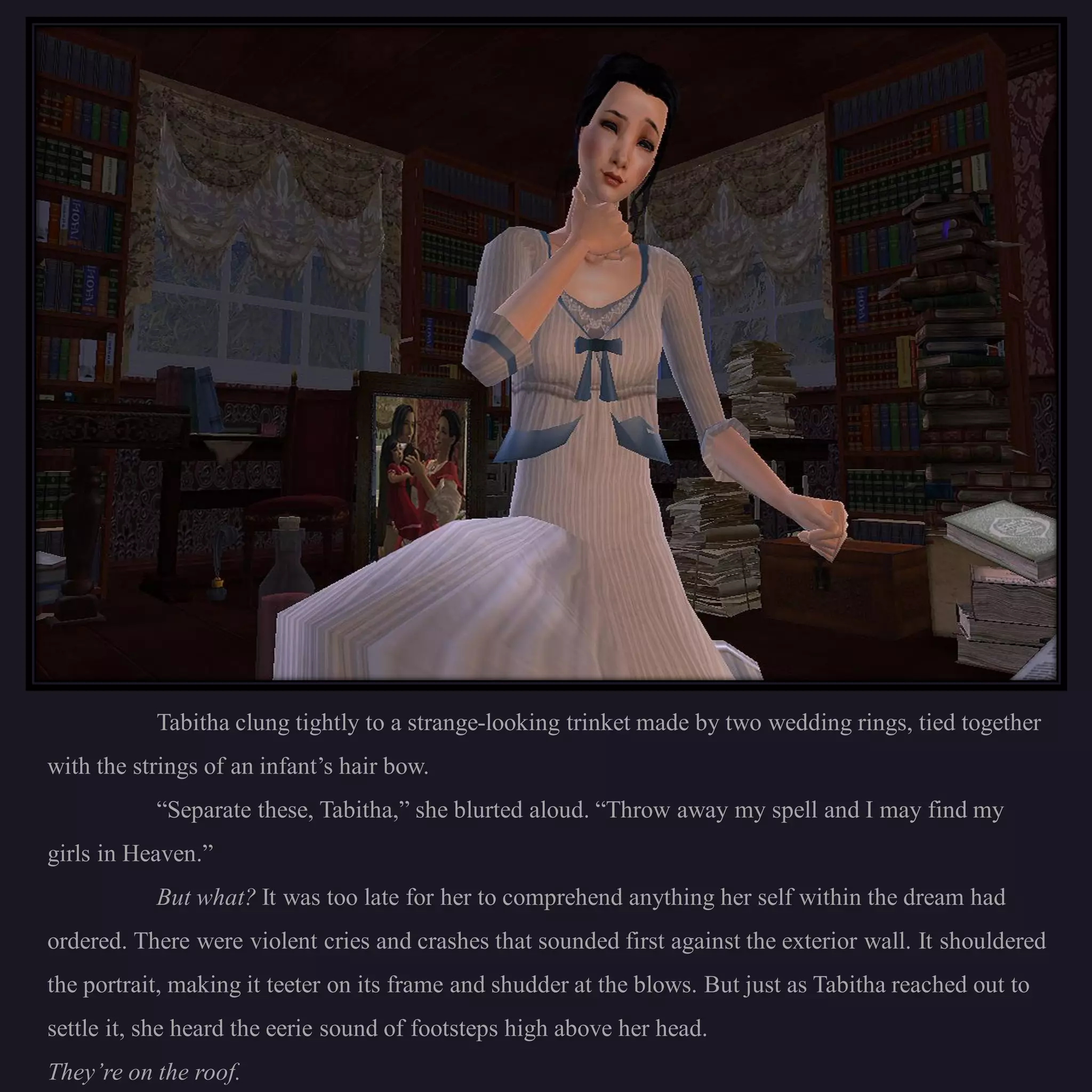
Tabitha clung tightly to a strange-looking trinket made by two wedding rings, tied together
with the strings of an infant’s hair bow.
           “Separate these, Tabitha,” she blurted aloud. “Throw away my spell and I may find my
girls in Heaven.”
           But what? It was too late for her to comprehend anything her self within the dream had
ordered. There were violent cries and crashes that sounded first against the exterior wall. It shouldered
the portrait, making it teeter on its frame and shudder at the blows. But just as Tabitha reached out to
settle it, she heard the eerie sound of footsteps high above her head.
They’re on the roof.
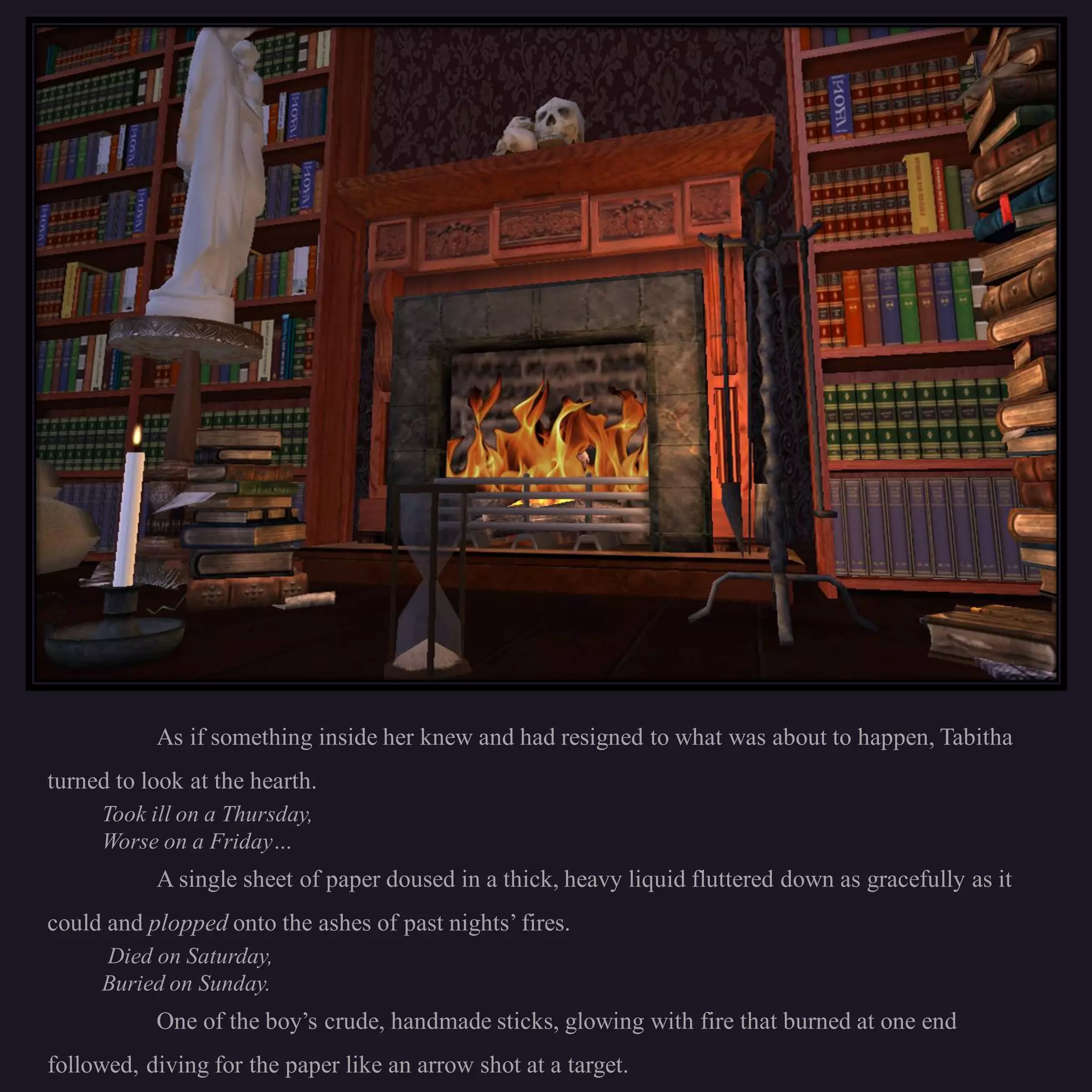
As if something inside her knew and had resigned to what was about to happen, Tabitha
turned to look at the hearth.
     Took ill on a Thursday,
     Worse on a Friday…
           A single sheet of paper doused in a thick, heavy liquid fluttered down as gracefully as it
could and plopped onto the ashes of past nights’ fires.
     Died on Saturday,
     Buried on Sunday.
           One of the boy’s crude, handmade sticks, glowing with fire that burned at one end
followed, diving for the paper like an arrow shot at a target.
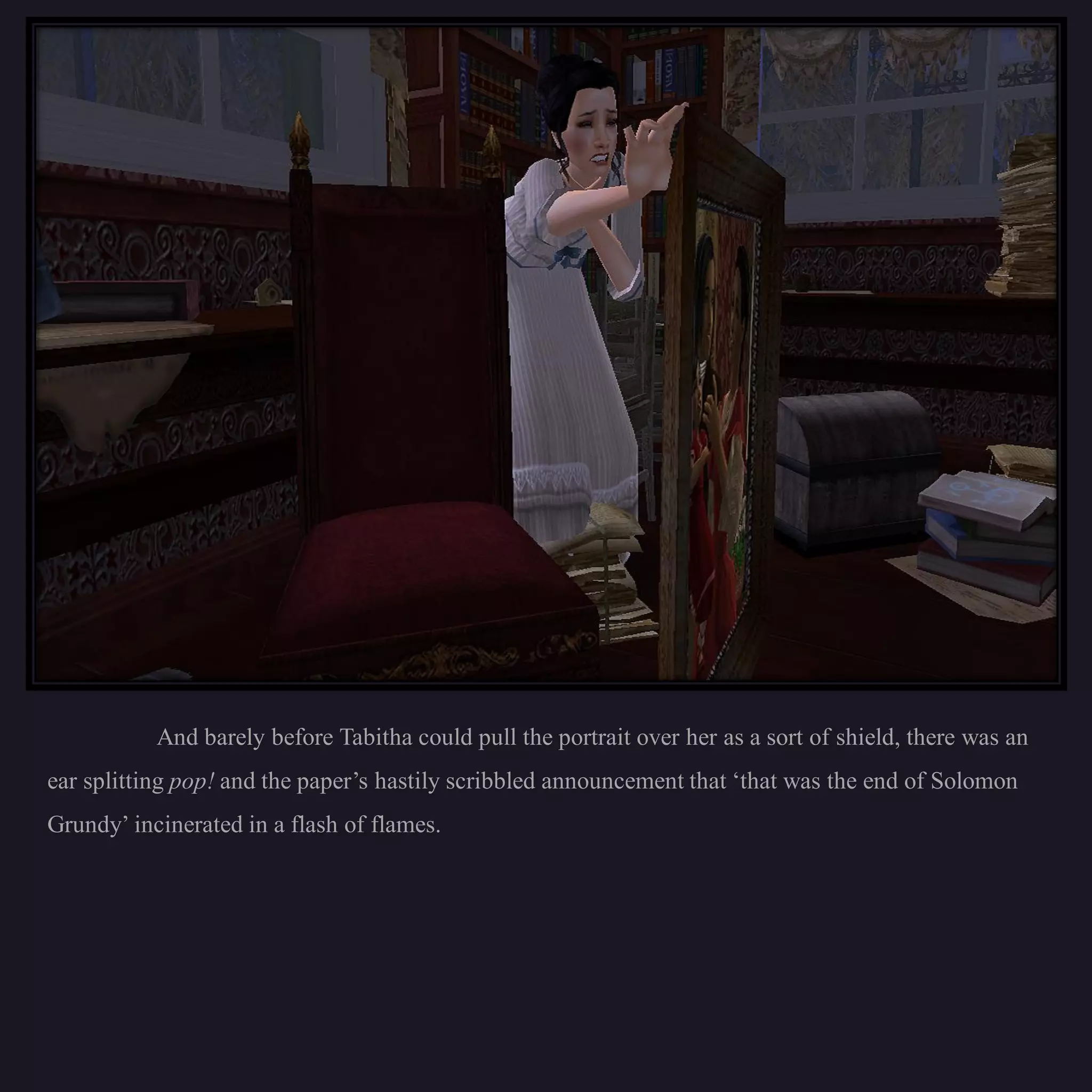
And barely before Tabitha could pull the portrait over her as a sort of shield, there was an
ear splitting pop! and the paper’s hastily scribbled announcement that ‘that was the end of Solomon
Grundy’ incinerated in a flash of flames.
“Help!” Tabitha cried as she awoke, jolting into a sitting position.
Thinking it only a nightmare, Tabitha relaxed her back against the headboard; the rapid
beating of her heart slowed. But the cold touch burned at the spot below her left shoulder. And from
the corner of her eye, a familiar skirt disappeared through her open bedroom door.
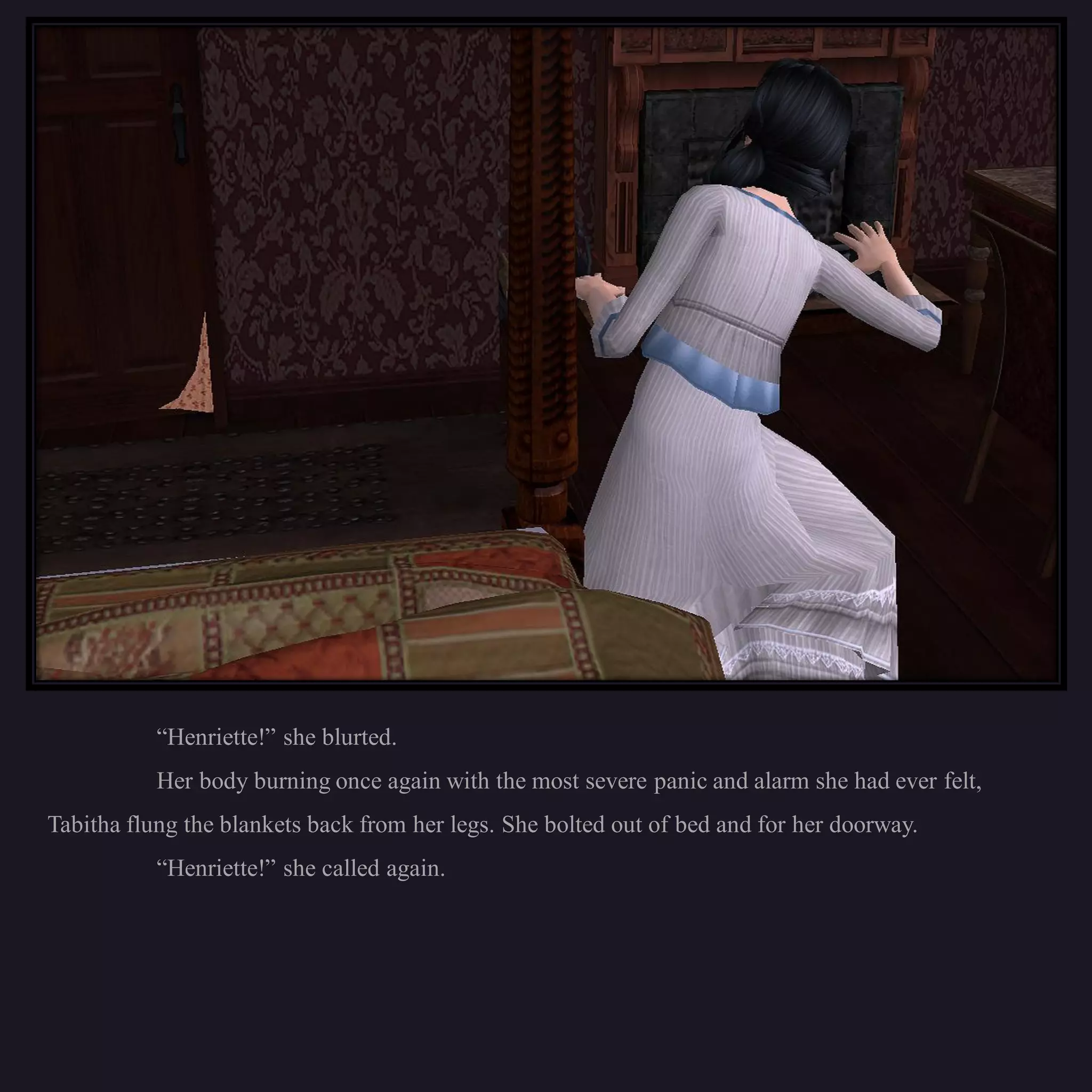
“Henriette!” she blurted.
           Her body burning once again with the most severe panic and alarm she had ever felt,
Tabitha flung the blankets back from her legs. She bolted out of bed and for her doorway.
           “Henriette!” she called again.
Whether she continued out of flight or boldness, she did not know. And yet she barreled
down the hall in her bare feet and nightgown after the fading figure of Henriette.
           Clutching at the skirt of her nightgown with one hand and at her heart with the other,
Tabitha rounded the corner to the main hallway.
           “Henriette,” she breathed, slowing to a walk. She approached the maid, who stood facing
the study’s door, with the slowest of steps her quivering muscles could manage. “Please, tell me what
is happening. Why have you visited by bedroom in the night so?”
Still approaching slowly, Tabitha awaited a response.
            Without acknowledging the girl’s presence, Henriette revealed her right hand; it was
wrapped closely around a skeleton key, familiar to Tabitha.
            “What are you doing?”
            Henriette stuck the key into the lock beneath the door’s knob and gave the handle a hard
turn to the left.
            “Henriette! Don’t you hear me? We must go back to bed. This is no time to go in there,”
Tabitha pleaded, her voice growing more panicked by the moment. “Do you know what kind of evil
happened in there? We should hardly be in the same house as that – that dungeon, even!”
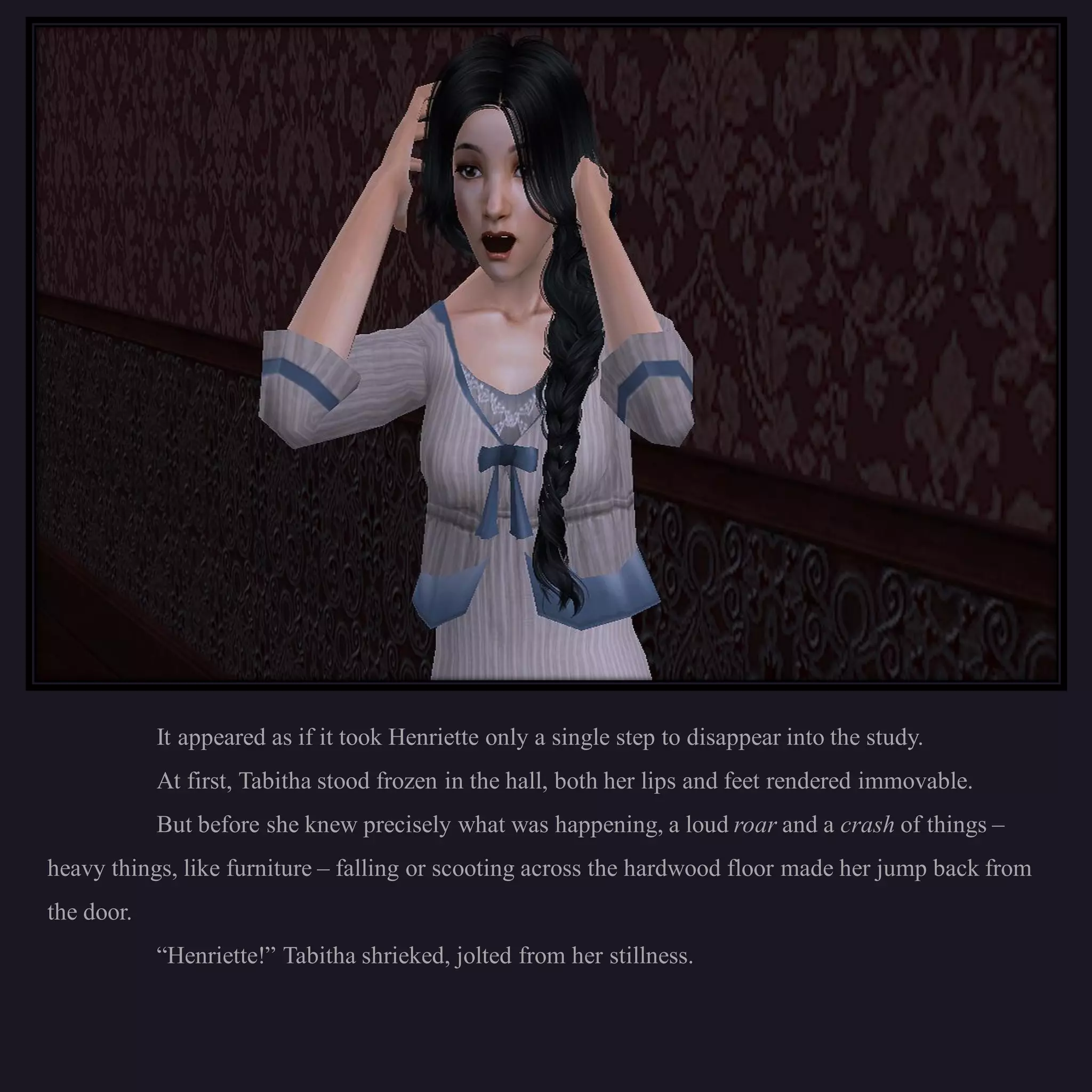
It appeared as if it took Henriette only a single step to disappear into the study.
            At first, Tabitha stood frozen in the hall, both her lips and feet rendered immovable.
            But before she knew precisely what was happening, a loud roar and a crash of things –
heavy things, like furniture – falling or scooting across the hardwood floor made her jump back from
the door.
            “Henriette!” Tabitha shrieked, jolted from her stillness.
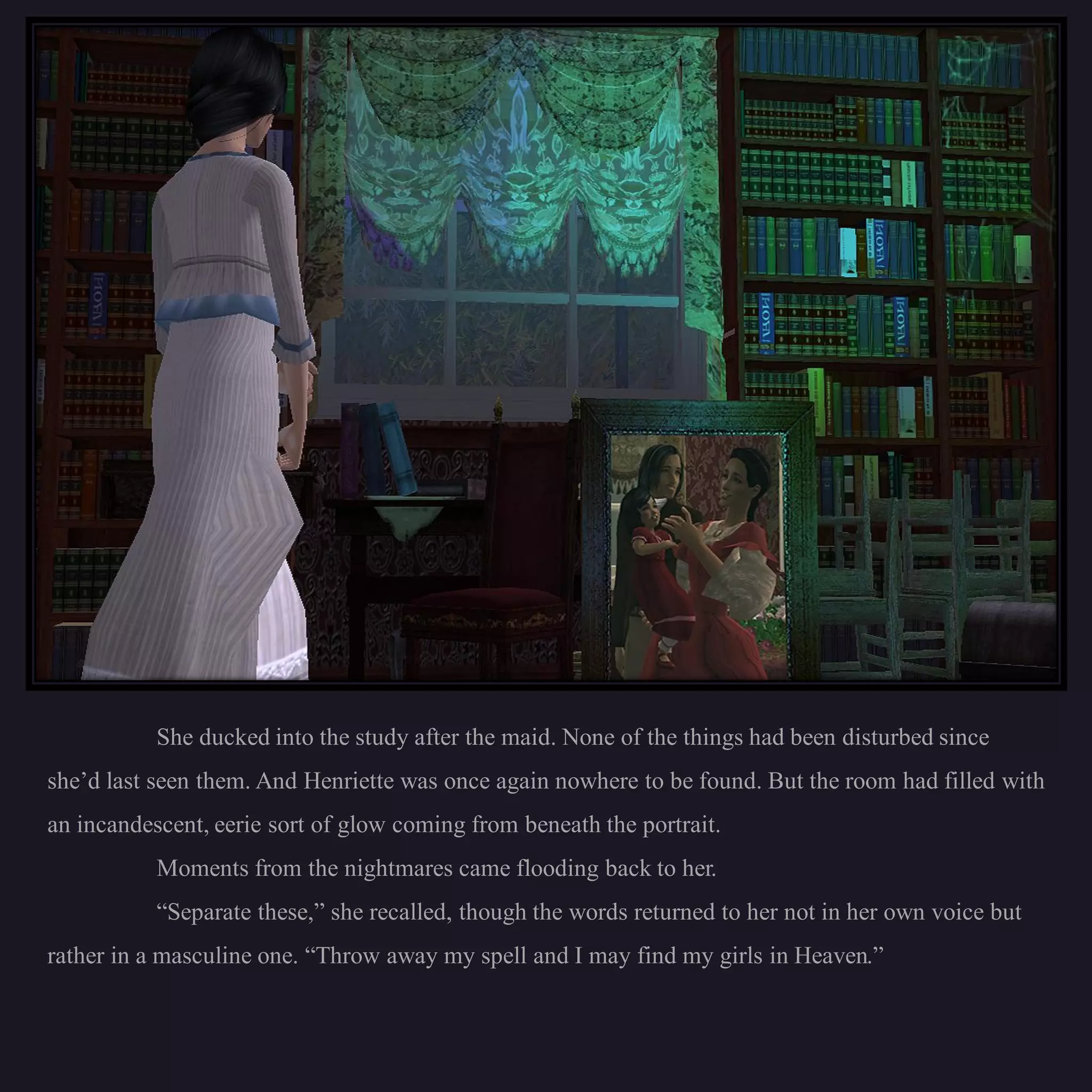
She ducked into the study after the maid. None of the things had been disturbed since
she’d last seen them. And Henriette was once again nowhere to be found. But the room had filled with
an incandescent, eerie sort of glow coming from beneath the portrait.
           Moments from the nightmares came flooding back to her.
           “Separate these,” she recalled, though the words returned to her not in her own voice but
rather in a masculine one. “Throw away my spell and I may find my girls in Heaven.”
In the strange lighting, without any candle, Tabitha began to dig. She pried the portrait up
and flung it against the far wall. Beneath that were layers of cloth and books and discarded journal
pages. One by one, Tabitha threw them aside.
           She spotted something crumpled beneath the rest of the debris. It was sleek and thin; the
whiteness of it seemed to glow in the darkness.
They were bones. And looped around them was an odd little trinket, made by two wedding
rings bound by the strings of an infant’s hair bow.
           Tabitha shuddered and untangled it from the mess.
           The knot broke easily.
           The room was flooded with cold air – as if snow was suddenly showering down upon her.


                                                  ___
The morning light broke in through the window and stirred her from her heavy, peaceful
sleep. Slowly, she sat up, her dark hair spilling over her eyes.
           She thought of the spot just beneath her left shoulder and was surprised to find no chill
spreading there.
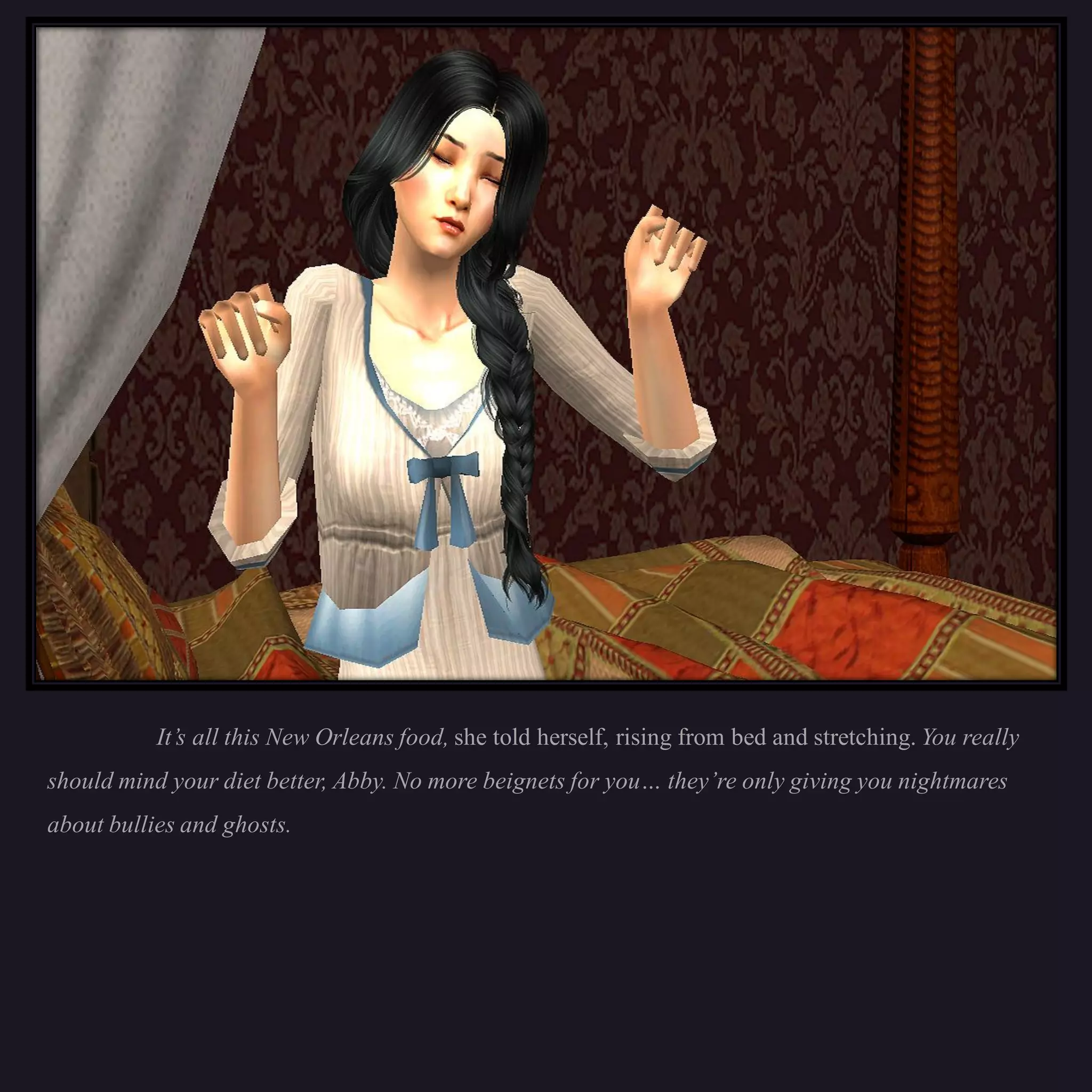
It’s all this New Orleans food, she told herself, rising from bed and stretching. You really
should mind your diet better, Abby. No more beignets for you… they’re only giving you nightmares
about bullies and ghosts.
Resolved to avoid them better in the future, Tabitha went to the dresser and turned her
thoughts to finding an appropriately festive dress for the first of November. But she stopped shot
when she spotted what lay on top of the piece of furniture.
           Two wedding rings and the ribbon of an infant’s hair bow rested there in a line.
Inhaling sharply, Tabitha tentatively gathered them into her hands. When nothing
went bump around her and no chills ran up her spine, she gripped her fist around the trinket and threw
on a dress. Then she leapt from the spot where her feet had frozen to the floor and dashed for her
bedroom door.
“Henriette! Henriette!” she called, flying past the rooms.
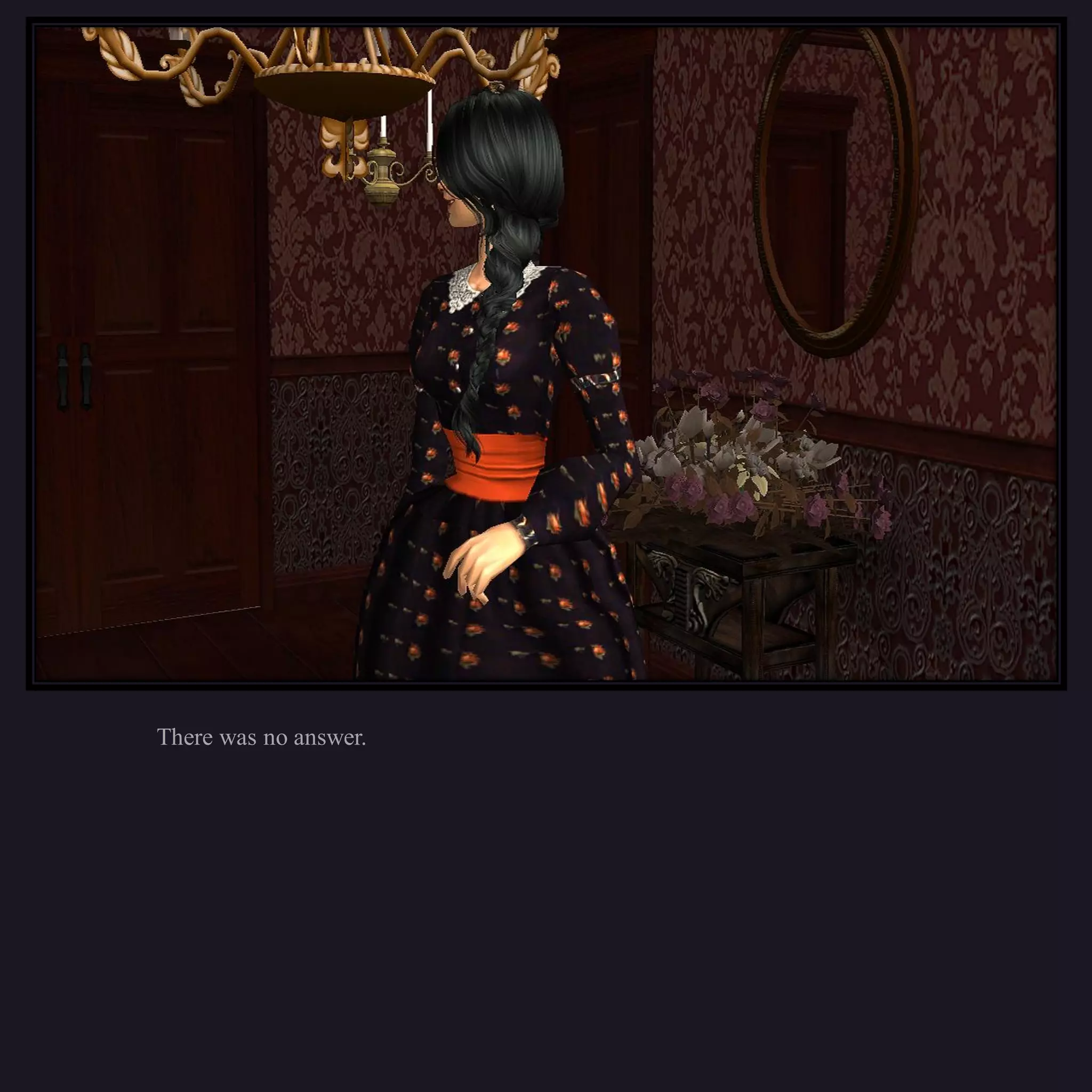
There was no answer.
“You! You, there! Come here!” she hollered, peering through the front window.
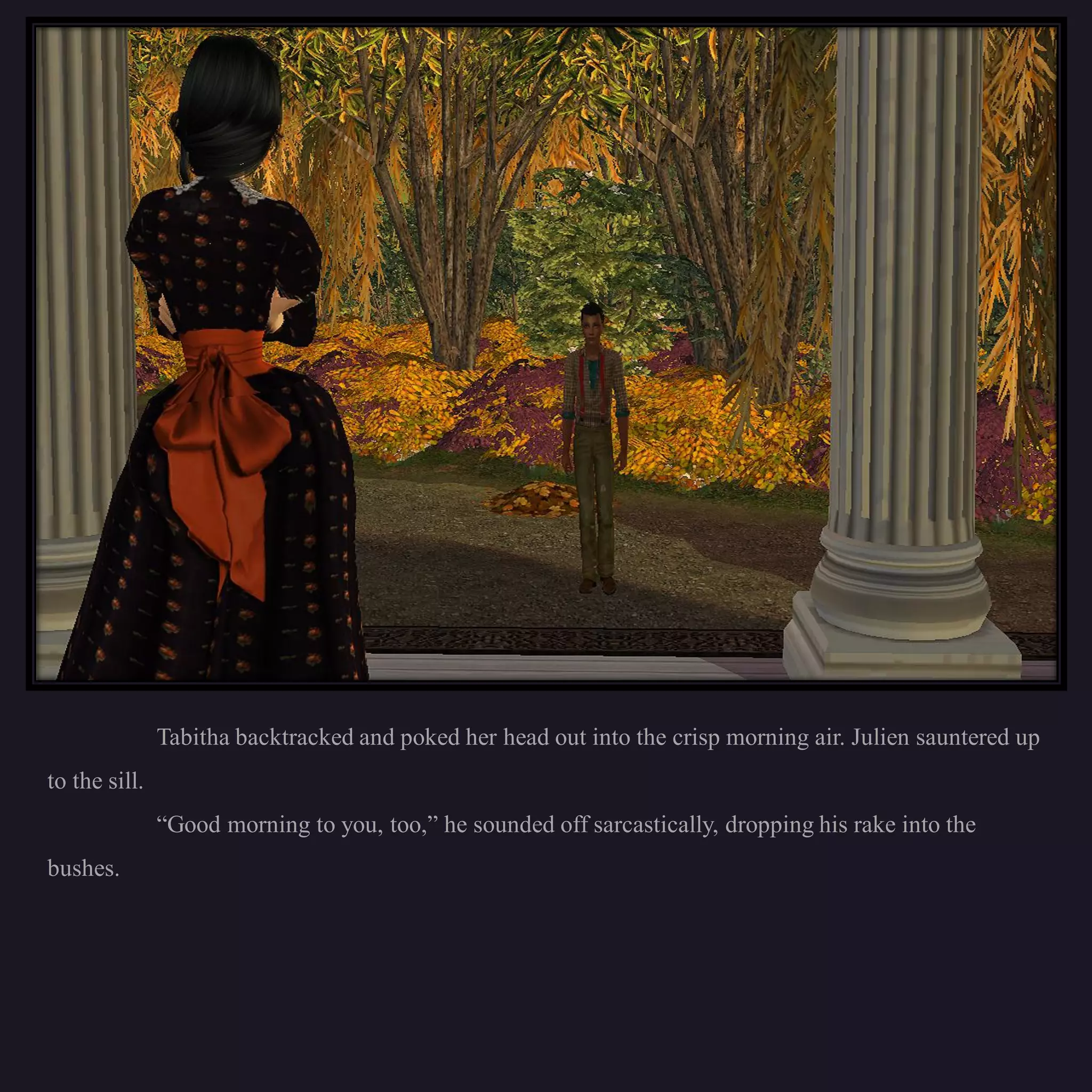
Tabitha backtracked and poked her head out into the crisp morning air. Julien sauntered up
to the sill.
               “Good morning to you, too,” he sounded off sarcastically, dropping his rake into the
bushes.
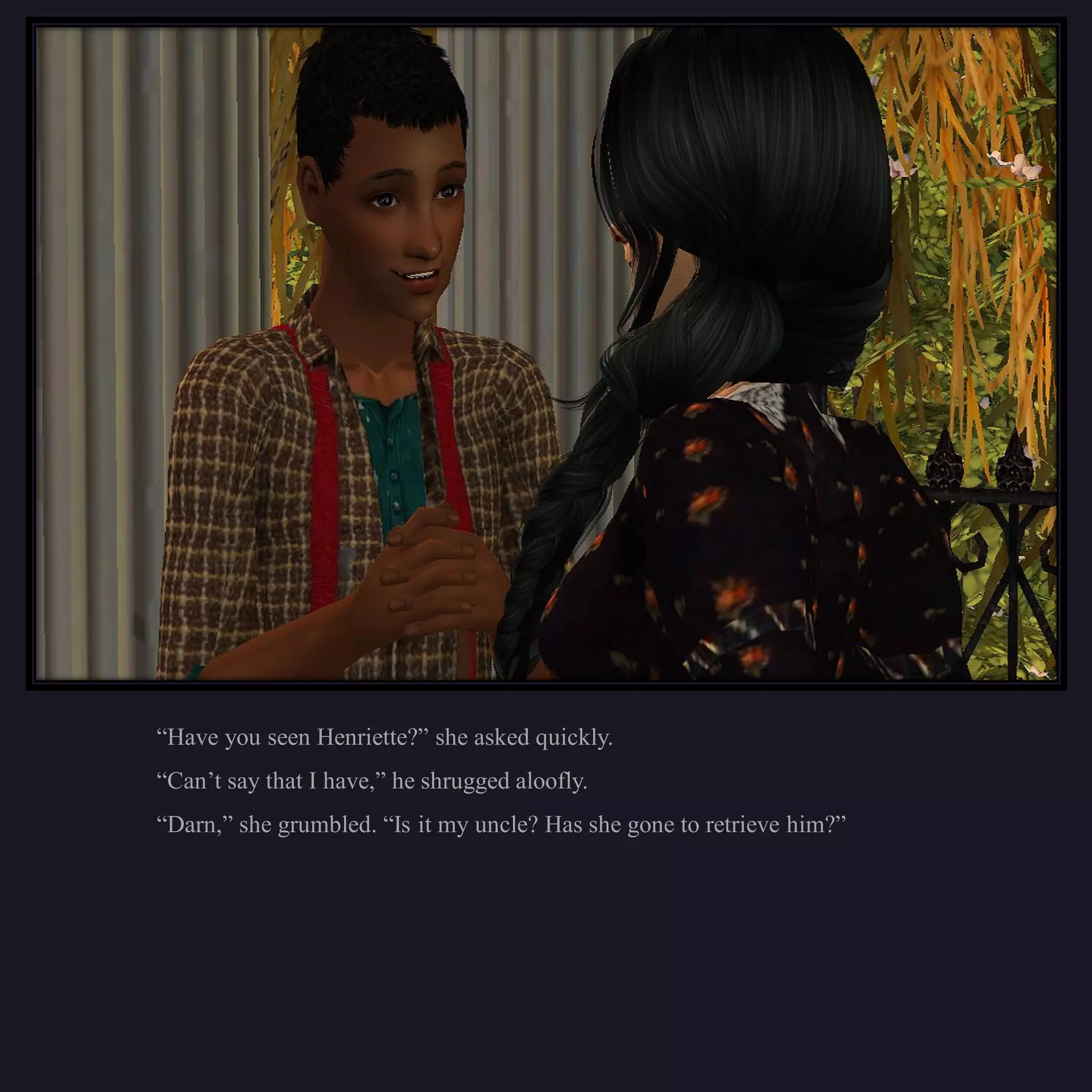
“Have you seen Henriette?” she asked quickly.
“Can’t say that I have,” he shrugged aloofly.
“Darn,” she grumbled. “Is it my uncle? Has she gone to retrieve him?”
Julien cast her a knowing, and yet cocky, smile as he backed slowly from the window.
“Like I said,” he shrugged. “Your uncle is a very difficult man to get a hold of.”
           “And Henriette?”
           “Difficult,” he ventured.
           “And you?”
           “Not always so.”
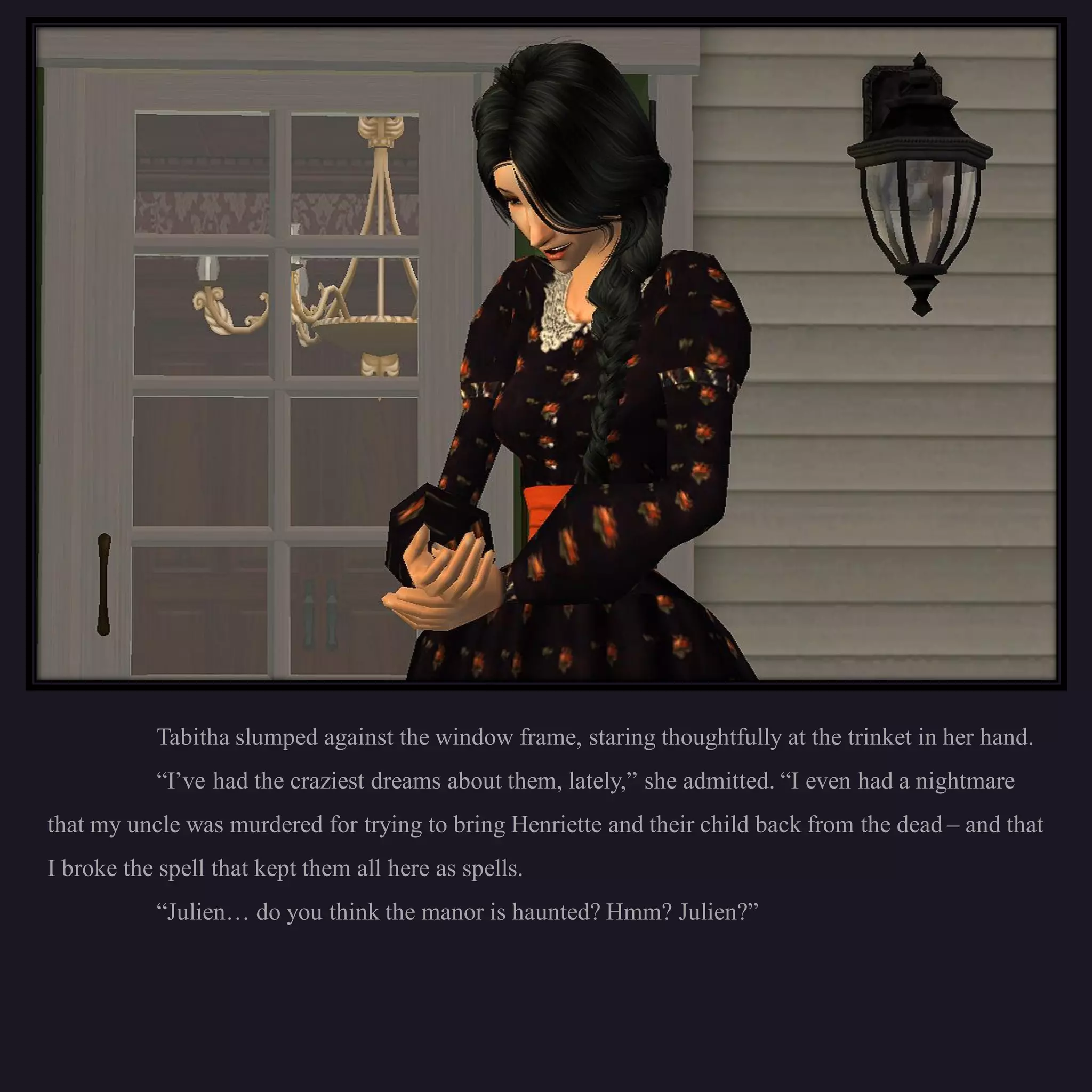
Tabitha slumped against the window frame, staring thoughtfully at the trinket in her hand.
           “I’ve had the craziest dreams about them, lately,” she admitted. “I even had a nightmare
that my uncle was murdered for trying to bring Henriette and their child back from the dead – and that
I broke the spell that kept them all here as spells.
           “Julien… do you think the manor is haunted? Hmm? Julien?”
But the grounds were already empty.

The Manor

  • 2.
    “Miss Tabitha, I’mafraid I come bearing ill news.” “So. The estate has been settled, then, Mr. Anderson?” “Yes.” “And not in my favor, I presume.”
  • 3.
    “Unfortunately not, miss.Please know that I am deeply sorry for my failure.” “Never mind, Mr. Anderson, you argued your best. It was a long shot anyway.” “Thank you, miss.” “I suppose I should like to hear my fate now.”
  • 4.
    “Well, the landin its entirety will be turned over to your half-brother, Christopher. The cottage and its outbuildings will become part of Corsey Hall once again.” “I suppose that was to be expected. Christopher inherited everything else when my father died. I suppose mother and I were fortunate to stay here for so long.” “Regrettably your father left the property specifically to his second wife, your late mother, in his will. You were too young when he died, I suppose, for him to think about providing for you. There is, of course, a bit of money held in trust until you are of age, but, alas, that is still a few years off.”
  • 5.
    “So I amleft with nothing, then? Penniless and homeless; an orphan cast out on the streets?” “You are not quite destitute. Your mother has a brother, a Mr. Simon Dufor, who currently resides in Louisiana. You shall be sent to live with him.” “Louisiana?”
  • 6.
    “To be morespecific: New Orleans, your mother’s birthplace. You learned French at her knee so I do not anticipate any difficulties adapting.” “When must I go?” “The deed to the cottage will be transferred to the young Mr. Corsey in three days. Naturally, it will have to be vacated before then.” “Naturally.” “The furniture and household goods must remain, but you may take along any personal effects. Dresses and shoes and the like; things purchased with your own money.”
  • 7.
    “Oh.” “Come now, miss, it’s no time for tears. Here, take my handkerchief.” “Thank you.” “Think of this as an adventure, Tabitha. Time has come for you to set aside your mourning clothes and begin a new life away from Corsey Hall and your peculiar position in the family. Not as your lawyer but as your friend, I urge you to give New Orleans a chance. I hear it’s quite the unique city.” “I shall try, Mr. Anderson.”
  • 8.
    “I took theliberty of arranging your travel on my way from the courthouse this morning. I’ll come by with my carriage early Thursday morning. I’ll ride along with you until the stage coach station, but there we must part.” “Thank you for all you have done for me. Your assistance has been a great help these past few months. But I fear the time has come for our association to come to an end. The case has been lost and my only relations willing to take me in are half a country away.”
  • 9.
    “Now, now. Justbecause we shall not see one another any longer does not mean that other methods of correspondence need be overlooked.” “You would not mind, then, if I were to write to you?” “I await your first letter with eager anticipation. I expect to be informed of every detail of your new life in Louisiana.”
  • 10.
    “Every word.” “Then Isuppose I shall bid you farewell until we meet again?”
  • 11.
    “Yes, goodbye Mr.Anderson. Thank you once again.” “I will see you bright and early Thursday morning, ready to commence the first part of your journey.”
  • 12.
    “Yes. To NewOrleans.” ___
  • 13.
    The frosty, autumnair raced through the open carriage door, sweeping along with it a handful of pumpkin colored leaves as they broke from the trees.
  • 14.
    “Watch your stepnow, miss,” the footman warned, his tired instruction all but overshadowed by the far-off grumble of thunder sweeping down the mountainside. With a shiver, Tabitha leaned forward in her seat and peeked out at the cold. “Sounds like a bit of a storm coming in,” she mentioned and with a sigh got to her feet. “Best not linger too long.” “Yes, miss,” the footman ceded complacently and offered her his hand.
  • 15.
    Accepting it, Tabithaclimbed down the couple of rickety stairs, wobbling with the carriage, and dropped down onto the gravel road. Her uncle’s manor was a rather massive structure – at least three, maybe four, floors tall. It loomed over the rickety carriage Tabitha had thought accommodating, secure not four days ago; over her small, spindly stature and her only companions and their horses. “It sure isn’t a welcoming place, is it?” Tabitha wondered aloud. The toes of her shoes edged on the densely black shadow, darker even than the night, cast by his manor. She shivered, despite the edge of mugginess that still lingered, trying as it might to fight the cold.
  • 16.
    “Well? Don’t youhave something to say?” she prompted. Tabitha shuddered once again, more violently than the last time; then puerilely turned her back on the rows of vacant windows with wide-stretching shutters, for an impractical fear that something may pop up at her from inside. “Some sort of reassurance, perhaps, that my uncle’s place is all bark but no bite? That things often look less haunting in the daylight?”
  • 17.
    The footman hadclimbed up the rear of the carriage, using the spokes of the wheels as a sort of step ladder. But as Tabitha pressed for a response, he froze awkwardly, with his hands reaching to untie her luggage from the roof and his wide, pale mouth nattering for an answer. “Perhaps, ma’am,” he ceded finally, followed by a large exhale. “Very good, Greeley,” she chirped and, taking pity on the young man, turned her back on him, as well. As Greeley grunted to undo the ties up above, Tabitha wandered toward the head of the carriage where the horses were harnessed.
  • 18.
    “I don’t supposeyou suspect my uncle’s manor is haunted, do you?” she murmured aloud. Behind her the mare in the lead, whom Tabitha had heard called by the name Ramona, startled. She snorted a large breath of warm air into the cold, tossing her raven-black mane and stomping her hooves into the soft ground. “Oh, hush,” Tabitha scolded. “Before you excite the others. Things often look more haunting in the night.” Shakily, she turned back to face the manor. “Miss Corsey?” Tabitha startled. “Ah, thank you.” She hurried to take her suitcase from Greeley.
  • 19.
    “If that willbe all, miss?” “It will. Thank you for the ride. And thank you, Mendel,” Tabitha added, craning her neck back toward the front of the carriage to address the driver. Gathering everything up into her arms, she stepped back from her transport. Greeley tipped the top of his head at her in an acknowledging way; then hoisted himself back up to his place at the rear of the carriage. “Carriage ready, Mendel,” he hollered toward the front. Over the crack of a whip, Tabitha hollered last-minute wishes for a safe and quick trip, at the head of the impending storm. It was unclear whether her send-off was heard, however, as Ramona led the others in a startling dash for the iron gate.
  • 20.
    Tabitha looked backat the only thing to turn toward: the front door.
  • 21.
    She pulled herluggage up the front steps, abandoning them against the cast iron rail, and pulled the bell cord. A deep, melodic chime rang throughout the air and faded back to silence as a narrow, dark face of a woman appeared in the door’s window. The door swung open. “Miss Tabitha? Welcome to New Orleans. Come in, come in; you’ll let out all the spirits.” Tabitha swallowed and retrieved her things; then shuffled hurriedly inside at the rapid promptings. “‘Let out all the spirits?’”
  • 22.
    “It’s better thanletting in any new ones,” the woman reassured her in a low voice. “I’m Henriette – the maid.” “Nice to meet you,” Tabitha stuttered out of formalities. She glanced around the interior of the entryway. As Henriette had closed the front door behind them, Tabitha noted the feeling of the fresh air being shut out. All that remained was the musty, closed-up air that was so chilling to the touch it felt almost as if a layer of water settled on her skin.
  • 23.
    “What a latearrival, you poor girl. The bedroom you are to have is this way,” Henriette explained, turning her back on Tabitha. She pushed through the nearest set of heavy doors effortlessly and continued down the ill- lit hall, gliding gracefully without bothering a glance to confirm Tabitha’s presence behind her. “I am sorry that your uncle wasn’t here to greet you,” she chattered. “He’s been called away on business.” “Is that so?” Tabitha wondered, ducking to avoid stumbling into a low-hanging cobweb. From the corner of her eye, she caught a spider, just as startled by her as she had been by it, turn on its heels and scramble into the corner of its web.
  • 24.
    “Indeed,” Henriette confirmedpointedly. “With him gone, it’s only me in the house. Gets rather lonely, as I am sure you’re capable of understanding. In fact, I was beginning to doubt you were really coming.” Blushing slightly at the well veiled accusation, Tabitha edged around a table spotted with various fractured, dirtied vases full of wilted, crackling flowers.
  • 25.
    “Yes, I’m sorryfor the delay. There was a bit of a heavy rain at the start; left several of the roads in Virginia just flooded enough to prevent journey for the better part of a week.” “So long as you came, miss. We’ve been counting on your arrival,” Henriette admitted.
  • 26.
    Tabitha opened hermouth to clarify just who ‘we’ was – recalling that, since her uncle’s departure, Henriette was apparently rendered the sole remaining staff member. But before she could inquire into anything, Henriette quickened her pace toward another pair of double doors.
  • 27.
    “Here you are:your room,” she announced. “I’ve made the bed up myself and started a fire. I’m sure the accommodations will do.” “Oh, yes,” Tabitha reassured her and stepped in after the maid. Was it possible that this room was even colder and darker than the last? “There will be supper on the table after you unpack. The dining room is just off the entryway. Should I retrieve you?” “No, no,” Tabitha decided, dropping her luggage just inside the doorway. “I’m sure I can find it.”
  • 28.
    She edged furtherinto the room. It was well furnished: there was a full-sized bed made of dark wood pressed against the far wall. It had, indeed, been made up in different layers of fresh blankets and an autumn-colored quilt. And along with that were a tall dresser, a nightstand, and a desk. Tabitha undid the top buttons of her coat and set her bonnet on the edge of the bed.
  • 29.
    “One more thing,Henriette,” she called over her shoulder. “This manor… it’s not really haunted… is it? I only ask because, who hasn’t heard a rumor or two here and there? But they are only rumors, aren’t they? Henriette?”
  • 30.
    Tabitha turned backtoward the doorway. But it was already empty. ___
  • 31.
    This room wasdim at well, brightened only faintly by the smallest flames she’d ever seen burning in a hearth that size. Nevertheless, Tabitha stepped into the dining room.
  • 32.
    Just as Henriettehad promised, a crimson china bowl sat at the far end of the table, along with two goblets and a set of silver wear. It was clear from the tendrils of steam that rose and dissipated into the air several inches above the bowl that whatever dinner was, it was warm – and fresh. Enticed, she unstuck her feet from where they’d planted themselves to the hardwood floor. The swish-swishing of her toffee satin skirt and the light tapping of her shoes the only audible noises as she walked, Tabitha pulled the stout chair at the end of the table back a foot or two and slipped into her place.
  • 33.
    Another grimy vasehousing an arrangement of dead, brittle roses was pushed to the middle of the table. A little dot of a spider dropped swung from one of the leaves. Tabitha just did her best to look past it and to the far more intriguing portrait hung beyond. Swallowing her first spoonful, Tabitha was surprised to find that dinner, which turned out to be a thick sort of stew or soup, was full of plenty spices. She grabbed quickly for the goblet full of water and swallowed until her mouth cooled.
  • 34.
    Despite the spiciness,Tabitha smiled at the full bowl. Inhaling its decadent, diverse scent, she drew her water goblet up in one hand, and her silver spoon in the other. And within a matter of minutes, she’d tucked in the remaining stew – along with her goblet of water, and then her goblet of sweet wine, too. ___
  • 35.
    Tabitha was dreamingthat she stood at the front of her uncle’s manor. Was she arriving again? It didn’t seem like it. The trees were turning colors and balding just as they had been tonight; it was even the middle of the night and crickets chirped from the surrounding grounds. But as she looked around the front of the manor, it all looked so much fresher; brighter. The windows didn’t seem to leer down at her and she wasn’t driven to avert her eyes from what lay beyond them. And she wasn’t alone.
  • 36.
    The hazy imagesof several young boys – no older than ten or eleven, at most – danced all about. She could make out no faces; no features that made them out to be anyone she knew or had seen. She knew only that they were male, of a young age; that they were rather excited about something or other and moved not around her but rather with her. They chanted and they jeered, darting about the grounds. Tabitha wished the nighttime quieter and listened closer, trying to make out the words they sung:
  • 37.
    Solomon Grundy, Born on a Monday, Christened on Tuesday, Married on Wednesday, Took ill on a Thursday, Worse on a Friday, Died on Saturday, Buried on Sunday. This is the end Of Solomon Grundy. The one skipping nearest her reached out and pressed something small and hard into her hand.
  • 38.
    Without any warning,all the obscured figures reassembled – again, not around her but with her, as if she stood in their midst. And suddenly she was aware, without necessarily having looked, even, that each of them carried something small and hard in each fist. “Poor Solomon Grundy!” rang out one voice; then, whip! With a jerk of the arm so sudden it seemed involuntarily – though somehow Tabitha found she had the knowledge it was very voluntary, indeed – the first boy flung his fistful at the beautiful manor front. “Solomon Grundy! Solomon Grundy! Solomon Grundy!” One by one, the handfuls flew; the little pellets sprayed against the siding, chipping slats on the shutters, scratching up the thick window panes, and clattering lifelessly to the porch.
  • 39.
    But, no, theboys were not finished. Whip! Tabitha felt her arm jerk; spasm, almost. Her rock hit the house. Then all together, her included, the little assemblage took off to recollect their weapons, tearing up the front steps. “Took ill on a Thursday; worse on a Friday!” “Took ill? How about went mad on a Thursday?” a voice suggested through cackles. “Yeah! Yeah!” the boys cheered. Solomon Grundy, Born on a Monday, Christened on Tuesday, Married on Wednesday, Went mad on a Thursday
  • 40.
    “Won’t you comeout, Mr. Grundy?” And yes, there are noises at the door; then at the second floor window. Someone’s about to yell; to chase them from the land, Tabitha knows. And already, her instincts are beginning to smolder; the powerful muscles in her legs are starting to yearn for a good sprint. But as soon as the shutters rattle and a man, a man with a clearer face than the others but obscured from where she stood, appears to incite this sprint: Whip! Whip! Whip! at the second story window.
  • 41.
    With a depressedfeeling, Tabitha recalled the tendrils of the dream – or perhaps the nightmare – before they faded completely from her consciousness. Only moments ago, hadn’t she been abusing the man at the window with a fistful of stones? How dreadful.
  • 42.
    Tabitha opened hereyes just enough to ensure that she was, indeed, lying in the bedroom at her uncle’s estate. When she first did so, she thought she spotted Henriette standing at her back, near the edge of the mattress.
  • 43.
    Tabitha startled; rollingonto her back and scrambling into a sitting position. She opened her mouth to ask if something was wrong. But there was no need: when she looked upon the spot at the side of her bed again, it was empty. “Henriette?” Tabitha called softly, tentatively. The eeriness that had encroached upon her confidence when she first arrived returned. And fearing what she may see, she turned slowly to take in all of the room and find where the maid had scurried off to. But she found the room to be empty.
  • 44.
    A rather largeclap of thunder sounded deep in the clouds above them, startling the manor itself. With her heart cowering in the pit of her stomach, Tabitha grabbed for the blankets and pulled them up around her shoulders. Please just listen to the rainfall, Abby, she pled silently with herself. Even if Henriette did come in, it was only to check on you. She’s already tucked back into bed. Or perhaps you were still dreaming. Tabitha shivered and drew her arms into herself. There was a spot just below her left shoulder that felt cold; not like how the rest of her body felt chilly. Rather, like how one’s skin tingles and shivers after being brushed by something particularly frigid.
  • 45.
    It felt asif a snowball had been left resting on her arm all night. Tabitha tucked that arm further under the other and banished further scrutiny from her mind. Listening to the forlorn howl of the wind as it wooshed down the chimney and dispersed its breathy chill throughout her bedroom, she cuddled deeper beneath the quilt. But what had it been that woke her up? Perhaps she’d woken herself up; it was a rather barbaric dream. ___
  • 46.
    “Who is SolomonGrundy?” Henriette paused on her way out of the dining room and glanced over her shoulder with a slight, almost glad smile.
  • 47.
    “No one Ihave ever met, I am sure,” she replied softly. “Why? Should I have?” “Not in particular,” Tabitha said. “He’s not someone who lived here in the past? Perhaps one of the staff?” “I have always been well acquainted with all of the staff.” “And before you were brought on?”
  • 48.
    “The manor wasboarded up before then; opened up like a bright, new Christmas gift when your uncle got to town. I suppose our mysterious Master Grundy could predate even the closure. Shall I do some asking around?” “Oh, no. I’m not even sure he’s a real person,” Tabitha admitted aloud, staring uninterestedly at her snack of potato bread and coffee. “He’s just someone I dreamt up, that’s all.” “Oh, if many a girl hasn’t been there, miss,” Henriette brushed it off, her smile deepening. She leaned harder on the stair’s railing. “Solomon Grundy, was it?” Tabitha hummed.
  • 49.
    “It would seemso. That’s what they called him, at least… couldn’t really tell if that was his name, though.” “Aside from him, I trust your first night here wasn’t too unpleasant?” Tabitha snapped to attention, straightening her back and brushing the loose hairs back from her eyes.
  • 50.
    “No, not atall; I didn’t mean to imply…” she chattered. She slipped curtly from the little tea cup; then lowered it back to the table and prepared herself for the larger question. “And you? Was your sleep pleasant? There was quite the storm raging some near midnight.”
  • 51.
    Henriette’s smile regainedits mysteriousness. “My night was most satisfying.” ___
  • 52.
    “Hello? Henriette? Isthat you?” Tabitha dropped the fistful of cloth and sewing needle to one hand, swinging it at her side as she traipsed down the hall. The storm had mostly let up this afternoon. Finally some sunshine – watered down by all the rain, but sunshine nonetheless – had appeared at Tabitha’s window sill. And spotting it, she had eagerly abandoned the project of stitching her initials into her new handkerchief and went wandering around, opening windows, instead.
  • 53.
    There it isagain! A soft rattling noise, accompanied by shuffling and muttering so quiet, it was difficult to determine whether she actually heard it. “Henriette! Which room are you in? Please open the door,” she called brightly, trying the handles on each of the doors that lined either side of the hall.
  • 54.
    Finding each ofthem locked, and rather quiet when she pressed her ear against their wood, Tabitha worked her way to the end of the hall: to the largest pair of mahogany doors. As she neared, the noises grew louder; surer. “Are you talking to me?” she called through the wood, knitting her eyebrows together as she concentrated on deciphering the mumbling beyond the wood. The words came in no language she’d ever heard of.
  • 55.
    Before she knewprecisely what was happening, a loud roar and a crash of things – heavy things, like furniture – falling or scooting across the hardwood floor made her jump back from the door. For a moment, all was silent. Even the chanting voice had ceased.
  • 56.
    Then, shoving herembroidery into her pocket, Tabitha rushed back up to the door and wrapped loudly, fervently on it with her knuckles. “Henriette! Are you alright? Can you get to the door? Can you hear me?!” Tabitha nudged the door with her hip. But as she rattled the door knob and called to Henriette, or whoever was inside, something else came up behind her.
  • 57.
    “What are youdoing?” With a sharp, gasping inhale, Tabitha whirled around, her back falling against the door instead. As her heart sluggishly let up on its attempt to beat its way out of her chest, she realized she was looking into the face of Henriette. And slowly, she exhaled. “You startled me,” she breathed. “No matter; did you hear that? It sounded as if everything in that room was sent spinning. Is there anyone else in the house?”
  • 58.
    “There are nomore people, I assure you,” Henriette promised brightly. “What of hobos? Runaways? I am sure I heard a voice coming from that room. Do you think he’s terribly injured?” Tabitha peeled herself off the door and tried the handle, unsuccessfully, again.
  • 59.
    “Like I said:no people,” Henriette repeated evenly. “That is your uncle’s study. It’s been locked up since he’s been there. And rest assured, there are no other entrances. Not so much as a window pane in there.” “But you did hear something? Someone, perhaps? Talking?”
  • 60.
    Henriette dropped herchin closer to her chest so that when she looked up at Tabitha, it was from the very uppermost part of her eyes. “Many people hear many things in this old house,” she admitted in a low voice. Gathering her skirts up in her hands, she turned her back on Tabitha and retreated down the hall.
  • 61.
    Tabitha watched hergo in silence. But just as she reached the doorway at the end of the hall, Henriette glanced back at the small, frightened girl through strings of her dark, raven hair. “What do you think it means?” “I-I don’t know; I just got here yesterday… Henriette? Henriette!”
  • 62.
    Her pleas weresevered by a shrill scream, ripped from her own chest, as the sensation of cold fingers wrapped around her elbow. Tabitha startled away from the wall she stood against, tumbling into the center of the room. Clasping one hand over her thrashing heart, she looked wildly about for the source of the touch.
  • 63.
    Finding nothing thereand Henriette long gone, she hastened down the hallway and through the first door that wasn’t locked. It was a parlor, equally as dusty and drafty as the rest of the house. Cobwebs dripped from the corners and the furniture was draped with dust cloths. Tabitha wandered around just looking, too afraid to touch anything. She didn’t know quite what she would disturb.
  • 64.
    Suddenly, the imageof a young man had appeared in the bottom corner of the window. It observed her silently with dark, hollow looking eyes; they didn’t look about the room; nor did they sweep over her. Rather, they focused intensely on her own eyes and narrowed as she spoke.
  • 65.
    “Are… are youa ghost?” Tabitha whispered. Its lips remained settled in a straight, grim line. “Well?” A lopsided grin broke out on the young man’s face. He knocked back the brim of his hat, revealing much lighter eyes – navy, actually. And with a chuckle that still sounded rather high-pitched and boyish, he retracted his arm from inside the hall, braced both hands against the sill instead, and leapt in through the window.
  • 66.
    “Well!” Tabitha repeated,huffing the word this time. “You may excuse yourself from these premises, at once, boy. Go on, then. Back out the window with you – before I call for my maid.” “Please,” the boy dismissed her commands. “That old soul wouldn’t chase me out if she could.” “Are you–”
  • 67.
    “A ghost? Afraidnot. Not that I blame you for suspecting so,” he chattered, producing an apple from the pocket of his dusty working pants. He polished the fruit against the chest of his shirt; then took a rather large, rather rude chomp out of the side of it. “I was going to say a family friend,” Tabitha snorted, feeling the color rise to her cheeks. The boy shrugged thoughtlessly.
  • 68.
    “Then who areyou to be popping up at ladies from behind windows? You’re going to startle a poor girl to death one of these days! And do you mind?!” she scolded, motioning with a tilt of the head to the fruit he gnawed at, open-mouthed. “Not at all; apples are my favorite fruit,” he chirped. Then, wiping his right hand free of juice against his shirt, he held it out for her. “And to answer your first question, I am Julien Alpheus Bannett, to be popping up at ladies from behind windows. Nice to finally be meeting you.”
  • 69.
    “‘Finally?’” she repeatedwarily, turning down the handshake by quickly dipping her head in an uninterested, rather bored acknowledgement. “Word of you coming’s been floating around here for quite a while now.” “I thought Henriette was the only staff member here. How should you know who I am and when I am to be coming and going?”
  • 70.
    “She’s the onlyhired staff,” Julien corrected, nibbling off another bit of apple skin with his front teeth like a rabbit. “I’ve been tending the grounds as a sort of favor since your uncle departed. And now that you’ve brought it up, that’s why I’m here. Your uncle owes me a bit of compensation.” “So? Take it up with him.” “He’s a rather difficult character to catch up to these days. I was hoping when someone was living in the house again, they’d be able to take care of it once and for all.” Tabitha edged around him in the direction of the hall.
  • 71.
    “Well, I’m afraidI have to disappoint. I wouldn’t even know how to send word to my uncle; let alone dapple in his finances. You’ll just have to wait until he returns. You can get your money then. But until that time, you have to get out.” She waved her handkerchief at him, corralling him back against the wall and the window he had come through. “Won’t you let me out through the front? I am a human being, Miss Corsey.” “Absolutely not,” she decided promptly. “You came in through the window like an uncouth little crow and you will exit the same way. Now, go; shoo!” ___
  • 72.
    She stood atthe front of the manor once again.
  • 73.
    Solomon Grundy, Born on a Monday, Christened on Tuesday, Married on Wednesday… Already knowing what she would find there, Tabitha lifted her hand and peered at what she held between her fingers.
  • 74.
    And No! No,please! she didn’t want to hurl her handful of rocks at the beautiful manor house or at the poor man who would peek outside in just a moment. But the other boys were lining up about her already, and before she could stop it: “Poor Solomon Grundy!” Whip! “Solomon Grundy! Solomon Grundy! Solomon Grundy!” Whip! Whip! Whip!
  • 75.
    “Took ill ona Thursday; worse on a Friday!” “Took ill? How about went mad on a Thursday?” a voice suggested through cackles. “Yeah! Yeah!” the boys cheered.
  • 76.
    She was suddenlyaware that her legs were moving, pounding against the solid, freezing ground of their own accord; they carried her up the front steps, tore across the porch, and crumpled to their knees in the corner where her rocks had landed. Solomon Grundy, Born on a Monday, Christened on Tuesday, Married on Wednesday, Went mad on a Thursday… Quick! Quick! Quick! Tabitha scooped up her share of ammunition, cradling them in the crooks of her arms.
  • 77.
    Then up againshe was, falling into line among her brethren. “Won’t you come out, Mr. Grundy?” Oh, no! No! The noises at the door; at the window. Don’t come to the window, sir! But again her voice failed her while her throwing arm did not. Whip! Whip! Whip! at the second story window. She couldn’t pretend not to hear the pathetic animal noise that came from behind the shutters. “How do you like that, crazy old man?”
  • 78.
    “Crazy old man!Crazy old man!” Whip! “You won’t cast your spell tonight, warlock,” hissed a voice, accompanied by the loudest Whip! “Your evil won’t be done. The whole town’s on its way to make sure of it! Just try and hide in your study. Your evil won’t be done!” “Do you hear us?” “It won’t be done! It won’t be done!” Warlock Grundy, Born on a Monday,
  • 79.
    Cursed on Tuesday, Married on Wednesday… And all at once, as the voice she’d heard coming from her uncle’s study entered the dream, repeating the same chant as before, grew louder, more powerful from above, every one of the children and Tabitha dispersed about the house. They sung their Solomon song at the top of the lungs and darted about more frantically than before, arming themselves with more rocks and some with bits of paper rolled into crude torches that started to smolder. The man called Solomon chanted louder; harder. The children sang louder. And a similar chorus started from the road that ran at their backs.
  • 80.
    Tabitha startled awakeand immediately devolved into a mixture of tears and prayers, in the wake of the wicked nightmare. The wind cried and whined as it twisted through the hearth, extinguishing the comforting embers and rendering them just as chilled as the rest of the room.
  • 81.
    She cowered inthe corner of her mattress, holding the warmth tighter to her body than ever before, and tried to shake the cold spot from the spot below her left shoulder. She rolled farther on one side, tucking her nose into the soft, cotton pillow, and listened to October rage. And she didn’t dare look behind her. ___
  • 82.
    The candlelight bouncedoff the metal doorknob and glowered back in her own face. Squinting again it, Tabitha forced the skeleton key into the lock beneath the handle and gave it a hard turn to the left. There was a satisfying clunk as the door unlocked. Tabitha pulled the key back out and shoved it into the hand that held the candle. For a moment, she remained standing still in the hall; hesitant, but not altogether afraid, of what may lay beyond the door to her uncle’s study.
  • 83.
    Something rustled atthe end of the hall. Fearing it was Henriette coming to check up on her – or that perhaps Julien had already chomped his way through the apple pie Tabitha had spent all morning and afternoon making in exchange for him swiping the study key – Tabitha inhaled deeply and slipped into the room.
  • 84.
    She closed thedoor behind her gently, pressing her back against it and listening for a moment should any footsteps pass. Reassured by the silence from the other side of the door, Tabitha raised the candle and squinted to make out what lay beyond.
  • 85.
    It had beena study at one point, so it seemed. It came with the usual furnishings – a desk, sagging and warped by the piles of journals and sketches thrust upon it over the years; massive, big boned bookcases that stretched from floor to ceiling everywhere the floor was vacant. But along with all of the scholarly things she expected to find in her uncle’s work place were strange, foreign possessions. There weren’t too many: a jade colored bottle full of some powder here; a dish brimming with an unfamiliar liquid. It was the pendants nailed in the darkest crevices of the room that recalled her dream of the evil warlock the most.
  • 86.
    “Solomon?” Tabitha ventured,whispering the name so low that it could scarcely be heard over the wind that thrashed against the exterior of the room. “Did you once live here, too?” She hadn’t quite expected an answer, anyway. But when only the silence replied, Tabitha cupped the flame of the candle closer and bent to examine the junk closer.
  • 87.
    Piles upon pilesof books, cloths, bits of pieces of toys, and other cluttered trinkets crowded the tiny room. Her uncle had simply piled everything he possibly could against the walls, balancing candelabra on night stand on cradle on trunk until all of his things spilled out into the center of the room as if stretching its fingers desperately toward anyone passing through. Surely the place looked messy. But it didn’t look like anyone had fallen; or any furniture had crushed a squatter.
  • 88.
    Satisfied at leastin that matter, Tabitha straightened. As she did so, a rush of chills rushed up her spine, branching out over her shoulders and down through her legs until all of her body felt cold. “Solomon?” There was a thud. “Is it you, Mr. Grundy?”
  • 89.
    Was it theflickering light of the candle’s flame playing with her vision, or had the portrait of a little family, now deposited in a corner of the room, slid down an inch or two from its throne atop the scrap? The portrait jolted again; this time, she was sure. And without another question as to who was in the room with her, Tabitha leapt for the door.
  • 90.
    But before shereached it, her candle was snuffed out by some unseen breath or finger. “Leave me be,” she whispered, frightened.
  • 91.
    She dropped herdarkened candle to the floor, clinging only to the skeleton key, and leapt for the door. Feeling the rough wood under her bare hands, she found its edge and traced it to the handle. Paranoid she’d find it locked, Tabitha gave it a good hard turn and spilled out into the doorway. ___
  • 92.
    Not again! Shewanted to cry out in prayer as her eyes focused on the peculiarly accurate image of the manor’s grounds. But as she tried, she realized she was looking down upon the grounds, rather than out over them. Furthermore, she did so through the thick glass labs of a window pane. Solomon Grundy, Born on a Monday, Christened on Tuesday, Married on Wednesday… That song; that song! How she hated those wretched lyrics and how the loathing of their sound started in her chest, a little ember, and festered until it burnt like a regular fire! “Poor Solomon Grundy!” Whip!
  • 93.
    She jerked backautomatically as the first stone made contact with the window. There was a sharp chink! as it struck the glass of the front door; followed by the hollow sound of it clattering to the porch outside. “Solomon Grundy! Solomon Grundy! Solomon Grundy!” An immense confusion flooded her thoughts, overpowering even her rage. Why are they yelling ‘Solomon Grundy?’ Why are they calling me that? I am not Solomon. Whip! Whip! Whip!
  • 94.
    Across the frozengrounds and up the stairs came the little devils, their faces twisted into ugly sneers and glares as they descended upon the manor to retrieve their weapons. Solomon Grundy, Born on a Monday, Christened on Tuesday, Married on Wednesday, Went mad on a Thursday… they sang incessantly, prompting one another to hurry, quick! They’ve spotted me! “Won’t you come out, Mr. Grundy?” There came another flying pebble. It struck the glass with its own chink! and drop! It had hit her – or at least, it would have.
  • 95.
    The anger; thehatred. All at once, Tabitha was storming up the grand staircase, taking two steps in stride at a time and embracing the tight burning that filled her chest, encouraging it to fuel her wrath. Before long, it had accomplished exactly that. She exited onto the balcony, leaning out over the rail. Leave my land! She wanted to scream; to order. Leave me to my business and may no one else be touched by this so-called devil’s work. Don’t you understand? She wanted to know.
  • 96.
    Whip! Whip! Whip!Came the pebbles, finding the side of her face without trouble this time, as if to say No; no one understands your madness. Why don’t you crawl into the recesses of that study of yours and leave the rest of us be? “How do you like that, crazy old man?” “Crazy old man! Crazy old man!” Whip! “You won’t cast your spell tonight, warlock,” hissed a voice, accompanied by the loudest Whip! “Your evil won’t be done. The whole town’s on its way to make sure of it! Just try and hide in your study. Your evil won’t be done!”
  • 97.
    “Do you hearus?” “It won’t be done! It won’t be done!” Warlock Grundy, Born on a Monday, Cursed on Tuesday, Married on Wednesday… “Oh, no?” she snarled, the intense, all-consuming violence returning stronger than she remembered it. Before she realized it was her own lips that were moving, strange and foreign words were spilling down onto the boys. Some sort of incantation? A chant?
  • 98.
    The real Tabitha,lying in the hand-carved bed inside one of her uncle’s rooms, twisted and turned beneath her blankets, trying to call out for the malevolent dream to free her from speaking such unknown commands. But the singing…! The children dispersed about the house and Tabitha was drawn right back to the dream. The song rang up from the grounds below louder and more mocking than before. And is that a second chorus starting from the main road? Without knowing herself where she was going, she was moving: out of the most forefront of rooms; through the hall; down the stairs.
  • 99.
    When she roundedthe corner, all that remained was the doorway to her little study – so far down the passage. Before she knew it, she’d made it inside. She threw the door closed behind her and locked it fast. There! The portrait! Tabitha grabbed the painting of a middle-aged couple and their infant child up off the wall. Something stirred inside of her – a familiarity; a pitying; grief and loss. And why does it feel when I look into these man’s eyes as if I’m looking in a mirror?
  • 100.
    A strange mixtureof Tabitha and whoever she was to play in the dream tonight, she carried the awkward portrait to the wall opposite the door. She set it up against the wall and grabbed shaking handfuls of powerful bottles, powders, and scraps of scribbled upon paper from all around the room. “Not to worry, Henriette,” she found herself whispering. “They will not stop me from bringing you back. Try as they might to deter me, to delay: I will cast my spell at midnight and we will all be reunited.” She fumbled with her armful of things, setting to the side all but one.
  • 101.
    Tabitha clung tightlyto a strange-looking trinket made by two wedding rings, tied together with the strings of an infant’s hair bow. “Separate these, Tabitha,” she blurted aloud. “Throw away my spell and I may find my girls in Heaven.” But what? It was too late for her to comprehend anything her self within the dream had ordered. There were violent cries and crashes that sounded first against the exterior wall. It shouldered the portrait, making it teeter on its frame and shudder at the blows. But just as Tabitha reached out to settle it, she heard the eerie sound of footsteps high above her head. They’re on the roof.
  • 102.
    As if somethinginside her knew and had resigned to what was about to happen, Tabitha turned to look at the hearth. Took ill on a Thursday, Worse on a Friday… A single sheet of paper doused in a thick, heavy liquid fluttered down as gracefully as it could and plopped onto the ashes of past nights’ fires. Died on Saturday, Buried on Sunday. One of the boy’s crude, handmade sticks, glowing with fire that burned at one end followed, diving for the paper like an arrow shot at a target.
  • 103.
    And barely beforeTabitha could pull the portrait over her as a sort of shield, there was an ear splitting pop! and the paper’s hastily scribbled announcement that ‘that was the end of Solomon Grundy’ incinerated in a flash of flames.
  • 104.
    “Help!” Tabitha criedas she awoke, jolting into a sitting position.
  • 105.
    Thinking it onlya nightmare, Tabitha relaxed her back against the headboard; the rapid beating of her heart slowed. But the cold touch burned at the spot below her left shoulder. And from the corner of her eye, a familiar skirt disappeared through her open bedroom door.
  • 106.
    “Henriette!” she blurted. Her body burning once again with the most severe panic and alarm she had ever felt, Tabitha flung the blankets back from her legs. She bolted out of bed and for her doorway. “Henriette!” she called again.
  • 107.
    Whether she continuedout of flight or boldness, she did not know. And yet she barreled down the hall in her bare feet and nightgown after the fading figure of Henriette. Clutching at the skirt of her nightgown with one hand and at her heart with the other, Tabitha rounded the corner to the main hallway. “Henriette,” she breathed, slowing to a walk. She approached the maid, who stood facing the study’s door, with the slowest of steps her quivering muscles could manage. “Please, tell me what is happening. Why have you visited by bedroom in the night so?”
  • 108.
    Still approaching slowly,Tabitha awaited a response. Without acknowledging the girl’s presence, Henriette revealed her right hand; it was wrapped closely around a skeleton key, familiar to Tabitha. “What are you doing?” Henriette stuck the key into the lock beneath the door’s knob and gave the handle a hard turn to the left. “Henriette! Don’t you hear me? We must go back to bed. This is no time to go in there,” Tabitha pleaded, her voice growing more panicked by the moment. “Do you know what kind of evil happened in there? We should hardly be in the same house as that – that dungeon, even!”
  • 109.
    It appeared asif it took Henriette only a single step to disappear into the study. At first, Tabitha stood frozen in the hall, both her lips and feet rendered immovable. But before she knew precisely what was happening, a loud roar and a crash of things – heavy things, like furniture – falling or scooting across the hardwood floor made her jump back from the door. “Henriette!” Tabitha shrieked, jolted from her stillness.
  • 110.
    She ducked intothe study after the maid. None of the things had been disturbed since she’d last seen them. And Henriette was once again nowhere to be found. But the room had filled with an incandescent, eerie sort of glow coming from beneath the portrait. Moments from the nightmares came flooding back to her. “Separate these,” she recalled, though the words returned to her not in her own voice but rather in a masculine one. “Throw away my spell and I may find my girls in Heaven.”
  • 111.
    In the strangelighting, without any candle, Tabitha began to dig. She pried the portrait up and flung it against the far wall. Beneath that were layers of cloth and books and discarded journal pages. One by one, Tabitha threw them aside. She spotted something crumpled beneath the rest of the debris. It was sleek and thin; the whiteness of it seemed to glow in the darkness.
  • 112.
    They were bones.And looped around them was an odd little trinket, made by two wedding rings bound by the strings of an infant’s hair bow. Tabitha shuddered and untangled it from the mess. The knot broke easily. The room was flooded with cold air – as if snow was suddenly showering down upon her. ___
  • 113.
    The morning lightbroke in through the window and stirred her from her heavy, peaceful sleep. Slowly, she sat up, her dark hair spilling over her eyes. She thought of the spot just beneath her left shoulder and was surprised to find no chill spreading there.
  • 114.
    It’s all thisNew Orleans food, she told herself, rising from bed and stretching. You really should mind your diet better, Abby. No more beignets for you… they’re only giving you nightmares about bullies and ghosts.
  • 115.
    Resolved to avoidthem better in the future, Tabitha went to the dresser and turned her thoughts to finding an appropriately festive dress for the first of November. But she stopped shot when she spotted what lay on top of the piece of furniture. Two wedding rings and the ribbon of an infant’s hair bow rested there in a line.
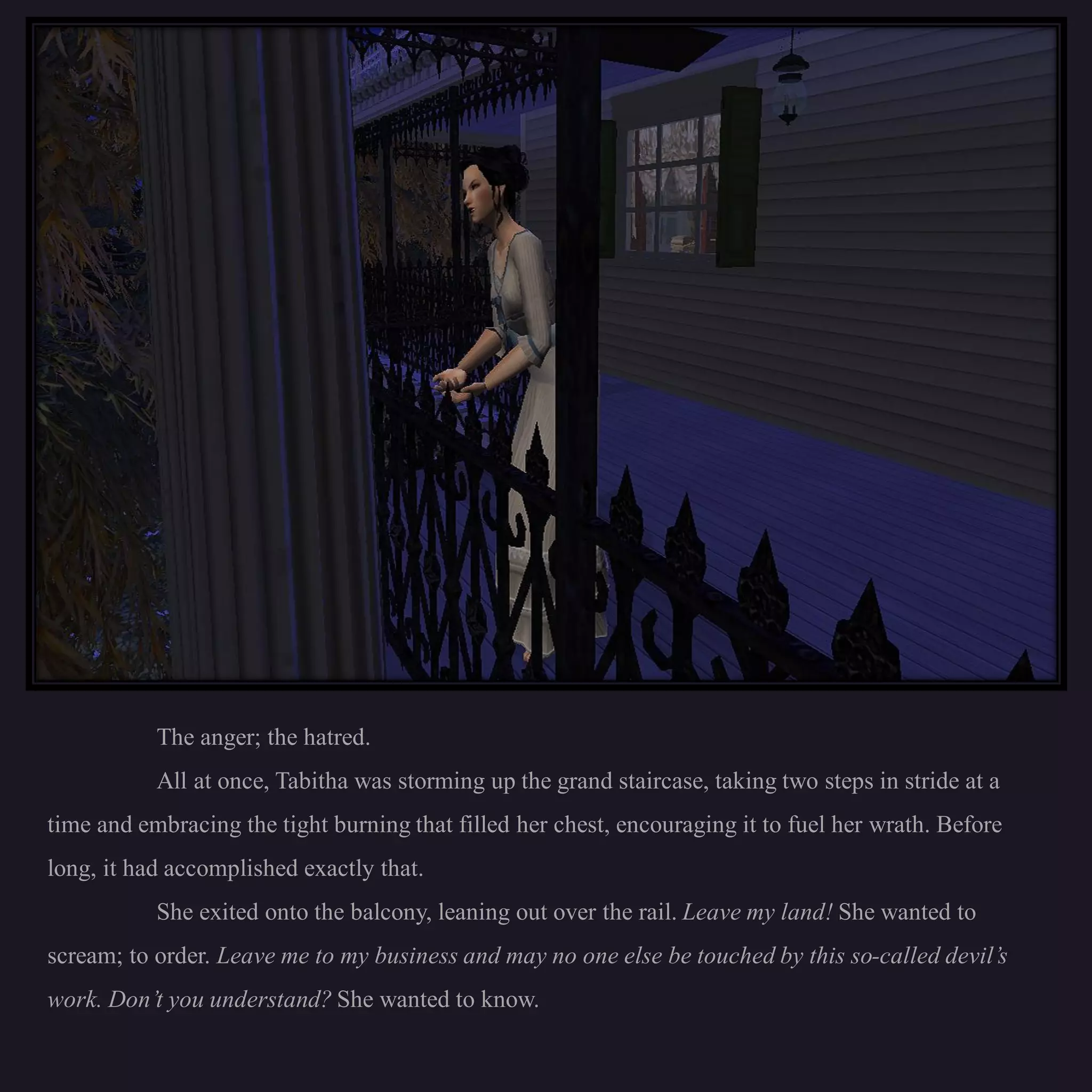
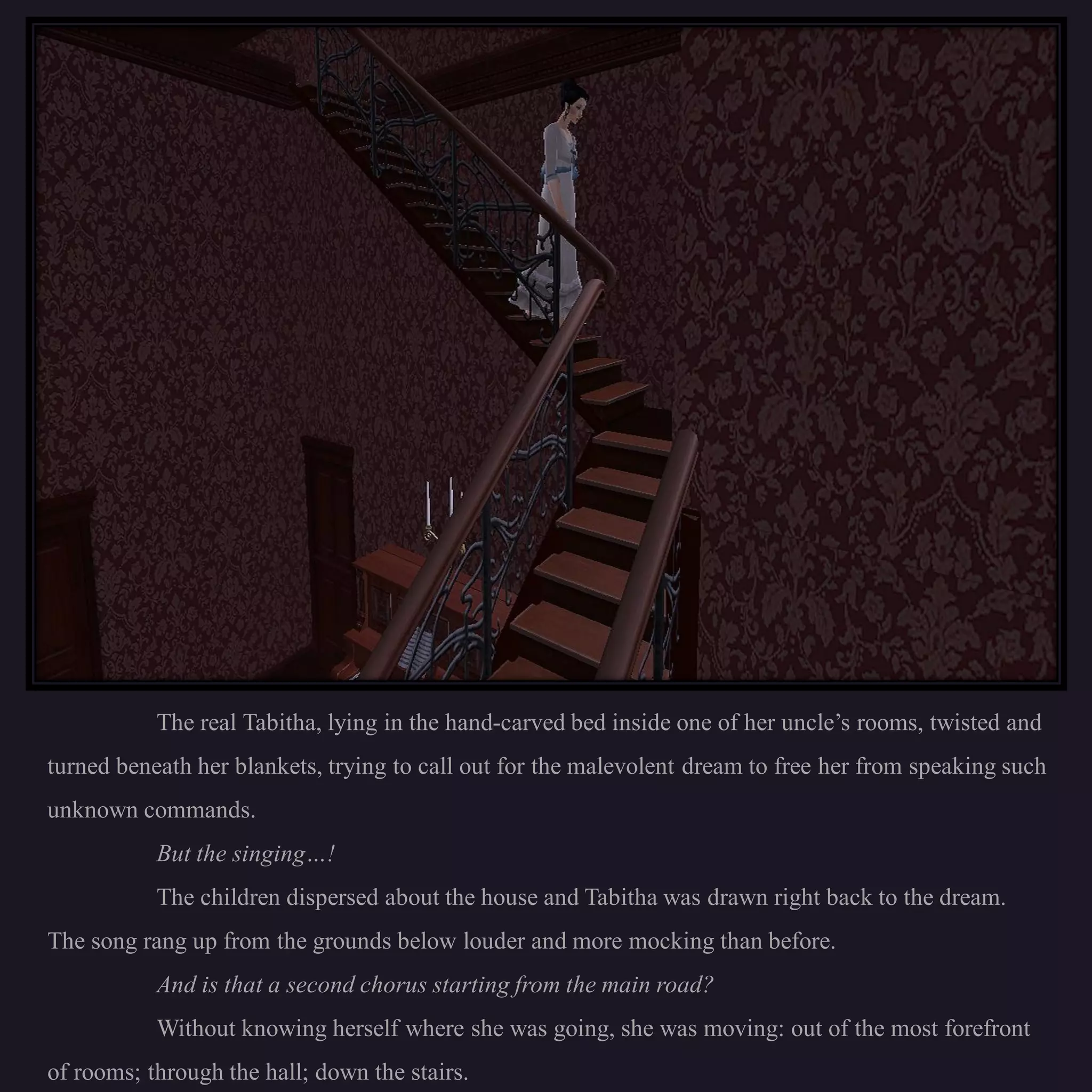
  • 116.
    Inhaling sharply, Tabithatentatively gathered them into her hands. When nothing went bump around her and no chills ran up her spine, she gripped her fist around the trinket and threw on a dress. Then she leapt from the spot where her feet had frozen to the floor and dashed for her bedroom door.
  • 117.
    “Henriette! Henriette!” shecalled, flying past the rooms.
  • 118.
    There was noanswer.
  • 119.
    “You! You, there!Come here!” she hollered, peering through the front window.
  • 120.
    Tabitha backtracked andpoked her head out into the crisp morning air. Julien sauntered up to the sill. “Good morning to you, too,” he sounded off sarcastically, dropping his rake into the bushes.
  • 121.
    “Have you seenHenriette?” she asked quickly. “Can’t say that I have,” he shrugged aloofly. “Darn,” she grumbled. “Is it my uncle? Has she gone to retrieve him?”
  • 122.
    Julien cast hera knowing, and yet cocky, smile as he backed slowly from the window. “Like I said,” he shrugged. “Your uncle is a very difficult man to get a hold of.” “And Henriette?” “Difficult,” he ventured. “And you?” “Not always so.”
  • 123.
    Tabitha slumped againstthe window frame, staring thoughtfully at the trinket in her hand. “I’ve had the craziest dreams about them, lately,” she admitted. “I even had a nightmare that my uncle was murdered for trying to bring Henriette and their child back from the dead – and that I broke the spell that kept them all here as spells. “Julien… do you think the manor is haunted? Hmm? Julien?”
  • 124.
    But the groundswere already empty.