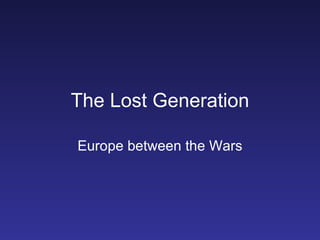
The Lost Generation Europe between the Wars
Surrealism
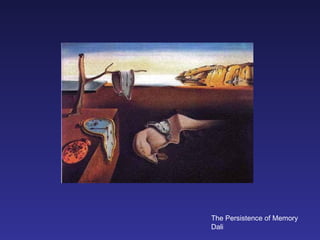
The Persistence of Memory Dali
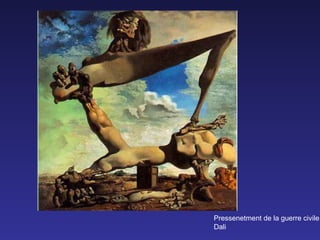
Pressenetment de la guerre civile Dali
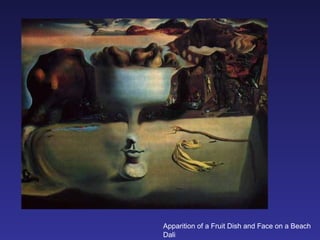
Apparition of a Fruit Dish and Face on a Beach Dali
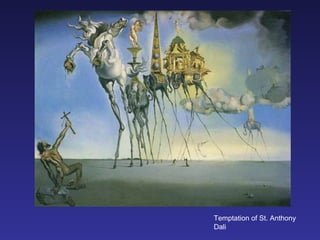
Temptation of St. Anthony Dali
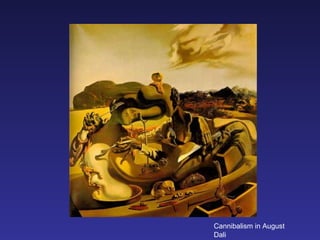
Cannibalism in August Dali
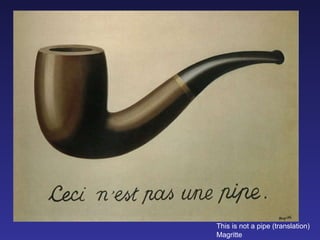
This is not a pipe (translation) Magritte
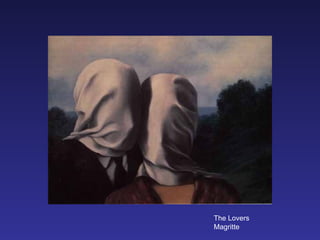
The Lovers Magritte
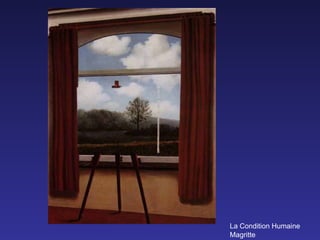
La Condition Humaine Magritte
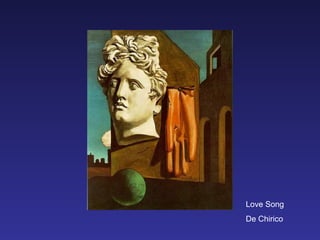
Love Song De Chirico
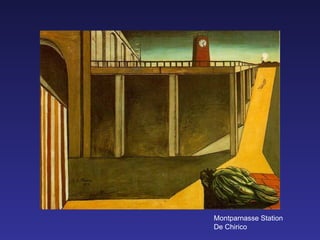
Montparnasse Station De Chirico
Cubism
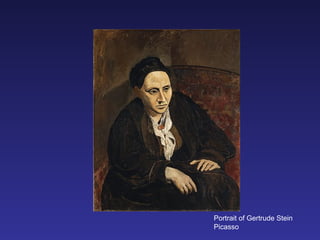
Portrait of Gertrude Stein Picasso
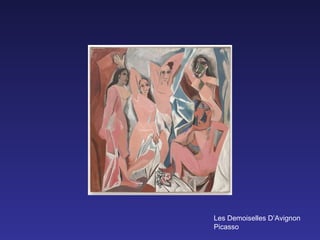
Les Demoiselles D’Avignon Picasso
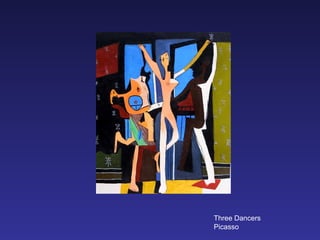
Three Dancers Picasso
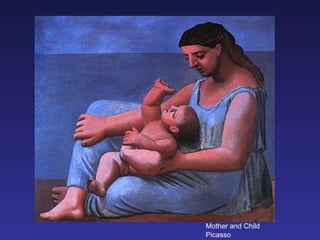
Mother and Child Picasso
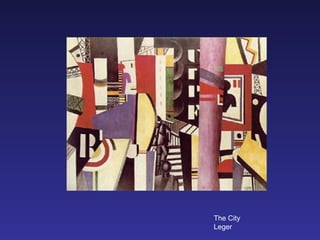
The City Leger
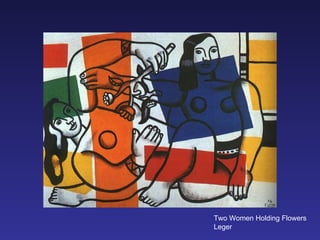
Two Women Holding Flowers Leger
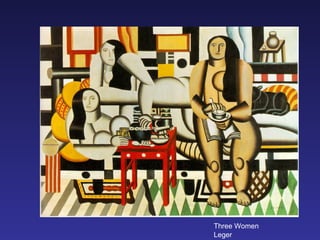
Three Women Leger
Dada
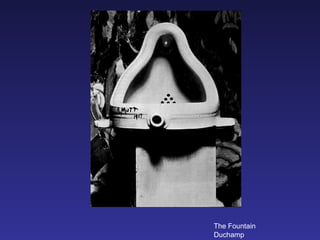
The Fountain Duchamp
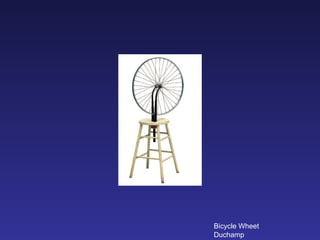
Bicycle Wheet Duchamp
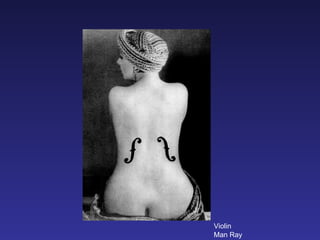
Violin Man Ray
Literature
Enrique Remarque,  All Quiet on the Western Front Robert Graves,  Good-bye to All that,  1929

The Lost Generation

Editor's Notes

  • #2 Post-World War I modernism includes well-known surrealists such as Salvador Dalí, René Magritte (particularly the famous Ceçi n'est pas une pipe , 1926), the Dada movement, or cubists such as Pablo Picasso ( Three Dancers , 1925, or Artist and Subject , 1928,) The the rejection of pre-World War I values is found in the loss of form and composition in many modern works. Fernand Léger's The City (1919) and many of his other works, in which the human form is reduced to simple geometric shapes is reminiscent of replaceable machine parts, illustrating the mechanization and emptiness of the interwar decades. In the same way, the late nineteenth century's optimism and pessimism are instantly recognizable works such as George Seurat's Sunday Afternoon at Le Grande Jatte (1884-6) and Edvard Munch's The Scream (1905). These examples ground the art in a broader context of the changing social circumstances, such as industrialization, international tensions, and reinforces the impact of art, which reinforces the historical transformation.