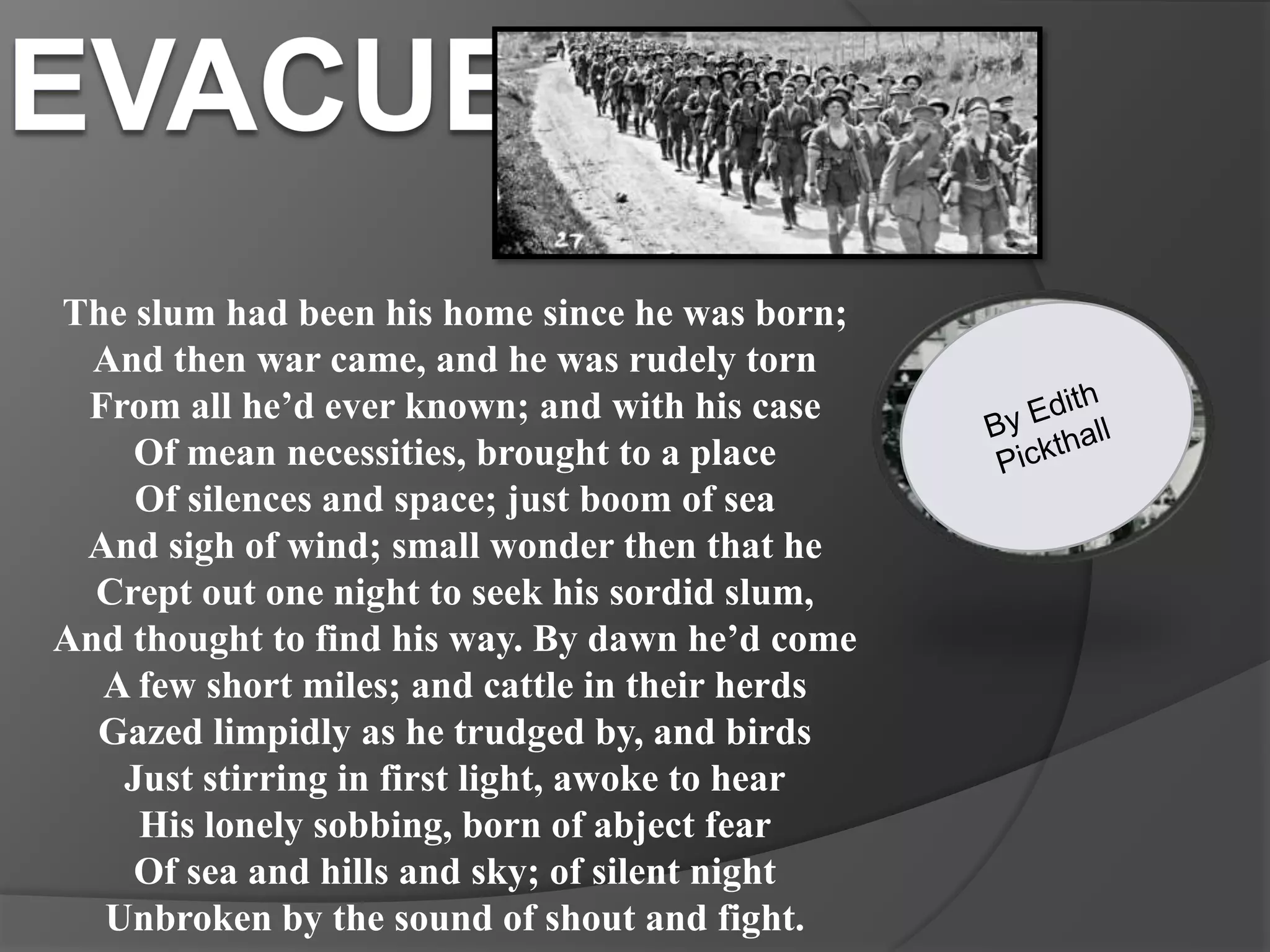
The slum had been his home since he was born;
And then war came, and he was rudely torn
From all he’d ever known; and with his case
Of mean necessities, brought to a place
Of silences and space; just boom of sea
And sigh of wind; small wonder then that he
Crept out one night to seek his sordid slum,
And thought to find his way. By dawn he’d come
A few short miles; and cattle in their herds
Gazed limpidly as he trudged by, and birds
Just stirring in first light, awoke to hear
His lonely sobbing, born of abject fear
Of sea and hills and sky; of silent night
Unbroken by the sound of shout and fight.
Life In WWI
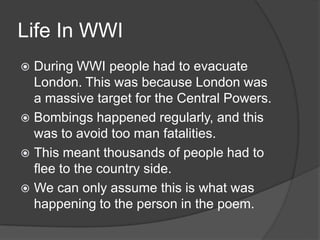
During WWI people had to evacuate
London. This was because London was
a massive target for the Central Powers.
 Bombings happened regularly, and this
was to avoid too man fatalities.
 This meant thousands of people had to
flee to the country side.
 We can only assume this is what was
happening to the person in the poem.

Theme
This poem is set during World War I. It is
about a male, who was forced to
evacuate his slum. When he escaped to
get home, he found his slum, however, it
was not as he had left it. He stayed in
the area until morning arrived, as he
sobbed. This illustrates sadness and
depression and makes the reader feel
sympathy for him.
Feeling
This poem creates a very emotional bond with the
reader and the writer. The reader follows the male
in the poem through his short experience in the
war, showing the hardship of the war, exposing the
reality. I found that I could get a better
understanding of the war for people in slums like
this. As opposed to thinking of the people actually
fighting in it, Pickthall takes a step back and
shines a light on the civilians, completely innocent,
yet suffering. Through this emotional contact, I find
Pickthall creates a very emotional bond with the
reader.
Poetic Technique
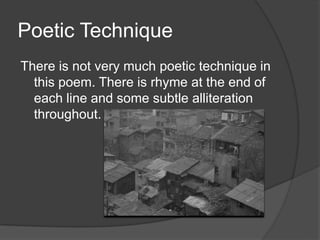
There is not very much poetic technique in
this poem. There is rhyme at the end of
each line and some subtle alliteration
throughout.
Edith (Marjorie) Pickthall
•

•

•
•
•

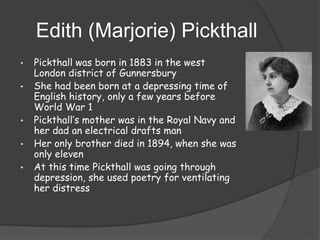
Pickthall was born in 1883 in the west
London district of Gunnersbury
She had been born at a depressing time of
English history, only a few years before
World War 1
Pickthall’s mother was in the Royal Navy and
her dad an electrical drafts man
Her only brother died in 1894, when she was
only eleven
At this time Pickthall was going through
depression, she used poetry for ventilating
her distress
Later Life
•

•
•
•
•
•

•

Later, Pickthall and her family left to go to
Canada
Here she was soon thought to be “the best
Canadian poet of her generation”
Although Pickthall was born in England, her
father was Canadian
Pickthall returned to England in 1912
Here she continued with her career as a novelist,
poet and librarian
Eight years after her return to England she went
back to Canada
She died April 22, 1922 aged 38 in Vancouver

Evacuee

  • 1.
    The slum hadbeen his home since he was born; And then war came, and he was rudely torn From all he’d ever known; and with his case Of mean necessities, brought to a place Of silences and space; just boom of sea And sigh of wind; small wonder then that he Crept out one night to seek his sordid slum, And thought to find his way. By dawn he’d come A few short miles; and cattle in their herds Gazed limpidly as he trudged by, and birds Just stirring in first light, awoke to hear His lonely sobbing, born of abject fear Of sea and hills and sky; of silent night Unbroken by the sound of shout and fight.
  • 2.
    Life In WWI DuringWWI people had to evacuate London. This was because London was a massive target for the Central Powers.  Bombings happened regularly, and this was to avoid too man fatalities.  This meant thousands of people had to flee to the country side.  We can only assume this is what was happening to the person in the poem. 
  • 3.
    Theme This poem isset during World War I. It is about a male, who was forced to evacuate his slum. When he escaped to get home, he found his slum, however, it was not as he had left it. He stayed in the area until morning arrived, as he sobbed. This illustrates sadness and depression and makes the reader feel sympathy for him.
  • 4.
    Feeling This poem createsa very emotional bond with the reader and the writer. The reader follows the male in the poem through his short experience in the war, showing the hardship of the war, exposing the reality. I found that I could get a better understanding of the war for people in slums like this. As opposed to thinking of the people actually fighting in it, Pickthall takes a step back and shines a light on the civilians, completely innocent, yet suffering. Through this emotional contact, I find Pickthall creates a very emotional bond with the reader.
  • 5.
    Poetic Technique There isnot very much poetic technique in this poem. There is rhyme at the end of each line and some subtle alliteration throughout.
  • 6.
    Edith (Marjorie) Pickthall • • • • • Pickthallwas born in 1883 in the west London district of Gunnersbury She had been born at a depressing time of English history, only a few years before World War 1 Pickthall’s mother was in the Royal Navy and her dad an electrical drafts man Her only brother died in 1894, when she was only eleven At this time Pickthall was going through depression, she used poetry for ventilating her distress
  • 7.
    Later Life • • • • • • • Later, Pickthalland her family left to go to Canada Here she was soon thought to be “the best Canadian poet of her generation” Although Pickthall was born in England, her father was Canadian Pickthall returned to England in 1912 Here she continued with her career as a novelist, poet and librarian Eight years after her return to England she went back to Canada She died April 22, 1922 aged 38 in Vancouver