The  Human Capital Architect Andy Berman
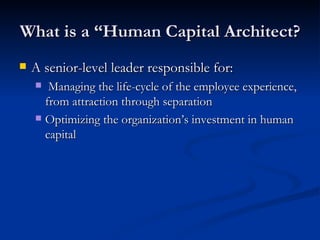
What is a “Human Capital Architect? A senior-level leader responsible for: Managing the life-cycle of the employee experience, from attraction through separation Optimizing the organization’s investment in human capital
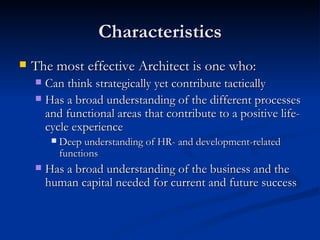
Characteristics The most effective Architect is one who: Can think strategically yet contribute tactically Has a broad understanding of the different processes and functional areas that contribute to a positive life-cycle experience Deep understanding of HR- and development-related functions Has a broad understanding of the business and the human capital needed for current and future success
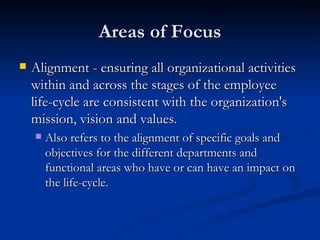
Areas of Focus Alignment - ensuring all organizational activities within and across the stages of the employee life-cycle are consistent with the organization's mission, vision and values.  Also refers to the alignment of specific goals and objectives for the different departments and functional areas who have or can have an impact on the life-cycle.
Areas of Focus, continued Consistency - the manner in which activities are completed within and across stages of the life-cycle. Although the employee experience at the individual level may vary dramatically from person to person during specific stages of the life-cycle, the overall experience across the employee population should be consistent, appropriate and defensible.
Areas of Focus, continued Efficacy - performance against desired outcomes. Is the organization achieving the desired outcomes from each stage of the life-cycle? Is the employee experiencing each stage as the organization intended?  Also incorporates certain aspects of "efficiency' and "quality", i.e., is the organization achieving desired outcomes in the most cost-effective, efficient manner possible?
The Stages of the Employee Life-Cycle
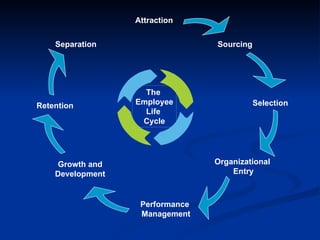
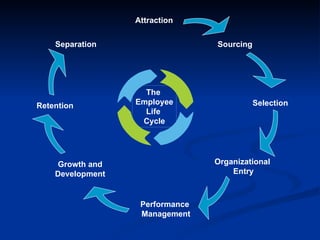
Attraction Separation The  Employee Life  Cycle Sourcing Selection Organizational  Entry Performance  Management Retention Growth and Development
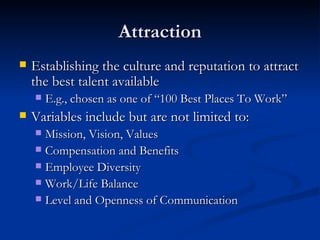
Attraction Establishing the culture and reputation to attract the best talent available  E.g., chosen as one of “100 Best Places To Work” Variables include but are not limited to: Mission, Vision, Values Compensation and Benefits Employee Diversity Work/Life Balance Level and Openness of Communication
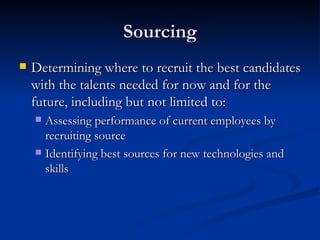
Sourcing Determining where to recruit the best candidates with the talents needed for now and for the future, including but not limited to: Assessing performance of current employees by recruiting source Identifying best sources for new technologies and skills
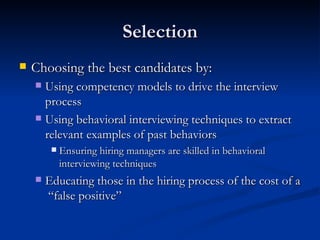
Selection Choosing the best candidates by: Using competency models to drive the interview process Using behavioral interviewing techniques to extract relevant examples of past behaviors Ensuring hiring managers are skilled in behavioral interviewing techniques Educating those in the hiring process of the cost of a  “false positive”
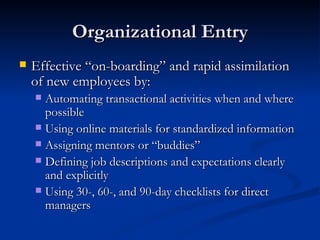
Organizational Entry Effective “on-boarding” and rapid assimilation of new employees by: Automating transactional activities when and where possible  Using online materials for standardized information  Assigning mentors or “buddies”  Defining job descriptions and expectations clearly and explicitly Using 30-, 60-, and 90-day checklists for direct managers
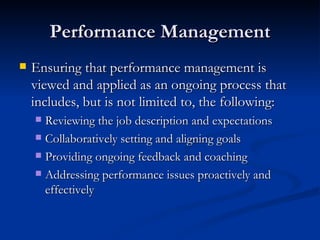
Performance Management Ensuring that performance management is viewed and applied as an ongoing process that includes, but is not limited to, the following: Reviewing the job description and expectations Collaboratively setting and aligning goals Providing ongoing feedback and coaching Addressing performance issues proactively and effectively
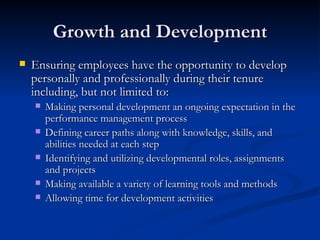
Growth and Development Ensuring employees have the opportunity to develop personally and professionally during their tenure including, but not limited to: Making personal development an ongoing expectation in the performance management process Defining career paths along with knowledge, skills, and abilities needed at each step Identifying and utilizing developmental roles, assignments and projects Making available a variety of learning tools and methods Allowing time for development activities
Retention Ensuring the organization remains market competitive in key areas such as:  Compensation Benefits Reputation
Separation Managing voluntary and involuntary turnover and ensuring that the employee’s separation experience is as positive as possible
Attraction Separation The  Employee Life  Cycle Sourcing Selection Organizational  Entry Performance  Management Retention Growth and Development

The Human Capital Architect Rev032810

  • 1.
    The HumanCapital Architect Andy Berman
  • 2.
    What is a“Human Capital Architect? A senior-level leader responsible for: Managing the life-cycle of the employee experience, from attraction through separation Optimizing the organization’s investment in human capital
  • 3.
    Characteristics The mosteffective Architect is one who: Can think strategically yet contribute tactically Has a broad understanding of the different processes and functional areas that contribute to a positive life-cycle experience Deep understanding of HR- and development-related functions Has a broad understanding of the business and the human capital needed for current and future success
  • 4.
    Areas of FocusAlignment - ensuring all organizational activities within and across the stages of the employee life-cycle are consistent with the organization's mission, vision and values. Also refers to the alignment of specific goals and objectives for the different departments and functional areas who have or can have an impact on the life-cycle.
  • 5.
    Areas of Focus,continued Consistency - the manner in which activities are completed within and across stages of the life-cycle. Although the employee experience at the individual level may vary dramatically from person to person during specific stages of the life-cycle, the overall experience across the employee population should be consistent, appropriate and defensible.
  • 6.
    Areas of Focus,continued Efficacy - performance against desired outcomes. Is the organization achieving the desired outcomes from each stage of the life-cycle? Is the employee experiencing each stage as the organization intended? Also incorporates certain aspects of "efficiency' and "quality", i.e., is the organization achieving desired outcomes in the most cost-effective, efficient manner possible?
  • 7.
    The Stages ofthe Employee Life-Cycle
  • 8.
    Attraction Separation The Employee Life Cycle Sourcing Selection Organizational Entry Performance Management Retention Growth and Development
  • 9.
    Attraction Establishing theculture and reputation to attract the best talent available E.g., chosen as one of “100 Best Places To Work” Variables include but are not limited to: Mission, Vision, Values Compensation and Benefits Employee Diversity Work/Life Balance Level and Openness of Communication
  • 10.
    Sourcing Determining whereto recruit the best candidates with the talents needed for now and for the future, including but not limited to: Assessing performance of current employees by recruiting source Identifying best sources for new technologies and skills
  • 11.
    Selection Choosing thebest candidates by: Using competency models to drive the interview process Using behavioral interviewing techniques to extract relevant examples of past behaviors Ensuring hiring managers are skilled in behavioral interviewing techniques Educating those in the hiring process of the cost of a “false positive”
  • 12.
    Organizational Entry Effective“on-boarding” and rapid assimilation of new employees by: Automating transactional activities when and where possible Using online materials for standardized information Assigning mentors or “buddies” Defining job descriptions and expectations clearly and explicitly Using 30-, 60-, and 90-day checklists for direct managers
  • 13.
    Performance Management Ensuringthat performance management is viewed and applied as an ongoing process that includes, but is not limited to, the following: Reviewing the job description and expectations Collaboratively setting and aligning goals Providing ongoing feedback and coaching Addressing performance issues proactively and effectively
  • 14.
    Growth and DevelopmentEnsuring employees have the opportunity to develop personally and professionally during their tenure including, but not limited to: Making personal development an ongoing expectation in the performance management process Defining career paths along with knowledge, skills, and abilities needed at each step Identifying and utilizing developmental roles, assignments and projects Making available a variety of learning tools and methods Allowing time for development activities
  • 15.
    Retention Ensuring theorganization remains market competitive in key areas such as: Compensation Benefits Reputation
  • 16.
    Separation Managing voluntaryand involuntary turnover and ensuring that the employee’s separation experience is as positive as possible
  • 17.
    Attraction Separation The Employee Life Cycle Sourcing Selection Organizational Entry Performance Management Retention Growth and Development