
{
The Great Gatsby
Chapter Nine.
Ami Matthews
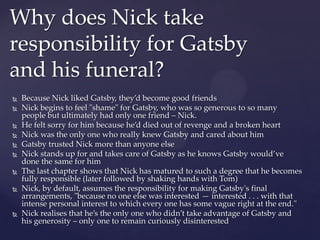
 Because Nick liked Gatsby, they’d become good friends
 Nick begins to feel "shame" for Gatsby, who was so generous to so many
people but ultimately had only one friend – Nick.
 He felt sorry for him because he’d died out of revenge and a broken heart
 Nick was the only one who really knew Gatsby and cared about him
 Gatsby trusted Nick more than anyone else
 Nick stands up for and takes care of Gatsby as he knows Gatsby would’ve
done the same for him
 The last chapter shows that Nick has matured to such a degree that he becomes
fully responsible (later followed by shaking hands with Tom)
 Nick, by default, assumes the responsibility for making Gatsby's final
arrangements, "because no one else was interested — interested . . . with that
intense personal interest to which every one has some vague right at the end."
 Nick realises that he’s the only one who didn’t take advantage of Gatsby and
his generosity – only one to remain curiously disinterested
Why does Nick take
responsibility for Gatsby
and his funeral?
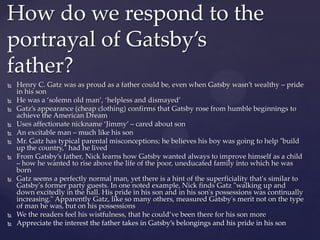
 Henry C. Gatz was as proud as a father could be, even when Gatsby wasn’t wealthy – pride
in his son
 He was a ‘solemn old man’, ‘helpless and dismayed’
 Gatz’s appearance (cheap clothing) confirms that Gatsby rose from humble beginnings to
achieve the American Dream
 Uses affectionate nickname ‘Jimmy’ – cared about son
 An excitable man – much like his son
 Mr. Gatz has typical parental misconceptions; he believes his boy was going to help "build
up the country," had he lived
 From Gatsby’s father, Nick learns how Gatsby wanted always to improve himself as a child
– how he wanted to rise above the life of the poor, uneducated family into which he was
born
 Gatz seems a perfectly normal man, yet there is a hint of the superficiality that's similar to
Gatsby's former party guests. In one noted example, Nick finds Gatz "walking up and
down excitedly in the hall. His pride in his son and in his son's possessions was continually
increasing." Apparently Gatz, like so many others, measured Gatsby's merit not on the type
of man he was, but on his possessions
 We the readers feel his wistfulness, that he could’ve been there for his son more
 Appreciate the interest the father takes in Gatsby’s belongings and his pride in his son
How do we respond to the
portrayal of Gatsby’s
father?
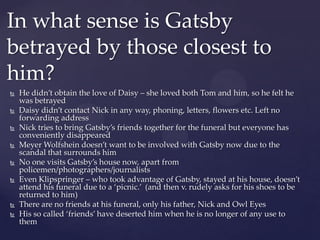
 He didn’t obtain the love of Daisy – she loved both Tom and him, so he felt he
was betrayed
 Daisy didn’t contact Nick in any way, phoning, letters, flowers etc. Left no
forwarding address
 Nick tries to bring Gatsby’s friends together for the funeral but everyone has
conveniently disappeared
 Meyer Wolfshein doesn’t want to be involved with Gatsby now due to the
scandal that surrounds him
 No one visits Gatsby’s house now, apart from
policemen/photographers/journalists
 Even Klipspringer – who took advantage of Gatsby, stayed at his house, doesn’t
attend his funeral due to a ‘picnic.’ (and then v. rudely asks for his shoes to be
returned to him)
 There are no friends at his funeral, only his father, Nick and Owl Eyes
 His so called ‘friends’ have deserted him when he is no longer of any use to
them
In what sense is Gatsby
betrayed by those closest to
him?
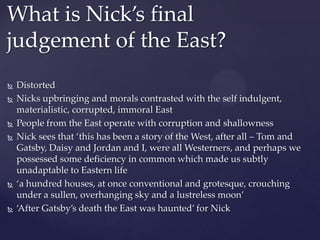
 Distorted
 Nicks upbringing and morals contrasted with the self indulgent,
materialistic, corrupted, immoral East
 People from the East operate with corruption and shallowness
 Nick sees that ‘this has been a story of the West, after all – Tom and
Gatsby, Daisy and Jordan and I, were all Westerners, and perhaps we
possessed some deficiency in common which made us subtly
unadaptable to Eastern life
 ‘a hundred houses, at once conventional and grotesque, crouching
under a sullen, overhanging sky and a lustreless moon’
 ‘After Gatsby’s death the East was haunted’ for Nick
What is Nick’s final
judgement of the East?
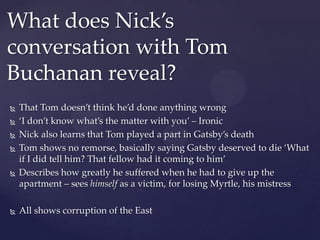
 That Tom doesn’t think he’d done anything wrong
 ‘I don’t know what’s the matter with you’ – Ironic
 Nick also learns that Tom played a part in Gatsby’s death
 Tom shows no remorse, basically saying Gatsby deserved to die ‘What
if I did tell him? That fellow had it coming to him’
 Describes how greatly he suffered when he had to give up the
apartment – sees himself as a victim, for losing Myrtle, his mistress
 All shows corruption of the East
What does Nick’s
conversation with Tom
Buchanan reveal?
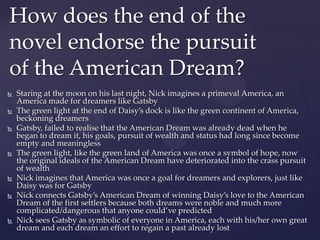
 Staring at the moon on his last night, Nick imagines a primeval America, an
America made for dreamers like Gatsby
 The green light at the end of Daisy’s dock is like the green continent of America,
beckoning dreamers
 Gatsby, failed to realise that the American Dream was already dead when he
began to dream it, his goals, pursuit of wealth and status had long since become
empty and meaningless
 The green light, like the green land of America was once a symbol of hope, now
the original ideals of the American Dream have deteriorated into the crass pursuit
of wealth
 Nick imagines that America was once a goal for dreamers and explorers, just like
Daisy was for Gatsby
 Nick connects Gatsby’s American Dream of winning Daisy’s love to the American
Dream of the first settlers because both dreams were noble and much more
complicated/dangerous that anyone could’ve predicted
 Nick sees Gatsby as symbolic of everyone in America, each with his/her own great
dream and each dream an effort to regain a past already lost
How does the end of the
novel endorse the pursuit
of the American Dream?

The Great Gatsby CHAPTER NINE ANALYSIS

  • 1.
    { The Great Gatsby ChapterNine. Ami Matthews
  • 2.
     Because Nickliked Gatsby, they’d become good friends  Nick begins to feel "shame" for Gatsby, who was so generous to so many people but ultimately had only one friend – Nick.  He felt sorry for him because he’d died out of revenge and a broken heart  Nick was the only one who really knew Gatsby and cared about him  Gatsby trusted Nick more than anyone else  Nick stands up for and takes care of Gatsby as he knows Gatsby would’ve done the same for him  The last chapter shows that Nick has matured to such a degree that he becomes fully responsible (later followed by shaking hands with Tom)  Nick, by default, assumes the responsibility for making Gatsby's final arrangements, "because no one else was interested — interested . . . with that intense personal interest to which every one has some vague right at the end."  Nick realises that he’s the only one who didn’t take advantage of Gatsby and his generosity – only one to remain curiously disinterested Why does Nick take responsibility for Gatsby and his funeral?
  • 3.
     Henry C.Gatz was as proud as a father could be, even when Gatsby wasn’t wealthy – pride in his son  He was a ‘solemn old man’, ‘helpless and dismayed’  Gatz’s appearance (cheap clothing) confirms that Gatsby rose from humble beginnings to achieve the American Dream  Uses affectionate nickname ‘Jimmy’ – cared about son  An excitable man – much like his son  Mr. Gatz has typical parental misconceptions; he believes his boy was going to help "build up the country," had he lived  From Gatsby’s father, Nick learns how Gatsby wanted always to improve himself as a child – how he wanted to rise above the life of the poor, uneducated family into which he was born  Gatz seems a perfectly normal man, yet there is a hint of the superficiality that's similar to Gatsby's former party guests. In one noted example, Nick finds Gatz "walking up and down excitedly in the hall. His pride in his son and in his son's possessions was continually increasing." Apparently Gatz, like so many others, measured Gatsby's merit not on the type of man he was, but on his possessions  We the readers feel his wistfulness, that he could’ve been there for his son more  Appreciate the interest the father takes in Gatsby’s belongings and his pride in his son How do we respond to the portrayal of Gatsby’s father?
  • 4.
     He didn’tobtain the love of Daisy – she loved both Tom and him, so he felt he was betrayed  Daisy didn’t contact Nick in any way, phoning, letters, flowers etc. Left no forwarding address  Nick tries to bring Gatsby’s friends together for the funeral but everyone has conveniently disappeared  Meyer Wolfshein doesn’t want to be involved with Gatsby now due to the scandal that surrounds him  No one visits Gatsby’s house now, apart from policemen/photographers/journalists  Even Klipspringer – who took advantage of Gatsby, stayed at his house, doesn’t attend his funeral due to a ‘picnic.’ (and then v. rudely asks for his shoes to be returned to him)  There are no friends at his funeral, only his father, Nick and Owl Eyes  His so called ‘friends’ have deserted him when he is no longer of any use to them In what sense is Gatsby betrayed by those closest to him?
  • 5.
     Distorted  Nicksupbringing and morals contrasted with the self indulgent, materialistic, corrupted, immoral East  People from the East operate with corruption and shallowness  Nick sees that ‘this has been a story of the West, after all – Tom and Gatsby, Daisy and Jordan and I, were all Westerners, and perhaps we possessed some deficiency in common which made us subtly unadaptable to Eastern life  ‘a hundred houses, at once conventional and grotesque, crouching under a sullen, overhanging sky and a lustreless moon’  ‘After Gatsby’s death the East was haunted’ for Nick What is Nick’s final judgement of the East?
  • 6.
     That Tomdoesn’t think he’d done anything wrong  ‘I don’t know what’s the matter with you’ – Ironic  Nick also learns that Tom played a part in Gatsby’s death  Tom shows no remorse, basically saying Gatsby deserved to die ‘What if I did tell him? That fellow had it coming to him’  Describes how greatly he suffered when he had to give up the apartment – sees himself as a victim, for losing Myrtle, his mistress  All shows corruption of the East What does Nick’s conversation with Tom Buchanan reveal?
  • 7.
     Staring atthe moon on his last night, Nick imagines a primeval America, an America made for dreamers like Gatsby  The green light at the end of Daisy’s dock is like the green continent of America, beckoning dreamers  Gatsby, failed to realise that the American Dream was already dead when he began to dream it, his goals, pursuit of wealth and status had long since become empty and meaningless  The green light, like the green land of America was once a symbol of hope, now the original ideals of the American Dream have deteriorated into the crass pursuit of wealth  Nick imagines that America was once a goal for dreamers and explorers, just like Daisy was for Gatsby  Nick connects Gatsby’s American Dream of winning Daisy’s love to the American Dream of the first settlers because both dreams were noble and much more complicated/dangerous that anyone could’ve predicted  Nick sees Gatsby as symbolic of everyone in America, each with his/her own great dream and each dream an effort to regain a past already lost How does the end of the novel endorse the pursuit of the American Dream?