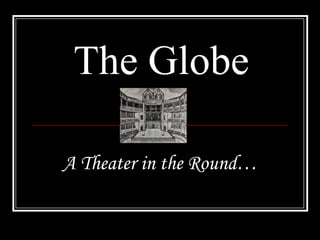
The Globe

A Theater in the Round…
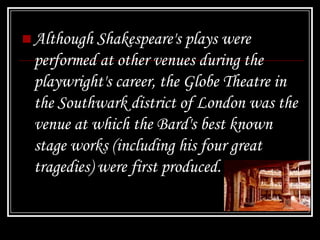
 Although Shakespeare's plays were
 performed at other venues during the
 playwright's career, the Globe Theatre in
 the Southwark district of London was the
 venue at which the Bard's best known
 stage works (including his four great
 tragedies) were first produced.
 The Globe was built during Shakespeare's
 early period in 1599 by one of his long-
 standing associates, Cuthbert Burbage, the
 brother of the most famous Shakespearean
 actor of the Elizabethan Age, Richard
 Burbage.
 The Chamberlain's Company, who built the
  Globe, formed in 1594. At the time, it was one
  of only two licensed acting companies in
  London.
 Among the eight actors in the group were
  Shakespeare and Richard Burbage. Of the
  eight, only six donated the funds used to build
  the theater.
 The Chamberlain's Company later changed its name
  to the King's Company when James took over the
  English throne.
 The Globe was the most important structure to
  Shakespeare's drama because most of his plays were
  written to be performed on the stage of the Globe.


 Romeo and Juliet was not one of them.
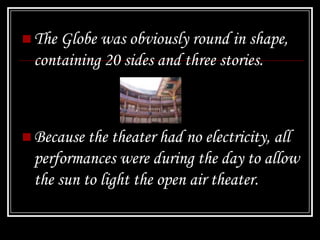
 The Globe was obviously round in shape,
  containing 20 sides and three stories.


 Because the theater had no electricity, all
  performances were during the day to allow
  the sun to light the open air theater.
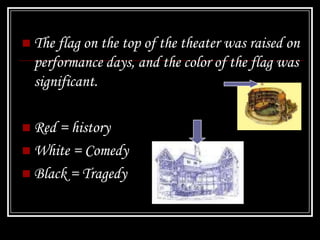
 The flag on the top of the theater was raised on
  performance days, and the color of the flag was
  significant.

 Red = history
 White = Comedy
 Black = Tragedy
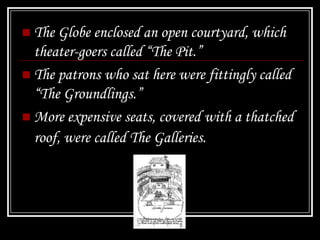
 The Globe enclosed an open courtyard, which
  theater-goers called “The Pit.”
 The patrons who sat here were fittingly called
  “The Groundlings.”
 More expensive seats, covered with a thatched
  roof, were called The Galleries.
 The action took place on the main stage, which
  contained a trap door used for ghosts, demons,
  or even a grave in the famous scene from
  Hamlet.

 The back of the stage was called the inner
  stage, used mostly for indoor scenes. There was
  an “inner below” and an “inner above.”
 In Shakespeare’s times no women were
 allowed to act, which is probably why
 there are more men’s parts than women’s
 in his plays.

 The productions did not have scenery and
 had very few props.
Tragically, the original Globe burned
 down in 1613 due to a cannon shot used
 as a prop during a performance of Henry
 VIII.
It was soon rebuilt, though, and remained
 open on its original foundations until the
 Puritans closed it in 1642 and the Globe
 II was torn down two years later to make
 room for housing.
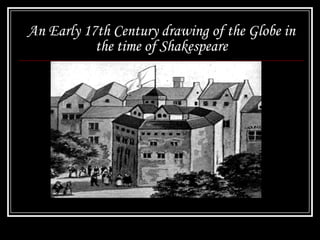
An Early 17th Century drawing of the Globe in
           the time of Shakespeare
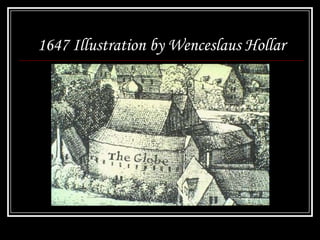
1647 Illustration by Wenceslaus Hollar
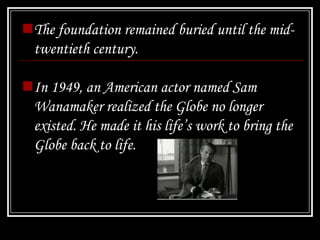
The foundation remained buried until the mid-
 twentieth century.

In 1949, an American actor named Sam
 Wanamaker realized the Globe no longer
 existed. He made it his life’s work to bring the
 Globe back to life.
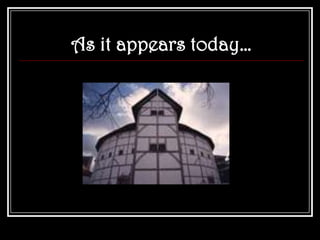
As it appears today…
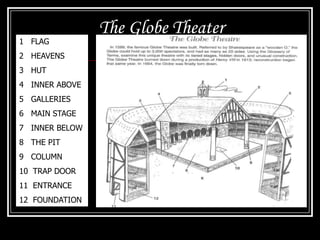
The Globe Theater
1 FLAG
2 HEAVENS
3 HUT
4 INNER ABOVE
5 GALLERIES
6 MAIN STAGE
7 INNER BELOW
8 THE PIT
9 COLUMN
10 TRAP DOOR
11 ENTRANCE
12 FOUNDATION

The Globe

  • 1.
    The Globe A Theaterin the Round…
  • 2.
     Although Shakespeare'splays were performed at other venues during the playwright's career, the Globe Theatre in the Southwark district of London was the venue at which the Bard's best known stage works (including his four great tragedies) were first produced.
  • 3.
     The Globewas built during Shakespeare's early period in 1599 by one of his long- standing associates, Cuthbert Burbage, the brother of the most famous Shakespearean actor of the Elizabethan Age, Richard Burbage.
  • 4.
     The Chamberlain'sCompany, who built the Globe, formed in 1594. At the time, it was one of only two licensed acting companies in London.  Among the eight actors in the group were Shakespeare and Richard Burbage. Of the eight, only six donated the funds used to build the theater.
  • 5.
     The Chamberlain'sCompany later changed its name to the King's Company when James took over the English throne.  The Globe was the most important structure to Shakespeare's drama because most of his plays were written to be performed on the stage of the Globe.  Romeo and Juliet was not one of them.
  • 6.
     The Globewas obviously round in shape, containing 20 sides and three stories.  Because the theater had no electricity, all performances were during the day to allow the sun to light the open air theater.
  • 7.
     The flagon the top of the theater was raised on performance days, and the color of the flag was significant.  Red = history  White = Comedy  Black = Tragedy
  • 8.
     The Globeenclosed an open courtyard, which theater-goers called “The Pit.”  The patrons who sat here were fittingly called “The Groundlings.”  More expensive seats, covered with a thatched roof, were called The Galleries.
  • 9.
     The actiontook place on the main stage, which contained a trap door used for ghosts, demons, or even a grave in the famous scene from Hamlet.  The back of the stage was called the inner stage, used mostly for indoor scenes. There was an “inner below” and an “inner above.”
  • 10.
     In Shakespeare’stimes no women were allowed to act, which is probably why there are more men’s parts than women’s in his plays.  The productions did not have scenery and had very few props.
  • 11.
    Tragically, the originalGlobe burned down in 1613 due to a cannon shot used as a prop during a performance of Henry VIII. It was soon rebuilt, though, and remained open on its original foundations until the Puritans closed it in 1642 and the Globe II was torn down two years later to make room for housing.
  • 12.
    An Early 17thCentury drawing of the Globe in the time of Shakespeare
  • 13.
    1647 Illustration byWenceslaus Hollar
  • 14.
    The foundation remainedburied until the mid- twentieth century. In 1949, an American actor named Sam Wanamaker realized the Globe no longer existed. He made it his life’s work to bring the Globe back to life.
  • 15.
    As it appearstoday…
  • 16.
    The Globe Theater 1FLAG 2 HEAVENS 3 HUT 4 INNER ABOVE 5 GALLERIES 6 MAIN STAGE 7 INNER BELOW 8 THE PIT 9 COLUMN 10 TRAP DOOR 11 ENTRANCE 12 FOUNDATION