foster+freeman
Improving the Quality of Forensic Evidence
foster+freeman
Improving the Quality of Forensic Evidence
foster+freeman
LO O K I N G A H E A D
examining the future
of Secure Documents
foster+freeman
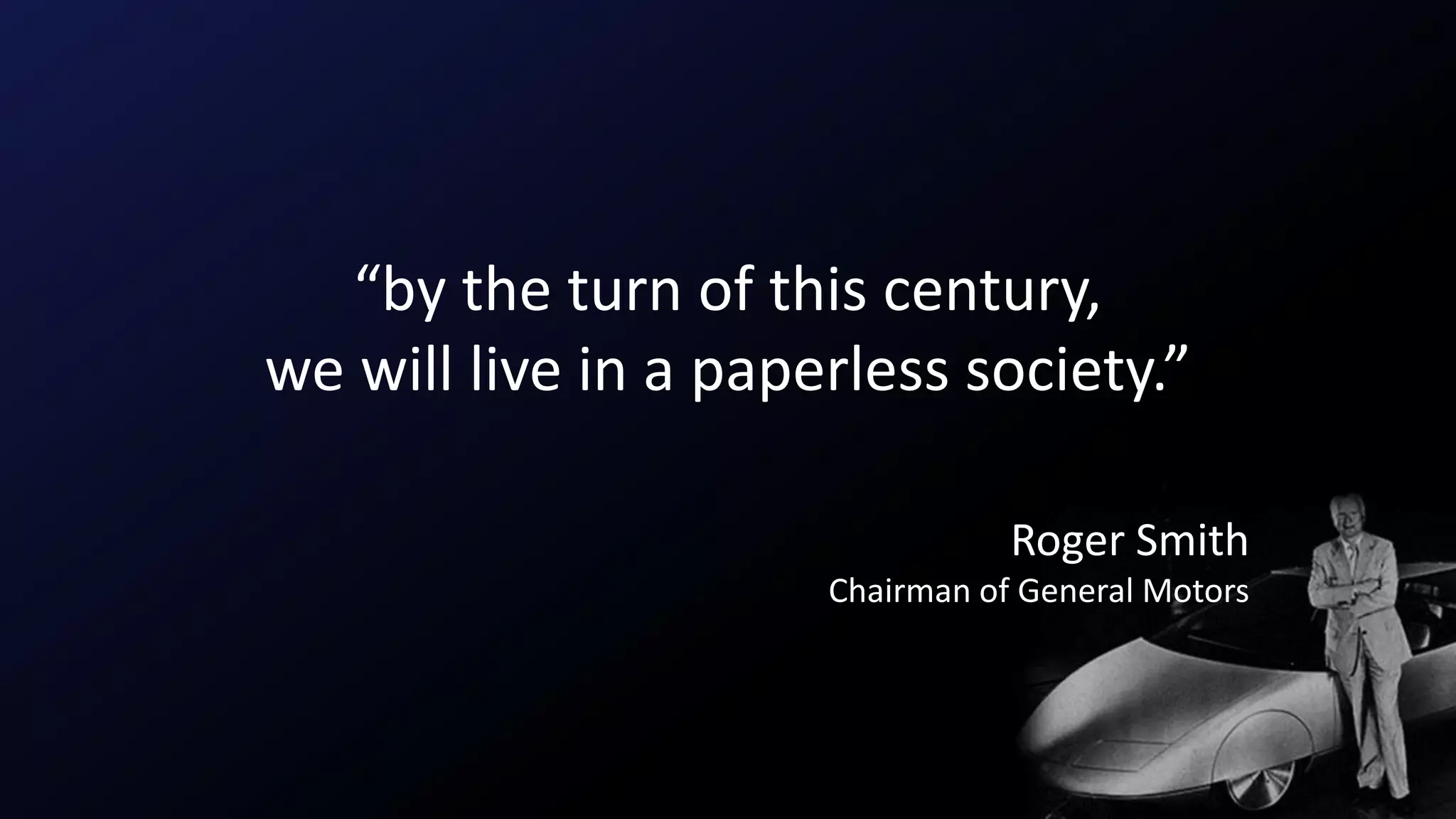
“by the turn of this century,
we will live in a paperless society.”
Roger Smith
Chairman of General Motors
Roger Smith, was always
getting things wrong…
But the idea of a paperless, cashless, fully
digitised society has never gone away
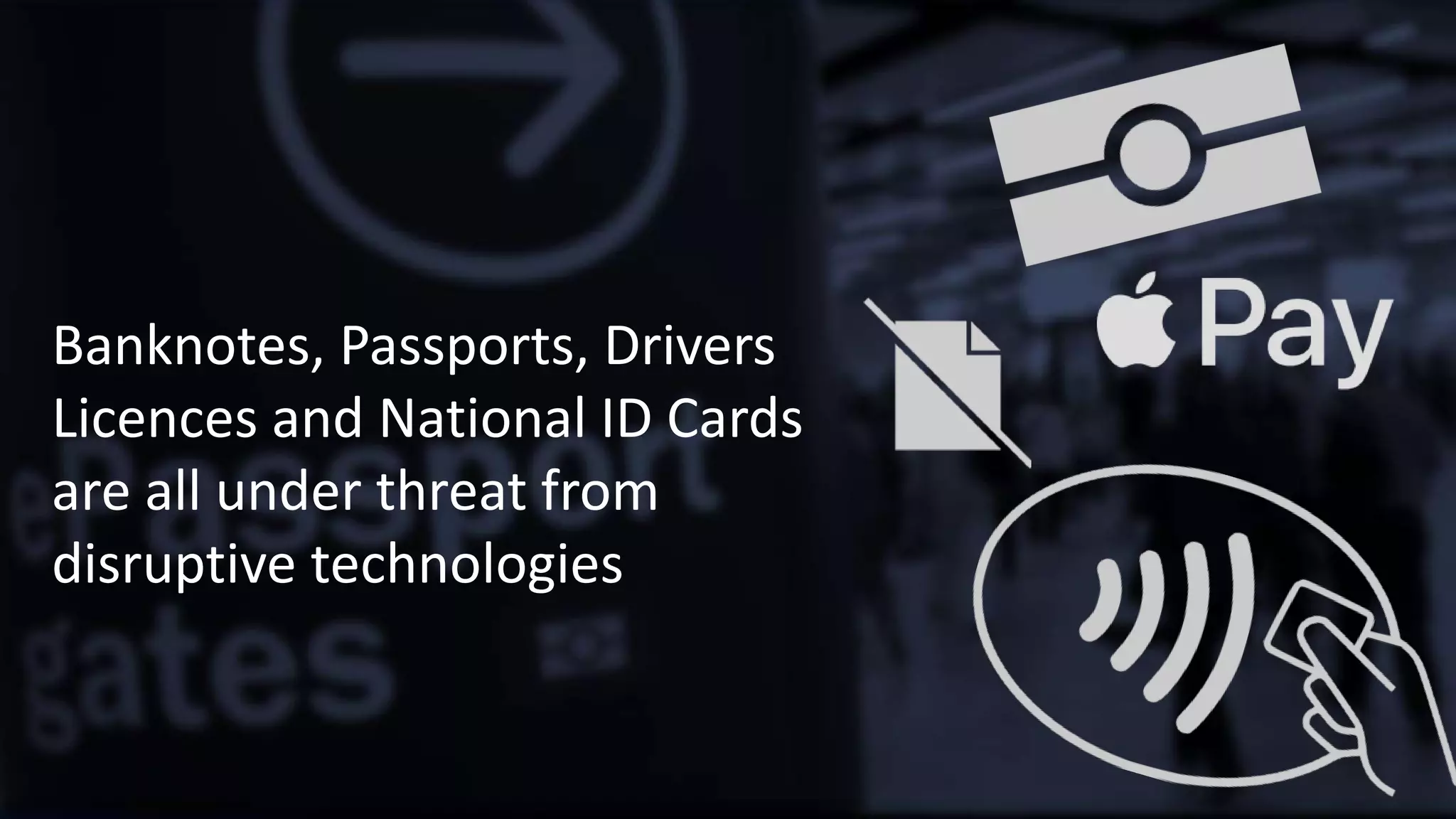
Banknotes, Passports, Drivers
Licences and National ID Cards
are all under threat from
disruptive technologies
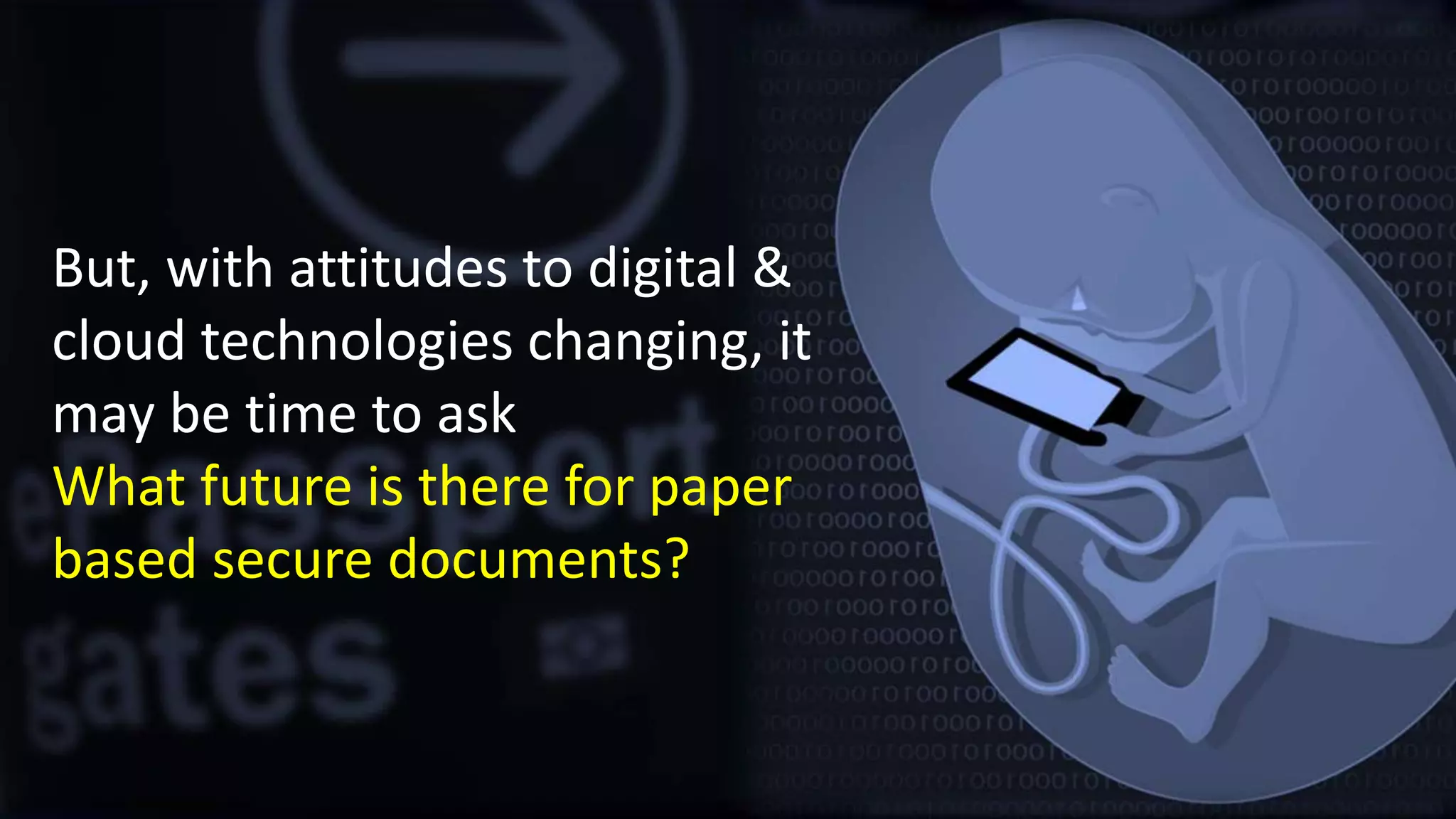
But, with attitudes to digital &
cloud technologies changing, it
may be time to ask
What future is there for paper
based secure documents?
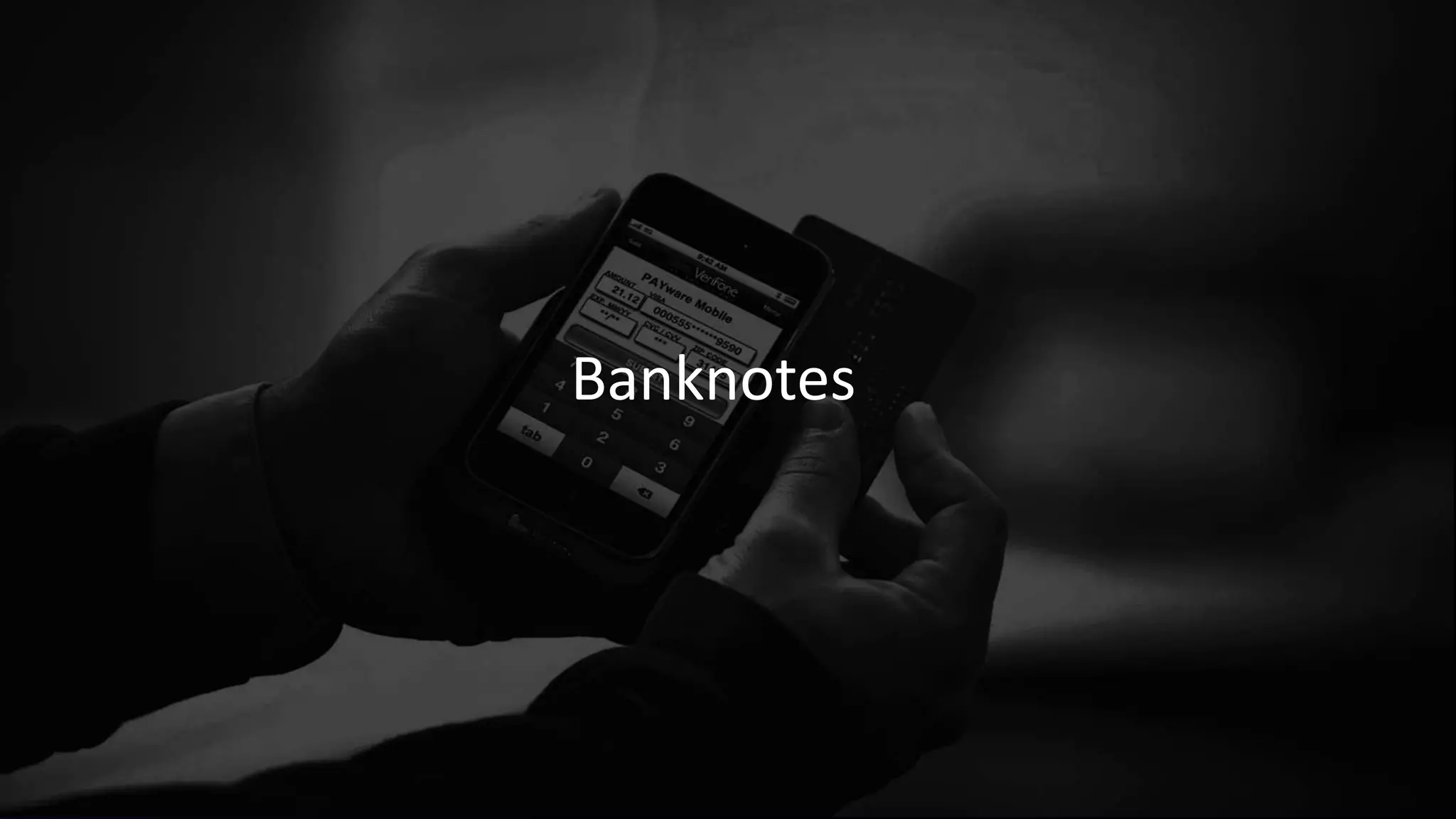
Banknotes
Recent advances in technologies have created
a vast array of payment options for consumers
Denmark has committed to becoming cashless
by 2030, Sweden, Norway & Finland set to follow
Withdrawal of high denomination notes
€500 Euro & ₹1,000
No current plans for a £50 polymer note
But contrary to popular belief,
cash is not going away
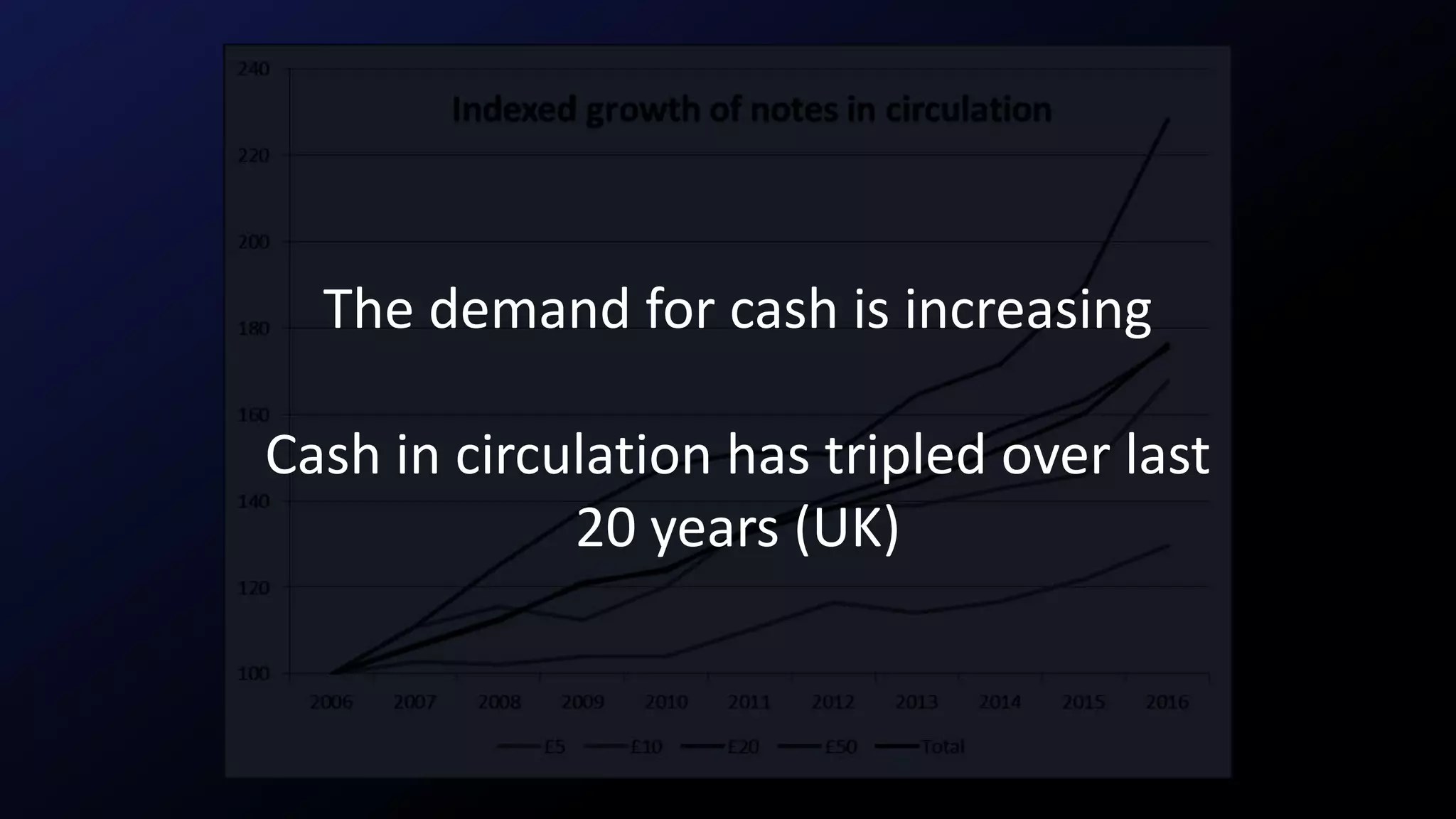
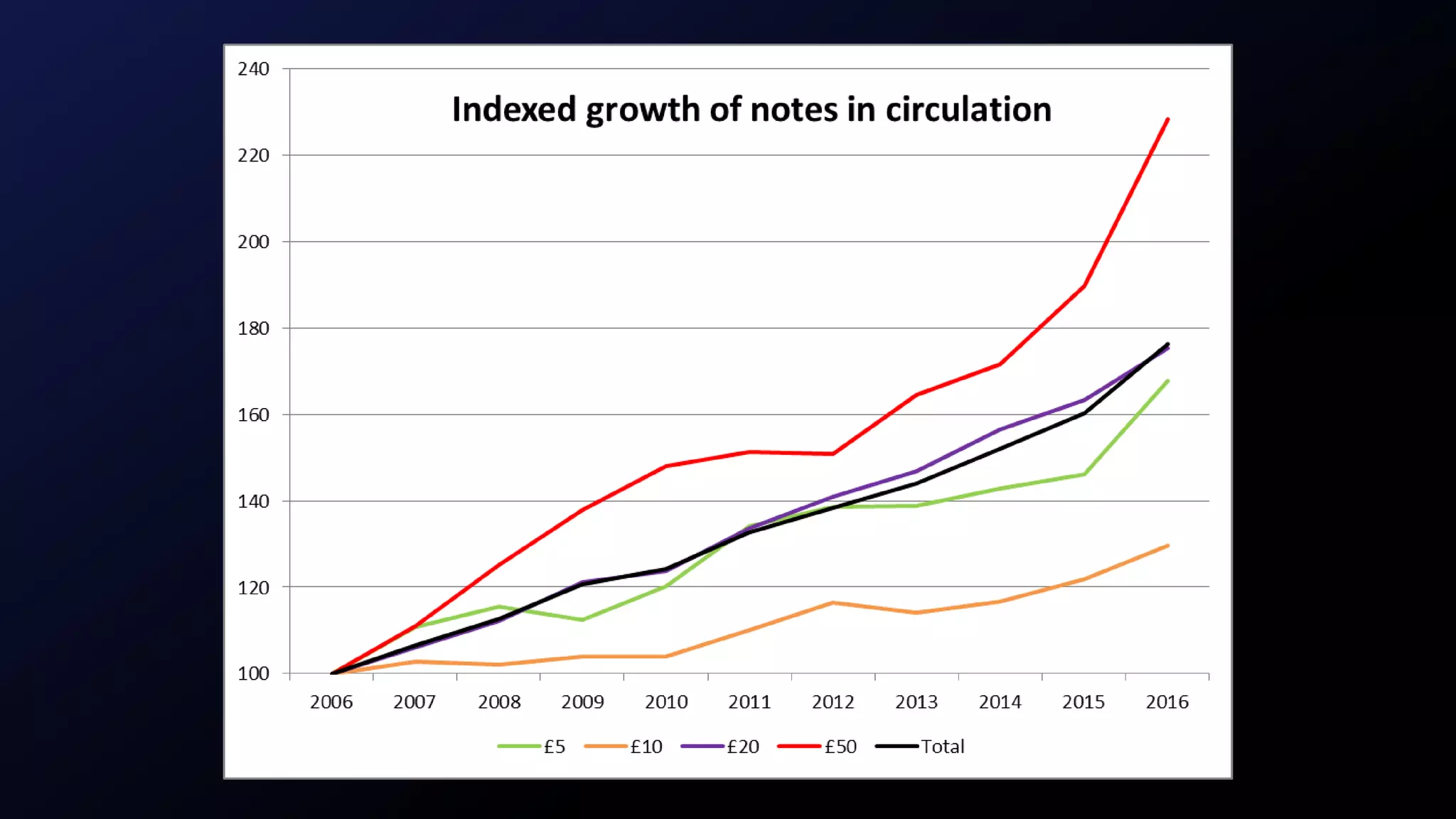
The demand for cash is increasing
Cash in circulation has tripled over last
20 years (UK)
Here to Stay
£ Cash is accepted almost everywhere
£ Cash is anonymous
£ You don’t need a bank account to pay with cash
Not many people knowingly encounter fake notes
but…
Card fraud is increasingly common
The future of Currency
• Advanced ‘Forensic-Level’ Security Features
£ Photopolymer holograms
£ Photonic Inks
£ Micro-optical arrays
£ More?
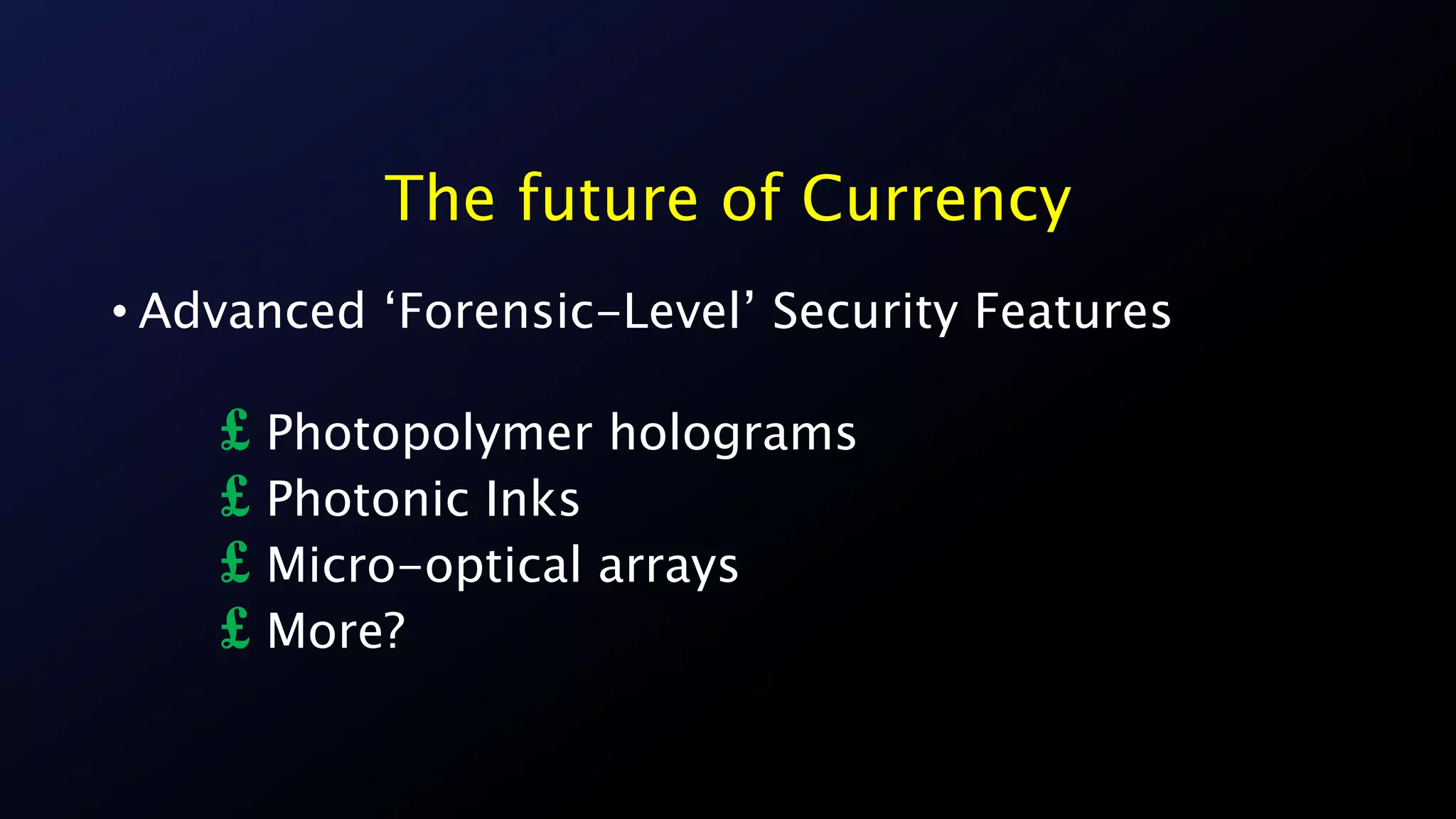
Photopolymer holograms: wafer thin security feature
which can record a volume holographic image
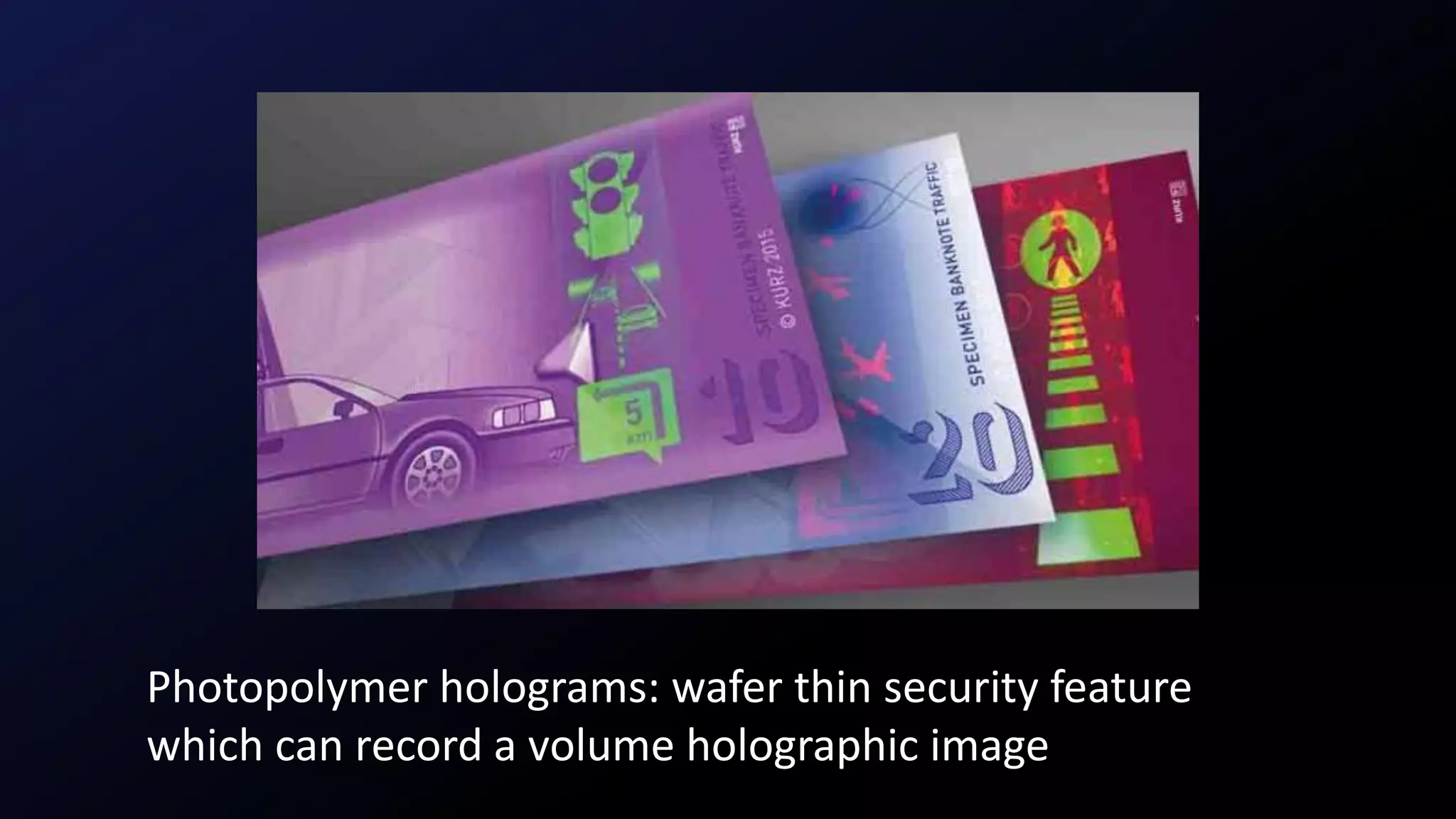
Photonic Inks: a bleach resistant colour-changing material
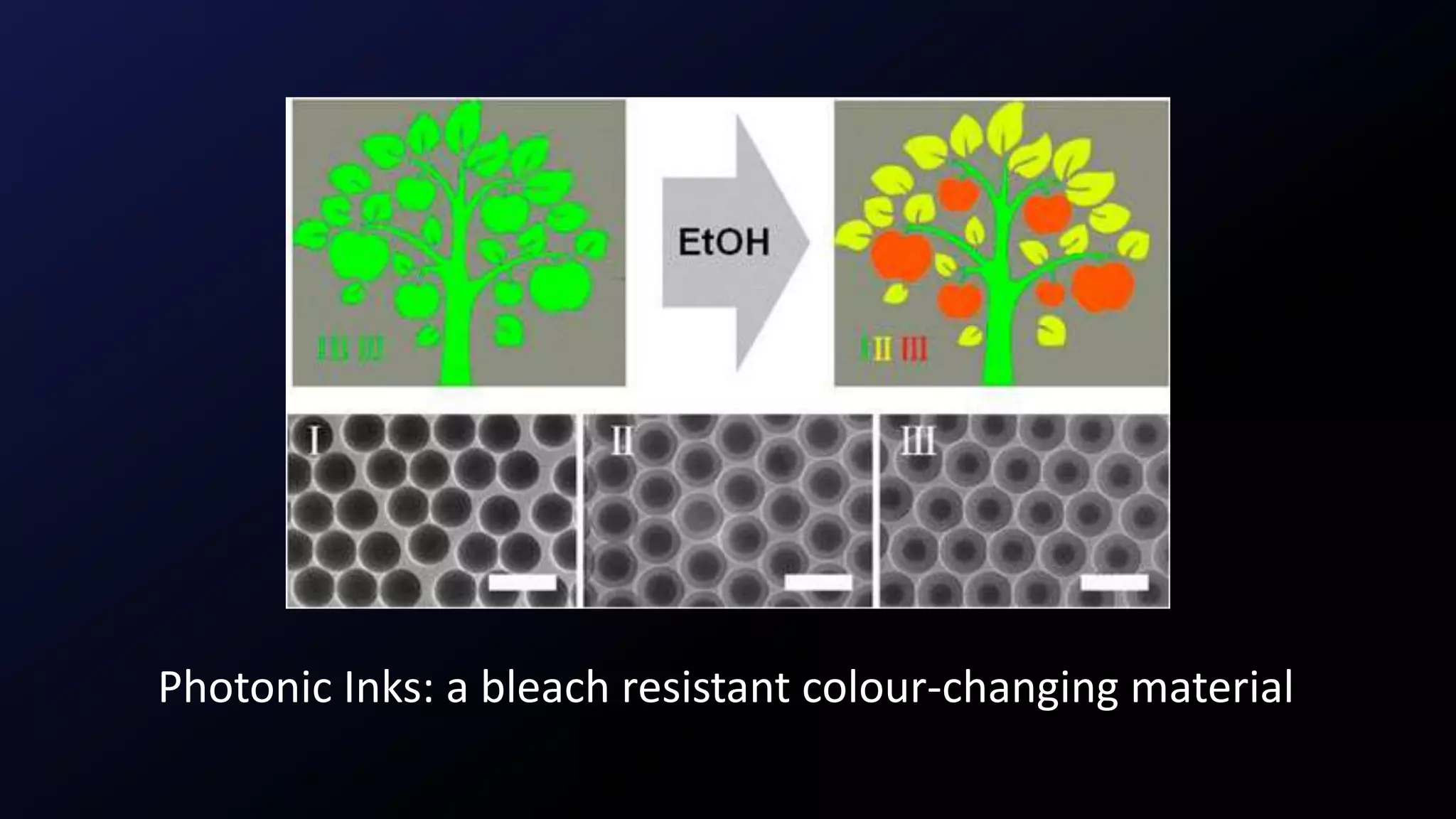
Micro-optical arrays : a premium security feature that creates
the effect of moving images
Passports
Millions of passports are stolen each year
Interpol has a database of stolen passports
going back to 2002
it contains more than 50 million records
More recently, fraudulent passports have
become a high profile problem in the EU, as
hundreds of thousands of migrants try to
enter Europe from war zones like Syria using
either stolen or fabricated documents.
Couldn't we avoid this problem if we used
biological information to identify people instead
of a paper booklet?
Turns out it’s not that easy…
Obstacles to removing passports are:
technological, cultural, political, economical & legal
Then there's the rest of the world:
Passports will remain relevant until the last country
moves to a new form factor.
The future of Passports
Greater proliferation of ePassports
Combine traditional paper document with
biometric features
ePassports are currently used by 120 of 200
ICAO member states
3 generations of ePassport in circulation
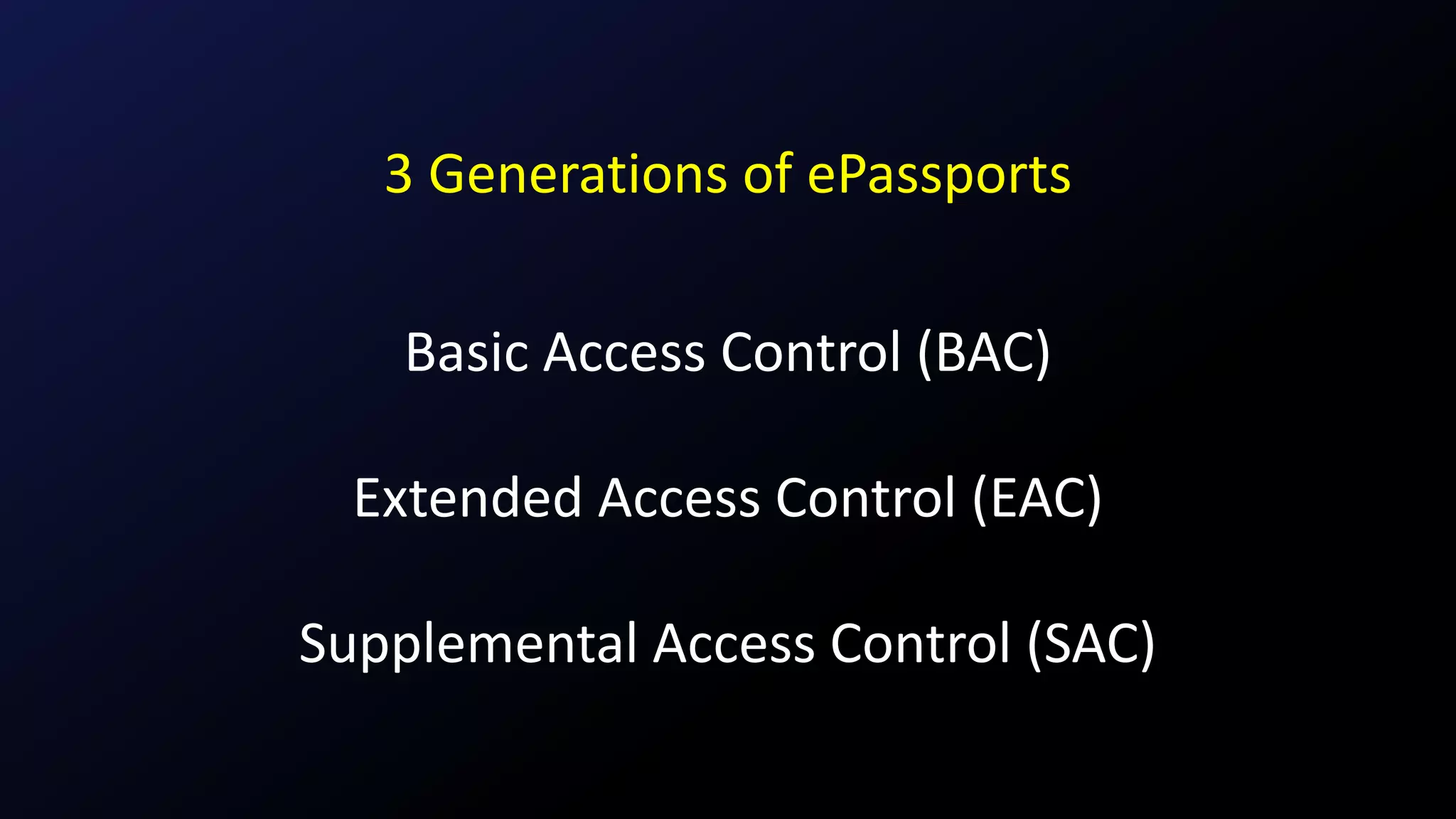
3 Generations of ePassports
Basic Access Control (BAC)
Extended Access Control (EAC)
Supplemental Access Control (SAC)
Basic Access Control (BAC)
Introduced by the ICAO in 2005, BAC is still used by
the majority of ePassports in circulation today.
BAC can store a high-resolution facial image, but
doesn’t offer dedicated protection for additional
types of biometric data.
Extended Access Control (EAC)
Developed in Germany in 2006, EAC builds on BAC to
add dedicated protection for biometric data.
The European Union made EAC mandatory for all
ePassports in June 2009.
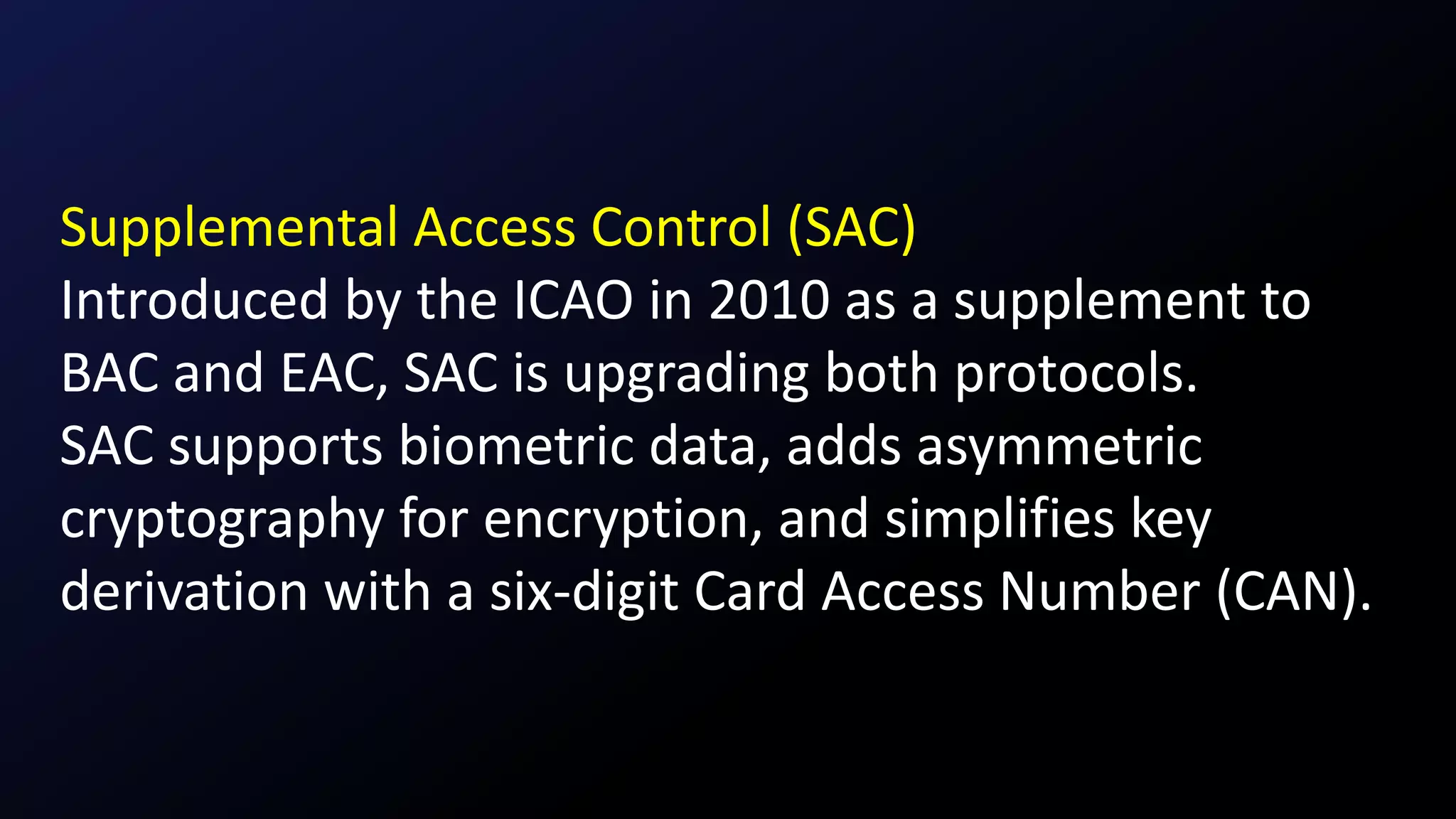
Supplemental Access Control (SAC)
Introduced by the ICAO in 2010 as a supplement to
BAC and EAC, SAC is upgrading both protocols.
SAC supports biometric data, adds asymmetric
cryptography for encryption, and simplifies key
derivation with a six-digit Card Access Number (CAN).
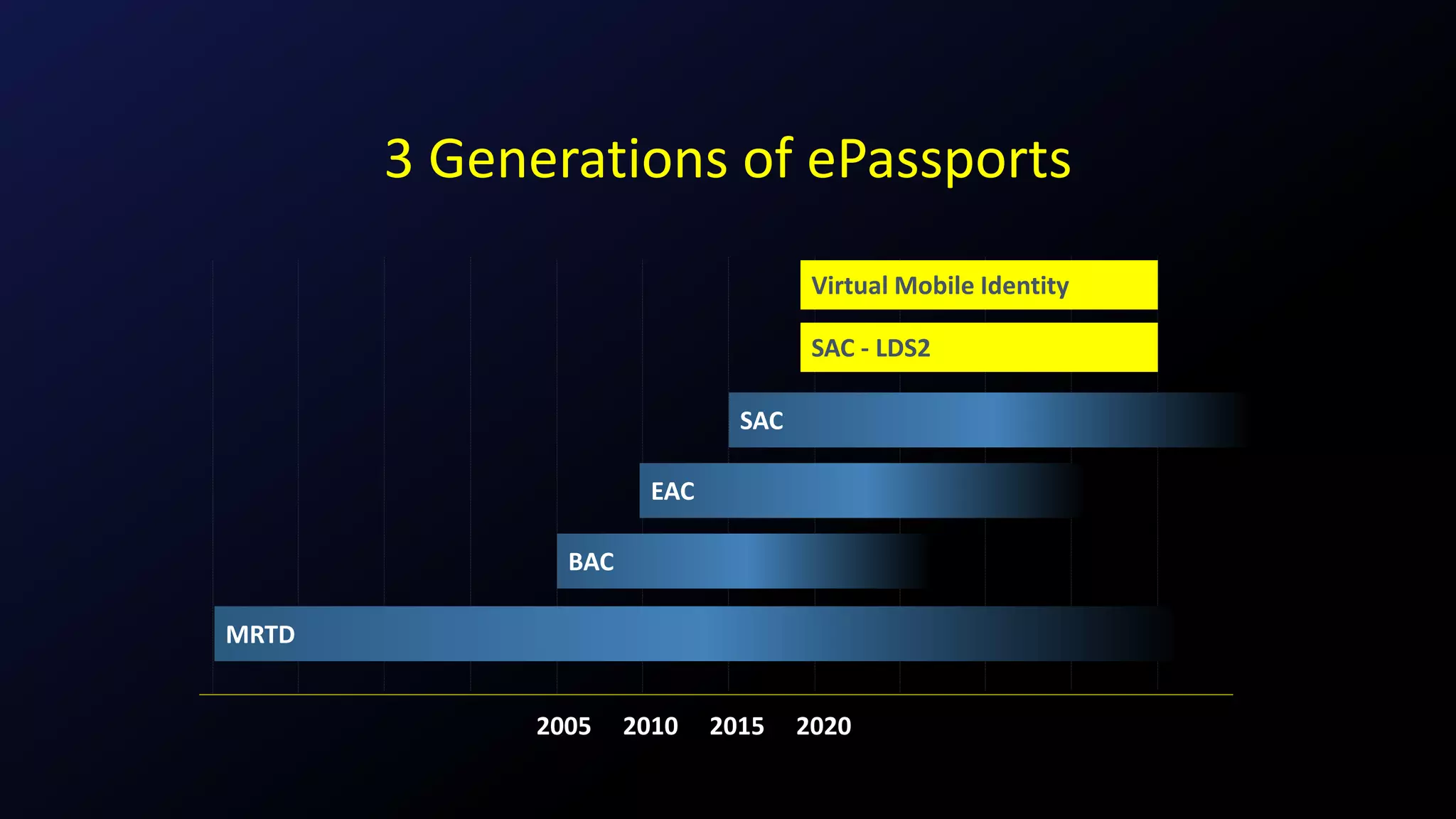
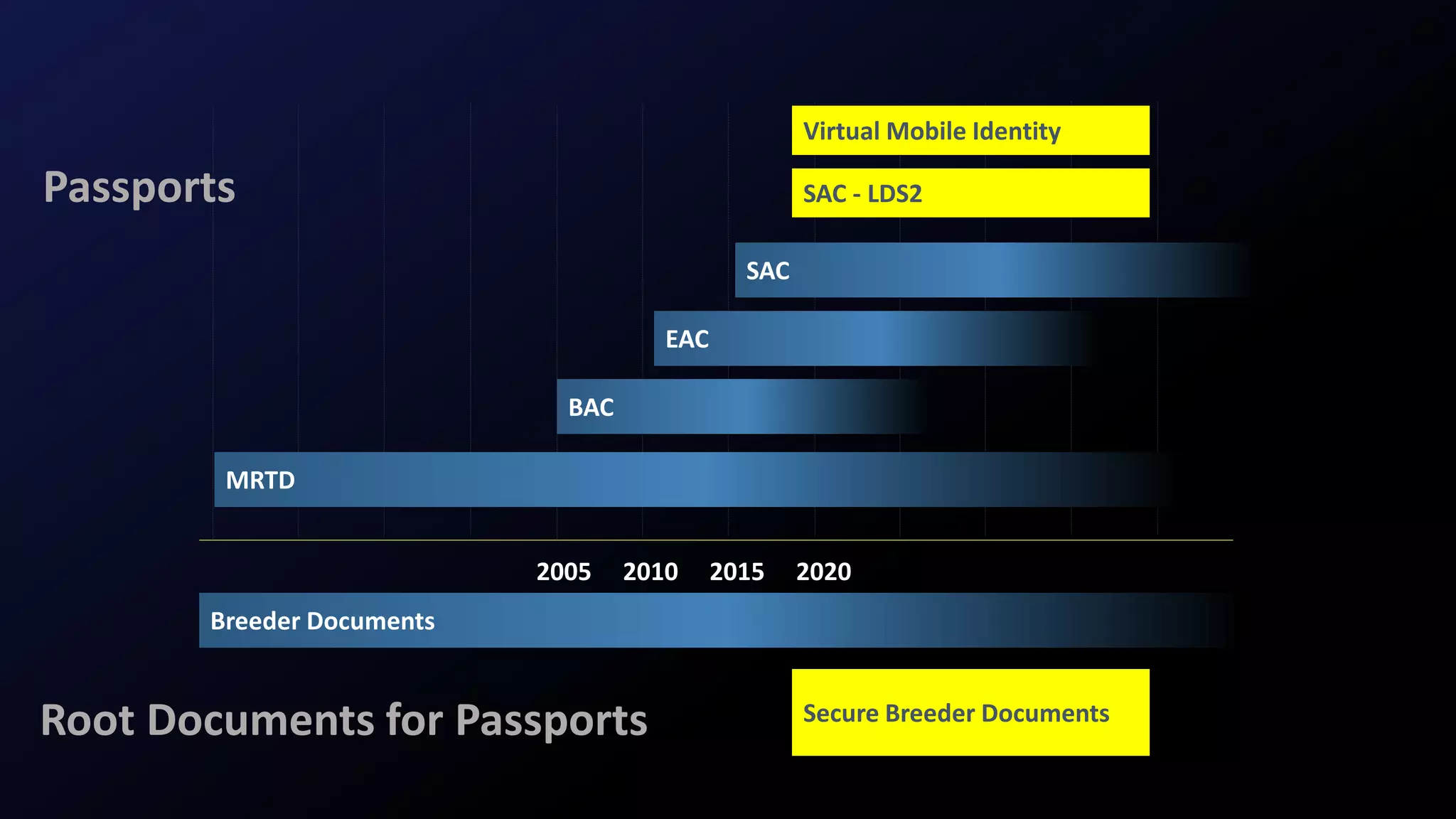
2005 2010 2015 2020
3 Generations of ePassports
MRTD
BAC
EAC
SAC
SAC - LDS2
Virtual Mobile Identity
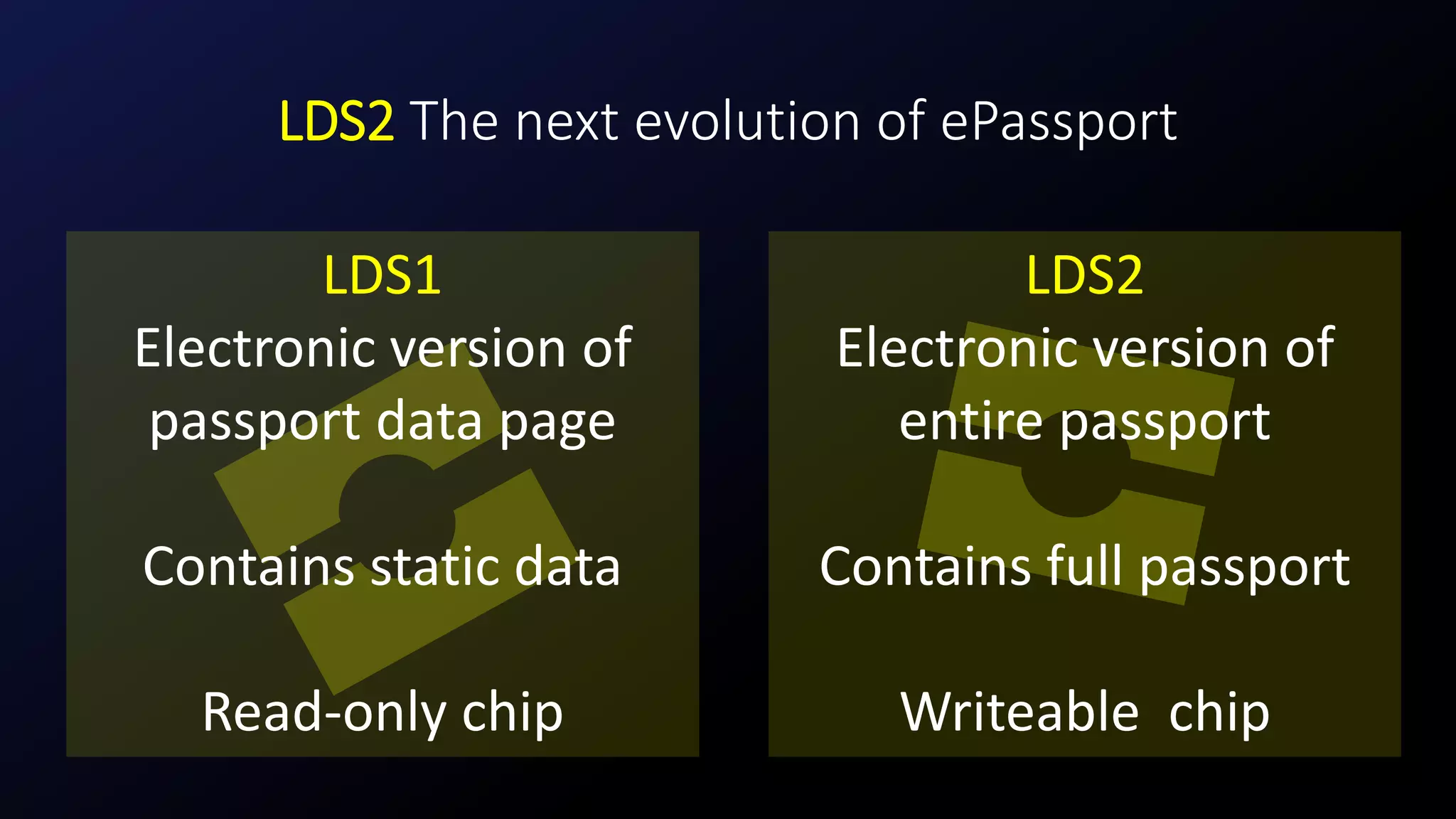
LDS2 The next evolution of ePassport
LDS1
Electronic version of
passport data page
Contains static data
Read-only chip
LDS2
Electronic version of
entire passport
Contains full passport
Writeable chip
LDS2 includes…
Electronic Travel Stamps
•The stamps that show where a traveller has been, and
when, will become digital.
•Electronic travel stamps will enable greater
consistency, enhanced security, easier access to
information, and faster viewing of key details.
LDS2 includes…
Electronic VISAS
•The authorizations that let people enter and stay in a
country will become digital, too.
• An embassy will be able to generate an electronic visa
and add it to the chip, making it easier for people to
get their authorizations in order.
LDS2 includes…
Improved Biometrics
•It will be possible to add a new biometric (such as a
fingerprint or an iris scan) after the passport is issued.
•Additional updates may include a change of address or
a new photo – this will reduce the need to issue new
passports
Virtual Mobile ID (mID)
Advantages
Provides instant updates
Low production costs
Counterfeiting is more
difficult
Disadvantages
Requires a Smart phone
Requires a charged
battery!
Cyber security risk
Mobile ID Implementation
•Some countries have already begun issuing mID’s
Austria, Estonia, Finland, Norway, Oman, Turkey…
•So far mID has always been issued alongside a
traditional passport and has been considered to be a
‘complimentary’ technology
2005 2010 2015 2020
MRTD
BAC
EAC
SAC
SAC - LDS2
Virtual Mobile Identity
Breeder Documents
Secure Breeder Documents
Passports
Root Documents for Passports
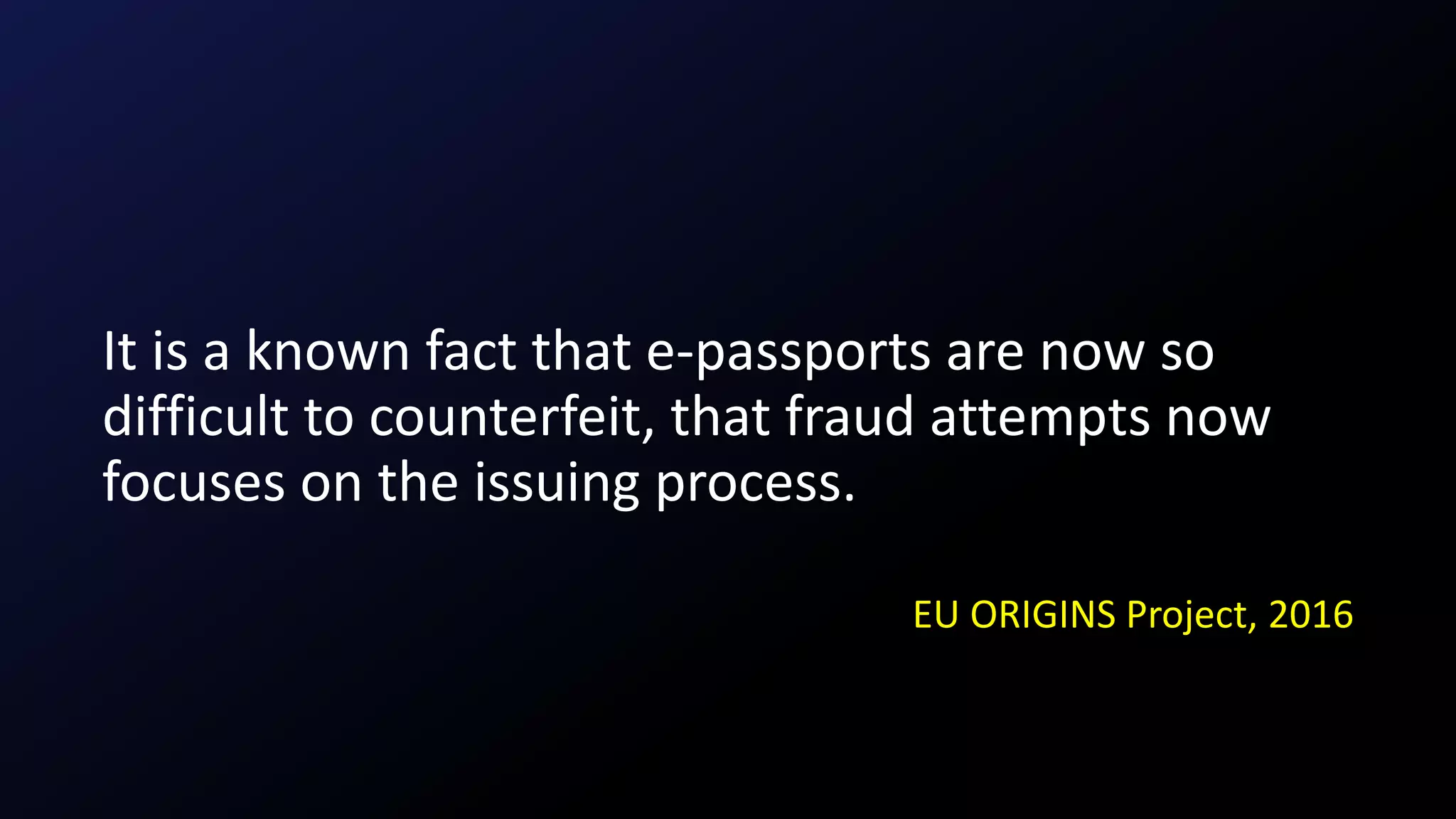
It is a known fact that e-passports are now so
difficult to counterfeit, that fraud attempts now
focuses on the issuing process.
EU ORIGINS Project, 2016
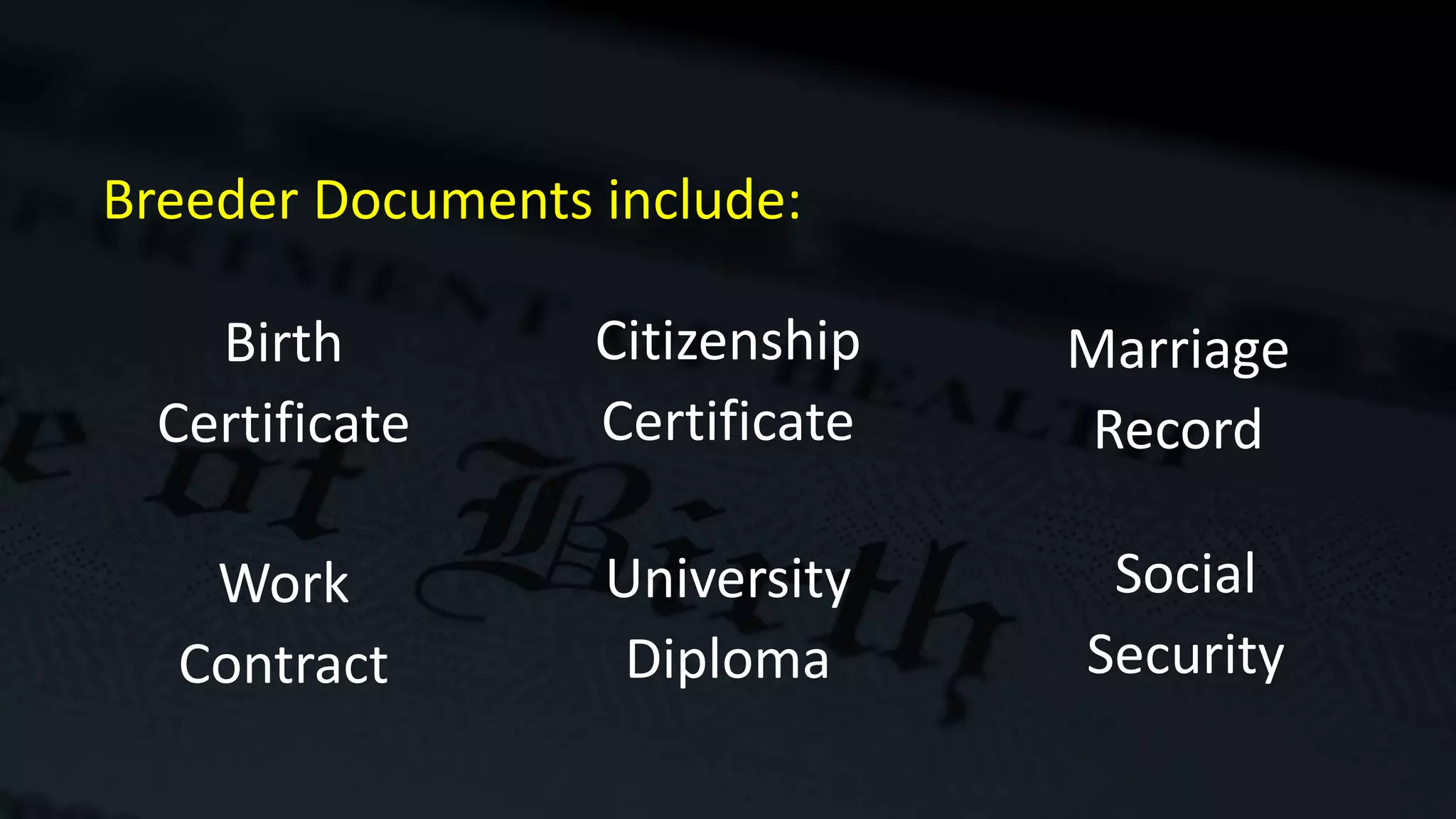
Birth
Certificate
Social
Security
Marriage
Record
Work
Contract
Citizenship
Certificate
University
Diploma
Breeder Documents include:
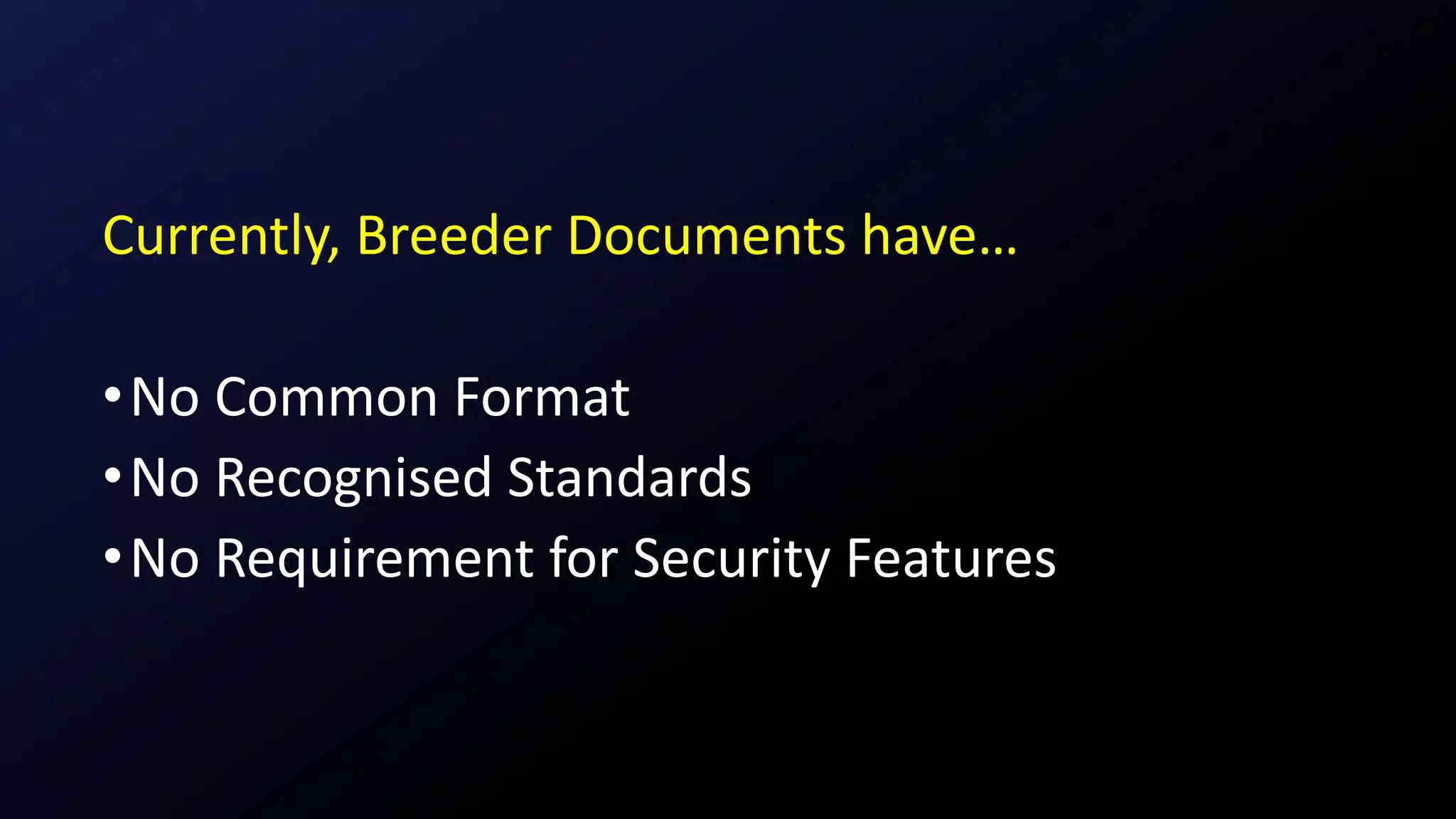
Currently, Breeder Documents have…
•No Common Format
•No Recognised Standards
•No Requirement for Security Features
EU ORIGINS Project
•Established to develop recommendations for
reliable breeder documents
•To identify security gaps in the passport issuance
process
•To promote the standardisation of secure breeder
documents
Creating a Secure Breeder Document
A secure breeder document should…
•Include the modern security concepts
•Not include biometrics
•Be harmonised across Europe
Creating a Secure Breeder Document
A secure breeder document should…
•Include the modern security concepts
•Not include biometrics
•Be harmonised across Europe
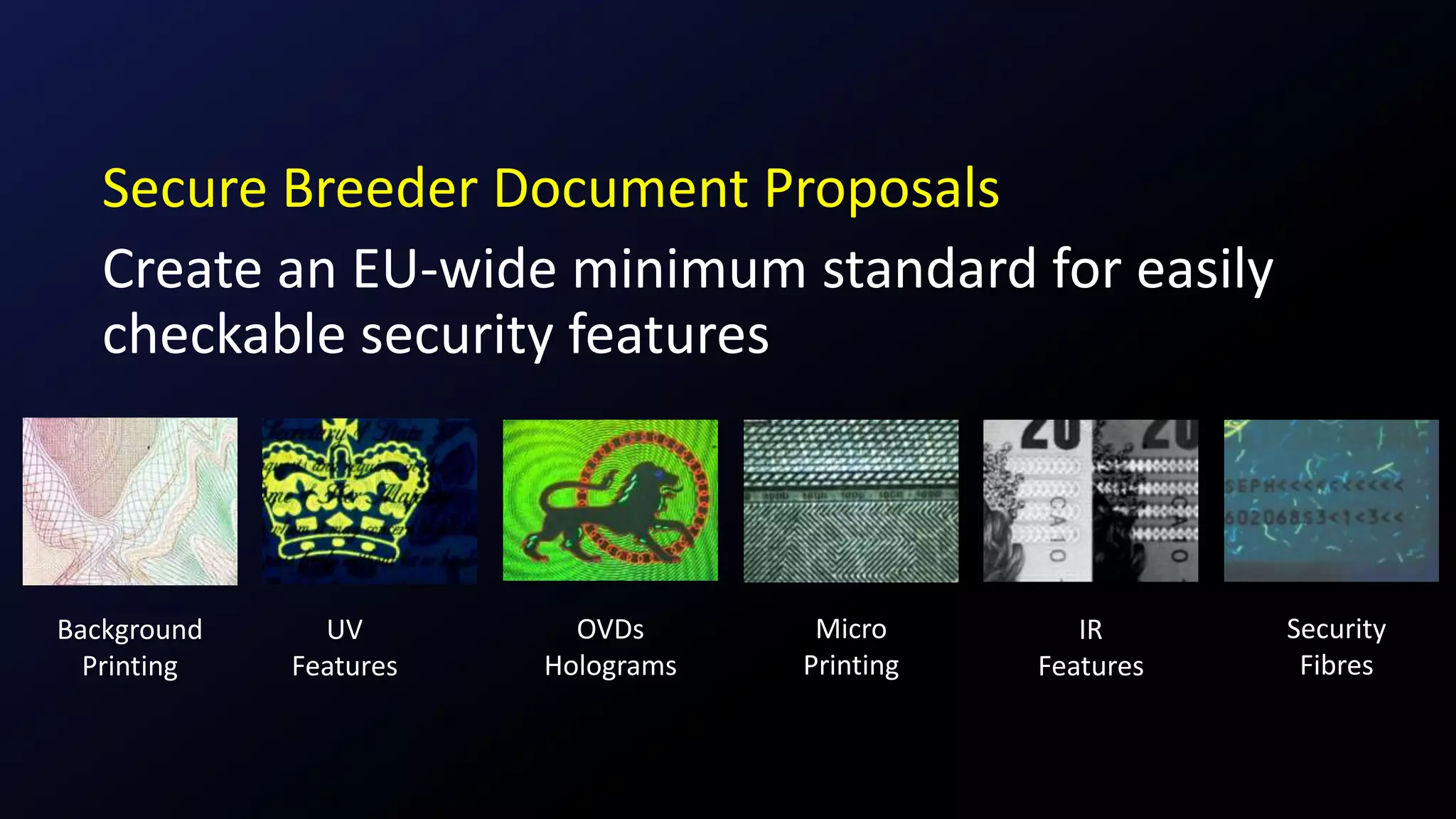
Secure Breeder Document Proposals
Create an EU-wide minimum standard for easily
checkable security features
Background
Printing
UV
Features
OVDs
Holograms
Micro
Printing
IR
Features
Security
Fibres
Secure Breeder Document Proposals
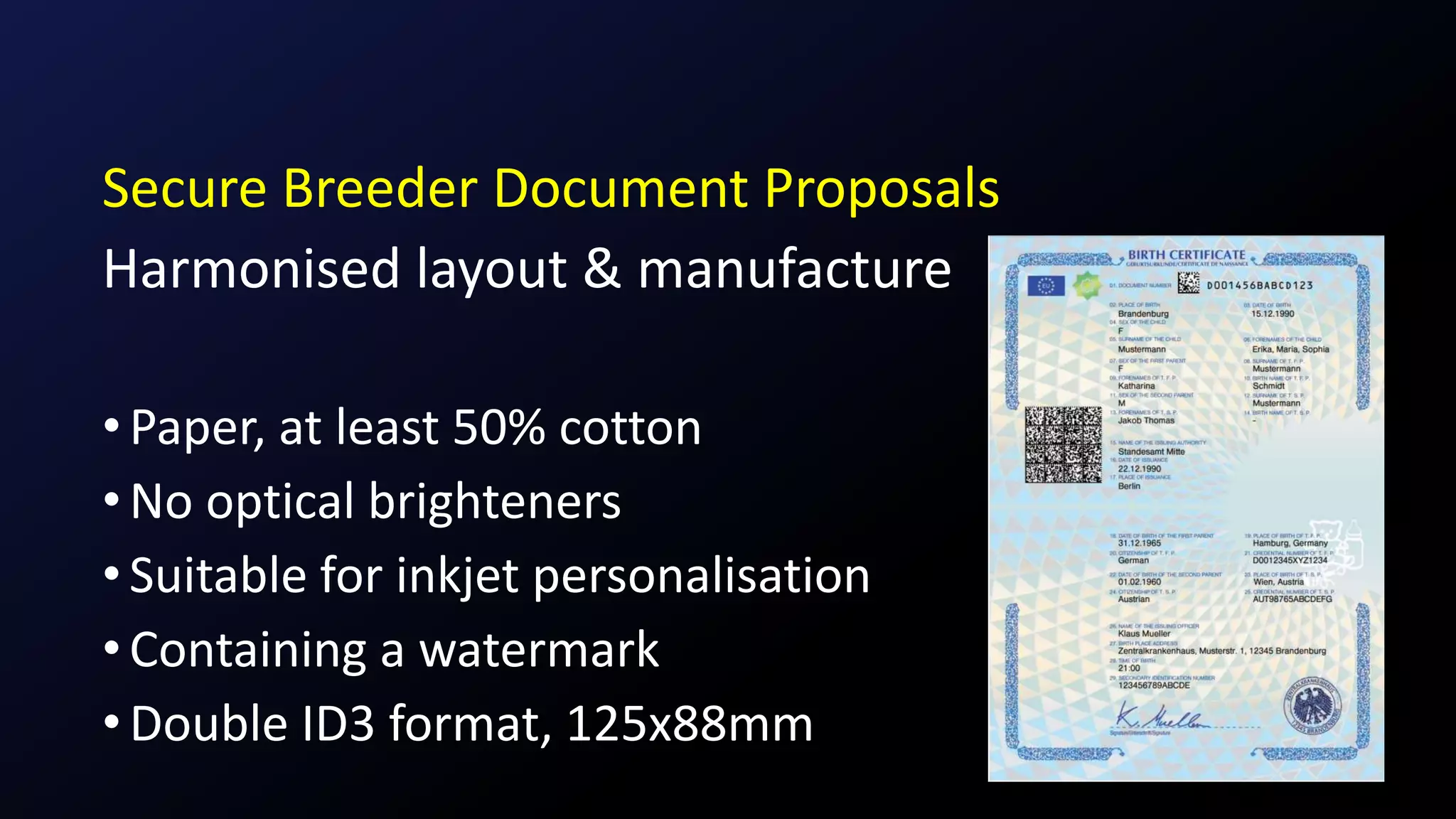
Harmonised layout & manufacture
•Paper, at least 50% cotton
•No optical brighteners
•Suitable for inkjet personalisation
•Containing a watermark
•Double ID3 format, 125x88mm
LOOKING AHEAD
The Future of Secure
Documents
S e c u r e
Banknotes
• Development of new security features
• Withdrawal of high denomination notes
• Increased scrutiny of banknotes
B i o m e t r i c
Passports
• Widespread adoption of ePassports
• Implementation of LDS2 format
• Mobile ID to be issued alongside paper
documents
S e c u r e
Breeder
Documents
• Security measures for breeder documents
• Harmonisation of layout, format and security
• Increased scrutiny at every stage of passport
issuance process
Q u e s t i o n e d
D o c u m e n t
E x a m i n a t i o n
• Increased requirement for forensic-level
document examination
• Requirement for equipment capable of
decoding/examining new security features
• Increased frontline security
Recognised for innovation in the field of Questioned Document Examination...
foster+freeman
Improving the Quality of Forensic Evidence

The Future of Secure Documents

  • 1.
  • 2.
  • 3.
  • 4.
    LO O KI N G A H E A D examining the future of Secure Documents foster+freeman
  • 5.
    “by the turnof this century, we will live in a paperless society.” Roger Smith Chairman of General Motors
  • 6.
    Roger Smith, wasalways getting things wrong…
  • 7.
    But the ideaof a paperless, cashless, fully digitised society has never gone away
  • 8.
    Banknotes, Passports, Drivers Licencesand National ID Cards are all under threat from disruptive technologies
  • 9.
    But, with attitudesto digital & cloud technologies changing, it may be time to ask What future is there for paper based secure documents?
  • 10.
  • 11.
    Recent advances intechnologies have created a vast array of payment options for consumers
  • 12.
    Denmark has committedto becoming cashless by 2030, Sweden, Norway & Finland set to follow Withdrawal of high denomination notes €500 Euro & ₹1,000 No current plans for a £50 polymer note
  • 13.
    But contrary topopular belief, cash is not going away
  • 14.
    The demand forcash is increasing Cash in circulation has tripled over last 20 years (UK)
  • 16.
    Here to Stay £Cash is accepted almost everywhere £ Cash is anonymous £ You don’t need a bank account to pay with cash Not many people knowingly encounter fake notes but… Card fraud is increasingly common
  • 17.
    The future ofCurrency • Advanced ‘Forensic-Level’ Security Features £ Photopolymer holograms £ Photonic Inks £ Micro-optical arrays £ More?
  • 18.
    Photopolymer holograms: waferthin security feature which can record a volume holographic image
  • 19.
    Photonic Inks: ableach resistant colour-changing material
  • 20.
    Micro-optical arrays :a premium security feature that creates the effect of moving images
  • 21.
  • 22.
    Millions of passportsare stolen each year
  • 23.
    Interpol has adatabase of stolen passports going back to 2002 it contains more than 50 million records
  • 24.
    More recently, fraudulentpassports have become a high profile problem in the EU, as hundreds of thousands of migrants try to enter Europe from war zones like Syria using either stolen or fabricated documents.
  • 25.
    Couldn't we avoidthis problem if we used biological information to identify people instead of a paper booklet?
  • 26.
    Turns out it’snot that easy…
  • 27.
    Obstacles to removingpassports are: technological, cultural, political, economical & legal Then there's the rest of the world: Passports will remain relevant until the last country moves to a new form factor.
  • 28.
    The future ofPassports
  • 29.
    Greater proliferation ofePassports Combine traditional paper document with biometric features ePassports are currently used by 120 of 200 ICAO member states 3 generations of ePassport in circulation
  • 30.
    3 Generations ofePassports Basic Access Control (BAC) Extended Access Control (EAC) Supplemental Access Control (SAC)
  • 31.
    Basic Access Control(BAC) Introduced by the ICAO in 2005, BAC is still used by the majority of ePassports in circulation today. BAC can store a high-resolution facial image, but doesn’t offer dedicated protection for additional types of biometric data.
  • 32.
    Extended Access Control(EAC) Developed in Germany in 2006, EAC builds on BAC to add dedicated protection for biometric data. The European Union made EAC mandatory for all ePassports in June 2009.
  • 33.
    Supplemental Access Control(SAC) Introduced by the ICAO in 2010 as a supplement to BAC and EAC, SAC is upgrading both protocols. SAC supports biometric data, adds asymmetric cryptography for encryption, and simplifies key derivation with a six-digit Card Access Number (CAN).
  • 34.
    2005 2010 20152020 3 Generations of ePassports MRTD BAC EAC SAC SAC - LDS2 Virtual Mobile Identity
  • 35.
    LDS2 The nextevolution of ePassport LDS1 Electronic version of passport data page Contains static data Read-only chip LDS2 Electronic version of entire passport Contains full passport Writeable chip
  • 36.
    LDS2 includes… Electronic TravelStamps •The stamps that show where a traveller has been, and when, will become digital. •Electronic travel stamps will enable greater consistency, enhanced security, easier access to information, and faster viewing of key details.
  • 37.
    LDS2 includes… Electronic VISAS •Theauthorizations that let people enter and stay in a country will become digital, too. • An embassy will be able to generate an electronic visa and add it to the chip, making it easier for people to get their authorizations in order.
  • 38.
    LDS2 includes… Improved Biometrics •Itwill be possible to add a new biometric (such as a fingerprint or an iris scan) after the passport is issued. •Additional updates may include a change of address or a new photo – this will reduce the need to issue new passports
  • 39.
    Virtual Mobile ID(mID) Advantages Provides instant updates Low production costs Counterfeiting is more difficult Disadvantages Requires a Smart phone Requires a charged battery! Cyber security risk
  • 40.
    Mobile ID Implementation •Somecountries have already begun issuing mID’s Austria, Estonia, Finland, Norway, Oman, Turkey… •So far mID has always been issued alongside a traditional passport and has been considered to be a ‘complimentary’ technology
  • 41.
    2005 2010 20152020 MRTD BAC EAC SAC SAC - LDS2 Virtual Mobile Identity Breeder Documents Secure Breeder Documents Passports Root Documents for Passports
  • 42.
    It is aknown fact that e-passports are now so difficult to counterfeit, that fraud attempts now focuses on the issuing process. EU ORIGINS Project, 2016
  • 43.
  • 44.
    Currently, Breeder Documentshave… •No Common Format •No Recognised Standards •No Requirement for Security Features
  • 45.
    EU ORIGINS Project •Establishedto develop recommendations for reliable breeder documents •To identify security gaps in the passport issuance process •To promote the standardisation of secure breeder documents
  • 46.
    Creating a SecureBreeder Document A secure breeder document should… •Include the modern security concepts •Not include biometrics •Be harmonised across Europe
  • 47.
    Creating a SecureBreeder Document A secure breeder document should… •Include the modern security concepts •Not include biometrics •Be harmonised across Europe
  • 48.
    Secure Breeder DocumentProposals Create an EU-wide minimum standard for easily checkable security features Background Printing UV Features OVDs Holograms Micro Printing IR Features Security Fibres
  • 49.
    Secure Breeder DocumentProposals Harmonised layout & manufacture •Paper, at least 50% cotton •No optical brighteners •Suitable for inkjet personalisation •Containing a watermark •Double ID3 format, 125x88mm
  • 50.
    LOOKING AHEAD The Futureof Secure Documents
  • 51.
    S e cu r e Banknotes • Development of new security features • Withdrawal of high denomination notes • Increased scrutiny of banknotes
  • 52.
    B i om e t r i c Passports • Widespread adoption of ePassports • Implementation of LDS2 format • Mobile ID to be issued alongside paper documents
  • 53.
    S e cu r e Breeder Documents • Security measures for breeder documents • Harmonisation of layout, format and security • Increased scrutiny at every stage of passport issuance process
  • 54.
    Q u es t i o n e d D o c u m e n t E x a m i n a t i o n • Increased requirement for forensic-level document examination • Requirement for equipment capable of decoding/examining new security features • Increased frontline security
  • 55.
    Recognised for innovationin the field of Questioned Document Examination... foster+freeman Improving the Quality of Forensic Evidence

Editor's Notes

  • #6 This is a quote from 1986 by Roger Smith, then chairman of General Motors He wanted to modernise the process of building cars and radically overhaul the organisation
  • #7  In his attempts to modernise the company Roger Smith lost billions of dollars almost bankrupted General Motors. He was sacked in 1992
  • #19 Image = a series of sample notes featuring a volume Kinegram produced by Kurz Volume holograms are holograms where the thickness of the recording material is much larger than the light wavelength used for recording
  • #20 colour-changing features already exist but these features are based on the chemical structural changes of dyes, pigments or polymers and tend to fade when exposed to light and air.  Read more: Longhorn beetle inspires photonic crystal ink to fight counterfeiting 
  • #21 Micro optic displays are woven into the fabric of the banknote A banknote with a micro-optic security feature has hundreds of thousands of lenses – plus an array of images that rest below them The result is an optical system that achieves what the security feature industry has sought for decades, distinctive image animation and fluid movement. With new forms and integration methods in the works, even more stunning visual effects will be used in the future. Such developments will enable banknote designs that remain years ahead of the counterfeiting threat.
  • #36 LDS = Logical Data Structure = the way that data is stored in the epassport chip LDS1 formats encompass an electronic version of what is commonly referred to as “page two” or the “data page” of the travel document. This information is, for the most part, static and remains true during the passport’s lifetime LDS2 represents the next step for ePassports, because it will create an ePassport that can be updated with information as time goes by including the rest of the passport information, relating to visas, travel stamps, and so on
  • #40 to visas, travel stamps, and so on
  • #41  Pioneers include countries where market penetration of cell phones and new technology is strong such as Austria, Estonia, Finland, Norway and Turkey.
  • #46 ORIGINS is not the only official group seeking to secure breeder documents. Interpol, the EU Fidelity Project, the European Data Protection Supervisor (EDPS) and Frontex are also heavily involved in the creation of new security standards for breeder documents
  • #47 Not include biometrics - recommended by the EU Fidelity Project (Biometrics), who believe that the technological requirements for using biometrics will be too expensive for some EU member states. Biometrics also change over time and may not be suitable for a lifetime document such as a birth certificate
  • #48 Not include biometrics - recommended by the EU Fidelity Project (Biometrics), who believe that the technological requirements for using biometrics will be too expensive for some EU member states. Biometrics also change over time and may not be suitable for a lifetime document such as a birth certificate
  • #49 Recommendations of the EU FIDELITY Project EU Fidelity project was set up to examine the entire passport process from issuance to usage, to find weaknesses in the chain and create recommendations for improvement
  • #50 ID3 / td3 format (MRP – Machine Readable Passport): 125 x 88 mm. Two lines with 44 characters each, situated at the bottom of the biodata page