1
Running head: MINDFULNESS AND COGNITIVE PERFORMANCE
The Effects of Brief Mindfulness on Cognitive Test Performance
David Leverty
University of Minnesota
MINDFULNESS AND COGNITIVE PERFORMANCE 2
Abstract
Previous research suggests that brief mindfulness meditation can help improve attention,
problem solving, and working memory in students. The purpose of this study was to provide
further evidence that mindfulness meditation can improve attention, problem solving, and
working memory in the student population by administering a series of cognitive tests to measure
them. Participants were randomly assigned to the experimental and control groups, both of which
received the Stroop, London tower, and Digit Span tasks on two separate occasions. The
experimental group performed 20-minutes of guided meditation four days a week between tests,
while the control group was not given a task. No significant difference was found between
control and experimental group performance. These results suggest that brief mindfulness
meditation may not aid these cognitive attributes. However, a variety of methodological issues
were present that may have interfered with the results. Further research is required to determine
the effects of brief mindfulness meditation on cognitive performance.
MINDFULNESS AND COGNITIVE PERFORMANCE 3
The Effects of Brief Mindfulness on Cognitive Test Performance
Research on mindfulness meditation has flourished over the past decade, having been
implemented in a variety of hospital programs, rehabilitation centers, and clinics around the
world with a great deal of demonstrated efficacy (Davidson et al., 2003). Mindfulness is defined
as being attentive to and fully aware of the present moment with a non-judgmental attitude
(Bowlin & Baer, 2008). Meditation is simply the method of concentration used to attain a state of
mindfulness. There are several methods of meditation that can be used to achieve mindfulness.
For example, sitting meditation is primarily used to bring about mindfulness of the breath, while
body scan meditation is used to bring about mindfulness of specific areas of the body. There are
a wide variety of meditation practices from various cultural traditions such as Zen, Buddhist, and
Hindu disciplines (Holzel et al., 2011).
Most mindfulness meditation research has focused primarily on its long- term rather than
short-term benefits (Zeidan, Johnson, Diamond, David, & Goolkasian, 2010). The most
common mindfulness meditation program is Mindfulness-Based Stress Reduction (MBSR)
(Zeidan et al., 2010). If there are short-term benefits of brief, low-cost meditation practice on
cognitive performance, it would be an excellent alternative to MBSR for those who lack time and
financial resources. For the purpose of introducing the topic of mindfulness, this section will stay
focused on the results derived from MBSR research.
MBSR programs are taught over the course of eight weeks under the supervision of a
certified instructor (Jha, Krompinger, & Baime, 2007). It has been shown to be effective in
treating anxiety and depressive disorders (Vollestad, Sieversten, & Nielsen, 2011), decreasing
negative affect and increasing antibodies necessary for healthy immune system functioning
(Davidson, Kabat-Zinn, Schumacher, Santorelli, Urbanowski, Harrington, Bonus, & Sheridan,
MINDFULNESS AND COGNITIVE PERFORMANCE 4
2003), as well as significantly decreasing stress in a non-clinical population (Jensen, Vankilde,
Frokjaer, & Hasselbalch, 2012). As outlined by Vollestad et al. (2011), MBSR training includes
a weekly 2.5 hour group session under the instructor’s supervision, a half-day meditation retreat
during week six, and a guided mindfulness CD program meant to be used daily. The mindfulness
exercises include sitting meditation, yoga, and body scan that last approximately 45 minutes each
(Vollestad et al., 2011). MBSR is the most common form of meditation practice used in clinical
settings, with over 250 medical centers offering the program in the United States alone (Jha,
Krompinger, & Baime, 2007).
In addition to its clinical utility, MBSR has been shown to improve cognitive functioning.
MBSR has been demonstrated to improve a number of distinct subsystems of attention, such as
orientation and alerting attention (Jha et al., 2007). It has also been associated with an increase in
cortical gray matter within the left hippocampus, temperoparietal junction, posterior cingulate
cortex, and cerebellum; all of which are critical brain structures in learning and memory (Holzel
et al., 2010). While research on mindfulness meditation demonstrates a positive relationship
between the benefits one receives and the amount of daily practice one engages in (Carmody &
Baer, 2008), Zeidan et al. (2010) found that just four sessions of mindfulness for 20 minutes a
day improved executive functioning, working memory, and visuo-spatial processing.
Unfortunately, the literature on brief mindfulness is scant in comparison with its long-
term counterpart. The intent of this research is to add to the literature of brief mindfulness by
examining its effects on cognitive test performance. This is done by comparing results on
cognitive tests both before and after a one-week guided mindfulness program to determine if
there is a significant benefit. The cognitive tests include the Stroop Test, the London Tower task,
and the Digit Span task. These tests are meant to measure attention (Stroop, 1935), problem
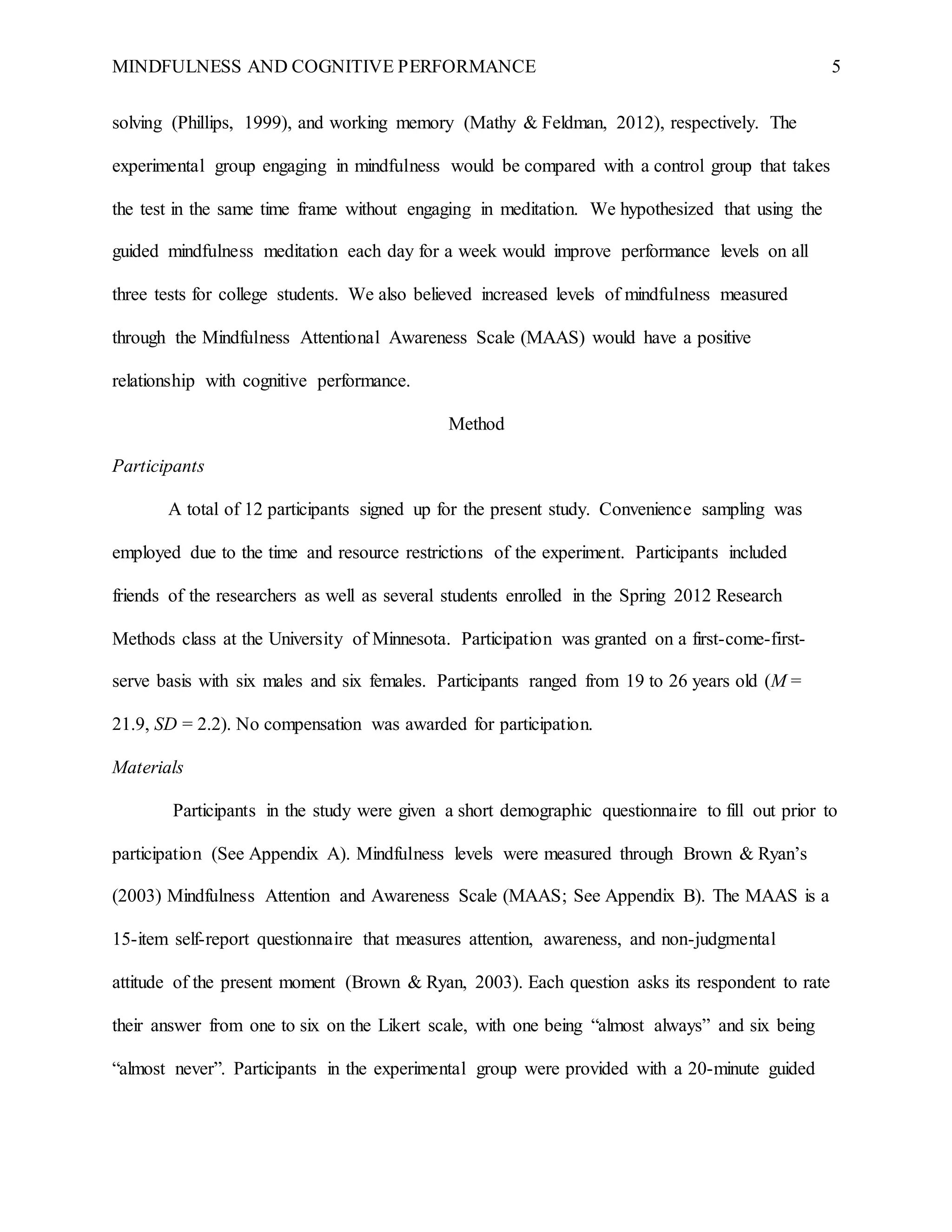
MINDFULNESS AND COGNITIVE PERFORMANCE 5
solving (Phillips, 1999), and working memory (Mathy & Feldman, 2012), respectively. The
experimental group engaging in mindfulness would be compared with a control group that takes
the test in the same time frame without engaging in meditation. We hypothesized that using the
guided mindfulness meditation each day for a week would improve performance levels on all
three tests for college students. We also believed increased levels of mindfulness measured
through the Mindfulness Attentional Awareness Scale (MAAS) would have a positive
relationship with cognitive performance.
Method
Participants
A total of 12 participants signed up for the present study. Convenience sampling was
employed due to the time and resource restrictions of the experiment. Participants included
friends of the researchers as well as several students enrolled in the Spring 2012 Research
Methods class at the University of Minnesota. Participation was granted on a first-come-first-
serve basis with six males and six females. Participants ranged from 19 to 26 years old (M =
21.9, SD = 2.2). No compensation was awarded for participation.
Materials
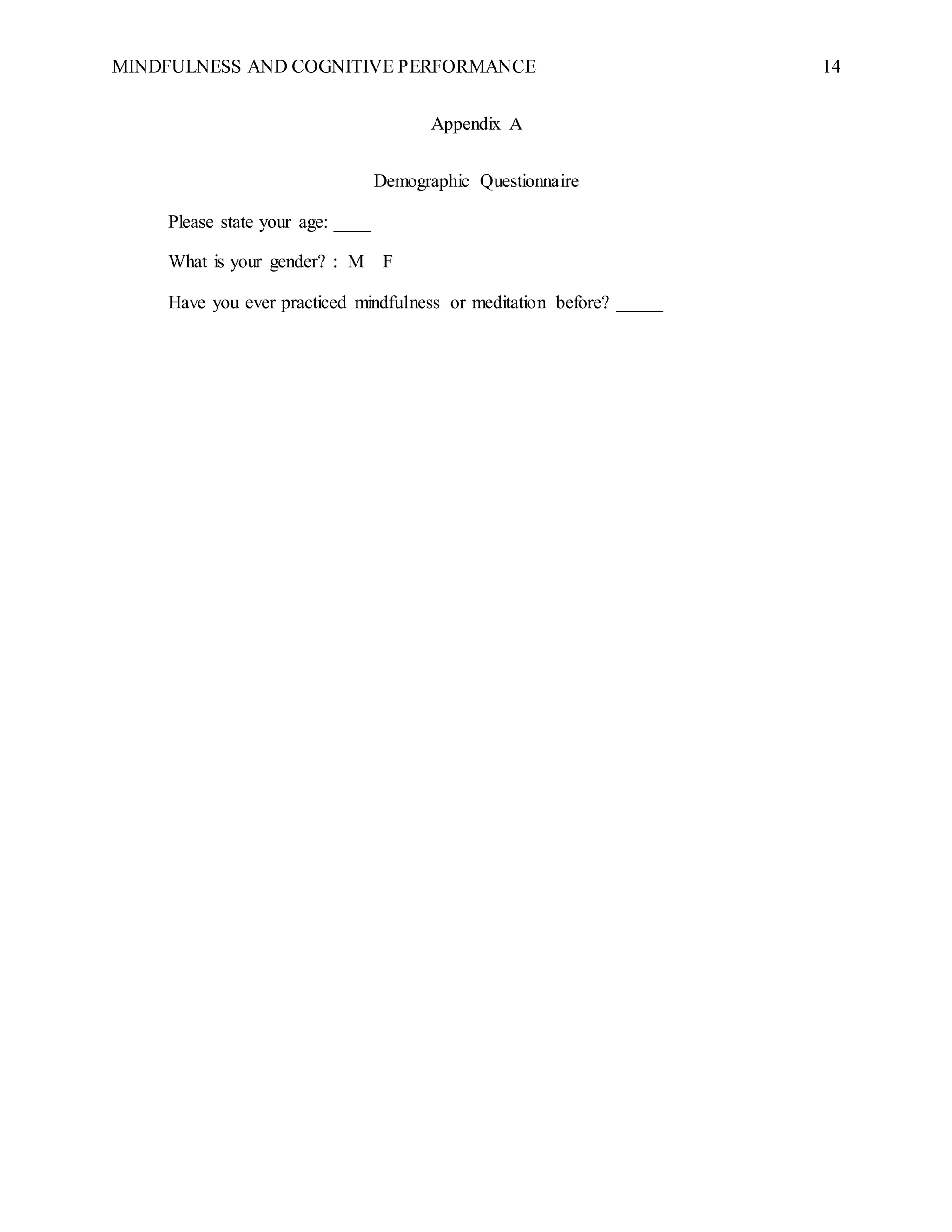
Participants in the study were given a short demographic questionnaire to fill out prior to
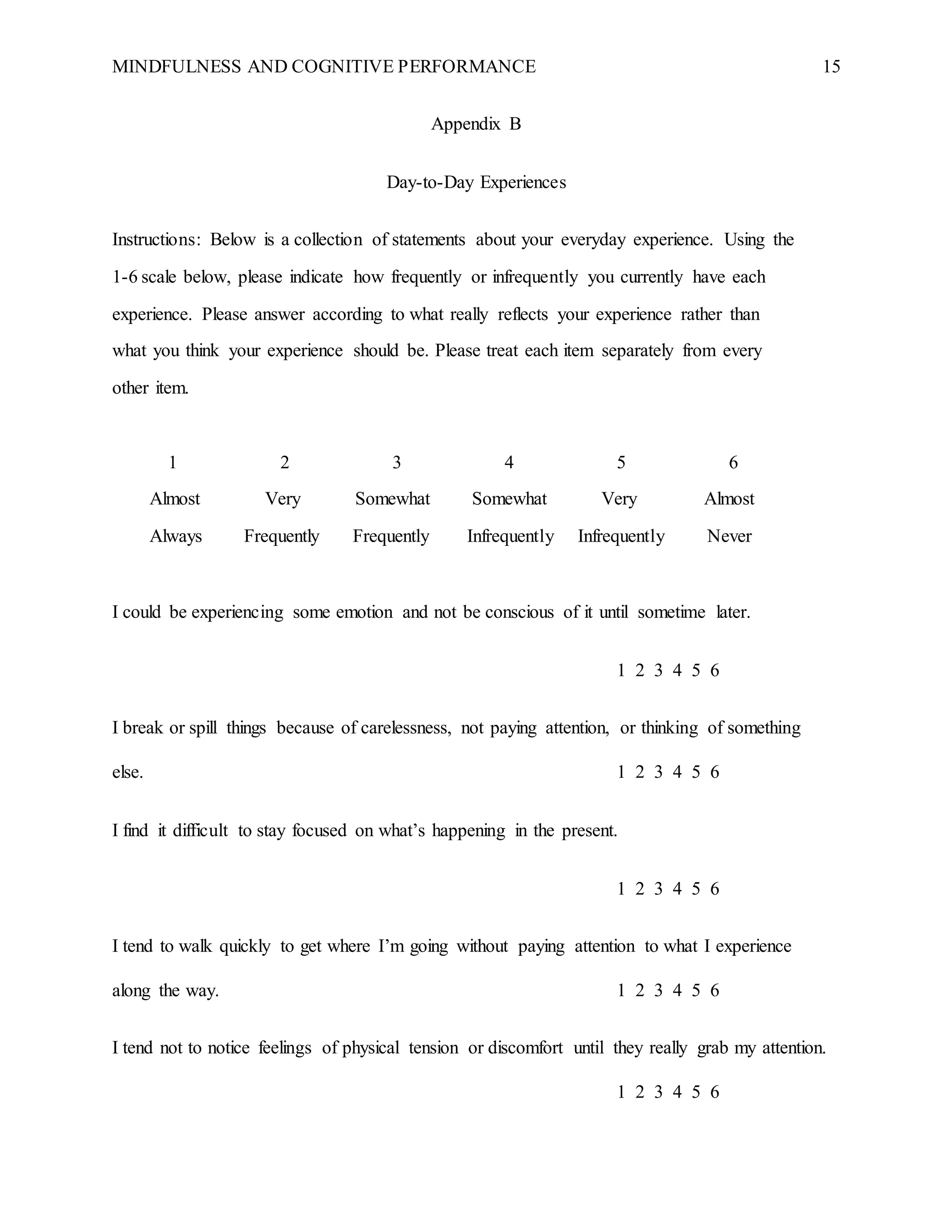
participation (See Appendix A). Mindfulness levels were measured through Brown & Ryan’s
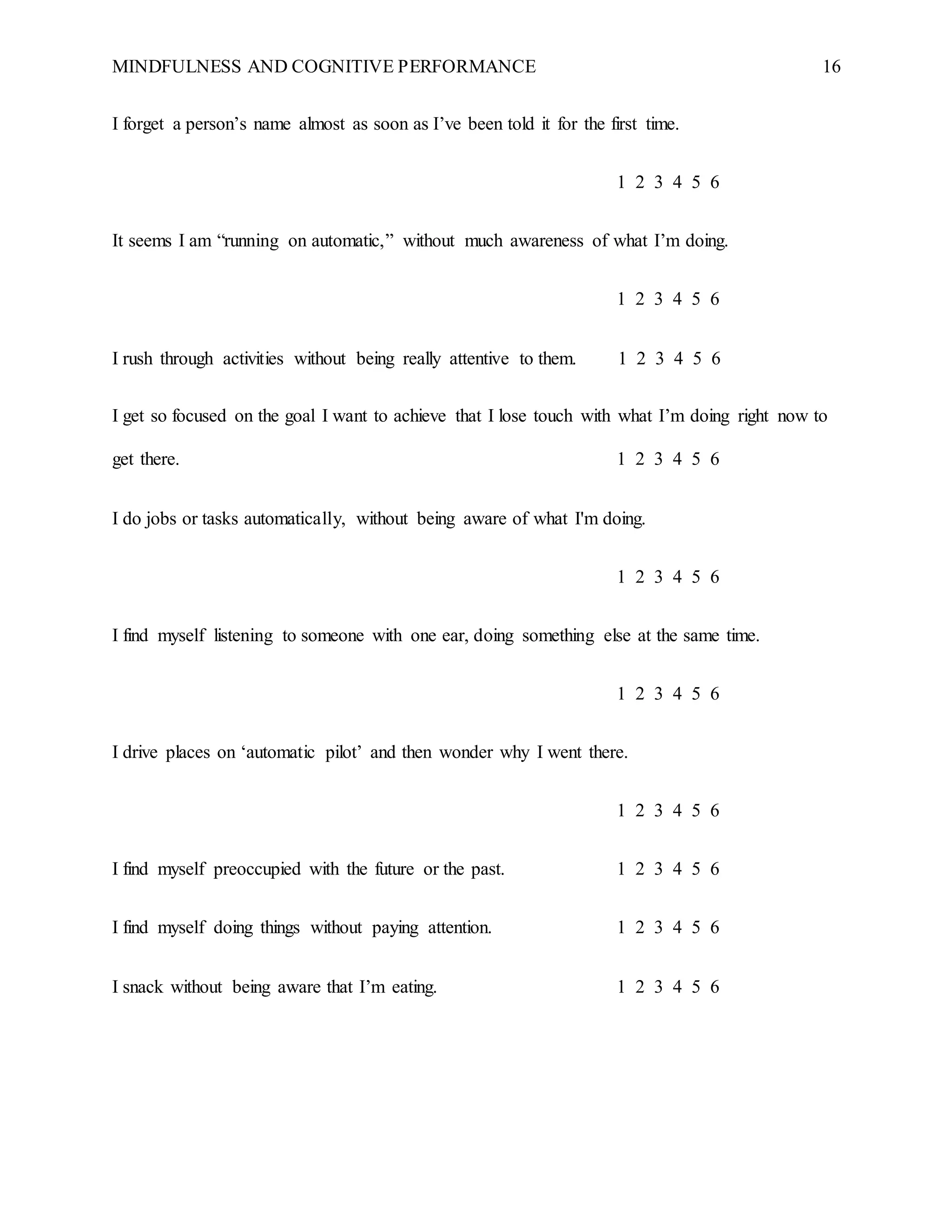
(2003) Mindfulness Attention and Awareness Scale (MAAS; See Appendix B). The MAAS is a
15-item self-report questionnaire that measures attention, awareness, and non-judgmental
attitude of the present moment (Brown & Ryan, 2003). Each question asks its respondent to rate
their answer from one to six on the Likert scale, with one being “almost always” and six being
“almost never”. Participants in the experimental group were provided with a 20-minute guided
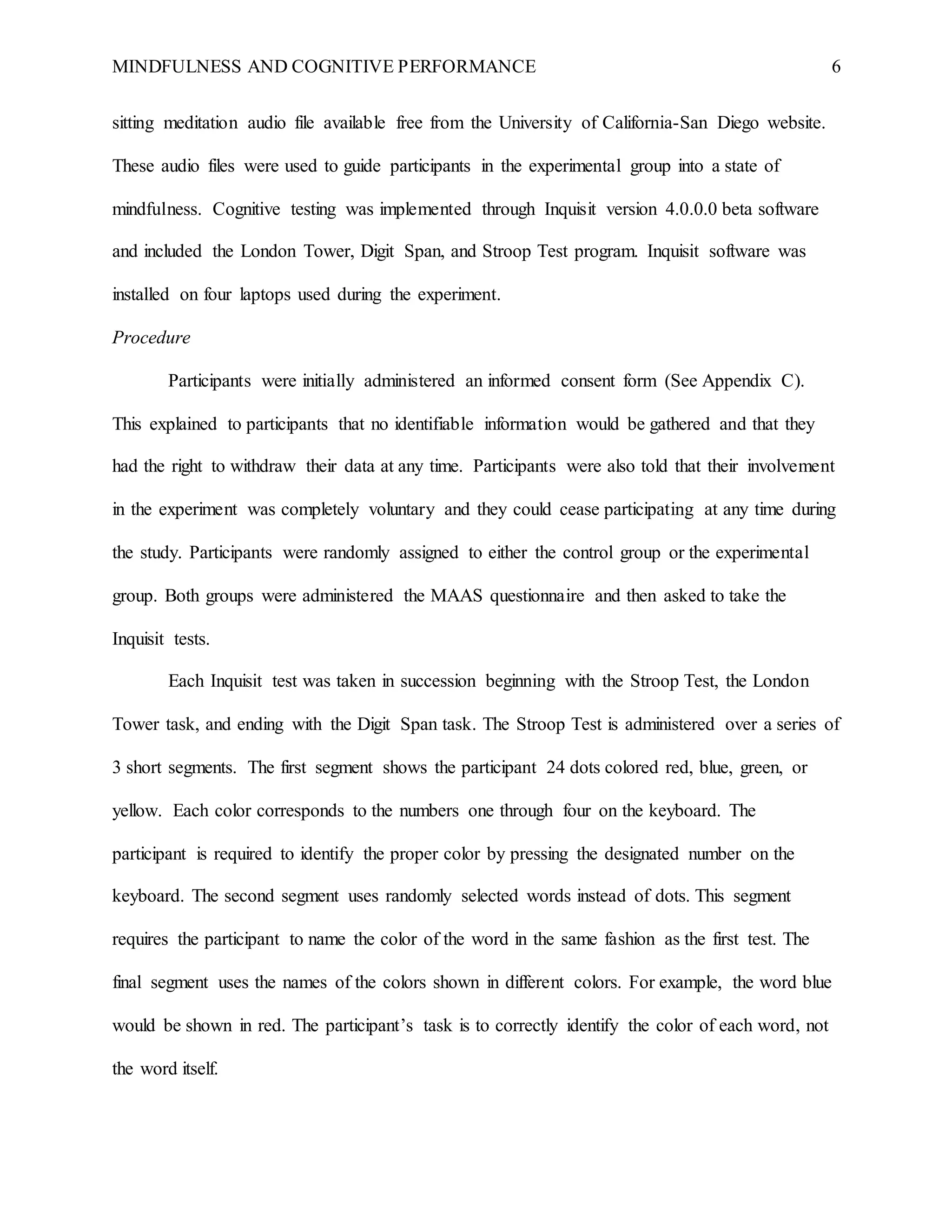
MINDFULNESS AND COGNITIVE PERFORMANCE 6
sitting meditation audio file available free from the University of California-San Diego website.
These audio files were used to guide participants in the experimental group into a state of
mindfulness. Cognitive testing was implemented through Inquisit version 4.0.0.0 beta software
and included the London Tower, Digit Span, and Stroop Test program. Inquisit software was
installed on four laptops used during the experiment.
Procedure
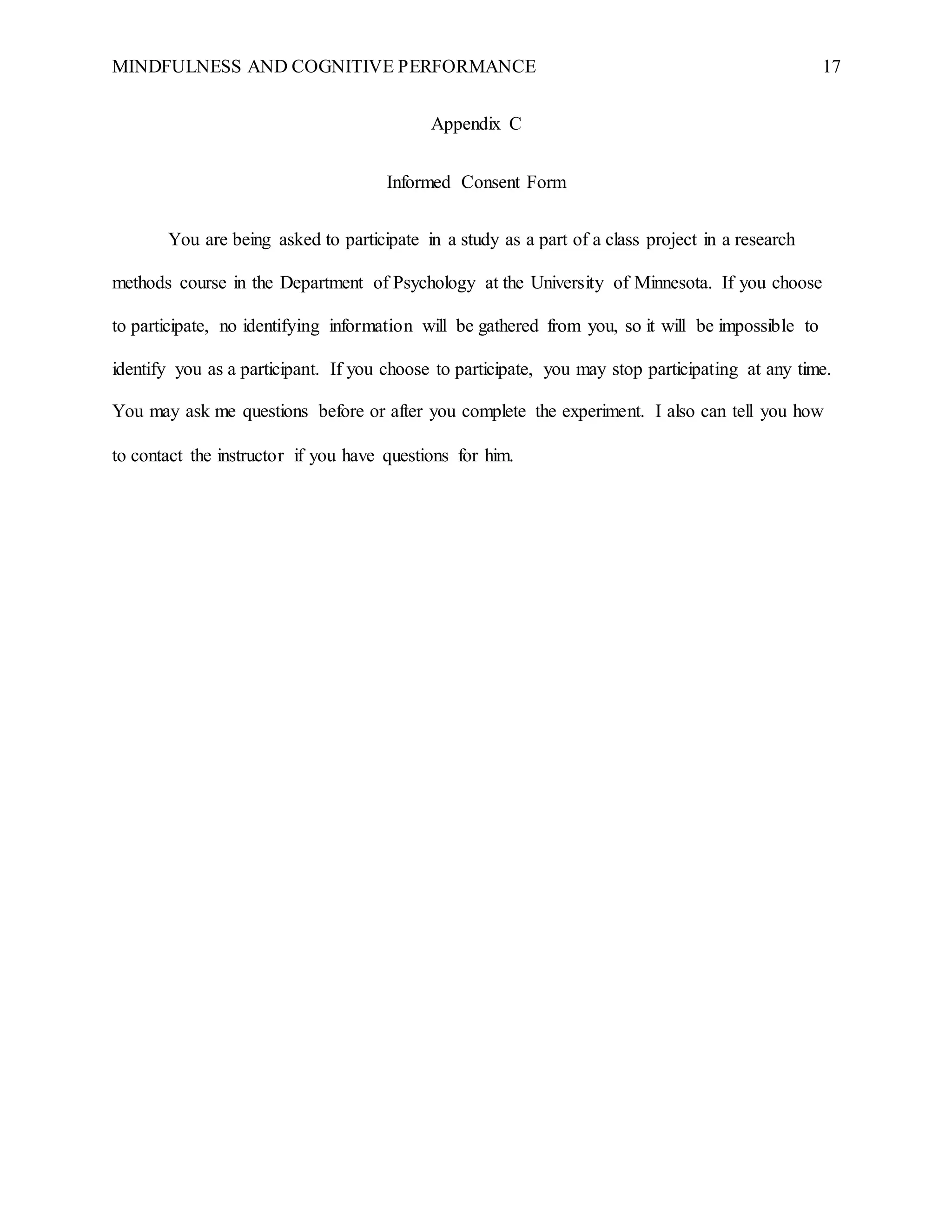
Participants were initially administered an informed consent form (See Appendix C).
This explained to participants that no identifiable information would be gathered and that they
had the right to withdraw their data at any time. Participants were also told that their involvement
in the experiment was completely voluntary and they could cease participating at any time during
the study. Participants were randomly assigned to either the control group or the experimental
group. Both groups were administered the MAAS questionnaire and then asked to take the
Inquisit tests.
Each Inquisit test was taken in succession beginning with the Stroop Test, the London
Tower task, and ending with the Digit Span task. The Stroop Test is administered over a series of
3 short segments. The first segment shows the participant 24 dots colored red, blue, green, or
yellow. Each color corresponds to the numbers one through four on the keyboard. The
participant is required to identify the proper color by pressing the designated number on the
keyboard. The second segment uses randomly selected words instead of dots. This segment
requires the participant to name the color of the word in the same fashion as the first test. The
final segment uses the names of the colors shown in different colors. For example, the word blue
would be shown in red. The participant’s task is to correctly identify the color of each word, not
the word itself.
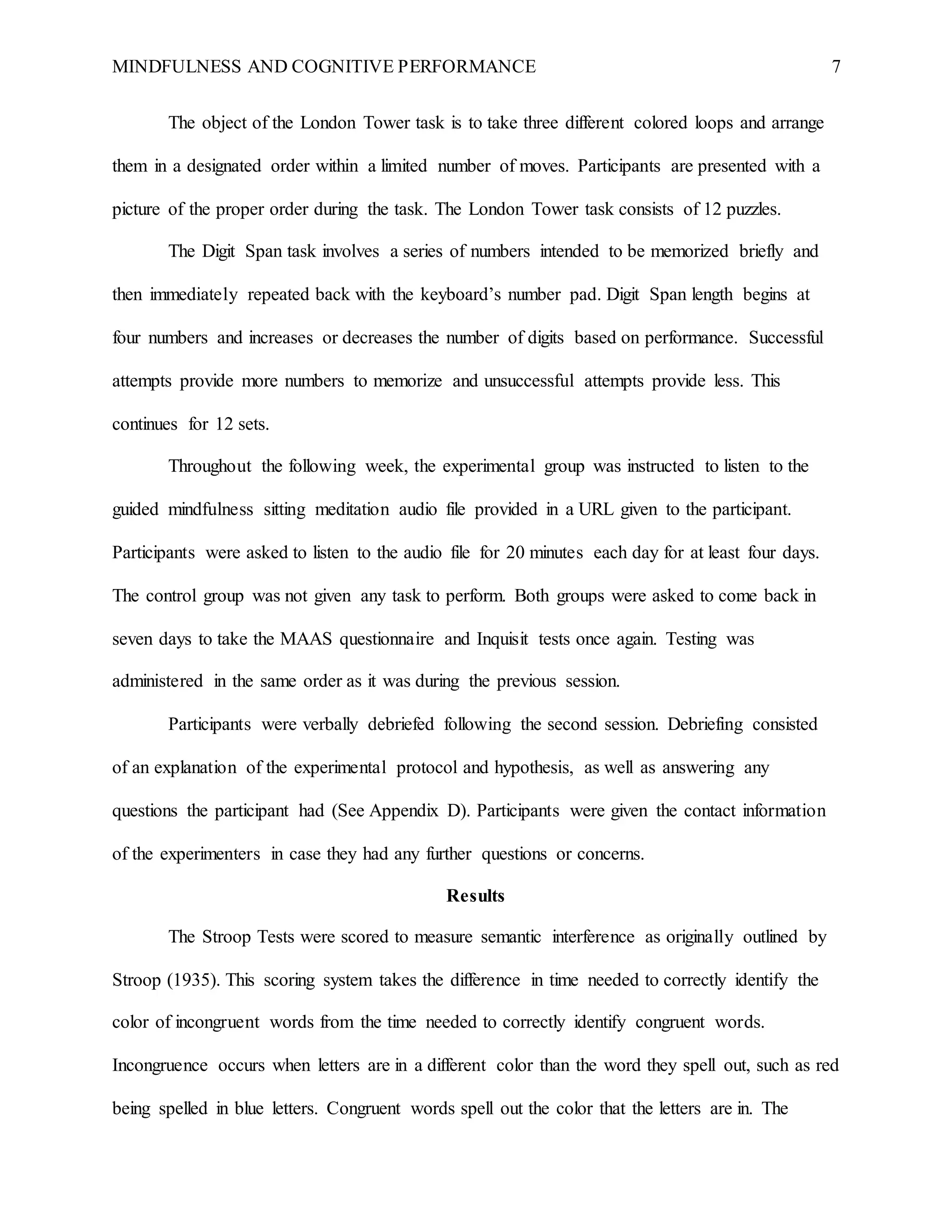
MINDFULNESS AND COGNITIVE PERFORMANCE 7
The object of the London Tower task is to take three different colored loops and arrange
them in a designated order within a limited number of moves. Participants are presented with a
picture of the proper order during the task. The London Tower task consists of 12 puzzles.
The Digit Span task involves a series of numbers intended to be memorized briefly and
then immediately repeated back with the keyboard’s number pad. Digit Span length begins at
four numbers and increases or decreases the number of digits based on performance. Successful
attempts provide more numbers to memorize and unsuccessful attempts provide less. This
continues for 12 sets.
Throughout the following week, the experimental group was instructed to listen to the
guided mindfulness sitting meditation audio file provided in a URL given to the participant.
Participants were asked to listen to the audio file for 20 minutes each day for at least four days.
The control group was not given any task to perform. Both groups were asked to come back in
seven days to take the MAAS questionnaire and Inquisit tests once again. Testing was
administered in the same order as it was during the previous session.
Participants were verbally debriefed following the second session. Debriefing consisted
of an explanation of the experimental protocol and hypothesis, as well as answering any
questions the participant had (See Appendix D). Participants were given the contact information
of the experimenters in case they had any further questions or concerns.
Results
The Stroop Tests were scored to measure semantic interference as originally outlined by
Stroop (1935). This scoring system takes the difference in time needed to correctly identify the
color of incongruent words from the time needed to correctly identify congruent words.
Incongruence occurs when letters are in a different color than the word they spell out, such as red
being spelled in blue letters. Congruent words spell out the color that the letters are in. The
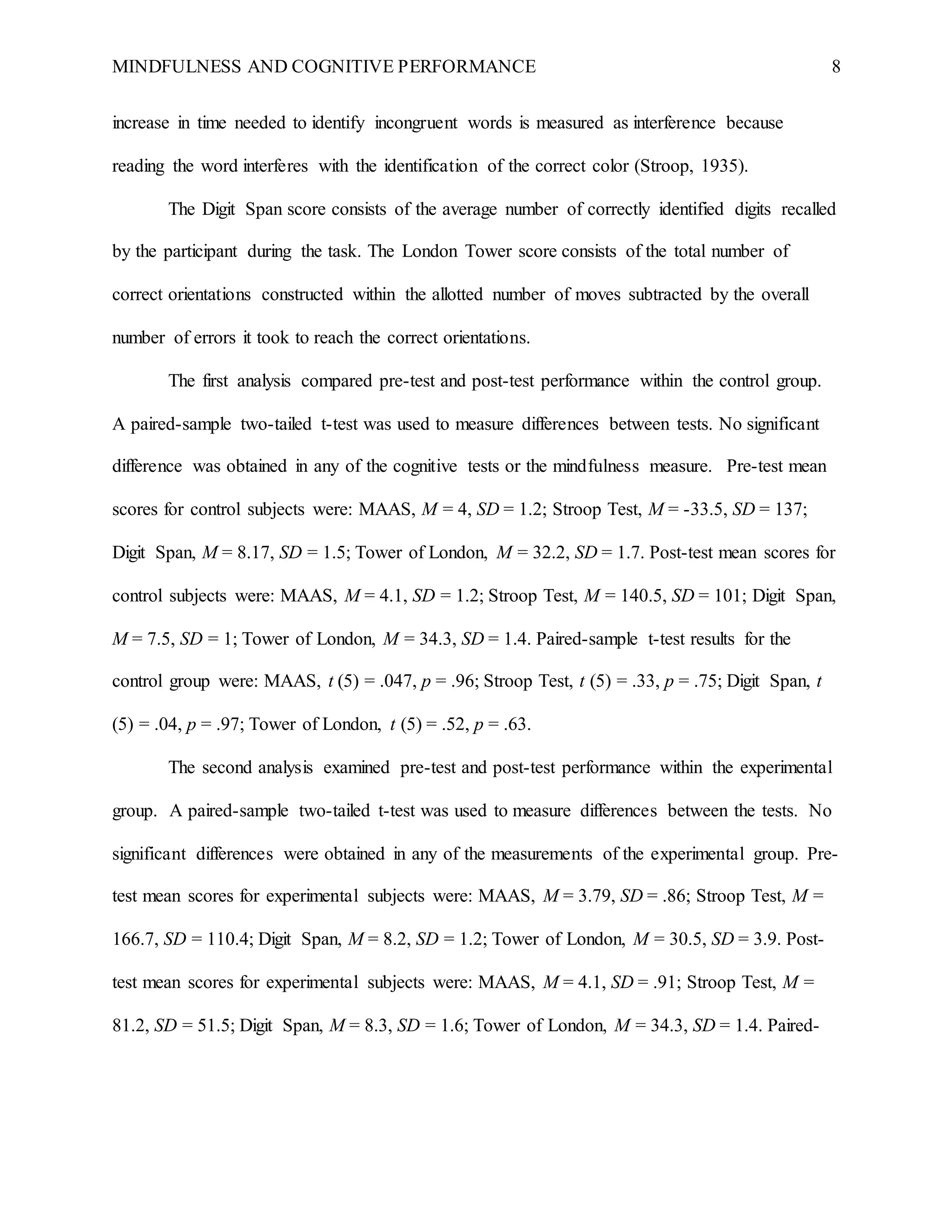
MINDFULNESS AND COGNITIVE PERFORMANCE 8
increase in time needed to identify incongruent words is measured as interference because
reading the word interferes with the identification of the correct color (Stroop, 1935).
The Digit Span score consists of the average number of correctly identified digits recalled
by the participant during the task. The London Tower score consists of the total number of
correct orientations constructed within the allotted number of moves subtracted by the overall
number of errors it took to reach the correct orientations.
The first analysis compared pre-test and post-test performance within the control group.
A paired-sample two-tailed t-test was used to measure differences between tests. No significant
difference was obtained in any of the cognitive tests or the mindfulness measure. Pre-test mean
scores for control subjects were: MAAS, M = 4, SD = 1.2; Stroop Test, M = -33.5, SD = 137;
Digit Span, M = 8.17, SD = 1.5; Tower of London, M = 32.2, SD = 1.7. Post-test mean scores for
control subjects were: MAAS, M = 4.1, SD = 1.2; Stroop Test, M = 140.5, SD = 101; Digit Span,
M = 7.5, SD = 1; Tower of London, M = 34.3, SD = 1.4. Paired-sample t-test results for the
control group were: MAAS, t (5) = .047, p = .96; Stroop Test, t (5) = .33, p = .75; Digit Span, t
(5) = .04, p = .97; Tower of London, t (5) = .52, p = .63.
The second analysis examined pre-test and post-test performance within the experimental
group. A paired-sample two-tailed t-test was used to measure differences between the tests. No
significant differences were obtained in any of the measurements of the experimental group. Pre-
test mean scores for experimental subjects were: MAAS, M = 3.79, SD = .86; Stroop Test, M =
166.7, SD = 110.4; Digit Span, M = 8.2, SD = 1.2; Tower of London, M = 30.5, SD = 3.9. Post-
test mean scores for experimental subjects were: MAAS, M = 4.1, SD = .91; Stroop Test, M =
81.2, SD = 51.5; Digit Span, M = 8.3, SD = 1.6; Tower of London, M = 34.3, SD = 1.4. Paired-
MINDFULNESS AND COGNITIVE PERFORMANCE 9
sample t-test results for the experimental group were: MAAS, t (5) = .08, p = .93; Stroop Test, t
(5) = .74, p = .49; Digit Span, t (5) = .05, p = .96; Tower of London, t (5) = .26, p = .81.
The final analysis compared differences in post-test scores between the control and
experimental groups on all four measures. An independent-samples t-test was used to measure
differences in performance between the two groups. No significant differences were found
between any of the measures. T-test scores for each measure were: MAAS, t (10) = .91, p = .38;
Stroop Test, t (10) = .32, p = .76; Digit Span, t (10) = 1.0, p = .34; Tower of London, t (10) = .23,
p = .82.
Discussion
The results of this experiment did not support the hypothesis that brief mindfulness
meditation would improve performance on cognitive testing. Furthermore, brief mindfulness
meditation did not contribute to significant increases in mindfulness as measured by the MAAS.
The MAAS was developed to measure attention, awareness, and non-judgmental attitude of the
present moment (Brown & Ryan, 2003). Bowlin and Baer (2008) define mindfulness as being
attentive to and fully aware of the present moment with a non-judgmental attitude. These results
are inconsistent with those found by Zeidan et al. (2010) which found that four 20-minute
sessions of guided mindfulness improved executive functioning, working memory, and visuo-
spatial processing.
However, there are a few key methodological differences worth mentioning. The small
sample size of the study is perhaps its most significant limitation. Zeidan et al. (2010) had a
sample size of 63 undergraduate psychology students, while this study was only able to recruit
12 undergraduate students. Zeidan et al. (2010) also had access to a trained facilitator who not
only guided the participants, but was also available to provide personal feedback to participants.
MINDFULNESS AND COGNITIVE PERFORMANCE 10
The present study lacked the resources to personally assist novice meditators, though they were
encouraged to contact the researchers if they had any questions. Participants in the present study
were only given an audio file to use and had no supervision. This suggests a significantly
decreased quality of mindfulness meditation available to participants in this study.
Previous experience with mindfulness meditation may also have confounded the results
obtained. Many of the present study’s participants had reported some form of previous
experience with mindfulness meditation. Zeidan et al. (2010) only recruited participants who had
no prior experience with any form of mindfulness meditation. The implementation of
convenience sampling made it impossible to control for this confound. This is likely to have
contributed to the lack of differences between the control and experimental groups. This was
perhaps the most fundamental flaw of the present study. It is necessary that future research
control for this confound if it is to face the rigors of scientific inquiry.
As previously noted, the research literature on brief mindfulness meditation is in its
infancy. There is very little support for brief mindfulness outside of Zeidan et al. (2010). Future
research will need to pay close attention to the quality of meditation practice, which may have
been a key factor in the lack of significant results of the present study. Future research would
also benefit from examining other traditions of mindfulness meditation to assess practices that
are more relevant to short-term effects. For example, examining the differences between groups
that practice brief body scan meditation and groups that practice brief sitting meditation may lead
to a deeper understanding of the differences and similarities between these two traditions. Close
monitoring of both experimental and control groups are also essential, as is an assessment of
background information and previous experience with meditation.
MINDFULNESS AND COGNITIVE PERFORMANCE 11
Future research that adheres to these suggestions and eliminates these confounds will
likely result in evidence supporting the benefits of brief mindfulness meditation. It is an area of
study ripe for scientific investigation whose benefits will have a positive impact on the college
student population in the future. The results of this study should not deter those interested in the
practice and research of mindfulness meditation. Instead, they should encourage rigorous
scientific inquiry as well as the support of accessible and high-quality mindfulness meditation
resources.
MINDFULNESS AND COGNITIVE PERFORMANCE 12
References
Bowlin, S.L., & Baer, R.A. (2012). Relationships between mindfulness, self-control, and
psychological functioning. Personality and Individual Differences, 52, 411-415. doi:
10.1016/j.paid.2011.10.050
Brown, K.W. & Ryan, R.M. (2003). The benefits of being present: Mindfulness and its role in
psychological well-being. Journal of Personality and Social Psychology, 84, 822-848
Carmody, J. & Baer, R.A. (2008). Relationships between mindfulness practice and levels of
mindfulness, medical and psychological symptoms and well-being in a mindfulness-
based stress reduction program. Journal of Behavioral Medicine, 31, 23-33. doi:
10.1007/s10865-007-9130-7
Davidson , R.J., Kabat-Zinn, J., Schumacher, J., Rosenkranz, M., Muller, D., Santorelli, S.F.,
Urbanowski, F., Harrington, A., Bonus, K., & Sheridan, J.F. (2003). Alterations in brain
and immune function produced by mindfulness meditation. Psychosomatic
Medicine, 65, 564-570. doi: 10.1097/01.PSY.0000077505.75574.E3.
Holzel, B.K., Carmody, J., Vangel, M., Congelton, C., Yerramsetti, S.M., Gard, T., & Lazar,
S.W. (2011). Mindfulness practice leads to increases in regional brain gray matter
density. Psychiatry Research: Neuroimaging, 191, 36-43.
doi: 10.1016/j.psychresns.2010.08.006
Inquisit 4.0.0.0 [Computer software]. (2012). Seattle, WA: Millisecond Software LLC. Retrieved
April 4th, 2012 from http:// http://www.millisecond.com/download/default.aspx
Jensen, C.G., Vangkilde, S., Frokjaer, V., & Hasselbalch, S.G. (2012). Mindfulness training
affects attention-Or is it attentional effort? Journal of Experimental Psychology, 14, 106-
123. doi: 10.1037/a0024931
MINDFULNESS AND COGNITIVE PERFORMANCE 13
Jha, A.P., Krompinger, J., & Baime, M.J. (2007). Mindfulness training modifies subsystems of
attention. Cognitive, Affective, & Behavioral Neuroscience, 7, 109-119. doi:
10.3758/cabn.7.2.109
Mathy, F. & Feldman, J. (2012). What’s magic about magic numbers? Chunking and data
compression in short term memory. Cognition, 122, 346-362. doi:
10.1016/j.cognition.2011.11.033
Phillips, L.H. (1999). The role of memory in the London tower task. Memory, 7, 209-231.
doi:10.1080/741944066
Stroop, J.R. (1935). Studies of interference in serial verbal reactions. Journal of Experimental
Psychology, 18, 643-662. doi:10.1037/h0054651
University of California-San Diego Center for Mindfulness (2012). Guided Audio Files to
Practice Mindfulness Based Stress Reduction. Retrieved May 6, 2012 from
http://health.ucsd.edu/specialties/psych/mindfulness/mbsr/Pages/audio.aspx
Vollestad, J., Siversten, B., & Nielsen, G.H. (2011). Mindfulness-based stress reduction for
patients with anxiety disorders: Evaluation in a randomized controlled trial. Behavior
Research and Therapy, 49, 281-288. doi: 10.1016/j.brat.2011.01.007.
Zeidan, F., Johnson, S.K., Diamond, B.J., David, Z., & Goolkasian, P. (2010). Mindfulness
meditation improves cognition: Evidence of brief mental training. Consciousness and
Cognition, 19, 597-605. doi: 10.1016/j.concog.2010.03.014
MINDFULNESS AND COGNITIVE PERFORMANCE 14
Appendix A
Demographic Questionnaire
Please state your age: ____
What is your gender? : M F
Have you ever practiced mindfulness or meditation before? _____
MINDFULNESS AND COGNITIVE PERFORMANCE 15
Appendix B
Day-to-Day Experiences
Instructions: Below is a collection of statements about your everyday experience. Using the
1-6 scale below, please indicate how frequently or infrequently you currently have each
experience. Please answer according to what really reflects your experience rather than
what you think your experience should be. Please treat each item separately from every
other item.
1 2 3 4 5 6
Almost Very Somewhat Somewhat Very Almost
Always Frequently Frequently Infrequently Infrequently Never
I could be experiencing some emotion and not be conscious of it until sometime later.
1 2 3 4 5 6
I break or spill things because of carelessness, not paying attention, or thinking of something
else. 1 2 3 4 5 6
I find it difficult to stay focused on what’s happening in the present.
1 2 3 4 5 6
I tend to walk quickly to get where I’m going without paying attention to what I experience
along the way. 1 2 3 4 5 6
I tend not to notice feelings of physical tension or discomfort until they really grab my attention.
1 2 3 4 5 6
MINDFULNESS AND COGNITIVE PERFORMANCE 16
I forget a person’s name almost as soon as I’ve been told it for the first time.
1 2 3 4 5 6
It seems I am “running on automatic,” without much awareness of what I’m doing.
1 2 3 4 5 6
I rush through activities without being really attentive to them. 1 2 3 4 5 6
I get so focused on the goal I want to achieve that I lose touch with what I’m doing right now to
get there. 1 2 3 4 5 6
I do jobs or tasks automatically, without being aware of what I'm doing.
1 2 3 4 5 6
I find myself listening to someone with one ear, doing something else at the same time.
1 2 3 4 5 6
I drive places on ‘automatic pilot’ and then wonder why I went there.
1 2 3 4 5 6
I find myself preoccupied with the future or the past. 1 2 3 4 5 6
I find myself doing things without paying attention. 1 2 3 4 5 6
I snack without being aware that I’m eating. 1 2 3 4 5 6
MINDFULNESS AND COGNITIVE PERFORMANCE 17
Appendix C
Informed Consent Form
You are being asked to participate in a study as a part of a class project in a research
methods course in the Department of Psychology at the University of Minnesota. If you choose
to participate, no identifying information will be gathered from you, so it will be impossible to
identify you as a participant. If you choose to participate, you may stop participating at any time.
You may ask me questions before or after you complete the experiment. I also can tell you how
to contact the instructor if you have questions for him.
MINDFULNESS AND COGNITIVE PERFORMANCE 18
Appendix D
Debriefing Statement
The purpose of this study was to determine the effects of brief mindfulness meditation on
cognitive test performance. Previous research suggests that mindfulness meditation can improve
working memory, problem solving, and attention. These three attributes were measured through
the cognitive testing you received. This study utilized both experimental and control groups to
conduct this research. The experimental group was asked to perform mindfulness meditation
between the first testing period and the last testing period, while the control group was not. The
hypothesis of this study was that the experimental group would demonstrate superior
performance on all three tests than the control group.

The Effect of Brief Mindfulness on Cognitive Test Performance

  • 1.
    1 Running head: MINDFULNESSAND COGNITIVE PERFORMANCE The Effects of Brief Mindfulness on Cognitive Test Performance David Leverty University of Minnesota
  • 2.
    MINDFULNESS AND COGNITIVEPERFORMANCE 2 Abstract Previous research suggests that brief mindfulness meditation can help improve attention, problem solving, and working memory in students. The purpose of this study was to provide further evidence that mindfulness meditation can improve attention, problem solving, and working memory in the student population by administering a series of cognitive tests to measure them. Participants were randomly assigned to the experimental and control groups, both of which received the Stroop, London tower, and Digit Span tasks on two separate occasions. The experimental group performed 20-minutes of guided meditation four days a week between tests, while the control group was not given a task. No significant difference was found between control and experimental group performance. These results suggest that brief mindfulness meditation may not aid these cognitive attributes. However, a variety of methodological issues were present that may have interfered with the results. Further research is required to determine the effects of brief mindfulness meditation on cognitive performance.
  • 3.
    MINDFULNESS AND COGNITIVEPERFORMANCE 3 The Effects of Brief Mindfulness on Cognitive Test Performance Research on mindfulness meditation has flourished over the past decade, having been implemented in a variety of hospital programs, rehabilitation centers, and clinics around the world with a great deal of demonstrated efficacy (Davidson et al., 2003). Mindfulness is defined as being attentive to and fully aware of the present moment with a non-judgmental attitude (Bowlin & Baer, 2008). Meditation is simply the method of concentration used to attain a state of mindfulness. There are several methods of meditation that can be used to achieve mindfulness. For example, sitting meditation is primarily used to bring about mindfulness of the breath, while body scan meditation is used to bring about mindfulness of specific areas of the body. There are a wide variety of meditation practices from various cultural traditions such as Zen, Buddhist, and Hindu disciplines (Holzel et al., 2011). Most mindfulness meditation research has focused primarily on its long- term rather than short-term benefits (Zeidan, Johnson, Diamond, David, & Goolkasian, 2010). The most common mindfulness meditation program is Mindfulness-Based Stress Reduction (MBSR) (Zeidan et al., 2010). If there are short-term benefits of brief, low-cost meditation practice on cognitive performance, it would be an excellent alternative to MBSR for those who lack time and financial resources. For the purpose of introducing the topic of mindfulness, this section will stay focused on the results derived from MBSR research. MBSR programs are taught over the course of eight weeks under the supervision of a certified instructor (Jha, Krompinger, & Baime, 2007). It has been shown to be effective in treating anxiety and depressive disorders (Vollestad, Sieversten, & Nielsen, 2011), decreasing negative affect and increasing antibodies necessary for healthy immune system functioning (Davidson, Kabat-Zinn, Schumacher, Santorelli, Urbanowski, Harrington, Bonus, & Sheridan,
  • 4.
    MINDFULNESS AND COGNITIVEPERFORMANCE 4 2003), as well as significantly decreasing stress in a non-clinical population (Jensen, Vankilde, Frokjaer, & Hasselbalch, 2012). As outlined by Vollestad et al. (2011), MBSR training includes a weekly 2.5 hour group session under the instructor’s supervision, a half-day meditation retreat during week six, and a guided mindfulness CD program meant to be used daily. The mindfulness exercises include sitting meditation, yoga, and body scan that last approximately 45 minutes each (Vollestad et al., 2011). MBSR is the most common form of meditation practice used in clinical settings, with over 250 medical centers offering the program in the United States alone (Jha, Krompinger, & Baime, 2007). In addition to its clinical utility, MBSR has been shown to improve cognitive functioning. MBSR has been demonstrated to improve a number of distinct subsystems of attention, such as orientation and alerting attention (Jha et al., 2007). It has also been associated with an increase in cortical gray matter within the left hippocampus, temperoparietal junction, posterior cingulate cortex, and cerebellum; all of which are critical brain structures in learning and memory (Holzel et al., 2010). While research on mindfulness meditation demonstrates a positive relationship between the benefits one receives and the amount of daily practice one engages in (Carmody & Baer, 2008), Zeidan et al. (2010) found that just four sessions of mindfulness for 20 minutes a day improved executive functioning, working memory, and visuo-spatial processing. Unfortunately, the literature on brief mindfulness is scant in comparison with its long- term counterpart. The intent of this research is to add to the literature of brief mindfulness by examining its effects on cognitive test performance. This is done by comparing results on cognitive tests both before and after a one-week guided mindfulness program to determine if there is a significant benefit. The cognitive tests include the Stroop Test, the London Tower task, and the Digit Span task. These tests are meant to measure attention (Stroop, 1935), problem
  • 5.
    MINDFULNESS AND COGNITIVEPERFORMANCE 5 solving (Phillips, 1999), and working memory (Mathy & Feldman, 2012), respectively. The experimental group engaging in mindfulness would be compared with a control group that takes the test in the same time frame without engaging in meditation. We hypothesized that using the guided mindfulness meditation each day for a week would improve performance levels on all three tests for college students. We also believed increased levels of mindfulness measured through the Mindfulness Attentional Awareness Scale (MAAS) would have a positive relationship with cognitive performance. Method Participants A total of 12 participants signed up for the present study. Convenience sampling was employed due to the time and resource restrictions of the experiment. Participants included friends of the researchers as well as several students enrolled in the Spring 2012 Research Methods class at the University of Minnesota. Participation was granted on a first-come-first- serve basis with six males and six females. Participants ranged from 19 to 26 years old (M = 21.9, SD = 2.2). No compensation was awarded for participation. Materials Participants in the study were given a short demographic questionnaire to fill out prior to participation (See Appendix A). Mindfulness levels were measured through Brown & Ryan’s (2003) Mindfulness Attention and Awareness Scale (MAAS; See Appendix B). The MAAS is a 15-item self-report questionnaire that measures attention, awareness, and non-judgmental attitude of the present moment (Brown & Ryan, 2003). Each question asks its respondent to rate their answer from one to six on the Likert scale, with one being “almost always” and six being “almost never”. Participants in the experimental group were provided with a 20-minute guided
  • 6.
    MINDFULNESS AND COGNITIVEPERFORMANCE 6 sitting meditation audio file available free from the University of California-San Diego website. These audio files were used to guide participants in the experimental group into a state of mindfulness. Cognitive testing was implemented through Inquisit version 4.0.0.0 beta software and included the London Tower, Digit Span, and Stroop Test program. Inquisit software was installed on four laptops used during the experiment. Procedure Participants were initially administered an informed consent form (See Appendix C). This explained to participants that no identifiable information would be gathered and that they had the right to withdraw their data at any time. Participants were also told that their involvement in the experiment was completely voluntary and they could cease participating at any time during the study. Participants were randomly assigned to either the control group or the experimental group. Both groups were administered the MAAS questionnaire and then asked to take the Inquisit tests. Each Inquisit test was taken in succession beginning with the Stroop Test, the London Tower task, and ending with the Digit Span task. The Stroop Test is administered over a series of 3 short segments. The first segment shows the participant 24 dots colored red, blue, green, or yellow. Each color corresponds to the numbers one through four on the keyboard. The participant is required to identify the proper color by pressing the designated number on the keyboard. The second segment uses randomly selected words instead of dots. This segment requires the participant to name the color of the word in the same fashion as the first test. The final segment uses the names of the colors shown in different colors. For example, the word blue would be shown in red. The participant’s task is to correctly identify the color of each word, not the word itself.
  • 7.
    MINDFULNESS AND COGNITIVEPERFORMANCE 7 The object of the London Tower task is to take three different colored loops and arrange them in a designated order within a limited number of moves. Participants are presented with a picture of the proper order during the task. The London Tower task consists of 12 puzzles. The Digit Span task involves a series of numbers intended to be memorized briefly and then immediately repeated back with the keyboard’s number pad. Digit Span length begins at four numbers and increases or decreases the number of digits based on performance. Successful attempts provide more numbers to memorize and unsuccessful attempts provide less. This continues for 12 sets. Throughout the following week, the experimental group was instructed to listen to the guided mindfulness sitting meditation audio file provided in a URL given to the participant. Participants were asked to listen to the audio file for 20 minutes each day for at least four days. The control group was not given any task to perform. Both groups were asked to come back in seven days to take the MAAS questionnaire and Inquisit tests once again. Testing was administered in the same order as it was during the previous session. Participants were verbally debriefed following the second session. Debriefing consisted of an explanation of the experimental protocol and hypothesis, as well as answering any questions the participant had (See Appendix D). Participants were given the contact information of the experimenters in case they had any further questions or concerns. Results The Stroop Tests were scored to measure semantic interference as originally outlined by Stroop (1935). This scoring system takes the difference in time needed to correctly identify the color of incongruent words from the time needed to correctly identify congruent words. Incongruence occurs when letters are in a different color than the word they spell out, such as red being spelled in blue letters. Congruent words spell out the color that the letters are in. The
  • 8.
    MINDFULNESS AND COGNITIVEPERFORMANCE 8 increase in time needed to identify incongruent words is measured as interference because reading the word interferes with the identification of the correct color (Stroop, 1935). The Digit Span score consists of the average number of correctly identified digits recalled by the participant during the task. The London Tower score consists of the total number of correct orientations constructed within the allotted number of moves subtracted by the overall number of errors it took to reach the correct orientations. The first analysis compared pre-test and post-test performance within the control group. A paired-sample two-tailed t-test was used to measure differences between tests. No significant difference was obtained in any of the cognitive tests or the mindfulness measure. Pre-test mean scores for control subjects were: MAAS, M = 4, SD = 1.2; Stroop Test, M = -33.5, SD = 137; Digit Span, M = 8.17, SD = 1.5; Tower of London, M = 32.2, SD = 1.7. Post-test mean scores for control subjects were: MAAS, M = 4.1, SD = 1.2; Stroop Test, M = 140.5, SD = 101; Digit Span, M = 7.5, SD = 1; Tower of London, M = 34.3, SD = 1.4. Paired-sample t-test results for the control group were: MAAS, t (5) = .047, p = .96; Stroop Test, t (5) = .33, p = .75; Digit Span, t (5) = .04, p = .97; Tower of London, t (5) = .52, p = .63. The second analysis examined pre-test and post-test performance within the experimental group. A paired-sample two-tailed t-test was used to measure differences between the tests. No significant differences were obtained in any of the measurements of the experimental group. Pre- test mean scores for experimental subjects were: MAAS, M = 3.79, SD = .86; Stroop Test, M = 166.7, SD = 110.4; Digit Span, M = 8.2, SD = 1.2; Tower of London, M = 30.5, SD = 3.9. Post- test mean scores for experimental subjects were: MAAS, M = 4.1, SD = .91; Stroop Test, M = 81.2, SD = 51.5; Digit Span, M = 8.3, SD = 1.6; Tower of London, M = 34.3, SD = 1.4. Paired-
  • 9.
    MINDFULNESS AND COGNITIVEPERFORMANCE 9 sample t-test results for the experimental group were: MAAS, t (5) = .08, p = .93; Stroop Test, t (5) = .74, p = .49; Digit Span, t (5) = .05, p = .96; Tower of London, t (5) = .26, p = .81. The final analysis compared differences in post-test scores between the control and experimental groups on all four measures. An independent-samples t-test was used to measure differences in performance between the two groups. No significant differences were found between any of the measures. T-test scores for each measure were: MAAS, t (10) = .91, p = .38; Stroop Test, t (10) = .32, p = .76; Digit Span, t (10) = 1.0, p = .34; Tower of London, t (10) = .23, p = .82. Discussion The results of this experiment did not support the hypothesis that brief mindfulness meditation would improve performance on cognitive testing. Furthermore, brief mindfulness meditation did not contribute to significant increases in mindfulness as measured by the MAAS. The MAAS was developed to measure attention, awareness, and non-judgmental attitude of the present moment (Brown & Ryan, 2003). Bowlin and Baer (2008) define mindfulness as being attentive to and fully aware of the present moment with a non-judgmental attitude. These results are inconsistent with those found by Zeidan et al. (2010) which found that four 20-minute sessions of guided mindfulness improved executive functioning, working memory, and visuo- spatial processing. However, there are a few key methodological differences worth mentioning. The small sample size of the study is perhaps its most significant limitation. Zeidan et al. (2010) had a sample size of 63 undergraduate psychology students, while this study was only able to recruit 12 undergraduate students. Zeidan et al. (2010) also had access to a trained facilitator who not only guided the participants, but was also available to provide personal feedback to participants.
  • 10.
    MINDFULNESS AND COGNITIVEPERFORMANCE 10 The present study lacked the resources to personally assist novice meditators, though they were encouraged to contact the researchers if they had any questions. Participants in the present study were only given an audio file to use and had no supervision. This suggests a significantly decreased quality of mindfulness meditation available to participants in this study. Previous experience with mindfulness meditation may also have confounded the results obtained. Many of the present study’s participants had reported some form of previous experience with mindfulness meditation. Zeidan et al. (2010) only recruited participants who had no prior experience with any form of mindfulness meditation. The implementation of convenience sampling made it impossible to control for this confound. This is likely to have contributed to the lack of differences between the control and experimental groups. This was perhaps the most fundamental flaw of the present study. It is necessary that future research control for this confound if it is to face the rigors of scientific inquiry. As previously noted, the research literature on brief mindfulness meditation is in its infancy. There is very little support for brief mindfulness outside of Zeidan et al. (2010). Future research will need to pay close attention to the quality of meditation practice, which may have been a key factor in the lack of significant results of the present study. Future research would also benefit from examining other traditions of mindfulness meditation to assess practices that are more relevant to short-term effects. For example, examining the differences between groups that practice brief body scan meditation and groups that practice brief sitting meditation may lead to a deeper understanding of the differences and similarities between these two traditions. Close monitoring of both experimental and control groups are also essential, as is an assessment of background information and previous experience with meditation.
  • 11.
    MINDFULNESS AND COGNITIVEPERFORMANCE 11 Future research that adheres to these suggestions and eliminates these confounds will likely result in evidence supporting the benefits of brief mindfulness meditation. It is an area of study ripe for scientific investigation whose benefits will have a positive impact on the college student population in the future. The results of this study should not deter those interested in the practice and research of mindfulness meditation. Instead, they should encourage rigorous scientific inquiry as well as the support of accessible and high-quality mindfulness meditation resources.
  • 12.
    MINDFULNESS AND COGNITIVEPERFORMANCE 12 References Bowlin, S.L., & Baer, R.A. (2012). Relationships between mindfulness, self-control, and psychological functioning. Personality and Individual Differences, 52, 411-415. doi: 10.1016/j.paid.2011.10.050 Brown, K.W. & Ryan, R.M. (2003). The benefits of being present: Mindfulness and its role in psychological well-being. Journal of Personality and Social Psychology, 84, 822-848 Carmody, J. & Baer, R.A. (2008). Relationships between mindfulness practice and levels of mindfulness, medical and psychological symptoms and well-being in a mindfulness- based stress reduction program. Journal of Behavioral Medicine, 31, 23-33. doi: 10.1007/s10865-007-9130-7 Davidson , R.J., Kabat-Zinn, J., Schumacher, J., Rosenkranz, M., Muller, D., Santorelli, S.F., Urbanowski, F., Harrington, A., Bonus, K., & Sheridan, J.F. (2003). Alterations in brain and immune function produced by mindfulness meditation. Psychosomatic Medicine, 65, 564-570. doi: 10.1097/01.PSY.0000077505.75574.E3. Holzel, B.K., Carmody, J., Vangel, M., Congelton, C., Yerramsetti, S.M., Gard, T., & Lazar, S.W. (2011). Mindfulness practice leads to increases in regional brain gray matter density. Psychiatry Research: Neuroimaging, 191, 36-43. doi: 10.1016/j.psychresns.2010.08.006 Inquisit 4.0.0.0 [Computer software]. (2012). Seattle, WA: Millisecond Software LLC. Retrieved April 4th, 2012 from http:// http://www.millisecond.com/download/default.aspx Jensen, C.G., Vangkilde, S., Frokjaer, V., & Hasselbalch, S.G. (2012). Mindfulness training affects attention-Or is it attentional effort? Journal of Experimental Psychology, 14, 106- 123. doi: 10.1037/a0024931
  • 13.
    MINDFULNESS AND COGNITIVEPERFORMANCE 13 Jha, A.P., Krompinger, J., & Baime, M.J. (2007). Mindfulness training modifies subsystems of attention. Cognitive, Affective, & Behavioral Neuroscience, 7, 109-119. doi: 10.3758/cabn.7.2.109 Mathy, F. & Feldman, J. (2012). What’s magic about magic numbers? Chunking and data compression in short term memory. Cognition, 122, 346-362. doi: 10.1016/j.cognition.2011.11.033 Phillips, L.H. (1999). The role of memory in the London tower task. Memory, 7, 209-231. doi:10.1080/741944066 Stroop, J.R. (1935). Studies of interference in serial verbal reactions. Journal of Experimental Psychology, 18, 643-662. doi:10.1037/h0054651 University of California-San Diego Center for Mindfulness (2012). Guided Audio Files to Practice Mindfulness Based Stress Reduction. Retrieved May 6, 2012 from http://health.ucsd.edu/specialties/psych/mindfulness/mbsr/Pages/audio.aspx Vollestad, J., Siversten, B., & Nielsen, G.H. (2011). Mindfulness-based stress reduction for patients with anxiety disorders: Evaluation in a randomized controlled trial. Behavior Research and Therapy, 49, 281-288. doi: 10.1016/j.brat.2011.01.007. Zeidan, F., Johnson, S.K., Diamond, B.J., David, Z., & Goolkasian, P. (2010). Mindfulness meditation improves cognition: Evidence of brief mental training. Consciousness and Cognition, 19, 597-605. doi: 10.1016/j.concog.2010.03.014
  • 14.
    MINDFULNESS AND COGNITIVEPERFORMANCE 14 Appendix A Demographic Questionnaire Please state your age: ____ What is your gender? : M F Have you ever practiced mindfulness or meditation before? _____
  • 15.
    MINDFULNESS AND COGNITIVEPERFORMANCE 15 Appendix B Day-to-Day Experiences Instructions: Below is a collection of statements about your everyday experience. Using the 1-6 scale below, please indicate how frequently or infrequently you currently have each experience. Please answer according to what really reflects your experience rather than what you think your experience should be. Please treat each item separately from every other item. 1 2 3 4 5 6 Almost Very Somewhat Somewhat Very Almost Always Frequently Frequently Infrequently Infrequently Never I could be experiencing some emotion and not be conscious of it until sometime later. 1 2 3 4 5 6 I break or spill things because of carelessness, not paying attention, or thinking of something else. 1 2 3 4 5 6 I find it difficult to stay focused on what’s happening in the present. 1 2 3 4 5 6 I tend to walk quickly to get where I’m going without paying attention to what I experience along the way. 1 2 3 4 5 6 I tend not to notice feelings of physical tension or discomfort until they really grab my attention. 1 2 3 4 5 6
  • 16.
    MINDFULNESS AND COGNITIVEPERFORMANCE 16 I forget a person’s name almost as soon as I’ve been told it for the first time. 1 2 3 4 5 6 It seems I am “running on automatic,” without much awareness of what I’m doing. 1 2 3 4 5 6 I rush through activities without being really attentive to them. 1 2 3 4 5 6 I get so focused on the goal I want to achieve that I lose touch with what I’m doing right now to get there. 1 2 3 4 5 6 I do jobs or tasks automatically, without being aware of what I'm doing. 1 2 3 4 5 6 I find myself listening to someone with one ear, doing something else at the same time. 1 2 3 4 5 6 I drive places on ‘automatic pilot’ and then wonder why I went there. 1 2 3 4 5 6 I find myself preoccupied with the future or the past. 1 2 3 4 5 6 I find myself doing things without paying attention. 1 2 3 4 5 6 I snack without being aware that I’m eating. 1 2 3 4 5 6
  • 17.
    MINDFULNESS AND COGNITIVEPERFORMANCE 17 Appendix C Informed Consent Form You are being asked to participate in a study as a part of a class project in a research methods course in the Department of Psychology at the University of Minnesota. If you choose to participate, no identifying information will be gathered from you, so it will be impossible to identify you as a participant. If you choose to participate, you may stop participating at any time. You may ask me questions before or after you complete the experiment. I also can tell you how to contact the instructor if you have questions for him.
  • 18.
    MINDFULNESS AND COGNITIVEPERFORMANCE 18 Appendix D Debriefing Statement The purpose of this study was to determine the effects of brief mindfulness meditation on cognitive test performance. Previous research suggests that mindfulness meditation can improve working memory, problem solving, and attention. These three attributes were measured through the cognitive testing you received. This study utilized both experimental and control groups to conduct this research. The experimental group was asked to perform mindfulness meditation between the first testing period and the last testing period, while the control group was not. The hypothesis of this study was that the experimental group would demonstrate superior performance on all three tests than the control group.