MEDITATION AND STRESS REDUCTION
PSYC347 ASSESSMENT AND INTERVENTION
TAN MENG CHUAN, UOW ID: 4886628
Before We Begin
• Experiential laboratory
• Multiple stimuli
• Notice where your attention is placed
• Notice how fast your attention moves
• End of session: What’s your experience?
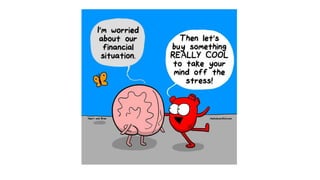
Getting present
•While you were waiting…How stressed are you?
•Quick exercise: Take 20 seconds and think of
nothing. How far did you get before you had a
thought?
Contents
• Getting Present
• Stress
• Definitions
• Classes
• Meditation
• Definitions
• Types
• Mechanisms and Rationale
• Important Procedural Guidelines
• Applications
• Efficacy
• Side Effects & Contraindications
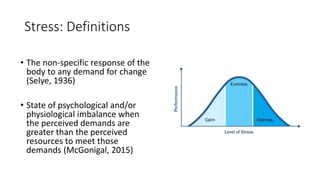
Stress: Definitions
• The non-specific response of the
body to any demand for change
(Selye, 1936)
• State of psychological and/or
physiological imbalance when
the perceived demands are
greater than the perceived
resources to meet those
demands (McGonigal, 2015)
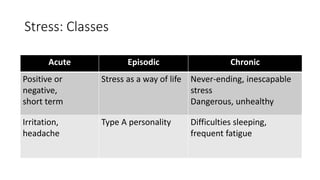
Stress: Classes
Acute Episodic Chronic
Positive or
negative,
short term
Stress as a way of life Never-ending, inescapable
stress
Dangerous, unhealthy
Irritation,
headache
Type A personality Difficulties sleeping,
frequent fatigue
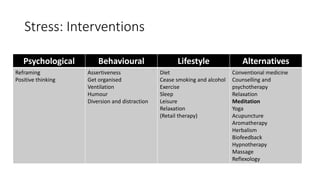
Stress: Interventions
Psychological Behavioural Lifestyle Alternatives
Reframing
Positive thinking
Assertiveness
Get organised
Ventilation
Humour
Diversion and distraction
Diet
Cease smoking and alcohol
Exercise
Sleep
Leisure
Relaxation
(Retail therapy)
Conventional medicine
Counselling and
psychotherapy
Relaxation
Meditation
Yoga
Acupuncture
Aromatherapy
Herbalism
Biofeedback
Hypnotherapy
Massage
Reflexology
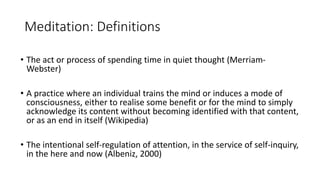
Meditation: Definitions
• The act or process of spending time in quiet thought (Merriam-
Webster)
• A practice where an individual trains the mind or induces a mode of
consciousness, either to realise some benefit or for the mind to simply
acknowledge its content without becoming identified with that content,
or as an end in itself (Wikipedia)
• The intentional self-regulation of attention, in the service of self-inquiry,
in the here and now (Albeniz, 2000)
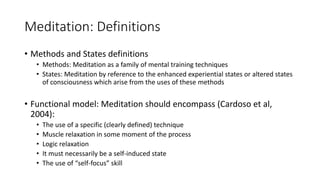
Meditation: Definitions
• Methods and States definitions
• Methods: Meditation as a family of mental training techniques
• States: Meditation by reference to the enhanced experiential states or altered states
of consciousness which arise from the uses of these methods
• Functional model: Meditation should encompass (Cardoso et al,
2004):
• The use of a specific (clearly defined) technique
• Muscle relaxation in some moment of the process
• Logic relaxation
• It must necessarily be a self-induced state
• The use of “self-focus” skill
Meditation: Definitions
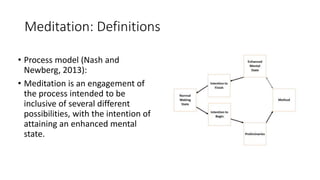
• Process model (Nash and
Newberg, 2013):
• Meditation is an engagement of
the process intended to be
inclusive of several different
possibilities, with the intention of
attaining an enhanced mental
state.
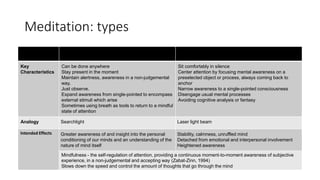
Meditation: types
Insight-Oriented Concentrative
Key
Characteristics
Can be done anywhere
Stay present in the moment
Maintain alertness, awareness in a non-judgemental
way.
Just observe.
Expand awareness from single-pointed to encompass
external stimuli which arise
Sometimes using breath as tools to return to a mindful
state of attention
Sit comfortably in silence
Center attention by focusing mental awareness on a
preselected object or process, always coming back to
anchor
Narrow awareness to a single-pointed consciousness
Disengage usual mental processes
Avoiding cognitive analysis or fantasy
Analogy Searchlight Laser light beam
Intended Effects Greater awareness of and insight into the personal
conditioning of our minds and an understanding of the
nature of mind itself
Stability, calmness, unruffled mind
Detached from emotional and interpersonal involvement
Heightened awareness
Mindfulness - the self-regulation of attention, providing a continuous moment-to-moment awareness of subjective
experience, in a non-judgemental and accepting way (Zabat-Zinn, 1994)
Slows down the speed and control the amount of thoughts that go through the mind
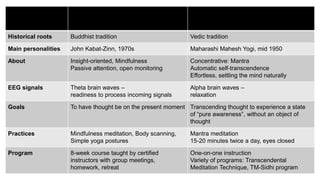
Mindfulness-Based Stress
Reduction (MBSR)
Transcendental
Meditation (TM)
Historical roots Buddhist tradition Vedic tradition
Main personalities John Kabat-Zinn, 1970s Maharashi Mahesh Yogi, mid 1950
About Insight-oriented, Mindfulness
Passive attention, open monitoring
Concentrative: Mantra
Automatic self-transcendence
Effortless, settling the mind naturally
EEG signals Theta brain waves –
readiness to process incoming signals
Alpha brain waves –
relaxation
Goals To have thought be on the present moment Transcending thought to experience a state
of “pure awareness”, without an object of
thought
Practices Mindfulness meditation, Body scanning,
Simple yoga postures
Mantra meditation
15-20 minutes twice a day, eyes closed
Program 8-week course taught by certified
instructors with group meetings,
homework, retreat
One-on-one instruction
Variety of programs: Transcendental
Meditation Technique, TM-Sidhi program
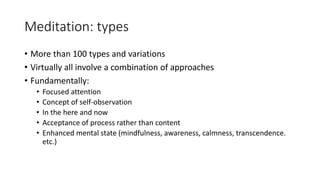
Meditation: types
• More than 100 types and variations
• Virtually all involve a combination of approaches
• Fundamentally:
• Focused attention
• Concept of self-observation
• In the here and now
• Acceptance of process rather than content
• Enhanced mental state (mindfulness, awareness, calmness, transcendence.
etc.)
Meditation: Mechanisms and Rationale
Physiological
• Efficient functioning of the natural compensatory responses within
the autonomic nervous system
• Meditation intentionally activates calming responses of the Parasympathetic
Nervous System
• Increased cortical thickness (sensory, emotional)
• Improved processing of emotionally salient material and adaptive decision
making
• Improved immune functions
• Stronger physiological resilience
• Reduced physiological arousal during stressful times
Meditation: Mechanisms and Rationale
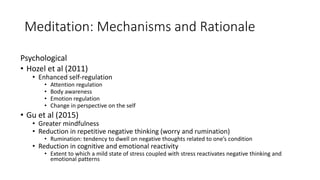
Psychological
• Hozel et al (2011)
• Enhanced self-regulation
• Attention regulation
• Body awareness
• Emotion regulation
• Change in perspective on the self
• Gu et al (2015)
• Greater mindfulness
• Reduction in repetitive negative thinking (worry and rumination)
• Rumination: tendency to dwell on negative thoughts related to one’s condition
• Reduction in cognitive and emotional reactivity
• Extent to which a mild state of stress coupled with stress reactivates negative thinking and
emotional patterns
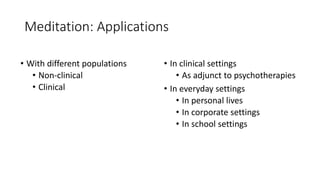
Meditation: Applications
• With different populations
• Non-clinical
• Clinical
• In clinical settings
• As adjunct to psychotherapies
• In everyday settings
• In personal lives
• In corporate settings
• In school settings
Meditation: Efficacy
[Psychological measure]
• Hoseman (2015)
• Compared two types of meditators against non-meditators, non-clinical population
• Australian public, n=695
• Freiburg Mindfulness Inventory and Perceived Stress Test
Group n M Mindfulness (SD) M Stress (SD)
Insight-Oriented 158 44.20 (6.19) 16.99 (5.95)
Concentrative 158 42.84 (6.19) 17.67 (7.27)
Non-meditators 158 35.29 (6.74) 25.62 (7.95)
Meditation: Efficacy
[Psychological measure]
• Paul, Elam & Verhulst (2007)
• Deep Breathing Meditation on academic stresses
• Medical students, n=64
• Survey on perceptions on stress
Survey Questions Pretest M (SD) Posttest M (SD) Follow Up 8-months M
(SD)
Experience test anxiety 6.3 (2.25) 4.92 (2.09) 3.97 (2.27)
Become nervous during exams 5.98 (2.31) 4.67 (2.0) 3.83 (2.22)
Have self-doubt during exams 6.16 (2.29) 5.19 (2.32) 4.16 (2.23)
Meditation: Efficacy [Physiological Measure]
• Turakitwanakan, Mekseepralard & Busarakumtragul (2013)
• Mindfulness meditation on cortisol levels
• Stress hormone
• Chemical mediator to stress response
• Second year medical students, n=30
• Significantly lower levels
• This suggests that mindfulness meditation can lower stress, and
decrease risk of diseases arising from stress
• Recommends use in combination with standard treatment
Meditation: Efficacy
[Physiological, Psychological Measures]
• Nidich et al (2009)
• Transcendental Meditation vs wait-
list control on psychological distress,
coping and blood pressure
• University students, n=298
• Randomized Controlled Trial
• Decrease in blood pressure
associated with decreased
psychological distress and increased
coping
Meditation: Efficacy
[Meta-Analyses]
• Khoury, Sharma, Rush & Fournier, 2015
• 29 studies, n=2668, healthy non-clinical population
• Mindfulness-based Stress Reduction had a large reduction in
stress, moderate effects on clinical measures of depression and
anxiety
• Mindfulness a central component of treatment effectiveness
• Clinicians can recommend standard MBSR programs to reduce
stress, distress, anxiety and depression and to increase quality of
life regardless whether patients meet diagnostic criteria for a
mental disorder.
Meditation: Efficacy
[Meta-Analyses]
• Goyal et al, 2014
• 47 studies, n=3515, clinical populations
• Meditation programs can reduce negative dimensions of psychological stress
• Mindfulness meditation programs show small improvements in anxiety,
depression, and pain with moderate evidence and small improvements in
stress/distress
• Mantra meditation programs did not improve any of the outcomes, but the
strength of this evidence varied from low to insufficient
• No evidence of harm of meditation programs
Meditation: Efficacy
• The bigger picture: Strong but yet to be conclusive
• Issues with many studies:
• Small population → Lack strong statistical power
• Heterogeneity in populations, application, variables and
assessments
• Long-term nature of meditation practices
Meditation: Side Effects & Contraindications
• Relaxation-induced anxiety and panic
• Paradoxical increases in tension
• Less motivation in life
• Boredom
• Pain
• Impaired reality testing
• Confusion and disorientation
• Feeling spaced out
• Depression
• Increased negativity
• Being more judgmental
• Feeling addicted to meditation
• Feelings of defencelessness
• Avoidance of real issues
• Unpleasant affective experiences: fear,
anger, apprehension, despair
• Sobbing and hidden memories and themes
from the past
• Uncomfortable kinaesthetic sensation
• Mild dissociation
• Feelings of guilt
• Via anxiety-provoking phenomena
• psychosis-like symptoms
• grandiosity
• elation
• destructive behaviour
• suicidal feelings
Meditation: Side Effects & Contraindications
• Shapiro, 1994
• Psychosis
• Schizoid and schizotypal personality
• Dissociative states
• Hypochondrial and somatization disorders
Meditation:
Important Procedural Guidelines
• Importance of apprising clients of side-effects and destabilisation
• Design client-oriented meditative exercises
• Encourage prolonged periods of practice
• Increase client motivation
Meditation:
Important Procedural Guidelines
• Monitor and support ego strength or emotional resilience
• Distinguish between temporary discomfort and fragmentation of sense
• Consider meditation as an adjunct to psychotherapy
• Therapist credentials
Conclusion
• Strong evidence for effectiveness
• Heterogeneity
• Generally safe, but risks
• Long-term nature
• Increasing applications
• Stand alone or adjunct
Bibliography
• Barnes, V. A., Treiber, F. A., & Davis, H. (2001). Impact of Transcendental Meditation® on cardiovascular
function at rest and during acute stress in adolescents with high normal blood pressure. Journal of
psychosomatic research, 51(4), 597-605.
• Chiesa, A., & Serretti, A. (2009). Mindfulness-based stress reduction for stress management in healthy
people: A review and meta-analysis. The journal of alternative and complementary medicine, 15(5), 593-600.
• Creswell, J. D., Pacilio, L. E., Lindsay, E. K., & Brown, K. W. (2014). Brief mindfulness meditation training alters
psychological and neuroendocrine responses to social evaluative stress. Psychoneuroendocrinology, 44, 1-12.
• Goyal, M., Singh, S., Sibinga, E. M., Gould, N. F., Rowland-Seymour, A., Sharma, R., ... & Ranasinghe, P. D.
(2014). Meditation programs for psychological stress and well-being: a systematic review and meta-
analysis.JAMA internal medicine, 174(3), 357-368.
• Gu, J., Strauss, C., Bond, R., & Cavanagh, K. (2015). How do mindfulness-based cognitive therapy and
mindfulness-based stress reduction improve mental health and wellbeing? A systematic review and meta-
analysis of mediation studies. Clinical psychology review, 37, 1-12.
• Hosemans, D. (2015). Meditation: a Process of Cultivating Enhanced Well-Being. Mindfulness, 6(2), 338-347.
Bibliography
• Hölzel, B. K., Lazar, S. W., Gard, T., Schuman-Olivier, Z., Vago, D. R., & Ott, U. (2011). How does mindfulness
meditation work? Proposing mechanisms of action from a conceptual and neural perspective.Perspectives on
Psychological Science, 6(6), 537-559.
• Jain, S., Shapiro, S. L., Swanick, S., Roesch, S. C., Mills, P. J., Bell, I., & Schwartz, G. E. (2007). A randomized
controlled trial of mindfulness meditation versus relaxation training: effects on distress, positive states of mind,
rumination, and distraction. Annals of behavioral medicine, 33(1), 11-21.
• Kang, Y. S., Choi, S. Y., & Ryu, E. (2009). The effectiveness of a stress coping program based on mindfulness
meditation on the stress, anxiety, and depression experienced by nursing students in Korea. Nurse education
today, 29(5), 538-543.
• Keng, S. L., Smoski, M. J., & Robins, C. J. (2011). Effects of mindfulness on psychological health: A review of
empirical studies. Clinical psychology review, 31(6), 1041-1056.
• Khoury, B., Sharma, M., Rush, S. E., & Fournier, C. (2015). Mindfulness-based stress reduction for healthy
individuals: a meta-analysis. Journal of psychosomatic research, 78(6), 519-528.
• Koszycki, D., Benger, M., Shlik, J., & Bradwejn, J. (2007). Randomized trial of a meditation-based stress reduction
program and cognitive behavior therapy in generalized social anxiety disorder. Behaviour Research and Therapy,
45(10), 2518-2526.
Bibliography
• Lazar, S. W., Kerr, C. E., Wasserman, R. H., Gray, J. R., Greve, D. N., Treadway, M. T., ... & Rauch, S. L. (2005).
Meditation experience is associated with increased cortical thickness. Neuroreport, 16(17), 1893.
• Lee, S. H., Ahn, S. C., Lee, Y. J., Choi, T. K., Yook, K. H., & Suh, S. Y. (2007). Effectiveness of a meditation-based
stress management program as an adjunct to pharmacotherapy in patients with anxiety disorder. Journal of
Psychosomatic Research, 62(2), 189-195.
• Nash, Jonathan D and Newberg, MD, Andrew B., "Toward a unifying taxonomy and definition for
meditation." (2013). Jefferson Myrna Brind Center of Integration Medicine Faculty Papers. Paper 11.
http://jdc.jefferson.edu/jmbcimfp/11
• Nidich, S. I., Rainforth, M. V., Haaga, D. A., Hagelin, J., Salerno, J. W., Travis, F., ... & Schneider, R. H. (2009). A
randomized controlled trial on effects of the Transcendental Meditation program on blood pressure,
psychological distress, and coping in young adults. American journal of hypertension, 22(12), 1326-1331.
• Oman, D., Shapiro, S. L., Thoresen, C. E., Plante, T. G., & Flinders, T. (2008). Meditation lowers stress and
supports forgiveness among college students: A randomized controlled trial. Journal of American College
Health,56(5), 569-578.
• Perez-De-Albeniz, A., & Holmes, J. (2000). Meditation: concepts, effects and uses in therapy. International
Journal of Psychotherapy, 5(1), 49-58.
Bibliography
• Paul, G., Elam, B., & Verhulst, S. J. (2007). A longitudinal study of students' perceptions of using deep
breathing meditation to reduce testing stresses.Teaching and learning in medicine, 19(3), 287-292.
• Rosenzweig, S., Reibel, D. K., Greeson, J. M., Brainard, G. C., & Hojat, M. (2003). Mindfulness-based stress
reduction lowers psychological distress in medical students. Teaching and learning in medicine, 15(2), 88-92.
• Sedlmeier, P., Eberth, J., Schwarz, M., Zimmermann, D., Haarig, F., Jaeger, S., & Kunze, S. (2012). The
psychological effects of meditation: A meta-analysis. Psychological bulletin, 138(6), 1139.
• Simkin, D. R., & Black, N. B. (2014). Meditation and mindfulness in clinical practice. Child and adolescent
psychiatric clinics of North America, 23(3), 487-534.
• Turakitwanakan, W., Mekseepralard, C., & Busarakumtragul, P. (2013). Effects of mindfulness meditation on
serum cortisol of medical students.Journal of the Medical Association of Thailand= Chotmaihet thangphaet,
96, S90-5.
Bibliography
• https://explorable.com/three-different-kinds-of-stress
• http://www.deepermenditation.net/blog/different-types-of-meditation-
techniques/
• https://goamra.org/
• http://mentalhealthdaily.com/2015/03/24/types-of-meditation-extensive-list-of-
techniques/
• https://nccih.nih.gov/health/meditation/overview.htm
• http://www.stress.org/what-is-stress/
• http://www.tm.org/
• http://www.webmd.com/balance/guide/transcendental-meditation-benefits-
technique?page=2
• http://workouttrends.com/transcendental-vs-mindfulness-meditation

Meditation as an Effective Method for Reducing Stress

  • 1.
    MEDITATION AND STRESSREDUCTION PSYC347 ASSESSMENT AND INTERVENTION TAN MENG CHUAN, UOW ID: 4886628
  • 2.
    Before We Begin •Experiential laboratory • Multiple stimuli • Notice where your attention is placed • Notice how fast your attention moves • End of session: What’s your experience?
  • 3.
    Getting present •While youwere waiting…How stressed are you? •Quick exercise: Take 20 seconds and think of nothing. How far did you get before you had a thought?
  • 5.
    Contents • Getting Present •Stress • Definitions • Classes • Meditation • Definitions • Types • Mechanisms and Rationale • Important Procedural Guidelines • Applications • Efficacy • Side Effects & Contraindications
  • 6.
    Stress: Definitions • Thenon-specific response of the body to any demand for change (Selye, 1936) • State of psychological and/or physiological imbalance when the perceived demands are greater than the perceived resources to meet those demands (McGonigal, 2015)
  • 7.
    Stress: Classes Acute EpisodicChronic Positive or negative, short term Stress as a way of life Never-ending, inescapable stress Dangerous, unhealthy Irritation, headache Type A personality Difficulties sleeping, frequent fatigue
  • 9.
    Stress: Interventions Psychological BehaviouralLifestyle Alternatives Reframing Positive thinking Assertiveness Get organised Ventilation Humour Diversion and distraction Diet Cease smoking and alcohol Exercise Sleep Leisure Relaxation (Retail therapy) Conventional medicine Counselling and psychotherapy Relaxation Meditation Yoga Acupuncture Aromatherapy Herbalism Biofeedback Hypnotherapy Massage Reflexology
  • 10.
    Meditation: Definitions • Theact or process of spending time in quiet thought (Merriam- Webster) • A practice where an individual trains the mind or induces a mode of consciousness, either to realise some benefit or for the mind to simply acknowledge its content without becoming identified with that content, or as an end in itself (Wikipedia) • The intentional self-regulation of attention, in the service of self-inquiry, in the here and now (Albeniz, 2000)
  • 11.
    Meditation: Definitions • Methodsand States definitions • Methods: Meditation as a family of mental training techniques • States: Meditation by reference to the enhanced experiential states or altered states of consciousness which arise from the uses of these methods • Functional model: Meditation should encompass (Cardoso et al, 2004): • The use of a specific (clearly defined) technique • Muscle relaxation in some moment of the process • Logic relaxation • It must necessarily be a self-induced state • The use of “self-focus” skill
  • 12.
    Meditation: Definitions • Processmodel (Nash and Newberg, 2013): • Meditation is an engagement of the process intended to be inclusive of several different possibilities, with the intention of attaining an enhanced mental state.
  • 13.
    Meditation: types Insight-Oriented Concentrative Key Characteristics Canbe done anywhere Stay present in the moment Maintain alertness, awareness in a non-judgemental way. Just observe. Expand awareness from single-pointed to encompass external stimuli which arise Sometimes using breath as tools to return to a mindful state of attention Sit comfortably in silence Center attention by focusing mental awareness on a preselected object or process, always coming back to anchor Narrow awareness to a single-pointed consciousness Disengage usual mental processes Avoiding cognitive analysis or fantasy Analogy Searchlight Laser light beam Intended Effects Greater awareness of and insight into the personal conditioning of our minds and an understanding of the nature of mind itself Stability, calmness, unruffled mind Detached from emotional and interpersonal involvement Heightened awareness Mindfulness - the self-regulation of attention, providing a continuous moment-to-moment awareness of subjective experience, in a non-judgemental and accepting way (Zabat-Zinn, 1994) Slows down the speed and control the amount of thoughts that go through the mind
  • 14.
    Mindfulness-Based Stress Reduction (MBSR) Transcendental Meditation(TM) Historical roots Buddhist tradition Vedic tradition Main personalities John Kabat-Zinn, 1970s Maharashi Mahesh Yogi, mid 1950 About Insight-oriented, Mindfulness Passive attention, open monitoring Concentrative: Mantra Automatic self-transcendence Effortless, settling the mind naturally EEG signals Theta brain waves – readiness to process incoming signals Alpha brain waves – relaxation Goals To have thought be on the present moment Transcending thought to experience a state of “pure awareness”, without an object of thought Practices Mindfulness meditation, Body scanning, Simple yoga postures Mantra meditation 15-20 minutes twice a day, eyes closed Program 8-week course taught by certified instructors with group meetings, homework, retreat One-on-one instruction Variety of programs: Transcendental Meditation Technique, TM-Sidhi program
  • 15.
    Meditation: types • Morethan 100 types and variations • Virtually all involve a combination of approaches • Fundamentally: • Focused attention • Concept of self-observation • In the here and now • Acceptance of process rather than content • Enhanced mental state (mindfulness, awareness, calmness, transcendence. etc.)
  • 16.
    Meditation: Mechanisms andRationale Physiological • Efficient functioning of the natural compensatory responses within the autonomic nervous system • Meditation intentionally activates calming responses of the Parasympathetic Nervous System • Increased cortical thickness (sensory, emotional) • Improved processing of emotionally salient material and adaptive decision making • Improved immune functions • Stronger physiological resilience • Reduced physiological arousal during stressful times
  • 17.
    Meditation: Mechanisms andRationale Psychological • Hozel et al (2011) • Enhanced self-regulation • Attention regulation • Body awareness • Emotion regulation • Change in perspective on the self • Gu et al (2015) • Greater mindfulness • Reduction in repetitive negative thinking (worry and rumination) • Rumination: tendency to dwell on negative thoughts related to one’s condition • Reduction in cognitive and emotional reactivity • Extent to which a mild state of stress coupled with stress reactivates negative thinking and emotional patterns
  • 19.
    Meditation: Applications • Withdifferent populations • Non-clinical • Clinical • In clinical settings • As adjunct to psychotherapies • In everyday settings • In personal lives • In corporate settings • In school settings
  • 20.
    Meditation: Efficacy [Psychological measure] •Hoseman (2015) • Compared two types of meditators against non-meditators, non-clinical population • Australian public, n=695 • Freiburg Mindfulness Inventory and Perceived Stress Test Group n M Mindfulness (SD) M Stress (SD) Insight-Oriented 158 44.20 (6.19) 16.99 (5.95) Concentrative 158 42.84 (6.19) 17.67 (7.27) Non-meditators 158 35.29 (6.74) 25.62 (7.95)
  • 21.
    Meditation: Efficacy [Psychological measure] •Paul, Elam & Verhulst (2007) • Deep Breathing Meditation on academic stresses • Medical students, n=64 • Survey on perceptions on stress Survey Questions Pretest M (SD) Posttest M (SD) Follow Up 8-months M (SD) Experience test anxiety 6.3 (2.25) 4.92 (2.09) 3.97 (2.27) Become nervous during exams 5.98 (2.31) 4.67 (2.0) 3.83 (2.22) Have self-doubt during exams 6.16 (2.29) 5.19 (2.32) 4.16 (2.23)
  • 22.
    Meditation: Efficacy [PhysiologicalMeasure] • Turakitwanakan, Mekseepralard & Busarakumtragul (2013) • Mindfulness meditation on cortisol levels • Stress hormone • Chemical mediator to stress response • Second year medical students, n=30 • Significantly lower levels • This suggests that mindfulness meditation can lower stress, and decrease risk of diseases arising from stress • Recommends use in combination with standard treatment
  • 23.
    Meditation: Efficacy [Physiological, PsychologicalMeasures] • Nidich et al (2009) • Transcendental Meditation vs wait- list control on psychological distress, coping and blood pressure • University students, n=298 • Randomized Controlled Trial • Decrease in blood pressure associated with decreased psychological distress and increased coping
  • 24.
    Meditation: Efficacy [Meta-Analyses] • Khoury,Sharma, Rush & Fournier, 2015 • 29 studies, n=2668, healthy non-clinical population • Mindfulness-based Stress Reduction had a large reduction in stress, moderate effects on clinical measures of depression and anxiety • Mindfulness a central component of treatment effectiveness • Clinicians can recommend standard MBSR programs to reduce stress, distress, anxiety and depression and to increase quality of life regardless whether patients meet diagnostic criteria for a mental disorder.
  • 25.
    Meditation: Efficacy [Meta-Analyses] • Goyalet al, 2014 • 47 studies, n=3515, clinical populations • Meditation programs can reduce negative dimensions of psychological stress • Mindfulness meditation programs show small improvements in anxiety, depression, and pain with moderate evidence and small improvements in stress/distress • Mantra meditation programs did not improve any of the outcomes, but the strength of this evidence varied from low to insufficient • No evidence of harm of meditation programs
  • 26.
    Meditation: Efficacy • Thebigger picture: Strong but yet to be conclusive • Issues with many studies: • Small population → Lack strong statistical power • Heterogeneity in populations, application, variables and assessments • Long-term nature of meditation practices
  • 28.
    Meditation: Side Effects& Contraindications • Relaxation-induced anxiety and panic • Paradoxical increases in tension • Less motivation in life • Boredom • Pain • Impaired reality testing • Confusion and disorientation • Feeling spaced out • Depression • Increased negativity • Being more judgmental • Feeling addicted to meditation • Feelings of defencelessness • Avoidance of real issues • Unpleasant affective experiences: fear, anger, apprehension, despair • Sobbing and hidden memories and themes from the past • Uncomfortable kinaesthetic sensation • Mild dissociation • Feelings of guilt • Via anxiety-provoking phenomena • psychosis-like symptoms • grandiosity • elation • destructive behaviour • suicidal feelings
  • 29.
    Meditation: Side Effects& Contraindications • Shapiro, 1994 • Psychosis • Schizoid and schizotypal personality • Dissociative states • Hypochondrial and somatization disorders
  • 30.
    Meditation: Important Procedural Guidelines •Importance of apprising clients of side-effects and destabilisation • Design client-oriented meditative exercises • Encourage prolonged periods of practice • Increase client motivation
  • 31.
    Meditation: Important Procedural Guidelines •Monitor and support ego strength or emotional resilience • Distinguish between temporary discomfort and fragmentation of sense • Consider meditation as an adjunct to psychotherapy • Therapist credentials
  • 32.
    Conclusion • Strong evidencefor effectiveness • Heterogeneity • Generally safe, but risks • Long-term nature • Increasing applications • Stand alone or adjunct
  • 34.
    Bibliography • Barnes, V.A., Treiber, F. A., & Davis, H. (2001). Impact of Transcendental Meditation® on cardiovascular function at rest and during acute stress in adolescents with high normal blood pressure. Journal of psychosomatic research, 51(4), 597-605. • Chiesa, A., & Serretti, A. (2009). Mindfulness-based stress reduction for stress management in healthy people: A review and meta-analysis. The journal of alternative and complementary medicine, 15(5), 593-600. • Creswell, J. D., Pacilio, L. E., Lindsay, E. K., & Brown, K. W. (2014). Brief mindfulness meditation training alters psychological and neuroendocrine responses to social evaluative stress. Psychoneuroendocrinology, 44, 1-12. • Goyal, M., Singh, S., Sibinga, E. M., Gould, N. F., Rowland-Seymour, A., Sharma, R., ... & Ranasinghe, P. D. (2014). Meditation programs for psychological stress and well-being: a systematic review and meta- analysis.JAMA internal medicine, 174(3), 357-368. • Gu, J., Strauss, C., Bond, R., & Cavanagh, K. (2015). How do mindfulness-based cognitive therapy and mindfulness-based stress reduction improve mental health and wellbeing? A systematic review and meta- analysis of mediation studies. Clinical psychology review, 37, 1-12. • Hosemans, D. (2015). Meditation: a Process of Cultivating Enhanced Well-Being. Mindfulness, 6(2), 338-347.
  • 35.
    Bibliography • Hölzel, B.K., Lazar, S. W., Gard, T., Schuman-Olivier, Z., Vago, D. R., & Ott, U. (2011). How does mindfulness meditation work? Proposing mechanisms of action from a conceptual and neural perspective.Perspectives on Psychological Science, 6(6), 537-559. • Jain, S., Shapiro, S. L., Swanick, S., Roesch, S. C., Mills, P. J., Bell, I., & Schwartz, G. E. (2007). A randomized controlled trial of mindfulness meditation versus relaxation training: effects on distress, positive states of mind, rumination, and distraction. Annals of behavioral medicine, 33(1), 11-21. • Kang, Y. S., Choi, S. Y., & Ryu, E. (2009). The effectiveness of a stress coping program based on mindfulness meditation on the stress, anxiety, and depression experienced by nursing students in Korea. Nurse education today, 29(5), 538-543. • Keng, S. L., Smoski, M. J., & Robins, C. J. (2011). Effects of mindfulness on psychological health: A review of empirical studies. Clinical psychology review, 31(6), 1041-1056. • Khoury, B., Sharma, M., Rush, S. E., & Fournier, C. (2015). Mindfulness-based stress reduction for healthy individuals: a meta-analysis. Journal of psychosomatic research, 78(6), 519-528. • Koszycki, D., Benger, M., Shlik, J., & Bradwejn, J. (2007). Randomized trial of a meditation-based stress reduction program and cognitive behavior therapy in generalized social anxiety disorder. Behaviour Research and Therapy, 45(10), 2518-2526.
  • 36.
    Bibliography • Lazar, S.W., Kerr, C. E., Wasserman, R. H., Gray, J. R., Greve, D. N., Treadway, M. T., ... & Rauch, S. L. (2005). Meditation experience is associated with increased cortical thickness. Neuroreport, 16(17), 1893. • Lee, S. H., Ahn, S. C., Lee, Y. J., Choi, T. K., Yook, K. H., & Suh, S. Y. (2007). Effectiveness of a meditation-based stress management program as an adjunct to pharmacotherapy in patients with anxiety disorder. Journal of Psychosomatic Research, 62(2), 189-195. • Nash, Jonathan D and Newberg, MD, Andrew B., "Toward a unifying taxonomy and definition for meditation." (2013). Jefferson Myrna Brind Center of Integration Medicine Faculty Papers. Paper 11. http://jdc.jefferson.edu/jmbcimfp/11 • Nidich, S. I., Rainforth, M. V., Haaga, D. A., Hagelin, J., Salerno, J. W., Travis, F., ... & Schneider, R. H. (2009). A randomized controlled trial on effects of the Transcendental Meditation program on blood pressure, psychological distress, and coping in young adults. American journal of hypertension, 22(12), 1326-1331. • Oman, D., Shapiro, S. L., Thoresen, C. E., Plante, T. G., & Flinders, T. (2008). Meditation lowers stress and supports forgiveness among college students: A randomized controlled trial. Journal of American College Health,56(5), 569-578. • Perez-De-Albeniz, A., & Holmes, J. (2000). Meditation: concepts, effects and uses in therapy. International Journal of Psychotherapy, 5(1), 49-58.
  • 37.
    Bibliography • Paul, G.,Elam, B., & Verhulst, S. J. (2007). A longitudinal study of students' perceptions of using deep breathing meditation to reduce testing stresses.Teaching and learning in medicine, 19(3), 287-292. • Rosenzweig, S., Reibel, D. K., Greeson, J. M., Brainard, G. C., & Hojat, M. (2003). Mindfulness-based stress reduction lowers psychological distress in medical students. Teaching and learning in medicine, 15(2), 88-92. • Sedlmeier, P., Eberth, J., Schwarz, M., Zimmermann, D., Haarig, F., Jaeger, S., & Kunze, S. (2012). The psychological effects of meditation: A meta-analysis. Psychological bulletin, 138(6), 1139. • Simkin, D. R., & Black, N. B. (2014). Meditation and mindfulness in clinical practice. Child and adolescent psychiatric clinics of North America, 23(3), 487-534. • Turakitwanakan, W., Mekseepralard, C., & Busarakumtragul, P. (2013). Effects of mindfulness meditation on serum cortisol of medical students.Journal of the Medical Association of Thailand= Chotmaihet thangphaet, 96, S90-5.
  • 38.
    Bibliography • https://explorable.com/three-different-kinds-of-stress • http://www.deepermenditation.net/blog/different-types-of-meditation- techniques/ •https://goamra.org/ • http://mentalhealthdaily.com/2015/03/24/types-of-meditation-extensive-list-of- techniques/ • https://nccih.nih.gov/health/meditation/overview.htm • http://www.stress.org/what-is-stress/ • http://www.tm.org/ • http://www.webmd.com/balance/guide/transcendental-meditation-benefits- technique?page=2 • http://workouttrends.com/transcendental-vs-mindfulness-meditation

Editor's Notes

  • #2 Good afternoon, ladies and gentleman. My name is Meng Chuan, you can call me MC. The topic of my presentation is meditation as a method for reducing stress
  • #4 So to get us warmed up, I’ve asked everyone to do a simple survey. It’s called the Cohen’s Perceived Stress Survey, and it’s a common assessment tool for many clinical studies. The goal is for you to get present and take stock of where you are right now in life. You don’t have to share your score. I’ll be giving you the standardised norms at the end of the session, so you can see where you stand. I invite you to have this at the back of your mind, and for you to ask yourself along the way, if you yourself would be interested in taking on meditation as an intervention in reducing your stress. The next task, is a quick exercise… This really is just to point to how much we as human beings can’t stop thinking, and if you look closing, you will find that you think about a lot of things, and usually more negative, and judgemental thoughts than neutral or positive ones.
  • #6 This are the contents that I will be covering
  • #7 Here are two common definitions. Stress can be conceptualised as a curve, with an optimal zone called eustress. It is the distress end of the spectrum that is of our concern. We will be using the word “stress” to connote distress.
  • #8 This is one taxonomy of stress, relating to persistence and frequency of stress
  • #9 So when you get stressed, what you do? Retail therapy! For me it usually gadgets.
  • #10 As a wider picture, there are many, many interventions for stress reduction and management. Our focus is of course, meditation.
  • #11 When it comes to definitions and conceptualisations of meditation, there are many.
  • #12 There are method definitions, where mediation is classified as techniques, or are referenced to the end product of some enhanced mental state And there are researchers who combine the two. Cardoso conceptualised a functional, characteristics model
  • #13 While Nash and Newberg, takes a procedural approach to meditation.
  • #14 So now, we will look at what Nash and Newberg calls the “method” or what Cardoso calls the “specific technique”. Andin the vast world of meditation there are many types. Many researchers classify two types (though many argue that there are more), there is insight-oriented (or mindfulness meditation) and concentrative meditation (breath, mantra, movement like qi gong, or concepts like loving kindness)
  • #15 In the current research, two main meditation programs have come to be secularised and systematised, and are popularly used in clinical and non-clinical applications.
  • #17 How does meditation work to reduce stress? Through what mechanisms with what sort of results get achieved? Different studies have investigated both the physiological and psychological mechanisms. For example in physiological mechanisms, researchers identified things like stronger autonomic nervous system functioning that allows for quicker relaxation responses to stress, increase brain matter to more adaptive cognitive responses to stress, stronger immune functions building up physiological resilience, and even reduce sensitivity, reactivity and arousal during stressful times
  • #18 There are also several psychological mechanisms identified, namely, greater self-regulation, mindfulness and awareness; reduction in thinking that perpetuates stress, and cognitive and emotional reactivity
  • #19 For many, meditation leads to a change in perspective in the self, and in everything around them. A sort of enlightenment so to speak.
  • #20 Meditation is widely practices in different populations and settings.
  • #26 The ones I’ve presented look at non-clinical populations. What about clinical populations. Goyal et al’s study seems to suggest a more limited effected, though still significant.
  • #29 Mediation is certainly no panacea, and there are small isolated cases reporting a series of side effects
  • #30 Shapiro suggests that not every one is suitable for meditation, especially those with certain mental disorders Hypochondrial: abnormally anxious about health Somatization: manifestation of psychological presentation of bodily symptoms
  • #31 Importance of apprising clients about the possibility of painful memories surfacing and side effects, of destabilisation at the start Design client-oriented meditative exercises Understand and identify the experiences of the client Meditative technique that brings client into a closer, more aware relationship to that experience Encourage prolonged periods of practice Direct correlation between amount of time spent practicing and effectiveness of meditative techniques Increase client motivation: Create understanding of purpose, and willingness to make it a priority Distress and expectation of benefit Boredom and wanting to quit; Self-judgement → Make them the object of awareness
  • #32 Monitor and support ego strength or emotional resilience during destabilisation phase Distinguish between temporary discomfort and fragmentation of sense of self (dissociations, grandiosity, terrors, delusions) → Consider alternatives Consider meditation as an adjunct to psychotherapy Potential to lead to profound awareness and freedom beyond symptom relief generally sought in psychotherapy Help support the gains made in psychotherapy Promote deeper self-exploration. Therapist credentials
  • #33 Strong evidence for effectiveness of mediation in reducing stress Heterogeneity of conceptualisations, meditation techniques, target populations Risks involved in meditation Long-term nature of meditation Generally safe Increasing applications in various settings