Rotating Wonders
Cyclical Phases of the Moon
Learning objectives
 How does the moon change shape in the
sky? Why does it do this?
 How is this related to the movement of the
Earth?
Rotation of the Earth
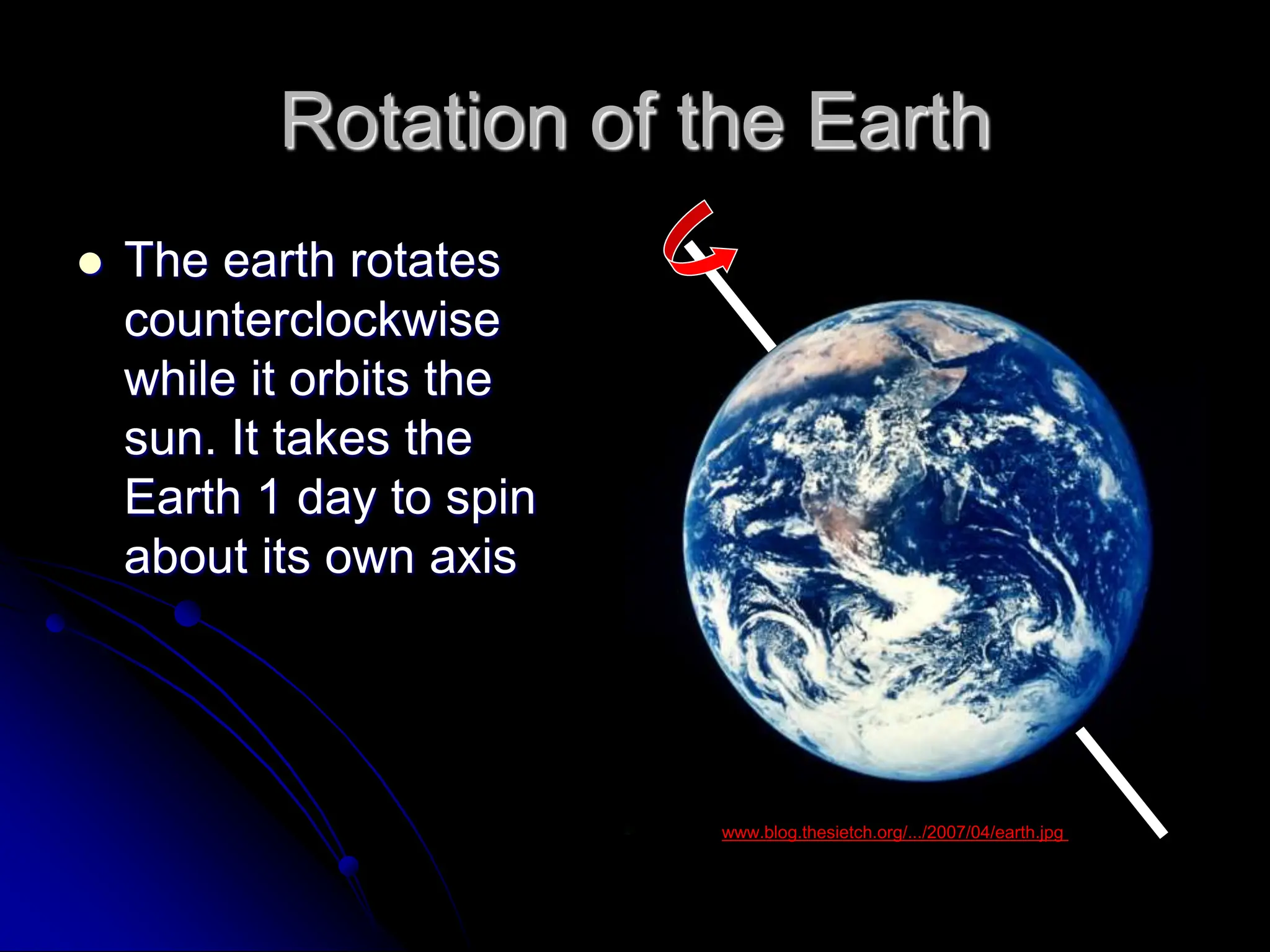
 The earth rotates
counterclockwise
while it orbits the
sun. It takes the
Earth 1 day to spin
about its own axis
www.blog.thesietch.org/.../2007/04/earth.jpg
Orbit of the Moon
 The moon rotates about this same axis as
well, but at a slower speed.
Orbit of the Moon
 The moon orbits
around the Earth
in a
counterclockwise
direction. It does
this at a 5 degree
tilt from the
equator of the
Earth. It takes the
moon 27.3 days to
orbit the entire
Earth.
Axis of Rotation
Rotation of the Moon
 The moon also
rotates about its
own axis in a
counterclockwise
position. The time
it takes the moon
to rotate about its
own axis is the
same time it
takes the moon
to orbit the Earth
Rotation of the Moon
 This is why we only see one side of the
moon at all times during its orbit
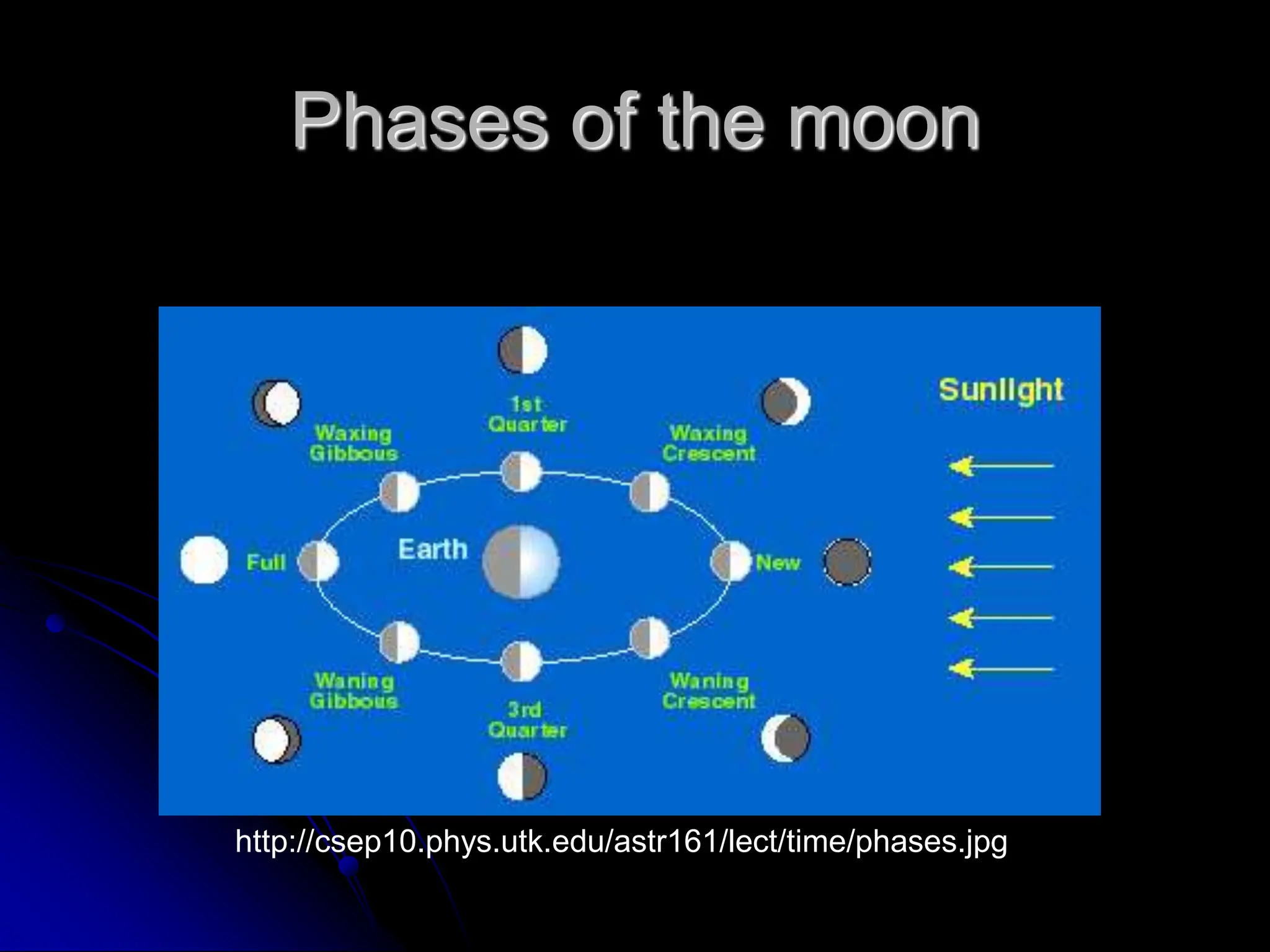
Phases of the Moon
Phases are caused by sunlight reflecting off
the surface of the moon and also by the
position of the moon relative to the sun
and the Earth.
Major Phases
 There are four major phases of the moon:
 Full Moon
 Waxing crescent
 New Moon
 Waning Crescent
Full Moon
 When the moon is
labeled a full moon, the
face that we see is
facing towards the sun.
Waxing Crescent
 A waxing moon is a moon that
appears smaller every day until
it becomes a new moon. This
means the face we see is
rotating away from the sun.
New Moon
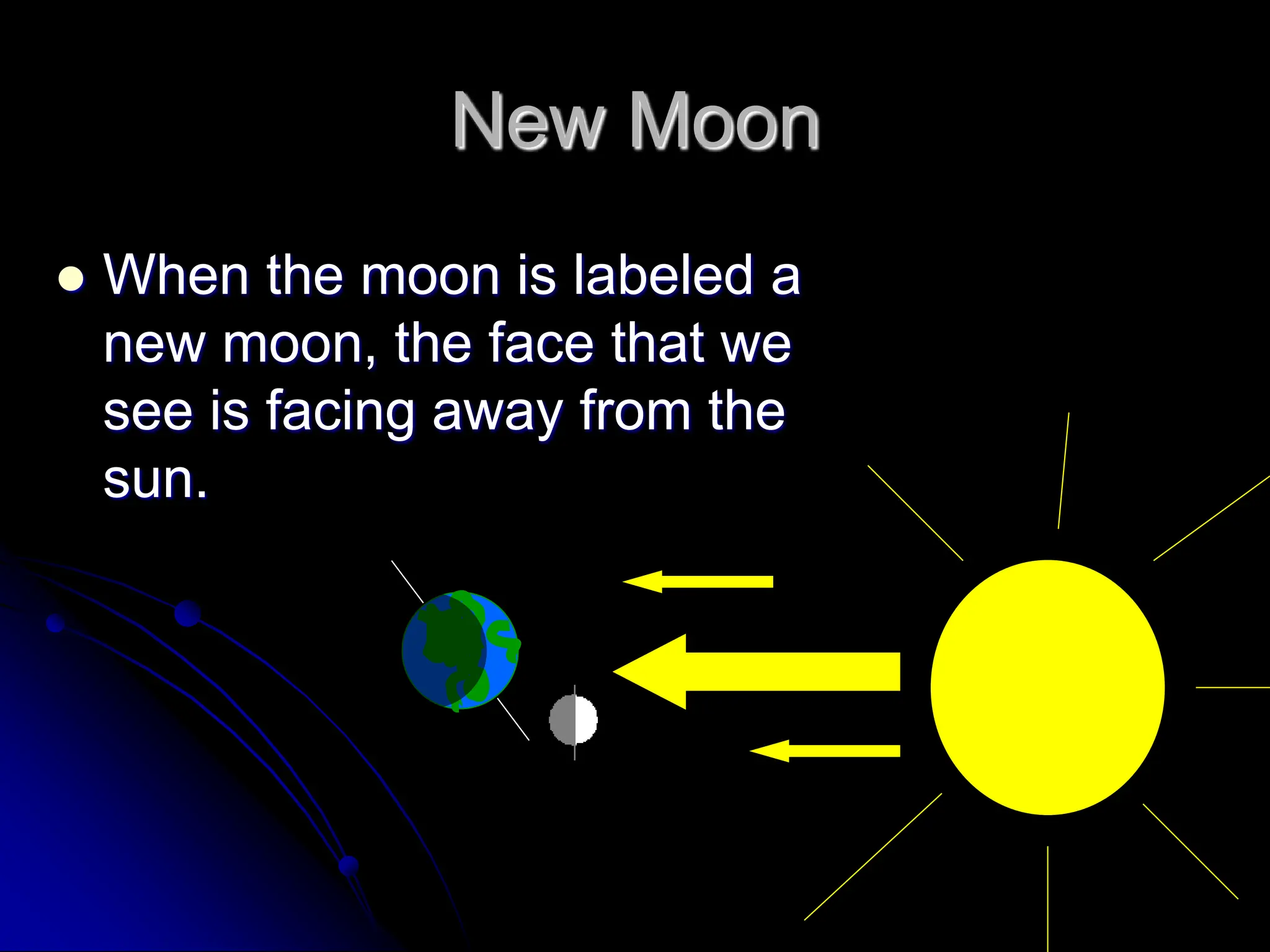
 When the moon is labeled a
new moon, the face that we
see is facing away from the
sun.
Waning Crescent
 A waning moon is a moon that
appears larger every day until
it becomes a full moon. This
means the face we see is
rotating towards the sun.
Period of Rotation
 The phases of the moon occur about
every 27.3 days
 This is equal to the time that it takes to
rotate about the Earth
Phases of the moon
http://csep10.phys.utk.edu/astr161/lect/time/phases.jpg
Rotation of Earth and Moon
Earth takes 1 day to rotate about its
own axis and the moon takes 27.3
Days to orbit the earth. By the time
that the moon has made one full orbit
about
The Earth, the Earth has rotated
about 27 times.
Because the moon and the Earth
rotate at different speeds, the moon
appears at different points in the sky
each night and even sometimes
during the day.
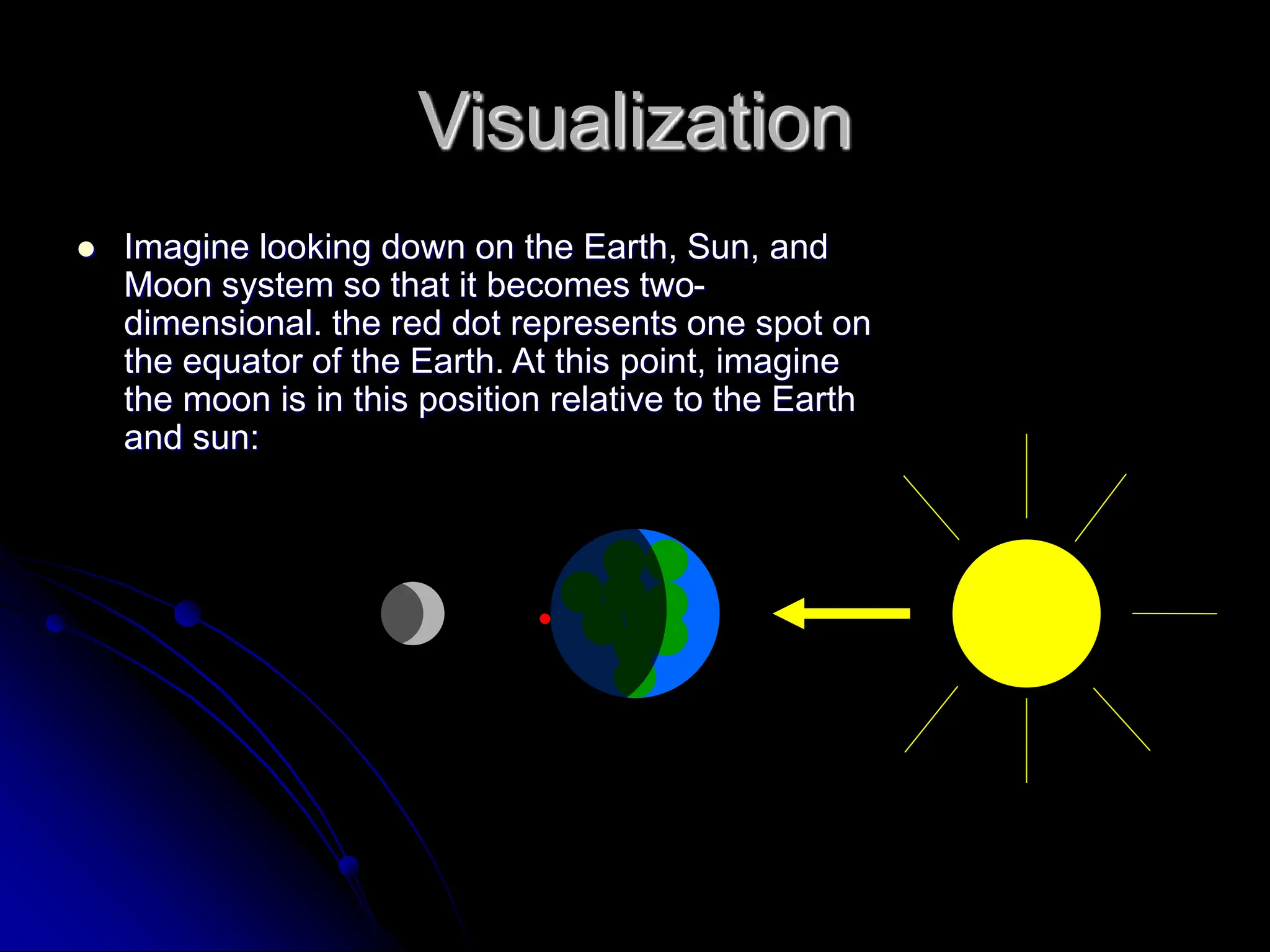
Visualization
 Imagine looking down on the Earth, Sun, and
Moon system so that it becomes two-
dimensional. the red dot represents one spot on
the equator of the Earth. At this point, imagine
the moon is in this position relative to the Earth
and sun:
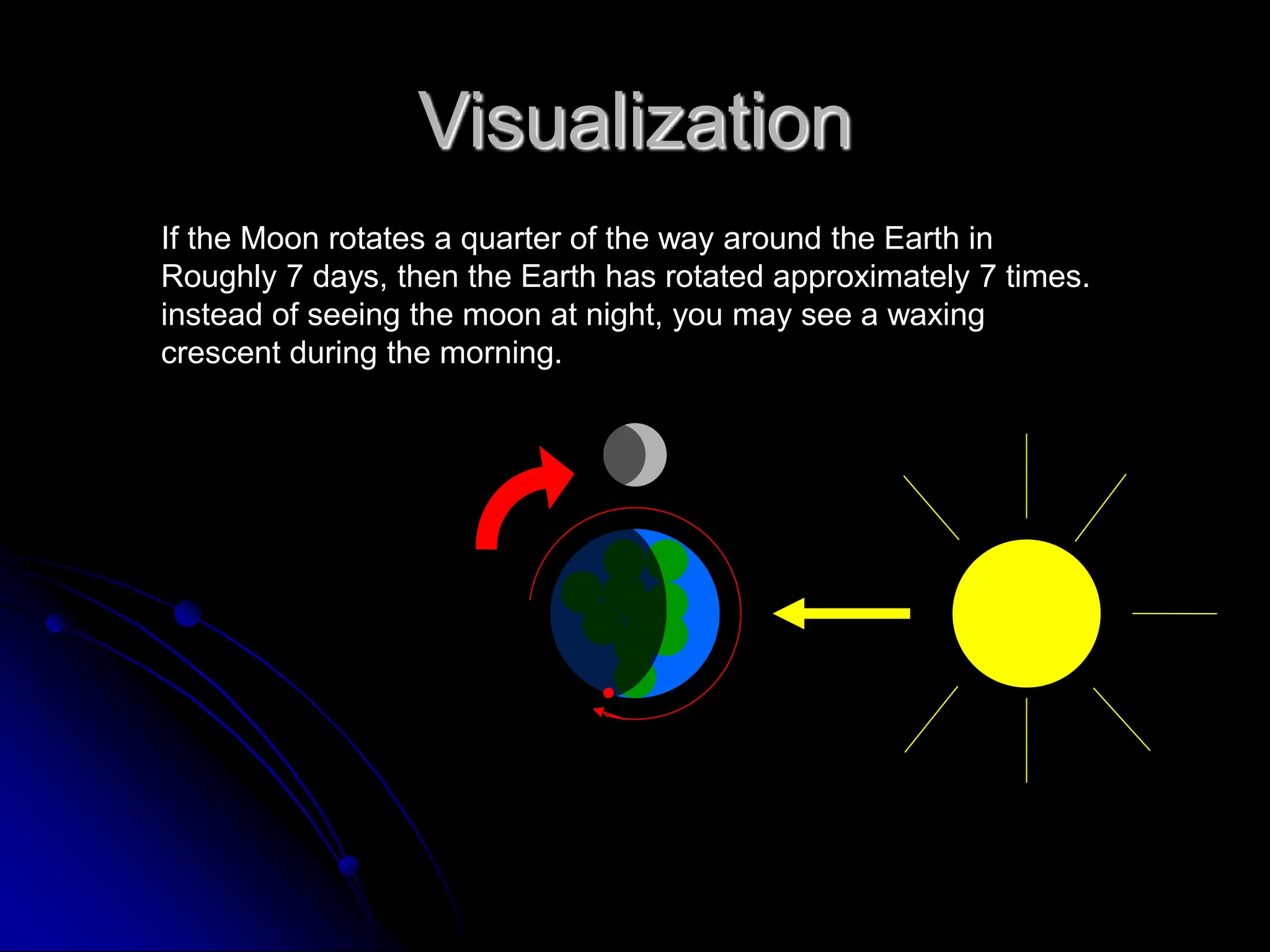
Visualization
If the Moon rotates a quarter of the way around the Earth in
Roughly 7 days, then the Earth has rotated approximately 7 times.
instead of seeing the moon at night, you may see a waxing
crescent during the morning.
Seasons and the Moon
 Similarly, the moon appears at different
points in the sky during different seasons.
This is because the moon stays in the
same radial orbit, but the Earth “tilts”.
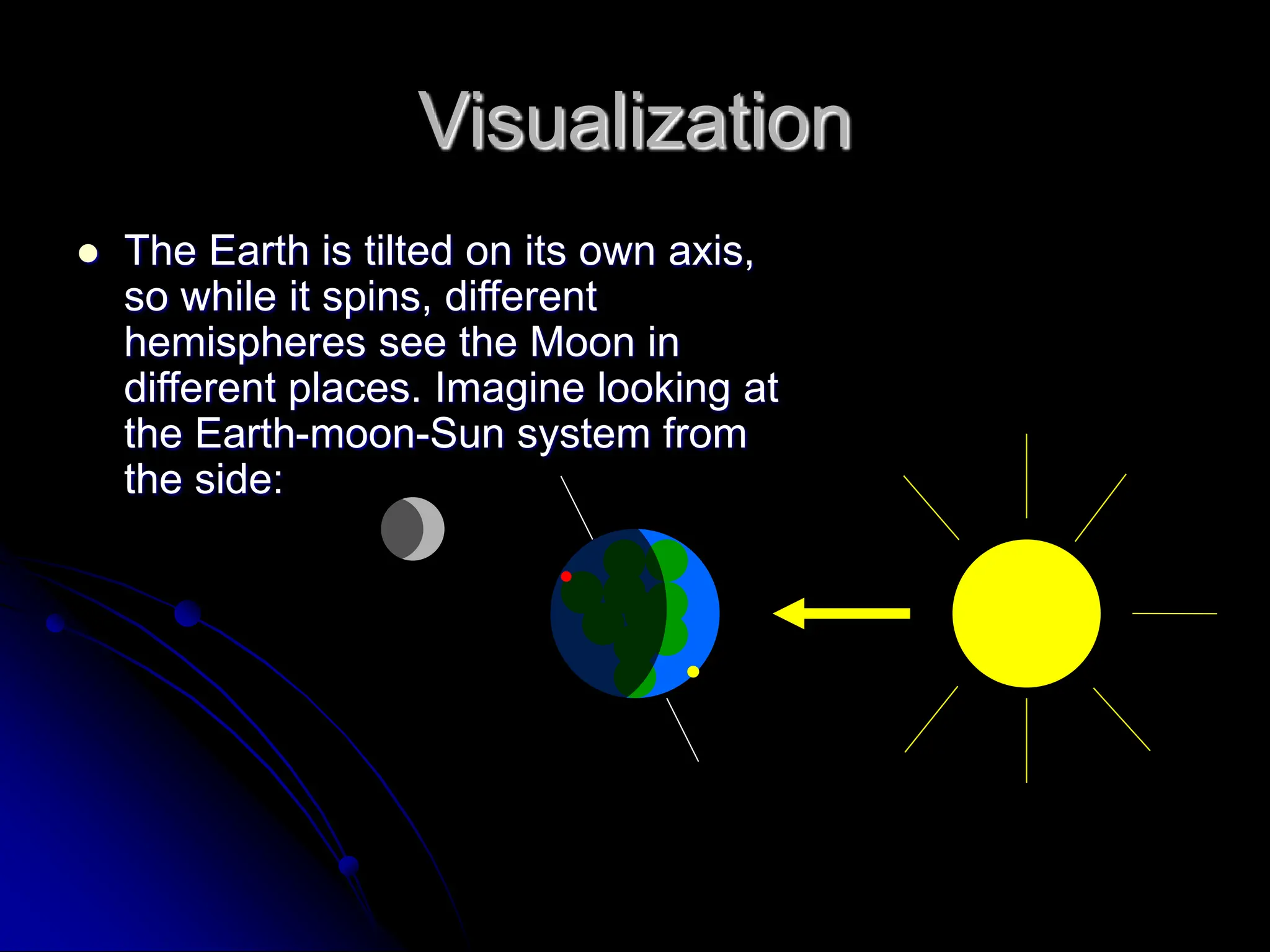
Visualization
 The Earth is tilted on its own axis,
so while it spins, different
hemispheres see the Moon in
different places. Imagine looking at
the Earth-moon-Sun system from
the side:
Visualization
 The season affecting the Northern
Hemisphere when the Earth is tilted away
from the sun is winter, and the season
affecting the Southern Hemisphere is
summer.
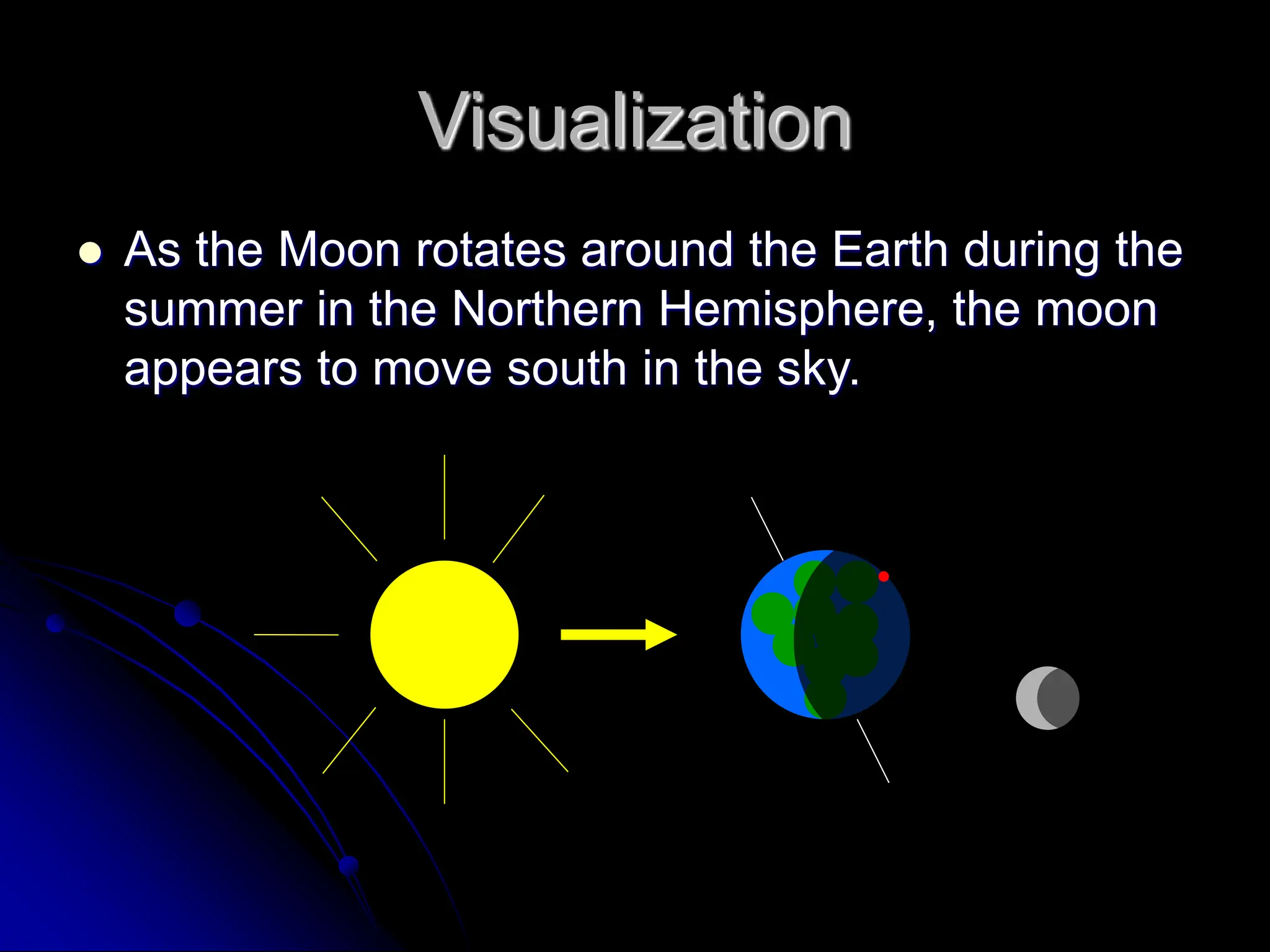
Visualization
 As the Moon rotates around the Earth during the
summer in the Northern Hemisphere, the moon
appears to move south in the sky.
Visualization
 During winter in the Northern Hemisphere,
the moon appears to move north in the
sky.
Visualization
 As the Moon rotates around the Earth during the
summer in the Southern Hemisphere, the moon
appears to move north in the sky.
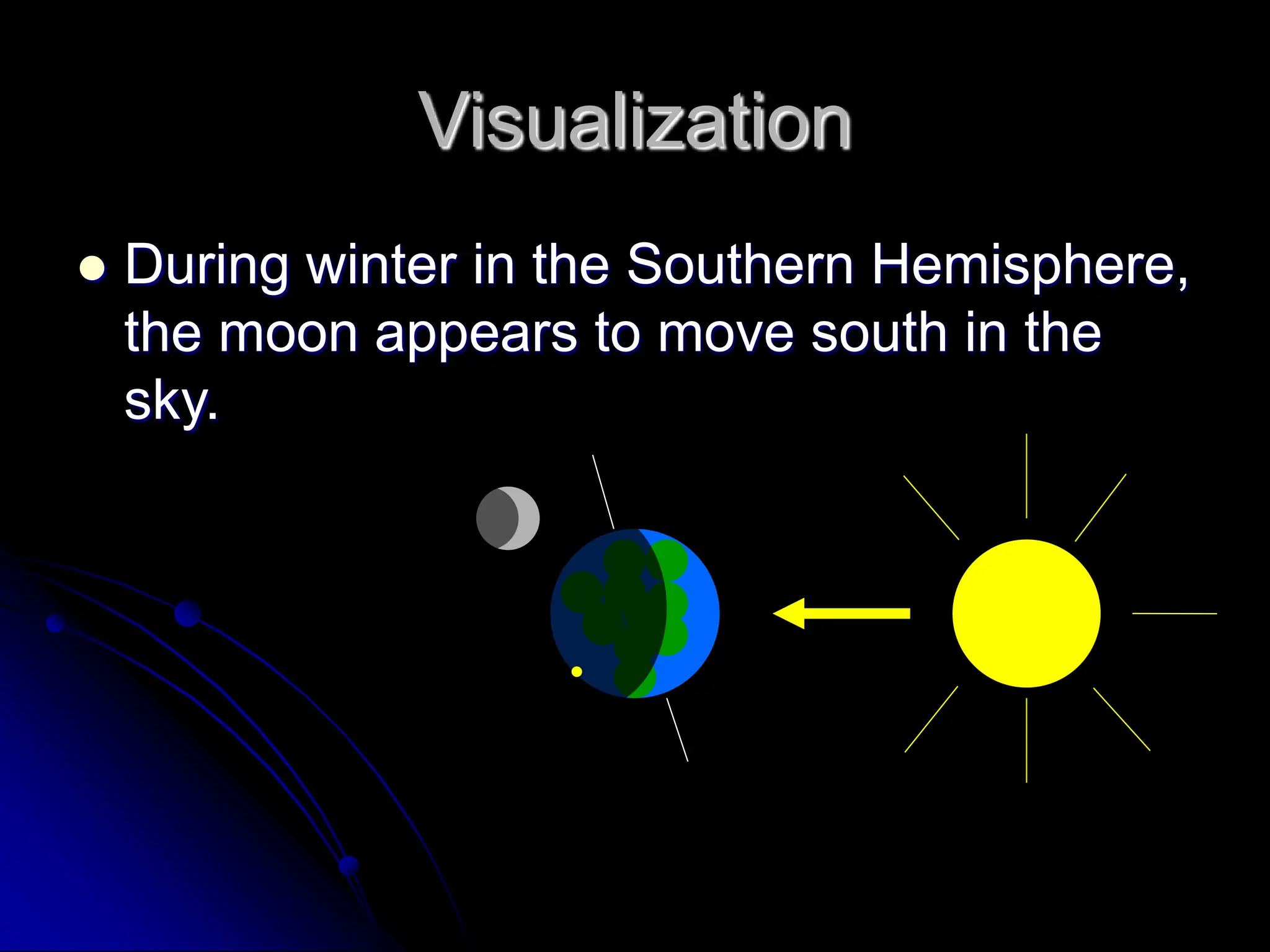
Visualization
 During winter in the Southern Hemisphere,
the moon appears to move south in the
sky.
Summary
 The Earth rotates counterclockwise about its own axis in
a day and the Moon orbits Earth’s axis in 27.3 days
 The Moon rotates counterclockwise about its own axis in
27.3 days
 We only see one side of the moon at all times because
the moon rotates about its own axis in the same time it
rotates about the Earth.
 There are four Major phases of the moon: New, Full,
Waxing, and Waning
 Each phase is caused by the position of the Earth and
the reflection of light from the Sun on the surface of the
moon
 The moon appears at different places in the sky during
different seasons
References
 PhysicalGeography.net
 http://library.thinkquest.org/
 http://csep10.phys.utk.edu
 http://nssdc.gsfc.nasa.gov
Questions and Discussion

The-Earth-And-The-MoonThe-Earth-And-The-Moon.ppt

  • 1.
  • 2.
    Learning objectives  Howdoes the moon change shape in the sky? Why does it do this?  How is this related to the movement of the Earth?
  • 3.
    Rotation of theEarth  The earth rotates counterclockwise while it orbits the sun. It takes the Earth 1 day to spin about its own axis www.blog.thesietch.org/.../2007/04/earth.jpg
  • 4.
    Orbit of theMoon  The moon rotates about this same axis as well, but at a slower speed.
  • 5.
    Orbit of theMoon  The moon orbits around the Earth in a counterclockwise direction. It does this at a 5 degree tilt from the equator of the Earth. It takes the moon 27.3 days to orbit the entire Earth. Axis of Rotation
  • 6.
    Rotation of theMoon  The moon also rotates about its own axis in a counterclockwise position. The time it takes the moon to rotate about its own axis is the same time it takes the moon to orbit the Earth
  • 7.
    Rotation of theMoon  This is why we only see one side of the moon at all times during its orbit
  • 8.
    Phases of theMoon Phases are caused by sunlight reflecting off the surface of the moon and also by the position of the moon relative to the sun and the Earth.
  • 9.
    Major Phases  Thereare four major phases of the moon:  Full Moon  Waxing crescent  New Moon  Waning Crescent
  • 10.
    Full Moon  Whenthe moon is labeled a full moon, the face that we see is facing towards the sun.
  • 11.
    Waxing Crescent  Awaxing moon is a moon that appears smaller every day until it becomes a new moon. This means the face we see is rotating away from the sun.
  • 12.
    New Moon  Whenthe moon is labeled a new moon, the face that we see is facing away from the sun.
  • 13.
    Waning Crescent  Awaning moon is a moon that appears larger every day until it becomes a full moon. This means the face we see is rotating towards the sun.
  • 14.
    Period of Rotation The phases of the moon occur about every 27.3 days  This is equal to the time that it takes to rotate about the Earth
  • 15.
    Phases of themoon http://csep10.phys.utk.edu/astr161/lect/time/phases.jpg
  • 16.
    Rotation of Earthand Moon Earth takes 1 day to rotate about its own axis and the moon takes 27.3 Days to orbit the earth. By the time that the moon has made one full orbit about The Earth, the Earth has rotated about 27 times. Because the moon and the Earth rotate at different speeds, the moon appears at different points in the sky each night and even sometimes during the day.
  • 17.
    Visualization  Imagine lookingdown on the Earth, Sun, and Moon system so that it becomes two- dimensional. the red dot represents one spot on the equator of the Earth. At this point, imagine the moon is in this position relative to the Earth and sun:
  • 18.
    Visualization If the Moonrotates a quarter of the way around the Earth in Roughly 7 days, then the Earth has rotated approximately 7 times. instead of seeing the moon at night, you may see a waxing crescent during the morning.
  • 19.
    Seasons and theMoon  Similarly, the moon appears at different points in the sky during different seasons. This is because the moon stays in the same radial orbit, but the Earth “tilts”.
  • 20.
    Visualization  The Earthis tilted on its own axis, so while it spins, different hemispheres see the Moon in different places. Imagine looking at the Earth-moon-Sun system from the side:
  • 21.
    Visualization  The seasonaffecting the Northern Hemisphere when the Earth is tilted away from the sun is winter, and the season affecting the Southern Hemisphere is summer.
  • 22.
    Visualization  As theMoon rotates around the Earth during the summer in the Northern Hemisphere, the moon appears to move south in the sky.
  • 23.
    Visualization  During winterin the Northern Hemisphere, the moon appears to move north in the sky.
  • 24.
    Visualization  As theMoon rotates around the Earth during the summer in the Southern Hemisphere, the moon appears to move north in the sky.
  • 25.
    Visualization  During winterin the Southern Hemisphere, the moon appears to move south in the sky.
  • 26.
    Summary  The Earthrotates counterclockwise about its own axis in a day and the Moon orbits Earth’s axis in 27.3 days  The Moon rotates counterclockwise about its own axis in 27.3 days  We only see one side of the moon at all times because the moon rotates about its own axis in the same time it rotates about the Earth.  There are four Major phases of the moon: New, Full, Waxing, and Waning  Each phase is caused by the position of the Earth and the reflection of light from the Sun on the surface of the moon  The moon appears at different places in the sky during different seasons
  • 27.
    References  PhysicalGeography.net  http://library.thinkquest.org/ http://csep10.phys.utk.edu  http://nssdc.gsfc.nasa.gov
  • 28.