The third method of
communication

THE COMMONEST_
CLASSROOM WORK
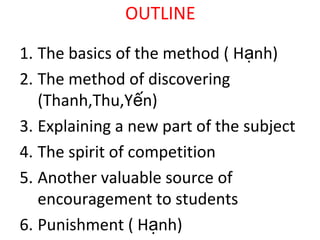
OUTLINE
1. The basics of the method ( Hạnh)
2. The method of discovering
(Thanh,Thu,Yến)
3. Explaining a new part of the subject
4. The spirit of competition
5. Another valuable source of
encouragement to students
6. Punishment ( Hạnh)
II. The method of
discovering
• Written test
• Disadvantages
• Solution
• Discovering whether pupils
have studied the lessons or not
• Urging them to study in the
future
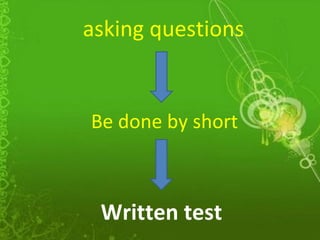
asking questions
asking questions

Be done by short

Written test
In ancient time
• The most important
examinations were spoken,
not written.
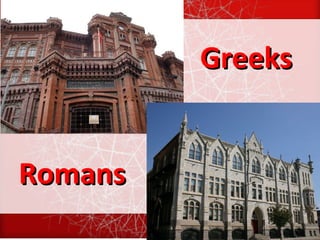
Greeks
Romans
When children were being tested,
they had to :

• Say poetry aloud
• Give speeches
Greeks ; Romans
Universities of the
Middle Ages
• argue questions in their
fields of study with critics
and rivals
19 century
th

• Appear written
examination
( same questions)
Written examination
• Came into existence with the increase in
population and the development of
modern industry
• Be organized in a room full of candidates
• Do tests with the exact time( by electric
clocks)
• Be carefully watched over by managers
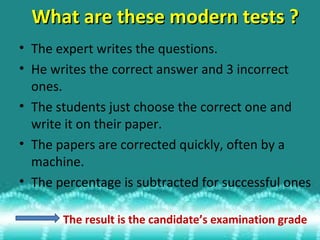
What are these modern tests ?
• The expert writes the questions.
• He writes the correct answer and 3 incorrect
ones.
• The students just choose the correct one and
write it on their paper.
What are these modern tests ?
• The expert writes the questions.
• He writes the correct answer and 3 incorrect
ones.
• The students just choose the correct one and
write it on their paper.
• The papers are corrected quickly, often by a
machine.
• The percentage is subtracted for successful ones
The result is the candidate’s examination grade
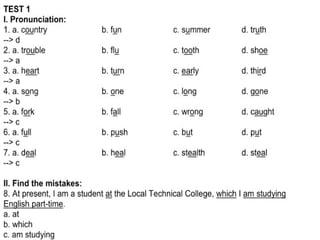
Disadvanges
of written tests

The commonest classroom work

  • 1.
    The third methodof communication THE COMMONEST_ CLASSROOM WORK
  • 2.
    OUTLINE 1. The basicsof the method ( Hạnh) 2. The method of discovering (Thanh,Thu,Yến) 3. Explaining a new part of the subject 4. The spirit of competition 5. Another valuable source of encouragement to students 6. Punishment ( Hạnh)
  • 3.
    II. The methodof discovering • Written test • Disadvantages • Solution
  • 4.
    • Discovering whetherpupils have studied the lessons or not • Urging them to study in the future asking questions
  • 5.
    asking questions Be doneby short Written test
  • 6.
    In ancient time •The most important examinations were spoken, not written.
  • 7.
  • 8.
    When children werebeing tested, they had to : • Say poetry aloud • Give speeches Greeks ; Romans
  • 9.
    Universities of the MiddleAges • argue questions in their fields of study with critics and rivals
  • 10.
    19 century th • Appearwritten examination ( same questions)
  • 11.
    Written examination • Cameinto existence with the increase in population and the development of modern industry • Be organized in a room full of candidates • Do tests with the exact time( by electric clocks) • Be carefully watched over by managers
  • 12.
    What are thesemodern tests ? • The expert writes the questions. • He writes the correct answer and 3 incorrect ones. • The students just choose the correct one and write it on their paper.
  • 15.
    What are thesemodern tests ? • The expert writes the questions. • He writes the correct answer and 3 incorrect ones. • The students just choose the correct one and write it on their paper. • The papers are corrected quickly, often by a machine. • The percentage is subtracted for successful ones The result is the candidate’s examination grade
  • 16.