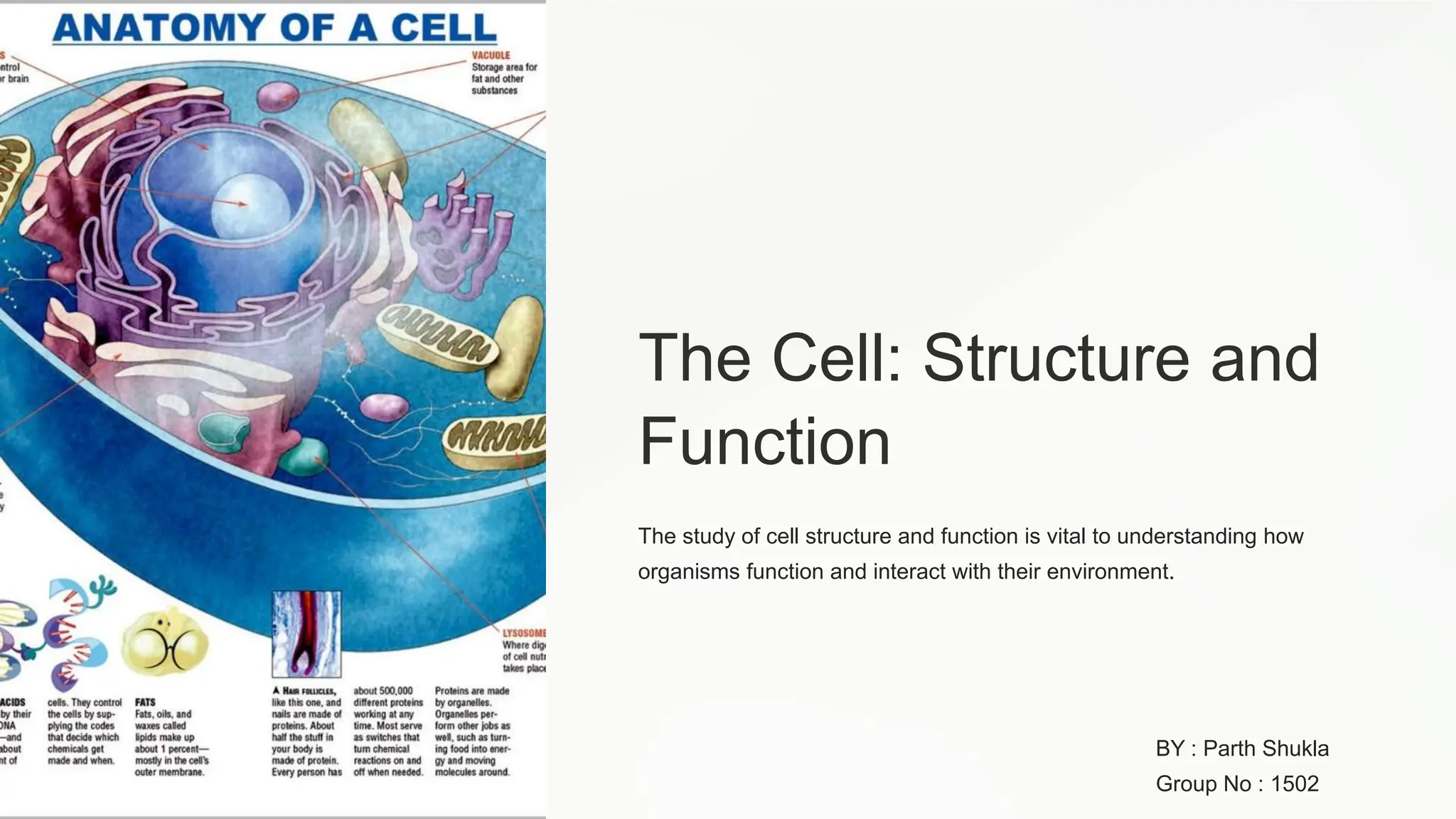
The Cell: Structure and
Function
The study of cell structure and function is vital to understanding how
organisms function and interact with their environment.
BY : Parth Shukla
Group No : 1502
Cell Membrane
Structure
The cell membrane is composed of a
phospholipid bilayer with embedded
proteins and cholesterol.
Function
It regulates the transport of molecules
in and out of the cell, maintaining
homeostasis.
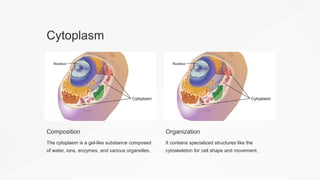
Cytoplasm
Composition
The cytoplasm is a gel-like substance composed
of water, ions, enzymes, and various organelles.
Organization
It contains specialized structures like the
cytoskeleton for cell shape and movement.
Organelles
1 Endoplasmic Reticulum (ER)
The ER is involved in protein synthesis
and lipid metabolism.
2
Golgi Apparatus
It modifies, sorts, and packages
proteins and lipids for transport within
the cell or secretion. 3 Mitochondria
These powerhouses of the cell
produce energy through cellular
respiration.
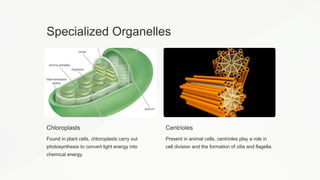
Specialized Organelles
Chloroplasts
Found in plant cells, chloroplasts carry out
photosynthesis to convert light energy into
chemical energy.
Centrioles
Present in animal cells, centrioles play a role in
cell division and the formation of cilia and flagella.
Conclusion
1 Recap
We have explored the important
components and functions of cells,
including the membrane, cytoplasm,
nucleus, and organelles.
2 Significance
Understanding cell structure and
function allows us to comprehend
how living organisms are organized
and maintain homeostasis.

The cell : Structures and Functions.

  • 1.
    The Cell: Structureand Function The study of cell structure and function is vital to understanding how organisms function and interact with their environment. BY : Parth Shukla Group No : 1502
  • 2.
    Cell Membrane Structure The cellmembrane is composed of a phospholipid bilayer with embedded proteins and cholesterol. Function It regulates the transport of molecules in and out of the cell, maintaining homeostasis.
  • 3.
    Cytoplasm Composition The cytoplasm isa gel-like substance composed of water, ions, enzymes, and various organelles. Organization It contains specialized structures like the cytoskeleton for cell shape and movement.
  • 4.
    Organelles 1 Endoplasmic Reticulum(ER) The ER is involved in protein synthesis and lipid metabolism. 2 Golgi Apparatus It modifies, sorts, and packages proteins and lipids for transport within the cell or secretion. 3 Mitochondria These powerhouses of the cell produce energy through cellular respiration.
  • 5.
    Specialized Organelles Chloroplasts Found inplant cells, chloroplasts carry out photosynthesis to convert light energy into chemical energy. Centrioles Present in animal cells, centrioles play a role in cell division and the formation of cilia and flagella.
  • 6.
    Conclusion 1 Recap We haveexplored the important components and functions of cells, including the membrane, cytoplasm, nucleus, and organelles. 2 Significance Understanding cell structure and function allows us to comprehend how living organisms are organized and maintain homeostasis.