Overview
Main stages in brewing process
1. Milling: The grains (malt and un-malted materials) are milled to the suitable size.
2. Mashing: Main aim is to gain the essential proteins and starch present in the raw materials
into the form which is easily accessible to the yeast during fermentation process. For break
down of high molecular compounds such as beta glucans beta glucanase is used.
3. Cooking of adjuncts: Un malted material containing starch are used in brewing and they are
converted into simpler sugars by use of thermos stable enzymes.
4. Lautering: The effect of some of the enzymes used during mashing continue in this process as
well.
5. Wort boiling: The enzymatic actions ceases during the boiling process.
6. Fermentation: Aerobic and Anaerobic fermentation of cooled and hopped wort takes place.
7. Lagering or Maturation: To attain the final properties of beer this process is necessary
(characteristic taste, removal of unwanted compounds accumulated in fermentation like
diacetyl, etc).
8. Other processes like filtration of the matured beer, carbonation of the beer, packing,
pasteurisation and storage of the beer are also there.
Mashing process
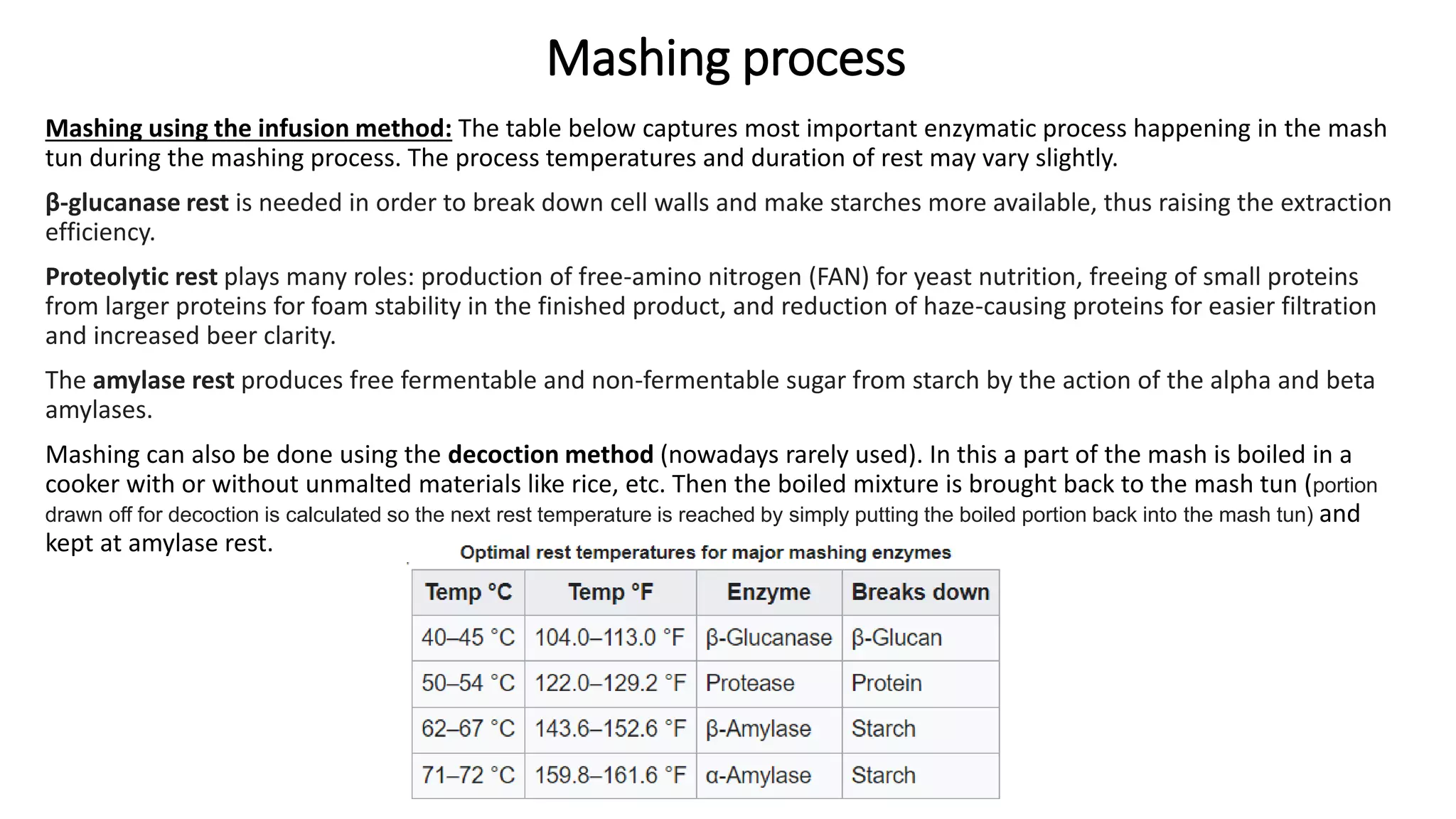
Mashing using the infusion method: The table below captures most important enzymatic process happening in the mash
tun during the mashing process. The process temperatures and duration of rest may vary slightly.
β-glucanase rest is needed in order to break down cell walls and make starches more available, thus raising the extraction
efficiency.
Proteolytic rest plays many roles: production of free-amino nitrogen (FAN) for yeast nutrition, freeing of small proteins
from larger proteins for foam stability in the finished product, and reduction of haze-causing proteins for easier filtration
and increased beer clarity.
The amylase rest produces free fermentable and non-fermentable sugar from starch by the action of the alpha and beta
amylases.
Mashing can also be done using the decoction method (nowadays rarely used). In this a part of the mash is boiled in a
cooker with or without unmalted materials like rice, etc. Then the boiled mixture is brought back to the mash tun (portion
drawn off for decoction is calculated so the next rest temperature is reached by simply putting the boiled portion back into the mash tun) and
kept at amylase rest.
Lautering and Fermentation
Lautering (filtration of mash): Here the liquid portion of the mash is separated from solid
portion and this translucent clear liquid is called the wort. It contains the proteins (FAN and
middle molecular weight proteins essential in foam formation formed during mashing) and
fermentable sugars with maltose and dextrin which passes on to the wort boiling stage from the
lauter tun (filtration tank). When the wort is boiled the enzymes are denatured and essential
chemicals like hops, etc are added into it. Which is then cooled and sent to the fermentation
tank after passing through the heat exchanger (to reach the temperature of fermentation). Here
the wort is oxygenated with oxygen or air for the initial aerobic fermentation (needed for yeast
cell multiplication in the beer). The yeast is dosed into the cold wort – usually during the
transfer of beer to the fermentation tank.
Fermentation/Maturation: Initial fermentation is aerobic fermentation and as the oxygen
reduces in the beer the anaerobic fermentation starts in the beer. Alcohol is essentially
produced in the anaerobic stage. Fermentation is stopped when the beer acquires certain
attenuation of sugar in them and reaches the required alcohol levels as per the standard of the
given beer. Maturation is conducted under certain lower temperatures (upto 1 degree
centigrade) and pressure (1 bar). The desired properties of the final beer are acquired at this
stage. It may vary in duration from a few weeks to a few months. Modern day economic
consideration has greatly shortened this period and many breweries may mature for only a
week.
Filtration
Filtration of beer: The resultant beer is translucent and contains yeast cells, haze
causing particles (usually from the protein-polyphenol complexes in the beer). This
process removes the unwanted things usually using a micron cartridge filter in series
with the plate filter/kieselguhr filter. The clear beer is then carbonized and sent to the
final beer tank and kept under pressure created by a blanket of CO2 over the beer in the
tank till it is sent for packaging for filling in bottles, cans and other vessels.
Packaging: The beer is usually pasteurised in tunnel pastuerisers at certain
temperatures using water sprays as the source of heat. Flash pasteurisation is also used.
Storage: Based on the shelf life acquired by the beer it is stored in stores on pallets
without direct sunlight and in relatively colder temperatures to ensure long shelf life as
claimed by the brewer.
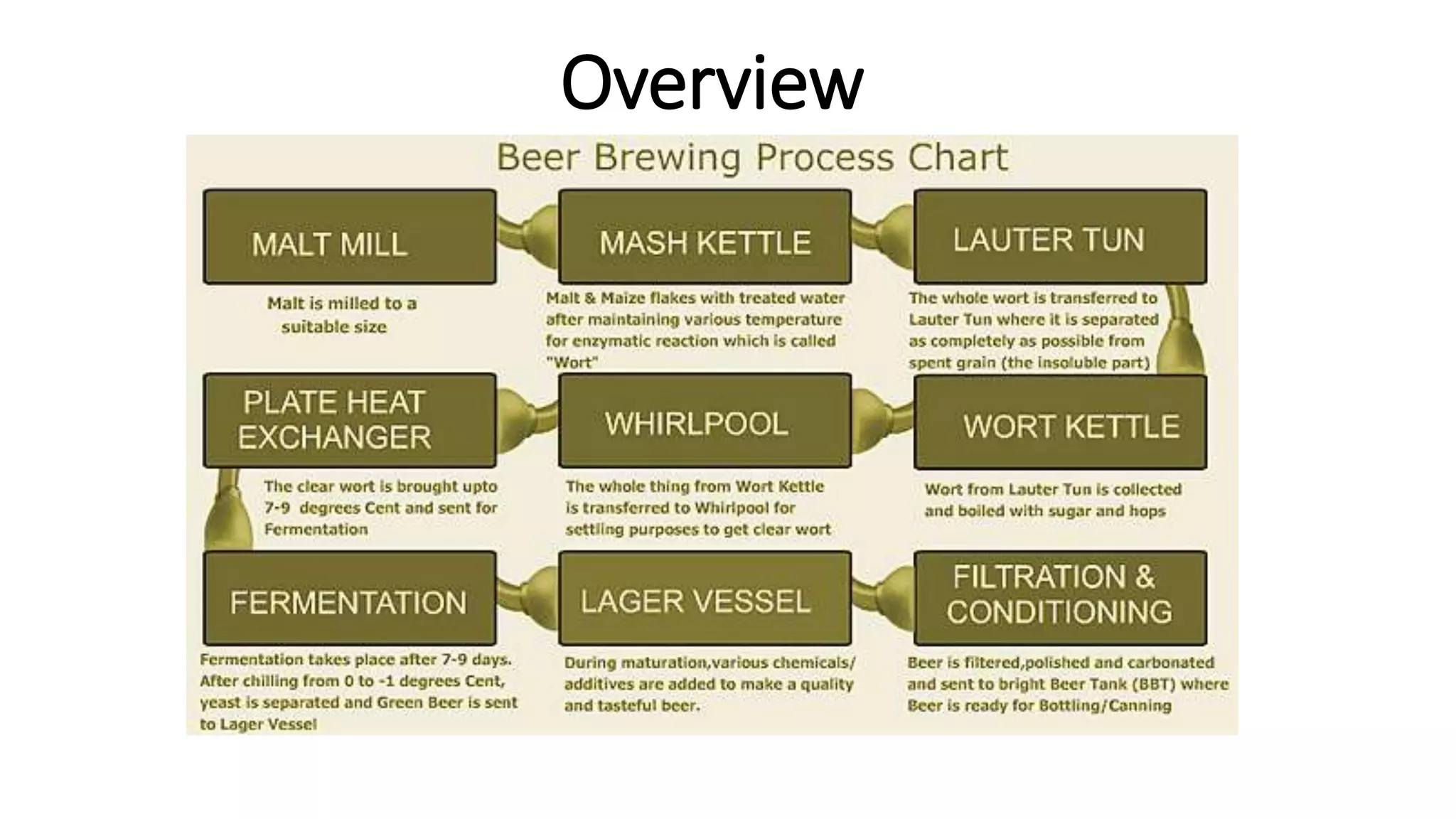
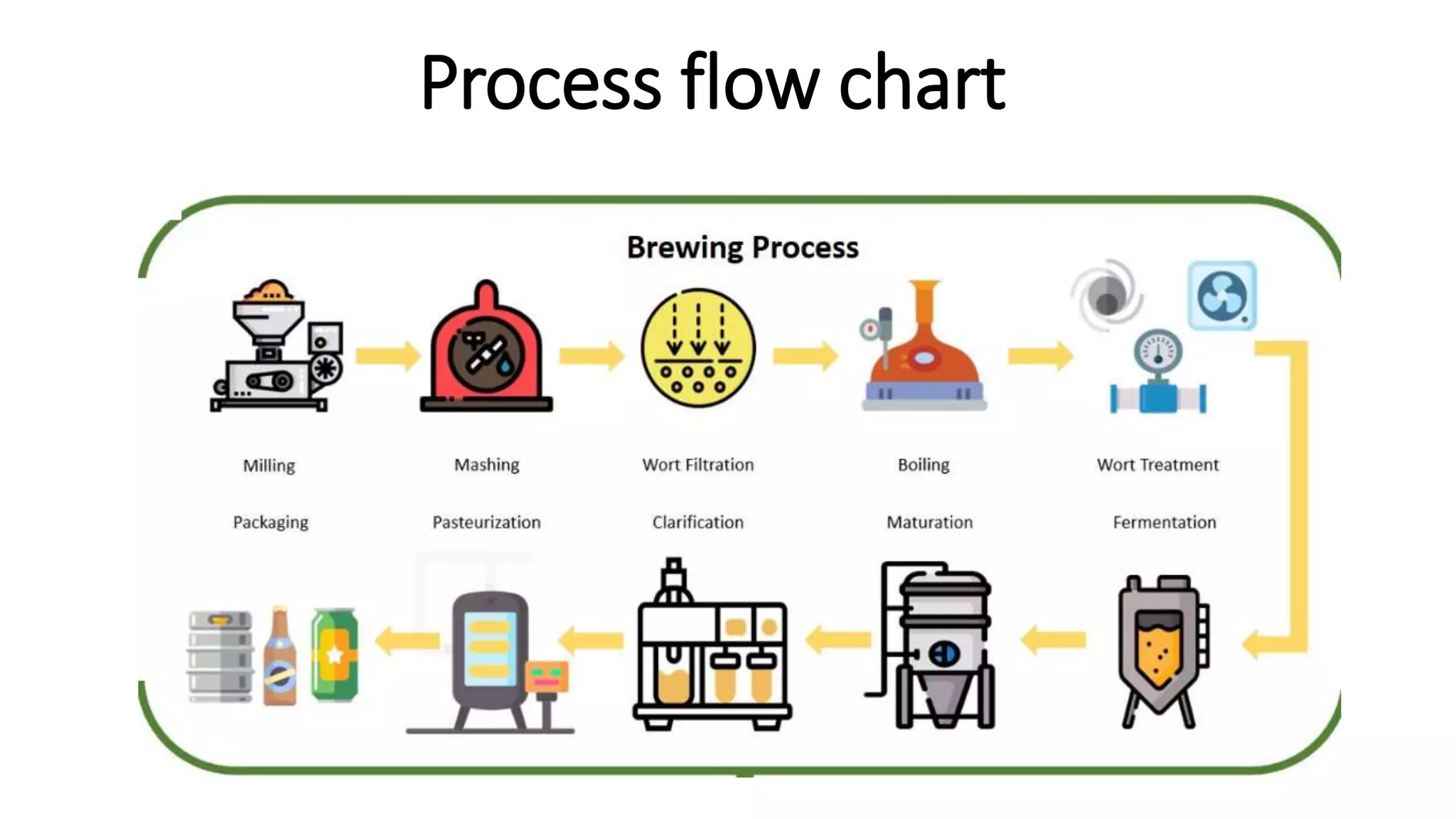
Process flow chart
Thank you

The Brewing Process.pptx

  • 1.
  • 2.
    Main stages inbrewing process 1. Milling: The grains (malt and un-malted materials) are milled to the suitable size. 2. Mashing: Main aim is to gain the essential proteins and starch present in the raw materials into the form which is easily accessible to the yeast during fermentation process. For break down of high molecular compounds such as beta glucans beta glucanase is used. 3. Cooking of adjuncts: Un malted material containing starch are used in brewing and they are converted into simpler sugars by use of thermos stable enzymes. 4. Lautering: The effect of some of the enzymes used during mashing continue in this process as well. 5. Wort boiling: The enzymatic actions ceases during the boiling process. 6. Fermentation: Aerobic and Anaerobic fermentation of cooled and hopped wort takes place. 7. Lagering or Maturation: To attain the final properties of beer this process is necessary (characteristic taste, removal of unwanted compounds accumulated in fermentation like diacetyl, etc). 8. Other processes like filtration of the matured beer, carbonation of the beer, packing, pasteurisation and storage of the beer are also there.
  • 3.
    Mashing process Mashing usingthe infusion method: The table below captures most important enzymatic process happening in the mash tun during the mashing process. The process temperatures and duration of rest may vary slightly. β-glucanase rest is needed in order to break down cell walls and make starches more available, thus raising the extraction efficiency. Proteolytic rest plays many roles: production of free-amino nitrogen (FAN) for yeast nutrition, freeing of small proteins from larger proteins for foam stability in the finished product, and reduction of haze-causing proteins for easier filtration and increased beer clarity. The amylase rest produces free fermentable and non-fermentable sugar from starch by the action of the alpha and beta amylases. Mashing can also be done using the decoction method (nowadays rarely used). In this a part of the mash is boiled in a cooker with or without unmalted materials like rice, etc. Then the boiled mixture is brought back to the mash tun (portion drawn off for decoction is calculated so the next rest temperature is reached by simply putting the boiled portion back into the mash tun) and kept at amylase rest.
  • 4.
    Lautering and Fermentation Lautering(filtration of mash): Here the liquid portion of the mash is separated from solid portion and this translucent clear liquid is called the wort. It contains the proteins (FAN and middle molecular weight proteins essential in foam formation formed during mashing) and fermentable sugars with maltose and dextrin which passes on to the wort boiling stage from the lauter tun (filtration tank). When the wort is boiled the enzymes are denatured and essential chemicals like hops, etc are added into it. Which is then cooled and sent to the fermentation tank after passing through the heat exchanger (to reach the temperature of fermentation). Here the wort is oxygenated with oxygen or air for the initial aerobic fermentation (needed for yeast cell multiplication in the beer). The yeast is dosed into the cold wort – usually during the transfer of beer to the fermentation tank. Fermentation/Maturation: Initial fermentation is aerobic fermentation and as the oxygen reduces in the beer the anaerobic fermentation starts in the beer. Alcohol is essentially produced in the anaerobic stage. Fermentation is stopped when the beer acquires certain attenuation of sugar in them and reaches the required alcohol levels as per the standard of the given beer. Maturation is conducted under certain lower temperatures (upto 1 degree centigrade) and pressure (1 bar). The desired properties of the final beer are acquired at this stage. It may vary in duration from a few weeks to a few months. Modern day economic consideration has greatly shortened this period and many breweries may mature for only a week.
  • 5.
    Filtration Filtration of beer:The resultant beer is translucent and contains yeast cells, haze causing particles (usually from the protein-polyphenol complexes in the beer). This process removes the unwanted things usually using a micron cartridge filter in series with the plate filter/kieselguhr filter. The clear beer is then carbonized and sent to the final beer tank and kept under pressure created by a blanket of CO2 over the beer in the tank till it is sent for packaging for filling in bottles, cans and other vessels. Packaging: The beer is usually pasteurised in tunnel pastuerisers at certain temperatures using water sprays as the source of heat. Flash pasteurisation is also used. Storage: Based on the shelf life acquired by the beer it is stored in stores on pallets without direct sunlight and in relatively colder temperatures to ensure long shelf life as claimed by the brewer.
  • 6.
  • 7.