Downloaded 45 times

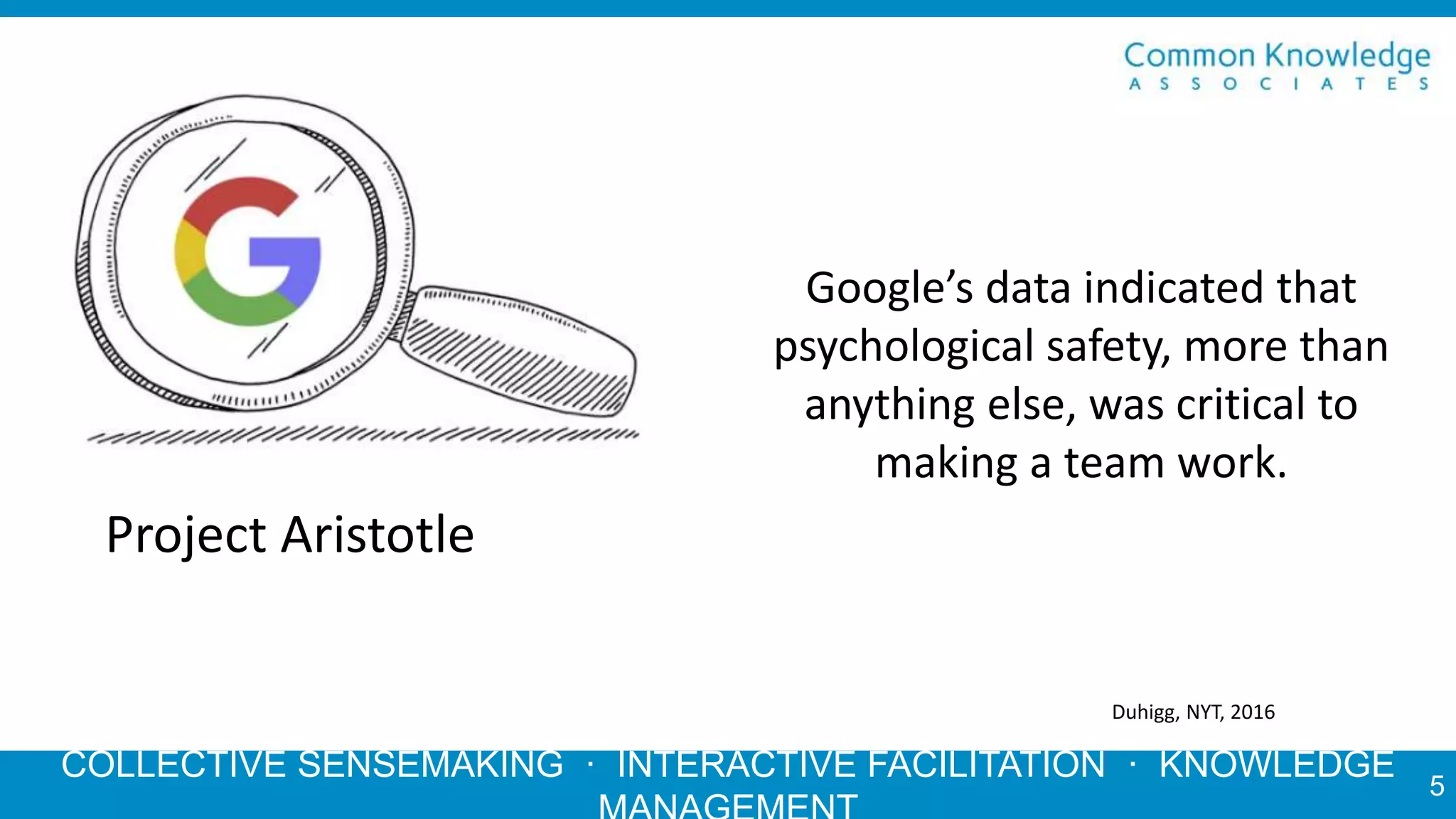
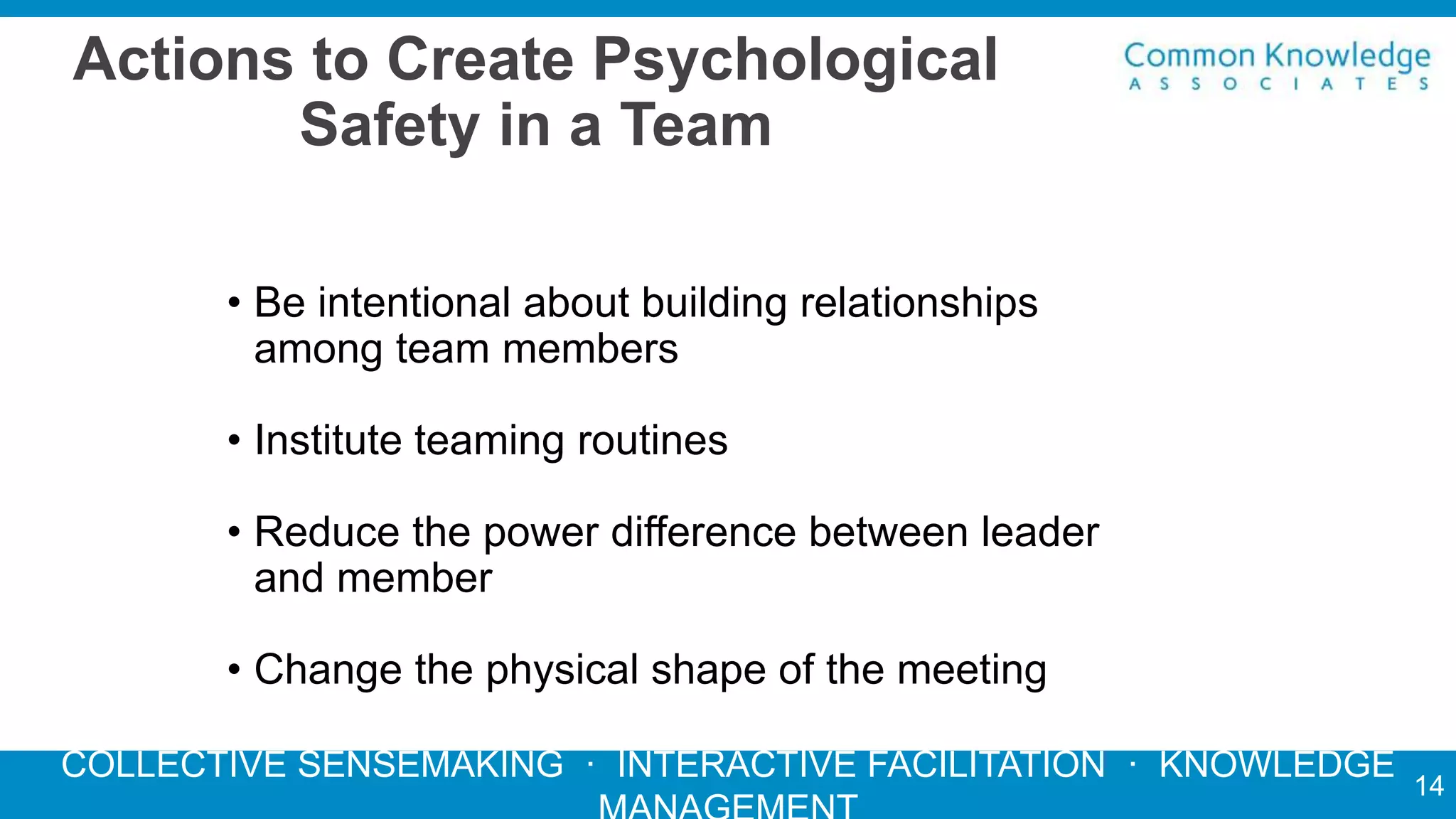
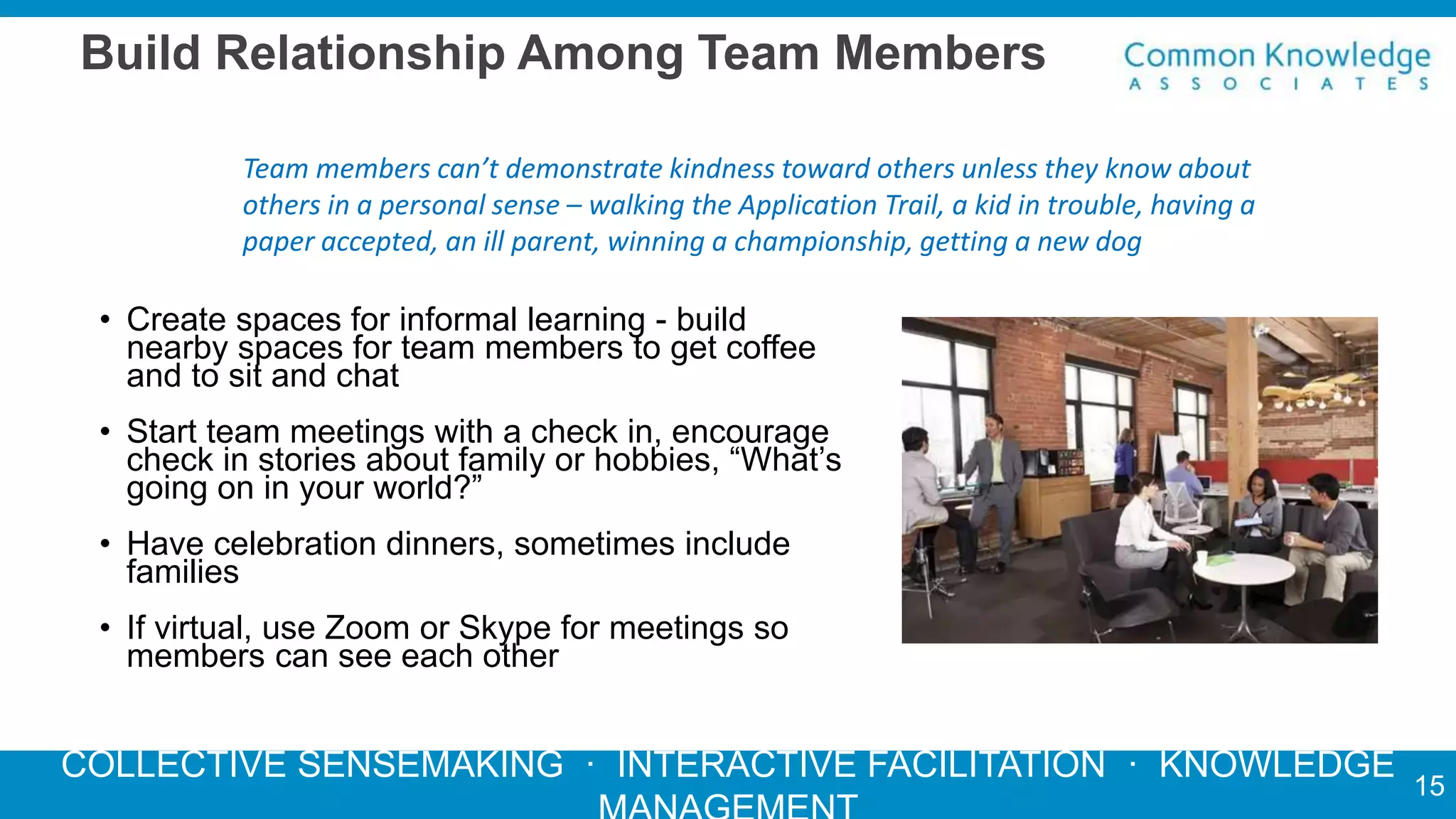

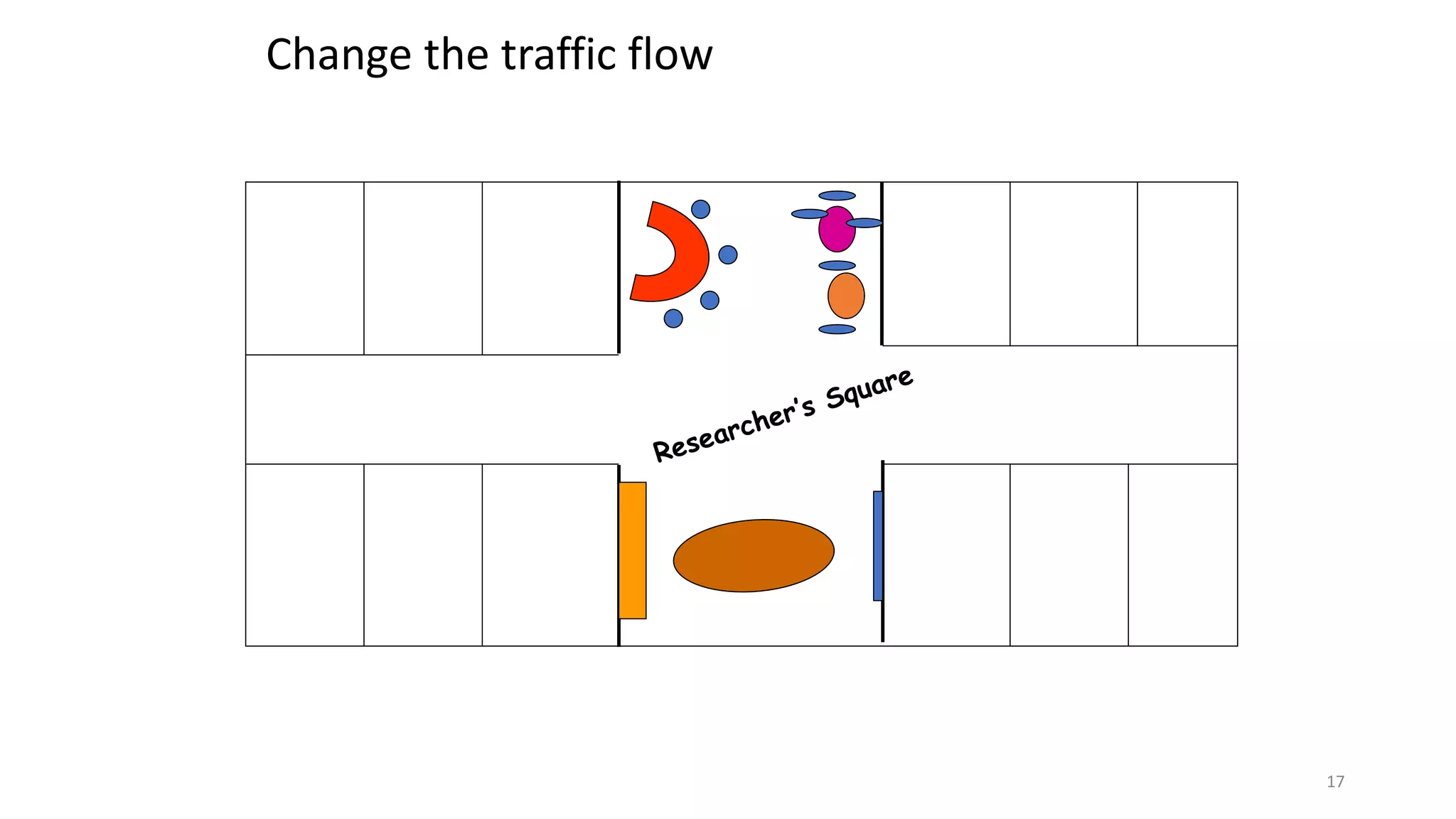
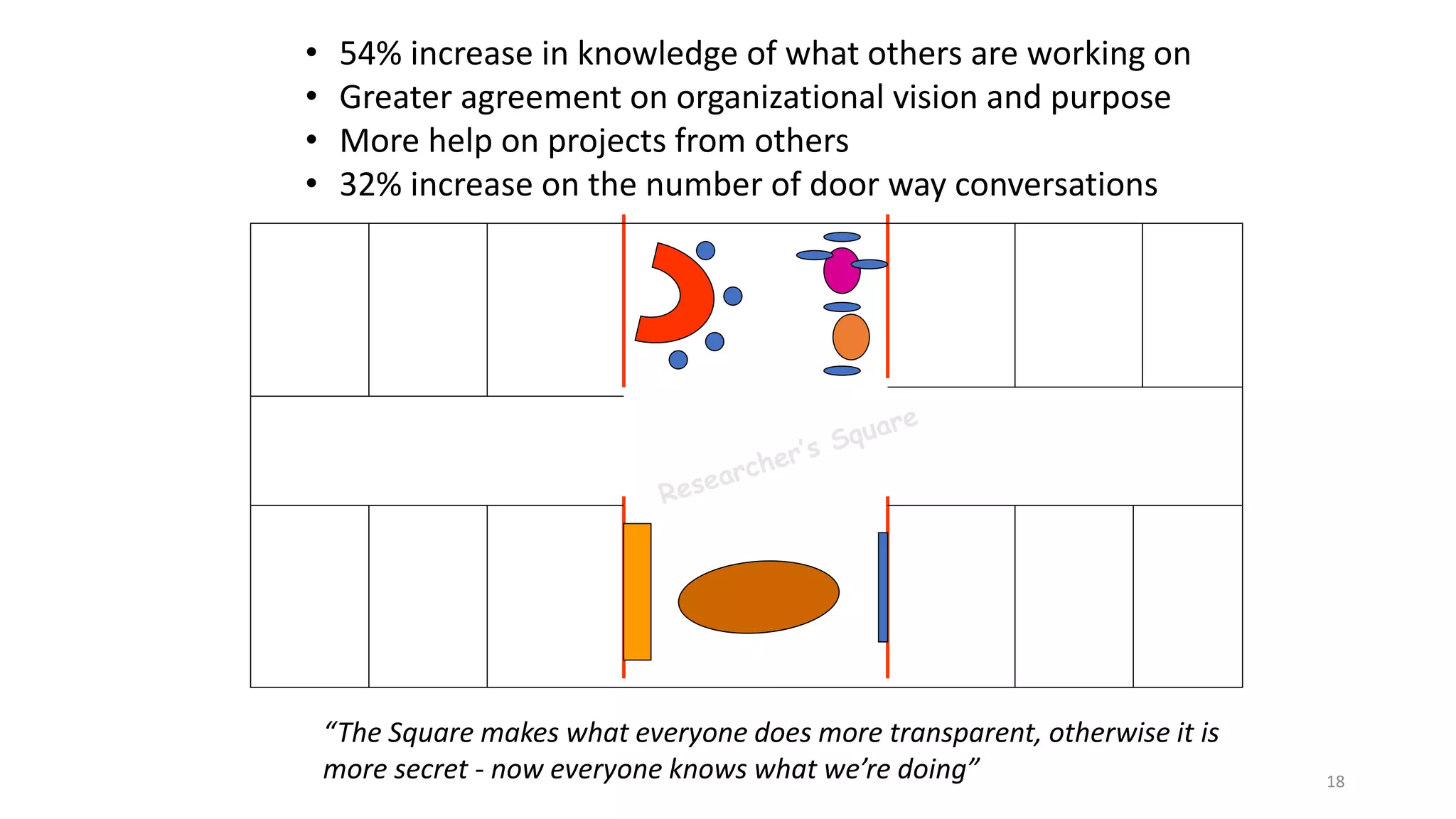
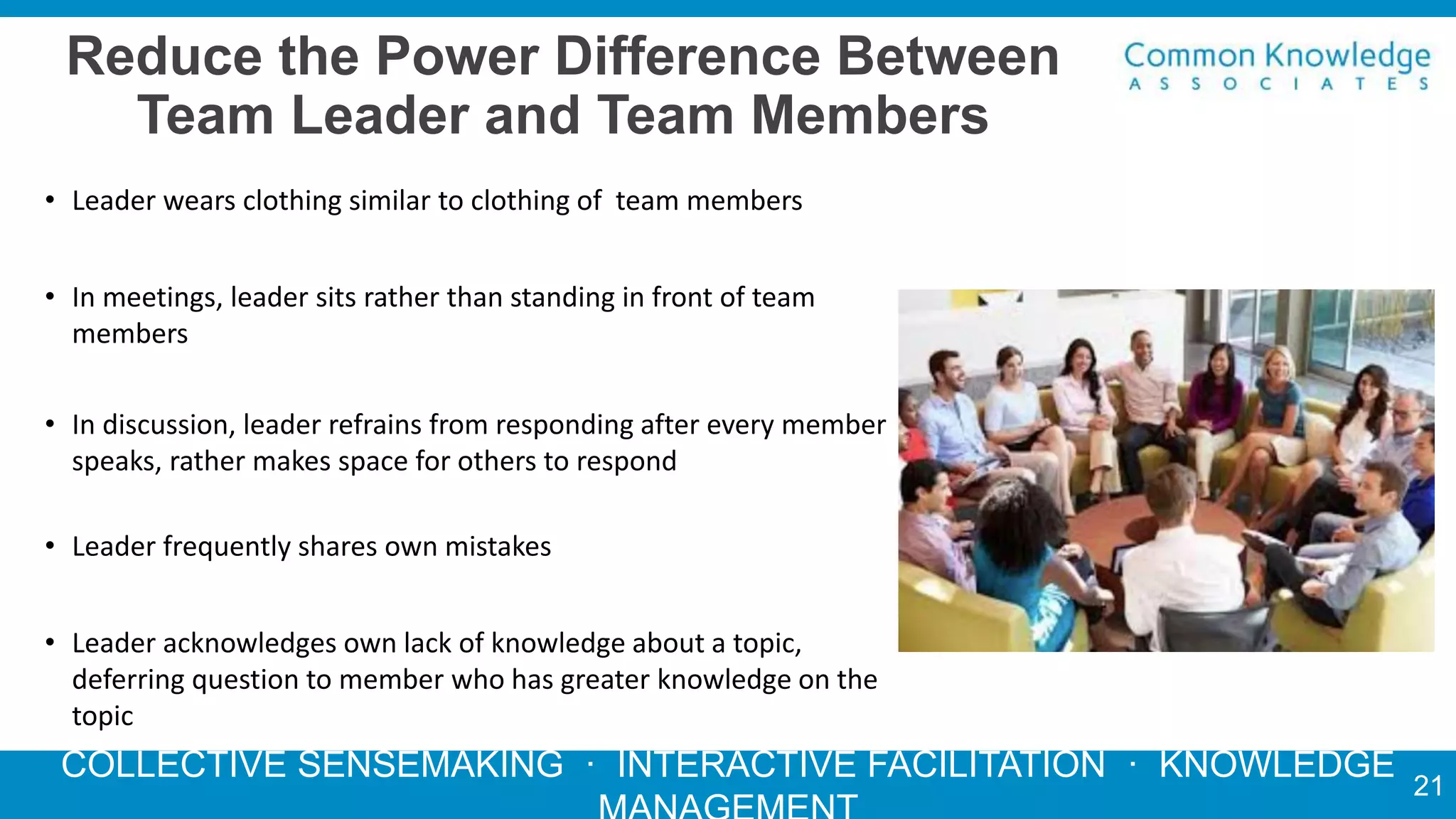
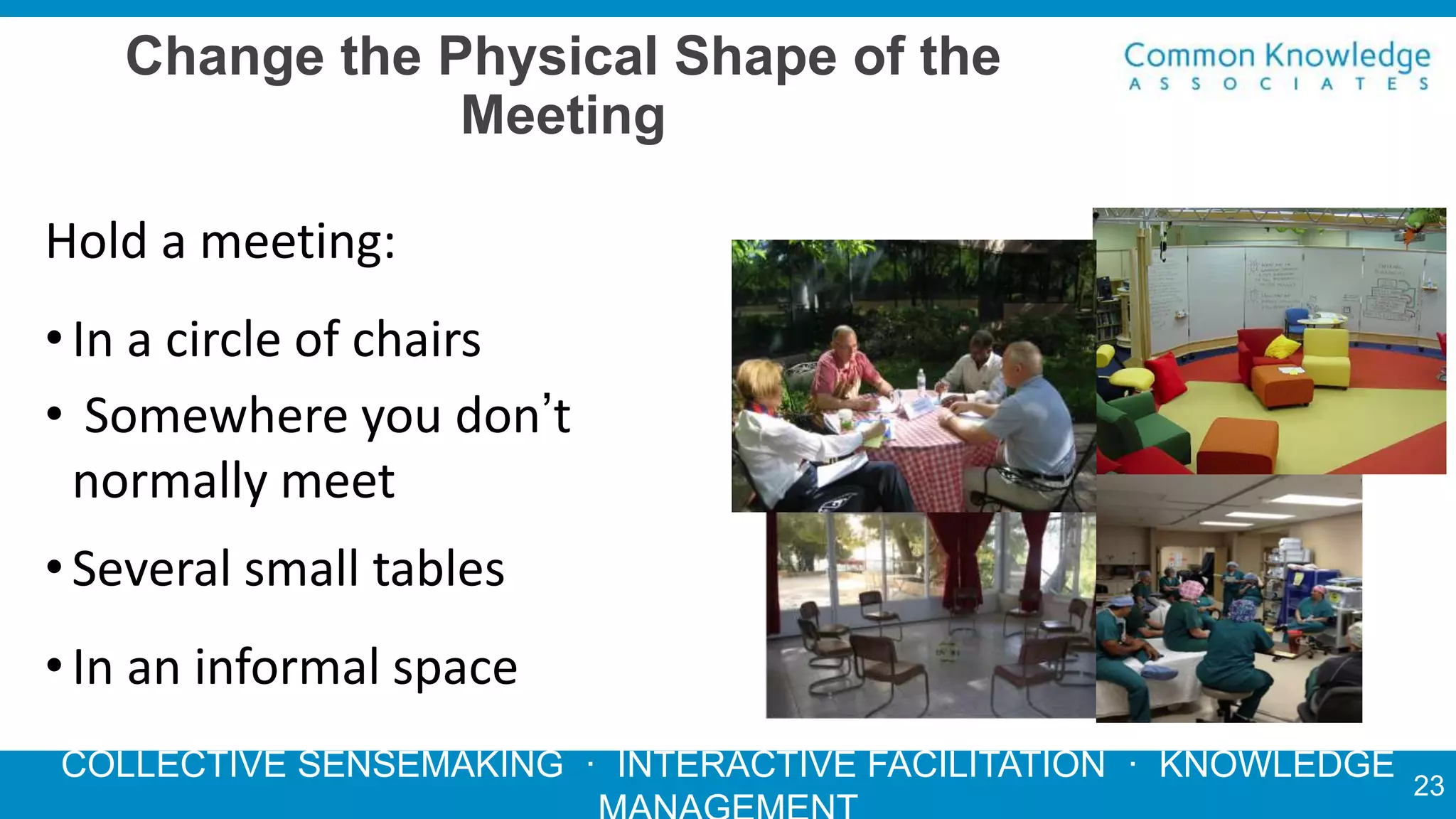

The document discusses strategies for creating psychological safety in teams. It explains that psychological safety is critical for team performance and allows team members to take risks like asking questions or admitting mistakes without fear of punishment. Specific strategies mentioned include building relationships among team members through informal interactions, establishing regular team meetings and routines, reducing power differences between leaders and members, and changing the physical layout of meeting spaces. The goal is to create an environment where learning behaviors can occur freely for better teamwork and knowledge sharing.


