The ABC
of AB testing
jamie woolley
jme.woolley@gmail.com
jamiewoolley.org
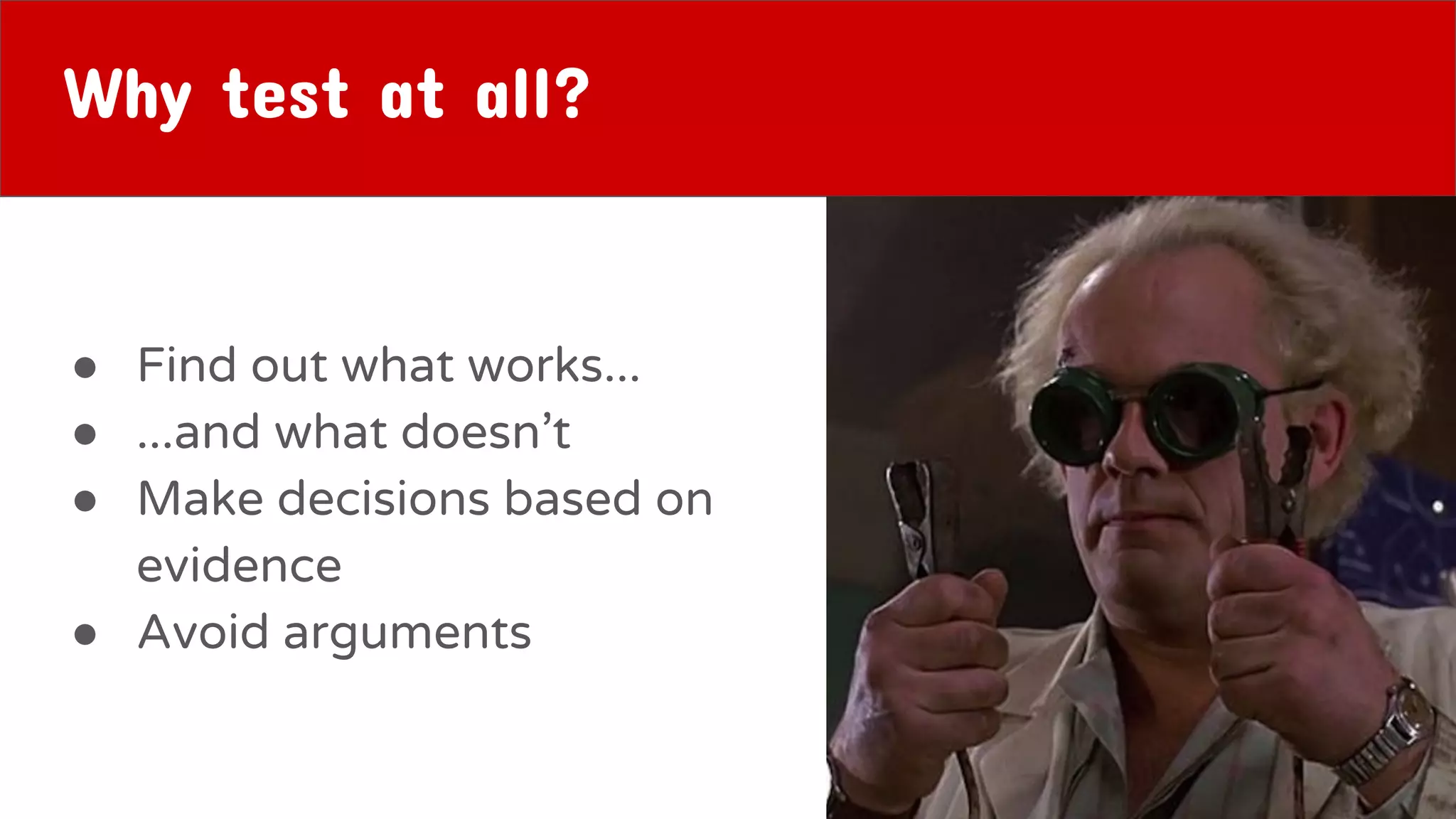
Why test at all?
● Find out what works...
● ...and what doesn’t
● Make decisions based on
evidence
● Avoid arguments
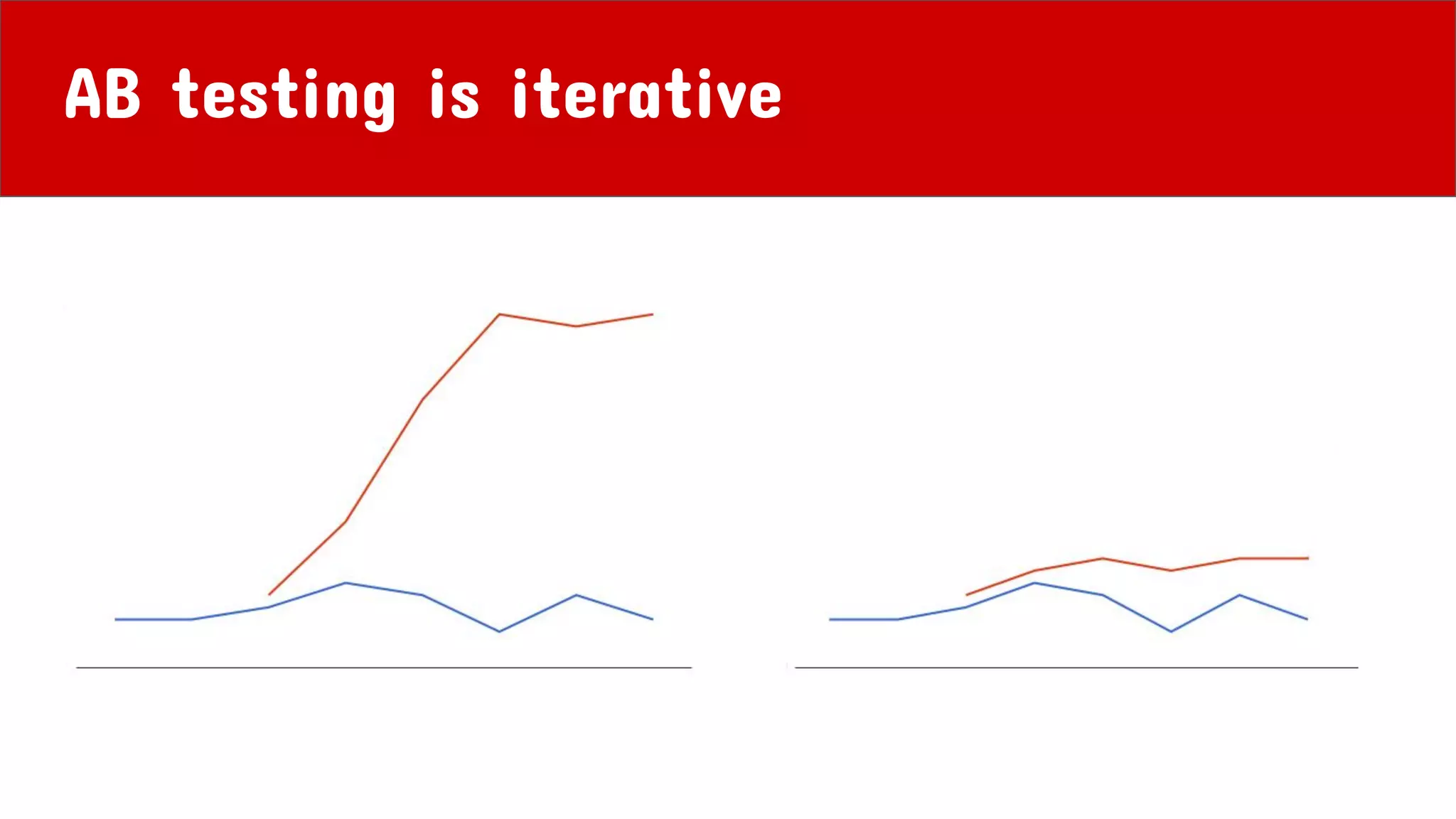
AB testing is iterative
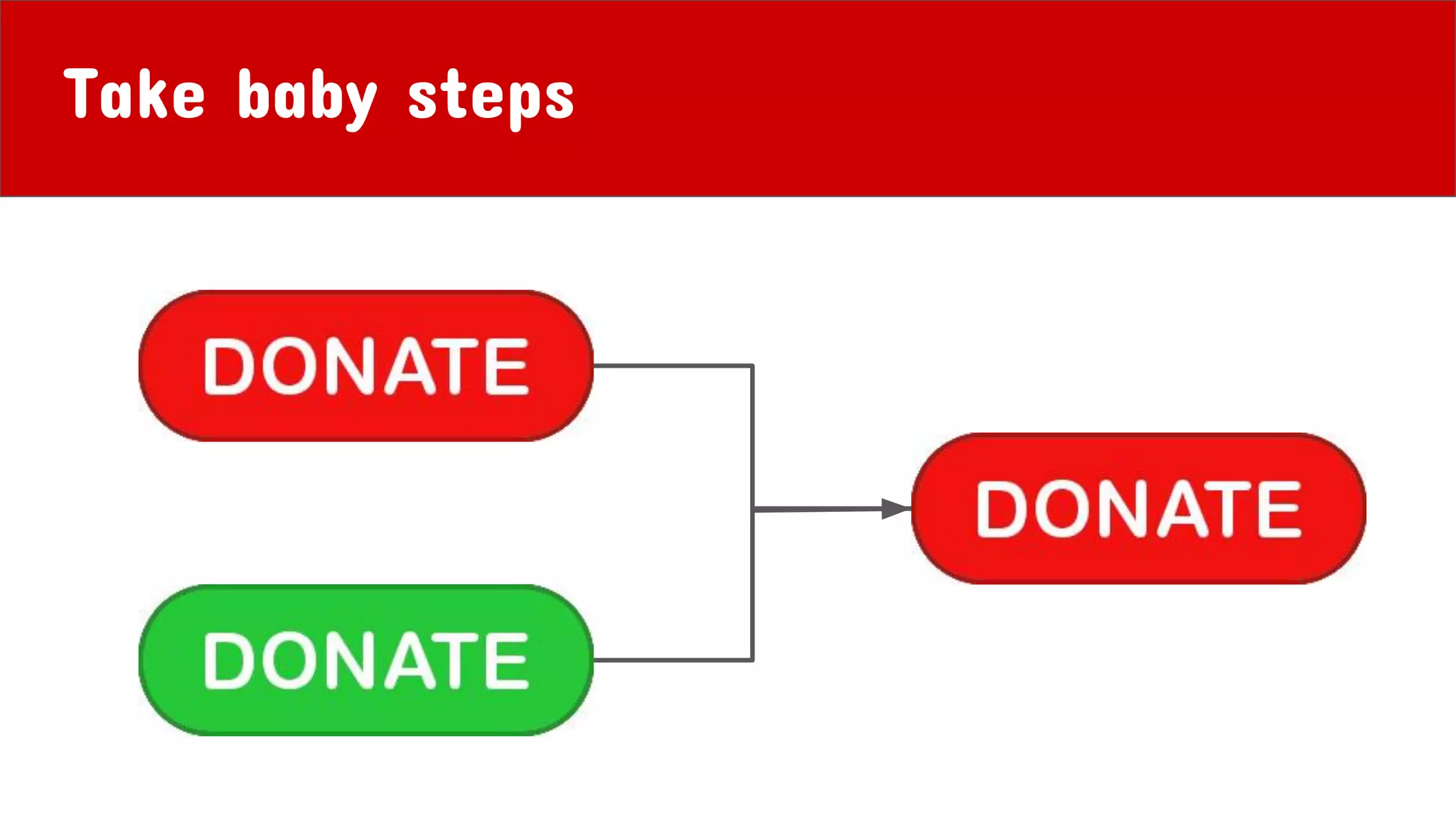
Take baby steps
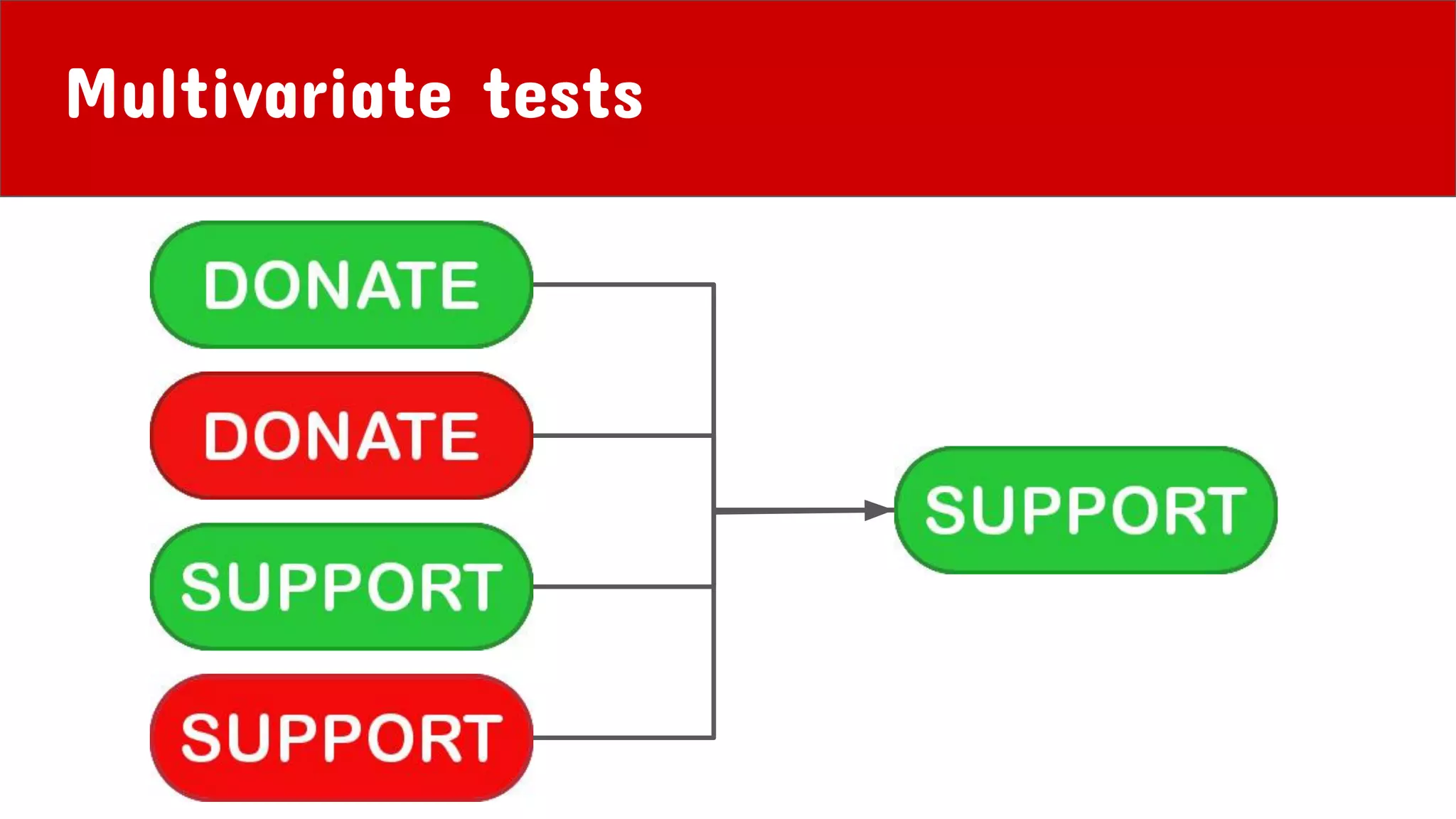
Multivariate tests
What should you test?
Almost anything...
● Subject lines
● Email content
● Site architecture
● Site usability
● Donation forms
● Landing pages
● Facebook ads
● Google Adwords
● Images
Know your goal
Decide what you’re trying to improve
● Open rates
● Click rates
● Form completion
● Traffic
How to test
1. Form your hypothesis — what do you predict will
happen?
2. Create your variants
3. Decide sample size and test duration
4. Test!
5. Interpret results
Statistics! Run!
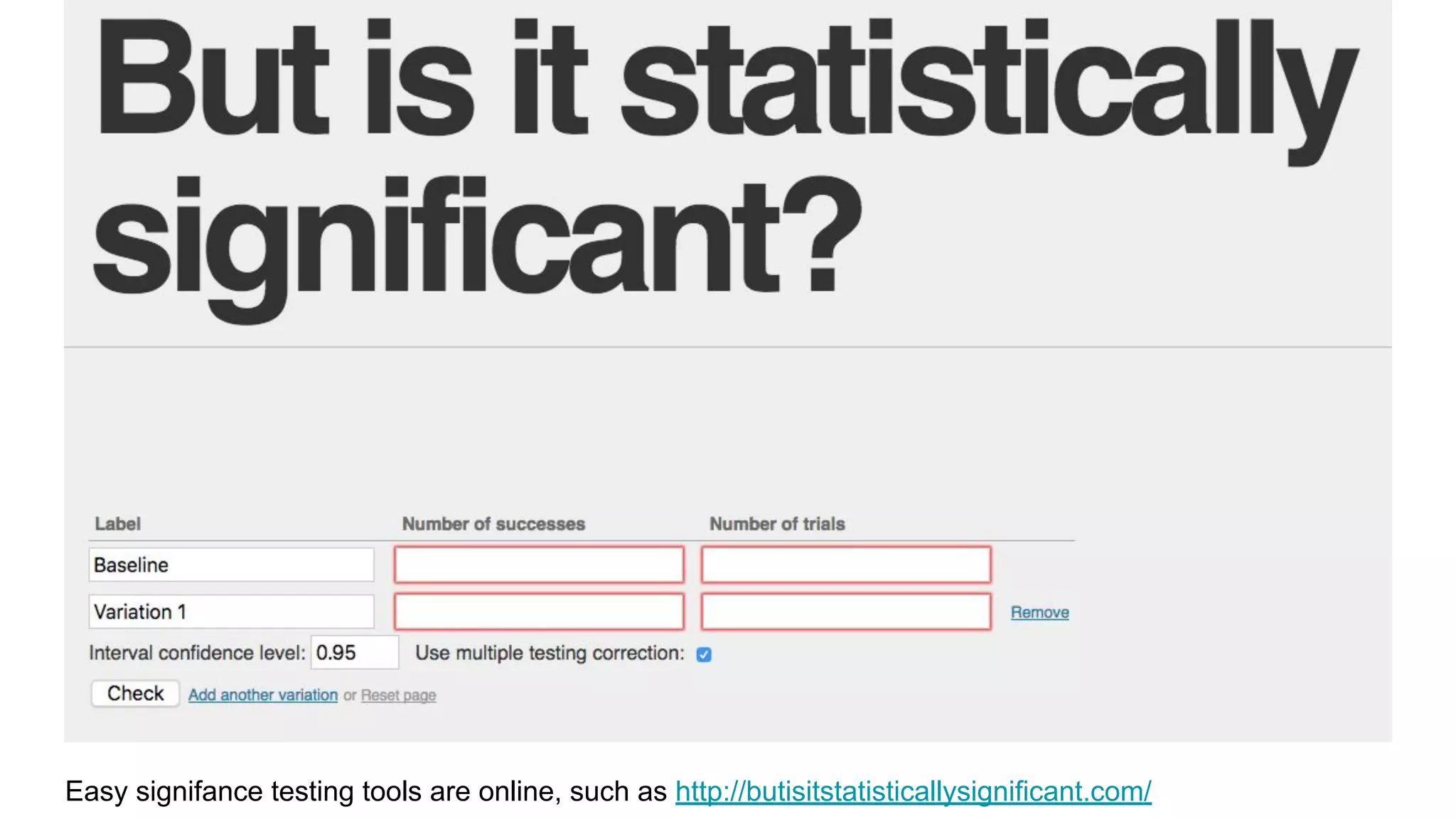
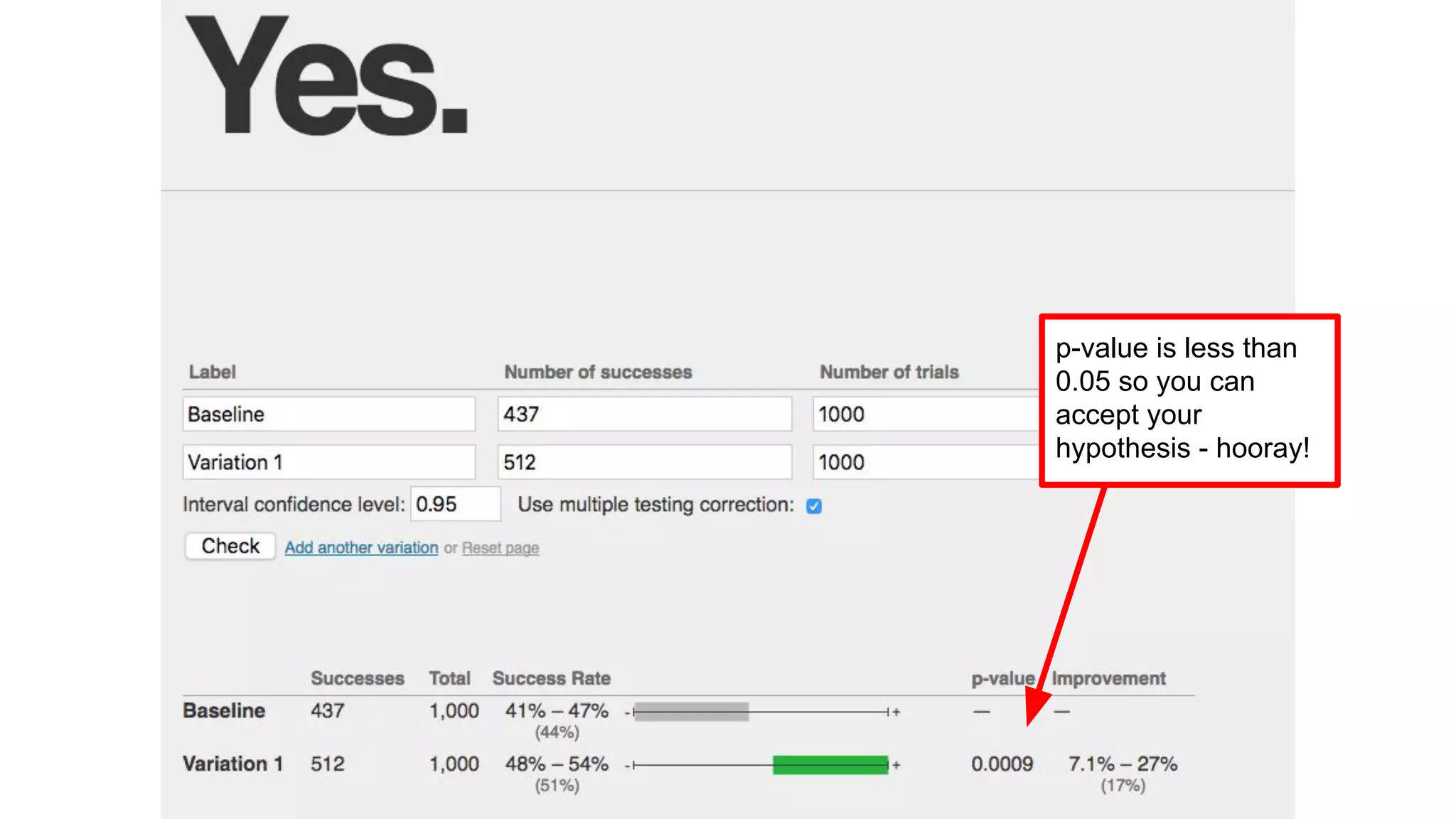
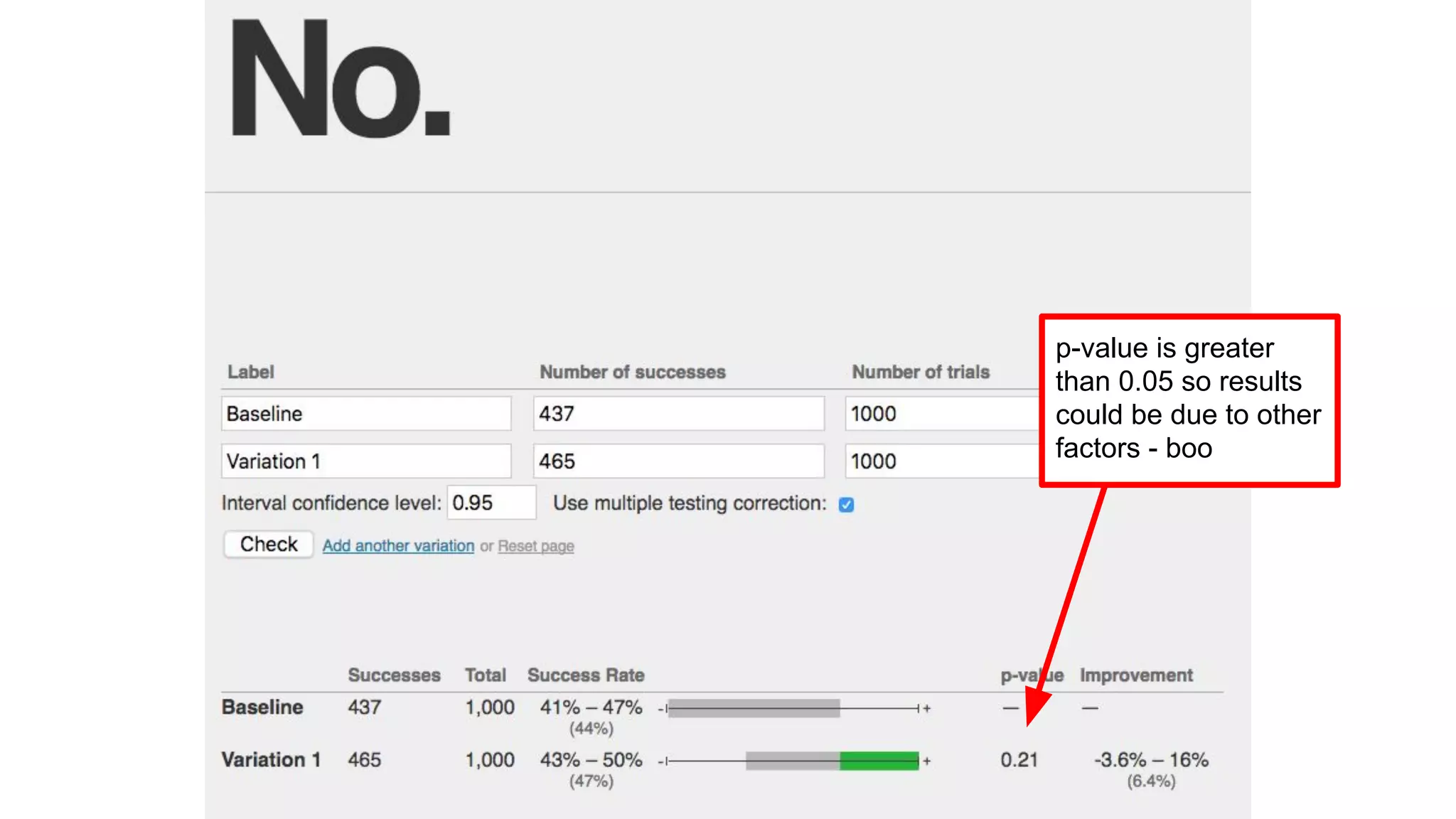
Easy signifance testing tools are online, such as http://butisitstatisticallysignificant.com/
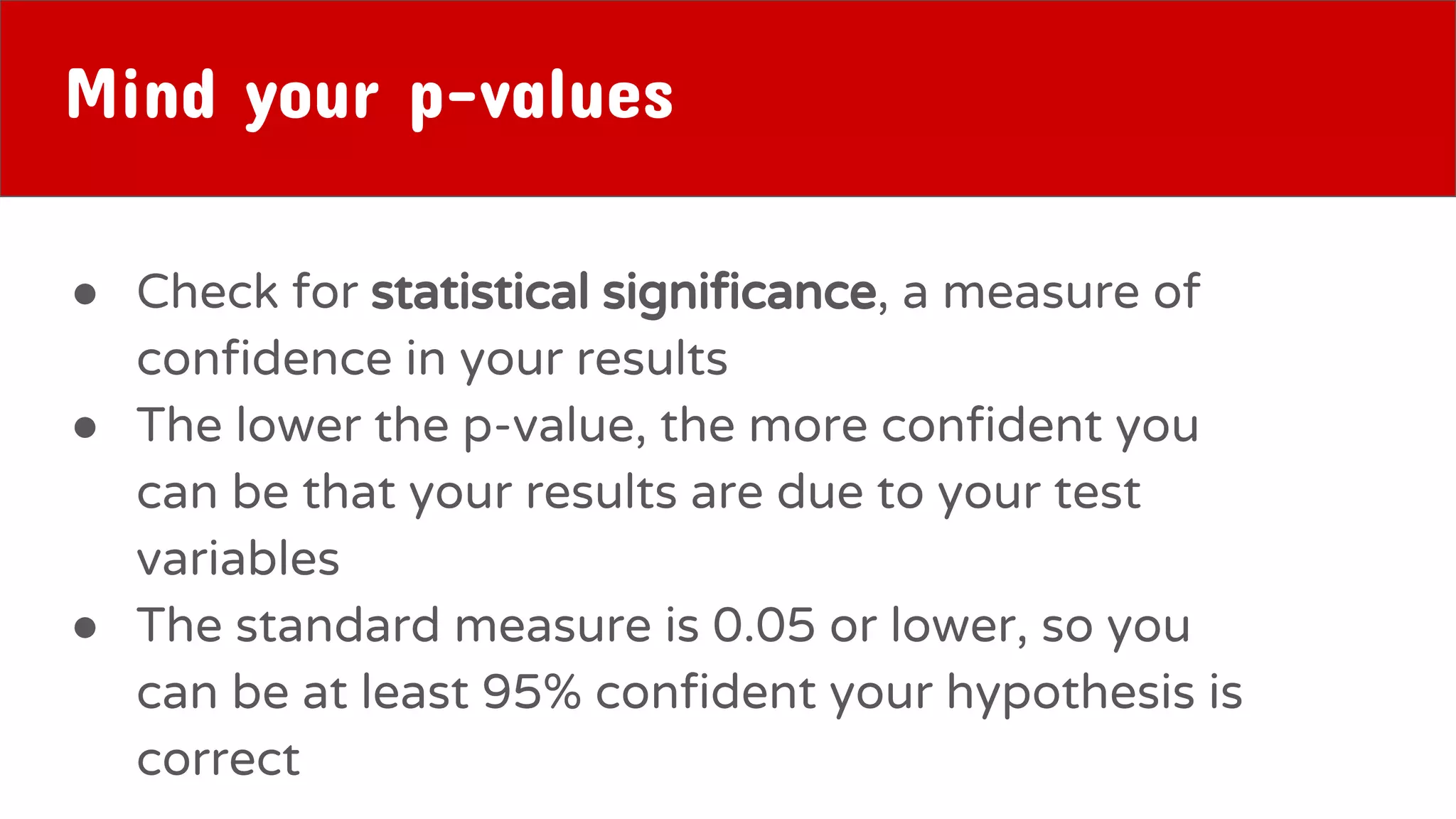
Mind your p-values
● Check for statistical significance, a measure of
confidence in your results
● The lower the p-value, the more confident you
can be that your results are due to your test
variables
● The standard measure is 0.05 or lower, so you
can be at least 95% confident your hypothesis is
correct
p-value is less than
0.05 so you can
accept your
hypothesis - hooray!
p-value is greater
than 0.05 so results
could be due to other
factors - boo
Testing does a lot… but not everything
● AB testing can’t tell you why — but you can
make educated guesses
● It’s not suitable for large redesigns as it won’t be
clear what influenced the results
● Testing won’t tell you if you’re addressing the
right problem, so clear goals are important
● Don’t let testing dictate creative design
decisions
Thank you
jamie woolley
jme.woolley@gmail.com
jamiewoolley.org

The ABC of AB testing

  • 1.
    The ABC of ABtesting jamie woolley jme.woolley@gmail.com jamiewoolley.org
  • 2.
    Why test atall? ● Find out what works... ● ...and what doesn’t ● Make decisions based on evidence ● Avoid arguments
  • 3.
    AB testing isiterative
  • 4.
  • 5.
  • 6.
    What should youtest? Almost anything... ● Subject lines ● Email content ● Site architecture ● Site usability ● Donation forms ● Landing pages ● Facebook ads ● Google Adwords ● Images
  • 7.
    Know your goal Decidewhat you’re trying to improve ● Open rates ● Click rates ● Form completion ● Traffic
  • 8.
    How to test 1.Form your hypothesis — what do you predict will happen? 2. Create your variants 3. Decide sample size and test duration 4. Test! 5. Interpret results
  • 10.
  • 11.
    Easy signifance testingtools are online, such as http://butisitstatisticallysignificant.com/
  • 12.
    Mind your p-values ●Check for statistical significance, a measure of confidence in your results ● The lower the p-value, the more confident you can be that your results are due to your test variables ● The standard measure is 0.05 or lower, so you can be at least 95% confident your hypothesis is correct
  • 13.
    p-value is lessthan 0.05 so you can accept your hypothesis - hooray!
  • 14.
    p-value is greater than0.05 so results could be due to other factors - boo
  • 16.
    Testing does alot… but not everything ● AB testing can’t tell you why — but you can make educated guesses ● It’s not suitable for large redesigns as it won’t be clear what influenced the results ● Testing won’t tell you if you’re addressing the right problem, so clear goals are important ● Don’t let testing dictate creative design decisions
  • 17.