The 5 Most Influential Data
Visualizations of All Time
About these visualizations
Data visualization allows us all to see and understand our
data more deeply. That understanding breeds good
decisions.

Without data visualization and data analysis, we are all
more prone to misunderstandings and missed
opportunities.

The following slides will show you 5 powerful, beautiful
visualizations that changed how people thought about the
world.
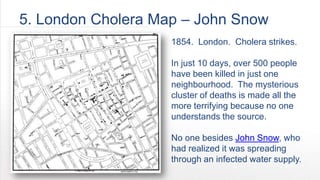
5. London Cholera Map – John Snow
                    1854. London. Cholera strikes.
                    In just 10 days, over 500 people
                    have been killed in one
                    neighborhood. The mysterious
                    cluster of deaths is especially
                    terrifying because no one
                    understands the source.

                    No one besides John Snow, an
                    epidemiologist who realized the
                    water supply was spreading the
                    disease.
5. London Cholera Map – John Snow
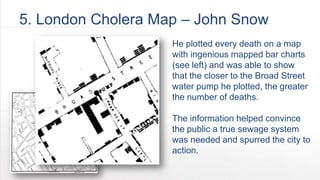
                    He plotted every death on a map
                    with ingenious mapped bar charts
                    (see left) and was able to show
                    that the closer to the Broad Street
                    water pump he plotted, the greater
                    the number of deaths.

                    The information helped convince
                    the public a true sewage system
                    was needed and spurred the city to
                    action.
4. Gapminder – Rosling
                         The Swedish scientist Hans Rosling
                         had been working with developmental
                         data for over 30 years – but it took a
                         great visualization and a 2007 TED
                         talk for him to share his passion with
                         the world.

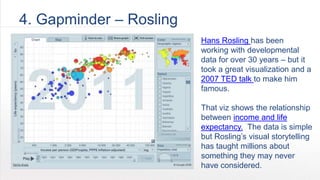
                         His original viz (now one of many)
                         shows the relationship between
                         income and life expectancy. The data
                         is simple but Rosling’s visual
                         storytelling has allowed him to spread
                         his passion for this
                         fascinating, overlooked data to
                         millions.
3. March on Moscow – Charles Minard


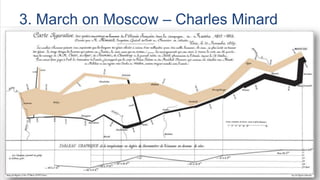
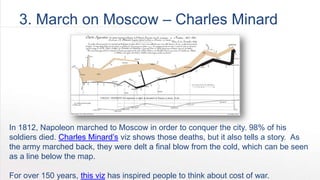
In 1812, Napoleon marched to Moscow in order to conquer the city. 98% of
his soldiers died. Fifty years later, while his country yearned for their former
Imperial glory, the Parisian engineer Charles Minard chose to remind his
country of the horrors of war with data. The simple but fascinating
temperature line below the viz shows how cold ultimately defeated
Napoleon’s army. This viz still inspires those who see it to ponder the true
cost of war.
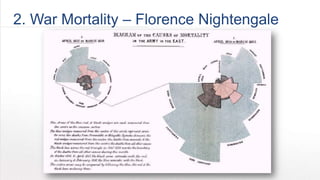
2. War Mortality – Florence Nightingale
                          1855. The Crimea. Britain is
                          fighting a battle with both Russia
                          and disease. As a nurse, how do
                          you convince an army to invest in
                          hospitals and healthcare instead
                          of guns and ammunition?

                          Florence Nightingale told her
                          story with data by showing the
                          staggering amount of deaths due
                          to preventable disease (shown in
                          blue/grey). After this
                          viz, sanitation became a major
                          priority for the British Army.
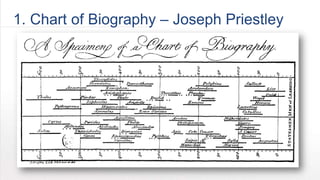
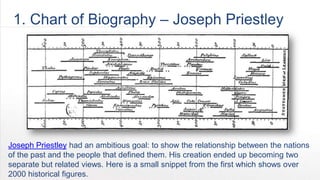
1. Chart of Biography – Joseph Priestley


The 18th century English educator and polymath Joseph Priestley had an ambitious
goal: to teach his students the relationship between the nations of the past and the
people that defined them. His creation ended up becoming two separate but related
views. Here is a small snippet from the first which shows over 2000 historical figures.
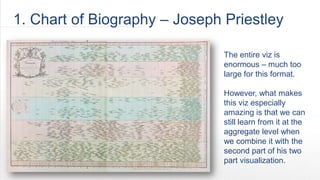
1. Chart of Biography – Joseph Priestley

                               The entire viz is
                               enormous – much too
                               large for this format.

                               However, what makes
                               this viz especially
                               amazing is that we can
                               still learn from it at the
                               aggregate level when
                               we combine it with the
                               second part of his two
                               part visualization.
1. Chart of Biography – Joseph Priestley


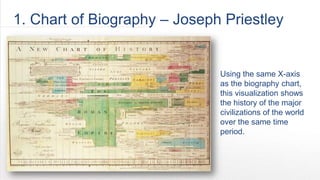
                              Using the same X-axis
                              as the biography
                              chart, this visualization
                              shows the history of the
                              major civilizations of the
                              world over the same time
                              period.
1. Chart of Biography – Joseph Priestley
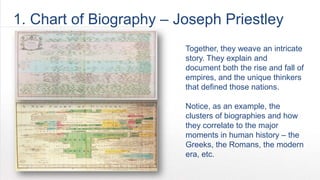
                         Together, they weave an intricate
                         story. They explain and
                         document both the rise and fall of
                         empires, and the unique thinkers
                         that defined those nations.

                         Notice, as an example, the
                         clusters of biographies and how
                         they correlate to the major
                         moments in human history – the
                         Greeks, the Romans, the
                         Enlightenment, etc.
“The greatest value of a picture is
when it forces us to notice what
we never expected to see.”
           - John Tukey, 1977
Want to Learn More?
Watch a presentation about these visualizations:
http://www.tableausoftware.com/tcc12conf/videos/5-influential-visualizations

Read more about these visualizations:
http://www.tableausoftware.com/about/blog/2012/11/top-5-visualizations-all-time-
19810

Learn more about data visualization:
http://tableausoftware.com

Special thanks to Andy Cotgreave for creating the original compilation of
visualizations.
Learn more about data visualization at
     http://tableausoftware.com

The 5 most influential data visualizations of all time

  • 1.
    The 5 MostInfluential Data Visualizations of All Time
  • 2.
    About these visualizations Datavisualization allows us all to see and understand our data more deeply. That understanding breeds good decisions. Without data visualization and data analysis, we are all more prone to misunderstandings and missed opportunities. The following slides will show you 5 powerful, beautiful visualizations that changed how people thought about the world.
  • 3.
    5. London CholeraMap – John Snow 1854. London. Cholera strikes. In just 10 days, over 500 people have been killed in one neighborhood. The mysterious cluster of deaths is especially terrifying because no one understands the source. No one besides John Snow, an epidemiologist who realized the water supply was spreading the disease.
  • 4.
    5. London CholeraMap – John Snow He plotted every death on a map with ingenious mapped bar charts (see left) and was able to show that the closer to the Broad Street water pump he plotted, the greater the number of deaths. The information helped convince the public a true sewage system was needed and spurred the city to action.
  • 5.
    4. Gapminder –Rosling The Swedish scientist Hans Rosling had been working with developmental data for over 30 years – but it took a great visualization and a 2007 TED talk for him to share his passion with the world. His original viz (now one of many) shows the relationship between income and life expectancy. The data is simple but Rosling’s visual storytelling has allowed him to spread his passion for this fascinating, overlooked data to millions.
  • 6.
    3. March onMoscow – Charles Minard
  • 7.
    3. March onMoscow – Charles Minard In 1812, Napoleon marched to Moscow in order to conquer the city. 98% of his soldiers died. Fifty years later, while his country yearned for their former Imperial glory, the Parisian engineer Charles Minard chose to remind his country of the horrors of war with data. The simple but fascinating temperature line below the viz shows how cold ultimately defeated Napoleon’s army. This viz still inspires those who see it to ponder the true cost of war.
  • 8.
    2. War Mortality– Florence Nightingale
  • 9.
    2. War Mortality– Florence Nightingale 1855. The Crimea. Britain is fighting a battle with both Russia and disease. As a nurse, how do you convince an army to invest in hospitals and healthcare instead of guns and ammunition? Florence Nightingale told her story with data by showing the staggering amount of deaths due to preventable disease (shown in blue/grey). After this viz, sanitation became a major priority for the British Army.
  • 10.
    1. Chart ofBiography – Joseph Priestley
  • 11.
    1. Chart ofBiography – Joseph Priestley The 18th century English educator and polymath Joseph Priestley had an ambitious goal: to teach his students the relationship between the nations of the past and the people that defined them. His creation ended up becoming two separate but related views. Here is a small snippet from the first which shows over 2000 historical figures.
  • 12.
    1. Chart ofBiography – Joseph Priestley The entire viz is enormous – much too large for this format. However, what makes this viz especially amazing is that we can still learn from it at the aggregate level when we combine it with the second part of his two part visualization.
  • 13.
    1. Chart ofBiography – Joseph Priestley Using the same X-axis as the biography chart, this visualization shows the history of the major civilizations of the world over the same time period.
  • 14.
    1. Chart ofBiography – Joseph Priestley Together, they weave an intricate story. They explain and document both the rise and fall of empires, and the unique thinkers that defined those nations. Notice, as an example, the clusters of biographies and how they correlate to the major moments in human history – the Greeks, the Romans, the Enlightenment, etc.
  • 15.
    “The greatest valueof a picture is when it forces us to notice what we never expected to see.” - John Tukey, 1977
  • 16.
    Want to LearnMore? Watch a presentation about these visualizations: http://www.tableausoftware.com/tcc12conf/videos/5-influential-visualizations Read more about these visualizations: http://www.tableausoftware.com/about/blog/2012/11/top-5-visualizations-all-time- 19810 Learn more about data visualization: http://tableausoftware.com Special thanks to Andy Cotgreave for creating the original compilation of visualizations.
  • 17.
    Learn more aboutdata visualization at http://tableausoftware.com