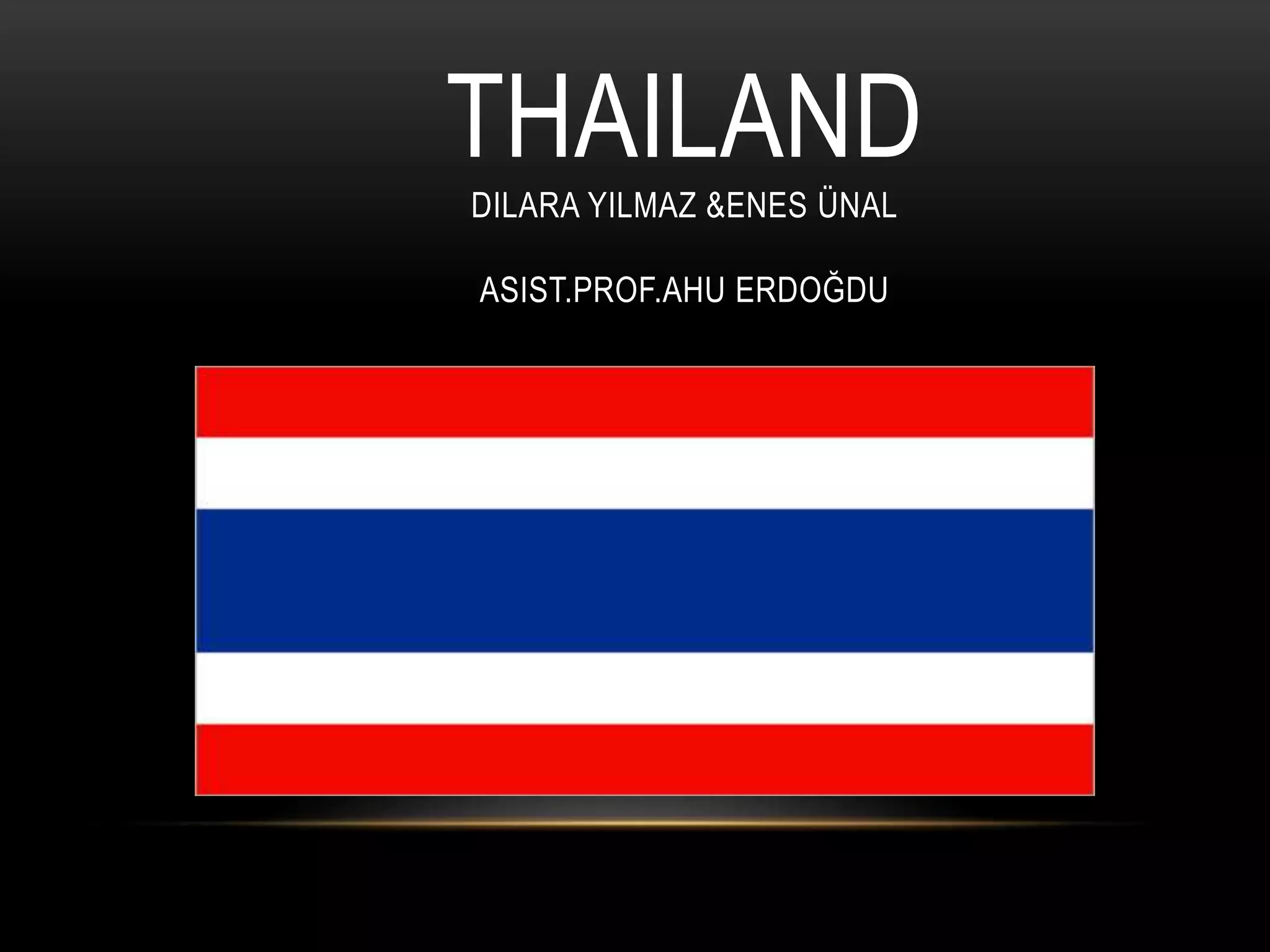
THAILAND
DILARA YILMAZ &ENES ÜNAL
ASIST.PROF.AHU ERDOĞDU
 Thailand, officially the Kingdom of Thailand formerly
known as Siam, is a country at the centre of
the Indochina peninsula in Southeast Asia.
 It is the 20th-most-populous country in the world,
with around 66 million people.
 The capital and largest city is Bangkok, which is
Thailand's political, commercial, industrial, and
cultural hub.
RELIGION
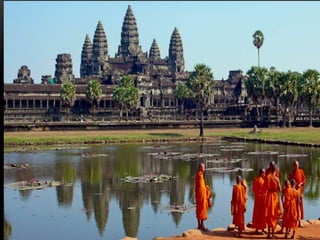
• Thailand's prevalent religion is Theravada Buddhism,
which is an integral part of Thai identity and culture.
• Muslims constitute the second largest religious group in
Thailand, comprising 4.6% of the population.
• Wat is name of Buddihist Temple.
CULTURE
• Thai culture has been shaped by many influences, including Indian,
Lao, Burmese, Cambodian, and Chinese.
• The official calendar in Thailand is based on the Eastern version
of the Buddhist Era (BE), which is 543 years ahead of the
Gregorian (Western) calendar. Thus the year 2015 is 2558 BE in
Thailand.
• Elders have by tradition ruled in family decisions or ceremonies.
Older siblings have duties to younger ones.
• Taboos in Thailand include touching someone's head or pointing
with the feet, as the head is considered the most sacred and the
foot the lowest part of the body.
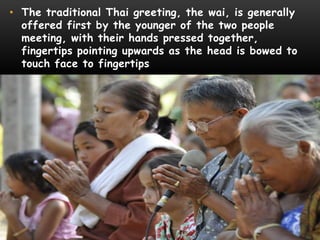
• The traditional Thai greeting, the wai, is generally
offered first by the younger of the two people
meeting, with their hands pressed together,
fingertips pointing upwards as the head is bowed to
touch face to fingertips
• When a child born in Thailand, first put a cat on crib.
• Life style of Thai people : Mai Pen Rai
• People are very polite and smiling
CUISINE
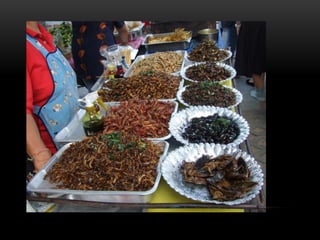
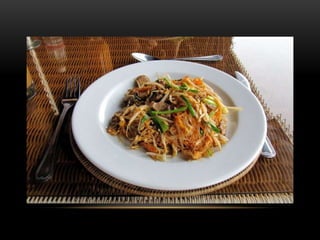
• Thai cuisine blends five fundamental tastes: sweet, spicy, sour,
bitter, and salty. Thai cuisine is heavily inspired by Chinese
cuisine, especially Thai street food, soups and stir fry dishes.
Some common ingredients used in Thai cuisine include garlic,
chillies, lime juice, lemon grass, sugar, and fish sauce. The staple
food in Thailand is rice, particularly jasmine variety rice (also
known as "hom Mali" rice) which is included at almost every meal.
Thailand was long the world's largest exporter of rice, and Thais
domestically consume over 100 kg of milled rice per person per
year. Over 5,000 varieties of rice from Thailand are preserved in
the rice gene bank of the International Rice Research Institute
(IRRI), based in the Philippines.
MEDIA
• Thai society has been influenced in recent years by its widely
available multi-language press and media. There are some English
and numerous Thai and Chinese newspapers in circulation. Most
Thai popular magazines use English headlines as a chic glamour
factor. Many large businesses in Bangkok operate in English as well
as other languages.
• Thailand is the largest newspaper market in Southeast Asia with
an estimated circulation of over 13 million copies daily in 2003.
Even upcountry, out of Bangkok, the media flourish. For example,
according to Thailand's Public Relations Department Media
Directory 2003–2004, the nineteen provinces of Isan, Thailand's
northeastern region, hosted 116 newspapers along with radio, TV,
and cable.
TOP 10 THAI NEWS SITES
• Top 10 Thai Newspapers, News Sites, Sports,
Business, Radio, TV Stations and News Portals
• News.sanook.com
• Manager
• Thairath.co.th
• Mathıcon
• Dailynews.co.th
• Khaosod.co.th
• M Thai News
• Komchadluek.net
• Bangkok.post.com
NON VERBAL COMMUNICATION
• Body Language is extremely important in The Thai culture. Below are some of
the common gestures to consider when interacting with the Thai people.
• Personal Space
• When in close proximity, avoid direct contact. Invasion of personal space is
thought to be highly disrespectful. Be extra wary of elders, monks, and
teachers, as these people are considered on the top of the hierarchy and are
thought to deserve more personal space than others.
• Physical Contact
• It is unacceptable to touch members of the opposite sex in public.
• Never touch a person with your foot. The foot is seen as the least sacred part
of the body
• Women are prohibited from touching monks.
• Gestures
• Thai people translate body language to determine one’s mood
rather than tone of voice as westerners often do. Smiling should
be done in moderation. Excessive smiling indicates embarrassment.
When speaking with someone, avoid vibrant hand gestures. These
may be seen as an aggressive attack. However, having your hands
in your pocket is considered rude.
• Overall, Thai culture requires high self-awareness and paying close
attention to others. Decipher content through focusing on what is
implied rather than clearly stated. Always appear to calm and
patient.
PREPARED BY
DILARA YILMAZ
ENES ÜNAL
• Thanks for listening 

Thailand

  • 1.
    THAILAND DILARA YILMAZ &ENESÜNAL ASIST.PROF.AHU ERDOĞDU
  • 2.
     Thailand, officiallythe Kingdom of Thailand formerly known as Siam, is a country at the centre of the Indochina peninsula in Southeast Asia.  It is the 20th-most-populous country in the world, with around 66 million people.  The capital and largest city is Bangkok, which is Thailand's political, commercial, industrial, and cultural hub.
  • 3.
    RELIGION • Thailand's prevalentreligion is Theravada Buddhism, which is an integral part of Thai identity and culture. • Muslims constitute the second largest religious group in Thailand, comprising 4.6% of the population. • Wat is name of Buddihist Temple.
  • 5.
    CULTURE • Thai culturehas been shaped by many influences, including Indian, Lao, Burmese, Cambodian, and Chinese. • The official calendar in Thailand is based on the Eastern version of the Buddhist Era (BE), which is 543 years ahead of the Gregorian (Western) calendar. Thus the year 2015 is 2558 BE in Thailand. • Elders have by tradition ruled in family decisions or ceremonies. Older siblings have duties to younger ones. • Taboos in Thailand include touching someone's head or pointing with the feet, as the head is considered the most sacred and the foot the lowest part of the body.
  • 6.
    • The traditionalThai greeting, the wai, is generally offered first by the younger of the two people meeting, with their hands pressed together, fingertips pointing upwards as the head is bowed to touch face to fingertips
  • 7.
    • When achild born in Thailand, first put a cat on crib. • Life style of Thai people : Mai Pen Rai • People are very polite and smiling
  • 8.
    CUISINE • Thai cuisineblends five fundamental tastes: sweet, spicy, sour, bitter, and salty. Thai cuisine is heavily inspired by Chinese cuisine, especially Thai street food, soups and stir fry dishes. Some common ingredients used in Thai cuisine include garlic, chillies, lime juice, lemon grass, sugar, and fish sauce. The staple food in Thailand is rice, particularly jasmine variety rice (also known as "hom Mali" rice) which is included at almost every meal. Thailand was long the world's largest exporter of rice, and Thais domestically consume over 100 kg of milled rice per person per year. Over 5,000 varieties of rice from Thailand are preserved in the rice gene bank of the International Rice Research Institute (IRRI), based in the Philippines.
  • 11.
    MEDIA • Thai societyhas been influenced in recent years by its widely available multi-language press and media. There are some English and numerous Thai and Chinese newspapers in circulation. Most Thai popular magazines use English headlines as a chic glamour factor. Many large businesses in Bangkok operate in English as well as other languages. • Thailand is the largest newspaper market in Southeast Asia with an estimated circulation of over 13 million copies daily in 2003. Even upcountry, out of Bangkok, the media flourish. For example, according to Thailand's Public Relations Department Media Directory 2003–2004, the nineteen provinces of Isan, Thailand's northeastern region, hosted 116 newspapers along with radio, TV, and cable.
  • 12.
    TOP 10 THAINEWS SITES • Top 10 Thai Newspapers, News Sites, Sports, Business, Radio, TV Stations and News Portals • News.sanook.com • Manager • Thairath.co.th • Mathıcon • Dailynews.co.th • Khaosod.co.th • M Thai News • Komchadluek.net • Bangkok.post.com
  • 13.
    NON VERBAL COMMUNICATION •Body Language is extremely important in The Thai culture. Below are some of the common gestures to consider when interacting with the Thai people. • Personal Space • When in close proximity, avoid direct contact. Invasion of personal space is thought to be highly disrespectful. Be extra wary of elders, monks, and teachers, as these people are considered on the top of the hierarchy and are thought to deserve more personal space than others. • Physical Contact • It is unacceptable to touch members of the opposite sex in public. • Never touch a person with your foot. The foot is seen as the least sacred part of the body • Women are prohibited from touching monks.
  • 14.
    • Gestures • Thaipeople translate body language to determine one’s mood rather than tone of voice as westerners often do. Smiling should be done in moderation. Excessive smiling indicates embarrassment. When speaking with someone, avoid vibrant hand gestures. These may be seen as an aggressive attack. However, having your hands in your pocket is considered rude. • Overall, Thai culture requires high self-awareness and paying close attention to others. Decipher content through focusing on what is implied rather than clearly stated. Always appear to calm and patient.
  • 15.
    PREPARED BY DILARA YILMAZ ENESÜNAL • Thanks for listening 