TABLE OF CONTENTS
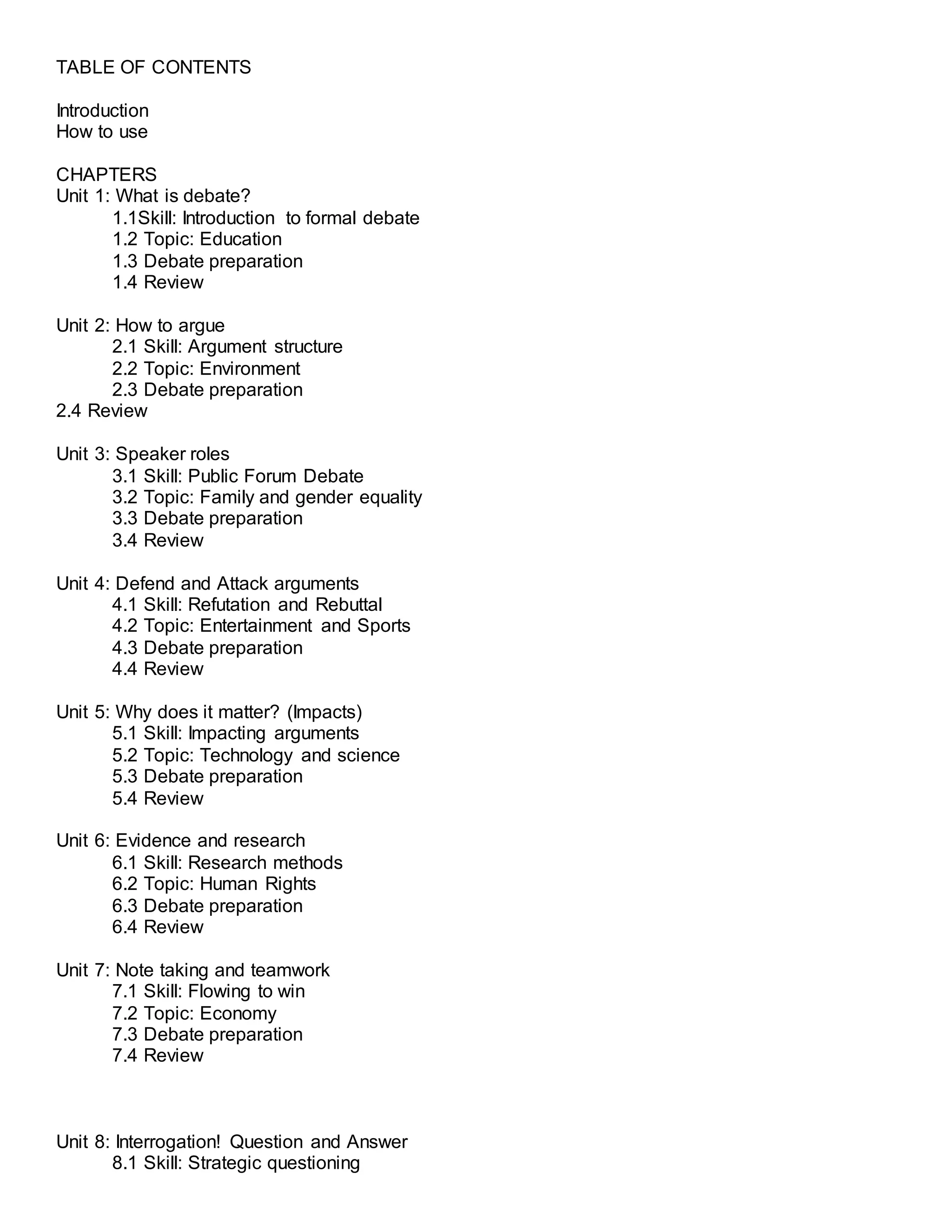
Introduction
How to use
CHAPTERS
Unit 1: What is debate?
1.1Skill: Introduction to formal debate
1.2 Topic: Education
1.3 Debate preparation
1.4 Review
Unit 2: How to argue
2.1 Skill: Argument structure
2.2 Topic: Environment
2.3 Debate preparation
2.4 Review
Unit 3: Speaker roles
3.1 Skill: Public Forum Debate
3.2 Topic: Family and gender equality
3.3 Debate preparation
3.4 Review
Unit 4: Defend and Attack arguments
4.1 Skill: Refutation and Rebuttal
4.2 Topic: Entertainment and Sports
4.3 Debate preparation
4.4 Review
Unit 5: Why does it matter? (Impacts)
5.1 Skill: Impacting arguments
5.2 Topic: Technology and science
5.3 Debate preparation
5.4 Review
Unit 6: Evidence and research
6.1 Skill: Research methods
6.2 Topic: Human Rights
6.3 Debate preparation
6.4 Review
Unit 7: Note taking and teamwork
7.1 Skill: Flowing to win
7.2 Topic: Economy
7.3 Debate preparation
7.4 Review
Unit 8: Interrogation! Question and Answer
8.1 Skill: Strategic questioning
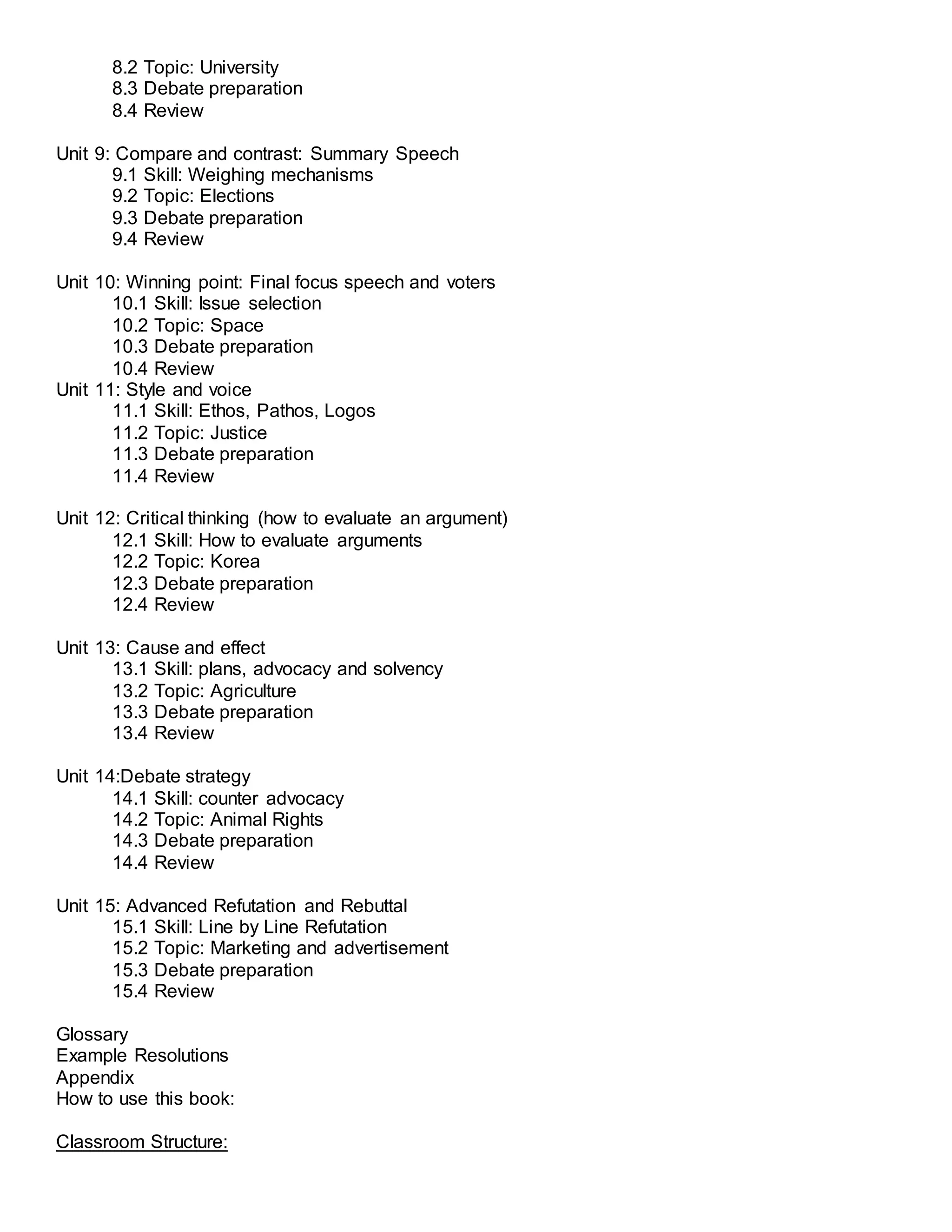
8.2 Topic: University
8.3 Debate preparation
8.4 Review
Unit 9: Compare and contrast: Summary Speech
9.1 Skill: Weighing mechanisms
9.2 Topic: Elections
9.3 Debate preparation
9.4 Review
Unit 10: Winning point: Final focus speech and voters
10.1 Skill: Issue selection
10.2 Topic: Space
10.3 Debate preparation
10.4 Review
Unit 11: Style and voice
11.1 Skill: Ethos, Pathos, Logos
11.2 Topic: Justice
11.3 Debate preparation
11.4 Review
Unit 12: Critical thinking (how to evaluate an argument)
12.1 Skill: How to evaluate arguments
12.2 Topic: Korea
12.3 Debate preparation
12.4 Review
Unit 13: Cause and effect
13.1 Skill: plans, advocacy and solvency
13.2 Topic: Agriculture
13.3 Debate preparation
13.4 Review
Unit 14:Debate strategy
14.1 Skill: counter advocacy
14.2 Topic: Animal Rights
14.3 Debate preparation
14.4 Review
Unit 15: Advanced Refutation and Rebuttal
15.1 Skill: Line by Line Refutation
15.2 Topic: Marketing and advertisement
15.3 Debate preparation
15.4 Review
Glossary
Example Resolutions
Appendix
How to use this book:
Classroom Structure:
Each unit in your textbook is divided into two weeks or 1 month. The first and second week on a new
unit you will have a skill lecture and a topic lecture. The third and forth week class will have two
debates on the resolution presented in the unit.
Skill Lessons:
The first day of a unit you will be learning a new debate skill that will equip you with new tools to
debate. In addition the teacher may provide you with in class skill building activities to reinforce what
you have already learned.
Topic Lecture:
Prior to the topic lecture you should have been assigned the reading and response questions in the
text book to familiarize yourself with the issue. In the topic lecture the teacher may use power points
to deepen you knowledge about the topic on both sides of the issue. You are to take detailed notes
during this lecture so you can have enough evidence for your debate arguments. Your Homework
will then be to write pro and con AREI’s for the unit.
Debate days:
The second week of the unit, six students will be chosen to debate. It is important that you do all your
AREI homework prior to coming into class so that you can be a strong member in the team. You may
debate twice in one week depending on class size or to improve your score.
All students on debate days must flow the debate. Flowing is a hard skill and the only way to get
better is to practice. Often flowsheets will be collected and graded to track your progress. If you
choose not to flow during the debate you will be sent to study hall.
Homework:
The first week of a new unit you can expect to be assigned the reading and response questions
before the topic discussion. After topic discussion teachers typically assign 3pro and 3con AREI’s.
Other Homework may include refutation and rebuttal of your own AREI’s, research related to the unit,
current event news, flowing new reports, vocabulary, and special skill lesson assignment
Textbook Table of Contents

Textbook Table of Contents

  • 1.
    TABLE OF CONTENTS Introduction Howto use CHAPTERS Unit 1: What is debate? 1.1Skill: Introduction to formal debate 1.2 Topic: Education 1.3 Debate preparation 1.4 Review Unit 2: How to argue 2.1 Skill: Argument structure 2.2 Topic: Environment 2.3 Debate preparation 2.4 Review Unit 3: Speaker roles 3.1 Skill: Public Forum Debate 3.2 Topic: Family and gender equality 3.3 Debate preparation 3.4 Review Unit 4: Defend and Attack arguments 4.1 Skill: Refutation and Rebuttal 4.2 Topic: Entertainment and Sports 4.3 Debate preparation 4.4 Review Unit 5: Why does it matter? (Impacts) 5.1 Skill: Impacting arguments 5.2 Topic: Technology and science 5.3 Debate preparation 5.4 Review Unit 6: Evidence and research 6.1 Skill: Research methods 6.2 Topic: Human Rights 6.3 Debate preparation 6.4 Review Unit 7: Note taking and teamwork 7.1 Skill: Flowing to win 7.2 Topic: Economy 7.3 Debate preparation 7.4 Review Unit 8: Interrogation! Question and Answer 8.1 Skill: Strategic questioning
  • 2.
    8.2 Topic: University 8.3Debate preparation 8.4 Review Unit 9: Compare and contrast: Summary Speech 9.1 Skill: Weighing mechanisms 9.2 Topic: Elections 9.3 Debate preparation 9.4 Review Unit 10: Winning point: Final focus speech and voters 10.1 Skill: Issue selection 10.2 Topic: Space 10.3 Debate preparation 10.4 Review Unit 11: Style and voice 11.1 Skill: Ethos, Pathos, Logos 11.2 Topic: Justice 11.3 Debate preparation 11.4 Review Unit 12: Critical thinking (how to evaluate an argument) 12.1 Skill: How to evaluate arguments 12.2 Topic: Korea 12.3 Debate preparation 12.4 Review Unit 13: Cause and effect 13.1 Skill: plans, advocacy and solvency 13.2 Topic: Agriculture 13.3 Debate preparation 13.4 Review Unit 14:Debate strategy 14.1 Skill: counter advocacy 14.2 Topic: Animal Rights 14.3 Debate preparation 14.4 Review Unit 15: Advanced Refutation and Rebuttal 15.1 Skill: Line by Line Refutation 15.2 Topic: Marketing and advertisement 15.3 Debate preparation 15.4 Review Glossary Example Resolutions Appendix How to use this book: Classroom Structure:
  • 3.
    Each unit inyour textbook is divided into two weeks or 1 month. The first and second week on a new unit you will have a skill lecture and a topic lecture. The third and forth week class will have two debates on the resolution presented in the unit. Skill Lessons: The first day of a unit you will be learning a new debate skill that will equip you with new tools to debate. In addition the teacher may provide you with in class skill building activities to reinforce what you have already learned. Topic Lecture: Prior to the topic lecture you should have been assigned the reading and response questions in the text book to familiarize yourself with the issue. In the topic lecture the teacher may use power points to deepen you knowledge about the topic on both sides of the issue. You are to take detailed notes during this lecture so you can have enough evidence for your debate arguments. Your Homework will then be to write pro and con AREI’s for the unit. Debate days: The second week of the unit, six students will be chosen to debate. It is important that you do all your AREI homework prior to coming into class so that you can be a strong member in the team. You may debate twice in one week depending on class size or to improve your score. All students on debate days must flow the debate. Flowing is a hard skill and the only way to get better is to practice. Often flowsheets will be collected and graded to track your progress. If you choose not to flow during the debate you will be sent to study hall. Homework: The first week of a new unit you can expect to be assigned the reading and response questions before the topic discussion. After topic discussion teachers typically assign 3pro and 3con AREI’s. Other Homework may include refutation and rebuttal of your own AREI’s, research related to the unit, current event news, flowing new reports, vocabulary, and special skill lesson assignment