Reconstruction Ends The late 1800s were a time of growth and expansion in Texas.  People spread a network of railroads throughout the state. Agriculture boomed.  Existing industries expanded and new ones began.  The growing population and economy meant added wealth for the state and new problems and public concerns.  Many political and social issues that remained from the Reconstruction Era also had to be addressed.
 
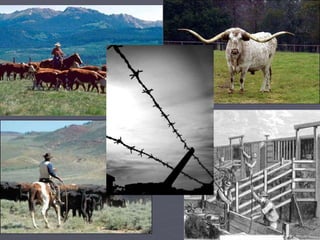
1. The cattle industry became profitable after the Civil War because  westward expansion of the railroads.  The cattle roamed wild during the Civil War and became cheap to buy because of their abundance.  The Texas cattle were driven up north to the railroads.  However, the open range was closed because of the invention of barbed wire fences.
 
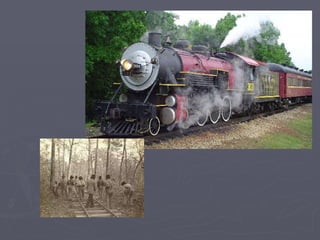
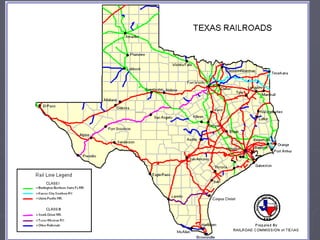
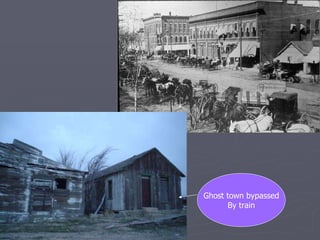
5. Towns are created on the railroad routs  help to populate the states.   People move into these  cities for jobs.   Towns and cities  bypassed by the railroad  became  ghost towns.  By 1900 a network of railroads totaling some 10,000 miles spread over the state.  Travel time became faster going from weeks and days to merely hours to get from place to place.
 
4. Railroads were a  cheap  and  efficient  way to get  goods  to  market.  People believed that the railroads would help farms, ranches, and business to prosper.
Ghost town bypassed By train
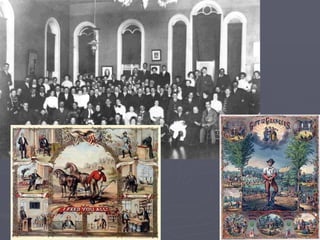
7. The railroads helped to establish the  Grange  to fight  unfair shipping prices  charged by the railroad. Farmers created the Grange so they could  purchase supplies more cheaply.   The Grange was both a social organization and a group calling for economic changes.  It set up stores throughout Texas, making supplies cheaper to buy.
 
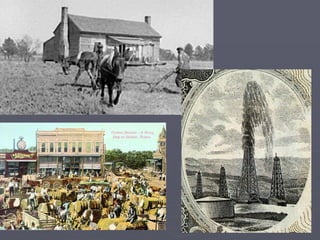
2. Farmers  and  merchants  wanted  railroads  to  expand  in order to  market their goods…. duh!!!  Farmers could load up their product on the train and send it faster to be sold in more locations.  Same goes for the merchant selling his goods, in this case, the goods were oil, coal, salt and lumber.  Oil was discovered in Brown County and originally used as a medicine and as a lubricant.
 
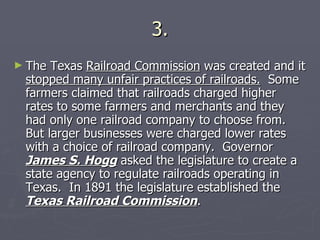
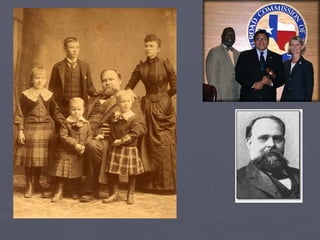
3. The Texas  Railroad Commission  was created and it  stopped many unfair practices of railroads.   Some farmers claimed that railroads charged higher rates to some farmers and merchants and they had only one railroad company to choose from.  But larger businesses were charged lower rates with a choice of railroad company.  Governor  James S. Hogg  asked the legislature to create a state agency to regulate railroads operating in Texas.  In 1891 the legislature established the  Texas Railroad Commission .
 

Texas Railroads

  • 1.
    Reconstruction Ends Thelate 1800s were a time of growth and expansion in Texas. People spread a network of railroads throughout the state. Agriculture boomed. Existing industries expanded and new ones began. The growing population and economy meant added wealth for the state and new problems and public concerns. Many political and social issues that remained from the Reconstruction Era also had to be addressed.
  • 2.
  • 3.
    1. The cattleindustry became profitable after the Civil War because westward expansion of the railroads. The cattle roamed wild during the Civil War and became cheap to buy because of their abundance. The Texas cattle were driven up north to the railroads. However, the open range was closed because of the invention of barbed wire fences.
  • 4.
  • 5.
    5. Towns arecreated on the railroad routs help to populate the states. People move into these cities for jobs. Towns and cities bypassed by the railroad became ghost towns. By 1900 a network of railroads totaling some 10,000 miles spread over the state. Travel time became faster going from weeks and days to merely hours to get from place to place.
  • 6.
  • 7.
    4. Railroads werea cheap and efficient way to get goods to market. People believed that the railroads would help farms, ranches, and business to prosper.
  • 8.
  • 9.
    7. The railroadshelped to establish the Grange to fight unfair shipping prices charged by the railroad. Farmers created the Grange so they could purchase supplies more cheaply. The Grange was both a social organization and a group calling for economic changes. It set up stores throughout Texas, making supplies cheaper to buy.
  • 10.
  • 11.
    2. Farmers and merchants wanted railroads to expand in order to market their goods…. duh!!! Farmers could load up their product on the train and send it faster to be sold in more locations. Same goes for the merchant selling his goods, in this case, the goods were oil, coal, salt and lumber. Oil was discovered in Brown County and originally used as a medicine and as a lubricant.
  • 12.
  • 13.
    3. The Texas Railroad Commission was created and it stopped many unfair practices of railroads. Some farmers claimed that railroads charged higher rates to some farmers and merchants and they had only one railroad company to choose from. But larger businesses were charged lower rates with a choice of railroad company. Governor James S. Hogg asked the legislature to create a state agency to regulate railroads operating in Texas. In 1891 the legislature established the Texas Railroad Commission .
  • 14.