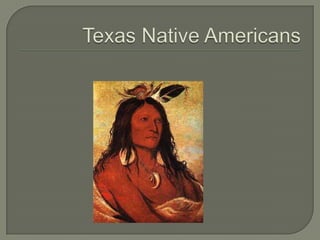
Texas Native Americans
Kiowa TribeLocation: Live in the Great Plains Region just north of AmarilloFood: Buffalo was important. Also, antelope, jackrabbits, prairie dogs, coyotes & wolvesEconomics/Trading: Traded meat & skins for corn, squash & beansShelter: Lived in Tipis (tepees)Clothing:  Men wore breechcloths & deerskin moccasins.  Women wore dresses, leggings & moccasins.Government: Male dominant society where men were in control. 6 societies that the men belonged to & each society ruled something different.
Kiowa Tribe
Caddo TribeLocation: Coastal Plains Region in east Texas.Economics/Trading: Traded with the French, but decided to align with the Spanish when French began trading with Caddo’s enemies.Food: Farmers who planted maize (corn), five/six varieties of beans, squash, sunflowers, melons, pumpkins & tobacco. Also ate meat from buffalo, deer & bear. Picked berries, nuts, figs & cherries.Shelter: Grass Hut or Mound homesClothing: Tanners of deerskin. Men wore breechcloths & shirts. Women wore sleeveless blouses & breechcloths under deerskin skirts.Government: They had religious leaders & each village had a main leader known as a Chief. Chief led with a small group of other tribe members.
Caddo Tribe
Coahuiltecan TribeLocation: Coastal Plains Region from Galveston Bay to San AntonioEconomics/Trading: Nomadic tribe that often wandered from place to place for survival.Shelter: Brush lodge (portable domed huts)or lean-toFood: Roamed to search for food. Ate fish, pecans, catcus, mequite beans & roots of plants. Hunted deer, javelina (hog) & small mammals.Clothing: Men wore breechcloths to their knees & women wore short skirts of soft skins. Wore fiber sandals & cloaks made of coyote hides.Government: Lived in small bands where the Shaman or religious leaders (medicine men) lead bands & helped the sick people.
Coahuiltecan Tribe
Comanche TribeLocation: High Plains into North Central Plains. South of the panhandle to west TexasEconomics/Trading: Learned from the Spanish to master horsemen who owned many horses to use during a hunt or warShelter: Tipis (tepees)Food: Hunted buffalo on horseback. Also hunted elk, black bears, antelope, deer & wild horses if really hungry. Gathered wild plants, fruits, berries, prickly pear fruit, pecans, acorns & roots.Clothing: buffalo hide & deerskin used for clothing. Men wore breechcloths & women wore long sleeved deerskin dresses with fringe. Robes & high boots were worn in the winter.Government: Comanche had chiefs to make decisions & solve problems. A council also helped make decisions
Comanche Tribe
Location of all Texas Native American Tribes
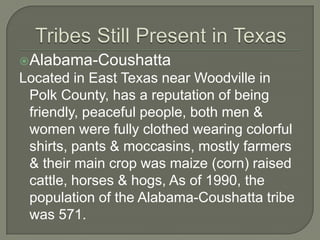
Tribes Still Present in TexasAlabama-CoushattaLocated in East Texas near Woodville in Polk County, has a reputation of being friendly, peaceful people, both men & women were fully clothed wearing colorful shirts, pants & moccasins, mostly farmers & their main crop was maize (corn) raised cattle, horses & hogs, As of 1990, the population of the Alabama-Coushatta tribe was 571.
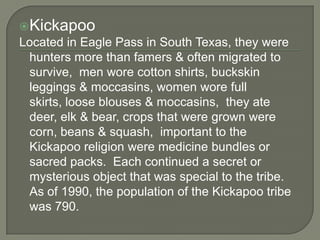
KickapooLocated in Eagle Pass in South Texas, they were hunters more than famers & often migrated to survive,  men wore cotton shirts, buckskin leggings & moccasins, women wore full skirts, loose blouses & moccasins,  they ate deer, elk & bear, crops that were grown were corn, beans & squash,  important to the Kickapoo religion were medicine bundles or sacred packs.  Each continued a secret or mysterious object that was special to the tribe. As of 1990, the population of the Kickapoo tribe was 790.
TiguaLocated near El-Paso, grew cotton to make clothes. Men wore breechcloths & women wore dresses & moccasins, Tiguas were farmers who dug irrigation ditches to get water from the Rio Grande, corn, beans, squash & melons were their main crops.  Rabbits were hunted & fish were caught, when they moved to Texas they brought a statue of the matron saint: Saint Anthony,  Tigua’s celebrate St. Anthony’s feast day every June 13th , Corn dances were a 4 day celebration that included speeches, prayers, music, games, children were baptized by holy water & their lost teeth were thrown at the sun because they believed the sun helped everything grow.

Texas native americans

  • 1.
  • 2.
    Kiowa TribeLocation: Livein the Great Plains Region just north of AmarilloFood: Buffalo was important. Also, antelope, jackrabbits, prairie dogs, coyotes & wolvesEconomics/Trading: Traded meat & skins for corn, squash & beansShelter: Lived in Tipis (tepees)Clothing: Men wore breechcloths & deerskin moccasins. Women wore dresses, leggings & moccasins.Government: Male dominant society where men were in control. 6 societies that the men belonged to & each society ruled something different.
  • 3.
  • 4.
    Caddo TribeLocation: CoastalPlains Region in east Texas.Economics/Trading: Traded with the French, but decided to align with the Spanish when French began trading with Caddo’s enemies.Food: Farmers who planted maize (corn), five/six varieties of beans, squash, sunflowers, melons, pumpkins & tobacco. Also ate meat from buffalo, deer & bear. Picked berries, nuts, figs & cherries.Shelter: Grass Hut or Mound homesClothing: Tanners of deerskin. Men wore breechcloths & shirts. Women wore sleeveless blouses & breechcloths under deerskin skirts.Government: They had religious leaders & each village had a main leader known as a Chief. Chief led with a small group of other tribe members.
  • 5.
  • 6.
    Coahuiltecan TribeLocation: CoastalPlains Region from Galveston Bay to San AntonioEconomics/Trading: Nomadic tribe that often wandered from place to place for survival.Shelter: Brush lodge (portable domed huts)or lean-toFood: Roamed to search for food. Ate fish, pecans, catcus, mequite beans & roots of plants. Hunted deer, javelina (hog) & small mammals.Clothing: Men wore breechcloths to their knees & women wore short skirts of soft skins. Wore fiber sandals & cloaks made of coyote hides.Government: Lived in small bands where the Shaman or religious leaders (medicine men) lead bands & helped the sick people.
  • 7.
  • 8.
    Comanche TribeLocation: HighPlains into North Central Plains. South of the panhandle to west TexasEconomics/Trading: Learned from the Spanish to master horsemen who owned many horses to use during a hunt or warShelter: Tipis (tepees)Food: Hunted buffalo on horseback. Also hunted elk, black bears, antelope, deer & wild horses if really hungry. Gathered wild plants, fruits, berries, prickly pear fruit, pecans, acorns & roots.Clothing: buffalo hide & deerskin used for clothing. Men wore breechcloths & women wore long sleeved deerskin dresses with fringe. Robes & high boots were worn in the winter.Government: Comanche had chiefs to make decisions & solve problems. A council also helped make decisions
  • 9.
  • 10.
    Location of allTexas Native American Tribes
  • 11.
    Tribes Still Presentin TexasAlabama-CoushattaLocated in East Texas near Woodville in Polk County, has a reputation of being friendly, peaceful people, both men & women were fully clothed wearing colorful shirts, pants & moccasins, mostly farmers & their main crop was maize (corn) raised cattle, horses & hogs, As of 1990, the population of the Alabama-Coushatta tribe was 571.
  • 12.
    KickapooLocated in EaglePass in South Texas, they were hunters more than famers & often migrated to survive, men wore cotton shirts, buckskin leggings & moccasins, women wore full skirts, loose blouses & moccasins, they ate deer, elk & bear, crops that were grown were corn, beans & squash, important to the Kickapoo religion were medicine bundles or sacred packs. Each continued a secret or mysterious object that was special to the tribe. As of 1990, the population of the Kickapoo tribe was 790.
  • 13.
    TiguaLocated near El-Paso,grew cotton to make clothes. Men wore breechcloths & women wore dresses & moccasins, Tiguas were farmers who dug irrigation ditches to get water from the Rio Grande, corn, beans, squash & melons were their main crops. Rabbits were hunted & fish were caught, when they moved to Texas they brought a statue of the matron saint: Saint Anthony, Tigua’s celebrate St. Anthony’s feast day every June 13th , Corn dances were a 4 day celebration that included speeches, prayers, music, games, children were baptized by holy water & their lost teeth were thrown at the sun because they believed the sun helped everything grow.