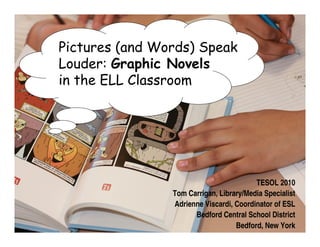
Pictures (and Words) Speak
Louder: Graphic Novels
in the ELL Classroom


                                         TESOL 2010
                Tom Carrigan, Library/Media Specialist
                Adrienne Viscardi, Coordinator of ESL
                      Bedford Central School District
                                   Bedford, New York
Collaborative Process

 ESL Coordinator and Library/Media Specialist

 Summer reading and research

 Conferences and workshops

 Classroom instruction

 Faculty book study
The graphic novel:
Why and how


 Curricular value

 Classroom application
Comics

 Adolescents who read comics
 are more likely to become
 serious readers
                  (Krashen, 2004)


 Appeal to different cultures
                     (Cary, 2004)
Key Factors in Literacy Development
for Adolescents


     Identity

     Engagement

     Motivation
                  (Short and Fitzsimmons, 2007)
Dilemma in
Adolescent Literacy


 Prototypical human practices and conditions

 Varied, specialized text structures and
 complex literary elements

  Inter-textual links to prior knowledge
                            (Lee and Spratley, 2010)
Elements of effective
adolescent literacy programs


 Diverse texts
 Motivation and self-directed learning
 Text-based collaborative learning
 Effective instructional principles
 embedded in content
 Direct, explicit comprehension instruction
                       (Biancarosa and Snow, 2006)
What we know about ELLs

 ELLs have limited and varied
 background knowledge

 Cognitive ability differs from
 linguistic proficiency

 Advanced ELLs understand
 85-90% of the words in text
                   (O’Keefe et al., 2007)
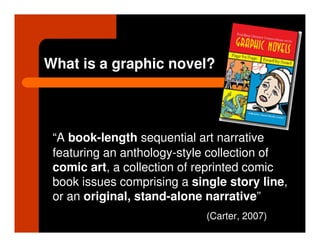
What is a graphic novel?


 “A book-length sequential art narrative
 featuring an anthology-style collection of
 comic art, a collection of reprinted comic
 book issues comprising a single story line,
 or an original, stand-alone narrative”
                             (Carter, 2007)
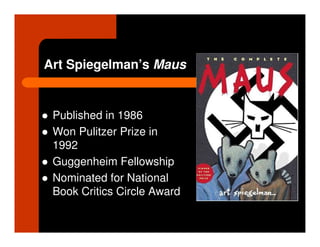
Art Spiegelman’s Maus


 Published in 1986
 Won Pulitzer Prize in
 1992
 Guggenheim Fellowship
 Nominated for National
 Book Critics Circle Award
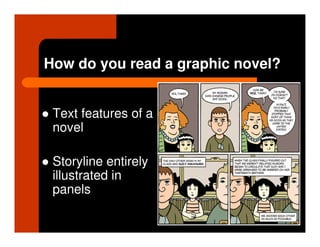
How do you read a graphic novel?


 Text features of a
 novel

 Storyline entirely
 illustrated in
 panels
Instructional benefits

 Appeals to multiple learning styles

 Encourages struggling readers
  –   Visual scaffold
  –   Sense of accomplishment


 Promotes wide reading
                  (Krashen, 2004)
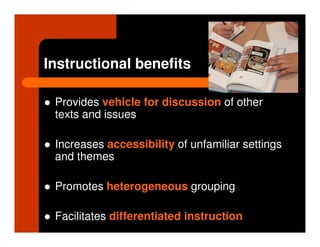
Instructional benefits

 Provides vehicle for discussion of other
 texts and issues

 Increases accessibility of unfamiliar settings
 and themes

 Promotes heterogeneous grouping

 Facilitates differentiated instruction
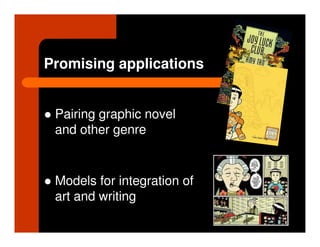
Promising applications


 Pairing graphic novel
 and other genre


 Models for integration of
 art and writing
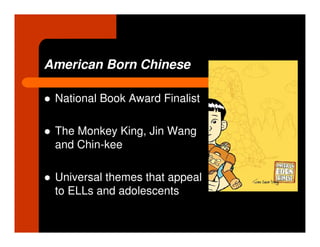
American Born Chinese

 National Book Award Finalist

 The Monkey King, Jin Wang
 and Chin-kee

 Universal themes that appeal
 to ELLs and adolescents
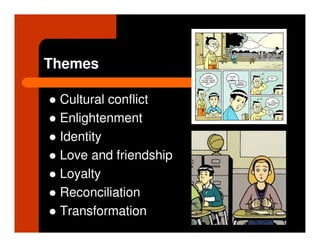
Themes

 Cultural conflict
 Enlightenment
 Identity
 Love and friendship
 Loyalty
 Reconciliation
 Transformation
Literary language

 Allusion           Narrator
 Characterization   Parable
 Climax             Plot
 Conflict           Prologue
 Dialogue           Resolution
 Flashback          Setting
 Foreshadowing      Symbol
 Motif              Theme
Building background

 “The All-American Slurp” by Lensey Namioka

 The Monkey King: A Superhero’s Tale of
 China by Aaron Shepard

 YouTube clip and
 newspaper article
 on Gene Yang
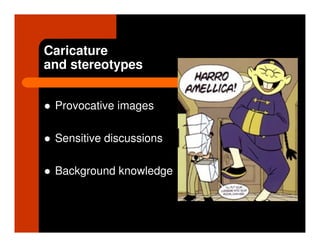
Caricature
and stereotypes


 Provocative images

 Sensitive discussions

 Background knowledge
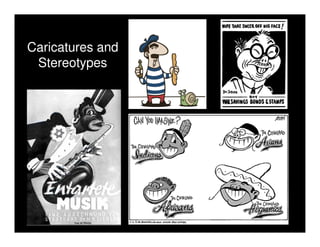
Caricatures and
 Stereotypes
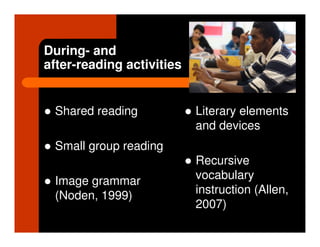
During- and
after-reading activities


 Shared reading            Literary elements
                           and devices
 Small group reading
                           Recursive
 Image grammar             vocabulary
 (Noden, 1999)             instruction (Allen,
                           2007)
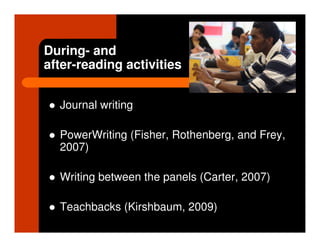
During- and
after-reading activities


  Journal writing

  PowerWriting (Fisher, Rothenberg, and Frey,
  2007)

  Writing between the panels (Carter, 2007)

  Teachbacks (Kirshbaum, 2009)
The Fox Lane High School Library
Website


http://www.bcsdny.org/flhs.cfm?subpage=3881

 Recommended titles and reviews
 Bibliography
 Links to instructional resources
Thank You

    tcarrigan0173@bcsdny.org

    aviscardi1133@bcsdny.org

TESOL 2010: Using Graphic Novels (handouts)

  • 1.
    Pictures (and Words)Speak Louder: Graphic Novels in the ELL Classroom TESOL 2010 Tom Carrigan, Library/Media Specialist Adrienne Viscardi, Coordinator of ESL Bedford Central School District Bedford, New York
  • 2.
    Collaborative Process ESLCoordinator and Library/Media Specialist Summer reading and research Conferences and workshops Classroom instruction Faculty book study
  • 3.
    The graphic novel: Whyand how Curricular value Classroom application
  • 4.
    Comics Adolescents whoread comics are more likely to become serious readers (Krashen, 2004) Appeal to different cultures (Cary, 2004)
  • 5.
    Key Factors inLiteracy Development for Adolescents Identity Engagement Motivation (Short and Fitzsimmons, 2007)
  • 6.
    Dilemma in Adolescent Literacy Prototypical human practices and conditions Varied, specialized text structures and complex literary elements Inter-textual links to prior knowledge (Lee and Spratley, 2010)
  • 7.
    Elements of effective adolescentliteracy programs Diverse texts Motivation and self-directed learning Text-based collaborative learning Effective instructional principles embedded in content Direct, explicit comprehension instruction (Biancarosa and Snow, 2006)
  • 8.
    What we knowabout ELLs ELLs have limited and varied background knowledge Cognitive ability differs from linguistic proficiency Advanced ELLs understand 85-90% of the words in text (O’Keefe et al., 2007)
  • 9.
    What is agraphic novel? “A book-length sequential art narrative featuring an anthology-style collection of comic art, a collection of reprinted comic book issues comprising a single story line, or an original, stand-alone narrative” (Carter, 2007)
  • 10.
    Art Spiegelman’s Maus Published in 1986 Won Pulitzer Prize in 1992 Guggenheim Fellowship Nominated for National Book Critics Circle Award
  • 11.
    How do youread a graphic novel? Text features of a novel Storyline entirely illustrated in panels
  • 12.
    Instructional benefits Appealsto multiple learning styles Encourages struggling readers – Visual scaffold – Sense of accomplishment Promotes wide reading (Krashen, 2004)
  • 13.
    Instructional benefits Providesvehicle for discussion of other texts and issues Increases accessibility of unfamiliar settings and themes Promotes heterogeneous grouping Facilitates differentiated instruction
  • 14.
    Promising applications Pairinggraphic novel and other genre Models for integration of art and writing
  • 15.
    American Born Chinese National Book Award Finalist The Monkey King, Jin Wang and Chin-kee Universal themes that appeal to ELLs and adolescents
  • 16.
    Themes Cultural conflict Enlightenment Identity Love and friendship Loyalty Reconciliation Transformation
  • 17.
    Literary language Allusion Narrator Characterization Parable Climax Plot Conflict Prologue Dialogue Resolution Flashback Setting Foreshadowing Symbol Motif Theme
  • 18.
    Building background “TheAll-American Slurp” by Lensey Namioka The Monkey King: A Superhero’s Tale of China by Aaron Shepard YouTube clip and newspaper article on Gene Yang
  • 19.
    Caricature and stereotypes Provocativeimages Sensitive discussions Background knowledge
  • 20.
  • 21.
    During- and after-reading activities Shared reading Literary elements and devices Small group reading Recursive Image grammar vocabulary (Noden, 1999) instruction (Allen, 2007)
  • 22.
    During- and after-reading activities Journal writing PowerWriting (Fisher, Rothenberg, and Frey, 2007) Writing between the panels (Carter, 2007) Teachbacks (Kirshbaum, 2009)
  • 23.
    The Fox LaneHigh School Library Website http://www.bcsdny.org/flhs.cfm?subpage=3881 Recommended titles and reviews Bibliography Links to instructional resources
  • 24.
    Thank You tcarrigan0173@bcsdny.org aviscardi1133@bcsdny.org