


terry.yinzhe@gmail.com
Agenda
 Background
 Motivation
 Principles
 Practices
 What is fun?
BACKGROUND
Large scale software
Telecommunication device
10+ years old
1,000 people
10,000,000 lines of code in one build
C, SDL
Some very complicated
Thousands LOCs functions
Cyclomatic complexity > 50.
Duplicate rate > 100%!
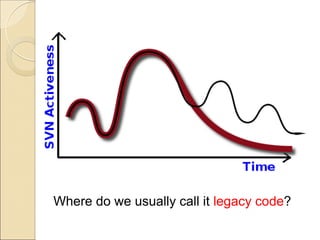
Where do we usually call it legacy code?
MOTIVATION
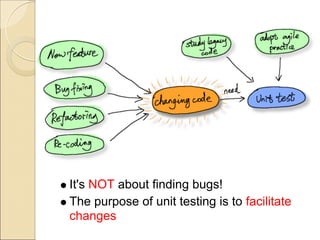
It's NOT about finding bugs!
The purpose of unit testing is to facilitate
changes
You still have the choice and reasons
          not to do it.
PRINCIPLES
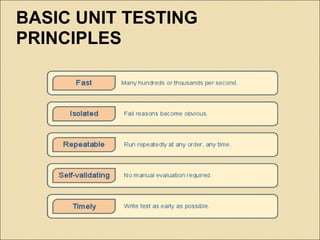
BASIC UNIT TESTING
PRINCIPLES
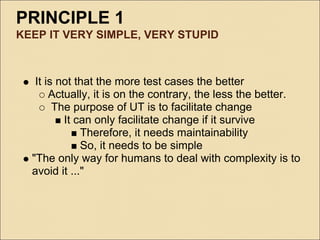
PRINCIPLE 1
KEEP IT VERY SIMPLE, VERY STUPID


   It is not that the more test cases the better
       Actually, it is on the contrary, the less the better.
        The purpose of UT is to facilitate change
          It can only facilitate change if it survive
              Therefore, it needs maintainability
              So, it needs to be simple
  "The only way for humans to deal with complexity is to
  avoid it ..."
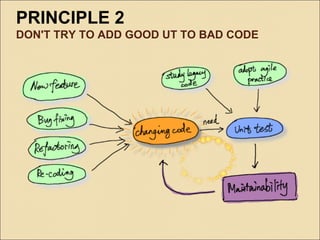
PRINCIPLE 2
DON'T TRY TO ADD GOOD UT TO BAD CODE
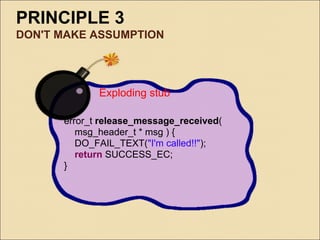
PRINCIPLE 3
DON'T MAKE ASSUMPTION


             Exploding stub

      error_t release_message_received(
         msg_header_t * msg ) {
         DO_FAIL_TEXT("I'm called!!");
         return SUCCESS_EC;
      }
PRINCIPLE 4
STOP MAKING 'LEGACY CODE'


  Test drive new code
  Add tests to legacy code before modification
  Test drive changes to legacy code

  Boy Scout Principle
PRINCIPLE 5
EDUCATE THE PEOPLE


  Do NOT let just one or two people do it.
  NEVER let interns do it!
WHERE TO START?
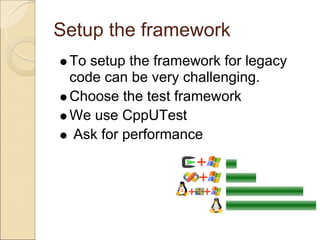
Setup the framework
 To setup the framework for legacy
 code can be very challenging.
 Choose the test framework
 We use CppUTest
  Ask for performance
Domain Modeling
 Reverse engineering to clarify the
 concepts used in the legacy code
   And their relationships
 Use the terms consistently in your
 unit testing.
 It will also give your refactoring
 a road-map.
Identify the hot area
 Start from the hot area will be most
 cost-efficient
 Example
   Through SVN log
   Along with the new work and bug fixing
Bottom-up?
 Have some integration test first
 Then,
   One practical approach is bottom-up
   Get a higher level of abstraction
Learn the function by testing it
  Characterization Test
  Start from the 1st (failing) exit
  Write your plan on a piece of paper
Make the legacy code testable
 Use safe refactoring techniques to
 change the legacy code without unit
 testing.
   Extract function
   If you are using C
     ‘Data injection’ to break the dependency on
     globals.
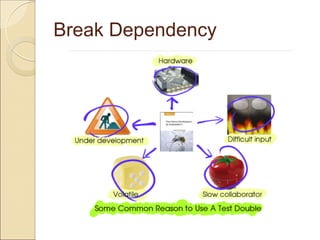
Break Dependency
WHAT IS FUN
Bring chaos to order
Learn the feature
Delete tons of code
Feel the peace of your heart
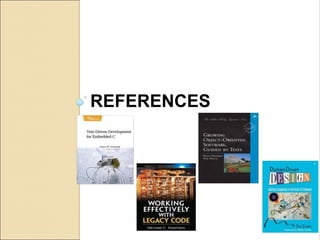
REFERENCES
Acknowledgement

Terry yin adding unit-test_to_legacy_code

  • 1.
  • 2.
    Agenda Background Motivation Principles Practices What is fun?
  • 3.
  • 4.
    Large scale software Telecommunicationdevice 10+ years old 1,000 people 10,000,000 lines of code in one build C, SDL Some very complicated Thousands LOCs functions Cyclomatic complexity > 50. Duplicate rate > 100%!
  • 6.
    Where do weusually call it legacy code?
  • 7.
  • 8.
    It's NOT aboutfinding bugs! The purpose of unit testing is to facilitate changes
  • 9.
    You still havethe choice and reasons not to do it.
  • 10.
  • 11.
  • 12.
    PRINCIPLE 1 KEEP ITVERY SIMPLE, VERY STUPID It is not that the more test cases the better Actually, it is on the contrary, the less the better. The purpose of UT is to facilitate change It can only facilitate change if it survive Therefore, it needs maintainability So, it needs to be simple "The only way for humans to deal with complexity is to avoid it ..."
  • 13.
    PRINCIPLE 2 DON'T TRYTO ADD GOOD UT TO BAD CODE
  • 14.
    PRINCIPLE 3 DON'T MAKEASSUMPTION Exploding stub error_t release_message_received( msg_header_t * msg ) { DO_FAIL_TEXT("I'm called!!"); return SUCCESS_EC; }
  • 15.
    PRINCIPLE 4 STOP MAKING'LEGACY CODE' Test drive new code Add tests to legacy code before modification Test drive changes to legacy code Boy Scout Principle
  • 16.
    PRINCIPLE 5 EDUCATE THEPEOPLE Do NOT let just one or two people do it. NEVER let interns do it!
  • 17.
  • 18.
    Setup the framework To setup the framework for legacy code can be very challenging. Choose the test framework We use CppUTest Ask for performance
  • 19.
    Domain Modeling Reverseengineering to clarify the concepts used in the legacy code And their relationships Use the terms consistently in your unit testing. It will also give your refactoring a road-map.
  • 20.
    Identify the hotarea Start from the hot area will be most cost-efficient Example Through SVN log Along with the new work and bug fixing
  • 21.
    Bottom-up? Have someintegration test first Then, One practical approach is bottom-up Get a higher level of abstraction
  • 22.
    Learn the functionby testing it Characterization Test Start from the 1st (failing) exit Write your plan on a piece of paper
  • 23.
    Make the legacycode testable Use safe refactoring techniques to change the legacy code without unit testing. Extract function If you are using C ‘Data injection’ to break the dependency on globals.
  • 24.
  • 25.
  • 26.
    Bring chaos toorder Learn the feature Delete tons of code Feel the peace of your heart
  • 27.
  • 28.