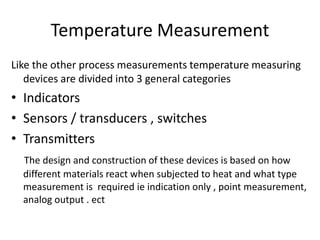
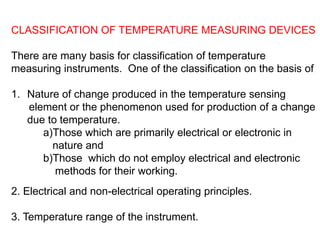
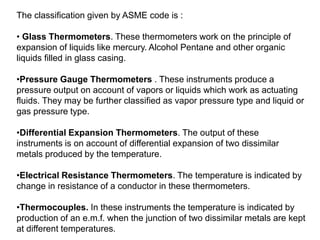
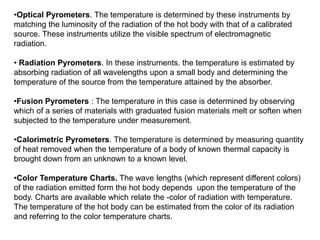
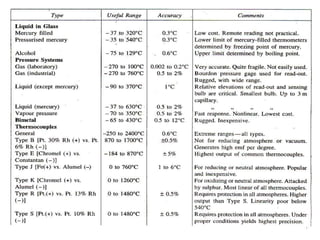
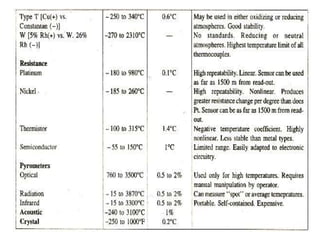
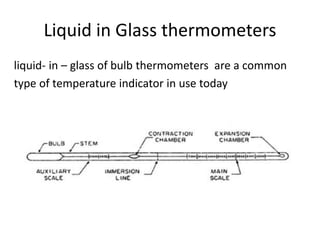
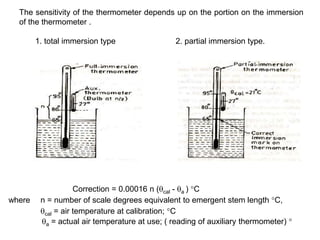
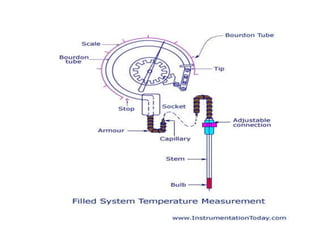
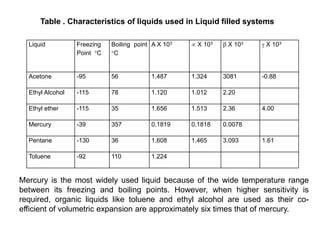
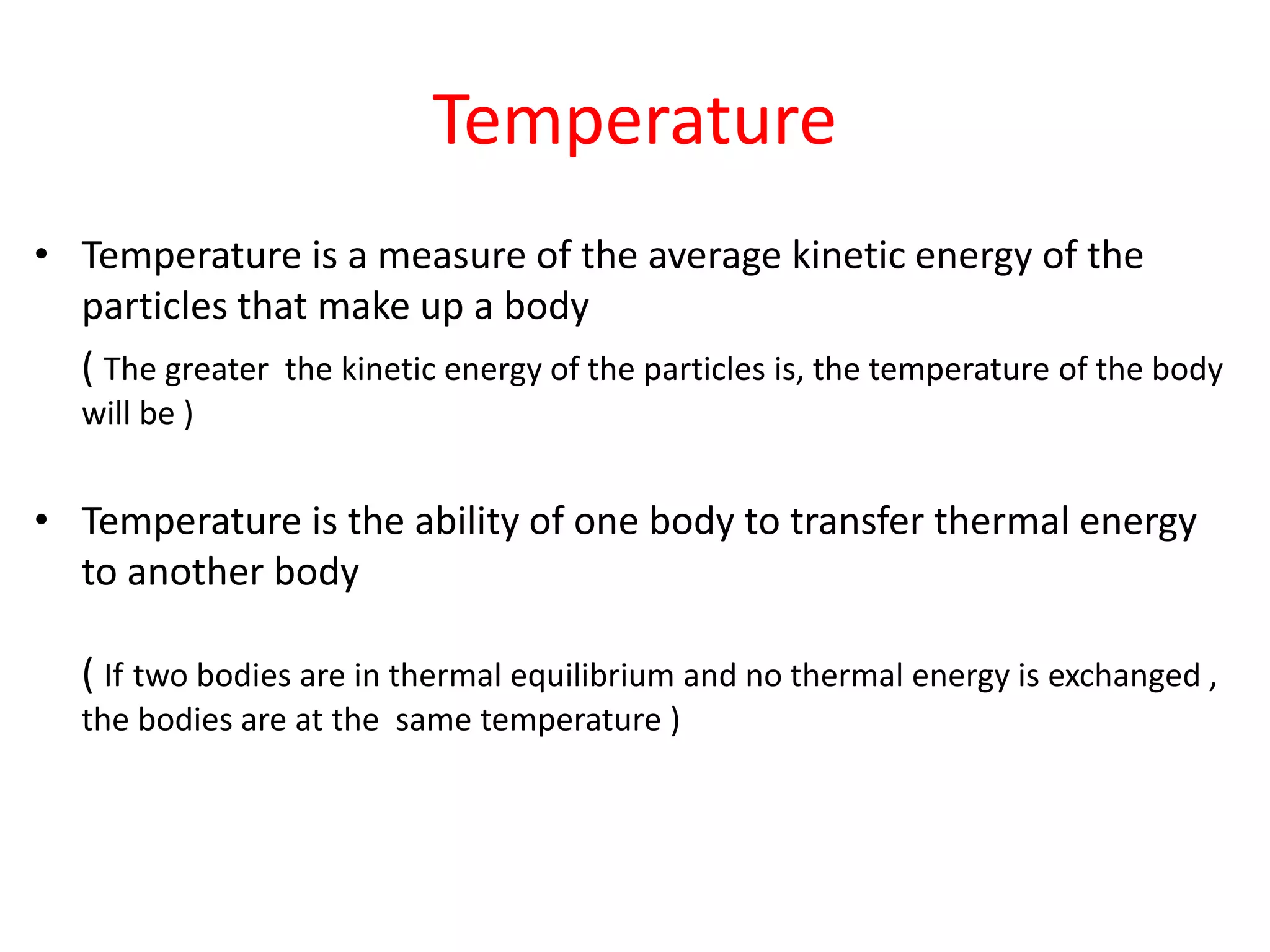
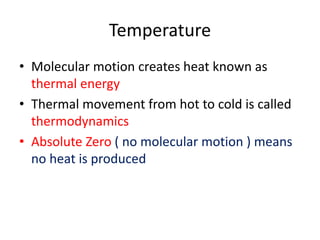
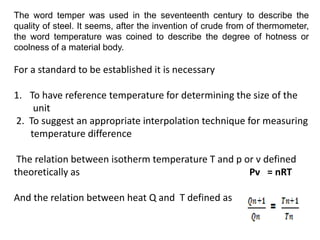
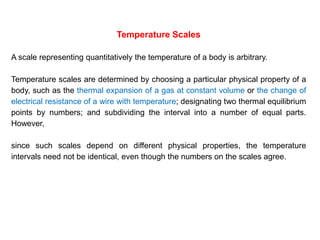
The document discusses different types of temperature measurement devices. It describes how liquid expansion devices like liquid-in-glass thermometers work by measuring the expansion of liquids like mercury or alcohol in a glass bulb and capillary with changes in temperature. The desirable properties for liquids in thermometers include having a linear temperature-dimensional relationship, a high coefficient of expansion for greater sensitivity, accommodating a reasonable temperature range without phase changes, being clearly visible in the capillary, and not sticking to the capillary walls. The document also discusses other types of temperature measurement devices that use different operating principles like electrical resistance, thermo couples, and various optical and radiation pyrometers.
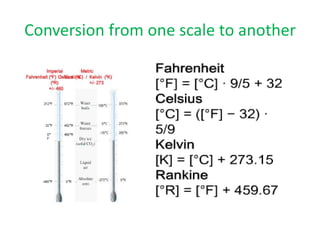
![(°F) = 9/5*(°C) +32
(°C) = 5/9*[(°F) –32]
(°F) = (°R) – 459.67
(°C) = (K) – 273.15](https://image.slidesharecdn.com/temp-ppt-01-220722052524-43b93967/85/Temp-PPT-01-pptx-8-320.jpg)