Lessons from Littleton What Columbine can teach us about crisis communication Nora Carr, APR Charlotte-Mecklenburg Schools
Lesson #1 You can’t over-prepare.
Lesson #2 Plans work on paper; chaos happens in real life.
Lesson #3 Training and simulations are key.
Lesson #5 Expect the unexpected. Plan for it.
Lesson #6 Someone key will collapse under pressure – and at a critical time
Lesson #8 Take care of people first, and practice inside-out communications.
Lesson #9 Perform media triage and establish priorities in advance
Lesson #10 Get fresh horses.
Lesson #11 Make your friends before you need them.
Lessons from Littleton What Columbine can teach us about crisis communication Nora Carr, APR Charlotte-Mecklenburg Schools
Telling Your Story A toolkit for marketing education Nora Carr, APR Chief Communications Officer Charlotte-Mecklenburg Schools [email_address] 704-491-3204
Agenda: Day One Introductions  Communications Planning Overview Phase I: Research & Fact Finding Phase II: Analysis & Strategic Planning Working Lunch Phase III: Communication/Action Step Closing Remarks & “Homework”
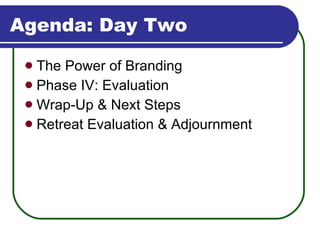
Agenda: Day Two The Power of Branding Phase IV: Evaluation Wrap-Up & Next Steps Retreat Evaluation & Adjournment
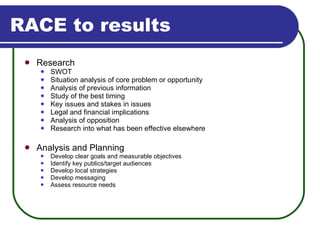
RACE to results Research SWOT Situation analysis of core problem or opportunity Analysis of previous information Study of the best timing Key issues and stakes in issues Legal and financial implications Analysis of opposition Research into what has been effective elsewhere Analysis and Planning Develop clear goals and measurable objectives Identify key publics/target audiences Develop local strategies Develop messaging Assess resource needs
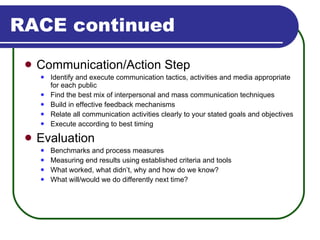
RACE continued Communication/Action Step Identify and execute communication tactics, activities and media appropriate for each public Find the best mix of interpersonal and mass communication techniques Build in effective feedback mechanisms Relate all communication activities clearly to your stated goals and objectives Execute according to best timing Evaluation Benchmarks and process measures Measuring end results using established criteria and tools What worked, what didn’t, why and how do we know? What will/would we do differently next time?
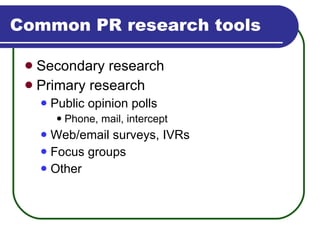
Common PR research tools Secondary research Primary research Public opinion polls Phone, mail, intercept Web/email surveys, IVRs Focus groups Other
What do we know? What do we need to find out?
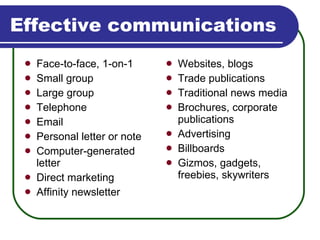
Effective communications  Face-to-face, 1-on-1 Small group Large group  Telephone Email Personal letter or note Computer-generated letter Direct marketing Affinity newsletter Websites, blogs Trade publications Traditional news media Brochures, corporate publications Advertising Billboards Gizmos, gadgets, freebies, skywriters
Know your audience Use tactics that make sense for them, not you
 
Agenda: Day Two The Power of Branding Phase IV: Evaluation Wrap-Up & Next Steps Retreat Evaluation & Adjournment
The power of branding Awareness is being known Reputation is being known for something Branding identifies and communicates that something
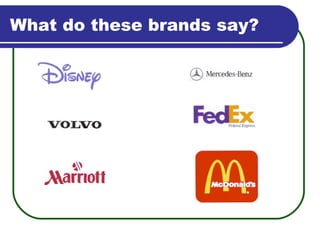
What do these brands say?
What is a brand? Proprietary – you own it and no one else Visual and emotional Rational – makes sense, fits Cultural – part of how we do business here The image associated with a company, organization, product or service It is the  promise of value  attributed to a particular brand experience
Great brands… Are sustainable over time Understand who they   are and remain  true to their position Make an emotional connection with the target Have design consistency and integrity Are relevant Know simplicity is key – the brand should own a thought in the mind of the target
Define your USP What makes you different, unique? What can you truly own in the marketplace? What do you do better or more than  everyone else? What one benefit is the most compelling?
 
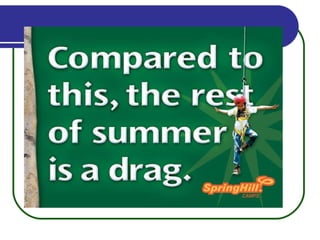
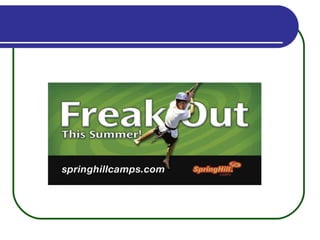
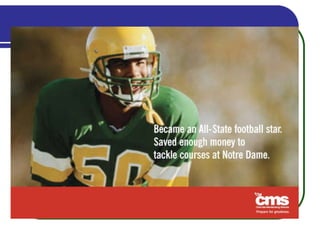
Package your story Show vs. tell
 
Less is more Emotion sells.
 
Developing your message Define/articulate your position, your stake in the marketplace Identify your key messages Buttress your position and messages with “wow” facts Drill these home relentlessly
 
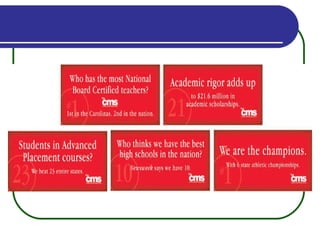
Stay on message, on brand “ Focus is the secret ingredient in virtually every successful marketing program.” Trout & Ries, Positioning


Brand SWOT analysis Strengths Weaknesses Opportunities Threats
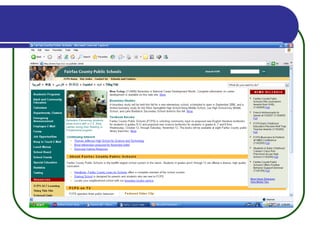
Leverage existing channels Integrate and deploy strategically; Develop your own “N.R.U.”
 
Bypass gatekeepers Go direct to your audiences
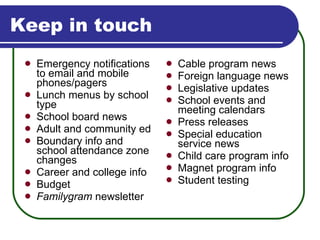
Keep in touch Emergency notifications to email and mobile phones/pagers Lunch menus by school type School board news Adult and community ed Boundary info and school attendance zone changes Career and college info Budget Familygram  newsletter Cable program news Foreign language news Legislative updates School events and meeting calendars Press releases Special education service news Child care program info Magnet program info Student testing
Expand your reach Coach, train, organize and deploy an army of communicators
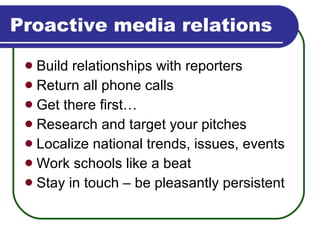
Proactive media relations Build relationships with reporters Return all phone calls Get there first… Research and target your pitches Localize national trends, issues, events Work schools like a beat Stay in touch – be pleasantly persistent


Telling Your Story A toolkit for marketing education Nora Carr, APR [email_address] 704-491-3204
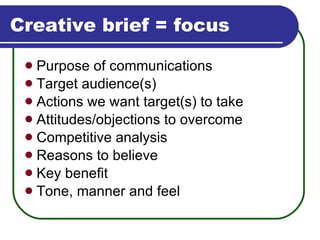
Creative brief = focus Purpose of communications Target audience(s) Actions we want target(s) to take Attitudes/objections to overcome Competitive analysis Reasons to believe Key benefit Tone, manner and feel

Telling Your Story Norfolk

  • 1.
    Lessons from LittletonWhat Columbine can teach us about crisis communication Nora Carr, APR Charlotte-Mecklenburg Schools
  • 2.
    Lesson #1 Youcan’t over-prepare.
  • 3.
    Lesson #2 Planswork on paper; chaos happens in real life.
  • 4.
    Lesson #3 Trainingand simulations are key.
  • 5.
    Lesson #5 Expectthe unexpected. Plan for it.
  • 6.
    Lesson #6 Someonekey will collapse under pressure – and at a critical time
  • 7.
    Lesson #8 Takecare of people first, and practice inside-out communications.
  • 8.
    Lesson #9 Performmedia triage and establish priorities in advance
  • 9.
    Lesson #10 Getfresh horses.
  • 10.
    Lesson #11 Makeyour friends before you need them.
  • 11.
    Lessons from LittletonWhat Columbine can teach us about crisis communication Nora Carr, APR Charlotte-Mecklenburg Schools
  • 12.
    Telling Your StoryA toolkit for marketing education Nora Carr, APR Chief Communications Officer Charlotte-Mecklenburg Schools [email_address] 704-491-3204
  • 13.
    Agenda: Day OneIntroductions Communications Planning Overview Phase I: Research & Fact Finding Phase II: Analysis & Strategic Planning Working Lunch Phase III: Communication/Action Step Closing Remarks & “Homework”
  • 14.
    Agenda: Day TwoThe Power of Branding Phase IV: Evaluation Wrap-Up & Next Steps Retreat Evaluation & Adjournment
  • 15.
    RACE to resultsResearch SWOT Situation analysis of core problem or opportunity Analysis of previous information Study of the best timing Key issues and stakes in issues Legal and financial implications Analysis of opposition Research into what has been effective elsewhere Analysis and Planning Develop clear goals and measurable objectives Identify key publics/target audiences Develop local strategies Develop messaging Assess resource needs
  • 16.
    RACE continued Communication/ActionStep Identify and execute communication tactics, activities and media appropriate for each public Find the best mix of interpersonal and mass communication techniques Build in effective feedback mechanisms Relate all communication activities clearly to your stated goals and objectives Execute according to best timing Evaluation Benchmarks and process measures Measuring end results using established criteria and tools What worked, what didn’t, why and how do we know? What will/would we do differently next time?
  • 17.
    Common PR researchtools Secondary research Primary research Public opinion polls Phone, mail, intercept Web/email surveys, IVRs Focus groups Other
  • 18.
    What do weknow? What do we need to find out?
  • 19.
    Effective communications Face-to-face, 1-on-1 Small group Large group Telephone Email Personal letter or note Computer-generated letter Direct marketing Affinity newsletter Websites, blogs Trade publications Traditional news media Brochures, corporate publications Advertising Billboards Gizmos, gadgets, freebies, skywriters
  • 20.
    Know your audienceUse tactics that make sense for them, not you
  • 21.
  • 22.
    Agenda: Day TwoThe Power of Branding Phase IV: Evaluation Wrap-Up & Next Steps Retreat Evaluation & Adjournment
  • 23.
    The power ofbranding Awareness is being known Reputation is being known for something Branding identifies and communicates that something
  • 24.
    What do thesebrands say?
  • 25.
    What is abrand? Proprietary – you own it and no one else Visual and emotional Rational – makes sense, fits Cultural – part of how we do business here The image associated with a company, organization, product or service It is the promise of value attributed to a particular brand experience
  • 26.
    Great brands… Aresustainable over time Understand who they are and remain true to their position Make an emotional connection with the target Have design consistency and integrity Are relevant Know simplicity is key – the brand should own a thought in the mind of the target
  • 27.
    Define your USPWhat makes you different, unique? What can you truly own in the marketplace? What do you do better or more than everyone else? What one benefit is the most compelling?
  • 28.
  • 29.
    Package your storyShow vs. tell
  • 30.
  • 31.
    Less is moreEmotion sells.
  • 32.
  • 33.
    Developing your messageDefine/articulate your position, your stake in the marketplace Identify your key messages Buttress your position and messages with “wow” facts Drill these home relentlessly
  • 34.
  • 35.
    Stay on message,on brand “ Focus is the secret ingredient in virtually every successful marketing program.” Trout & Ries, Positioning
  • 36.
  • 37.
  • 38.
  • 39.
    Brand SWOT analysisStrengths Weaknesses Opportunities Threats
  • 40.
    Leverage existing channelsIntegrate and deploy strategically; Develop your own “N.R.U.”
  • 41.
  • 42.
    Bypass gatekeepers Godirect to your audiences
  • 43.
    Keep in touchEmergency notifications to email and mobile phones/pagers Lunch menus by school type School board news Adult and community ed Boundary info and school attendance zone changes Career and college info Budget Familygram newsletter Cable program news Foreign language news Legislative updates School events and meeting calendars Press releases Special education service news Child care program info Magnet program info Student testing
  • 44.
    Expand your reachCoach, train, organize and deploy an army of communicators
  • 45.
    Proactive media relationsBuild relationships with reporters Return all phone calls Get there first… Research and target your pitches Localize national trends, issues, events Work schools like a beat Stay in touch – be pleasantly persistent
  • 46.
  • 47.
  • 48.
  • 49.
  • 50.
  • 51.
  • 52.
  • 53.
    Telling Your StoryA toolkit for marketing education Nora Carr, APR [email_address] 704-491-3204
  • 54.
    Creative brief =focus Purpose of communications Target audience(s) Actions we want target(s) to take Attitudes/objections to overcome Competitive analysis Reasons to believe Key benefit Tone, manner and feel