Dmitry Kurbatov is the CTO of Positive Technologies, a cybersecurity company. He began his career as a network engineer in 2007 before switching to security in 2009. In his presentation, he discusses security issues for 5G and IoT networks. He notes that the virtualized and programmable nature of 5G introduces new vulnerabilities, and that legacy threats to previous cellular standards still apply. Additionally, the massive number of connected IoT devices poses new threats like large-scale botnets. He concludes by providing guidelines for 5G security, including implementing policies separately for each network slice and securing new interfaces from the start.
Introduction to telecom security in the era of 5G and IoT; speaker's background and experience.
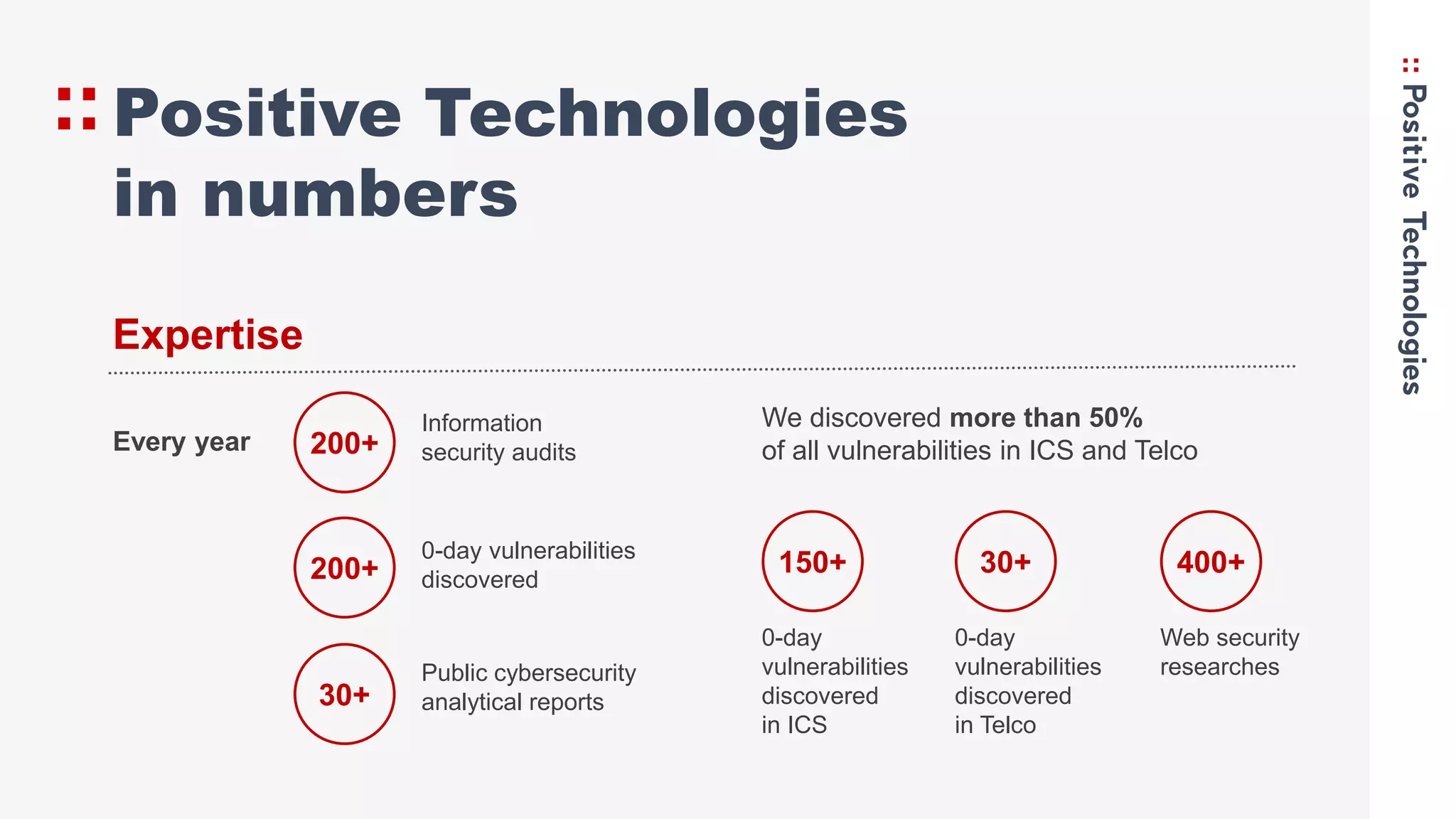
The competencies and achievements of Positive Technologies, including cybersecurity services and research.
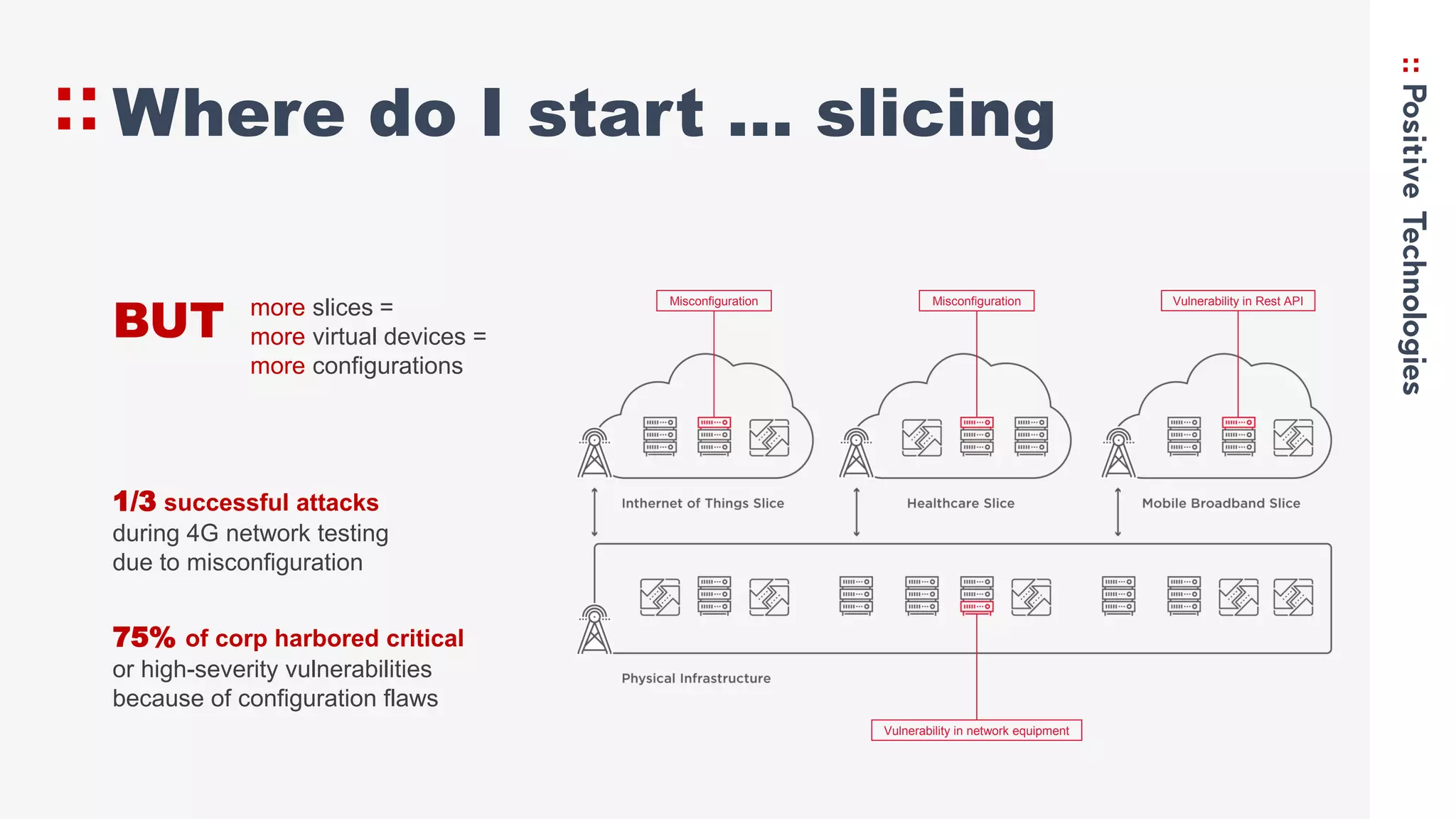
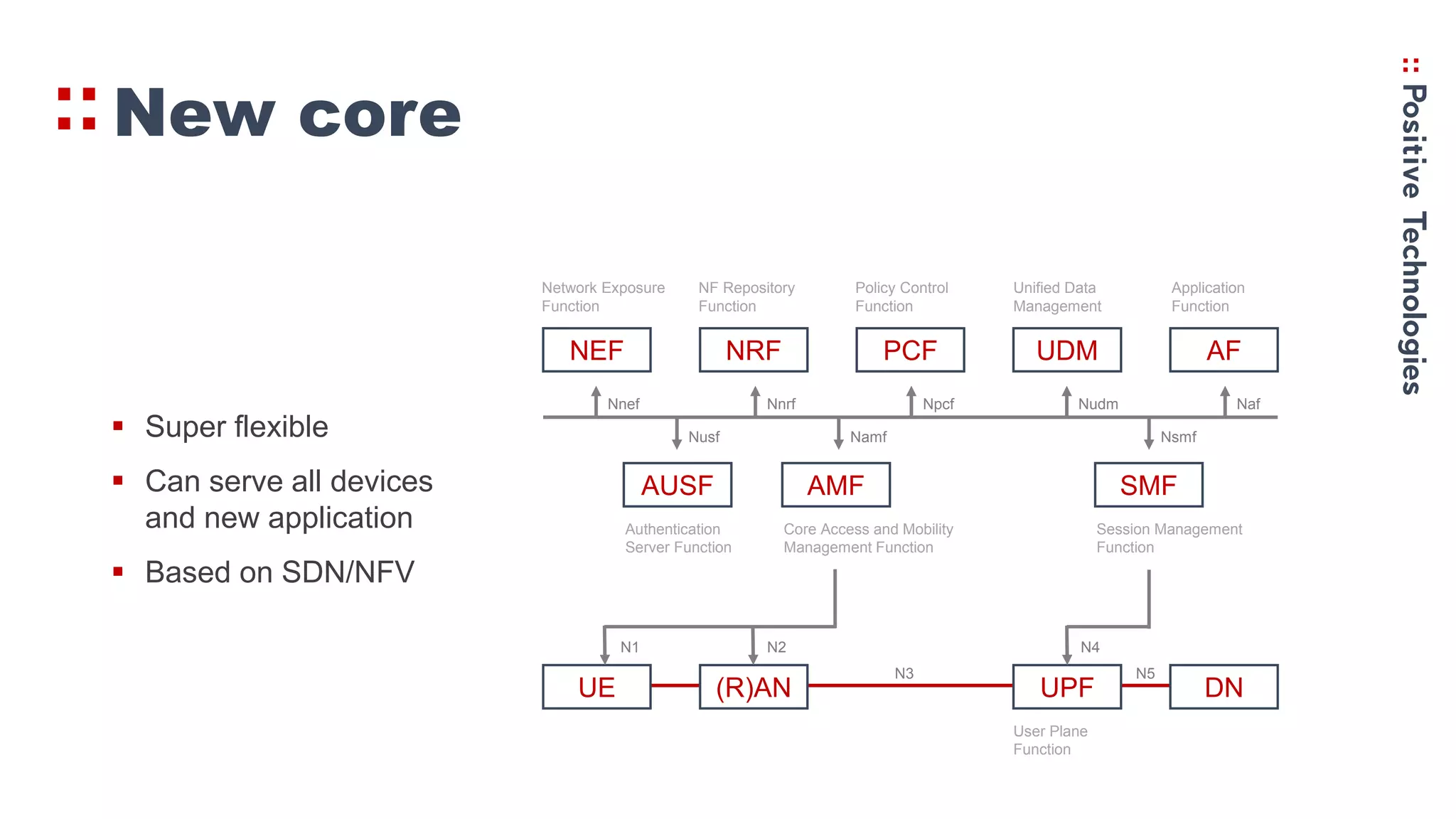
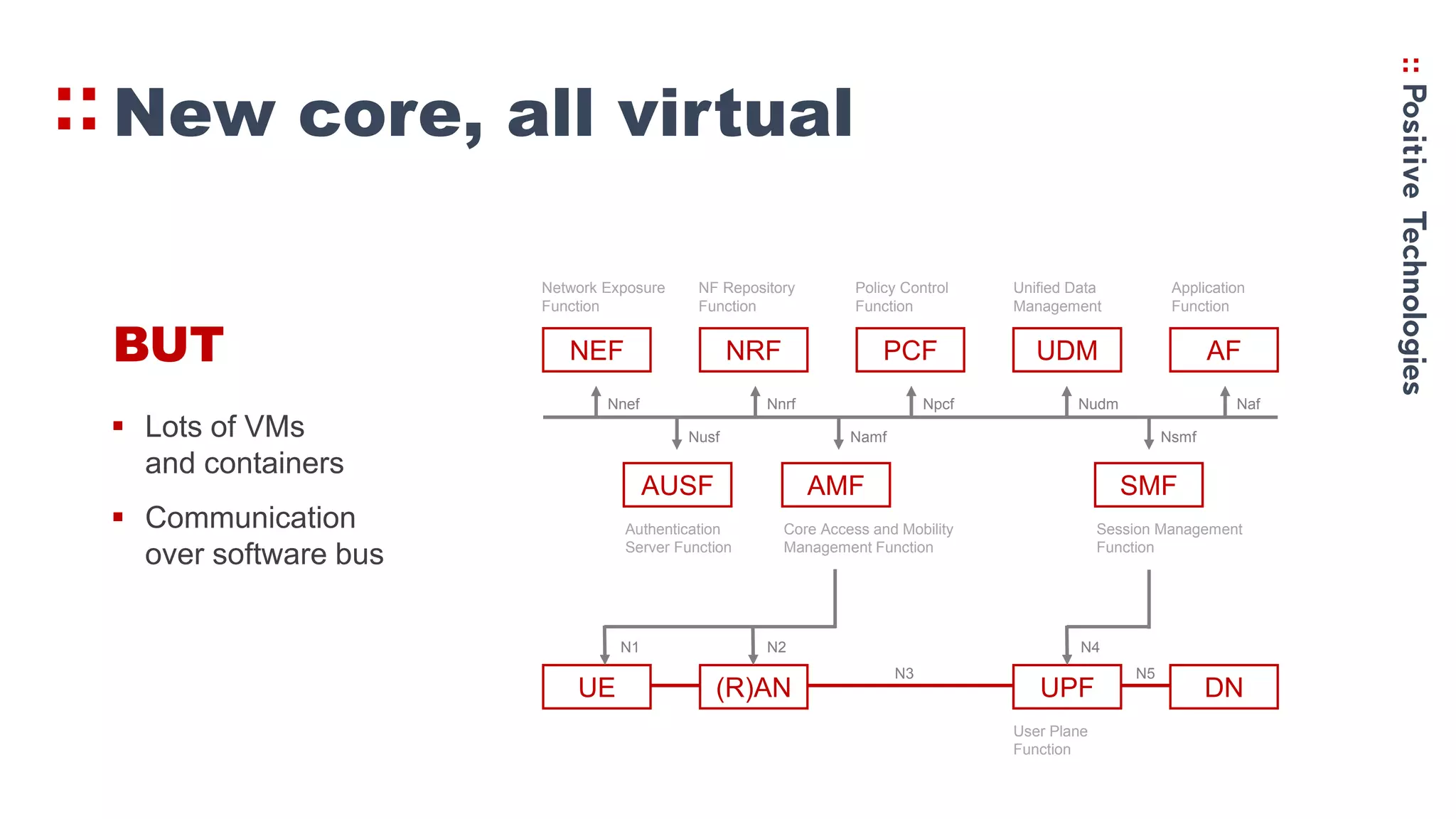
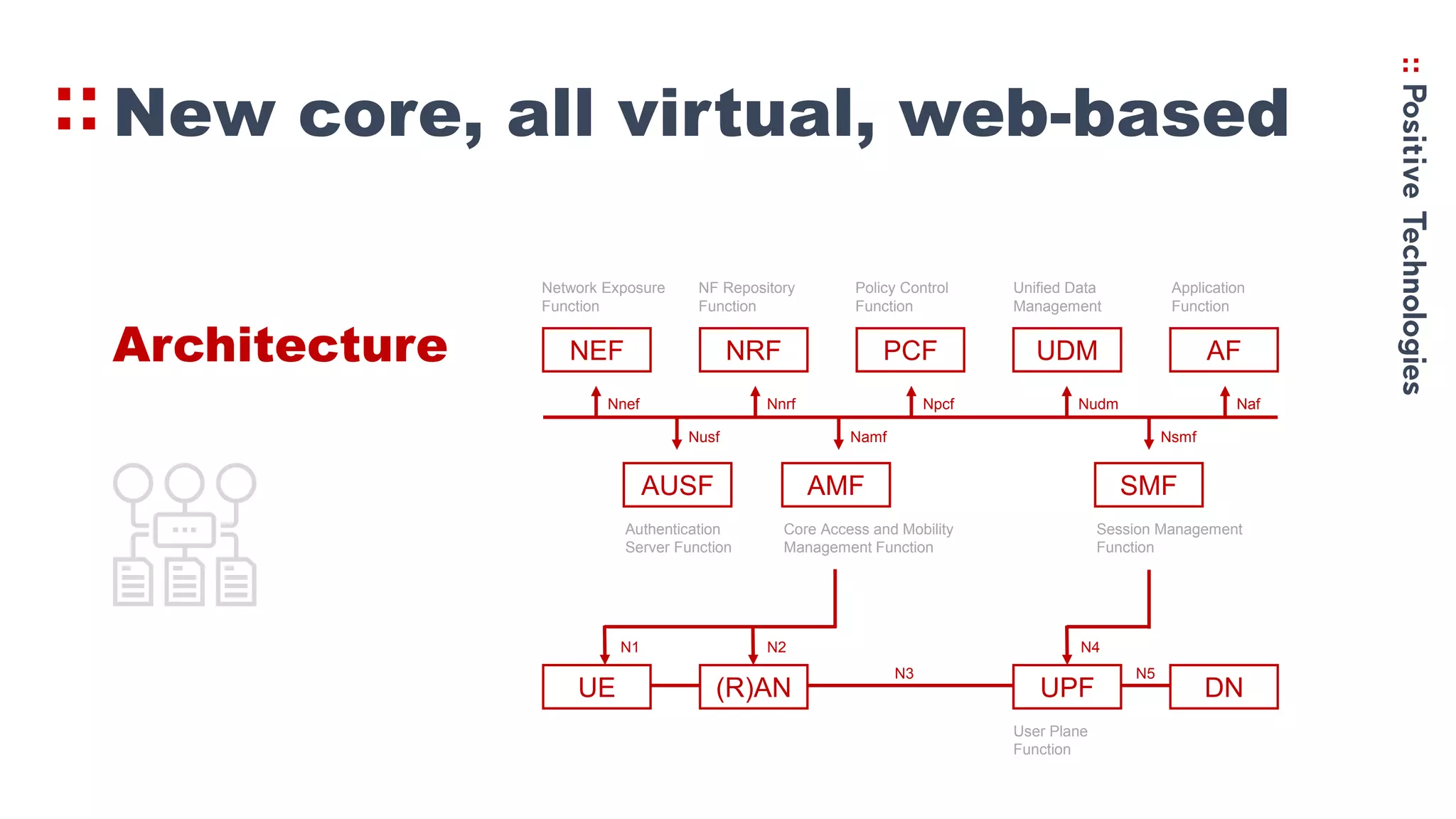
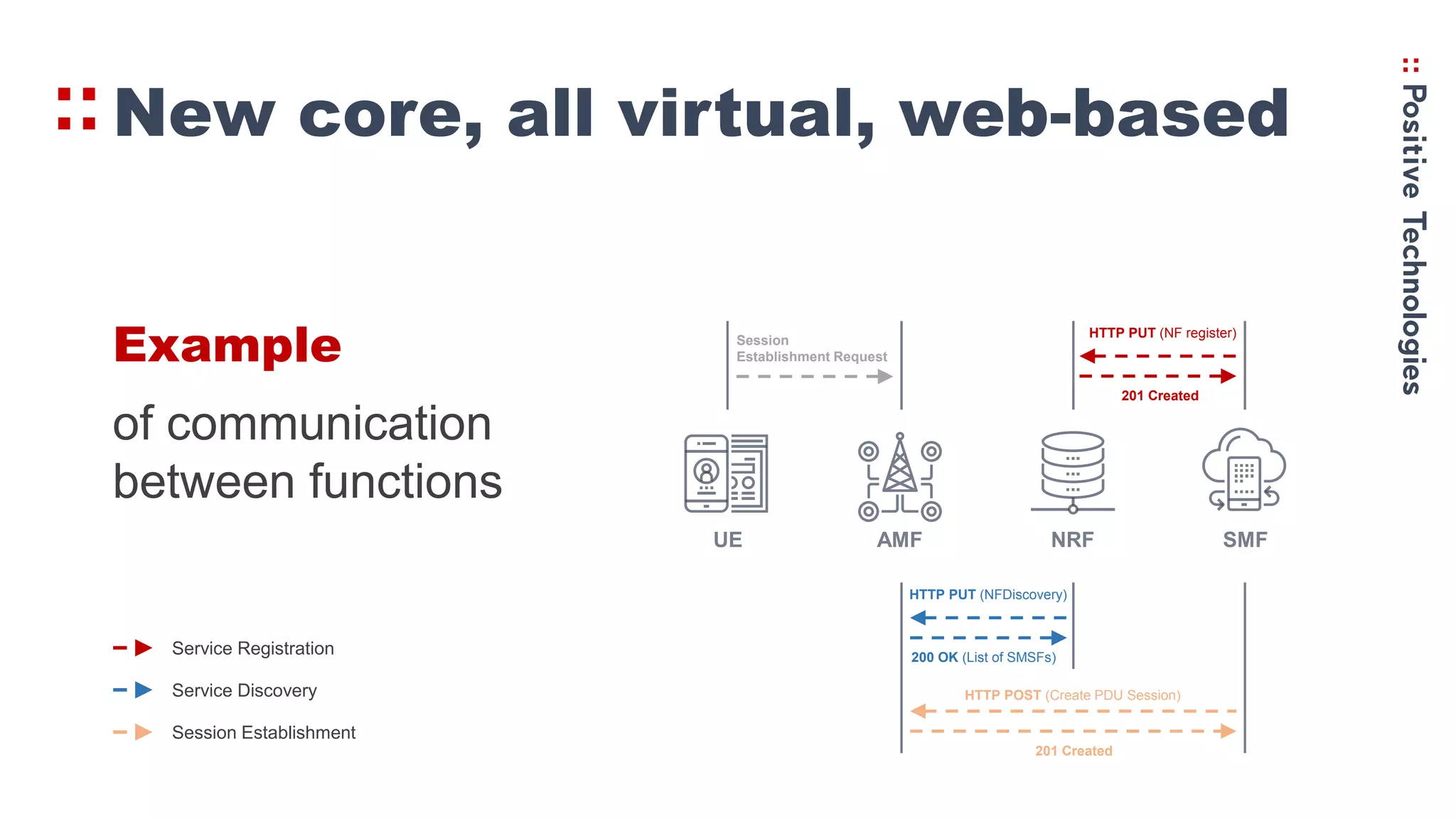
Key security considerations in 5G networks including the transfer to new protocols and network slicing. Challenges of network configurations in 5G; potential vulnerabilities due to misconfiguration in virtual environments. Overview of the new virtualized network core architecture and communication between functions.
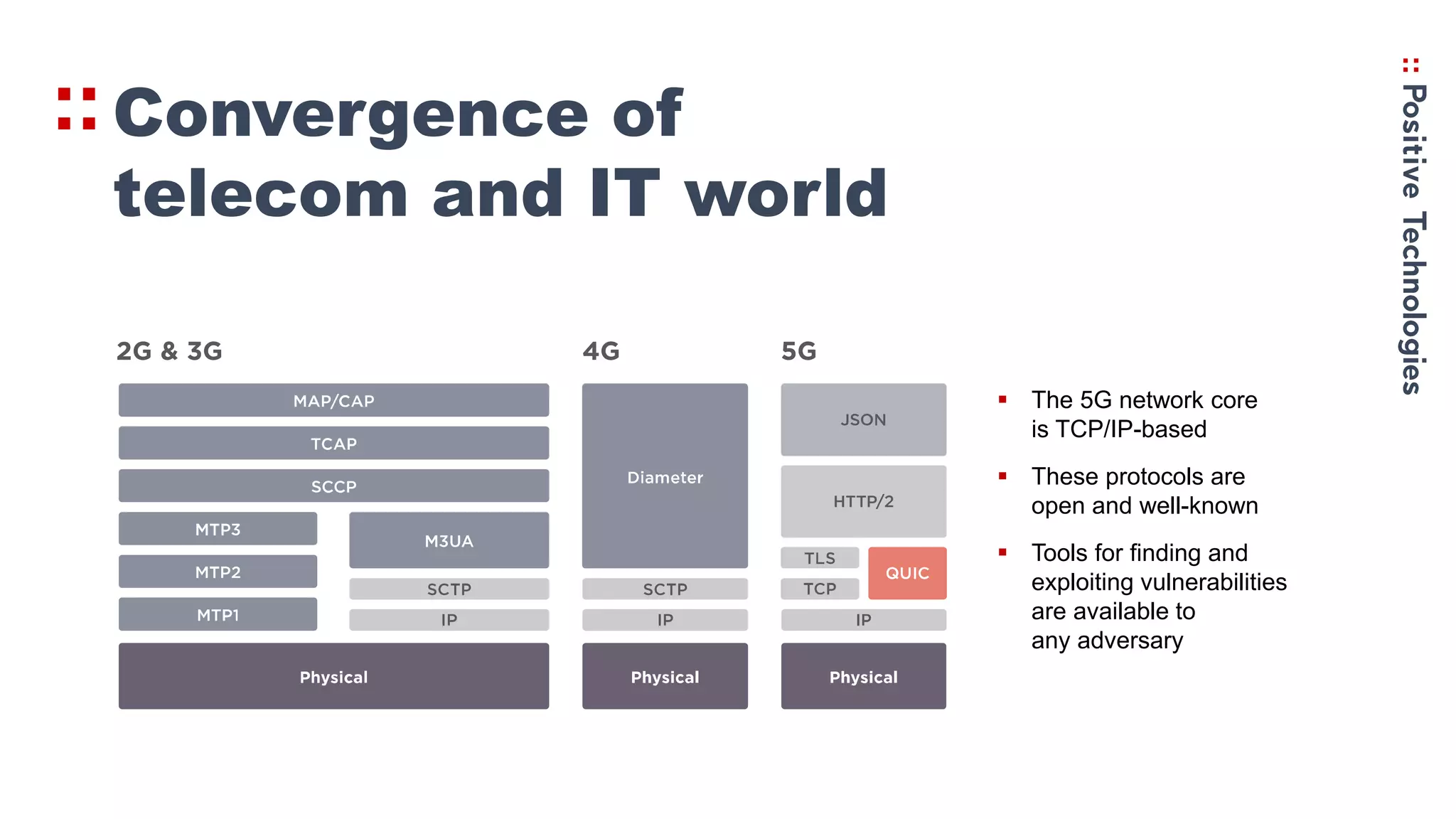
Discussion on the implications of the convergence of telecom and IT, highlighting vulnerabilities.
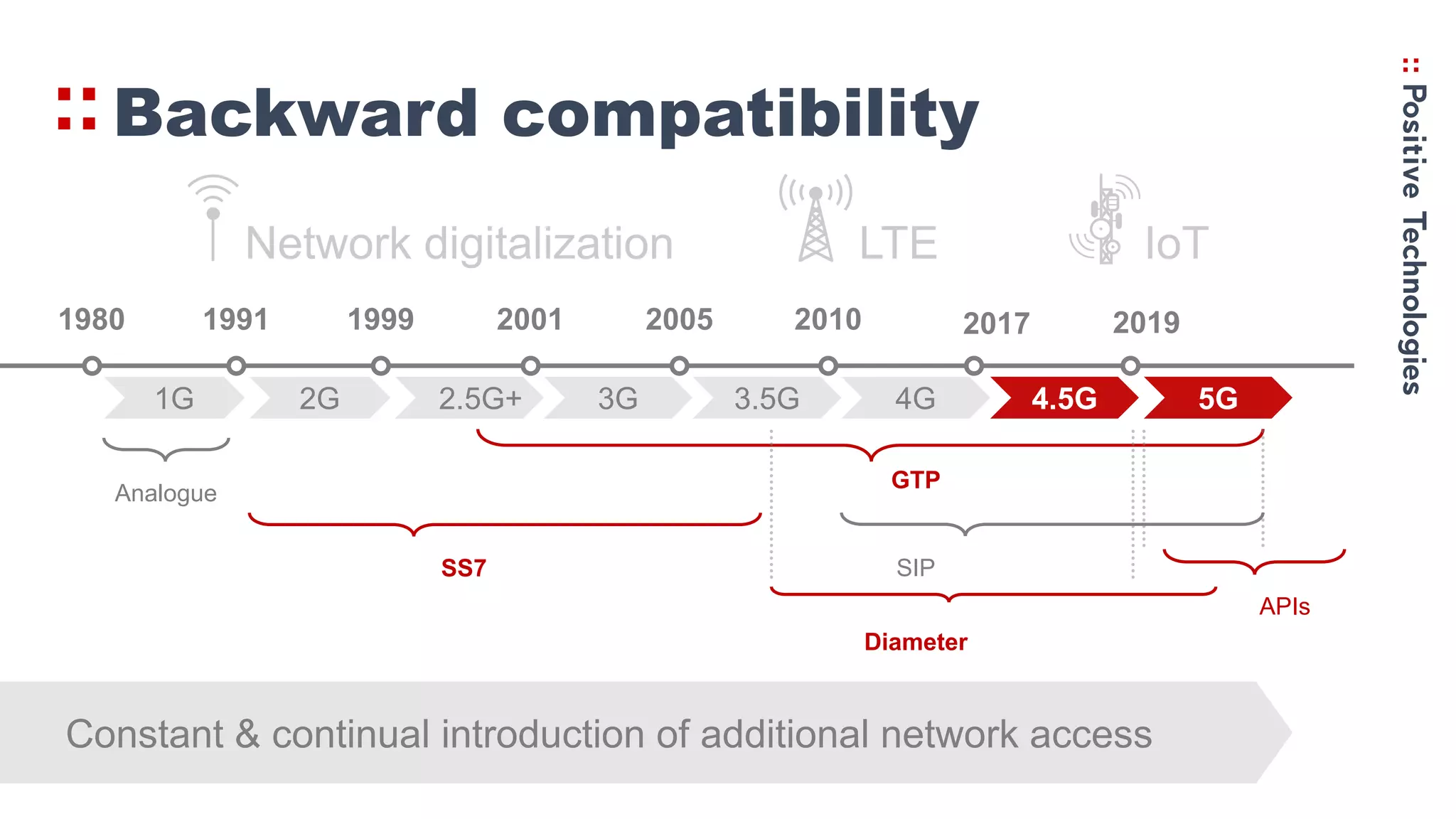
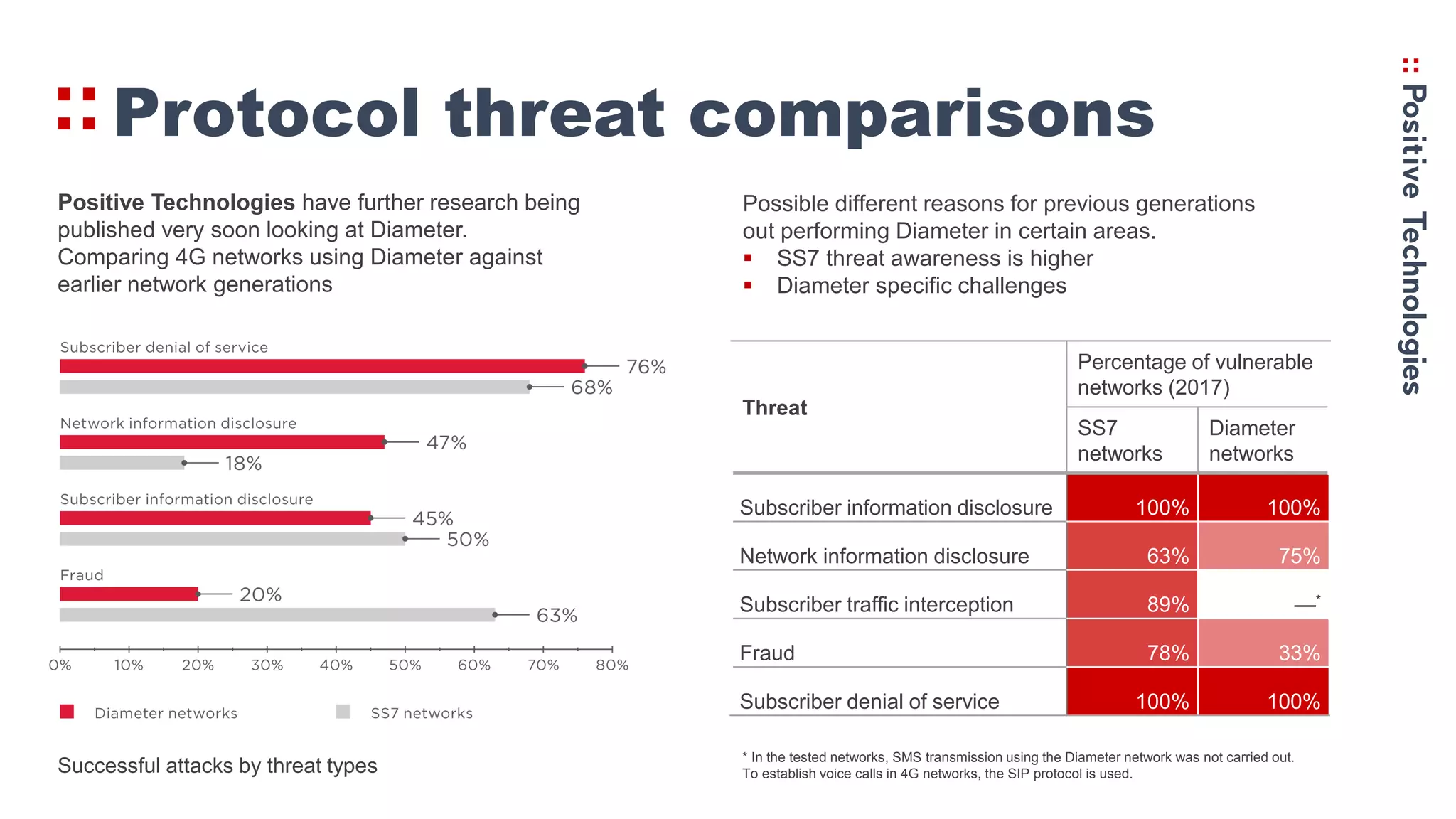
Comparison of threats in different network generations; statistical analysis of vulnerabilities in protocols.
Inherent vulnerabilities in 5G non-standalone; potential IoT threats with statistics on connected devices.
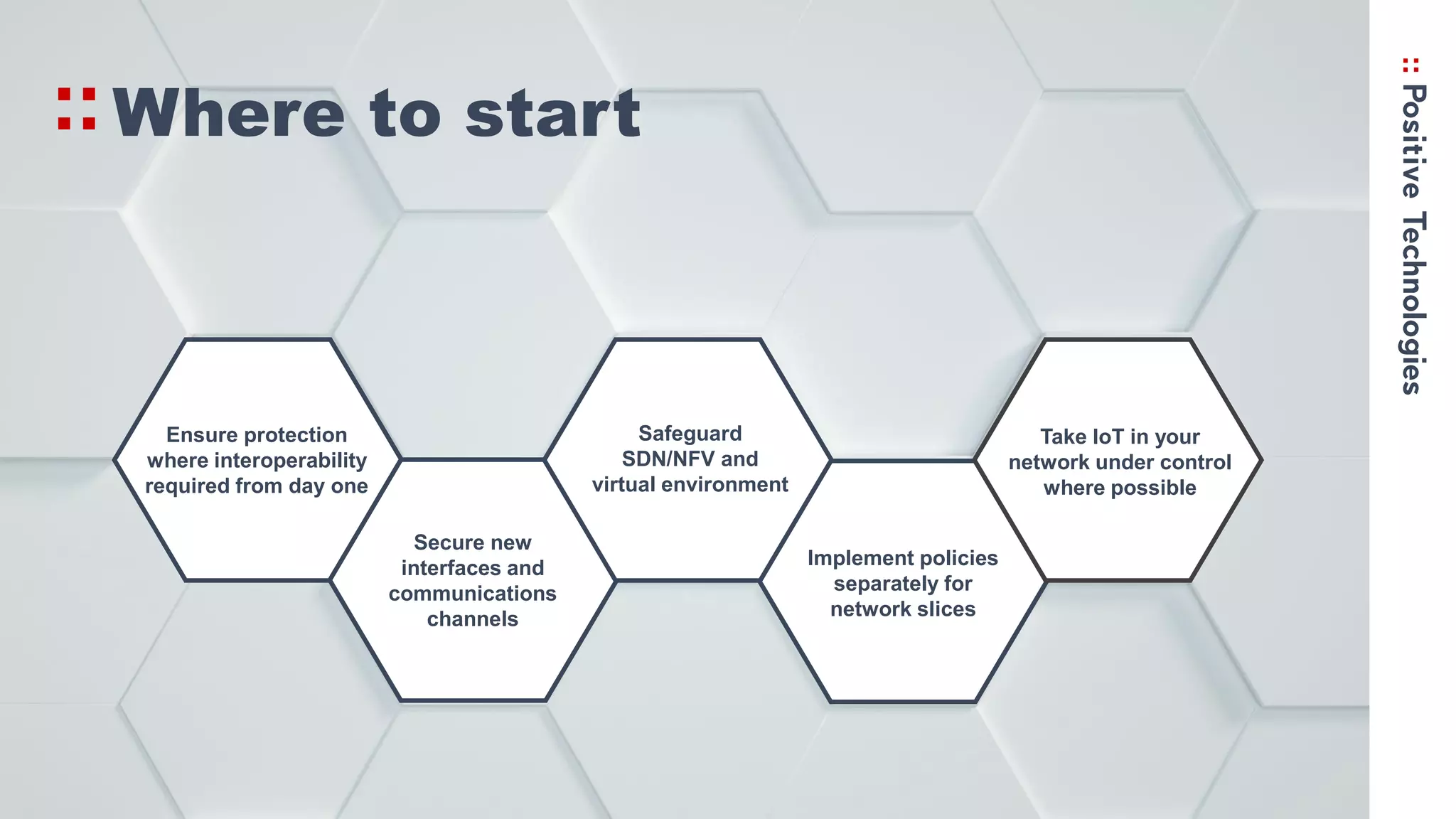
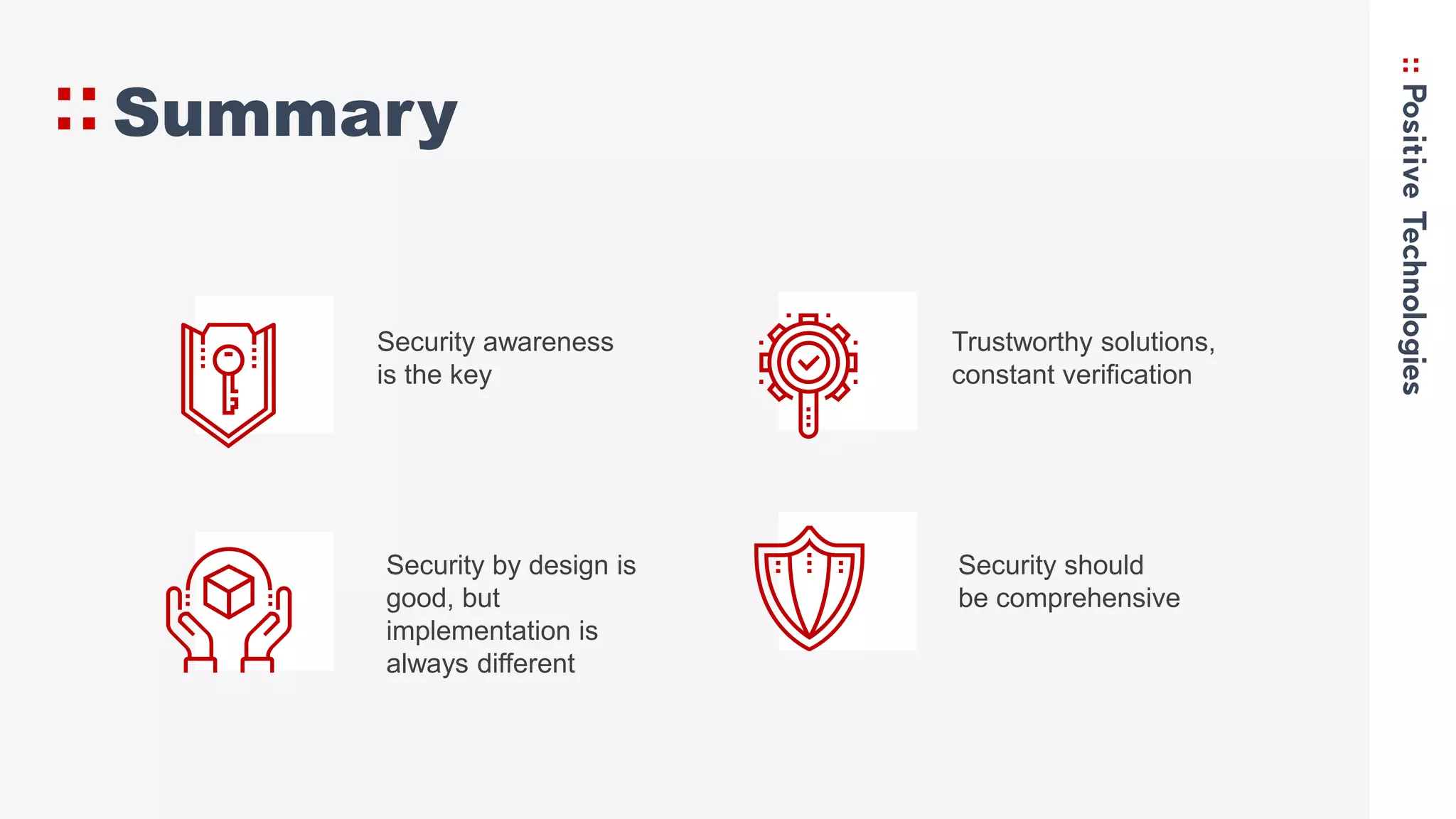
Key steps for ensuring security in networks involving 5G and IoT, emphasizing comprehensive security measures.
Final thoughts and contact information of the speaker.
Telecom Security
in theEra of 5G and IoT
Dmitry Kurbatov, CTO
dmitry.kurbatov@positive-tech.com
2.
Started asa network engineer in 2007
Switched to security in 2009
Joined Positive Technologies 2010 and it changed everything
Who I am
Signaling System 7
(SS7) security report
Vulnerabilities of
mobile Internet (GPRS)
2014 2016
Primary security threats
to SS7 cellular networks
2017
Threats to packet core
security of 4G network
Next-generation networks, next-
level cybersecurity problems
(Diameter vulnerabilities)
2018
Diameter vulnerabilities
exposure report
2019
5G security
analytics
3.
What we do
Competences:
Identificationof threats and possible
attack scenarios in companies of any
business sphere
Global cybersecurity research
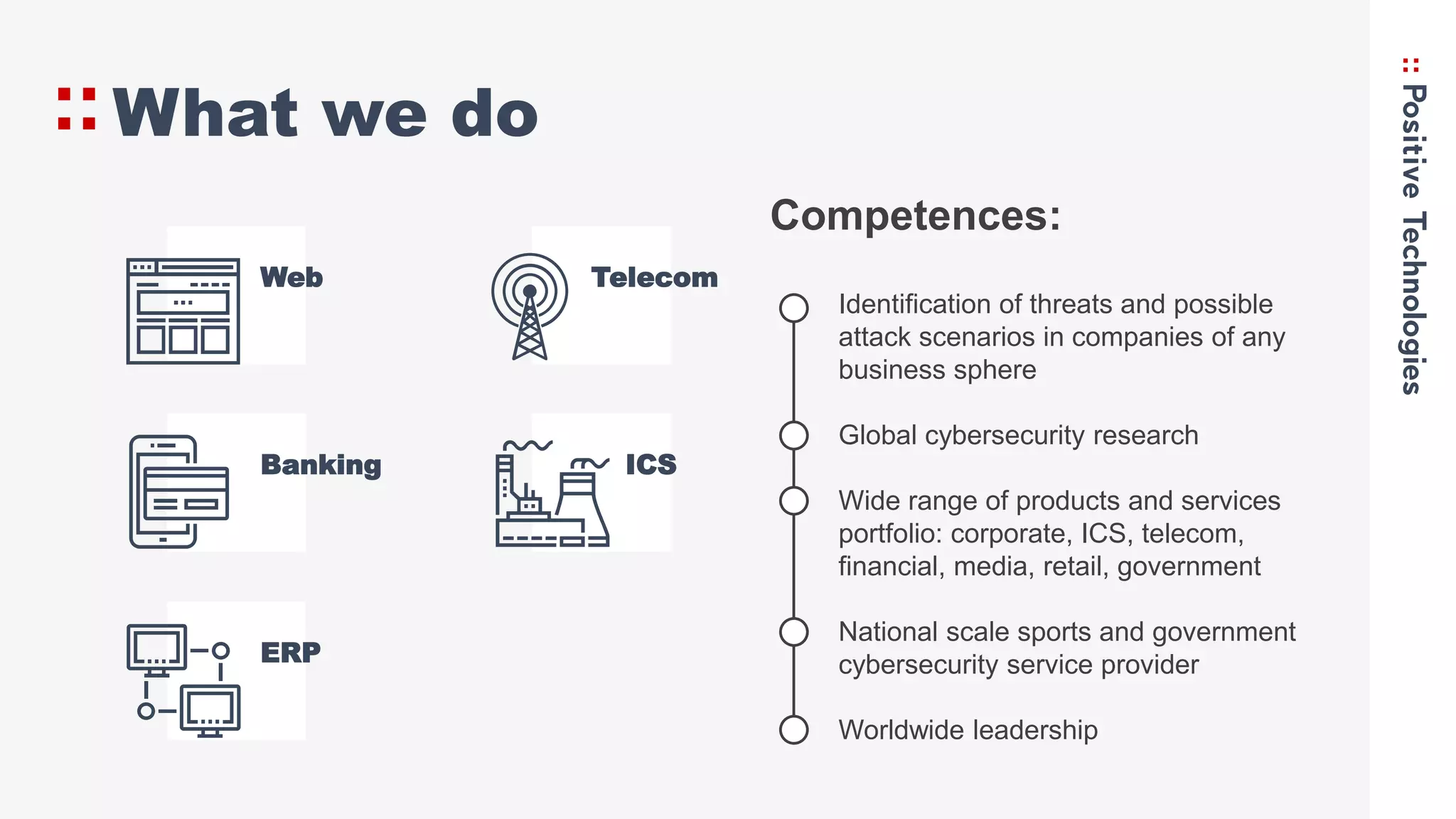
Wide range of products and services
portfolio: corporate, ICS, telecom,
financial, media, retail, government
National scale sports and government
cybersecurity service provider
Worldwide leadership
Web
Banking
ERP
Telecom
ICS
4.
What we do
Competences:
Identificationof threats and possible
attack scenarios in companies of any
business sphere
Global cybersecurity research
Wide range of products and services
portfolio: corporate, ICS, telecom,
financial, media, retail, government
National scale sports and government
cybersecurity service provider
Worldwide leadership
Web
Banking
ERP
Telecom
ICS
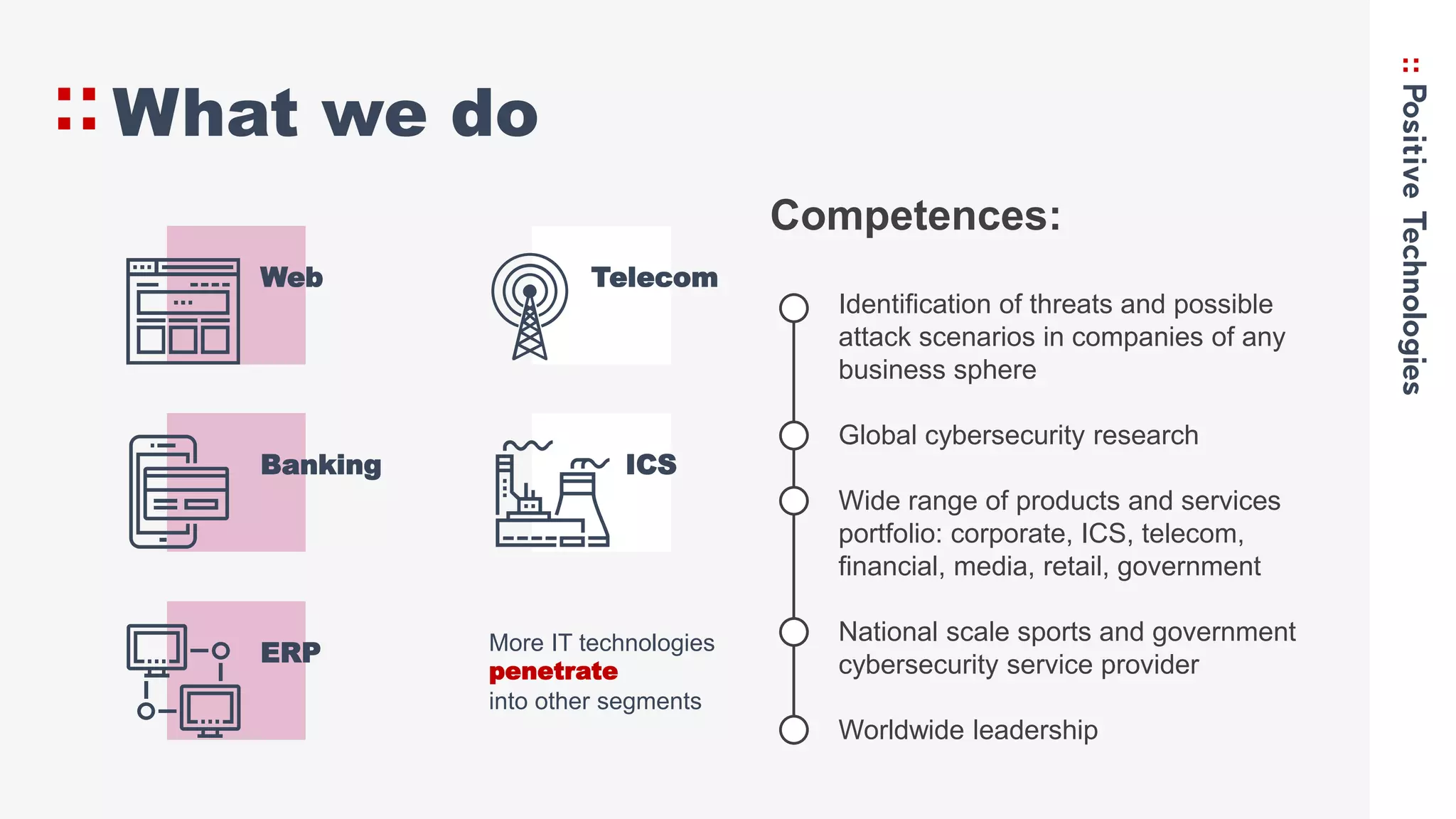
More IT technologies
penetrate
into other segments
5.
Positive Technologies
in numbers
Everyyear 200+
200+
Information
security audits
0-day vulnerabilities
discovered
We discovered more than 50%
of all vulnerabilities in ICS and Telco
Expertise
150+
0-day
vulnerabilities
discovered
in ICS
30+
0-day
vulnerabilities
discovered
in Telco
400+
Web security
researches
30+
Public cybersecurity
analytical reports
6.
Agenda
1/3 of presentation
V
Fewwords about me
and Positive Technologies
V
Inherited and new security issues
in 5G
V
Security guidelines
7.
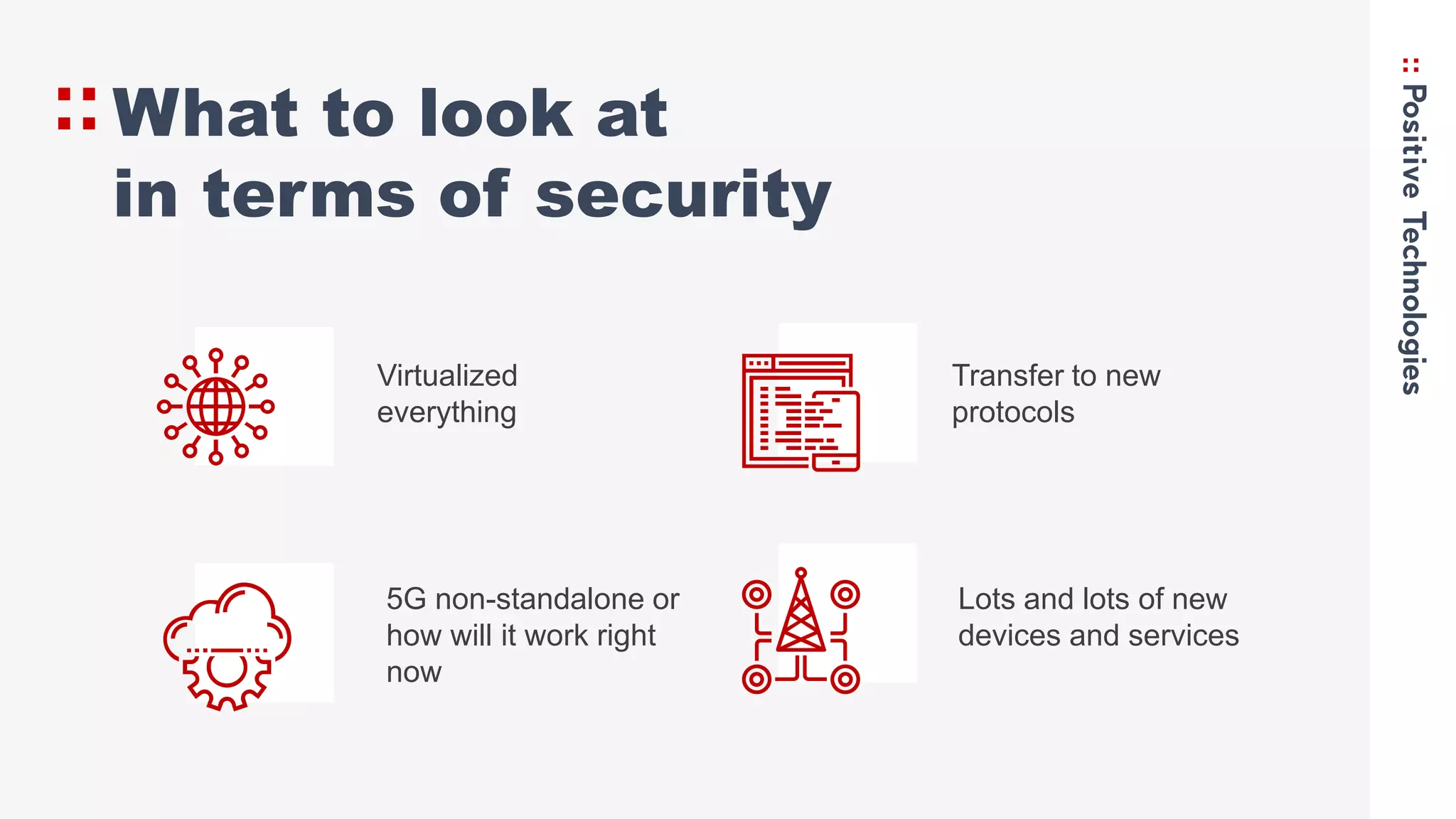
What to lookat
in terms of security
Transfer to new
protocols
5G non-standalone or
how will it work right
now
Virtualized
everything
Lots and lots of new
devices and services
8.
Where do Istart … slicing
Splitting a network
into isolated slices
Allocating separate
(virtual) resources
Unique security
policies to each slice
9.
Where do Istart … slicing
more slices =
more virtual devices =
more configurations
BUT
1/3 successful attacks
during 4G network testing
due to misconfiguration
75% of corp harbored critical
or high-severity vulnerabilities
because of configuration flaws
Misconfiguration Misconfiguration Vulnerability in Rest API
Vulnerability in network equipment
10.
New core
Superflexible
Can serve all devices
and new application
Based on SDN/NFV
NEF NRF PCF UDM AF
Network Exposure
Function
NF Repository
Function
Policy Control
Function
Unified Data
Management
Application
Function
AUSF
Authentication
Server Function
AMF
Core Access and Mobility
Management Function
SMF
Session Management
Function
Nnef Nnrf Npcf Nudm Naf
Nusf Namf Nsmf
UE (R)AN UPF DN
User Plane
Function
N2 N4
N5N3
N1
11.
New core, allvirtual
Lots of VMs
and containers
Communication
over software bus
BUT NEF NRF PCF UDM AF
Network Exposure
Function
NF Repository
Function
Policy Control
Function
Unified Data
Management
Application
Function
AUSF
Authentication
Server Function
AMF
Core Access and Mobility
Management Function
SMF
Session Management
Function
Nnef Nnrf Npcf Nudm Naf
Nusf Namf Nsmf
UE (R)AN UPF DN
User Plane
Function
N2 N4
N5N3
N1
12.
New core, allvirtual, web-based
NEF NRF PCF UDM AF
Network Exposure
Function
NF Repository
Function
Policy Control
Function
Unified Data
Management
Application
Function
AUSF
Authentication
Server Function
AMF
Core Access and Mobility
Management Function
SMF
Session Management
Function
Nnef Nnrf Npcf Nudm Naf
Nusf Namf Nsmf
UE (R)AN UPF DN
User Plane
Function
N2 N4
N5N3
N1
Architecture
13.
New core, allvirtual, web-based
Example
of communication
between functions
Service Registration
Service Discovery
Session Establishment
Session
Establishment Request
HTTP PUT (NF register)
201 Created
HTTP PUT (NFDiscovery)
200 OK (List of SMSFs)
HTTP POST (Create PDU Session)
201 Created
14.
Convergence of
telecom andIT world
The 5G network core
is TCP/IP-based
These protocols are
open and well-known
Tools for finding and
exploiting vulnerabilities
are available to
any adversary
15.
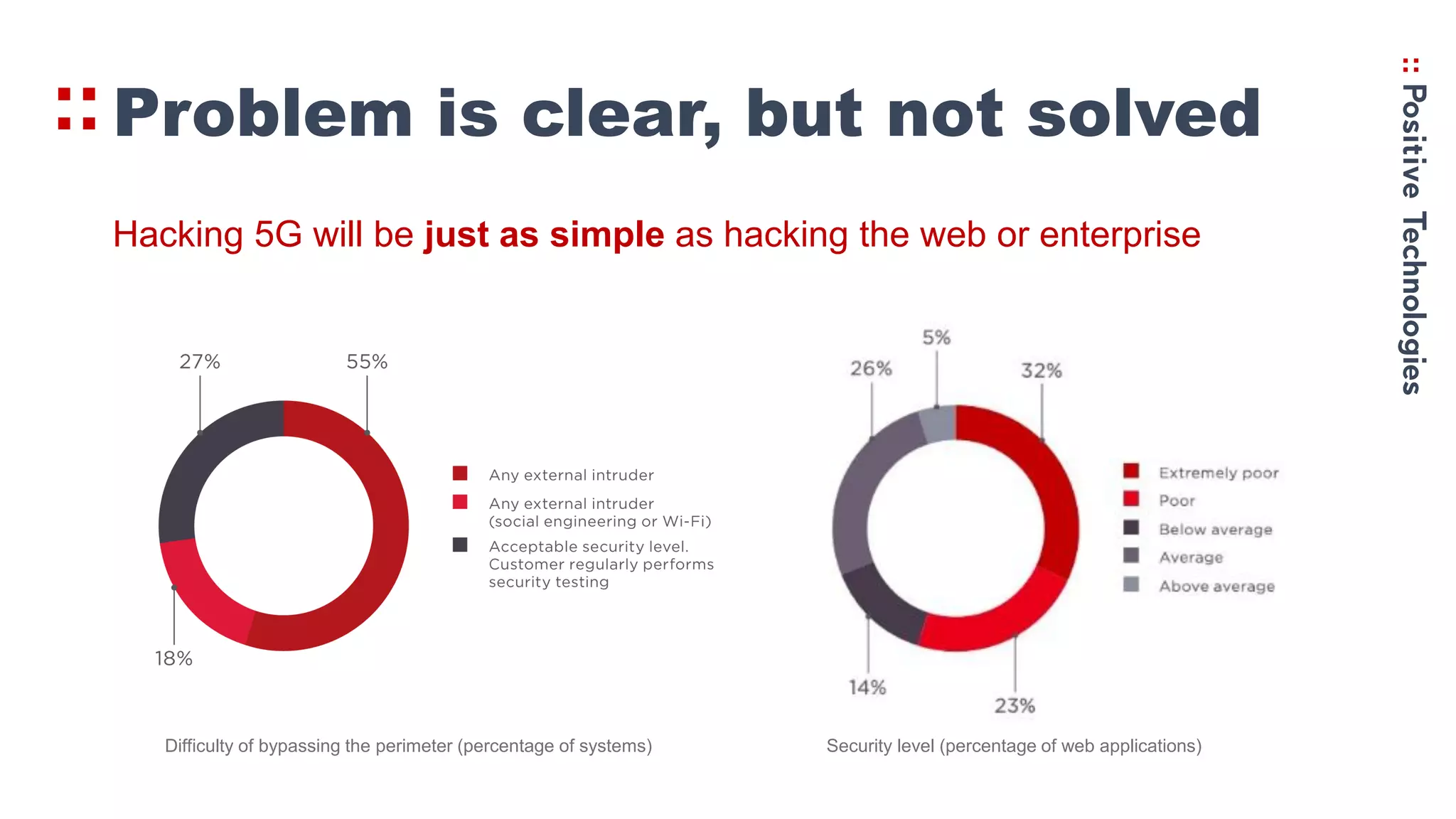
Problem is clear,but not solved
Hacking 5G will be just as simple as hacking the web or enterprise
Difficulty of bypassing the perimeter (percentage of systems) Security level (percentage of web applications)
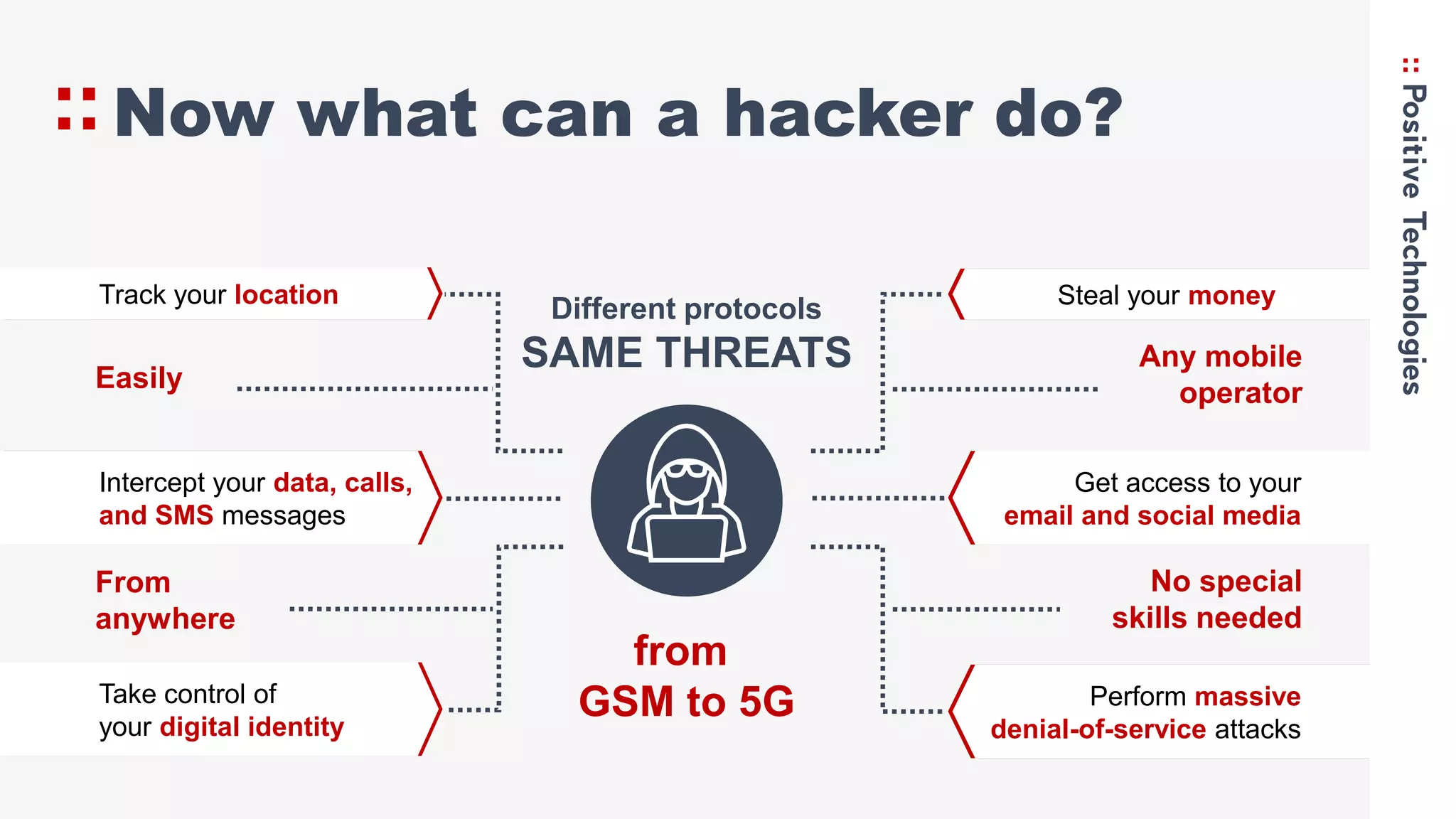
Now what cana hacker do?
Easily
From
anywhere
Any mobile
operator
No special
skills needed
Steal your money
Get access to your
email and social media
Track your location
Intercept your data, calls,
and SMS messages
Take control of
your digital identity
from
GSM to 5G
Different protocols
SAME THREATS
Perform massive
denial-of-service attacks
18.
Protocol threat comparisons
Successfulattacks by threat types
Threat
Percentage of vulnerable
networks (2017)
SS7
networks
Diameter
networks
Subscriber information disclosure 100% 100%
Network information disclosure 63% 75%
Subscriber traffic interception 89% —*
Fraud 78% 33%
Subscriber denial of service 100% 100%
* In the tested networks, SMS transmission using the Diameter network was not carried out.
To establish voice calls in 4G networks, the SIP protocol is used.
Possible different reasons for previous generations
out performing Diameter in certain areas.
SS7 threat awareness is higher
Diameter specific challenges
Positive Technologies have further research being
published very soon looking at Diameter.
Comparing 4G networks using Diameter against
earlier network generations
19.
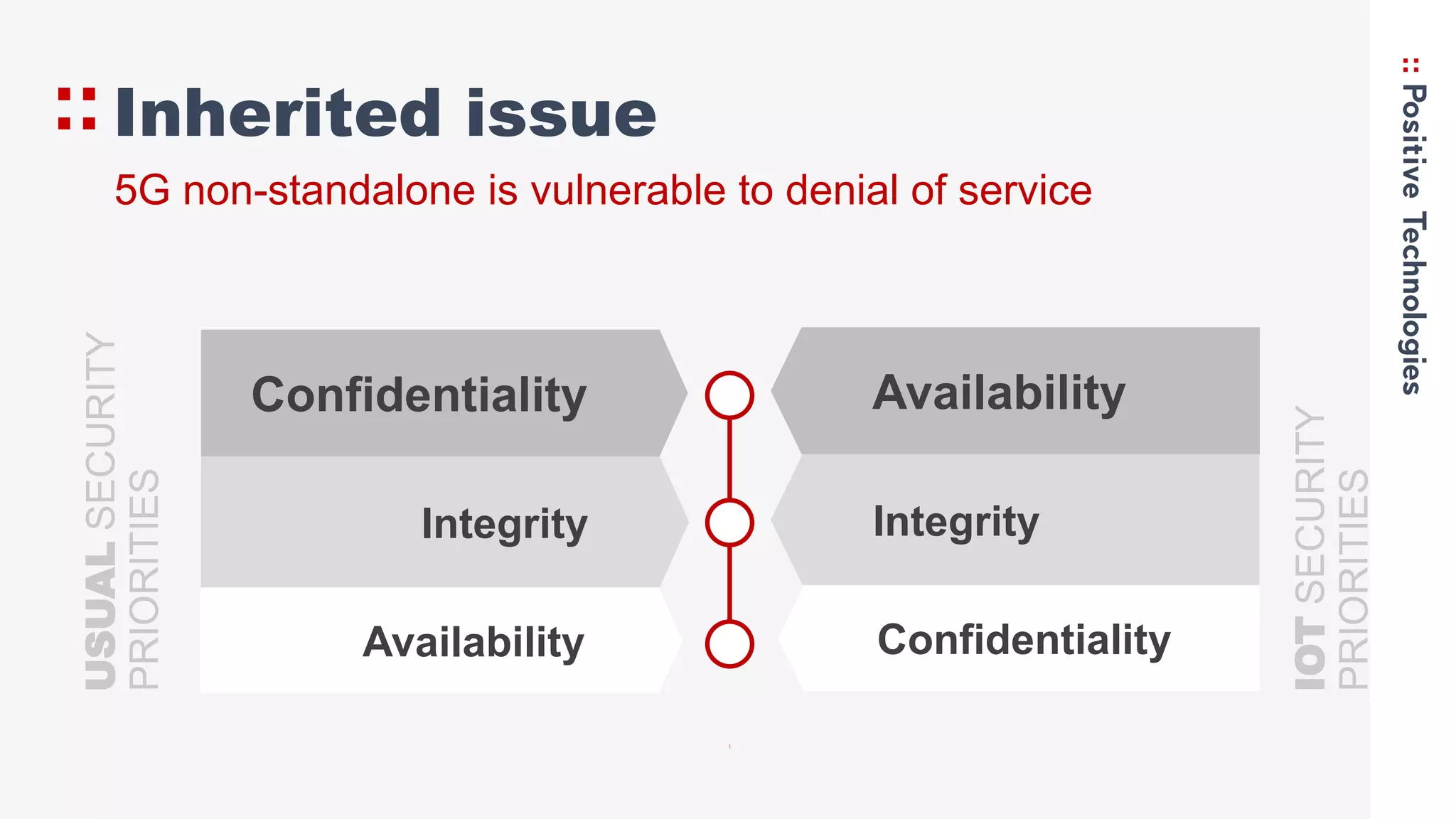
Inherited issue
5G non-standaloneis vulnerable to denial of service
AvailabilityConfidentiality
IntegrityIntegrity
ConfidentialityAvailability
USUALSECURITY
PRIORITIES
IOTSECURITY
PRIORITIES
20.
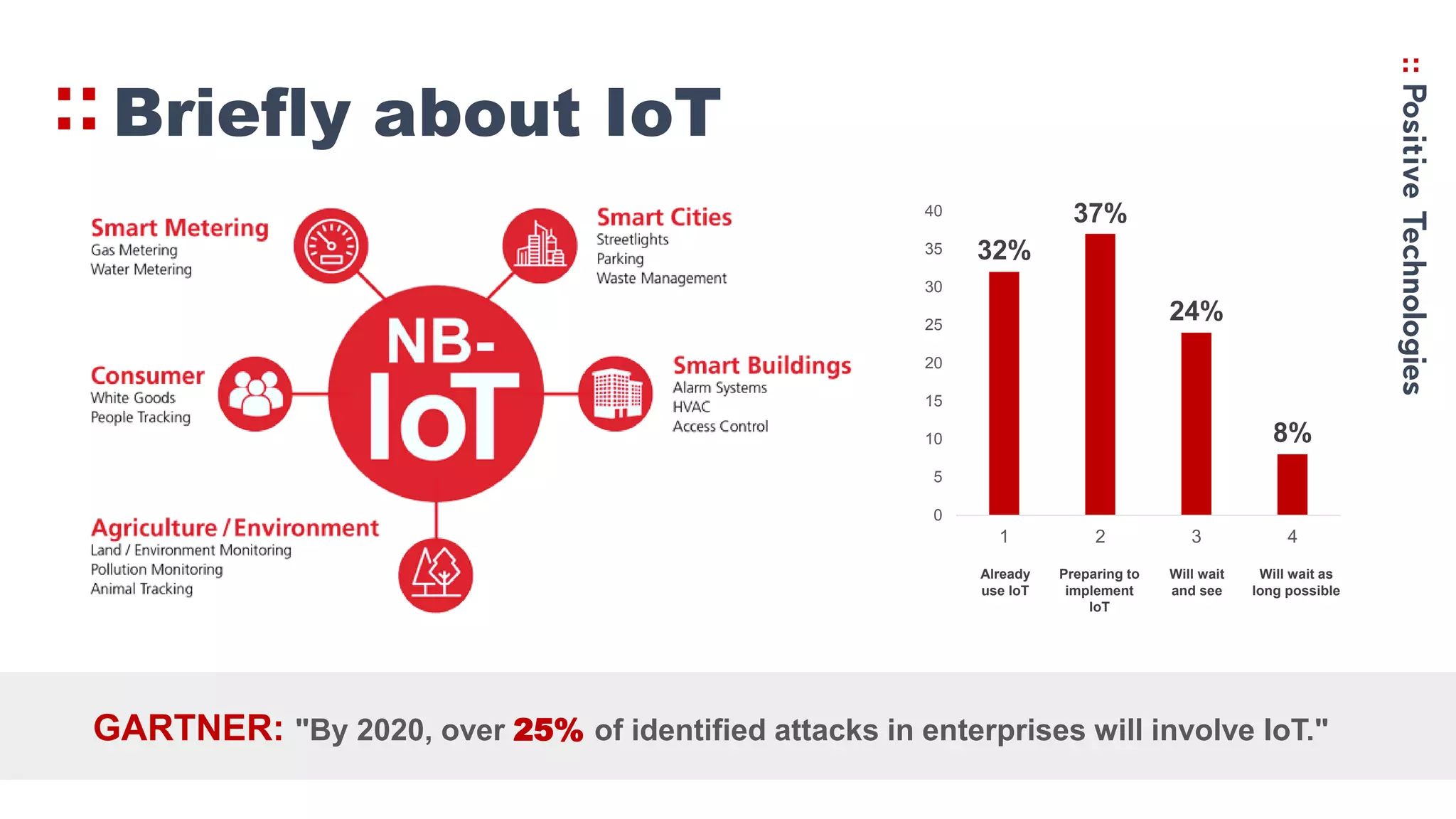
Briefly about IoT
32%
37%
24%
8%
0
5
10
15
20
25
30
35
40
12 3 4
GARTNER: "By 2020, over 25% of identified attacks in enterprises will involve IoT."
Already
use IoT
Preparing to
implement
IoT
Will wait
and see
Will wait as
long possible
21.
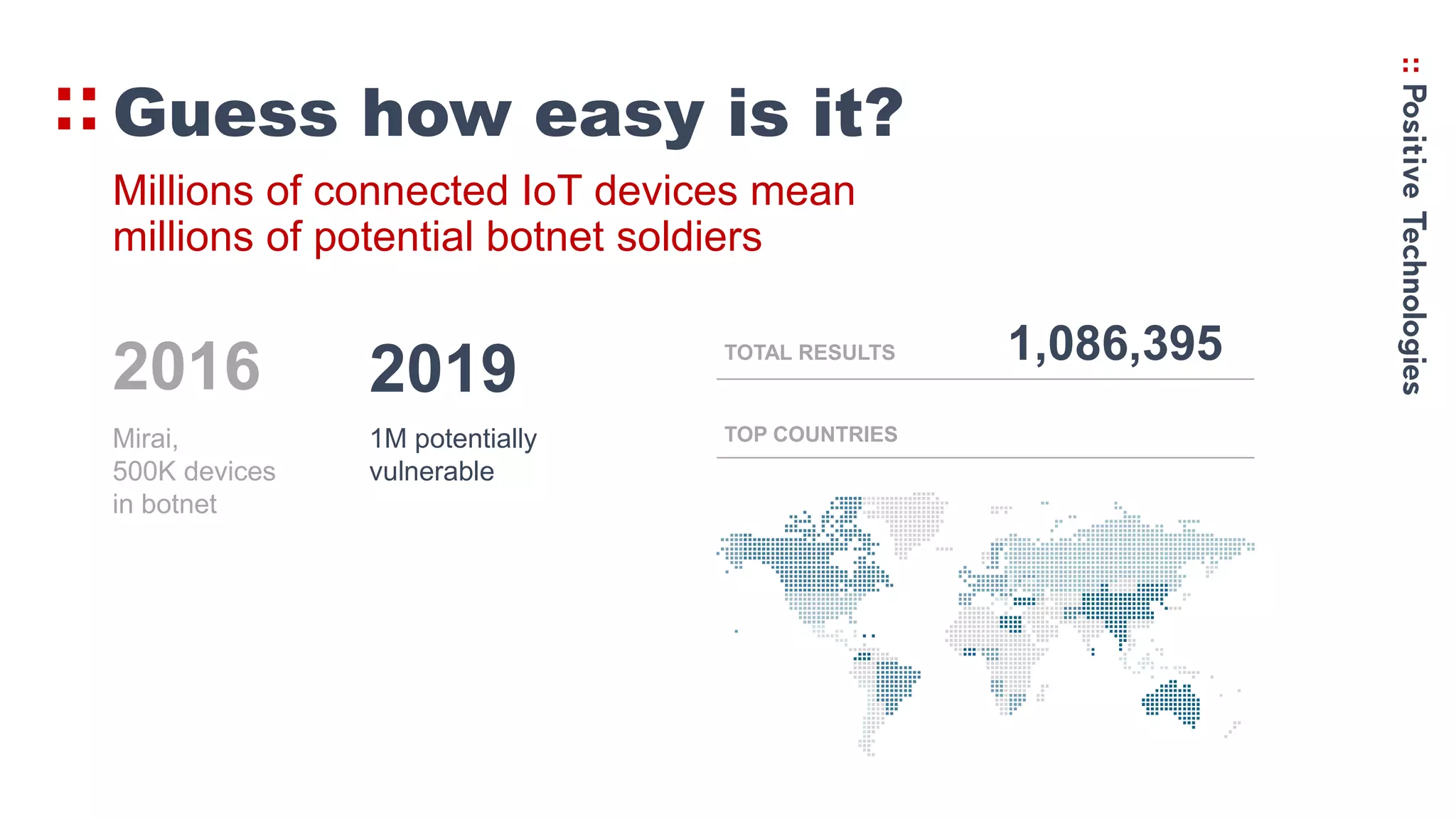
Guess how easyis it?
Millions of connected IoT devices mean
millions of potential botnet soldiers
Mirai,
500K devices
in botnet
2016
1M potentially
vulnerable
2019 TOTAL RESULTS 1,086,395
TOP COUNTRIES
22.
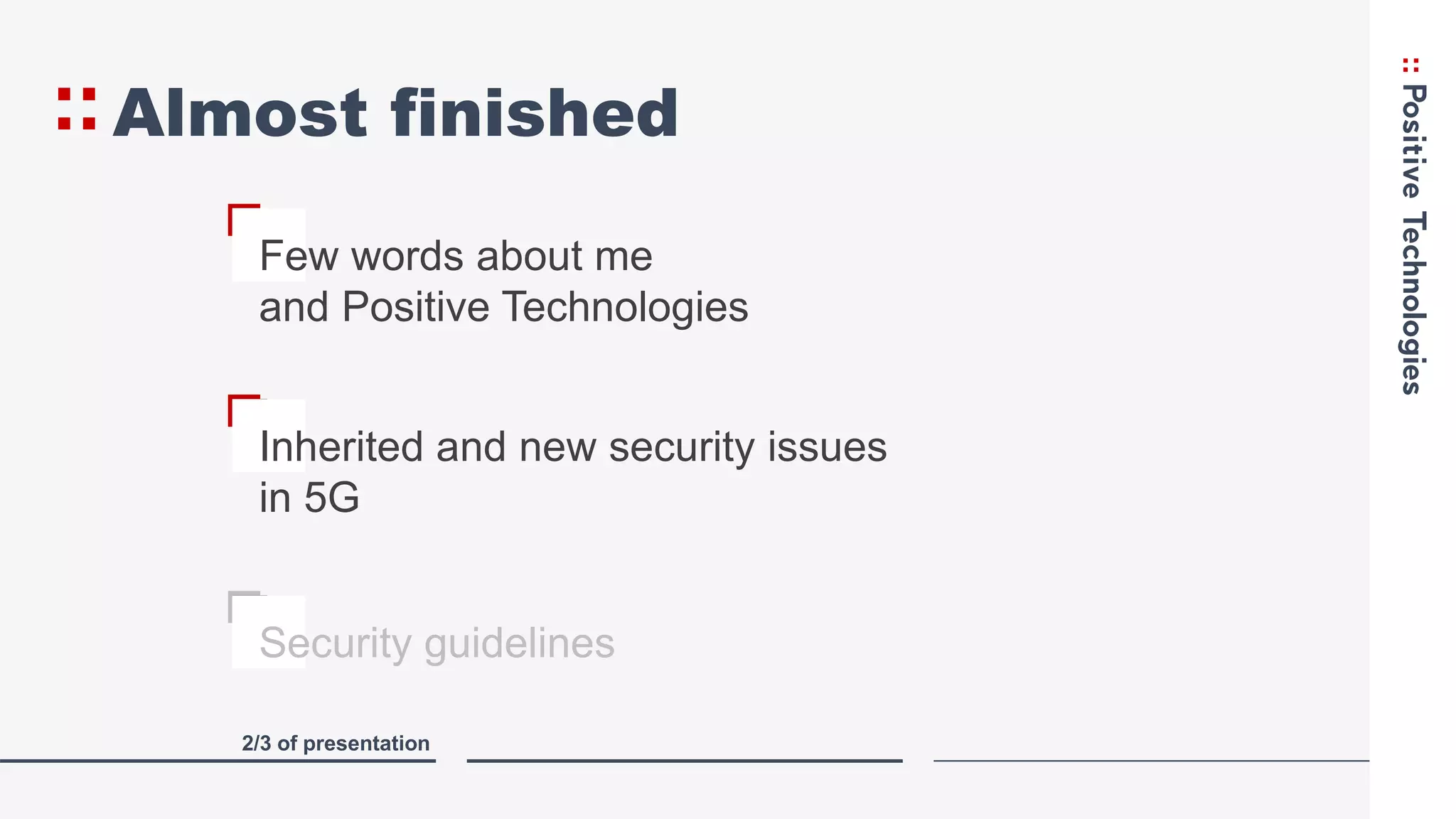
Almost finished
V
Few wordsabout me
and Positive Technologies
2/3 of presentation
V
Inherited and new security issues
in 5G
V
Security guidelines
23.
Where to start
Ensureprotection
where interoperability
required from day one
Secure new
interfaces and
communications
channels
Safeguard
SDN/NFV and
virtual environment
Implement policies
separately for
network slices
Take IoT in your
network under control
where possible





![[cb22] Tales of 5G hacking by Karsten Nohl](https://cdn.slidesharecdn.com/ss_thumbnails/d2t1s09221127-230103071757-420d7b85-thumbnail.jpg?width=640&height=640&fit=bounds)


![Vibe Coding vs. Spec-Driven Development [Free Meetup]](https://cdn.slidesharecdn.com/ss_thumbnails/vibecodingvsspecdrivendevelopment-251209105622-43f455e7-thumbnail.jpg?width=640&height=640&fit=bounds)


